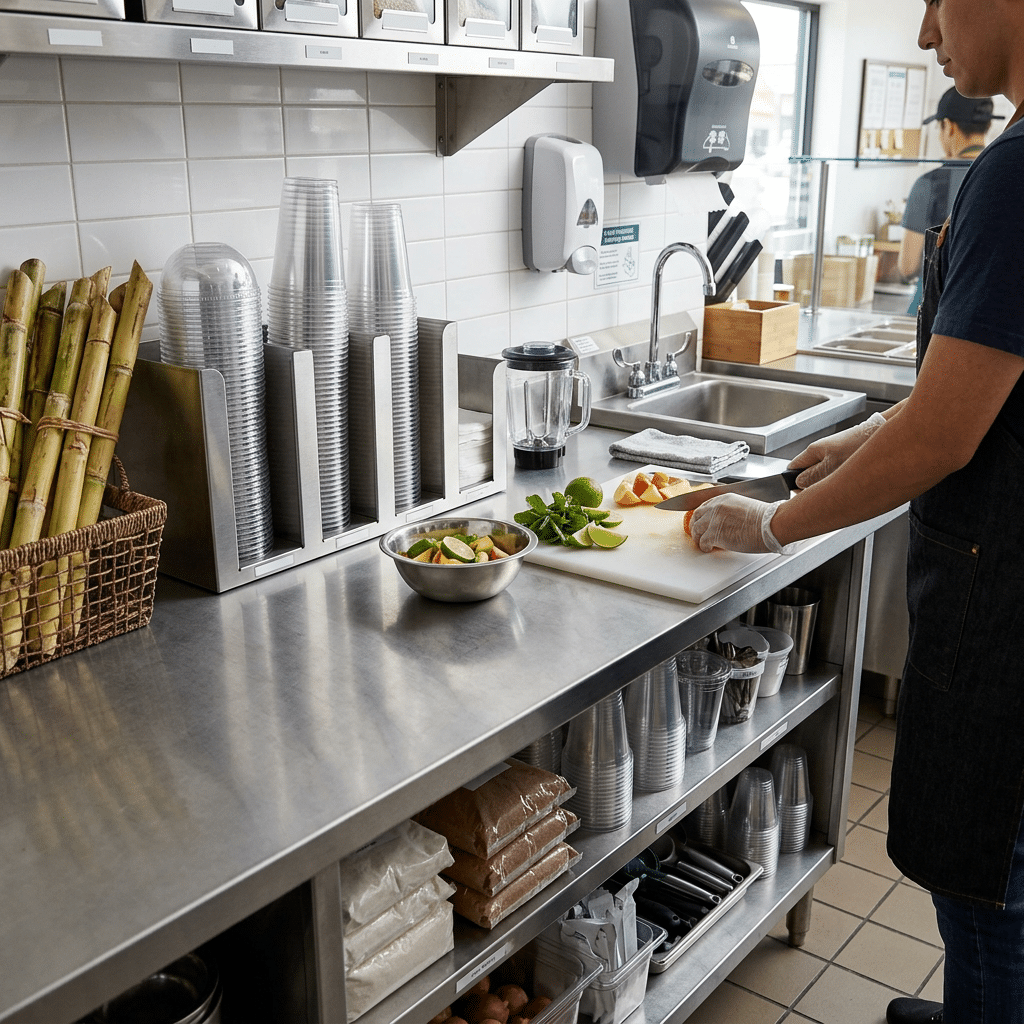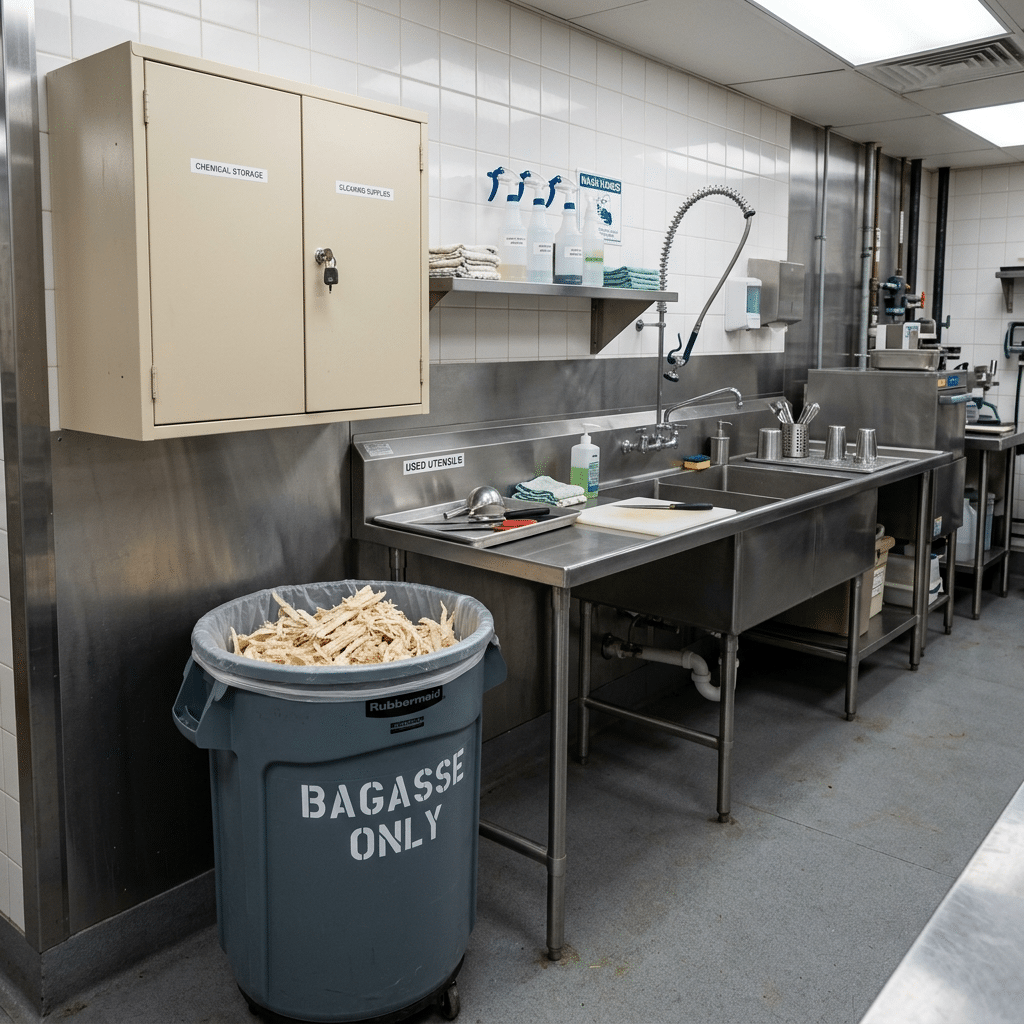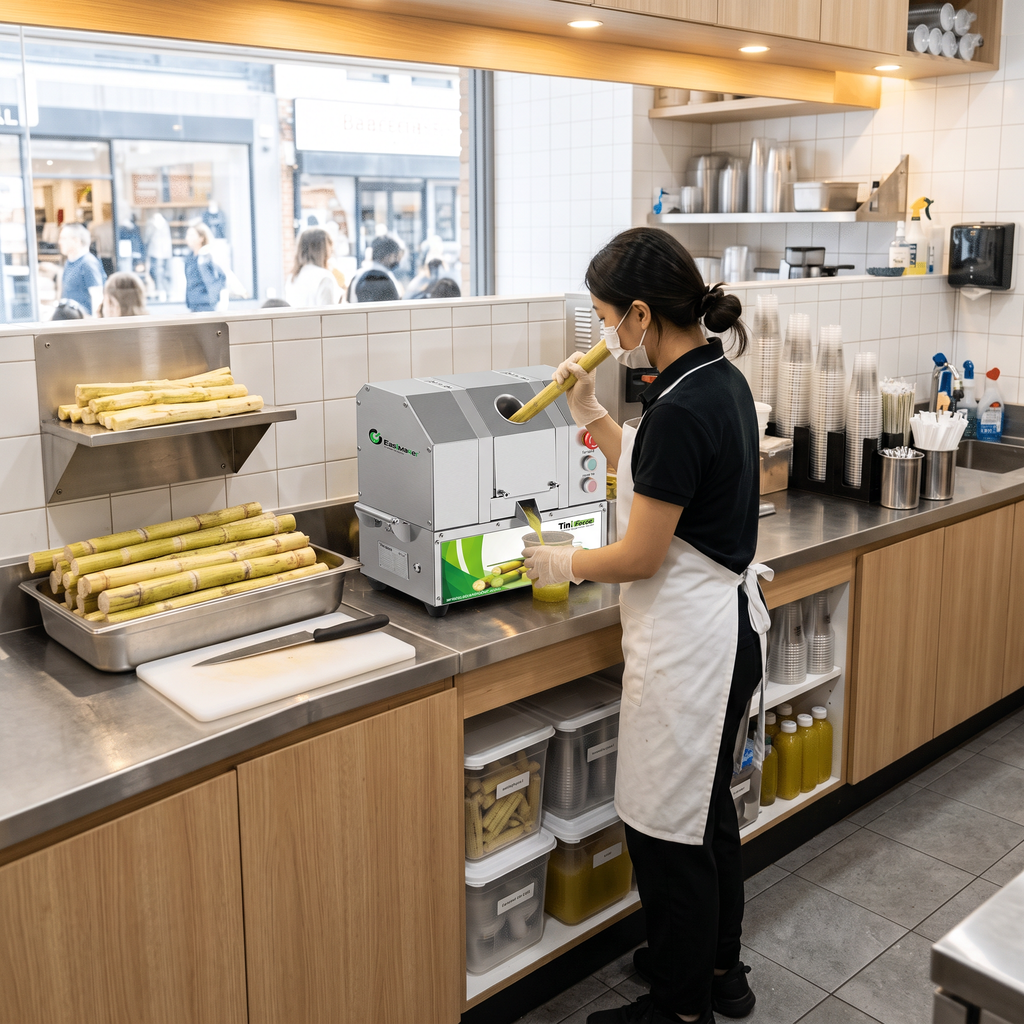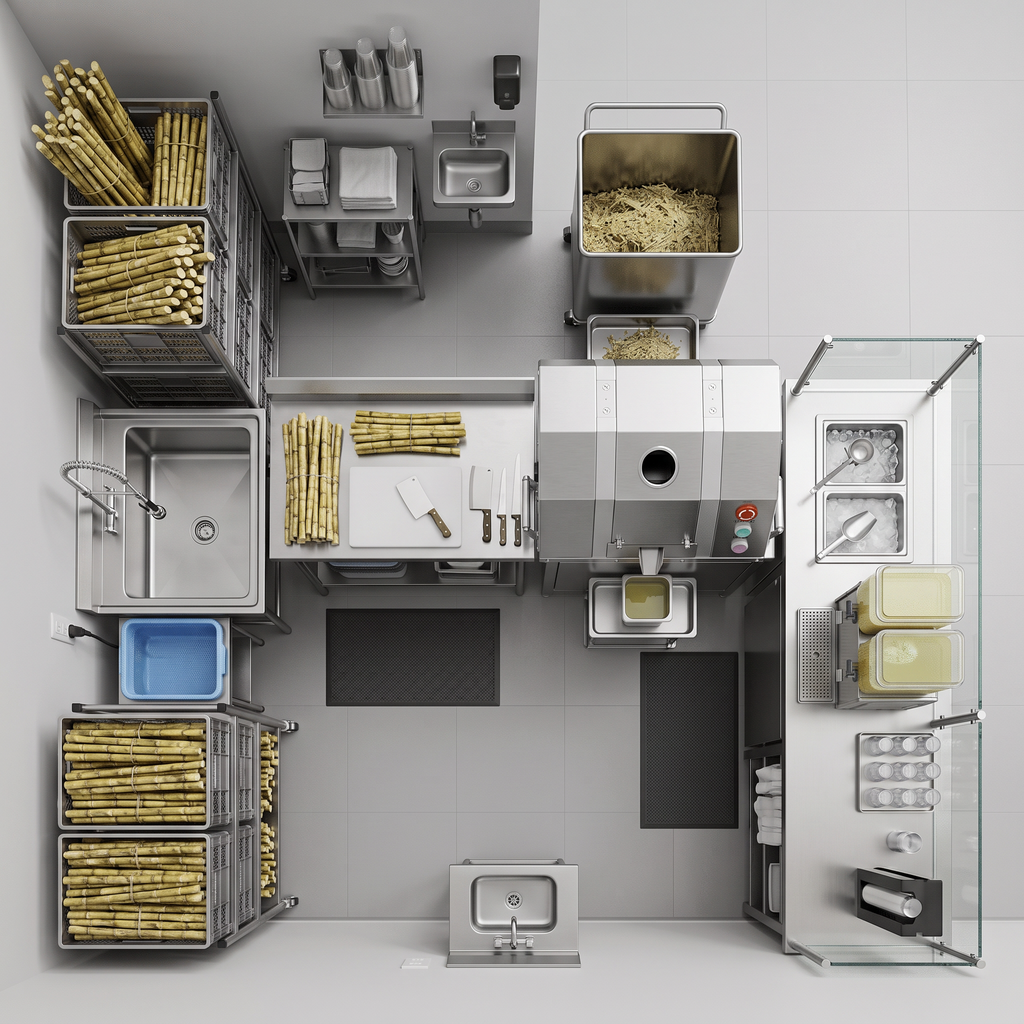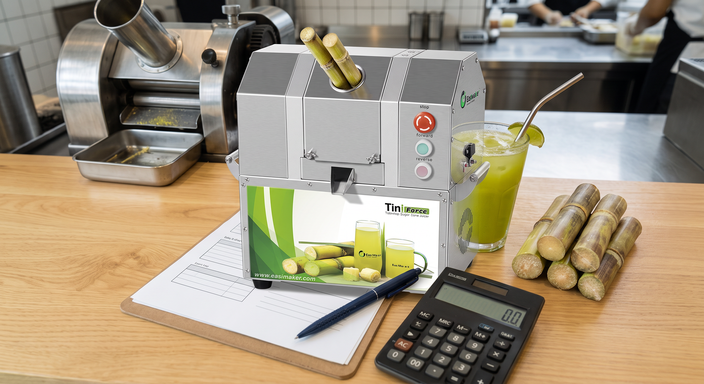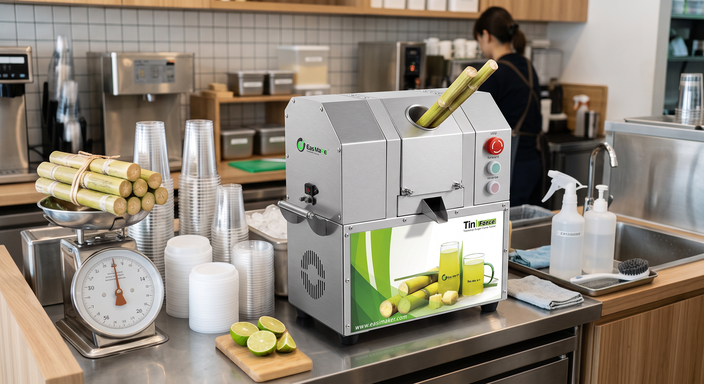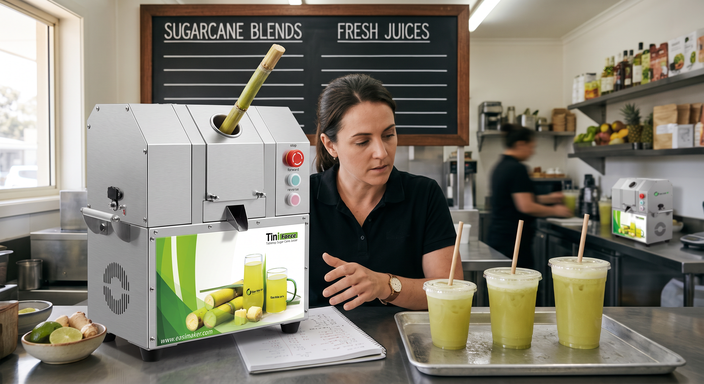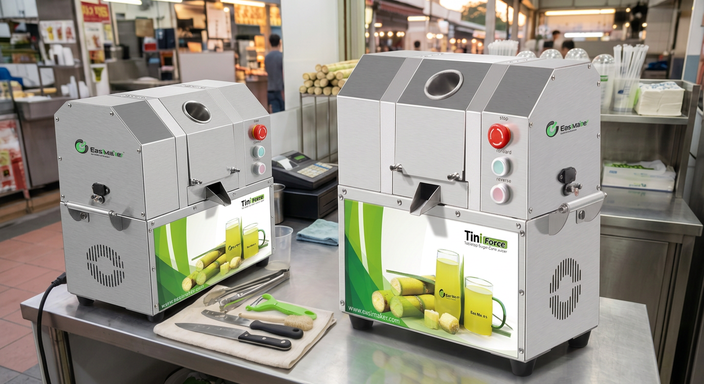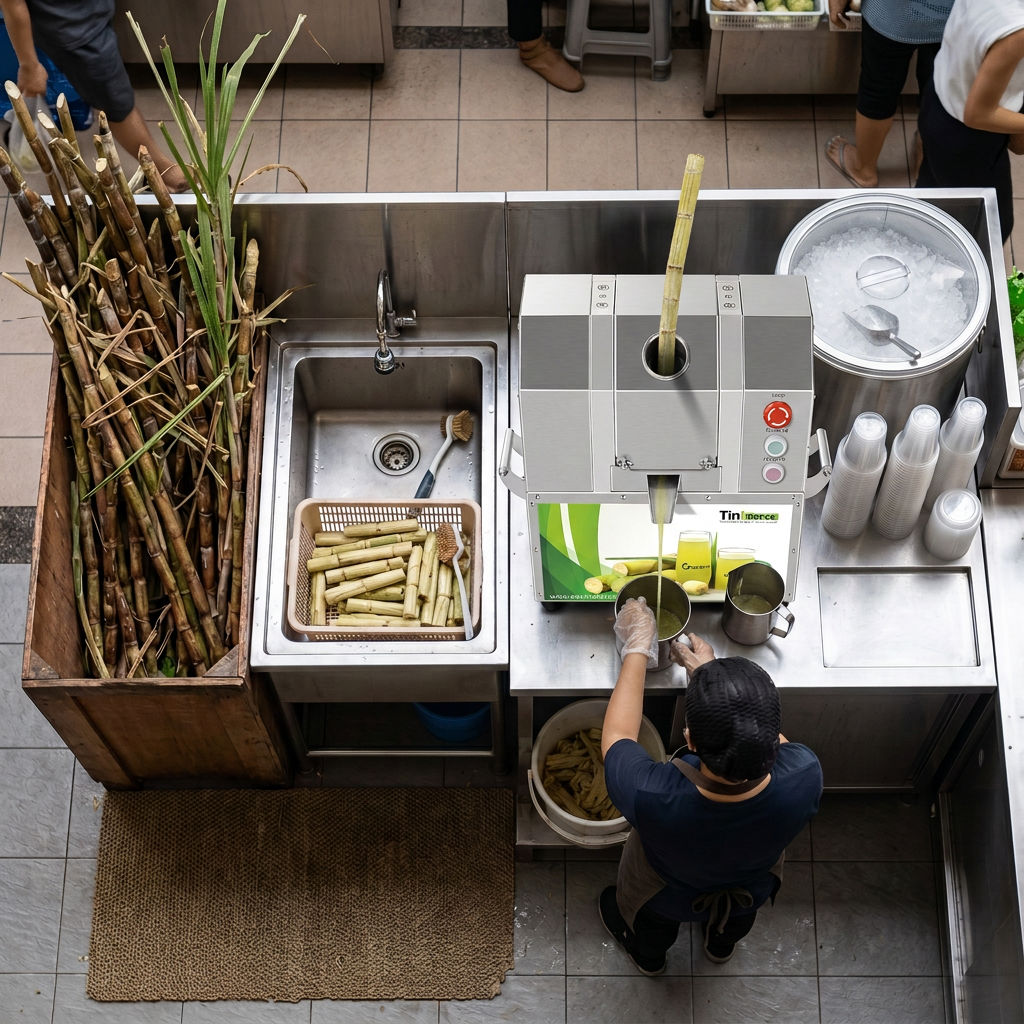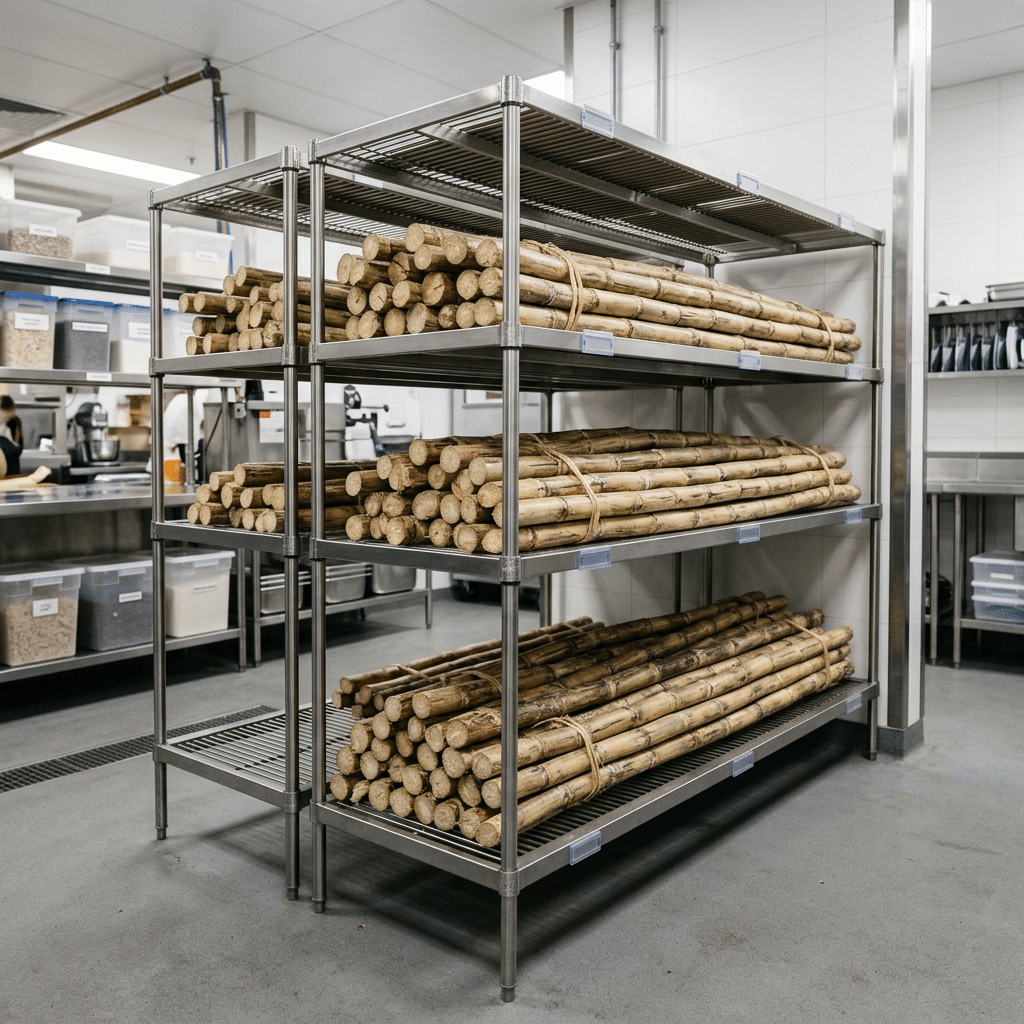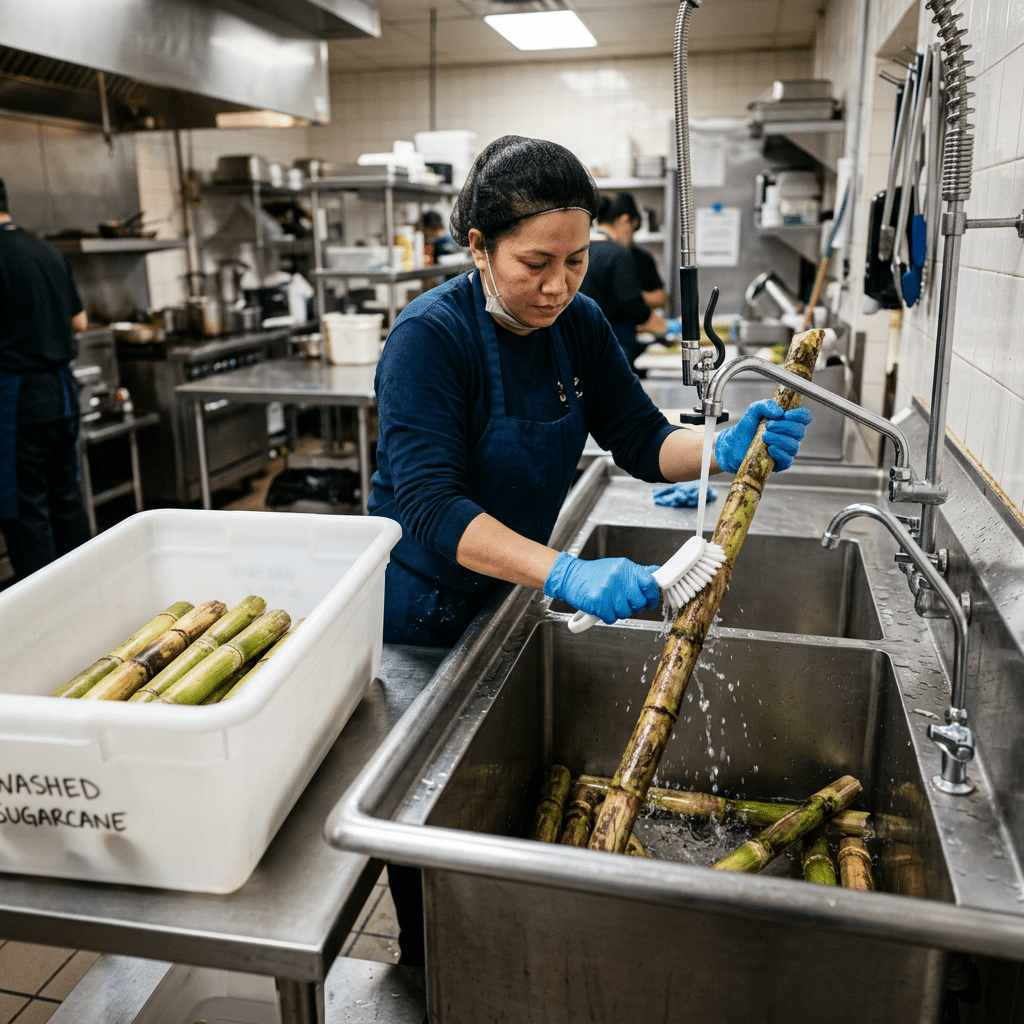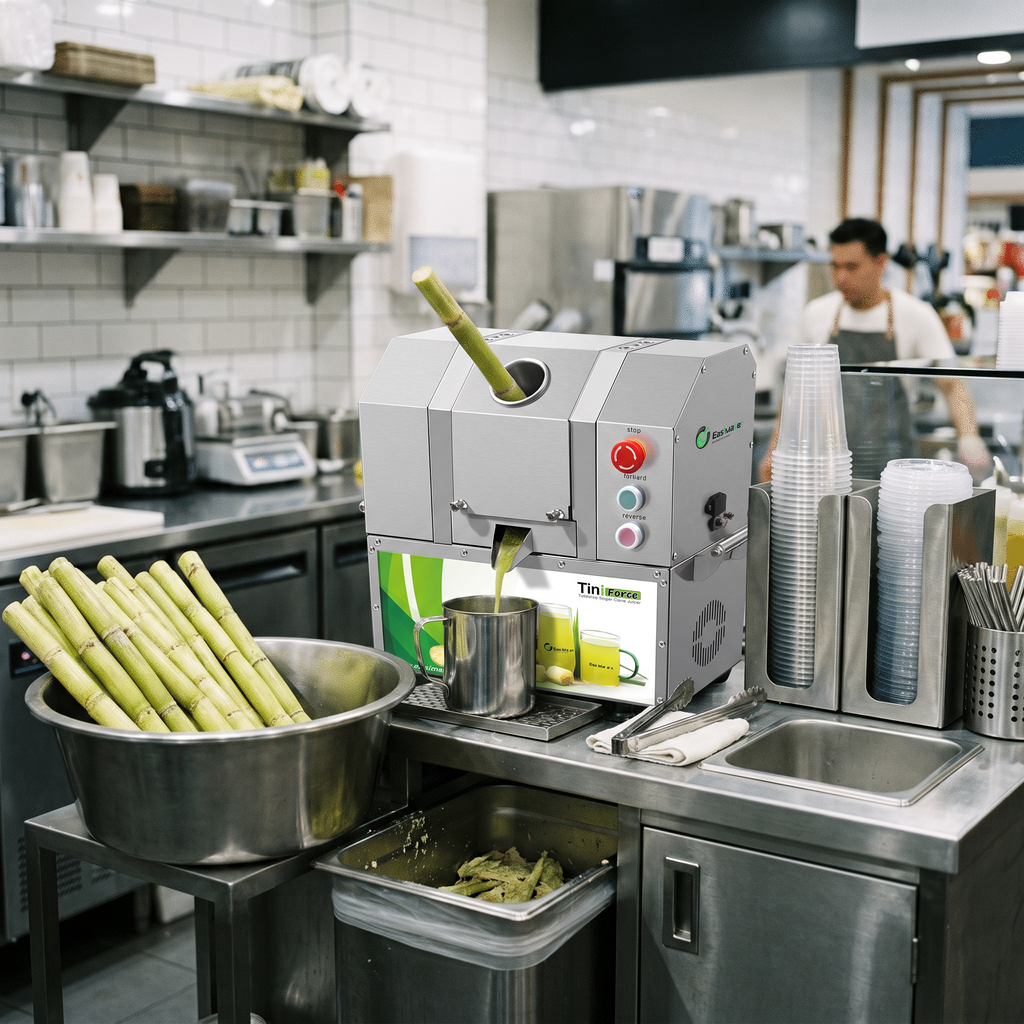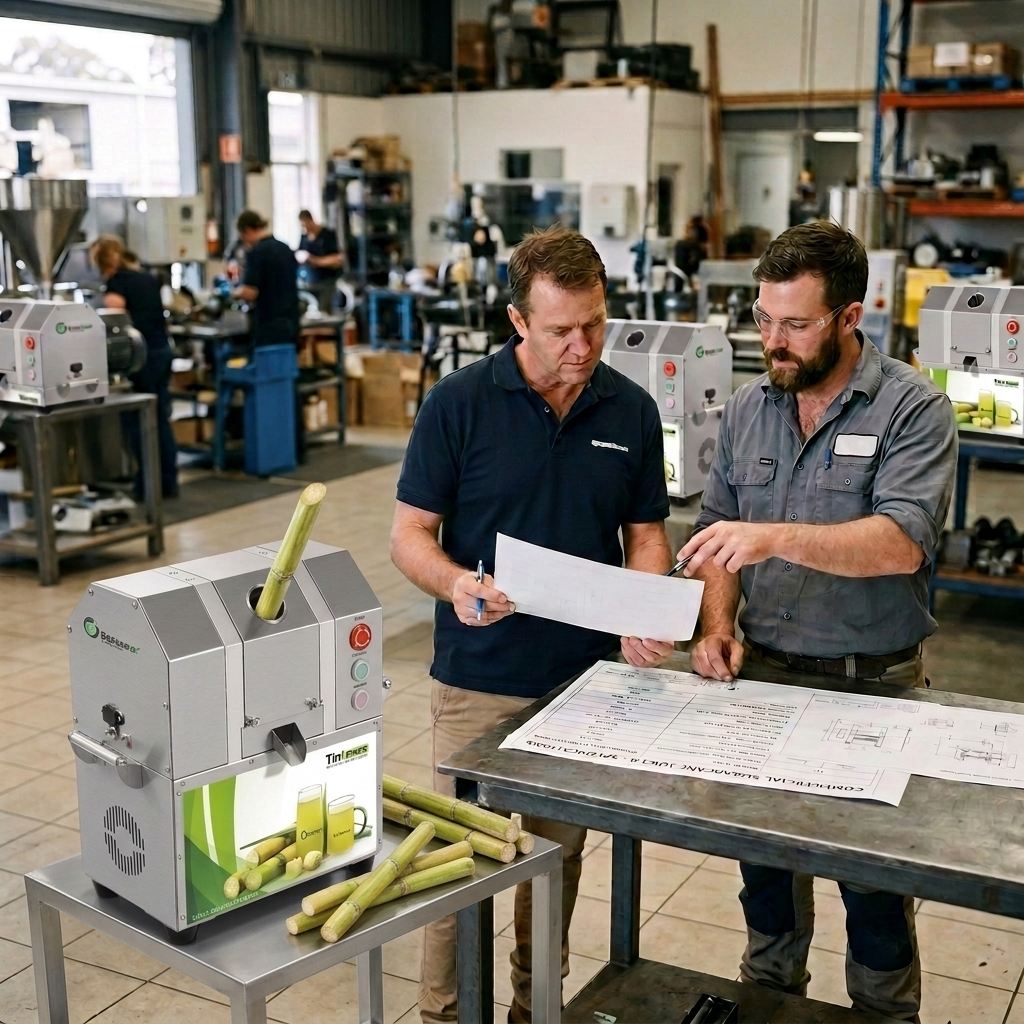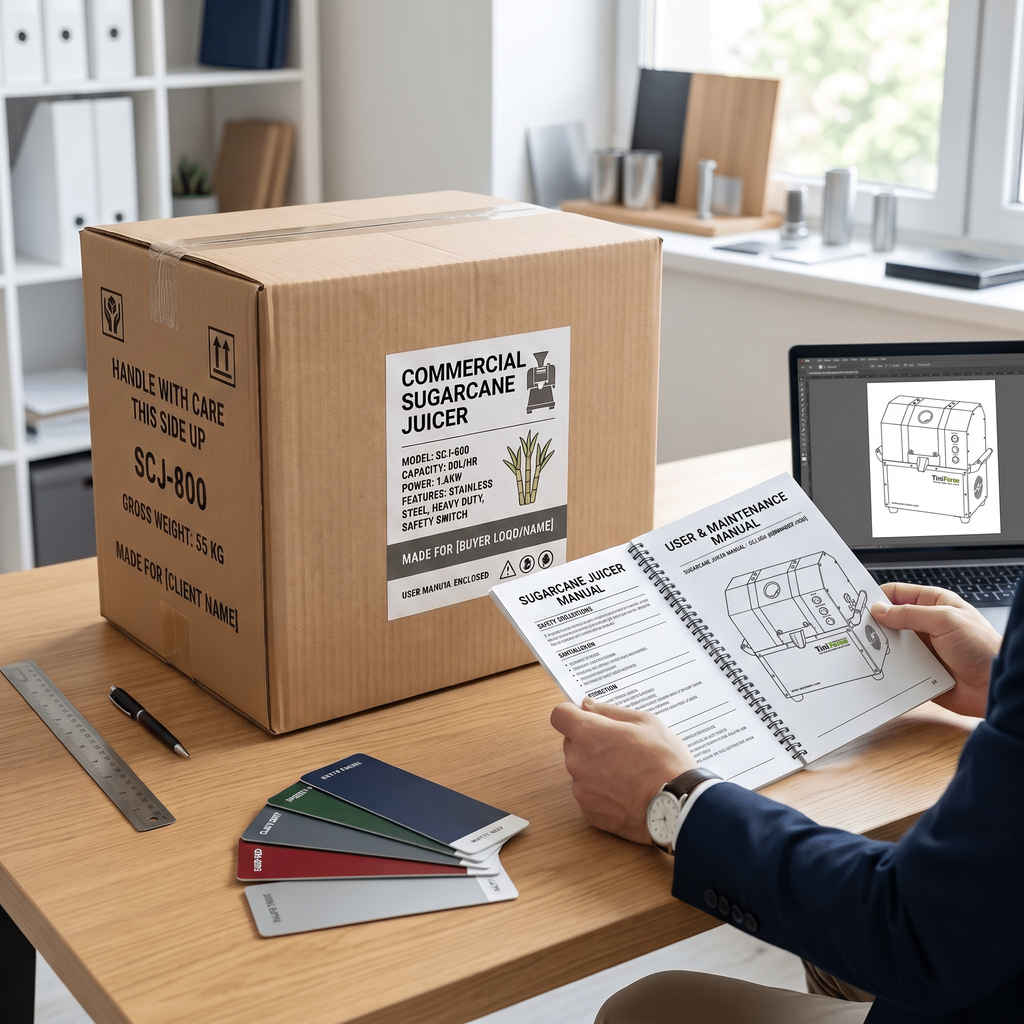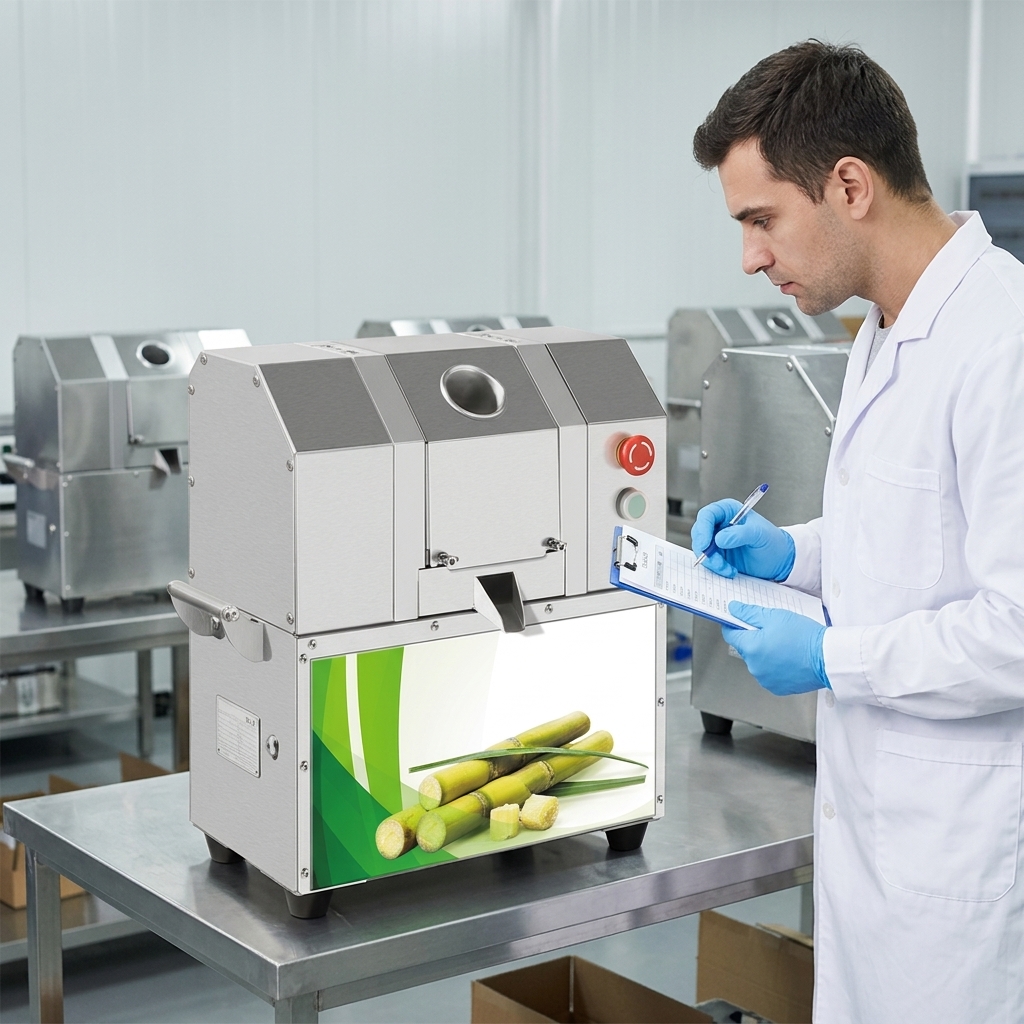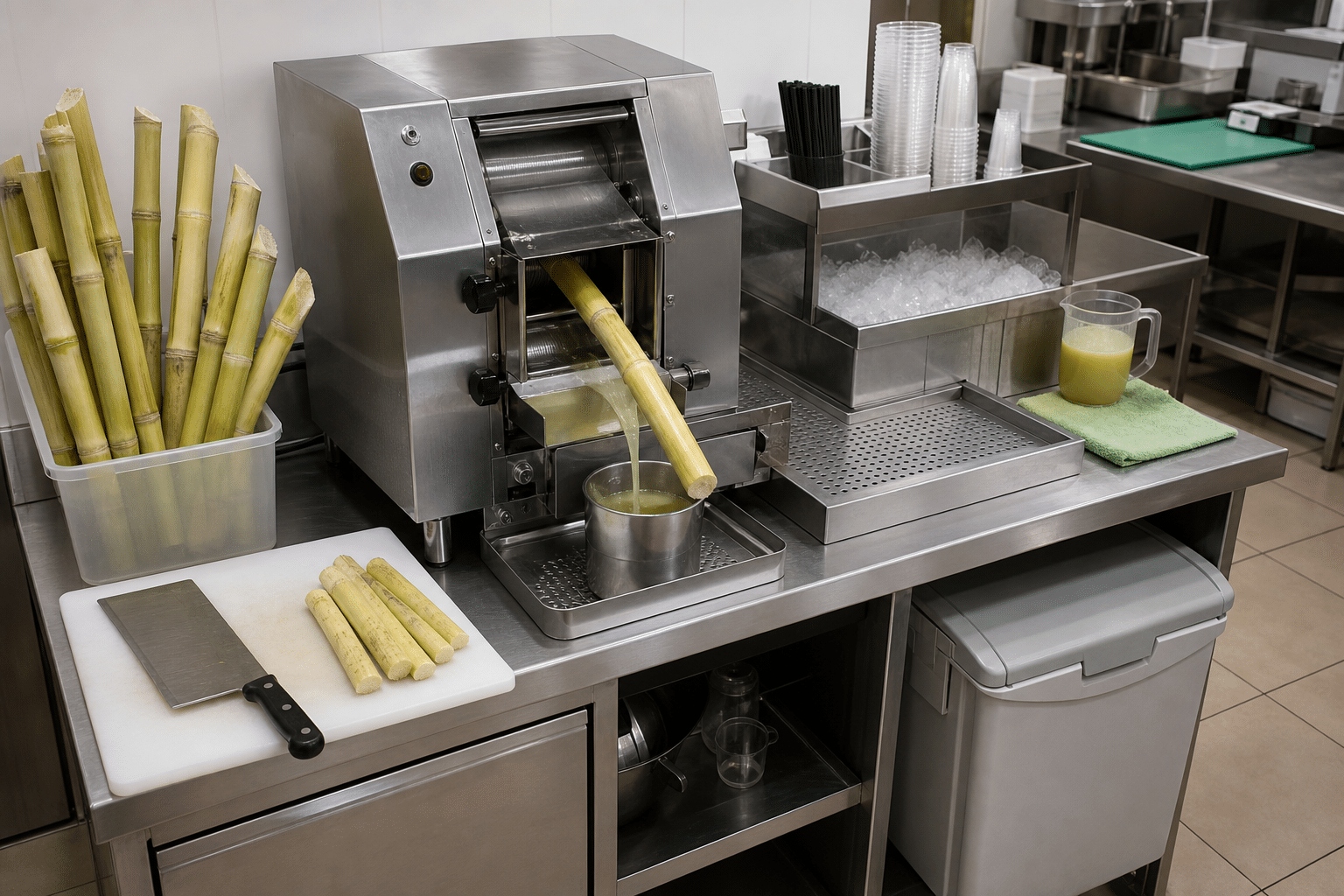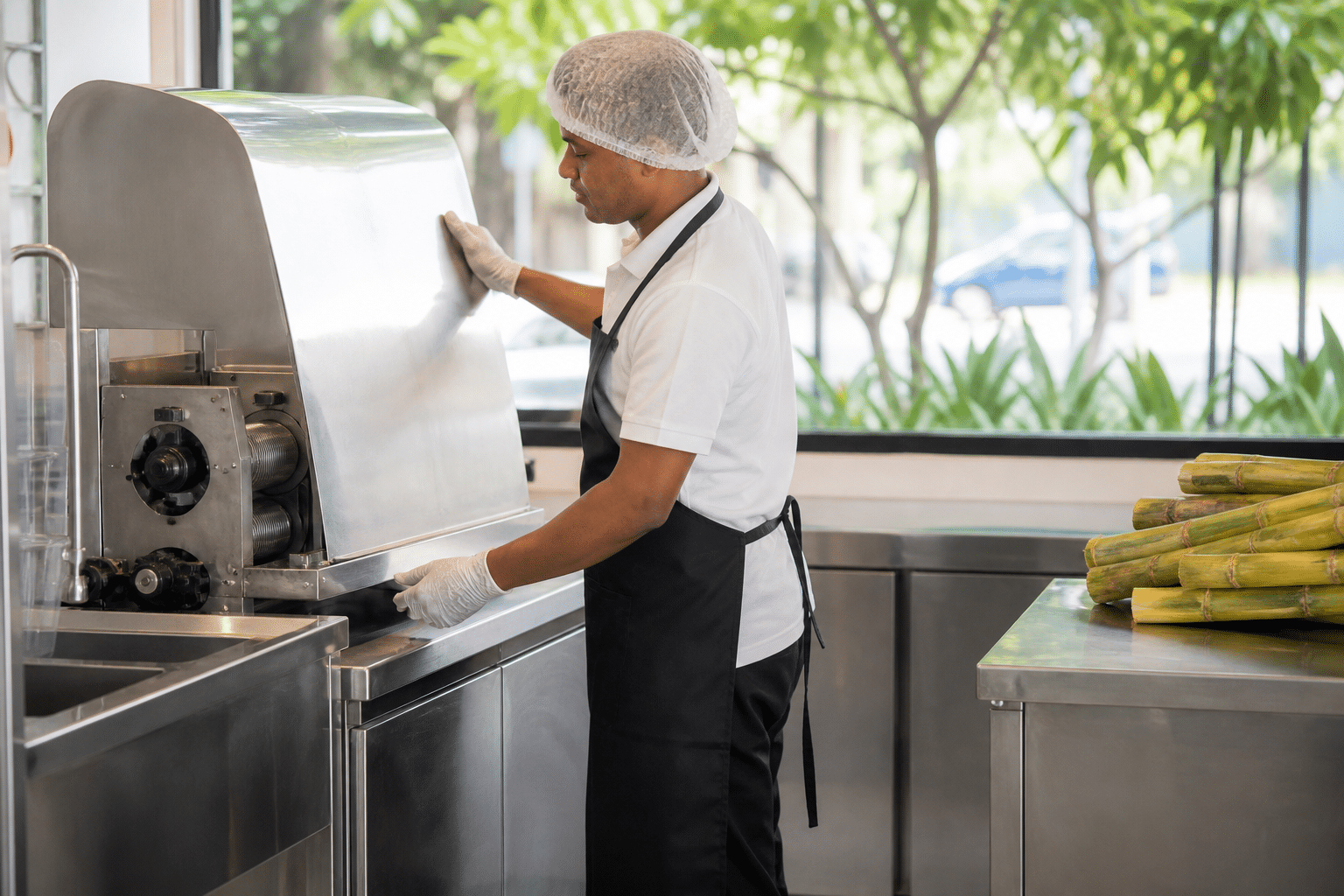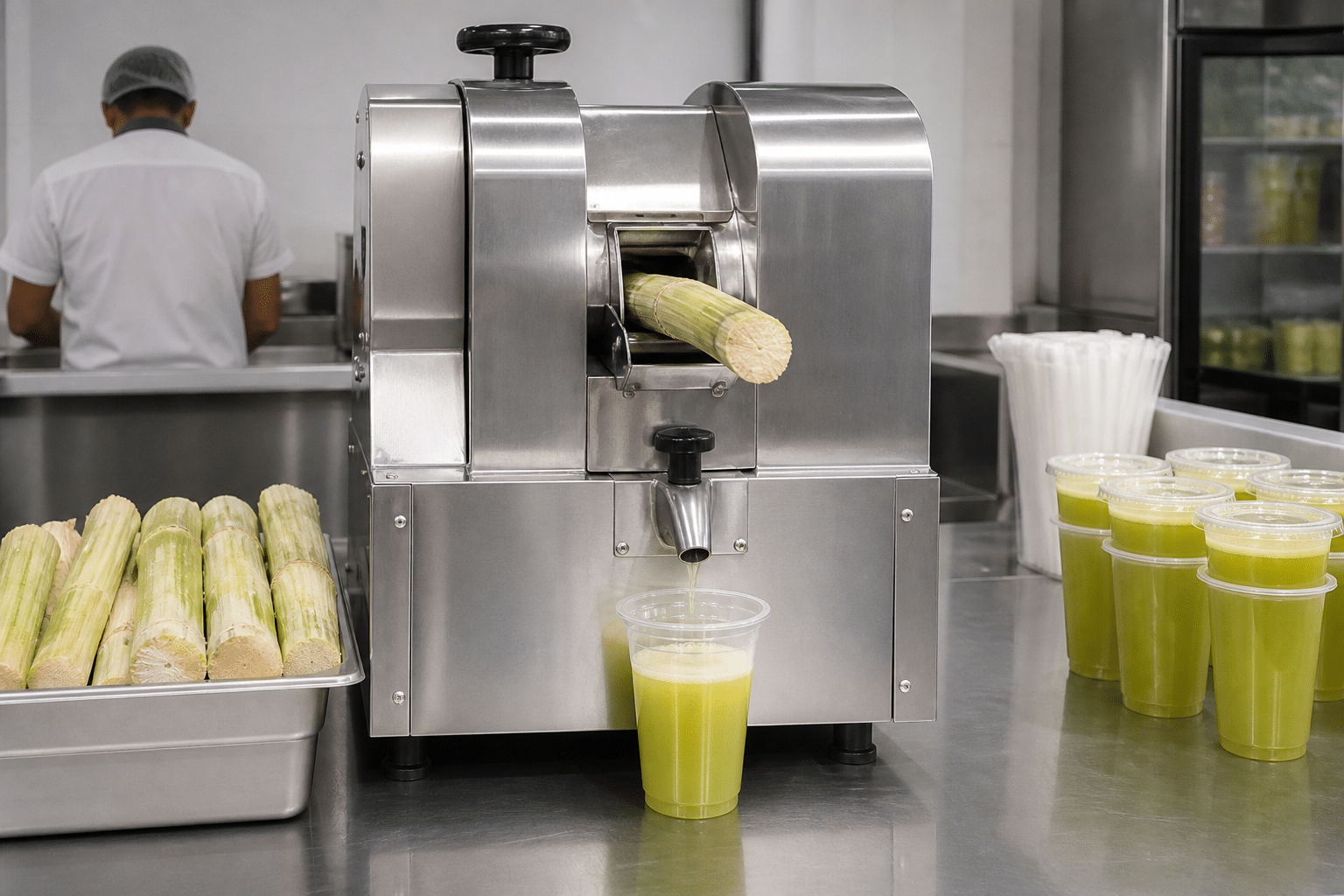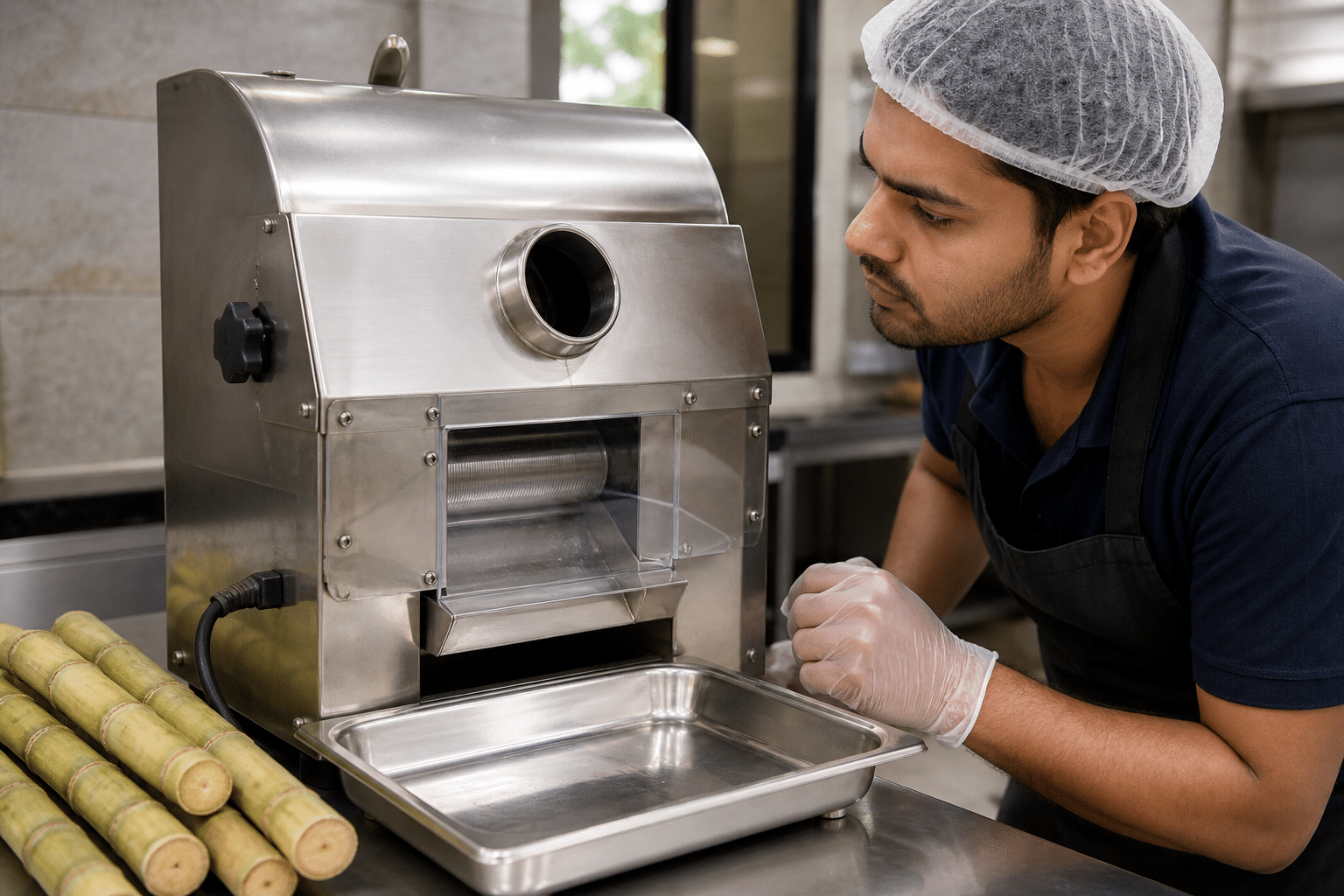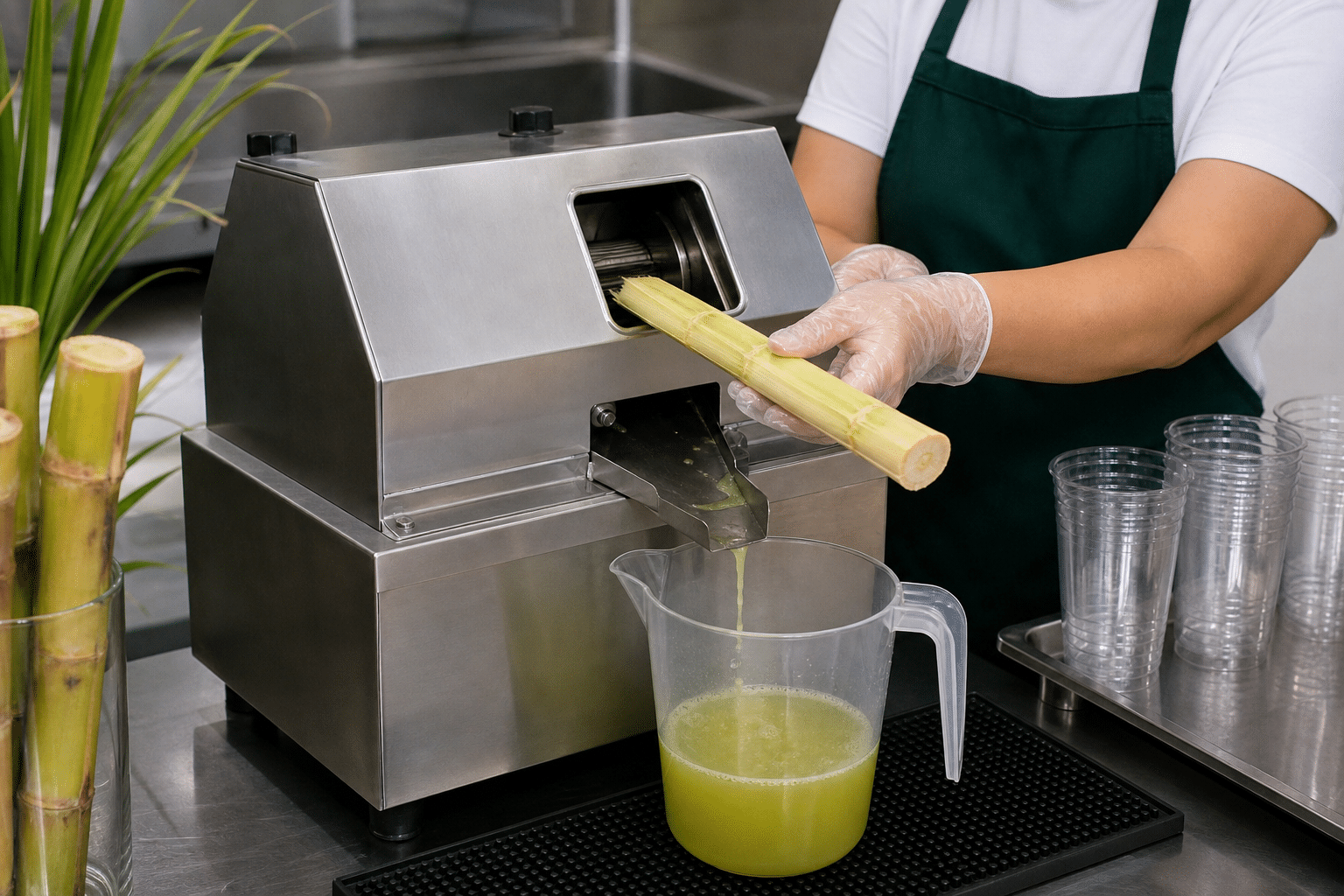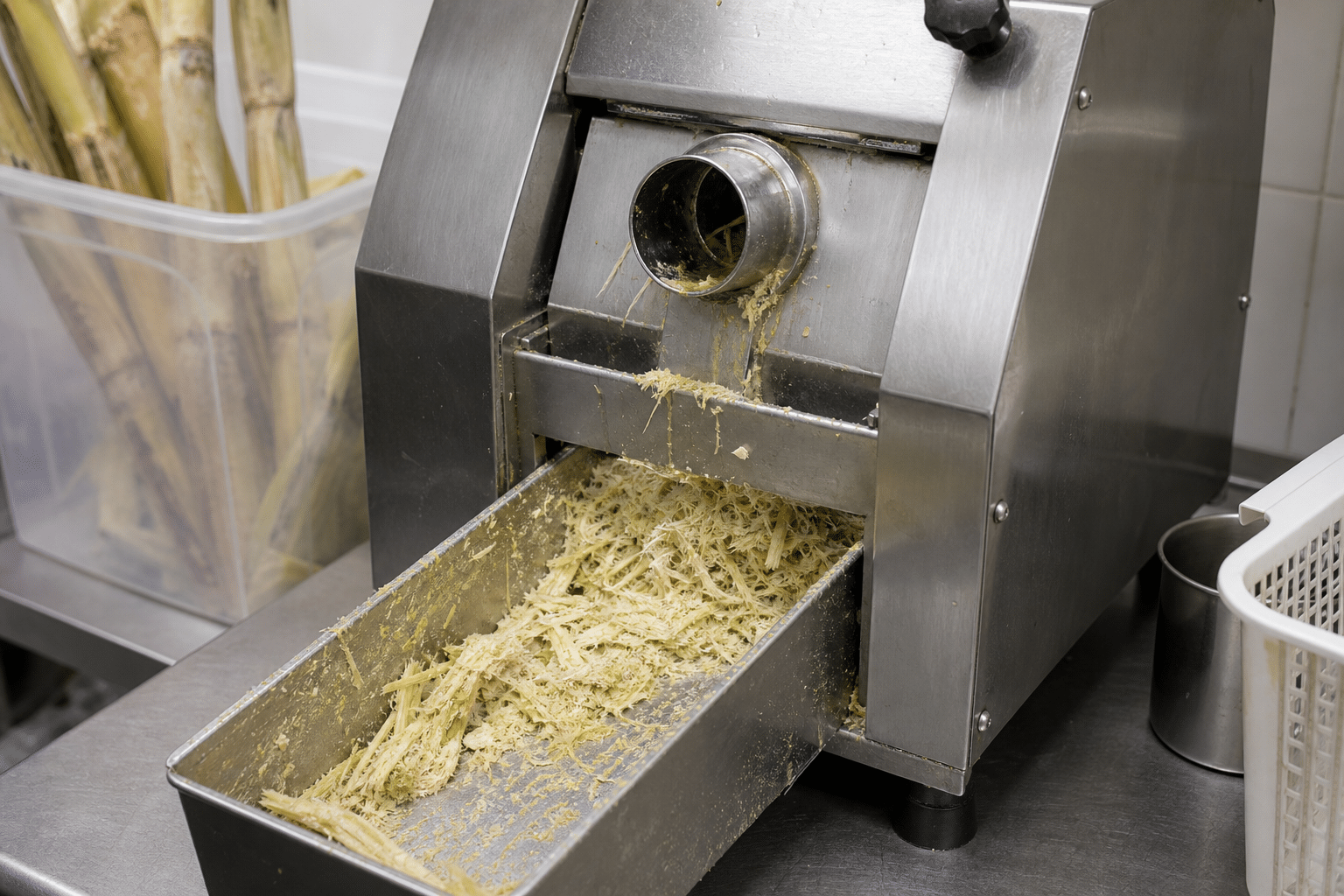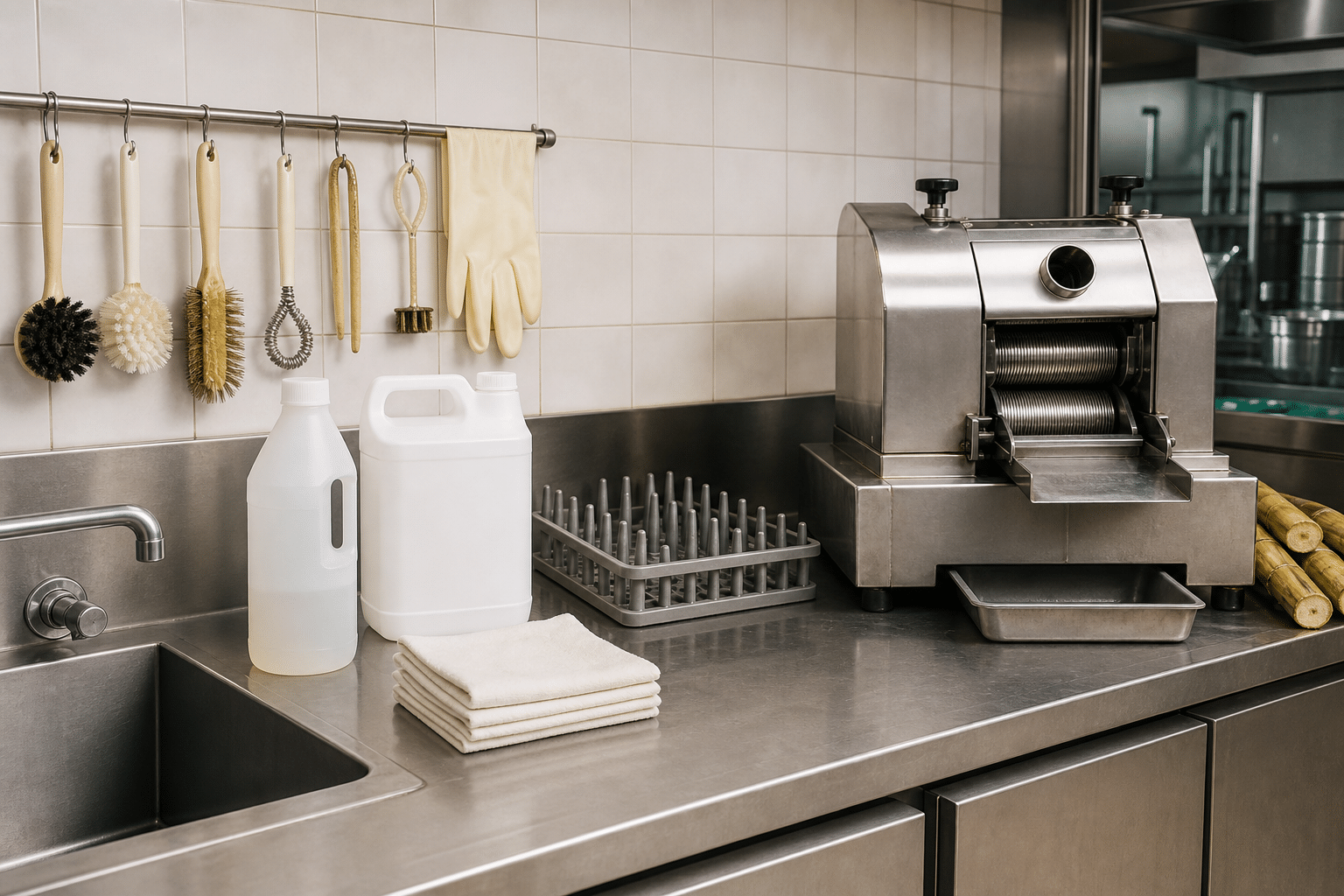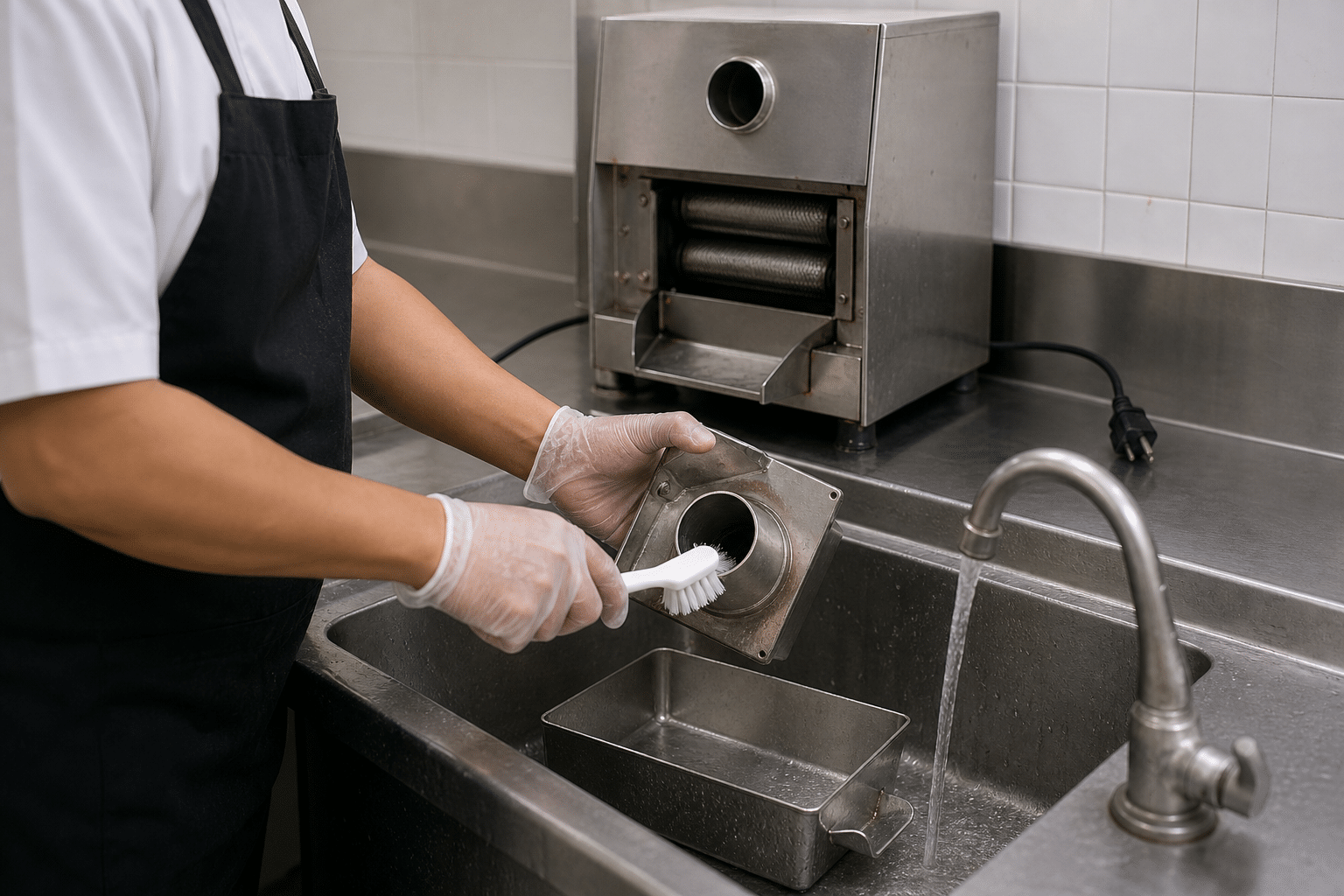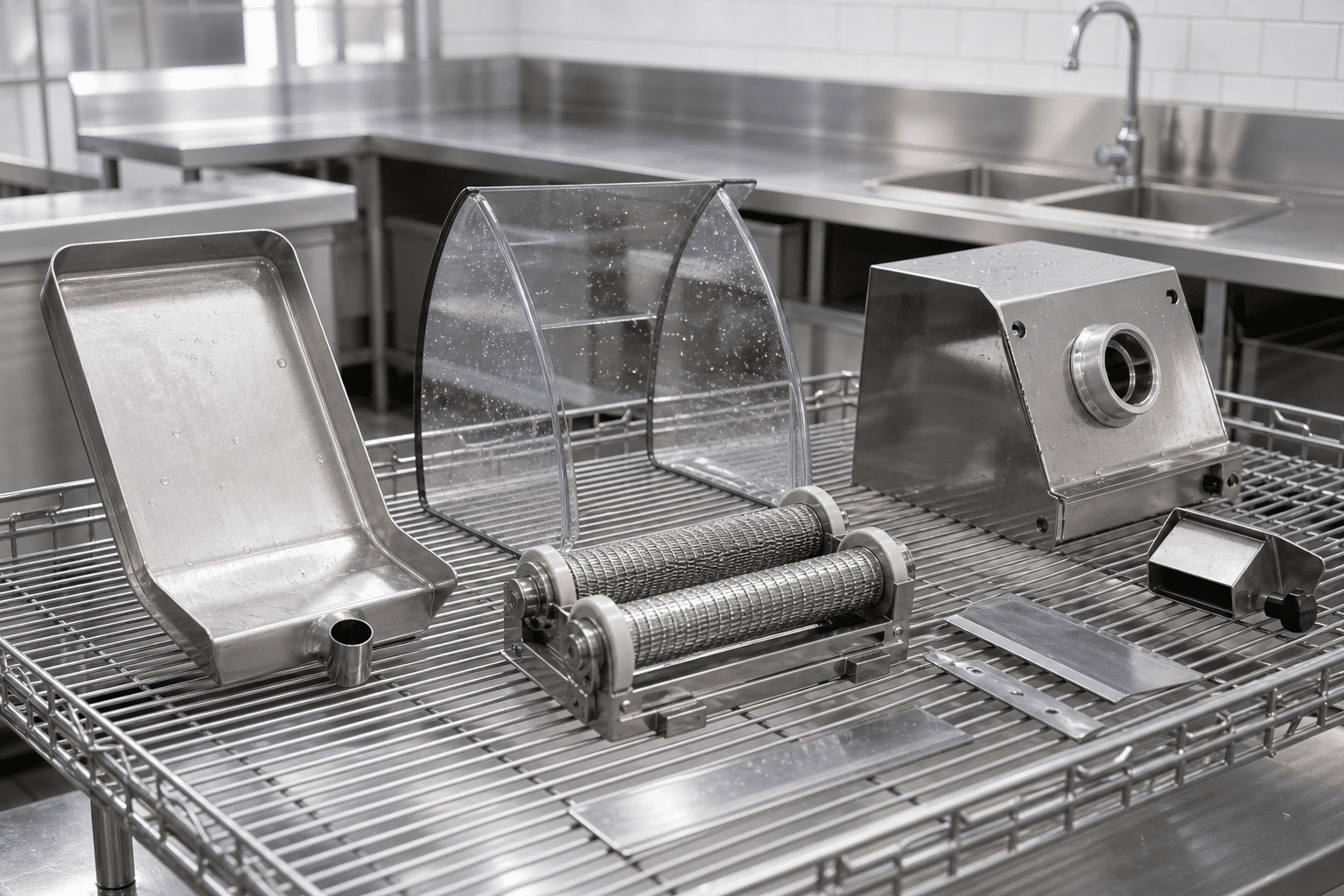
Commercial Sugarcane Juicer Troubleshooting Guide

Table of Contents

A practical troubleshooting guide for commercial sugarcane juicer operators. Identify safe checks for starting, feeding, extraction, noise, leakage, and cleaning problems before arranging qualified service.

Start With Safe Checks

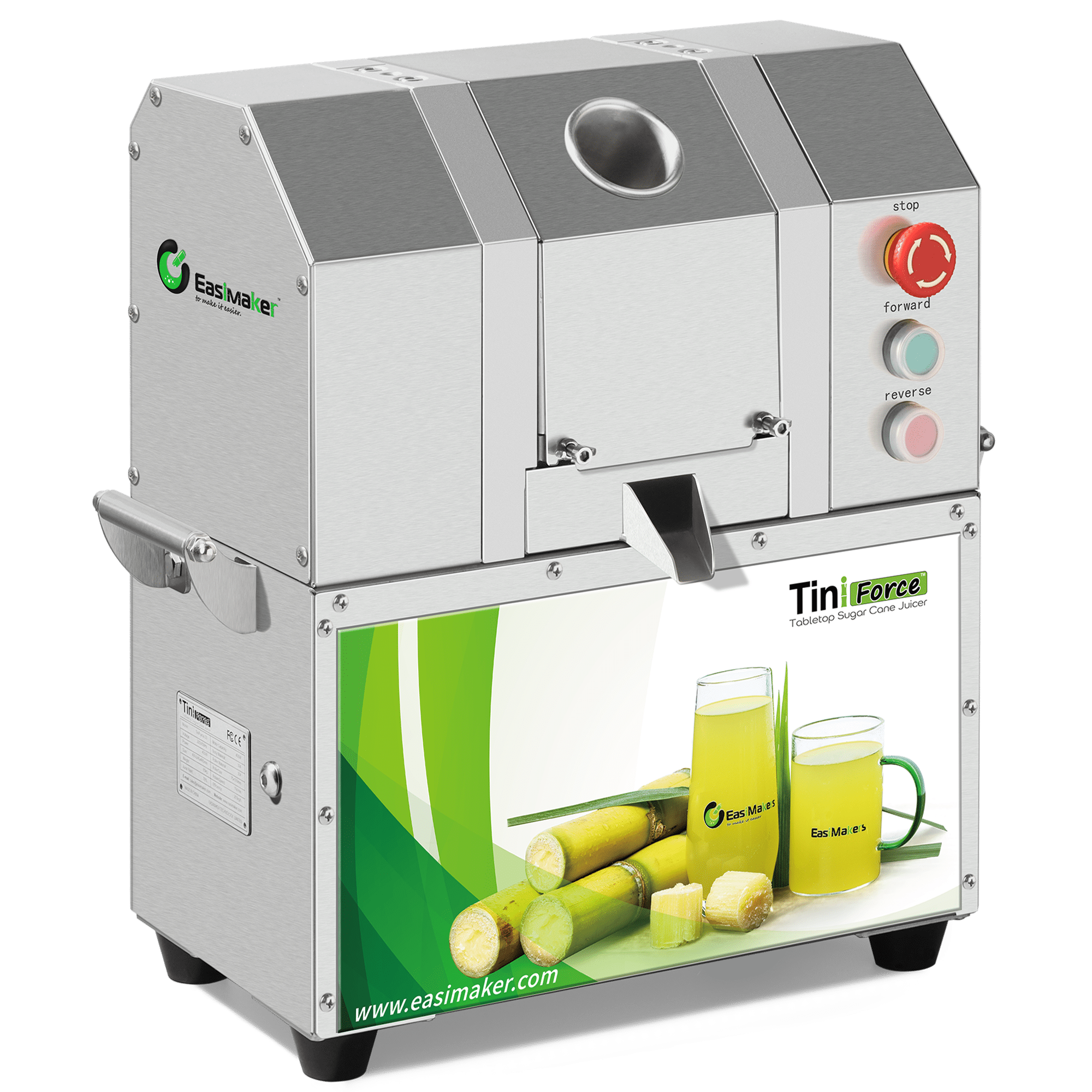
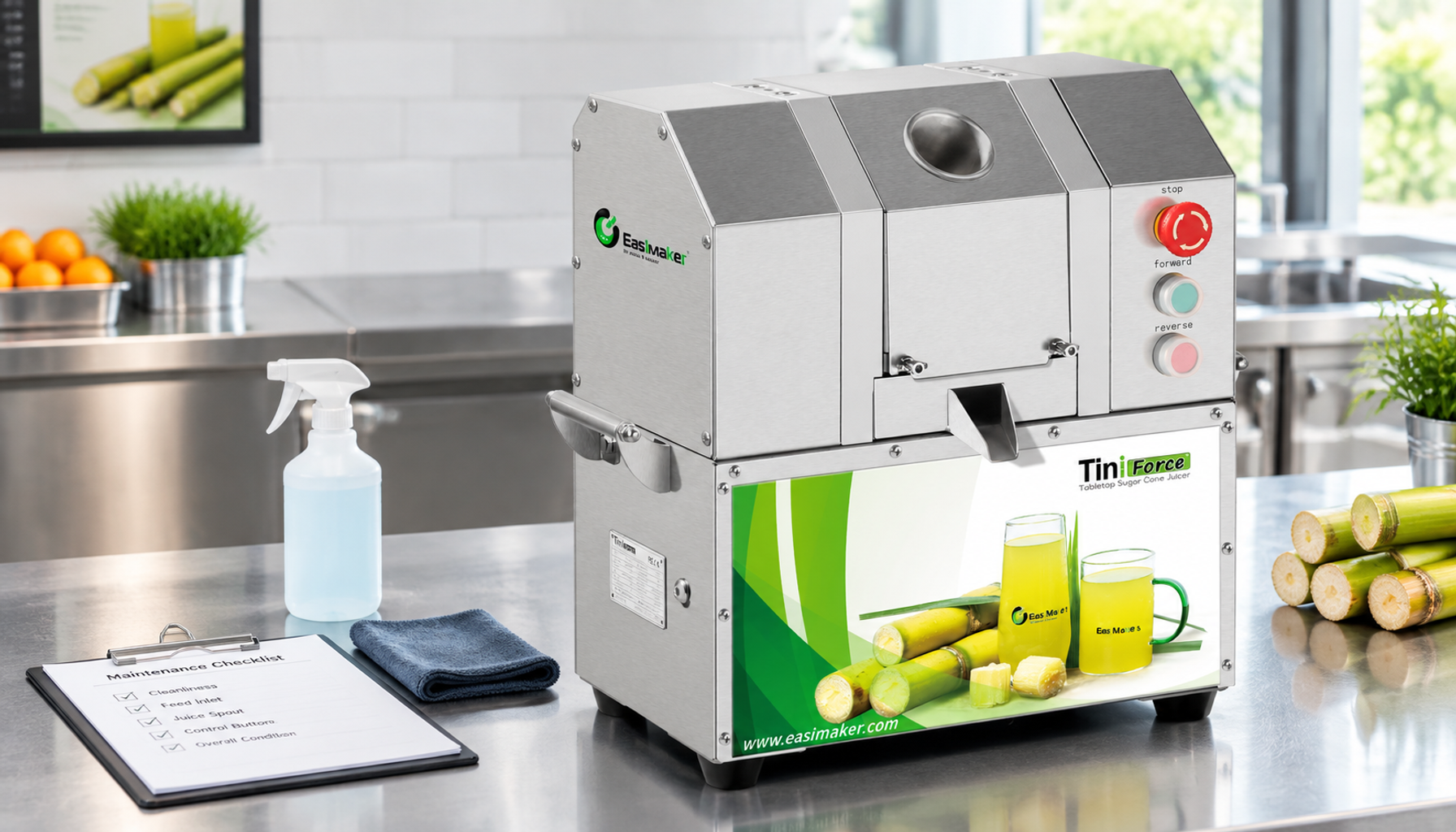
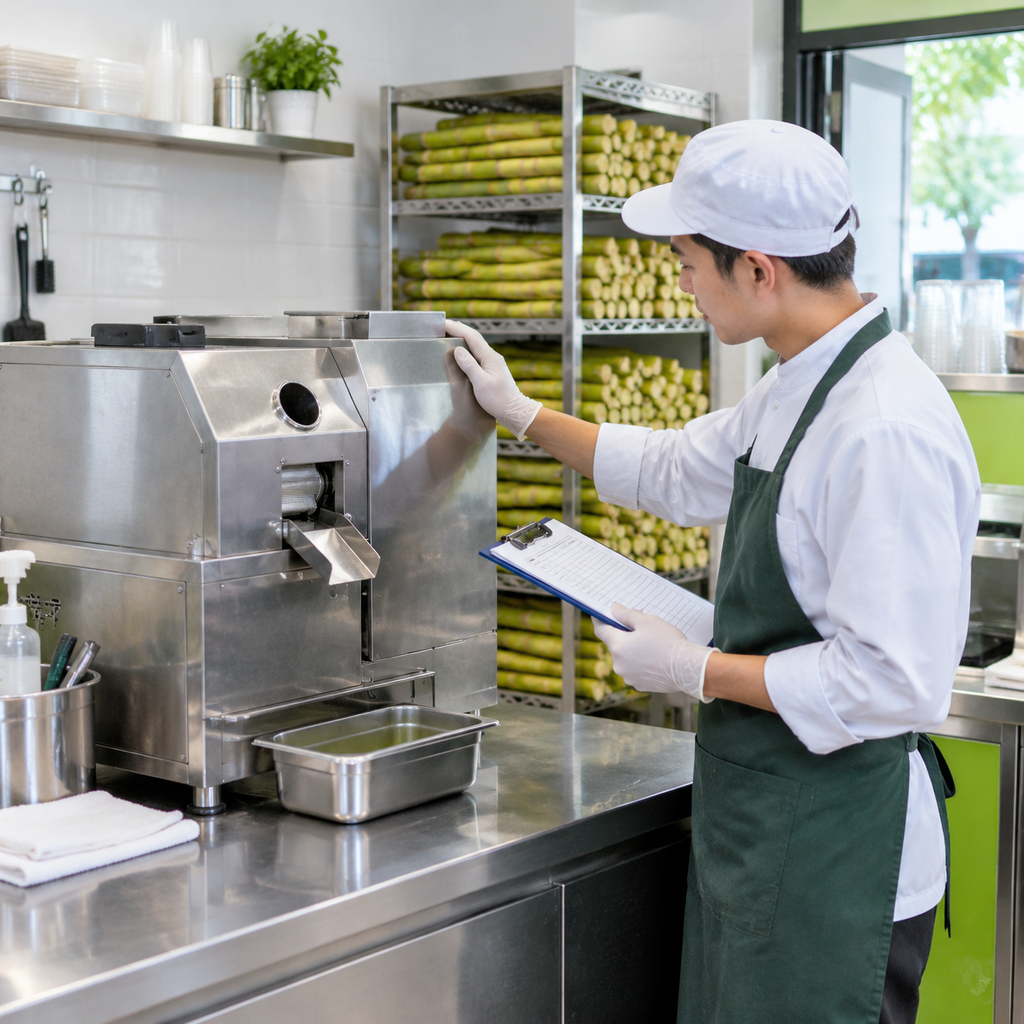
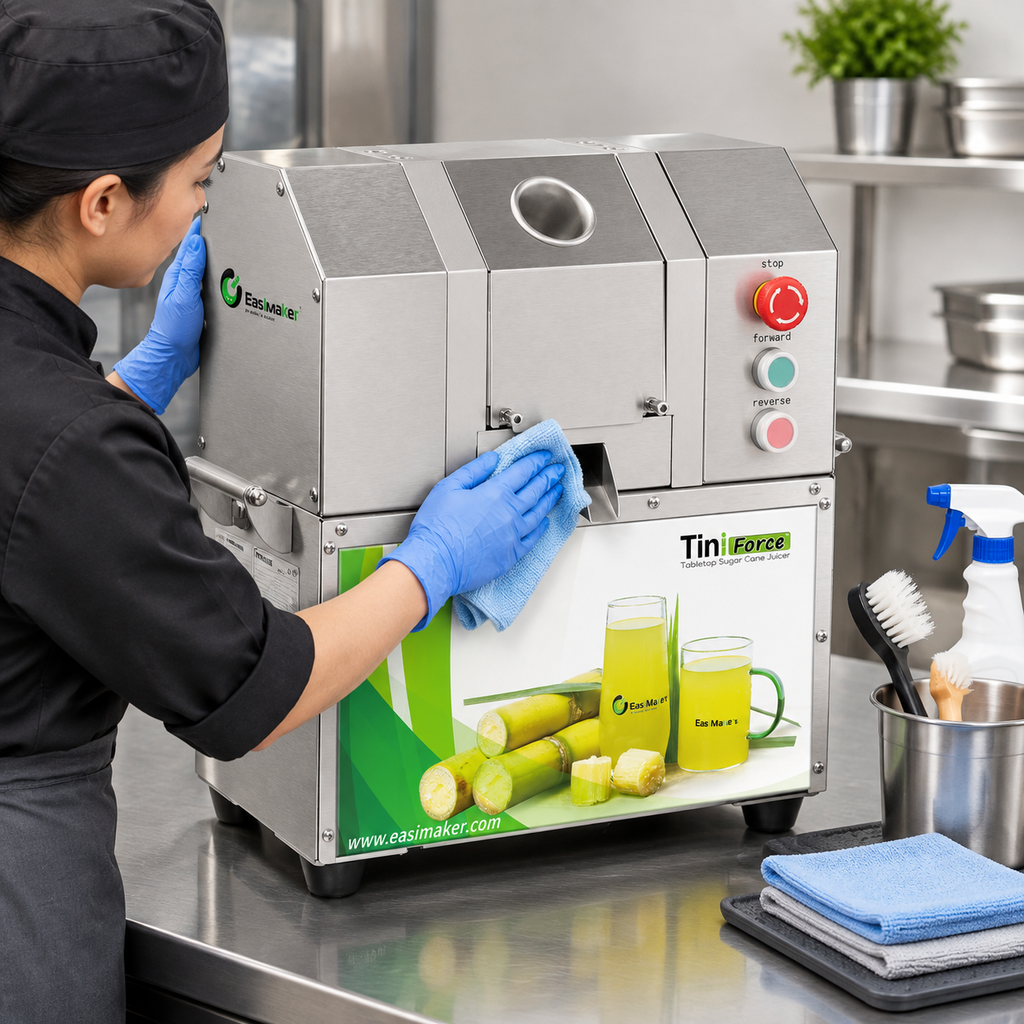
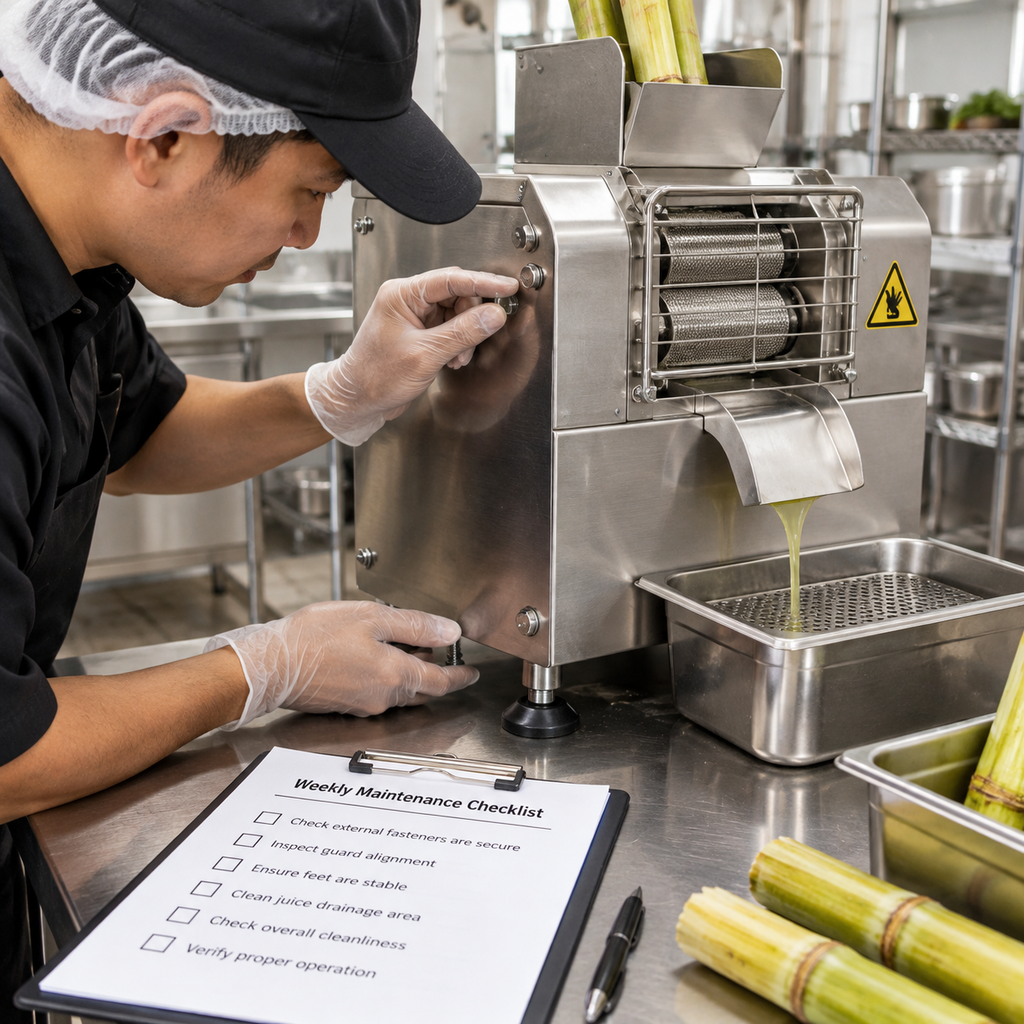
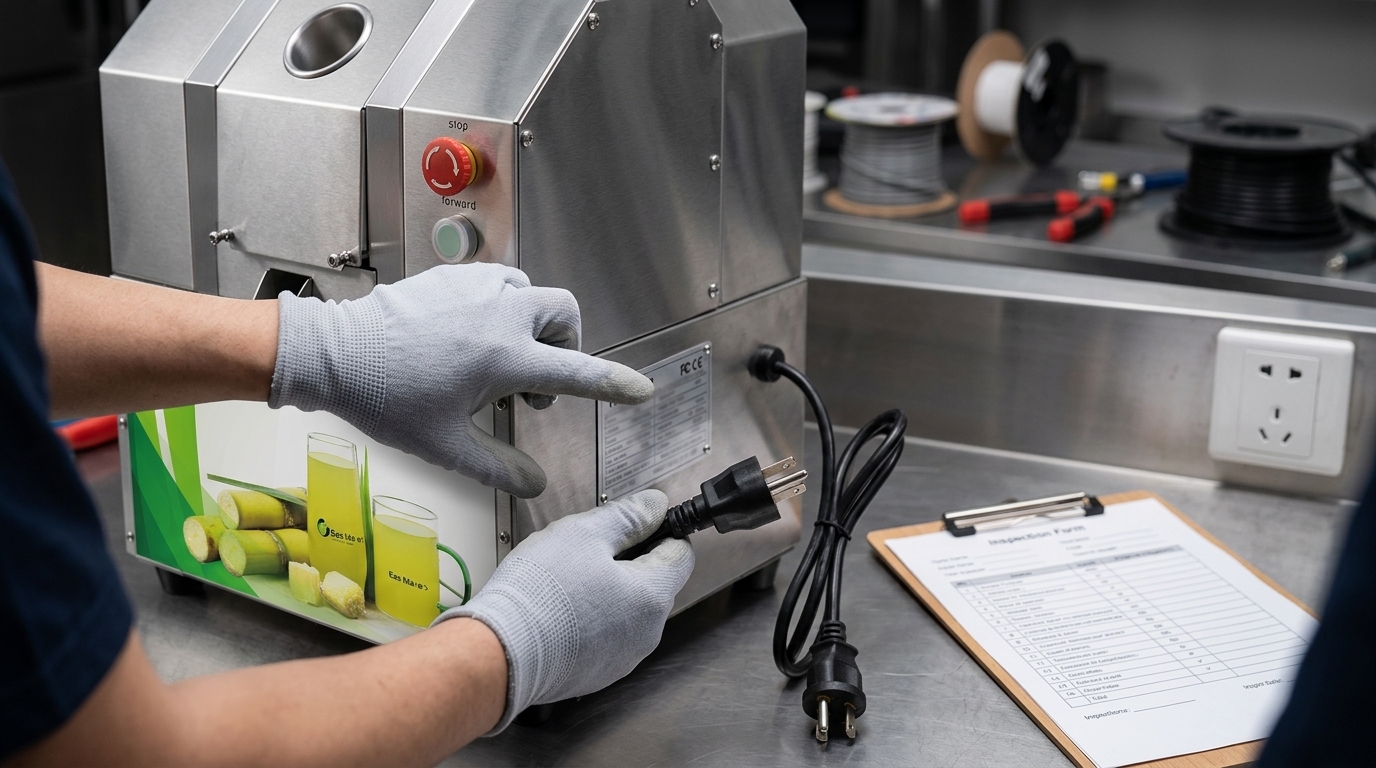
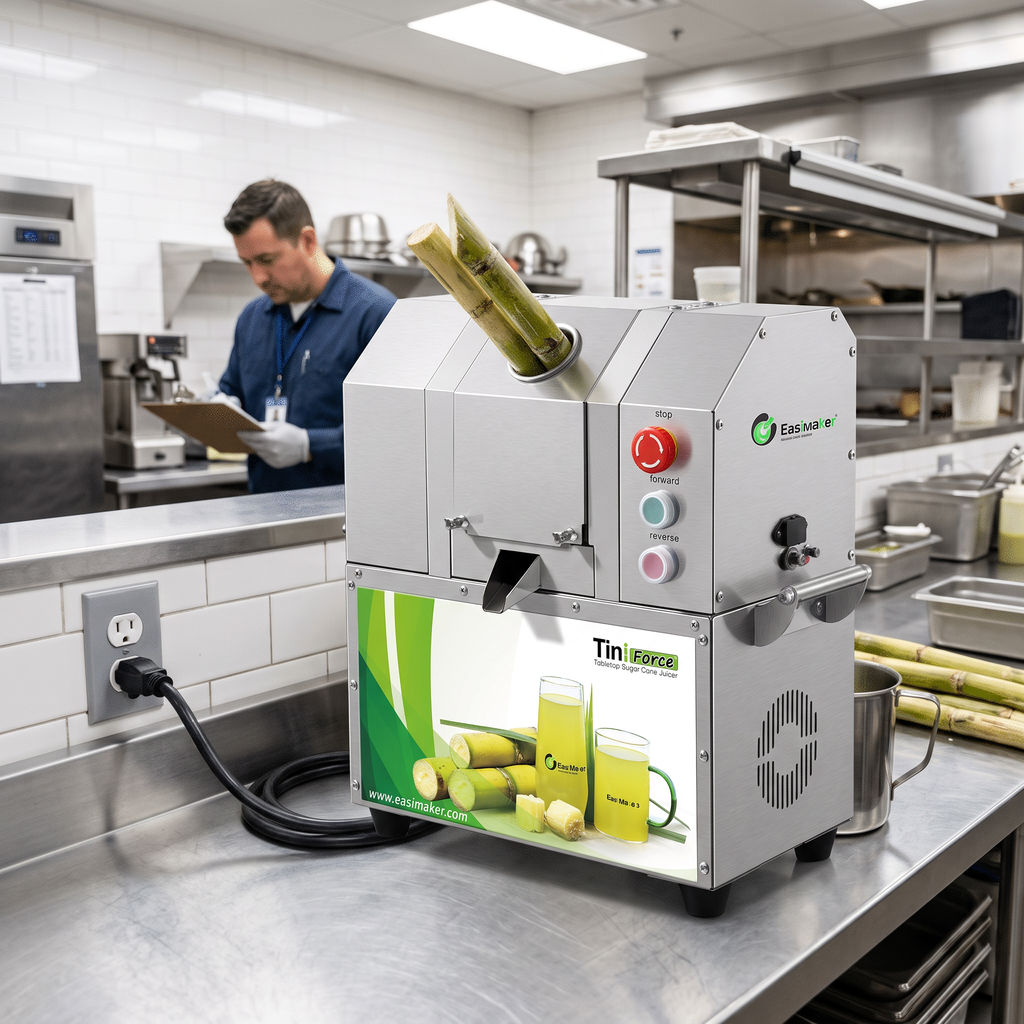
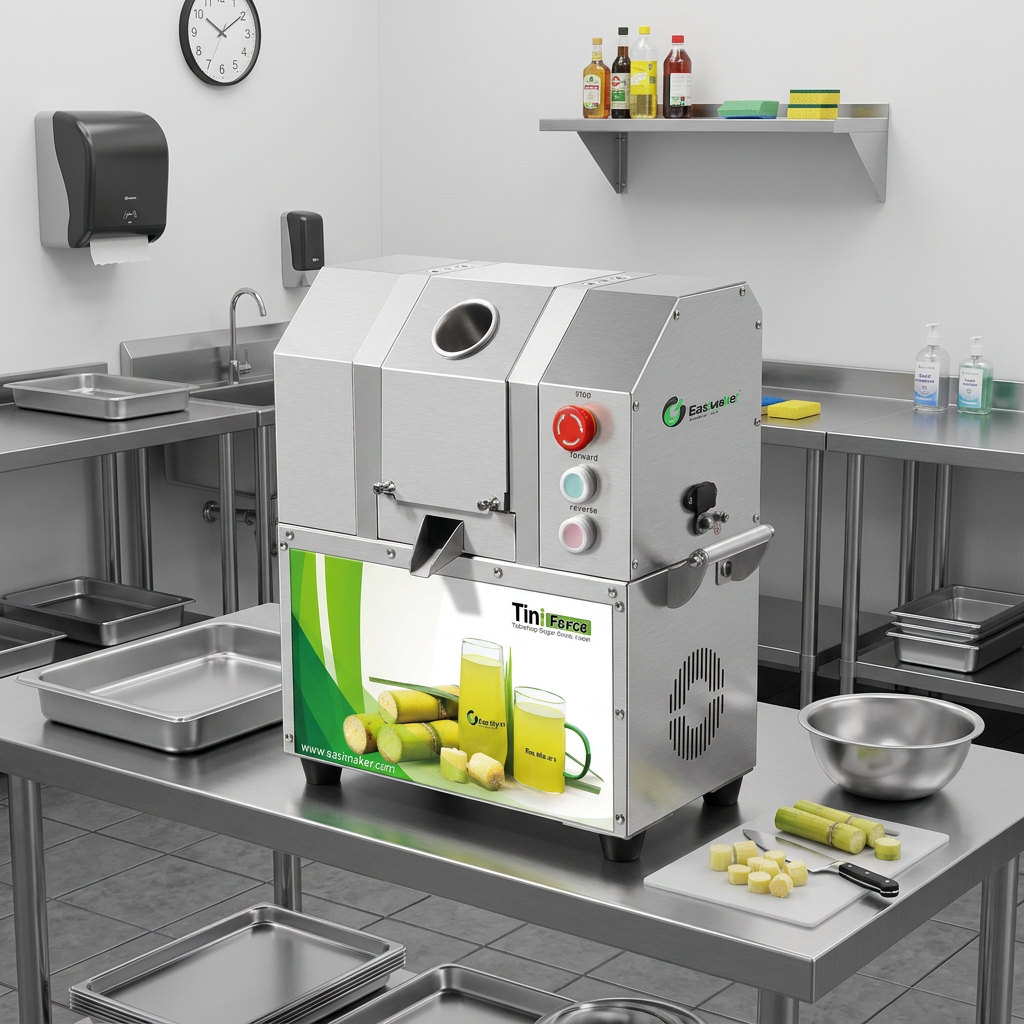
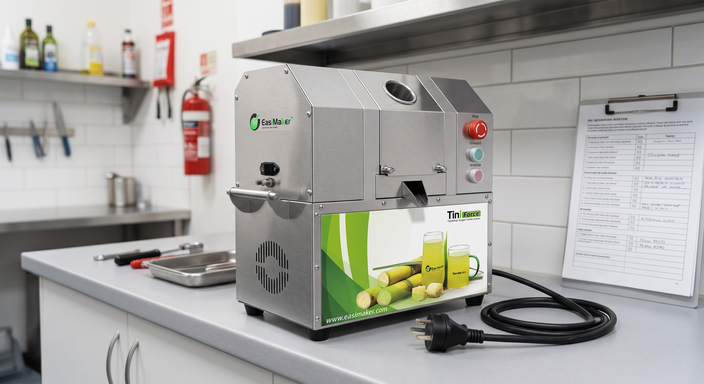
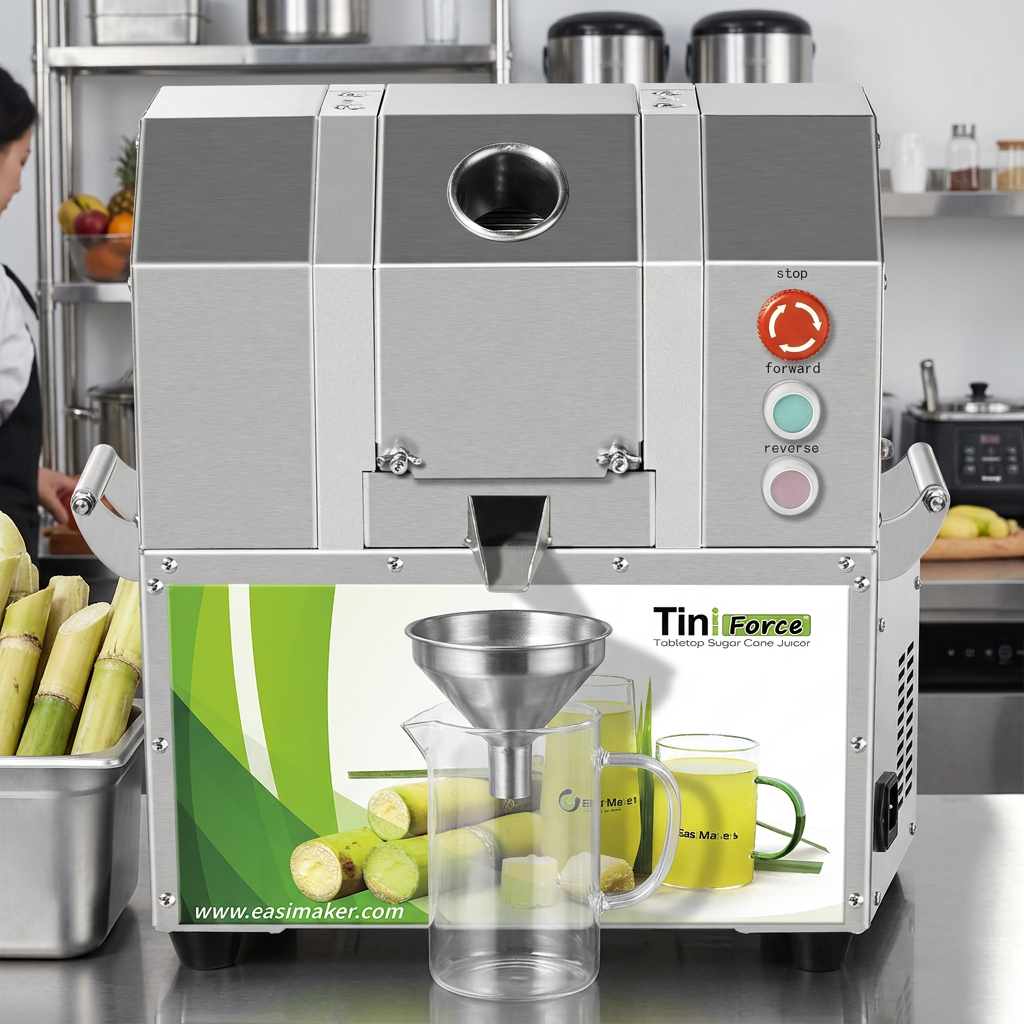
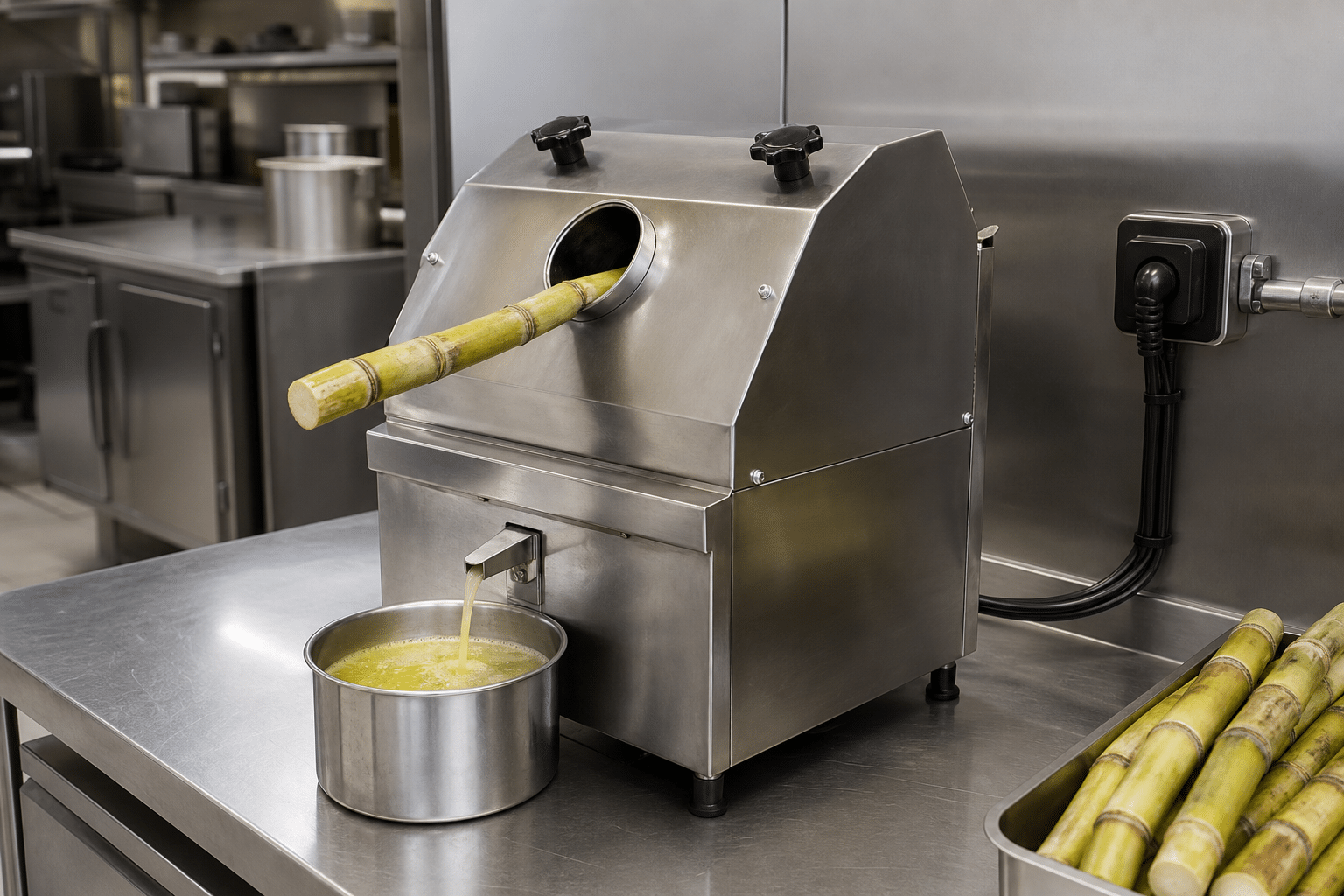
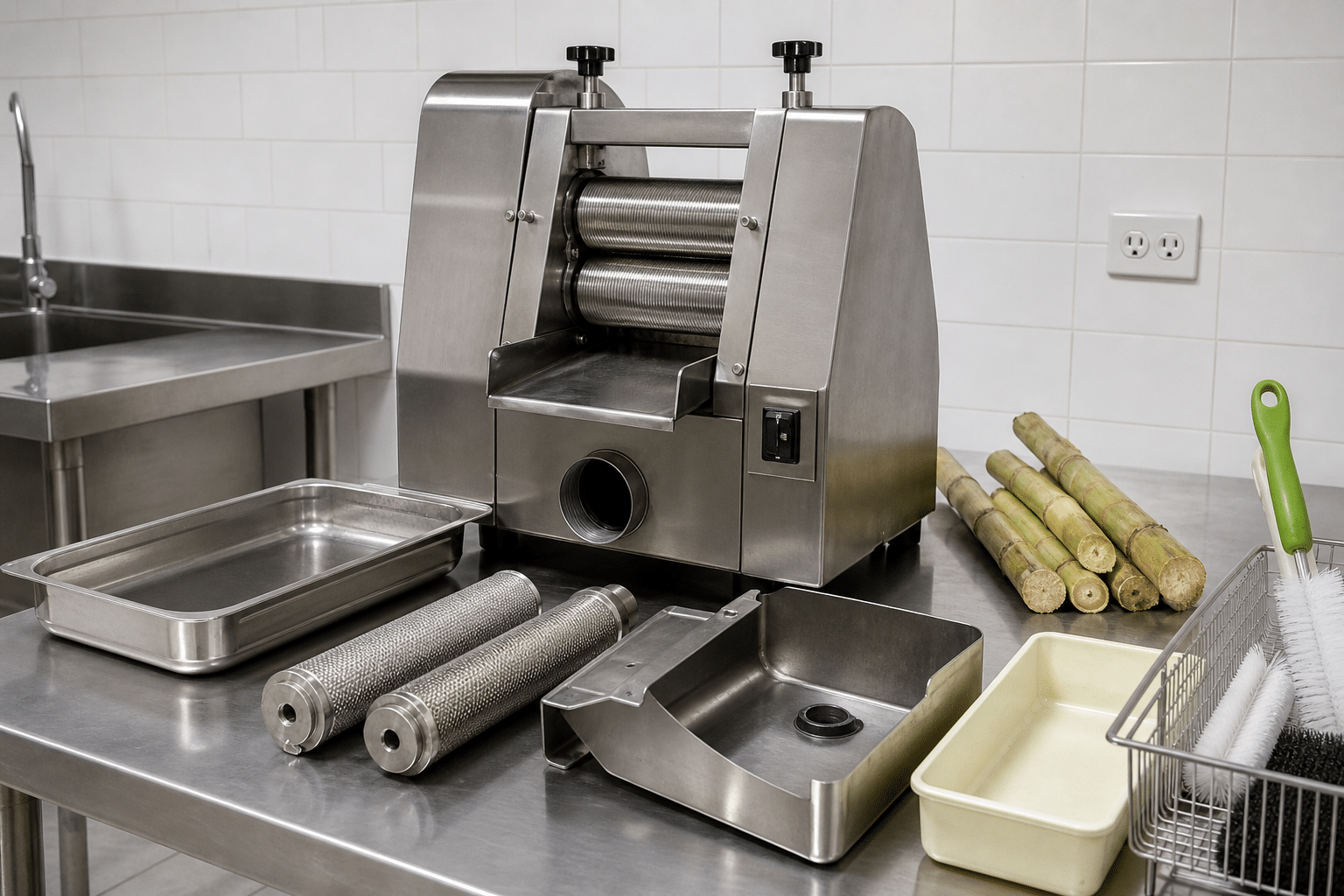
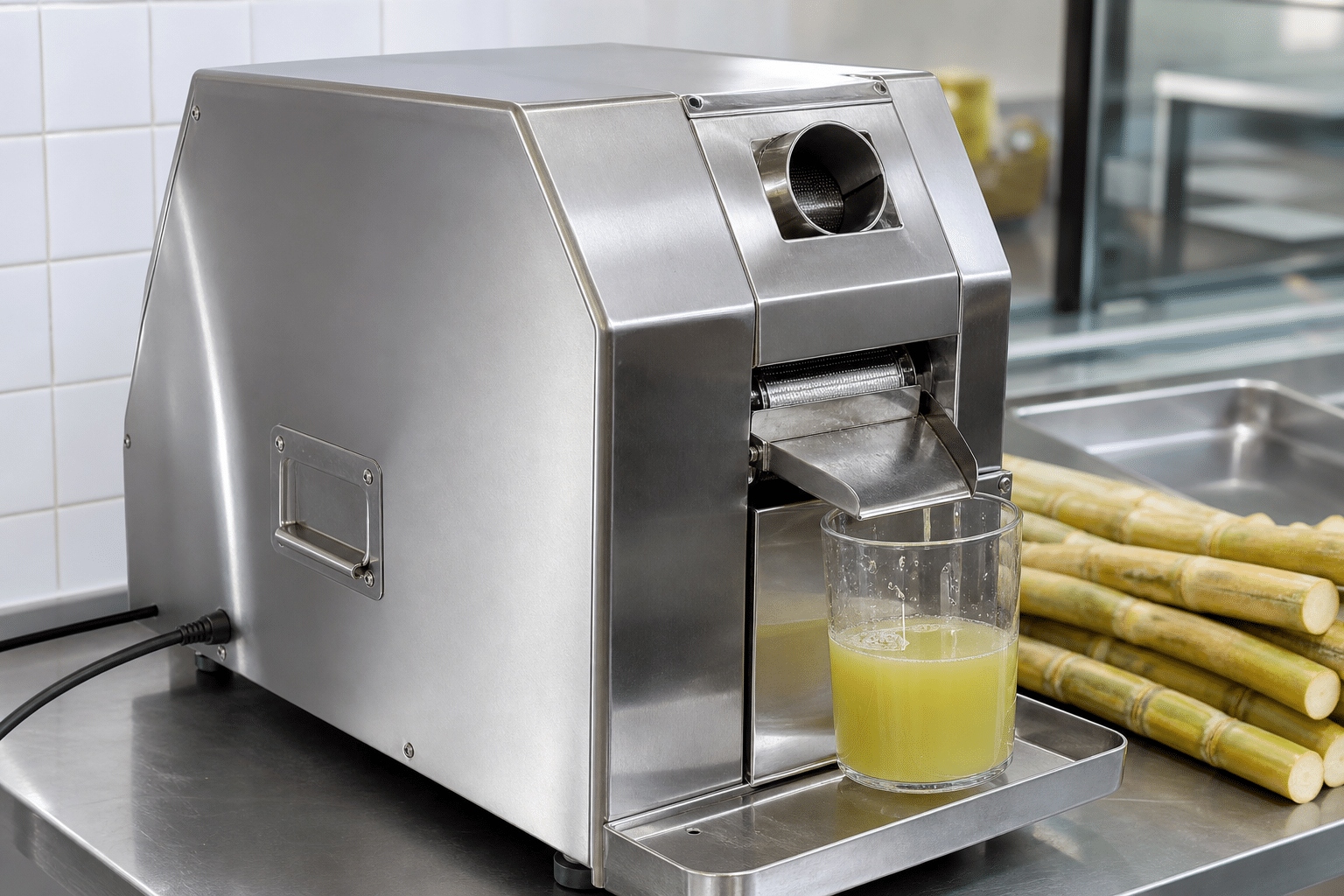
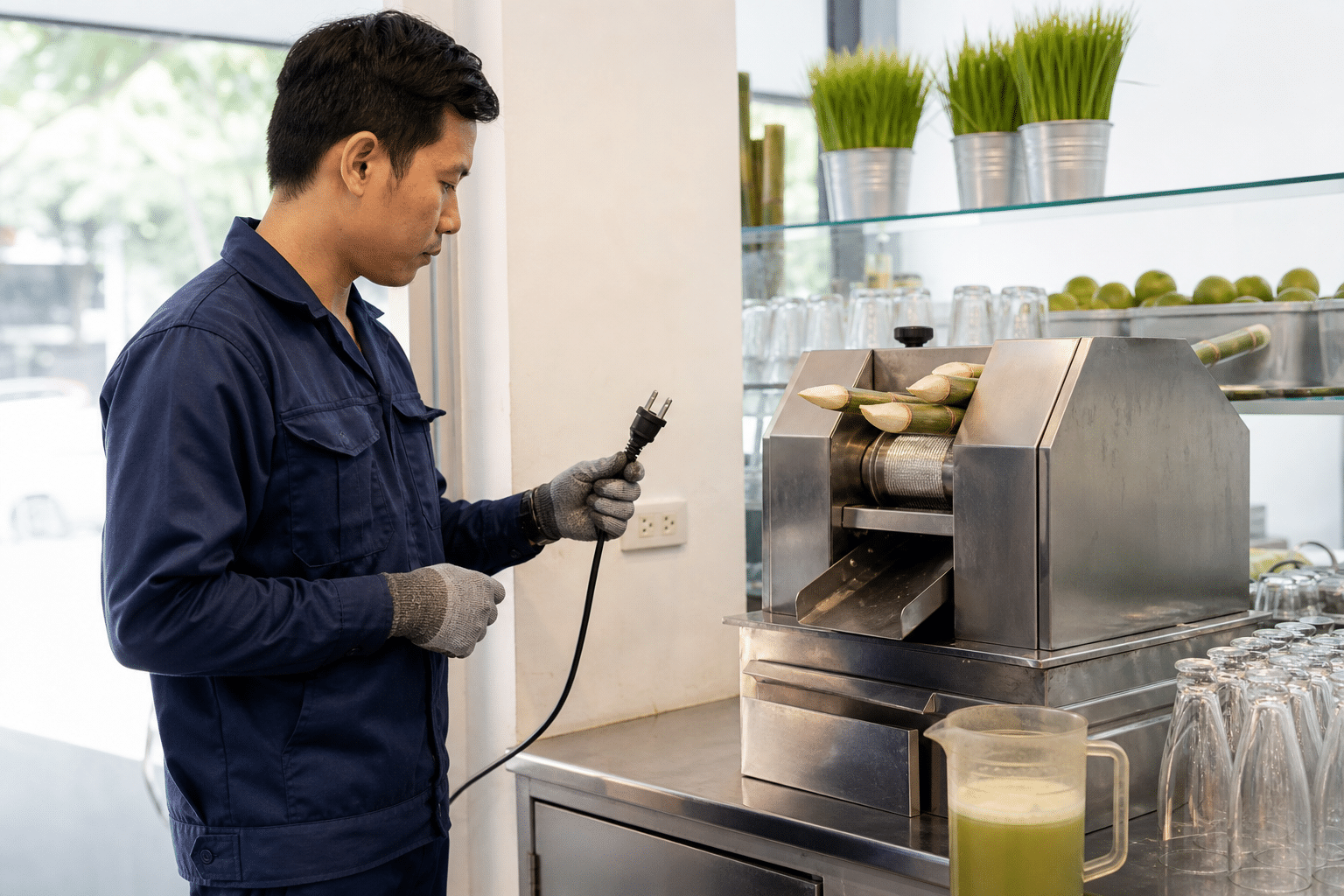
Commercial sugarcane juicer isolated for a safe troubleshooting inspection

Commercial sugarcane juicer troubleshooting should begin with a safe, simple inspection: stop the machine, isolate it from the power supply, remove cane only after the rollers have fully stopped, and check the manual for the model-specific procedure. Do not bypass guards, interlocks, overload protection, or electrical safety devices.

Most operating faults fall into a few areas: incorrect power supply, blocked or poorly prepared cane, residue around rollers and juice paths, worn drive or roller components, or a fault that needs qualified service. Record what happened before the issue appeared, including the cane condition, cleaning performed, sound or smell noticed, and any indicator status. This information helps prevent repeat downtime.

Before opening panels or attempting adjustment, confirm that the unit is disconnected. Internal electrical work, drive-system adjustment, and replacement of safety-related parts should be handled by trained personnel using the applicable manual and local safety requirements.

When the Machine Will Not Start

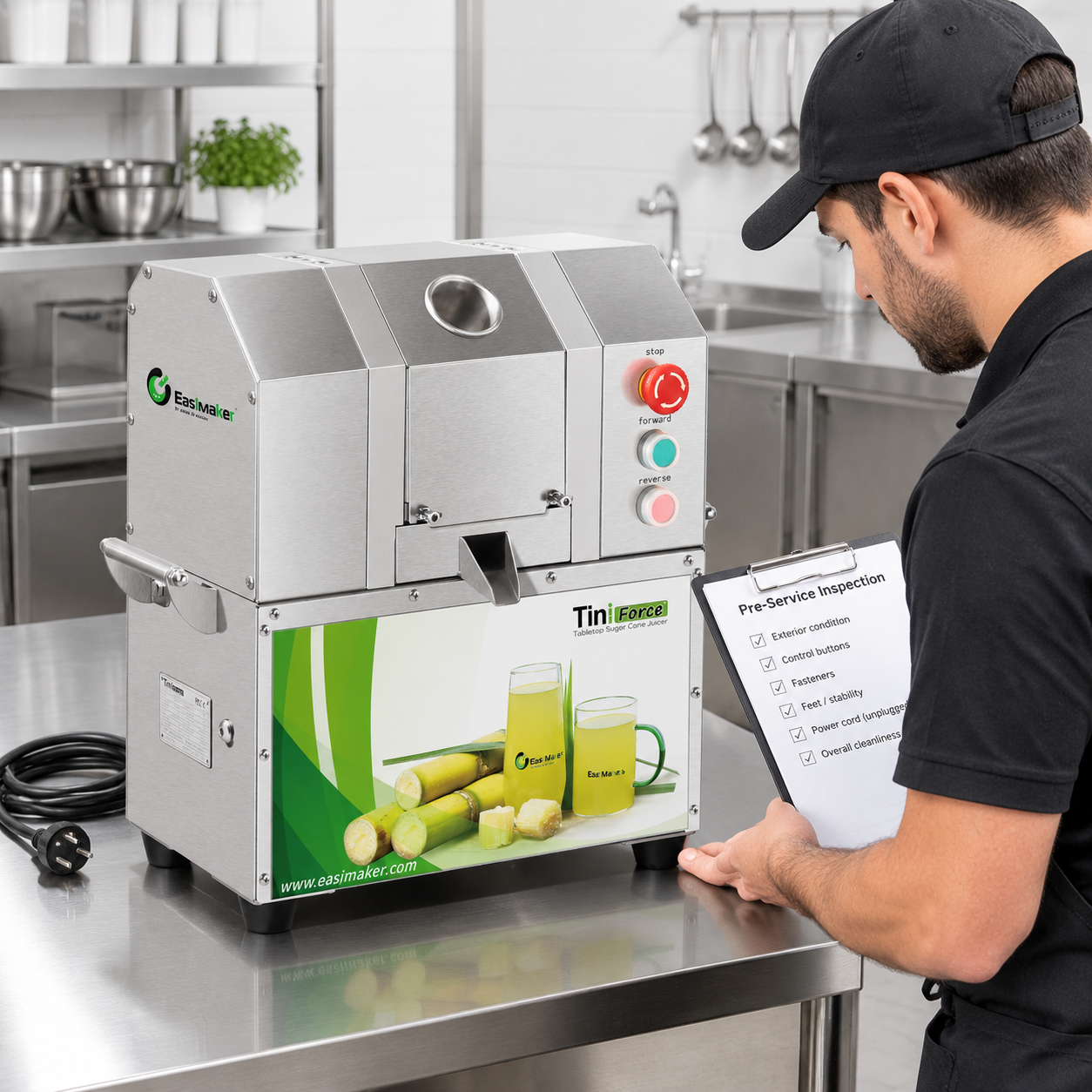
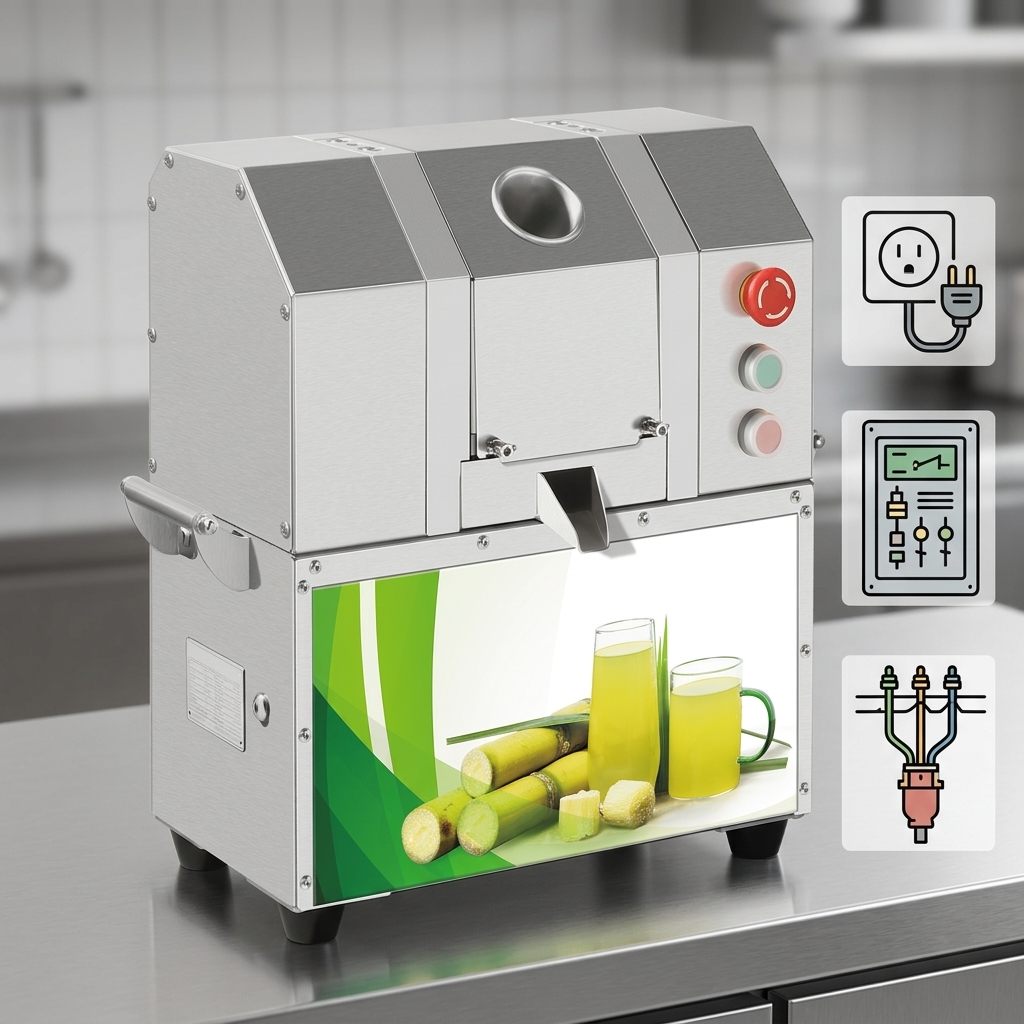
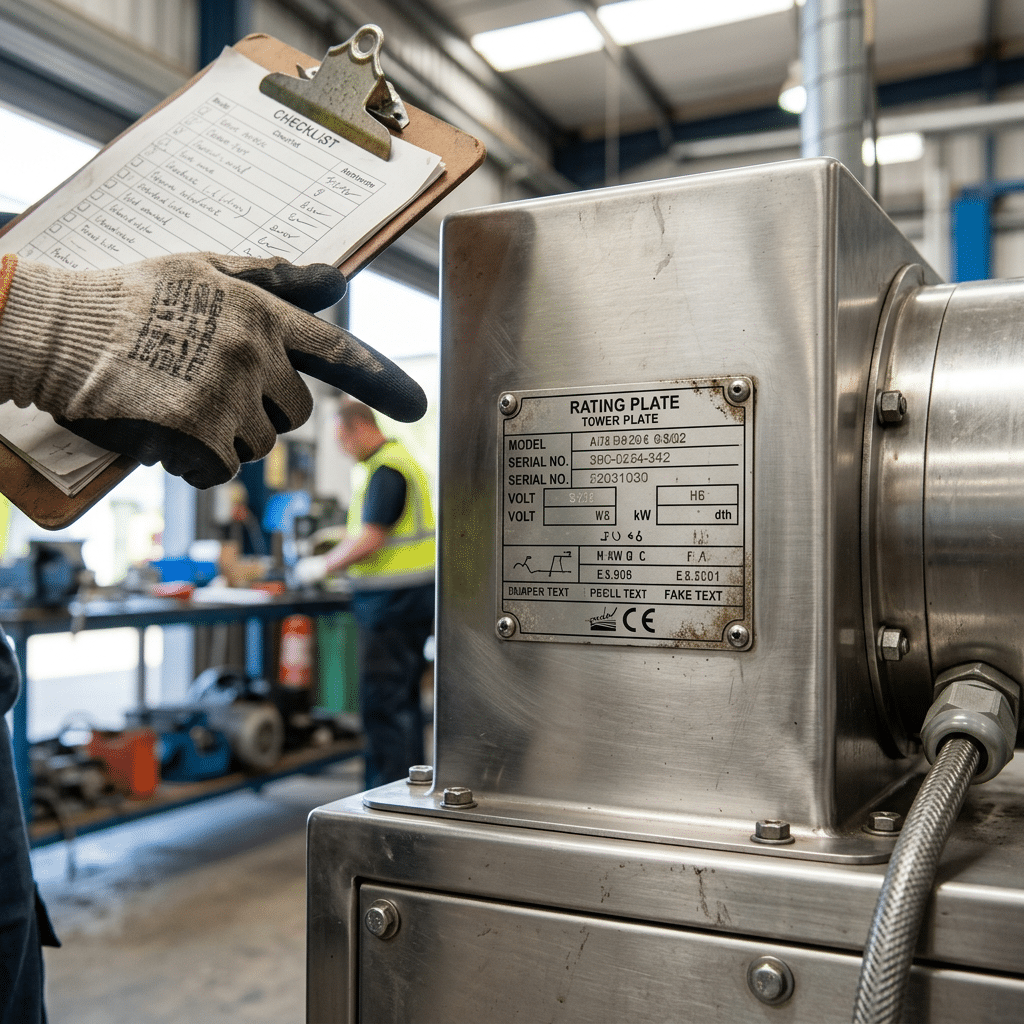
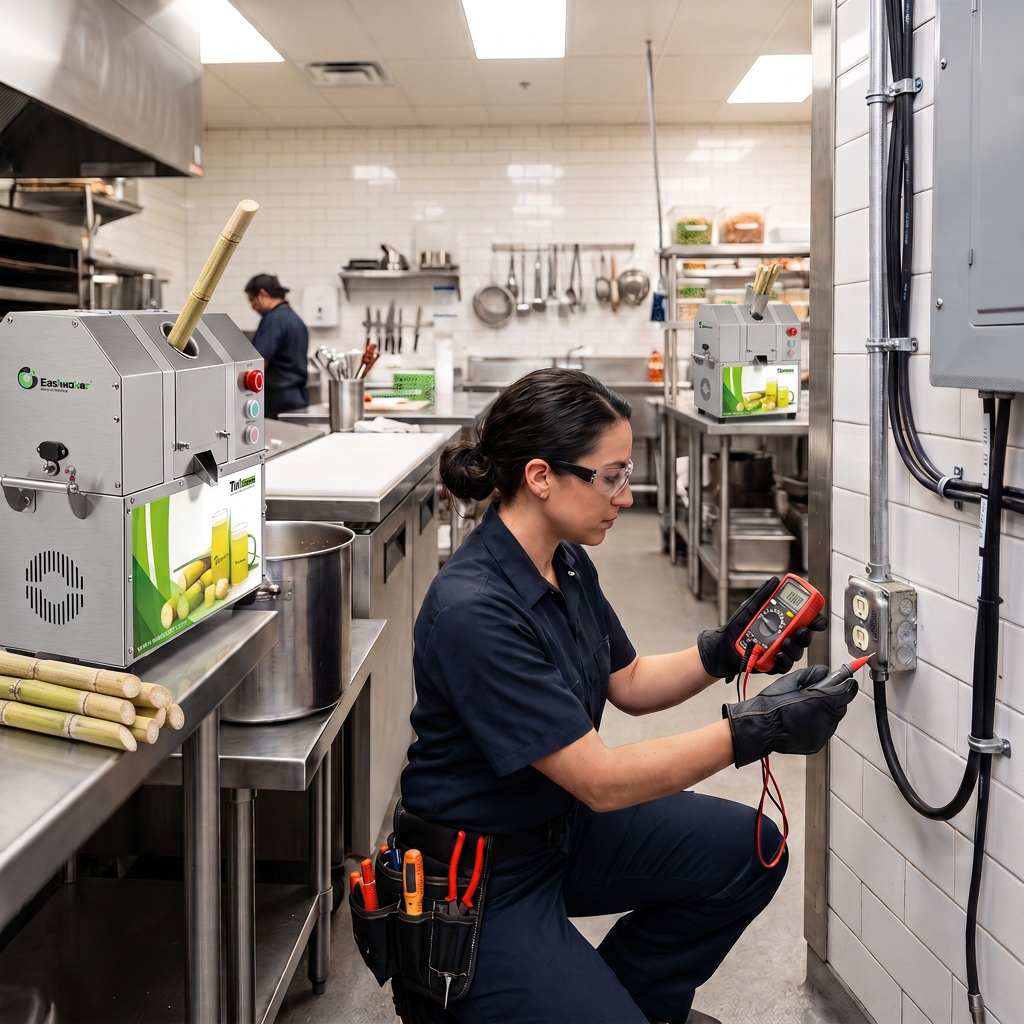
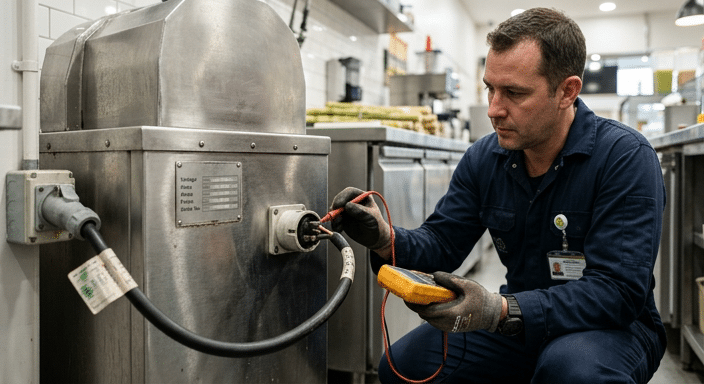
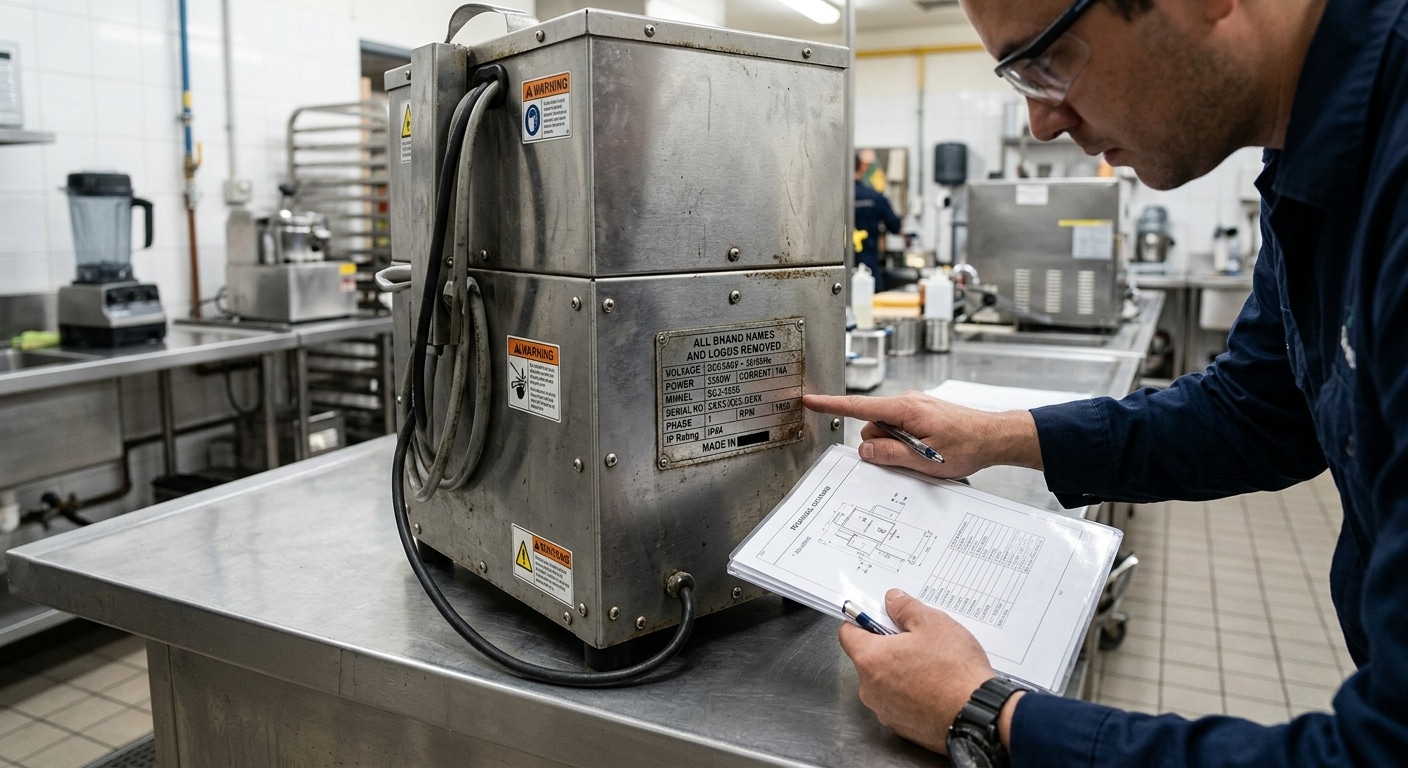
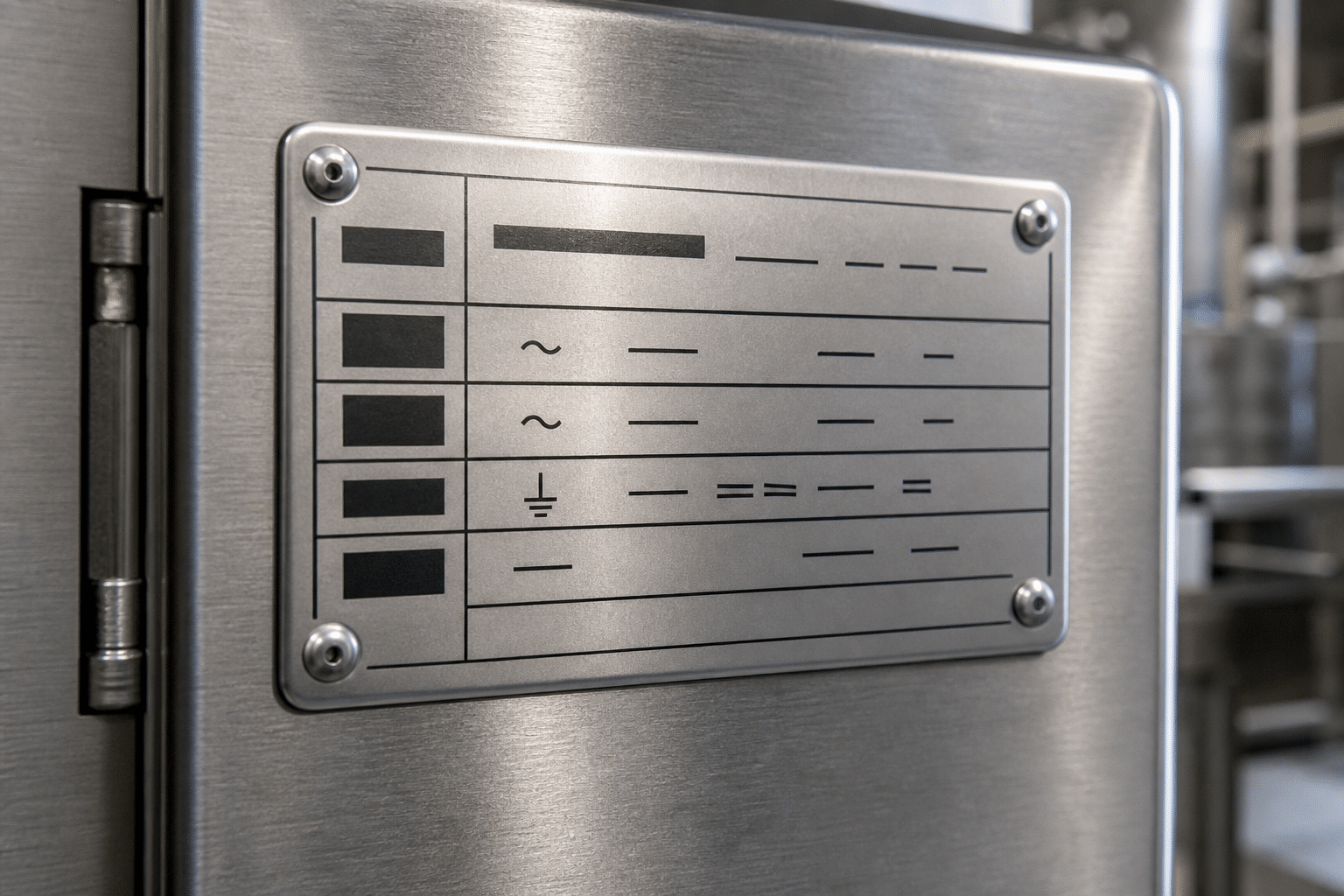
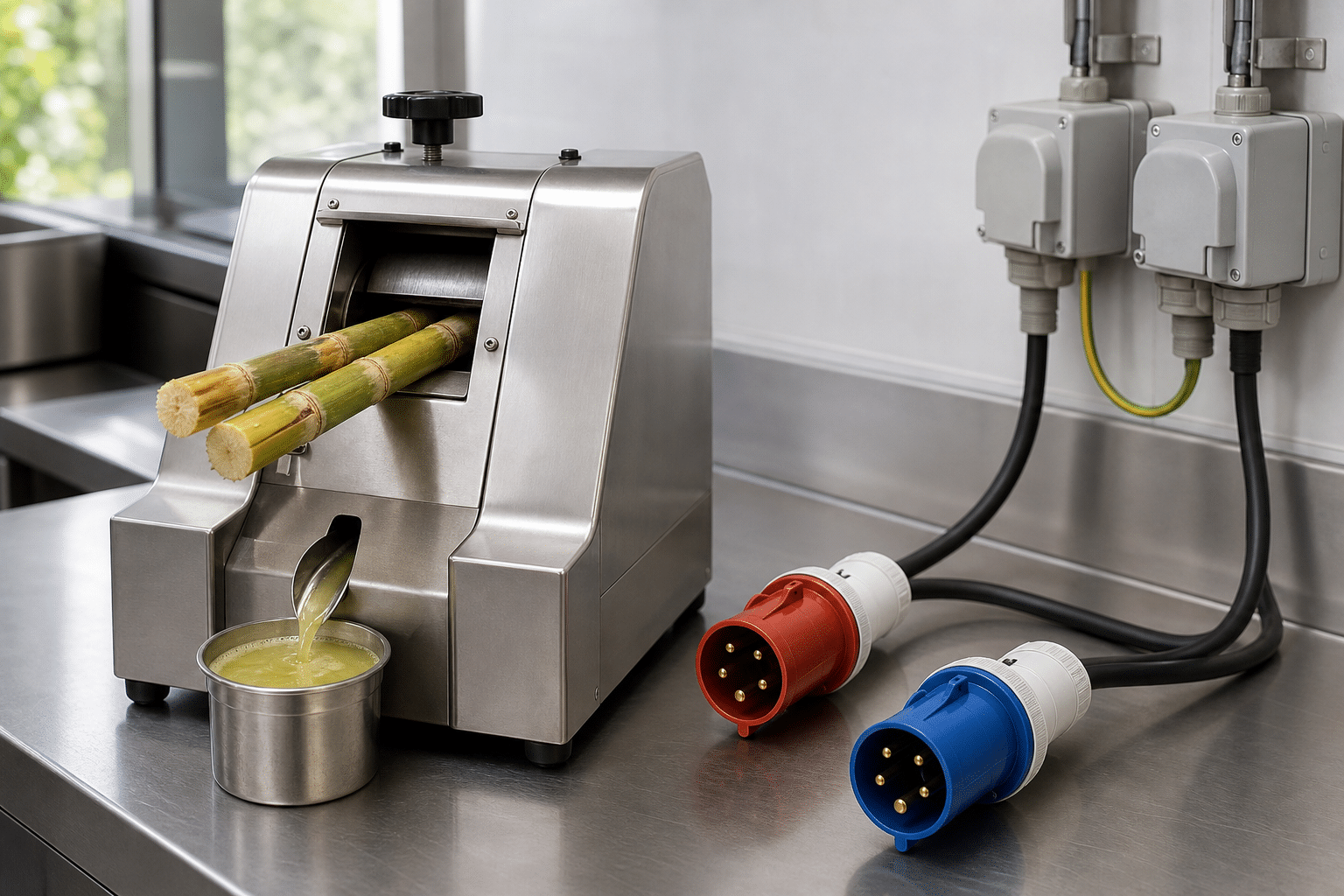
Checking a commercial sugarcane juicer power connection and rating information

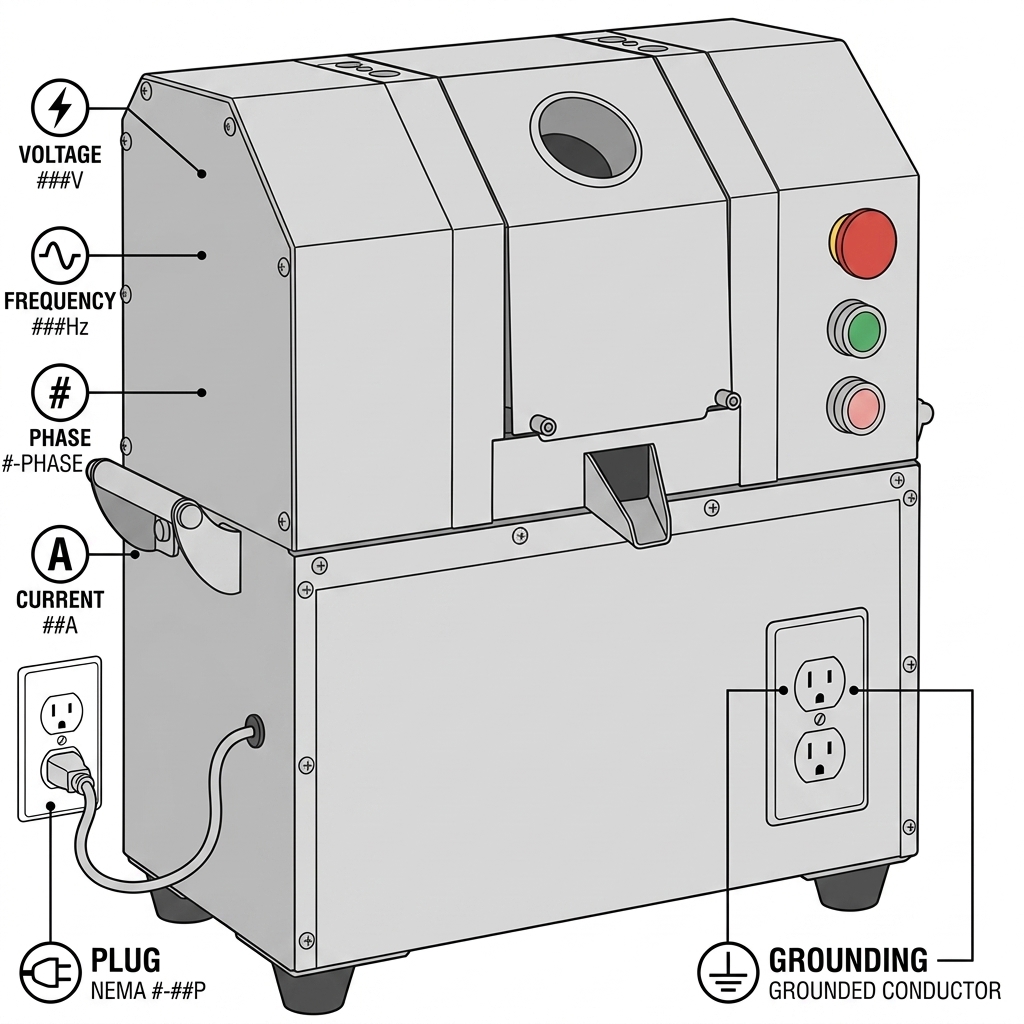
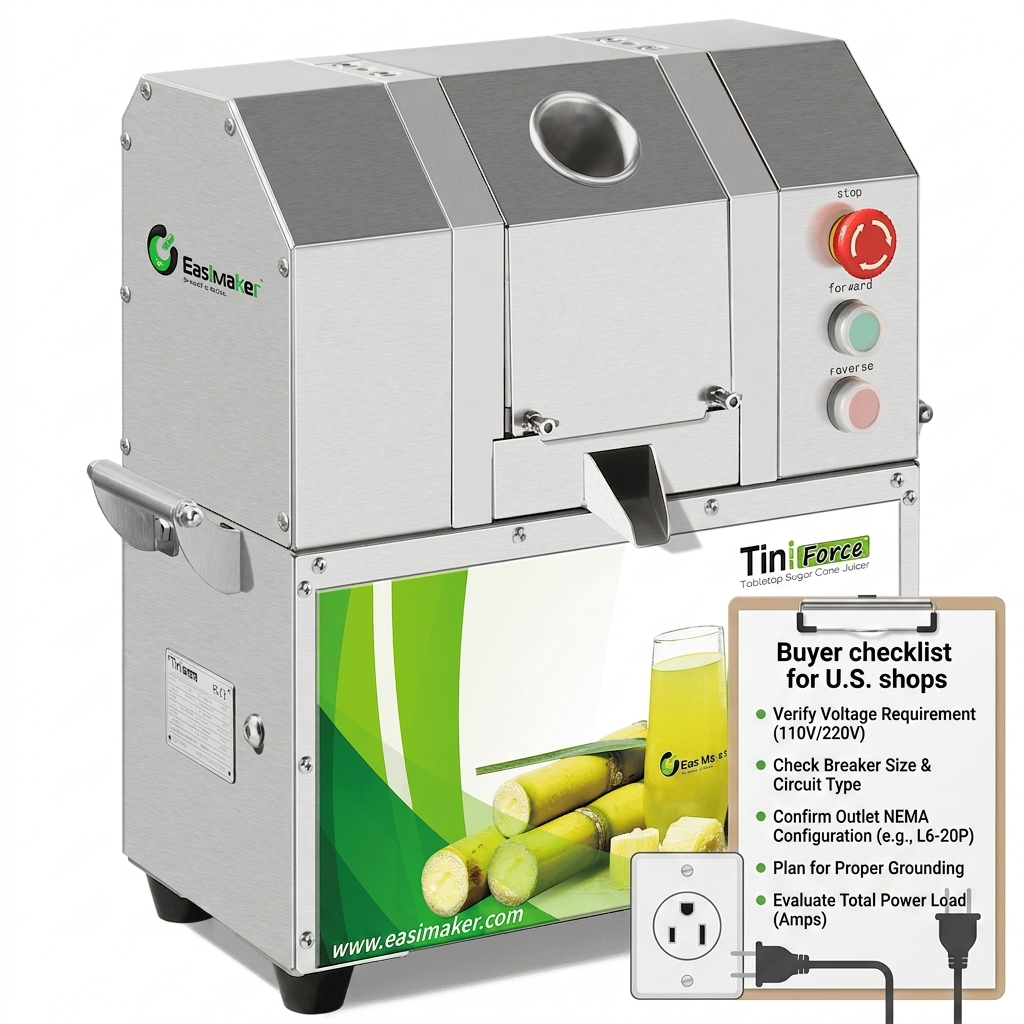
If the machine does not start, do not repeatedly cycle the switch. First check whether the plug, isolator, outlet, and protective device are in the normal operating position. Then compare the available supply with the voltage, frequency, and phase shown on the machine rating plate. A supply mismatch can prevent correct operation and may damage electrical components.

Check that emergency-stop controls are released and that covers, guards, and any safety interlocks are correctly positioned. If the machine stopped during a heavy feed, allow it to cool if the manual requires this, clear cane and residue with power isolated, then follow the specified reset process. Never reset protection repeatedly without identifying why it tripped.

For a structured review of electrical symptoms, see diagnosing electrical faults in commercial sugarcane machines. Confirming the electrical specification before installation is equally important; refer to sugarcane juicer power supply requirements.

Slow Rollers or Cane Jamming

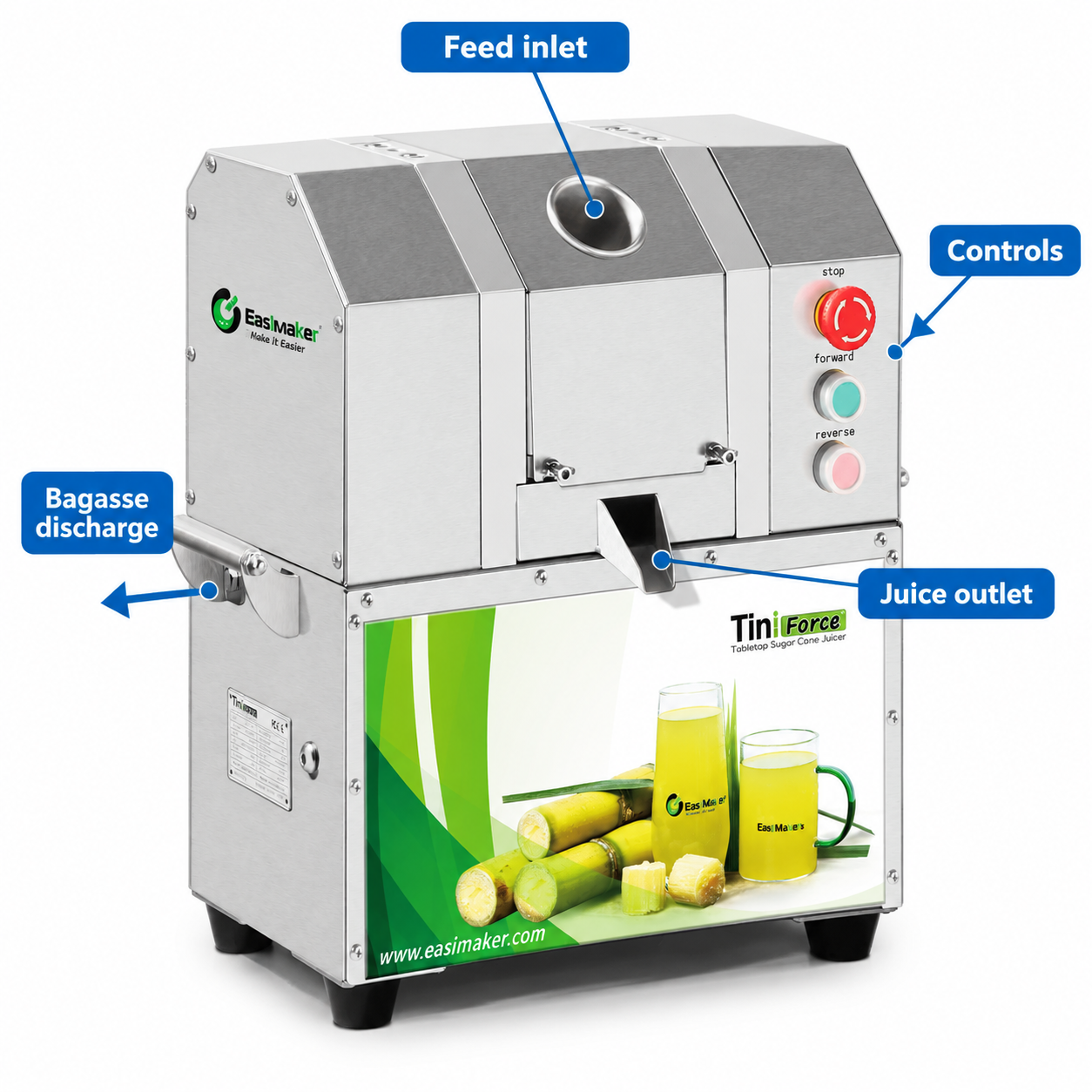
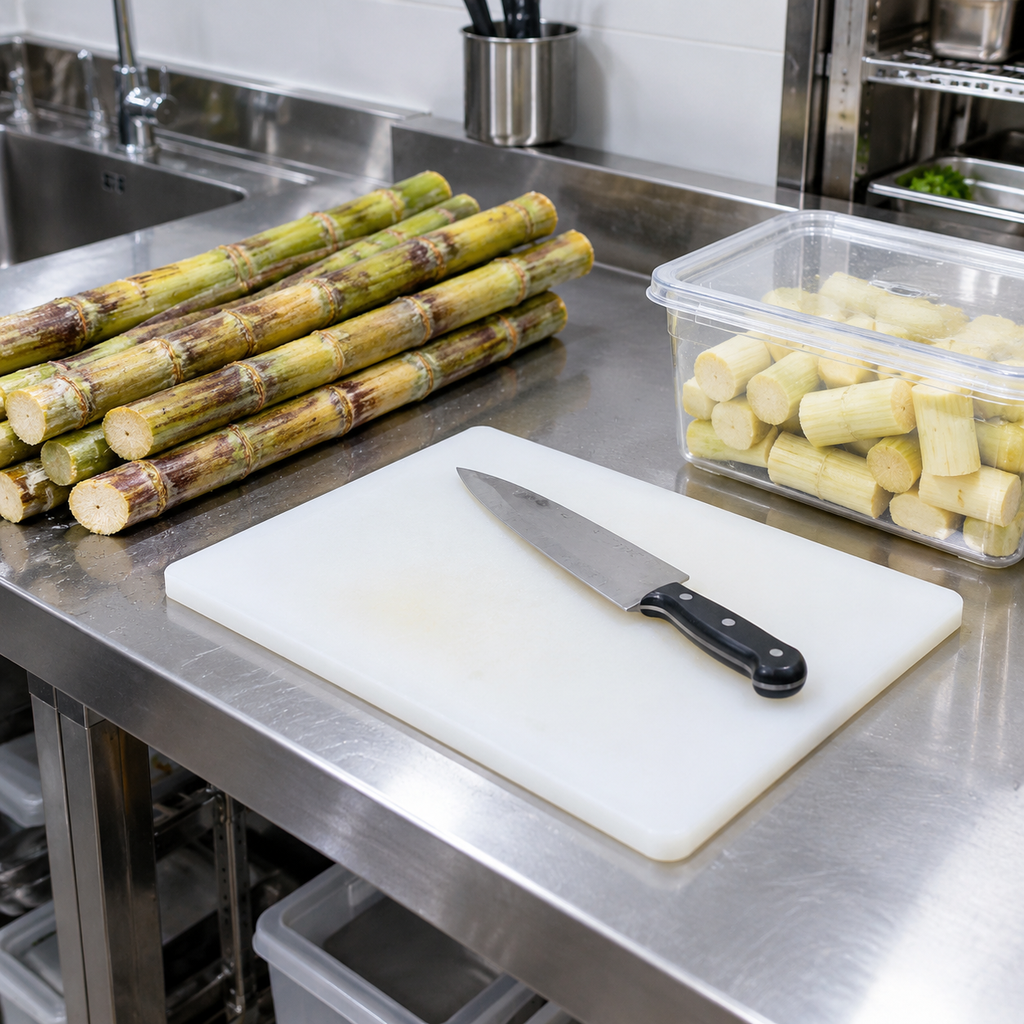
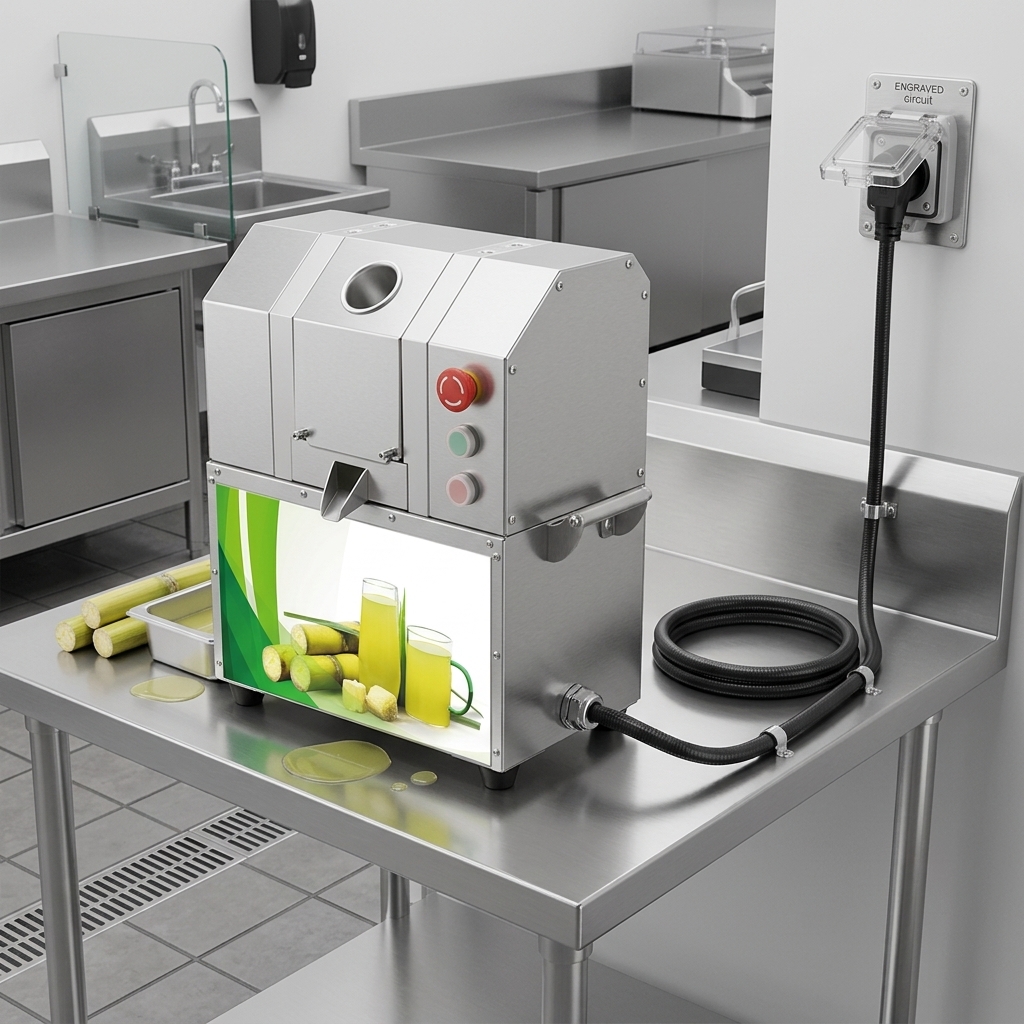
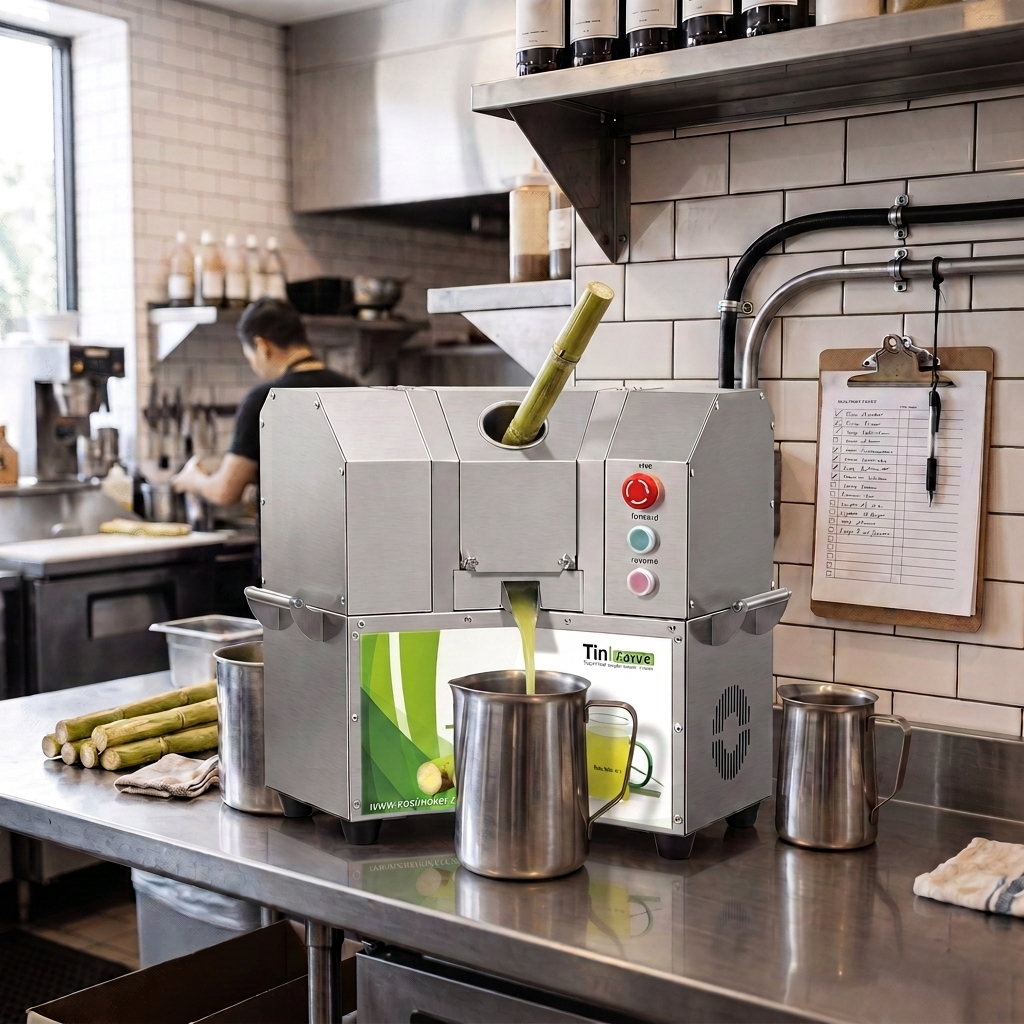
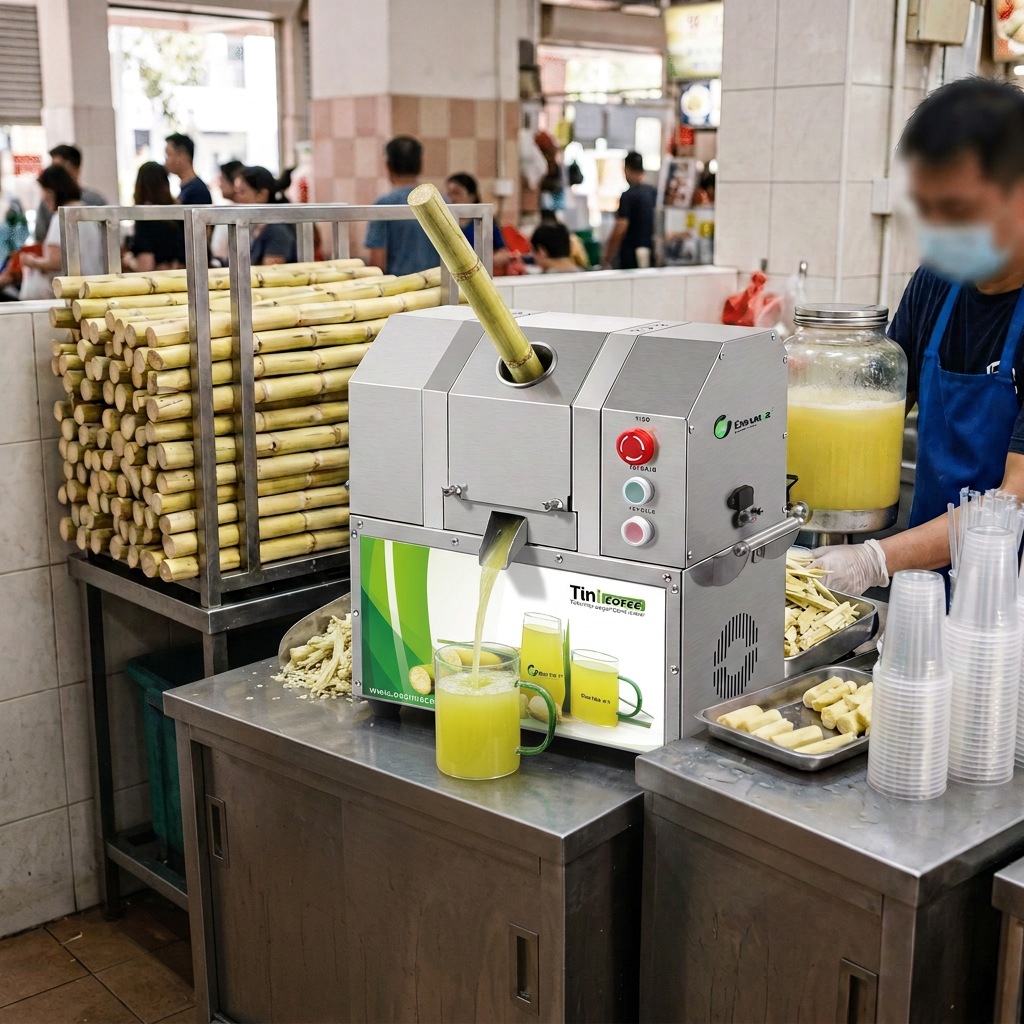
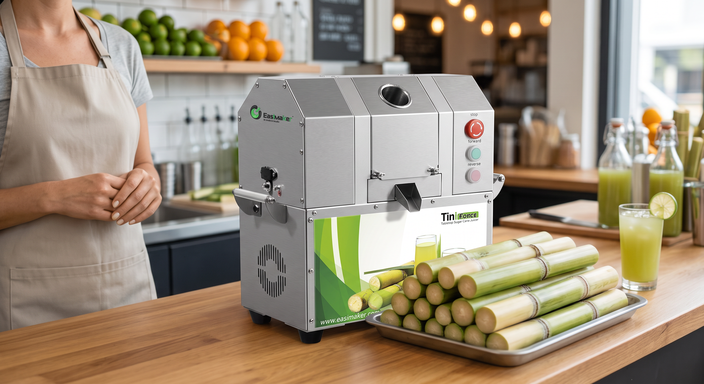
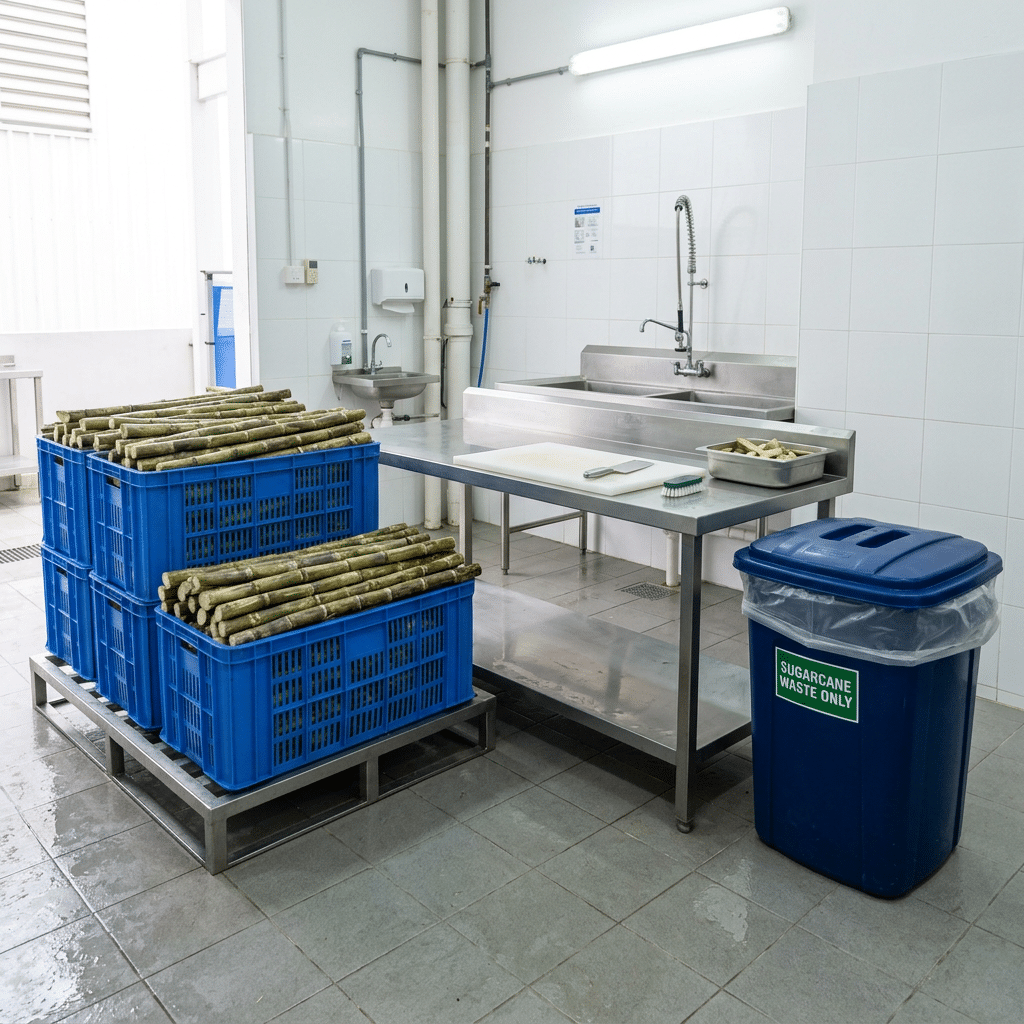
Properly prepared sugarcane beside a commercial juicer feed opening

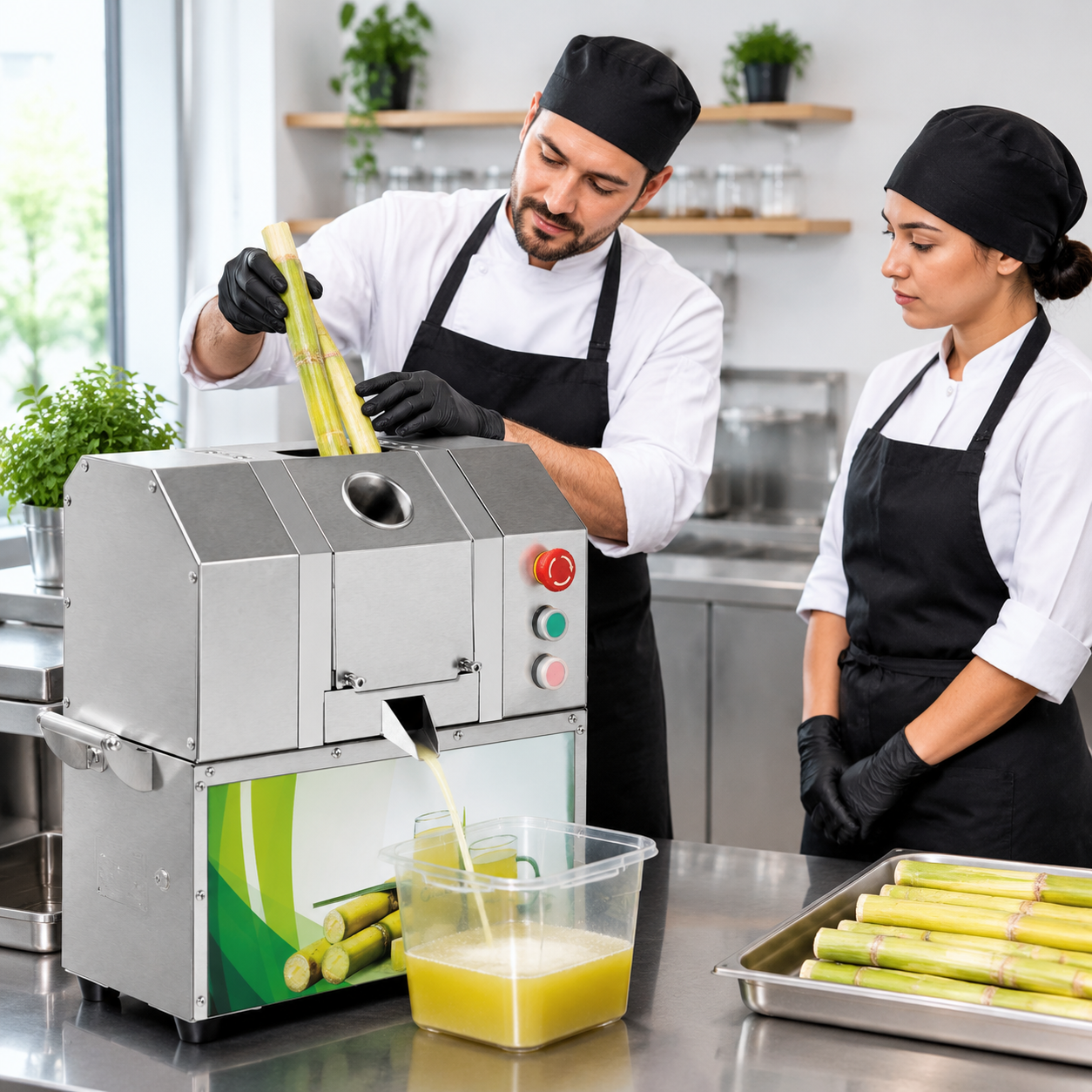
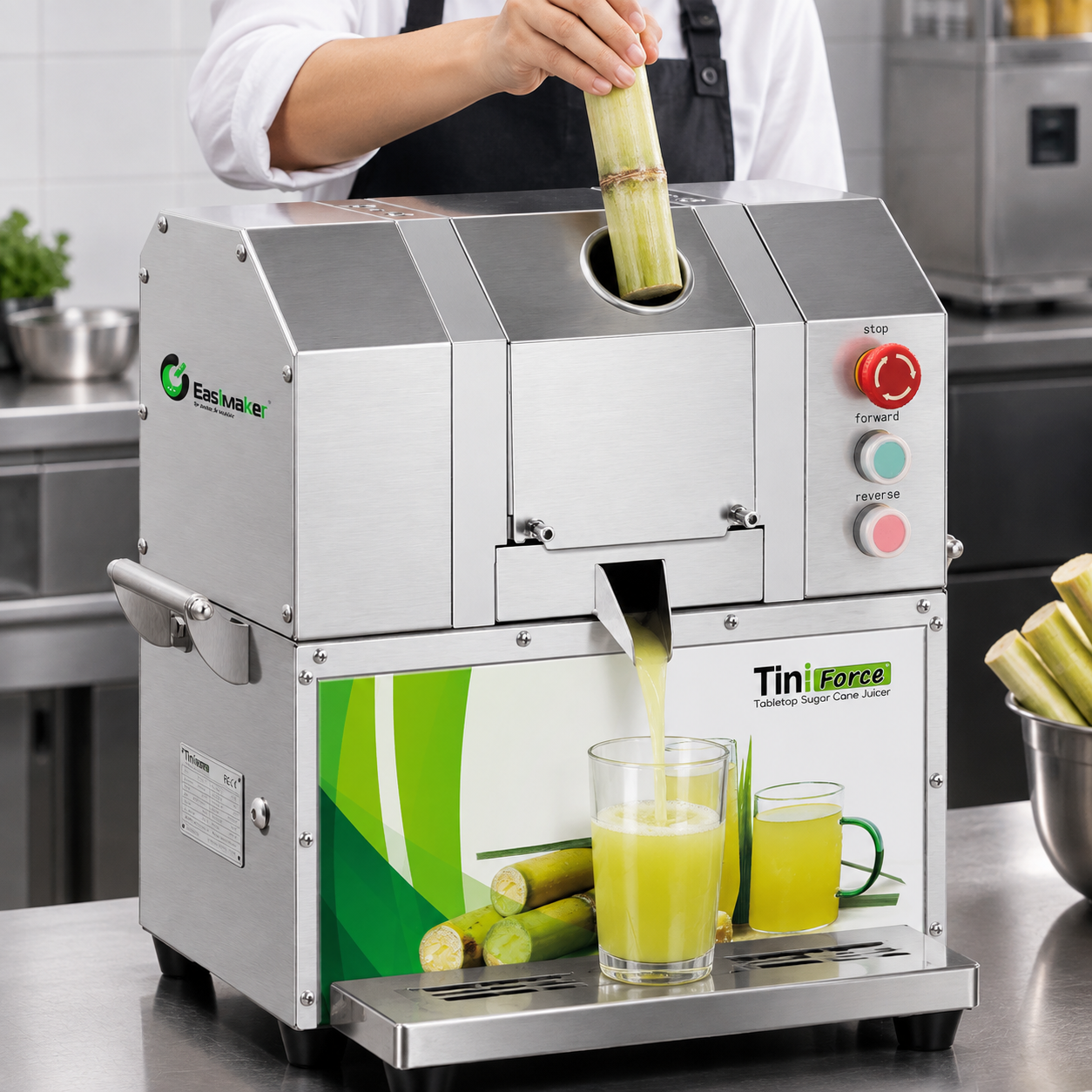
Slow roller movement, slipping, or a jam often starts with the cane rather than the machine. Cane that is excessively thick, hard, dirty, bent, or cut unevenly can feed poorly. Prepare cane consistently, remove unsuitable pieces, and introduce it at the feed opening as instructed for the machine. Do not force cane into the rollers or use hands or improvised tools to clear a moving machine.

With power isolated, inspect the feed area and roller surfaces for fibrous buildup, sticky residue, foreign material, or damaged parts. Clean only with methods approved for food-contact equipment. If the rollers remain slow after cleaning and using appropriately prepared cane, the cause may involve the drive system, rollers, bearings, or controls. That requires a service assessment rather than operator adjustment.

Frequent jams can also indicate that the machine class does not match the operation’s cane preparation process or service demand. The commercial versus home sugarcane juicer guide explains why duty cycle, construction, and maintainability matter in daily service.

Low Juice Output

Low juice output should be assessed as a process issue first. Cane freshness, variety, storage conditions, diameter, trimming quality, and operator feeding method all affect the result. Compare performance using similar cane and a consistent preparation routine before concluding that the machine has a mechanical fault.

Next, clean the roller area and juice path according to the manual. Residue can interfere with feeding and drainage. Inspect for visible roller wear, incorrect roller contact, abnormal slipping, or material accumulating where it should not. Do not change roller settings unless the manufacturer documents an operator-safe adjustment procedure.

For a focused diagnostic sequence, read what to do when a sugarcane machine has low juice yield. When selecting a replacement or additional unit, compare the actual cane workflow, cleaning routine, counter space, and electrical site conditions rather than relying on output estimates alone.

Noise, Vibration, and Overheating

New grinding, knocking, squealing, or repeated vibration is a reason to stop operation and inspect safely. Check that the machine stands level on a stable surface, mounting points are secure where applicable, and no cane, debris, or loose item is contacting moving components. A change in sound after a jam or cleaning event is useful information for the service team.

Heat near a motor or drive area can be normal during use, but a burning smell, smoke, unusually hot external surfaces, repeated protective trips, or a sudden performance change is not an operator repair task. Disconnect the unit and arrange qualified inspection. Continuing to run equipment with these symptoms can increase damage and create safety risk.

Scheduled cleaning and inspection reduce avoidable issues. Use the routine in the commercial sugarcane juicer maintenance guide as a basis, then follow the instructions specific to the installed model.

Leaks, Cleaning, and Hygiene

Locate the source of a leak before returning the machine to service. Check whether the juice collection container, outlet, filter or strainer, removable covers, and drainage path are correctly fitted and free from blockage. Residue or fiber can divert liquid and make a drainage problem appear to be a seal failure.

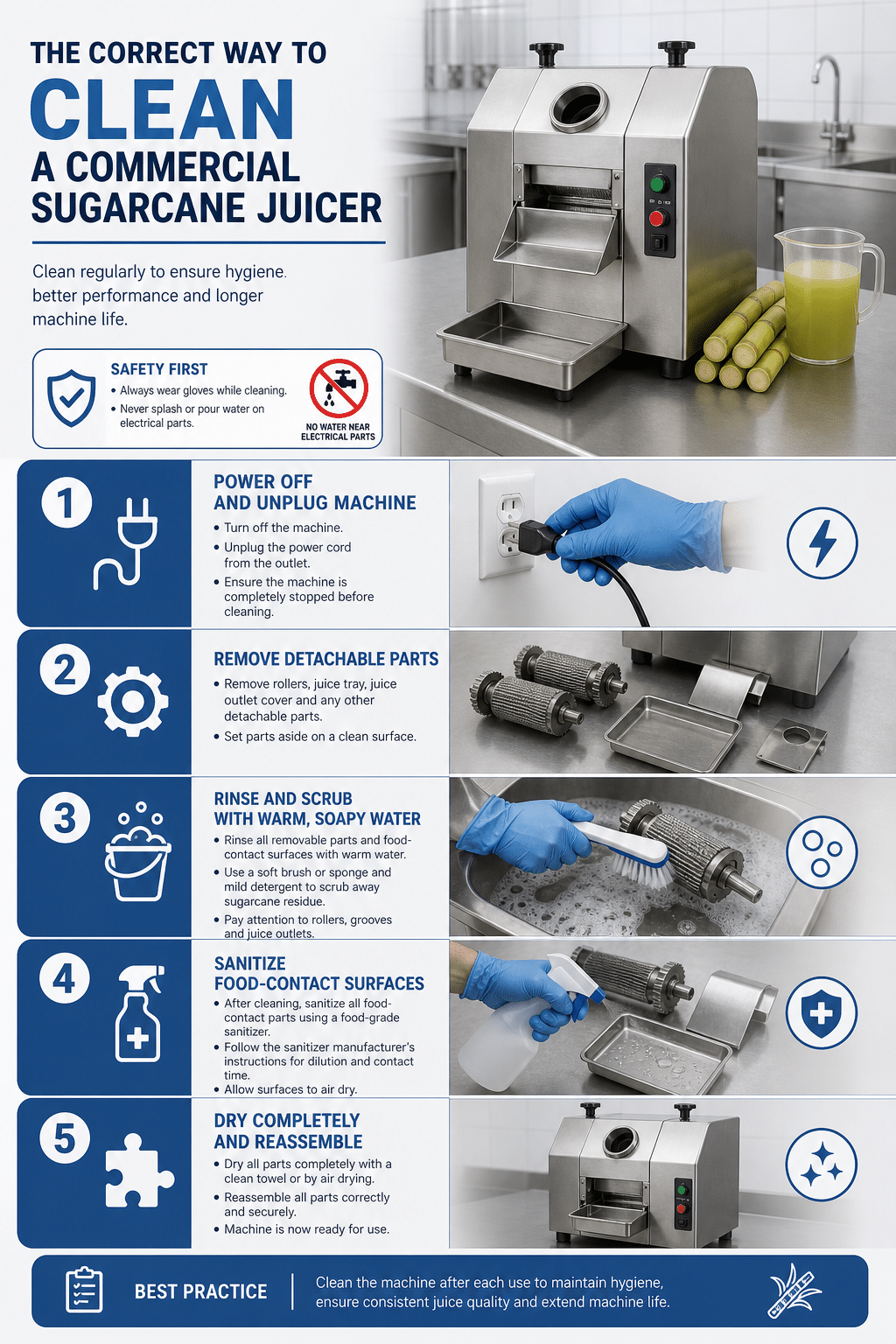
Clean food-contact surfaces at the required frequency for the operation and local food-safety rules. Use only suitable cleaning materials, rinse as required, and dry parts before reassembly when the manual calls for it. Avoid directing water into electrical areas, motors, switches, or unapproved openings. Do not operate with damaged food-contact parts, missing guards, cracked housings, or persistent leakage.

Keep a basic log for cleaning, unusual symptoms, and replaced wear parts. This helps operators identify recurring patterns and gives maintenance personnel a reliable service history.

When to Call for Service

Arrange qualified service when the machine will not start after basic external checks, protection repeatedly trips, rollers do not turn correctly, electrical components show damage, there is smoke or a burning smell, guards or interlocks do not function, a leak continues after correct cleaning and reassembly, or the machine makes abnormal mechanical noise.

When reporting a fault, provide the model, serial information if available, rating-plate details, the symptoms, when they began, photos or video where safe, and the cleaning or operating steps already completed. Clear fault information helps support teams identify the correct next action and parts requirement.

For businesses reviewing equipment suitability as well as repair needs, compare the TiniForce S3 and EasiDeMax S4 for your operation based on practical workflow requirements.

Sugarcane Juice Bar Equipment Checklist for a New Shop

Table of Contents

A new sugarcane juice bar needs more than a commercial cane juicer. This checklist covers the equipment, work zones, hygiene tools, utilities, service supplies, and maintenance provisions needed to build a practical daily operation.

The essential equipment for a new sugarcane juice bar

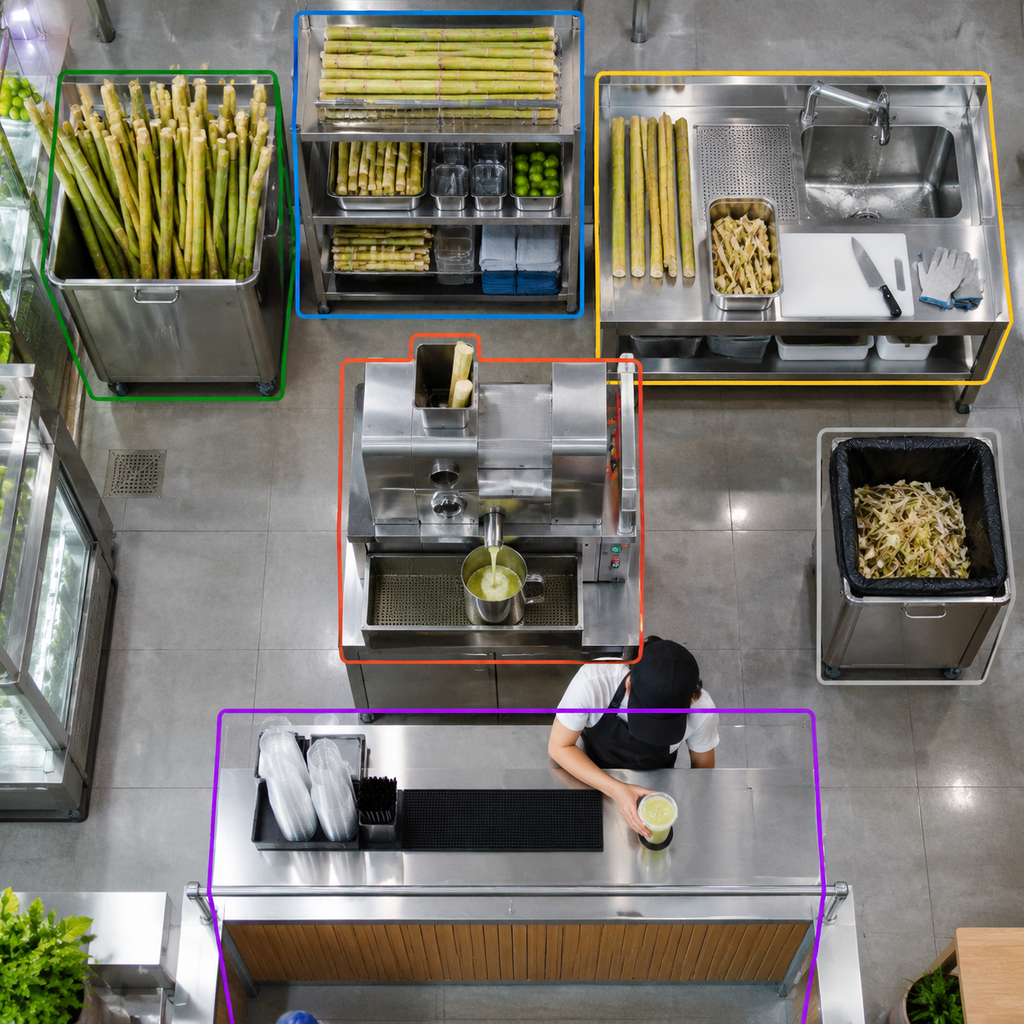
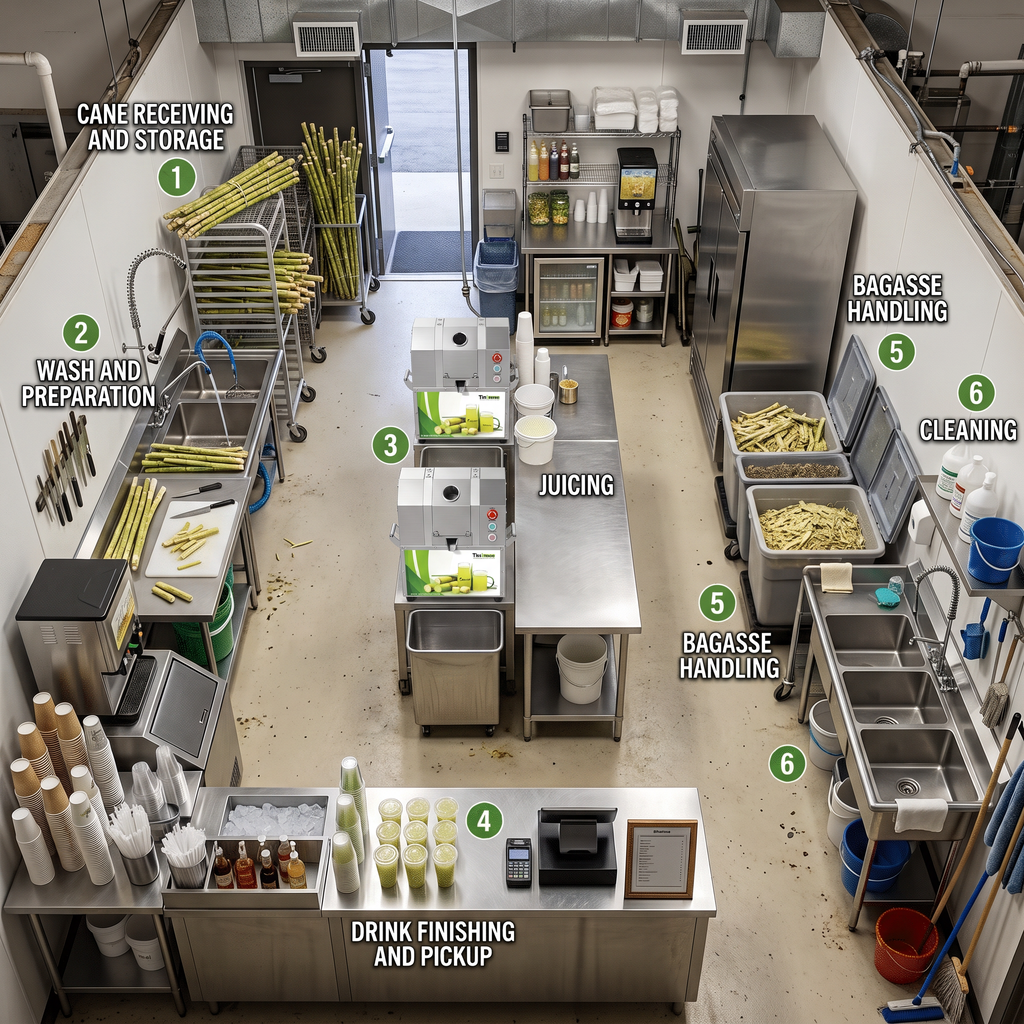
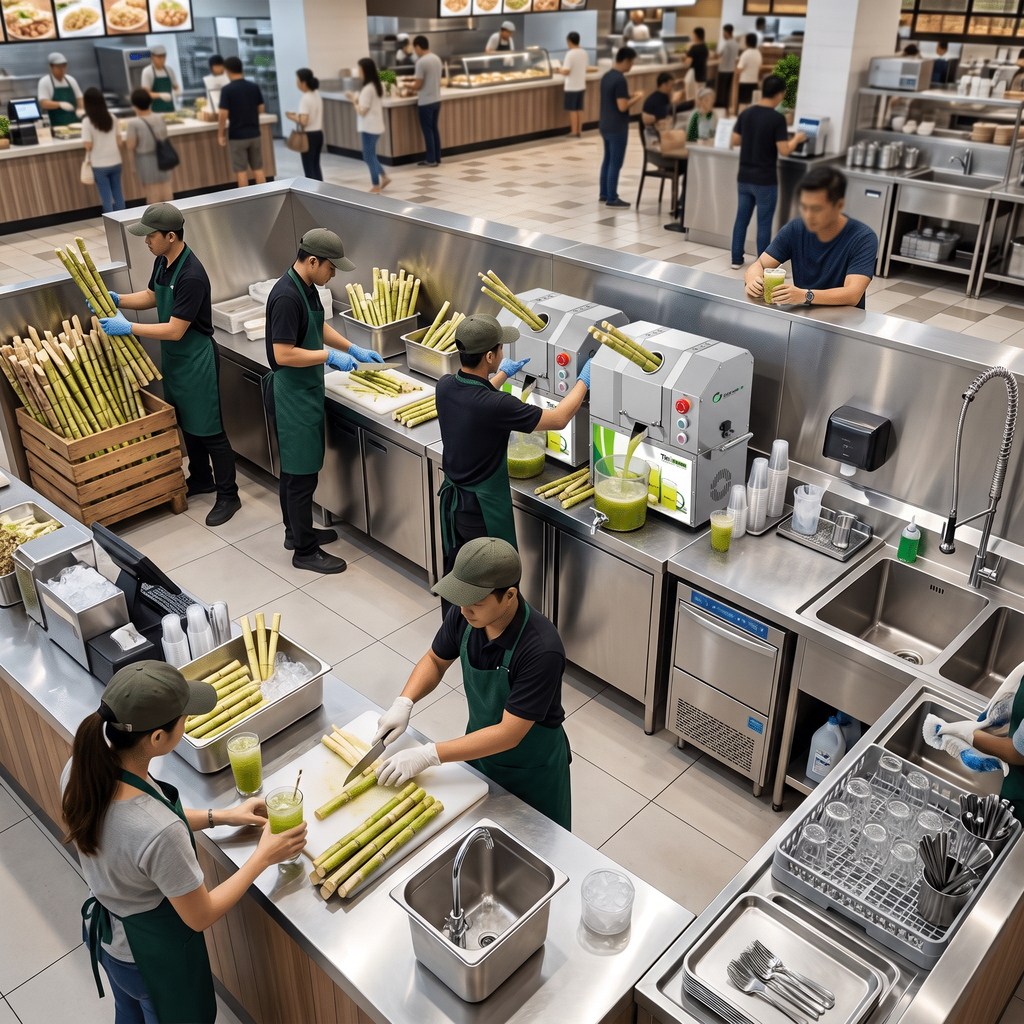
Sugarcane juice bar workstation organised into preparation, extraction, and service zones

A practical sugarcane juice bar equipment plan starts with a commercial sugarcane juicer, then builds around safe cane preparation, washable work surfaces, cold storage, cleaning tools, packaging, and a layout that lets staff move from receiving to serving without crossing clean and dirty tasks.

For a new shop, do not select equipment only by its purchase price or countertop appearance. The right setup must match your expected order flow, cane dimensions, available floor or counter space, electrical supply, local food-service rules, staff skill level, and cleaning routine. It should also allow room for cane handling, waste collection, handwashing, and stock replenishment during busy periods.

The checklist below separates must-have equipment from items that depend on your menu and service model. Confirm local requirements with the relevant food-safety and building authorities before finalising your layout, drainage, electrical work, or storage plan.

Complete sugarcane juice bar equipment checklist

Use this list as a planning framework. The final quantities and equipment specifications should be based on your menu, operating hours, local regulations, and forecast demand.

Core extraction and preparation

  • Commercial sugarcane juicer suited to the intended duty cycle.
  • Food-safe receiving tubs, crates, or racks for whole sugarcane.
  • Dedicated preparation bench with a cleanable, food-contact surface.
  • Suitable cane trimming or cutting tools where stalk length or condition requires preparation.
  • Food-safe containers for washed and prepared cane.
  • Collection bin or container for bagasse and other solid waste.

Hygiene and cold storage

  • Handwashing point and hand hygiene supplies, as required by local rules.
  • Wash basin or sink arrangement appropriate for produce and utensil washing.
  • Refrigerated storage for perishable ingredients, garnishes, and prepared items when used.
  • Food-safe, lidded containers and date-label supplies.
  • Cleaning brushes, approved cleaning products, sanitising supplies, and disposable towels or clean reusable cloths.

Service and administration

  • Serving cups, lids, straws or alternative drink accessories, and cup storage.
  • Ice handling tools if ice is part of the menu.
  • Point-of-sale device, receipt capability where needed, and a protected area for payment equipment.
  • Menu display, order labels, and storage for dry consumables.
  • Basic first-aid provision and staff personal protective equipment appropriate to the site.

Also allow for tables, shelving, task lighting, waste segregation, and enough free counter space to prevent finished drinks from being placed beside unwashed cane or cleaning chemicals.

Choose the commercial sugarcane juicer first

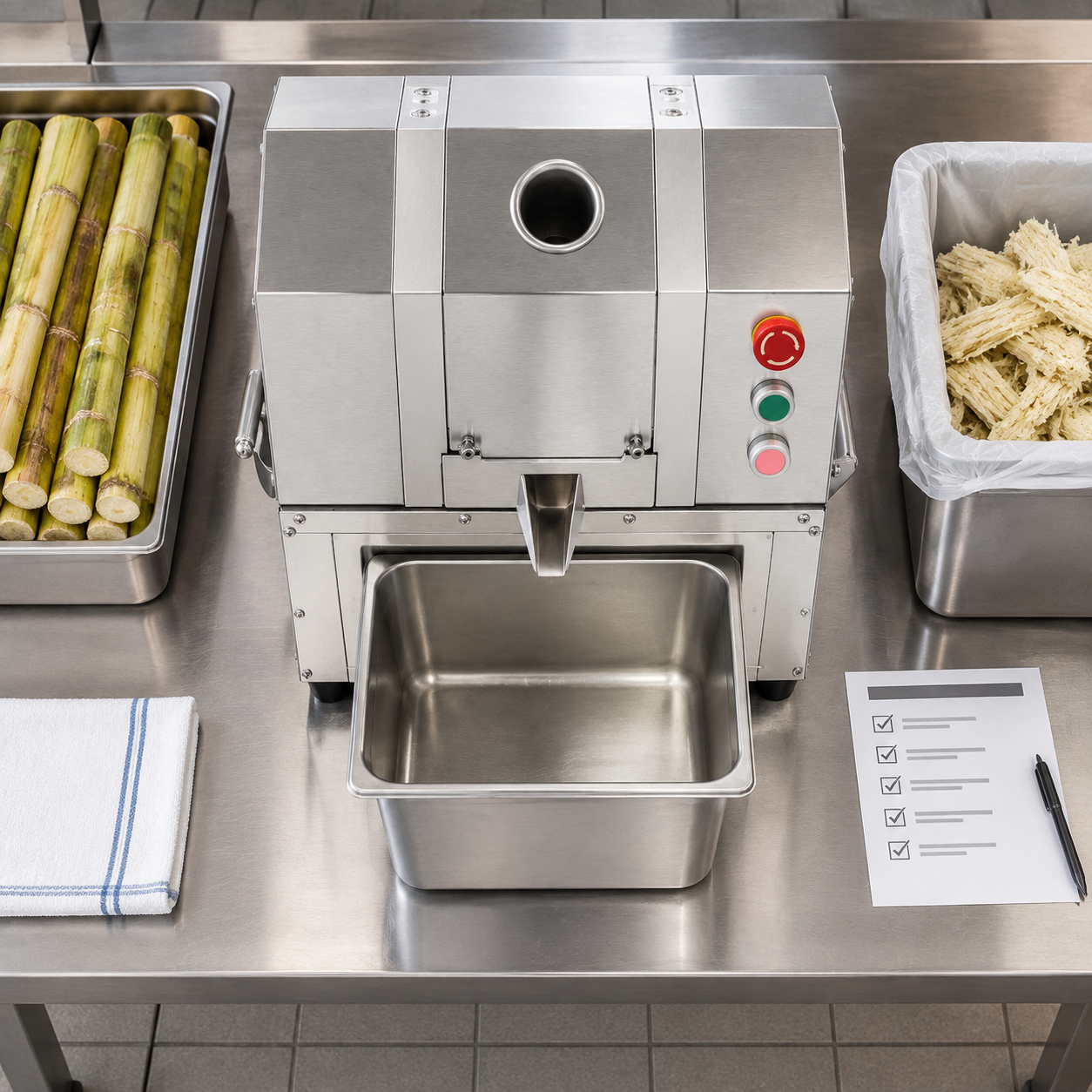
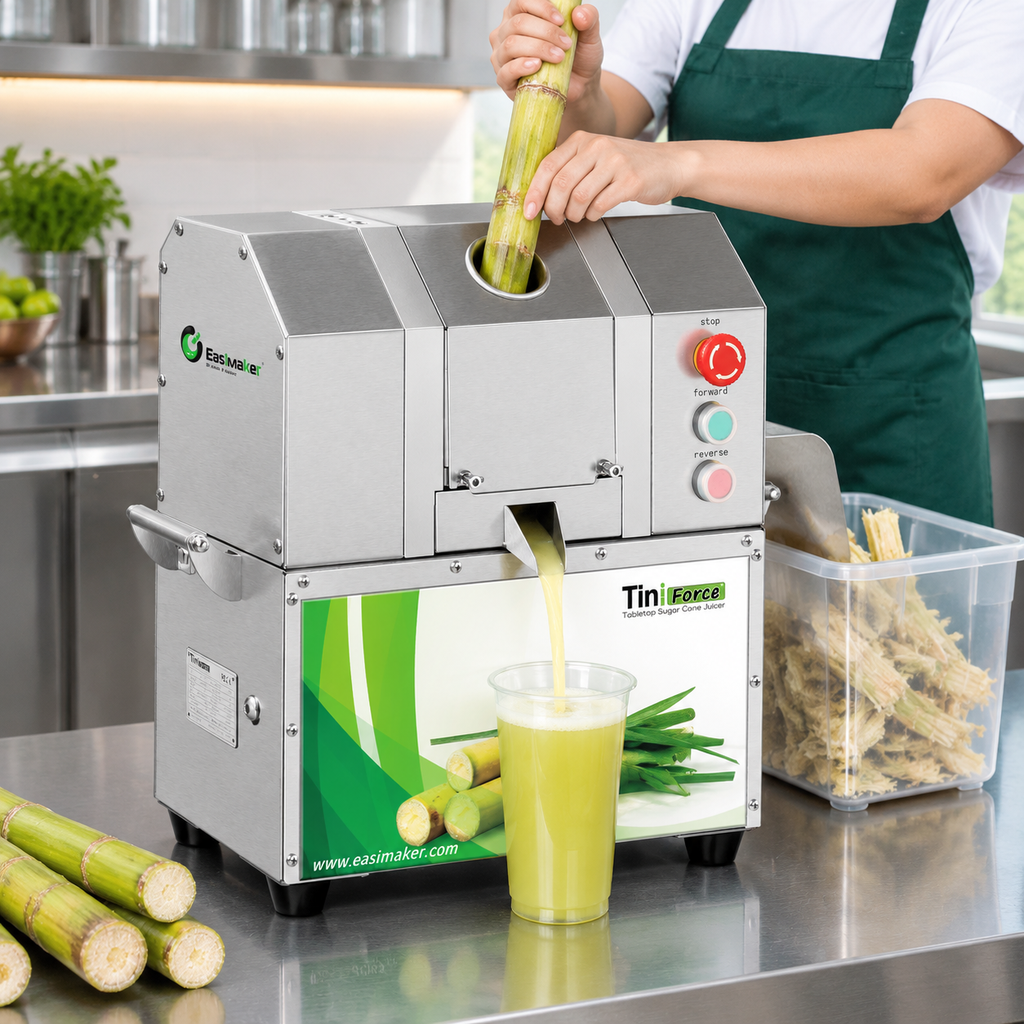
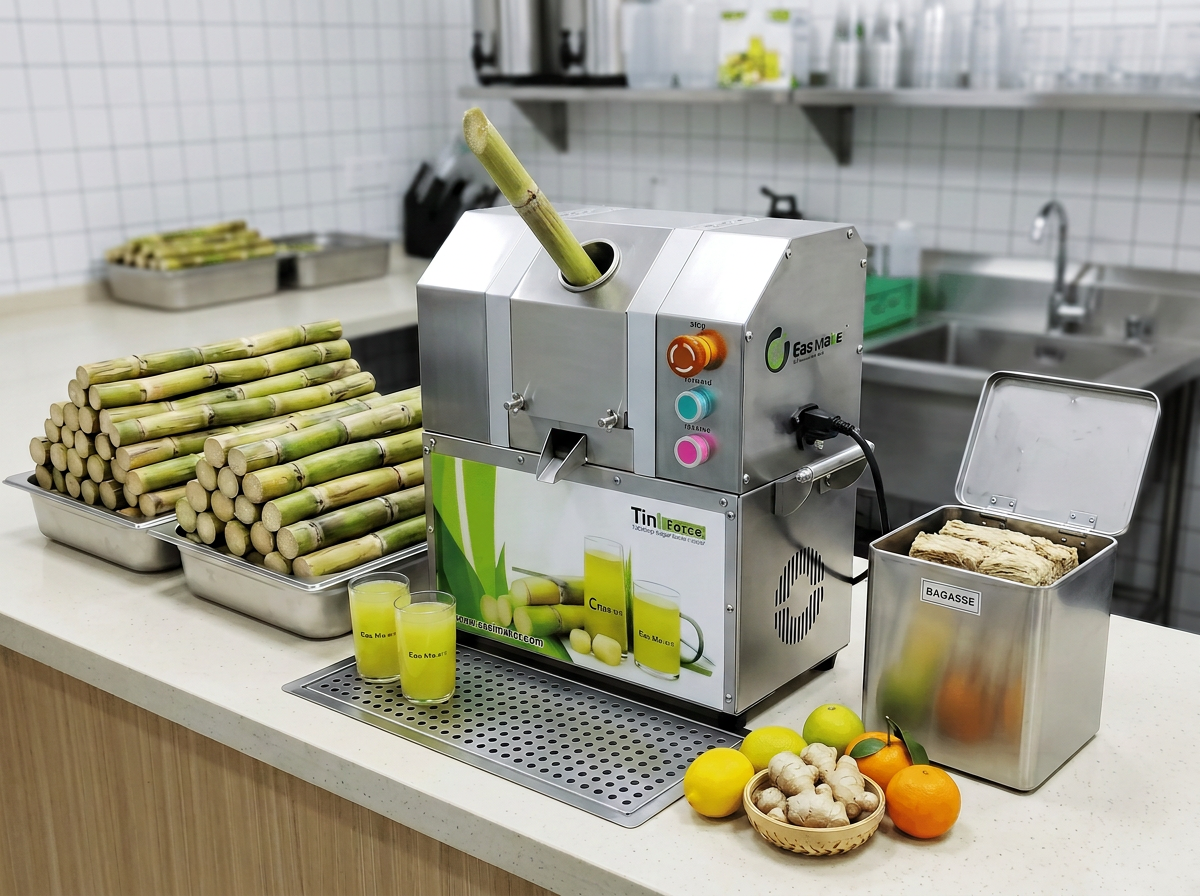
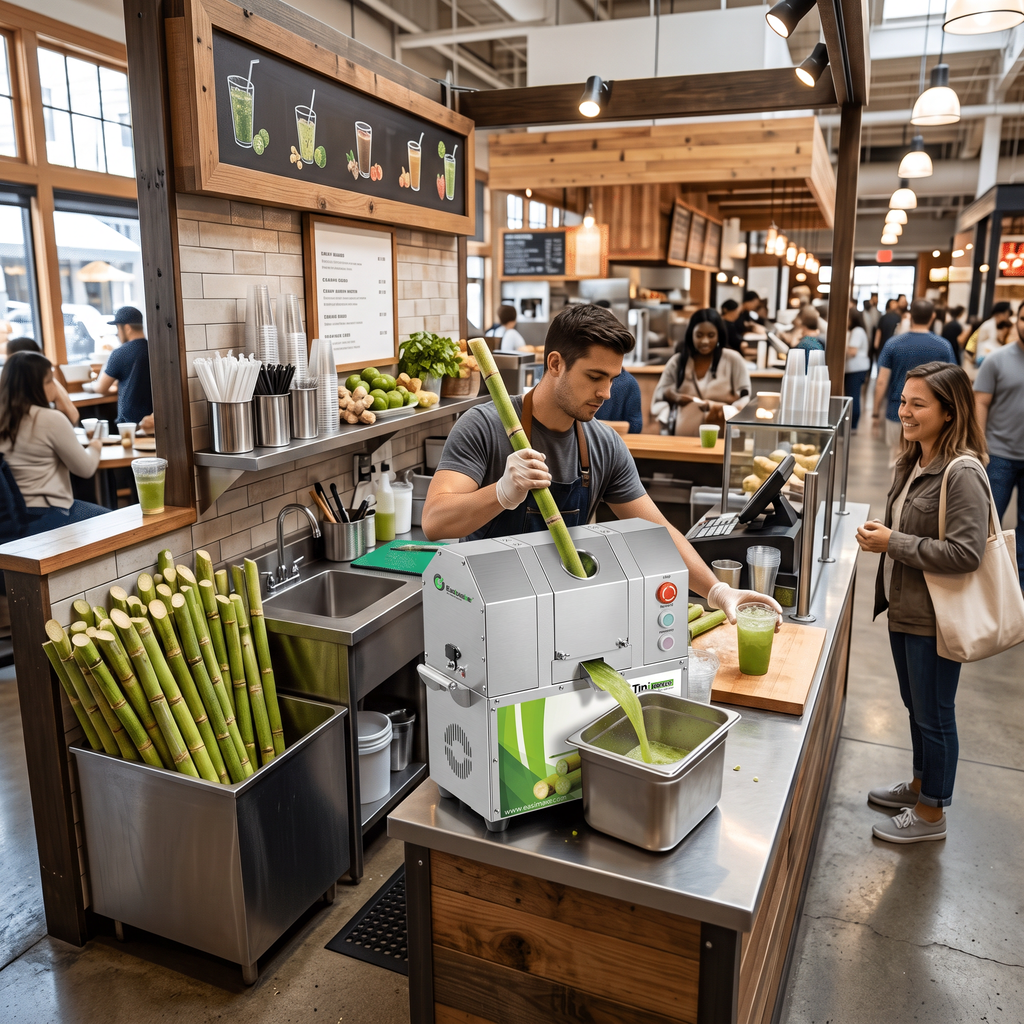
Commercial sugarcane juicer with room for safe feeding, juice collection, and bagasse handling

The juicer is the centre of the production line, so choose it before fixing the counter design or purchasing supporting equipment. A commercial sugarcane juicer is equipment designed for repeated food-service operation rather than occasional household use. Its suitability still depends on the actual machine configuration, operator practices, cane condition, and service environment.

Before requesting a quotation or approving a model, define the following:

  • Expected workflow: Estimate the number of orders likely to arrive during peak service, rather than relying only on average daily sales.
  • Cane profile: Record typical stalk length, thickness, freshness, and source. These factors affect preparation needs and smooth feeding.
  • Installation space: Check the machine footprint, access around the feeding and collection areas, and room to clean safely.
  • Power supply: Confirm the voltage, frequency, plug arrangement, and circuit requirements available at the site before ordering.
  • Operator access: Ensure staff can feed cane, collect juice, remove waste, and reach cleaning areas without unsafe reaching or crowding.
  • Service support: Ask about operating instructions, cleaning guidance, wear parts, technical support, and the process for obtaining replacement parts.

A low initial price can create higher operating difficulty if the machine is not suited to your workload or if its installation is poorly planned. Include delivery, commissioning, site preparation, consumables, maintenance, and contingency stock in the investment review.

Cane receiving, storage, and preparation equipment

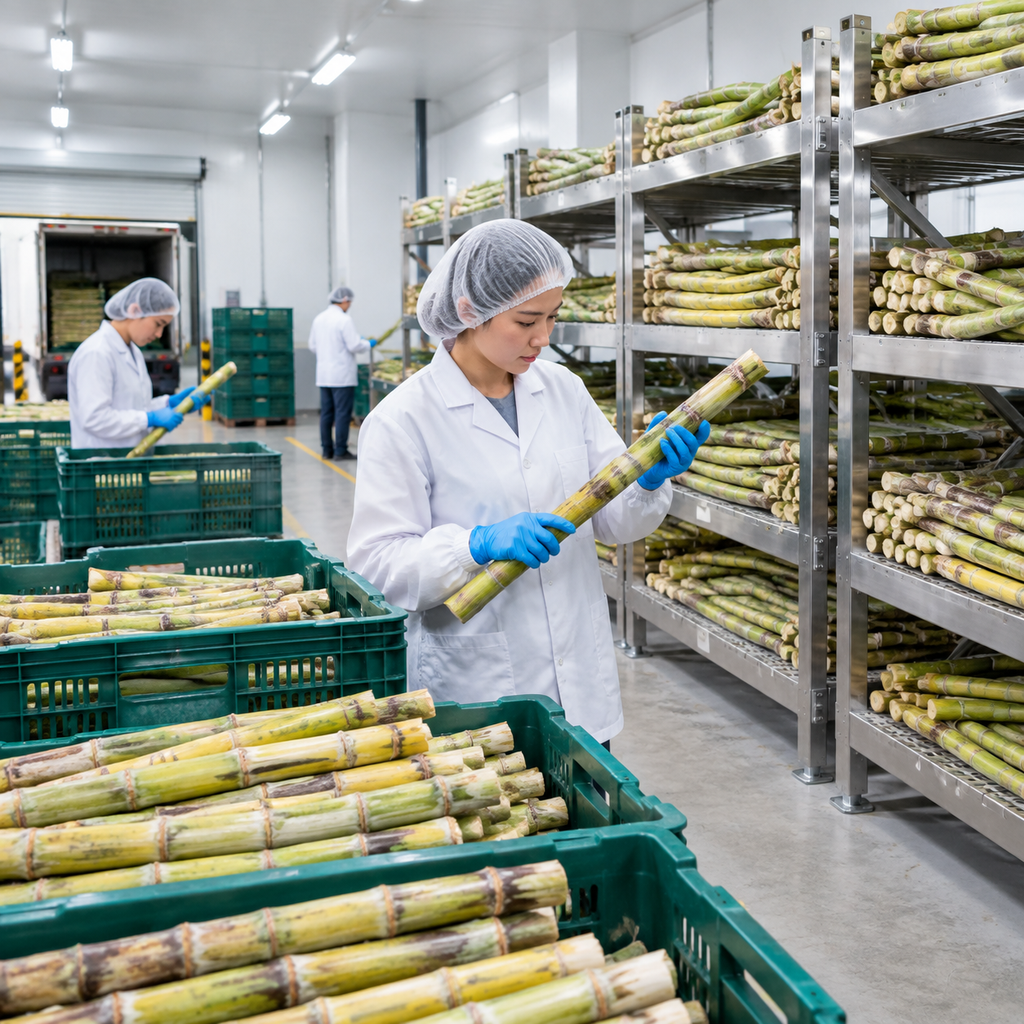
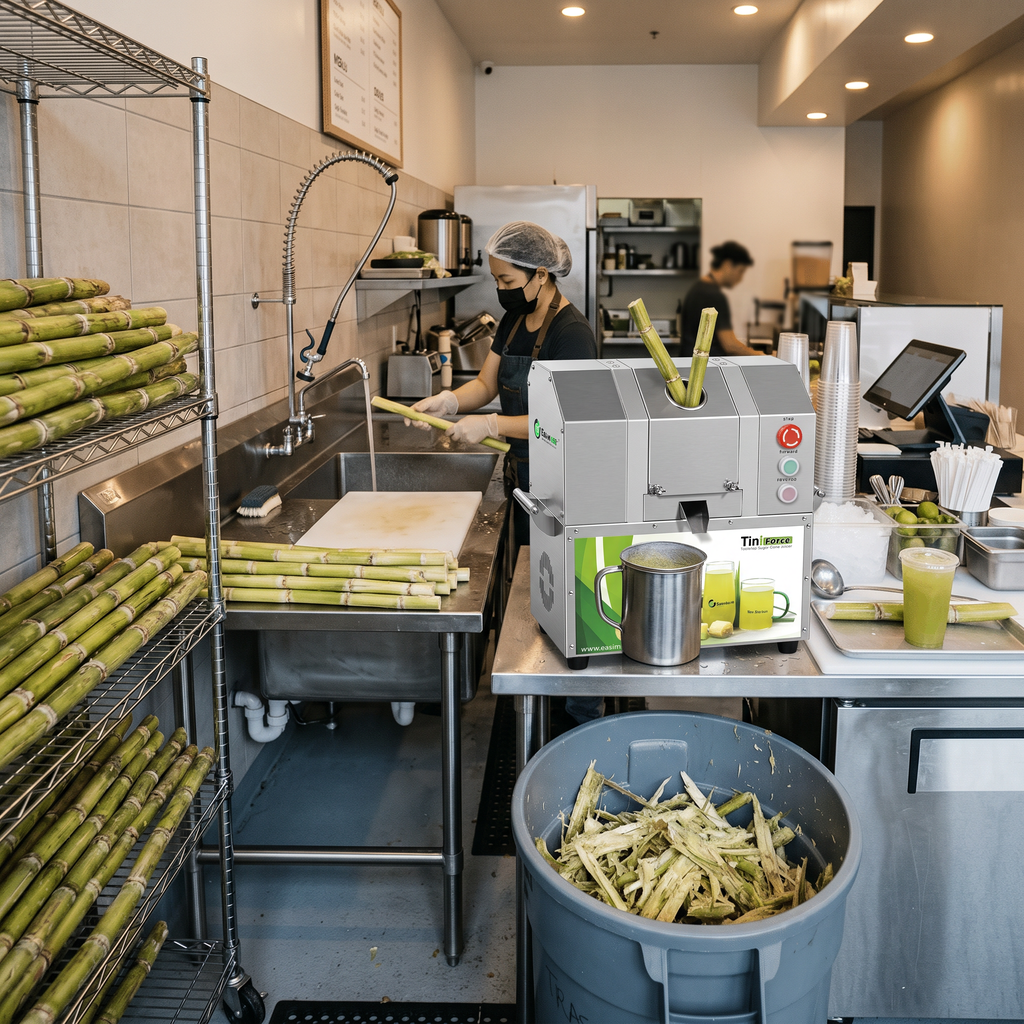
Food-safe sugarcane receiving and preparation area with storage crates and preparation bench

Good extraction begins with orderly cane handling. Your shop needs a defined route for receiving whole stalks, inspecting them, storing them off the floor, washing or trimming them as required by your process, and moving prepared cane to the juicer. Separating these steps helps reduce clutter around the extraction station.

Choose sturdy, food-safe crates, trays, or racks that keep cane organised and permit practical cleaning. A dedicated preparation bench should be positioned near the receiving or preparation zone, not in the finished-drink area. Where cane must be shortened or trimmed, use equipment and methods appropriate to the stalks supplied and train staff in safe handling.

Plan a clearly marked container for bagasse. Bagasse can build up quickly during service and should be removed often enough to keep the work area clear. The container should be easy to empty and clean, but should not interfere with staff movement or access to the juicer.

Thick, uneven, or poorly prepared stalks can disrupt service and increase the chance of feeding difficulties. Define an acceptance standard with suppliers, inspect deliveries, and prepare cane consistently before peak periods. This reduces last-minute preparation at the counter and helps operators work more steadily.

Workstation layout and utility requirements

A compact shop can operate efficiently when the layout follows the product flow: receive cane, store it, prepare it, extract juice, finish the drink, hand it to the customer, then clean and reset. Avoid layouts that require staff to carry unwashed cane through the serving area or carry dirty parts across finished drinks.

Before building counters, measure the full working envelope, not only the juicer base. Include space for feeding cane, a juice collection vessel, bagasse removal, ingredient containers, cleaning access, and safe operator standing room. Confirm that drawers, doors, refrigerator lids, and waste bins can open without blocking the route.

Electrical planning deserves the same attention. A qualified local professional should verify the available supply, circuit protection, outlet position, and compliance with local requirements. Keep cables, plugs, and electrical components protected from splash zones. Water points, drainage, and cleaning sinks should be planned early because retrofitting them after counters are installed can be disruptive.

If the site has limited counter space, create separate zones with visual markings, shelving, or under-counter storage rather than placing every task beside the juicer. Clear zoning supports faster training and makes daily closing checks easier.

Hygiene, handwashing, and cold-holding equipment

Hygiene equipment is operational equipment, not an optional add-on. At minimum, plan the handwashing, utensil washing, cleaning, sanitising, waste handling, and chemical storage arrangements required for your local food-service operation. The exact sink configuration and procedures vary by jurisdiction, so obtain local approval before opening.

Keep cleaning chemicals in a dedicated, labelled area away from food, cups, lids, and prepared ingredients. Use separate brushes or tools for food-contact parts and for floors, drains, or external surfaces. Food-contact equipment should be cleaned and sanitised using products and concentrations appropriate to local requirements and the product instructions.

Cold holding may be needed for ingredients such as citrus, ginger, herbs, prepared garnishes, or other menu additions. Choose refrigerated storage with enough practical space for labelled containers and stock rotation. Do not assume that every component of a sugarcane beverage requires the same handling; define your process according to your recipe, holding time, local food rules, and supplier guidance.

For shops that prepare and sell fresh juice, train staff to clean as they work. Small spills, cane fibres, and sticky surfaces are easier to manage promptly than at the end of a busy period.

Service, packaging, and payment equipment

The service zone should support quick, clean handover without becoming a storage area for cane or cleaning supplies. Start with the actual drink format: cup sizes, lids, straws or other accessories, optional ingredients, ice, and takeaway carriers. Buy packaging that fits the menu and store it where staff can reach it without turning away from the customer line.

Use covered or protected dispensers and containers where appropriate, especially for dry accessories and garnishes. If ice is served, provide a dedicated scoop and a sanitary storage method. Keep payment equipment away from splash-prone areas and create a clear sequence for taking orders, preparing drinks, collecting payment, and handing over finished beverages.

Labelled storage makes daily stock control more reliable. Separate opening stock from reserve stock, and keep a simple count of cups, lids, cleaning products, labels, and other consumables. A juice bar can pause service because of a missing low-cost item just as easily as because of a machine problem.

Finally, consider the customer-facing presentation. A clean counter, uncluttered menu, and visible separation between preparation and service help communicate a professional operating standard without making unsupported product claims.

Cleaning, maintenance, and spare-parts planning

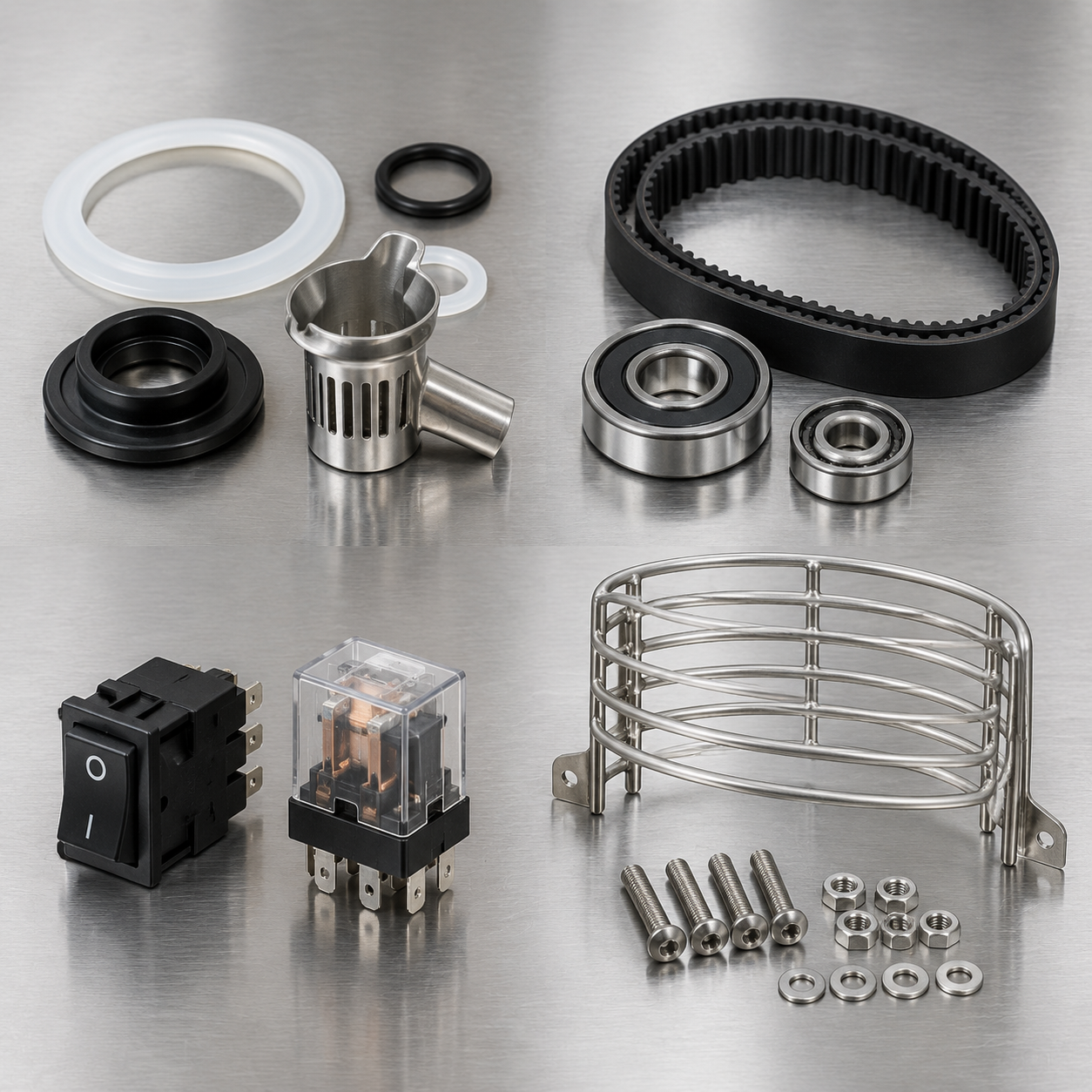
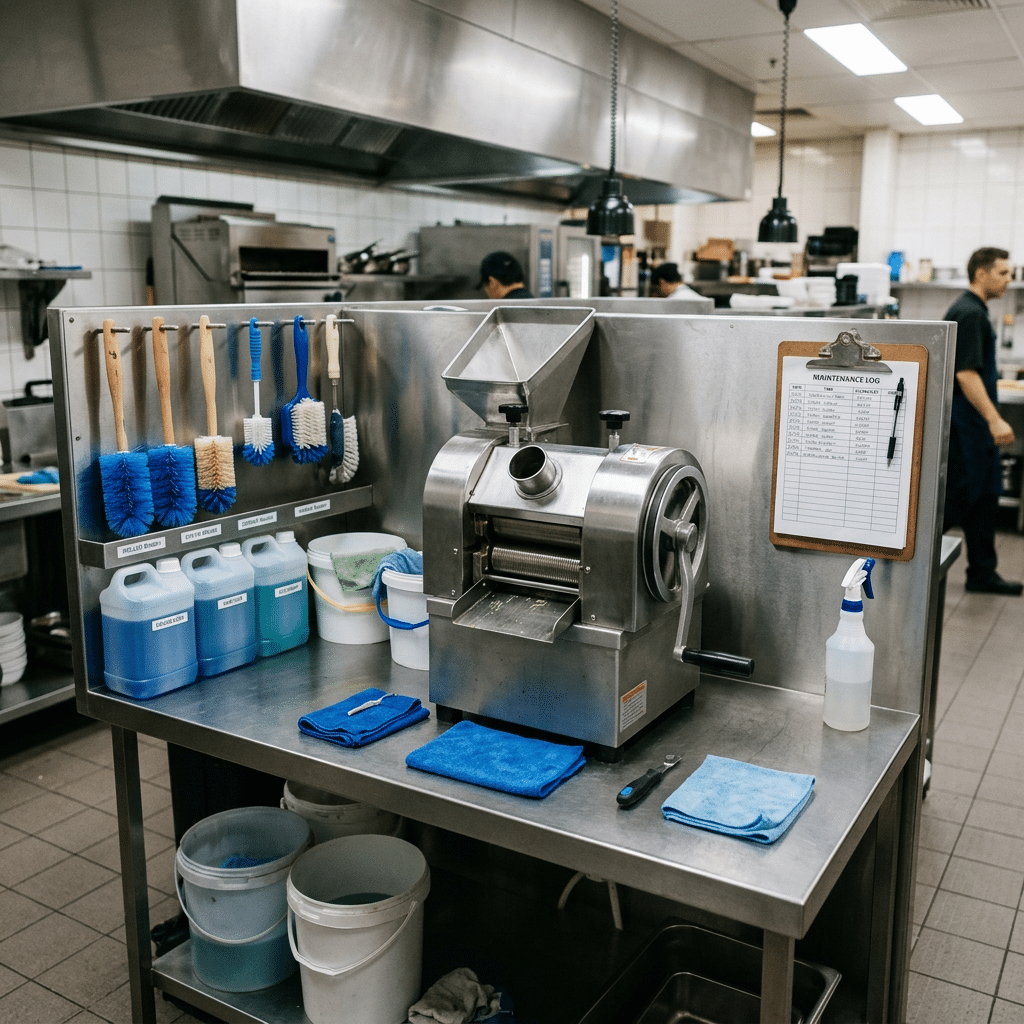
Organised cleaning and maintenance supplies beside a commercial sugarcane juicer workstation

Reliable daily operation depends on a routine that starts before the first order and ends after the last clean-down. Allocate storage for the tools needed to clean the juicer and the surrounding workstation. This usually includes suitable brushes, food-safe cleaning and sanitising products, containers for removable parts where applicable, drying space, and a secure place for the operating manual.

Create a simple written schedule with three levels of work:

  • During service: Keep the outer work area tidy, clear cane fibres and spills promptly, monitor the bagasse container, and avoid allowing waste to obstruct the workstation.
  • At close: Shut down equipment according to the manufacturer instructions, clean accessible food-contact and external surfaces, wash and sanitise removable components as applicable, and leave the area ready for inspection.
  • At planned intervals: Inspect components, fasteners, guards, cable condition, and any designated wear items according to the machine documentation. Record issues before they interrupt service.

Keep a maintenance log that records cleaning completion, inspections, unusual noise or vibration, feeding problems, staff reports, repairs, and replacement parts used. This gives managers a factual record when discussing service needs with the equipment supplier.

Do not improvise repairs, bypass safety features, or use cleaning methods that conflict with the machine manual. If your shop relies heavily on one juicer, discuss an appropriate spare-parts plan and service route before opening.

Pre-opening equipment readiness check

Complete a practical trial before launch rather than discovering workflow issues on the first busy day. Test the route from receiving cane to handing over a finished drink using the actual supplies, cups, cleaning tools, staff positions, and waste containers planned for service.

  • Verify the juicer is installed, accessible, and connected according to applicable requirements and manufacturer instructions.
  • Confirm that staff understand safe feeding, shutdown, cleaning, and reporting procedures.
  • Check that cane storage, preparation, extraction, serving, and cleaning zones are distinct and easy to follow.
  • Confirm that wash, hand hygiene, waste, and chemical storage arrangements meet local requirements.
  • Test whether packaging, labels, ice tools where used, and payment equipment are within easy reach.
  • Make sure manuals, supplier contacts, cleaning instructions, and maintenance records are available to the manager.
  • Review opening stock and reserve stock for consumables, sanitation products, and key service items.

The best checklist is one that becomes part of the daily operating system. Review it after the first weeks of trade, gather feedback from operators, and adjust storage positions or routines where the real workflow shows a weakness.

Plan the right equipment package for your shop

If you are setting up a new sugarcane juice bar, contact Easimaker to discuss the commercial juicer, supporting equipment, operating workflow, and OEM/ODM requirements that fit your intended market and site conditions.

Discuss Your Equipment Plan

Fresh Sugarcane Juice Food Safety Workflow for U.S. Shops

Table of Contents

A practical food safety workflow for U.S. shops serving fresh sugarcane juice, from cane receiving and washing to sanitation, service control, and daily records.

The Food Safety Workflow in Brief

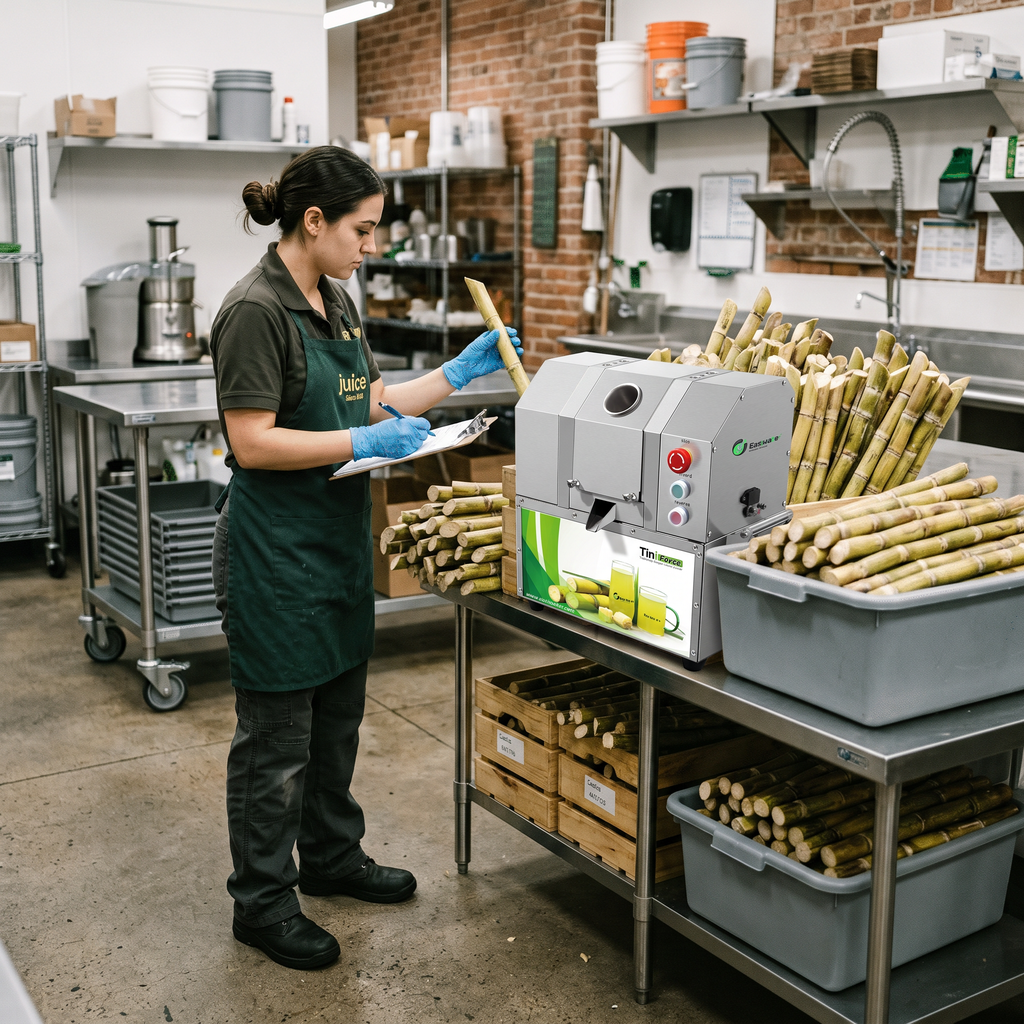
Employee inspecting fresh sugarcane during receiving in a commercial juice shop

For a U.S. shop, sugarcane juice food safety depends on controlling the full workflow: buy sound cane from a traceable supplier, protect it during storage, wash and inspect it before cutting, juice it with clean food-contact surfaces, serve it promptly or manage holding under the requirements that apply locally, and clean and sanitize the machine between service periods.

Fresh sugarcane juice is made from raw agricultural material and is commonly served without a kill step after extraction. That means operators should treat cane condition, employee hygiene, equipment sanitation, time control, and documentation as connected parts of one operating system. The exact requirements can differ by state, county, city, facility type, and whether juice is made to order or packaged. Confirm the local health department’s requirements before opening or changing the process.

A written workflow helps staff make the same decisions during a busy shift. It also gives managers a practical basis for training, verification, corrective action, and discussions with inspectors or distributors.

Understand the Main Control Points

Separated raw cane and clean juice preparation zones in a commercial shop

The purpose of a food safety workflow is to identify where contamination can enter the process and where it can be prevented, reduced, or detected. For fresh sugarcane juice, the main points are usually the cane itself, water and ice, employee handling, food-contact surfaces, and the time between juicing and customer service.

  • Raw cane: Cane can carry soil, field debris, damaged outer material, and contamination introduced during harvesting, transport, or storage.
  • Wash water: Water used for rinsing must be suitable for food use. Dirty wash water or a poorly maintained wash sink can spread contamination rather than remove it.
  • Hands and utensils: Employees can transfer contamination from cash, phones, waste, raw cane, or cleaning tasks to ready-to-drink juice and clean equipment.
  • The juicer: Rollers, feed openings, guards, collection areas, filters, cups, and any removable parts may retain juice fibers and residue if cleaning is incomplete.
  • Holding and add-ins: Prepared juice, ice, fruit, herbs, flavorings, and garnishes create additional handling and storage decisions.

Map the actual workflow in your shop from delivery door to customer handoff. This often reveals preventable cross-traffic, such as carrying unwashed cane through a clean preparation area or using the same sink for produce washing and equipment cleaning without a controlled sequence.

Receive and Store Sugarcane Carefully

Fresh sugarcane stored off the floor on clean racks

Food safety starts before the machine is switched on. Purchase cane from suppliers that can identify the product and delivery source. Keep receiving information that is useful for tracing a concern, such as supplier name, delivery date, product description, and any lot or shipment reference supplied with the order.

At receiving, inspect cane before it enters the preparation area. Reject or segregate cane that is visibly moldy, heavily decayed, unusually slimy, contaminated with chemicals or unknown material, or damaged beyond normal trimming. A shop does not need to diagnose every defect; the practical rule is to avoid processing cane that is not sound enough to clean and prepare safely.

Store accepted cane off the floor, protected from splash, pests, refuse, and cleaning chemicals. Use clean racks, bins, or pallets that can be cleaned. Rotate stock so older acceptable cane is assessed and used before newer deliveries. Do not assume that later washing makes poor storage conditions acceptable.

Keep receiving and storage distinct from the clean assembly and serving area. Where space is limited, use a scheduled process: receive and move cane first, clean the area, then begin washing and juice preparation. Clear physical or time separation is often easier for staff to follow than an informal rule.

Wash and Prepare Cane Before Juicing

Employee washing sugarcane with clean water and a brush before juicing

Move only the amount of cane needed for the current preparation period into the washing area. Before washing, remove obvious ties, packaging fragments, loose debris, and cane that should not be processed. Staff should wash hands and use clean, suitable tools before beginning this work.

Wash cane using potable water and a method appropriate for the condition of the product and the shop’s approved procedure. Mechanical brushing or manual scrubbing may be needed to remove adhering soil from the exterior. Rinsing alone may not be enough for visibly dirty cane. Avoid practices that can recontaminate cleaned cane, such as placing it back into a dirty receiving bin or onto an unclean counter.

After washing, inspect again and trim away damaged or visibly unsuitable portions with clean, maintained cutting equipment. Keep washed cane in clean, designated containers. Do not return trimmed waste to the preparation bench. Remove waste promptly so it does not attract pests or create a source of splash or contact contamination.

Any sanitizer, produce wash, or chemical treatment should be used only where it is permitted, suitable for the intended food-contact use, and applied according to its label and local requirements. More chemical is not better. A shop should document the product, dilution method, contact time where applicable, test method, and employee responsible when its sanitation program calls for those controls.

Control Juicing and Service

Clean commercial sugarcane juicing station prepared for service

Set up the juicing station as a clean zone. Before service, verify that the juicer, collection container, strainers, tools, cup dispenser, and immediate work surfaces have completed the shop’s cleaning and sanitation process. Assemble removable parts correctly, and conduct the manufacturer’s pre-use checks before operating the machine.

Use washed, prepared cane only. Employees should avoid touching cup rims, ice-contact surfaces, straws, or the inside of lids. Assigning separate duties for payment handling and drink assembly can reduce hand-contact risk during peak periods. When one employee must do both tasks, establish a clear handwashing and glove-change routine that staff can realistically follow.

Make-to-order service simplifies control because it limits holding time. If the shop prepares juice ahead, batches, bottles, or combines juice with other ingredients, the process needs additional review. Holding temperature, date marking, packaging, cleaning of filling tools, allergen management for added ingredients, and any local licensing or process requirements may apply. Do not adopt a holding time or temperature from a general online article; establish it with the local authority and your documented operating procedure.

Use ice and water from approved sources, and keep scoop handles out of the ice. Do not use the customer cup as an ice scoop. Dispose of product that has been contaminated, mishandled, or held outside the shop’s approved procedure.

Clean and Sanitize the Juicer

Cleaning removes juice residue, fibers, and soil. Sanitizing is a separate step intended to reduce microorganisms on already-clean food-contact surfaces. Both are necessary. Sanitizer applied over residue is not a substitute for cleaning.

Build cleaning around the machine manufacturer’s instructions and the approved chemicals used in your facility. Before disassembly or cleaning, stop the equipment, disconnect or isolate power as required, and wait until moving parts have fully stopped. Never reach into a feed opening or roller area while the machine is energized.

  1. Remove cane fibers and product residue using suitable tools.
  2. Disassemble removable food-contact components only as instructed by the manufacturer.
  3. Wash parts and accessible surfaces with the correct detergent and water conditions for the soil and chemical program.
  4. Rinse where the detergent instructions require it.
  5. Sanitize with an approved food-contact sanitizer mixed and used according to its label.
  6. Allow surfaces to drain or air dry when required. Avoid wiping sanitized surfaces with a cloth that may reintroduce contamination.
  7. Reassemble only after parts are clean, sanitized, dry as required, and checked for correct fit.

Cleaning frequency should reflect the manufacturer’s directions, the amount of product processed, visible residue, service interruptions, and local requirements. At minimum, staff need a defined end-of-day procedure and a clear response when product residue accumulates during service. Verify sanitizer concentration with the test method specified for the chemical being used, rather than estimating by smell or appearance.

A support plan also matters. Keep the machine model, serial number, parts list, cleaning instructions, and service contact information accessible to the manager responsible for the station. The sugarcane juicer spare parts and support checklist can help shops organize machine information and identify the components that need routine attention.

Use Records and Staff Training

A workable food safety program is short enough to use during a busy day and specific enough to show what happened. Managers do not need paperwork for its own sake. They need records that confirm critical routine work was completed and show how a deviation was handled.

Useful records may include receiving checks, daily cleaning and sanitation sign-offs, sanitizer test results where used, employee training, equipment maintenance, pest observations, and corrective actions. Match the records to the procedures your shop is required to follow. Keep them legible, dated, and reviewed by a responsible person.

Training should be practical and repeated. New employees need to understand the difference between raw cane handling and ready-to-drink juice assembly, when to wash hands, which surfaces are food-contact surfaces, how to disassemble the machine safely, and when to stop and ask a manager for help. Demonstrate the task, observe the employee performing it, and correct issues before independent work.

Managers should also define escalation rules. Examples include cane arriving in poor condition, a sanitizer test outside the target range, a broken or difficult-to-clean machine component, a water interruption, an employee illness concern, or an extended power disruption. The response may be to stop production, discard affected product, clean and sanitize, contact service, or seek direction from the appropriate authority. The correct response depends on the situation and the shop’s local requirements.

Daily Sugarcane Juice Food Safety Checklist

Manager reviewing a daily sanitation checklist beside a cleaned sugarcane juicer

Adapt the following checklist to the facility, local requirements, equipment manual, and approved cleaning program.

Before opening

  • Inspect the juicing and serving area for cleanliness, pests, splash exposure, and unnecessary items.
  • Confirm the machine is assembled correctly and food-contact parts have completed the required cleaning and sanitation procedure.
  • Check that handwashing supplies, approved water, cups, lids, straws, cleaning tools, and waste containers are available.
  • Inspect cane selected for use and move only washed, prepared cane into the clean juicing area.

During service

  • Keep raw cane, trimmed waste, cleaning chemicals, and ready-to-drink juice separated.
  • Maintain employee handwashing and task changes between cash handling, cleaning, waste handling, and drink assembly.
  • Remove juice fibers and residue according to the established between-service procedure.
  • Protect ice, cups, lids, and drink-contact surfaces from unnecessary handling.
  • Stop and correct any loss of sanitation, equipment damage, or questionable product condition.

After service

  • Discard product that cannot remain under the shop’s approved procedure.
  • Power down and clean the juicer safely following manufacturer instructions.
  • Wash, rinse where required, sanitize, and air dry applicable parts and surfaces.
  • Record completion, sanitizer verification where applicable, defects, and corrective actions.
  • Store the machine and cleaned utensils to protect food-contact surfaces until the next use.

Choose Equipment and Support for Daily Control

Food safety procedures are easier to sustain when the equipment fits the actual shop workflow. Before purchase, review the machine’s food-contact components, access for cleaning, disassembly instructions, drainage and residue management, operator safeguards, available service support, and replacement-part process. Ask for the applicable manual and confirm what routine inspection and maintenance the operator is expected to perform.

A commercial machine should be selected for the operating pattern, available work area, electrical supply, staffing, cleaning routine, and support expectations. The guide to commercial and home sugarcane juicer differences outlines why repeated business use requires a different evaluation from occasional personal use.

For a new shop, document the intended menu and service process before finalizing the equipment layout. This helps identify whether the operation will be make-to-order only, whether add-ins create separate controls, where cane will be washed, and who will be accountable for end-of-day sanitation. For branded projects or equipment adaptation discussions, review Easimaker OEM/ODM options with the operational requirements in hand.

Importing Commercial Sugarcane Juicers Into the U.S.: A Practical Buyer Guide

Table of Contents

Importing a commercial sugarcane juicer into the United States requires more than arranging freight. Buyers should confirm the machine specification, food-contact materials, electrical compatibility, import documentation, customs process, local installation requirements, spare-parts support, and total landed cost before placing an order.

What U.S. Buyers Need to Do Before Importing a Commercial Sugarcane Juicer

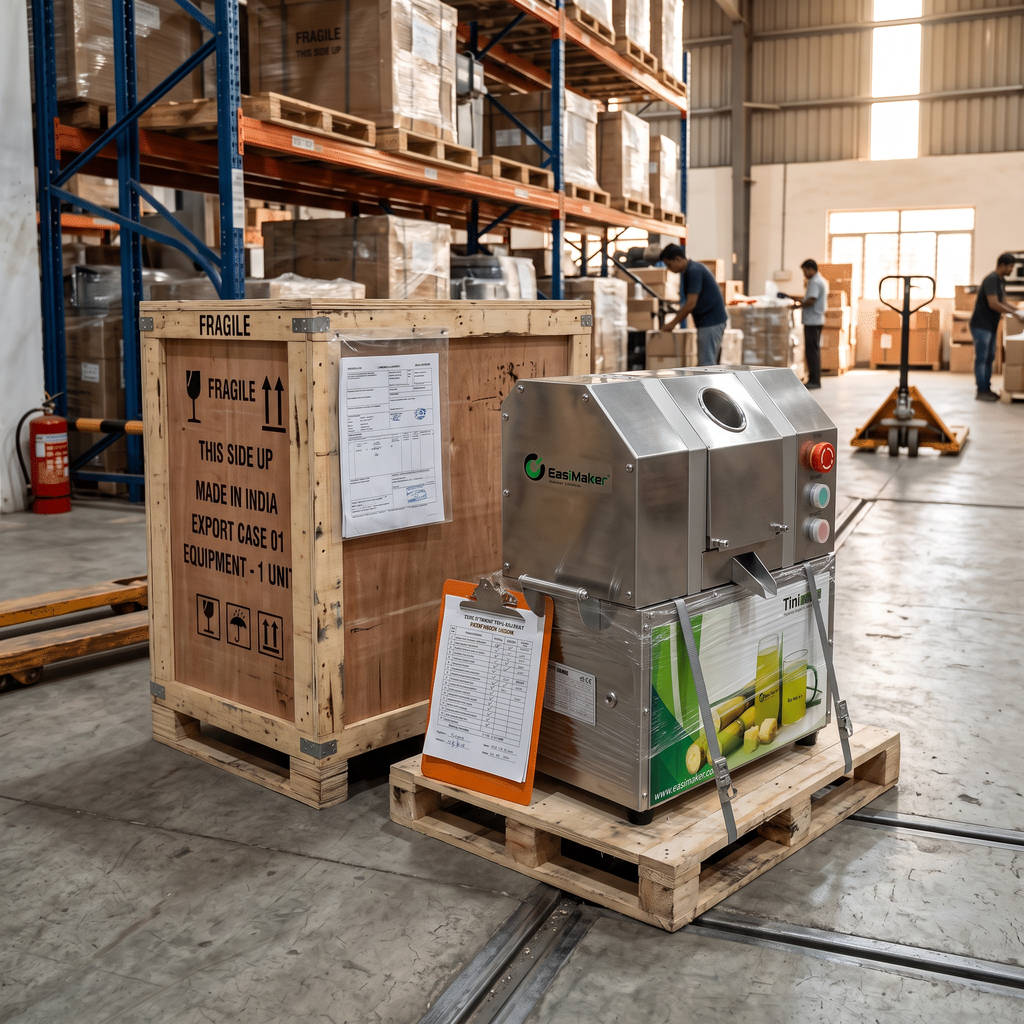
Commercial sugarcane juicer prepared for import shipment to the United States

To import a commercial sugarcane juicer into the U.S., first confirm that the machine is suitable for your intended foodservice use and local electrical supply. Then agree on an accurate product specification, obtain complete supplier documents, work with a licensed customs broker or qualified freight forwarder, calculate landed cost, and prepare for inspection and installation on arrival.

A commercial sugarcane juicer is food-processing equipment that mechanically presses prepared sugarcane stalks through rollers to extract juice. It is commonly used by juice bars, restaurants, cafés, food courts, mobile beverage operators, and distributors. The import process is manageable when equipment selection, compliance planning, and logistics are handled together rather than as separate tasks.

Do not assume that a machine sold internationally is automatically ready for every U.S. location. Import requirements can depend on the exact product configuration, declared value, country of origin, port of entry, electrical design, materials in food-contact areas, and the requirements of your local authority having jurisdiction, property manager, or customer. Confirm these points before production and shipment.

Define the Product and the Importer’s Role

Buyer reviewing a commercial sugarcane juicer import specification

Before requesting a quotation, write a short import specification. This document should identify the buyer, final user, machine model or configuration, quantity, destination, agreed Incoterms, target delivery date, and the documents required before shipment. It reduces misunderstandings between the supplier, freight provider, customs broker, and receiving team.

For a direct import, the buyer may act as the importer of record or appoint an appropriately qualified party to do so. The importer of record is generally responsible for ensuring that entry information is accurate and that applicable duties, taxes, and regulatory obligations are addressed. A customs broker can prepare and file entry documentation, but the importer should still provide correct product information and maintain records.

Describe the equipment accurately. A sugarcane juicer is not the same as a household blender, a citrus juicer, or a cane harvester. The product description on commercial documents should match the actual machine, its intended commercial use, and the country of origin. Avoid vague descriptions such as “kitchen appliance,” which can create unnecessary questions during customs clearance.

New operators should also verify that they are buying commercial equipment rather than a light-duty unit intended for occasional domestic use. Commercial machines are selected around repeated operation, cleaning access, safe workflow, maintainability, and service planning. This guide to commercial versus home sugarcane juicers explains the practical distinction for buyers.

Confirm Compliance and Supplier Documents Before Production

Reviewing electrical rating details for a commercial sugarcane juicer

U.S. import compliance is product-specific, so use qualified customs, legal, and local regulatory advisers when needed. Do not rely only on a supplier statement or a product listing. For foodservice equipment, buyers should examine the material specification, electrical configuration, safety design, labels, and the documents available for the exact model being imported.

Food-contact and hygiene considerations

Identify all surfaces that reasonably contact cane, extracted juice, or splash during normal operation. Request a clear material list for those areas and ask how the machine is intended to be cleaned. Food-contact material compliance is not established merely by saying that a machine is “food grade.” The operator must also maintain hygienic handling, cleaning, storage, and local foodservice practices after installation.

If a machine will be used in a restaurant, retail food establishment, commissary, or other regulated setting, ask the local health authority, property manager, or prospective customer whether they have particular equipment acceptance expectations. Requirements can vary by jurisdiction and by installation type. If a buyer needs a specific sanitation or safety listing, it should be identified as a purchase requirement before the order is confirmed.

Electrical and labeling considerations

Match the machine’s rating plate to the actual U.S. site supply, including voltage, frequency, phase, plug arrangement, and grounding method. A 60 Hz requirement, electrical listing expectation, or local inspection requirement should never be assumed from a product photograph. In some locations, an authority having jurisdiction or commercial landlord may require equipment evaluated by a nationally recognized testing laboratory. Confirm the local requirement before selecting a configuration.

Ask the supplier for the final rating-plate artwork, wiring information, operating manual, packing list, commercial invoice, and any test or inspection records that apply to the ordered model. The useful question is not whether a document exists for a similar product, but whether it applies to the precise model, component set, and electrical version you are importing.

For a practical pre-purchase check, review the machine’s power supply requirements for commercial sugarcane juicers alongside your site electrician’s information.

Specify the Right Commercial Sugarcane Juicer for the U.S. Site

Importing the correct machine starts with the operating environment, not the factory price. A compact counter-service operation may prioritize footprint and straightforward daily cleaning. A higher-volume venue may need a machine and preparation workflow that better suit sustained service. Sugarcane condition also matters: stalk diameter, fiber level, trimming method, and consistency affect feeding and operator workload.

Define the following points in writing before the supplier starts production:

  • Required electrical configuration for the final installation site.
  • Machine dimensions, net weight, crated dimensions, and access route into the premises.
  • Food-contact and exterior material specification.
  • Included accessories, collection containers, tools, and operating documentation.
  • Expected cane preparation process, including peeling, cutting, and stalk length.
  • Cleaning procedure, removable items, and recommended consumables.
  • Available spare parts, lead times, warranty terms, and remote support process.
  • Retail branding, packaging, manuals, or labeling requirements where private labeling is planned.

Do not select a machine solely by a quoted output figure. Actual production depends on cane preparation, operator technique, queue pattern, cleaning intervals, feed consistency, and the final product configuration. It is usually more useful to discuss your service pattern and menu than to rely on a single theoretical capacity number.

Buyers comparing common commercial configurations can review how the TiniForce S3 and EasiDeMax S4 fit different operations. If your supply includes thick or irregular stalks, establish the preparation process early; these techniques for processing thick sugarcane stalks can help operators reduce avoidable strain and jamming.

Plan Freight, Customs, and Total Landed Cost

Freight is only one part of the import cost. Before placing a purchase order, ask for an itemized quote that separates machine price, packing, inland transport, export handling, main freight, insurance if selected, destination charges, customs brokerage, duty and tax estimates where available, delivery, unloading, and site installation. The buyer should understand which party handles each stage under the agreed Incoterm.

For customs entry, your broker will need complete and consistent commercial information. Typical records include the commercial invoice, packing list, bill of lading or air waybill, importer details, country of origin, product description, quantity, value, and the classification information used for entry. Classification and duty treatment should be confirmed with a customs professional based on the final product and current rules. Do not use an internet estimate as a substitute for a formal customs determination.

Crated dimensions and weight influence not only freight pricing but also receiving. Confirm whether the shipment needs a liftgate, loading dock, pallet jack, forklift, appointment delivery, or inside placement. If the juicer is shipped by ocean, allow realistic time for production, consolidation if applicable, sailing, port handling, customs clearance, and final delivery. Air freight can reduce transit time but may materially change landed cost.

Budget beyond the purchase price by using a complete commercial sugarcane juicer cost planning guide. This helps buyers account for site preparation, cane handling, hygiene supplies, packaging, maintenance, and operating equipment alongside the imported machine.

Inspect, Install, and Support the Machine After Arrival

Inspecting a commercial sugarcane juicer shipment after delivery

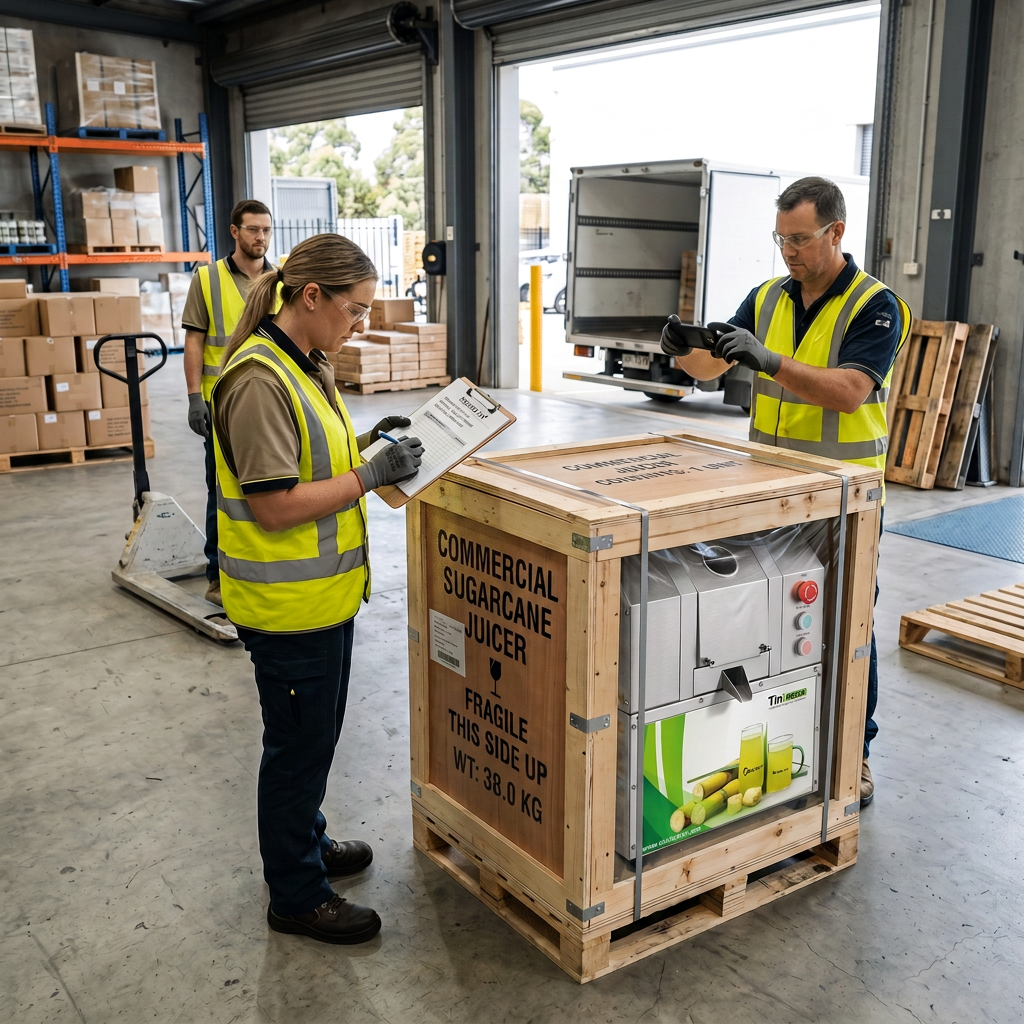
Receiving inspection is your opportunity to identify transit damage or shipment discrepancies while carrier records are still current. Before signing final delivery paperwork where practical, inspect the crate condition, photograph visible damage, count packages, and note exceptions. After unpacking, compare the machine, accessories, rating plate, and documentation with the purchase order and packing list.

Before production use, place the machine on a stable work surface with the working clearance needed for feeding, juice collection, cleaning, and safe operator movement. Have the electrical connection checked against the rating plate by a qualified person where required. Never alter plugs, bypass guards, or modify wiring to make an incompatible unit fit the site supply.

Commissioning should include a no-load check, a review of controls and safety features, a cleaning demonstration, and a first-use trial with properly prepared cane. Record the machine model, serial number, order number, electrical details, and photos of the rating plate in your equipment file. This makes later troubleshooting and parts identification much more efficient.

Service planning is especially important for imported equipment. Keep a routine cleaning schedule, inspect components according to the operating guidance, and order critical wear items before they are urgently needed. Use this sugarcane juicer spare parts and support checklist to organize the information your team and supplier will need.

Pre-Shipment Checklist for U.S. Importers

Use this final checklist before authorizing shipment of a commercial sugarcane juicer to the United States:

  • Confirm the final model, quantity, finish, accessories, and packaging configuration.
  • Confirm rating-plate details against the site’s voltage, frequency, phase, plug, and grounding requirements.
  • Review the final machine dimensions, net weight, crate size, and delivery access plan.
  • Obtain commercial invoice, packing list, transport document details, and country-of-origin information.
  • Give the customs broker an accurate product description and final product details early enough to review entry planning.
  • Check whether your local health authority, landlord, customer, or inspector requires specific equipment documentation or listings.
  • Confirm cleaning instructions, operating manual, warranty scope, remote support contact, and spare-parts process.
  • Plan receiving inspection, safe unpacking, installation, operator training, and first cleaning.

A well-prepared import project lowers the risk of unsuitable electrical configuration, incomplete documents, unexpected delivery constraints, and avoidable downtime. The best result is not simply a machine that clears customs, but equipment that can be installed, cleaned, supported, and used reliably in the intended daily workflow.

Discuss Your U.S. Import Specification

If you are planning to import a commercial sugarcane juicer, Easimaker can help you discuss a suitable machine configuration, electrical requirements, packing details, documentation needs, and after-sales support for your target market.

Request an Import Equipment Quote

How to Choose a Commercial Sugarcane Juicer

Table of Contents

Choose a commercial sugarcane juicer by matching the machine to your real service volume, cane size, workspace, local power supply, cleaning process, and available technical support. A suitable machine should fit the full operating workflow, not only the expected demand at peak hours.

Start With Your Actual Operating Needs

Commercial sugarcane juicer in a clean foodservice preparation workspace

The right commercial sugarcane juicer is the one that matches your expected service volume, cane preparation method, available counter or production space, local electrical supply, hygiene routine, and access to service. Do not select a machine only by its purchase price or an advertised output figure. A machine that appears suitable on paper can still create delays if the cane needs extensive preparation, cleaning is difficult during service, or the installation does not match the site.

Start by mapping one normal trading day. Record when orders peak, how cane arrives, where it will be washed and trimmed, who will operate the equipment, how juice will be collected and served, and when the machine can be cleaned. This gives you a more dependable basis for selection than a general description such as “high volume.”

For a small counter, kiosk, café, hotel breakfast station, juice bar, or central beverage preparation area, the best fit may differ substantially. Your choice should support a consistent workflow, safe handling, straightforward sanitation, and realistic maintenance by the people who will use it every day.

What Is a Commercial Sugarcane Juicer?

Commercial sugarcane juicer in a clean foodservice preparation workspace

A commercial sugarcane juicer is a foodservice machine designed to extract juice from prepared sugarcane stalks. In common commercial designs, powered rollers draw the cane through the extraction area while the operator manages feeding, juice collection, and bagasse disposal. The machine is one part of a wider system that also includes cane receiving, washing, trimming or cutting, filtration where required by the menu concept, cold holding or immediate serving, and cleaning.

Commercial equipment differs from occasional-use equipment because it must suit repeated operation and a controlled daily hygiene process. Buyers should look beyond the exterior finish and ask practical questions: Which food-contact parts need cleaning? Can the operator reach those areas safely? What parts are expected to wear? How are replacement parts identified? Is the machine appropriate for the stalk dimensions and condition supplied to the business?

It is also useful to distinguish cane preparation equipment from the juicer itself. If stalks arrive long, uneven, or difficult to manage at the service counter, a separate cutting process may be needed before extraction. Good equipment planning considers the handoff between preparation and juicing rather than treating the juicer as a stand-alone purchase.

Match the Machine to Demand and Workflow

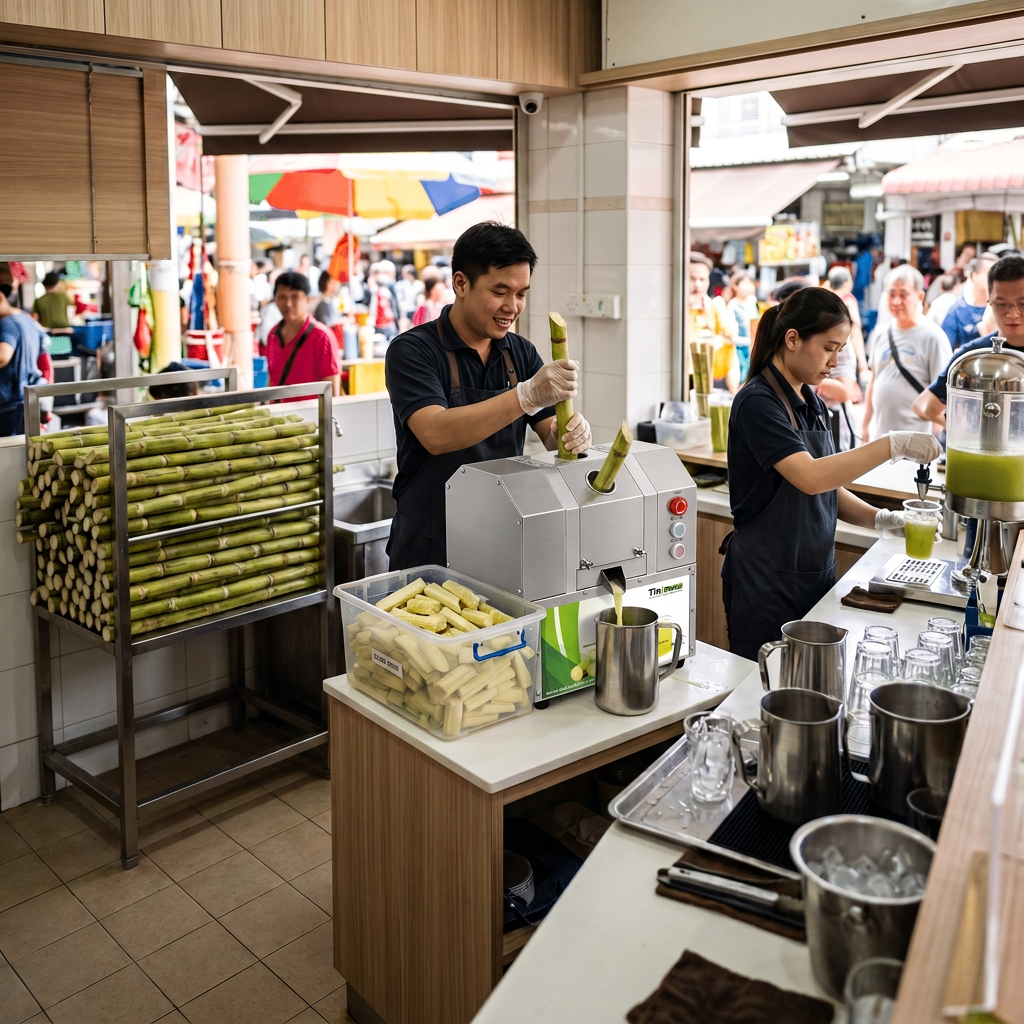
Commercial sugarcane juice workflow with preparation, extraction, serving, and waste zones

Begin with service patterns, not the busiest possible scenario. Estimate the number of drinks or batches you expect during a typical period, then identify the shorter periods when orders arrive together. Consider whether the same person will take payment, prepare garnishes, feed cane, serve drinks, and clean the work area. A technically capable machine can still become a bottleneck if one operator has too many tasks around it.

Assess the complete time needed for each order. This includes selecting and preparing stalks, feeding them safely, collecting juice, managing bagasse, cleaning spills, and resetting the station. If the operation uses pre-cut cane, determine where it will be cut, how it will be stored, and whether staff can replenish it without crossing the customer-service area.

Counter-service businesses often value compact layout and a simple operator routine. A dedicated juice bar or production room may place greater value on a work sequence that separates receiving, washing, preparation, extraction, and packing. Where you are comparing different machine formats, the TiniForce S3 and EasiDeMax S4 comparison can help frame questions around service volume, counter space, preparation, and cleaning routines.

Ask suppliers to explain operating steps clearly rather than relying on a general capacity claim. Actual throughput depends on stalk size, cane condition, operator pace, preparation quality, cleaning interruptions, and the way orders are presented to customers.

Check Cane Size, Condition, and Preparation

Prepared sugarcane stalks ready for commercial juice extraction

Your cane supply has a direct effect on machine selection and daily operation. Before purchasing, inspect representative stalks from your expected supplier. Note their diameter range, length, straightness, surface condition, moisture, fibrousness, and variation between deliveries. These factors influence how easily cane can be handled and fed through an extraction machine.

Do not assume that every stalk can be processed in the same way. Oversized, unusually hard, badly bent, or damaged stalks may need to be sorted, trimmed, split, or otherwise prepared according to the machine instructions. A consistent preparation standard helps operators work more safely and can reduce interruptions at the juicing station.

Plan for the tools and bench space required before the cane reaches the juicer. If you need to reduce stalk length or improve handling, use purpose-designed food preparation equipment and follow its operating instructions. The practical guidance in processing thick sugarcane stalks without avoidable jamming is especially relevant when cane deliveries vary in diameter or condition.

Also define how cane will be washed and inspected. Remove unsuitable material before it reaches the extraction area, and keep raw cane handling separate from clean serving items as far as the layout allows. Local food safety requirements may set additional expectations for washing, storage, and food-contact sanitation.

Confirm Installation Space and Electrical Supply

Commercial sugarcane juicer with planned counter space and electrical installation area

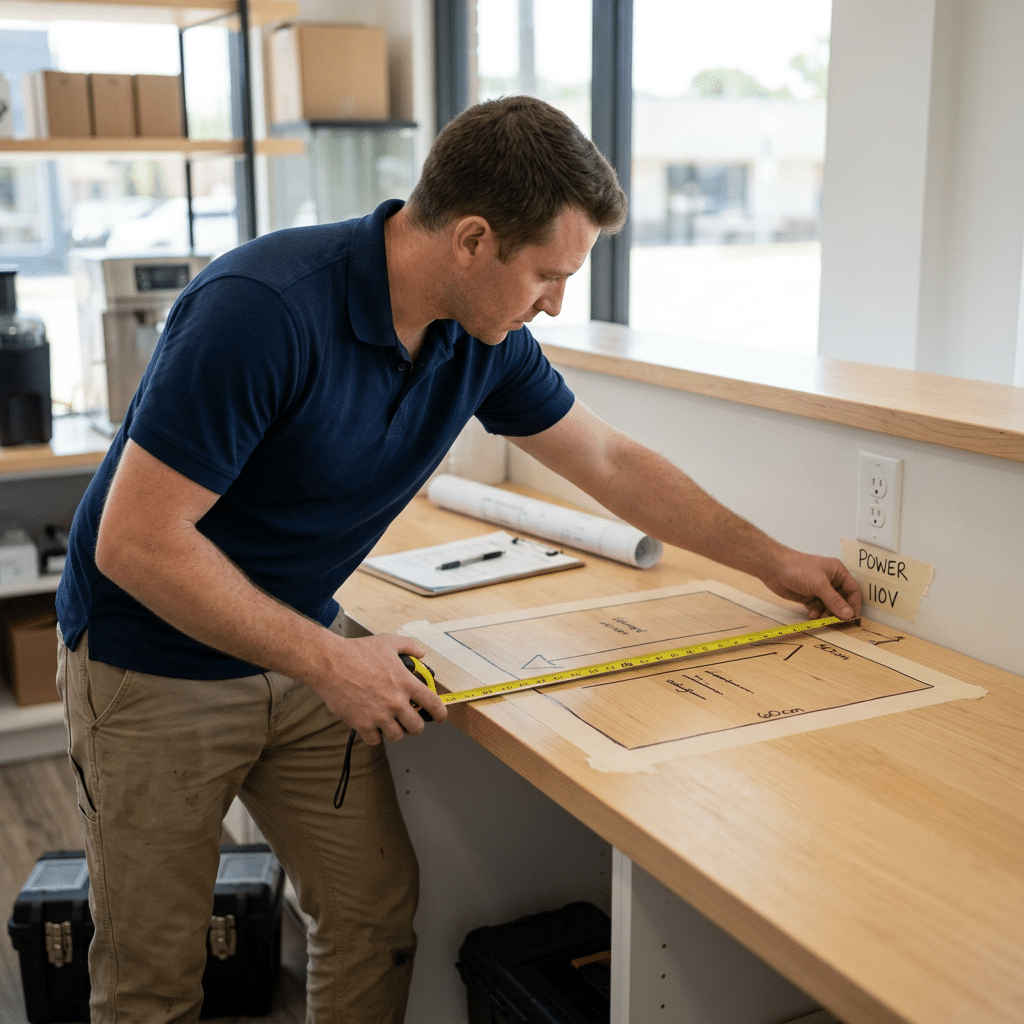
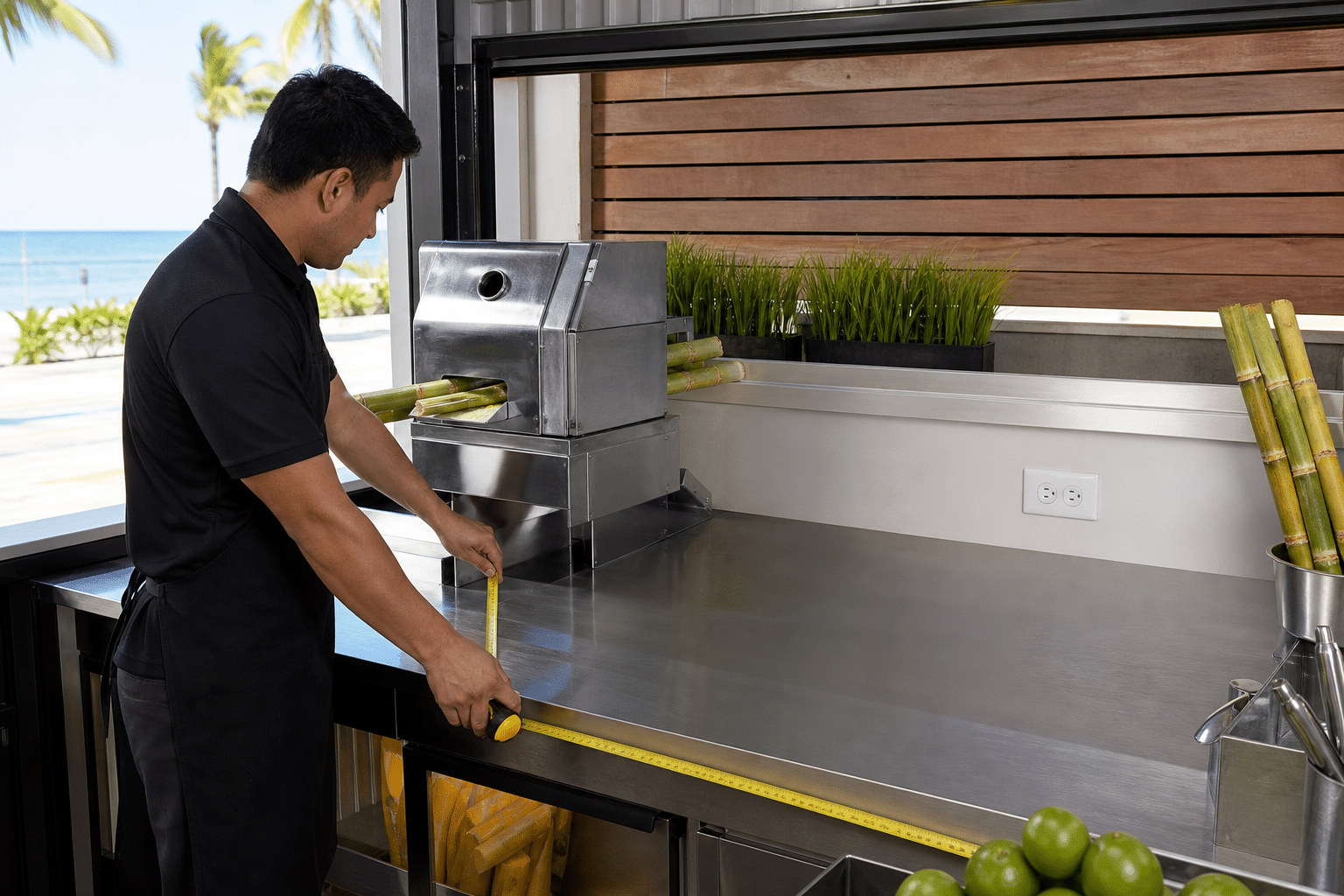
Measure the installation location before ordering. Include more than the machine footprint: allow room for cane staging, operator movement, the juice collection container, bagasse removal, cleaning access, and safe access to controls. Check the route from delivery point to installation area as well. Doorways, lifts, steps, counter openings, and turning space can affect delivery and commissioning.

The work surface must be stable, level, and suitable for foodservice use. Place the machine where operators can feed cane and remove waste without reaching across hot equipment, customer traffic, or unrelated preparation work. If the site has a sink or drainage nearby, confirm that splash and washdown practices remain appropriate for the particular equipment and local requirements.

Electrical compatibility is essential. Confirm the rating plate requirements for voltage, frequency, phase, plug type, and protective electrical arrangements before installation. Never assume that a machine intended for one market will connect safely in another. Review this guide to commercial sugarcane juicer power supply requirements, then have the final site connection checked by a qualified local electrician where required.

Request the machine dimensions, weight, installation clearances, and electrical details from the supplier for the exact model under consideration. These details should be confirmed in writing rather than estimated from product photographs.

Prioritise Hygiene and Cleaning Access

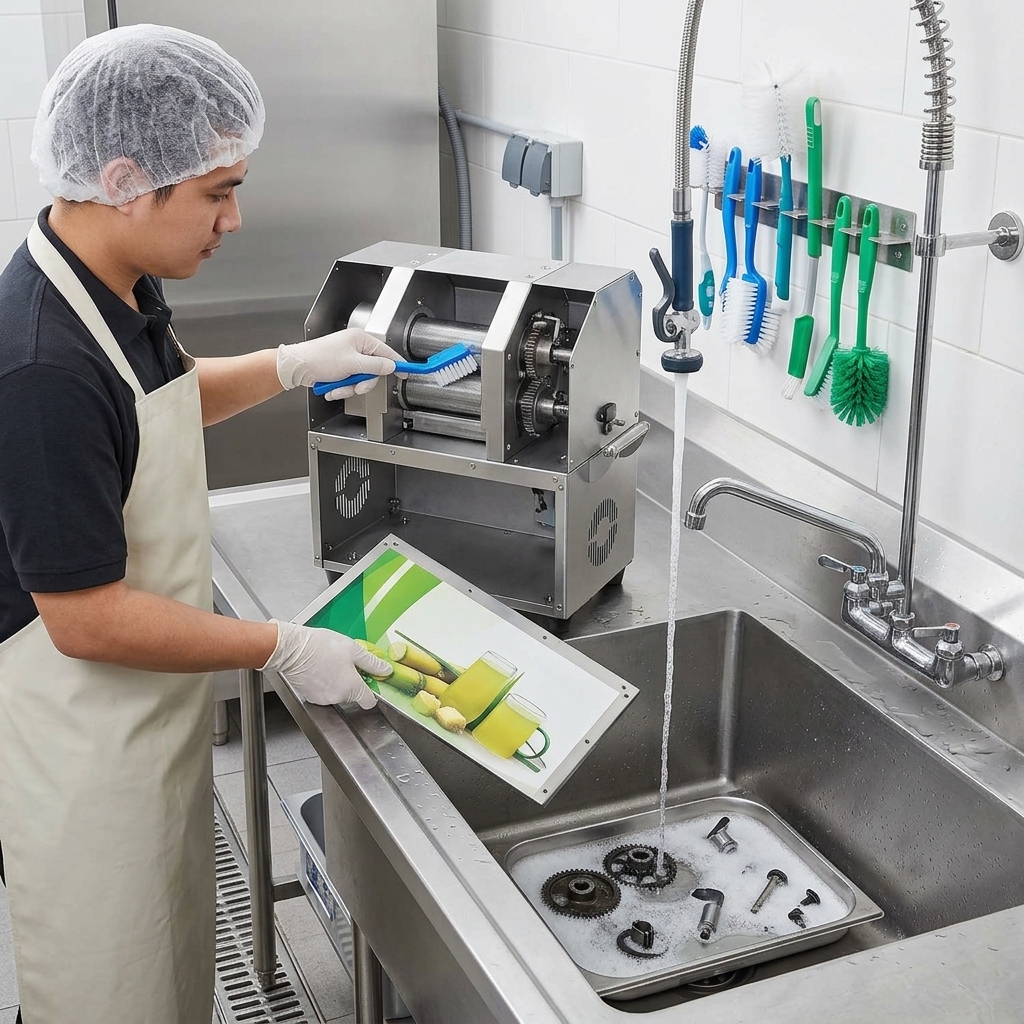
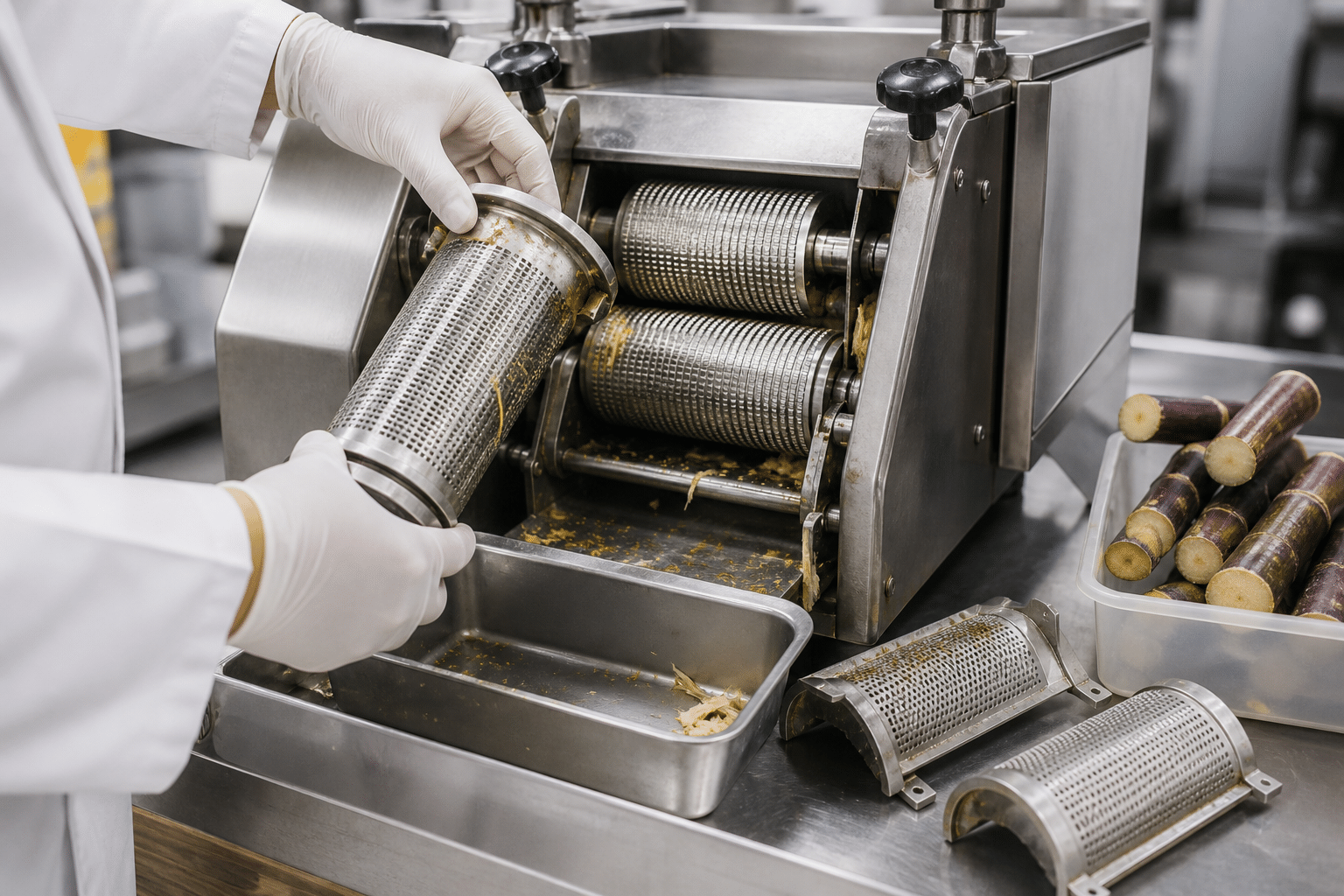
Operator cleaning accessible components of a commercial sugarcane juicer

Cleaning is a selection criterion, not an afterthought. Fresh cane juice and cane fibres can collect around food-contact areas, collection points, guards, work surfaces, and waste zones. A machine should support a cleaning routine that your team can complete correctly at the frequency required by your business and local food hygiene rules.

During evaluation, ask to see the normal shutdown and cleaning procedure for the exact machine. Identify which parts are removable, which areas require brushing or wiping, what cleaning tools are needed, and how operators avoid cross-contamination while reassembling the equipment. Confirm that the cleaning process fits your staffing plan and the time available between service periods and at the end of the day.

Keep a documented routine for daily cleaning, inspection, and scheduled deep cleaning. Training should cover safe isolation from power, correct disassembly where applicable, cleaning of food-contact surfaces, drying, reassembly, and a final operational check. For a practical step-by-step framework, see how to clean a commercial sugarcane juicer properly.

Choose cleaning chemicals and sanitising methods that are appropriate for food equipment and compatible with the manufacturer’s instructions. Follow local regulations and chemical supplier directions. Do not direct water at electrical components unless the manufacturer specifically permits that method for the machine.

Evaluate Total Cost and After-Sales Support

The machine price is only one part of the investment. A complete budget may include delivery, import or local taxes where applicable, site electrical work, counter preparation, cane washing and cutting equipment, packaging, filtration supplies, cleaning materials, spare parts, staff training, and planned maintenance. Budgeting in this way helps avoid selecting equipment that appears affordable but is difficult to install or sustain.

Ask the supplier what is included with the machine and what is not. Request clear information on the operating manual, cleaning instructions, recommended maintenance tasks, available spare parts, warranty terms, technical support process, and typical lead time for replacement components. The ability to identify the correct part and receive practical service guidance matters when the machine is central to daily sales.

Review the cost factors for starting a sugarcane juice business to build a broader purchasing budget. Then create a simple preventive plan based on the equipment manual: operator checks before service, cleaning and inspection after service, and periodic review of components that experience normal wear. This approach is more reliable than waiting for a disruption before arranging service.

For multi-site buyers, distributors, or private-label projects, also discuss documentation, spare-parts planning, training needs, and the point of contact for technical questions before placing an order.

Use a Practical Selection Process

A structured buying process reduces the risk of choosing equipment that does not fit the site. Use the following checklist when speaking with a supplier or comparing commercial sugarcane juice machines:

  1. Define the business format: Identify whether the machine will serve a kiosk, café, restaurant, hotel, juice bar, event operation, or production area.
  2. Map normal and peak workflow: List the number of orders, staffing level, preparation tasks, serving method, and cleaning windows.
  3. Assess actual cane: Provide representative information about stalk diameter, length, condition, and how the cane will be prepared.
  4. Confirm the site: Verify dimensions, work surface, operator clearance, delivery access, and electrical supply.
  5. Review cleaning in detail: Make sure the procedure, access, tools, and time requirement are realistic for your team.
  6. Check support readiness: Request documents for the exact machine, understand the spare-parts process, and identify who will provide technical assistance.
  7. Compare total cost: Include installation, preparation, hygiene supplies, packaging, maintenance, and operating labour in the budget.

Finally, retain written specifications and instructions for the model you choose. They provide a sound reference for site preparation, staff training, safe use, cleaning, and future maintenance. A well-matched commercial sugarcane juicer should make the daily process more organised and manageable for both operators and customers.

OEM Sugarcane Juicer Manufacturing: A Buyer’s Guide

Table of Contents

Choosing an OEM sugarcane juicer manufacturer requires more than selecting a machine design. This guide explains how B2B buyers can assess technical fit, customization scope, quality control, documentation, service planning, and commercial terms before placing an order.

What OEM Sugarcane Juicer Manufacturing Means

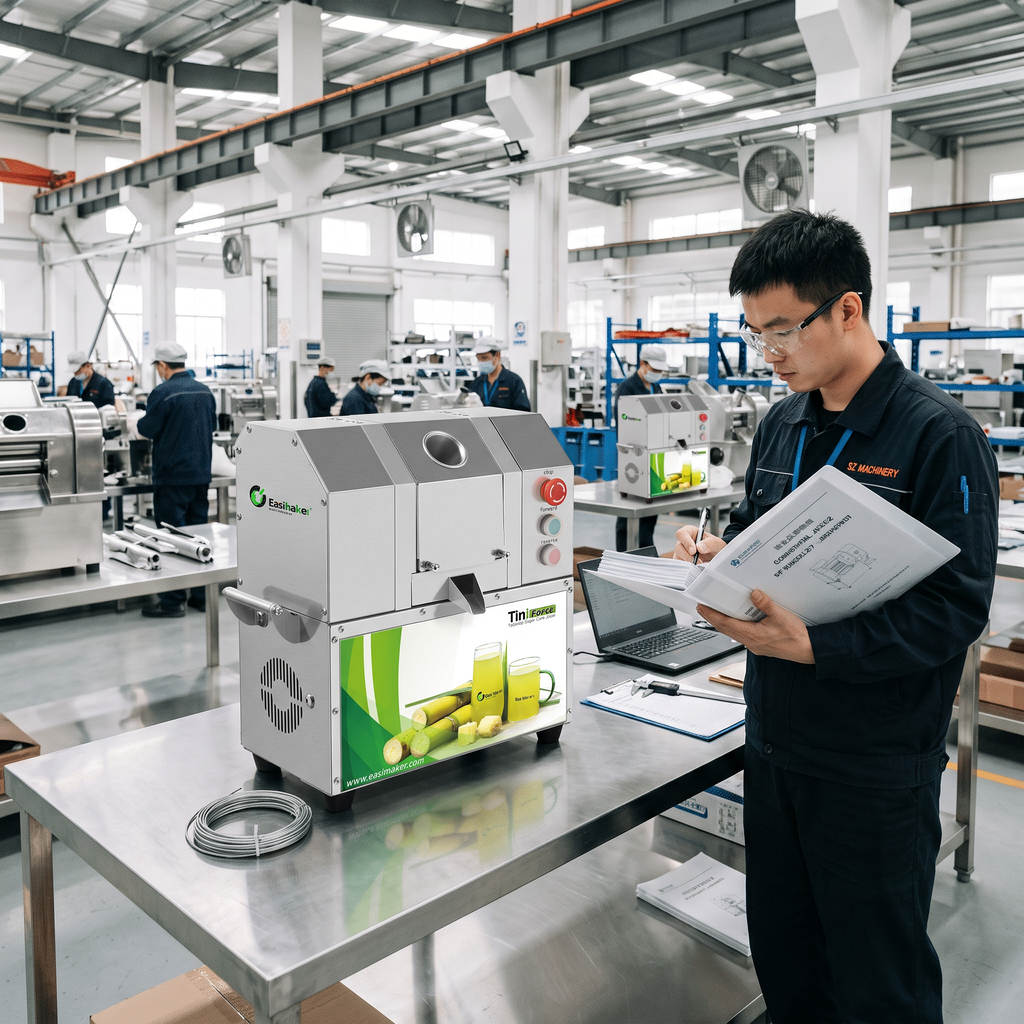
Commercial sugarcane juicer being reviewed during OEM manufacturing inspection

An OEM sugarcane juicer manufacturer produces commercial sugarcane juice equipment for sale under a buyer’s brand, sales channel, or distribution program. Depending on the project, OEM work may include branded labels, packaging, manuals, voltage configuration, selected cosmetic changes, or a broader product-development discussion.

OEM does not automatically mean that every part of the machine is newly designed. In many practical B2B projects, the most dependable route is to begin with a proven commercial platform and define controlled brand and market adaptations. This approach can reduce unnecessary development risk while giving distributors, importers, foodservice suppliers, and franchise operators a product line that fits their market identity.

The buyer’s task is to turn a commercial idea into a clear requirement: where the machine will operate, what cane it will process, how operators will clean it, which electrical supply is available, what branding is needed, and how service will be handled after delivery. A capable manufacturing partner should help clarify these points rather than rely on vague assumptions.

When an OEM Program Is the Right Choice

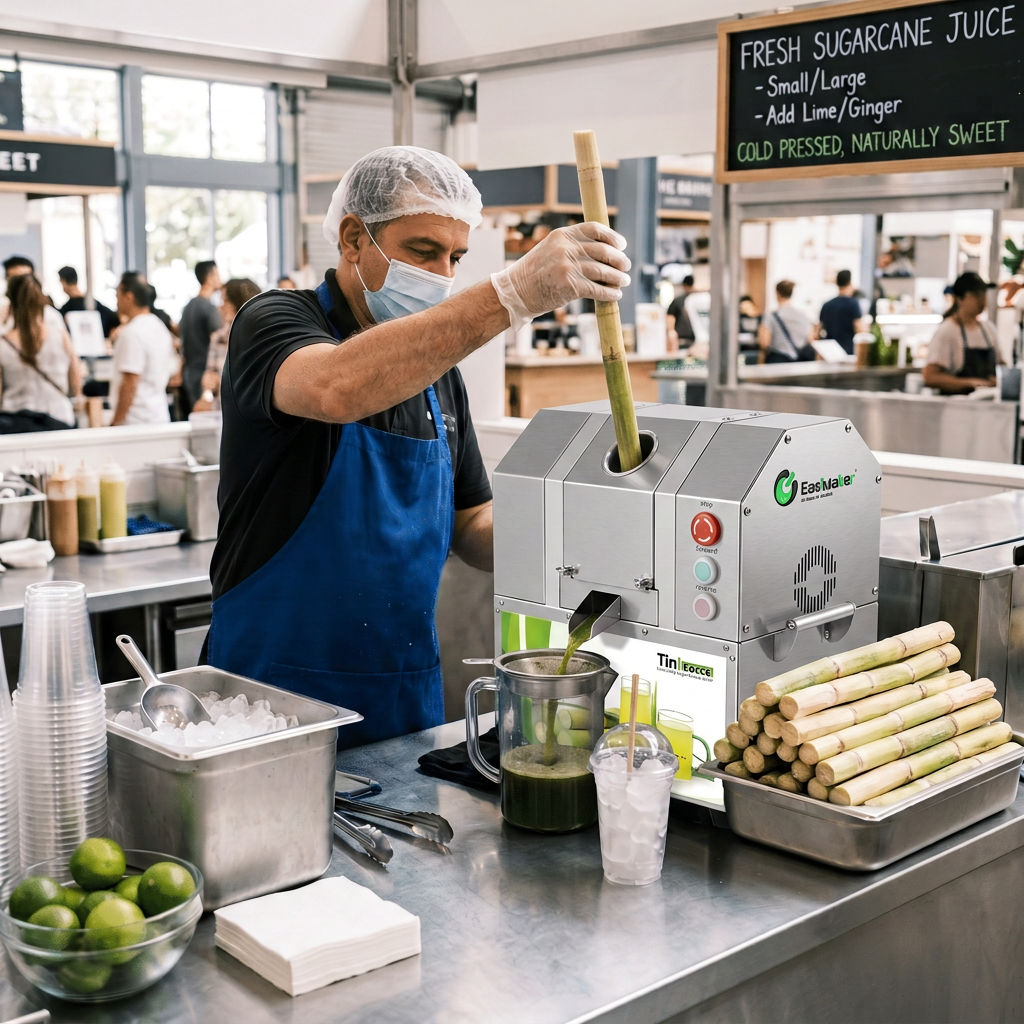
Commercial sugarcane juicer in a professional juice service setting

OEM sourcing is generally suitable when you need a repeatable product offering rather than a one-time machine purchase. It can fit importers building a local equipment range, distributors serving juice bars and hospitality customers, franchise groups standardizing store equipment, and established brands introducing sugarcane juice service.

It may be less suitable for a small trial operation that only needs one machine quickly. In that case, a standard commercial model with available support may be the simpler choice. The distinction between commercial and occasional-use equipment matters: daily service involves repeated feeding, cleaning, staff handover, and downtime risk. Review the practical differences in this guide to commercial versus home sugarcane juicers before selecting a base platform for a branded program.

A useful early question is whether your business needs private-label presentation, product consistency across multiple locations, a country-specific electrical configuration, or a defined spare-parts plan. If the answer is yes, an OEM conversation is worth starting.

Start With the Correct Machine Specification

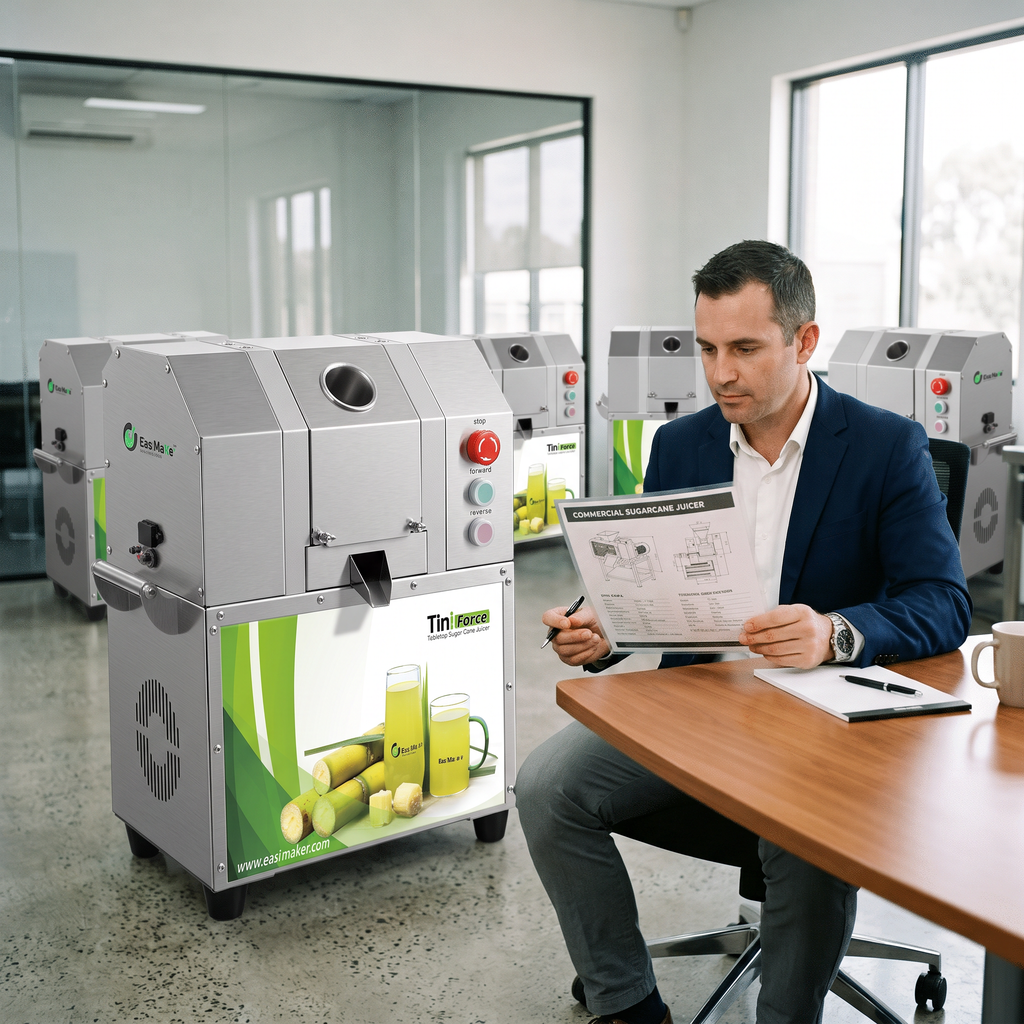
Buyer and engineer reviewing commercial sugarcane juicer specifications

Branding should follow machine selection, not replace it. Before requesting an OEM quotation, document the operating conditions and the intended workflow. The right specification depends on the application, not on appearance alone.

Key technical and operational questions

  • Duty pattern: Will the unit be used for occasional service, steady daily trading, or peak-period production?
  • Cane preparation: What typical cane diameter, length, condition, and local variety will operators handle? Is cutting or splitting required before extraction?
  • Installation: What voltage, frequency, plug format, counter space, drainage arrangement, and ventilation conditions apply at the site?
  • Operator workflow: Who feeds cane, collects juice, handles bagasse, and cleans the machine during a shift?
  • Hygiene process: Which food-contact surfaces require routine access, and what cleaning chemicals or water conditions will be used locally?
  • Market expectations: What language, warning labels, instructions, packaging information, and local import requirements need to be considered?

Do not assume a machine will accept unprepared cane simply because it is marketed for sugarcane. Cane geometry, fibrous condition, and preparation affect workflow. If your operation requires preparatory equipment, discuss it as part of the line design. Our guide on how to choose a sugarcane juice machine provides a practical starting framework for defining the application.

Define Customization Before Quoting

Private-label packaging and branding review for a commercial sugarcane juicer

A clear customization brief avoids preventable revisions later. Separate requests into categories so both buyer and manufacturer understand what is being changed and what must remain validated within the base machine design.

Common OEM customization areas

  • Brand identity: logo placement, nameplates, decals, colours, carton artwork, and printed inserts.
  • Market configuration: voltage and frequency options, plug type, language versions, warning labels, and destination-market packaging marks.
  • Commercial packaging: private-label cartons, protective packing requirements, accessory packs, and dealer-ready documentation.
  • Product options: selected accessories or workflow-related options that are compatible with the agreed machine platform.
  • Documentation: operating instructions, cleaning guidance, parts identification, warranty wording, and service contact information.

Provide artwork in the agreed file format and confirm ownership or permission to use all logos and trademarks. For any request affecting electrical components, guards, food-contact parts, structural elements, or the operating sequence, ask the manufacturer to explain the engineering review, prototype process, and resulting documentation. A cosmetic change and a functional redesign should not be treated as the same type of request.

Buyers considering a broader branded equipment program can also review the operational perspective in the benefits of becoming an OEM sugarcane machine dealer.

How to Evaluate an OEM Sugarcane Juicer Manufacturer

Choose an OEM partner based on evidence of manufacturing control and communication quality, not only on the initial unit price. The supplier should be able to discuss the proposed machine in operational terms and identify information that is still unknown.

Questions to ask during supplier evaluation

  • Which machine platform is proposed, and why is it suitable for the stated use case?
  • Which components and materials are relevant to food contact, cleaning, wear, and routine servicing?
  • What customization is available within the existing platform, and what requires separate engineering approval?
  • How are incoming materials, assembly steps, electrical checks, and final inspection controlled?
  • Can the supplier provide drawings, photographs, sample documents, or a sample unit where appropriate?
  • What spare parts can be supplied, how are parts identified, and what information is needed when requesting service?
  • Who is the named contact for technical questions, order coordination, and after-sales support?

Request answers in writing and compare like with like. A lower quotation may not include branded documentation, export packing, spare parts, local electrical configuration, or pre-shipment inspection arrangements. A reliable comparison starts with the same scope, delivery terms, and acceptance expectations for every supplier.

Quality Control, Testing, and Documentation

Quality-control inspection of a commercial sugarcane juicer

Quality control should be discussed as a defined process rather than a general promise. The exact checks depend on the product configuration and purchase agreement, but buyers should understand how the manufacturer controls the sequence from material receipt to final packing.

Ask for the proposed inspection points and acceptance criteria. These may cover visual condition, assembly completeness, operation of relevant controls, electrical configuration, packaging completeness, identification labels, and the documentation supplied with the unit. Where practical, agree on how the buyer or a nominated inspector will review samples or finished goods before shipment.

Documentation is part of product usability. At minimum, consider the language and clarity of operating instructions, cleaning guidance, safety notices, parts reference information, packing lists, and commercial shipping documents. Do not assume that documentation written for one destination will suit another. Local regulations and import requirements vary, so buyers should confirm their own destination-market obligations with appropriate local professionals or authorities.

If a project requires testing, marks, declarations, or other compliance evidence, define the requirement early and confirm exactly what the manufacturer can provide for the proposed configuration. Avoid treating broad claims or product photographs as proof of market compliance.

Plan the Commercial Details of Your Order

An OEM order should have a written scope that links the machine configuration, customization, documents, packaging, inspection approach, and delivery terms. This prevents a common problem: the buyer expects a market-ready private-label product while the supplier prices only a standard machine with a logo request.

Clarify the requested quantity, sample process, approval milestones, production schedule, payment structure, trade terms, destination port or delivery point, packing method, and responsibility for freight and import formalities. Lead times can vary with configuration, artwork approval, material availability, and order complexity, so it is better to agree on a current schedule than rely on a generic promise.

Budget beyond the machine purchase price. Consider site preparation, cane preparation tools, installation, consumables, local inspection, freight, duties, packaging, service stock, and operator training. For a broader planning view, see this guide to budgeting for a sugarcane juice business.

For repeat orders, establish a controlled version of the product specification. Record approved artwork, label positions, electrical configuration, carton design, manual revision, spare-parts list, and any agreed sample reference. Version control makes future purchasing more consistent and reduces avoidable variation between batches.

Build After-Sales Support Into the Program

After-sales planning is essential for commercial equipment because a machine is only useful when operators can run, clean, and maintain it correctly. Before placing an OEM order, agree on the support route for installation questions, operation guidance, troubleshooting, parts requests, and warranty communication.

A practical support package may include an operator manual, cleaning instructions, parts identification, recommended routine checks, contact details, and a process for reporting issues with clear photographs or video. Dealers and importers should decide whether they will hold common service parts locally, provide first-line technical assistance, or direct customers to the manufacturer for defined cases.

Staff training should cover safe operation, correct cane preparation, daily cleaning, inspection of accessible areas, and escalation when the machine shows abnormal operation. Operators should not bypass guards, improvise repairs, or continue using equipment that appears damaged or unsafe. Good records of serial numbers, delivery dates, service requests, and parts replacements make support more efficient as the installed base grows.

OEM Sugarcane Juicer Buyer Checklist

Use this checklist before issuing a purchase order to an OEM sugarcane juicer manufacturer:

  • Define the commercial use case, expected workflow, installation environment, and destination market.
  • Confirm the base machine platform and electrical configuration in writing.
  • Document cane preparation needs and operator responsibilities.
  • Approve branding artwork, labels, carton design, and manual language.
  • Separate standard options from changes requiring engineering review.
  • Agree on samples, inspection points, acceptance criteria, and final product version.
  • Confirm packing, trade terms, freight responsibility, and import documentation needs.
  • Set out spare-parts support, warranty communication, and service escalation procedures.
  • Keep approved specifications and artwork under version control for repeat orders.

The best OEM result is not simply a branded machine. It is a controlled equipment program with a suitable commercial platform, clear documentation, realistic operational planning, and dependable communication from manufacture through after-sales support.

What to Ask a Sugarcane Juicer Manufacturer Before Buying

Table of Contents

Before buying a commercial sugarcane juicer, ask the manufacturer clear questions about your cane, expected workflow, machine construction, electrical compatibility, cleaning access, spare parts, warranty, and technical support. Written answers help you compare suppliers on operational fit rather than headline claims alone.

The Questions That Matter Before You Buy

The best sugarcane juicer manufacturer questions focus on whether the machine fits your real operating conditions: cane diameter and condition, sales volume, available counter space, local power supply, cleaning routine, and access to support after delivery.

Do not choose only by appearance, a quoted output figure, or the lowest purchase price. Ask the manufacturer to explain the intended application, provide the relevant technical documentation, identify wear parts, and state what support is available in your market. A reliable supplier should answer clearly, identify any assumptions behind its recommendation, and avoid promising results that depend on your operator, cane supply, or site conditions.

For commercial buyers, the central question is simple: can this machine be operated, cleaned, maintained, and supported consistently within our daily workflow? The sections below provide a practical question list for evaluating that answer.

Start With Your Operating Requirements

Operator reviewing sugarcane stalk condition and juice bar workflow before equipment selection

Before asking a manufacturer to recommend a model, give them a concise description of your operation. A useful supplier recommendation depends on the details you provide.

Questions to ask the manufacturer

  • What type of business is this machine intended for: kiosk, juice bar, restaurant, hotel, cafeteria, mobile unit, or central preparation area?
  • What volume do you expect during normal trading and during peak periods?
  • What sugarcane stalk sizes and varieties will we process?
  • Will the cane be freshly delivered, chilled, washed on site, or stored before juicing?
  • Will one operator run the machine continuously, or will several employees use it across shifts?
  • What preparation steps are required before cane enters the feed area?

These questions prevent a common purchasing error: selecting a machine based on an ideal test condition rather than the cane and workflow found at the point of sale. Cane that is unusually thick, dry, fibrous, curved, or inconsistently trimmed may require different preparation and operating practices. Review practical guidance for processing thick sugarcane stalks without unnecessary motor strain when this is relevant to your supply.

Ask the manufacturer what operating assumptions were used for its recommendation. A useful written reply should distinguish between typical operating conditions and conditions that may require slower feeding, additional cane preparation, or a different equipment configuration.

Ask How the Machine Is Built for Daily Use

Technician inspecting accessible components of a commercial sugarcane juicer

A commercial sugarcane juicer is more than a set of crushing rollers. Its useful design depends on the interaction of the feeding path, roller assembly, drive system, guards, juice collection area, residue discharge, and parts that staff must clean or inspect.

Questions about construction and usability

  • Which areas contact cane or juice, and what materials are used in those areas?
  • Which components are designed to be removed or accessed for cleaning?
  • How are guards fitted, and what safety procedures should operators follow during use and cleaning?
  • How is cane residue discharged and contained?
  • Which parts are expected to wear during normal use?
  • What routine inspection points should the operator check before starting a shift?
  • Does the manufacturer provide cleaning instructions specific to the model?

Ask for current product photos, an operator manual, and a parts diagram rather than relying solely on generic catalogue images. These materials help your team assess whether the feed opening, cleaning access, drip area, and residue handling suit the staff workflow.

It is also reasonable to ask how crushing speed is selected for the model and how operating practice can affect the result. Speed is only one part of machine performance; cane condition, roller condition, feed consistency, and cleaning all matter. This overview of sugarcane machine RPM and crushing speed considerations can help buyers discuss the subject more precisely with a supplier.

Confirm Site, Power, and Cleaning Compatibility

Measuring counter space and clearance for commercial sugarcane juicer installation

A machine that is technically suitable can still be a poor purchase if it does not fit the installation site. Confirm the practical site requirements before issuing a purchase order.

Questions about installation

  • What are the machine dimensions, weight, and recommended working clearance?
  • What electrical supply, plug type, frequency, and power arrangement does the quoted version require?
  • Is the machine intended for countertop use, and what type of supporting surface is appropriate?
  • What clearance is needed for feeding cane, collecting juice, removing residue, and cleaning?
  • What cleaning method does the manufacturer recommend?
  • Can water be used around the machine, and what precautions are required for electrical safety?
  • Does the machine need a dedicated circuit or any specific installation checks by a qualified local professional?

Measure the complete work zone, not just the equipment footprint. Operators need room to bring in cane, position containers, dispose of residue, and access removable parts. Use this guide to measure a countertop for a commercial sugarcane juicer as a planning reference.

Water exposure is another point that requires precise language. “Easy to clean” does not automatically mean that every part can be sprayed or washed down. Ask for the model-specific cleaning procedure and any enclosure or ingress-protection information available for the exact configuration you are considering. For context, read about IP ratings and washdown safety for commercial sugarcane juicers.

Request Evidence for Performance Claims

Manufacturers may describe throughput, extraction, or operating speed differently. Instead of comparing isolated numbers, ask what was tested, how it was tested, and what conditions may change the result.

Questions to make claims comparable

  • What cane type, stalk condition, and preparation method were used for any stated performance figure?
  • Was the machine run continuously or intermittently during the test?
  • What operator actions are required between stalks?
  • How are juice residue, foam, and filtration handled in the demonstrated setup?
  • Can you provide an unedited operating video of the quoted machine version?
  • Can we review a live remote demonstration or arrange an inspection where practical?

Ask the supplier to explain the workflow around the machine, not only the crushing step. Real counter service may include washing, trimming, feeding, collecting juice, filtering, serving, wiping surfaces, and clearing residue. The slowest step in that chain can determine practical service speed.

For buyers planning a branded menu or repeatable multi-site operation, request standard operating instructions for cane preparation, sanitation, and daily checks. This makes it easier to train teams and compare supplier support on a like-for-like basis.

Check Service, Spare Parts, and Documentation

After-sales capability is a purchasing criterion, not an afterthought. Commercial equipment needs a clear path for routine maintenance, diagnosis, and replacement parts.

Questions about ownership support

  • What warranty terms apply to the machine, and what exclusions apply?
  • Which consumable and wear parts should we keep in stock?
  • Can you provide a spare-parts list with part numbers and current availability guidance?
  • What documents are included: operating manual, cleaning instructions, electrical information, exploded view, and troubleshooting guide?
  • How are technical questions handled after delivery?
  • What information should our team provide when reporting a fault?
  • Are remote troubleshooting, video guidance, or local service partners available for our market?

Request the recommended maintenance schedule before purchase. It should explain routine cleaning, inspection intervals, adjustment checks where applicable, and signs that a component may need attention. A planned approach can reduce avoidable interruptions and makes responsibilities clearer for shift supervisors. See this practical resource on developing a preventative maintenance schedule for a commercial sugarcane juicer.

Also ask whether the supplier can identify the machine by serial number and provide version-specific support. This is particularly important if your business expects to add units over time or operate equipment in more than one location.

Clarify Commercial Terms Before Placing an Order

Once you have identified a technically suitable machine, confirm the commercial scope in writing. A complete quotation should make it clear what is included and what remains the buyer’s responsibility.

Questions for the quotation and order

  • What exact model, electrical version, accessories, and optional items are included?
  • What is the unit price, quotation validity period, payment structure, and applicable trade term?
  • What packaging is used, and how are shipping arrangements defined?
  • What is the estimated production and dispatch timing after order confirmation?
  • What pre-shipment inspection or acceptance process is available?
  • What support materials will be supplied with the shipment?
  • For import purchases, which documents can the supplier provide and which local approvals remain the buyer’s responsibility?

Do not assume that a machine configured for one market will automatically be appropriate for another. Electrical supply, plug format, language requirements, food-service rules, import procedures, and local installation practices may differ. Discuss these items early, particularly for distributor, private-label, or multi-unit projects.

If you require branding, packaging changes, a special configuration, or ongoing supply for a network, ask the manufacturer to define feasibility, minimum order requirements, lead time, documentation, and change-control process before committing.

Use a Written Purchase Checklist

Before making a final decision, compare each supplier’s answers in one document. This helps your purchasing, operations, and finance teams identify differences that may not be visible in a short product specification.

Final buyer checklist

  • The manufacturer has received an accurate description of our cane and daily workflow.
  • The selected machine fits our available space, power supply, and cleaning arrangement.
  • We have reviewed model-specific operating and cleaning documentation.
  • Performance discussions are linked to stated test conditions rather than unsupported assumptions.
  • Warranty, wear parts, maintenance responsibilities, and technical support are documented.
  • The quotation identifies the exact configuration, included items, commercial terms, and delivery scope.
  • Our team understands what training, site preparation, and local checks are needed before installation.

A strong manufacturer relationship begins with clear questions and documented answers. This approach gives you a more reliable basis for choosing a commercial sugarcane juicer that supports your operating plan rather than creating avoidable uncertainty after delivery.

Discuss Your Commercial Sugarcane Juicer Requirements

If you are comparing suppliers or preparing a purchase specification, contact Easimaker with your expected workflow, cane condition, site power, and market requirements. Our team can help you clarify the questions needed for a practical equipment discussion.

Contact Easimaker

Sugarcane Juice Machine Safety Checklist for Daily Service

Table of Contents

A commercial sugarcane juicer should be checked before every shift, operated with guards in place, cleaned safely after service, and inspected for wear before the next day. This checklist helps managers and operators build a repeatable daily safety routine.

The Daily Safety Routine at a Glance

Commercial sugarcane juice machine prepared for a daily safety inspection

Effective sugarcane juice machine safety starts with a simple rule: inspect the machine before service, keep guards and hands clear during extraction, isolate power before cleaning or adjustment, and stop operation when a fault is found. A commercial sugarcane juicer contains powered rollers and pinch points. Daily checks help operators identify problems before they affect staff safety, product hygiene, or service continuity.

Use this sequence for every shift:

  1. Check the work area, electrical supply, machine stability, guards, feed opening, rollers, and collection area.
  2. Confirm that food-contact surfaces are clean and that the machine has been reassembled correctly after the previous cleaning cycle.
  3. Test controls only in accordance with the machine manual, with hands and tools away from moving parts.
  4. Feed prepared cane steadily using the intended feed path; never push cane with fingers or improvised objects.
  5. Keep the counter dry, clear spent cane promptly, and manage queues so operators do not rush.
  6. Switch off, isolate, clean, inspect, and record faults at the end of service.

These steps are a practical operating checklist, not a replacement for the operating manual, local food-hygiene rules, electrical requirements, or workplace safety procedures. Site managers should adapt the checklist to the exact machine model and local regulations.

Why Daily Safety Checks Matter for Commercial Sugarcane Juicers

Organised commercial sugarcane juicer workstation with clear operator space

A sugarcane juice machine is a food-service asset that combines mechanical extraction with direct food contact. Its operating risks are straightforward but important: rotating rollers can create pinch points, wet floors and counters can increase slip or electrical risks, and poor cleaning can leave residue in food-contact areas.

Daily inspection is therefore not just a maintenance task. It supports three operating controls:

  • Operator protection: guards, covers, controls, stable installation, and safe feeding practices reduce exposure to moving parts.
  • Food hygiene: cleaned and properly reassembled contact parts help keep the preparation process controlled.
  • Service reliability: unusual noise, vibration, loose parts, damaged cables, or reduced roller grip can be reported before a more serious interruption develops.

Commercial equipment is generally selected for repeated business use and a managed operating workflow, rather than occasional household use. For a useful purchasing and workflow context, read commercial versus home sugarcane juicer differences. Even with commercial equipment, safe results depend on correct installation, trained operators, suitable cleaning procedures, and access to model-specific support.

Assign clear responsibility at the start and end of every shift. One trained person should confirm the checklist, while the manager or designated supervisor should decide whether a fault requires the machine to be isolated and serviced.

Pre-Start Sugarcane Juicer Safety Checklist

Operator completing a pre-start safety inspection on a sugarcane juice machine

Complete the following inspection before connecting the machine for service. Do not rely on a visual check alone if the machine was moved, cleaned, or reassembled since the previous shift.

1. Check the location and work area

  • Place the machine on a stable, level, cleanable surface suitable for its weight and normal operation.
  • Keep sufficient clear space around the feed side, juice outlet, bagasse discharge area, and operator position.
  • Remove loose packaging, cleaning tools, knives, cloths, cups, and other items that could interfere with the workflow.
  • Ensure the surrounding floor is dry and that any spills can be dealt with promptly.
  • Keep customers, children, and untrained staff away from the operating zone, especially when the service counter is busy.

2. Inspect the electrical connection

  • Check that the power cord, plug, strain relief, switch, and visible connections show no damage, exposed conductors, overheating marks, or loose fit.
  • Confirm that the local electrical supply matches the rating shown on the machine nameplate and the model documentation.
  • Use the intended grounded outlet and avoid unsafe extension arrangements. Do not operate the equipment with wet hands.
  • Make sure the power cord does not cross a wet area, sharp edge, walkway, or hot surface.

3. Inspect guards, covers, and food-contact parts

  • Confirm that all guards, covers, trays, and removable components are fitted, secure, and undamaged.
  • Check that the feed opening is unobstructed and that there is no old cane fibre, cleaning material, or foreign object near the rollers.
  • Verify that juice collection containers, strainers, and other food-contact accessories are clean, dry where required, and correctly positioned.
  • Never bypass an interlock, remove a guard for faster feeding, or operate a machine with a loose or cracked cover.

4. Prepare the sugarcane safely

Use clean cane appropriate for your recipe and operating process. Wash or prepare raw material according to the site food-safety plan before it approaches the juicer. Trim cane only with suitable tools, on a separate stable preparation surface, and keep blades away from the extraction station. Cut cane to a length that can be guided through the normal feed path without forcing it.

Pre-start checks should also include the machine’s model-specific instructions. The supplier’s sugarcane juicer spare parts and support checklist can help managers record machine identification details and plan for parts that may be needed over the equipment life.

Safe Operating Practices During Service

Safe feeding of prepared sugarcane into a commercial juice machine

Once the machine is running, the operator’s main job is to keep hands, clothing, tools, and distractions away from moving parts. A well-designed counter layout and consistent routine are safer than trying to correct problems while the machine is operating.

Feed cane only through the intended path

Guide each piece of prepared sugarcane into the feed opening in a controlled manner. Keep fingers outside the danger area at all times. Do not reach into the opening to reposition cane, clear fibre, or retrieve a dropped item. Never use fingers, metal tools, knives, spoons, or improvised pushers to force material into the rollers.

If cane stalls, feeds unevenly, or appears caught, stop the machine using the normal control. Isolate it from power before inspecting or attempting to clear the issue. Follow the exact clearing procedure in the machine manual. If the cause is not clear, do not restart until a qualified person has checked the machine.

Maintain a controlled station

  • Keep the juice cup or collection vessel stable and correctly located before extraction begins.
  • Remove spent cane and fibre using a safe method only after movement has stopped, unless the machine documentation specifically states otherwise.
  • Wipe spills as soon as it is safe to do so. Use a separate cloth or cleaning method for the surrounding counter; do not introduce cloths near rollers.
  • Tie back long hair, avoid loose sleeves, jewellery, lanyards, and gloves that could be drawn toward moving parts.
  • Do not leave an operating sugarcane juicer unattended.
  • Limit operation to trained staff who understand the start, stop, cleaning, and fault-reporting process.

Respond to abnormal operation early

Stop service and investigate if you notice unusual noise, vibration, burning smell, inconsistent roller movement, an electrical issue, a loose component, leakage where it should not occur, or damage to a guard. Continuing to operate a machine after an abnormal condition is identified can increase the risk of injury or equipment damage. Place a clear out-of-service notice on the machine until it has been checked.

Safe Shutdown, Cleaning, and Sanitising

Commercial sugarcane juicer isolated from power before cleaning

Cleaning is one of the highest-risk times for sugarcane juicer operators because staff may be tempted to remove residue while rollers are still moving. Establish a non-negotiable shutdown sequence: stop the machine, disconnect or isolate its power supply, confirm movement has fully stopped, and only then begin cleaning or disassembly.

End-of-service cleaning sequence

  1. Turn the machine off using the normal control.
  2. Disconnect the plug or use the approved isolation method for the installation. Prevent accidental reconnection while cleaning.
  3. Wait until all moving parts have stopped completely.
  4. Remove detachable parts only as described in the manual. Place small parts in a clean, controlled area so they are not lost or contaminated.
  5. Remove cane fibre and residue with tools and methods suitable for the machine. Do not use hands near rollers or sharp edges.
  6. Wash, rinse, and sanitise food-contact components in line with the site hygiene programme and the instructions for the cleaning chemicals used.
  7. Clean non-removable exterior surfaces carefully. Do not spray or flood electrical components, switches, motors, plugs, or areas that the manual says must remain dry.
  8. Allow components to dry as required, inspect them, and reassemble the machine correctly before storage or the next shift.

Cleaning chemicals must be suitable for food-equipment use and used at the dilution, contact time, and rinsing requirements specified by their manufacturer and local food-safety procedures. More chemical is not automatically better; incorrect concentration can create residue, damage surfaces, or reduce cleaning effectiveness.

Managers should make the shutdown procedure visible at the workstation. The same approach used when planning support parts is helpful here: keep accurate model and serial information with the cleaning record, then use the commercial juicer support planning guide when replacement parts or technical guidance are required.

Maintenance Checks and When to Stop Using the Machine

Daily cleaning does not replace preventive maintenance. It does, however, create the best opportunity to find developing issues before the next shift. During the post-clean inspection, look for looseness, cracks, wear, corrosion, damaged seals, incomplete reassembly, and residue that was difficult to remove.

Remove the sugarcane juicer from service and report it if any of the following conditions are found:

  • A guard, cover, feed component, tray, or other fitted part is missing, loose, cracked, or cannot be secured correctly.
  • The power cord, plug, switch, or electrical enclosure is damaged, wet internally, overheated, or otherwise suspect.
  • The machine does not start, stop, or run normally according to its control procedure.
  • Rollers or other moving components make unusual sounds, bind, vibrate excessively, or appear misaligned.
  • There is a burning smell, smoke, visible sparking, or repeated tripping of the electrical protection device.
  • A food-contact component is damaged, heavily worn, difficult to clean, or no longer fits correctly.
  • The machine has been dropped, knocked, flooded, or exposed to an event that could affect its safe condition.

Do not attempt unauthorised repairs, improvised electrical work, or modifications to guards and controls. Order genuine or supplier-approved replacement components that match the machine model. Keep records of service work, parts replacement, and recurring faults. This information helps technicians diagnose issues and helps buyers plan maintenance across multiple sites.

A planned support process is particularly useful for cafés, juice bars, kiosks, hospitality venues, and distributors that depend on daily availability. Keep the machine model, serial number, purchase information, photos of the fault, and a concise description of symptoms ready before requesting assistance.

Document the Daily Safety Check

A short signed checklist makes the safety routine easier to manage across shifts and locations. It also helps supervisors see repeated faults, missed cleaning steps, or training gaps. The record can be paper-based or digital, but it should be quick enough for staff to use consistently.

Include these fields in a daily sugarcane juice machine safety record:

  • Date, shift, site, and machine identification.
  • Name or initials of the trained operator completing the check.
  • Confirmation that the work area, electrical connection, guards, food-contact parts, and controls were checked.
  • Confirmation that cleaning and correct reassembly were completed.
  • Any abnormal noise, vibration, damage, jam, spill, or hygiene concern found.
  • Action taken, including whether the machine was removed from service.
  • Supervisor review where required by the business procedure.

Use the record as a working document rather than a box-ticking exercise. If the same issue appears repeatedly, investigate its cause. It may indicate an operator training need, unsuitable raw-material preparation, a cleaning process that needs adjustment, or a component that requires professional inspection.

For operations comparing equipment types or reviewing whether a current unit matches the workload, the guide to choosing between commercial and home sugarcane juicers provides useful context on commercial-duty operating expectations. A documented routine, correct staff training, and responsive technical support remain essential regardless of machine type.

How to Design a Hygienic Sugarcane Juice Workstation

Table of Contents

A hygienic sugarcane juice workstation separates raw cane handling from juice service, uses cleanable surfaces, provides safe machine clearances, and supports a repeatable cleaning routine. This guide helps foodservice operators design a practical daily-use layout.

What a Hygienic Sugarcane Juice Workstation Requires

Organized commercial sugarcane juice workstation with clean work zones

A hygienic sugarcane juice workstation setup is designed around one principle: raw sugarcane, finished juice, waste and cleaning activities should not cross paths unnecessarily. The workstation should give staff a logical route from cane receiving and washing to trimming, pressing, serving and cleaning.

For most commercial operations, this means using smooth cleanable work surfaces, placing the sugarcane juicer on a stable bench or floor position, keeping a dedicated container for bagasse, and providing convenient access to handwashing and cleaning supplies. The exact layout depends on local food regulations, your premises, service volume and the juicer model, so confirm site requirements with the relevant local authority before installation.

A well-planned station does more than look tidy. It makes daily cleaning easier, reduces avoidable product contact with waste or dirty tools, gives operators sufficient room to work safely, and helps service continue smoothly during busy periods.

Create Clear Workflow Zones

Sugarcane juice counter arranged from raw cane preparation to clean drink service

Divide the station into practical zones before choosing bench sizes or moving equipment into place. A small counter can still work well when each task has a defined location. The goal is a one-direction flow: cane enters at the raw end and prepared drinks leave at the service end.

Recommended workstation sequence

  1. Receiving and inspection: Set aside space to check cane condition and remove visibly damaged or unsuitable pieces.
  2. Raw cane storage: Keep unwashed cane away from cups, lids, ice, garnishes and ready-to-drink juice.
  3. Washing and preparation: Use a designated area for washing, trimming and, where needed, cutting cane to a suitable length for the machine.
  4. Juicing: Place the juicer between preparation and service, with enough operator clearance for safe feeding and collection.
  5. Finishing and serving: Keep clean cups, lids, straws and any permitted flavour ingredients on the finished-product side.
  6. Waste and cleaning: Position bagasse collection and cleaning tools so they are accessible without passing over finished drinks.

In a compact café, the machine may be near the front counter, but the raw-cane side should still be controlled. For additional planning ideas in restricted premises, see this guide to integrating compact sugarcane machines into limited spaces.

Choose a Cleanable Site and Materials

Commercial sugarcane juicer on a cleanable stainless steel preparation surface

Select a location that supports cleaning rather than one that simply fits the machine footprint. The juicer, preparation bench and service counter should be accessible on the sides that staff need to wipe, inspect and maintain. Avoid creating narrow gaps that trap cane fibres, splashes or dust and cannot be cleaned properly.

Use work surfaces that are smooth, durable, non-absorbent and suitable for food preparation. Stainless steel is commonly selected for commercial preparation areas because it is robust and straightforward to clean when maintained correctly. Counter edges, joins and wall junctions should be sealed or detailed to avoid difficult-to-clean crevices.

Provide adequate lighting over the preparation and juicing area. Staff need to see cane condition, surface residue and any damaged cups or utensils. Good ventilation also helps keep the workstation comfortable and can reduce lingering moisture, but it does not replace regular cleaning.

Plan utilities early. Confirm the machine’s electrical requirements from its documentation, use a suitable protected supply installed to local rules, and keep plugs, switches and cables away from wet cleaning areas. Do not use extension leads as a permanent substitute for proper site electrical planning. Where a sink is nearby, ensure the workstation design prevents splash from reaching electrical components.

Position the Sugarcane Juicer Correctly

The juicer should sit on a level, stable support that can safely carry the equipment in normal operation. Do not position it where an operator must twist, reach across a sink, or work around customer traffic to feed cane. The feeding side, juice outlet and bagasse discharge area should all remain clear.

Leave the clearance specified in the machine manual for operation, ventilation, cleaning and service. Clearance needs vary by model, so it is not reliable to use a single distance for every commercial juicer. Keep the operating area free of loose packaging, cleaning bottles, unused utensils and stacked raw cane.

Place a clean food-grade receptacle under or beside the juice collection point as appropriate for the machine and your serving process. Keep finished juice handling separate from the bagasse discharge side. If staff use a separate filter or jug, make it part of the clean service zone and include it in the cleaning schedule.

When planning a complete purchase and installation budget, include benching, electrical work, sinks, drainage, waste containers, cleaning supplies and replacement items—not only the machine cost. Our commercial sugarcane juicer budgeting guide explains these wider setup considerations.

Manage Cane Preparation and Storage

Dedicated sugarcane washing and preparation area separated from service items

Raw sugarcane can carry field debris, soil and surface contamination, so it should be treated as a raw agricultural ingredient until it has been washed and prepared. Keep receiving containers and raw-cane storage separate from clean utensils, packaging and finished beverages.

At the preparation station, inspect the cane and discard material that is visibly spoiled, heavily contaminated or otherwise unsuitable under your food safety procedure. Wash and prepare cane using a method appropriate to local food hygiene guidance and your operating process. Use dedicated knives, cutters and boards where these are needed, and clean them between service periods and whenever contamination is possible.

Avoid preparing more cane than the operation can manage hygienically. Pre-cut cane can improve service flow, but it also needs a covered, clean storage method and clear time-control rules that comply with your local requirements. Labeling prepared batches with the preparation time can help staff follow the correct rotation system.

If you use equipment to cut cane before juicing, position that activity upstream from the juicer and keep cutting debris out of the clean serving area. The same workstation discipline applies to other food-processing equipment: stable placement, clear task separation and a documented cleaning method are essential.

Build Cleaning and Sanitation Into the Layout

Organized cleaning supplies beside a commercial sugarcane juice workstation

A workstation is hygienic only when its cleaning routine is practical enough to complete every day. Designate storage for approved detergent, sanitizer, clean cloths or disposable wiping materials, brushes and personal protective equipment. These items should be close enough for staff to use, but stored so they cannot contaminate ingredients, cups or food-contact surfaces.

Provide a convenient handwashing facility in line with local requirements. A handwashing sink should not be treated as a place to wash cane, rinse tools or dispose of waste. Where the premises requires separate sinks for food preparation, utensil washing or handwashing, the layout should preserve those functions.

Write a cleaning schedule that identifies what is cleaned, when it is cleaned, who is responsible and how completion is checked. The schedule should cover the juicer’s food-contact areas according to the manufacturer instructions, preparation benches, utensils, collection containers, splash areas, handles, waste bins and floor zones around the equipment. Stop and isolate the machine before cleaning or removing parts, and never direct water into electrical areas.

Cleaning methods vary by juicer construction and by local sanitation procedures. Maintain the machine using its manual and keep staff familiar with the required disassembly, washing, rinsing, sanitizing, drying and reassembly sequence. For business continuity planning, use this sugarcane juicer spare parts and support checklist to identify useful documentation and service questions before they become urgent.

Plan for Bagasse, Waste and Drainage

Bagasse—the fibrous residue left after pressing cane—can accumulate quickly during service. Give it a dedicated, easy-to-clean container positioned near the machine’s discharge path without blocking the operator or the finished-juice area. The container should be emptied often enough to prevent overflow, pests, odours and unnecessary handling around customers.

Keep general waste, used cleaning materials and bagasse separate where your waste plan requires it. Use liners or containers suited to the waste stream and local disposal rules. Staff should be able to remove a full container without carrying it across the clean preparation or serving side of the workstation.

Floor drainage and floor finish matter in high-use sites. Juice drips and wash water can create slip risks and sticky residue. Use a floor that can be cleaned effectively, respond promptly to spills, and keep access to any drain clear. Do not assume a floor drain alone solves sanitation issues; regular removal of pulp and residue remains necessary.

Where drainage, plumbing or wastewater discharge requirements are uncertain, discuss them with the building manager, installer and relevant local authority before committing to a final layout. Solving these issues during planning is generally simpler than changing an active service counter later.

Use a Simple Daily Operating Routine

Even a well-designed commercial sugarcane juice station can become unhygienic when staff routines are unclear. Keep a short opening, service and closing checklist at the workstation. It should be easy to read, based on the machine documentation and adjusted to your local food safety plan.

Opening routine

  • Inspect the juicer, guards, feed area and collection point before use.
  • Confirm the workstation, utensils and service containers are clean and dry.
  • Check that cleaning materials, handwashing supplies, cups and waste containers are available.
  • Prepare only the amount of washed or cut cane that can be controlled safely during the service period.

During service

  • Keep raw cane, prepared cane, cups and cleaning items in their assigned zones.
  • Remove bagasse and spills promptly.
  • Replace contaminated utensils or containers rather than returning them to use.
  • Follow hand hygiene procedures after waste handling, cleaning, breaks or other contamination risks.

Closing routine

  • Stop and isolate the machine before cleaning.
  • Remove residue and clean the juicer according to its instructions.
  • Wash, rinse, sanitize and dry applicable food-contact items following your approved procedure.
  • Empty waste, clean the surrounding floor and record issues needing maintenance.

Training should include both normal operation and what to do when cane jams, a component needs attention, or a sanitation step cannot be completed. Staff should not improvise repairs or bypass guards to keep service moving.

Sugarcane Juice Workstation Setup Checklist

Before opening the station for regular service, check the following points:

  • Raw cane receiving, washing, preparation, juicing, serving and waste tasks have defined locations.
  • The process flows from raw cane to finished drink without unnecessary crossover.
  • Worktops, walls and floors around the station are cleanable and accessible.
  • The juicer is level, stable, connected to a suitable electrical supply and positioned with manual-specified clearances.
  • Clean cups, lids, straws and finished-product tools are protected from raw-cane and waste areas.
  • Bagasse has a dedicated collection method and a removal route.
  • Handwashing, cleaning materials and suitable waste containers are available.
  • Staff have a documented opening, service, cleaning and maintenance routine.
  • Machine instructions, service contacts and spare-parts information are stored where the manager can access them.
  • The layout and procedures have been checked against applicable local food safety, building and electrical requirements.

The right workstation is not necessarily the largest one. It is the one that matches your menu, expected service pattern, premises constraints and cleaning capability while giving staff a controlled, repeatable process every day.

Discuss Your Sugarcane Juice Station Layout

If you are planning a new counter or updating an existing juice operation, contact Easimaker to discuss the machine fit, available workspace, workflow and support considerations for your market.
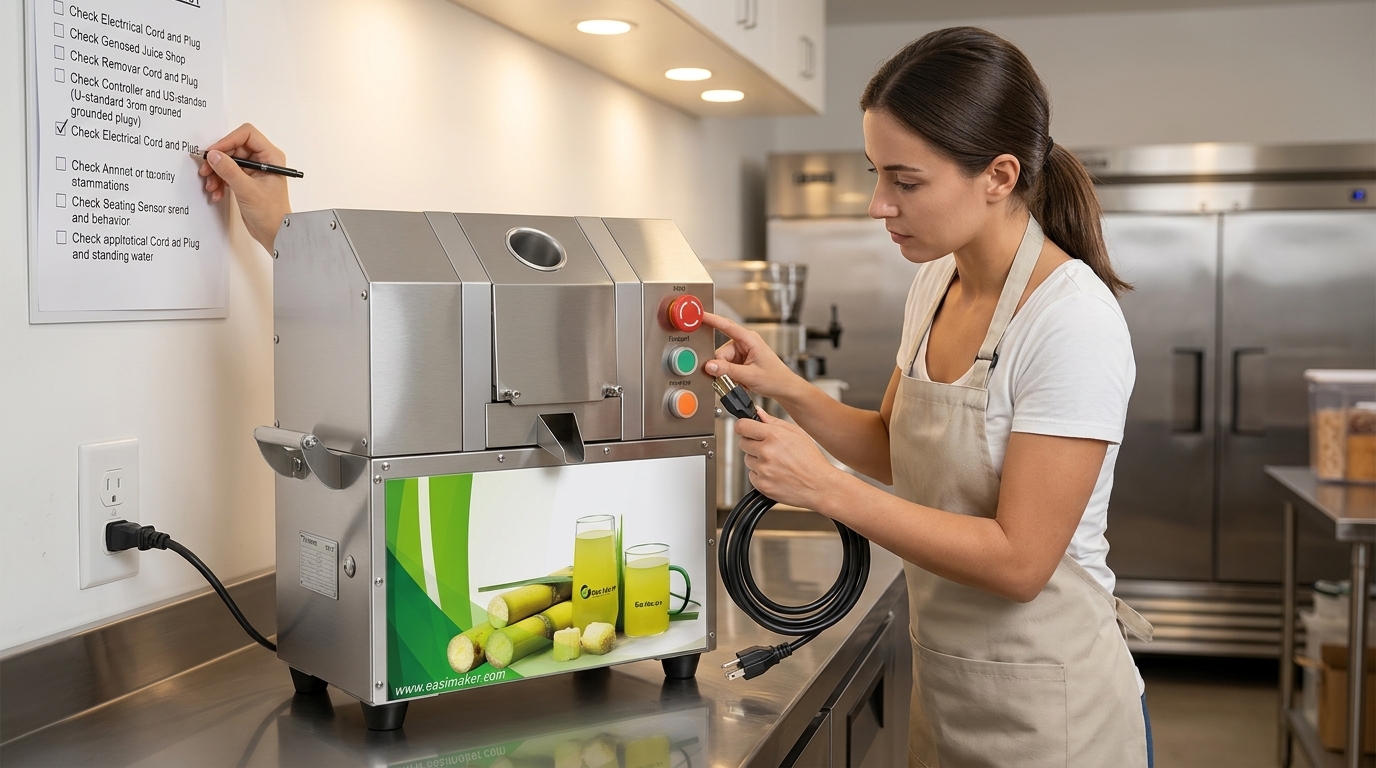
Discuss Your Setup

OEM Sugarcane Juicer Guide for Distributors and Brands

Table of Contents

An OEM sugarcane juicer programme can help distributors and beverage brands build a differentiated commercial equipment range. Success depends on clearly defining the target user, electrical market, product configuration, branding requirements, documentation, quality expectations, and after-sales plan before production begins.

What an OEM sugarcane juicer programme involves

Commercial OEM sugarcane juicer with packaging and specification documents for distributor review

An OEM sugarcane juicer is a commercial sugarcane juice machine supplied by a manufacturer for sale under a distributor’s or brand owner’s own label. Depending on the agreed project scope, OEM work may cover brand marking, finish or colour choices, packaging artwork, manuals, market-specific electrical configuration, and selected product changes. It does not automatically mean that every part of the machine is newly designed.

For distributors and brands, the most reliable approach is to start with a proven commercial platform and define only the changes that serve a clear market need. The supplier should then confirm what is technically feasible, what requires validation, what documentation can be supplied, and how quality checks will be managed. This avoids treating a visual request, an electrical change, and a mechanical redesign as if they carry the same cost, lead time, or risk.

Before requesting a quotation, identify the intended sales channel, expected operating environment, target price position, destination country, and the service support your business can provide. A useful reference point is the difference between commercial and home sugarcane juicers: an OEM programme for professional users should be built around repeated daily operation, cleaning access, operator workflow, and maintainability rather than occasional household use.

Who should consider OEM supply

Distributor and manufacturer discussing an OEM sugarcane juicer programme

OEM supply is usually most suitable for businesses that can define a repeatable customer segment and support the machines after sale. Typical candidates include foodservice equipment distributors, beverage-equipment importers, established sugarcane juice brands, hospitality supply companies, and multi-location operators preparing a standardised equipment package.

Private-label supply can give these businesses greater control over product presentation and portfolio positioning. It may also make it easier to align machines with local dealer materials, operator training, packaging, and spare-parts plans. However, OEM is not simply a route to adding a logo. The brand owner becomes responsible for making clear promises to its market and should understand the equipment well enough to sell, demonstrate, troubleshoot, and escalate issues properly.

It may be less suitable for a buyer who needs only a single machine, has not identified a service route, or wants extensive changes without a stable sales forecast. In such cases, a standard commercial model may be the more practical first step. Businesses evaluating the channel opportunity can also review the strategic considerations for OEM sugarcane machine dealers before committing to a private-label range.

Build a practical product brief before asking for a quote

OEM sugarcane juicer product brief with configuration and branding planning materials

A detailed product brief is the foundation of an efficient OEM discussion. It gives the manufacturer enough information to recommend a suitable platform, identify open technical questions, and quote the correct scope. A short but structured brief is better than a broad request for a “custom machine.”

Include the following points:

  • Target customer: juice bar, kiosk, restaurant, market stall, hotel, supermarket counter, franchise operator, or another professional setting.
  • Expected use pattern: intermittent service, busy peak periods, or extended daily operation. Describe the workflow rather than guessing a throughput figure.
  • Cane preparation: whether users will need separate cutting or preparation equipment, and the expected cane sizes and local handling practices.
  • Machine configuration: preferred layout, food-contact material expectations, drainage and collection arrangement, mobility requirements, and operator-access needs.
  • Electrical market: local voltage, frequency, plug type, and any installation constraints. These must be confirmed rather than assumed.
  • Branding scope: logo location, nameplate information, colour or finish requirements, carton artwork, manuals, and point-of-sale materials.
  • Order plan: trial quantity, forecast range, reorder expectation, target delivery window, and destination port or location.
  • Service plan: who will conduct installation, answer operator questions, stock routine wear parts, and handle warranty assessment.

Machine selection should begin with the real use case, not a lowest-price comparison. Our guide on how to choose a sugarcane juice machine can help teams frame questions around site conditions, usage requirements, and operating practicality before finalising an OEM brief.

Match the machine to the destination market

Commercial sugarcane juicer export planning for destination market requirements

A machine that is appropriate for one destination may need a different electrical, documentation, labelling, or packaging approach for another. Raise destination-market requirements at the beginning of the project, especially if the products will be imported, installed by dealers, or used in regulated foodservice environments.

At minimum, confirm the local power supply and plug or connection requirements, language requirements for labels and user information, import documentation requested by your market, and any local requirements that apply to food-contact equipment, electrical products, or commercial installation. The importer, distributor, or brand owner should obtain appropriate local advice where necessary. A manufacturer can explain the machine configuration and available documents, but should not be expected to make assumptions about every local rule.

Also consider the physical market environment. A front-of-house juice counter may value appearance, controlled drainage, and customer-facing workflow. A back-of-house production point may place greater emphasis on space, cleaning routines, cane preparation, and staff access. If live extraction is central to the retail concept, the guide to designing a live juicing station offers useful operational considerations for equipment placement and the customer-facing area.

Plan branding, packaging, and documentation as one system

Private-label equipment is more credible when the machine, carton, manual, and dealer information tell the same story. Branding should be clear, durable, and appropriate for the chosen machine surface. Provide approved logo files in a usable format and specify brand colours, position, dimensions, orientation, and language requirements. If a nameplate is required, agree the exact legal and technical information it should contain.

Packaging is not only a marketing item. It should protect the machine during loading, transport, warehousing, and final delivery. Discuss carton marking, handling marks, accessory packing, documentation placement, and any language-specific inserts. Where a distributor will sell through dealers, the unboxing process should also make it easy to identify included parts and retain documents for installation or service.

The user manual deserves particular attention. A useful manual helps operators prepare the machine, use it safely, clean it correctly, identify basic issues, and know when to contact service support. Keep instructions aligned with the delivered configuration. Do not reuse images or warnings from another model without checking that they are applicable. Clear documentation reduces avoidable support requests and protects the consistency of your brand message.

Manage samples and quality control before production

For an OEM sugarcane juicer, the sample stage is where the buyer verifies that the agreed configuration is understood before a production order is released. Review the sample against a written checklist rather than relying only on general appearance. Confirm branding location and legibility, electrical details, plug or connection arrangement, labels, packaging elements, supplied accessories, operating controls, cleaning access, and documentation.

Where practical, carry out a representative operating review using the type of sugarcane and workflow expected in the target market. Record observations carefully. The purpose is not to claim universal results from one test, but to identify setup issues, operator questions, or presentation details that should be addressed before scale-up.
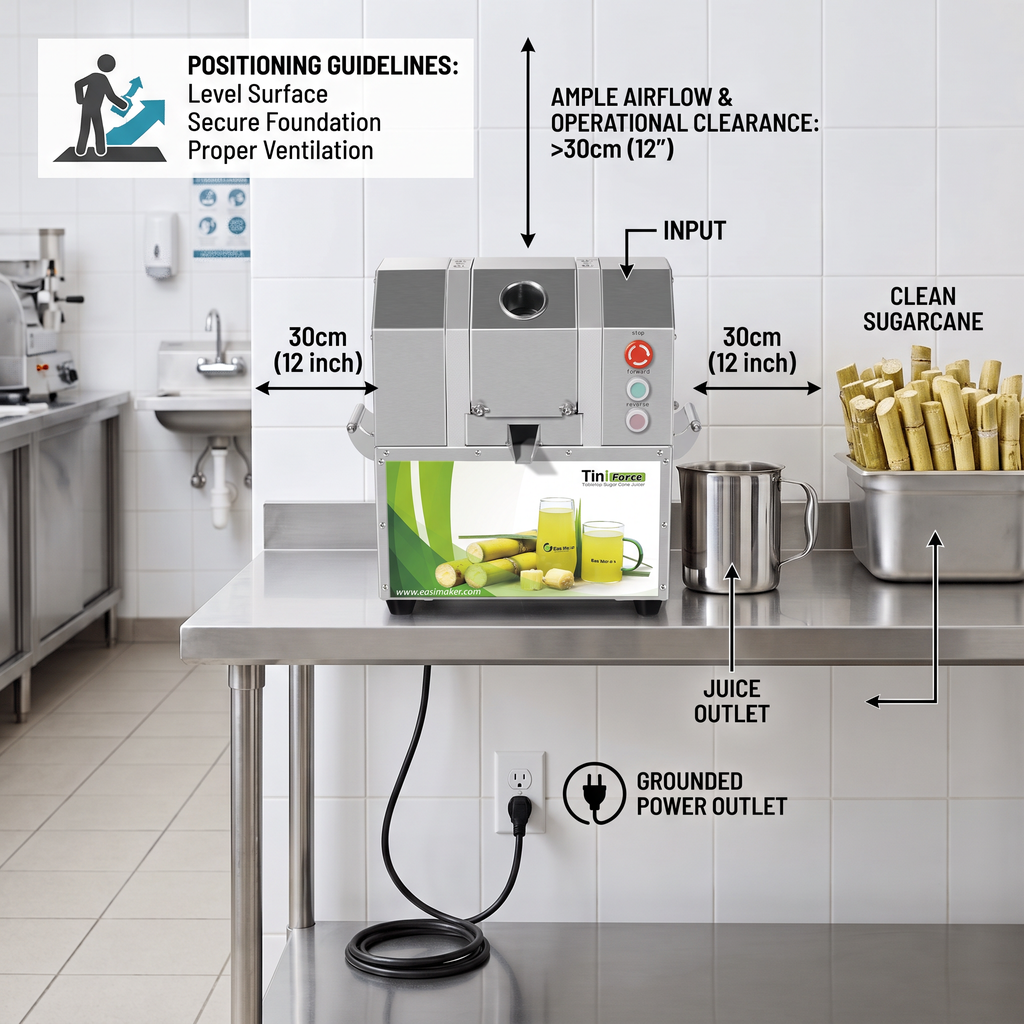
Quality control should continue through production and before shipment. Agree the inspection points, acceptance criteria, records required, and treatment of non-conforming products in advance. Useful questions include: Which agreed points are checked on each unit? How are labels and accessories verified? How are packaging and shipment readiness reviewed? What photos, videos, or inspection records can be shared? Written alignment is more dependable than informal assumptions.

Prepare after-sales service and spare parts from the start

After-sales readiness is a major part of a sustainable equipment programme. Distributors should decide who receives the first customer call, which issues can be resolved through guided checks, which parts should be held locally, and when a case should be escalated to the manufacturer. The answers will differ by territory and sales volume, but the plan should exist before market launch.

Ask the supplier for a clear spare-parts identification method, recommended routine parts list where available, exploded views or service references as appropriate, and a process for ordering replacements. Avoid promising replacement timing to customers unless the supply route and stock position support it. A small, well-organised local inventory can be more useful than a large unstructured stock holding.

Training should cover daily cleaning, safe operation, inspection of visible components, correct cane preparation, and the difference between normal operator care and work that should be performed by qualified service personnel. Consistent training helps dealers avoid preventable damage and provides better information when a technical case needs review.

Plan a commercially workable launch

Launch planning should connect the machine specification to the full selling model. Besides the equipment purchase price, consider freight, duties and taxes where applicable, storage, local delivery, demonstrations, sales materials, service parts, technician time, packaging, and any site-preparation advice you provide customers. This creates a more realistic margin and support plan.

For a distributor, the initial commercial package may include the machine, a clear specification sheet, operator guidance, cleaning instructions, a spare-parts route, and a process for technical enquiries. For a beverage brand or franchise system, it may also include a site checklist, counter layout guidance, staff training standards, and an approved consumables or service process. The commercial sugarcane juicer budgeting guide is a useful starting point for mapping the costs around equipment ownership rather than focusing on machine price alone.

Begin with a manageable launch region or a defined customer group when possible. Gather structured feedback from sales staff, installers, service teams, and end users. Use that information to improve the next order, instead of making repeated unverified changes during an active rollout.

Common OEM sourcing mistakes to avoid

Several preventable mistakes can slow an OEM project or create unnecessary support issues after launch:

  • Starting with branding only: appearance matters, but operating environment, electrical requirements, cleaning access, and serviceability should be settled first.
  • Leaving the market undefined: a quotation is less useful when the destination country, plug requirement, language, and import route are unknown.
  • Requesting changes without a written specification: photographs and informal messages are not enough for labels, artwork, packaging, or machine configuration.
  • Skipping a sample review: an approved sample and checklist can prevent repeated corrections later.
  • Underestimating support: even a well-built commercial machine needs correct installation, daily care, operator training, and a spare-parts path.
  • Making unsupported sales claims: use only verified product information and describe machine suitability honestly for the intended application.

A disciplined brief, documented approval process, and realistic service plan will usually do more for long-term success than a complex custom request. OEM works best as a practical partnership: the manufacturer provides engineering and production discipline, while the distributor or brand brings clear market knowledge and responsible local support.

Discuss your OEM sugarcane juicer project

If you are building a private-label sugarcane juice equipment range, Easimaker can help you discuss a practical machine configuration, branding scope, destination-market requirements, and after-sales considerations. Share your target users, operating environment, electrical market, and expected order plan so the project can be assessed on clear information.

Discuss an OEM Project

How to Start a Sugarcane Juice Business in the United States

Table of Contents

Starting a sugarcane juice business in the United States requires a viable local market, a permitted food-service setup, dependable cane sourcing, a commercial juicer, and a practical daily cleaning and service plan.

Start with a practical business model

Business owner planning a commercial sugarcane juice operation

To start a sugarcane juice business in the United States, first confirm local demand, select a permitted sales format, secure a dependable sugarcane supply, and build the operation around a commercial-grade juicing and sanitation workflow. The machine is important, but the business succeeds or fails on the full system: location, compliance, ingredient handling, labor, packaging, cleaning, and repeatable service.

Sugarcane juice is a fresh beverage made by mechanically pressing prepared sugarcane stalks. It can be sold as a focused menu item or alongside fruit drinks, snacks, or other food-service products. It may fit areas with established familiarity with cane beverages, busy shopping districts, tourist areas, farmers markets, multicultural retail zones, and events. Demand is local, so validate it in the city or neighborhood where you plan to trade rather than relying on broad trends.

Before signing a lease or buying equipment, write a one-page operating concept. Define your customer, sales channel, service hours, menu, expected peak periods, ingredient storage plan, and the amount of product you expect to prepare during a normal shift. This document gives you a practical basis for speaking with regulators, landlords, suppliers, and equipment partners.

Choose a sales format that fits your market

Choose a sales format that fits your market

Your sales format determines much of the startup work. A small fixed juice counter, kiosk, mobile unit, market stall, and wholesale supply model can all use sugarcane juice equipment, but they have different rules, space needs, utility requirements, and staffing patterns.

  • Fixed juice bar or retail counter: Best when you need a stable daily presence and room for chilled storage, washing, preparation, service, and cleaning. It generally involves the most site-planning work.
  • Kiosk or food-court unit: Can provide strong foot traffic, but confirm drainage, electrical supply, storage access, waste handling, and landlord operating restrictions before committing.
  • Mobile cart, trailer, or truck: May support events and changing locations. It also requires careful planning for potable water, wastewater, handwashing, refrigeration, transport, and local mobile-food approvals.
  • Farmers market or event stand: Useful for testing a market with lower commitment. Sales can be seasonal and event-dependent, so plan inventory and labor around the calendar.
  • Wholesale or catering: Requires additional discipline around packaging, temperature control, labeling, delivery timing, and any rules that apply to packaged beverages in your state.

Start with the smallest format that can safely deliver your intended customer experience. A compact operation still needs enough room to receive cane, clean it, trim or cut it when required, press juice, collect waste, wash components, and store service supplies without crossing clean and dirty tasks.

Research permits and food rules before committing to a site

Clean sugarcane juice preparation area with food-service hygiene facilities

Food-business requirements in the United States are set and enforced through a mix of state, county, and city authorities. Requirements vary by location and by whether you sell drinks for immediate consumption, operate a mobile unit, package product for later sale, or distribute across jurisdictions. Contact the local health department or equivalent food-safety authority early, ideally before you finalize a lease or purchase a vehicle.

Ask the authority what applies to your exact concept. Typical topics include business registration, food establishment permits, plan review, zoning, building approval, fire requirements, handwashing facilities, warewashing, potable water, wastewater, refrigeration, employee food-safety training, and inspections. A landlord may also require proof of insurance and approved construction plans.

For packaged or bottled juice, do not assume that rules for made-to-order drinks are sufficient. Labeling, processing controls, shelf-life decisions, and distribution rules may be different. Discuss the intended product and process with the relevant authority and qualified food-safety professionals before making shelf-life or preservation claims.

Create a compliance file containing your proposed menu, layout, equipment list, supplier information, cleaning procedures, utility details, and records required by your jurisdiction. Keeping these materials organized helps during plan review and makes staff training more consistent after opening.

Build a complete cost and pricing plan

A realistic budget goes beyond the purchase price of a juicer. List every one-time and recurring cost before setting a selling price. Important startup items can include deposits, construction or fit-out, permits, legal and accounting setup, refrigeration, sinks, preparation tables, a commercial sugarcane juicer, cane cutting tools where appropriate, smallwares, packaging, point-of-sale equipment, signage, initial inventory, and working capital.

Recurring costs may include cane, ice and other ingredients, cups and lids, labor, rent, utilities, waste collection, cleaning supplies, repairs, insurance, card-processing fees, delivery, marketing, and replacement parts. Your business plan should also account for cane loss from poor quality, trimming, spoilage, and handling. Actual costs differ substantially by city, location, supplier, and business format.

Set price from local market conditions and your verified operating costs, not from a competitor’s menu alone. Calculate the ingredient and packaging cost for each size and recipe, estimate labor required at peak service, and review gross margin alongside rent and overhead. Track the result by product once trading begins, then adjust purchasing, menu design, and scheduling based on real records.

For a broader pre-purchase checklist, review this guide to budgeting for a commercial sugarcane juicer and juice business. It is particularly useful when comparing the initial equipment cost with site preparation, maintenance, and operating supplies.

Source sugarcane reliably

Worker inspecting fresh sugarcane for commercial juice preparation

Sugarcane supply is a core operating risk. Identify more than one possible supplier where practical, and confirm how product will be packed, transported, received, stored, and replaced if quality is unacceptable. Availability and freight conditions can vary by region and season, so do not build your menu around assumptions that cannot be supported by written supplier discussions.

Inspect incoming cane for cleanliness, visible damage, mold, excessive drying, and other signs that it is not suitable for your operation. Establish a receiving procedure: record supplier and delivery date, check condition, rotate stock, and separate any cane that needs review. Store cane according to your local requirements and supplier guidance, in a clean area protected from contamination and pests.

Preparation affects both service speed and machine reliability. Train staff to wash and inspect stalks using your approved procedure, trim only as needed, and cut stalks to a length suitable for the machine and workstation. Avoid forcing unusually thick or hard stalks into equipment. Practical guidance on processing thick sugarcane stalks without unnecessary motor strain can help managers create safer preparation rules.

Select commercial equipment for the actual workflow

Commercial sugarcane juicer on a clean juice bar workstation

Choose equipment based on your expected service pattern, not simply the lowest purchase price or an assumed output figure. A commercial sugarcane juicer should fit the size and hardness of cane you plan to use, the available electrical supply, counter or floor space, cleaning access, and the number of consecutive orders staff may need to serve. Confirm the exact model specifications, local electrical compatibility, guarding, cleaning procedure, and spare-parts availability with the supplier before ordering.

Commercial equipment is intended for repeated food-service use and maintainable daily operation, while a domestic appliance may not suit a busy retail workflow. This comparison of commercial and home sugarcane juicers explains the operational differences buyers should assess.

Your equipment plan may also require a handwashing sink, warewashing arrangement, food-safe preparation surfaces, cold storage, ingredient containers, waste bins, scales or measuring tools, cups and lids, and a point-of-sale system. If staff need to shorten stalks, select a cutting method appropriate to your preparation volume and safety procedure. Keep a clear separation between cane receiving, washing, cutting, pressing, serving, and dirty-equipment cleaning.

Ask a supplier how routine service is handled and which wear or service items should be planned in advance. The sugarcane juicer spare-parts and support checklist outlines the machine details and service records worth keeping from day one.

Design a safe daily workflow

Operator cleaning commercial sugarcane juice equipment components

A consistent workflow protects product quality and helps operators work efficiently. Write simple opening, service, closing, cleaning, and maintenance procedures for the exact machine and site. Use the manufacturer’s instructions as the basis for operation and cleaning, then align the procedure with the requirements of your local food authority.

A typical shift may include:

  1. Inspect the workstation, machine condition, guards, collection containers, and cleaning status before use.
  2. Receive and prepare cane according to the approved handling procedure.
  3. Press juice in a controlled sequence, using only the tools and feed method specified for the machine.
  4. Serve in clean food-contact packaging and manage orders to avoid unnecessary delay.
  5. Empty waste promptly and keep waste away from clean preparation and service areas.
  6. Clean and sanitize food-contact components and work surfaces at the required intervals and at the end of service.
  7. Record any abnormal noise, jamming, leakage, electrical issue, or damaged component, and remove equipment from service when safe operation is uncertain.

Train every operator rather than relying on one experienced person. A short competency check is useful: each new staff member should demonstrate safe feeding, shutdown, cleaning, reassembly, and fault reporting before working alone. Never bypass guards or use improvised tools to push cane into an operating machine.

Launch, measure, and improve

Open with a focused menu and a workflow your team can execute consistently. Too many recipes or customization options can slow a new operation before staff have mastered preparation, pressing, payment, and cleaning. Start with clear serving sizes, straightforward ingredient lists, and packaging that suits your service format.

During the first weeks, record daily cane deliveries, product condition, sales by item and time period, labor hours, customer questions, waste, equipment downtime, and cleaning issues. These records will show whether the bottleneck is demand, preparation, staffing, storage, machine placement, or supplier consistency. Make one operational change at a time so you can see what improves the result.

Keep equipment support information accessible and maintain an ordered list of consumables and service contacts. A reliable machine plan includes proper use, daily cleaning, preventive attention, and a clear response if parts or technical guidance are needed. With this foundation, you can assess whether to extend trading hours, add a second service point, introduce catering, or expand the menu.

Starting carefully is usually faster than correcting an unsuitable site or weak workflow after launch. Confirm compliance locally, buy equipment that matches the real job, and build a process your team can repeat every day.

What Power Supply Does a Sugarcane Juicer Need?

Table of Contents

A commercial sugarcane juicer must be connected to a power supply that exactly matches its rating plate for voltage, frequency and phase. Before buying or installing a machine, confirm the local electrical standard, dedicated circuit requirements, plug type, grounding arrangement and protection devices with a qualified electrician.

The Short Answer

Commercial sugarcane juicer with safely routed power cable

A commercial sugarcane juicer needs a stable, grounded power supply that matches the machine’s electrical rating plate exactly. Check four items before connection: voltage, frequency, phase, and rated input power or current. The machine must also be installed on a suitable circuit with the correct plug, cable, earthing arrangement, and protection required by local electrical rules.

There is no single universal power supply for every sugarcane juicer. Depending on the specific model and destination-market configuration, a machine may be supplied for a local single-phase or three-phase electrical system. A unit built for one voltage or frequency should not be connected directly to another supply. If the rating plate and site supply do not match, ask the manufacturer or a qualified electrician for the correct solution before installation.

For operators, the practical rule is simple: do not select a juicer based on a wall outlet alone. Confirm the machine specification first, then prepare the outlet and circuit around that confirmed specification.

How to Read a Sugarcane Juicer Electrical Rating

Generic electrical rating label on commercial food-processing equipment

The rating plate, specification label, or official product documentation is the primary source for sugarcane juicer power requirements. It is normally located on the machine body or within the supplied technical documents. Do not estimate electrical requirements from the machine’s physical size, motor appearance, or another machine in the same outlet area.

Look for the following information:

  • Voltage (V): the supply voltage the machine is designed to receive.
  • Frequency (Hz): the alternating-current frequency, usually expressed in hertz.
  • Phase: typically single phase or three phase.
  • Input power (W or kW): the stated electrical power rating.
  • Current (A): the operating or rated current, where stated.
  • Plug or connection information: whether the unit uses a factory-fitted plug or requires a fixed electrical connection.
  • Serial number and model: useful when confirming the original factory configuration with the supplier.

These values describe different parts of the electrical requirement. For example, two machines could have a similar stated input power but require different connections because their voltage, phase, plug, or frequency differs. For this reason, a wattage figure alone is not enough for installation planning.

If the label is missing, damaged, or unclear, stop and obtain the official machine specification before connecting power. Replacing a cable, plug, switch, or control component with an unsuitable part can create a safety risk and may affect machine operation.

Voltage, Frequency and Phase Must All Match

Commercial electrical connection options for sugarcane juicer installation

Voltage

Voltage is the electrical pressure supplied to the machine. Commercial sites in different countries and regions may use different nominal voltages. A machine designed for one voltage should not be plugged into a higher- or lower-voltage supply unless the manufacturer specifically confirms compatibility and an appropriate engineered solution is used.

Low voltage can contribute to poor starting performance, overheating, or unreliable operation. Excess voltage can damage electrical and motor components. A plug adaptor changes the physical plug format only; it does not normally convert voltage.

Frequency

Frequency is measured in hertz and is part of the machine design. Motors and related electrical components may operate differently when supplied at a frequency other than their specified rating. This is especially important when equipment is moved between markets using different utility frequencies. Do not assume that a voltage transformer addresses a frequency mismatch.

Single phase and three phase

Single-phase power is common in smaller food-service locations and is often available from standard commercial circuits, subject to local installation rules. Three-phase power is more common in some larger commercial and industrial premises. Neither arrangement is automatically better for every operator; the correct choice is the one specified for the selected machine and available safely at the site.

Before finalising a purchase for export or a new opening, share the intended country, available site power, and plug standard with the equipment supplier. This helps ensure the juicer configuration is appropriate for the installation market from the start.

Power, Current and Circuit Sizing

Electrical installation should be planned from the machine’s stated ratings, not from assumptions about other countertop appliances. Input power is usually shown in watts or kilowatts. Current is shown in amperes. These values help a qualified electrician assess the branch circuit, disconnecting method, cable size, outlet, and protective device required under the local electrical code.

As a basic planning concept, electrical power is related to voltage and current. However, real equipment selection is not just a simple arithmetic exercise. Motor starting conditions, conductor length, local ambient conditions, protective-device characteristics, and national or local regulations can all affect the final installation design. The electrician should use the manufacturer’s data and applicable code requirements rather than relying on a generic online calculation.

A dedicated circuit is often a sensible operational choice for a commercial sugarcane juicer. It reduces the risk that another appliance, such as refrigeration equipment, a blender, an ice machine, or a cooking appliance, will overload the same circuit or cause a voltage drop when it starts. Whether a dedicated circuit is mandatory depends on the machine specification and local regulations, so the site electrician should confirm this.

Do not use a lightweight domestic extension lead as a permanent solution. If a temporary connection is unavoidable during testing, it must be suitable for the equipment load, properly grounded, protected from moisture and foot traffic, and permitted by site safety rules. For normal commercial operation, a correctly located fixed outlet or approved connection point is the better approach.

Commercial Installation Requirements

A safe installation is more than matching the plug to the outlet. The following controls should be reviewed before commissioning a commercial sugarcane juicer:

  • Grounding or earthing: Connect the machine through a properly grounded supply as specified for the equipment and local installation system. Never remove or defeat an earth pin to make a plug fit.
  • Correct outlet and plug: Use an outlet and plug arrangement rated and approved for the local installation. Do not modify a factory plug without confirmation from a qualified electrician and the equipment supplier.
  • Overcurrent protection: The circuit breaker or fuse must be selected according to the machine data and local code. Oversizing protection simply to stop nuisance tripping can leave wiring and equipment insufficiently protected.
  • Residual-current protection: Depending on local requirements and the installation area, an RCD, GFCI, or equivalent protective device may be required. This is particularly relevant in food-service spaces where washdown, sinks, and wet cleaning are present.
  • Accessible isolation: Operators should be able to disconnect power safely for cleaning, service, or an emergency, in line with the machine instructions and site procedures.
  • Dry, protected outlet location: Keep sockets, cable routes, and connection points away from splash zones. Arrange the machine so staff can clean surrounding surfaces without directing water toward electrical parts.

Installation should be carried out or approved by a competent electrician familiar with the local code. The machine operator should then be trained on normal start-up, shutdown, cleaning, and fault-reporting procedures.

Power Supply Checklist Before You Order

Collecting the right site information before placing an order prevents costly changes later. Give the supplier and electrician a clear picture of the installation location.

  1. Confirm the country and city of installation. This identifies the likely voltage, frequency, outlet, and electrical-code environment.
  2. Ask what supply is available at the exact machine location. Check the electrical panel and proposed counter or kiosk position, not just the building’s general utility service.
  3. Record voltage, frequency, and phase. Have the electrician verify these details if there is any uncertainty.
  4. Check outlet type and circuit condition. Confirm whether an appropriate outlet exists, whether it is grounded, and whether other equipment shares the circuit.
  5. Provide the machine rating information. Send the official model and electrical specification to the installer before equipment arrival.
  6. Plan the location of the outlet and isolation point. It should remain accessible without interfering with cleaning, cane loading, waste handling, or staff movement.
  7. Allow for future equipment. If the location may later add refrigeration, cutting equipment, packaging equipment, or another juicer, consider the capacity of the electrical panel and work area early.

In a kiosk or compact counter, the physical layout and electrical plan must work together. Outlet position, cable access, cleaning clearance, and safe cane preparation space all affect how smoothly the station operates. Our article on measuring a countertop for a commercial sugarcane juicer can help operators coordinate equipment placement with the available work surface.

Common Power Supply Problems

Electrician inspecting the power connection for a commercial sugarcane juicer

Many apparent machine faults begin with the supply or connection rather than the crushing system. Operators should not open electrical enclosures or bypass protective devices, but they can observe symptoms and report them accurately.

Machine will not start

First check whether the outlet has power, the plug is fully seated, the emergency stop or safety device is in the correct operating position, and the circuit breaker has not tripped. If the supply is available but the machine still does not start, stop troubleshooting beyond the approved operator checks and contact service support.

Breaker trips during use

A breaker can trip because the circuit is overloaded, another appliance is sharing the circuit, the protective device is unsuitable, there is a wiring issue, or the machine requires inspection. Repeatedly resetting a breaker without identifying the cause is not a safe solution.

Motor sound changes or performance is inconsistent

Unstable supply voltage, poor connections, and an undersized or overloaded shared circuit can affect motor-driven equipment. Mechanical loading, cleaning condition, and roller condition can also influence operation, so power should be checked as one part of a complete diagnosis.

Plug, cable, or outlet becomes warm

Disconnect the machine and arrange an inspection. Heat at a plug or outlet can indicate a loose connection, unsuitable component rating, damaged cable, or another electrical issue. Do not continue operating until the cause has been assessed.

Choosing a Machine Configuration for Your Market

For distributors, project buyers, and multi-site beverage operators, power supply should be part of the purchase specification. The best time to confirm it is before production, shipping, and site fit-out. Specify the destination market, local utility details, available phase, preferred connection arrangement, and any site constraints when discussing the order.

This is particularly important for exports. A machine suitable for a factory, food court, hotel, mall kiosk, or roadside juice stand may be installed in a region with a different electrical standard from the buyer’s home market. Confirming the final destination avoids confusion caused by purchasing through an intermediary country.
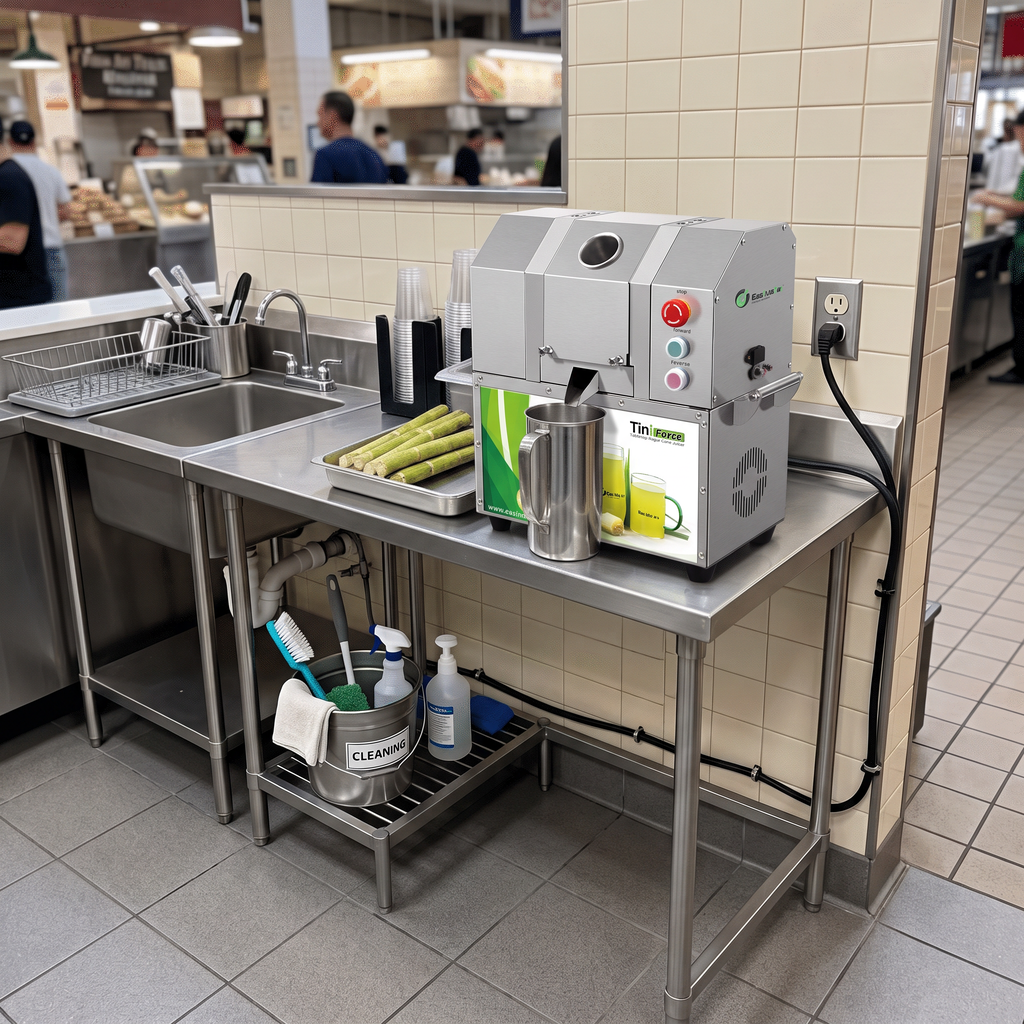
Ask the supplier for the model-specific electrical data rather than assuming that every unit in a product range uses the same configuration. If an operation is comparing crushing methods or planning a high-demand service format, evaluate power supply alongside output workflow, cane preparation, cleaning access, staff skill level, and the available counter space. Equipment selection is most reliable when the machine and the site are assessed as one system.

Plan Electrical Supply as Part of the Full Workflow

A reliable power connection supports daily operation, but it is only one part of a productive sugarcane juice station. The juicer should be positioned where staff can load prepared cane safely, collect juice, remove bagasse, clean the work area, and access the electrical isolation point without crossing unsafe cable routes.

Preparation equipment can affect the electrical plan as well. If cane needs cutting before crushing, identify where that work will happen and whether other powered equipment will operate at the same time. Review the intended cane preparation method and the load on the site electrical system as separate but connected decisions. For operational context, compare the workflow differences in single-pass versus multi-pass sugarcane crushing.

After commissioning, make electrical checks part of routine opening and closing procedures. Staff can visually inspect the cable, plug, outlet area, and machine exterior for damage, moisture, unusual heat, or loose fittings. Any abnormal condition should be reported promptly, with the machine isolated where appropriate. Keep cleaning methods aligned with the machine manual so water and cleaning chemicals do not enter electrical areas.

For buyers planning a new installation or an equipment rollout, Easimaker can discuss the machine configuration, intended operating environment, and information your electrician will need to review the connection. Request a quote or technical discussion based on your market, expected workflow, and available site power.

Discuss Your Site Power Requirements

Share your installation market, available voltage, frequency, phase, and intended workflow with Easimaker. We can help you review the machine configuration and the technical details your qualified electrician should confirm before installation.

Request a Technical Quote

How to Clean a Commercial Sugarcane Juicer Properly

Table of Contents

A commercial sugarcane juicer should be cleaned after each service period and fully cleaned at the end of the day. This practical guide explains the correct shutdown, disassembly, washing, sanitising, drying, and inspection process for commercial operators.

The correct way to clean a commercial sugarcane juicer

The correct way to clean a commercial sugarcane juicer

To clean a commercial sugarcane juicer properly, switch it off, unplug it, remove cane residue, take off only the parts identified as removable in the machine manual, wash food-contact parts with warm water and suitable detergent, rinse, sanitise where required, air-dry completely, and reassemble after inspection.

Do not hose down or immerse the motor housing unless the manufacturer specifically confirms that the machine is designed for that washdown method. Sugarcane juice is sticky, and fibres can collect around rollers, guards, spouts, trays, and drainage areas. A quick wipe is not a full clean. Operators need to remove visible debris, clean residues from accessible food-contact surfaces, and keep moisture away from electrical parts.

The exact disassembly sequence, approved chemicals, and whether a component is dishwasher-safe vary by model. Always treat the operating manual for your specific machine as the final instruction. This guide provides a reliable daily process for most commercial roller-type sugarcane juicers.

Why daily cleaning matters for sugarcane juice operations

Sugarcane fibre and juice residue on accessible parts of a commercial juicer

Fresh cane leaves juice, fine bagasse fibres, and natural sugars on the machine. If these residues remain in place, they can become difficult to remove, affect the cleanliness of the work area, attract pests, and make the next shift slower to start. Residue can also hide around roller edges, the juice outlet, collection tray, and crevices behind guards.

Cleaning has two separate purposes. Cleaning removes juice, fibre, soil, and grease using water, detergent, friction, and rinsing. Sanitising is a separate step that uses an appropriate food-equipment sanitiser on an already clean surface, following the product label for dilution and contact time. Sanitiser is not a substitute for removing sticky deposits first.

Daily attention also supports equipment reliability. Bagasse caught in accessible areas can interfere with smooth operation, while dried sugar residue can make covers, trays, and outlet parts difficult to remove. Good housekeeping around the machine should be part of the wider hygiene plan, including the counter, waste container, drainage area, and cane-preparation station. For site-level controls, review these pest control and sanitation practices for sugarcane juice bars.

Prepare safely before cleaning

Cleaning supplies prepared beside an unplugged commercial sugarcane juicer

Cleaning should begin only after production has stopped. Assign the task to trained staff who understand the machine controls and the site sanitation procedure.

Shut down and isolate the machine

  1. Stop feeding cane and allow the rollers to clear as far as normal operation permits.
  2. Switch off the machine using its normal control.
  3. Disconnect the power supply before reaching near rollers, guards, or the juice outlet.
  4. Wait until all moving parts have stopped completely.

Never clean inside a running machine or attempt to remove trapped fibre while rollers are moving. If cane is jammed, use the model-specific clearing procedure rather than forcing tools or hands into the feed area. This guide to processing thick sugarcane stalks without jamming can help operators reduce avoidable stoppages during service.

Gather the right cleaning supplies

  • Clean food-safe brushes in suitable sizes for the outlet, tray, and accessible crevices.
  • Warm potable water and a detergent suitable for food equipment.
  • Clean cloths or disposable towels for external surfaces.
  • An approved food-contact sanitiser, used exactly as directed on its label and in line with local requirements.
  • A clean drying rack or designated clean area for removable components.
  • Appropriate personal protective equipment required by your workplace or chemical supplier.

Avoid steel wool, sharp metal scrapers, or abrasive pads unless the manufacturer explicitly permits them. These can scratch surfaces and create places where residue is harder to remove.

Step-by-step: how to clean a sugarcane juicer

Operator washing removable commercial sugarcane juicer components with a food-safe brush

Use this workflow at the end of the day, after a long service period, or whenever visible residue has built up. Adapt it to the manual and food-safety procedure for your particular juicer.

1. Remove cane waste and loose fibres

Remove the bagasse collection container and discard cane waste according to your site procedure. Use a dry brush or scraper approved for the machine to remove loose fibres from accessible external areas. Do not push brush handles, knives, or other tools between rollers.

2. Remove approved detachable parts

Take off parts such as the juice tray, outlet cover, splash guard, feed guide, or collection container only where the manual identifies them as removable. Place fasteners and small parts in a clean, controlled location. Photographing the correct assembly during staff training can reduce reassembly errors.

3. Wash the removable food-contact parts

Wash parts in warm water with detergent. Use brushes to work around corners, spouts, seams, and undersides where sugar film can remain. Change wash water when it becomes visibly dirty. Rinse with clean potable water so detergent is not left on food-contact surfaces.

4. Clean fixed surfaces carefully

Use a damp cloth and brush to clean accessible fixed surfaces, including the machine exterior, feed opening, visible roller surroundings, juice outlet area, and tray supports. Apply water to the cloth or brush rather than pouring it directly over the machine. Keep liquid away from switches, cable entries, ventilation openings, motor areas, and any part not designed for washdown.

Water resistance varies between models and installations. Before using any spray or washdown method, understand the equipment’s stated protection level and the limitations of that rating. Read more about IP ratings and washdown safety for commercial sugarcane juicers.

5. Inspect while the machine is open

Look for trapped fibre, dried juice, cracks, loose guards, damaged seals, unusual roller wear, or a juice outlet that does not drain freely. Cleaning is the best time to spot a developing issue before the next service period. Do not restart the machine if a safety guard is missing, a part will not fit correctly, or damage is visible.

Sanitise, dry, and reassemble correctly

Clean sugarcane juicer components air-drying on a sanitary rack

After washing and rinsing, sanitise removable food-contact components and accessible food-contact surfaces when required by your food-safety plan. Use a sanitiser intended for food-contact equipment. Follow its label for dilution, temperature, contact time, and any rinse requirement. More chemical does not mean better sanitation; an incorrectly mixed product can leave residue, damage materials, or fail to work as intended.

Allow components to air-dry fully on a clean rack or clean surface. Avoid drying food-contact parts with used bar towels, which can transfer soil back to a clean component. Do not reassemble parts while they are wet if moisture could be trapped in a closed area.

Once dry, reassemble in the documented order. Check that guards, trays, outlet components, and collection containers are seated correctly. Wipe the exterior, clean the counter and floor around the machine, and fit a fresh bagasse bin liner if your operation uses one. Before the next shift, complete a visual pre-operation check in accordance with the machine manual.

A documented cleaning record is useful for multi-shift juice bars, kiosks, cafés, and foodservice teams. Record the date, time, operator, cleaning chemicals used where required, and any defects found. This creates a clear handover between shifts and supports a consistent preventive care routine.

Common sugarcane juicer cleaning mistakes to avoid

  • Cleaning only the visible exterior: Juice residue often remains under trays, around the outlet, and in seams or guard edges.
  • Using sanitiser on dirty surfaces: First wash and rinse away sugar film and fibres; then sanitise if required.
  • Spraying electrical areas: High-pressure or uncontrolled water can create an electrical and equipment-risk issue. Use only the washing method approved for the model.
  • Leaving bagasse in the bin overnight: Empty the waste container and clean the surrounding area as part of closing duties.
  • Using unsuitable brushes or abrasives: Damaged surfaces can become harder to clean. Use non-damaging tools appropriate for food equipment.
  • Ignoring reassembly checks: A cover or guard fitted incorrectly can create an operational and safety concern.
  • Waiting for a fault before inspecting: Routine checks during cleaning can reveal abnormal wear or loose parts earlier.

Some problems that appear to be cleaning issues are actually maintenance issues. For example, recurring poor drainage, abnormal noise, difficult roller movement, or repeated jamming should be assessed rather than masked with extra cleaning effort.

A practical commercial cleaning schedule

The right frequency depends on volume, ambient conditions, local rules, and your written food-safety system. However, a practical baseline is to clean during service as needed and complete a thorough clean at closing.

Timing Recommended focus
Before opening Check that the machine is dry, correctly assembled, visibly clean, and free of old cane fibre or juice residue.
During service Remove spilled juice, empty bagasse before it overfills, keep the outlet and work surface clean, and pause for cleaning if contamination or residue is observed.
At shift change Wipe and inspect key external and food-contact areas, replace soiled containers or cloths, and communicate any issue to the incoming operator.
End of day Perform the full shutdown, disassembly, wash, rinse, sanitise where required, air-dry, inspection, and reassembly process.
Scheduled maintenance interval Inspect machine condition and follow the manufacturer’s maintenance schedule for components that require professional attention.

For a more structured approach, use a written checklist that separates daily sanitation from periodic equipment inspection. Our guide to a preventive maintenance schedule for commercial sugarcane juicers explains how routine checks can be organised alongside day-to-day cleaning.

When cleaning is not enough: signs to arrange service

Stop using the juicer and seek qualified support when you find damage to guards or electrical components, persistent leakage from an area that should remain dry, unusual noise or vibration, a roller that does not move normally, repeated jamming, loose parts, or components that no longer fit securely. Do not attempt electrical repairs or unapproved roller adjustments during routine cleaning.

Keep the model, serial information, cleaning records, and a clear description of the symptom available when requesting help. This allows a service team or distributor to understand the operating context and advise more efficiently. Consistent cleaning protects daily hygiene, while correct maintenance and trained service protect the machine over its working life.


Why Luxury Hotels and Resorts Are Adding Sugarcane Juice to Menus

In the competitive landscape of high-end hospitality, the definition of “luxury” has shifted from excess to wellness, authenticity, and sustainability. Guests at five-star resorts and boutique hotels no longer just expect a standard continental breakfast; they demand functional beverages that tell a story. This shift has propelled an unlikely contender to the forefront of luxury beverage menus: fresh sugarcane juice.

Once relegated to street stalls, sugarcane juice is being reimagined as a premium “farm-to-glass” elixir. However, for hospitality operators, the transition from street trend to lobby lounge staple presents specific operational challenges. Implementation requires more than just sourcing stalks; it demands commercial equipment that meets the aesthetic and hygienic standards of a luxury environment.

This article analyzes why top-tier venues are adopting this trend and outlines the technical requirements for integrating fresh cane service into a high-volume, high-expectation setting.

The Wellness-Driven Demand for “Living” Beverages

Modern luxury travelers are often health-conscious and seek experiences that connect them to the local terroir. Sugarcane juice aligns perfectly with these preferences for several reasons:

  • Natural Electrolytes: Often marketed as nature’s sports drink, it appeals to guests recovering from long flights or gym sessions.
  • Low Glycemic Index: Despite its name, raw sugarcane juice has a lower glycemic index than many processed fruit juices, appealing to the sugar-conscious demographic.
  • Visual Theater: The process of pressing cane is visually engaging. It offers the “theater of food” that guests love to capture on social media, providing free marketing for the venue.

For Food & Beverage (F&B) Directors, the appeal is also financial. Sugarcane offers one of the highest profit margins in the beverage sector. The raw material cost is low, yet the perceived value of a fresh-pressed, exotic wellness shot allows for premium pricing.

Operational Challenges in Luxury Settings

While the demand is clear, the execution in a luxury hotel differs vastly from a roadside vendor. Operations Managers must address three critical hurdles before adding sugarcane to the menu:

1. Noise Pollution

The ambiance of a spa waiting area or a quiet executive lounge cannot be disturbed by the grinding roar of an industrial motor. Traditional sugarcane crushers are notoriously loud. Luxury venues require machines engineered with noise-reduction technology, allowing the juicer to operate front-of-house without interrupting conversation.

2. Aesthetics and Countertop Appeal

In a high-end bar, equipment is part of the decor. A bulky, industrial-looking machine with exposed gears clashes with marble countertops and ambient lighting. The market has responded with sleek, stainless steel models designed specifically for front-of-house service. These machines often feature enclosed transparent windows, allowing guests to see the crushing action without the visual clutter of open mechanical parts.

3. Hygiene and Safety Standards

Safety is non-negotiable. Traditional open-roller systems pose significant injury risks to staff and are difficult to sanitize to HACCP standards. Luxury hotels require machines with:

  • Fully enclosed rollers: Preventing any hand contact with moving parts.
  • Food-grade 304 stainless steel components: Ensuring resistance to corrosion and easy cleaning.
  • One-pass extraction: High-efficiency rollers that extract maximum juice in a single pass, preventing the need to re-feed cane (which increases contamination risk).

Technical Specifications for Hotel-Grade Juicers

When procuring a sugarcane machine for a resort or hotel, procurement officers should look for specific technical benchmarks to ensure reliability and guest satisfaction.

Feature Standard Industrial Unit Luxury Hospitality Unit
Roller Material Often cast iron or lower grade steel Solid 304 Stainless Steel
Safety Open or partially guarded Fully enclosed, auto-shutoff sensors
Cleaning Difficult disassembly Removable rollers, dishwasher safe parts
Noise Level High (>80 dB) Low (whisper quiet operation)

Capacity and Throughput

For a busy breakfast buffet or poolside bar, throughput speed is essential. A commercial-grade hospitality unit should be capable of producing 1.5 to 2 liters of juice per minute. This ensures that guests are not left waiting, even during peak hours.

Maintenance and Durability

Sugarcane is a tough, fibrous material that exerts immense pressure on crushing mechanisms. Gearboxes must be heavy-duty to prevent burnout. Procurement teams should prioritize machines with direct-drive gearboxes rather than belt-driven systems, as belts are prone to slipping and wear under the high torque required for cane pressing.

Menu Engineering: Beyond Plain Juice

To maximize the ROI of the equipment, F&B managers are diversifying how sugarcane is served. It is no longer just a standalone drink. The versatility of the juice allows it to be a base for:

  • Signature Cocktails: Replacing simple syrup with fresh cane juice adds depth and a vegetal complexity to mojitos and daiquiris.
  • Detox Blends: Mixed with ginger, turmeric, and lemon for high-margin wellness shots in the spa.
  • Mocktails: Serving the growing “sober-curious” market with premium, non-alcoholic options that feel sophisticated.

Buying Guide: Selecting the Right Partner

Choosing the right equipment supplier is as critical as the machine itself. When requesting quotes, consider the following factors:

1. Spare Parts Availability

Even the best machines require maintenance. Ensure your supplier stocks essential wear parts like bearings, seals, and rollers locally or offers rapid shipping. Downtime in a hotel environment directly impacts revenue.

2. Certifications

Verify that the equipment meets international safety and sanitation standards (such as CE, NSF, or ETL depending on your region). This is often a mandatory requirement for hotel insurance and local health inspections.

3. Warranty and Support

Look for a commercial warranty that covers the motor and gearbox for at least 1-2 years. Suppliers accustomed to B2B hospitality clients will often provide more robust support packages than consumer-focused retailers.

Frequently Asked Questions

Is fresh sugarcane juice safe for hotel guests?

Yes, provided it is prepared hygienically. Using a machine with enclosed, easy-to-clean stainless steel rollers significantly reduces contamination risks compared to traditional methods. Proper washing of the cane stalks before pressing is also mandatory.

How much space does a commercial machine require?

Modern compact commercial units are designed to have a small footprint, typically requiring less than 2 square feet of counter space, making them ideal for crowded bar areas.

Can the machine handle different sizes of cane?

High-quality commercial machines feature self-adjusting rollers or wide inlets that can accommodate various cane thicknesses without manual adjustment, streamlining operations for staff.

What is the cleaning protocol?

For luxury venues, a “flush-and-clean” system is preferred. Best-in-class machines allow for rapid disassembly (under 5 minutes) so that rollers can be removed and sanitized at the end of every shift.

Elevate Your Guest Experience

Integrating fresh sugarcane juice into your beverage program is a strategic move that aligns with modern wellness trends and high-profit operational goals. However, the success of this amenity relies heavily on the quality of the equipment used.

Investing in a premium, aesthetically pleasing, and safe sugarcane juicer ensures that the experience matches the high standards of your property. Do not compromise on safety or silence.

Ready to upgrade your beverage amenities? Contact us today to request a quote or discuss the best sugarcane solution for your venue.

Commercial Sugarcane Juicers for Catering: Handling High-Volume Event Demands

The Rise of Fresh Juice Bars in Event Catering

In the competitive landscape of event catering, beverage service often dictates guest satisfaction. While alcohol and soft drinks remain staples, there is a growing demand for fresh, wellness-oriented options. Sugarcane juice, known for its natural electrolytes and refreshing taste, has emerged as a popular choice for weddings, corporate retreats, and outdoor festivals.

However, serving fresh sugarcane juice at scale presents unique operational challenges. Unlike pre-mixed beverages, sugarcane juice must be extracted on-site to preserve color and flavor. This requirement places immense pressure on the equipment. For catering businesses and event planners, standard residential juicers are insufficient. Success relies on commercial sugarcane juicers designed specifically for high-volume, continuous operation.

This guide explores the technical and operational requirements for implementing sugarcane juice stations in a catering environment, focusing on speed, motor reliability, and portability.

The High-Volume Challenge: Speed vs. Quality

At a busy wedding reception or a trade show, a juice bar might face a queue of 50 to 100 guests in a short window. Speed is the primary metric of success. A machine that processes one stick of cane every two minutes creates bottlenecks, frustrating guests and wasting service time.

Throughput Capabilities

Commercial-grade extractors are engineered to handle rapid throughput. When evaluating equipment for events, look for the following performance indicators:

  • Roller Efficiency: High-quality machines utilize 3-roller or 4-roller systems that extract maximum juice in a single pass. Single-pass extraction is critical for speed; feeding the same cane through multiple times slows down service.
  • Output Rates: A viable event machine should produce between 2 to 4 liters (approximately 65–135 oz) per minute. This allows caterers to fill a standard glass in under 10 seconds.
  • Instant Reverse Function: Jams can happen, especially with thick or knotted cane varieties. An instant reverse switch allows operators to clear obstructions immediately without dismantling the machine.

Continuous Operation: Preventing Overheating

Perhaps the most critical differentiator between a standard juicer and an event-ready commercial unit is the duty cycle. Residential motors are designed for intermittent use—making a glass or two for breakfast. If pushed to run continuously for an hour, they often overheat and trigger thermal cutoffs, halting operations.

Heavy-Duty Gearboxes and Motors

For catering, the equipment must run for 3 to 5 hours continuously. Buyers should prioritize:

  • Gearbox Design: Look for heavy-duty gearboxes that reduce motor strain. Direct-drive systems or high-torque gear reductions allow the motor to crush hard cane without stalling.
  • Cooling Systems: Advanced commercial units feature integrated cooling fans or ventilated housings to dissipate heat generated by the motor.
  • Motor Power: A minimum of 0.5 HP (370W) is standard for light commercial use, but high-volume event machines often utilize 1 HP to 1.5 HP motors to ensure consistent torque under load.

Portability and Setup for Mobile Caterers

Event planners rarely work in the same location twice. Equipment must be transported to ballrooms, garden marquees, and convention centers. Portability is a logistical necessity.

Weight vs. Durability Trade-offs

Commercial sugarcane juicers are inherently heavy due to the stainless steel rollers and powerful motors required to crush cane. However, design features can mitigate transport issues:

  • Tabletop Models: These compact units typically weigh between 40kg and 60kg. They require two staff members to lift but fit easily into catering vans.
  • Cart-Mounted Units: Some manufacturers offer machines integrated into wheeled carts. While bulkier, these eliminate the need for lifting and provide built-in waste storage.
  • Battery-Operated Options: For outdoor weddings or beach events where power outlets are scarce, battery-powered commercial juicers are becoming increasingly relevant. These units usually offer 2–4 hours of operation on a single charge, providing flexibility in floor plan design.

Hygiene and Aesthetics in Front-of-House Service

In catering, the visual appeal is part of the service. Sugarcane juicing is often treated as “live station” entertainment. The equipment must look professional and adhere to strict hygiene standards.

Material Specifications

  • Food-Grade Stainless Steel (SS304): The rollers and all juice-contact parts must be made of SS304 stainless steel. This material resists corrosion from the acidic juice and is easy to sanitize.
  • Transparent Housings: Many event-focused machines feature clear polycarbonate covers. This allows guests to see the crushing process (adding to the theater) while keeping hands safe and preventing dust or insects from entering the mechanism.
  • Closed-Loop Waste Disposal: Piles of crushed cane (bagasse) can look messy and attract bees. Professional catering machines often have chutes that direct waste directly into a concealed bin under the counter, maintaining a clean station appearance.

Buying Guide: Key Considerations for Procurement

When sourcing commercial sugarcane juicers for a catering inventory, consider the following factors to ensure a return on investment.

1. Power Requirements

Ensure the voltage matches the region of operation (e.g., 110V vs. 220V). For international caterers, dual-voltage capability or confirming the plug type with the manufacturer is essential.

2. Maintenance and Cleaning

Events finish late, and staff are tired. Machines that require complex tools to disassemble for cleaning will likely be maintained poorly. Look for “easy-clean” designs where the roller compartment can be flushed with water or where rollers are easily removable without specialized tools.

3. Noise Levels

A loud industrial motor can disrupt speeches or ambient music. Look for machines advertised as “silent” or “low noise,” typically achieved through precision-machined gears and insulated casings.

4. Safety Features

With temporary staff often operating equipment, safety is paramount. Essential features include:

  • Emergency Stop Buttons: Prominently placed for quick access.
  • Feed Inlets: Designed to accept cane but too narrow for fingers.
  • Overload Protection: Circuit breakers that trip to protect the motor rather than burning it out.

Summary

Integrating fresh sugarcane juice into a catering menu offers a high-margin, premium beverage option that appeals to health-conscious guests. However, the success of this service relies entirely on the equipment’s ability to handle high volumes without failure. By investing in heavy-duty, continuous-operation machines with portability features, caterers can deliver a seamless experience that enhances their brand reputation.

Ready to upgrade your event beverage capabilities? Contact us today to discuss commercial sugarcane juicer options tailored for high-volume catering.

5 Reasons EasiDeMax S4 Is the Right Commercial Sugarcane Juicer

In the beverage industry, few products offer the profit margins of fresh sugarcane juice. With raw material costs often negligible compared to the retail price of a cup, it is a lucrative addition to juice bars, restaurants, and hotels. However, the profitability of this venture relies heavily on one piece of equipment: the commercial sugar cane juicer.

Selecting the right machine is not just about crushing cane; it is about extraction efficiency (yield), hygiene, and operational reliability. If your machine leaves juice in the fiber (bagasse), you are throwing money away. If it breaks down during a rush or is difficult to clean, it becomes a liability rather than an asset.

Enter the EasiDeMax S4. Designed specifically for high-demand commercial environments, the S4 addresses the most common pain points faced by business owners: low yield, noise, and sanitation concerns. In this guide, we explore the five engineering and operational reasons why the EasiDeMax S4 is the strategic choice for your business.

1. Maximum Extraction: The Power of the 4-Roller System

The primary metric for any commercial juicer is yield: how much juice can you extract from a specific weight of cane? Standard machines often utilize a 2-roller or 3-roller system. While these can crush cane, they often require multiple passes to extract all the liquid, or they simply discard wet bagasse, resulting in significant product loss.

The EasiDeMax S4 utilizes a 4-roller system designed to maximize throughput and extraction in a single pass.

How the 4-Roller System Works

The mechanics are progressive. The first set of rollers acts as the initial crusher, breaking the hard outer bark of the sugarcane and flattening the stalk. The second set applies immense pressure to squeeze the fiber dry. This multi-stage compression ensures a juicing yield of up to 75%.

Business Impact:

  • Higher Margins: A 75% yield means you get more product from the same inventory compared to machines offering only 60-65% yield. Over a year, this difference equates to substantial savings in raw material costs.
  • Speed: Because the extraction is efficient in a single pass, operators do not need to feed the cane through multiple times, speeding up service during peak hours.

2. Food Safety & Durability: 304 Stainless Steel Construction

In the food processing industry, material quality is non-negotiable. Cheaper alternatives often use 201 stainless steel or even galvanized iron for internal components. These materials are prone to rust and corrosion when exposed to the acidic nature of sugarcane juice, posing serious health risks and leading to equipment failure.

The EasiDeMax S4 is constructed with food-grade 304 stainless steel. This applies to the cabinet and, crucially, the rollers and juice contact areas.

Why 304 Stainless Steel Matters

  • Corrosion Resistance: 304 stainless steel contains a high percentage of chromium and nickel, making it highly resistant to oxidation and rust. This ensures the machine remains hygienic and visually appealing for years.
  • Compliance: Using food-grade materials helps your business meet strict local health department regulations and international food safety standards.
  • Aesthetics: The polished finish looks professional in front-of-house settings, reassuring customers about the cleanliness of your operation.

For more insights on material importance, read our guide on how to choose a commercial sugar cane juice machine.

3. Reliability: Heavy-Duty Copper Motor & Overload Protection

A commercial machine must withstand continuous operation. The heart of the EasiDeMax S4 is its built-in all-copper motor, rated at a minimum of 1/2 HP (Horsepower). Unlike aluminum-wound motors found in budget units, copper motors conduct electricity more efficiently, generate less heat, and offer a significantly longer lifespan.

Engineered for Longevity

The S4 is not just powerful; it is smart. It features an integrated overload protection system. If an operator accidentally feeds an oversized stalk or a hard object that jams the rollers, the system automatically cuts power to prevent motor burnout. This safety feature protects your investment and minimizes downtime.

Super Low Noise Operation

Many industrial juicers sound like tractors, making them unsuitable for juice bars, cafes, or hotel lobbies where ambiance is key. The EasiDeMax S4 is engineered for super low noise. The precision gear reduction box and high-quality motor ensure quiet operation, allowing your staff to communicate with customers without shouting over the machine.

4. Hygiene & Maintenance: The Removable Roller Advantage

Cleaning is often the most dreaded task for juice bar operators. In many traditional machines, the rollers are fixed inside the cabinet. To clean them, staff must reach into the machine with a hose or brush, often missing crevices where sugar residue can ferment and grow bacteria.

The EasiDeMax S4 solves this with a removable roller design. The roller assembly can be easily detached and removed from the cabinet. This allows for:

  • Deep Cleaning: You can wash the rollers thoroughly in a sink, ensuring 100% removal of sticky residue.
  • Sanitation: Prevents cross-contamination and the buildup of mold or yeast.
  • Maintenance Access: Makes it easier to inspect bearings and seals without dismantling the entire unit.

5. Operational Efficiency: Designed for the Front-of-House

The EasiDeMax S4 is designed not just for the kitchen, but for the customer experience. The machine features a transparent window on the front. This serves a dual purpose:

  1. Operational Safety: The operator can visually monitor the crushing process.
  2. Marketing Theater: Customers love to see their juice being made fresh. Seeing the cane crushed and the juice flowing creates an authentic, fresh appeal that drives sales.

Furthermore, the control system is simplified into a two-button control (Forward/Reverse). This simplicity reduces the training time required for new staff. If a piece of cane is tricky, the reverse function allows the operator to back it out instantly.

Comparison: EasiDeMax S4 (4-Roller) vs. Standard 2-Roller Machines

To understand the value proposition of the S4, it is helpful to compare it directly with entry-level 2-roller machines often found in the market.
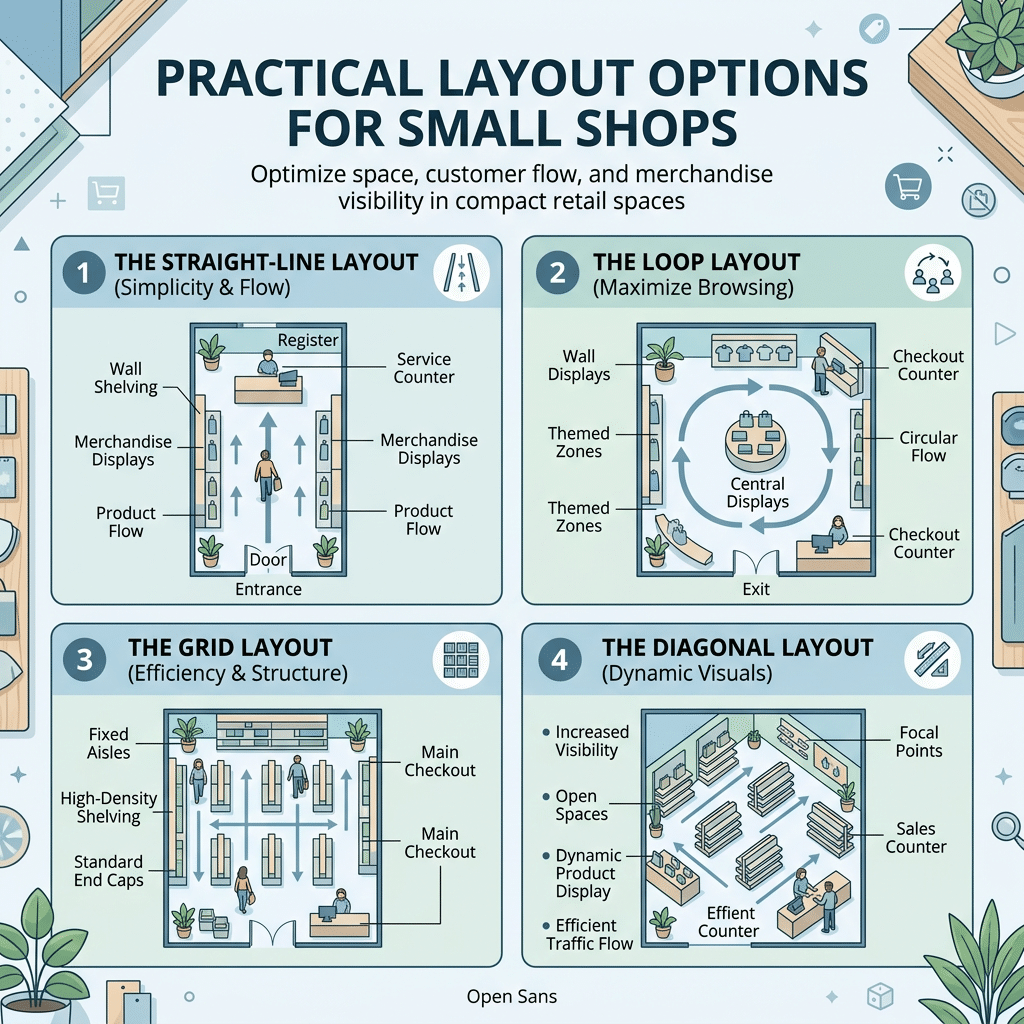
Feature Standard 2-Roller Machine EasiDeMax S4 (4-Roller)
Juicing Yield 60% – 65% (Wet bagasse) Up to 75% (Dry bagasse)
Passes Required Often requires 2-3 passes Single pass efficiency
Motor Type Often Aluminum or low torque All-Copper, High Torque (1/2 HP+)
Hygiene Fixed rollers (Hard to clean) Removable rollers (Easy clean)
Noise Level Loud, mechanical noise Super low noise operation
Durability Plastic or 201 Stainless components Full 304 Stainless Steel

Buyer’s Checklist: What to Ask Before You Buy

Before finalizing your procurement of a sugarcane juicer, ensure you have checked the following specifications to guarantee compatibility with your business needs.

  • Voltage & Plug Type: Ensure the machine matches your local power grid (e.g., 110V/60Hz for US, 220V/50Hz for EU/Asia).
  • Spare Parts Availability: Does the supplier stock gears, chains, and bearings?
  • Warranty Terms: Understand what is covered. Check the warranty policy to ensure the motor and gearbox are protected.
  • Capacity Requirements: Estimate your peak hour demand. The S4 is designed for high volume, but ensure your workflow can handle the output.
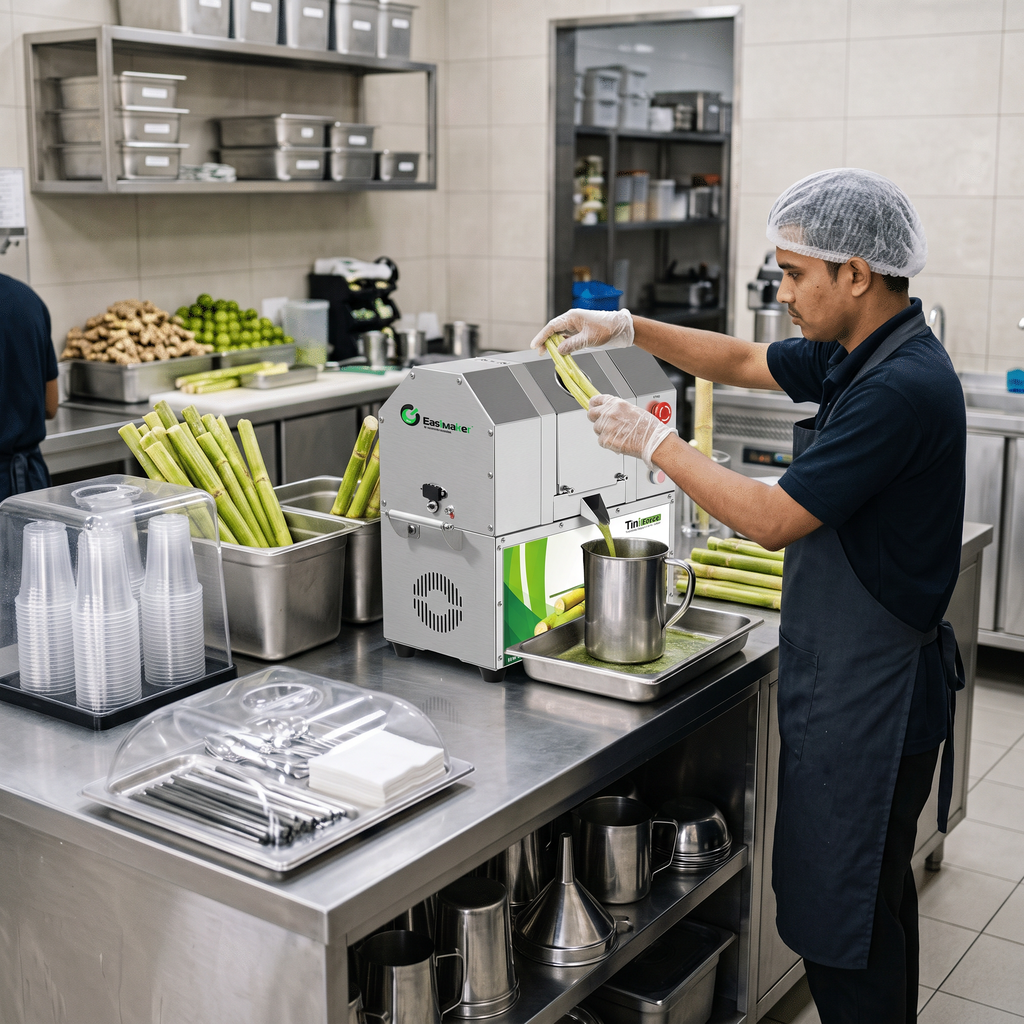
Frequently Asked Questions (FAQ)

Does the EasiDeMax S4 require peeling the sugarcane before juicing?

While the heavy-duty rollers can crush unpeeled cane, it is generally recommended to lightly peel or clean the cane for the best taste and hygiene. Hard outer skins can sometimes impart a bitter taste, but the machine has the power to process them if required.
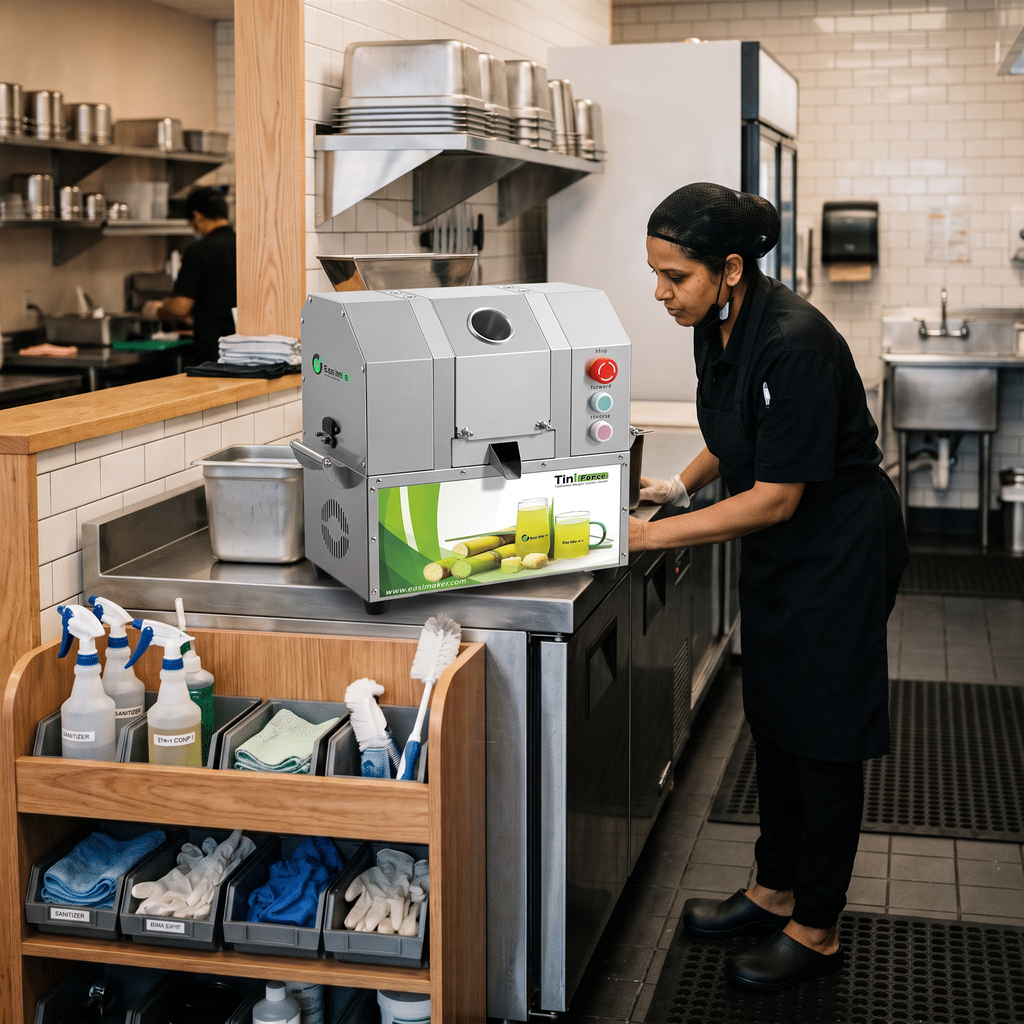
How often should the machine be cleaned?

Due to the high sugar content of the juice, the machine must be cleaned every few hours during operation (flushing with water) and deep cleaned at the end of every shift. The removable rollers on the S4 make this end-of-day process significantly faster.
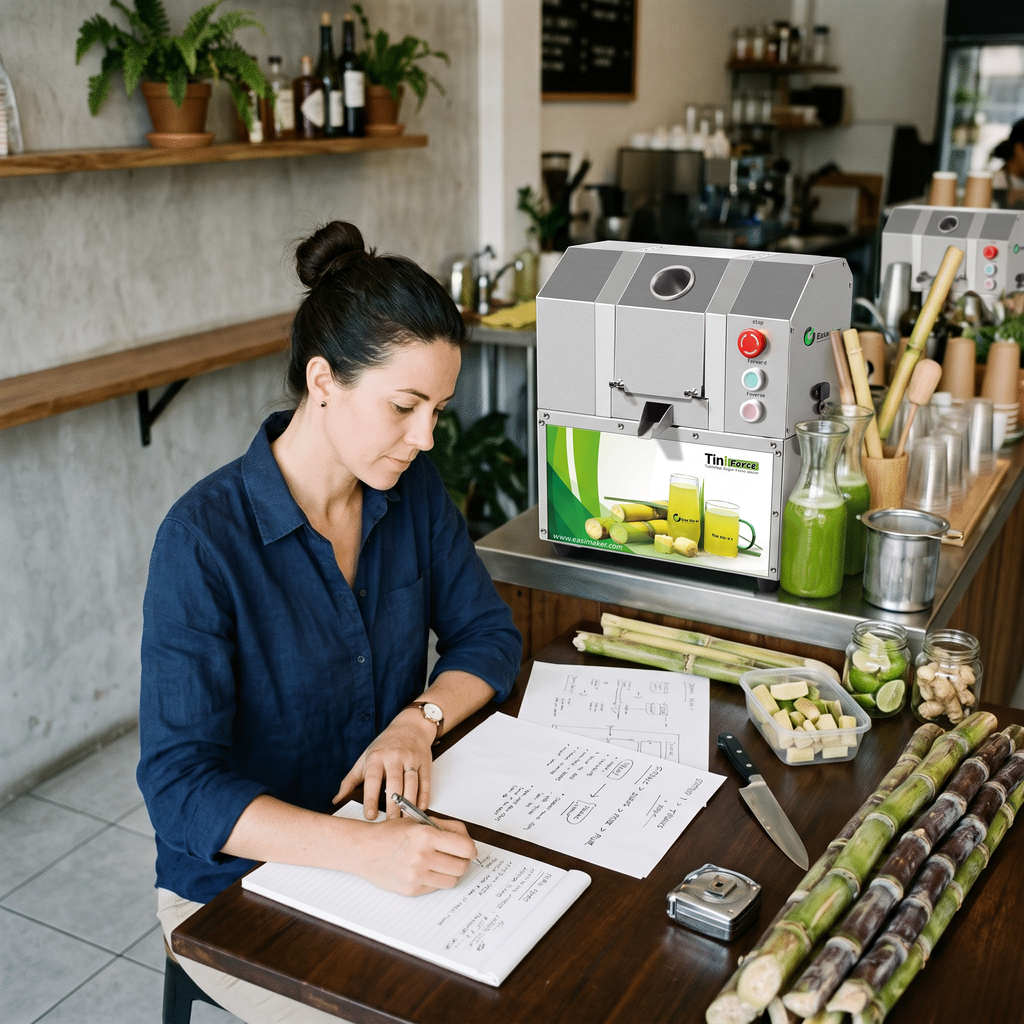

Can this machine handle different sizes of sugarcane?

Yes, the roller gap is designed to accommodate various diameters of sugarcane stalks, from thin to thick varieties. The automatic adjustment mechanism ensures consistent pressure regardless of stalk size.

Is the machine suitable for mobile juice carts?

Yes, provided there is a stable power source. Its compact footprint, low noise, and enclosed hygienic design make it ideal for mobile setups, food trucks, and kiosks.

Conclusion

The EasiDeMax S4 represents a balance of heavy-duty industrial capability and user-friendly design. By combining a high-yield 4-roller system with 304 stainless steel hygiene and a quiet, powerful copper motor, it eliminates the inefficiencies of older juicing methods.

For businesses looking to scale their operations and ensure a consistent, high-quality product, the S4 is a verified investment. Don’t let profits disappear with wet bagasse or downtime.

Ready to upgrade your production?

Request a quote or schedule a live demo today