
Table of Contents
- The short answer: train to a written, supervised SOP
- What staff need to understand before operating
- A step-by-step operator training program
- Daily sugarcane machine safety checklist
- Sugarcane machine operating procedure
- Competency checks, supervision, and records
- Match training to the machine and workflow
- Common training errors to avoid
A practical training framework for managers who need staff to operate commercial sugarcane juice machines safely, consistently, and with clear daily responsibilities.
The Short Answer: Train to a Written, Supervised SOP
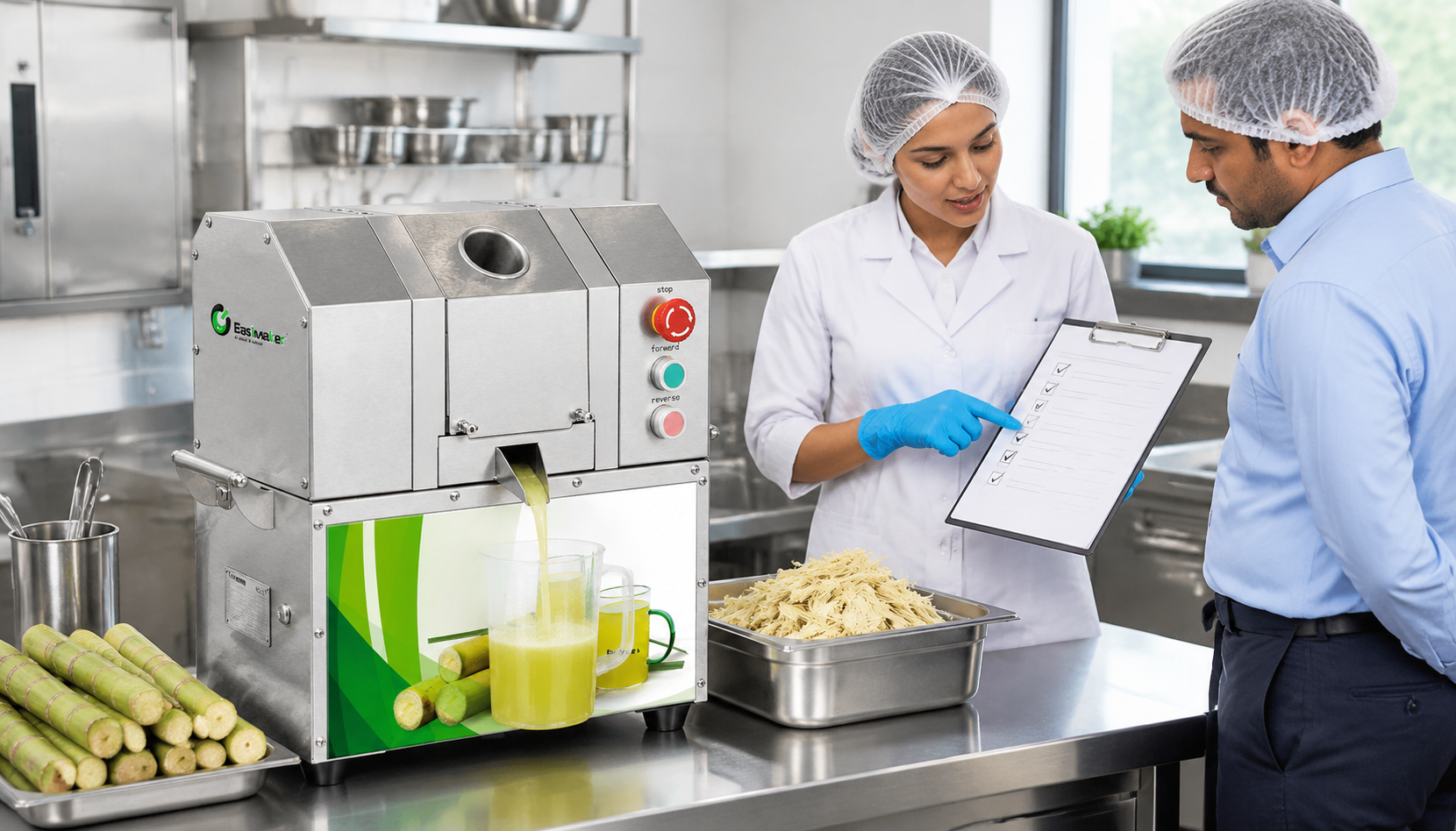
Effective commercial sugarcane juicer operator training combines a written procedure, hands-on demonstration, supervised practice, and a documented sign-off. Staff should not operate the machine alone until they can complete pre-start checks, feed prepared cane correctly, keep hands away from the feed opening and moving parts, stop the machine safely, and clean it only after isolation from power.
Training should be specific to the installed model and the shop workflow. Do not rely on general experience with another juicer, blender, or food machine. Controls, feed direction, bagasse discharge, removable parts, and cleaning access can differ between models.
What Staff Need to Understand Before Operating
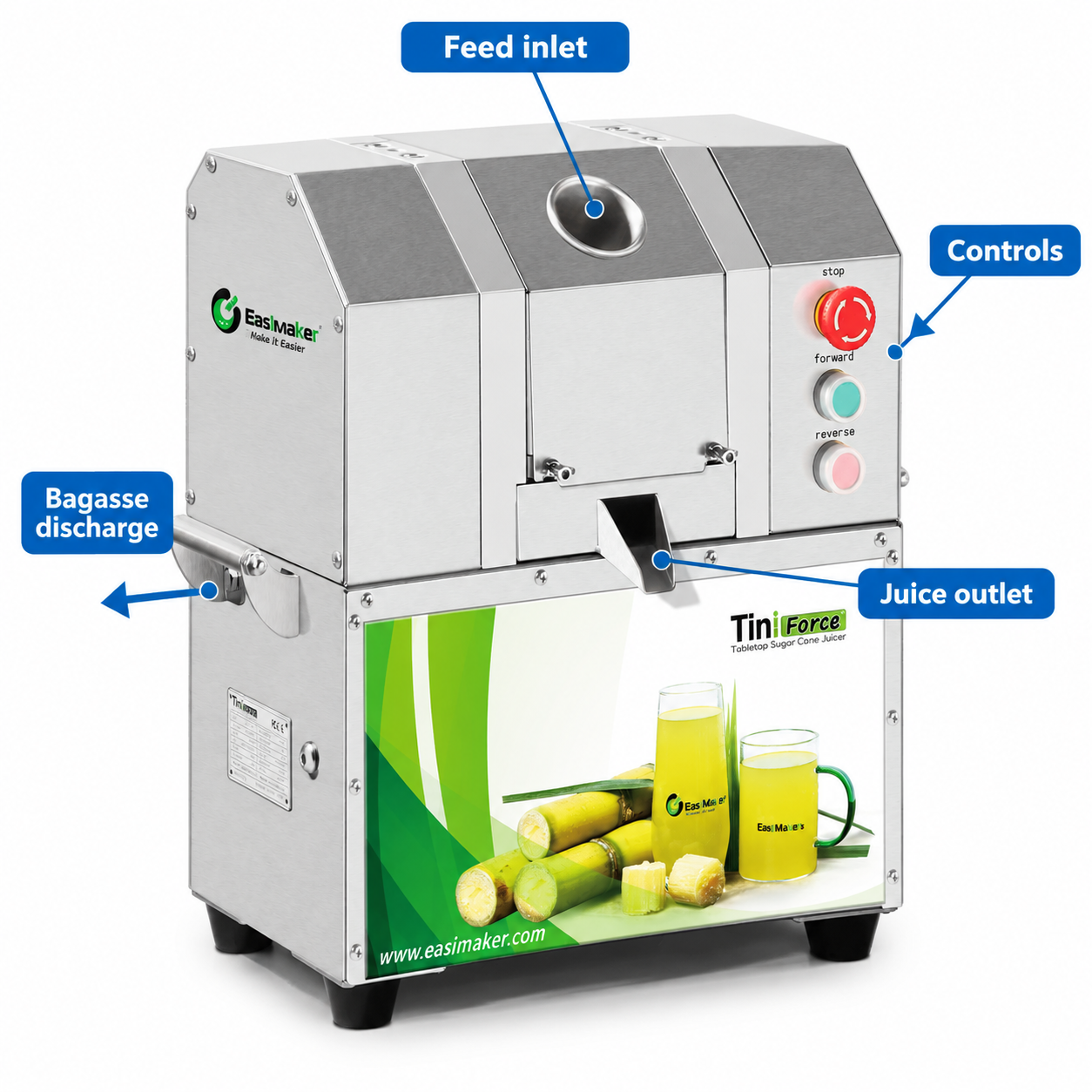
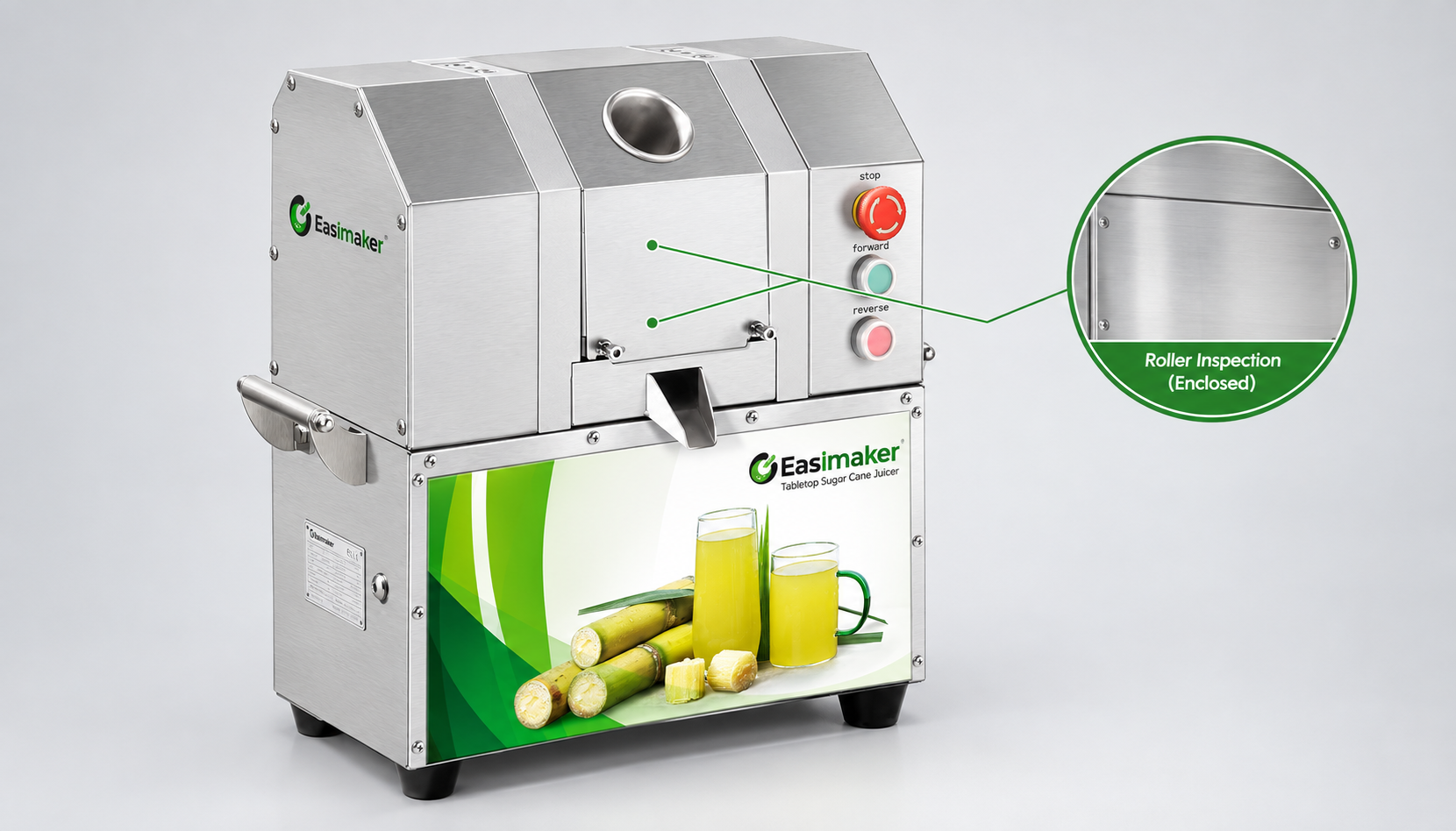
A commercial sugarcane juice machine uses powered rollers to press juice from prepared sugarcane. Cane is introduced through the designated feed inlet, juice is collected from the outlet, and compressed fibre, known as bagasse, leaves through the machine’s intended discharge path. The roller area can create a pinch-point hazard, so operators must understand the safe feeding position before service begins.
Before practical training, explain the machine’s power switch, emergency-stop function if fitted, feed inlet, juice outlet, bagasse discharge direction, guards or access panels, and the approved shutdown and cleaning method. The operating manual supplied for the exact unit takes priority where instructions differ.
Staff should also understand their boundaries: they may perform approved daily cleaning and visual checks, but should not remove guards, reach into the feed path, open protected service areas, or attempt electrical or roller repairs. Escalate faults to the manager or an authorised service provider.
A Step-by-Step Sugarcane Juicer Staff Training Program
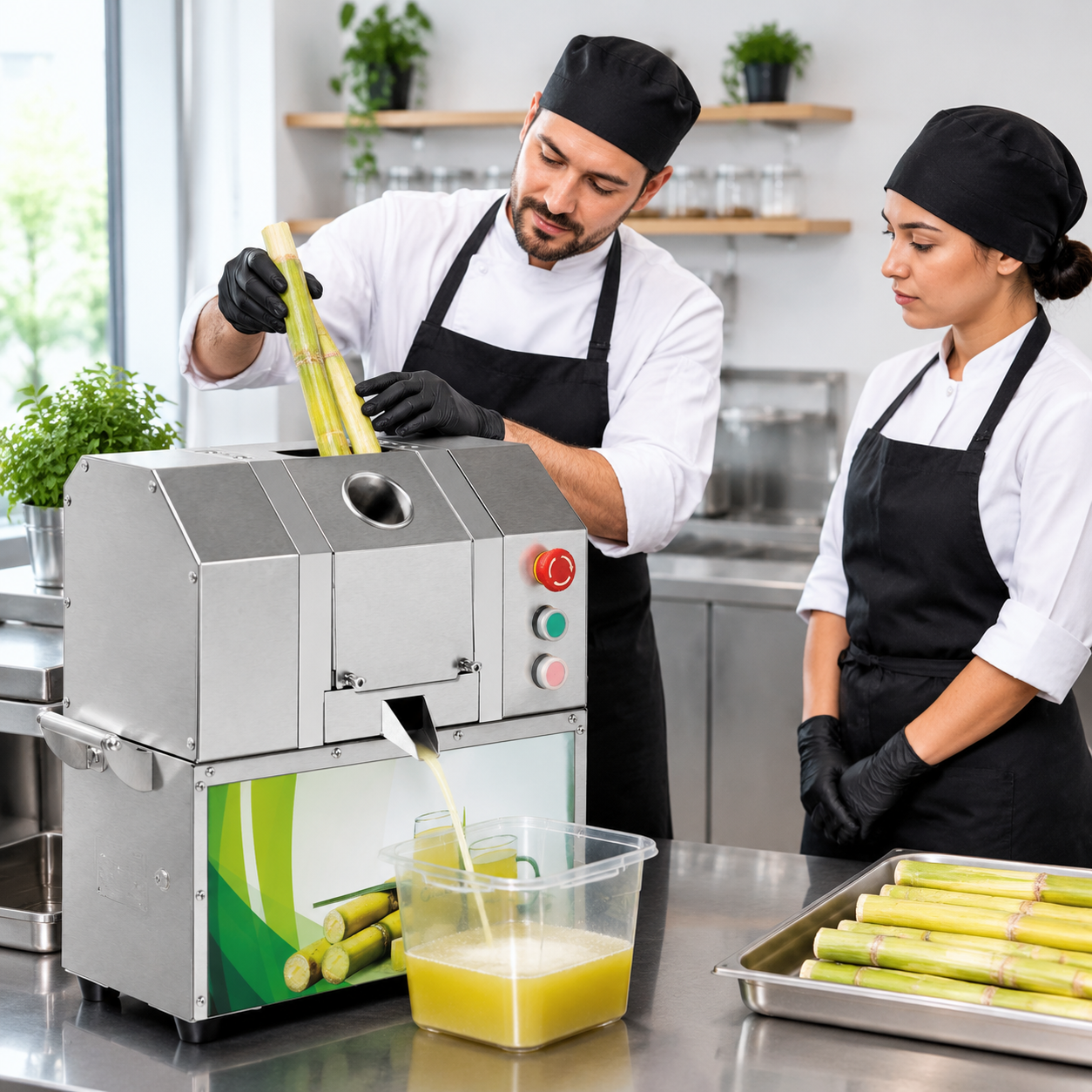
1. Start with site rules and personal readiness
Explain the local rules for handwashing, clean work clothing, hair restraint where required by the operation, footwear, reporting illness, and keeping the work area dry and clear. Loose sleeves, jewellery, gloves that can catch, and unsecured hair can create avoidable hazards near moving equipment. Staff should be alert and should not operate equipment when impaired, excessively fatigued, or distracted.
2. Demonstrate the complete cycle
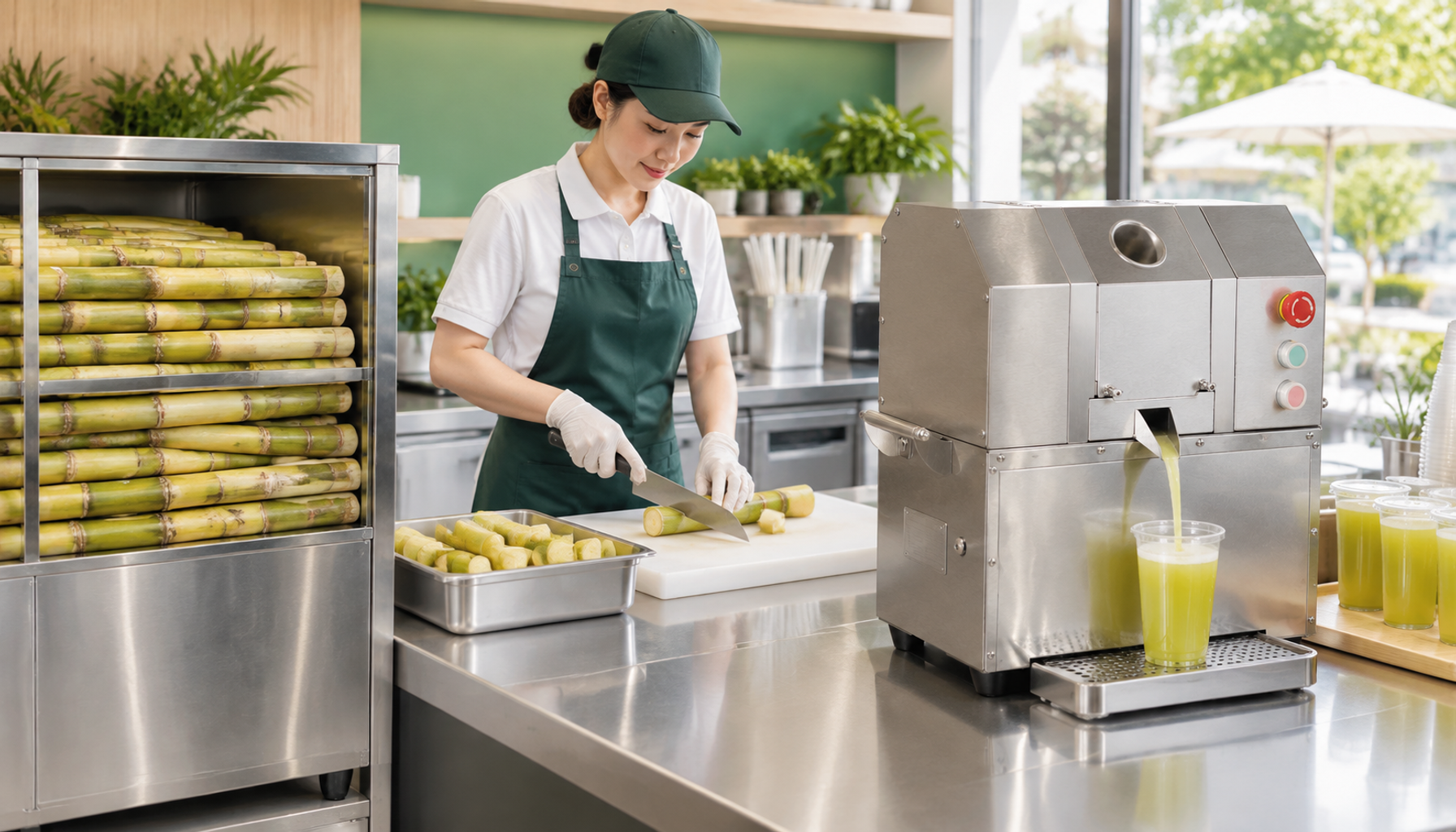
A trainer should perform one complete cycle slowly: inspect the machine, set up clean collection containers, switch on, feed prepared cane from the correct position, monitor the juice and bagasse paths, stop the unit, isolate power, and clean the approved surfaces. Explain each action as it is performed. A demonstration without explanation is less useful than a clear, repeatable sequence.
3. Use supervised practice
Let the trainee repeat the cycle using prepared cane under direct observation. Correct unsafe posture, rushed feeding, poor container placement, or attempts to push cane with hands. The trainee should demonstrate a calm, controlled pace rather than being judged only on speed.
4. Test abnormal-condition response
Ask the trainee what to do if cane does not feed normally, bagasse accumulates, juice flow appears abnormal, a guard is loose, or an unusual sound occurs. The expected response is to stop operation, switch off, isolate from power before any approved inspection or cleaning, and report the issue. They must never clear a blockage while rollers are moving.
5. Record sign-off and refresh training
Document the trainee name, machine model, trainer, training date, observed tasks, and result. Reassess staff after changes in equipment, layout, procedure, or role, and after any safety incident or repeated operating error.
Daily Sugarcane Machine Safety Checklist
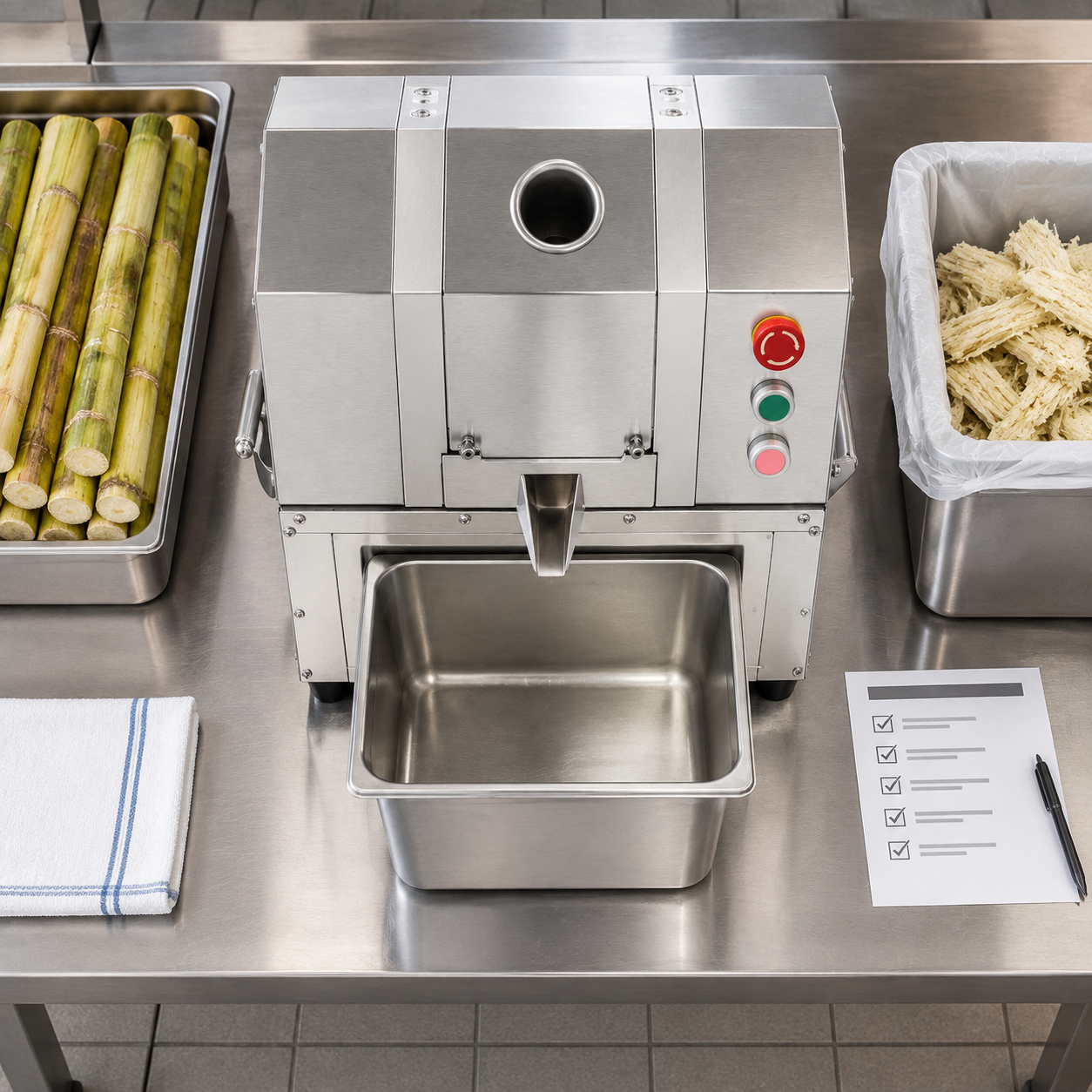
Use a short pre-start checklist at the beginning of each shift and whenever a machine has been moved, cleaned, or left unused for an extended period. The checklist should be posted close to the machine and completed by the operator or shift lead.
| Check | What the operator verifies | Action if not acceptable |
|---|---|---|
| Machine position | The machine is stable on a level, suitable work surface and does not rock. | Do not operate; correct the placement or notify the supervisor. |
| Power and controls | Power connection, switch area, and cable appear undamaged; controls are accessible. | Do not operate; isolate from power and report. |
| Guards and panels | All intended guards, covers, latches, and panels are present and secure. | Do not operate or bypass the protection. |
| Feed and discharge areas | The feed inlet, juice outlet, and bagasse path are clean and unobstructed. | Clean only using the approved powered-off procedure. |
| Collection setup | Clean juice container and bagasse container or clearing area are correctly positioned. | Set up before starting the machine. |
| Work area | Floor and counter are clear, dry, and free of trip hazards. | Clean or reorganise before operation. |
| Test observation | On start-up, no abnormal noise, vibration, smell, or visible movement is observed. | Stop, isolate, and report the machine. |
Sugarcane Machine Operating Procedure for Service Staff
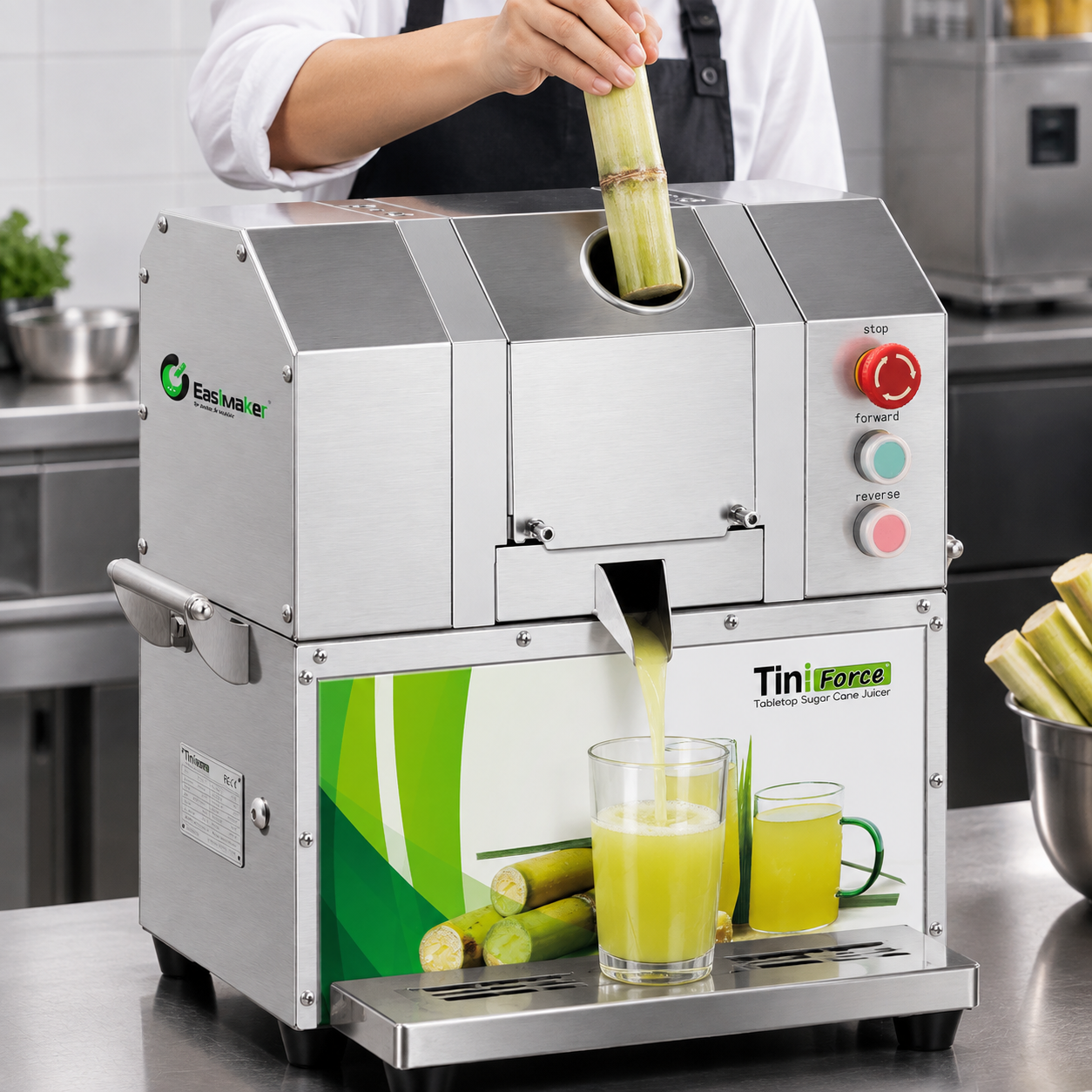
- Prepare the workstation. Complete the pre-start checklist, set a clean receiving container under the juice outlet, and confirm that the bagasse route is clear.
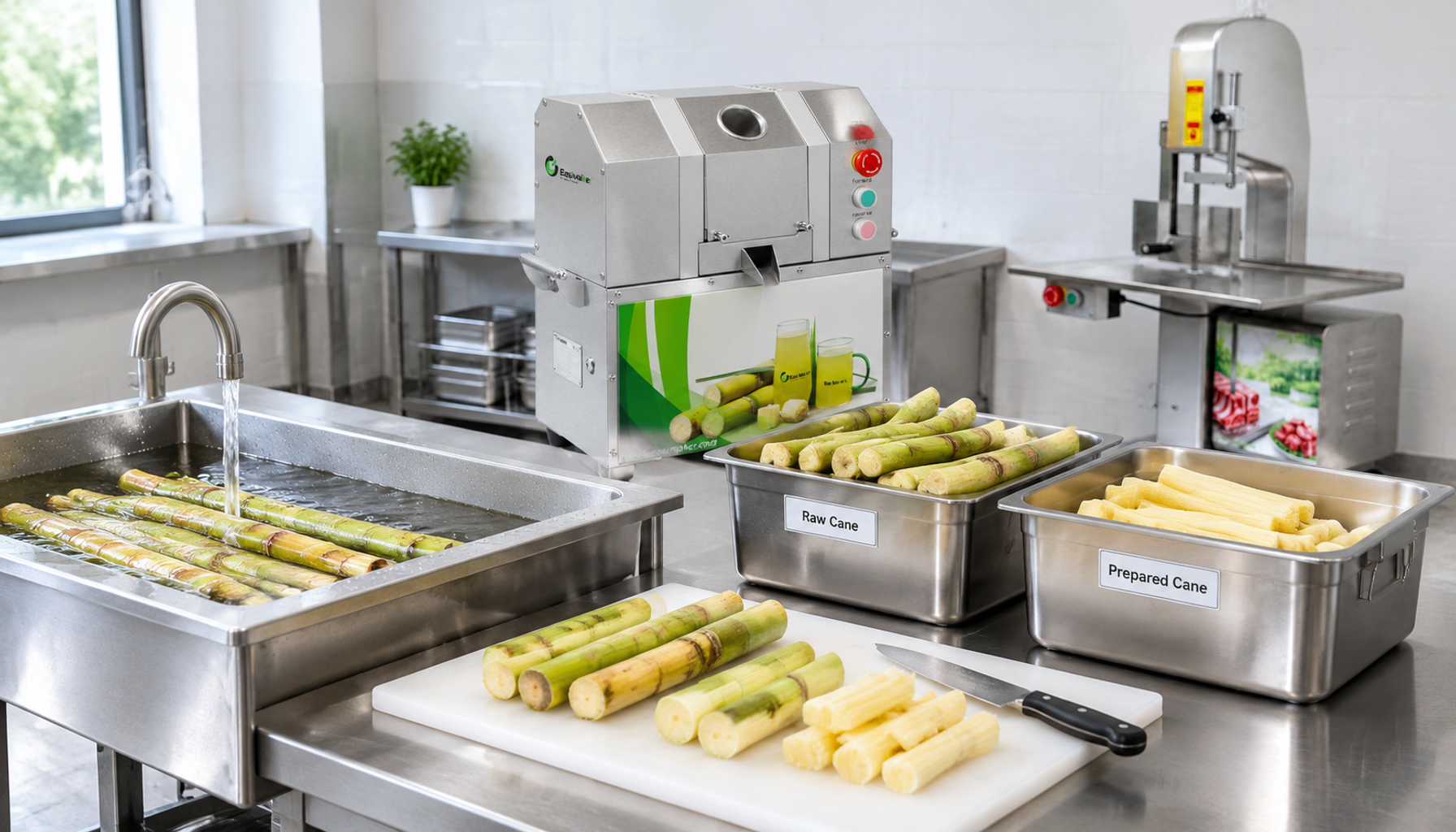
- Prepare cane according to the shop SOP. Use only cane that has been prepared for the machine and inspected by the team. Do not introduce unsuitable objects, packaging, tools, or overly large pieces that do not fit the intended inlet.
- Start from a safe position. Keep hands, clothing, and other items clear of the inlet and discharge areas. Start the machine using its normal controls.
- Feed cane steadily. Introduce cane through the designated feed opening in the direction specified for the machine. Use only the approved feeding method. Never force cane, reach into the inlet, or use fingers to push material toward the rollers.
- Monitor the process. Watch juice collection and bagasse discharge. Keep the work surface orderly and respond promptly to spills using the shop cleaning procedure.
- Stop before intervention. If a fault, blockage, unusual noise, vibration, or loose component is suspected, stop the machine. Switch it off and disconnect or otherwise isolate the power before any approved cleaning or inspection. Report the condition.
- Shut down and clean. At the end of service, switch off, isolate power, allow movement to stop fully, then follow the model-specific cleaning instructions. Refit parts and guards only as instructed before the next shift.
Managers should build cleaning duties into the shift rather than leaving them to memory. For a detailed cleaning routine, see the bagasse, cleanup, and cost-control guide.
Competency Checks, Supervision, and Training Records
Competency is demonstrated performance, not attendance at a briefing. A supervisor should observe each new operator completing the full cycle without prompts. Use a simple pass, needs-coaching, or not-approved result for each task.
| Training item | Pass standard | Manager record |
|---|---|---|
| Pre-start inspection | Completes all checks and identifies a no-use condition. | Date, trainer initials, result |
| Normal operation | Feeds cane safely and maintains a clear workstation. | Observed shift and result |
| Fault response | Stops and isolates the machine; does not attempt unsafe clearing. | Scenario result |
| Shutdown and cleaning | Follows the approved sequence and reassembles correctly where applicable. | Cleaning observation result |
| Escalation | Knows who to contact for a fault, missing part, or service question. | Contact route confirmed |
Keep signed records with the shop’s operational documents. This helps managers identify refresher needs and gives a clear handover when supervisors change.
Match Training to the Machine and Workflow
Training requirements vary with the machine format, service volume, operator turnover, and available counter space. The table below helps managers adapt the training emphasis without assuming unverified machine specifications.
| Operating environment | Training emphasis | Manager control |
|---|---|---|
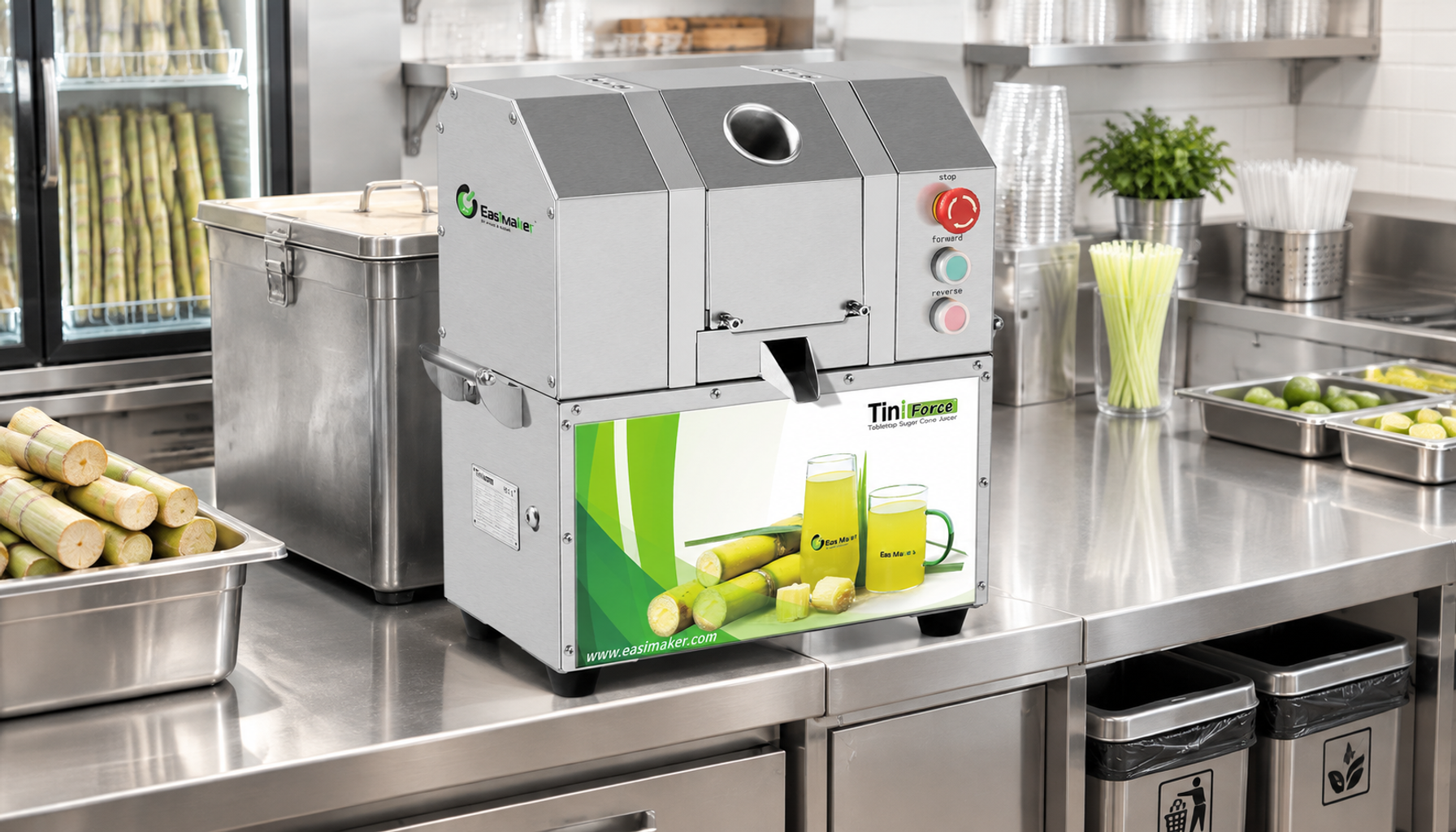
| Small counter or café service | Clear customer-side boundaries, clean presentation, spill response, and one-person shutdown. | Keep the machine away from customer reach and assign a trained operator. |
| High-turnover juice counter | Consistent handover, bagasse clearing, container changes, and fatigue-aware task rotation. | Use shift leads and scheduled cleaning intervals. |
| Mobile or outdoor operation | Stable setup, electrical checks, weather protection, and workflow control in confined space. | Confirm the site setup before each service period. |
| Distributor or multi-site operation | Standardised SOPs, model-specific manuals, trainer calibration, and records. | Use the same sign-off form across locations. |
For mobile teams, the mobile sugarcane juice business setup guide can help managers connect operator training with layout, power planning, and daily workflow.
Common Training Errors to Avoid
- Training only by verbal instruction: staff need to see the process and practise under observation.
- Teaching speed before control: fast output is not a safe performance measure for a new operator.
- Using a generic SOP: update the procedure for the specific machine, installed layout, and local cleaning process.
- Ignoring fault response: staff must know that stop, isolate, and report is the correct response to a suspected jam or defect.
- Leaving cleaning to untrained closing staff: cleaning may involve access points and removable parts that require model-specific instruction.
- Failing to refresh training: revisit the SOP after downtime, staff changes, equipment changes, incidents, or recurring errors.
A practical program makes the safe action the easy action: keep the checklist visible, place containers correctly, provide a clear reporting route, and allow enough time for cleaning and handover.
FAQ
How long should commercial sugarcane juicer operator training take?
Training should take as long as needed for the employee to demonstrate the complete procedure safely under supervision. A briefing alone is not sufficient. The manager should approve independent operation only after observing pre-start checks, correct feeding, fault response, shutdown, and cleaning for the installed machine.
Can staff clear a sugarcane juicer blockage while it is running?
No. Staff should stop the machine and isolate it from power before any approved inspection or cleaning. They should never reach into a feed opening or moving area and should report a suspected blockage or fault according to the shop procedure.
What should be on a sugarcane machine safety checklist?
Include machine stability, cable and control condition, guards and panels, clear feed and discharge paths, correct juice and bagasse container placement, a clean dry work area, and observation for unusual noise, vibration, smell, or movement at start-up.
How often should sugarcane juicer staff receive refresher training?
Provide refresher training when a new machine or procedure is introduced, when duties change, after an incident or recurring error, and at intervals set by the business. Review the manual and local operating rules whenever the workflow changes.
Need a Training Plan for Your Machine and Service Setup?
Easimaker can help B2B buyers discuss machine fit, operator workflow, and practical support needs for their market. Contact our team to request a quote or discuss the right commercial sugarcane juice machine for your planned output and operating environment.