
Introduction
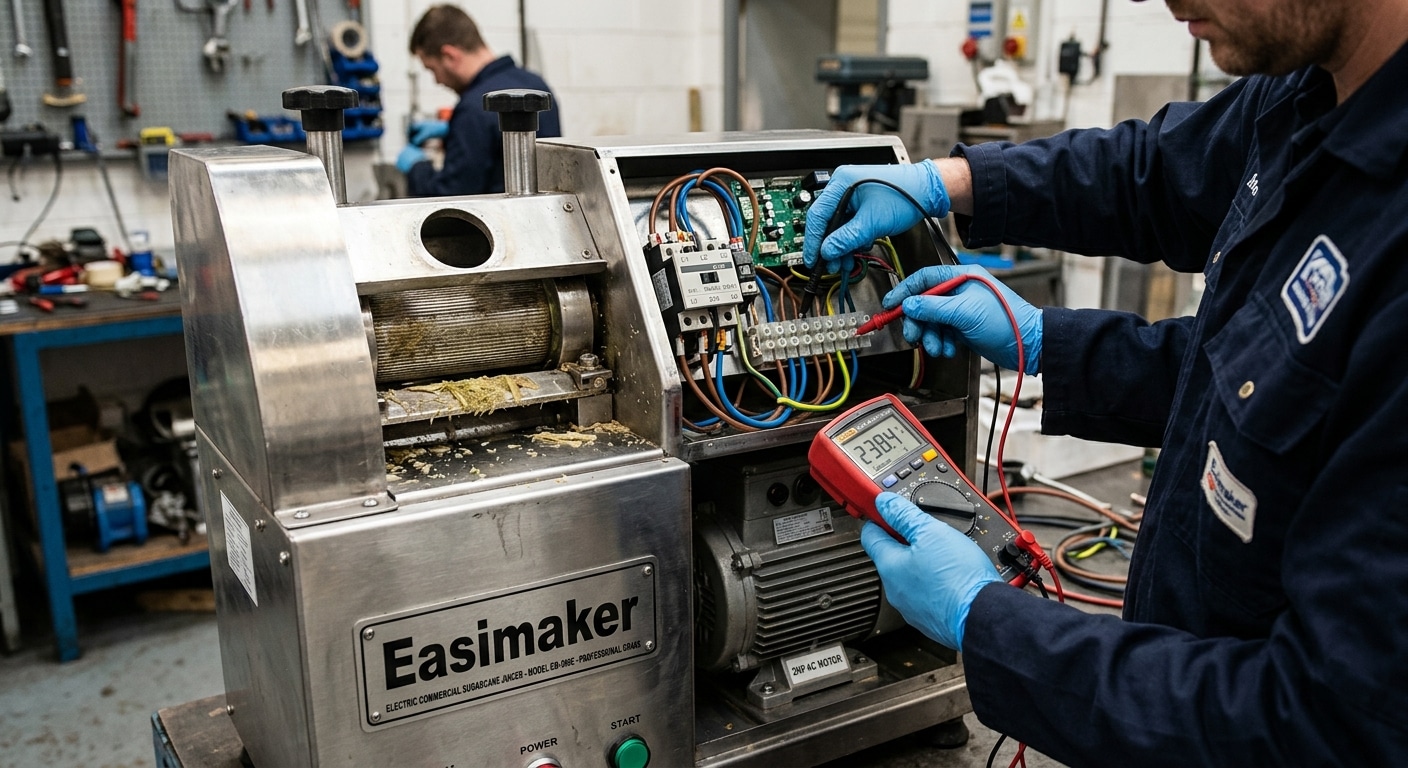
For beverage brands, commercial kitchens, and juice distributors, electric sugarcane juicers are high-yield assets. When a machine experiences electrical issues, the resulting downtime directly impacts daily operations and revenue. Effective sugarcane machine troubleshooting requires a systematic approach to identify root causes quickly and safely.
This guide is designed for maintenance staff, facility engineers, and business owners. It outlines the essential steps for diagnosing common electrical faults in commercial electric sugarcane machines, helping your team restore operational efficiency while adhering to standard safety protocols.
Safety First: Pre-Diagnostic Procedures
Before initiating any commercial juicer repair, safety must be the primary focus. Commercial sugarcane machines operate on high-voltage electrical systems and feature powerful motors designed to crush dense organic material. Always follow these safety steps:
- Lockout/Tagout (LOTO): Ensure the machine is completely disconnected from the main power supply. Use standard LOTO procedures to prevent accidental powering during maintenance.
- Capacitor Discharge: If the machine utilizes start or run capacitors, ensure they are properly discharged before touching internal components.
- Personal Protective Equipment (PPE): Wear insulated gloves and safety glasses when inspecting wiring and electrical panels.
- Dry Environment: Sugarcane processing involves high moisture. Ensure the machine and surrounding floor are completely dry before opening electrical enclosures.
Common Juicer Electrical Faults and Symptoms
Understanding the relationship between physical symptoms and electrical components is the first step in resolving machine power issues.
1. Complete Power Failure
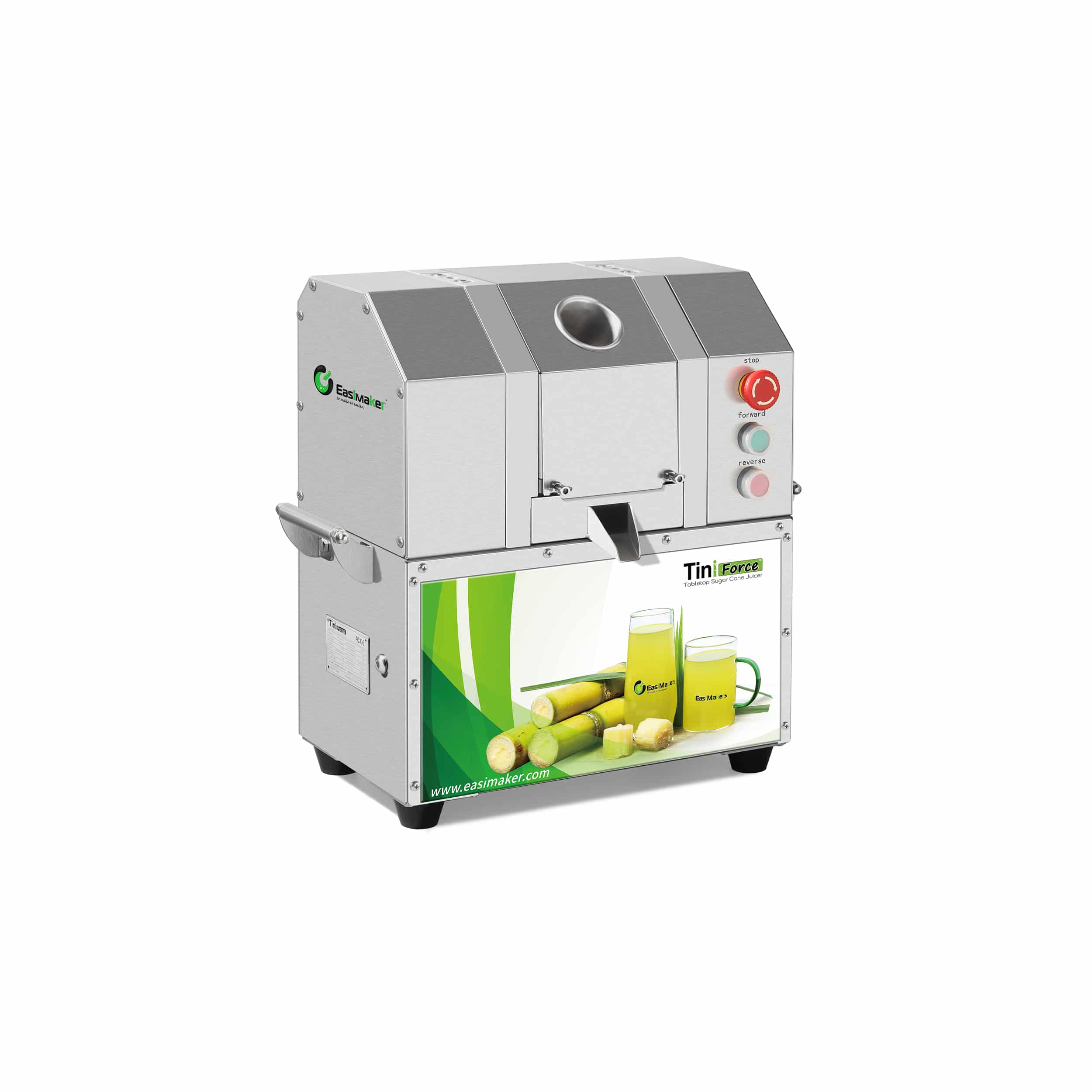
If the machine is completely unresponsive when the power switch is engaged, the issue typically lies in the primary power delivery system. Common culprits include a tripped facility circuit breaker, a severed power cord, or a blown internal main fuse. In some cases, a faulty emergency stop (E-stop) button may be stuck in the open position.
2. Motor Humming but Not Turning
A motor that hums but fails to rotate the crushing rollers often indicates a phase loss (in 3-phase motors), a failed start capacitor (in single-phase motors), or a severe mechanical jam that is causing the motor to draw excessive locked-rotor current.
3. Intermittent Operation or Sudden Shut-Offs
Machines that run normally but shut down unexpectedly are usually triggering thermal overload protectors. This occurs when the motor overheats due to continuous heavy loads, inadequate ventilation, or voltage fluctuations. Loose wiring connections can also cause intermittent power drops.
Step-by-Step Diagnostic Guide
Equip your maintenance team with a reliable digital multimeter and follow this systematic approach to isolate the fault.
Step 1: Visual and Mechanical Inspection
Before testing electrical components, rule out mechanical interference. Ensure the crushing chamber is free of jammed sugarcane pulp. Inspect the exterior power cord for visible damage, cuts, or exposed wires. Check the control panel for any physical damage to switches or indicator lights.
Step 2: Checking the Power Supply and Fuses
Use your multimeter to verify incoming voltage at the wall receptacle. If the facility power is stable, proceed to the machine’s internal components:
- Continuity Testing: Test the main power cord for continuity from the plug to the internal terminal block.
- Fuse Inspection: Locate the internal fuse block. Remove the fuses and test them for continuity. A blown fuse often indicates a short circuit or an overcurrent event. Never bypass a fuse; always replace it with one of the exact same amperage and voltage rating.
Step 3: Evaluating Switches and Relays
Faulty contactors or relays can prevent power from reaching the motor. Test the main power switch and the E-stop button for proper continuity when toggled. If the machine uses a magnetic contactor, inspect the contacts for pitting, carbon buildup, or welding, which can cause the circuit to remain open or closed improperly.
Step 4: Motor and Capacitor Diagnostics
If power reaches the motor but it fails to run, inspect the motor components. For single-phase machines, test the start and run capacitors with a multimeter set to the capacitance function. Swollen or leaking capacitors must be replaced immediately. For the motor itself, check the resistance between the windings to ensure there are no internal shorts or open circuits.
Preventative Juice Equipment Maintenance
Proactive juice equipment maintenance extends the lifespan of your machines and minimizes unexpected electrical failures. Implement the following routine:
| Maintenance Task | Frequency | Purpose |
|---|---|---|
| Visual Cable Inspection | Daily | Identify frayed cords or damaged plugs before they cause shorts. |
| Control Panel Sealing Check | Weekly | Ensure gaskets are intact to prevent acidic juice ingress into electrical components. |
| Motor Ventilation Cleaning | Monthly | Remove dust and pulp buildup from motor vents to prevent thermal overload. |
| Terminal Tightening | Bi-Annually | Vibration can loosen electrical connections; retighten to prevent arcing. |
When to Call a Professional vs. In-House Repair
While trained maintenance staff can handle fuse replacements, switch swaps, and basic wiring repairs, certain situations require specialized intervention. If a motor requires rewinding, if a proprietary logic board fails, or if the machine repeatedly blows fuses despite basic troubleshooting, it is time to contact the manufacturer’s technical support or a certified commercial electrician. Attempting deep repairs without the proper schematics can void warranties and create safety hazards.
Frequently Asked Questions (FAQs)
Why does my sugarcane machine keep tripping the circuit breaker?
This is usually caused by overloading the machine with too much sugarcane at once, a short circuit in the internal wiring, or a failing motor drawing excessive current. Ensure the machine is on a dedicated circuit that meets its amperage requirements.
How do I reset the thermal overload protector?
Most commercial electric sugarcane juicers feature a manual reset button located near the motor housing or on the main control panel. Allow the machine to cool for 15-30 minutes before pressing the reset button.
Can I use a higher amperage fuse if the current one keeps blowing?
No. Fuses are precisely sized to protect the motor and wiring from catastrophic failure and fire. Repeatedly blowing fuses indicates an underlying electrical fault that must be diagnosed and repaired.
What should I do if juice spills onto the electrical panel?
Immediately disconnect the power supply. Do not attempt to operate the machine. Open the panel (if authorized), dry the components thoroughly using compressed air and clean cloths, and inspect for corrosion before re-energizing.
How often should motor capacitors be replaced?
Capacitors typically last several years depending on usage. They should only be replaced when they fail capacitance tests, show physical signs of bulging, or if the motor struggles to start.
Conclusion
Diagnosing electrical faults in commercial sugarcane machines does not have to be a daunting task. By adhering to strict safety protocols, understanding common symptoms, and applying a logical troubleshooting sequence, maintenance teams can resolve most power issues swiftly. Consistent preventative maintenance remains the best strategy for keeping your equipment running at peak performance.
If you are looking to upgrade your facility with reliable, industrial-grade electric juicing equipment, we are here to help. Request a quote / Get a sample today to learn more about our high-performance solutions.