
The Critical Role of Crushing Speed in Commercial Sugarcane Processing
For commercial beverage brands, equipment distributors, and food processing facilities, selecting the right sugarcane extraction equipment goes beyond just looking at motor wattage or physical dimensions. One of the most critical technical specifications that directly dictates both product quality and operational profitability is the sugarcane machine RPM (Revolutions Per Minute) and its corresponding crushing speed.
While it might seem logical to assume that faster rollers equal higher throughput, the physics of sugarcane extraction tell a different story. Operating at excessively high speeds can severely degrade the final product and reduce the total volume of juice extracted per stalk. This guide explores the technical relationship between rotational speed, extraction yield optimization, and juice quality, helping B2B buyers make informed equipment sourcing decisions.
The Mechanics of Sugarcane Extraction: Torque vs. Speed
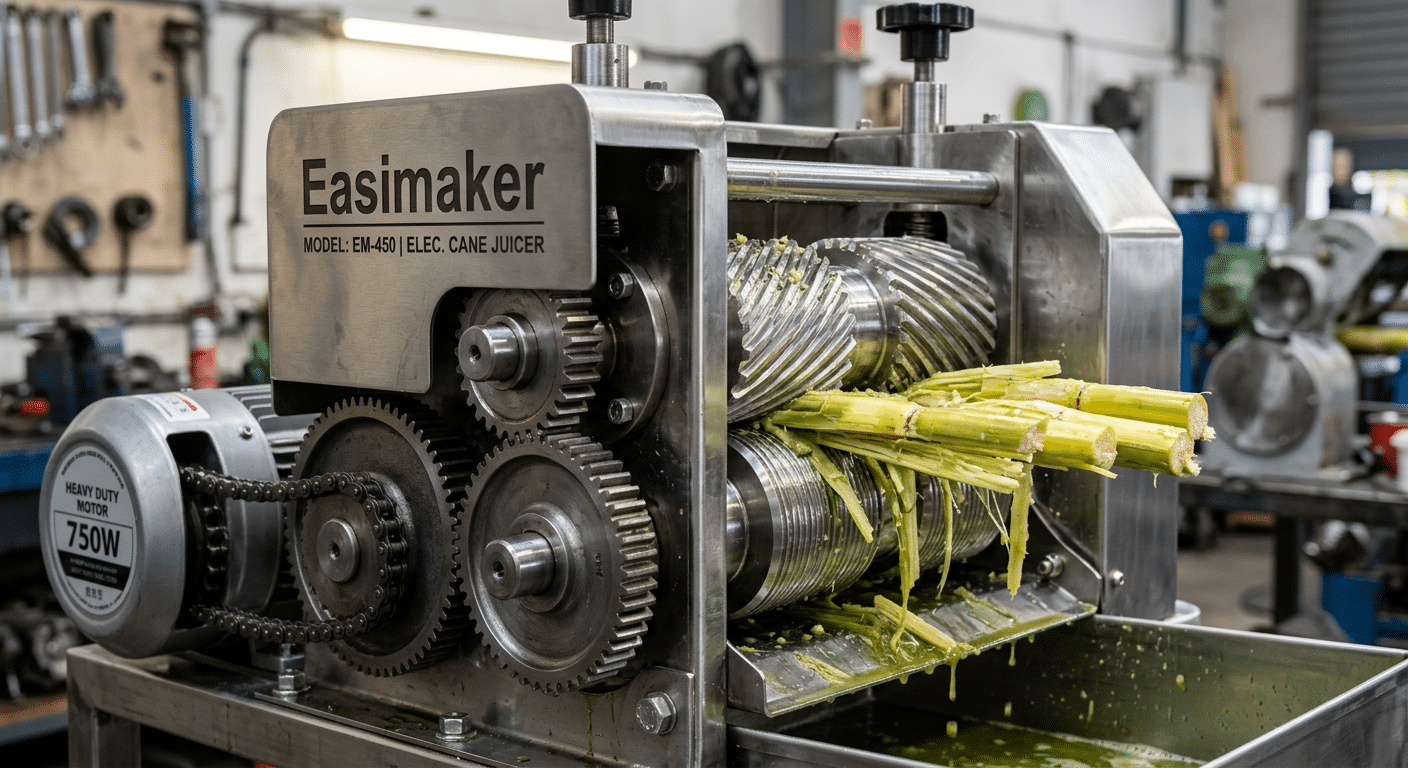
Electric commercial sugarcane juicers operate by feeding cane stalks through a series of heavy-duty stainless steel rollers. The efficiency of this process relies on mechanical pressure rather than shredding or centrifugal force. Therefore, the relationship between the motor, the gearbox, and the roller speed is a delicate balance of torque and RPM.
To extract the maximum amount of liquid from the dense, fibrous core of the sugarcane, the rollers must apply sustained, immense pressure. High torque is required to crush the fibers effectively. When a machine is geared for high speed (high RPM), it often sacrifices the sustained pressure necessary for a complete crush, leaving valuable juice trapped inside the discarded bagasse (cane fiber).
How Machine RPM Affects Sugarcane Juice Quality
The speed at which the rollers turn has a profound impact on the physical and chemical properties of the extracted juice. Optimized juicer crushing speed ensures a premium, market-ready beverage.
Preventing Heat Buildup and Oxidation
Friction is the enemy of raw, cold-pressed juices. When rollers spin at high RPMs, the rapid mechanical action generates significant thermal energy. This heat buildup transfers directly into the sugarcane juice. Sugarcane juice is highly susceptible to thermal degradation and rapid oxidation. Elevated temperatures accelerate enzymatic browning, turning the vibrant green/yellow juice into an unappealing dark brown within minutes.
Optimized, slower RPMs maintain a true “cold-press” environment. By minimizing friction, the juice retains its natural color, raw nutritional profile, and fresh flavor, extending its visual shelf life and consumer appeal.
Eliminating Foaming and Emulsification
High-speed crushing violently agitates the liquid as it is squeezed from the fibers. This rapid agitation introduces excess air into the liquid, leading to severe foaming and emulsification. A highly aerated juice not only looks less appealing in a cup or bottle but also separates quickly, leading to an inconsistent texture.
Slow juicing benefits include a smooth, laminar flow of juice from the rollers to the collection tray. The gentle extraction process prevents aeration, resulting in a clear, foam-free product that looks premium and requires less settling time before bottling or serving.
Balancing Crushing Speed with Extraction Yield
For high-volume operations, yield optimization directly impacts the bottom line. Wasting 10-15% of available juice due to inefficient crushing translates to significant financial losses over a year.
The “Slow Juicing” Advantage for Maximum Yield
Extraction yield optimization is fundamentally about time under pressure. When sugarcane passes through rollers too quickly, the fibers do not have sufficient time to compress fully and release all trapped moisture. A slower rotational speed keeps the cane under maximum compression for a fraction of a second longer—enough to force out the residual liquid.
Machines calibrated with optimized RPMs (typically in the range of 15 to 25 RPM, depending on roller diameter and gear ratios) consistently produce drier bagasse, indicating a higher extraction percentage.
Throughput vs. Efficiency
Buyers often worry that a slower RPM means a slower operation. However, commercial juicer specs overcome this by utilizing larger diameter rollers and multi-roller configurations (e.g., 3-roller or 4-roller systems). A machine with large rollers turning at a slow RPM will process the same length of cane as a machine with small rollers turning rapidly, but with vastly superior extraction yield and no heat degradation.
Comparing Commercial Juicer Specs: High RPM vs. Optimized RPM
When reviewing technical specifications from manufacturers, understanding the trade-offs is essential. Below is a comparison of typical outcomes based on gearing and speed.
| Specification Feature | High Speed / High RPM Machines | Optimized / Slow RPM Machines |
|---|---|---|
| Extraction Yield | Lower (fibers pass through too quickly) | Maximum (sustained compression) |
| Juice Quality (Color) | Prone to rapid browning (oxidation) | Vibrant, natural color retained |
| Foaming | High aeration and heavy froth | Minimal to no foaming |
| Motor Strain | Higher risk of stalling on thick cane | High torque prevents jamming |
| Bagasse Condition | Damp, retaining valuable juice | Dry and powdery |
Manufacturing, Quality, and Testing Considerations
When sourcing electric commercial sugarcane juicers, the internal components that govern speed and torque must meet strict industrial standards:
- Gearbox Quality: The reduction gearbox is what converts high-speed motor rotation into low-speed, high-torque roller rotation. Look for machines utilizing heavy-duty, oil-bathed steel gears rather than plastic or light-alloy components.
- Roller Material and Tolerances: Rollers should be machined from food-grade 304 stainless steel. Precision machining ensures the gap between rollers remains consistent, which is critical when operating at optimized slow speeds.
- Motor Cooling: Even at optimized speeds, continuous commercial operation requires robust heat dissipation. Ensure the machine features adequate ventilation and thermal overload protection.
Buying Guide: Sourcing the Right Sugarcane Machine
For procurement teams and distributors, specifying the right machine involves evaluating your operational needs against the manufacturer’s capabilities:
- Assess Your Volume: If you are bottling juice commercially, prioritize multi-roller machines with optimized slow RPMs to maximize your raw material ROI.
- Customization and MOQ: Many manufacturers can adjust gear ratios based on your specific requirements. Discuss your desired RPM and throughput with the supplier. Minimum Order Quantities (MOQs) for custom gear ratios usually apply, so inquire early in the sourcing process.
- Sampling and Testing: Before placing a bulk order, request a sample machine. Test it with the specific variety of sugarcane grown in your region, as cane hardness varies globally and affects the required torque.
Frequently Asked Questions (FAQs)
1. What is the ideal RPM for a commercial sugarcane juicer?
While it varies based on roller diameter, an optimized rotational speed typically falls between 15 and 25 RPM. This range provides the perfect balance of high torque, maximum extraction, and heat prevention.
2. Why does my sugarcane juice turn brown so quickly?
Rapid browning is usually caused by oxidation and heat buildup during extraction. A machine operating at a high crushing speed generates friction, which heats the juice and accelerates enzymatic browning.
3. Does a slower machine mean I will process less sugarcane per hour?
Not necessarily. Commercial machines compensate for slower RPMs by using larger diameter rollers or wider feed mechanisms, allowing them to process high volumes of cane while maintaining the benefits of slow juicing.
4. How does RPM affect the foam on top of the juice?
High RPMs violently agitate the juice as it is squeezed, mixing air into the liquid and creating a thick layer of foam. Slower speeds allow the juice to flow smoothly, eliminating excessive aeration.
5. Can the gearbox on an electric sugarcane juicer be customized?
Yes, reputable B2B manufacturers can often customize the gearbox ratios to achieve a specific RPM and torque output tailored to your operational requirements, though this may be subject to specific MOQs.
Upgrade Your Extraction Process Today
Maximizing your extraction yield while preserving the raw quality of your sugarcane juice is essential for operational success. Choosing an electric sugarcane juicer engineered with optimized RPMs ensures you get the most out of every stalk without compromising on flavor, color, or texture.
Request a quote / Get a sample today to evaluate our precision-engineered sugarcane extraction equipment for your facility.