
Table of Contents
- What is the best way to manage sugarcane juice machine waste?
- What waste does a sugarcane juice machine produce?
- Sugarcane bagasse disposal and reuse options
- Commercial sugarcane juice cleanup workflow
- How to control waste-related operating costs
- Comparing bagasse management options
- Daily waste management checklist
Effective sugarcane juice machine waste management helps commercial operators control bagasse, reduce cleanup time, maintain a sanitary workstation, and understand the real cost of daily waste handling.
What is the best way to manage sugarcane juice machine waste?
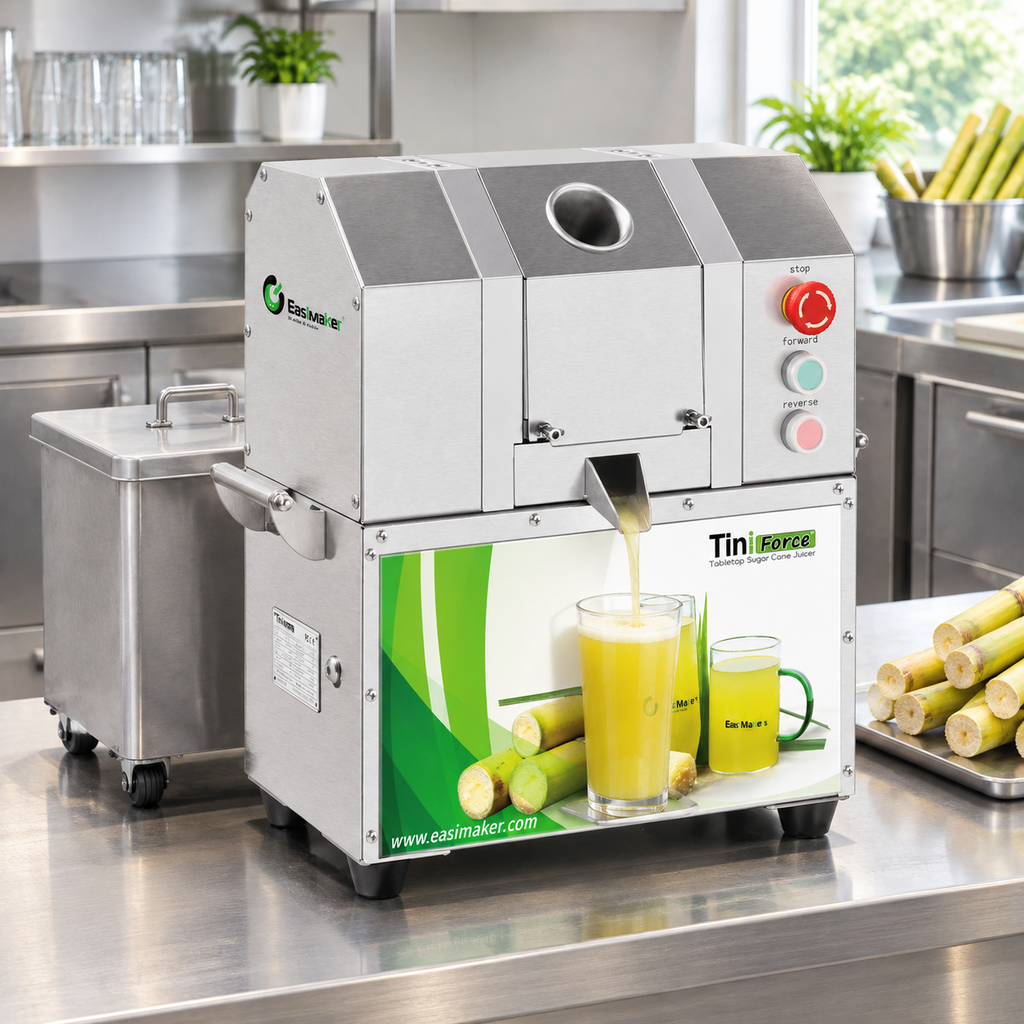
The most practical approach is to separate bagasse from liquid waste at the point of discharge, collect it in a covered container, remove it from the service area regularly, and follow a documented end-of-shift cleanup routine. Commercial operators should also record disposal fees, labor time, cleaning supplies, and any lost product so waste management becomes part of normal operating-cost control.
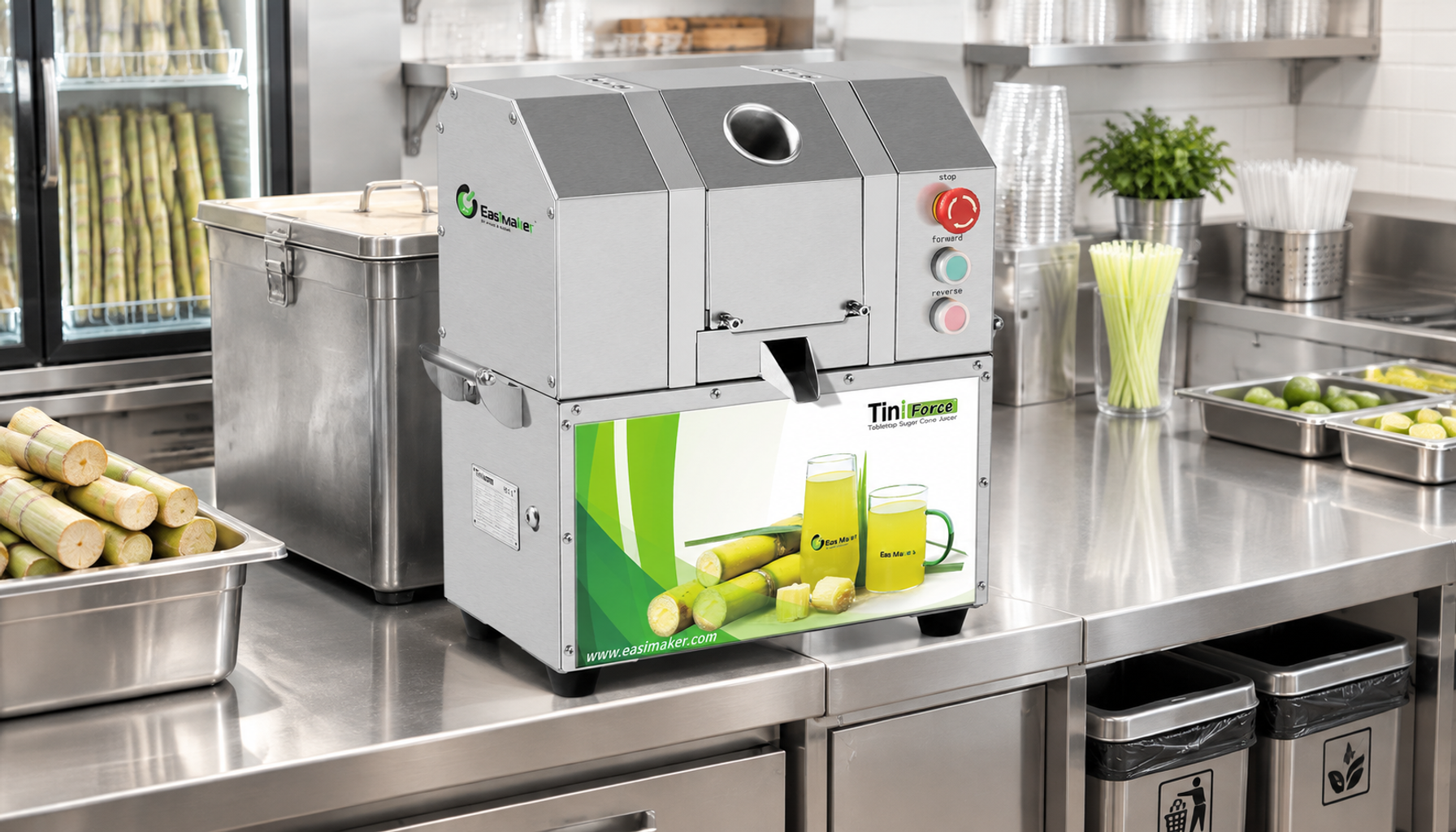
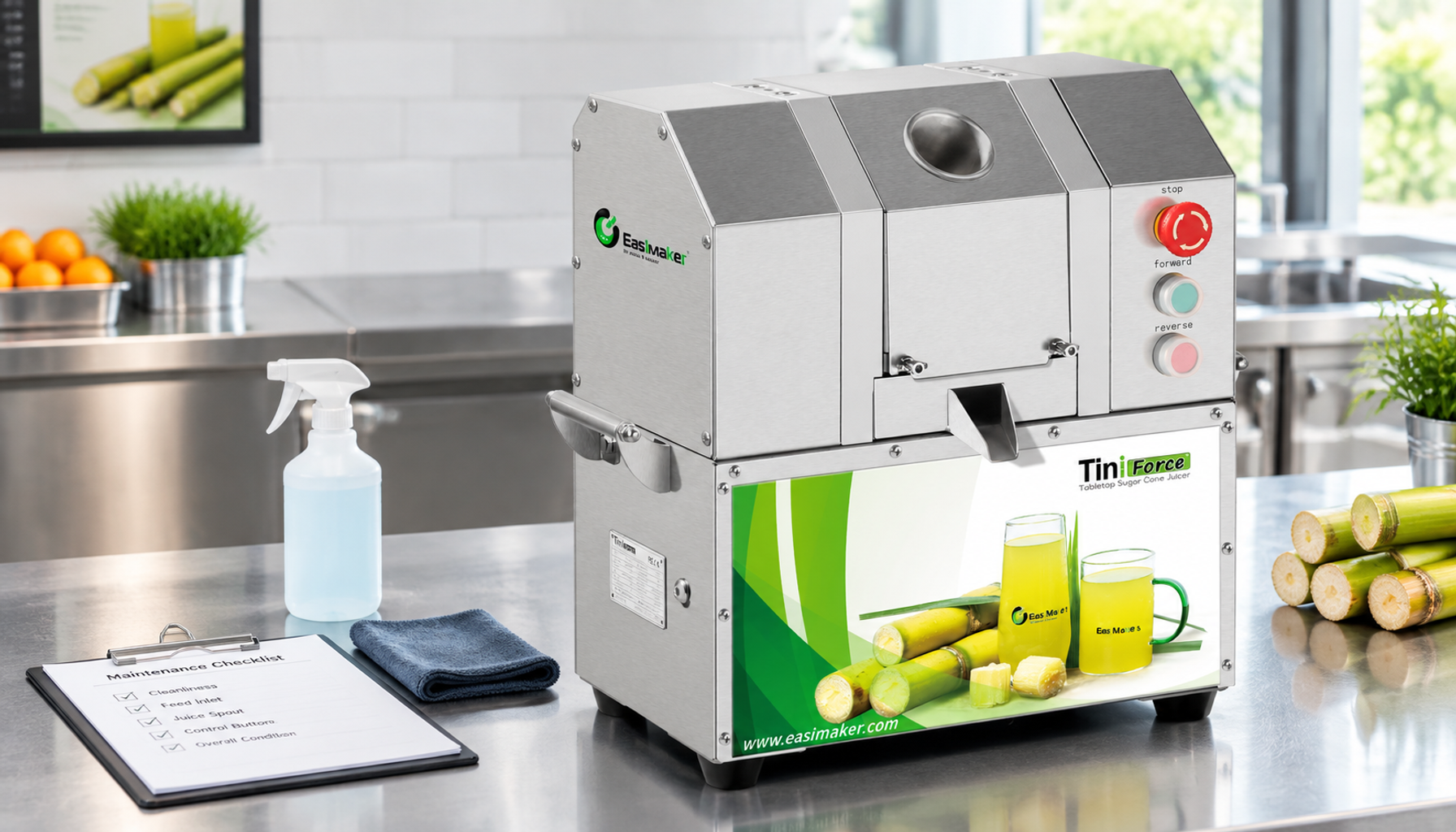
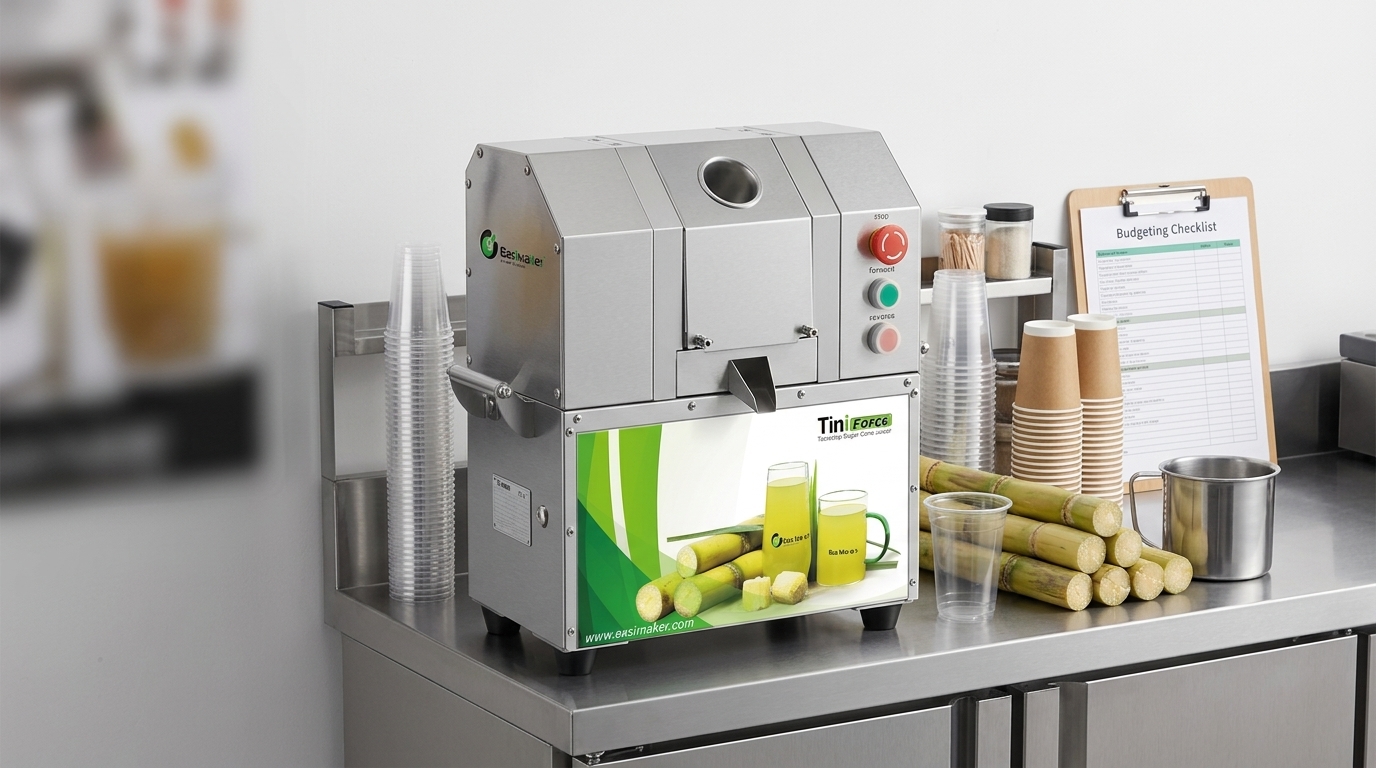
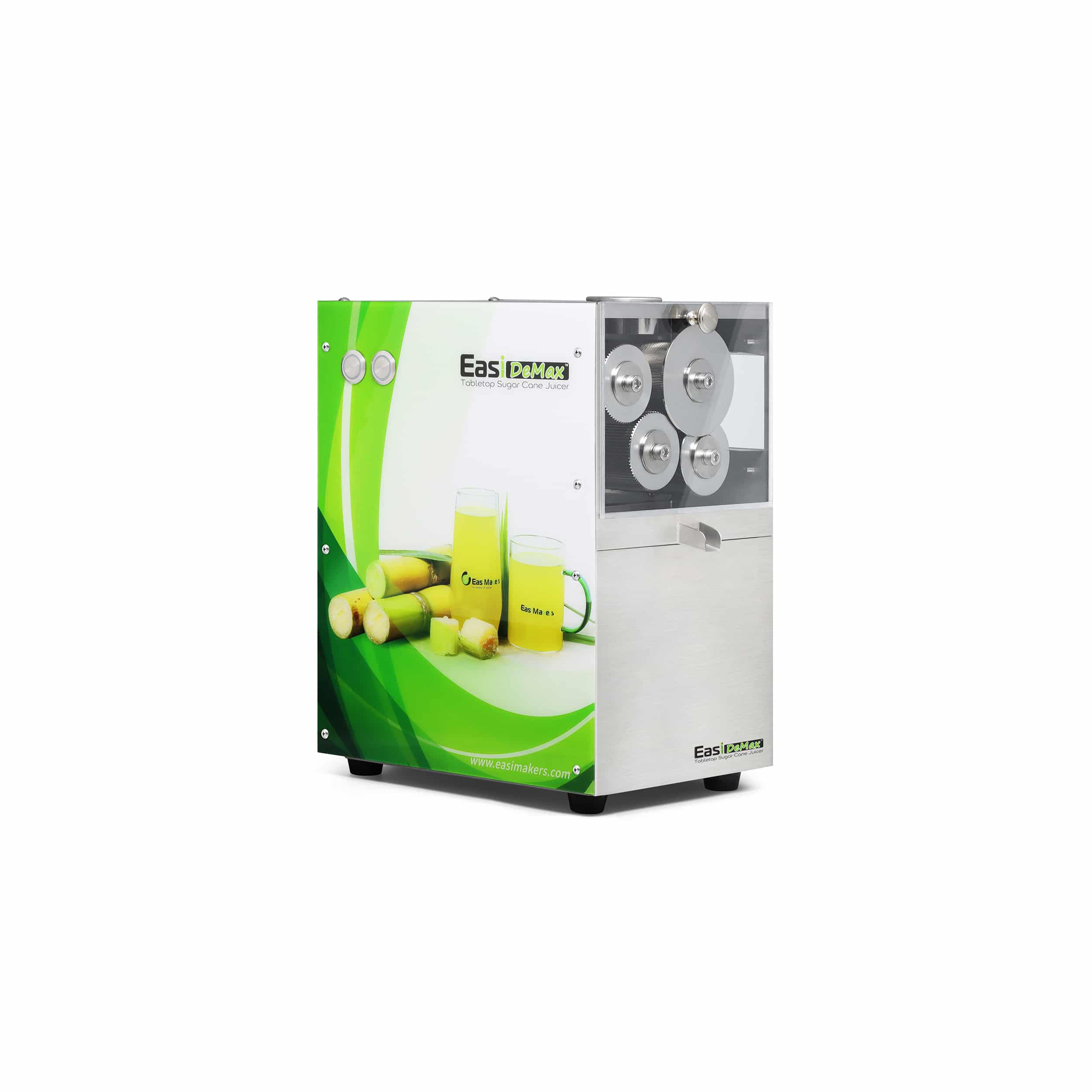
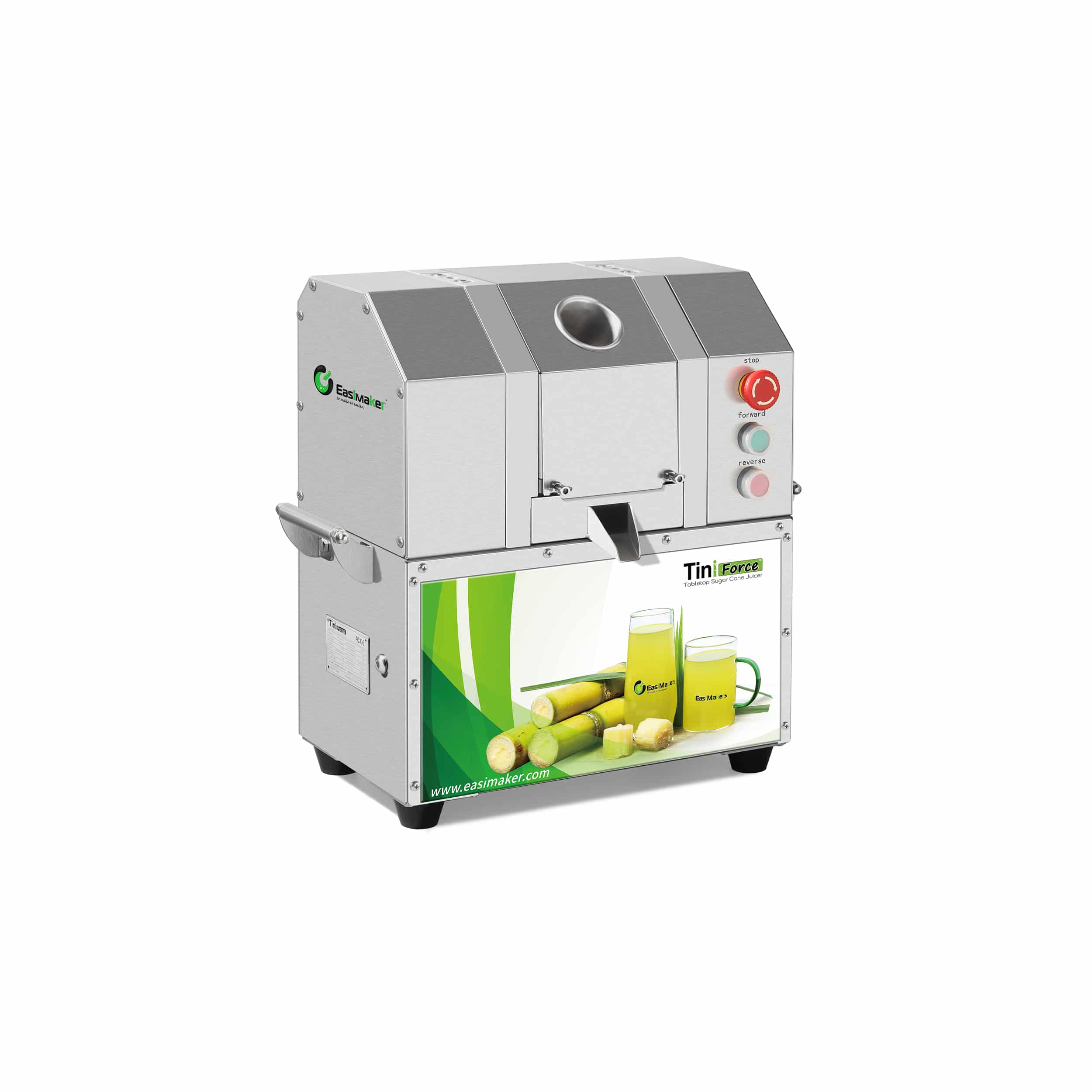
A machine with a predictable discharge path makes this workflow easier. For example, the referenced sugarcane juicer feeds cane from the front, sends juice through the front outlet, and expels residue from the rear. Its rear discharge direction should be considered when positioning the collection container and planning access for removal.
What waste does a sugarcane juice machine produce?
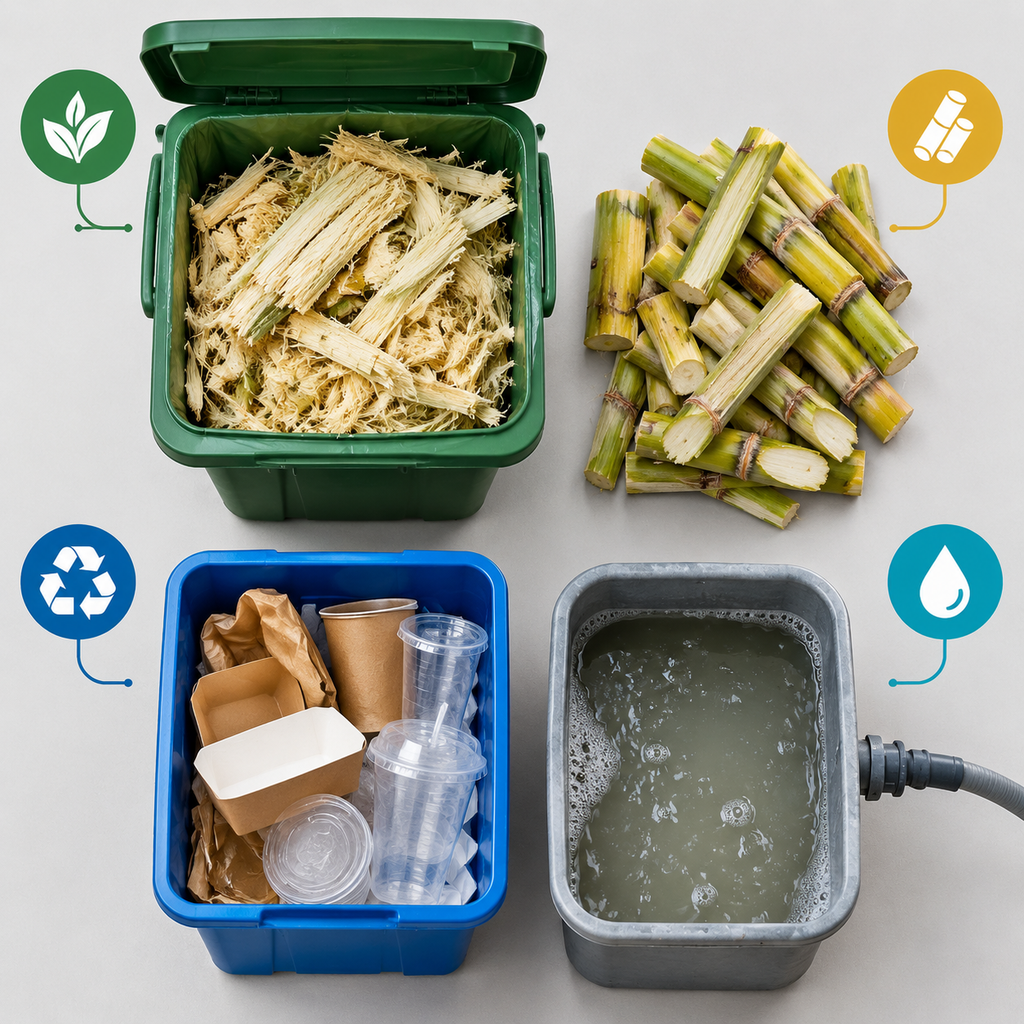
Sugarcane juice operations usually produce several distinct waste streams:
- Bagasse: the fibrous cane residue discharged after pressing or extraction.
- Drips and spilled juice: liquid around the outlet, collection cup, work surface, or floor.
- Cane preparation waste: trimmed ends, leaves, dry outer material, and damaged cane removed before feeding.
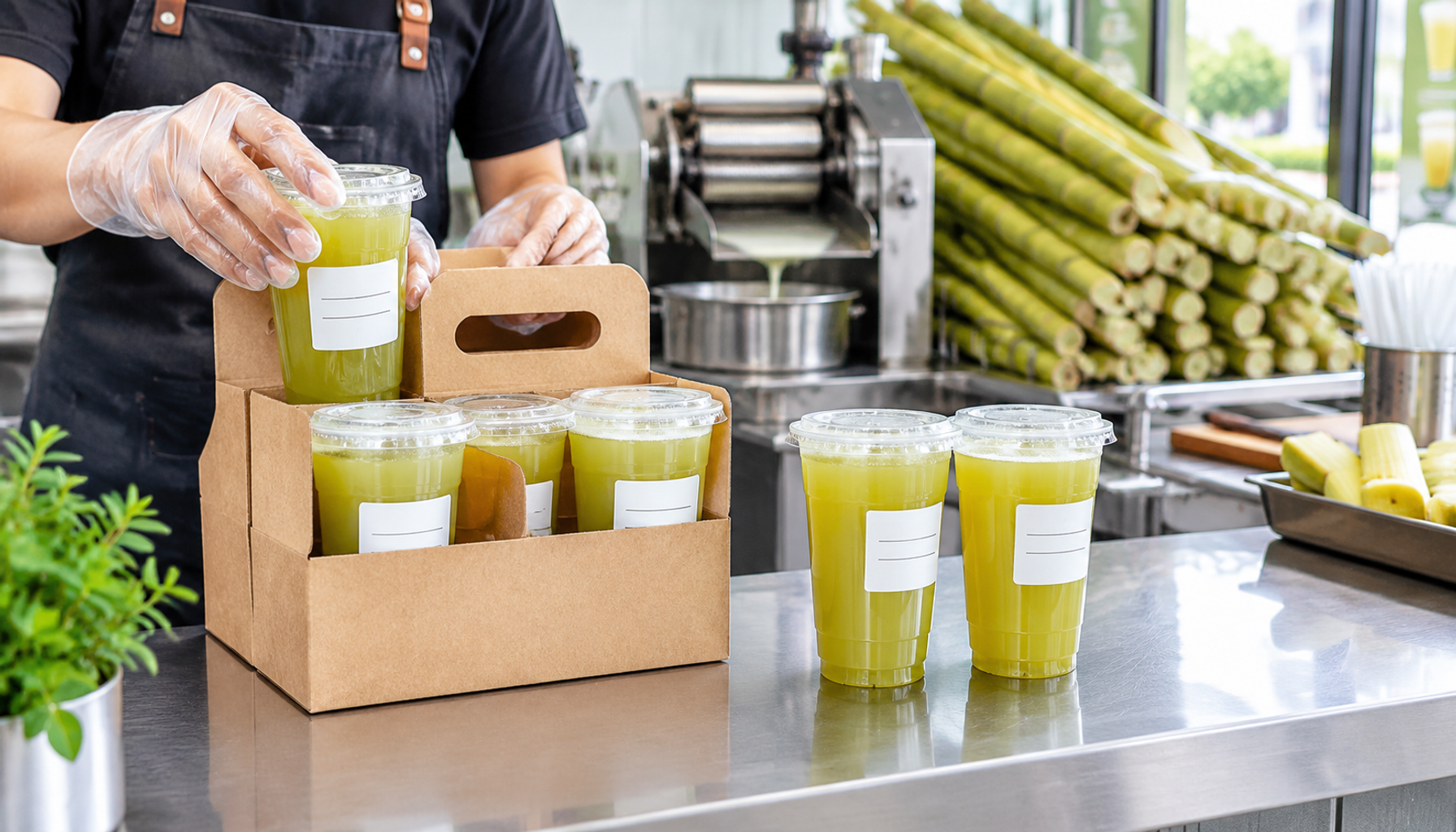
- Packaging waste: cups, lids, straws, napkins, and transport containers.
- Cleaning wastewater: water and approved cleaning or sanitizing solutions used during service and shutdown.
These materials should not automatically be placed in one container. Bagasse is bulky and wet, while packaging and wastewater may follow different local disposal requirements. Separating them improves housekeeping and may make organic material easier to transfer to a collector, composting operation, or other permitted outlet.
Sugarcane bagasse disposal and reuse options
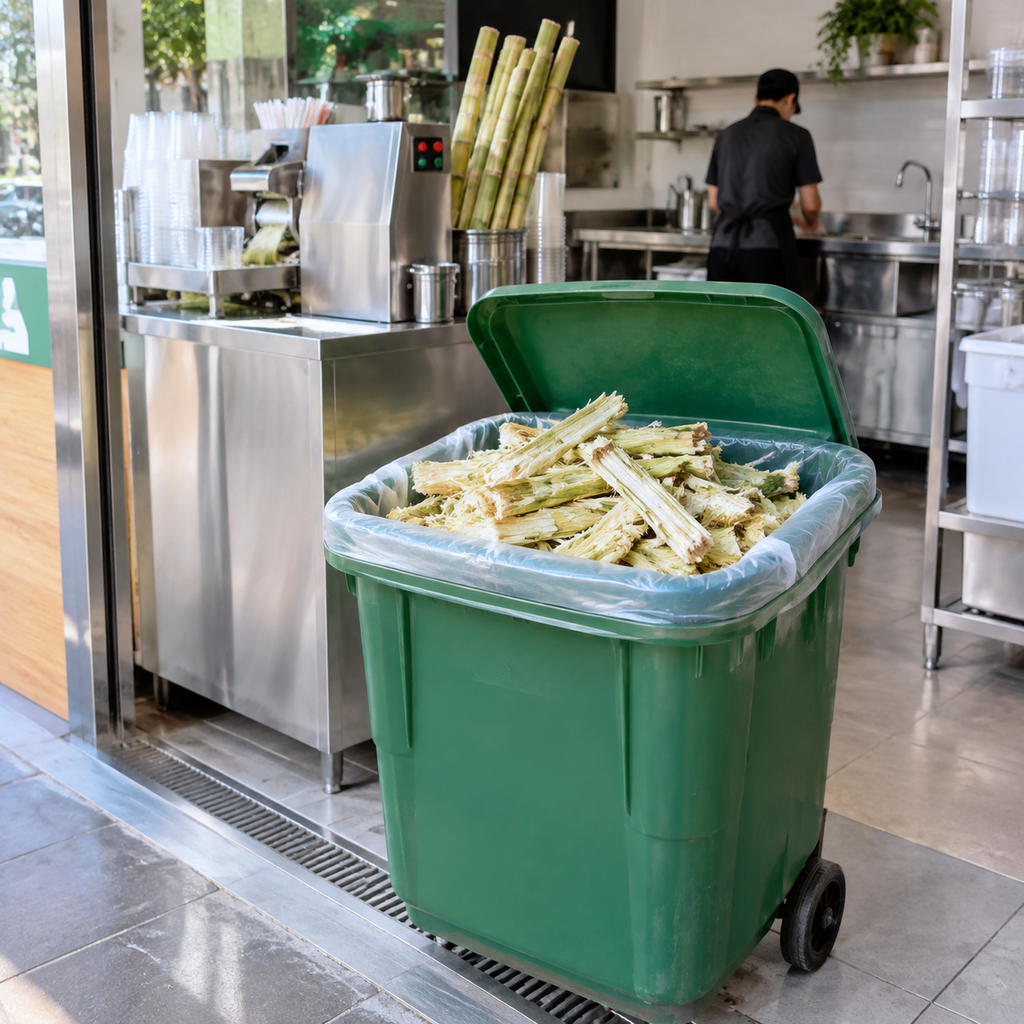
Bagasse disposal depends on local rules, available collection services, moisture content, and the volume generated by the shop. Before choosing a reuse route, confirm that the receiving party accepts food-processing residue and that transport and storage conditions are suitable.
1. Scheduled organic-waste collection
This is often the simplest option for a busy shop. Use a covered, washable container, keep it away from finished drinks, and arrange collection often enough to prevent overflow, insects, or odor. Do not assume that a municipal organic-waste program accepts bagasse without checking.
2. Composting or agricultural use
Clean bagasse may be suitable for a composting or agricultural partner, but the material may require mixing, drying, or controlled processing. Avoid presenting it as a guaranteed fertilizer or animal-feed product. The receiving operator should define acceptable conditions.
3. Licensed biomass or processing partner
In some markets, a specialist may collect fibrous plant residue for further processing. This can be practical for larger operators, although transport cost and minimum collection volume must be evaluated.
4. General waste disposal
Where no separate route exists, bagasse may need to enter the permitted general-waste stream. Use smaller collection batches if the material is heavy when wet, and follow local requirements for commercial food waste.
Commercial sugarcane juice cleanup workflow
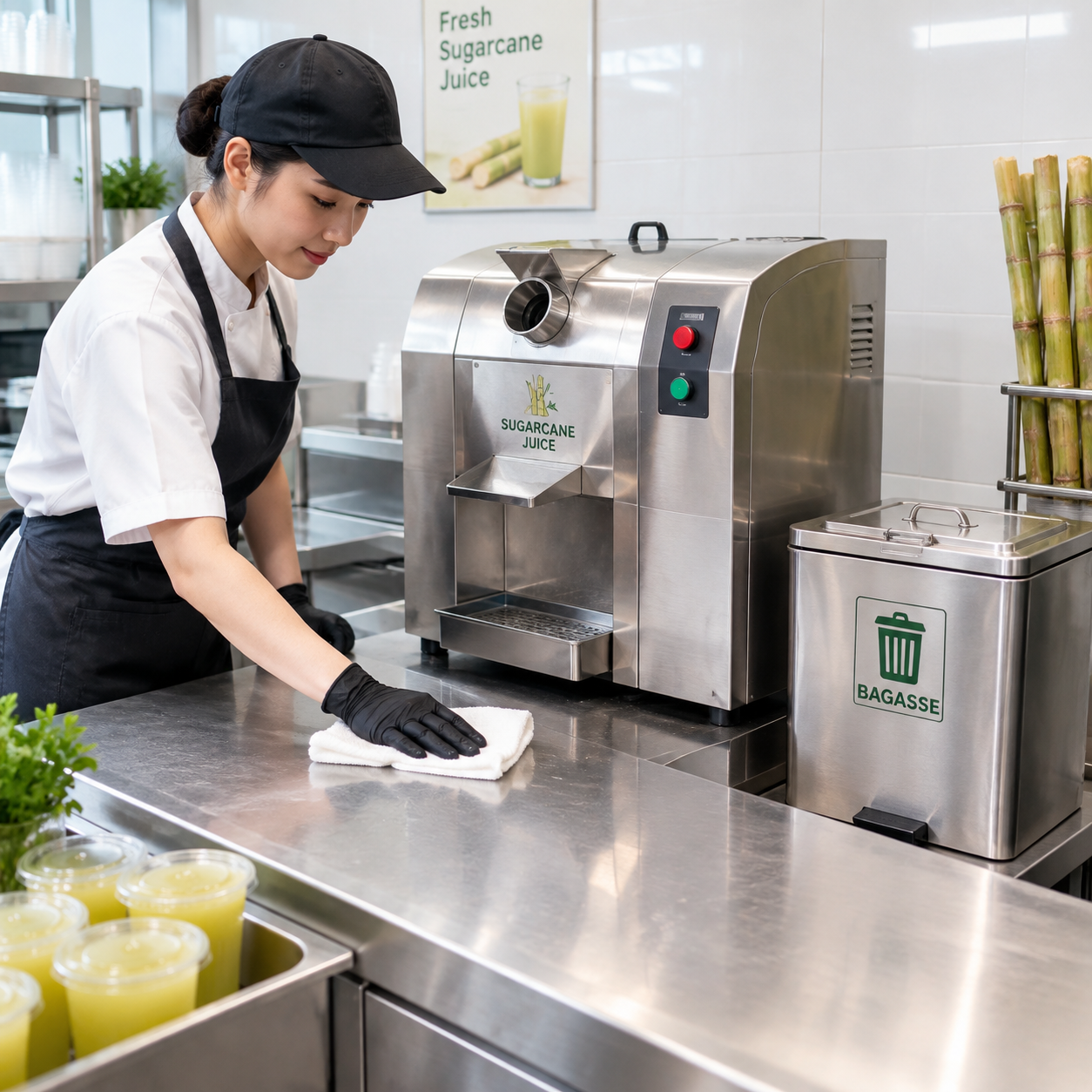
A consistent cleanup routine reduces buildup and makes waste handling easier for every shift. Follow the machine manufacturer’s manual and local food-safety requirements; the steps below are a general operating framework.
- During service: Keep a collection container close to the bagasse discharge, but do not block ventilation, access panels, or operator movement.
- Control spills immediately: Wipe juice from the outlet, counter, and floor before it becomes sticky or attracts pests.
- Separate waste: Keep bagasse, packaging, and liquid waste in the correct containers. Do not pour fibrous material into drains.
- Close the service cycle: Stop the machine according to its instructions, isolate power where required, and remove remaining cane residue from accessible areas.
- Wash and sanitize: Clean food-contact parts with suitable products and concentrations. Rinse or dry only where the equipment instructions require it.
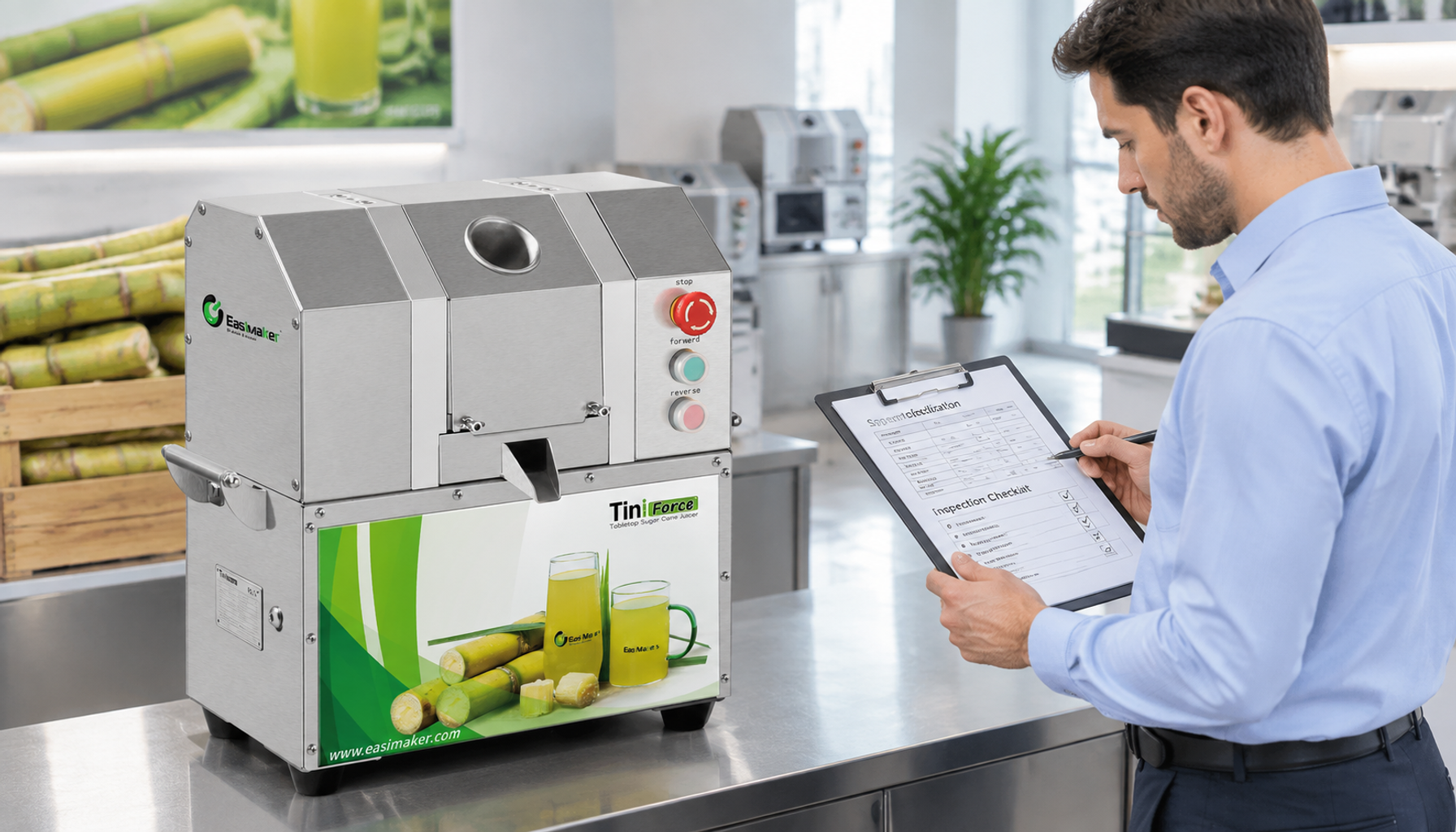
- Inspect before reuse: Check the outlet, collection area, guards, seals, and surrounding floor for residue or standing water.
Record who completed the task and note unusual buildup, leaks, odor, or difficult-to-clean areas. These observations can identify a need for operator training or service.
How to control waste-related operating costs
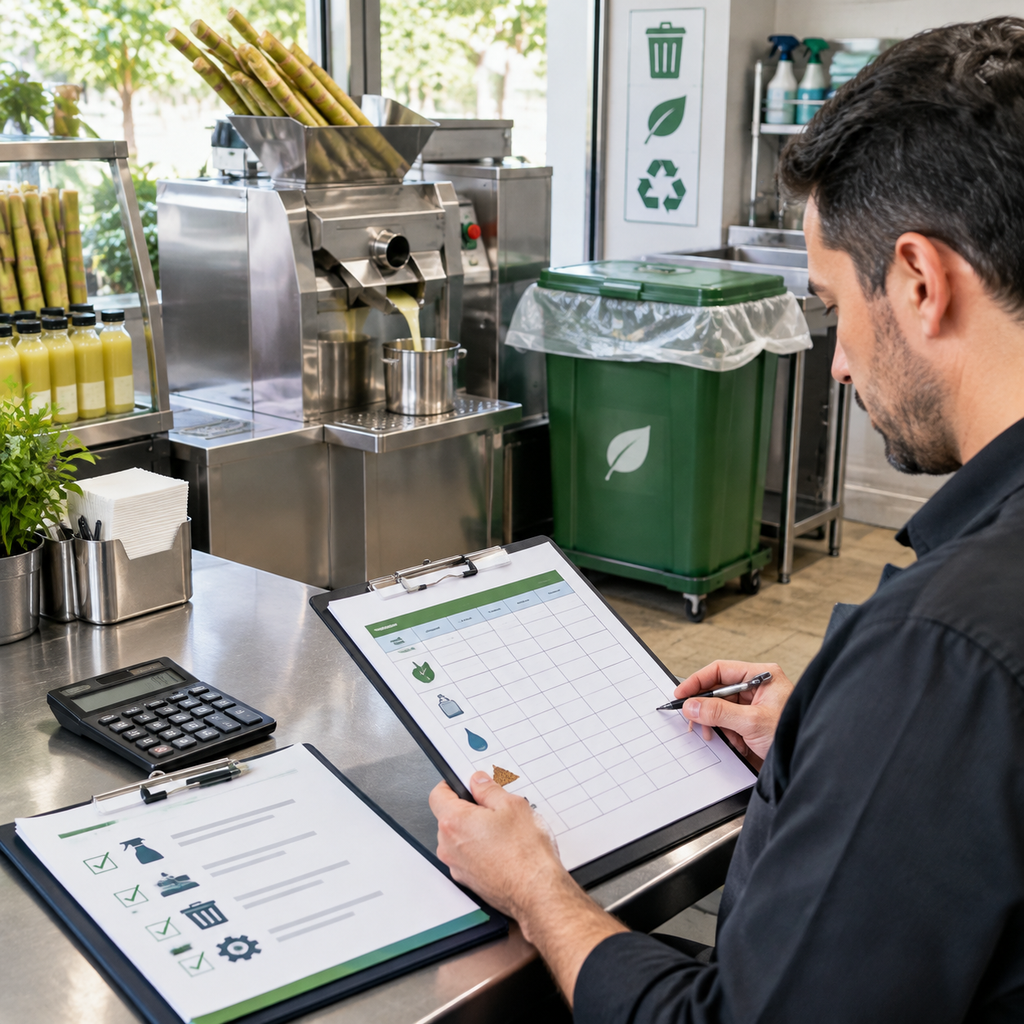
Waste cost is more than the disposal invoice. A useful calculation includes collection fees, bags or bins, cleaning chemicals, water, labor minutes, pest-control measures, floor maintenance, and product lost through spills or poor preparation.
Track these figures for several operating weeks and compare them with sales volume. Useful measures include:
- bagasse container count per shift;
- estimated bagasse weight or volume, if weighing is practical;
- cleanup minutes per shift;
- disposal cost per collection;
- juice spilled or discarded;
- maintenance calls related to residue, blockage, or leakage.
Cost control should not mean delaying necessary cleaning or overloading a waste container. Instead, improve the workflow: prepare cane consistently, position the receptacle correctly, schedule collection around busy periods, train staff to control drips, and purchase containers that are durable, covered, and easy to move.
Include these operating figures in the wider business model. A break-even calculation for a sugarcane juice machine should reflect realistic waste, labor, maintenance, and disposal costs rather than equipment price alone.
Comparing bagasse management options
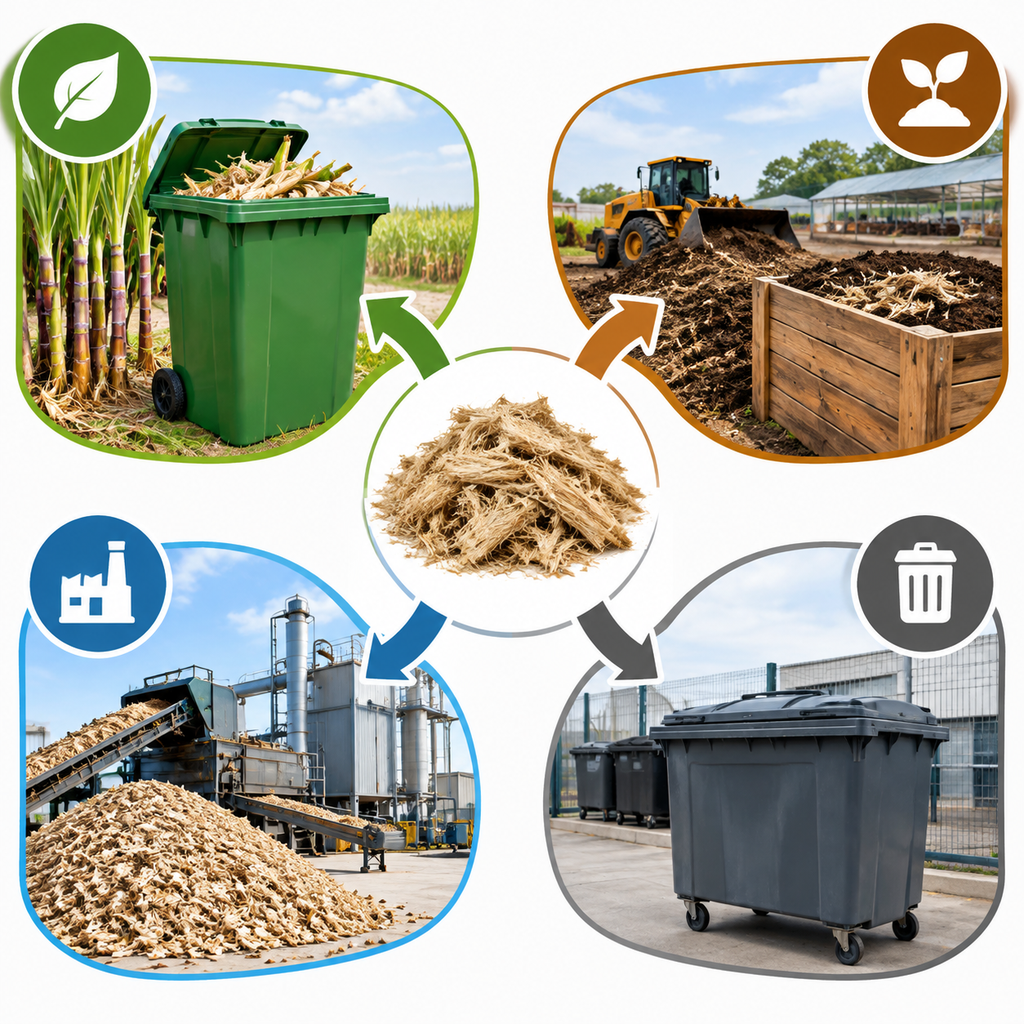
The right option depends on volume, local infrastructure, labor, and the distance to the receiving facility. Treat the table as a planning aid, not a universal recommendation.
| Option | Best fit | Advantages | Points to verify |
|---|---|---|---|
| Organic-waste collection | Shops with regular municipal or private service | Simple and predictable | Acceptance rules, container limits, pickup frequency |
| Composting partner | Operators near an approved composting outlet | Can divert clean plant residue | Moisture, contamination, transport, and receiving requirements |
| Biomass or processing partner | Larger sites with consistent volume | Potentially suitable for organized bulk handling | Minimum volume, contracts, logistics, and permitted use |
| General commercial waste | Locations without separate organic collection | Widely available route | Higher volume, weight, odor, and disposal charges |
Daily waste management checklist
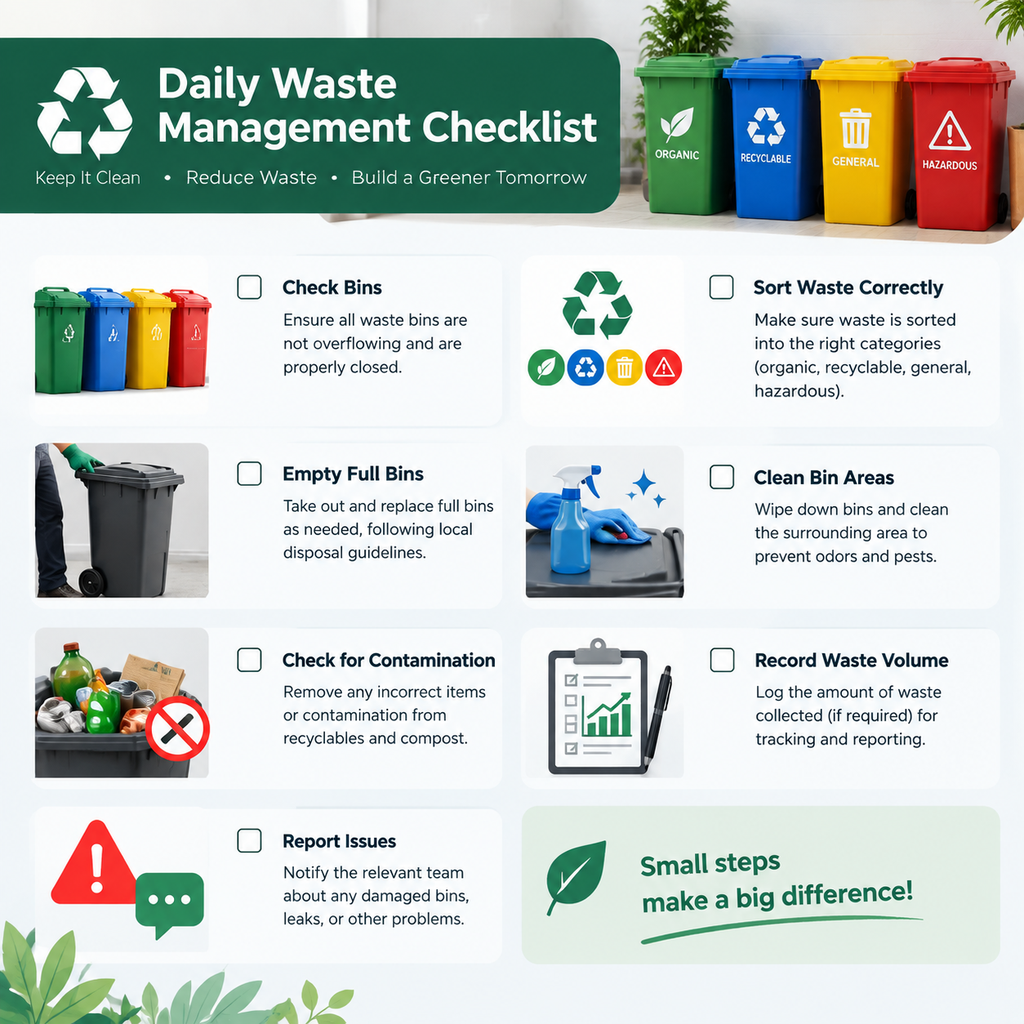
- Place a covered bagasse container at the machine’s discharge side.
- Keep the container clear of the juice outlet and customer-service path.
- Remove bagasse before the container becomes difficult or unsafe to move.
- Keep packaging, bagasse, and wastewater separated.
- Wipe juice drips and spills during service.
- Complete the shutdown cleaning routine after the final production period.
- Inspect for residue, leaks, blockages, pests, and standing water.
- Record disposal volume, cleanup time, and unusual maintenance needs.
- Review the disposal route whenever sales volume, premises, or local rules change.
Good sugarcane juice machine waste management is a repeatable operating system. It protects the service area, supports consistent sanitation, and gives managers better information for labor, disposal, and equipment decisions.
FAQ
What is sugarcane bagasse?
Sugarcane bagasse is the fibrous residue left after sugarcane is pressed or extracted for juice. It is usually wet and bulky, so it should be collected separately from packaging and liquid waste where local systems allow.
Can sugarcane bagasse go down a drain?
No. Fibrous bagasse can contribute to blockages and should be placed in an appropriate solid-waste container or transferred through a permitted reuse or collection route.
How often should bagasse be removed from a commercial juice shop?
Remove it before the container overflows, becomes difficult to move, or creates odor and pest risks. The exact frequency depends on sales volume, container size, temperature, and local requirements.
Does waste management affect sugarcane juice machine costs?
Yes. Disposal fees, container purchases, labor time, cleaning supplies, spills, and residue-related maintenance all affect operating cost. These items should be included in internal cost and break-even calculations.
What should operators do with cleaning wastewater?
Follow local wastewater rules and the machine manufacturer’s cleaning instructions. Do not discharge solids, concentrated chemicals, or fibrous residue into drains, and keep wastewater handling separate from finished juice production.
Plan a cleaner, more practical sugarcane juice workstation
If you are selecting equipment or reviewing a current juice-service layout, Easimaker can discuss the machine arrangement, bagasse discharge direction, cleaning access, and expected operating environment. Contact Easimaker to request a quote or discuss the suitable commercial setup for your market.