
Table of Contents
- The Daily Safety Routine at a Glance
- Why Daily Safety Checks Matter
- Pre-Start Sugarcane Juicer Safety Checklist
- Safe Operating Practices During Service
- Safe Shutdown, Cleaning, and Sanitising
- Maintenance Checks and When to Stop Using the Machine
- Document the Daily Safety Check
A commercial sugarcane juicer should be checked before every shift, operated with guards in place, cleaned safely after service, and inspected for wear before the next day. This checklist helps managers and operators build a repeatable daily safety routine.
The Daily Safety Routine at a Glance
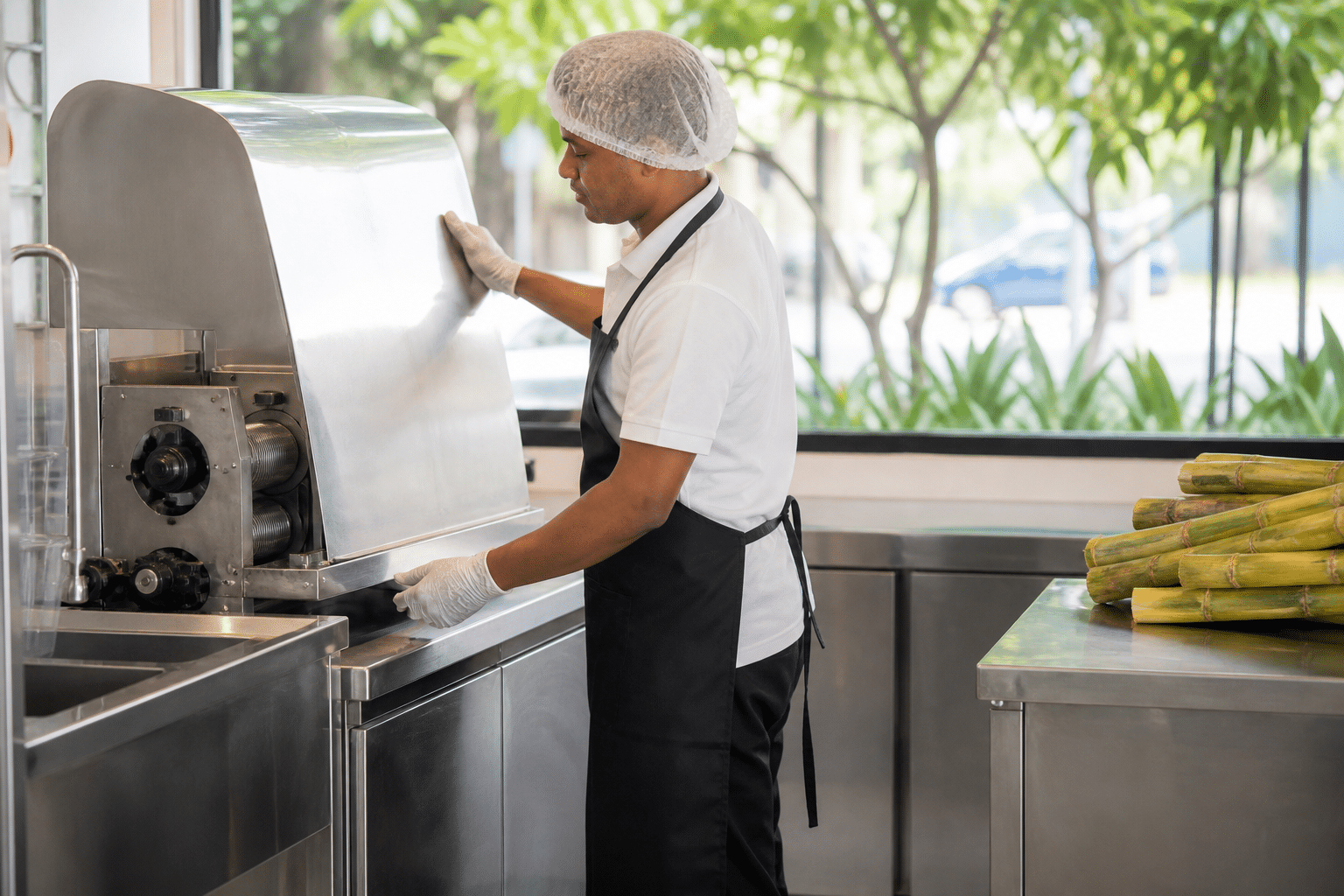
Effective sugarcane juice machine safety starts with a simple rule: inspect the machine before service, keep guards and hands clear during extraction, isolate power before cleaning or adjustment, and stop operation when a fault is found. A commercial sugarcane juicer contains powered rollers and pinch points. Daily checks help operators identify problems before they affect staff safety, product hygiene, or service continuity.
Use this sequence for every shift:
- Check the work area, electrical supply, machine stability, guards, feed opening, rollers, and collection area.
- Confirm that food-contact surfaces are clean and that the machine has been reassembled correctly after the previous cleaning cycle.
- Test controls only in accordance with the machine manual, with hands and tools away from moving parts.
- Feed prepared cane steadily using the intended feed path; never push cane with fingers or improvised objects.
- Keep the counter dry, clear spent cane promptly, and manage queues so operators do not rush.
- Switch off, isolate, clean, inspect, and record faults at the end of service.
These steps are a practical operating checklist, not a replacement for the operating manual, local food-hygiene rules, electrical requirements, or workplace safety procedures. Site managers should adapt the checklist to the exact machine model and local regulations.
Why Daily Safety Checks Matter for Commercial Sugarcane Juicers
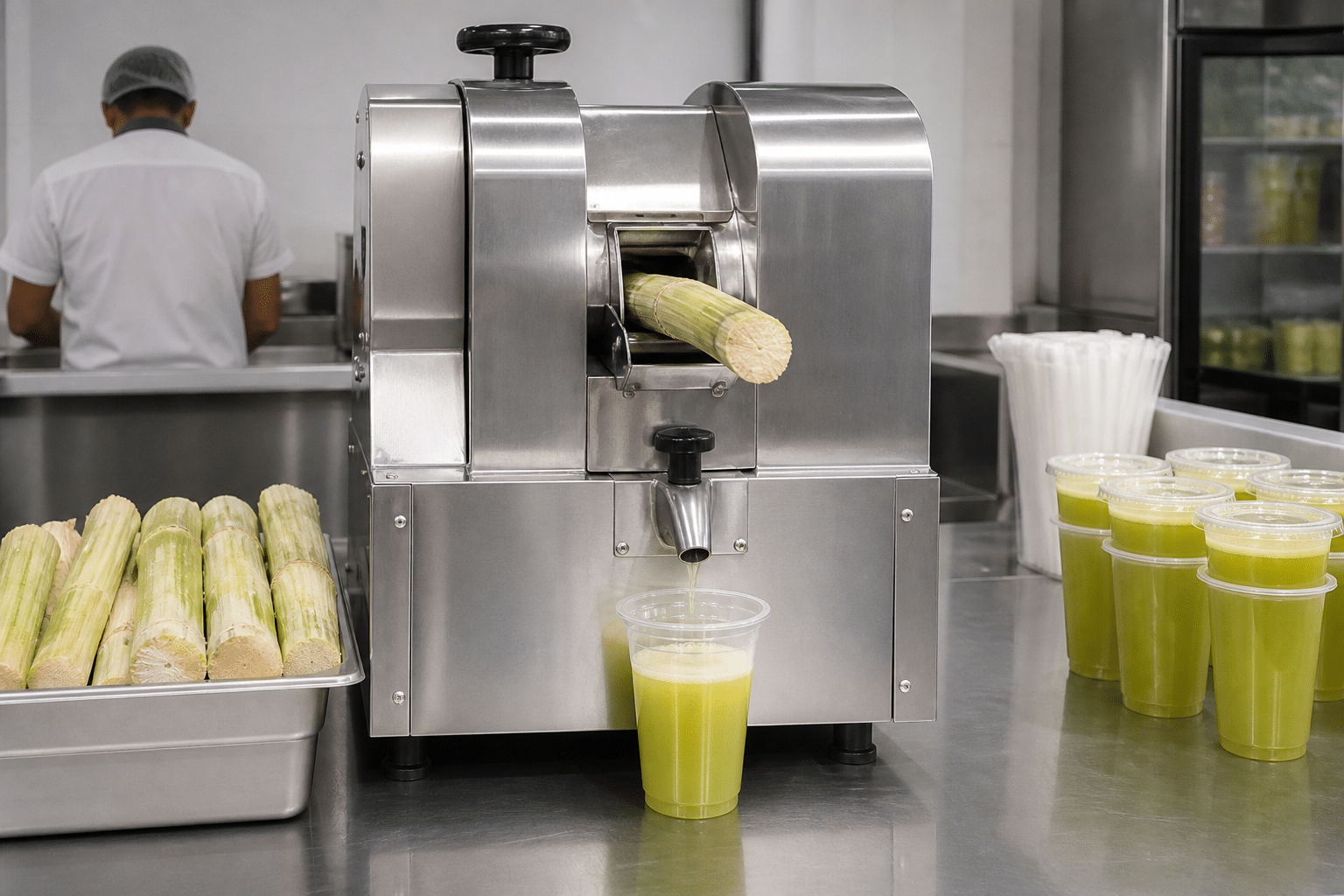
A sugarcane juice machine is a food-service asset that combines mechanical extraction with direct food contact. Its operating risks are straightforward but important: rotating rollers can create pinch points, wet floors and counters can increase slip or electrical risks, and poor cleaning can leave residue in food-contact areas.
Daily inspection is therefore not just a maintenance task. It supports three operating controls:
- Operator protection: guards, covers, controls, stable installation, and safe feeding practices reduce exposure to moving parts.
- Food hygiene: cleaned and properly reassembled contact parts help keep the preparation process controlled.
- Service reliability: unusual noise, vibration, loose parts, damaged cables, or reduced roller grip can be reported before a more serious interruption develops.
Commercial equipment is generally selected for repeated business use and a managed operating workflow, rather than occasional household use. For a useful purchasing and workflow context, read commercial versus home sugarcane juicer differences. Even with commercial equipment, safe results depend on correct installation, trained operators, suitable cleaning procedures, and access to model-specific support.
Assign clear responsibility at the start and end of every shift. One trained person should confirm the checklist, while the manager or designated supervisor should decide whether a fault requires the machine to be isolated and serviced.
Pre-Start Sugarcane Juicer Safety Checklist
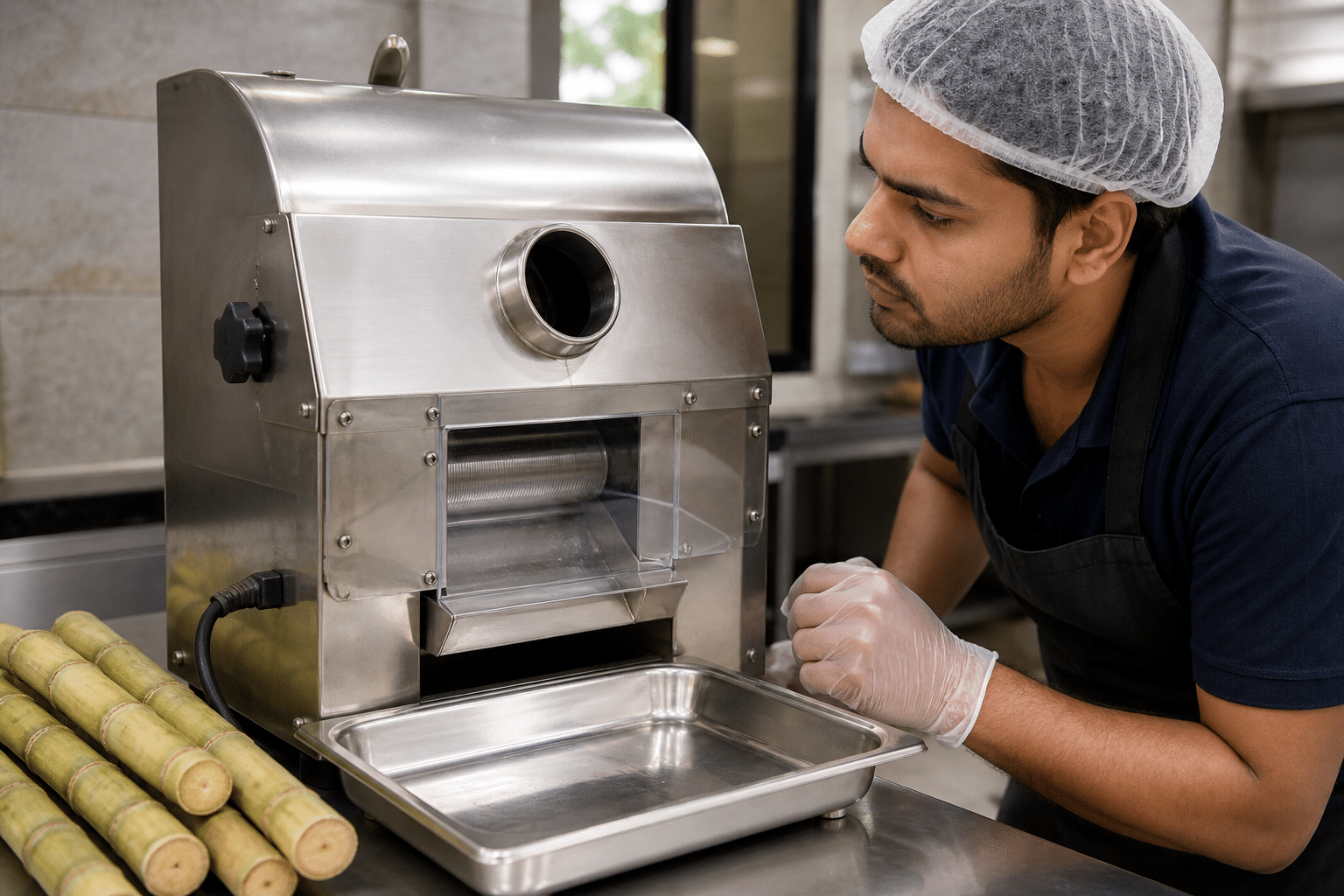
Complete the following inspection before connecting the machine for service. Do not rely on a visual check alone if the machine was moved, cleaned, or reassembled since the previous shift.
1. Check the location and work area
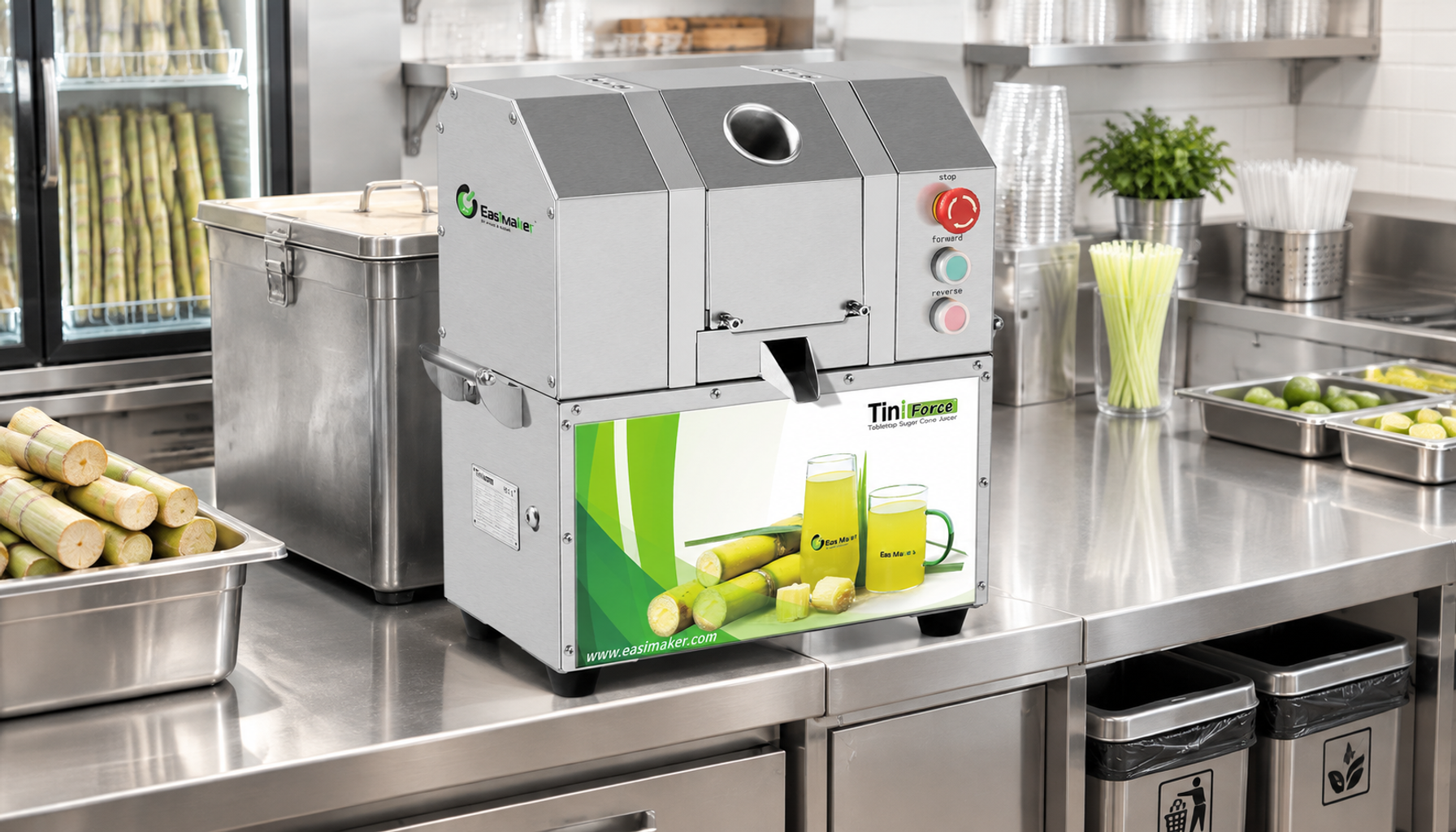
- Place the machine on a stable, level, cleanable surface suitable for its weight and normal operation.
- Keep sufficient clear space around the feed side, juice outlet, bagasse discharge area, and operator position.
- Remove loose packaging, cleaning tools, knives, cloths, cups, and other items that could interfere with the workflow.
- Ensure the surrounding floor is dry and that any spills can be dealt with promptly.
- Keep customers, children, and untrained staff away from the operating zone, especially when the service counter is busy.
2. Inspect the electrical connection
- Check that the power cord, plug, strain relief, switch, and visible connections show no damage, exposed conductors, overheating marks, or loose fit.
- Confirm that the local electrical supply matches the rating shown on the machine nameplate and the model documentation.
- Use the intended grounded outlet and avoid unsafe extension arrangements. Do not operate the equipment with wet hands.
- Make sure the power cord does not cross a wet area, sharp edge, walkway, or hot surface.
3. Inspect guards, covers, and food-contact parts
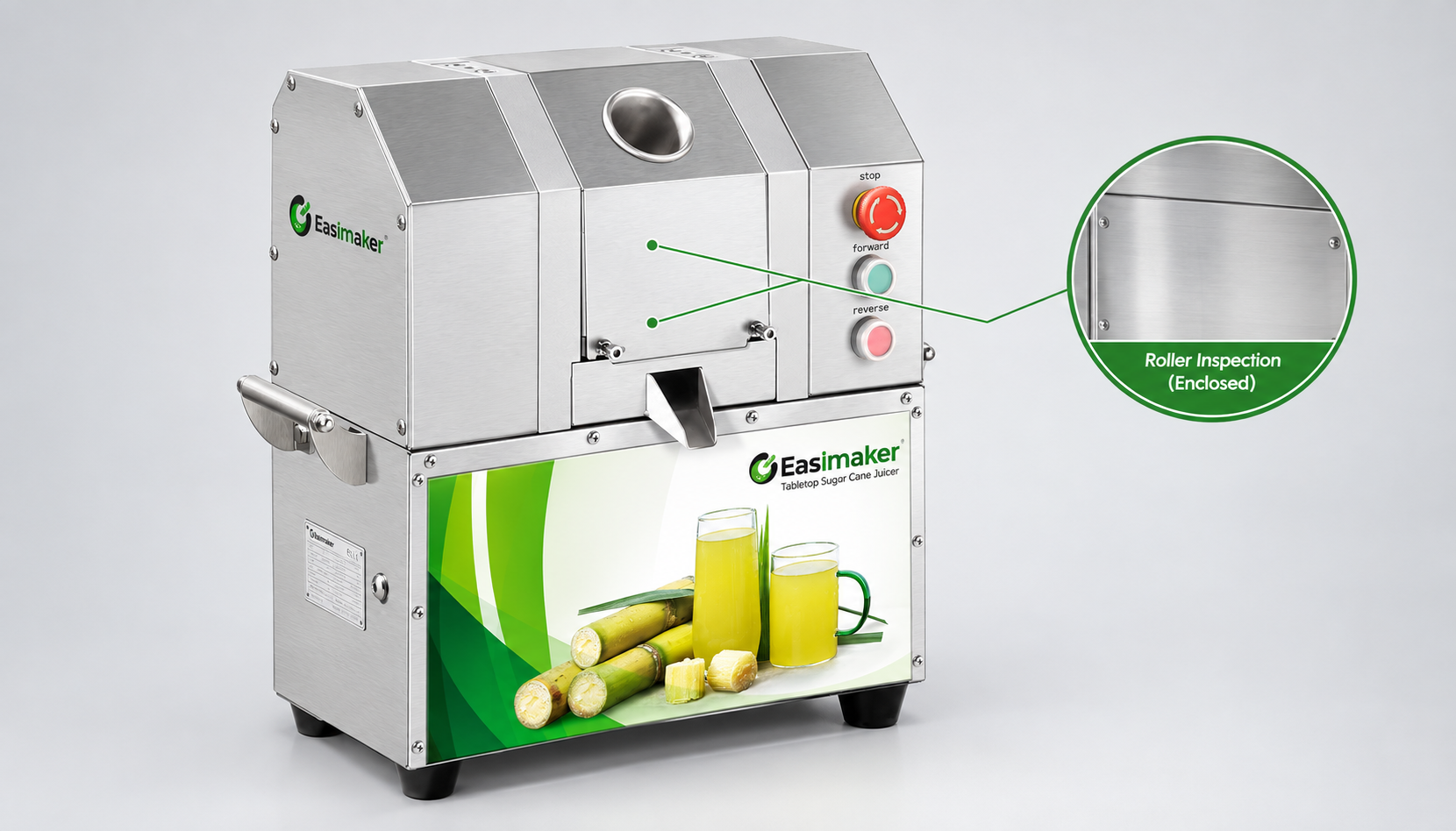
- Confirm that all guards, covers, trays, and removable components are fitted, secure, and undamaged.
- Check that the feed opening is unobstructed and that there is no old cane fibre, cleaning material, or foreign object near the rollers.
- Verify that juice collection containers, strainers, and other food-contact accessories are clean, dry where required, and correctly positioned.
- Never bypass an interlock, remove a guard for faster feeding, or operate a machine with a loose or cracked cover.
4. Prepare the sugarcane safely
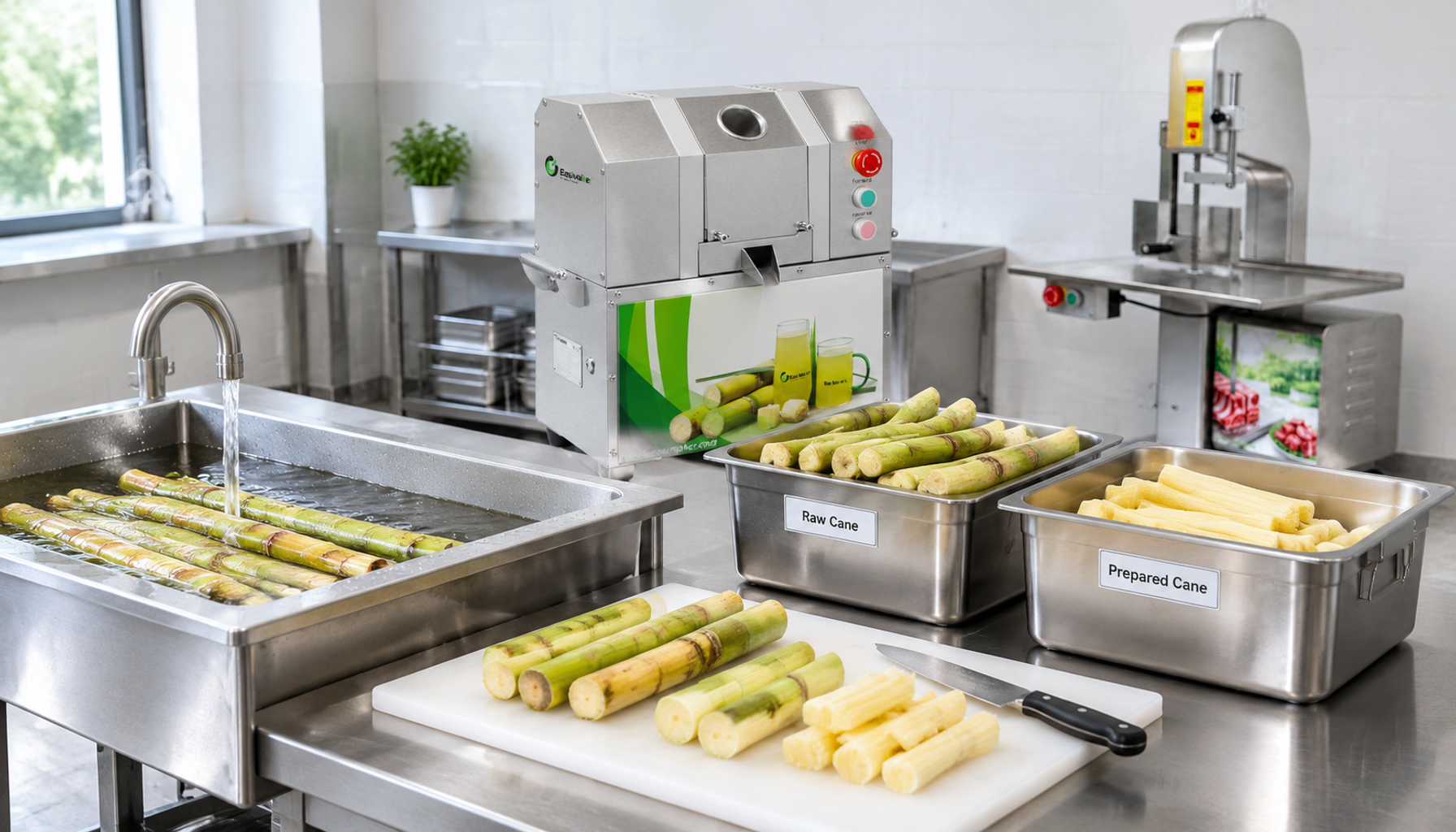
Use clean cane appropriate for your recipe and operating process. Wash or prepare raw material according to the site food-safety plan before it approaches the juicer. Trim cane only with suitable tools, on a separate stable preparation surface, and keep blades away from the extraction station. Cut cane to a length that can be guided through the normal feed path without forcing it.
Pre-start checks should also include the machine’s model-specific instructions. The supplier’s sugarcane juicer spare parts and support checklist can help managers record machine identification details and plan for parts that may be needed over the equipment life.
Safe Operating Practices During Service
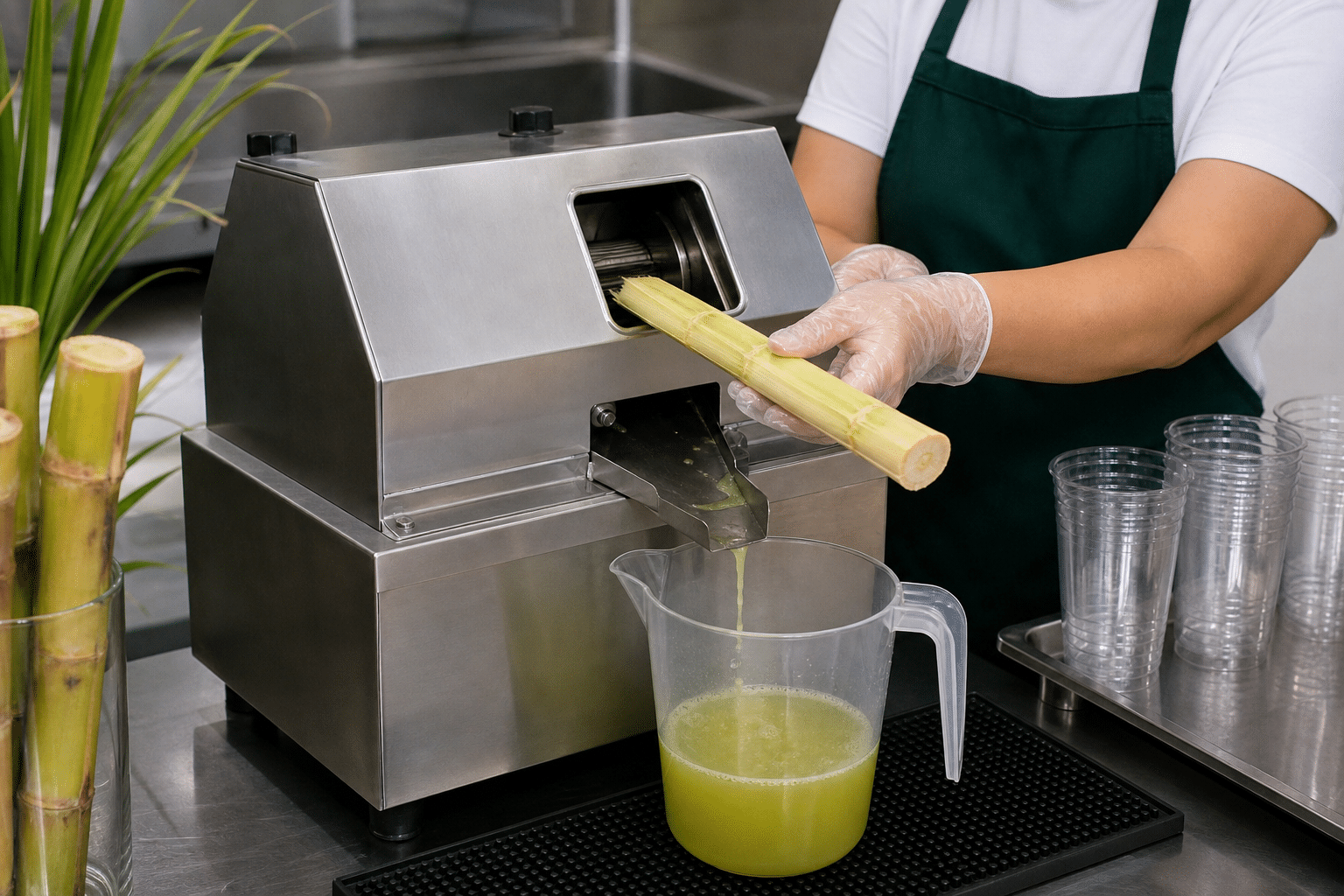
Once the machine is running, the operator’s main job is to keep hands, clothing, tools, and distractions away from moving parts. A well-designed counter layout and consistent routine are safer than trying to correct problems while the machine is operating.
Feed cane only through the intended path
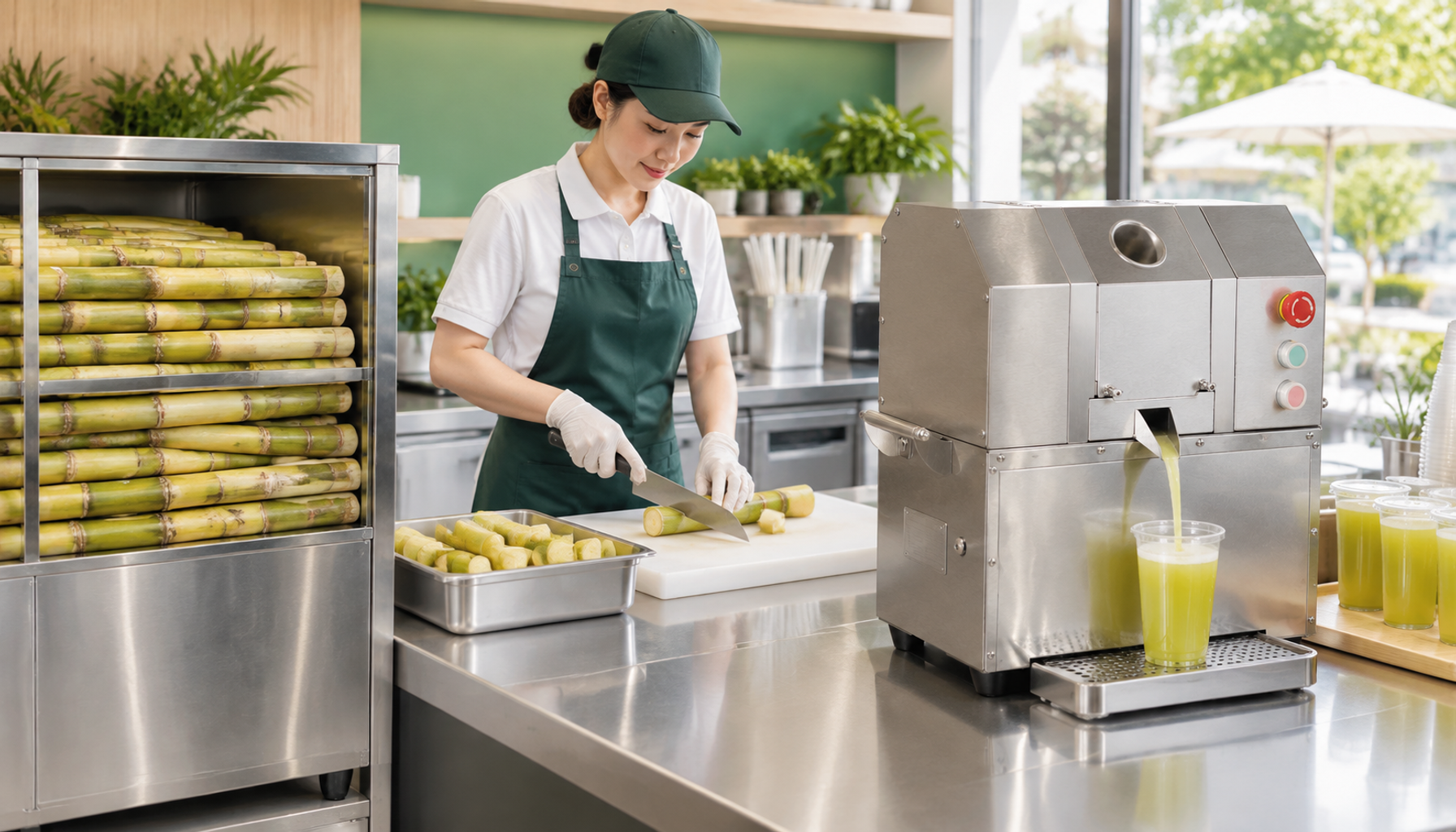
Guide each piece of prepared sugarcane into the feed opening in a controlled manner. Keep fingers outside the danger area at all times. Do not reach into the opening to reposition cane, clear fibre, or retrieve a dropped item. Never use fingers, metal tools, knives, spoons, or improvised pushers to force material into the rollers.
If cane stalls, feeds unevenly, or appears caught, stop the machine using the normal control. Isolate it from power before inspecting or attempting to clear the issue. Follow the exact clearing procedure in the machine manual. If the cause is not clear, do not restart until a qualified person has checked the machine.
Maintain a controlled station
- Keep the juice cup or collection vessel stable and correctly located before extraction begins.
- Remove spent cane and fibre using a safe method only after movement has stopped, unless the machine documentation specifically states otherwise.
- Wipe spills as soon as it is safe to do so. Use a separate cloth or cleaning method for the surrounding counter; do not introduce cloths near rollers.
- Tie back long hair, avoid loose sleeves, jewellery, lanyards, and gloves that could be drawn toward moving parts.
- Do not leave an operating sugarcane juicer unattended.
- Limit operation to trained staff who understand the start, stop, cleaning, and fault-reporting process.
Respond to abnormal operation early
Stop service and investigate if you notice unusual noise, vibration, burning smell, inconsistent roller movement, an electrical issue, a loose component, leakage where it should not occur, or damage to a guard. Continuing to operate a machine after an abnormal condition is identified can increase the risk of injury or equipment damage. Place a clear out-of-service notice on the machine until it has been checked.
Safe Shutdown, Cleaning, and Sanitising
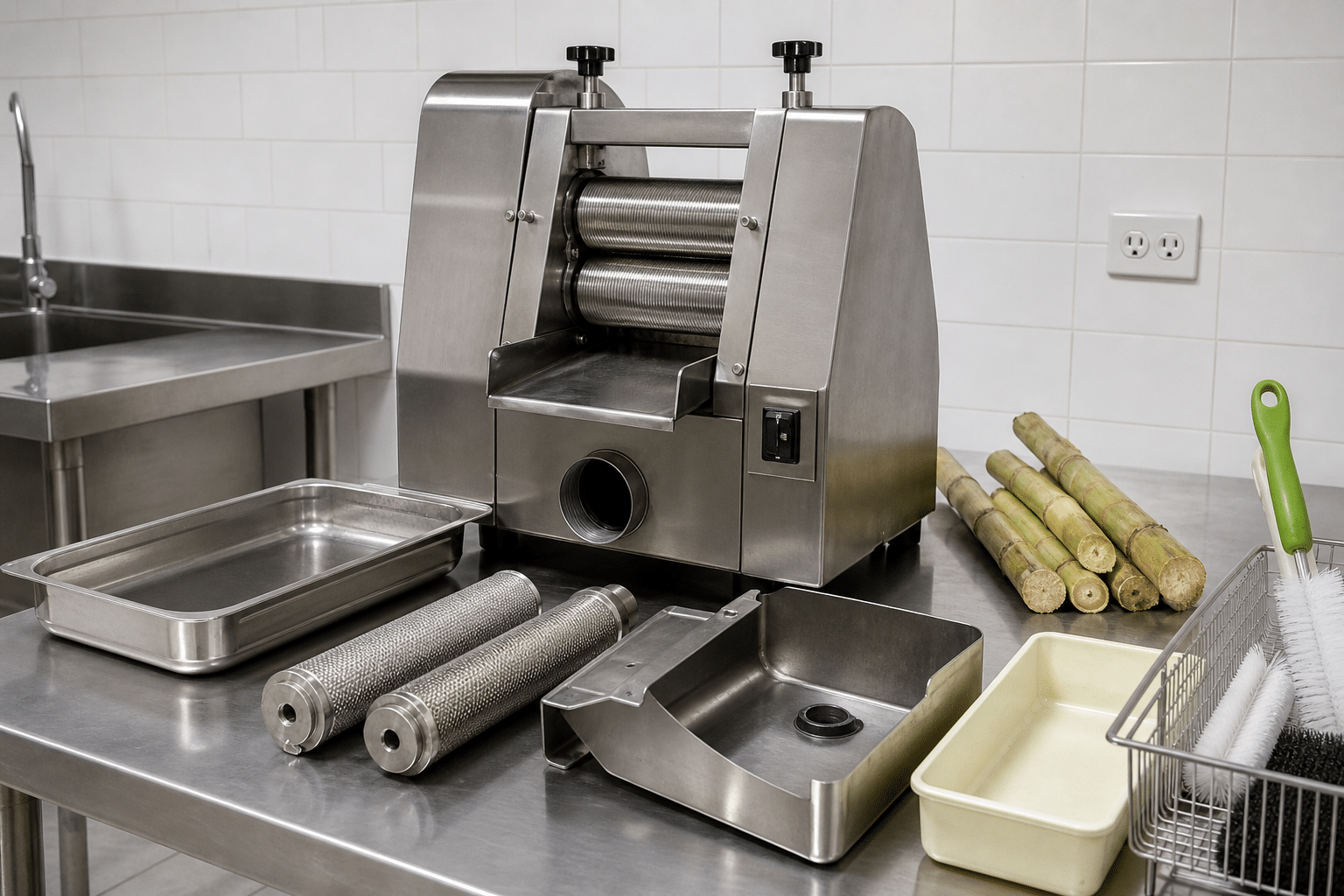
Cleaning is one of the highest-risk times for sugarcane juicer operators because staff may be tempted to remove residue while rollers are still moving. Establish a non-negotiable shutdown sequence: stop the machine, disconnect or isolate its power supply, confirm movement has fully stopped, and only then begin cleaning or disassembly.
End-of-service cleaning sequence
- Turn the machine off using the normal control.
- Disconnect the plug or use the approved isolation method for the installation. Prevent accidental reconnection while cleaning.
- Wait until all moving parts have stopped completely.
- Remove detachable parts only as described in the manual. Place small parts in a clean, controlled area so they are not lost or contaminated.
- Remove cane fibre and residue with tools and methods suitable for the machine. Do not use hands near rollers or sharp edges.
- Wash, rinse, and sanitise food-contact components in line with the site hygiene programme and the instructions for the cleaning chemicals used.
- Clean non-removable exterior surfaces carefully. Do not spray or flood electrical components, switches, motors, plugs, or areas that the manual says must remain dry.
- Allow components to dry as required, inspect them, and reassemble the machine correctly before storage or the next shift.
Cleaning chemicals must be suitable for food-equipment use and used at the dilution, contact time, and rinsing requirements specified by their manufacturer and local food-safety procedures. More chemical is not automatically better; incorrect concentration can create residue, damage surfaces, or reduce cleaning effectiveness.
Managers should make the shutdown procedure visible at the workstation. The same approach used when planning support parts is helpful here: keep accurate model and serial information with the cleaning record, then use the commercial juicer support planning guide when replacement parts or technical guidance are required.
Maintenance Checks and When to Stop Using the Machine
Daily cleaning does not replace preventive maintenance. It does, however, create the best opportunity to find developing issues before the next shift. During the post-clean inspection, look for looseness, cracks, wear, corrosion, damaged seals, incomplete reassembly, and residue that was difficult to remove.
Remove the sugarcane juicer from service and report it if any of the following conditions are found:
- A guard, cover, feed component, tray, or other fitted part is missing, loose, cracked, or cannot be secured correctly.
- The power cord, plug, switch, or electrical enclosure is damaged, wet internally, overheated, or otherwise suspect.
- The machine does not start, stop, or run normally according to its control procedure.
- Rollers or other moving components make unusual sounds, bind, vibrate excessively, or appear misaligned.
- There is a burning smell, smoke, visible sparking, or repeated tripping of the electrical protection device.
- A food-contact component is damaged, heavily worn, difficult to clean, or no longer fits correctly.
- The machine has been dropped, knocked, flooded, or exposed to an event that could affect its safe condition.
Do not attempt unauthorised repairs, improvised electrical work, or modifications to guards and controls. Order genuine or supplier-approved replacement components that match the machine model. Keep records of service work, parts replacement, and recurring faults. This information helps technicians diagnose issues and helps buyers plan maintenance across multiple sites.
A planned support process is particularly useful for cafés, juice bars, kiosks, hospitality venues, and distributors that depend on daily availability. Keep the machine model, serial number, purchase information, photos of the fault, and a concise description of symptoms ready before requesting assistance.
Document the Daily Safety Check
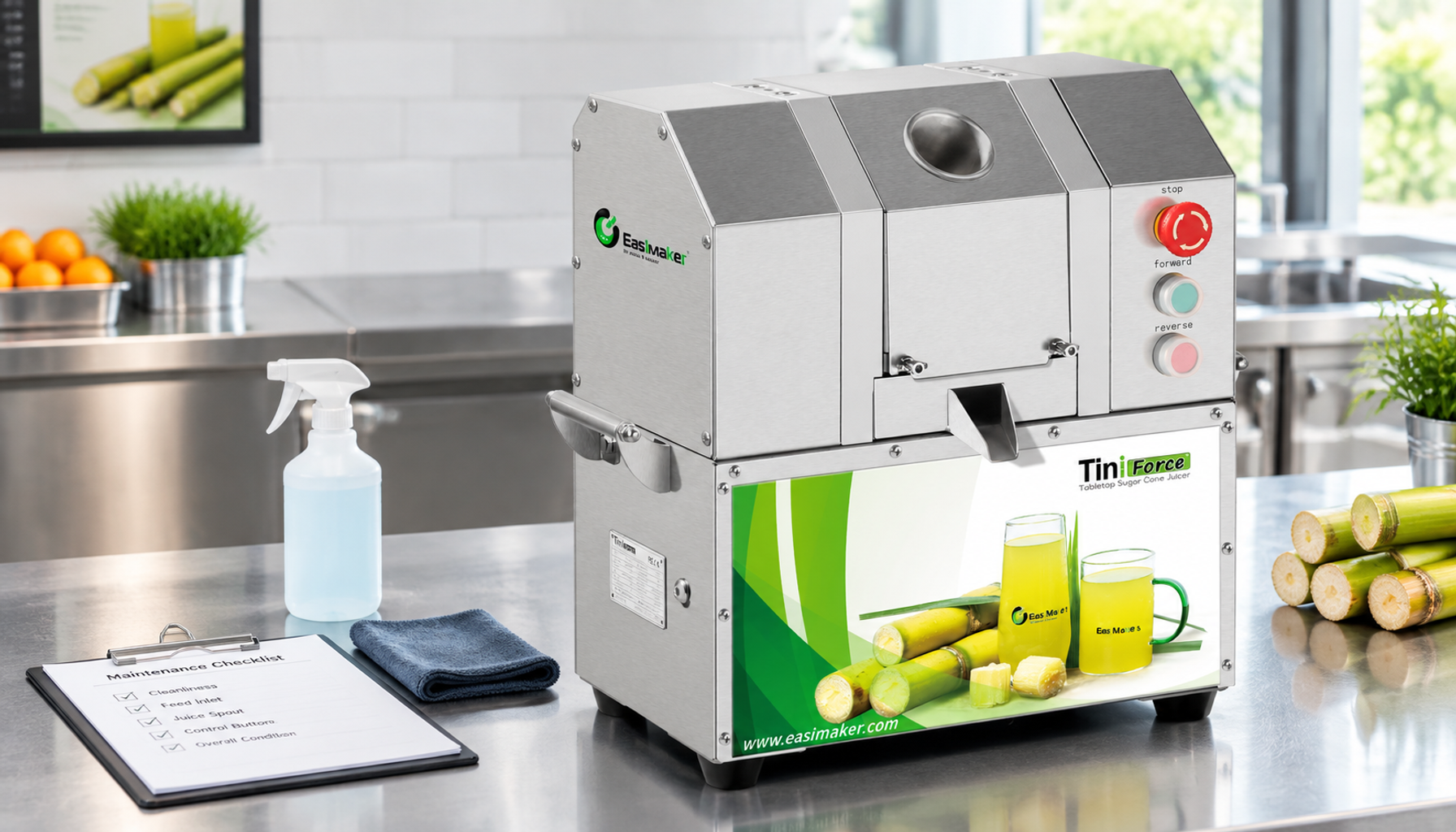
A short signed checklist makes the safety routine easier to manage across shifts and locations. It also helps supervisors see repeated faults, missed cleaning steps, or training gaps. The record can be paper-based or digital, but it should be quick enough for staff to use consistently.
Include these fields in a daily sugarcane juice machine safety record:
- Date, shift, site, and machine identification.
- Name or initials of the trained operator completing the check.
- Confirmation that the work area, electrical connection, guards, food-contact parts, and controls were checked.
- Confirmation that cleaning and correct reassembly were completed.
- Any abnormal noise, vibration, damage, jam, spill, or hygiene concern found.
- Action taken, including whether the machine was removed from service.
- Supervisor review where required by the business procedure.
Use the record as a working document rather than a box-ticking exercise. If the same issue appears repeatedly, investigate its cause. It may indicate an operator training need, unsuitable raw-material preparation, a cleaning process that needs adjustment, or a component that requires professional inspection.
For operations comparing equipment types or reviewing whether a current unit matches the workload, the guide to choosing between commercial and home sugarcane juicers provides useful context on commercial-duty operating expectations. A documented routine, correct staff training, and responsive technical support remain essential regardless of machine type.