
Table of Contents
- Start With Your Actual Operating Needs
- What Is a Commercial Sugarcane Juicer?
- Match the Machine to Demand and Workflow
- Check Cane Size, Condition, and Preparation
- Confirm Installation Space and Electrical Supply
- Prioritise Hygiene and Cleaning Access
- Evaluate Total Cost and After-Sales Support
- Use a Practical Selection Process
Choose a commercial sugarcane juicer by matching the machine to your real service volume, cane size, workspace, local power supply, cleaning process, and available technical support. A suitable machine should fit the full operating workflow, not only the expected demand at peak hours.
Start With Your Actual Operating Needs
The right commercial sugarcane juicer is the one that matches your expected service volume, cane preparation method, available counter or production space, local electrical supply, hygiene routine, and access to service. Do not select a machine only by its purchase price or an advertised output figure. A machine that appears suitable on paper can still create delays if the cane needs extensive preparation, cleaning is difficult during service, or the installation does not match the site.
Start by mapping one normal trading day. Record when orders peak, how cane arrives, where it will be washed and trimmed, who will operate the equipment, how juice will be collected and served, and when the machine can be cleaned. This gives you a more dependable basis for selection than a general description such as “high volume.”
For a small counter, kiosk, café, hotel breakfast station, juice bar, or central beverage preparation area, the best fit may differ substantially. Your choice should support a consistent workflow, safe handling, straightforward sanitation, and realistic maintenance by the people who will use it every day.
What Is a Commercial Sugarcane Juicer?
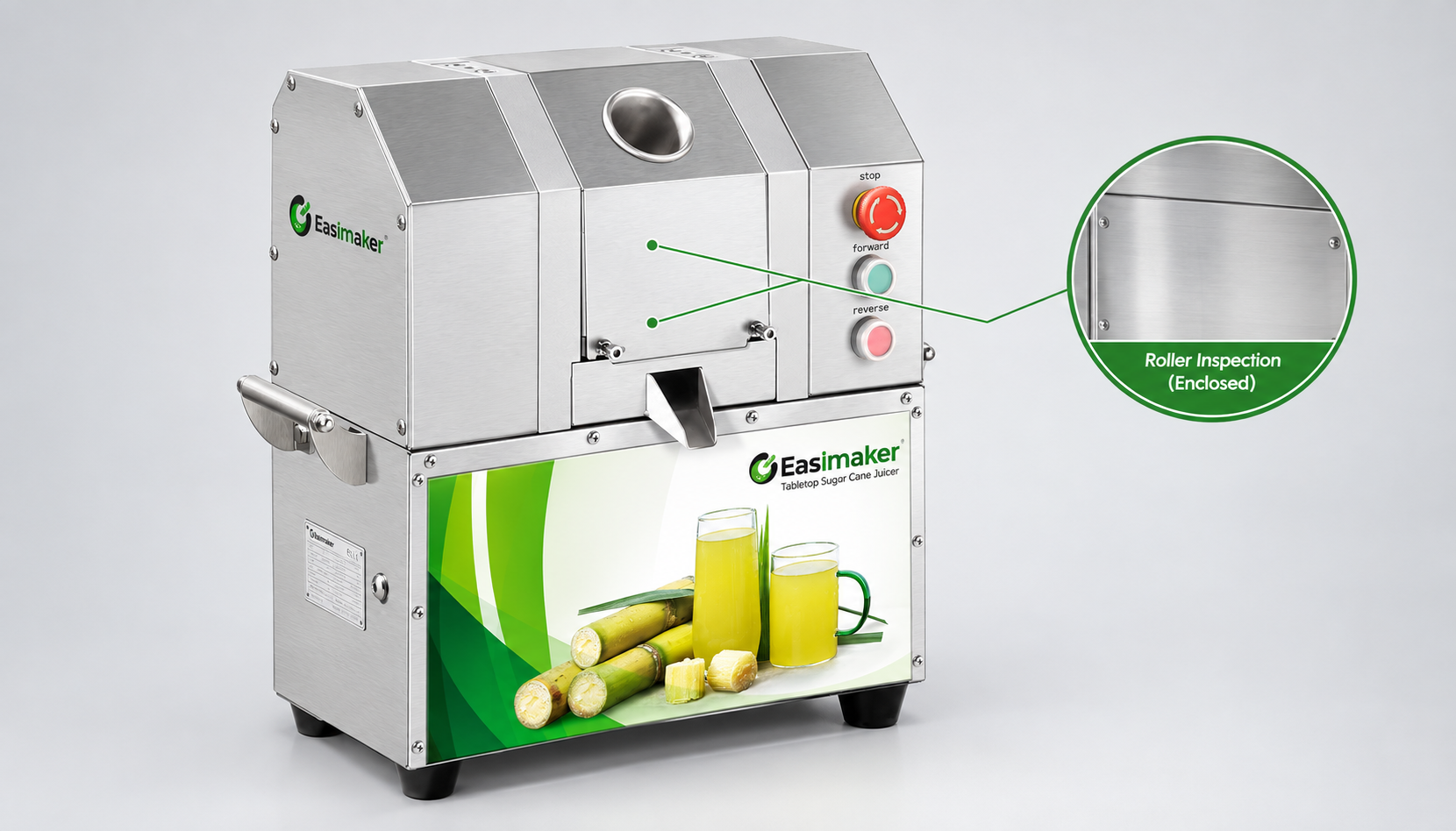
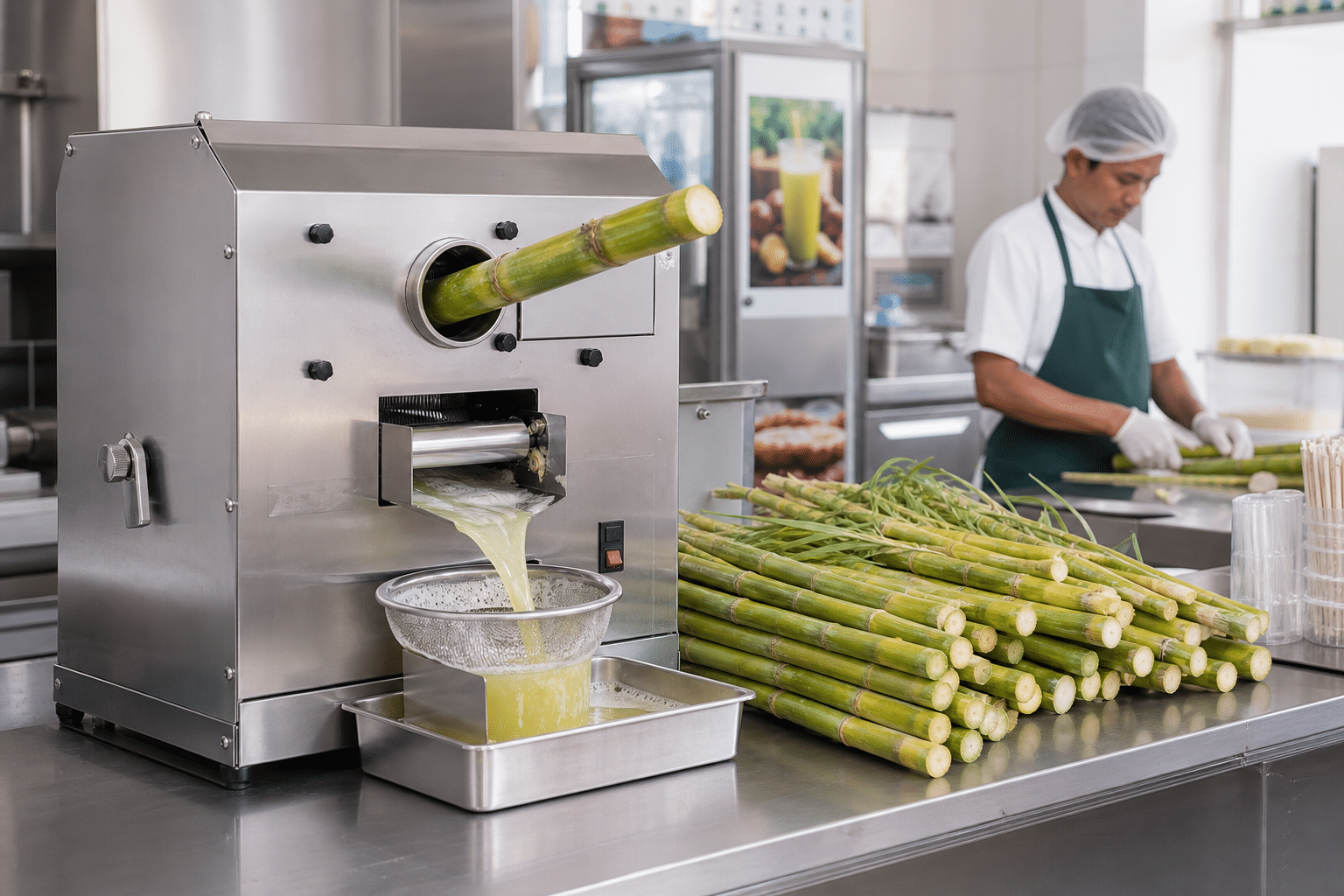
A commercial sugarcane juicer is a foodservice machine designed to extract juice from prepared sugarcane stalks. In common commercial designs, powered rollers draw the cane through the extraction area while the operator manages feeding, juice collection, and bagasse disposal. The machine is one part of a wider system that also includes cane receiving, washing, trimming or cutting, filtration where required by the menu concept, cold holding or immediate serving, and cleaning.
Commercial equipment differs from occasional-use equipment because it must suit repeated operation and a controlled daily hygiene process. Buyers should look beyond the exterior finish and ask practical questions: Which food-contact parts need cleaning? Can the operator reach those areas safely? What parts are expected to wear? How are replacement parts identified? Is the machine appropriate for the stalk dimensions and condition supplied to the business?
It is also useful to distinguish cane preparation equipment from the juicer itself. If stalks arrive long, uneven, or difficult to manage at the service counter, a separate cutting process may be needed before extraction. Good equipment planning considers the handoff between preparation and juicing rather than treating the juicer as a stand-alone purchase.
Match the Machine to Demand and Workflow
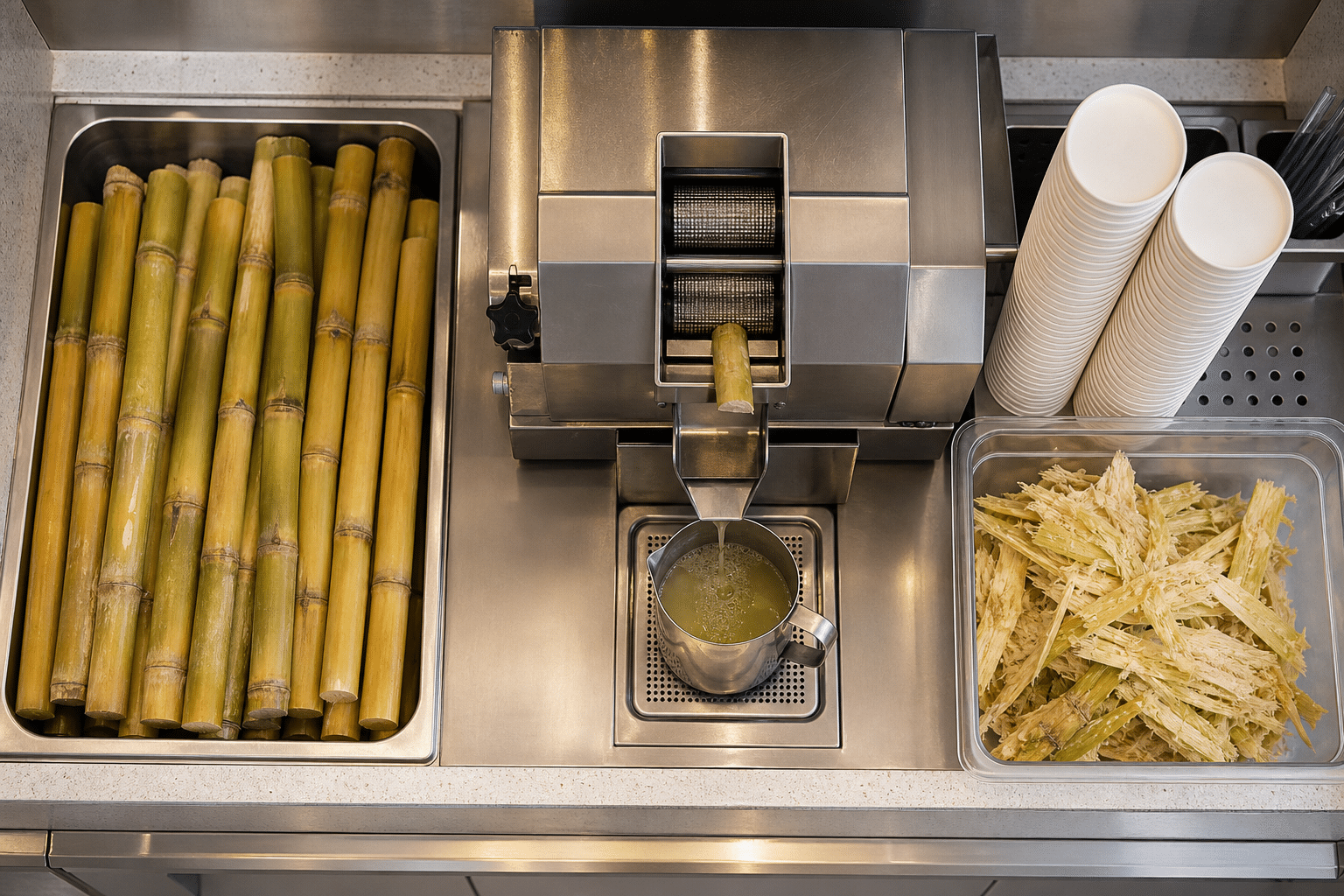
Begin with service patterns, not the busiest possible scenario. Estimate the number of drinks or batches you expect during a typical period, then identify the shorter periods when orders arrive together. Consider whether the same person will take payment, prepare garnishes, feed cane, serve drinks, and clean the work area. A technically capable machine can still become a bottleneck if one operator has too many tasks around it.
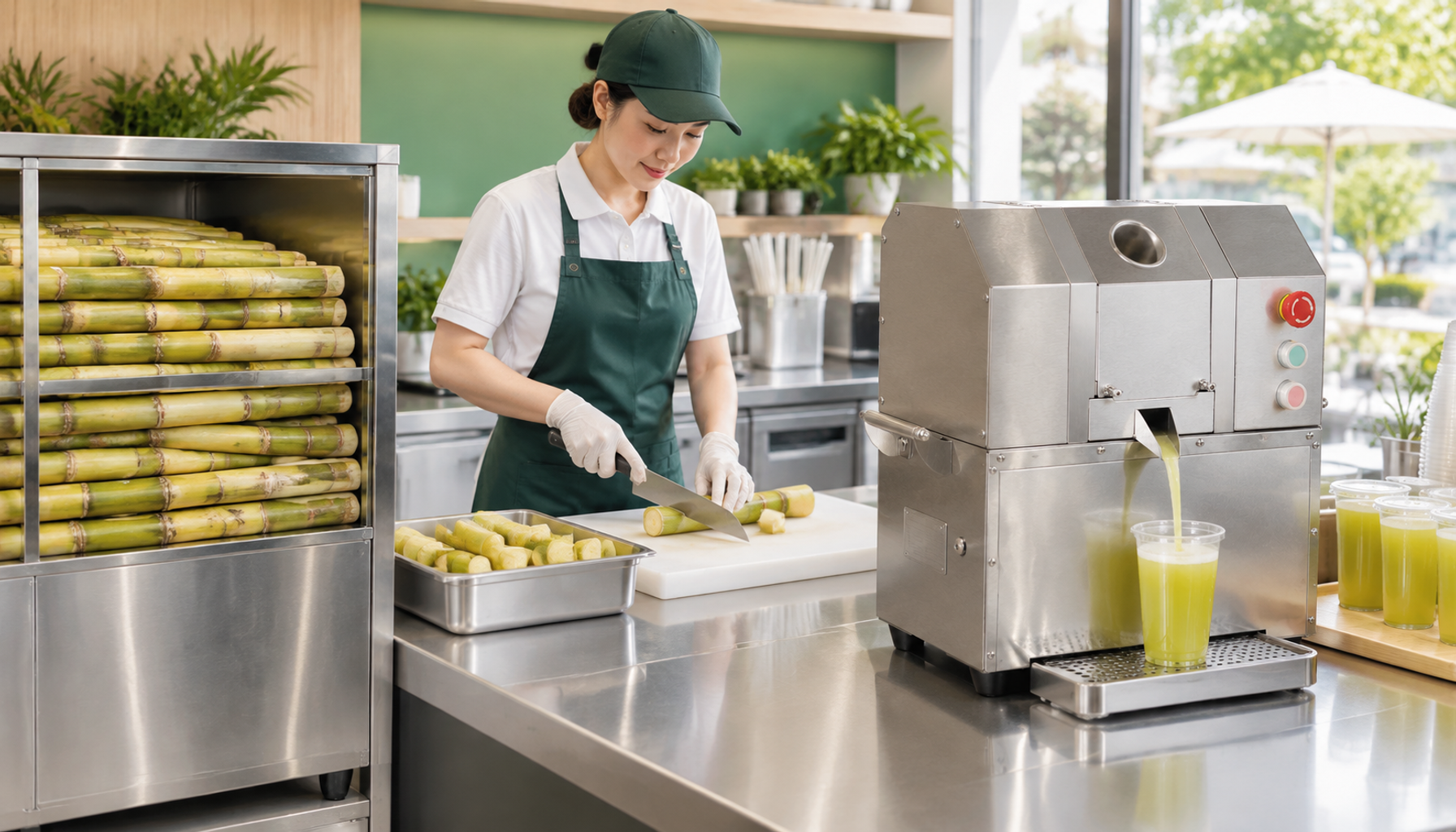
Assess the complete time needed for each order. This includes selecting and preparing stalks, feeding them safely, collecting juice, managing bagasse, cleaning spills, and resetting the station. If the operation uses pre-cut cane, determine where it will be cut, how it will be stored, and whether staff can replenish it without crossing the customer-service area.
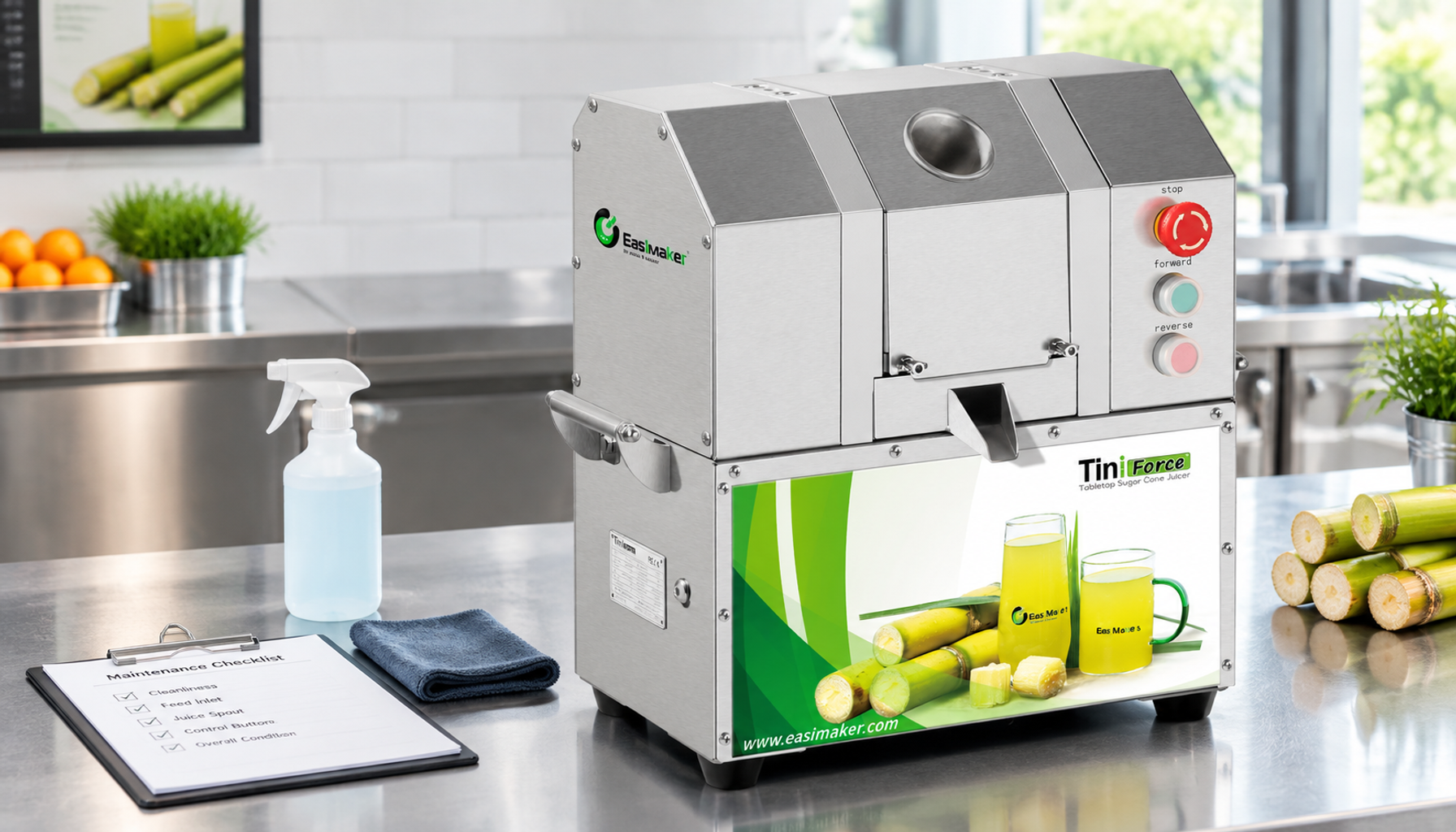
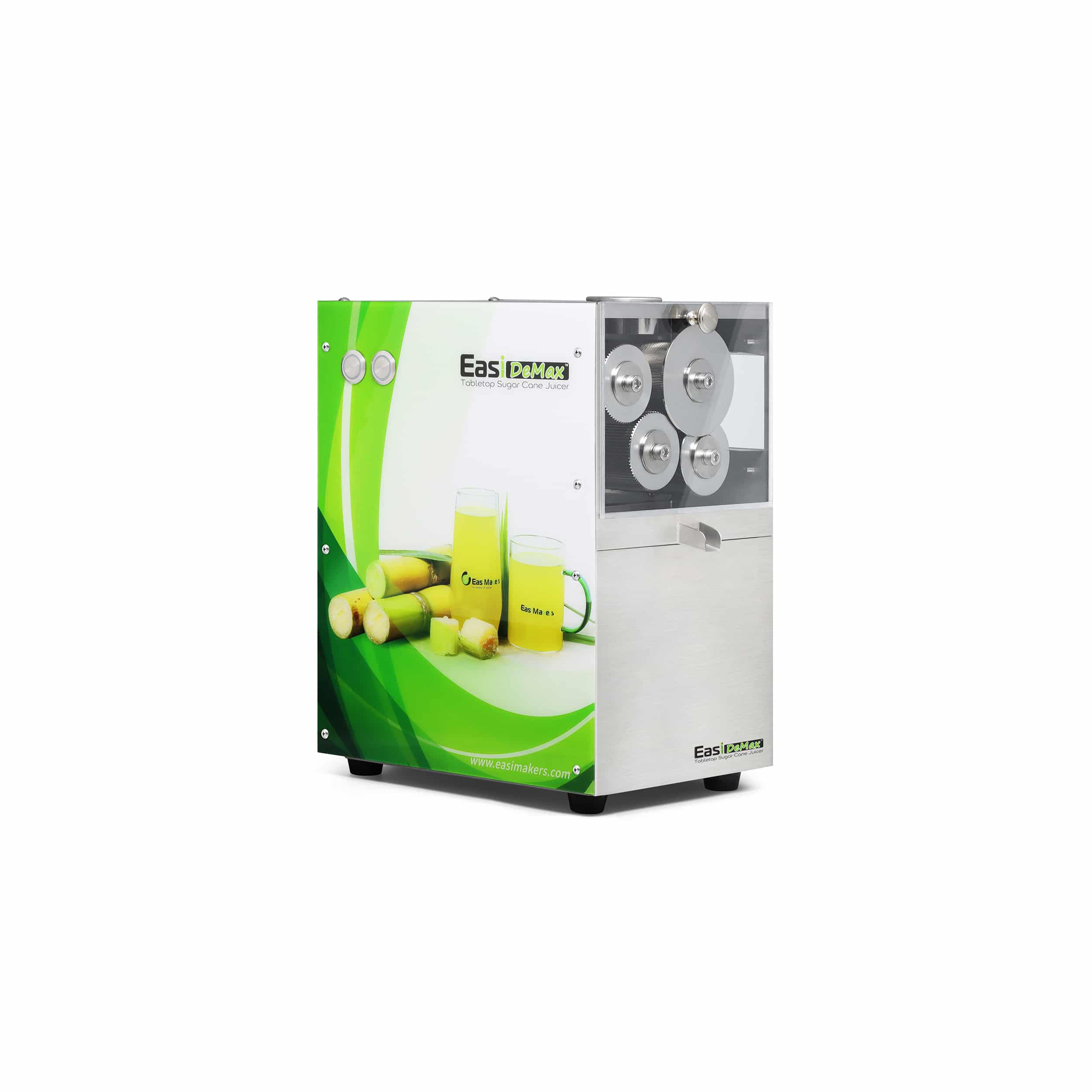
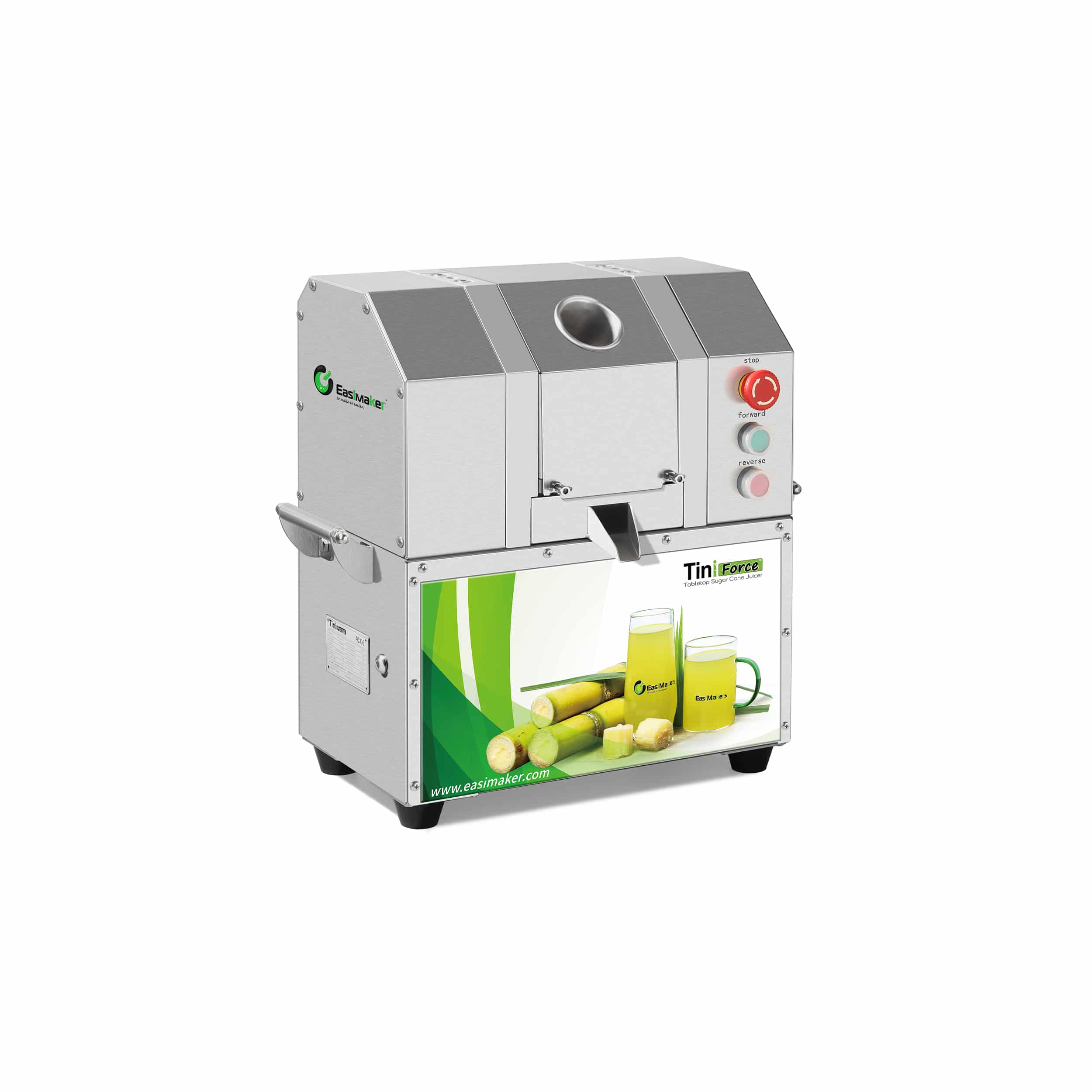
Counter-service businesses often value compact layout and a simple operator routine. A dedicated juice bar or production room may place greater value on a work sequence that separates receiving, washing, preparation, extraction, and packing. Where you are comparing different machine formats, the TiniForce S3 and EasiDeMax S4 comparison can help frame questions around service volume, counter space, preparation, and cleaning routines.
Ask suppliers to explain operating steps clearly rather than relying on a general capacity claim. Actual throughput depends on stalk size, cane condition, operator pace, preparation quality, cleaning interruptions, and the way orders are presented to customers.
Check Cane Size, Condition, and Preparation
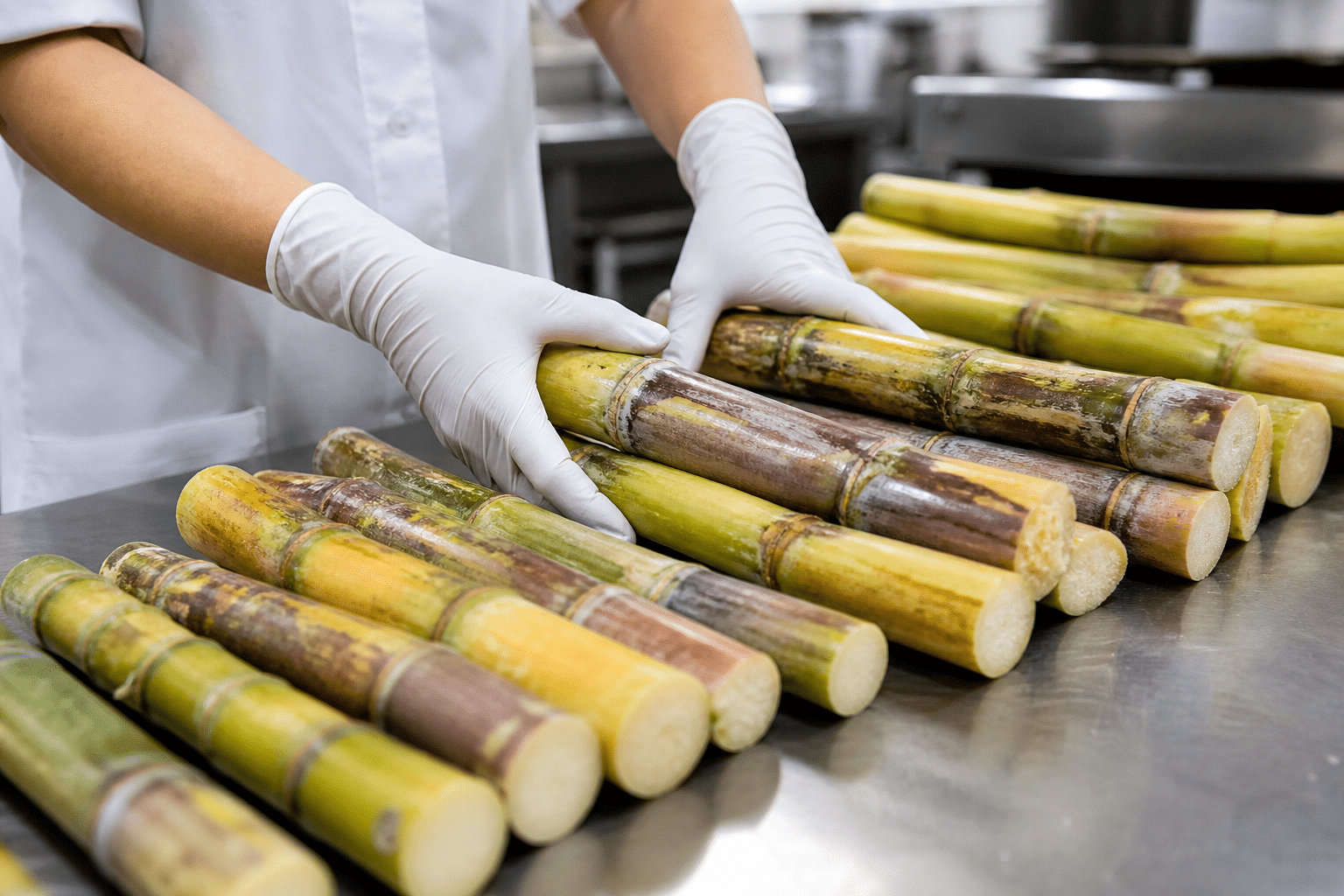
Your cane supply has a direct effect on machine selection and daily operation. Before purchasing, inspect representative stalks from your expected supplier. Note their diameter range, length, straightness, surface condition, moisture, fibrousness, and variation between deliveries. These factors influence how easily cane can be handled and fed through an extraction machine.
Do not assume that every stalk can be processed in the same way. Oversized, unusually hard, badly bent, or damaged stalks may need to be sorted, trimmed, split, or otherwise prepared according to the machine instructions. A consistent preparation standard helps operators work more safely and can reduce interruptions at the juicing station.
Plan for the tools and bench space required before the cane reaches the juicer. If you need to reduce stalk length or improve handling, use purpose-designed food preparation equipment and follow its operating instructions. The practical guidance in processing thick sugarcane stalks without avoidable jamming is especially relevant when cane deliveries vary in diameter or condition.
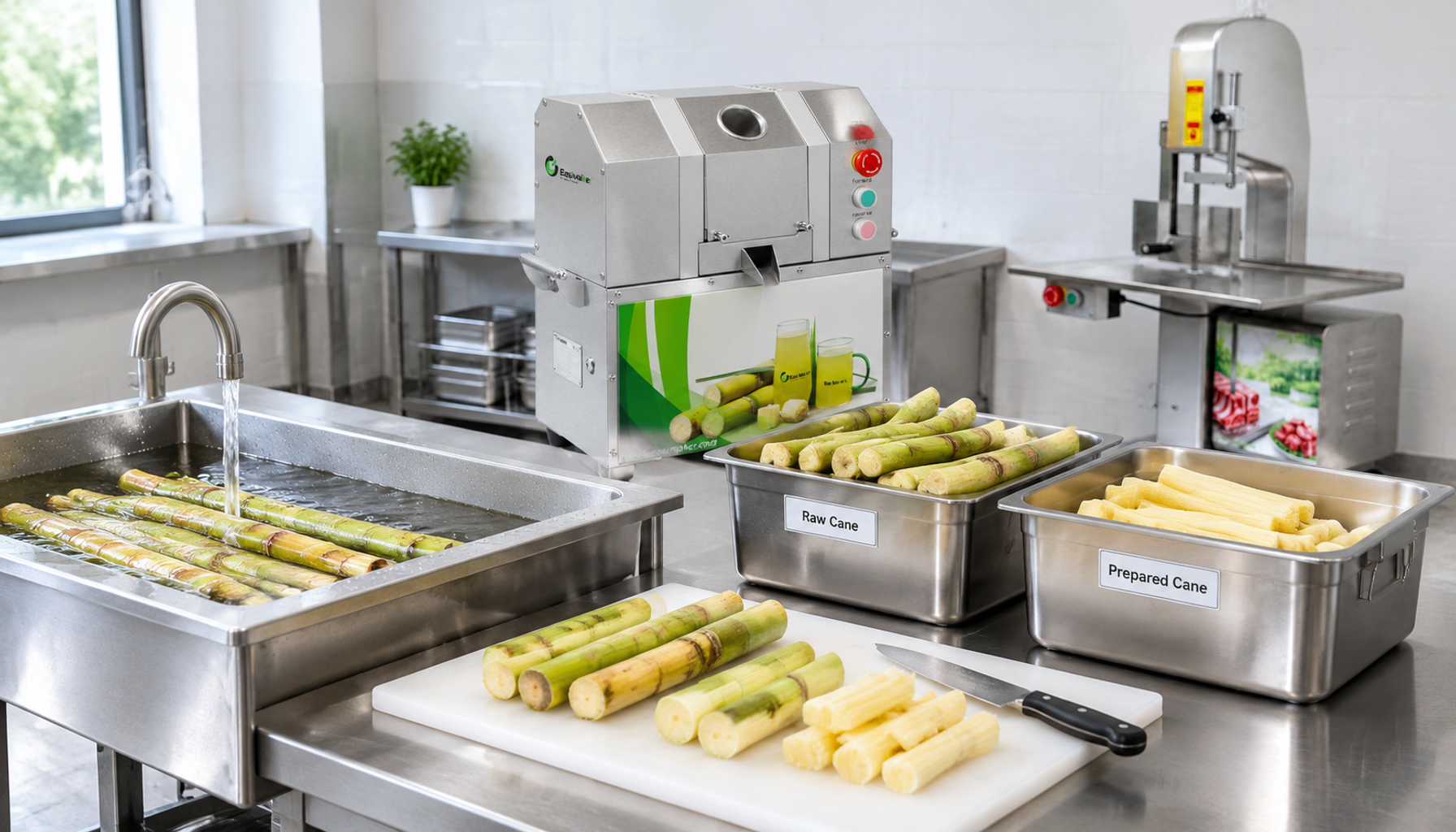
Also define how cane will be washed and inspected. Remove unsuitable material before it reaches the extraction area, and keep raw cane handling separate from clean serving items as far as the layout allows. Local food safety requirements may set additional expectations for washing, storage, and food-contact sanitation.
Confirm Installation Space and Electrical Supply
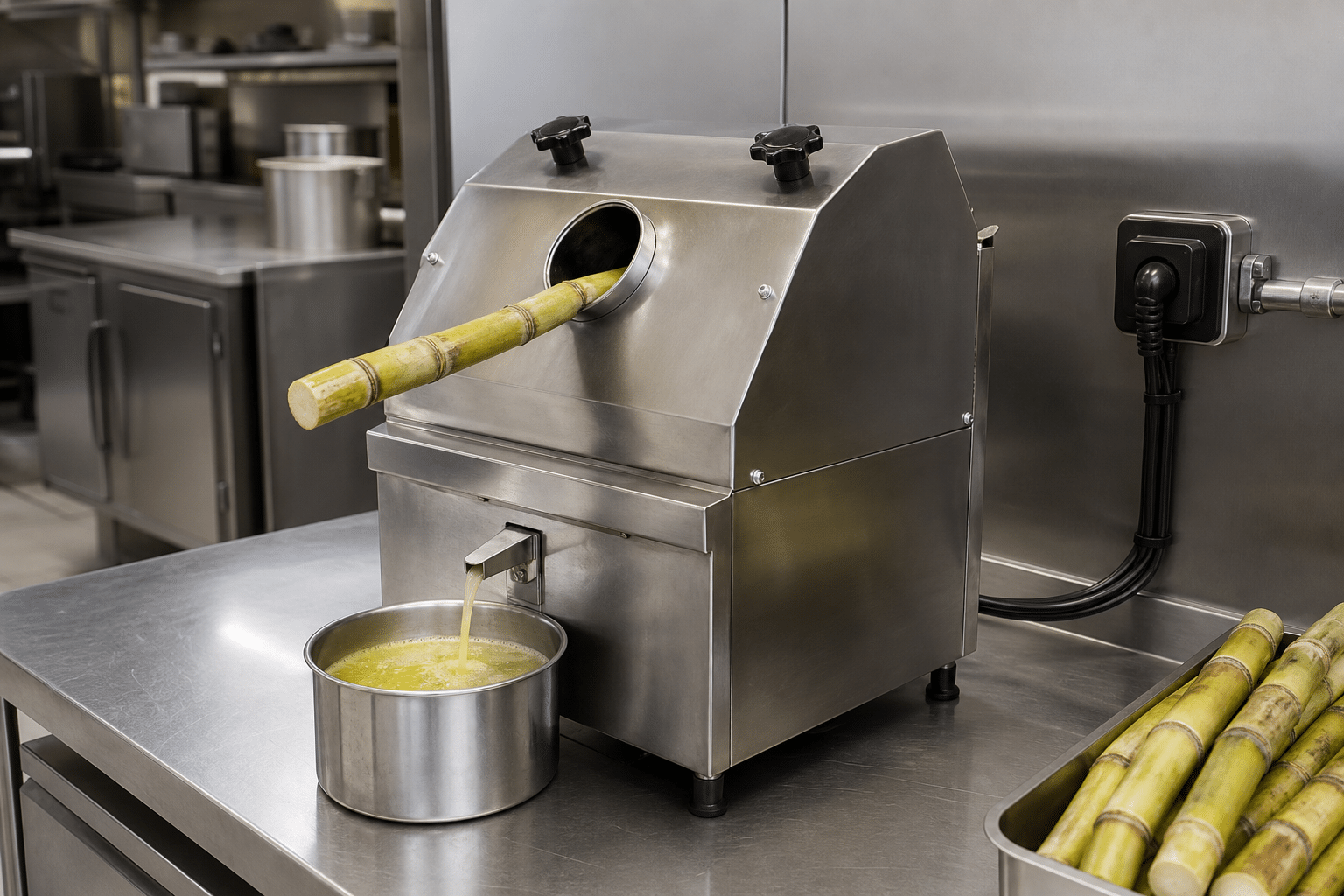
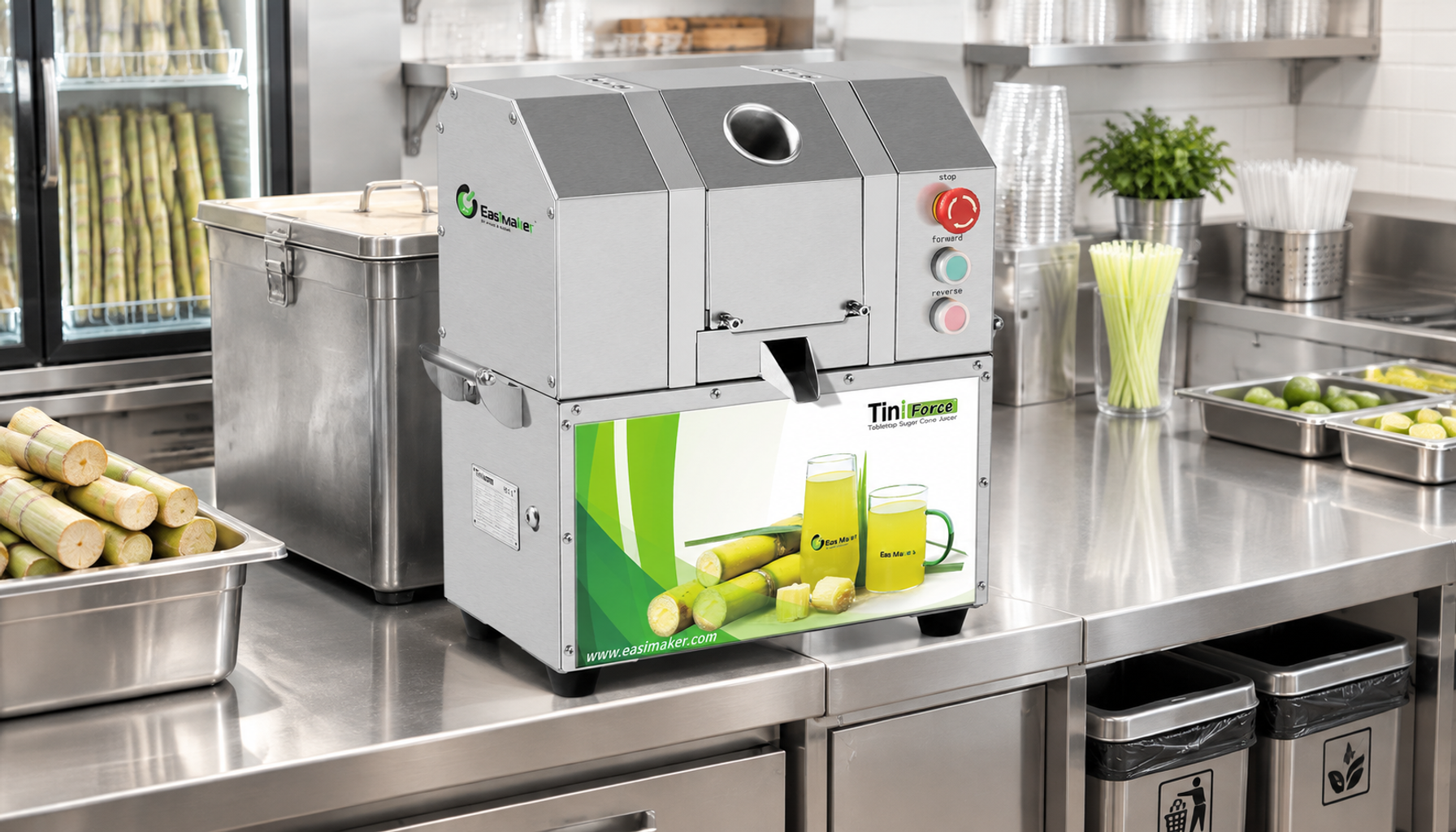
Measure the installation location before ordering. Include more than the machine footprint: allow room for cane staging, operator movement, the juice collection container, bagasse removal, cleaning access, and safe access to controls. Check the route from delivery point to installation area as well. Doorways, lifts, steps, counter openings, and turning space can affect delivery and commissioning.
The work surface must be stable, level, and suitable for foodservice use. Place the machine where operators can feed cane and remove waste without reaching across hot equipment, customer traffic, or unrelated preparation work. If the site has a sink or drainage nearby, confirm that splash and washdown practices remain appropriate for the particular equipment and local requirements.
Electrical compatibility is essential. Confirm the rating plate requirements for voltage, frequency, phase, plug type, and protective electrical arrangements before installation. Never assume that a machine intended for one market will connect safely in another. Review this guide to commercial sugarcane juicer power supply requirements, then have the final site connection checked by a qualified local electrician where required.
Request the machine dimensions, weight, installation clearances, and electrical details from the supplier for the exact model under consideration. These details should be confirmed in writing rather than estimated from product photographs.
Prioritise Hygiene and Cleaning Access
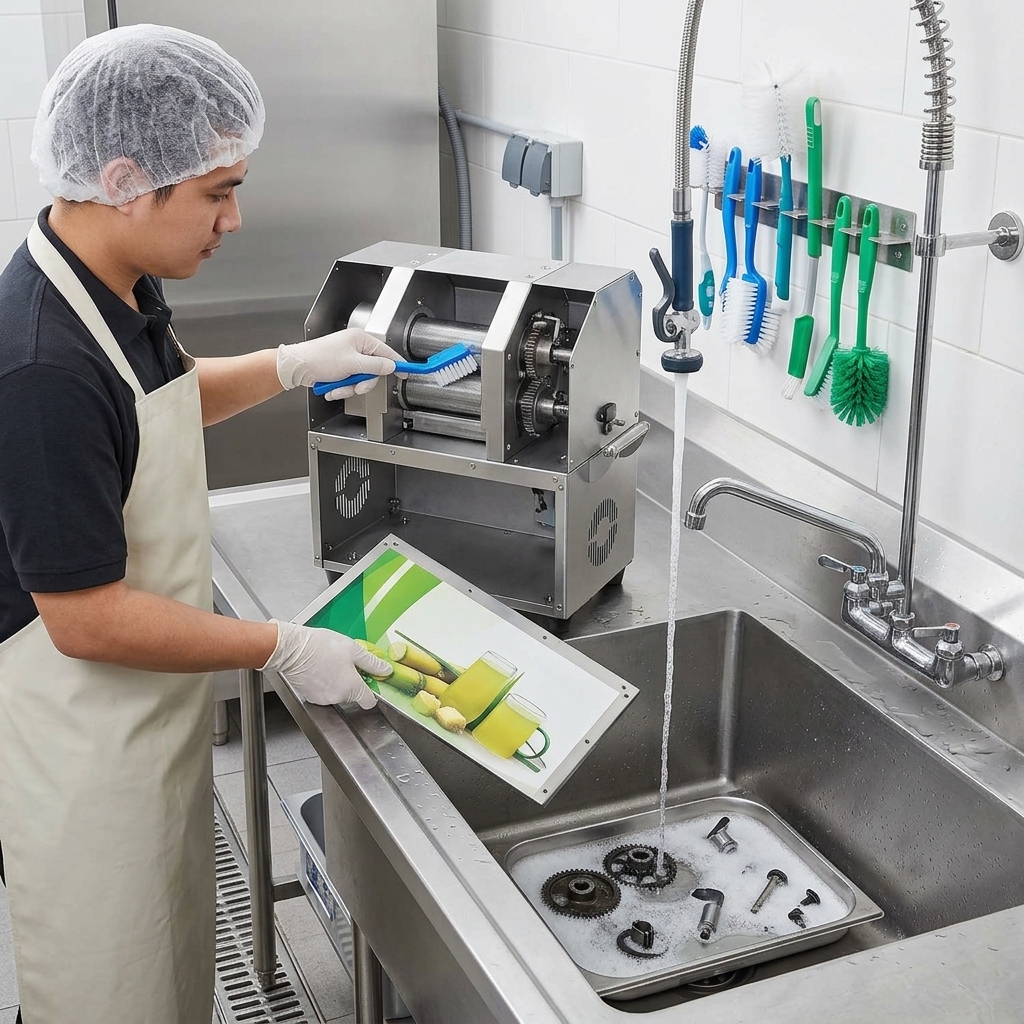
Cleaning is a selection criterion, not an afterthought. Fresh cane juice and cane fibres can collect around food-contact areas, collection points, guards, work surfaces, and waste zones. A machine should support a cleaning routine that your team can complete correctly at the frequency required by your business and local food hygiene rules.
During evaluation, ask to see the normal shutdown and cleaning procedure for the exact machine. Identify which parts are removable, which areas require brushing or wiping, what cleaning tools are needed, and how operators avoid cross-contamination while reassembling the equipment. Confirm that the cleaning process fits your staffing plan and the time available between service periods and at the end of the day.
Keep a documented routine for daily cleaning, inspection, and scheduled deep cleaning. Training should cover safe isolation from power, correct disassembly where applicable, cleaning of food-contact surfaces, drying, reassembly, and a final operational check. For a practical step-by-step framework, see how to clean a commercial sugarcane juicer properly.
Choose cleaning chemicals and sanitising methods that are appropriate for food equipment and compatible with the manufacturer’s instructions. Follow local regulations and chemical supplier directions. Do not direct water at electrical components unless the manufacturer specifically permits that method for the machine.
Evaluate Total Cost and After-Sales Support
The machine price is only one part of the investment. A complete budget may include delivery, import or local taxes where applicable, site electrical work, counter preparation, cane washing and cutting equipment, packaging, filtration supplies, cleaning materials, spare parts, staff training, and planned maintenance. Budgeting in this way helps avoid selecting equipment that appears affordable but is difficult to install or sustain.
Ask the supplier what is included with the machine and what is not. Request clear information on the operating manual, cleaning instructions, recommended maintenance tasks, available spare parts, warranty terms, technical support process, and typical lead time for replacement components. The ability to identify the correct part and receive practical service guidance matters when the machine is central to daily sales.
Review the cost factors for starting a sugarcane juice business to build a broader purchasing budget. Then create a simple preventive plan based on the equipment manual: operator checks before service, cleaning and inspection after service, and periodic review of components that experience normal wear. This approach is more reliable than waiting for a disruption before arranging service.
For multi-site buyers, distributors, or private-label projects, also discuss documentation, spare-parts planning, training needs, and the point of contact for technical questions before placing an order.
Use a Practical Selection Process
A structured buying process reduces the risk of choosing equipment that does not fit the site. Use the following checklist when speaking with a supplier or comparing commercial sugarcane juice machines:
- Define the business format: Identify whether the machine will serve a kiosk, café, restaurant, hotel, juice bar, event operation, or production area.
- Map normal and peak workflow: List the number of orders, staffing level, preparation tasks, serving method, and cleaning windows.
- Assess actual cane: Provide representative information about stalk diameter, length, condition, and how the cane will be prepared.
- Confirm the site: Verify dimensions, work surface, operator clearance, delivery access, and electrical supply.
- Review cleaning in detail: Make sure the procedure, access, tools, and time requirement are realistic for your team.
- Check support readiness: Request documents for the exact machine, understand the spare-parts process, and identify who will provide technical assistance.
- Compare total cost: Include installation, preparation, hygiene supplies, packaging, maintenance, and operating labour in the budget.
Finally, retain written specifications and instructions for the model you choose. They provide a sound reference for site preparation, staff training, safe use, cleaning, and future maintenance. A well-matched commercial sugarcane juicer should make the daily process more organised and manageable for both operators and customers.