Table of Contents
- The Basic Sugarcane Juice Pricing Formula
- Calculate the Full Cost Per Serving
- Choose a Target Selling Price
- Build a Menu Around Cup Sizes and Add-Ons
- Validate and Review Your Menu Price
A practical guide to setting sugarcane juice menu prices by calculating the full cost per serving, choosing a target margin, testing different cup sizes, and reviewing prices as operating costs change.
The Basic Sugarcane Juice Pricing Formula
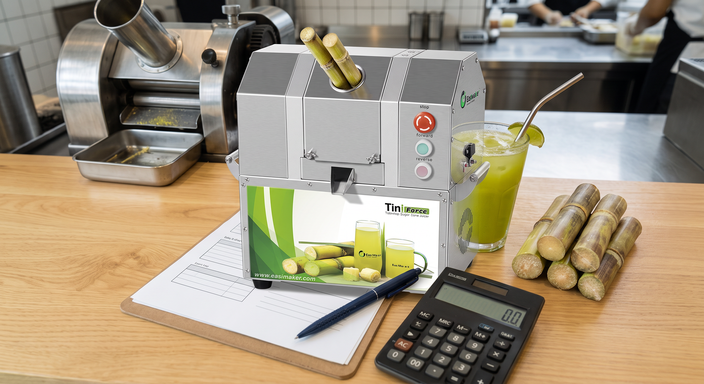
The practical way to calculate sugarcane juice pricing is to start with the complete cost of one sellable serving, then add the margin your business needs. The basic formula is:
Menu price = total cost per serving / (1 – target gross margin)
Total cost per serving should include sugarcane, packaging, preparation labour, utilities, cleaning supplies, payment fees, expected waste, and an allocated share of operating overhead. It should also reflect the actual serving size and recipe used at your location.
For example, if the total cost of one cup is USD 1.20 and your target gross margin is 60%, the calculation is USD 1.20 / (1 – 0.60), giving a suggested price of USD 3.00 before any applicable sales tax. This is an illustration only. Your local ingredient costs, wages, rent, taxes, market conditions, and customer expectations will determine the appropriate price.
Do not calculate pricing from the machine purchase price alone or from the cost of raw cane alone. A commercial sugarcane juice operation must recover both direct serving costs and the broader cost of keeping the service open. A detailed sugarcane juicer cost budget can help you include equipment, site preparation, maintenance, utilities, and other startup items in your financial planning.
Calculate the Full Cost Per Serving
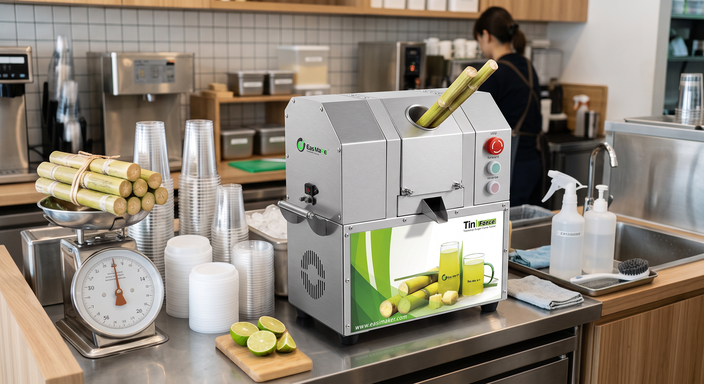
Before choosing a selling price, create a cost sheet for each standard serving. Use invoices and payroll records where possible instead of broad estimates. Prices may vary by season, supplier, location, and purchasing volume, so record the date of each cost update.
1. Measure the cane cost
Weigh the sugarcane used for a test batch and record the purchase price per kilogram, bundle, or other supplier unit. Then calculate the raw cane cost for the planned serving. If the recipe includes lime, ginger, fruit, herbs, sweeteners, ice, or another ingredient, cost each item separately.
Do not assume that all purchased cane becomes juice. Trimming, damaged sections, handling losses, and juice left in the machine or container can affect the usable amount. Measure the actual output from several normal production runs. Use an average that reflects ordinary operation rather than a best-case test.
2. Add packaging and service items
Include the cup, lid, straw, napkin, seal, label, bag, and any other item supplied with the order. Takeaway packaging can be a meaningful part of the cost, especially when customers choose larger sizes or delivery orders require additional materials.
3. Include labour and utilities
Estimate the staff time required to receive and prepare cane, operate the juicer, fill and serve the drink, clean the work area, and handle waste. A useful approach is to calculate a loaded hourly labour cost, including applicable payroll costs, and multiply it by the average minutes needed per serving.
Utilities may include electricity, water, refrigeration, ice production, lighting, and waste disposal. If a utility bill covers the whole premises, allocate a reasonable share to the beverage operation and review the allocation when the business grows.
4. Account for waste, payment fees, and overhead
Apply a waste allowance based on your own records. Separate unavoidable preparation waste from avoidable waste caused by poor storage, overproduction, incorrect orders, or inconsistent portioning. Also include card processing or platform fees where they apply.
Fixed overhead includes rent, insurance, permits, software, equipment depreciation or financing, cleaning, repairs, marketing, and administrative costs. Divide the monthly amount you want the juice operation to recover by a realistic forecast of monthly sellable servings. A low-volume forecast produces a higher overhead cost per serving, while a high-volume forecast should be checked against actual foot traffic and production capacity.
For a practical costing structure, list the following for one serving:
- Raw sugarcane and recipe ingredients
- Packaging and serving materials
- Direct labour
- Utilities and cleaning supplies
- Waste and spoilage allowance
- Payment or marketplace fees
- Allocated operating overhead
Choose a Target Selling Price
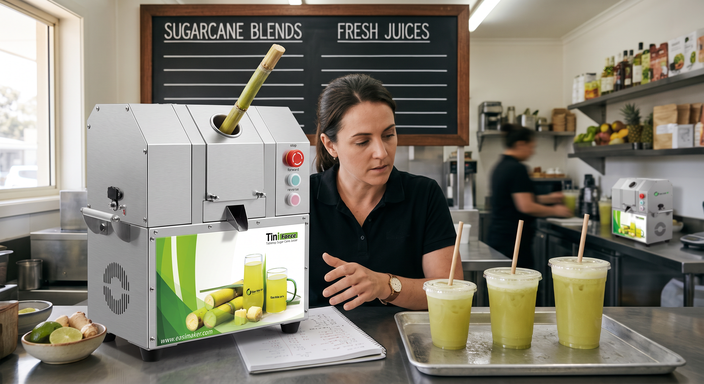
Once the cost per serving is known, choose a target gross margin that supports the business model. Gross margin is the amount left after direct and allocated serving costs are deducted from the selling price. It is not the same as net profit because the business still has other expenses, taxes, financing costs, and owner compensation to cover.
Use the following calculation to test different prices:
Gross margin percentage = (menu price – cost per serving) / menu price
If the cost per serving is USD 1.20 and the menu price is USD 3.00, the gross margin is 60%. If the price is reduced to USD 2.50, the same serving has a gross margin of 52%. The lower price may increase demand, but it leaves less money available to cover fixed costs and operational variation.
Market pricing is a reference point, not a substitute for costing. Visit comparable juice bars, kiosks, cafes, food halls, and mobile vendors in the same customer area. Compare serving size, service speed, packaging, location, recipe complexity, and whether tax is included in displayed prices. A premium location may support a higher price, while a high-volume self-service setting may require a different structure.
Check whether your price is viable at different sales volumes. For example, calculate the monthly contribution from 20, 50, and 100 servings per day, using realistic operating days and your actual cost sheet. This shows how sensitive the business is to foot traffic and helps identify the minimum daily sales level required to cover fixed costs.
Keep tax treatment clear. In some markets, menu prices include sales tax; in others, tax is added at checkout. Confirm the local requirement with an accountant or relevant authority and label your price display consistently.
Build a Menu Around Cup Sizes and Add-Ons

Many operators use two or three standard cup sizes instead of one price for every order. This gives customers a clear choice and makes portion control easier. For each size, create a separate recipe and cost calculation. Do not assume that doubling the cup volume should automatically double the menu price, because packaging, labour, and overhead may not increase at the same rate.
Record the intended fill level, ice quantity, ingredient quantity, and packaging specification for each size. Use a marked cup, measuring container, or another repeatable portioning method during training. Consistent portions protect the margin and make the customer experience more predictable.
Add-ons should also be costed individually. Examples include lime, ginger, mint, fruit blends, extra ice, premium packaging, toppings, or a sealed bottle. The add-on price should cover its additional ingredient, labour, packaging, and waste cost while remaining easy for staff to apply at the point of sale.
Consider different service channels when setting prices. A counter sale, delivery order, event service, and wholesale order may have different packaging, labour, commission, and delivery costs. Use separate price rules where the economics differ materially instead of allowing one channel to reduce the margin of another.
Recipe and equipment choices can affect the cost sheet. Faster preparation may reduce labour per serving, while a more complex recipe may increase handling and cleaning time. The right commercial sugarcane juice machine depends on your expected output, available space, operator workflow, and market. These factors should be evaluated alongside purchase price when preparing a menu business case.
Validate and Review Your Menu Price
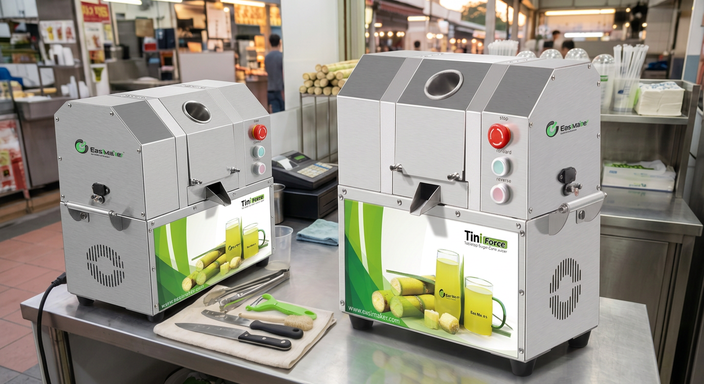
A calculated price is a starting point. Before publishing the menu, test whether customers understand the offer and whether staff can produce it consistently during busy periods. Review the actual cost and sales data after launch rather than relying only on the original forecast.
Use a short operating test
Run the intended recipe and serving process for several normal shifts. Record the number of servings sold, cane purchased, usable juice produced, discarded product, packaging used, labour hours, and payment fees. Compare the measured cost per serving with the costing sheet. Investigate large differences before changing the menu price.
Monitor the variables that change pricing
Raw cane prices, seasonal availability, packaging costs, wages, rent, utilities, delivery commissions, and exchange rates can all affect the economics of a juice menu. Set a review schedule, such as monthly or quarterly, and update the cost sheet when a major supplier or operating change occurs.
Pay particular attention to waste and downtime. Spoiled cane, excessive trimming, incorrect portions, machine cleaning delays, and unsold prepared juice can reduce the real margin. Good storage, clear preparation procedures, regular cleaning, and preventive maintenance support more reliable daily operation. Maintenance responsibilities should be assigned, documented, and included in staff training.
Review customer and sales data
Track sales by cup size, recipe, channel, time of day, and location. A lower-priced item may attract orders but produce less contribution, while a higher-priced add-on may have stronger financial value if customers accept it. Use these observations to adjust portion sizes, recipes, bundles, or menu placement. Avoid changing several variables at once, because it becomes difficult to identify what affected sales.
The final menu price should be easy to communicate, operationally practical, and financially defensible. Keep the calculation behind each item so that future staff, managers, and business partners can understand how the price was set.