
Table of Contents
- The commercial sugarcane juice workflow at a glance
- 1. Receive, inspect, and store sugarcane
- 2. Prepare cane at a separate raw-product station
- 3. Juice, finish, and serve to order
- Workstation zones and control points
- 4. Close, clean, and prepare for the next shift
- Choose equipment around the workflow
A reliable sugarcane juice workflow keeps raw cane, fresh juice, customer service, cleaning, and bagasse handling moving in one clear direction. This guide gives shops and operators a practical daily process.
The commercial sugarcane juice workflow at a glance
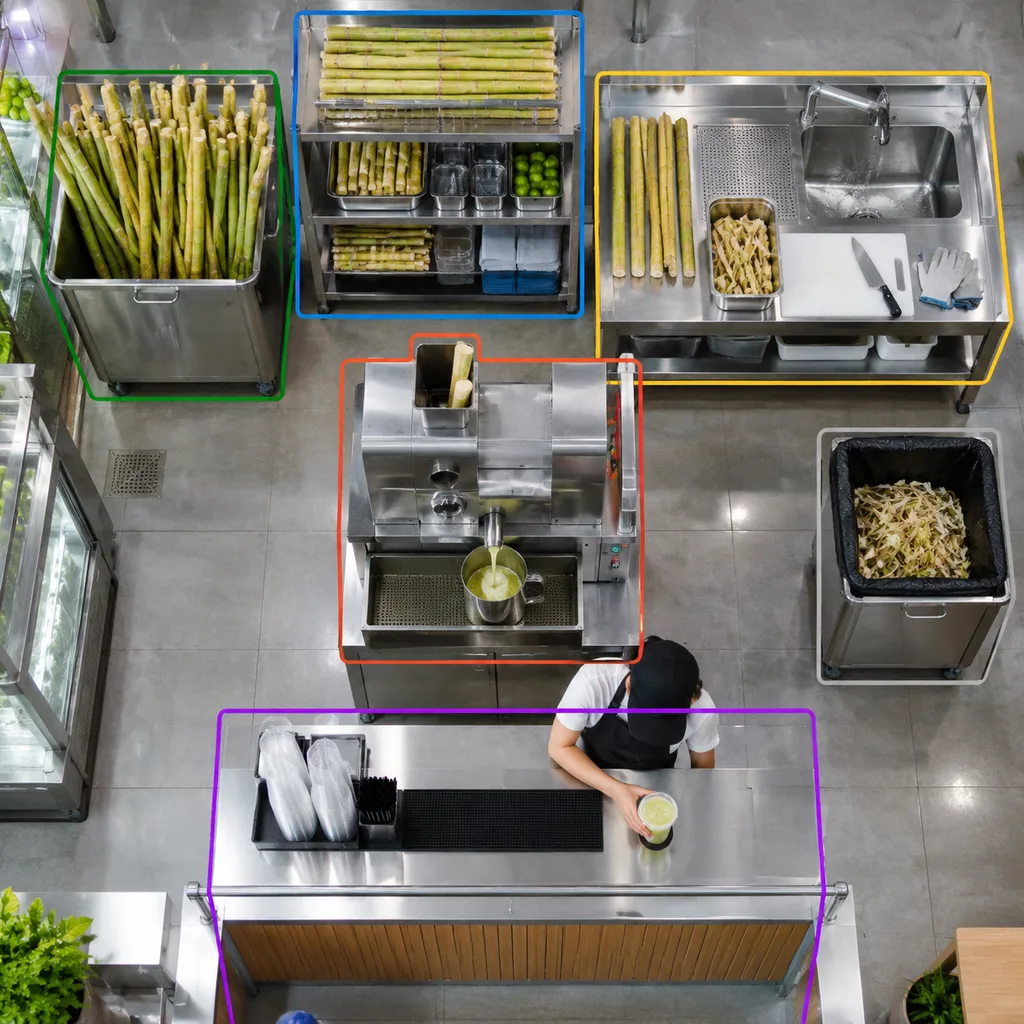
A commercial sugarcane juice workflow should move in one direction: receive cane, inspect and store it, wash and trim it, extract juice, serve promptly, then clean the equipment and remove bagasse. The practical aim is to prevent congested counters, reduce unnecessary handling, and keep raw cane away from cups, ice, finished juice, and customer-contact surfaces.
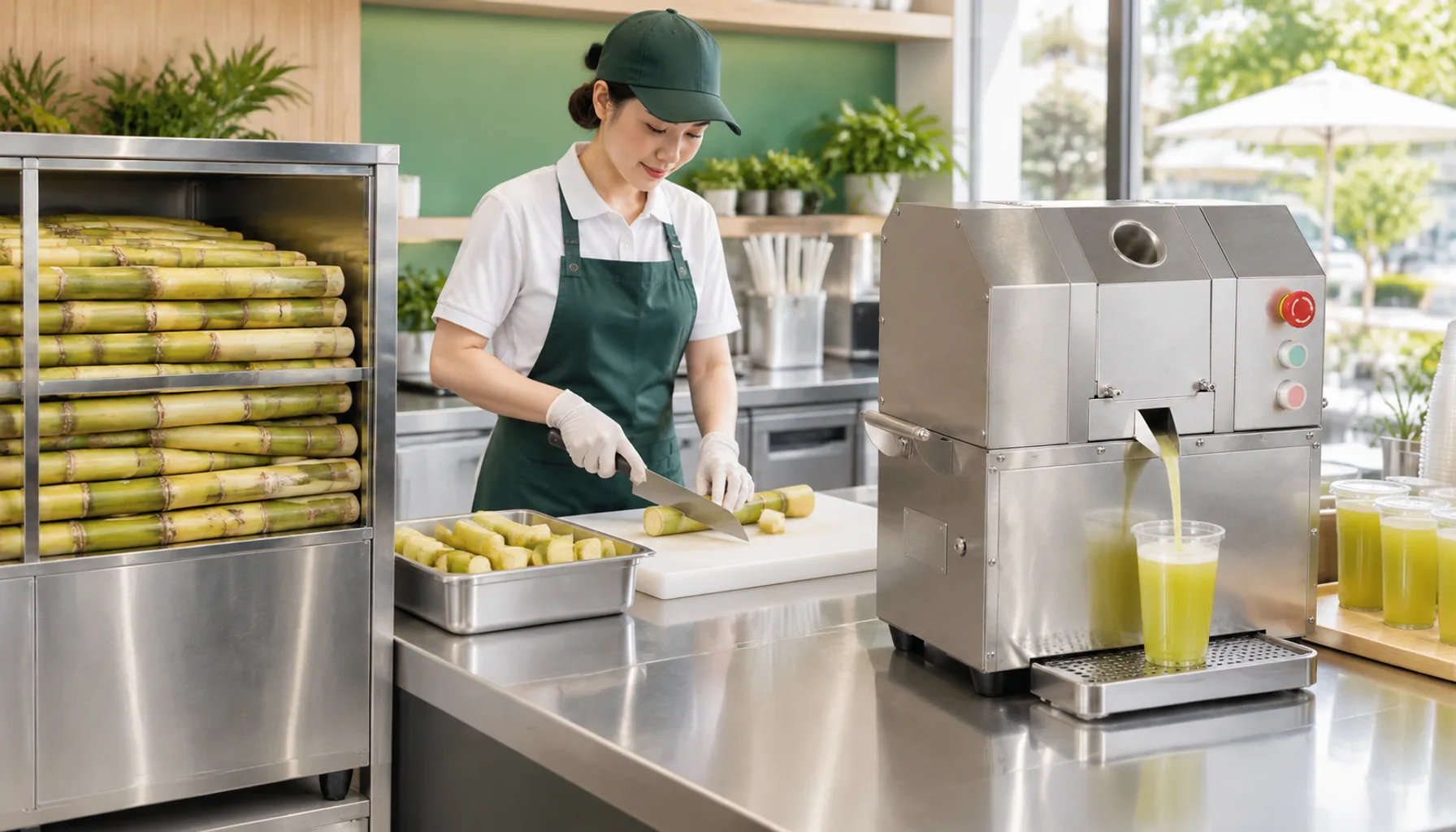
For most shops, the best workflow is not the one with the most steps. It is the one every staff member can repeat during a busy period. Define who prepares cane, who operates the juicer, who handles payment and cups, and who completes cleaning checks. If one person covers several roles, arrange the counter so those activities still follow a logical order.
Start with the physical route: delivery door or receiving area → cane storage → wash and trimming bench → juicer → cup finishing and handover → dishwashing and waste area. Avoid carrying used tools, bagasse containers, or unwashed cane back through the finished-drink zone.
1. Receive, inspect, and store sugarcane
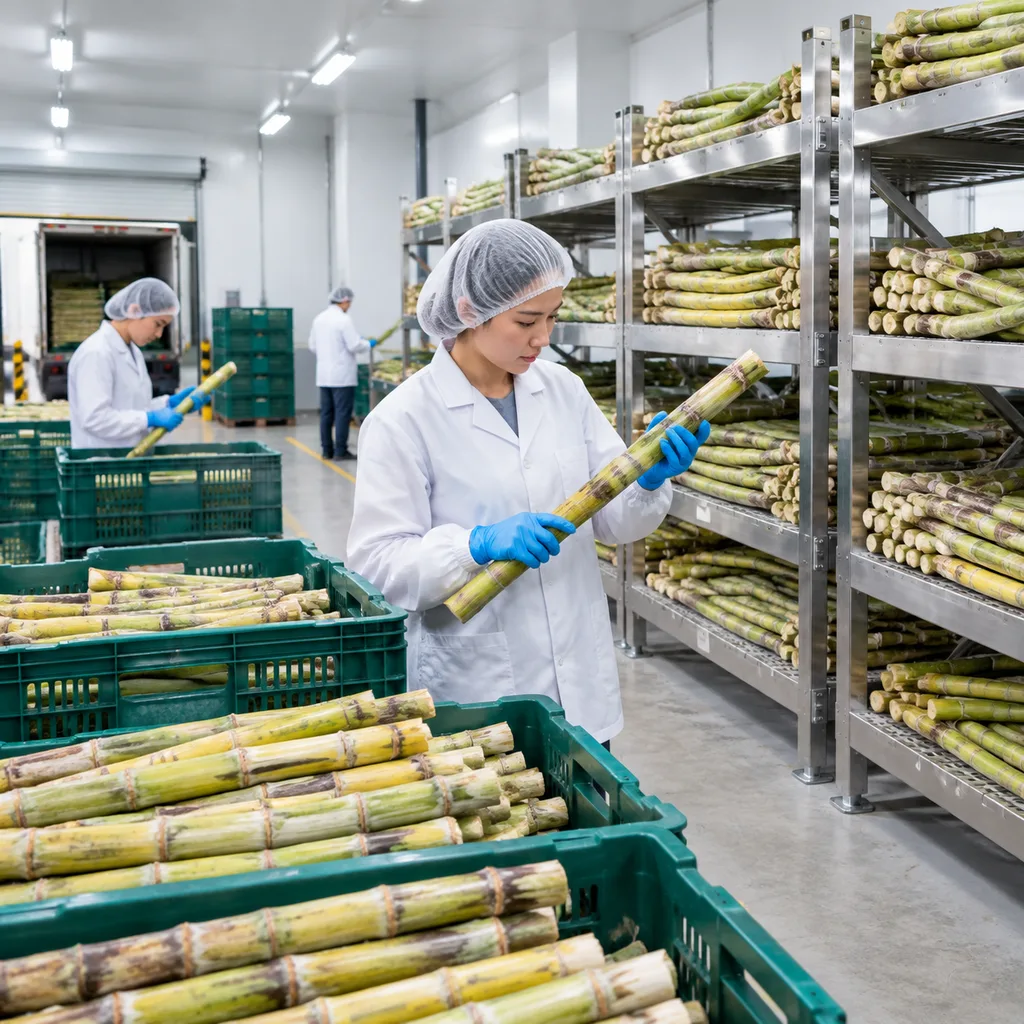
The workflow begins before the juicer is switched on. On delivery, check the cane for visible damage, excessive dryness, mould, pests, off odours, or contamination from transport. Record the supplier, delivery date, and any lot or invoice reference that your local operating procedures require. Move acceptable cane promptly into the designated storage area.
Store cane off the floor, protected from splash, pests, cleaning chemicals, and direct heat. Use a simple first-in, first-out rotation so older acceptable stock is used before newer deliveries. Keep the storage method appropriate to your local climate, delivery frequency, and food-safety requirements; the correct temperature and holding time depend on local rules and the condition of the cane.
Do not use cane that appears spoiled or contaminated. A lower purchase price does not compensate for poor product quality, difficult preparation, or avoidable service waste.
2. Prepare cane at a separate raw-product station
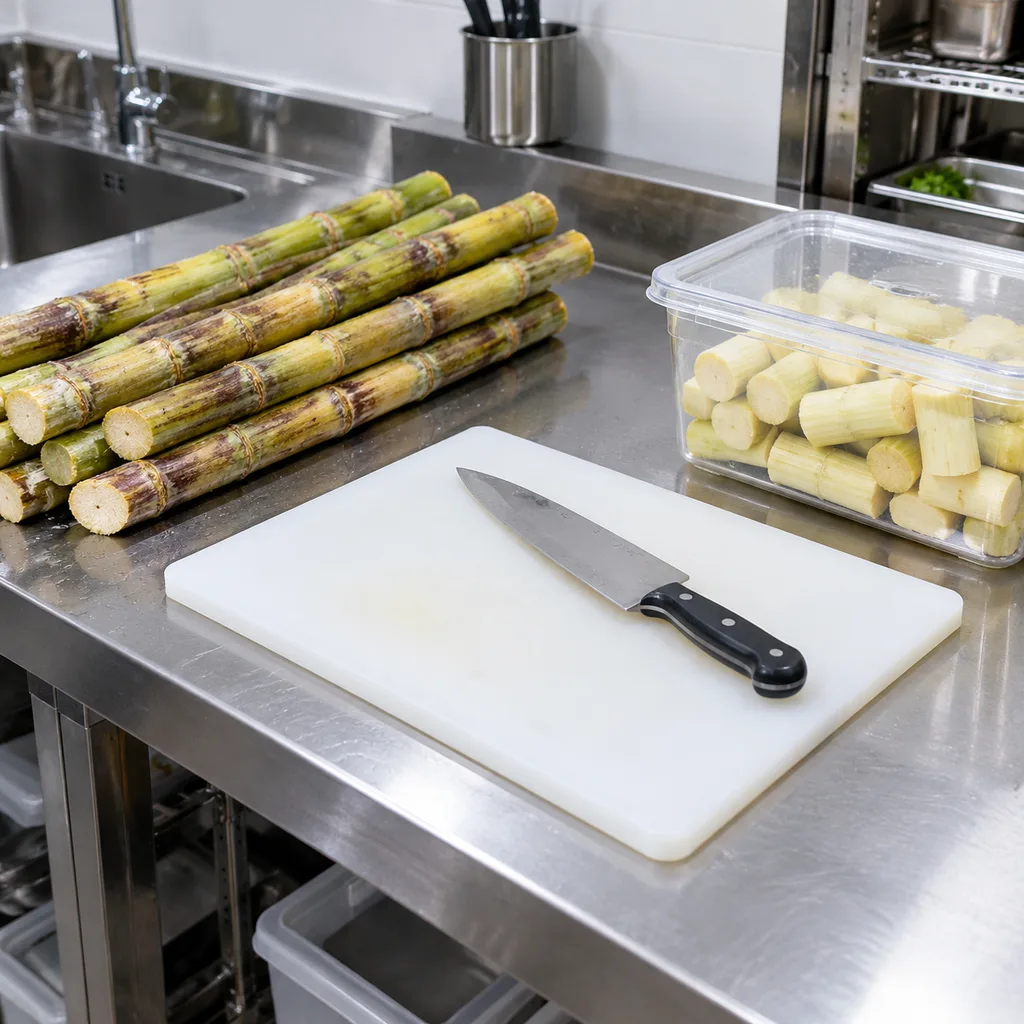
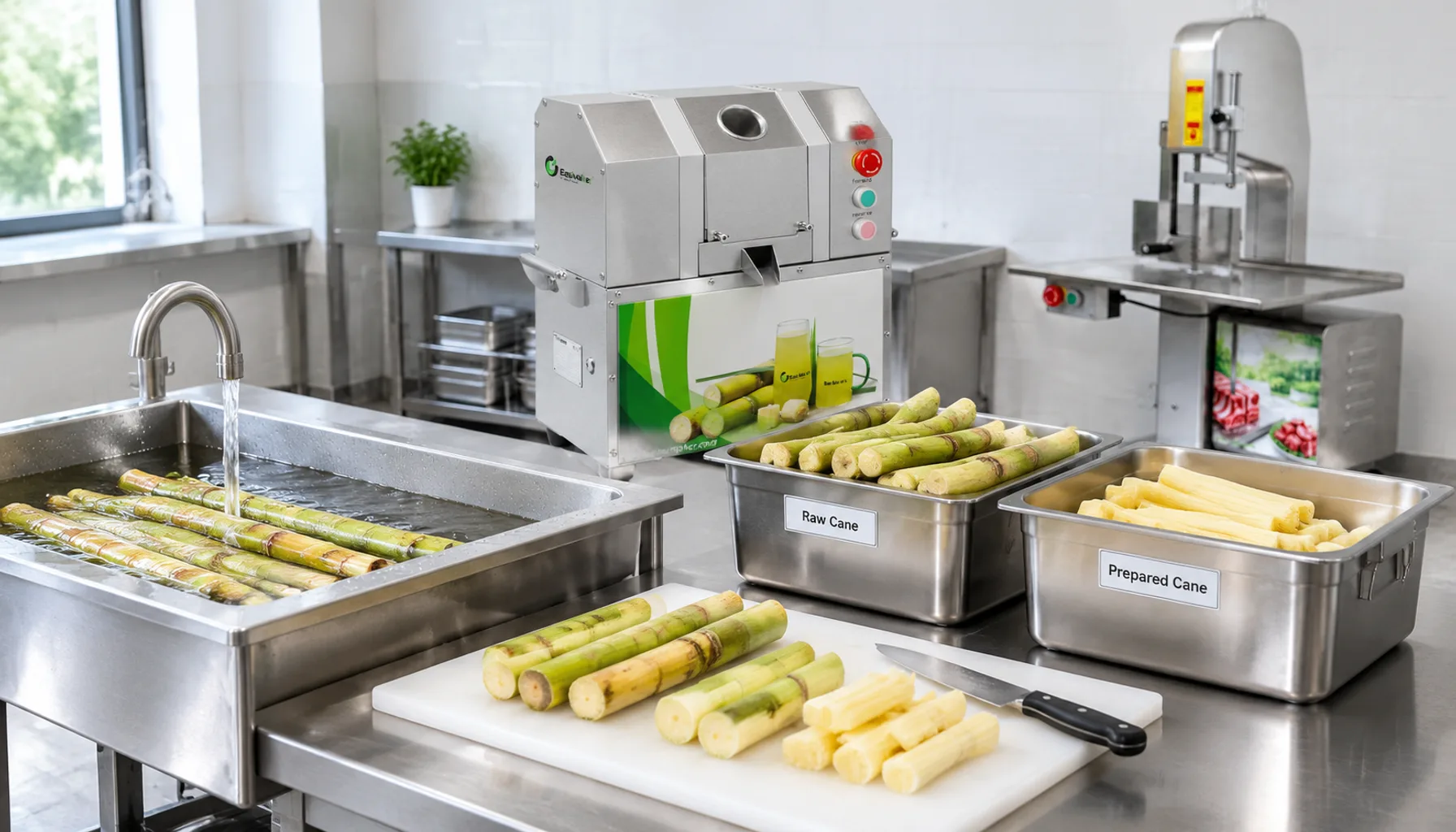
Preparation turns delivered cane into juicer-ready pieces. Set up this work at a washable, easy-to-clean bench that is separated from the cup and finished-drink area. Staff should wash hands before starting, use clean food-contact tools, and follow the shop’s approved washing and sanitation procedures.
- Select cane needed for the current service period rather than overcrowding the counter with stock.
- Rinse or wash the outside of cane as required by your procedure, removing visible soil and debris.
- Trim damaged ends and remove unsuitable sections.
- Cut stalks to the length and shape accepted by the selected juicer’s feed opening.
- Place prepared pieces in a clean, covered or otherwise protected food container near the machine.
Keep knives and cutting boards controlled. A knife used for trimming raw cane should not be left on the cup assembly counter. If your menu includes lemon, ginger, mint, or other additions, prepare and hold these ingredients under their own suitable procedures rather than treating them as part of the cane-prep task.
3. Juice, finish, and serve to order
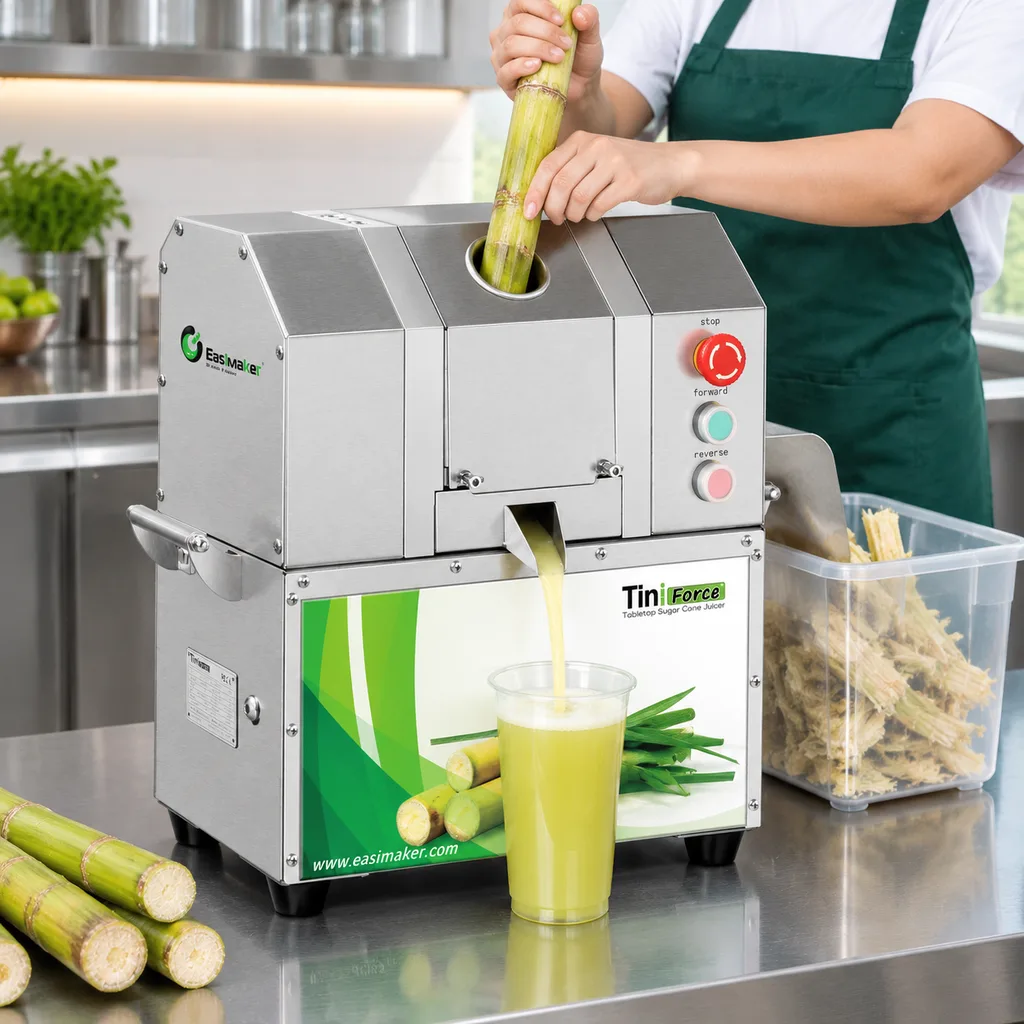
Fresh extraction is the centre of the commercial sugarcane juice process. Before each shift, check that the machine is correctly positioned, connected to the matching electrical supply, assembled as instructed, and clean. Keep a usable clearance around the feed inlet, front juice outlet, and rear bagasse discharge. Never try to feed cane by hand beyond the machine’s intended feed point, and stop the machine before clearing any obstruction.
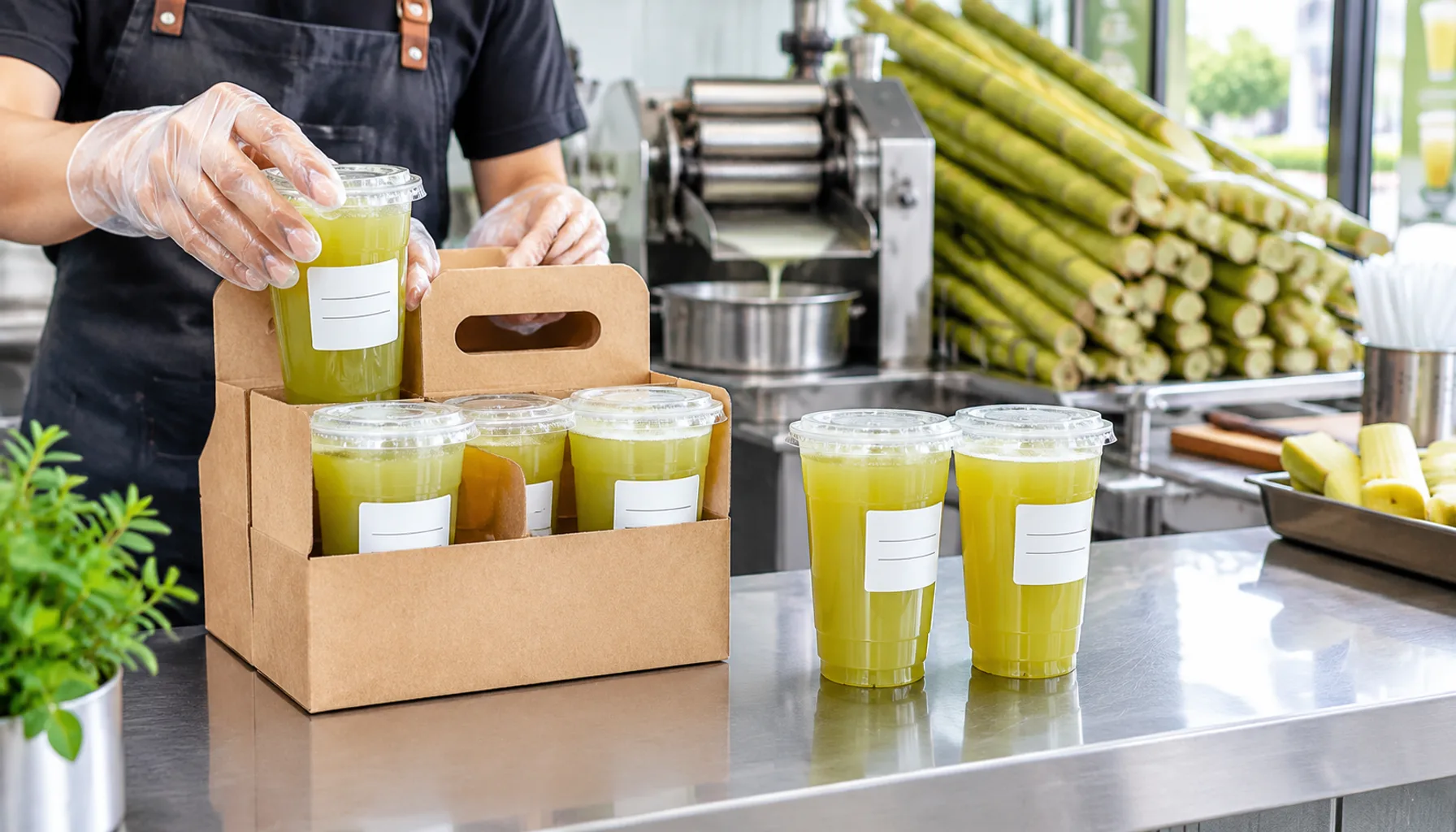
During service, an operator should feed prepared cane steadily, collect juice in a clean food-contact container or directly into the intended cup where the setup allows, and keep the outlet area free of drips and buildup. Add ice, permitted flavour ingredients, and a lid only with clean utensils or controlled dispensers. Hand the drink to the customer promptly.
Use a simple order sequence: take order and payment, prepare the cup, juice to order, add selected extras, close the cup, confirm the order, and hand over. This reduces remakes and makes it easier to identify which drink belongs to which customer during peak service.
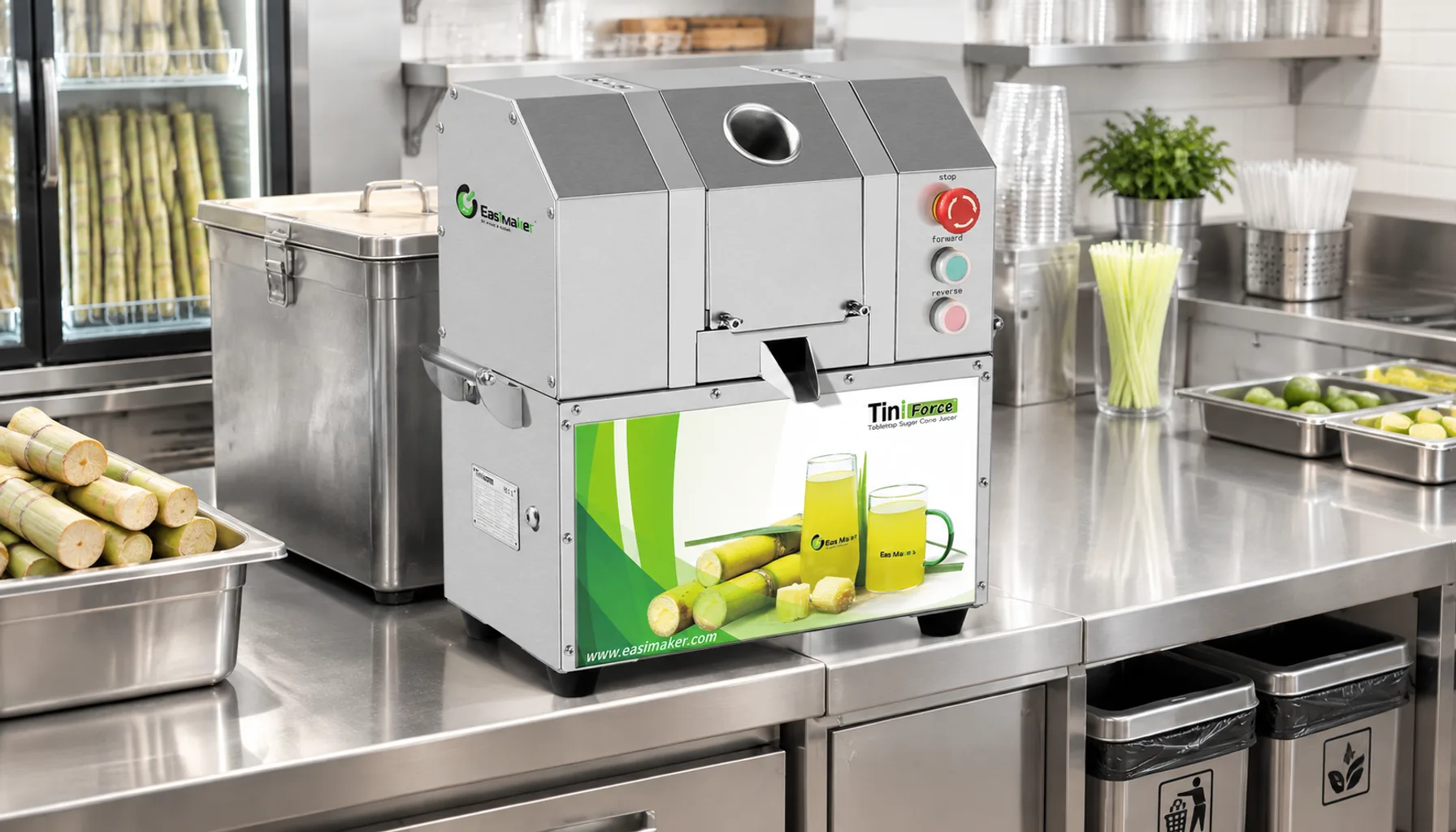
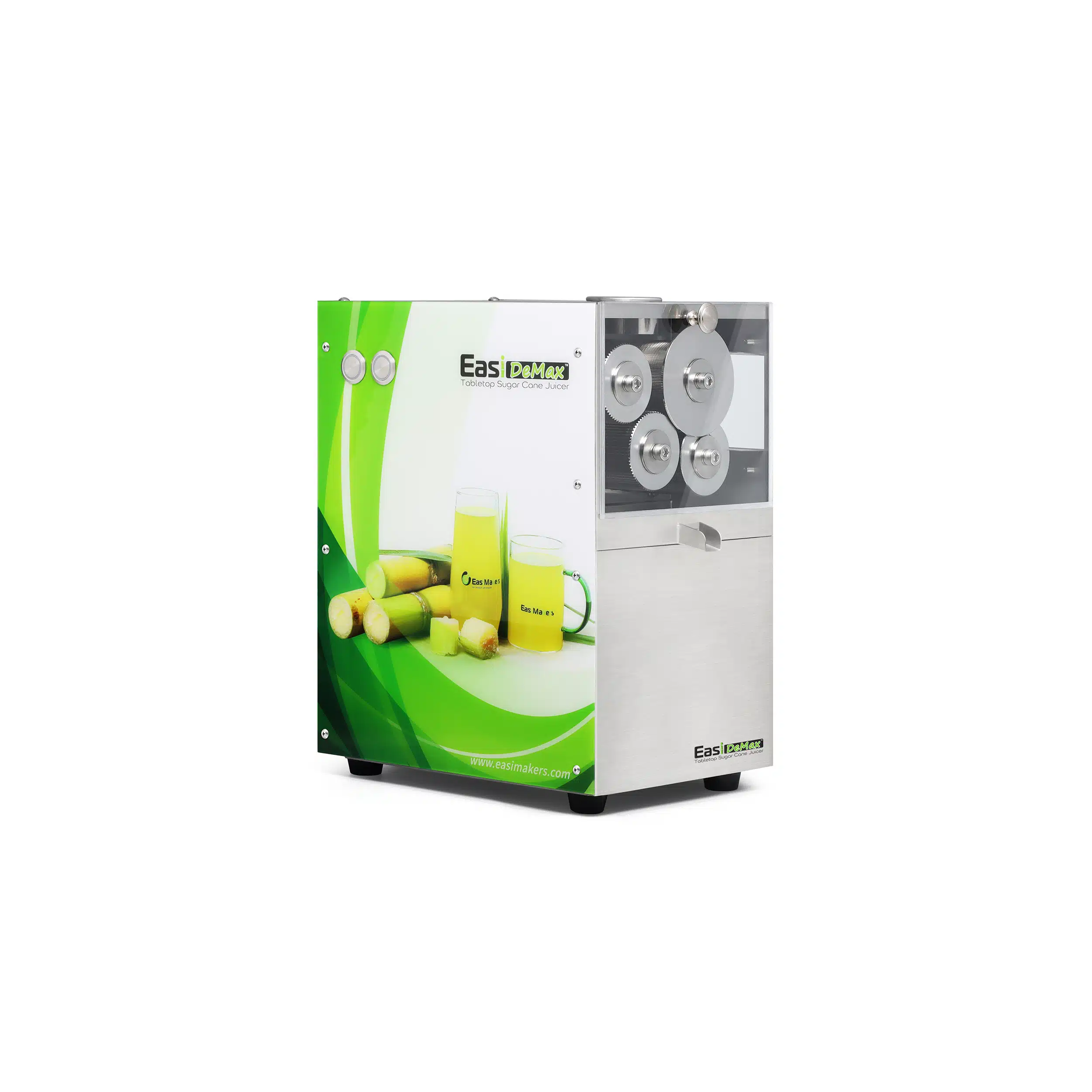
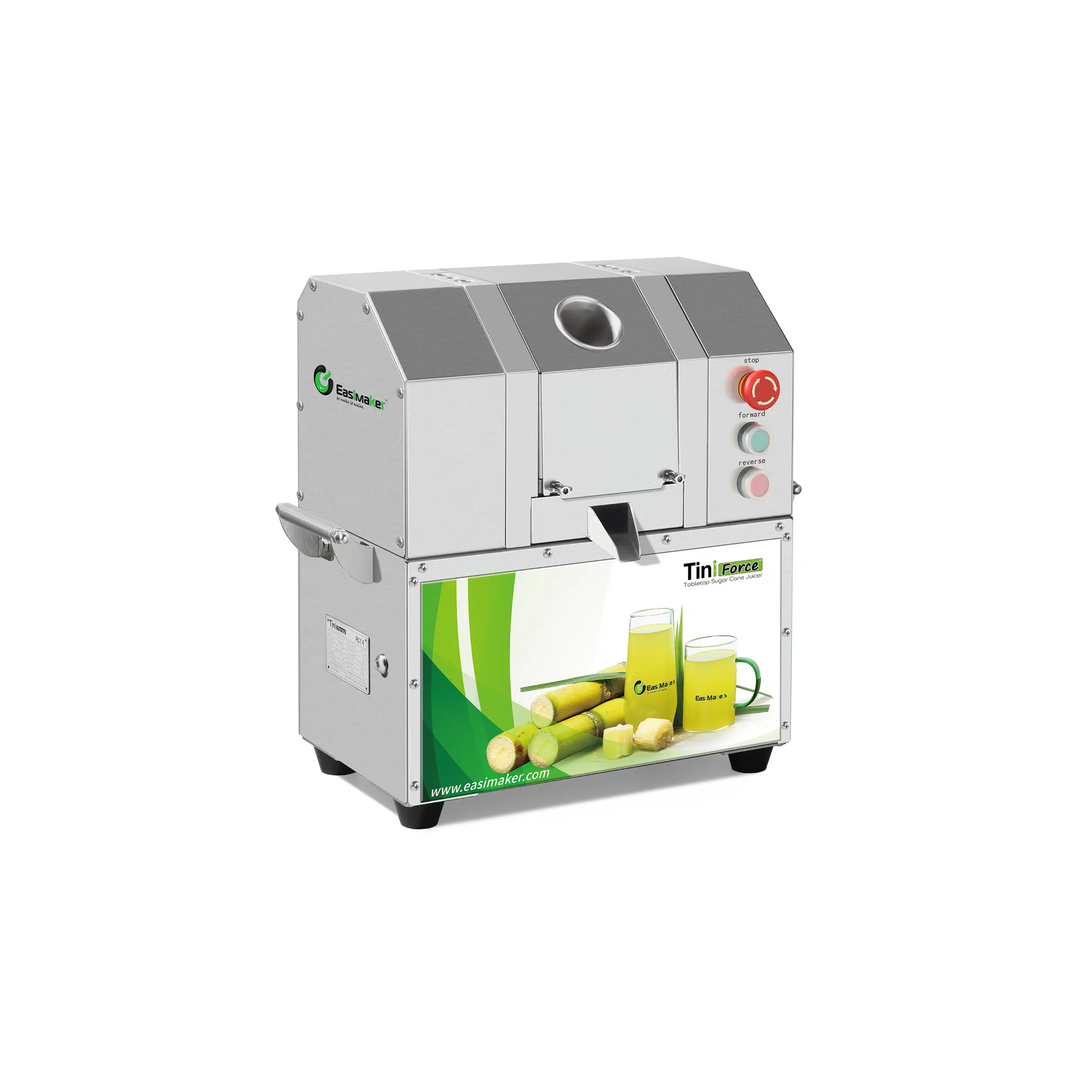
For a compact front-feed machine, confirm how its physical layout suits the counter. The illustrated unit uses an upper-front feed inlet, a central front juice spout, and rear bagasse discharge; this means staff need clear working room at both the front and back of the machine.
Workstation zones and control points
| Workflow zone | Main task | What should stay in the zone | Key control point |
|---|---|---|---|
| Receiving and storage | Inspect, record, rotate cane | Unwashed cane, delivery records, storage racks | Keep stock off the floor and separate from chemicals. |
| Preparation | Wash, trim, and cut cane | Washable bench, knife, board, protected prepared-cane container | Keep raw-product tools away from cup assembly. |
| Juicing | Extract juice and manage bagasse flow | Juicer, juice collection vessel, bagasse bin | Maintain safe access to feed, outlet, and discharge areas. |
| Finishing and handover | Add ice or menu options, lid, label, serve | Cups, lids, clean ice tools, payment and order system | Protect finished drinks from raw cane and splash. |
| Cleaning and waste | Wash equipment and remove waste | Cleaning tools, approved chemicals, waste containers | Do not return used cleaning items to food-preparation zones. |
The exact footprint will vary by shop, but each zone needs a defined purpose. When a counter is too small for fully separate stations, use time separation and clear container control: finish raw-cane preparation, clean and reset the work surface, then begin cup assembly.
4. Close, clean, and prepare for the next shift
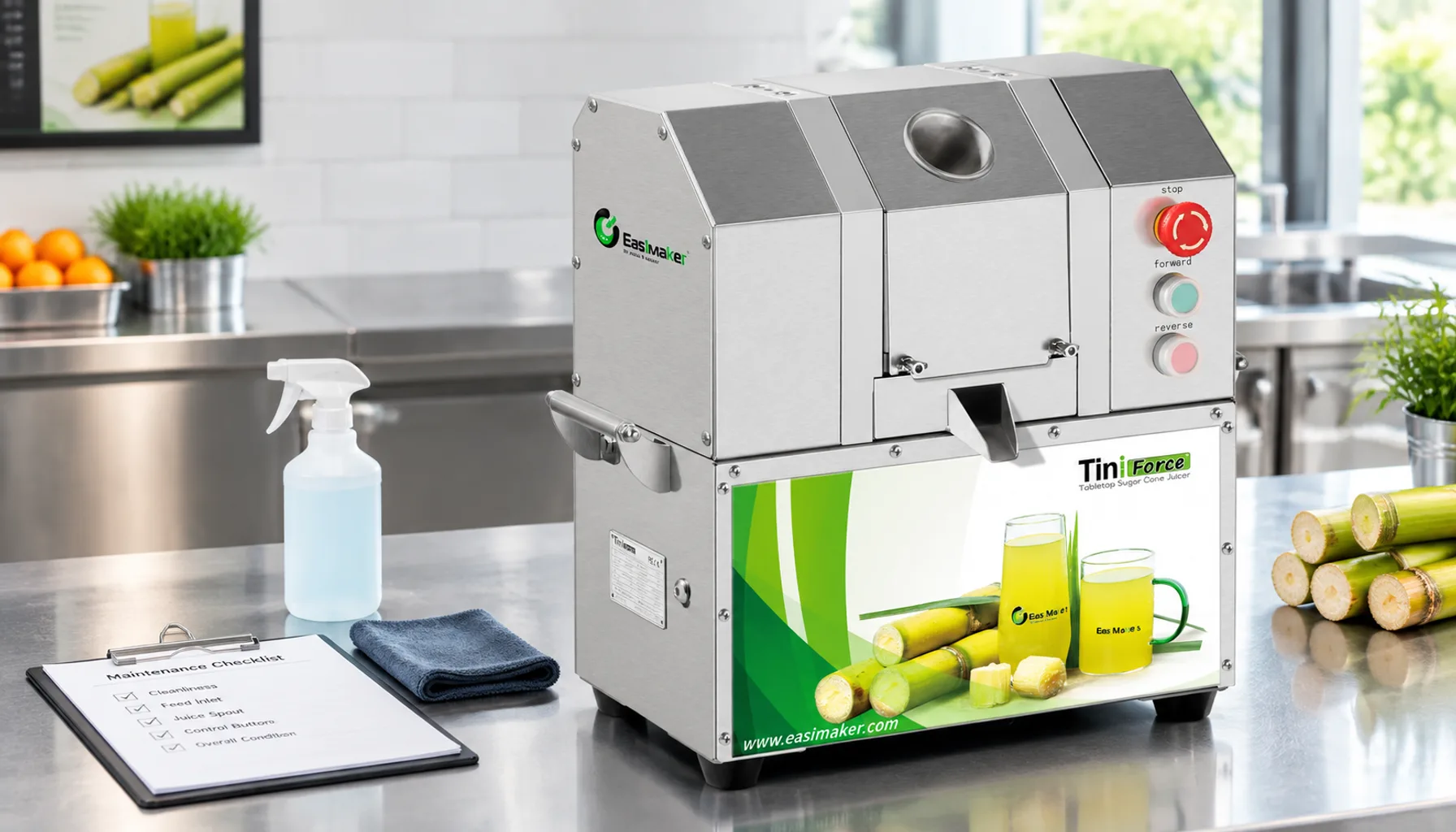
Closing is part of the fresh juice service workflow, not an optional task after sales end. Stop the machine, isolate power as instructed, and follow the manufacturer’s cleaning guidance for the food-contact and accessible areas. Remove bagasse promptly into the designated waste stream. Clean spills from the counter, floor, outlet area, and surrounding surfaces before they dry or attract pests.
Use a written closing checklist that covers: remaining cane stock and condition, prepared-cane disposition, machine cleaning, removable parts where applicable, cup and ingredient storage, waste removal, floor cleaning, and a visual check for damage or unusual machine operation. Report issues before the next shift rather than asking staff to work around them.
Track recurring problems such as cane that does not fit the inlet, persistent drips, slow counter reset, or bagasse congestion. These are often workflow design issues that can be corrected by changing cane cut length, container placement, staff allocation, or equipment selection.
Choose equipment around the workflow
A commercial juicer should fit the way your staff actually receive, prepare, extract, and serve cane. Before choosing a machine, confirm the available counter dimensions, feed direction, juice outlet position, bagasse discharge direction, electrical requirements, cleaning access, expected service pattern, and locally available technical support. Do not assume that a machine suited to a low-volume counter will automatically suit a continuous queue.
Also consider the upstream preparation method. If whole stalks must be cut before feeding, allow for a safe cutting area and a controlled route to the juicer. The correct equipment package depends on your menu, operating volume, site layout, and local requirements.
A workflow review before purchase can prevent common installation problems, including no room for bagasse collection, a blocked front service counter, or insufficient access for cleaning and maintenance.
FAQ
What is the best order for a sugarcane juice shop workflow?
Use a one-way sequence: receive and inspect cane, store and rotate it, wash and cut it at a preparation station, juice it, finish and hand over the drink, then clean equipment and remove bagasse. Keep raw cane and preparation tools away from finished drinks and cup assembly.
Should sugarcane be prepared in advance for a busy shift?
Prepare only an amount your shop can protect, identify, and use within its approved operating procedure. Keeping prepared cane controlled and separate from unwashed stock helps service flow, but the handling method and holding period should follow local food-safety requirements.
Where should bagasse collection be placed?
Place the bagasse container where staff can access it without crossing the customer handover area or blocking the machine’s discharge path. Empty it often enough to prevent overflow, obstruction, and unnecessary handling during service.
How can a small sugarcane juice counter avoid cross-traffic?
Use clearly marked containers and time separation. Complete raw-cane preparation first, remove raw tools and waste, clean and reset the surface, then assemble drinks. Keep cups, lids, ice tools, and finished orders on the clean service side of the counter.
Plan a workflow that fits your counter and service model
Easimaker can help B2B buyers discuss a commercial sugarcane juicer configuration that matches their cane preparation route, counter space, expected service pattern, and target market. Request a practical equipment discussion or quote for your project.