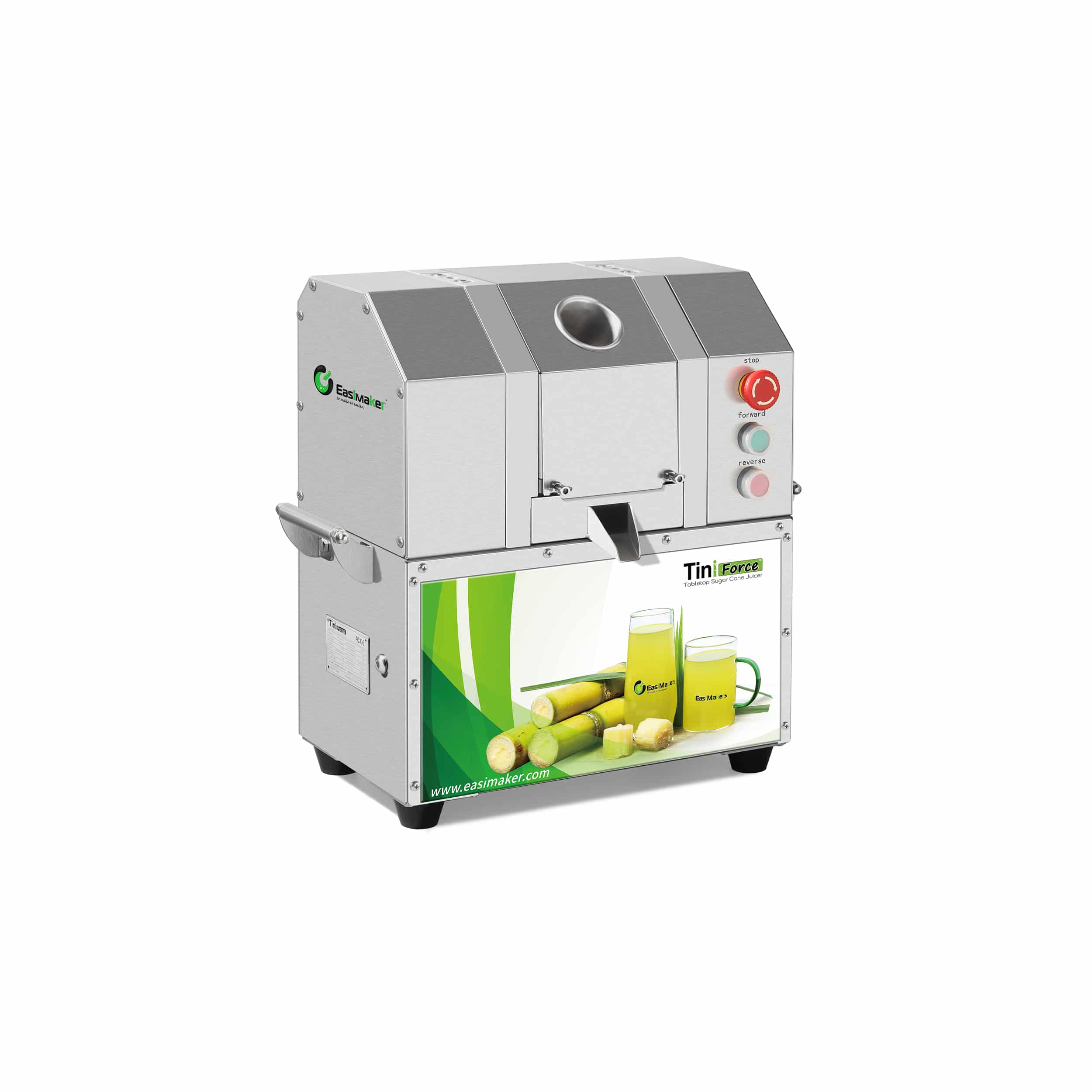

For high-volume juice bar operators and commercial beverage facilities, maximizing extraction yield is critical to profitability. However, processing thick sugarcane stalks presents a unique set of operational challenges. Dense, large-diameter canes require significantly more torque to crush, which can quickly lead to sugarcane juicer jamming and severe commercial juicer motor strain if not handled correctly.
This technical guide outlines best practices for hard sugarcane extraction. By implementing proper stalk preparation, refining feeding techniques, and recognizing the early signs of equipment fatigue, operators can extend the lifespan of their electric extractors while maintaining consistent operational throughput.
The Mechanics of Hard Sugarcane Extraction
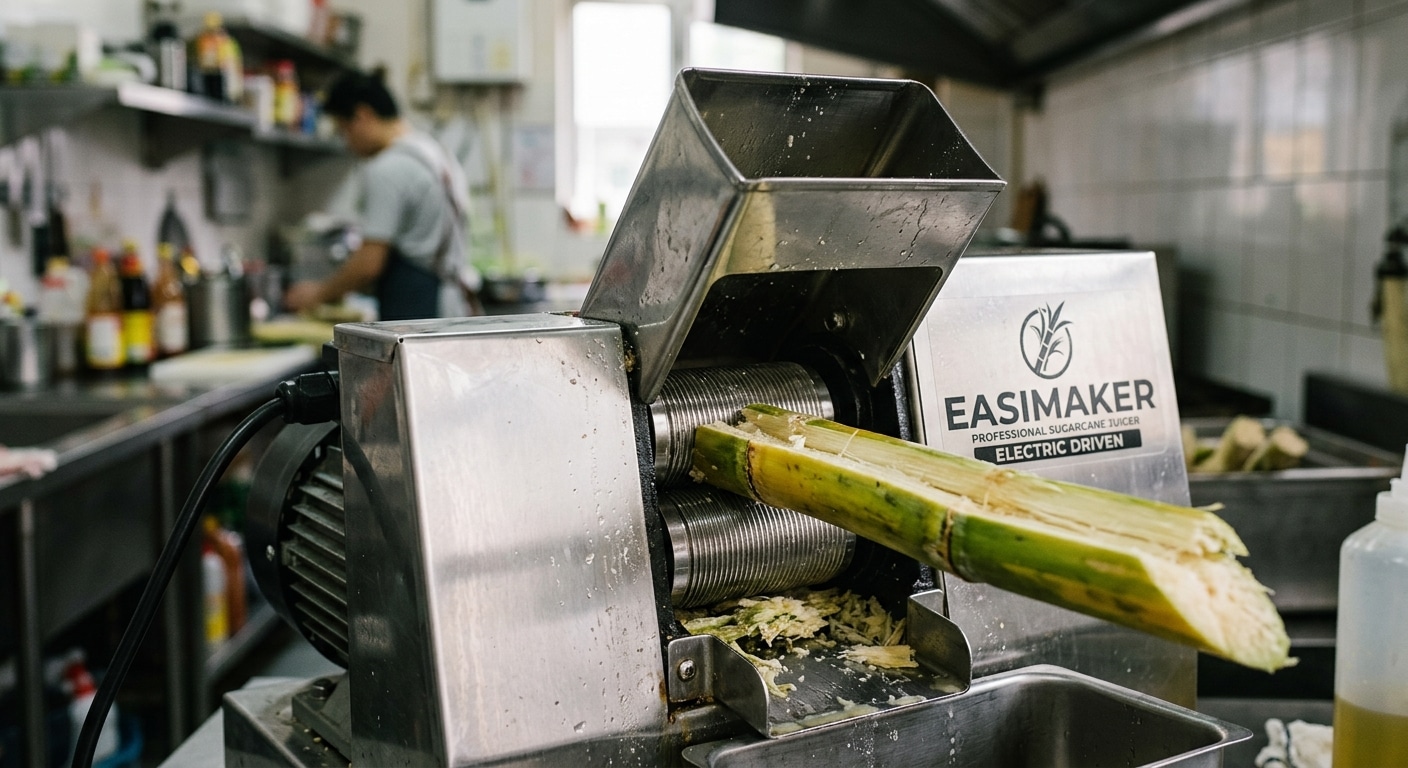
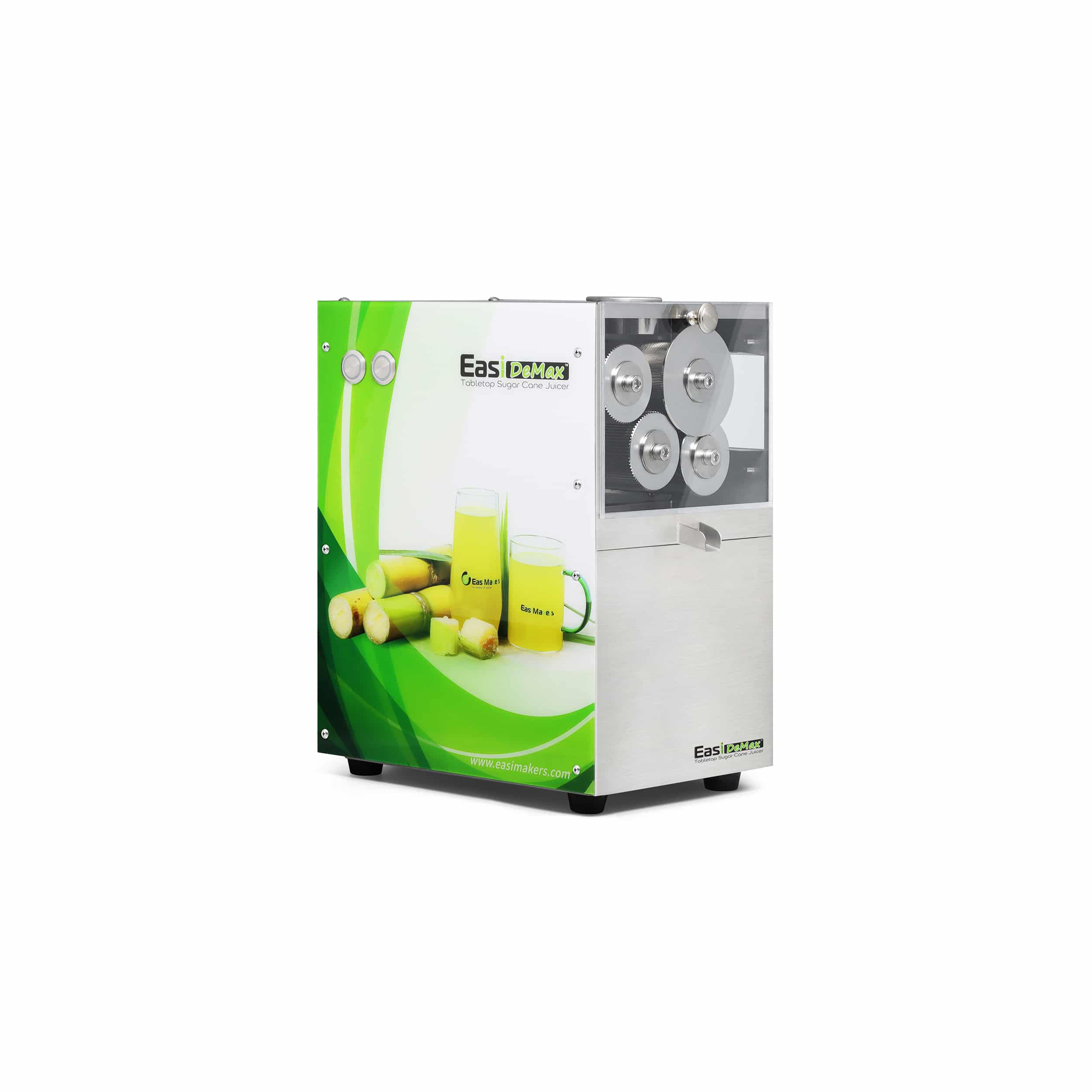
Commercial electric sugarcane juicers rely on a series of precisely calibrated stainless steel rollers to compress the stalk and extract the juice. The gap between these rollers is engineered to handle an average stalk diameter. When operators introduce exceptionally thick or mature (hardened) sugarcane, the machine’s motor must draw additional current to generate the torque necessary to pull and crush the material.
If the resistance exceeds the motor’s capacity, the rollers stall. Repeated stalling not only damages the gearbox but also degrades the motor windings due to excessive heat generation. Understanding this mechanical limitation is the first step in preventing catastrophic equipment failure.
Pre-Processing: Preparing Thick Sugarcane Stalks
Proper stalk preparation is the most effective defense against machine jamming. Juice bar staff should be trained to evaluate and prep canes before they ever touch the machine.
1. Splitting Oversized Canes
Electric extractors operate optimally when the feed material matches the roller intake dimensions. If a sugarcane stalk exceeds the maximum recommended diameter for your specific machine (often around 50mm to 60mm, depending on the model), it must be split longitudinally. Using a heavy-duty cleaver or a specialized sugarcane splitter to halve thick stalks reduces the required crushing force by more than 50%, virtually eliminating the risk of a jam.
2. Beveling the Lead Edge
A blunt, flat-cut end struggles to catch between the initial intake rollers, forcing the operator to push the cane aggressively. Instead, cut the leading end of the stalk at a 45-degree angle. This wedge shape allows the rollers to grip the cane smoothly and initiate the pulling process without sudden shock-loading the motor.
3. Managing Hard Nodes
The joints, or nodes, of the sugarcane stalk are the densest parts of the plant. On particularly old or thick canes, these nodes can act like speed bumps, causing momentary spikes in motor strain. While modern commercial machines are built to handle them, trimming protruding nodes on unusually hard stalks can smooth out the extraction process.
Optimal Feeding Techniques to Prevent Sugarcane Juicer Jamming
How the operator feeds the machine is just as important as the preparation of the cane itself. Inconsistent or forced feeding is a primary cause of equipment downtime.
- Let the Machine Do the Work: Never force or shove the stalk into the feed chute. Once the initial rollers grip the beveled edge, release your forward pressure and allow the machine’s gearing to pull the cane through at its own engineered speed.
- Maintain Proper Angles: Feed the stalk straight into the chute. Angling the cane sideways can cause it to track unevenly across the rollers, leading to asymmetrical wear on the bearings and potential binding.
- Pacing the Feed: Do not feed a second stalk until the first has completely cleared the final roller. Overcrowding the extraction chamber exponentially increases the load on the motor and gearbox.
Recognizing Early Indicators of Commercial Juicer Motor Strain
Operators must be trained to monitor the acoustic and physical feedback of their equipment. Catching motor strain early prevents permanent damage.
- Acoustic Changes (Whining or Grinding): A healthy electric extractor operates with a steady, low-pitched hum. If the motor pitch suddenly drops or begins to whine loudly when a thick stalk is introduced, it is struggling to maintain RPM. Grinding noises indicate gearbox stress.
- Sudden RPM Drops: If the rollers visibly slow down during hard sugarcane extraction, the motor is nearing its stall point. Operators should immediately use the reverse function (if available) to back the cane out and split it before trying again.
- Excessive Heat Output: While motors naturally generate heat, the exterior casing should never be too hot to touch. Excessive heat is a byproduct of the motor drawing high amperage to overcome a jam, which can melt internal winding insulation.
Equipment Selection: Specifications for Heavy-Duty Processing
If your supply chain consistently provides thick, dense sugarcane, ensuring you have the right commercial extractor is paramount. Below are key specifications to consider when evaluating equipment for heavy-duty use.
| Component | Standard Duty | Heavy-Duty (Thick Stalks) |
|---|---|---|
| Motor Power | 400W – 750W | 1000W – 1500W+ (High Torque) |
| Roller Configuration | 3 Rollers | 4 to 5 Rollers (Gradual compression) |
| Gearbox | Standard Chain/Belt | Direct Gear-Driven (All-steel gears) |
| Reverse Function | Optional | Mandatory (for safe jam clearing) |
Routine Sugarcane Machine Maintenance
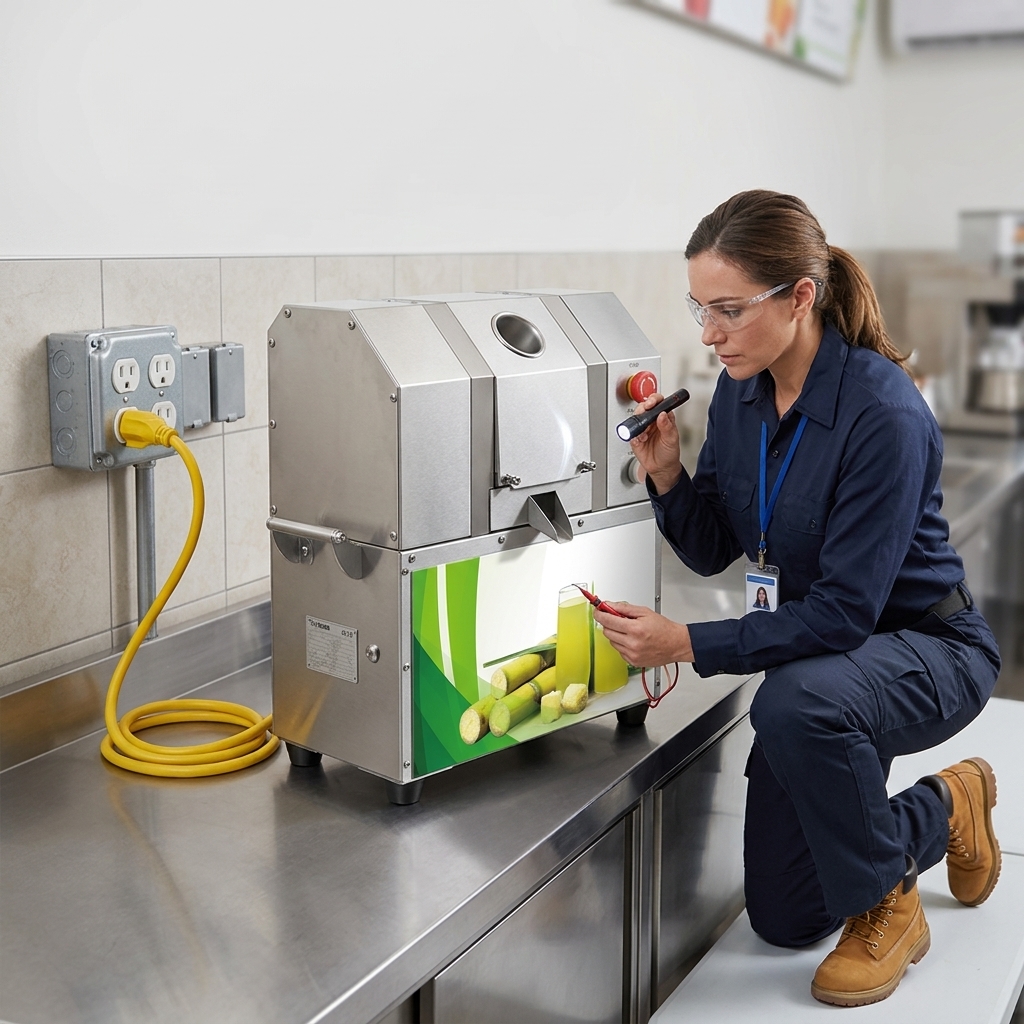
Preventative maintenance is crucial for machines subjected to the rigors of processing thick sugarcane. A well-maintained machine operates with less friction, reserving maximum motor power for the crushing process.
- Daily Cleaning: Sugar residue acts as an adhesive. If left to dry on the rollers or gears, it forces the motor to work harder upon startup. Flush the extraction chamber with warm water and a food-safe brush at the end of every shift.
- Lubrication: Regularly inspect and lubricate the drive gears and bearing housings according to the manufacturer’s schedule. Dry gears under heavy loads will strip or shatter.
- Tension Adjustment: For machines with adjustable roller gaps, ensure the tension is set correctly. A gap that is too tight will cause unnecessary motor strain, while a gap that is too loose will result in poor juice yield.
Frequently Asked Questions (FAQs)
Why does my commercial sugarcane juicer keep jamming?
Jamming is typically caused by feeding stalks that are too thick for the roller gap, feeding multiple stalks simultaneously, or a lack of routine maintenance causing sticky buildup on the rollers.
Can I process hard, mature sugarcane in an electric juicer?
Yes, provided you prepare the stalks properly by splitting oversized canes, cutting the ends at an angle, and ensuring your machine has a sufficiently powerful motor (typically 1000W or higher) designed for commercial extraction.
What should I do if a thick stalk gets stuck in the machine?
Immediately turn off the machine to prevent motor burnout. Use the machine’s reverse switch to back the stalk out. If it remains stuck, disconnect the power and manually clear the jam according to the manufacturer’s safety guidelines. Never force it through.
How often should I clean my commercial sugarcane extractor?
Commercial machines should undergo a basic water flush between different batches if sitting idle, and a thorough, deep cleaning of the rollers, juice tray, and filter at the end of every business day.
Does splitting the sugarcane affect the juice yield?
No. Splitting the cane longitudinally exposes more surface area to the rollers, which can actually improve extraction efficiency while significantly reducing the mechanical load on the juicer’s motor.
Optimize Your Juice Bar Operations
Processing thick sugarcane stalks doesn’t have to result in costly downtime or equipment failure. By training your staff on proper stalk preparation and feeding techniques, you can ensure smooth operations and maximum yield. If your current equipment is struggling to keep up with the demands of hard sugarcane extraction, it may be time to upgrade to a more robust commercial solution.
Ready to enhance your extraction efficiency? Request a quote / Get a sample today to learn more about high-performance, electric sugarcane juicers designed for commercial reliability.