Table of Contents
- What capacity actually measures
- Calculate peak demand
- Account for staffing and operating limits
- Run a realistic throughput test
- Request model-specific evidence
- Choose headroom from observed variation
Choose sugarcane juice machine capacity by calculating the juice needed during your busiest service interval, then checking whether the complete station can serve those drinks within the machine’s documented operating limits. A supplier’s extraction figure is not the same as finished cups served per hour: cane handling, staffing, ingredient additions, packaging, and waste removal can set the actual limit.
What Sugarcane Juice Machine Capacity Actually Measures
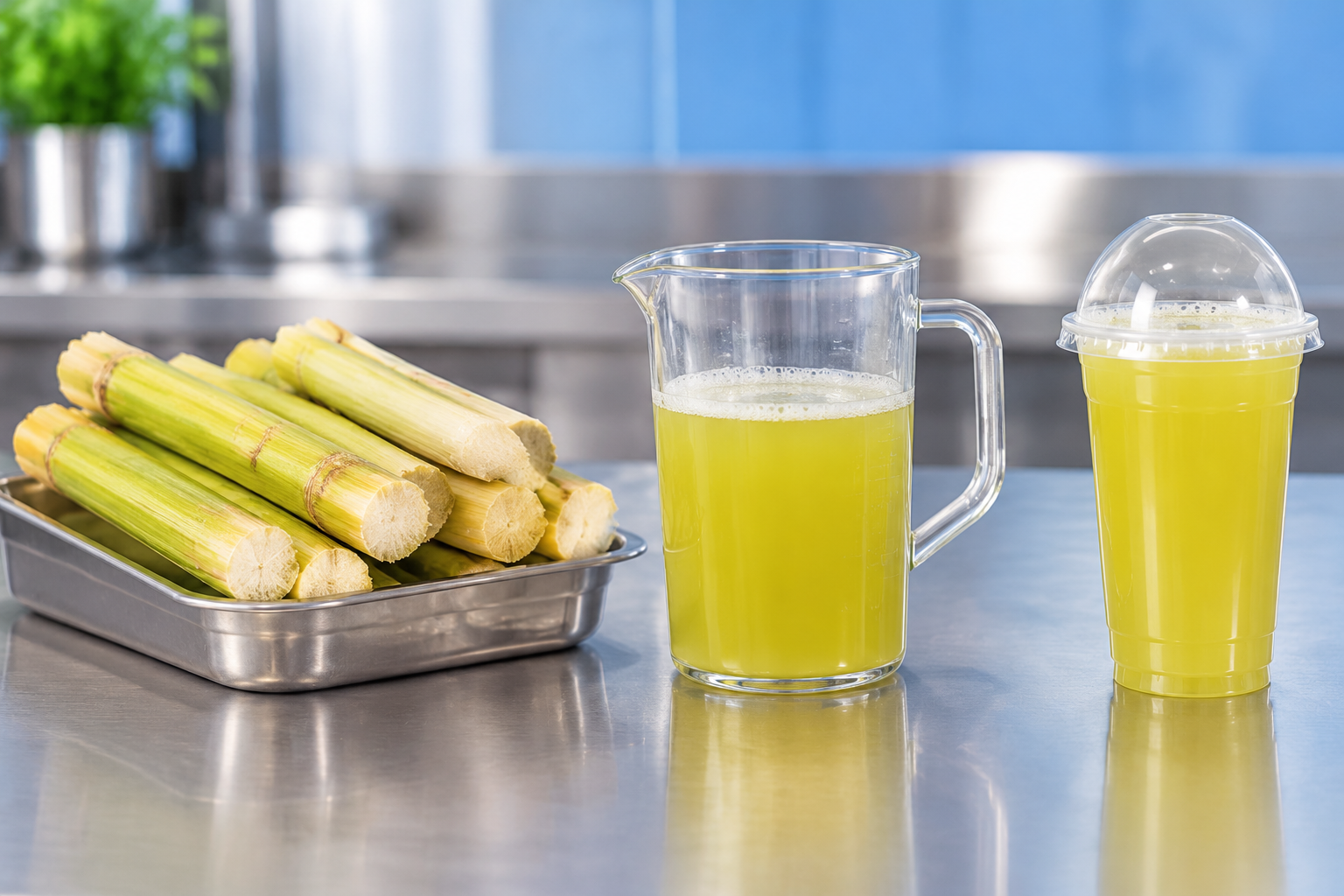
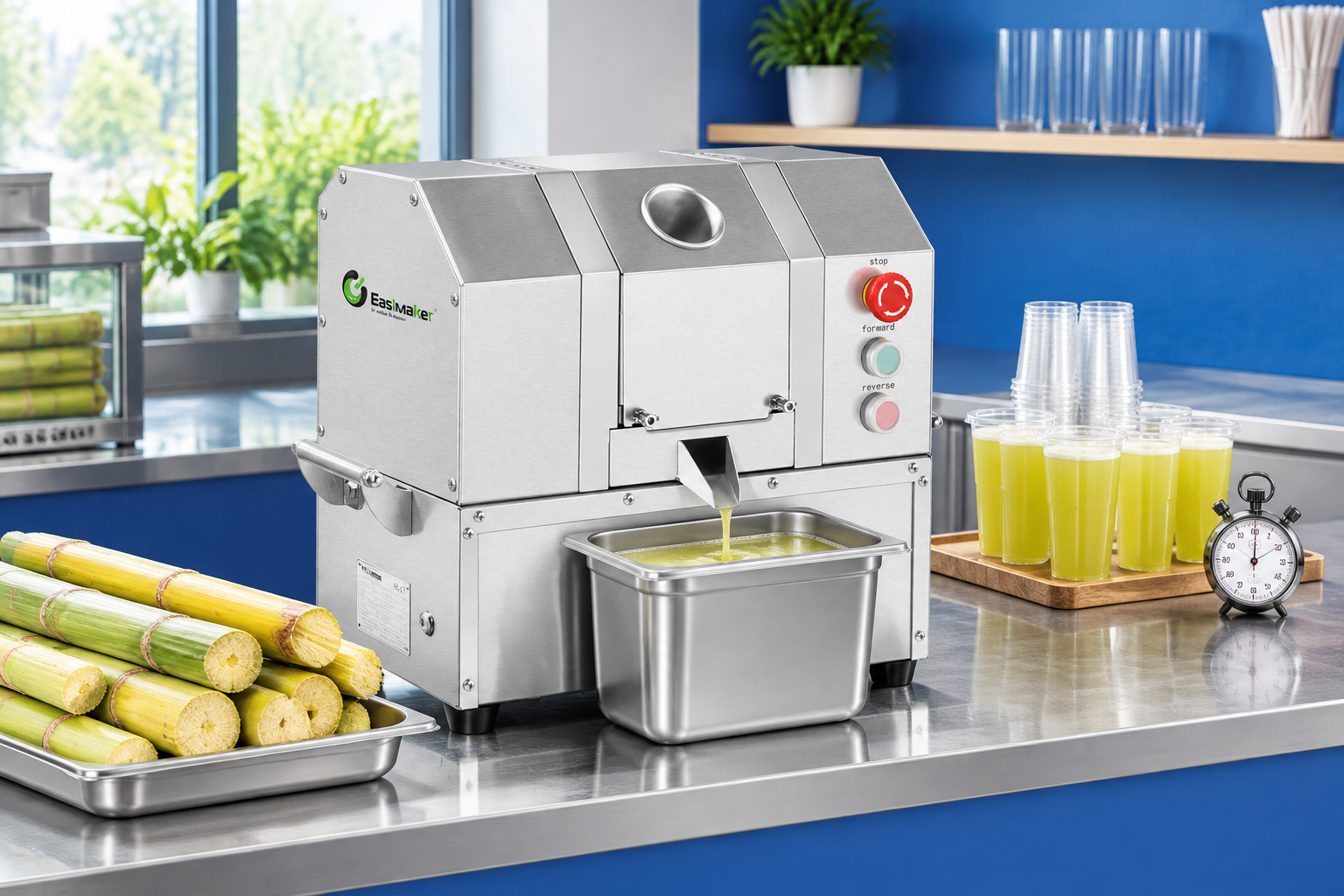
Capacity is a rate measured under stated conditions, not a universal promise. A commercial sugarcane juice machine crushes prepared stalks to separate liquid juice from fibrous bagasse. For shops, cafes, restaurants, and street stands, its useful capacity depends on the whole fresh-drink workflow.
- Cane input
- Kilograms of prepared cane processed per unit of time. Confirm whether weighing happens before or after washing and trimming.
- Juice output
- Liters collected per unit of time, with collection and straining conditions stated.
- Completed-drink throughput
- Correctly portioned, finished drinks ready for handoff during the measured interval.
These measurements are related but not interchangeable. Cane input cannot become cups without a measured usable juice yield and a defined recipe. Extraction speed cannot become service speed without including filling, additions, lids, and operator tasks.
When comparing commercial sugarcane juicer output, ask what the number measures, how long the trial lasted, and which tasks were excluded. Motor power, roller count, and machine footprint alone do not establish finished-drink capacity.
Convert Peak Orders Into Juice Demand
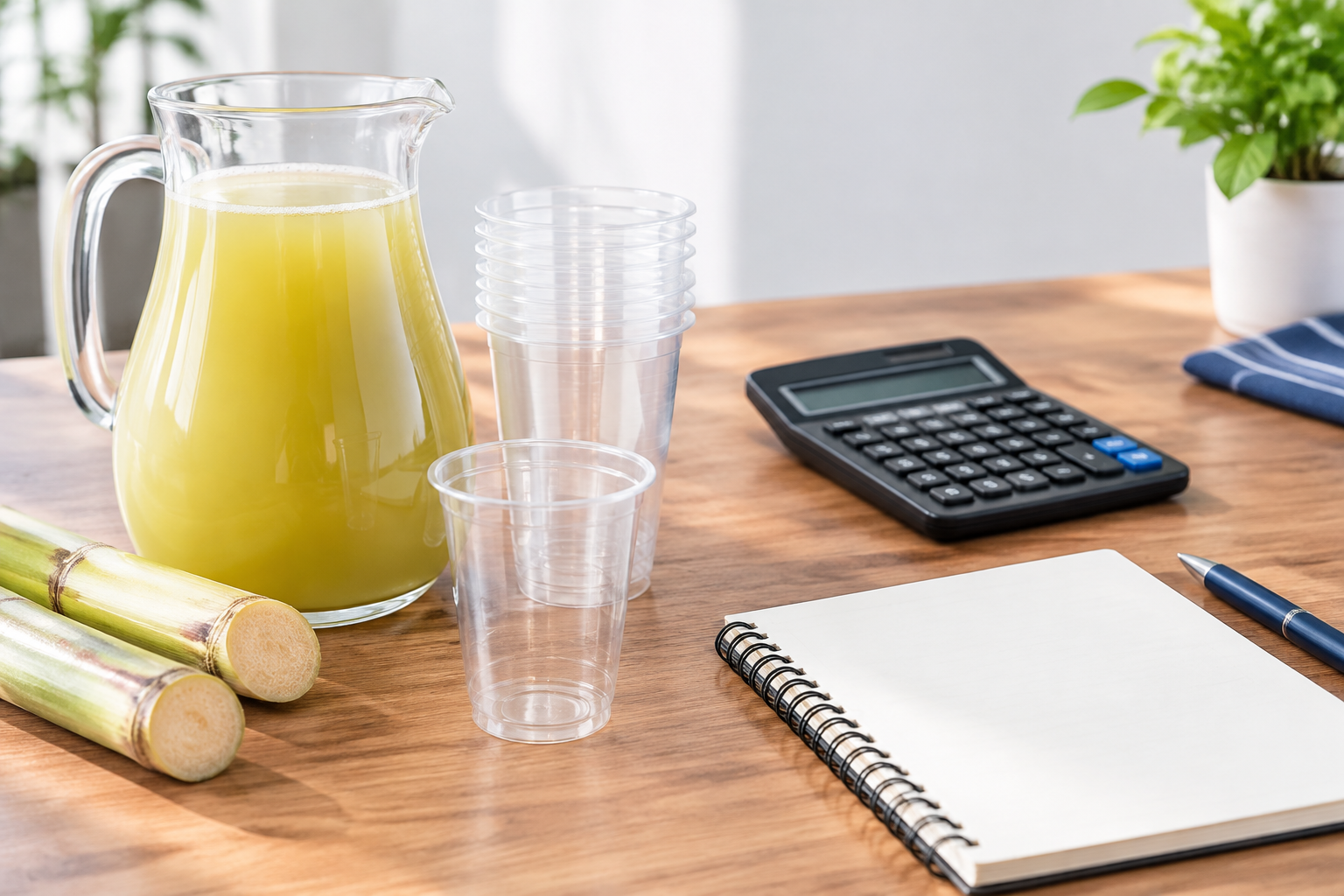
Calculate demand over the interval in which customers actually arrive. Daily sales averages can hide a lunch rush or a sudden event queue. Count drinks rather than transactions because one order may contain several servings.
Use the actual cane juice portion, not the cup’s nominal size. Ice and other ingredients occupy space but do not represent cane juice demand. For a mixed menu, add the juice requirements of each recipe.
- Required juice, liters: drinks × cane juice per drink in milliliters ÷ 1,000.
- Equivalent liters per hour: required liters × 60 ÷ interval minutes.
- Equivalent cups per hour: completed drinks × 60 ÷ measured minutes.
Illustrative worksheet only: Assume every drink uses 250 mL of cane juice. All orders and trial results below are hypothetical, not Easimaker specifications or actual observations. The trial column represents example completed-drink counts recorded over the same interval.
| Period | Drinks ordered | Interval | Juice per drink | Juice required | Equivalent demand | Example trial completion |
|---|---|---|---|---|---|---|
| Quiet | 8 | 15 minutes | 250 mL | 2 L | 8 L/hour | 12 drinks |
| Normal | 16 | 15 minutes | 250 mL | 4 L | 16 L/hour | 20 drinks |
| Peak | 24 | 15 minutes | 250 mL | 6 L | 24 L/hour | 22 drinks |
The example peak trial falls two drinks short, even though quieter periods pass. Its 22 completions equal 88 cups per hour mathematically, but this does not prove an hour of sustained operation. For sugarcane juicer cups per hour, always retain the original trial duration and operating conditions.
Also record order-to-handoff time. Matching total demand may still leave customers waiting if arrivals cluster at the beginning of the interval.
Account for Staffing, Interruptions, and Duty Cycle
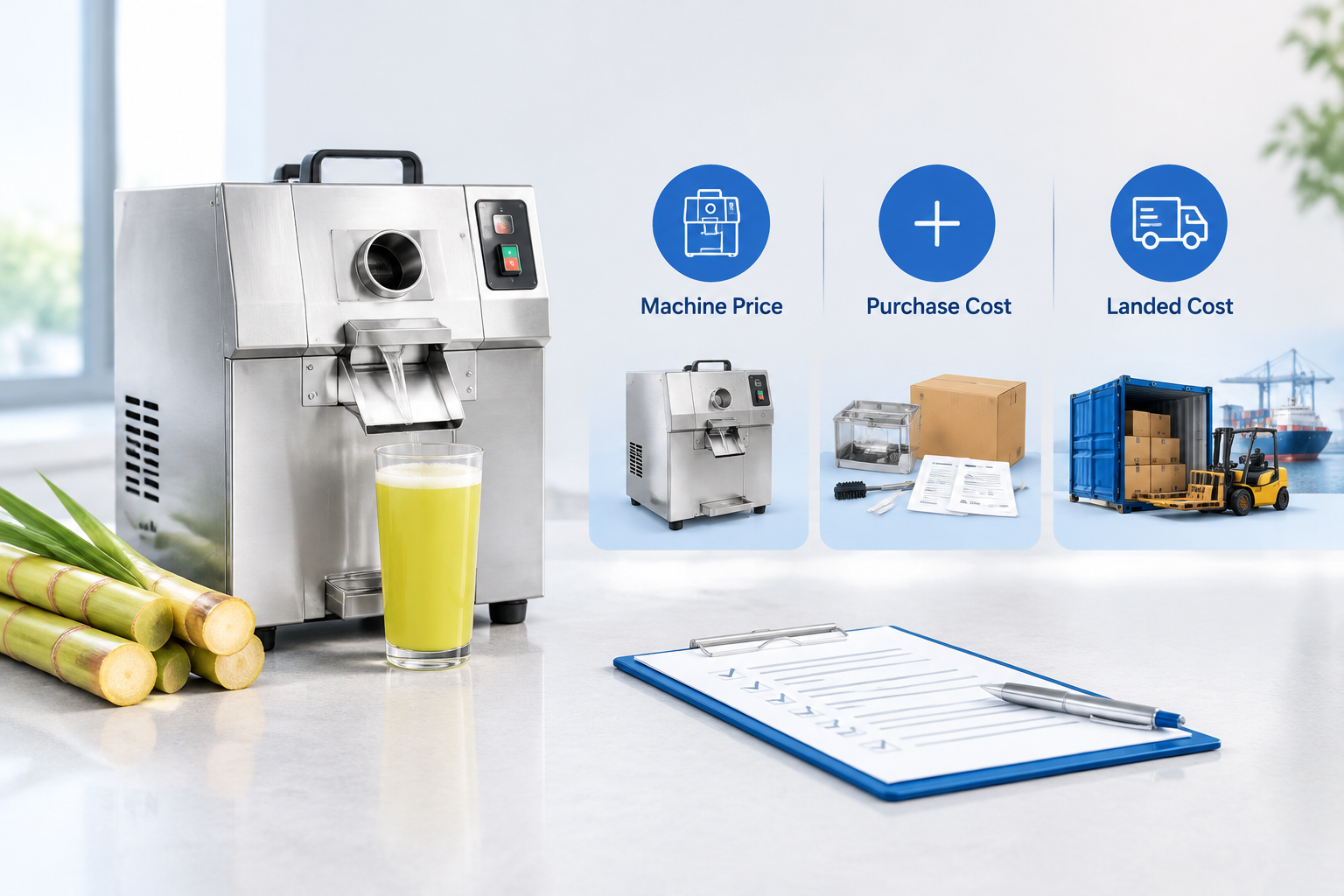
Size the station for the staff available during peak service, within the machine’s permitted duty cycle. A demonstration with dedicated feeding and serving operators may not represent a shop where one person also takes payment.
Time cane replenishment, cup filling, ingredient additions, bagasse removal, and required hygiene tasks. Preparation can happen separately, but its labor and storage needs still belong in the plan. Do not exclude routine interruptions simply to improve the result.
Duty cycle describes permitted operating and rest conditions. Confirm run limits, required pauses, feeding restrictions, and restart procedures in the machine datasheets and manuals. Never treat an overload shutdown as a planned cooling method or assume commercial labeling means unlimited continuous operation.
For U.S. installations, match the supplied configuration to the site’s voltage, frequency, plug, and circuit requirements. Review the electrical requirements for U.S. juice shops before installation.
During service, follow prescribed cleaning and inspection routines. Isolate power before cleaning or clearing obstructions as directed by the manual. Never bypass guards or alter settings to chase a capacity target.
Run a Sugarcane Juicer Throughput Test
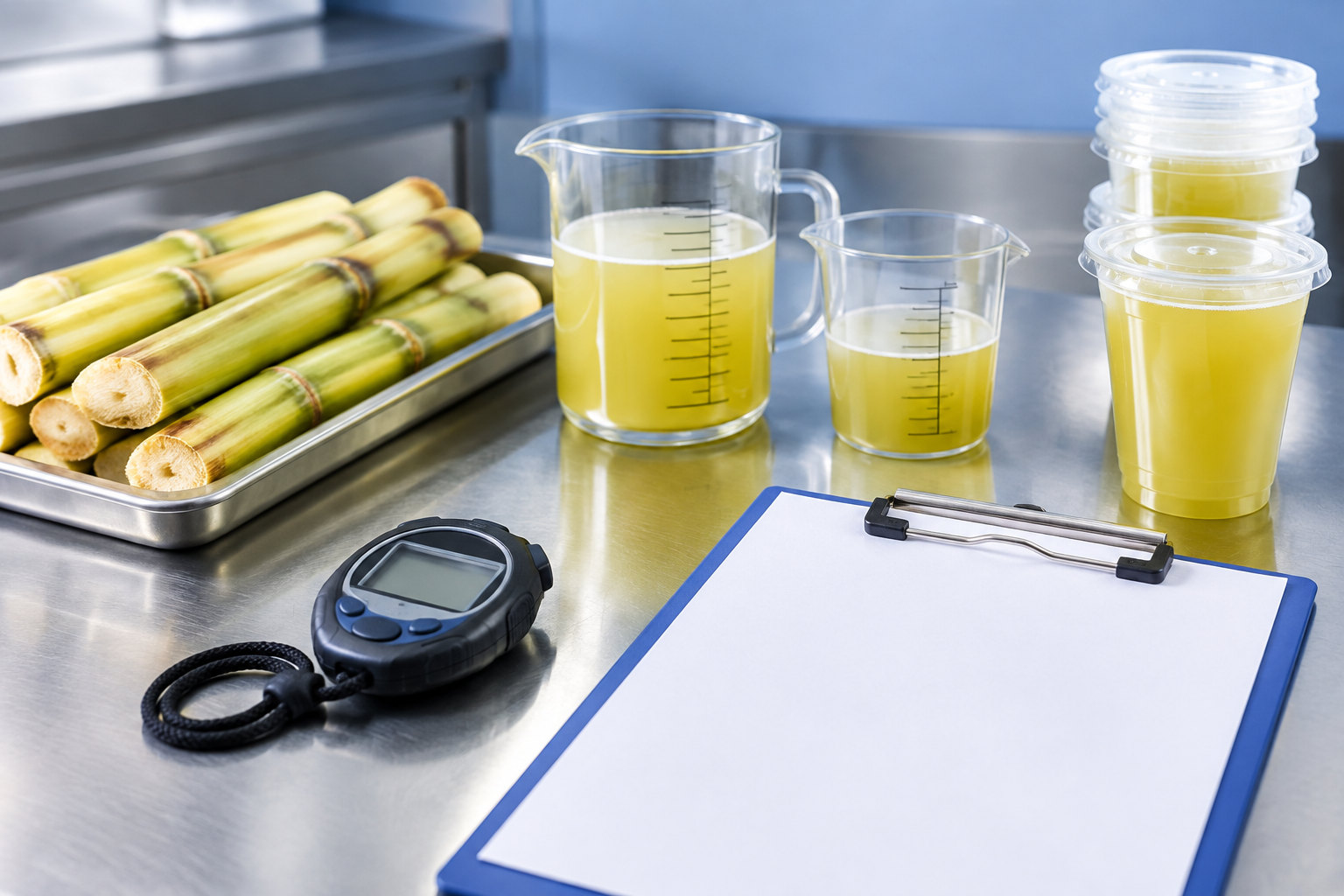
Test the complete intended workflow, not just stalks passing through the inlet. Agree on safe conditions and acceptance criteria before the trial.
- Prepare representative cane. Use your intended supply where possible. Record stalk condition, approximate size, preparation method, and prepared weight.
- Match the station. Use the planned staffing, recipes, cups, collection arrangement, and workspace. Record any differences from the proposed installation.
- Define the clock. Measure elapsed service time, including ordinary pauses. Choose a duration that represents your rush without exceeding documented operating limits.
- Measure separate outputs. Record cane processed, usable juice collected, and correctly completed drinks. Keep extraction measurements separate from finished-drink counts.
- Log delays and limits. Note replenishment, waste handling, filling delays, jams, required rests, and any abnormal operation. Stop safely if a fault occurs.
- Repeat under realistic variation. Compare different cane batches and trained operators. Include sequential service intervals where permitted, rather than reporting only the fastest run.
Retain trial notes or an unedited recording with the configuration identified. A remote demonstration can help, but supplier conditions may differ from your cane and counter. Document those uncertainties rather than assuming identical results.
Set acceptance criteria for completed drinks, portion accuracy, waiting time, and permitted operation. Extra cups achieved by underfilling or skipping hygiene steps are not valid capacity.
Request Model-Specific Capacity Evidence
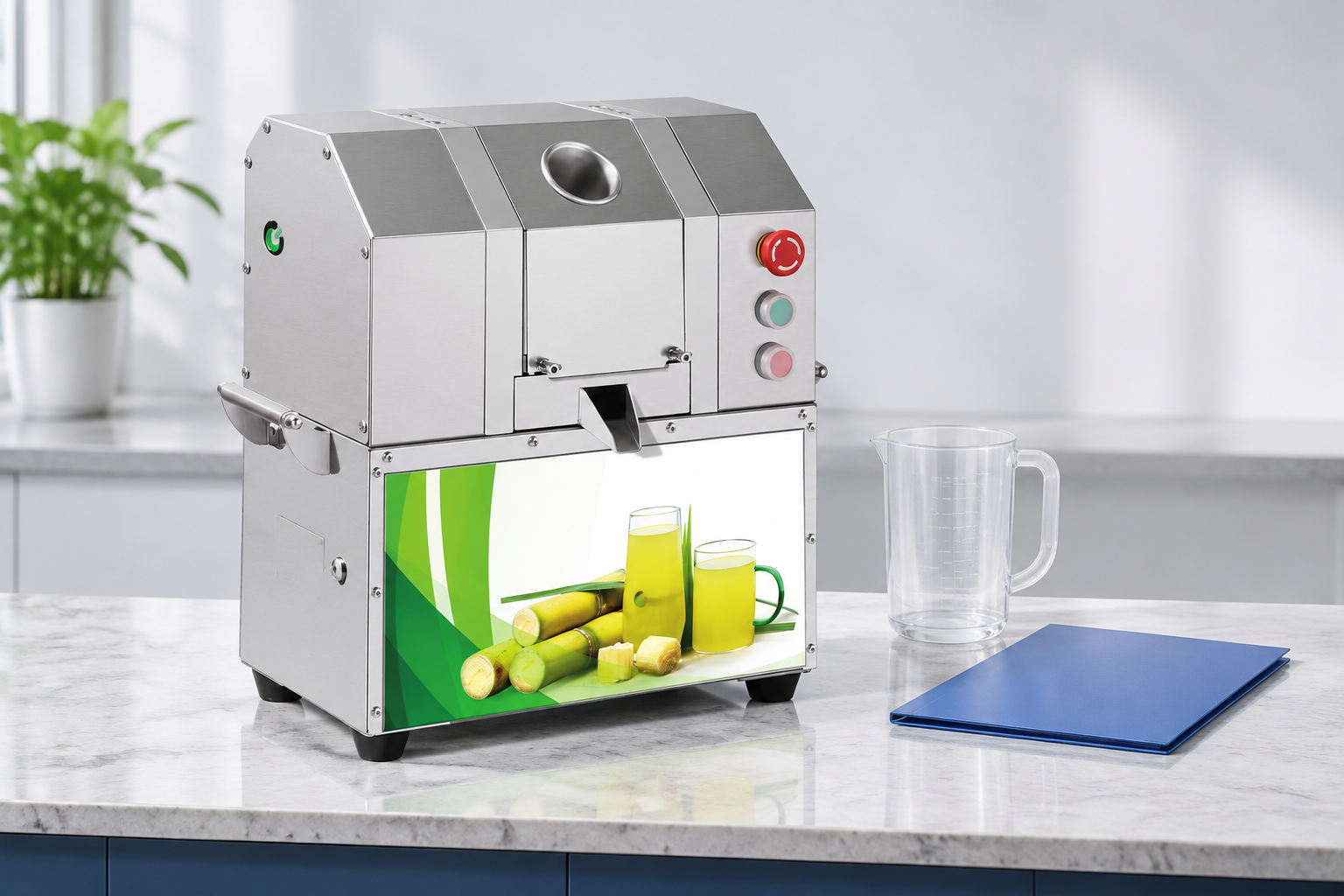
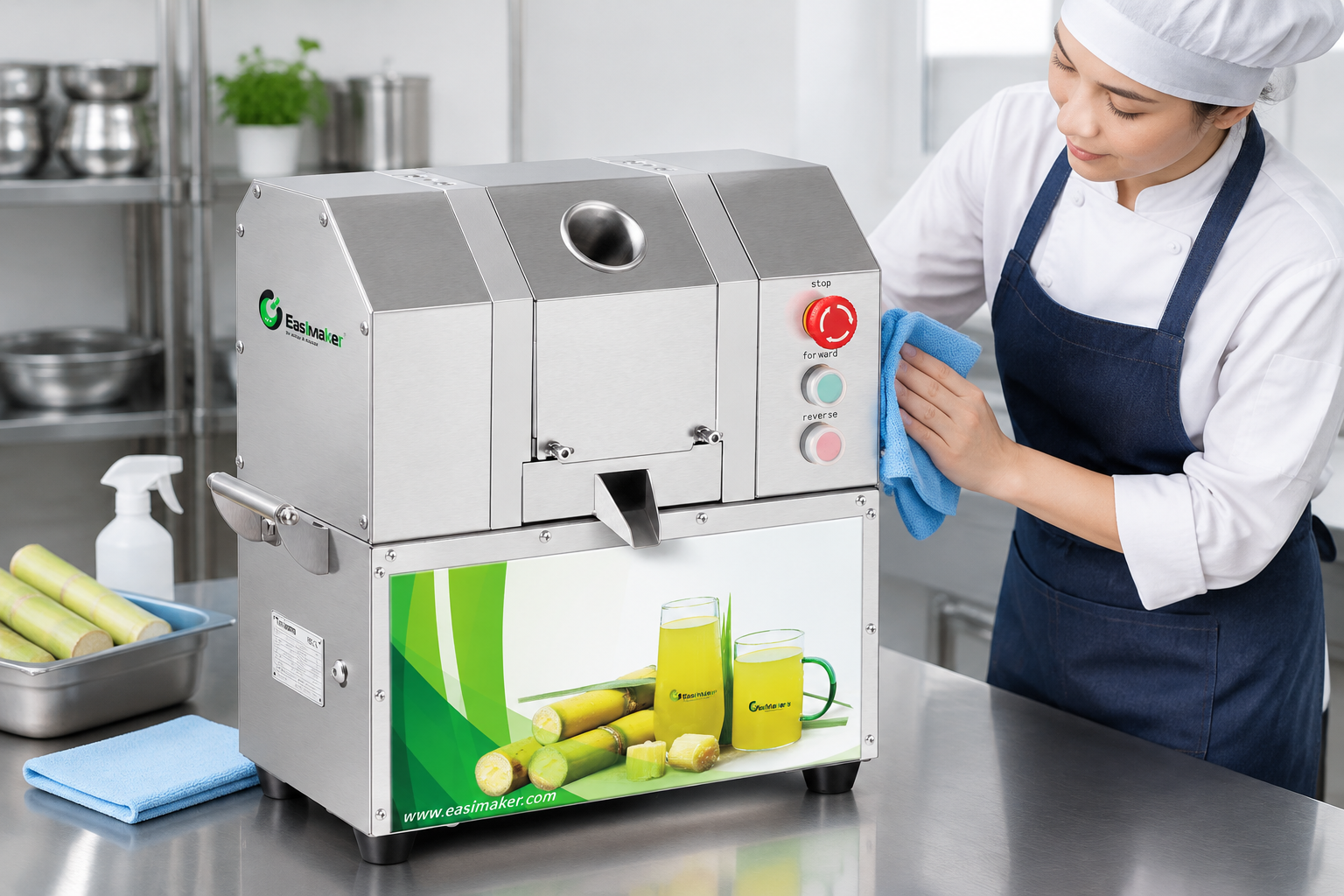
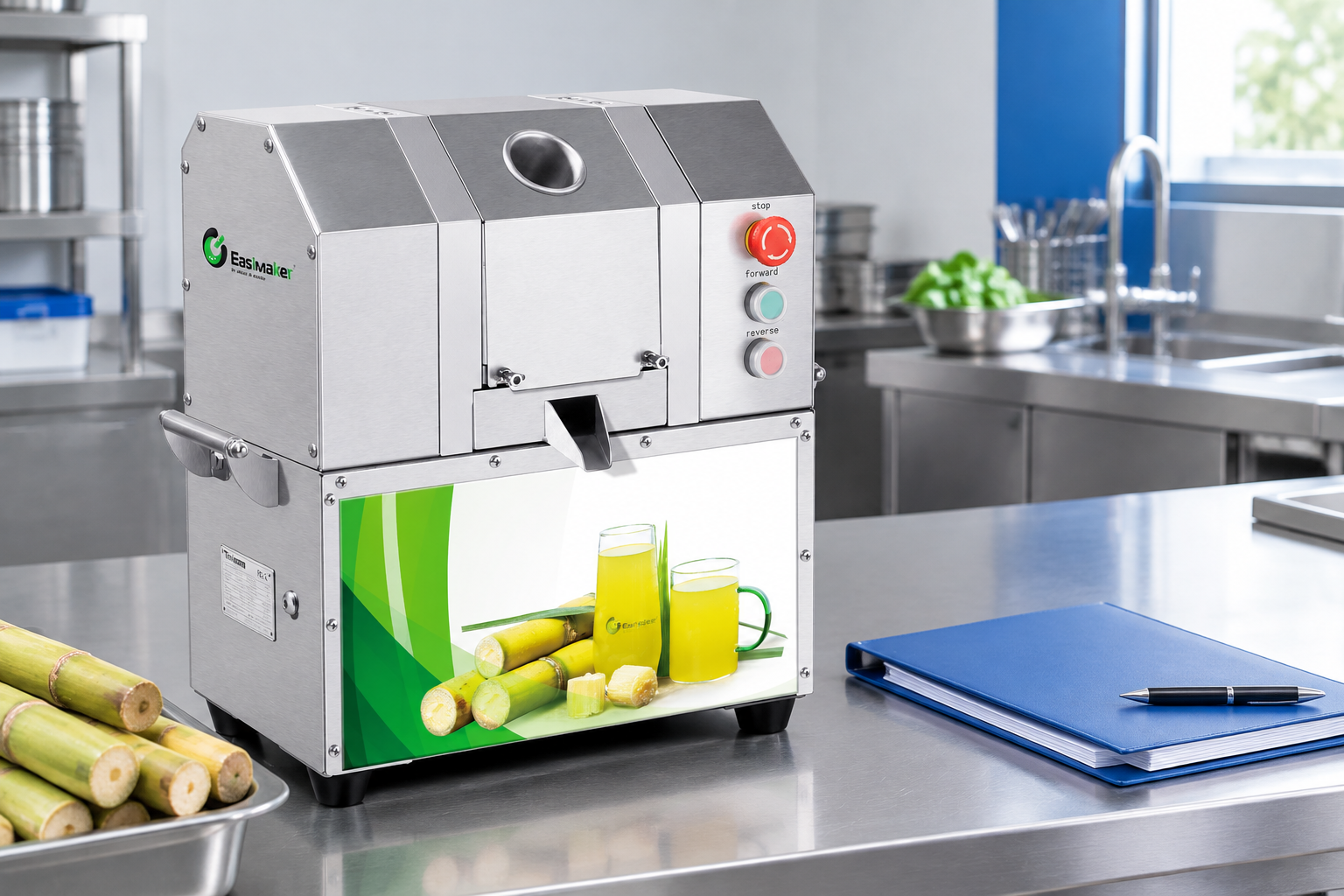
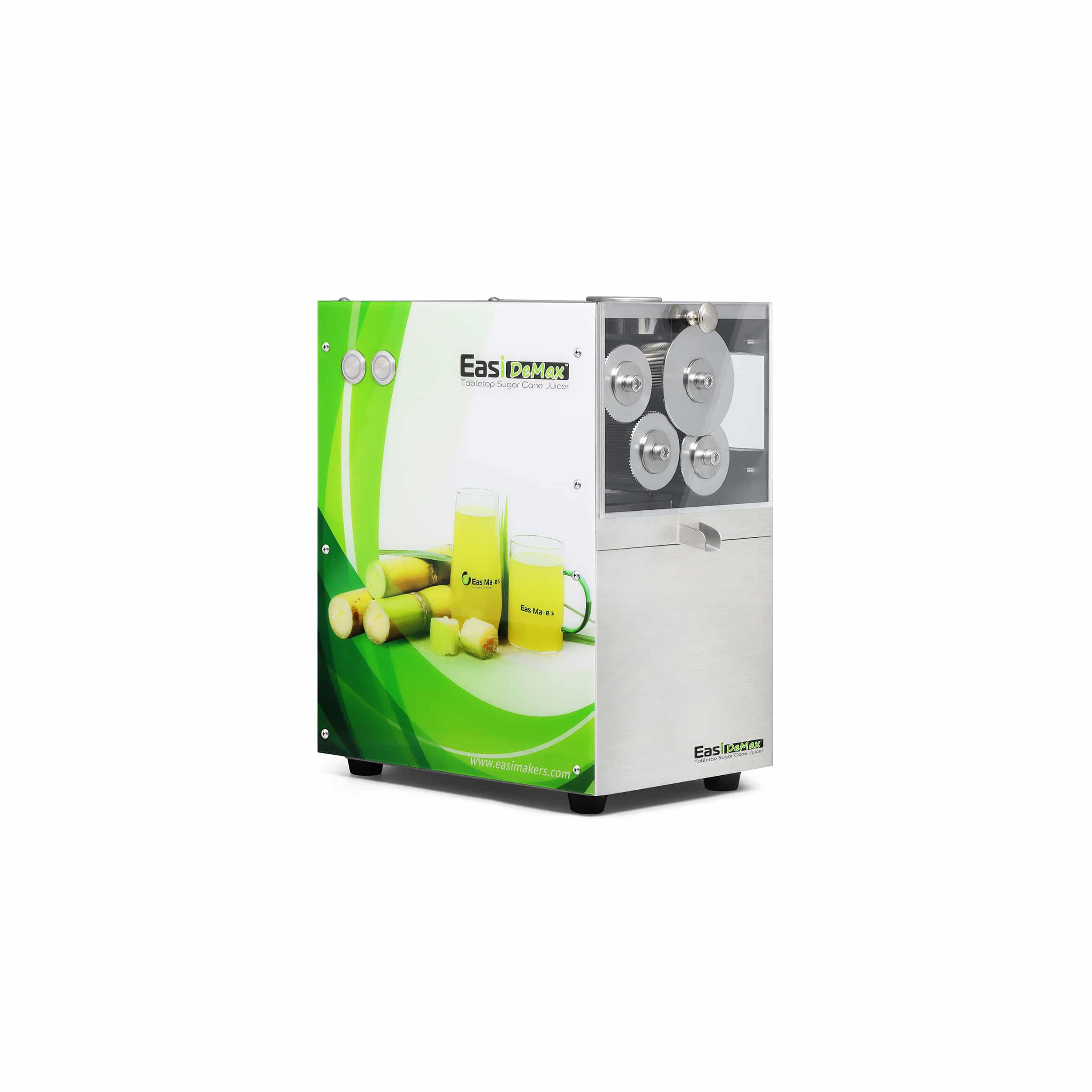
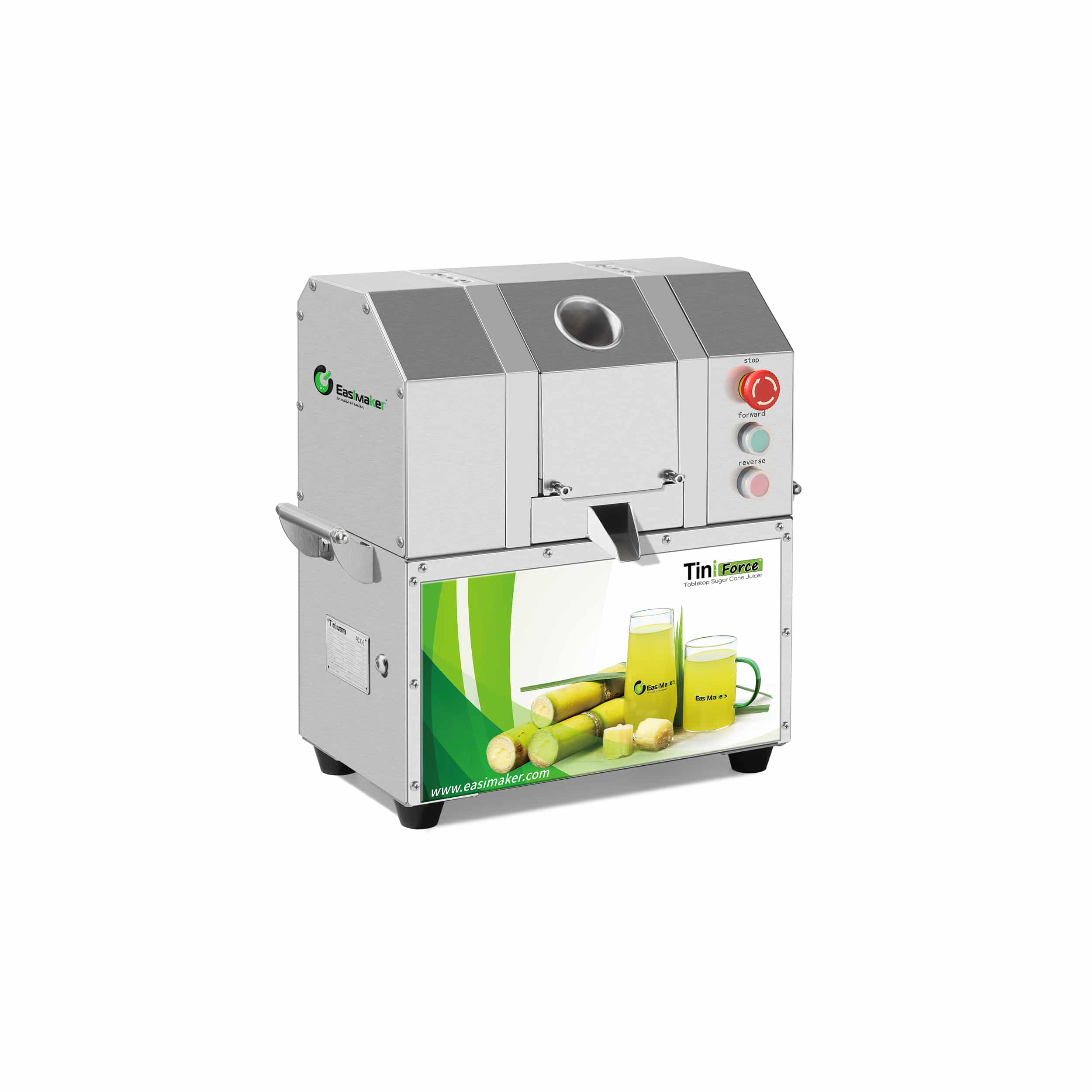
Request the same evidence for every candidate configuration. For Easimaker’s compact, portable TiniForce S3, start with the TiniForce S3 product details. For the tabletop commercial EasiDeMax S4 with a transparent viewing window, review the EasiDeMax S4 product details. These format descriptions do not establish a capacity ranking.
For either model, request the measured input and usable juice output, trial duration, cane conditions, number of operators, and completed-drink results if available. Confirm the supplied electrical version, permitted duty cycle, feeding limits, cleaning access, and required service clearances.
No verified output figure or continuous-run capability for either model is established here. If a supplier provides only an extraction demonstration, identify finished-drink throughput as unverified. Distributors and OEM/ODM buyers should record which configuration was tested so results are not applied to a different version.
Choose Capacity Headroom From Observed Variation
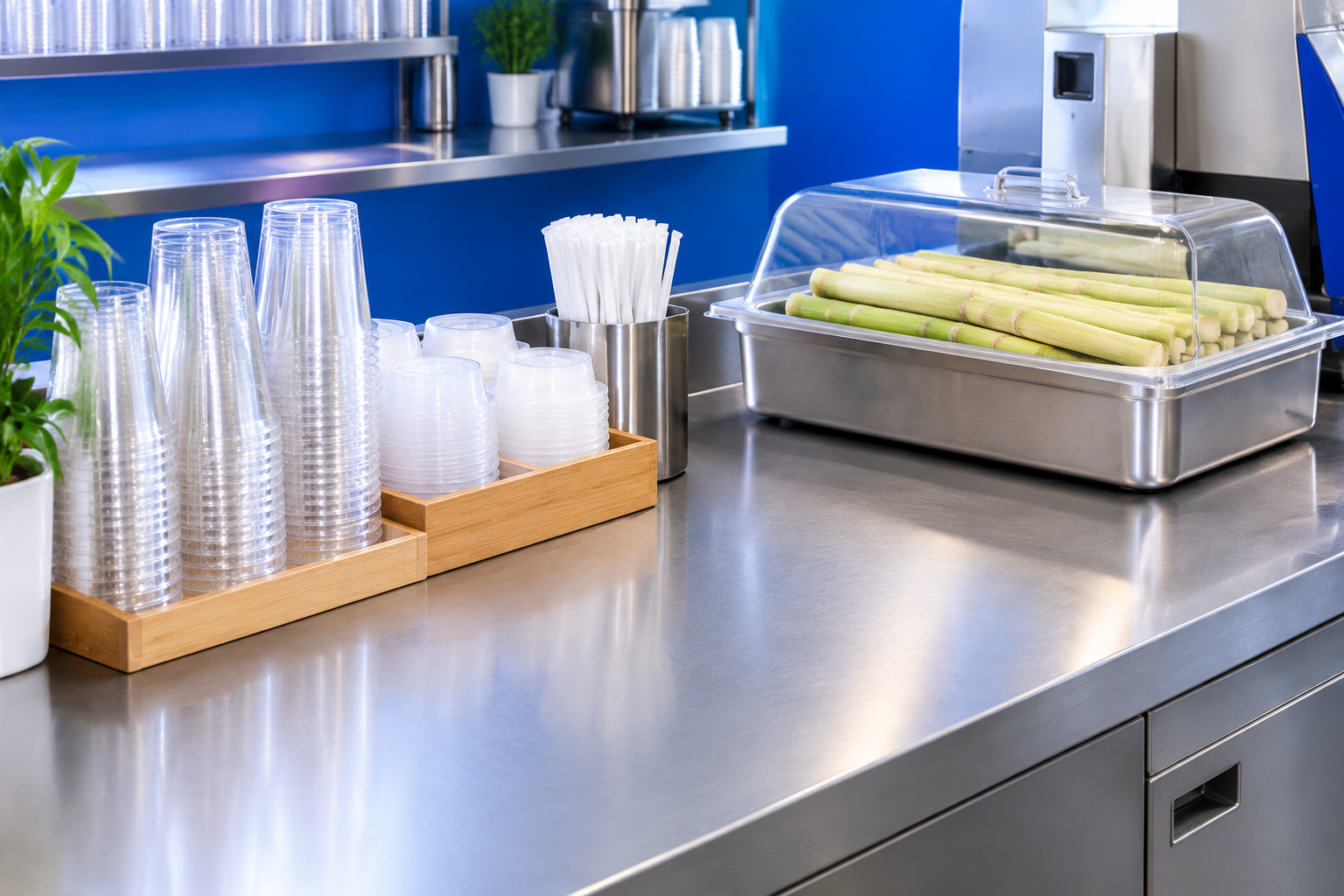
Use repeatable service output above peak demand, not an arbitrary safety percentage. Compare demand with the lower repeatable results from representative trials, including normal interruptions and mandatory rests. A station that only just matches arrivals has little room to recover from delays.
If capacity falls short, identify the constraint first. Slow cup finishing may call for task separation; inadequate preparation may require better staging. Only an extraction bottleneck justifies considering more extraction capacity, another machine, or a different service plan. Additional equipment also needs space, utilities, cleaning labor, and support.
Key takeaways: calculate peak juice volume, distinguish extraction from completed drinks, test your staffing arrangement, verify operating limits, and select headroom based on observed variation. Sugarcane juicer capacity planning is complete only when the station meets demand safely and consistently.
FAQ
How much sugarcane juice machine capacity does a small shop need?
There is no universal small-shop figure. Calculate peak drinks multiplied by the actual cane juice portion, then verify completed-drink output with your staffing and the machine’s permitted operating schedule.
Can kilograms of cane per hour be converted directly into cups?
No. First measure usable juice per kilogram of prepared cane under representative conditions. Multiply by cane input and divide by the juice portion per drink. This estimates juice availability, not finished service throughput.
Why can actual service output differ from a demonstration?
Demonstrations may use prepared cane, dedicated operators, short runs, or no packaging tasks. Your cane, recipes, pauses, staffing, and workstation can produce different results.
How should a buyer test capacity before ordering?
Agree on representative cane, staffing, recipes, trial duration, and acceptance criteria. Measure usable juice and completed drinks over elapsed time, record interruptions, and repeat within documented operating limits.
Does a larger motor guarantee more finished drinks per hour?
No. Motor power does not establish extraction or service capacity by itself. Feeding, roller and drive design, operating limits, cane condition, staffing, and drink finishing all affect throughput.
Find the Right Sugarcane Juicer or Food Processing Solution
Tell Easimaker your peak drink orders, cane juice portion, staffing plan, available counter space, and U.S. electrical requirements. Our sales team can discuss a suitable configuration, capacity verification, and OEM/ODM or distribution requirements.