Table of Contents
- Bowl volume versus working load
- Define your recipe requirements
- Run a controlled batch trial
- Record quality and handling results
- Batch trial comparison worksheet
- Calculate practical shift output
- Confirm EasiKut BC25 loading guidance
- Frequently asked questions
- Prepare your batch requirements
Choose bowl cutter batch size by testing your recipe within the manufacturer’s permitted loading range, then measuring acceptable output across the complete production cycle. Nominal bowl volume describes vessel size; it does not establish a universal batch weight. For commercial kitchens and food processors, the useful working load is the load that repeatedly meets texture, temperature, handling, and scheduling requirements.
Bowl cutter batch size: distinguish bowl volume from working load
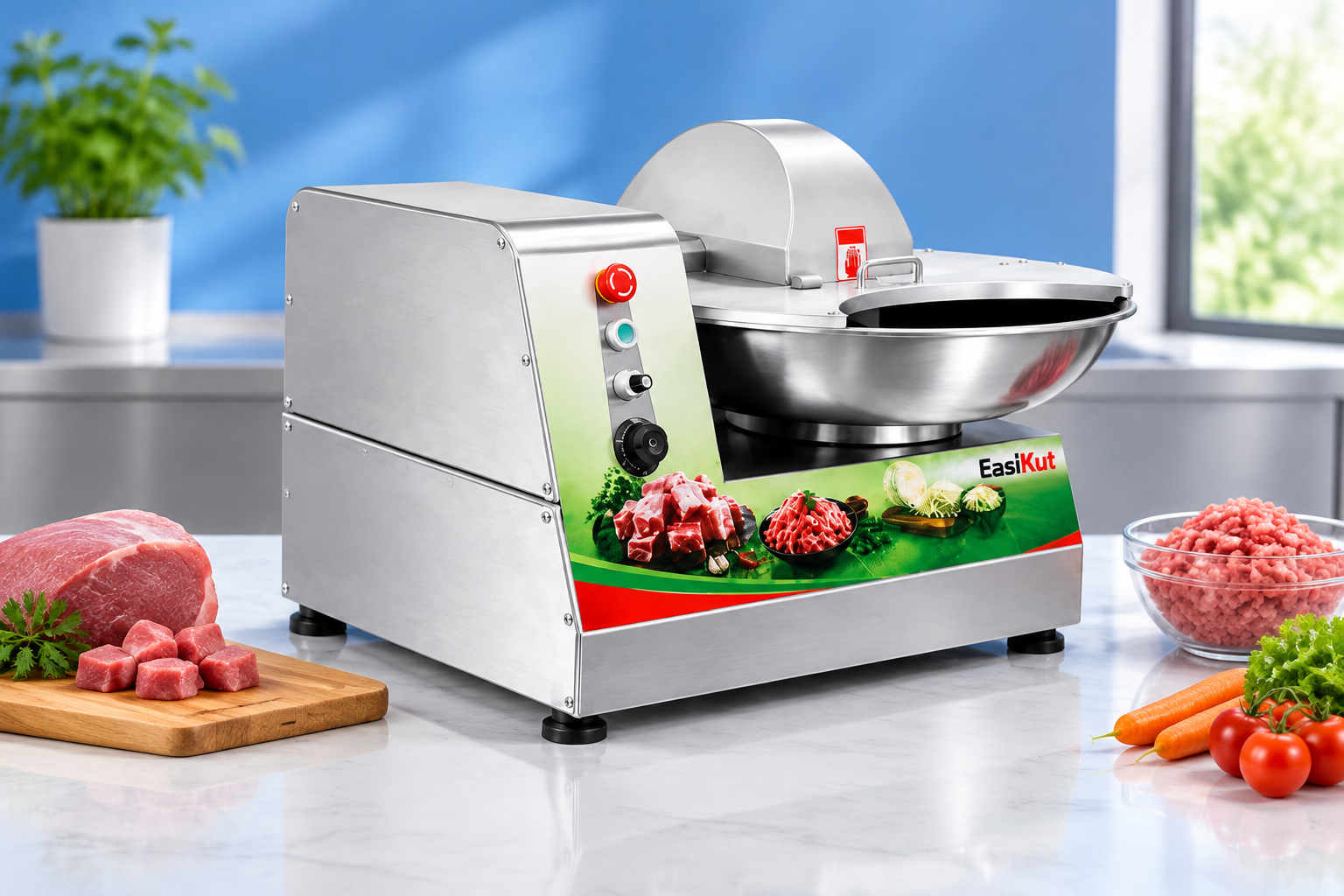
Bowl cutter bowl volume and batch weight measure different things. Liters describe volume; kilograms or pounds describe mass. A 25-liter bowl therefore does not establish a 25-kilogram working load.
Nominal bowl volume: the stated volume of the vessel. Permitted working load: the manufacturer’s loading limits for the relevant ingredients and operating conditions. Validated batch size: a recipe-specific load shown through trials to meet your production requirements within those limits.
A commercial bowl cutter combines cutting and mixing as a rotating bowl carries food toward the knives. Ingredients need room to circulate. Loose vegetables, chilled meat pieces, and a cohesive filling occupy and move through that space differently.
Do not apply a universal fill percentage or convert liters directly into kilograms. Commercial bowl cutter working capacity depends on ingredient behavior, machine configuration, and the manufacturer’s instructions.
Define recipe requirements before comparing machine sizes
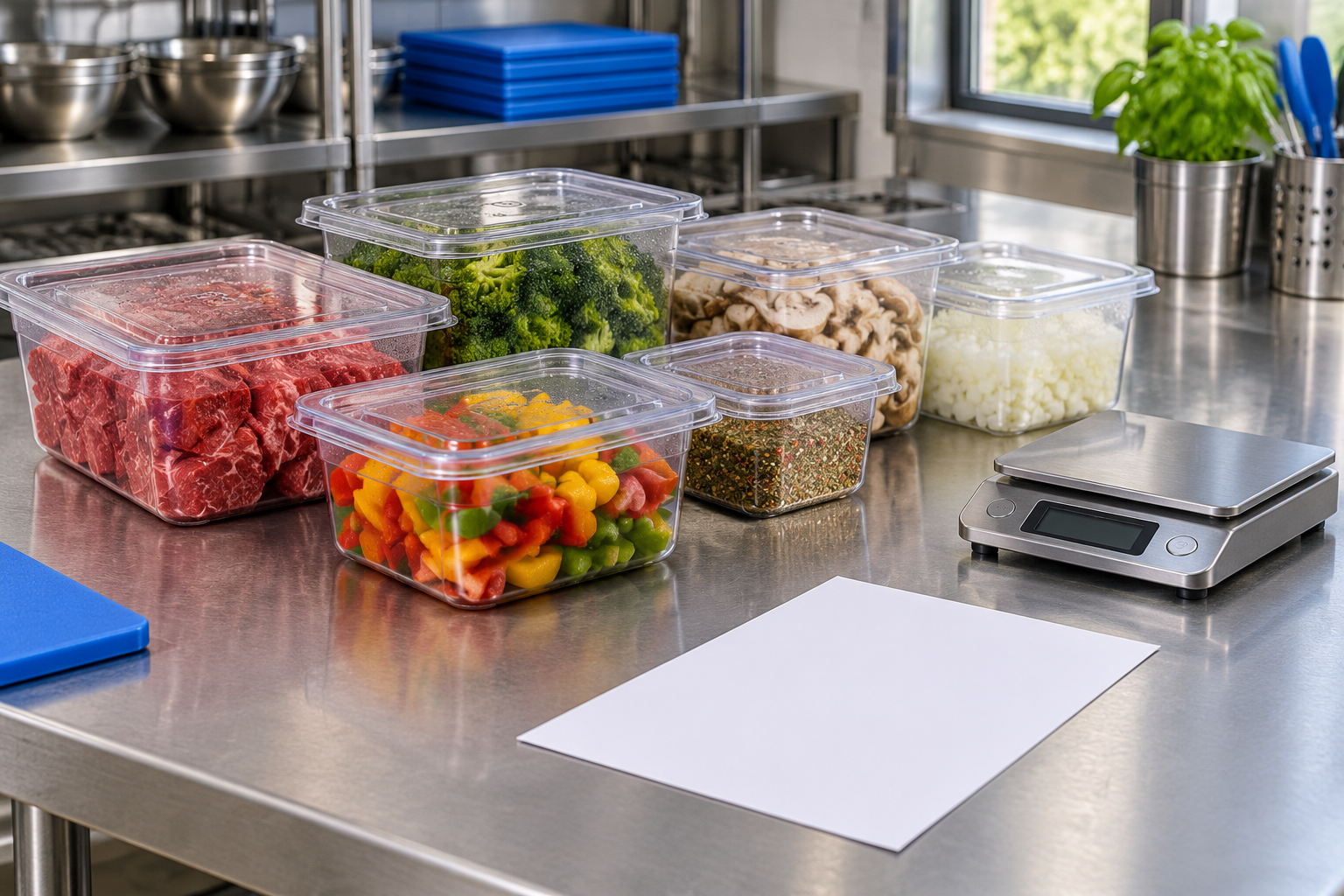
Ingredients affect practical capacity through bulk density, firmness, moisture, fat content, and how the mixture changes during processing. A load that works for one filling may behave differently with another recipe.
Prepare a recipe brief before comparing machines:
- Formula: ingredient weights, proportions, allergens, and addition sequence.
- Starting condition: ingredient temperature, piece size, and any upstream grinding or preparation.
- Finished standard: target particle size, binding, uniformity, and downstream cooking or forming requirements.
- Order pattern: smallest routine order, normal batch requirement, peak demand, and recipe changes.
- Process controls: approved temperature limits, sampling method, and holding arrangements.
Include your smallest routine recipe as well as the largest. A batch can be too small to circulate consistently or engage the cutting zone effectively. Establish the permitted minimum with the supplier rather than assuming a larger machine will handle every small order.
For broader purchasing factors, use the commercial bowl cutter buying guide.
Run a batch trial within the manufacturer's permitted loading range
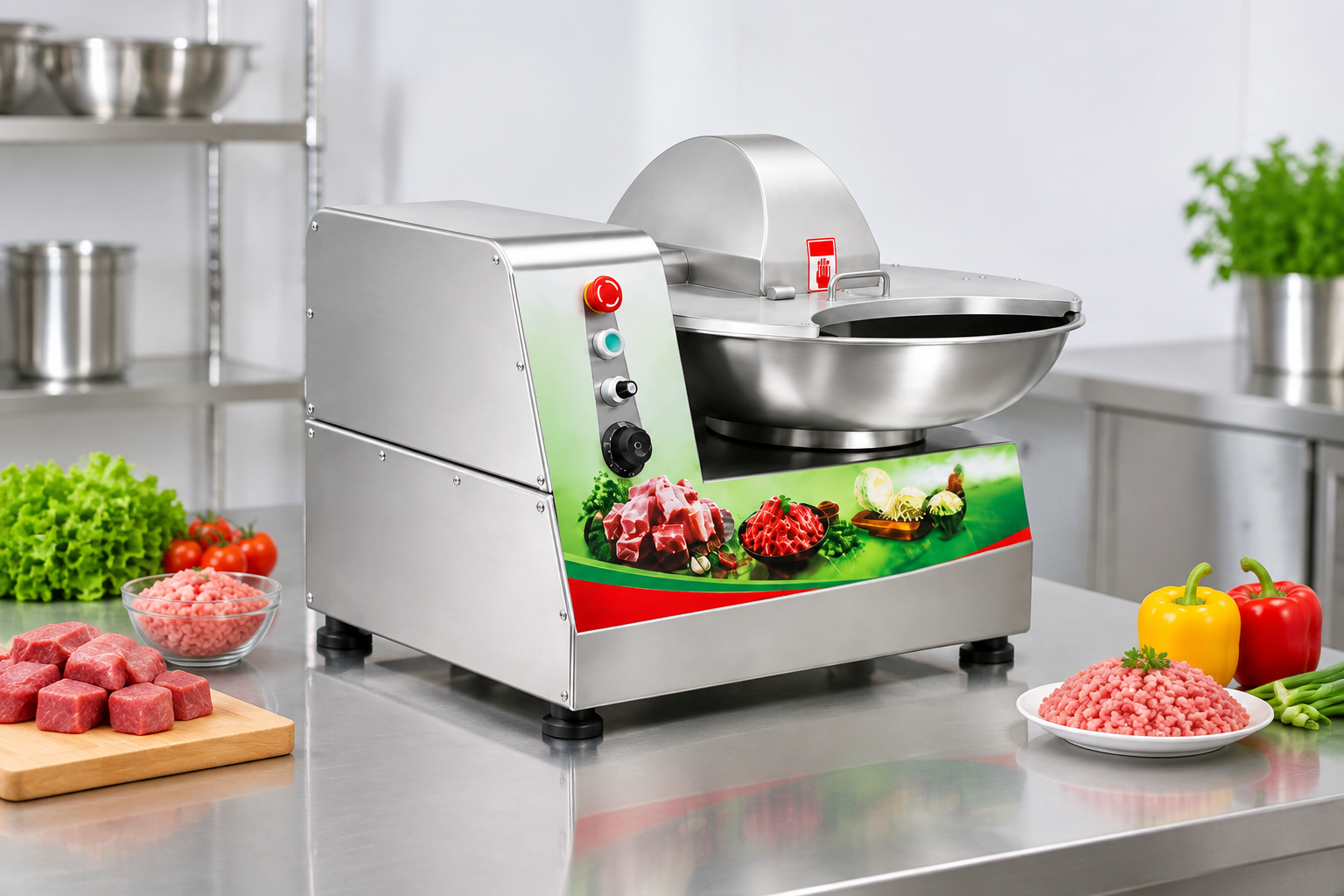
Test batch size before buying by agreeing on representative recipes, permitted trial loads, and acceptance criteria with the supplier. A demonstration should reflect your ingredients and workflow.
- Confirm the operating envelope. Obtain current loading guidance, ingredient restrictions, permitted settings, and duty-cycle instructions for the exact configuration.
- Standardize the inputs. Use the same formulation, preparation, starting temperature, and ingredient sequence for each comparison.
- Select an approved starting load. Choose it with the supplier; do not begin at an assumed maximum.
- Change batch weight deliberately. Compare other approved loads while holding the remaining variables steady where practical.
- Repeat promising conditions. Check that acceptable results persist across successive batches and normal staffing conditions.
- Document the approved recipe setting. Record the load, procedure, acceptance checks, and any restrictions.
Keep guards in their required positions. Stop the trial for abnormal vibration, noise, leakage, or other conditions identified in the manual. Never reach into a moving bowl or bypass a guard to observe circulation.
Record circulation, finished texture, temperature, and unloading time
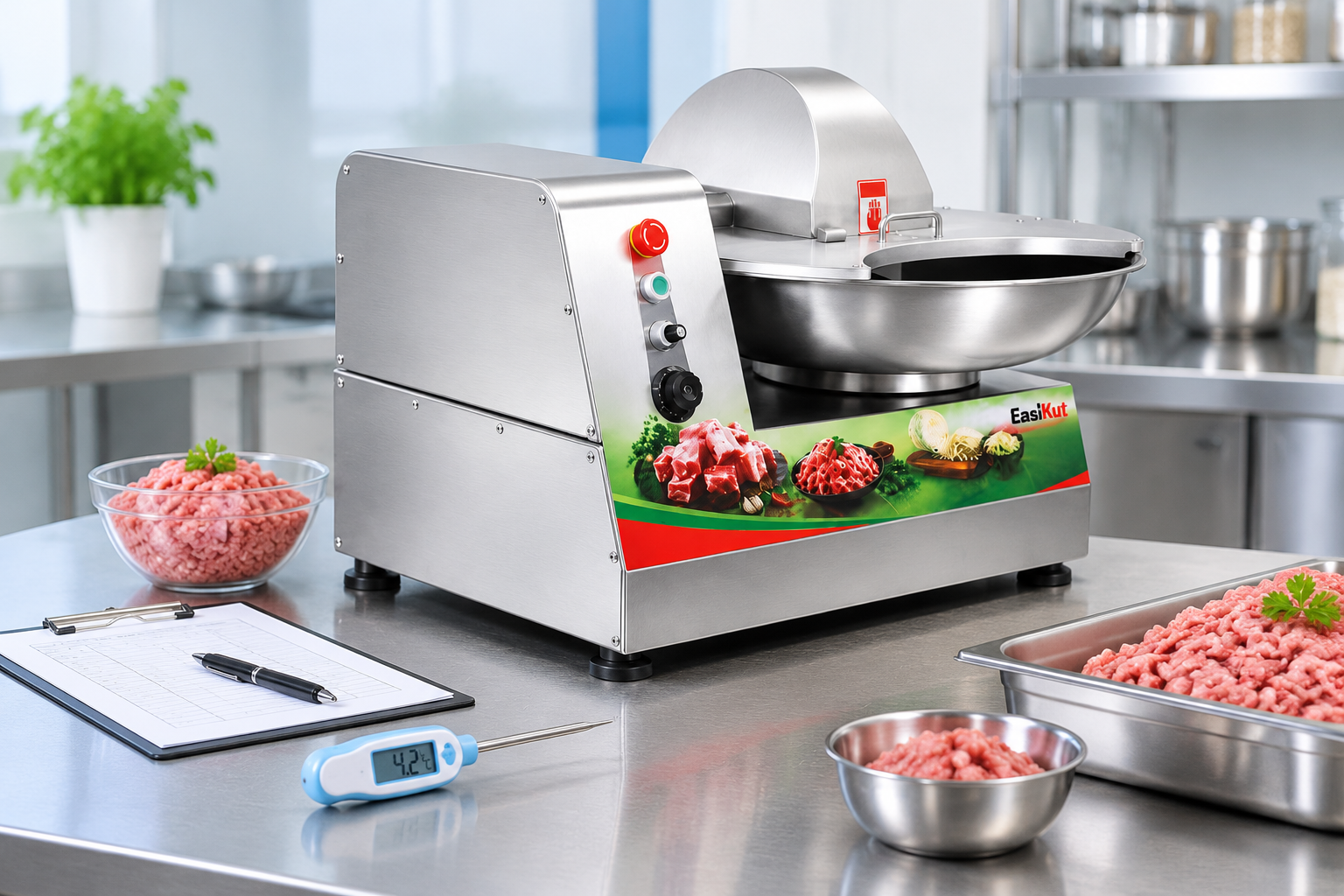
A successful trial must demonstrate consistent product and workable handling. Record uneven circulation, persistent unprocessed pieces, smearing, or liquid separation wherever observation is safely permitted.
Check finished texture against a written standard. Measure starting and final product temperatures using a suitable food thermometer, with the machine stopped and access controlled according to its instructions. Apply your recipe’s validated food-safety and quality limits; no universal temperature limit suits every product.
Time unloading into the actual production containers. Weigh recovered product and record samples, retained residue, and rejected material separately. For fillings or sausage mixes, confirm performance in the next production step before approving the batch.
The guide to consistent meat texture with a bowl cutter explains processing controls beyond batch sizing.
Trial table: batch weight, processing time, acceptable output, and changeover
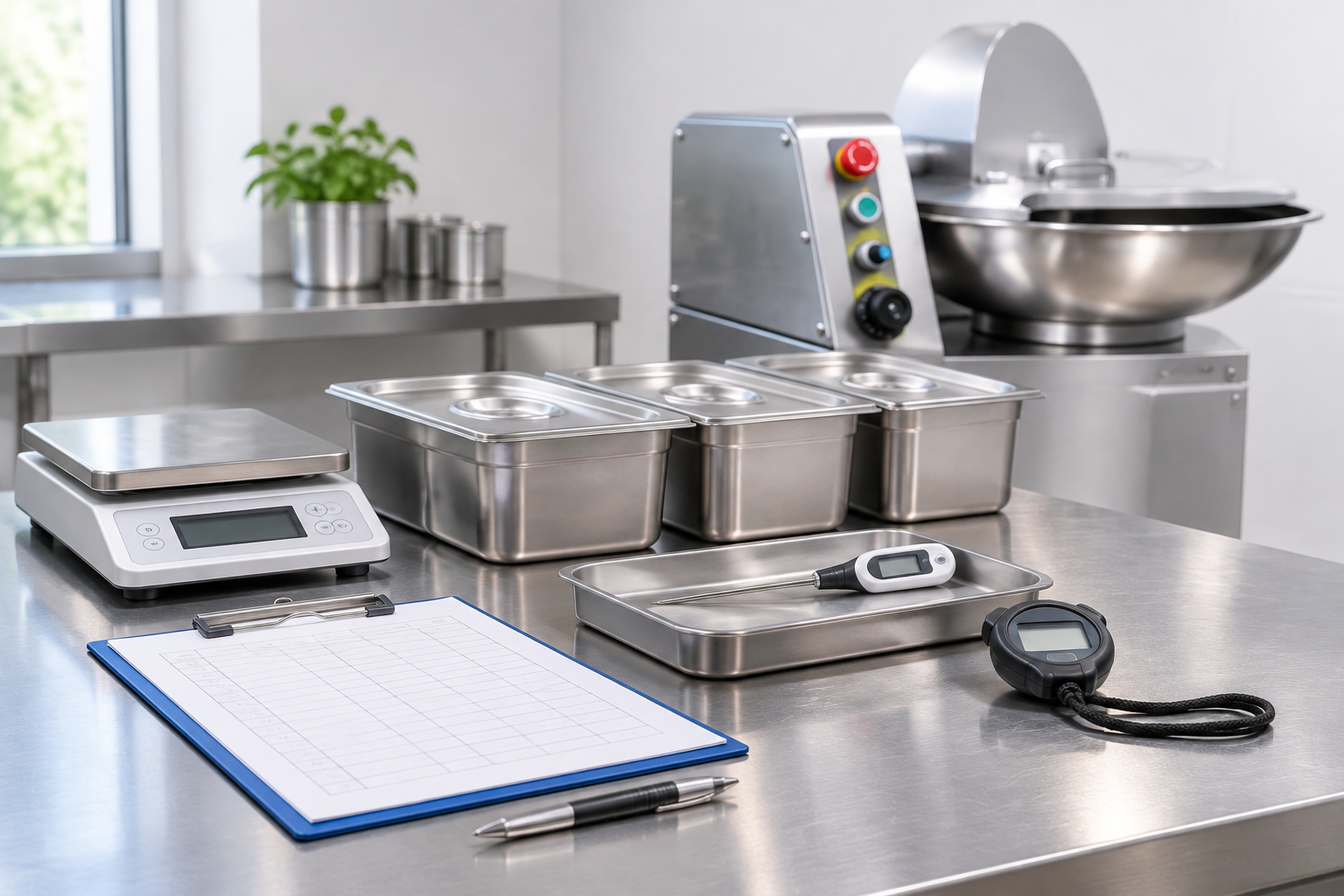
Use this worksheet to compare approved trial loads for the same recipe. The entries are recording prompts, not recommended machine settings or performance figures.
| Record | Trial A: approved lower load | Trial B: approved normal load | Trial C: approved higher load |
|---|---|---|---|
| Total ingredient weight | Enter kg or lb | Enter kg or lb | Enter kg or lb |
| Loading and processing time | Record separately | Record separately | Record separately |
| Circulation and texture | Observations; pass/fail | Observations; pass/fail | Observations; pass/fail |
| Starting and final temperature | Enter measured values | Enter measured values | Enter measured values |
| Accepted recovered output | Enter kg or lb | Enter kg or lb | Enter kg or lb |
| Unloading and routine reset | Enter minutes | Enter minutes | Enter minutes |
| Recipe changeover | Identify next recipe; time | Identify next recipe; time | Identify next recipe; time |
| Repeat result and decision | Approve, revise, or reject | Approve, revise, or reject | Approve, revise, or reject |
Attach the recipe revision, machine configuration, settings, operator, and ingredient lot details. Compare accepted output per complete cycle. A heavier input is useful only if quality remains acceptable and the complete cycle supports the schedule.
Calculate practical shift output including cleaning and recipe changes
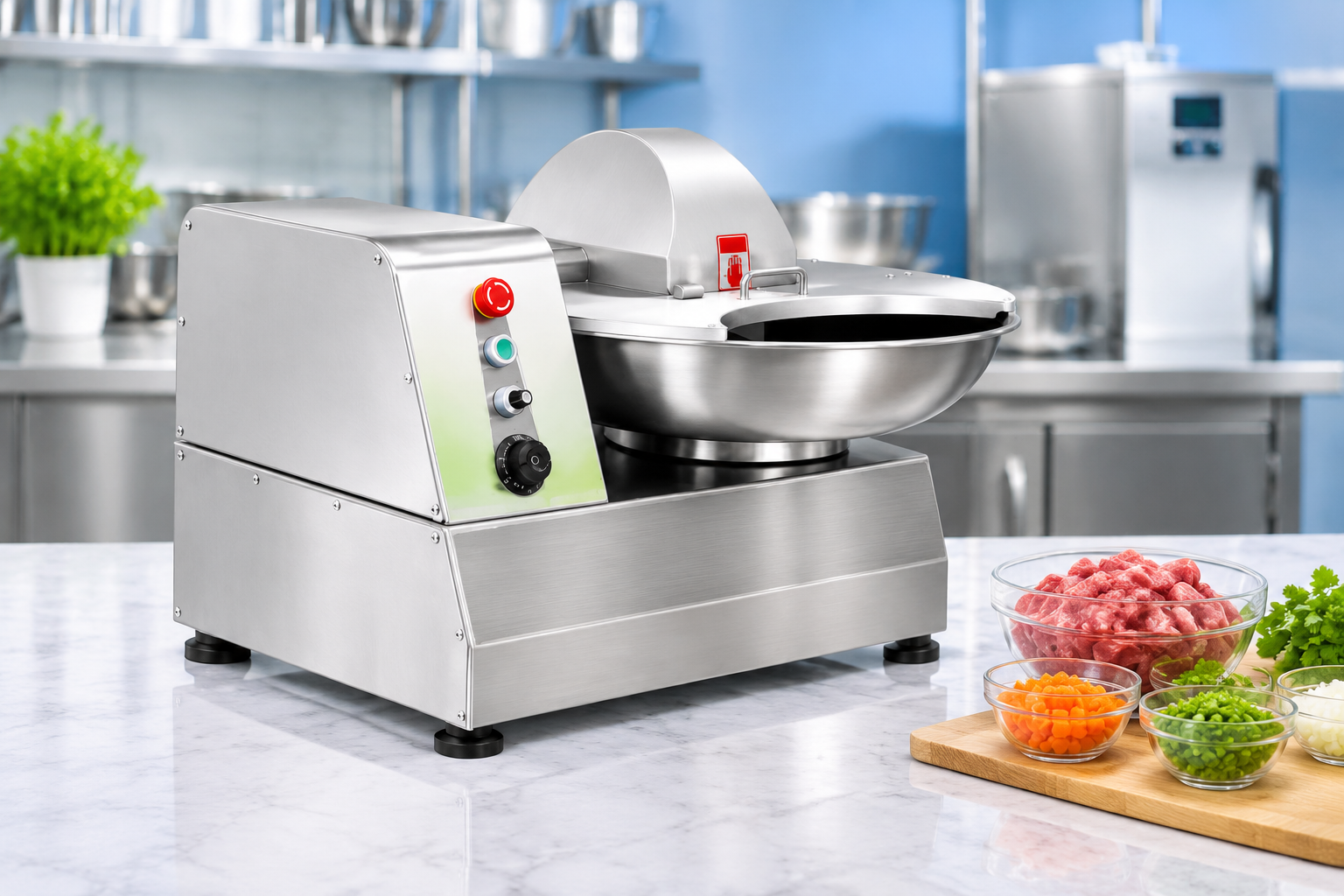
Cleaning and changeovers reduce the time available for processing. Bowl cutter production planning should count complete cycles and accepted recovered product.
Complete batch cycle = loading + processing + unloading + routine reset.
Available batch time = scheduled time − setup, breaks, full cleaning, recipe changeovers, and other planned downtime. Count each activity once.
Completed batches = available batch time ÷ complete batch cycle, rounded down.
Planned accepted output = completed batches × validated accepted output per batch.
Hypothetical example: assume a recipe trial has validated 8 kg of accepted output per batch and a 12-minute complete cycle. If a 240-minute production window includes 60 minutes of noncycle activities, 180 minutes remain. That allows 15 complete batches and 120 kg of accepted output. These assumed figures illustrate arithmetic only; they are not EasiKut BC25 ratings.
For multiple recipes, calculate each recipe’s cycles separately and add the actual changeover sequence. Include required allergen controls and sanitation verification. The bowl cutter cleaning and sanitizing guide helps identify cleaning activities to time.
Check upstream preparation, refrigerated holding, and downstream forming or packing capacity. Machine output cannot become usable shift output if the next station cannot receive it.
What to confirm about the EasiKut BC25 before ordering
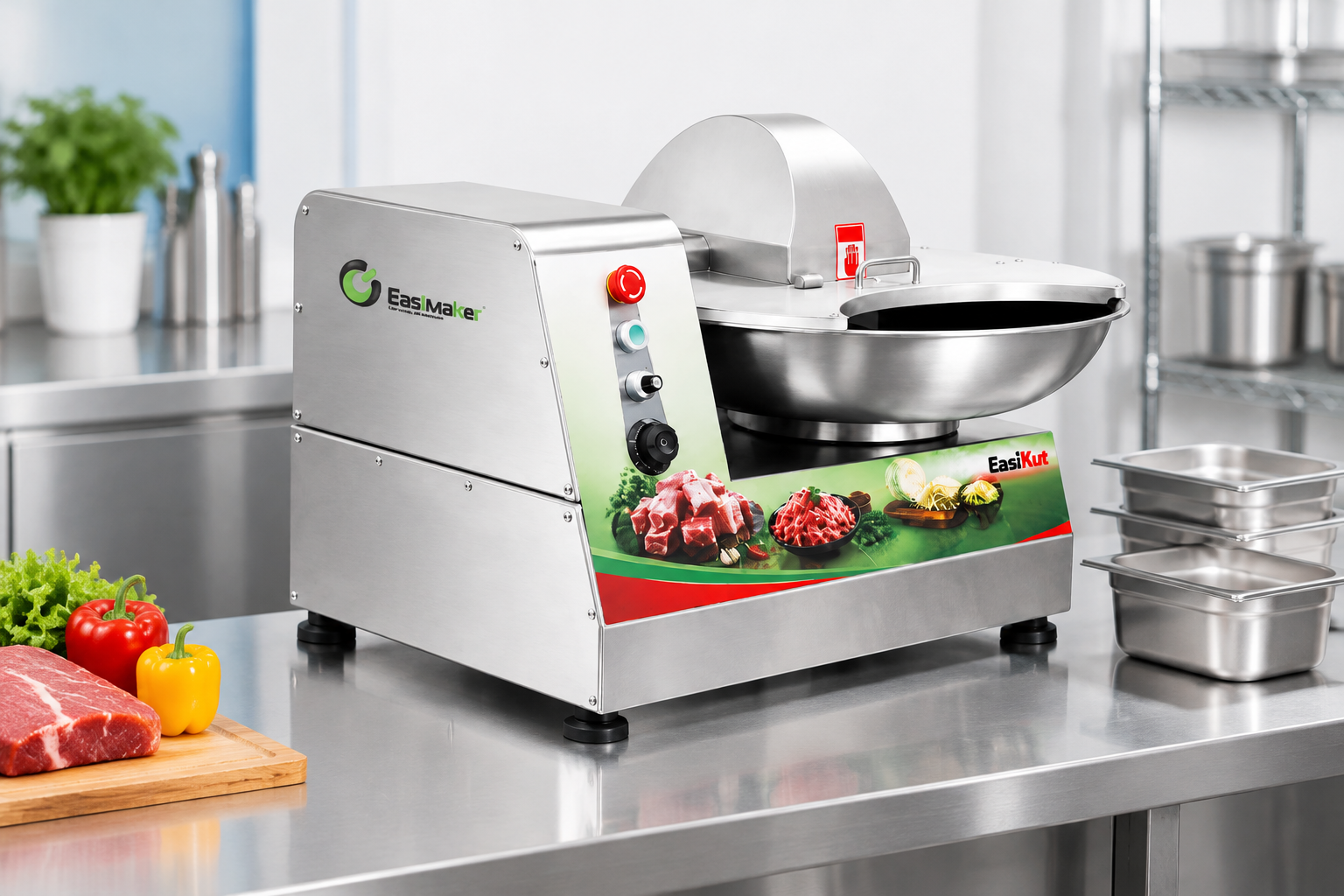
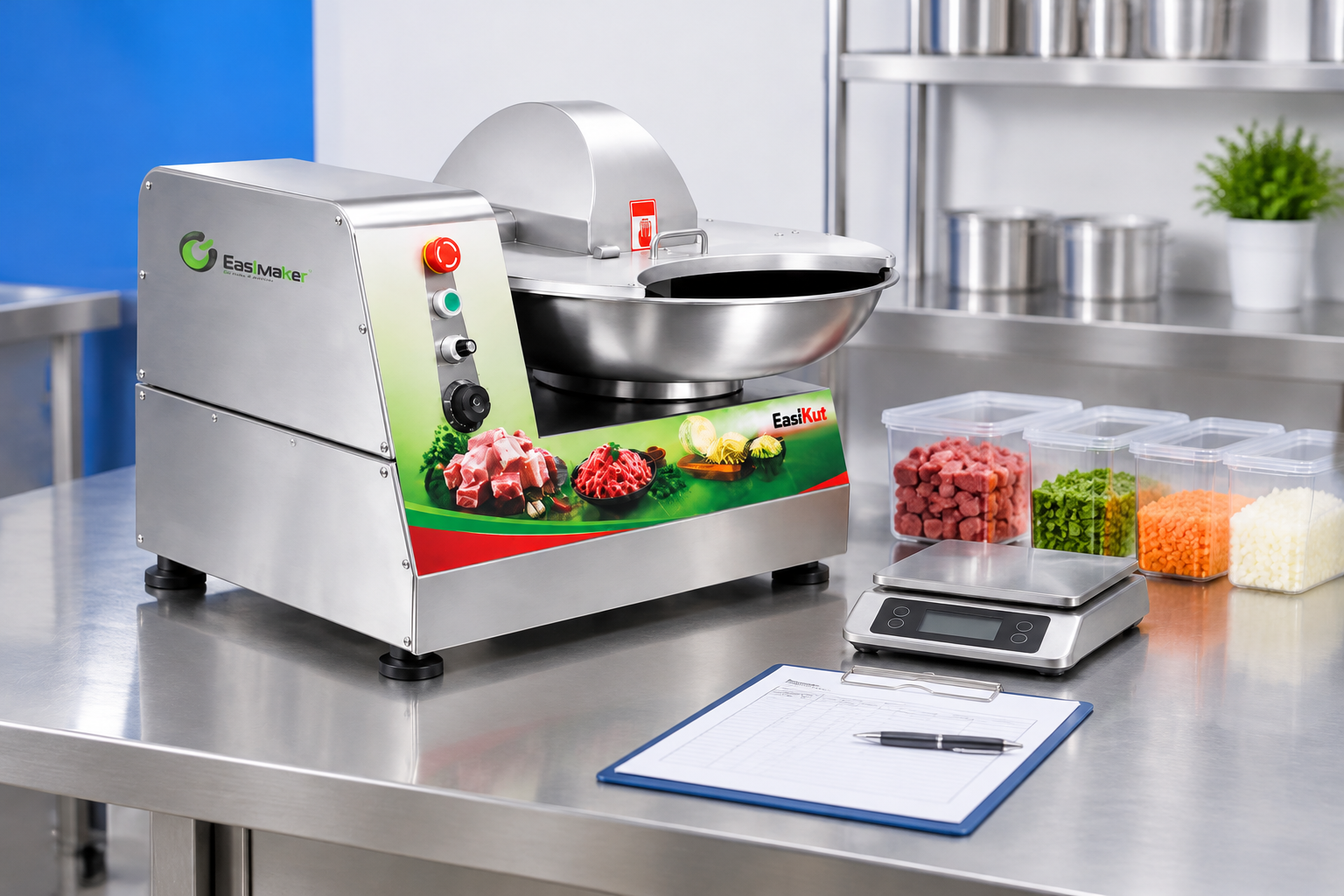
The EasiKut BC25 food and meat bowl cutter chopper has a supplied nominal bowl volume of 25 liters. That establishes vessel size, while your practical working load still requires recipe-specific confirmation.
Ask Easimaker for written confirmation of:
- Permitted minimum and maximum loads for your ingredients and preparation conditions.
- Suitable settings, addition sequence, and restrictions for the supplied configuration.
- Duty-cycle requirements and any required pauses between batches.
- Trial arrangements using your recipe and agreed acceptance criteria.
- Unloading, cleaning access, blade service, spare parts, and operator documentation.
- Electrical compatibility and documentation needed for your U.S. installation.
Where a listing includes an approximate weight per bowl, confirm the recipe and conditions behind it. Do not treat an approximate figure as a universal loading limit. Keep approved loading guidance and trial results with the purchase specification.
FAQ: five questions about bowl volume and batch loading
Is bowl cutter bowl volume the same as batch weight?
No. Liters measure volume, while kilograms or pounds measure mass. Manufacturer loading limits and recipe trials establish a suitable working load.
How do ingredients affect practical working capacity?
Density, firmness, moisture, fat content, and changes during processing affect occupied space and circulation. Validate each materially different recipe.
Can a batch be too small for consistent processing?
Yes. An undersized load may circulate unevenly or engage the cutting zone poorly. Confirm the permitted minimum and test your smallest routine order.
How should a kitchen test batch size before buying?
Agree on permitted loads and acceptance criteria, use representative ingredients, compare controlled trials, and repeat successful conditions. Record quality and complete cycle time.
How do cleaning and changeovers affect shift output?
They reduce available batch time. Schedule full sanitation and recipe changes separately from routine batch resets, and count each activity once.
Send Easimaker your recipe and target batch requirements
Prepare your ingredient list, starting conditions, smallest and normal batch requirements, target texture, production window, and recipe-change schedule for a machine suitability discussion.
Key takeaways: distinguish nominal volume from working load; validate recipe-specific batch sizes within manufacturer limits; and plan shift output from accepted product and complete cycles.
FAQ
Is bowl cutter bowl volume the same as batch weight?
No. Liters measure volume, while kilograms or pounds measure mass. Manufacturer loading limits and recipe trials establish a suitable working load.
How do ingredients affect practical working capacity?
Density, firmness, moisture, fat content, and changes during processing affect occupied space and circulation. Validate each materially different recipe.
Can a batch be too small for consistent processing?
Yes. An undersized load may circulate unevenly or engage the cutting zone poorly. Confirm the permitted minimum and test your smallest routine order.
How should a kitchen test batch size before buying?
Agree on permitted loads and acceptance criteria, use representative ingredients, compare controlled trials, and repeat successful conditions. Record quality and complete cycle time.
How do cleaning and changeovers affect shift output?
They reduce available batch time. Schedule full sanitation and recipe changes separately from routine batch resets, and count each activity once.
Find the Right Sugarcane Juicer or Food Processing Solution
Share your recipe, target batch sizes, expected shift output, U.S. installation requirements, and project details with Easimaker. Our team can discuss EasiKut BC25 suitability, current loading guidance, recipe trial requirements, and a quotation.