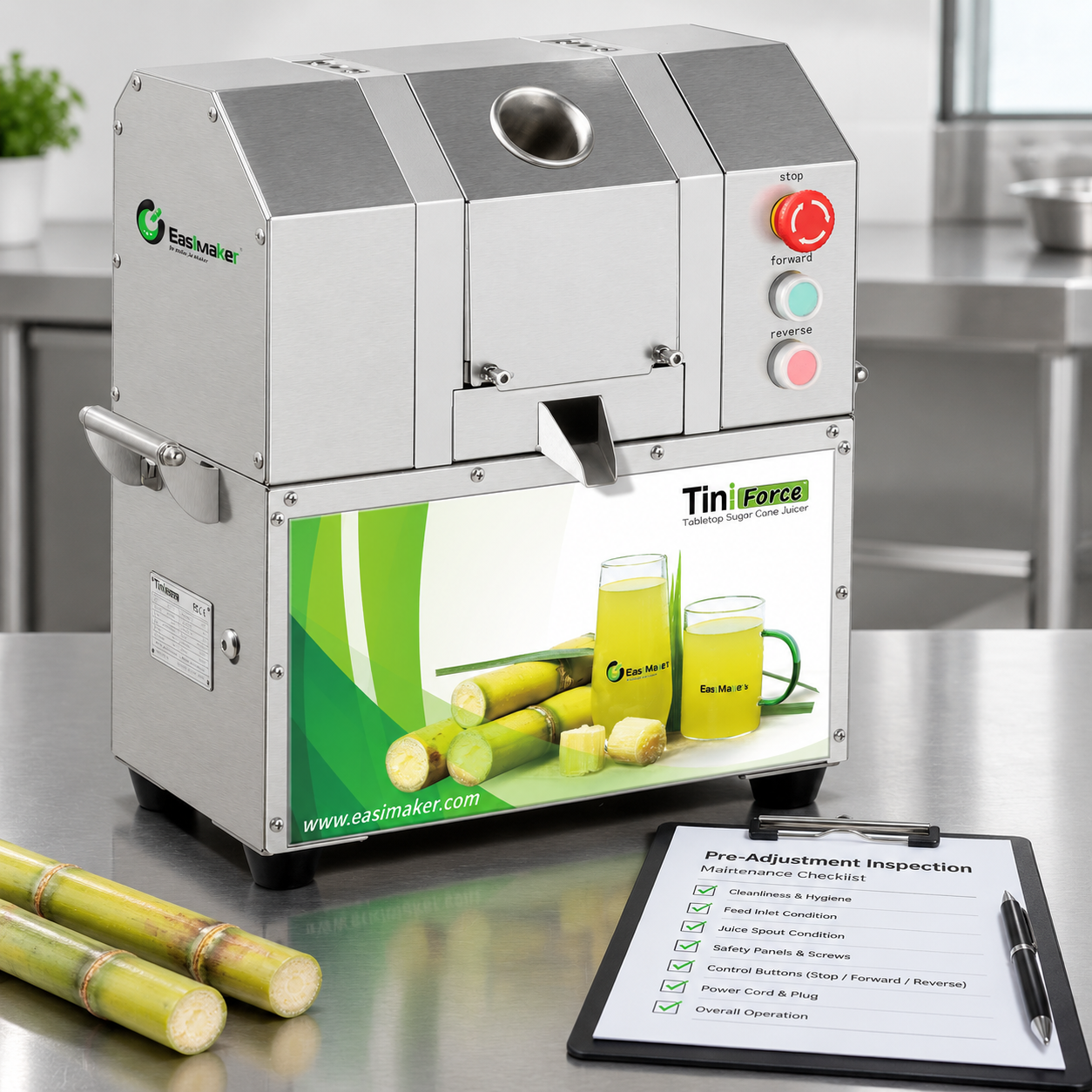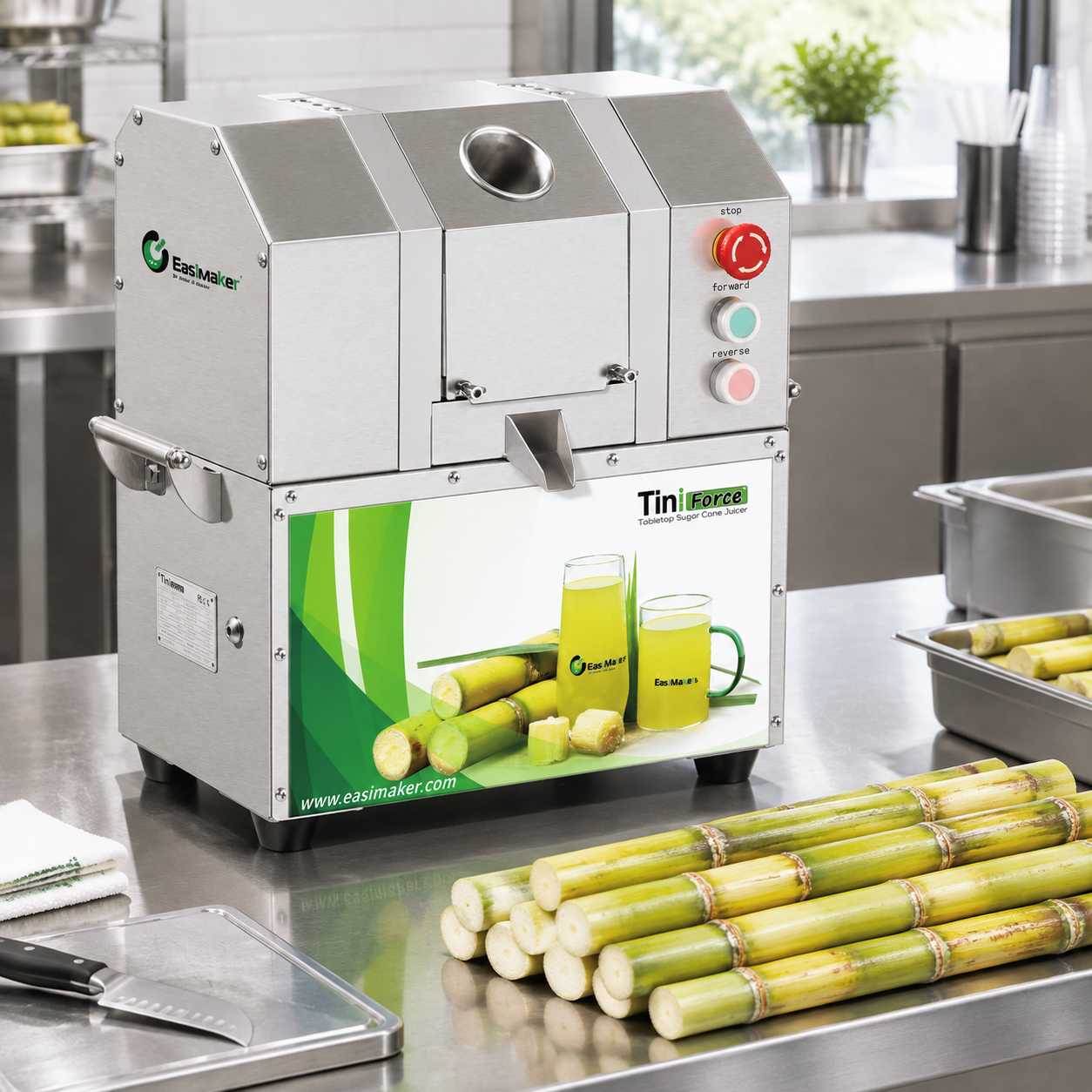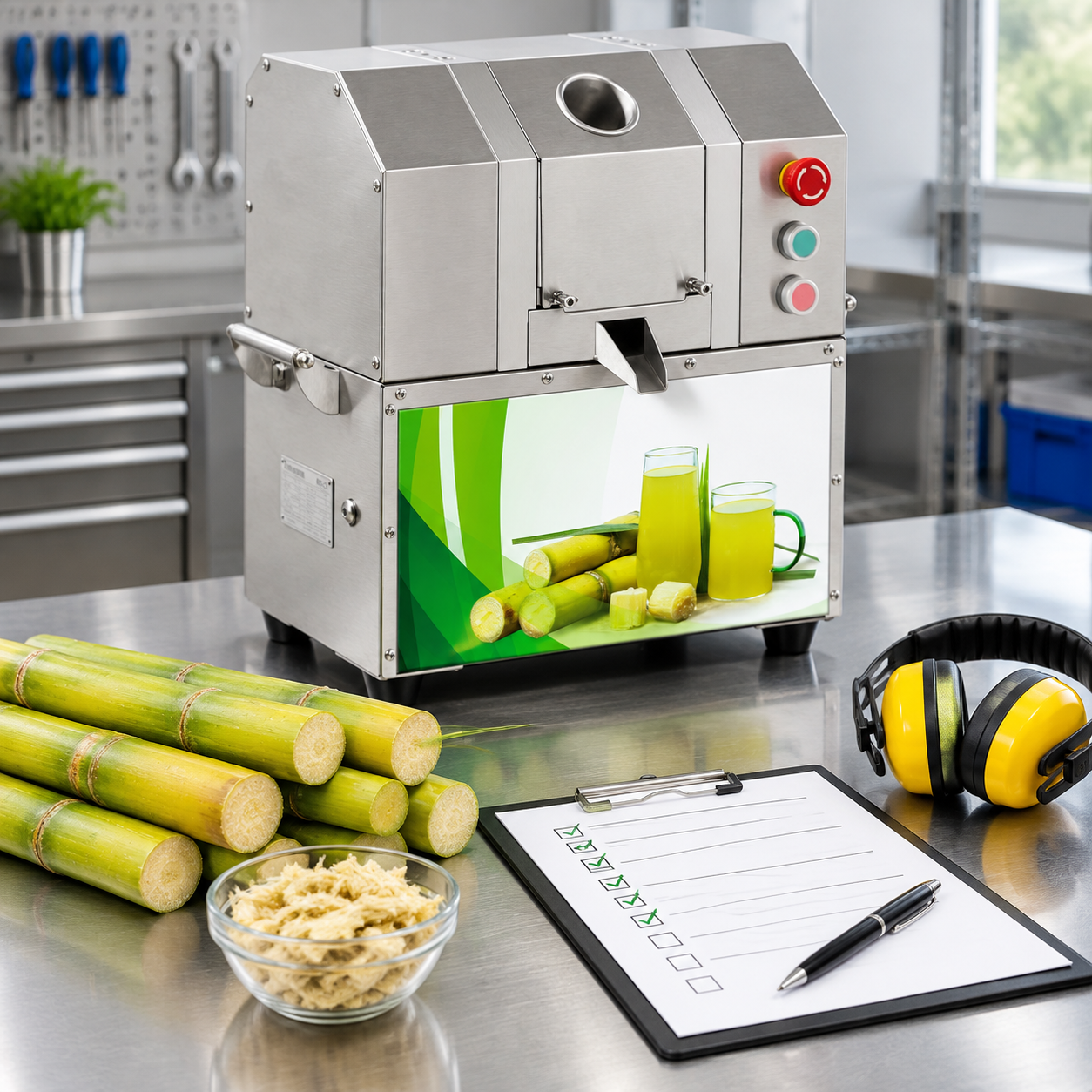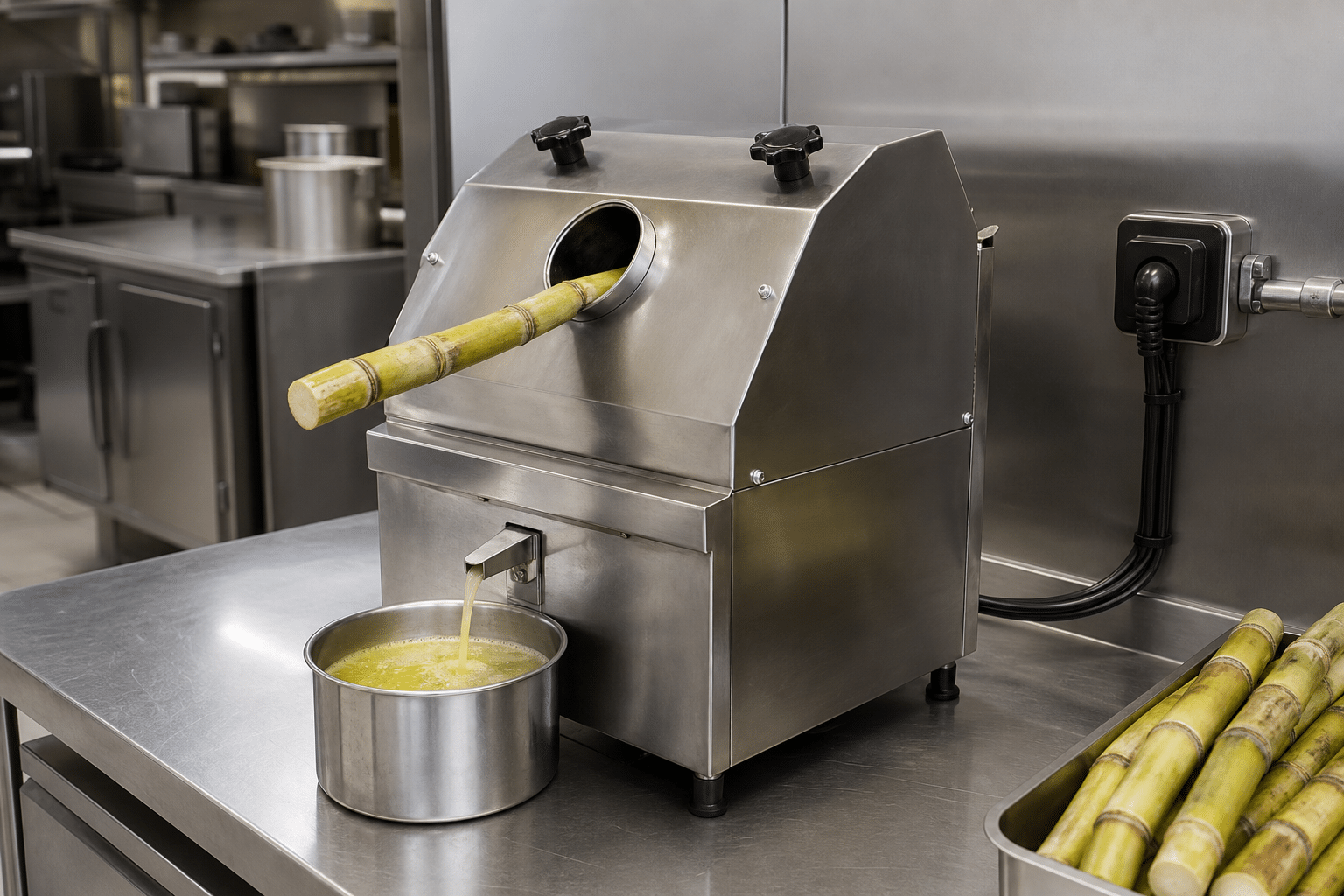
How to Prepare Sugarcane Before Juicing in a Shop

Table of Contents

Proper sugarcane preparation helps a juice shop maintain cleaner handling, smoother service, and more consistent machine operation. Follow a practical process for receiving, washing, trimming, cutting, staging, and cleaning the preparation area.

Quick answer: prepare sugarcane in a controlled sequence

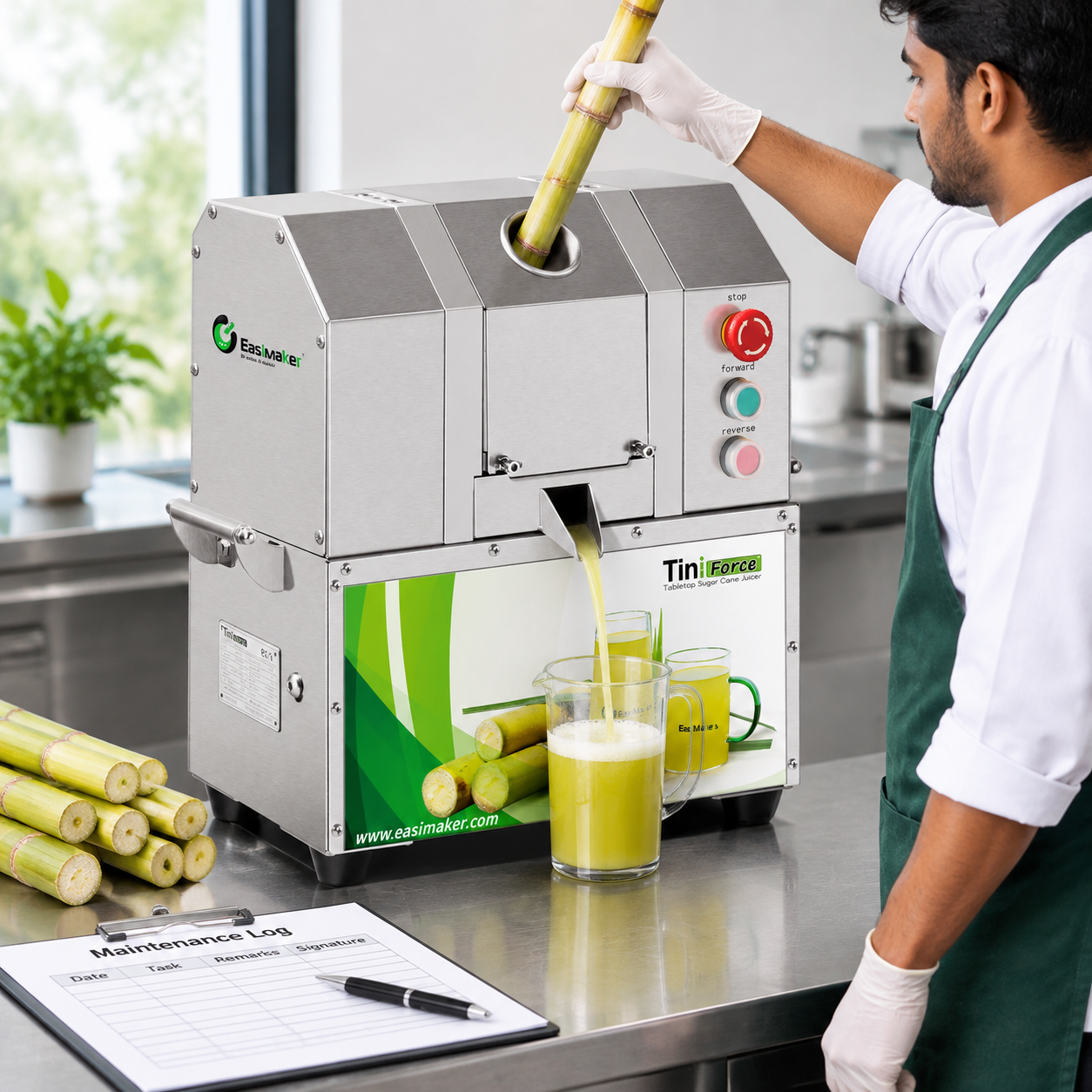
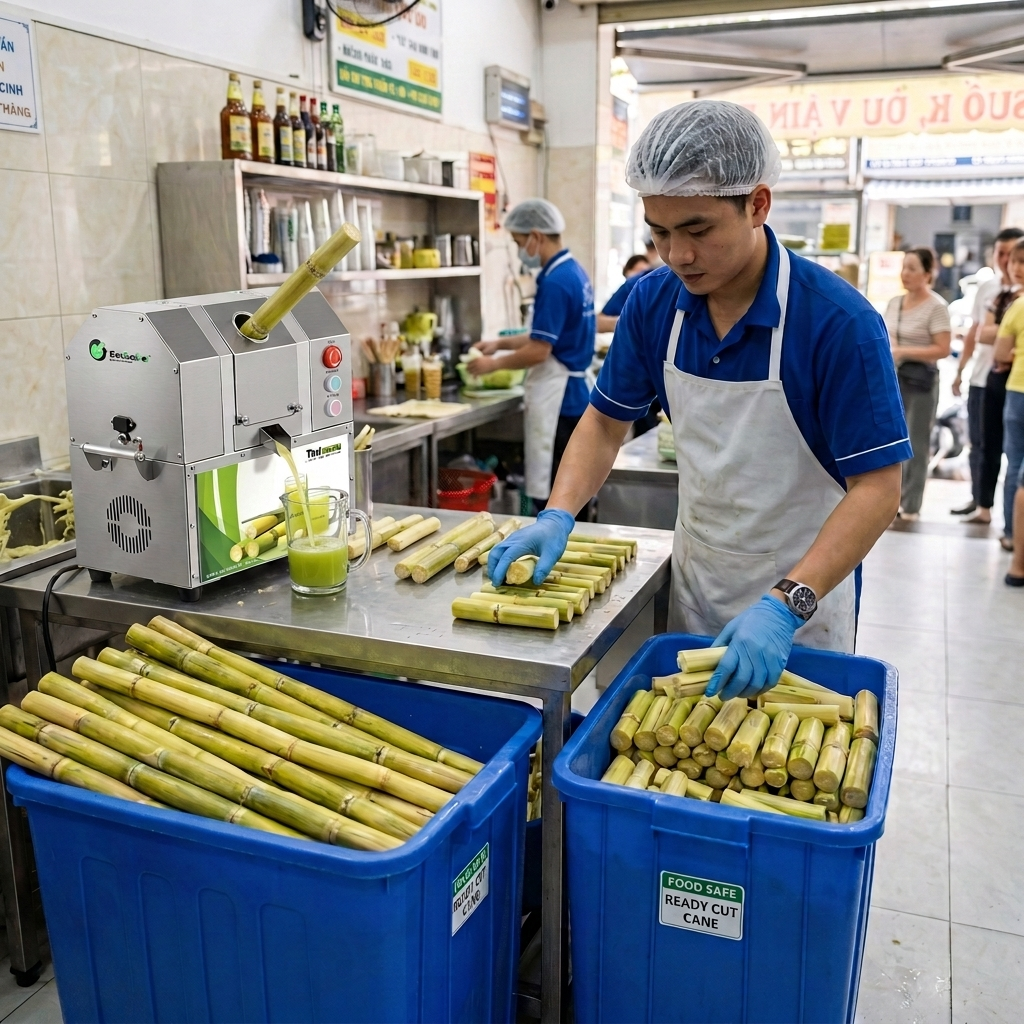
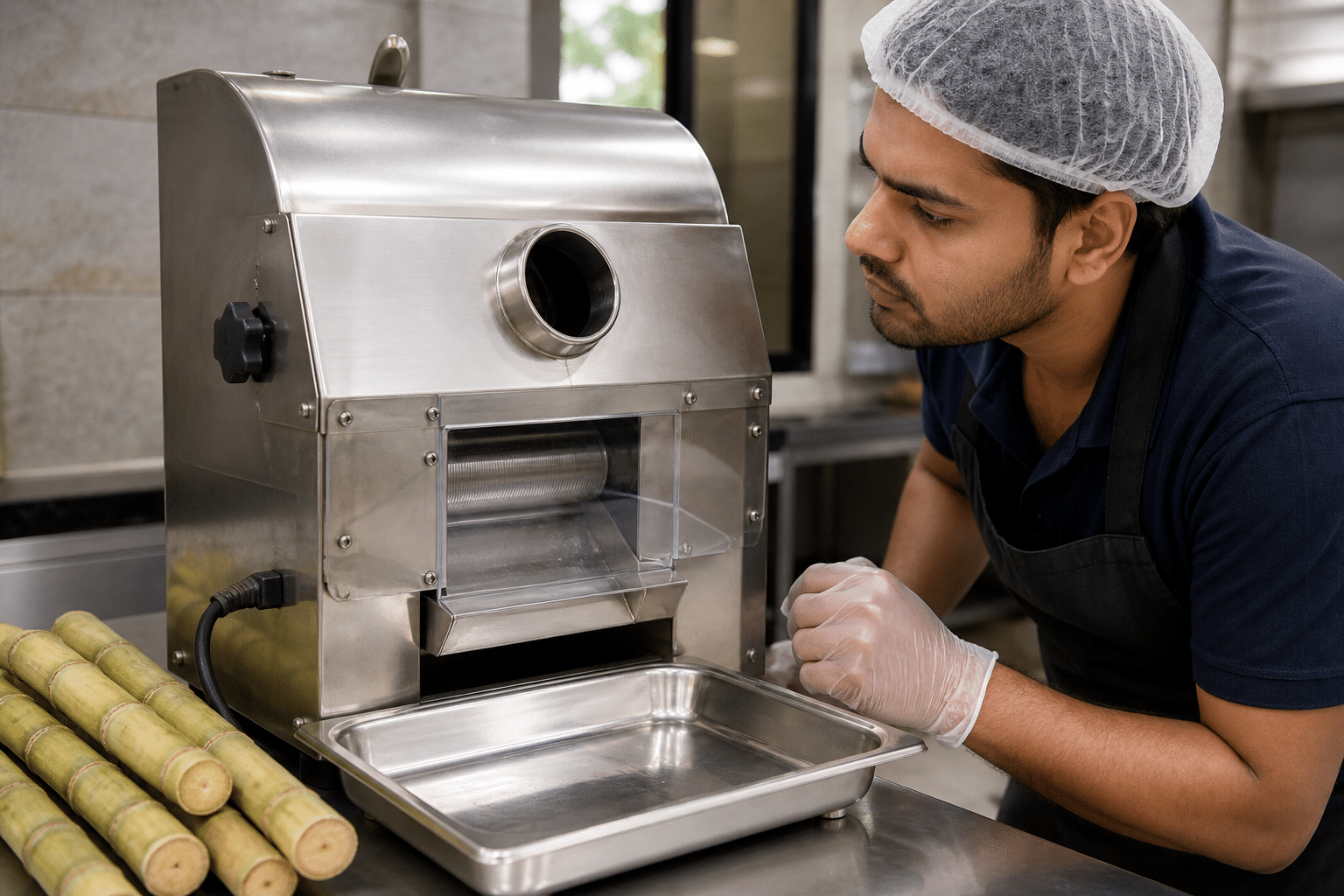
Washed and cut sugarcane separated for commercial juicing

To prepare sugarcane for juicing in a shop, inspect each delivery, reject cane that is visibly spoiled or heavily contaminated, wash the remaining stalks with potable water, trim damaged ends and unwanted material, cut stalks to the feed length required by the juicer, and hold the prepared cane in clean covered containers or a protected food-preparation area. Keep washed cane separate from unwashed stock, and clean the knives, boards, bins, and juicer food-contact surfaces according to the shop’s hygiene procedure.

The aim is not simply to make cane fit into a machine. Good preparation reduces the chance of dirt entering the juice area, prevents avoidable feed interruptions, supports safer handling, and gives operators a more predictable workflow during busy periods. The exact cutting length, whether the rind is left on, and the preferred crushing sequence depend on the juicer model, its feed opening, the supplier’s cane, and local food-handling requirements.

Use the machine manual as the final instruction for feed size and operating limits. A commercial machine should be selected for its expected duty cycle and service workflow, not only for its appearance or initial purchase price. See the practical differences between commercial and home sugarcane juicers when setting up a shop process.

What sugarcane preparation means in a commercial shop

Commercial sugarcane preparation is the controlled work completed before a stalk enters the crushing rollers. It normally includes receiving, visual inspection, dry removal of loose debris, washing, draining, trimming, cutting, temporary storage, and cleaning of the preparation station. In some operations, it may also include separating cane by diameter or cutting longer stalks into feed-ready lengths.

It is important to separate preparation from extraction. Preparation makes the raw material suitable for the machine and the shop’s hygiene workflow; extraction is the crushing process that expresses the juice. When these tasks are mixed together without defined areas or tools, operators can bring outer-surface dirt close to clean cups, ice, fruit garnishes, and finished juice.

A practical layout uses a one-way flow: unwashed receiving area, wash and trim area, clean staging area, then juicer. The flow should not require an operator to carry washed cane back through dirty stock. If space is limited, use clearly labelled containers and clean the work surface between tasks. This simple separation is often more useful than adding unnecessary steps that staff cannot maintain during service.

Before changing the routine, confirm what your local food-safety authority requires for produce washing, chemical use, storage time, and cleaning records. The process should also reflect the instructions supplied with your equipment.

1. Receive, inspect, and sort the sugarcane

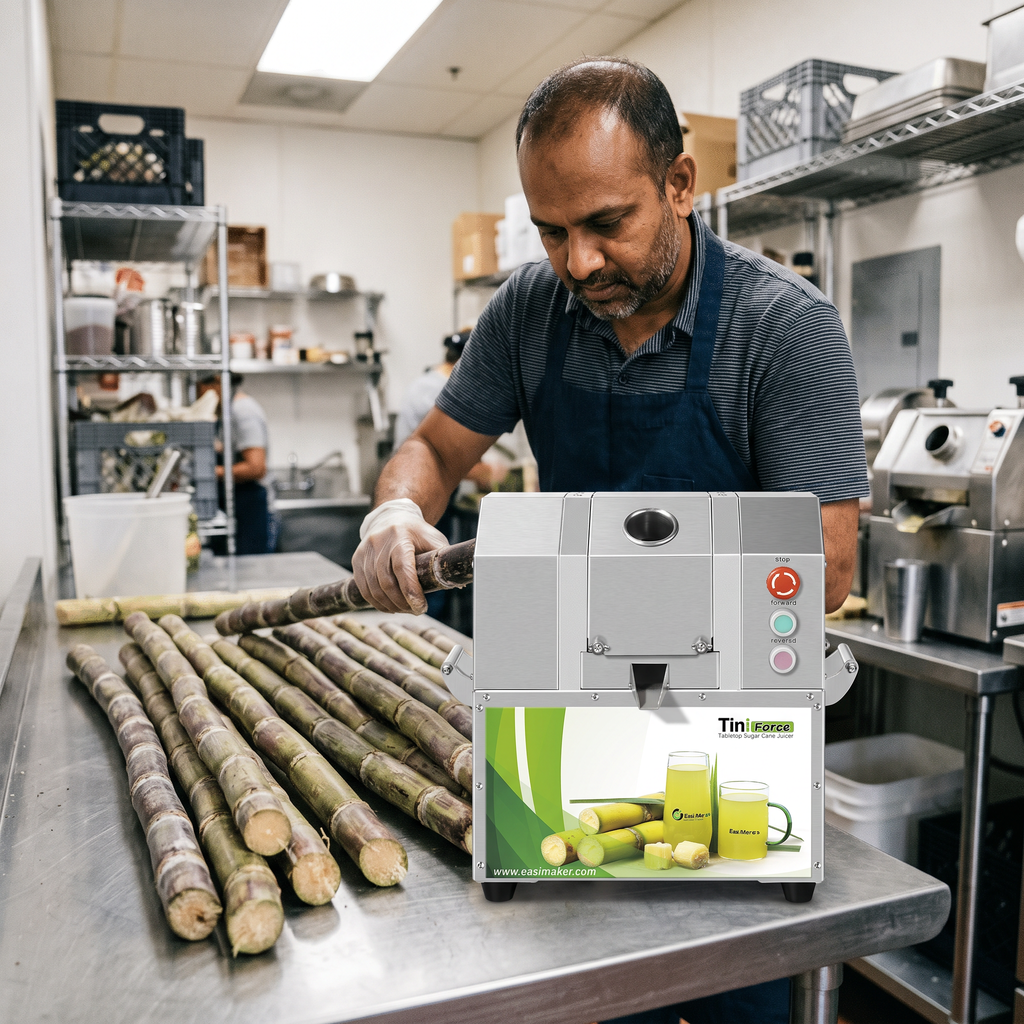
Inspecting sugarcane stalks before washing and juicing

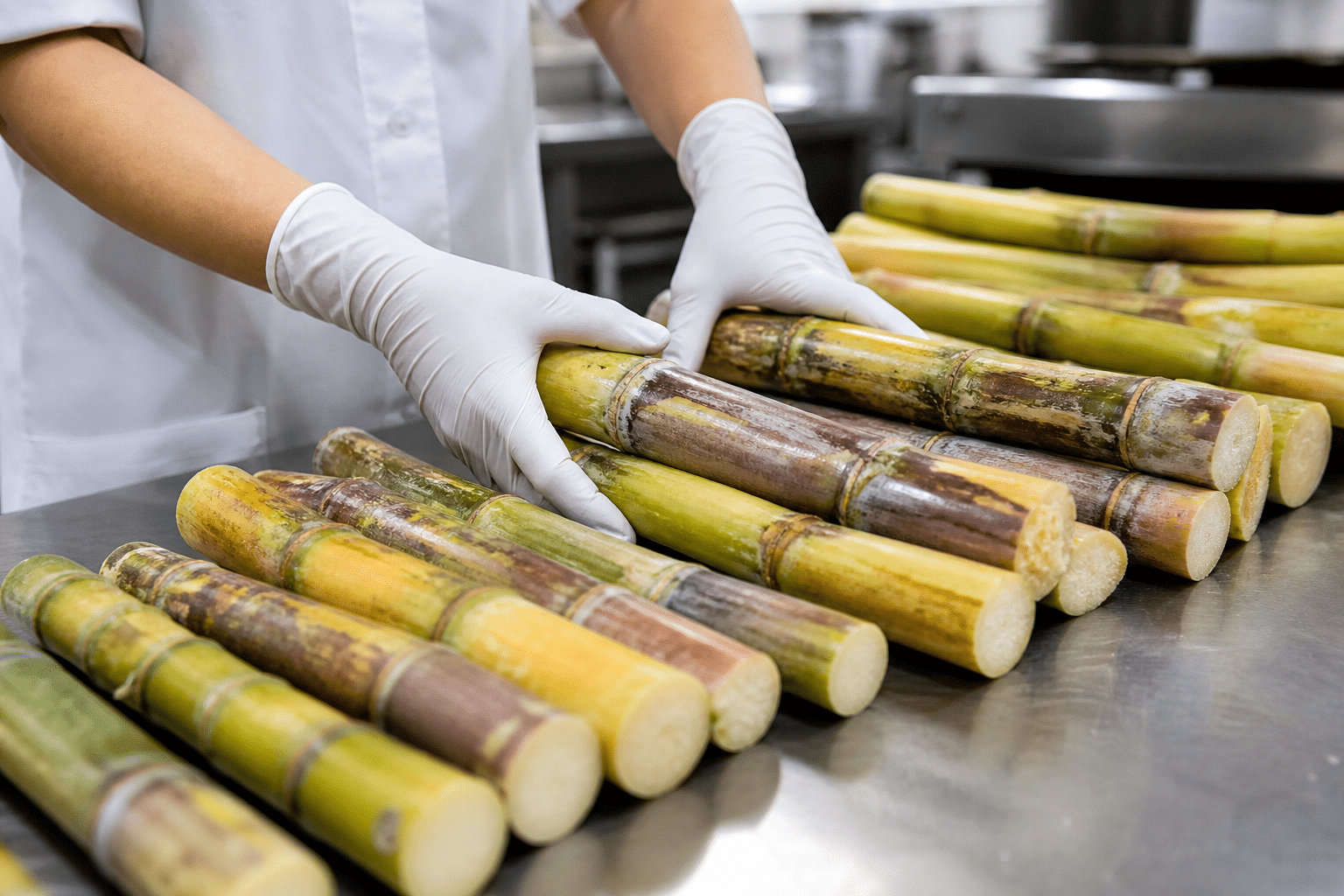
Preparation starts when cane arrives, not when a customer orders a drink. Put new deliveries on a receiving surface or in a designated bin rather than directly on the juice counter or floor. Check several stalks from each batch, especially if the supplier, delivery condition, or cane variety has changed.

Look for practical issues that can affect hygiene or feeding:

  • heavy soil, mud, insects, plant matter, twine, labels, or other foreign material;
  • soft, leaking, mouldy, unusually dry, or badly split sections;
  • damaged ends that may need trimming;
  • stalks that are too wide, bent, or long for the planned feed method; and
  • signs that the shipment has been stored or transported poorly.

Do not try to solve every defect by cutting around it. If a stalk has widespread spoilage, unusual odour, or contamination that cannot be removed through normal handling, set it aside and follow the shop’s rejection procedure. Record supplier or batch concerns where your purchasing process requires it. Early inspection prevents staff from discovering unsuitable cane at the juicer during a rush.

Sort acceptable cane into workable groups. For example, keep washed, feed-ready pieces separate from whole, unwashed stalks. Where stalk diameter varies significantly, grouping similar pieces can help staff choose an appropriate feed sequence without forcing large or awkward pieces into the machine. Avoid guessing that all cane should be processed the same way; machine geometry and local service habits matter.

Your output plan also affects receiving volume. The article on budgeting a sugarcane juice business explains why cane handling, cleaning supplies, storage, and workflow should be considered alongside the machine itself.

2. Wash sugarcane and control hygiene risks

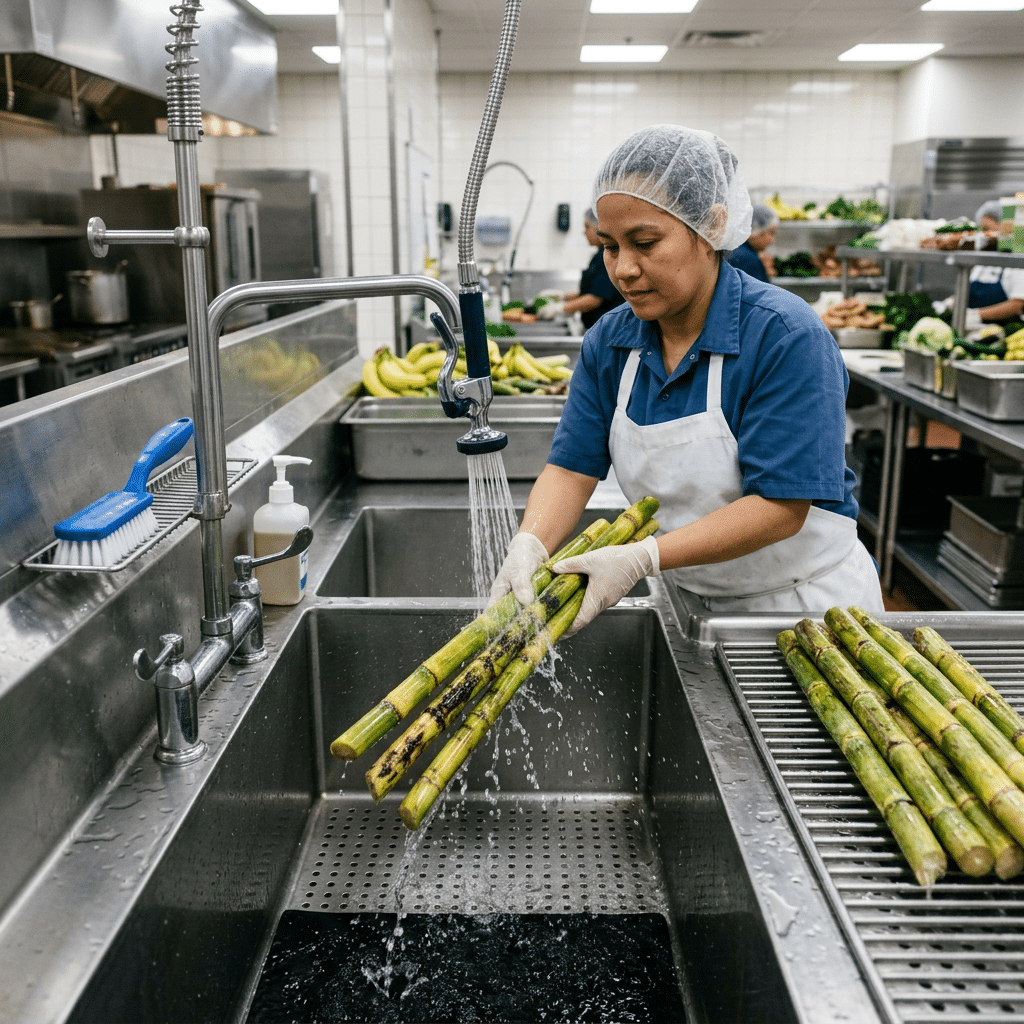
Washing sugarcane at a commercial shop preparation station

Wash suitable sugarcane before it reaches the clean staging area. Use potable water and a clean sink, wash station, or other arrangement appropriate to the shop. Rinse the outside of each stalk thoroughly and remove visible soil from crevices, nodes, and damaged outer areas with a dedicated food-safe brush where needed. The brush, sink, and surrounding work surface must be cleaned and maintained so they do not become a source of contamination.

Do not wash cane in the same container used for waste, floor tools, or dirty equipment parts. Change wash water whenever it becomes visibly dirty if using a basin-based process. Draining is also important: let excess water run off before cutting or staging so work surfaces do not become unnecessarily wet and slippery.

Produce washing and surface sanitising are not interchangeable tasks. Cleaning removes soil and residues. Sanitising is normally applied to cleaned food-contact tools and surfaces at the concentration, contact time, and rinsing condition specified by the product label and local rules. Do not apply a chemical treatment to cane unless it is permitted for that purpose and your procedure clearly controls its use.

Use separate, clearly identified tools for raw-cane receiving and clean preparation where possible. Wash hands when moving from delivery handling to trimming or serving. Keep chemicals, lubricant, cleaning cloths, and non-food tools away from cane and juice-contact items.

A complete commercial sugarcane juicer hygiene guide can help align cane preparation with cleaning of the feed area, rollers, guards, juice collection parts, and surrounding counter.

3. Trim and cut cane to suit the juicer

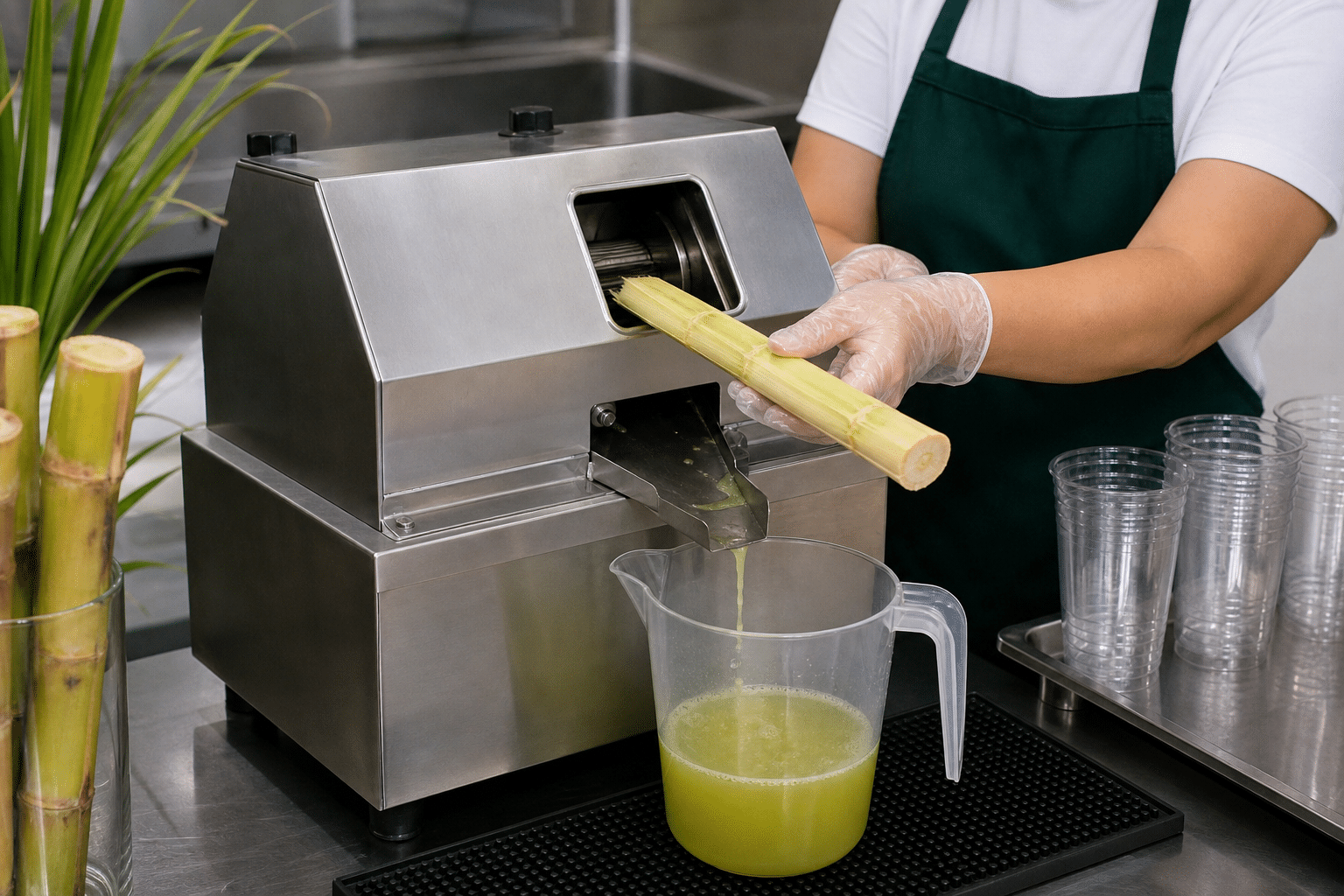
Trimming and cutting sugarcane to fit a commercial juicer

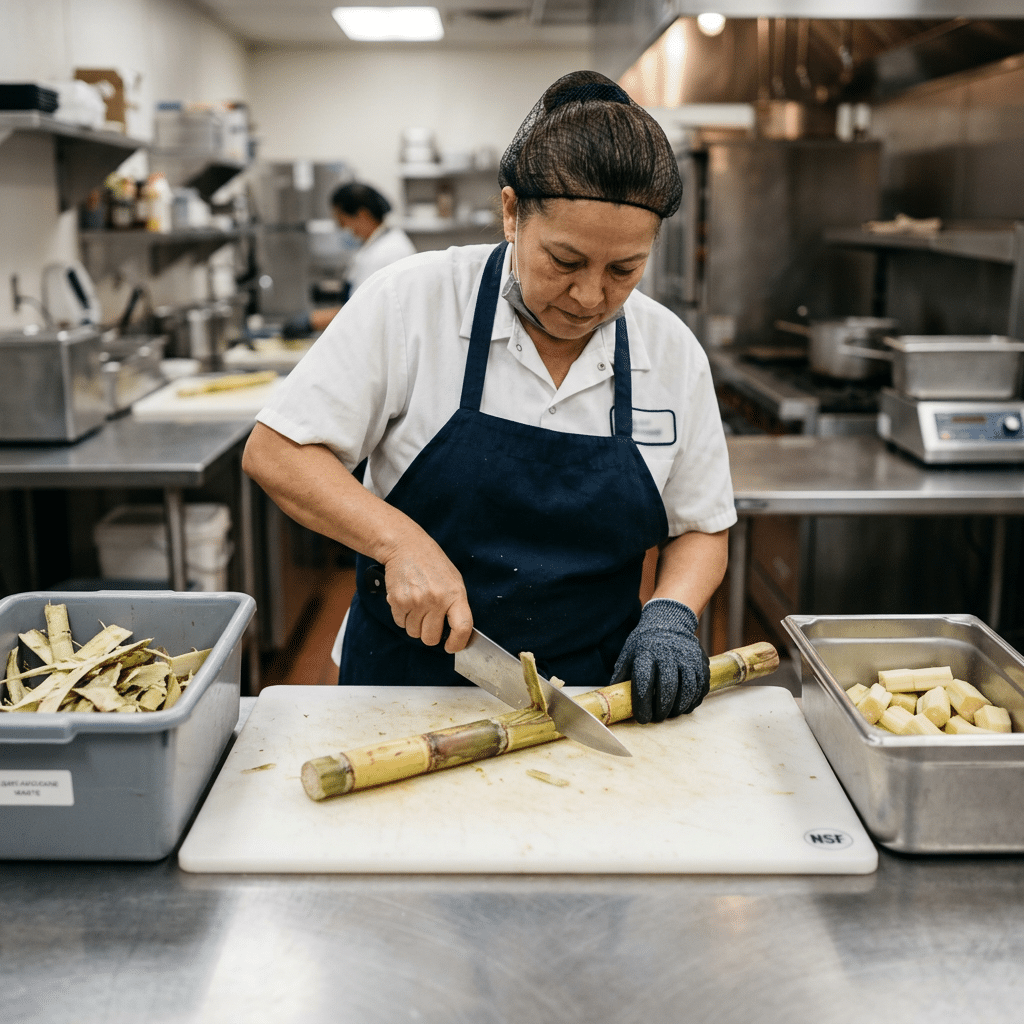
After washing and draining, trim only what needs to be removed for clean, safe, consistent feeding. Remove damaged or questionable ends, loose leaves, roots, ties, packaging remnants, and any material that is not intended to enter the machine. Use a stable cutting board or purpose-built preparation surface, a suitable sharp knife or cutter, and a collection bin for trimmings. Dull tools increase handling effort and can lead to poor control.

Cut stalks to a length that fits the specific juicer’s feed opening and operating instructions. There is no universal commercial cut length. A piece that is too long may be difficult to control in a compact work area; a piece that is too short can be awkward to guide through some feed arrangements. Measure the actual feed path, review the manual, and test the workflow with the machine switched off before setting a staff standard.

Whether to peel cane is also machine- and market-dependent. Some operators process properly washed cane with its outer rind intact, while others use a peeling step to suit their service method or customer preference. Do not assume peeling is mandatory or that it can replace washing. If peeling is used, maintain the same separation between unwashed stock, peel waste, and clean feed-ready cane.

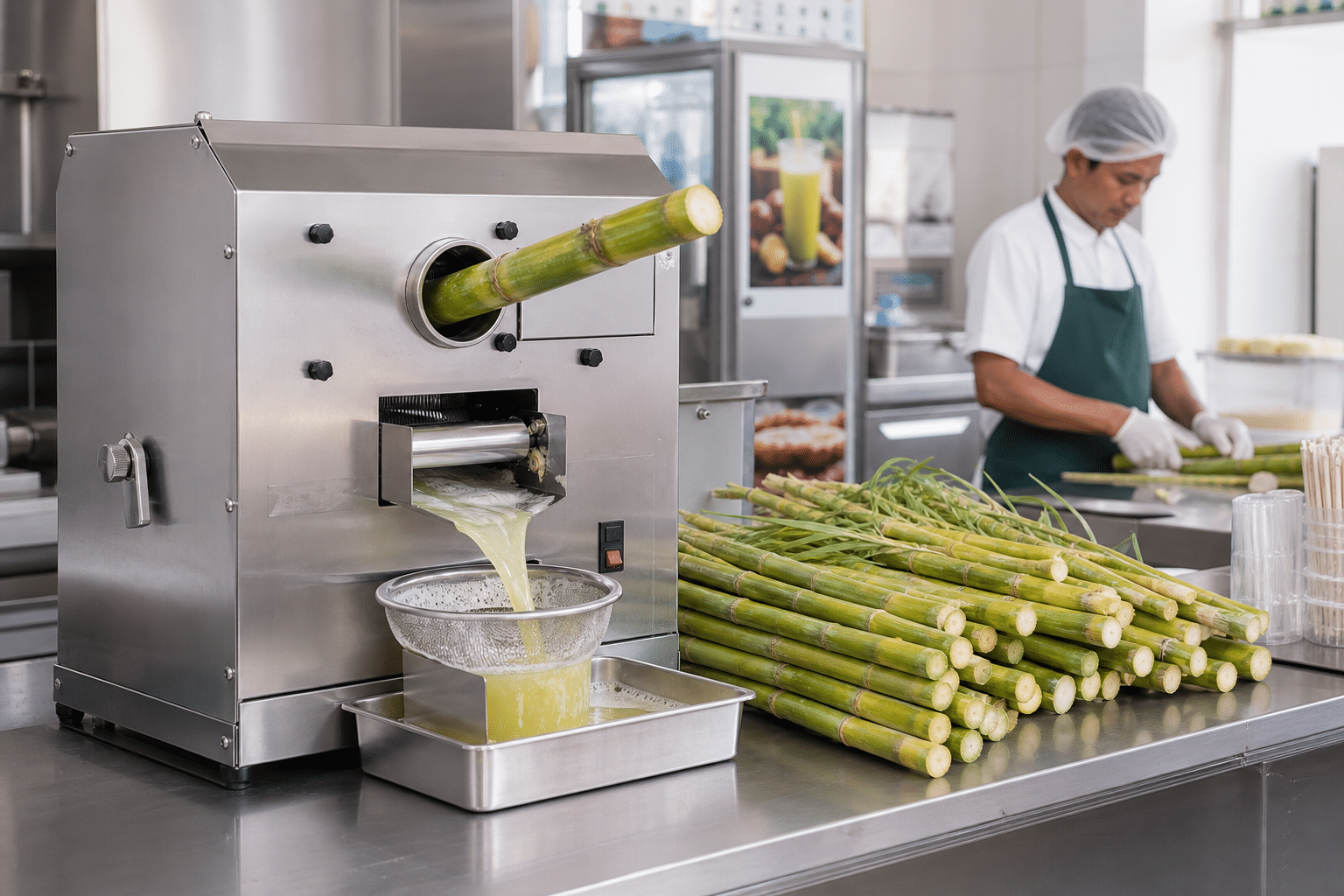
Never use the juicer rollers as a cutting tool, and never use hands or improvised objects to push unsuitable pieces into a feed opening. Equipment guards, push tools, and feed methods must be used exactly as instructed by the manufacturer. The operational considerations in these sugarcane juice machine best practices are useful when defining a safe handoff from preparation to crushing.

4. Stage prepared cane for steady service

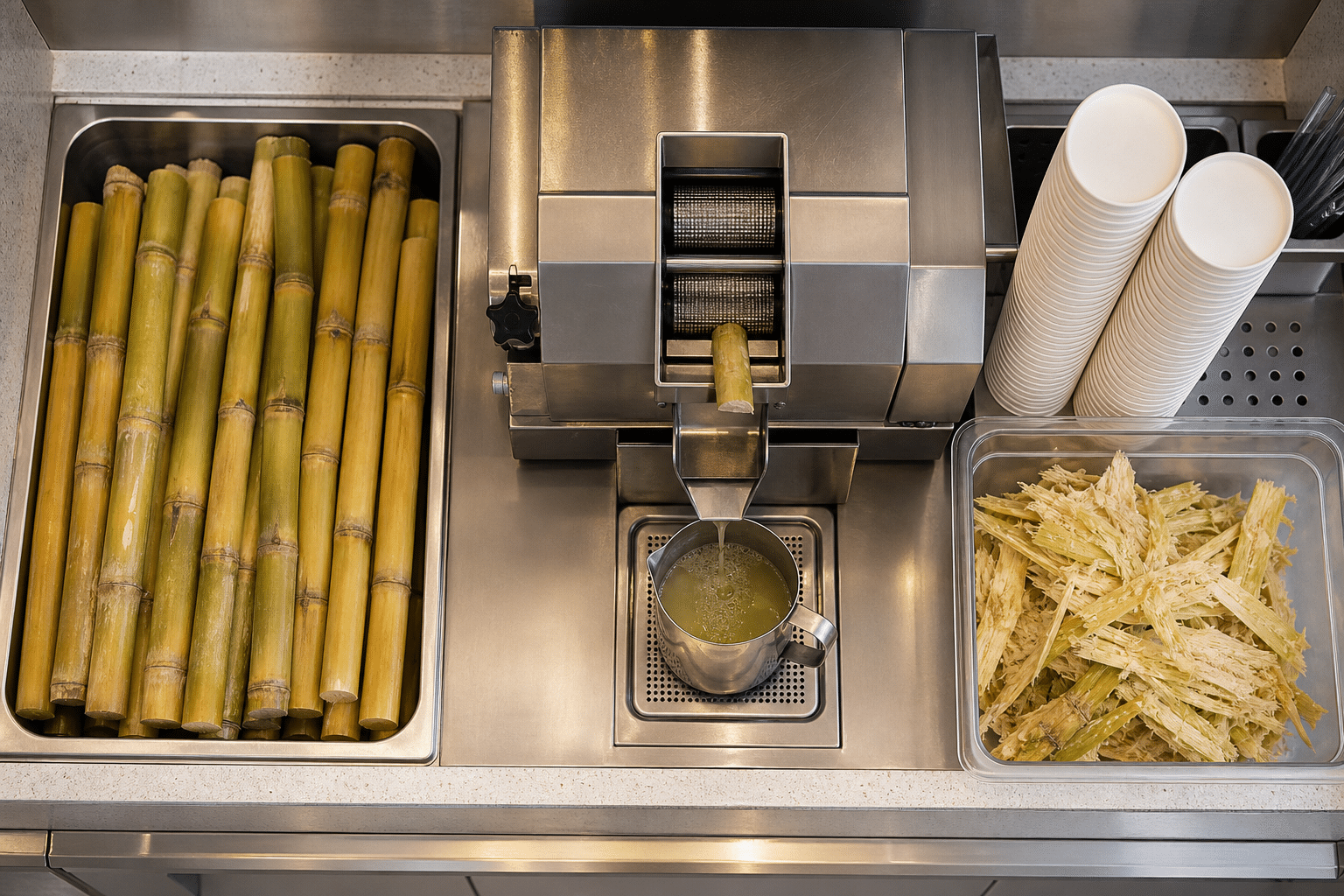
Prepared cane should be easy to identify, protected from re-contamination, and close enough to the juicer for efficient service without blocking the operator’s movement. Use clean food-safe containers, racks, or covered bins that are suitable for the site. Avoid placing feed-ready cane directly on counters that are also used for payment, packaging waste, dirty cups, or customer belongings.

Prepare a practical amount for the expected service period rather than cutting every stalk at the start of a long day. Smaller batches make it easier to protect product condition, rotate stock, and identify problems. The appropriate batch size depends on demand pattern, staff numbers, storage conditions, and local requirements. If demand is uncertain, retain more cane whole and wash or cut it in controlled batches.

Label or organise containers so staff can distinguish unwashed cane, washed whole stalks, cut feed-ready pieces, and trimming waste. A simple first-in, first-out approach helps prevent older prepared stock from being overlooked. If a prepared batch becomes contaminated, falls on an unclean surface, or cannot be confidently identified, remove it from the clean workflow and assess it under the shop’s food-safety procedure.

Plan staff roles during peak service. One person can wash and cut while another operates the juicer and handles finished drinks, provided the work areas and hand hygiene remain controlled. In a small kiosk, the same operator may need to pause, clean hands, and reset the surface before switching from raw handling to serving.

5. Protect the machine and operators during preparation

Good preparation protects more than the finished drink. It can reduce the likelihood of loose debris reaching the feed area, help the operator present cane at a workable size, and make cleaning between service periods more manageable. It does not remove the need for correct machine use or scheduled maintenance.

Before opening, check that the juicer is clean, assembled correctly, and ready for operation according to its manual. Confirm that guards and covers are correctly fitted, the collection area is clean, and the work area is dry enough for safe footing. Keep the preparation knife, cutter, brush, and waste bin positioned so the operator does not reach across moving equipment.

During service, stop the machine and isolate its power before clearing a blockage, removing wrapped fibres, inspecting rollers, or cleaning areas that are not intended to be accessed while running. Never bypass a guard or reach into an active feed area. If cane repeatedly fails to feed smoothly, review its cut size, straightness, cleaning condition, and the machine instructions rather than trying to force it through.

Crushing method may also affect how you stage and re-handle bagasse. For a process review, read single-pass versus multi-pass sugarcane crushing. Use only the approach that is appropriate for your machine, product workflow, and local hygiene controls.

Build a repeatable daily preparation routine

The most reliable preparation method is a simple one that every trained operator can follow. Document the sequence in short, observable steps and adapt it after reviewing real service conditions. A practical daily routine can include:

  1. Inspect the preparation area, tools, containers, and juicer before use.
  2. Receive and inspect cane, keeping unwashed stock in its designated area.
  3. Wash acceptable stalks with potable water and allow them to drain.
  4. Trim and cut to the approved feed size for the specific machine.
  5. Stage clean, identified batches near the juicer.
  6. Keep waste moving out of the clean workflow.
  7. Clean and reset the station at defined intervals and at closing.

Train staff on the reason behind each step: separate dirty and clean work, prevent foreign material from reaching the machine, avoid unsafe feeding, and maintain an orderly counter. Supervisors should periodically observe the routine rather than relying only on a written checklist. If staff regularly skip a step, the issue may be poor layout, unclear ownership, inadequate tools, or an unrealistic preparation volume.

Review the procedure whenever the cane supplier changes, a new juicer is installed, the menu changes, or seasonal demand increases. Track recurring problems such as difficult feeding, excess debris, wet floors, or slow cleaning, then adjust the receiving, cutting, staging, or staffing process. This approach keeps sugarcane preparation practical while supporting consistent daily operation.

How to Choose a Commercial Sugarcane Juicer

Table of Contents

Choose a commercial sugarcane juicer by matching the machine to your real service volume, cane size, workspace, local power supply, cleaning process, and available technical support. A suitable machine should fit the full operating workflow, not only the expected demand at peak hours.

Start With Your Actual Operating Needs

Commercial sugarcane juicer in a clean foodservice preparation workspace

The right commercial sugarcane juicer is the one that matches your expected service volume, cane preparation method, available counter or production space, local electrical supply, hygiene routine, and access to service. Do not select a machine only by its purchase price or an advertised output figure. A machine that appears suitable on paper can still create delays if the cane needs extensive preparation, cleaning is difficult during service, or the installation does not match the site.

Start by mapping one normal trading day. Record when orders peak, how cane arrives, where it will be washed and trimmed, who will operate the equipment, how juice will be collected and served, and when the machine can be cleaned. This gives you a more dependable basis for selection than a general description such as “high volume.”

For a small counter, kiosk, café, hotel breakfast station, juice bar, or central beverage preparation area, the best fit may differ substantially. Your choice should support a consistent workflow, safe handling, straightforward sanitation, and realistic maintenance by the people who will use it every day.

What Is a Commercial Sugarcane Juicer?

Commercial sugarcane juicer in a clean foodservice preparation workspace

A commercial sugarcane juicer is a foodservice machine designed to extract juice from prepared sugarcane stalks. In common commercial designs, powered rollers draw the cane through the extraction area while the operator manages feeding, juice collection, and bagasse disposal. The machine is one part of a wider system that also includes cane receiving, washing, trimming or cutting, filtration where required by the menu concept, cold holding or immediate serving, and cleaning.

Commercial equipment differs from occasional-use equipment because it must suit repeated operation and a controlled daily hygiene process. Buyers should look beyond the exterior finish and ask practical questions: Which food-contact parts need cleaning? Can the operator reach those areas safely? What parts are expected to wear? How are replacement parts identified? Is the machine appropriate for the stalk dimensions and condition supplied to the business?

It is also useful to distinguish cane preparation equipment from the juicer itself. If stalks arrive long, uneven, or difficult to manage at the service counter, a separate cutting process may be needed before extraction. Good equipment planning considers the handoff between preparation and juicing rather than treating the juicer as a stand-alone purchase.

Match the Machine to Demand and Workflow

Commercial sugarcane juice workflow with preparation, extraction, serving, and waste zones

Begin with service patterns, not the busiest possible scenario. Estimate the number of drinks or batches you expect during a typical period, then identify the shorter periods when orders arrive together. Consider whether the same person will take payment, prepare garnishes, feed cane, serve drinks, and clean the work area. A technically capable machine can still become a bottleneck if one operator has too many tasks around it.

Assess the complete time needed for each order. This includes selecting and preparing stalks, feeding them safely, collecting juice, managing bagasse, cleaning spills, and resetting the station. If the operation uses pre-cut cane, determine where it will be cut, how it will be stored, and whether staff can replenish it without crossing the customer-service area.

Counter-service businesses often value compact layout and a simple operator routine. A dedicated juice bar or production room may place greater value on a work sequence that separates receiving, washing, preparation, extraction, and packing. Where you are comparing different machine formats, the TiniForce S3 and EasiDeMax S4 comparison can help frame questions around service volume, counter space, preparation, and cleaning routines.

Ask suppliers to explain operating steps clearly rather than relying on a general capacity claim. Actual throughput depends on stalk size, cane condition, operator pace, preparation quality, cleaning interruptions, and the way orders are presented to customers.

Check Cane Size, Condition, and Preparation

Prepared sugarcane stalks ready for commercial juice extraction

Your cane supply has a direct effect on machine selection and daily operation. Before purchasing, inspect representative stalks from your expected supplier. Note their diameter range, length, straightness, surface condition, moisture, fibrousness, and variation between deliveries. These factors influence how easily cane can be handled and fed through an extraction machine.

Do not assume that every stalk can be processed in the same way. Oversized, unusually hard, badly bent, or damaged stalks may need to be sorted, trimmed, split, or otherwise prepared according to the machine instructions. A consistent preparation standard helps operators work more safely and can reduce interruptions at the juicing station.

Plan for the tools and bench space required before the cane reaches the juicer. If you need to reduce stalk length or improve handling, use purpose-designed food preparation equipment and follow its operating instructions. The practical guidance in processing thick sugarcane stalks without avoidable jamming is especially relevant when cane deliveries vary in diameter or condition.

Also define how cane will be washed and inspected. Remove unsuitable material before it reaches the extraction area, and keep raw cane handling separate from clean serving items as far as the layout allows. Local food safety requirements may set additional expectations for washing, storage, and food-contact sanitation.

Confirm Installation Space and Electrical Supply

Commercial sugarcane juicer with planned counter space and electrical installation area

Measure the installation location before ordering. Include more than the machine footprint: allow room for cane staging, operator movement, the juice collection container, bagasse removal, cleaning access, and safe access to controls. Check the route from delivery point to installation area as well. Doorways, lifts, steps, counter openings, and turning space can affect delivery and commissioning.

The work surface must be stable, level, and suitable for foodservice use. Place the machine where operators can feed cane and remove waste without reaching across hot equipment, customer traffic, or unrelated preparation work. If the site has a sink or drainage nearby, confirm that splash and washdown practices remain appropriate for the particular equipment and local requirements.

Electrical compatibility is essential. Confirm the rating plate requirements for voltage, frequency, phase, plug type, and protective electrical arrangements before installation. Never assume that a machine intended for one market will connect safely in another. Review this guide to commercial sugarcane juicer power supply requirements, then have the final site connection checked by a qualified local electrician where required.

Request the machine dimensions, weight, installation clearances, and electrical details from the supplier for the exact model under consideration. These details should be confirmed in writing rather than estimated from product photographs.

Prioritise Hygiene and Cleaning Access

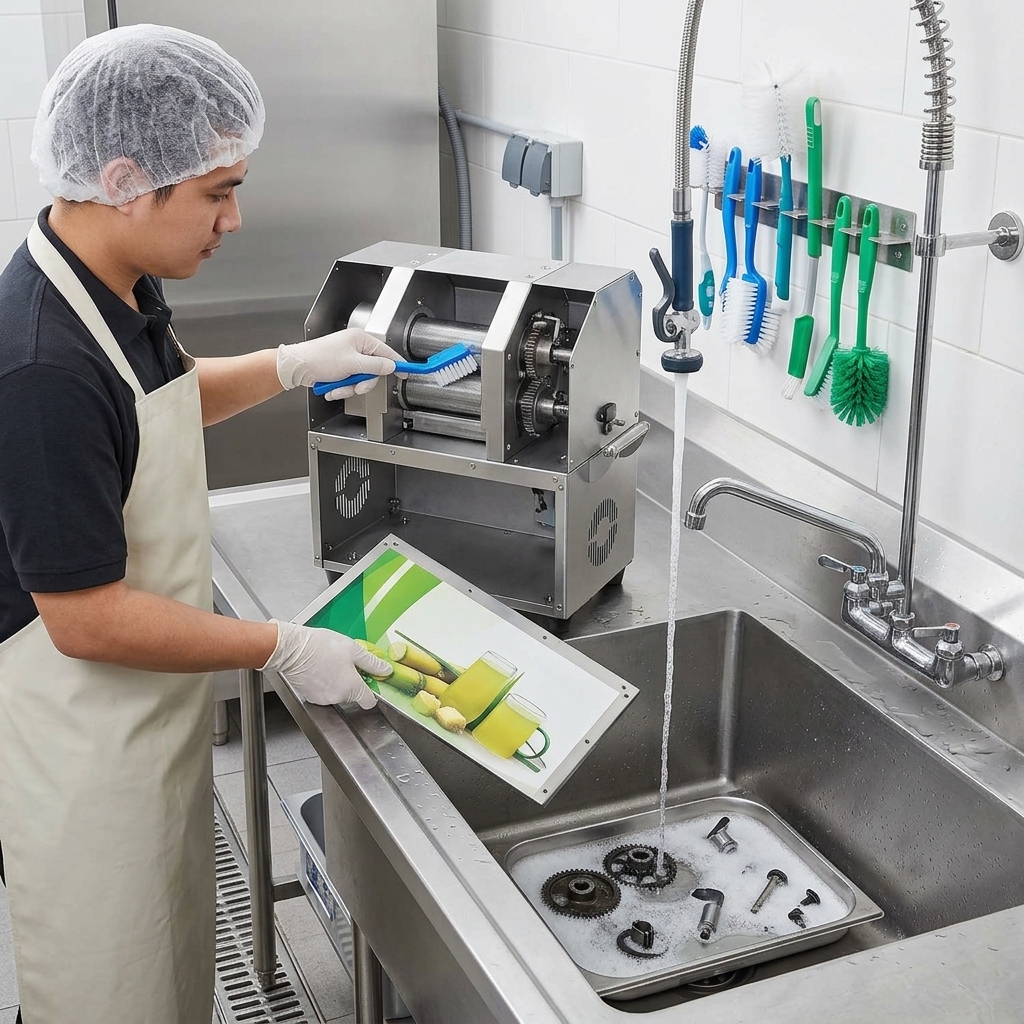
Operator cleaning accessible components of a commercial sugarcane juicer

Cleaning is a selection criterion, not an afterthought. Fresh cane juice and cane fibres can collect around food-contact areas, collection points, guards, work surfaces, and waste zones. A machine should support a cleaning routine that your team can complete correctly at the frequency required by your business and local food hygiene rules.

During evaluation, ask to see the normal shutdown and cleaning procedure for the exact machine. Identify which parts are removable, which areas require brushing or wiping, what cleaning tools are needed, and how operators avoid cross-contamination while reassembling the equipment. Confirm that the cleaning process fits your staffing plan and the time available between service periods and at the end of the day.

Keep a documented routine for daily cleaning, inspection, and scheduled deep cleaning. Training should cover safe isolation from power, correct disassembly where applicable, cleaning of food-contact surfaces, drying, reassembly, and a final operational check. For a practical step-by-step framework, see how to clean a commercial sugarcane juicer properly.

Choose cleaning chemicals and sanitising methods that are appropriate for food equipment and compatible with the manufacturer’s instructions. Follow local regulations and chemical supplier directions. Do not direct water at electrical components unless the manufacturer specifically permits that method for the machine.

Evaluate Total Cost and After-Sales Support

The machine price is only one part of the investment. A complete budget may include delivery, import or local taxes where applicable, site electrical work, counter preparation, cane washing and cutting equipment, packaging, filtration supplies, cleaning materials, spare parts, staff training, and planned maintenance. Budgeting in this way helps avoid selecting equipment that appears affordable but is difficult to install or sustain.

Ask the supplier what is included with the machine and what is not. Request clear information on the operating manual, cleaning instructions, recommended maintenance tasks, available spare parts, warranty terms, technical support process, and typical lead time for replacement components. The ability to identify the correct part and receive practical service guidance matters when the machine is central to daily sales.

Review the cost factors for starting a sugarcane juice business to build a broader purchasing budget. Then create a simple preventive plan based on the equipment manual: operator checks before service, cleaning and inspection after service, and periodic review of components that experience normal wear. This approach is more reliable than waiting for a disruption before arranging service.

For multi-site buyers, distributors, or private-label projects, also discuss documentation, spare-parts planning, training needs, and the point of contact for technical questions before placing an order.

Use a Practical Selection Process

A structured buying process reduces the risk of choosing equipment that does not fit the site. Use the following checklist when speaking with a supplier or comparing commercial sugarcane juice machines:

  1. Define the business format: Identify whether the machine will serve a kiosk, café, restaurant, hotel, juice bar, event operation, or production area.
  2. Map normal and peak workflow: List the number of orders, staffing level, preparation tasks, serving method, and cleaning windows.
  3. Assess actual cane: Provide representative information about stalk diameter, length, condition, and how the cane will be prepared.
  4. Confirm the site: Verify dimensions, work surface, operator clearance, delivery access, and electrical supply.
  5. Review cleaning in detail: Make sure the procedure, access, tools, and time requirement are realistic for your team.
  6. Check support readiness: Request documents for the exact machine, understand the spare-parts process, and identify who will provide technical assistance.
  7. Compare total cost: Include installation, preparation, hygiene supplies, packaging, maintenance, and operating labour in the budget.

Finally, retain written specifications and instructions for the model you choose. They provide a sound reference for site preparation, staff training, safe use, cleaning, and future maintenance. A well-matched commercial sugarcane juicer should make the daily process more organised and manageable for both operators and customers.

Sugarcane Juice Machine Safety Checklist for Daily Service

Table of Contents

A commercial sugarcane juicer should be checked before every shift, operated with guards in place, cleaned safely after service, and inspected for wear before the next day. This checklist helps managers and operators build a repeatable daily safety routine.

The Daily Safety Routine at a Glance

Commercial sugarcane juice machine prepared for a daily safety inspection

Effective sugarcane juice machine safety starts with a simple rule: inspect the machine before service, keep guards and hands clear during extraction, isolate power before cleaning or adjustment, and stop operation when a fault is found. A commercial sugarcane juicer contains powered rollers and pinch points. Daily checks help operators identify problems before they affect staff safety, product hygiene, or service continuity.

Use this sequence for every shift:

  1. Check the work area, electrical supply, machine stability, guards, feed opening, rollers, and collection area.
  2. Confirm that food-contact surfaces are clean and that the machine has been reassembled correctly after the previous cleaning cycle.
  3. Test controls only in accordance with the machine manual, with hands and tools away from moving parts.
  4. Feed prepared cane steadily using the intended feed path; never push cane with fingers or improvised objects.
  5. Keep the counter dry, clear spent cane promptly, and manage queues so operators do not rush.
  6. Switch off, isolate, clean, inspect, and record faults at the end of service.

These steps are a practical operating checklist, not a replacement for the operating manual, local food-hygiene rules, electrical requirements, or workplace safety procedures. Site managers should adapt the checklist to the exact machine model and local regulations.

Why Daily Safety Checks Matter for Commercial Sugarcane Juicers

Organised commercial sugarcane juicer workstation with clear operator space

A sugarcane juice machine is a food-service asset that combines mechanical extraction with direct food contact. Its operating risks are straightforward but important: rotating rollers can create pinch points, wet floors and counters can increase slip or electrical risks, and poor cleaning can leave residue in food-contact areas.

Daily inspection is therefore not just a maintenance task. It supports three operating controls:

  • Operator protection: guards, covers, controls, stable installation, and safe feeding practices reduce exposure to moving parts.
  • Food hygiene: cleaned and properly reassembled contact parts help keep the preparation process controlled.
  • Service reliability: unusual noise, vibration, loose parts, damaged cables, or reduced roller grip can be reported before a more serious interruption develops.

Commercial equipment is generally selected for repeated business use and a managed operating workflow, rather than occasional household use. For a useful purchasing and workflow context, read commercial versus home sugarcane juicer differences. Even with commercial equipment, safe results depend on correct installation, trained operators, suitable cleaning procedures, and access to model-specific support.

Assign clear responsibility at the start and end of every shift. One trained person should confirm the checklist, while the manager or designated supervisor should decide whether a fault requires the machine to be isolated and serviced.

Pre-Start Sugarcane Juicer Safety Checklist

Operator completing a pre-start safety inspection on a sugarcane juice machine

Complete the following inspection before connecting the machine for service. Do not rely on a visual check alone if the machine was moved, cleaned, or reassembled since the previous shift.

1. Check the location and work area

  • Place the machine on a stable, level, cleanable surface suitable for its weight and normal operation.
  • Keep sufficient clear space around the feed side, juice outlet, bagasse discharge area, and operator position.
  • Remove loose packaging, cleaning tools, knives, cloths, cups, and other items that could interfere with the workflow.
  • Ensure the surrounding floor is dry and that any spills can be dealt with promptly.
  • Keep customers, children, and untrained staff away from the operating zone, especially when the service counter is busy.

2. Inspect the electrical connection

  • Check that the power cord, plug, strain relief, switch, and visible connections show no damage, exposed conductors, overheating marks, or loose fit.
  • Confirm that the local electrical supply matches the rating shown on the machine nameplate and the model documentation.
  • Use the intended grounded outlet and avoid unsafe extension arrangements. Do not operate the equipment with wet hands.
  • Make sure the power cord does not cross a wet area, sharp edge, walkway, or hot surface.

3. Inspect guards, covers, and food-contact parts

  • Confirm that all guards, covers, trays, and removable components are fitted, secure, and undamaged.
  • Check that the feed opening is unobstructed and that there is no old cane fibre, cleaning material, or foreign object near the rollers.
  • Verify that juice collection containers, strainers, and other food-contact accessories are clean, dry where required, and correctly positioned.
  • Never bypass an interlock, remove a guard for faster feeding, or operate a machine with a loose or cracked cover.

4. Prepare the sugarcane safely

Use clean cane appropriate for your recipe and operating process. Wash or prepare raw material according to the site food-safety plan before it approaches the juicer. Trim cane only with suitable tools, on a separate stable preparation surface, and keep blades away from the extraction station. Cut cane to a length that can be guided through the normal feed path without forcing it.

Pre-start checks should also include the machine’s model-specific instructions. The supplier’s sugarcane juicer spare parts and support checklist can help managers record machine identification details and plan for parts that may be needed over the equipment life.

Safe Operating Practices During Service

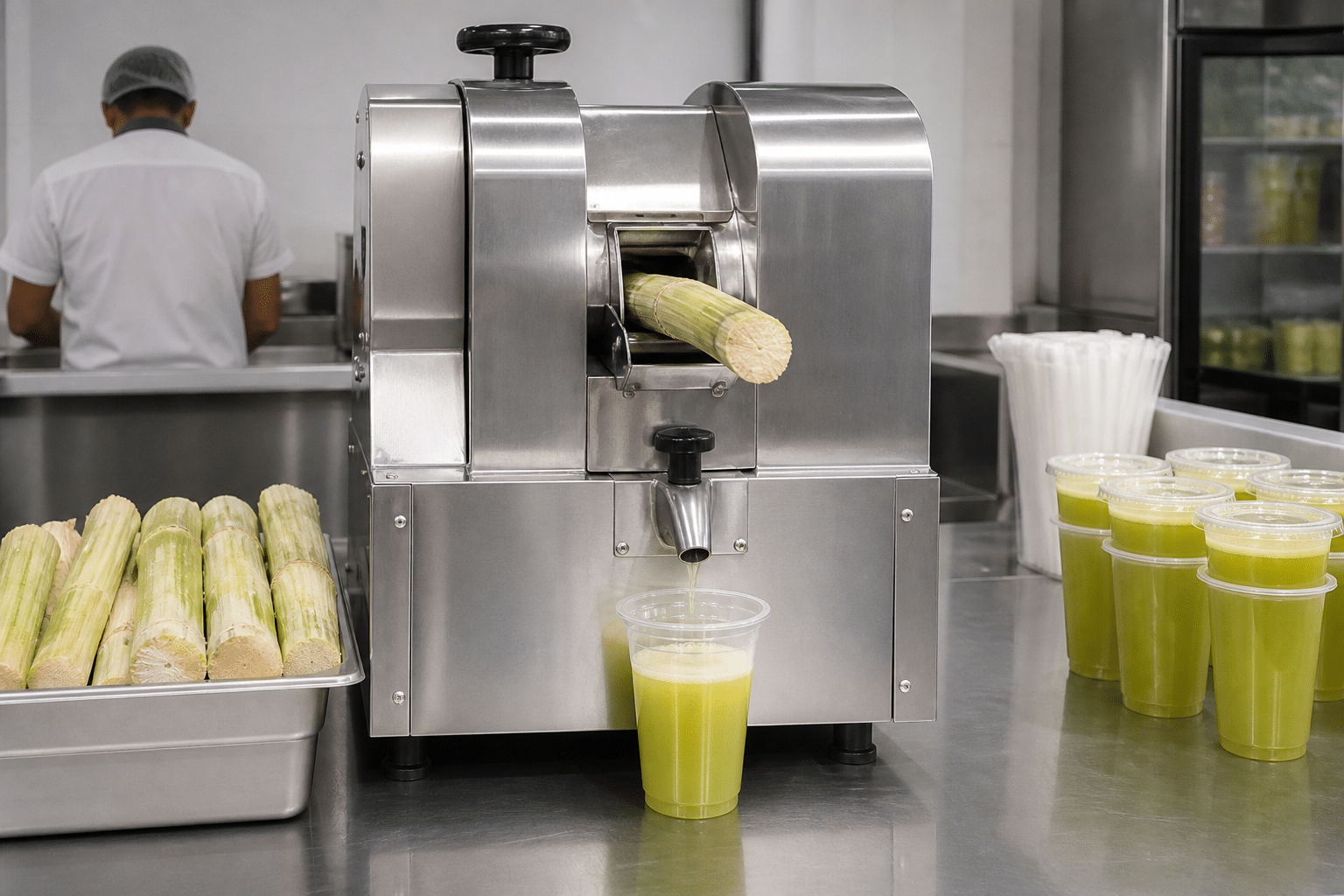
Safe feeding of prepared sugarcane into a commercial juice machine

Once the machine is running, the operator’s main job is to keep hands, clothing, tools, and distractions away from moving parts. A well-designed counter layout and consistent routine are safer than trying to correct problems while the machine is operating.

Feed cane only through the intended path

Guide each piece of prepared sugarcane into the feed opening in a controlled manner. Keep fingers outside the danger area at all times. Do not reach into the opening to reposition cane, clear fibre, or retrieve a dropped item. Never use fingers, metal tools, knives, spoons, or improvised pushers to force material into the rollers.

If cane stalls, feeds unevenly, or appears caught, stop the machine using the normal control. Isolate it from power before inspecting or attempting to clear the issue. Follow the exact clearing procedure in the machine manual. If the cause is not clear, do not restart until a qualified person has checked the machine.

Maintain a controlled station

  • Keep the juice cup or collection vessel stable and correctly located before extraction begins.
  • Remove spent cane and fibre using a safe method only after movement has stopped, unless the machine documentation specifically states otherwise.
  • Wipe spills as soon as it is safe to do so. Use a separate cloth or cleaning method for the surrounding counter; do not introduce cloths near rollers.
  • Tie back long hair, avoid loose sleeves, jewellery, lanyards, and gloves that could be drawn toward moving parts.
  • Do not leave an operating sugarcane juicer unattended.
  • Limit operation to trained staff who understand the start, stop, cleaning, and fault-reporting process.

Respond to abnormal operation early

Stop service and investigate if you notice unusual noise, vibration, burning smell, inconsistent roller movement, an electrical issue, a loose component, leakage where it should not occur, or damage to a guard. Continuing to operate a machine after an abnormal condition is identified can increase the risk of injury or equipment damage. Place a clear out-of-service notice on the machine until it has been checked.

Safe Shutdown, Cleaning, and Sanitising

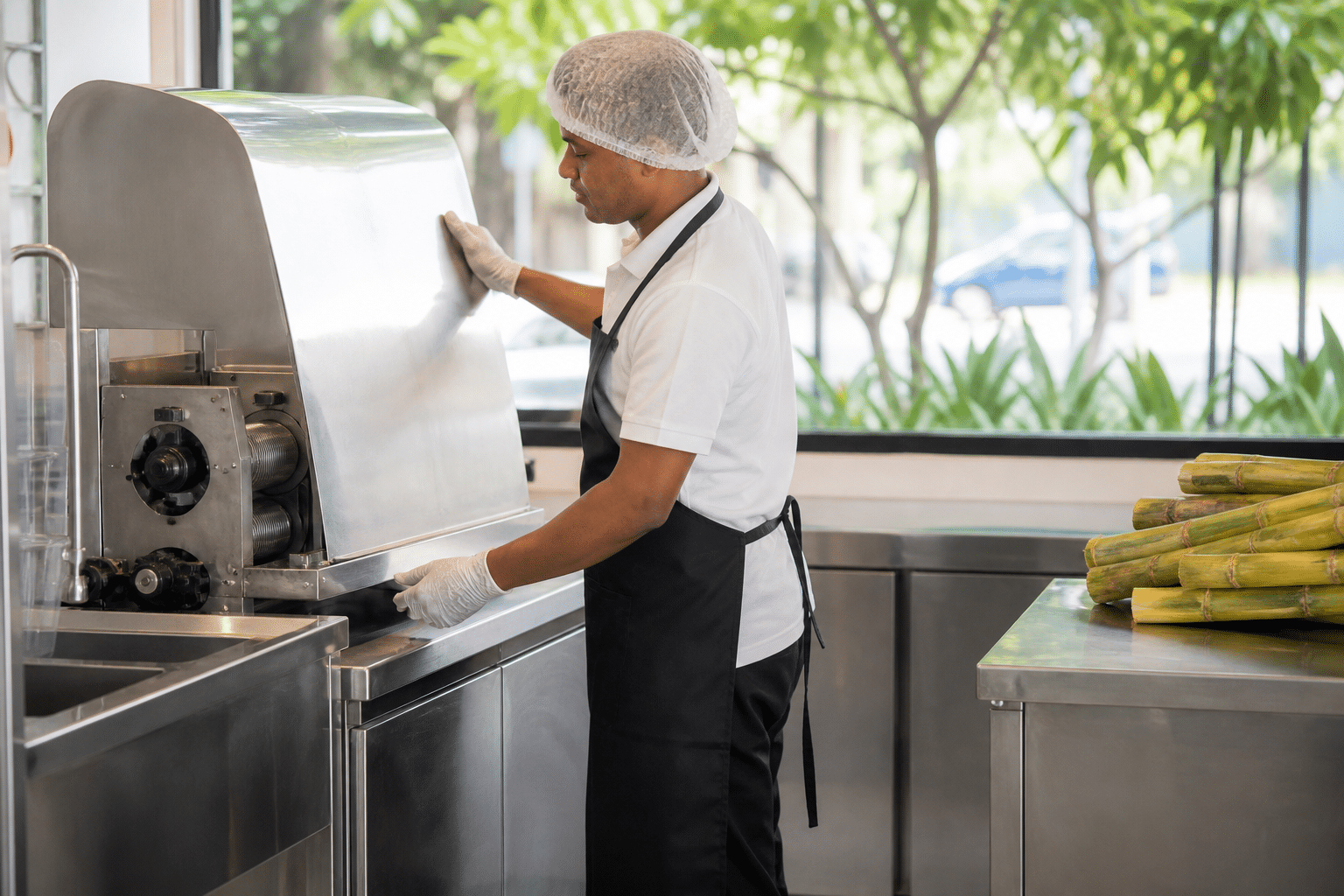
Commercial sugarcane juicer isolated from power before cleaning

Cleaning is one of the highest-risk times for sugarcane juicer operators because staff may be tempted to remove residue while rollers are still moving. Establish a non-negotiable shutdown sequence: stop the machine, disconnect or isolate its power supply, confirm movement has fully stopped, and only then begin cleaning or disassembly.

End-of-service cleaning sequence

  1. Turn the machine off using the normal control.
  2. Disconnect the plug or use the approved isolation method for the installation. Prevent accidental reconnection while cleaning.
  3. Wait until all moving parts have stopped completely.
  4. Remove detachable parts only as described in the manual. Place small parts in a clean, controlled area so they are not lost or contaminated.
  5. Remove cane fibre and residue with tools and methods suitable for the machine. Do not use hands near rollers or sharp edges.
  6. Wash, rinse, and sanitise food-contact components in line with the site hygiene programme and the instructions for the cleaning chemicals used.
  7. Clean non-removable exterior surfaces carefully. Do not spray or flood electrical components, switches, motors, plugs, or areas that the manual says must remain dry.
  8. Allow components to dry as required, inspect them, and reassemble the machine correctly before storage or the next shift.

Cleaning chemicals must be suitable for food-equipment use and used at the dilution, contact time, and rinsing requirements specified by their manufacturer and local food-safety procedures. More chemical is not automatically better; incorrect concentration can create residue, damage surfaces, or reduce cleaning effectiveness.

Managers should make the shutdown procedure visible at the workstation. The same approach used when planning support parts is helpful here: keep accurate model and serial information with the cleaning record, then use the commercial juicer support planning guide when replacement parts or technical guidance are required.

Maintenance Checks and When to Stop Using the Machine

Daily cleaning does not replace preventive maintenance. It does, however, create the best opportunity to find developing issues before the next shift. During the post-clean inspection, look for looseness, cracks, wear, corrosion, damaged seals, incomplete reassembly, and residue that was difficult to remove.

Remove the sugarcane juicer from service and report it if any of the following conditions are found:

  • A guard, cover, feed component, tray, or other fitted part is missing, loose, cracked, or cannot be secured correctly.
  • The power cord, plug, switch, or electrical enclosure is damaged, wet internally, overheated, or otherwise suspect.
  • The machine does not start, stop, or run normally according to its control procedure.
  • Rollers or other moving components make unusual sounds, bind, vibrate excessively, or appear misaligned.
  • There is a burning smell, smoke, visible sparking, or repeated tripping of the electrical protection device.
  • A food-contact component is damaged, heavily worn, difficult to clean, or no longer fits correctly.
  • The machine has been dropped, knocked, flooded, or exposed to an event that could affect its safe condition.

Do not attempt unauthorised repairs, improvised electrical work, or modifications to guards and controls. Order genuine or supplier-approved replacement components that match the machine model. Keep records of service work, parts replacement, and recurring faults. This information helps technicians diagnose issues and helps buyers plan maintenance across multiple sites.

A planned support process is particularly useful for cafés, juice bars, kiosks, hospitality venues, and distributors that depend on daily availability. Keep the machine model, serial number, purchase information, photos of the fault, and a concise description of symptoms ready before requesting assistance.

Document the Daily Safety Check

A short signed checklist makes the safety routine easier to manage across shifts and locations. It also helps supervisors see repeated faults, missed cleaning steps, or training gaps. The record can be paper-based or digital, but it should be quick enough for staff to use consistently.

Include these fields in a daily sugarcane juice machine safety record:

  • Date, shift, site, and machine identification.
  • Name or initials of the trained operator completing the check.
  • Confirmation that the work area, electrical connection, guards, food-contact parts, and controls were checked.
  • Confirmation that cleaning and correct reassembly were completed.
  • Any abnormal noise, vibration, damage, jam, spill, or hygiene concern found.
  • Action taken, including whether the machine was removed from service.
  • Supervisor review where required by the business procedure.

Use the record as a working document rather than a box-ticking exercise. If the same issue appears repeatedly, investigate its cause. It may indicate an operator training need, unsuitable raw-material preparation, a cleaning process that needs adjustment, or a component that requires professional inspection.

For operations comparing equipment types or reviewing whether a current unit matches the workload, the guide to choosing between commercial and home sugarcane juicers provides useful context on commercial-duty operating expectations. A documented routine, correct staff training, and responsive technical support remain essential regardless of machine type.

Developing a Preventative Maintenance Schedule for Your Commercial Sugarcane Juicer

The True Cost of Equipment Downtime in Juice Bar Operations

For high-volume juice bars and commercial beverage brands, equipment reliability directly impacts the bottom line. An unexpected breakdown of your electric sugarcane juicer during peak operating hours leads to lost revenue, wasted raw materials, and frustrated customers. Implementing a structured preventative maintenance schedule is the most effective way to protect your investment, ensure consistent juice yield, and extend the lifespan of your machinery.

Unlike standard citrus presses, commercial electric sugarcane juicers operate under immense mechanical stress. They rely on high-torque motors, heavy-duty gearboxes, and precision-machined stainless steel rollers to crush dense cane stalks. Without regular care, the accumulation of sticky bagasse (sugarcane pulp), sugar residue, and mechanical wear can quickly degrade performance.

Understanding Your Electric Sugarcane Juicer Components

Before diving into the maintenance checklist, it is crucial for juice bar managers and operators to understand the primary components of their electric juicer. Familiarity with these parts ensures maintenance tasks are performed correctly and safely:

  • Extraction Rollers: Typically made of 304 or 316 food-grade stainless steel. These are the core components that crush the cane.
  • Electric Motor & Gearbox: The powerhouse of the machine, responsible for delivering high torque at low speeds.
  • Bearings and Seals: Prevent juice from leaking into the motor housing and ensure smooth roller rotation.
  • Filter Screen & Juice Tray: Catches the extracted liquid and filters out micro-fibers before the juice reaches the dispensing tap.

The Ultimate Preventative Maintenance Schedule

A proactive approach to sugarcane machine care requires breaking down tasks into daily, weekly, and monthly intervals. Use the following structured checklist to standardize your juice bar operations.

1. Daily Maintenance Checklist (Post-Operation)

Daily maintenance focuses heavily on sanitation and preventing sugar buildup, which can harden overnight and damage seals or attract pests.

  • Power Down & Unplug: Always disconnect the electric juicer from the power source before cleaning.
  • Flush the System: Run clean, warm water through the crushing chamber to loosen residual sugars and fibers.
  • Remove and Clean the Filter: Take out the filter screen and juice collection tray. Scrub with a soft brush and a mild, food-safe detergent to remove all bagasse particles.
  • Clean the Rollers: Use a non-abrasive brush to clean the stainless steel rollers. Never use steel wool, as it can scratch the surface and create breeding grounds for bacteria.
  • Sanitize and Dry: Apply a food-safe sanitizing spray to all food-contact surfaces. Leave the safety covers open overnight to allow the machine to air dry completely, preventing mold growth.

2. Weekly Maintenance Checklist

Weekly tasks involve a deeper inspection of mechanical components to catch early signs of wear and tear.

  • Inspect Bearings and Seals: Check the areas where the rollers connect to the machine housing. Look for any signs of juice bypassing the seals. If you spot moisture near the bearings, seals may need replacing.
  • Check Chain/Belt Tension (If applicable): Depending on your specific model’s drive system, ensure belts or chains are properly tensioned. Loose chains can cause jerky roller movements and reduce extraction efficiency.
  • Deep Clean the Housing: Wipe down the entire exterior of the machine, including the electric motor housing, using a damp cloth. Ensure no sticky residue is accumulating near the ventilation slots of the motor.
  • Test Safety Switches: Verify that emergency stop buttons and safety limit switches (which prevent the machine from running when the cover is open) are functioning flawlessly.

3. Monthly & Quarterly Maintenance Checklist

Monthly and quarterly maintenance should be performed by a trained technician or your lead operations manager. These tasks focus on internal mechanics and long-term durability.

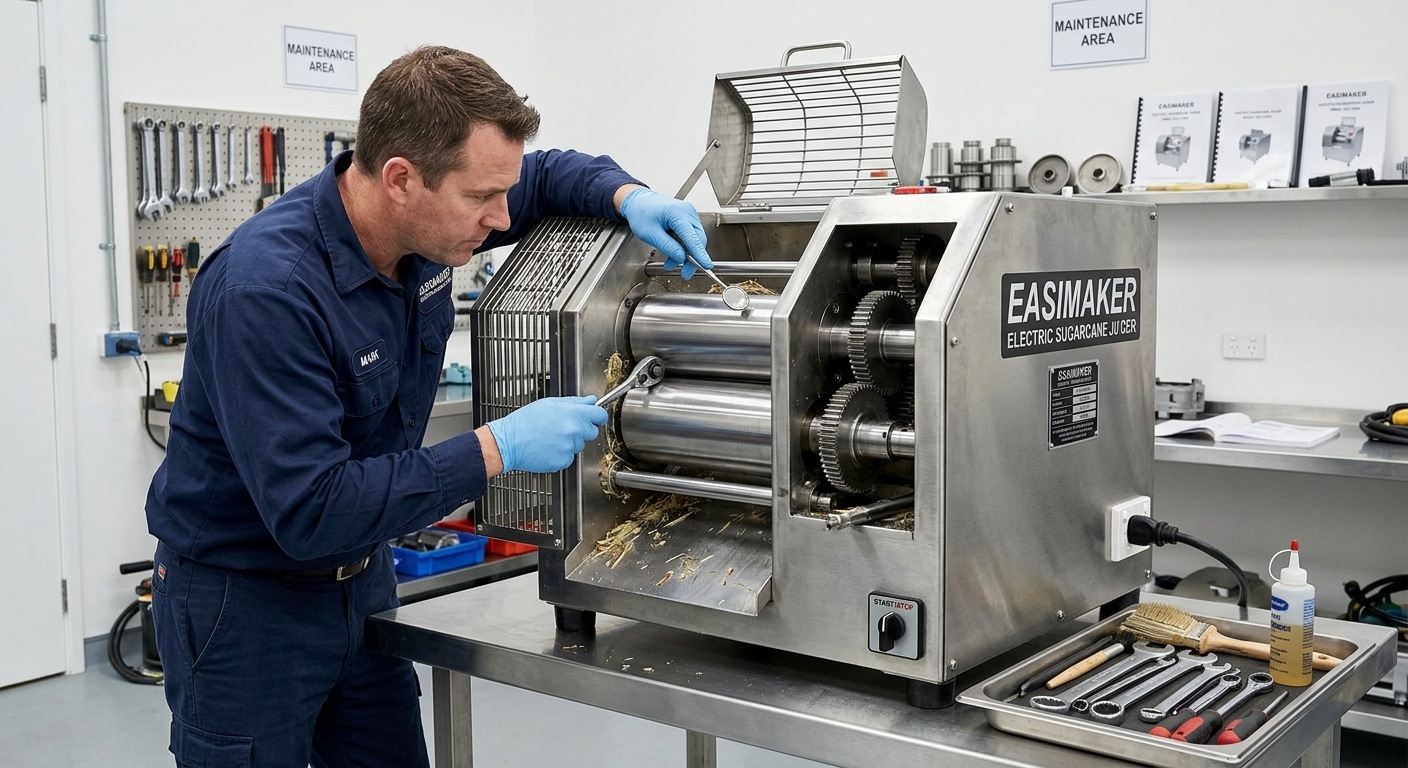
  • Lubrication: Apply food-grade grease to the gears, chains, and bearing housings as specified by the manufacturer. Proper lubrication prevents metal-on-metal friction and overheating.
  • Inspect the Gearbox: For machines with oil-filled gearboxes, check the oil level and look for signs of contamination. Change the gear oil every 6 to 12 months, depending on usage volume.
  • Electrical Inspection: Examine the power cord, plug, and internal wiring for any signs of fraying or heat damage. Ensure the grounding wire is secure.
  • Hardware Check: The vibration from crushing hard sugarcane can loosen bolts over time. Use a wrench to verify that all structural bolts, motor mounts, and casing screws are tight.

Common Pitfalls in Sugarcane Machine Care

Even with a schedule in place, certain practices can inadvertently damage your equipment. Avoid these common mistakes:

  • Using Harsh Chemicals: Bleach and industrial degreasers can corrode stainless steel and degrade rubber seals. Stick to approved food-service sanitizers.
  • Pressure Washing: Never use a high-pressure hose to clean an electric sugarcane juicer. Water can easily bypass seals and short-circuit the electric motor or rust the internal gears.
  • Forcing Oversized Cane: Overloading the machine with cane stalks that exceed the recommended diameter puts excessive strain on the motor and can misalign the rollers. Always split thick stalks before juicing.

Manufacturing Quality: Why Machine Design Matters

The ease of your preventative maintenance schedule depends heavily on the engineering of the machine itself. When procuring equipment for your juice bar, look for electric juicers designed with maintenance in mind. Features like tool-less removal of rollers, transparent safety covers, and fully sealed motor compartments significantly reduce daily cleaning times and lower the total cost of ownership. High-quality 304 stainless steel construction ensures the machine can withstand daily washing without rusting.

Frequently Asked Questions (FAQs)

How often should I lubricate my commercial sugarcane juicer?

For high-volume juice bars operating daily, moving parts like chains and external gears should be checked and lubricated with food-grade grease every two to four weeks. Always refer to your specific operational manual for exact intervals.

Why is my electric juicer making a squeaking noise?

A squeaking or grinding noise usually indicates a lack of lubrication in the bearings or gears, or that a bearing is beginning to fail. Stop the machine immediately, inspect the bearings, and apply food-grade lubricant. If the noise persists, a part replacement may be necessary.

Can I run water directly over the machine to clean it?

You can gently pour warm water over the extraction rollers and juice tray, but you must avoid spraying water directly onto the electric motor housing, switches, or power inputs to prevent electrical hazards.

How long do the stainless steel extraction rollers last?

With proper daily cleaning and avoiding the processing of foreign objects (like stones or extremely hard, dried cane), high-quality stainless steel rollers can last for several years before needing replacement or re-machining.

What is the best way to remove hardened sugar residue?

If sugar has hardened on the rollers or tray, do not chip at it with sharp tools. Instead, soak the affected area with warm water for 10-15 minutes to dissolve the sugars, then scrub with a nylon bristle brush.

Optimize Your Juice Bar Operations Today

A strict preventative maintenance schedule is the key to maximizing the lifespan of your commercial sugarcane juicer and ensuring a steady flow of high-quality juice for your customers. By investing a few minutes each day into proper equipment care, you prevent costly breakdowns and maintain peak operational efficiency.

Looking to upgrade to a highly durable, easy-to-maintain electric sugarcane juicer designed for commercial success? Request a quote / Get a sample today to learn how our robust machinery can streamline your juice bar operations.

What to Do When a Sugarcane Machine Has Low Juice Yield

In the commercial beverage industry, efficiency is the difference between a thriving operation and one that barely breaks even. For businesses relying on fresh sugarcane juice—whether in large-scale processing facilities or high-volume juice bars—the extraction rate (juice yield) is a critical performance metric. When a sugarcane machine begins to produce dry, fibrous waste (bagasse) that is still damp, or when the output volume drops significantly despite constant input, it indicates a mechanical or operational failure that directly impacts profit margins.

Low juice yield is rarely caused by a single catastrophic failure. Instead, it is often the result of gradual wear, improper calibration, or inconsistencies in the raw material. Diagnosing the root cause requires a systematic approach, examining everything from the biological properties of the cane to the torque transmission of the gearbox.

This comprehensive guide covers the technical and operational factors contributing to low juice yield in commercial sugarcane juicers. We will outline a diagnostic workflow to identify the problem, actionable steps to restore extraction efficiency, and maintenance protocols to prevent recurrence.

The Economics of Extraction: Why Yield Matters

Before diving into the mechanical adjustments, it is vital to understand the financial implication of extraction efficiency. Commercial sugarcane machines typically aim for an extraction rate of 70% to 80% by weight, depending on the cane variety and machine design. A drop of just 10% in yield can translate to significant losses over time.

Consider a facility processing 500 kg of cane daily. A 10% loss in extraction efficiency means 50 kg of potential juice is discarded with the bagasse every day. Over a month, this accumulates to 1,500 kg of lost product—revenue that is thrown into the waste bin. Ensuring your machine operates at peak extraction capability is not just a maintenance task; it is a revenue protection strategy.

Diagnostic Workflow: Reading the Bagasse

The most immediate indicator of your machine’s health is the condition of the bagasse (the crushed cane residue). Experienced operators can diagnose issues simply by inspecting the waste product.

  • Ideal Bagasse: Should be dry to the touch, flattened completely, and crumble easily. This indicates that the rollers have exerted maximum compression and extracted the vast majority of the liquid.
  • Wet/Heavy Bagasse: If the residue feels damp, heavy, or drips when squeezed, the machine is not applying sufficient pressure. This suggests gap issues or worn rollers.
  • Chunky/Uncrushed Bagasse: If the cane passes through largely intact or only partially flattened, it indicates a feeding issue, severe roller misalignment, or a drive system failure where the rollers stall under load.

Use the bagasse as your primary diagnostic tool as you move through the following troubleshooting steps.

Factor 1: Sugarcane Quality and Preparation

Operators often blame the machine first, but the raw material is frequently the culprit. Sugarcane is a biological product subject to variation in fiber content, moisture, and hardness. No machine can extract juice that isn’t there.

Moisture Content and Cane Age

Sugarcane begins to lose moisture immediately after harvesting. Cane that has been stored for more than 3–5 days in ambient conditions will dry out significantly. The machine may crush the fiber effectively, but if the cellular moisture has evaporated, the yield will be low.

Diagnosis: Cut a cross-section of the fresh cane before feeding it. It should be glistening and wet. If the core looks dry, pithy, or discolored (reddish/brown), the low yield is due to the cane quality, not the machine.

Cane Diameter and Hardness

Commercial juicers are designed with specific inlet tolerances. Feeding cane that is too thin may result in it slipping through the roller gap without full compression. Conversely, extremely hard or thick cane can cause the safety mechanisms (like overload protection) to engage, or cause the belt to slip, resulting in partial crushing.

Best Practice: Ensure your procurement standards match the machine’s specifications. If dealing with variable sizes, operators may need to feed multiple thin stalks together (if the manual permits) or split very thick stalks to ensure proper engagement with the rollers.

Pre-treatment: Peeling and Cleaning

While the hard outer skin of the sugarcane contains some juice, it is also tough and fibrous. In some markets, peeling the cane is standard practice for hygiene and taste. However, peeling reduces the overall diameter of the stalk. If you recently switched from unpeeled to peeled cane without adjusting the machine, the reduced diameter might mean the rollers are no longer applying sufficient pressure.

Factor 2: Mechanical Calibration (Roller Gap Settings)

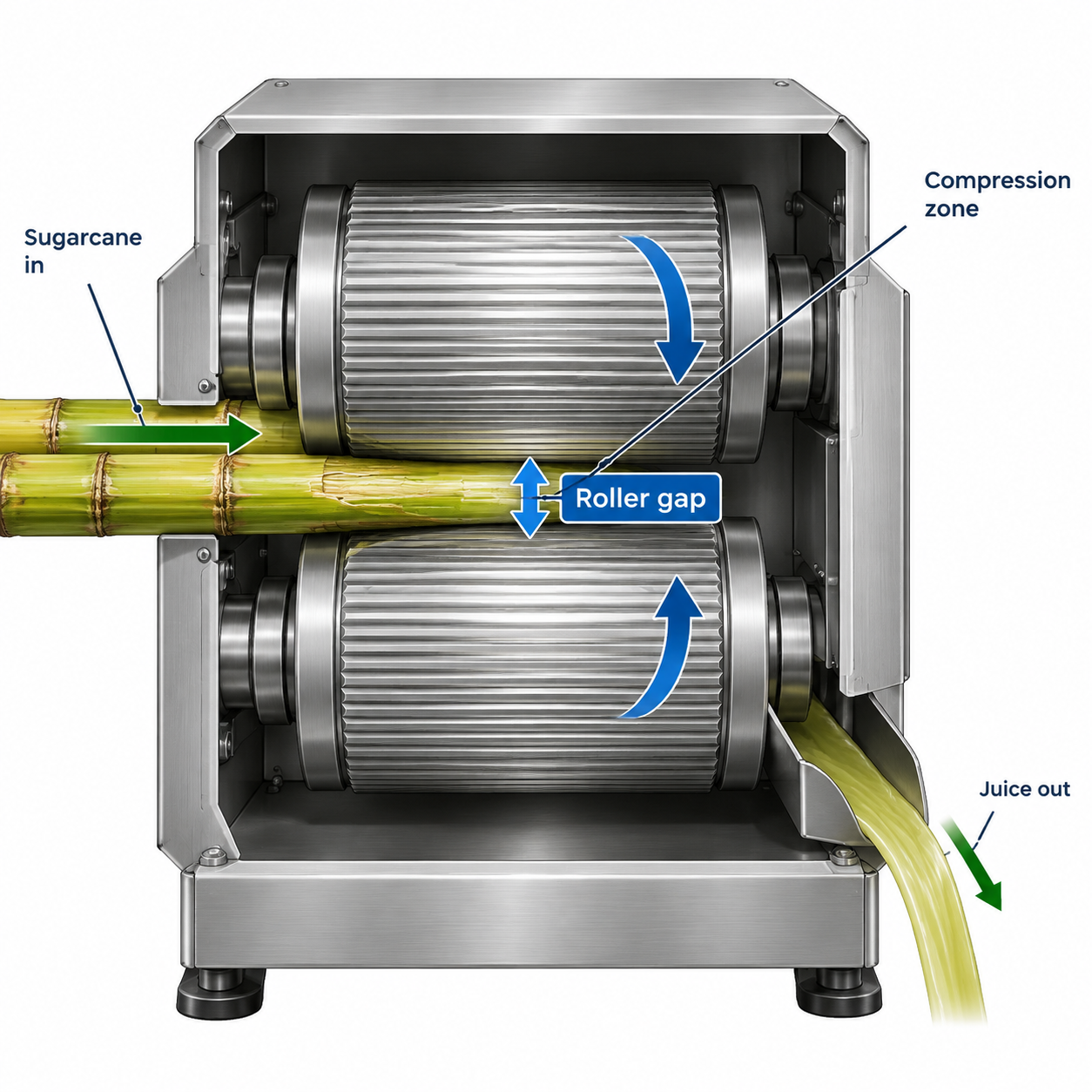
The core mechanism of extraction is the compression applied between the rollers. In heavy-duty commercial machines, the gap between these rollers is adjustable to accommodate different cane sizes and extraction requirements. Over time, vibrations can cause these settings to drift, or the gap may have been set incorrectly during a previous maintenance session.

Understanding the Compression Triangle

Most commercial juicers utilize a three-roller system (or similar multi-roller configuration):

  1. Feed Roller: Grabs the cane and pulls it in.
  2. Crushing Roller: Breaks the hard outer rind.
  3. Extraction Roller: Applies the final high-pressure squeeze to extract the juice.

The gap typically narrows as the cane progresses through the machine. If the final extraction gap is too wide, the crushed cane passes through without releasing the remaining juice.

How to Check and Adjust Roller Gaps

Note: Always disconnect power before performing inspections. Refer to your specific model’s manual for exact tolerances.

To check the gap, you can use a feeler gauge or a visual inspection against the manufacturer’s reference marks. If the gap needs tightening:

  • Locate the adjustment bolts, usually found on the side bearing blocks.
  • Adjustments should be made in small increments (e.g., quarter turns).
  • Ensure both sides of the roller are adjusted equally to maintain parallelism. An uneven gap will cause the cane to drift to one side and result in uneven extraction.

For precise specifications on roller settings for your specific model, refer to the Datasheets & Manuals section.

Factor 3: Roller Wear and Surface Texture

Even with perfect calibration, extraction relies on friction. The rollers are not smooth; they have a textured surface (knurling) designed to grip the fibrous cane and pull it through under immense pressure.

The Role of Knurling

The grooves or teeth on the rollers serve two purposes: gripping the cane and channeling the juice away from the fiber. As the machine processes tons of abrasive cane fiber, these grooves eventually wear down.

Identifying Worn Rollers

Inspect the surface of the rollers. If the teeth appear rounded, flattened, or smooth, the roller loses its ability to grab the cane effectively. Instead of pulling the cane through at a constant speed, the rollers may slip against the wet fiber. This slippage reduces the compression time and force, leaving juice behind in the bagasse.

Regrooving vs. Replacement

Some industrial rollers can be re-grooved by a machinist, but for most commercial countertop or floor-standing units, replacing the rollers is the standard solution. If you observe significant wear, contact Maintenance & Support to discuss replacement parts.

Factor 4: Drive System and Torque Issues

Extraction requires torque. If the motor or transmission system cannot deliver the necessary force, the rollers will slow down or stall when the cane is thickest, resulting in poor extraction.

Belt Tension and Slippage

Many sugarcane machines use a belt drive system to connect the motor to the gearbox. If the belt is loose, worn, or greasy, it will slip under load. You might hear a squealing noise when a large stalk is fed into the machine. Slippage means the rollers stop turning or turn erratically while the motor continues to spin, failing to crush the cane fully.

Fix: Check the belt tension. It should be tight enough to prevent slippage but not so tight that it strains the motor bearings. Replace belts that show signs of cracking or glazing.

Gearbox and Chain Maintenance

Chain-driven machines require regular lubrication. A dry, rusted, or stiff chain increases resistance, robbing the system of the power needed for crushing. Ensure chains are greased and tensioned correctly according to the maintenance schedule.

Motor Capacitor (Safe Checks)

If the machine hums but struggles to start or lacks power under load, the motor start/run capacitor may be failing. This is a common electrical issue that reduces torque. Warning: Electrical testing should only be performed by a qualified technician. If you suspect motor issues, consult the FAQs or contact a professional.

Factor 5: Operational Technique

Sometimes the machine is fine, but the operating technique is inefficient.

Feed Rate and Overloading

Operators rushing to meet high demand may force feed the machine. Jamming cane into the inlet faster than the rollers can accept it causes “choking.” This can force the rollers apart (if they have spring-loaded safety mechanisms) or cause the cane to twist, reducing the effective crush area.

Correct Technique: Allow the machine to pull the cane at its own pace. Do not push forcefully. Let the rollers do the work.

Splitting Large Stalks

Feeding a stalk that exceeds the maximum diameter rating of the machine places unnecessary stress on the bearings and reduces yield because the compression force is distributed over too large an area. Splitting large stalks in half lengthwise before feeding often results in better extraction because the rollers can grip the smaller pieces more effectively.

Factor 6: Hygiene and Buildup

Buildup of dried sugar and fiber is a silent killer of efficiency. If the machine is not cleaned thoroughly, hardened sugar deposits can fill the grooves of the rollers, effectively smoothing them out and causing slippage.

Furthermore, buildup in the juice channels or filters can block the flow of extracted juice. In this scenario, the juice is extracted from the cane but backs up inside the crushing chamber and is re-absorbed by the dry bagasse before it can exit the spout.

Maintenance Protocol:

  • Daily: Flush with water and scrub rollers with a stiff brush.
  • Weekly: Inspect juice channels and exit spouts for sticky residue.
  • Monthly: Deep clean behind covers where bagasse dust accumulates.

Troubleshooting Summary Table

Symptom Likely Cause Action
Wet Bagasse Incorrect roller gap or worn rollers Adjust gap settings; inspect roller knurling.
Squealing Noise Belt slippage Tighten or replace drive belt.
Cane Slips/Won’t Feed Smooth rollers or dried cane Check cane freshness; clean roller grooves.
Low Juice Volume Dry cane or clogged filter Test cane moisture; clean juice exit path.
Machine Stalls Low voltage or capacitor issue Check power source; contact support.

When to Contact Support or Upgrade

If you have verified the cane quality, adjusted the roller gaps, tightened the belts, and cleaned the machine, but the yield remains low, you may be facing a deeper mechanical issue such as gearbox failure, bent shafts, or motor fatigue.

Additionally, if your machine is several years old and has processed high volumes, the cumulative wear might mean it is time to consider an upgrade. Newer models often feature advanced gearbox ratios and stronger roller materials that offer higher extraction rates by design.

For expert assistance with diagnostics or to inquire about parts, visit our Contact page.

Frequently Asked Questions (FAQs)

Q: How often should I replace the rollers on my sugarcane machine?
A: This depends on volume. High-volume commercial operators may need replacement every 1–2 years, while lower volume users may last 3–5 years. If the knurling is smooth, it’s time to replace.

Q: Can I re-run the bagasse to get more juice?
A: While possible, it is generally not recommended for high-quality juice. Re-crushing bagasse releases more wax and bitter compounds from the rind, affecting the taste. A properly calibrated machine should extract maximum juice in a single pass.

Q: Why is my machine vibrating excessively?
A: Excessive vibration usually indicates uneven roller gaps, worn bearings, or a misalignment in the drive chain/belt. Immediate inspection is required to prevent further damage.

Q: Does the type of sugarcane affect the machine?
A: Yes. Soft, high-water content cane (often green/yellow varieties) is easier to crush. Hard, fibrous cane (often darker purple/black varieties) requires more torque and robust rollers. Ensure your machine is rated for the type of cane you use.

Conclusion

Low juice yield is a profit leak that should be plugged immediately. By systematically checking your raw material, calibrating your mechanical settings, and adhering to a strict maintenance schedule, you can ensure your sugarcane machine operates at peak efficiency. Regular attention to the “triangle of force”—the rollers, the gap, and the drive system—will keep your extraction rates high and your waste low.

If you need replacement parts, manuals, or advice on upgrading to a high-yield industrial juicer, the team at Easimaker is ready to assist.

Request a Quote or Get Support Today

How to Clean a Sugarcane Juicer: The Complete Commercial Hygiene Guide

Elevating Hygiene Standards in Commercial Juice Bars

In the competitive world of beverage service, the quality of your product is inextricably linked to the cleanliness of your equipment. For operators of commercial sugarcane juicers, hygiene is not merely a regulatory checkbox; it is the foundation of customer trust, operational efficiency, and the longevity of your machinery. Sugarcane juice is unique among fresh beverages due to its high sucrose content and low acidity, creating a biological environment that demands rigorous sanitation protocols.

Unlike acidic citrus juices that naturally inhibit some bacterial growth, sugarcane juice is pH-neutral and rich in nutrients, making it an ideal medium for fermentation and microbial activity if equipment is left uncleaned even for short periods. For B2B buyers, juice bar owners, and operations managers, understanding how to clean a sugarcane juicer effectively is as critical as selecting the right machine in the first place.

This comprehensive guide explores the technical and practical aspects of sugarcane juicer hygiene. We will cover the material science of 304 stainless steel, the operational benefits of removable rollers, and provide a detailed 10-step cleaning checklist designed to standardize your sanitation procedures.

The Science of Sugarcane Residue and Food Safety

To implement an effective cleaning strategy, one must first understand the nature of the residue being removed. Sugarcane stalks contain fibrous bagasse and a sticky, sugar-rich juice. When this juice dries, it forms a hard, varnish-like coating on rollers and internal components. This residue does more than just look unsightly; it creates a biofilm—a protective layer for bacteria that is resistant to simple rinsing.

Why Sugar Residue is a Risk

  • Rapid Fermentation: Yeast and bacteria can begin fermenting sugarcane residue within hours, leading to off-flavors that can ruin a fresh batch of juice.
  • Pest Attraction: The intense sweetness of the residue is a beacon for ants, fruit flies, and other pests that compromise food safety.
  • Mechanical Strain: Buildup on rollers and bearings increases friction, forcing the motor to work harder and potentially shortening the lifespan of your equipment.

Effective cleaning disrupts this cycle, ensuring that every glass served is fresh, safe, and reflective of your brand’s quality standards.

Materials Matter: Cleaning 304 Stainless Steel

Most high-quality commercial sugarcane juicers are constructed from food-grade 304 stainless steel. This material is chosen for its corrosion resistance and non-porous surface, which prevents bacteria from harboring in microscopic crevices. However, stainless steel requires specific care to maintain its passive protective layer.

The Chemistry of Cleaning Stainless Steel

The “stainless” property comes from a thin layer of chromium oxide that forms on the surface. Harsh chemicals, particularly those containing chlorides (like bleach), can strip this layer, leading to pitting and corrosion. Once pitting occurs, the surface becomes rough, making it harder to clean and easier for bacteria to colonize.

Recommended Cleaning Agents:

  • Mild Detergents: pH-neutral dish soaps that cut grease and sugar without attacking the metal.
  • Quaternary Ammonium Compounds (Quats): Often used in food service for sanitizing without the corrosive effects of chlorine.
  • Warm Water: Essential for dissolving crystallized sugar.

Agents to Avoid:

  • Bleach/Chlorine: Causes pitting and stress corrosion cracking.
  • Steel Wool/Abrasive Pads: Scratches the surface, creating hiding spots for pathogens.
  • Hydrochloric Acid: Highly corrosive to stainless steel.

Daily vs. Deep Cleaning: Establishing a Protocol

A robust sanitation plan involves two layers of activity: the continuous “clean-as-you-go” approach during the shift, and the intensive “deep clean” at the end of the day. Neglecting either can lead to accumulation that is difficult to reverse.

The “Shift” Clean (Every 4 Hours)

Food safety standards in many jurisdictions recommend cleaning food-contact surfaces every 4 hours at room temperature. For a busy juice bar, this doesn’t mean a full disassembly, but rather a strategic flush.

  1. Water Flush: Run clean, warm water through the machine while it is running (if permitted by the manual) to flush out loose bagasse and liquid juice.
  2. External Wipe: Use a sanitized cloth to wipe down the feeding chute and the juice tap.
  3. Waste Removal: Empty the bagasse bin to prevent overflow and pest attraction.

The “End of Day” Deep Clean

This is the non-negotiable ritual that preserves your machine. The goal is to remove every trace of organic matter. Machines with removable rollers significantly reduce the labor involved in this step, allowing operators to soak and scrub parts in a sink rather than reaching into a confined cabinet.

The 10-Step Deep Cleaning Checklist

Use this checklist to train staff and ensure consistency. Print it out and laminate it for your wash station.

Preparation

1. Electrical Lockout: Always turn off the machine and unplug it from the power source. Safety is paramount; never clean a machine that is energized.

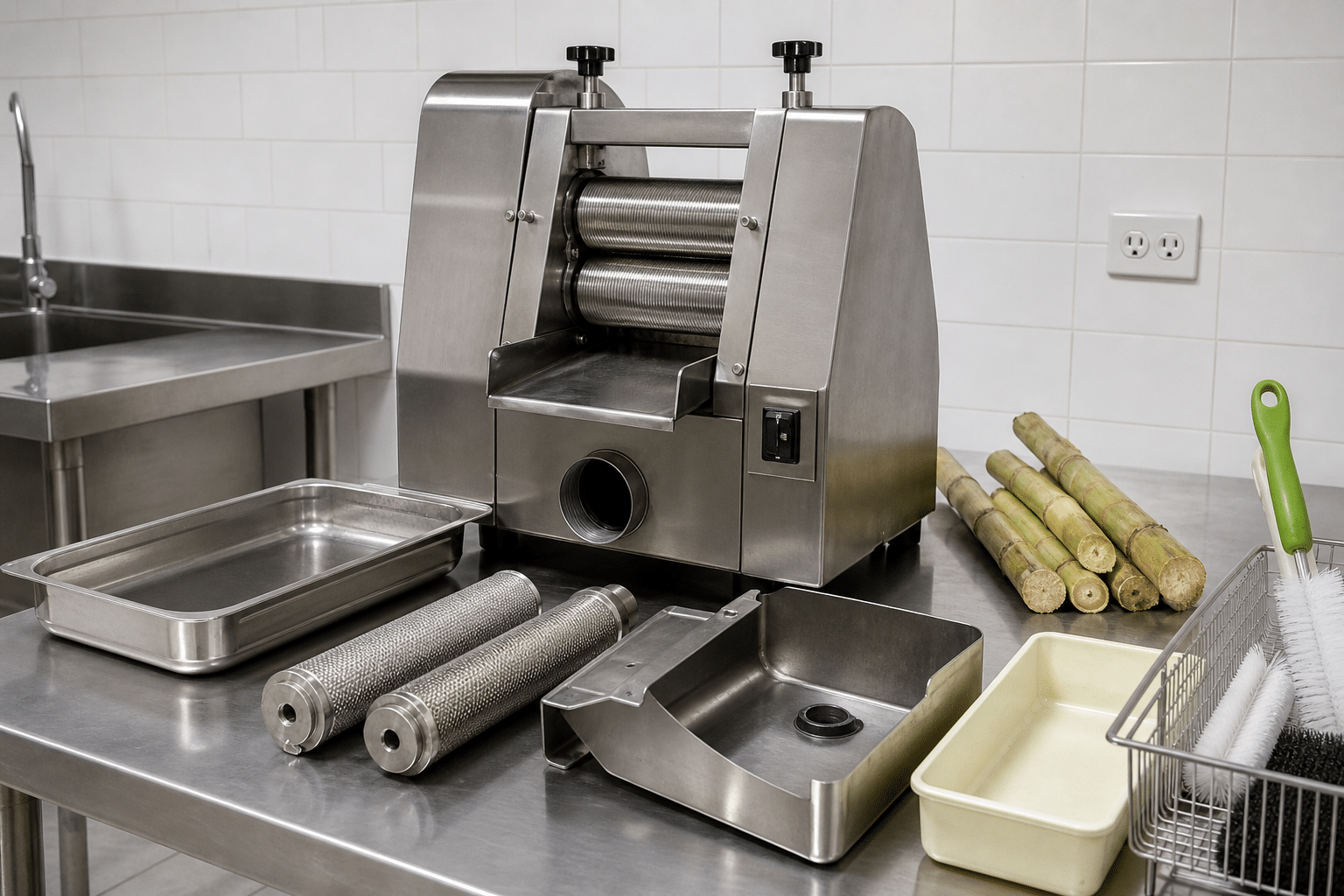
2. Disassemble External Parts: Remove the feeding chute, the transparent viewing windows, and the juice collection tray. Place these in a sink filled with warm, soapy water.

Roller & Cabinet Cleaning

3. Remove Rollers (If Applicable): If your model supports it, unlock and remove the stainless steel rollers. This is the most critical step for thorough hygiene. If rollers are fixed, prepare to clean them in place using specialized long-handled brushes.

4. Soak Components: Let the removed rollers, trays, and chutes soak for 10–15 minutes to soften dried sugar. This reduces the scrubbing effort required and prevents scratching.

5. Scrub the Teeth: Sugarcane rollers have knurled or grooved teeth to grip the cane. These grooves are prime locations for residue buildup. Use a stiff nylon brush (not metal) to scrub parallel to the grooves, ensuring all fiber is removed.

6. Clean the Juice Compartment: While parts are soaking, wipe down the internal cabinet where the juice flows. Pay special attention to the corners and the area around the bearing seals. Use a food-safe degreaser if necessary.

Sanitization & Reassembly

7. Rinse Thoroughly: Rinse all soapy components with clean, hot water. Detergent residue can affect the taste of the juice just as much as sugar residue.

8. Apply Sanitizer: Spray all food-contact surfaces with a food-grade sanitizer (e.g., a no-rinse sanitizer approved by local health codes). Allow it to sit for the recommended contact time (usually 1–2 minutes).

9. Air Dry: Allow parts to air dry on a clean rack. Towel drying can reintroduce bacteria. Moisture trapped inside a reassembled machine can lead to mold growth overnight.

10. Reassemble and Test: Once dry, reassemble the machine. Ensure all seals and gaskets are seated correctly to prevent leaks. Briefly plug in and run the machine for 10 seconds to ensure smooth operation before the next shift.

The Advantage of Removable Rollers

From an operational standpoint, the ability to remove rollers is a game-changer for hygiene. In fixed-roller systems, the operator must reach into the machine, often blindly scrubbing the underside of the rollers. This “blind cleaning” rarely achieves 100% sanitation.

Removable systems allow for:

  • Visual Inspection: You can hold the roller up to the light to ensure every groove is clean.
  • Soaking: Stubborn, dried residue can be submerged, which is impossible with fixed rollers.
  • Bearing Protection: Cleaning removable rollers away from the motor reduces the risk of water entering the motor housing or bearings during the washdown process.

For detailed specifications on machines with these features, consult our Datasheets & Manuals.

Maintenance During Cleaning: What to Look For

Cleaning time is also inspection time. As your staff handles the components, they should be trained to look for signs of wear. Early detection of issues prevents costly downtime.

  • Seals and Gaskets: Check for cracks or brittleness. A compromised seal allows juice to leak into the mechanical compartment, causing sticky messes inside the motor housing and potential electrical faults.
  • Roller Teeth: Inspect for dullness. While stainless steel is durable, processing tons of hard cane eventually wears down the knurling, reducing extraction efficiency.
  • Noise Levels: If the machine makes grinding noises during the brief test run, it may indicate bearing wear or misalignment.

If you identify worn parts, refer to our Maintenance & Support resources to order replacements promptly.

Common Cleaning Mistakes to Avoid

Even with good intentions, improper cleaning techniques can damage your investment.

1. Using High-Pressure Hoses

Blasting a commercial juicer with a high-pressure hose (like a Karcher) is dangerous. It can force water past seals and into the gearbox or motor, leading to catastrophic electrical failure. Always use low-pressure water or a damp cloth for the machine body.

2. Ignoring the Waste Bin

The bagasse bin is often an afterthought. However, bagasse ferments rapidly and generates heat. If the bin is not cleaned and sanitized daily, it becomes a breeding ground for fruit flies that will eventually migrate into the juicer itself.

3. Overlooking the Anti-Splash Guard

Many machines have a small plastic or metal guard to prevent juice from spraying. This part is small and easily lost or forgotten during cleaning, but it collects significant residue. Ensure it is included in the soaking rotation.

Training Your Staff for Hygiene Compliance

The best equipment is only as effective as the operator. For B2B owners managing multiple locations, standardizing the cleaning process is vital.

  • Create a Logbook: Require staff to sign off on the cleaning checklist at the end of every shift. This creates accountability.
  • Visual Aids: Post photos of “Clean” vs. “Dirty” rollers near the wash station.
  • Supply the Right Tools: Ensure your team always has access to the correct brushes and sanitizer. If they have to search for tools, steps will be skipped.

Frequently Asked Questions (FAQs)

How often should I deep clean my sugarcane juicer?

You must deep clean the machine at the end of every operational day. Sugarcane juice residue ferments quickly; leaving it overnight can cause bacterial growth and difficult-to-remove buildup.

Can I put the rollers in a dishwasher?

This depends on the specific model and the material of the bearings inside the rollers. While 304 stainless steel is dishwasher safe, the heat and harsh detergents might damage internal lubricants or seals. Always check the user manual or our datasheets before using a dishwasher.

What should I do if the machine smells sour even after cleaning?

A sour smell indicates trapped organic matter. It is likely hidden behind a seal, under a gasket, or in a juice channel that wasn’t scrubbed. Disassemble the machine as much as possible, inspect gaskets, and perform a deep soak with a sanitizer solution.

Is vinegar a good cleaner for sugarcane machines?

Vinegar is a mild acid and can be used for descaling, but it is not a registered sanitizer for killing pathogens. For commercial food safety, use an EPA-approved food-contact sanitizer after cleaning with detergent.

Does the warranty cover damage from water ingress?

Typically, warranties cover manufacturing defects, not damage caused by improper cleaning (like hosing down the motor). It is crucial to follow the cleaning guidelines to preserve your warranty coverage. For more details, visit our Warranty page.

How do I remove sticky residue that has hardened?

Do not scrape it with a knife, as this scratches the steel. Soak the part in very hot water for 20–30 minutes to dissolve the sugars, then scrub with a stiff nylon brush.

Conclusion: Hygiene as a Competitive Advantage

A spotless sugarcane juicer does more than satisfy health inspectors; it produces a brighter, fresher-tasting juice that keeps customers coming back. By investing time in proper maintenance and utilizing machines designed for easy cleaning, you protect your customers and your bottom line.

For juice bar operators looking to upgrade to equipment that prioritizes hygiene and ease of use, or if you need specific advice on maintaining your current fleet, we are here to help.

Ready to elevate your juice business? Request a quote or contact our support team today for expert guidance on the best sanitary juicing solutions.

How to Easily Maintain a Sugarcane Juicer to Extend Machine Life: The Complete Commercial Guide

Investing in a high-quality commercial sugarcane juicer is a significant decision for any juice bar, beverage manufacturer, or hospitality business. These machines are the workhorses of your operation, designed to crush tough fibrous stalks and extract sweet, profitable juice day in and day out. However, without a rigorous sugarcane juicer maintenance strategy, even the most robust machine will suffer from premature wear, hygiene issues, and costly downtime.

Sugarcane juice is unique. It is high in sugar, slightly acidic, and leaves behind fibrous residue (bagasse) that can harden like cement if left to dry. Furthermore, the high torque required to crush cane places significant stress on bearings, gears, and rollers. Neglecting maintenance doesn’t just shorten the machine’s life; it compromises the safety and taste of your product.

This comprehensive guide covers everything you need to know about maintaining your commercial sugarcane machine. From daily cleaning protocols to gearbox protection and troubleshooting, we provide the expert insights required to keep your equipment running smoothly for years. We also include a downloadable maintenance schedule to help your team stay on track.

Why Proactive Maintenance is Non-Negotiable

Before diving into the “how-to,” it is vital to understand the “why.” For B2B buyers and operations managers, maintenance is not just a chore—it is an asset protection strategy. Here are the three pillars of why maintenance matters:

  • Hygiene and Food Safety (HACCP): Sugarcane juice is a raw product. Sugar residues in hidden crevices are breeding grounds for yeast and bacteria. A poorly maintained machine can cause fermentation within the crushing mechanism, leading to spoiled juice and health code violations.
  • Mechanical Longevity: The crushing force involved in juicing cane is immense. If rollers are misaligned or bearings are dry, the friction increases exponentially. Preventive care reduces the load on the motor and transmission.
  • Operational ROI: A breakdown during peak hours results in lost revenue and emergency repair costs. Regular checks allow you to identify worn parts—like seals or belts—before they fail completely.

Understanding Your Machine: Key Components

To maintain your equipment effectively, your staff must understand what they are cleaning and protecting. Most commercial sugarcane juicers consist of the following critical systems:

1. The Roller Assembly

This is the heart of the machine, typically consisting of three or four stainless steel rollers. They grip, crush, and extract juice. The gap between these rollers determines the extraction efficiency. If they are dirty, extraction drops; if they are misaligned, the motor overworks.

2. The Gearbox and Motor

The motor provides the power, and the gearbox (reduction gears) increases the torque to crush the cane. These components are usually sealed but require ventilation and protection from moisture ingress.

3. Bearings and Seals

Bearings allow the rollers to spin smoothly. Seals protect those bearings from juice. If a seal fails, acidic juice enters the bearing, leading to rust and seizure. This is the most common cause of catastrophic failure in neglected machines.

The Ultimate Sugarcane Juicer Maintenance Schedule

Structured maintenance is easier to follow. Implement this schedule to ensure consistency across shifts.

Daily Routine: The Hygiene Flush

Frequency: Every day, immediately after the last shift.

Sugarcane juice oxidizes and becomes sticky within minutes. Leaving the machine dirty overnight is the fastest way to damage seals and encourage bacterial growth.

  1. Power Down: Ensure the machine is turned off and unplugged. Safety is paramount.
  2. Remove Bagasse: Clear all fibrous waste from the exit chute.
  3. Disassemble Removable Parts: Take off the feed tray, juice collection tray, and any removable side panels. Wash these in hot, soapy water.
  4. Flush the Rollers: Use warm water to flush the roller mechanism. Note: Never use a high-pressure hose directly on the bearing housings or motor vents.
  5. Brush Scrub: Use a soft-bristle nylon brush to scrub the rollers while manually rotating them (if safe and possible) or by running the machine for brief seconds with water (consult your specific Datasheets & Manuals for safe cleaning modes).
  6. Dry Thoroughly: Moisture is the enemy of longevity. Wipe down all stainless steel surfaces with a dry, clean cloth.

Weekly Routine: Deep Clean & Inspection

Frequency: Once a week (e.g., every Monday morning or Sunday night).

  • Inspect Seals: Look closely at the point where the roller shafts enter the machine body. If you see dark, sticky leakage, a seal may be compromised.
  • Sanitize: After cleaning, use a food-safe sanitizer on the rollers and juice path to eliminate biofilms that soap might miss.
  • Check the Filter/Strainer: If your machine has an integrated tap or reservoir with a mesh filter, check it for tears or clogging. A clogged filter backs up juice, potentially flooding the seals.
  • External Wipe Down: Clean the motor housing and control panel with a damp (not wet) cloth to remove dust and sticky fingerprints.

Monthly Routine: Mechanical Check-Up

Frequency: First week of every month.

  • Roller Gap Inspection: Over time, the gap between rollers may shift due to vibration. Refer to your manual to ensure the gap is set to factory specifications for optimal yield.
  • Electrical Cord Safety: Check the power cord for fraying or cuts, which can happen in busy commercial kitchens.
  • Lubrication (If applicable): Some external chains or drive components may need food-grade grease. Warning: Never grease the crushing rollers themselves. Always check the Maintenance & Support guidelines before applying lubricants.

Deep Dive: Cleaning the Rollers and Juice Compartment

The rollers are where the magic happens, but they are also the hardest part to clean. The grooves in the stainless steel rollers are designed to grip the cane, but they also trap fiber.

The “Reverse” Technique

If your machine has a reverse function, use it during the cleaning process. Run the machine with water, switch to reverse for a few seconds, then forward again. This helps dislodge fibers stuck deep in the grooves.

Avoiding Corrosion

Even Stainless Steel 304 can corrode if exposed to harsh chlorides or left in contact with acidic organic matter for too long.

DO NOT USE: Bleach, steel wool, or wire brushes. Steel wool leaves behind iron particles that will rust and stain your machine.

USE: Soft nylon brushes, sponges, and mild detergents.

Protecting the Motor and Gearbox

The motor and gearbox are the most expensive components to replace. Protecting them is primarily about load management and environment.

1. Prevent Overloading

Do not force oversized cane stalks into the machine. If a stalk is too thick, split it vertically. Forcing the machine causes the motor to draw excessive current, leading to overheating. If the machine stalls, stop immediately and use the reverse function to clear the jam.

2. Ventilation is Key

Commercial juicers generate heat. Ensure the machine’s vents are not blocked by towels, walls, or other equipment. Airflow is essential for cooling the motor during continuous operation.

3. Moisture Protection

Never submerge the main unit in water. While the crushing compartment is wet-area compatible, the motor housing is usually not waterproof. Water ingress into the electrical components is a safety hazard and voids your Warranty.

Troubleshooting Common Issues

Even with great care, issues can arise. Here is a quick guide to common symptoms and solutions.

Symptom Possible Cause Action Required
Machine Squeaking Dry bearings or friction between rollers and housing. Stop immediately. Check for debris rubbing against the housing. If noise persists, bearings may need replacement.
Low Juice Yield Incorrect roller gap or worn rollers. Adjust the roller gap according to the manual. If rollers are smooth (grooves worn down), they may need replacement.
Motor Hums but Won’t Turn Capacitor failure or jammed rollers. Unplug. Check if a hard piece of cane is jammed. If clear, the starting capacitor may be faulty (requires a technician).
Juice Leaking from Shafts Worn seals. This is critical. Contact support to replace seals immediately to prevent motor damage.
Vibration/Shaking Uneven surface or loose components. Ensure the machine is on a level surface. Check rubber feet. Tighten external casing screws.

For more complex issues, visit our FAQs page or contact our technical team.

Signs It’s Time for Professional Service

Operator maintenance can handle cleaning and basic checks, but some tasks require a professional. If you notice any of the following, it is time to schedule a service:

  • Grinding Noises: Indicates internal gearbox wear or bearing failure.
  • Electrical Burning Smell: Indicates motor overheating or wiring insulation failure.
  • Persistent Leaks: If replacing a seal doesn’t stop the leak, the shaft itself may be worn or bent.

Printable Maintenance Checklist

Copy and paste this checklist for your staff to sign off daily.

Daily Sugarcane Juicer Closing Checklist

Date: ___________ Staff Name: ___________

  • [ ] Machine turned off and unplugged.
  • [ ] All bagasse/waste removed from chute.
  • [ ] Feed tray and juice tray washed and sanitized.
  • [ ] Rollers flushed with warm water (no high pressure).
  • [ ] Rollers scrubbed with nylon brush to remove fiber from grooves.
  • [ ] Machine dried with a clean cloth.
  • [ ] Area around the machine wiped down.
  • [ ] Visual check: No loose parts or frayed cords.

Conclusion

A sugarcane juicer is a robust machine designed to generate profit, but it relies on your team to keep it in peak condition. By following a strict cleaning regimen and respecting the mechanical limits of the device, you can extend the life of your equipment significantly. Remember, a clean machine produces better-tasting juice, keeps your customers safe, and protects your bottom line.

Do you need specific parts, a new manual, or advice on upgrading your current setup? We are here to help.

Ready to upgrade or need technical assistance? Contact our support team today or request a quote for our latest models.

A Complete Guide to Cleaning and Sanitizing Your Commercial Sugarcane Juicer

In the commercial beverage industry, sugarcane juice presents a unique set of challenges compared to citrus or vegetable juices. Its high sucrose content, low acidity, and the fibrous nature of the raw material create an ideal environment for rapid bacterial growth and yeast fermentation. For juice bar owners and food service operators, maintaining a pristine commercial sugarcane juicer is not just about equipment longevity—it is a critical food safety compliance requirement.

Improper cleaning can lead to flavor contamination (fermented notes), mechanical jams caused by dried bagasse (fiber), and severe health code violations. This guide provides a professional, step-by-step protocol for disassembling, cleaning, and sanitizing your machine to meet industrial hygiene standards.

Why Sanitation is Critical for Sugarcane Equipment

Sugarcane juice is raw and typically unpasteurized at the point of sale. Unlike acidic juices (like lemon or orange) which naturally inhibit some bacterial growth, sugarcane juice has a neutral pH (typically 5.0–5.5). This makes it highly susceptible to spoilage organisms such as Leuconostoc and various yeasts.

Furthermore, the mechanical process of crushing cane generates significant friction and sticky residue. If left on the rollers or in the juice compartment, this residue hardens into a varnish-like coating that can seize bearings and attract pests. A strict sanitation Standard Operating Procedure (SOP) is essential for:

  • Regulatory Compliance: Meeting local health department and HACCP (Hazard Analysis Critical Control Point) standards.
  • Product Quality: Preventing cross-contamination that alters the fresh taste and color of the juice.
  • Asset Protection: preventing corrosion and seal failure caused by acidic fermentation byproducts.

Essential Cleaning Supplies Checklist

Before beginning the sanitation process, ensure your facility is equipped with the correct tools. Avoid using abrasive materials that can scratch stainless steel surfaces, as scratches create microscopic harborage points for bacteria.

  • Food-Grade Detergent: A neutral, non-corrosive degreaser to remove sugar films.
  • Sanitizer: An EPA-registered food-contact sanitizer (e.g., Quaternary Ammonium or Chlorine-based, diluted to manufacturer specs).
  • Nylon Brushes: Various sizes, including long-handle brushes for rollers and small pipe cleaners for spouts. Do not use steel wool.
  • Soft Microfiber Cloths: For drying and polishing.
  • Food-Grade Lubricant: For re-lubricating moving parts post-wash (check machine manual for specifications).
  • PPE: Gloves and eye protection when handling concentrated chemicals.

Step-by-Step Daily Cleaning Protocol

This protocol should be performed at the end of every operational day. For high-volume operations, a “flush” cycle is recommended every 4 hours.

1. Preparation and Safety Lockout

Safety is paramount. Commercial sugarcane juicers have high-torque rollers capable of causing severe injury.

  • Power Down: Turn the machine off and unplug it from the power source.
  • Lockout/Tagout: If hardwired, ensure the breaker is off.
  • Clear Area: Remove any remaining cane stalks from the feed chute.

2. Disassembly and Fiber Removal

Do not attempt to wash the machine while fully assembled. Hidden bagasse accumulation is the primary cause of mold growth.

  • Remove Detachable Parts: Take off the feed tray, juice collection tray, splash guards, and the filter mesh/strainer.
  • Initial Debris Removal: Use a dry brush to sweep away loose bagasse fibers from the rollers and housing. Removing solids before applying water prevents drain clogs and makes the washing phase more effective.

3. Washing and Degreasing

The goal here is to remove visible soil and sugar residue.

  • Soak Removable Parts: Place trays, filters, and guards in a three-compartment sink filled with warm water and detergent. Scrub thoroughly.
  • Clean the Rollers: This is the most critical step. Using a soft sponge or nylon brush with detergent solution, scrub the rollers. Rotate the rollers manually (if the machine design allows manual rotation when unplugged) to reach all surfaces.
  • Clean the Housing: Wipe down the exterior and the juice compartment walls. Pay special attention to the underside of the roller housing where juice often splashes and dries.

4. Sanitization (The Critical Step)

Cleaning removes dirt; sanitizing kills pathogens. This step must be done after the surfaces are visibly clean.

  • Apply Sanitizer: Spray the rollers, housing, and juice path with your food-grade sanitizer solution. Ensure the surface remains wet for the contact time specified on the chemical label (usually 1–2 minutes).
  • Sanitize Removable Parts: Dip the washed trays and filters into a sanitizing solution in the third sink compartment.
  • Do Not Rinse (Unless Specified): Most “no-rinse” food-safe sanitizers are designed to air dry. Rinsing with tap water can reintroduce bacteria.

5. Drying and Reassembly

Moisture is the enemy of stored equipment.

  • Air Dry: Allow all parts to air dry on a clean rack.
  • Reassemble: Once dry, reassemble the machine.
  • Lubrication: Apply a small amount of food-grade lubricant to the roller bearings or gears if required by the manufacturer’s maintenance schedule.

Maintenance Schedule: Daily vs. Deep Cleaning

To ensure operational efficiency, adopt a tiered maintenance schedule.

Frequency Action Items
Every 4 Hours Flush the system with clean water to prevent sugar caramelization on rollers. Wipe down the external feed chute.
Daily (End of Shift) Full disassembly, detergent wash, and sanitization of all food-contact parts.
Weekly Inspect gaskets and seals for wear. Deep clean the machine base and motor vents to remove dust accumulation.
Monthly Check roller alignment and tension. Descale components if water hardness is an issue.

Common Sanitation Mistakes to Avoid

Even experienced operators can make errors that compromise food safety or machine integrity.

  • Using High-Pressure Hoses: Blasting the machine with a high-pressure hose can force water into sealed bearings or the electrical motor housing, leading to failure or short circuits.
  • Ignoring the “Knuckle” Areas: The gaps between the rollers and the side housing are prime locations for bacterial biofilms. If your brush cannot reach these areas, you may need a specialized thin cleaning tool.
  • Using Bleach on Stainless Steel: While bleach is a sanitizer, prolonged exposure can corrode stainless steel (pitting), creating rough surfaces that are harder to clean later. Use Quaternary Ammonium compounds compatible with soft metals and steel.

Buying Considerations: Hygiene-Friendly Design

If you are in the market for a new commercial sugarcane juicer, prioritize “sanitary design” features. Machines constructed from Stainless Steel 304 are the industry standard for corrosion resistance. Look for models with:

  • Removable Rollers: Some advanced models allow the entire roller assembly to be detached for soaking, which drastically improves hygiene levels.
  • Sealed Bearings: Prevents juice from entering the mechanical drive system.
  • Minimal Crevices: Smooth welding and rounded corners prevent debris accumulation.

Frequently Asked Questions (FAQs)

Can I use vinegar to clean my commercial juicer?

While vinegar is a mild acid and can help with mineral deposits, it is generally not considered a broad-spectrum hospital-grade sanitizer for commercial food service environments. It is best to use EPA-approved food-contact sanitizers to ensure compliance with health regulations.

How do I remove sticky residue that won’t wash off?

If sugar residue has hardened, soak the affected parts in warm water (120°F/50°C) with a mild alkaline detergent for 15–20 minutes. This softens the bond between the sugar and the metal, allowing it to be scrubbed off without abrasives.

How often should I replace the filter mesh?

Inspect the filter mesh daily. If you notice fraying, tears, or permanent clogging that cannot be cleaned, replace it immediately. Damaged filters can allow large bagasse particles into the final product, affecting texture and quality.

Is it safe to run water through the machine while it is on?

Only if the manufacturer explicitly states this is a safe “cleaning cycle.” Generally, running water through while the machine is on helps flush internal lines, but it does not replace the need for disassembly and manual scrubbing.

Conclusion

A strict cleaning regimen is the backbone of a successful sugarcane juice operation. By adhering to these sanitation protocols, you protect your customers from foodborne illness and protect your investment from premature wear. A clean machine runs more efficiently, yields more juice, and presents a professional image to your clientele.

Need to upgrade your equipment or source spare parts? Ensure your operation runs smoothly with high-quality, sanitary-grade machinery.