Exploring the Role of Sugarcane Juice in Vegan and Plant-Based Diets

Introduction: Why Sugarcane Juice Matters for Vegan & Plant-Based Brands

Vegan and plant-based consumers are moving away from artificial flavors, refined sugars, and heavily processed beverages. At the same time, they still expect great taste, clean labels, and credible sustainability stories.

For juice bars, cafés, foodservice chains, and beverage brands, fresh sugarcane juice is emerging as a natural, minimally processed option that fits modern plant-based diet trends. It can be served pure, blended with fruits, or used as a base for functional drinks and mocktails.

This article is written for B2B decision-makers – including operators, procurement managers, and brand owners – who are exploring whether sugarcane juice and commercial sugarcane juicers are a strategic fit for their vegan or plant-based menu and product portfolio.


Key Concepts: Sugarcane Juice and Plant-Based Diets

Is Sugarcane Juice Vegan?

Sugarcane juice is pressed directly from sugarcane stalks. No animal-derived ingredients are required in extraction, so the juice itself is naturally vegan and aligns well with plant-based diets.

The main vegan considerations are not about the juice itself, but about:

  • Cross-contamination – Is the juicer shared with dairy or other non-vegan products?
  • Cleaning chemicals – Are food-contact surfaces cleaned with food-safe, approved detergents?
  • Added ingredients – Are flavorings, sweeteners, or toppings vegan-friendly?

Sugarcane Juice vs. Refined Sugar

Many plant-based consumers are differentiating between whole or minimally processed ingredients and refined sweeteners:

  • Refined sugar – Often highly processed; some regions still use bone char in refining, which raises vegan concerns.
  • Sugarcane juice – A fresh, unrefined liquid extracted directly from the cane, retaining more of the natural flavor and some micronutrients compared with many refined products.

For vegan-positioned products, communicating the use of fresh sugarcane juice instead of refined sugar can support a more natural, plant-based brand story, provided local labelling regulations are respected.

Nutritional Profile and Health-Conscious Positioning

Health-focused vegan consumers are still cautious about sugar intake. Positioning sugarcane juice correctly is important: it is not a low-sugar beverage, but it can align with the demand for more natural, less processed sweeteners.

General Nutritional Characteristics

Nutrient content varies with cane variety and pressing method, but in general, fresh sugarcane juice:

  • Is primarily a source of carbohydrates (natural sugars).
  • Contains small amounts of minerals such as potassium, calcium, and magnesium (exact values depend on origin and processing).
  • Provides minor quantities of antioxidant compounds derived from the plant.

Because values differ by region and process, brands should conduct their own lab testing to generate reliable nutrition facts panels for retail or packaged products.

How Vegan Consumers Use Sugarcane Juice

From a health-conscious perspective, sugarcane juice is typically positioned as:

  • A naturally sweet base to reduce or replace refined sugar in smoothies and juices.
  • An occasional indulgence drink that feels cleaner and less processed than many soft drinks.
  • A plant-based alternative in mocktails, where traditional recipes might rely on syrups or refined sugar.

Operators can manage portion size and recipe design to balance sweetness, calories, and perceived health benefits.

Applications in Vegan and Plant-Based Menus

Front-of-House: Fresh-Pressed Sugarcane Juice

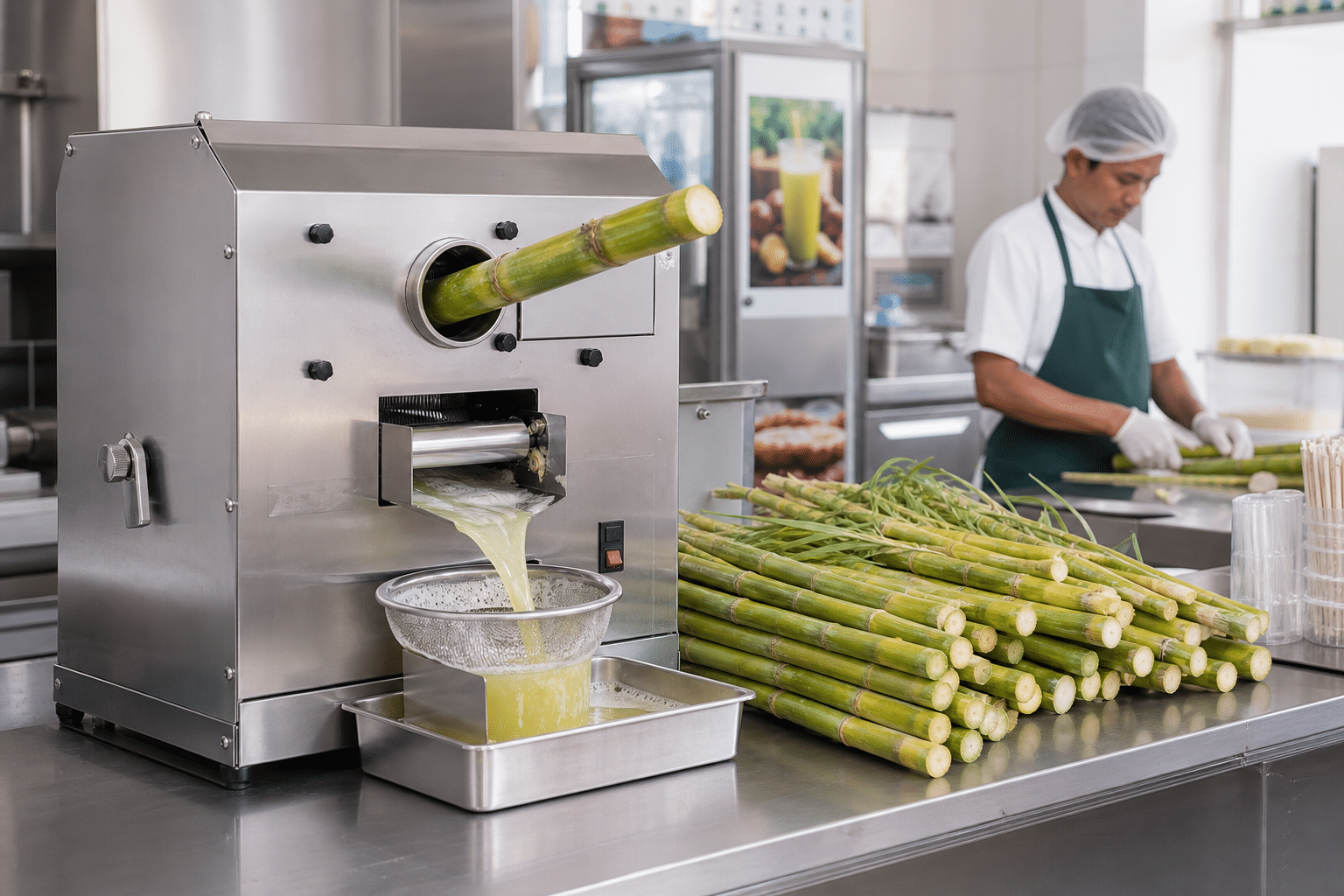
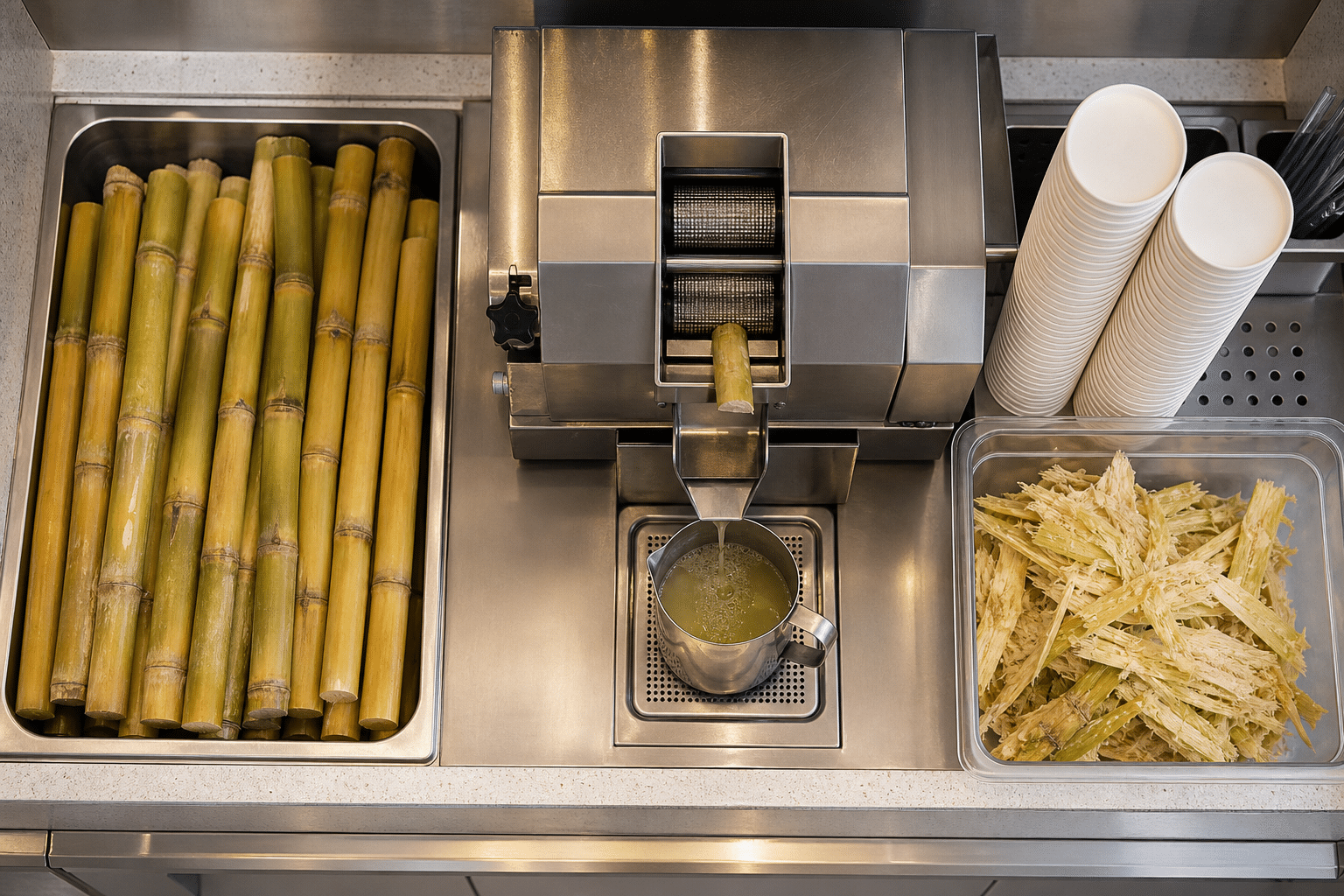
For juice bars and cafés, a visible counter-top sugarcane juicer can act as both a production tool and a marketing asset. Fresh pressing creates a strong perception of freshness and transparency, which resonates with plant-based customers.

Common vegan menu uses include:

  • Pure sugarcane juice served over ice, optionally with lemon or lime.
  • Mixed juices – sugarcane pressed together with ginger, mint, or citrus.
  • Plant-based smoothies using sugarcane juice as the main liquid instead of plant milk or water.
  • Mocktails – sugarcane juice combined with herbs, spices, and cold-brew teas.

Back-of-House: Ingredient for Plant-Based Product Development

For manufacturers and multi-site chains, sugarcane juice can act as an ingredient in:

  • Bottled or canned beverages with a natural sweetener angle.
  • Ready-to-drink (RTD) plant-based blends (e.g., cane juice with fruit, tea, or botanicals).
  • Frozen dessert bases such as sorbets or popsicles, where sugarcane juice complements fruit flavors.

In these use cases, consistent extraction and standardized Brix (sugar content) are important. Professional sugarcane juicers help reduce variation compared with manual methods.

Sustainability and Plant-Based Positioning

Sustainability is central to many vegan and plant-based purchasing decisions. Sugarcane can support that narrative when managed responsibly, though impacts vary by region and farming practice.

Key Sustainability Talking Points (To Validate Locally)

  • High-yield crop: Sugarcane tends to have high biomass yield per hectare, which can make it efficient from a land-use perspective.
  • By-product utilization: Bagasse (fibrous residue) can be repurposed for energy production or other uses in some supply chains.
  • Minimal processing on-site: Pressing fresh juice in-store avoids some stages of industrial refining, which can support a “less processed” message.

Because farming methods, water use, and labor standards differ by country, brands should verify their own supply chain data and avoid generic claims. When sustainability is central to your marketing, it is advisable to request documentation or certifications from growers and distributors where available.

Technical Considerations When Adding Sugarcane Juice to Your Vegan Offer

Juicer Selection and Performance

For B2B buyers, the juicing equipment often determines whether sugarcane juice is commercially viable. Key technical factors include:

  • Throughput capacity: Estimate peak-hour demand and select a machine that can comfortably exceed that volume to avoid bottlenecks.
  • Extraction efficiency: Better extraction means more juice per kilogram of cane, improving cost per serving.
  • Material and build quality: Food-contact parts are typically stainless steel; robust construction helps maintain hygiene and reduce downtime.
  • Ease of cleaning: Vegan operators often emphasize cleanliness; machines with accessible rollers and removable trays make frequent cleaning more practical.
  • Footprint and noise: For open counters or compact kitchens, compact machines with controlled noise levels are preferred.

Hygiene and Food Safety

Sugarcane juice is typically served fresh and is not always pasteurized in on-site operations. This makes food safety procedures critical:

  • Implement a regular cleaning schedule for the juicer, including rollers, juice trays, and splash zones.
  • Use food-safe detergents and follow manufacturer guidance on cleaning intervals.
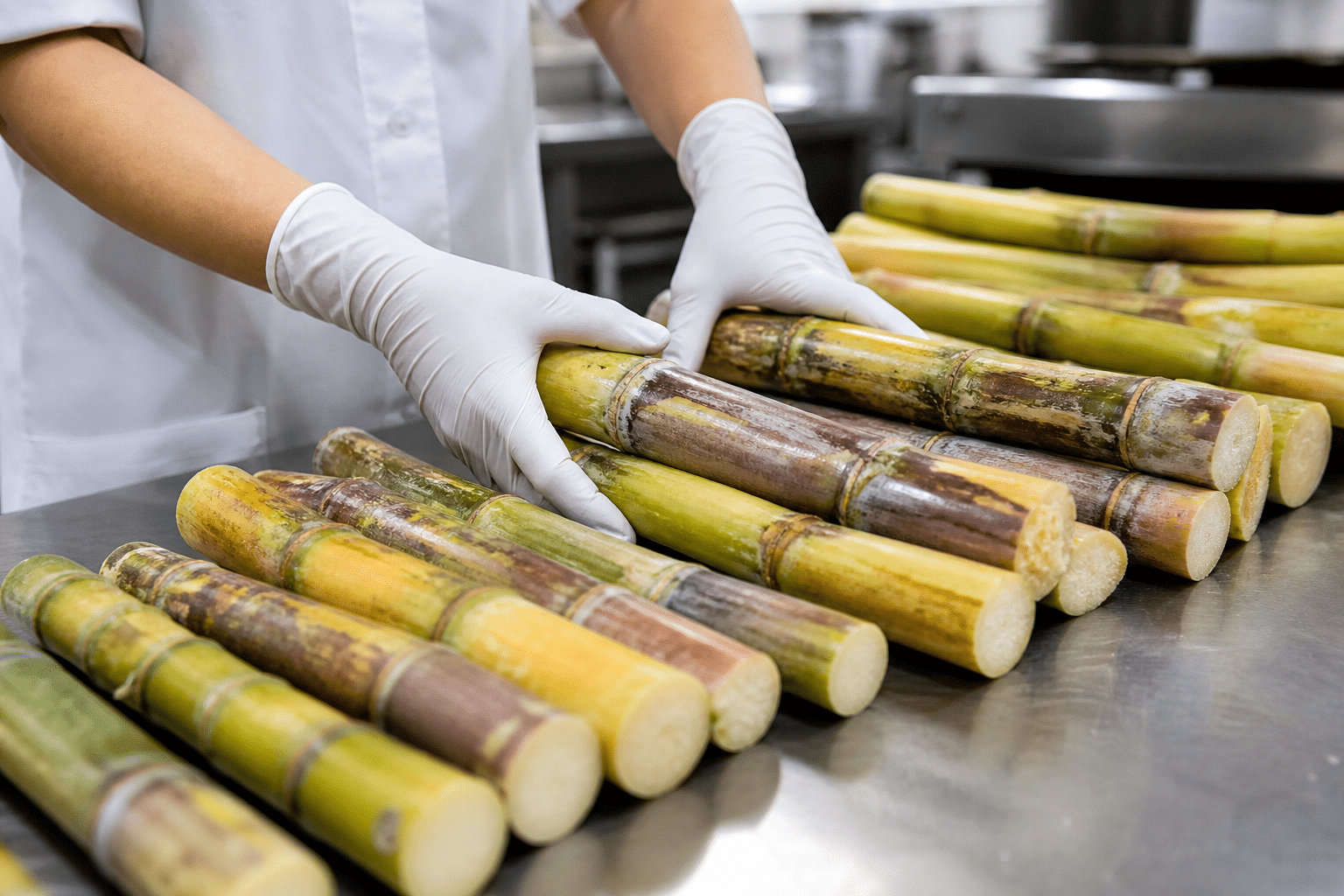
  • Train staff on safe handling of raw sugarcane and avoidance of physical contaminants (e.g., dirt, stones).
  • Monitor holding times if juice is pre-pressed and stored chilled; follow your local food safety regulations for shelf life.

Where sugarcane juice is used as an ingredient in packaged products, additional controls such as pasteurization, filtration, and microbiological testing may be required. Requirements differ by jurisdiction, so consultation with local food safety experts is recommended.

Consistency and Recipe Standardization

In plant-based menus, flavor consistency is essential. Natural variations in sugarcane can affect sweetness and color. To manage this, operators can:

  • Standardize cane suppliers and varieties where possible.
  • Use a refractometer to periodically check Brix and adjust recipes (e.g., adding more ice or water when juice is very sweet).
  • Define standard pour sizes for each drink and train staff accordingly.

Buying Guide for Sugarcane Juicers in Vegan-Focused Operations

Key Evaluation Criteria

When evaluating a sugarcane juicer for a vegan or plant-based venue, consider:

  • Capacity vs. footprint: Match machine size to your expected traffic and counter space.
  • Power requirements: Confirm voltage and frequency compatibility with your country’s electrical standards.
  • Safety features: Look for guards, emergency stops, and designs that reduce direct hand contact with moving parts.
  • Maintenance and spare parts: Ask about availability of rollers, gears, and seals, as well as service networks or remote support.
  • Noise and vibration: Important for open kitchens and premium café environments.

MOQ, Sampling, and Trials

Operators and distributors often prefer to test the concept before full rollout. A typical approach is:

  1. Sample or pilot unit: Acquire one machine to validate throughput, juice yield, and customer response in a single site.
  2. Short-term menu test: Run sugarcane juice specials or plant-based mocktails for several weeks, tracking sales and feedback.
  3. Operational review: Evaluate cleaning time, staff workload, cane sourcing logistics, and wastage.
  4. Scale-up planning: Based on pilot data, define quantities for multi-site deployment, including any spare units.

Lead times and minimum order quantities (MOQ) will depend on the specific juicer model and destination country. For project planning, it is sensible to allow additional buffer for international shipping and customs clearance.

Checklist: Is Sugarcane Juice Right for Your Vegan Business?

  • Do your target customers value natural, minimally processed sweeteners?
  • Can your team manage daily cleaning and food safety requirements?
  • Is there reliable access to fresh sugarcane in your market?
  • Does your concept support a visible juicing experience that adds value to the brand?
  • Do you have a clear product plan (pure juice, blends, mocktails, RTD products)?

If most answers are yes, sugarcane juice can be a strong addition to your vegan and plant-based offering, differentiating you with a unique taste and story.

FAQ: Sugarcane Juice for Vegan & Plant-Based Operations

1. Is sugarcane juice always considered vegan?

The juice itself is plant-based and vegan. Potential issues relate to how it is processed or served – for example, shared machines with dairy, or non-vegan additives. With proper separation and ingredient control, sugarcane juice can be confidently marketed as vegan-friendly.

2. How does sugarcane juice compare to other plant-based juices nutritionally?

Sugarcane juice generally has a higher sugar content than many vegetable juices and is more comparable to fruit juices in sweetness. It may contain small amounts of minerals and plant compounds, but it is not typically used as a primary source of vitamins or minerals. Operators should treat it as a naturally sweet beverage rather than a low-calorie health drink.

3. Can sugarcane juice be used in low-sugar vegan products?

Because sugarcane juice is naturally sweet, it is challenging to formulate genuinely low-sugar products where it is a major component. However, it can be used in reduced refined sugar concepts, where part of the sweetness comes from sugarcane juice in combination with other ingredients, provided this aligns with local labelling regulations.

4. What is the typical shelf life of fresh sugarcane juice?

Fresh, unpasteurized sugarcane juice is usually consumed shortly after pressing, often within hours, especially in warm climates. Where cold storage and pasteurization are used, shelf life can be extended, but exact times depend on processing and packaging. Always follow local food safety guidance and conduct stability testing for packaged products.

5. How can we communicate the sustainability of sugarcane juice without overclaiming?

Focus on verifiable aspects, such as using fresh-pressed juice, minimizing processing, or partnering with suppliers that can provide documentation on farming practices. Avoid broad, unsupported environmental claims. When in doubt, keep the message factual and transparent.

6. What kind of maintenance do sugarcane juicers require?

Routine maintenance typically includes daily cleaning of food-contact parts, periodic inspection of rollers and gears, lubrication where specified by the manufacturer, and timely replacement of seals and wear parts. Following the manufacturer’s manual helps maintain hygiene, performance, and machine lifespan.

7. Can one sugarcane juicer handle multiple locations’ demand?

Each location usually needs its own machine to ensure freshness and operational efficiency. Centralized pressing for multiple outlets is possible in some models, but then you must manage chilled distribution, food safety controls, and shelf-life considerations. Most vegan cafés and juice bars prefer on-site pressing to enhance the customer experience.

Next Steps: Bring Sugarcane Juice to Your Vegan Menu

As vegan and plant-based consumers look for more natural, transparent beverage options, sugarcane juice offers an interesting balance of taste, story, and simplicity. With the right equipment and operating procedures, it can become a signature element in your menu or product line.

Ready to explore sugarcane juicers for your business?
Request a quote or ask for a trial unit to test sugarcane juice on your plant-based menu before scaling across locations.

Request a quote / Get a sample

Why Luxury Hotels and Resorts Are Adding Sugarcane Juice to Menus

In the competitive landscape of high-end hospitality, the definition of “luxury” has shifted from excess to wellness, authenticity, and sustainability. Guests at five-star resorts and boutique hotels no longer just expect a standard continental breakfast; they demand functional beverages that tell a story. This shift has propelled an unlikely contender to the forefront of luxury beverage menus: fresh sugarcane juice.

Once relegated to street stalls, sugarcane juice is being reimagined as a premium “farm-to-glass” elixir. However, for hospitality operators, the transition from street trend to lobby lounge staple presents specific operational challenges. Implementation requires more than just sourcing stalks; it demands commercial equipment that meets the aesthetic and hygienic standards of a luxury environment.

This article analyzes why top-tier venues are adopting this trend and outlines the technical requirements for integrating fresh cane service into a high-volume, high-expectation setting.

The Wellness-Driven Demand for “Living” Beverages

Modern luxury travelers are often health-conscious and seek experiences that connect them to the local terroir. Sugarcane juice aligns perfectly with these preferences for several reasons:

  • Natural Electrolytes: Often marketed as nature’s sports drink, it appeals to guests recovering from long flights or gym sessions.
  • Low Glycemic Index: Despite its name, raw sugarcane juice has a lower glycemic index than many processed fruit juices, appealing to the sugar-conscious demographic.
  • Visual Theater: The process of pressing cane is visually engaging. It offers the “theater of food” that guests love to capture on social media, providing free marketing for the venue.

For Food & Beverage (F&B) Directors, the appeal is also financial. Sugarcane offers one of the highest profit margins in the beverage sector. The raw material cost is low, yet the perceived value of a fresh-pressed, exotic wellness shot allows for premium pricing.

Operational Challenges in Luxury Settings

While the demand is clear, the execution in a luxury hotel differs vastly from a roadside vendor. Operations Managers must address three critical hurdles before adding sugarcane to the menu:

1. Noise Pollution

The ambiance of a spa waiting area or a quiet executive lounge cannot be disturbed by the grinding roar of an industrial motor. Traditional sugarcane crushers are notoriously loud. Luxury venues require machines engineered with noise-reduction technology, allowing the juicer to operate front-of-house without interrupting conversation.

2. Aesthetics and Countertop Appeal

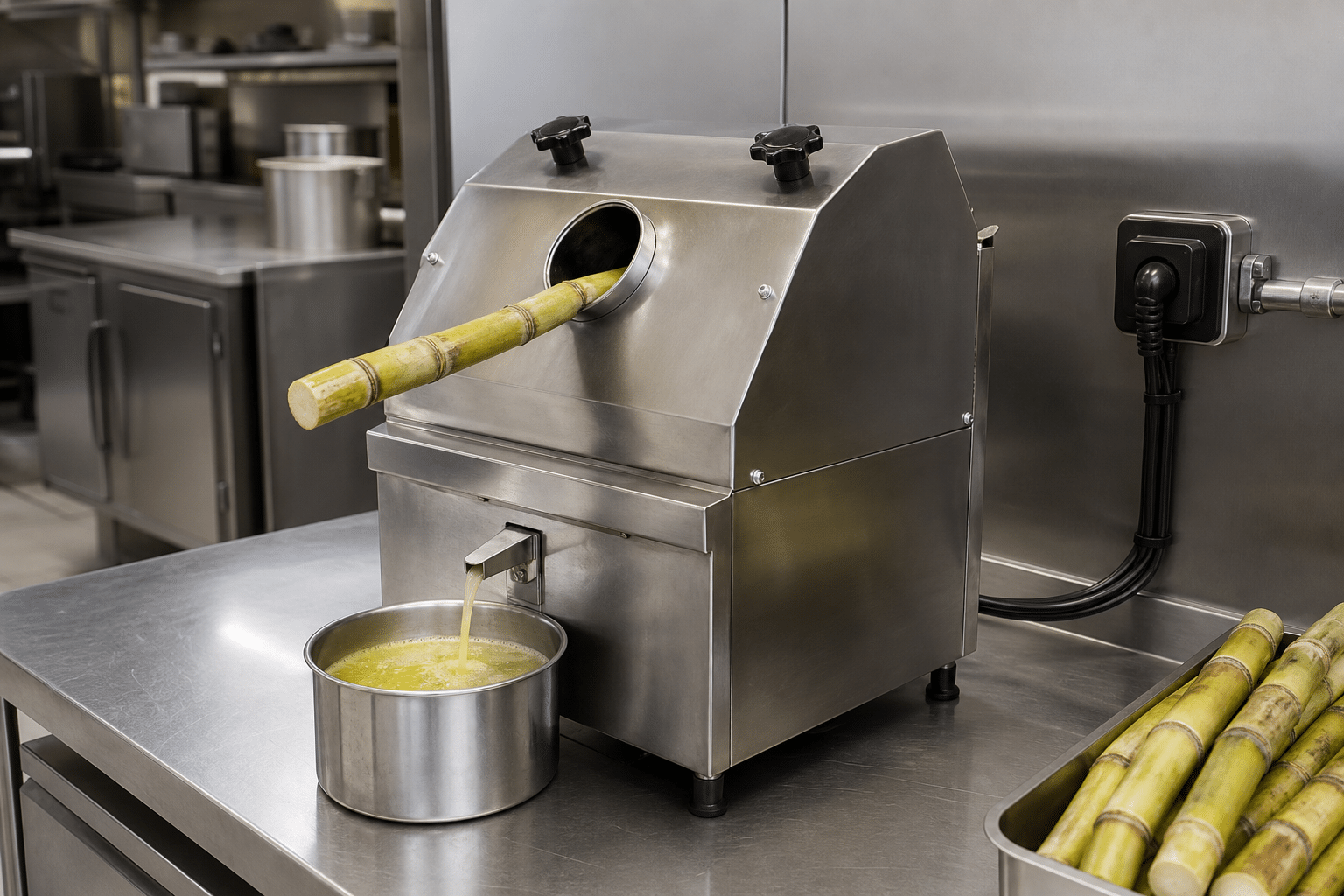
In a high-end bar, equipment is part of the decor. A bulky, industrial-looking machine with exposed gears clashes with marble countertops and ambient lighting. The market has responded with sleek, stainless steel models designed specifically for front-of-house service. These machines often feature enclosed transparent windows, allowing guests to see the crushing action without the visual clutter of open mechanical parts.

3. Hygiene and Safety Standards

Safety is non-negotiable. Traditional open-roller systems pose significant injury risks to staff and are difficult to sanitize to HACCP standards. Luxury hotels require machines with:

  • Fully enclosed rollers: Preventing any hand contact with moving parts.
  • Food-grade 304 stainless steel components: Ensuring resistance to corrosion and easy cleaning.
  • One-pass extraction: High-efficiency rollers that extract maximum juice in a single pass, preventing the need to re-feed cane (which increases contamination risk).

Technical Specifications for Hotel-Grade Juicers

When procuring a sugarcane machine for a resort or hotel, procurement officers should look for specific technical benchmarks to ensure reliability and guest satisfaction.

Feature Standard Industrial Unit Luxury Hospitality Unit
Roller Material Often cast iron or lower grade steel Solid 304 Stainless Steel
Safety Open or partially guarded Fully enclosed, auto-shutoff sensors
Cleaning Difficult disassembly Removable rollers, dishwasher safe parts
Noise Level High (>80 dB) Low (whisper quiet operation)

Capacity and Throughput

For a busy breakfast buffet or poolside bar, throughput speed is essential. A commercial-grade hospitality unit should be capable of producing 1.5 to 2 liters of juice per minute. This ensures that guests are not left waiting, even during peak hours.

Maintenance and Durability

Sugarcane is a tough, fibrous material that exerts immense pressure on crushing mechanisms. Gearboxes must be heavy-duty to prevent burnout. Procurement teams should prioritize machines with direct-drive gearboxes rather than belt-driven systems, as belts are prone to slipping and wear under the high torque required for cane pressing.

Menu Engineering: Beyond Plain Juice

To maximize the ROI of the equipment, F&B managers are diversifying how sugarcane is served. It is no longer just a standalone drink. The versatility of the juice allows it to be a base for:

  • Signature Cocktails: Replacing simple syrup with fresh cane juice adds depth and a vegetal complexity to mojitos and daiquiris.
  • Detox Blends: Mixed with ginger, turmeric, and lemon for high-margin wellness shots in the spa.
  • Mocktails: Serving the growing “sober-curious” market with premium, non-alcoholic options that feel sophisticated.

Buying Guide: Selecting the Right Partner

Choosing the right equipment supplier is as critical as the machine itself. When requesting quotes, consider the following factors:

1. Spare Parts Availability

Even the best machines require maintenance. Ensure your supplier stocks essential wear parts like bearings, seals, and rollers locally or offers rapid shipping. Downtime in a hotel environment directly impacts revenue.

2. Certifications

Verify that the equipment meets international safety and sanitation standards (such as CE, NSF, or ETL depending on your region). This is often a mandatory requirement for hotel insurance and local health inspections.

3. Warranty and Support

Look for a commercial warranty that covers the motor and gearbox for at least 1-2 years. Suppliers accustomed to B2B hospitality clients will often provide more robust support packages than consumer-focused retailers.

Frequently Asked Questions

Is fresh sugarcane juice safe for hotel guests?

Yes, provided it is prepared hygienically. Using a machine with enclosed, easy-to-clean stainless steel rollers significantly reduces contamination risks compared to traditional methods. Proper washing of the cane stalks before pressing is also mandatory.

How much space does a commercial machine require?

Modern compact commercial units are designed to have a small footprint, typically requiring less than 2 square feet of counter space, making them ideal for crowded bar areas.

Can the machine handle different sizes of cane?

High-quality commercial machines feature self-adjusting rollers or wide inlets that can accommodate various cane thicknesses without manual adjustment, streamlining operations for staff.

What is the cleaning protocol?

For luxury venues, a “flush-and-clean” system is preferred. Best-in-class machines allow for rapid disassembly (under 5 minutes) so that rollers can be removed and sanitized at the end of every shift.

Elevate Your Guest Experience

Integrating fresh sugarcane juice into your beverage program is a strategic move that aligns with modern wellness trends and high-profit operational goals. However, the success of this amenity relies heavily on the quality of the equipment used.

Investing in a premium, aesthetically pleasing, and safe sugarcane juicer ensures that the experience matches the high standards of your property. Do not compromise on safety or silence.

Ready to upgrade your beverage amenities? Contact us today to request a quote or discuss the best sugarcane solution for your venue.

Essential Food Safety Certifications for Commercial Juicers

In the commercial beverage industry, equipment procurement is not merely about yield or motor speed; it is fundamentally about risk management. For juice bars, restaurants, and industrial food processing facilities, the juicer is a critical control point. Dealing with raw produce—which often lacks a thermal kill step (cooking) before consumption—requires equipment that adheres to the strictest hygiene and safety standards.

Purchasing uncertified or non-compliant machinery exposes businesses to liability, health inspection failures, and brand-damaging contamination events. This guide outlines the essential international certifications and standards procurement managers and operations directors must verify when selecting commercial juicing equipment.

The Difference Between Electrical Safety and Sanitation Standards

A common misconception in B2B procurement is that a single certification covers all aspects of machine safety. In reality, commercial juicers must generally satisfy two distinct categories of compliance:

  • Electrical & Mechanical Safety: Ensures the machine will not cause fire, electric shock, or physical injury to the operator.
  • Sanitation & Hygiene: Ensures the machine is constructed of safe materials and designed to be thoroughly cleaned to prevent bacterial growth.

Buyers should look for marks that cover both categories. A machine that is electrically safe but impossible to sanitize is a health code violation waiting to happen.

Key Sanitation and Hygiene Certifications

Hygiene certifications focus on equipment design—specifically, the elimination of crevices where bacteria like Listeria or E. coli can harbor. They also verify that materials in contact with food do not leach harmful chemicals.

NSF / ANSI (North America & International)

The NSF International mark is arguably the most recognized sanitation standard globally for commercial food equipment. For juicers, the relevant standard is typically NSF/ANSI 8 (Commercial Powered Food Preparation Equipment).

NSF certification verifies:

  • Cleanability: All food zones are easily accessible for cleaning and inspection.
  • Material Safety: Materials are non-toxic and corrosion-resistant (e.g., specific grades of stainless steel).
  • Design Radii: Internal corners are rounded (coved) to prevent food buildup.

For buyers in North America, NSF certification (or an equivalent like ETL Sanitation) is often mandatory for passing local health inspections.

HACCP Compliance Compatibility

While HACCP (Hazard Analysis Critical Control Point) is a management system rather than a machine certification, equipment must be “HACCP-compliant” in design. This means the juicer fits into a HACCP plan by being easy to disassemble, clean, and inspect. Suppliers should be able to demonstrate how their equipment supports your facility’s HACCP protocols.

FDA Food Code & Material Compliance

In the United States, materials used in the juicer must meet FDA (Food and Drug Administration) requirements for food contact surfaces (often referred to as GRAS – Generally Recognized As Safe). Common compliant materials include:

  • Stainless Steel (304 or 316 Grade): The industry standard for durability and hygiene.
  • Food-Grade Plastics: Must be BPA-free and resistant to acidic fruit corrosion.

Electrical and Mechanical Safety Standards

These certifications ensure the equipment is safe for employees to operate in a wet, industrial environment.

UL and ETL (North America)

Underwriters Laboratories (UL) and Intertek (ETL) test for electrical safety. For commercial juicers, look for:

  • UL 763: Standard for Motor-Operated Commercial Food Preparing Machines.

Note: The ETL Listed Mark is legally equivalent to UL. However, buyers must distinguish between the ETL Listed Mark (Electrical) and the ETL Sanitation Mark (Hygiene).

CE Marking (European Economic Area)

The CE (Conformité Européenne) mark indicates conformity with health, safety, and environmental protection standards for products sold within the EEA. For juicers, this typically involves compliance with:

  • Machinery Directive (2006/42/EC): Mechanical safety.
  • Low Voltage Directive: Electrical safety.
  • EMC Directive: Electromagnetic compatibility.

While CE is a self-declaration by the manufacturer, reputable B2B suppliers will have technical files and third-party test reports available to back up their CE marking.

RoHS and REACH

These regulations restrict hazardous substances in electrical equipment. RoHS (Restriction of Hazardous Substances) ensures that the electronics within the juicer do not contain lead, mercury, or other restricted materials, which is crucial for environmental compliance and disposal.

Why “Food Grade” Isn’t Enough

A supplier may claim a machine is made of “food-grade materials.” While this is a minimum requirement, it is insufficient for commercial operations. A machine can be made of food-grade stainless steel but still have poor welding seams, inaccessible internal cavities, or non-removable gaskets that trap juice residue.

Commercial buyers should prioritize “Hygienic Design” over simple material claims. Look for:

  • Tool-free disassembly for daily cleaning.
  • IP ratings (Ingress Protection) that allow for wash-down (e.g., IPX5 or higher) if the environment requires hose cleaning.
  • Smooth welding seams that do not snag cleaning cloths.

Buying Guide: Verifying Certifications

When sourcing commercial juicers, especially from international manufacturers, verification is key. Do not rely solely on a logo printed on a brochure.

1. Request the Certificate Number

Legitimate certifications have a unique file or license number. Ask the supplier for this number and verify it on the certifying body’s official website (e.g., the NSF or Intertek directory).

2. Check the Scope

Ensure the certification applies to the specific model you are purchasing. Sometimes manufacturers certify one base model, but the customized version or a new iteration has not yet been approved.

3. Ask About Spare Parts

Maintenance is a safety issue. Ensure that replacement gaskets, blades, and screens are also compliant. Using non-OEM parts that do not meet the original certification standards can void the machine’s safety listing.

FAQs: Commercial Juicer Compliance

Can I use a household juicer in a commercial setting?

Generally, no. Household juicers are not NSF/ANSI 8 certified. Using them in a commercial kitchen often violates local health codes, voids insurance policies, and risks rapid equipment failure due to the lack of heavy-duty cooling systems.

Is CE certification accepted in the USA?

CE is a European standard. While it indicates a level of safety, US health inspectors typically look for NSF (sanitation) and UL/ETL (electrical). CE alone is usually insufficient for US compliance, though the machine may meet the technical requirements.

What is the difference between NSF and ETL Sanitation?

Functionally, they are very similar. Both test to the same ANSI standards (like NSF/ANSI 8). NSF is the organization that wrote the standard, while Intertek (ETL) is a testing lab that certifies to that standard. Both are widely accepted by health departments.

How often do certifications need to be renewed?

Certifications are usually subject to annual audits and fees. If a manufacturer stops paying or fails an audit, their listing is removed. Always check the live directory before placing a large volume order.

Secure Your Supply Chain with Compliant Equipment

Investing in certified commercial juicers protects your customers and your business reputation. Ensure your machinery meets the rigorous demands of modern food safety regulations.

Ready to upgrade your production line with fully certified, high-performance juicing equipment?

How to Clean a Sugarcane Juicer: The Complete Commercial Hygiene Guide

Elevating Hygiene Standards in Commercial Juice Bars

In the competitive world of beverage service, the quality of your product is inextricably linked to the cleanliness of your equipment. For operators of commercial sugarcane juicers, hygiene is not merely a regulatory checkbox; it is the foundation of customer trust, operational efficiency, and the longevity of your machinery. Sugarcane juice is unique among fresh beverages due to its high sucrose content and low acidity, creating a biological environment that demands rigorous sanitation protocols.

Unlike acidic citrus juices that naturally inhibit some bacterial growth, sugarcane juice is pH-neutral and rich in nutrients, making it an ideal medium for fermentation and microbial activity if equipment is left uncleaned even for short periods. For B2B buyers, juice bar owners, and operations managers, understanding how to clean a sugarcane juicer effectively is as critical as selecting the right machine in the first place.

This comprehensive guide explores the technical and practical aspects of sugarcane juicer hygiene. We will cover the material science of 304 stainless steel, the operational benefits of removable rollers, and provide a detailed 10-step cleaning checklist designed to standardize your sanitation procedures.

The Science of Sugarcane Residue and Food Safety

To implement an effective cleaning strategy, one must first understand the nature of the residue being removed. Sugarcane stalks contain fibrous bagasse and a sticky, sugar-rich juice. When this juice dries, it forms a hard, varnish-like coating on rollers and internal components. This residue does more than just look unsightly; it creates a biofilm—a protective layer for bacteria that is resistant to simple rinsing.

Why Sugar Residue is a Risk

  • Rapid Fermentation: Yeast and bacteria can begin fermenting sugarcane residue within hours, leading to off-flavors that can ruin a fresh batch of juice.
  • Pest Attraction: The intense sweetness of the residue is a beacon for ants, fruit flies, and other pests that compromise food safety.
  • Mechanical Strain: Buildup on rollers and bearings increases friction, forcing the motor to work harder and potentially shortening the lifespan of your equipment.

Effective cleaning disrupts this cycle, ensuring that every glass served is fresh, safe, and reflective of your brand’s quality standards.

Materials Matter: Cleaning 304 Stainless Steel

Most high-quality commercial sugarcane juicers are constructed from food-grade 304 stainless steel. This material is chosen for its corrosion resistance and non-porous surface, which prevents bacteria from harboring in microscopic crevices. However, stainless steel requires specific care to maintain its passive protective layer.

The Chemistry of Cleaning Stainless Steel

The “stainless” property comes from a thin layer of chromium oxide that forms on the surface. Harsh chemicals, particularly those containing chlorides (like bleach), can strip this layer, leading to pitting and corrosion. Once pitting occurs, the surface becomes rough, making it harder to clean and easier for bacteria to colonize.

Recommended Cleaning Agents:

  • Mild Detergents: pH-neutral dish soaps that cut grease and sugar without attacking the metal.
  • Quaternary Ammonium Compounds (Quats): Often used in food service for sanitizing without the corrosive effects of chlorine.
  • Warm Water: Essential for dissolving crystallized sugar.

Agents to Avoid:

  • Bleach/Chlorine: Causes pitting and stress corrosion cracking.
  • Steel Wool/Abrasive Pads: Scratches the surface, creating hiding spots for pathogens.
  • Hydrochloric Acid: Highly corrosive to stainless steel.

Daily vs. Deep Cleaning: Establishing a Protocol

A robust sanitation plan involves two layers of activity: the continuous “clean-as-you-go” approach during the shift, and the intensive “deep clean” at the end of the day. Neglecting either can lead to accumulation that is difficult to reverse.

The “Shift” Clean (Every 4 Hours)

Food safety standards in many jurisdictions recommend cleaning food-contact surfaces every 4 hours at room temperature. For a busy juice bar, this doesn’t mean a full disassembly, but rather a strategic flush.

  1. Water Flush: Run clean, warm water through the machine while it is running (if permitted by the manual) to flush out loose bagasse and liquid juice.
  2. External Wipe: Use a sanitized cloth to wipe down the feeding chute and the juice tap.
  3. Waste Removal: Empty the bagasse bin to prevent overflow and pest attraction.

The “End of Day” Deep Clean

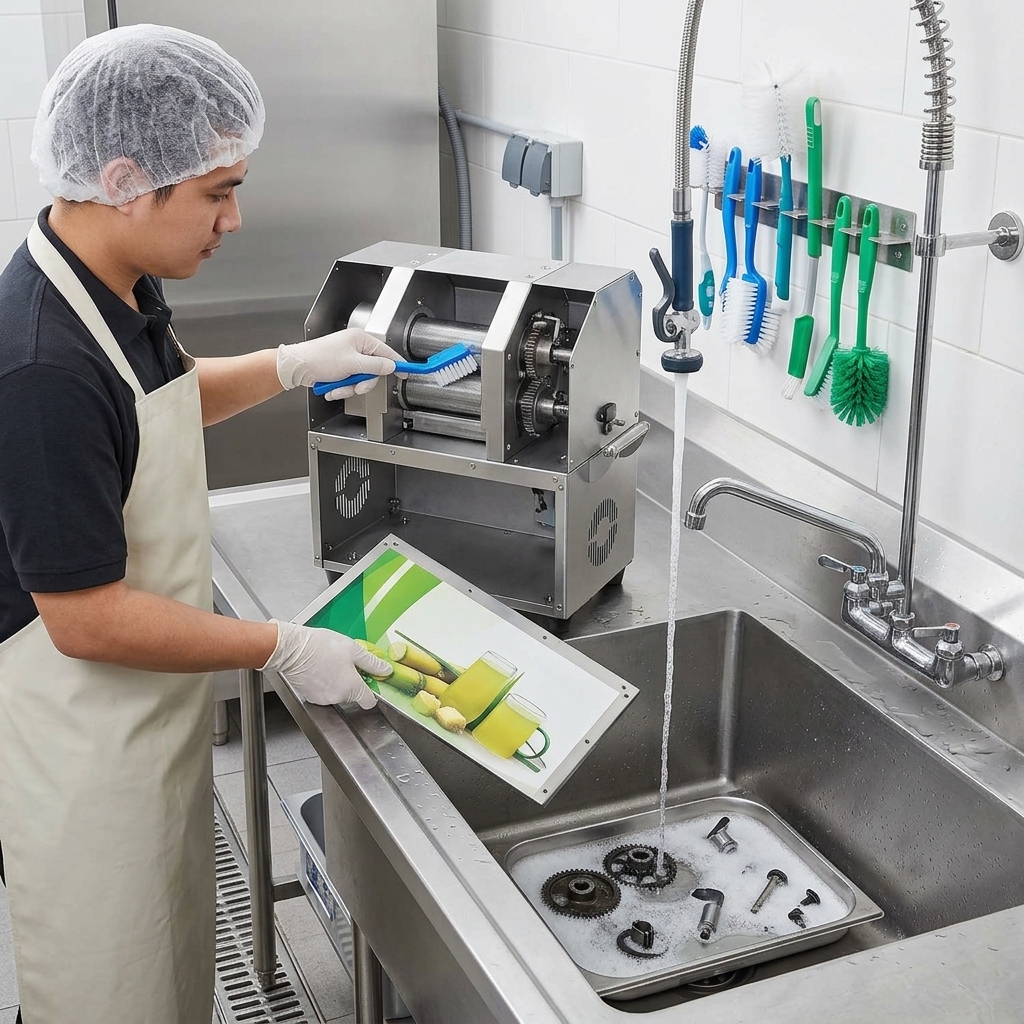
This is the non-negotiable ritual that preserves your machine. The goal is to remove every trace of organic matter. Machines with removable rollers significantly reduce the labor involved in this step, allowing operators to soak and scrub parts in a sink rather than reaching into a confined cabinet.

The 10-Step Deep Cleaning Checklist

Use this checklist to train staff and ensure consistency. Print it out and laminate it for your wash station.

Preparation

1. Electrical Lockout: Always turn off the machine and unplug it from the power source. Safety is paramount; never clean a machine that is energized.

2. Disassemble External Parts: Remove the feeding chute, the transparent viewing windows, and the juice collection tray. Place these in a sink filled with warm, soapy water.

Roller & Cabinet Cleaning

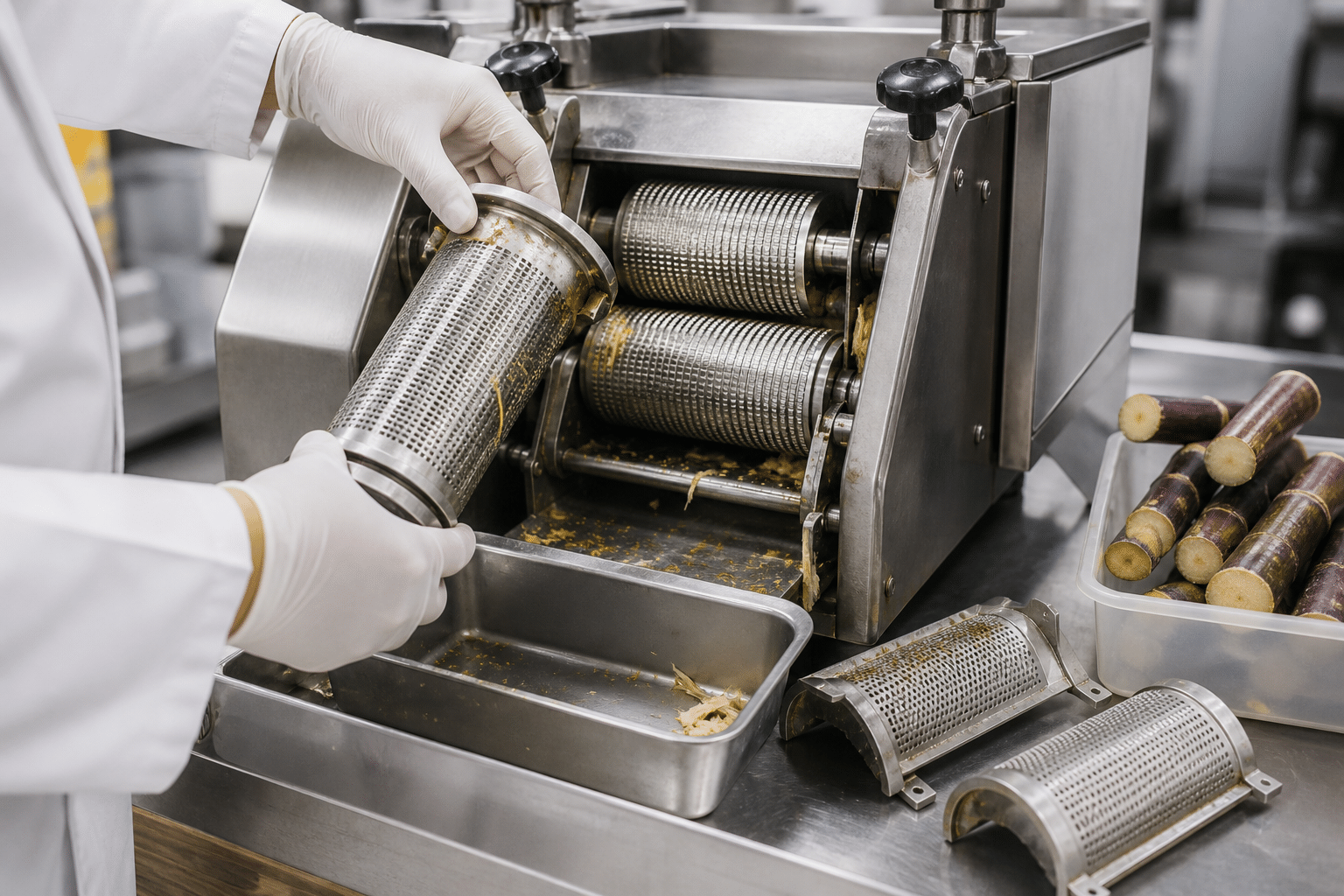
3. Remove Rollers (If Applicable): If your model supports it, unlock and remove the stainless steel rollers. This is the most critical step for thorough hygiene. If rollers are fixed, prepare to clean them in place using specialized long-handled brushes.

4. Soak Components: Let the removed rollers, trays, and chutes soak for 10–15 minutes to soften dried sugar. This reduces the scrubbing effort required and prevents scratching.

5. Scrub the Teeth: Sugarcane rollers have knurled or grooved teeth to grip the cane. These grooves are prime locations for residue buildup. Use a stiff nylon brush (not metal) to scrub parallel to the grooves, ensuring all fiber is removed.

6. Clean the Juice Compartment: While parts are soaking, wipe down the internal cabinet where the juice flows. Pay special attention to the corners and the area around the bearing seals. Use a food-safe degreaser if necessary.

Sanitization & Reassembly

7. Rinse Thoroughly: Rinse all soapy components with clean, hot water. Detergent residue can affect the taste of the juice just as much as sugar residue.

8. Apply Sanitizer: Spray all food-contact surfaces with a food-grade sanitizer (e.g., a no-rinse sanitizer approved by local health codes). Allow it to sit for the recommended contact time (usually 1–2 minutes).

9. Air Dry: Allow parts to air dry on a clean rack. Towel drying can reintroduce bacteria. Moisture trapped inside a reassembled machine can lead to mold growth overnight.

10. Reassemble and Test: Once dry, reassemble the machine. Ensure all seals and gaskets are seated correctly to prevent leaks. Briefly plug in and run the machine for 10 seconds to ensure smooth operation before the next shift.

The Advantage of Removable Rollers

From an operational standpoint, the ability to remove rollers is a game-changer for hygiene. In fixed-roller systems, the operator must reach into the machine, often blindly scrubbing the underside of the rollers. This “blind cleaning” rarely achieves 100% sanitation.

Removable systems allow for:

  • Visual Inspection: You can hold the roller up to the light to ensure every groove is clean.
  • Soaking: Stubborn, dried residue can be submerged, which is impossible with fixed rollers.
  • Bearing Protection: Cleaning removable rollers away from the motor reduces the risk of water entering the motor housing or bearings during the washdown process.

For detailed specifications on machines with these features, consult our Datasheets & Manuals.

Maintenance During Cleaning: What to Look For

Cleaning time is also inspection time. As your staff handles the components, they should be trained to look for signs of wear. Early detection of issues prevents costly downtime.

  • Seals and Gaskets: Check for cracks or brittleness. A compromised seal allows juice to leak into the mechanical compartment, causing sticky messes inside the motor housing and potential electrical faults.
  • Roller Teeth: Inspect for dullness. While stainless steel is durable, processing tons of hard cane eventually wears down the knurling, reducing extraction efficiency.
  • Noise Levels: If the machine makes grinding noises during the brief test run, it may indicate bearing wear or misalignment.

If you identify worn parts, refer to our Maintenance & Support resources to order replacements promptly.

Common Cleaning Mistakes to Avoid

Even with good intentions, improper cleaning techniques can damage your investment.

1. Using High-Pressure Hoses

Blasting a commercial juicer with a high-pressure hose (like a Karcher) is dangerous. It can force water past seals and into the gearbox or motor, leading to catastrophic electrical failure. Always use low-pressure water or a damp cloth for the machine body.

2. Ignoring the Waste Bin

The bagasse bin is often an afterthought. However, bagasse ferments rapidly and generates heat. If the bin is not cleaned and sanitized daily, it becomes a breeding ground for fruit flies that will eventually migrate into the juicer itself.

3. Overlooking the Anti-Splash Guard

Many machines have a small plastic or metal guard to prevent juice from spraying. This part is small and easily lost or forgotten during cleaning, but it collects significant residue. Ensure it is included in the soaking rotation.

Training Your Staff for Hygiene Compliance

The best equipment is only as effective as the operator. For B2B owners managing multiple locations, standardizing the cleaning process is vital.

  • Create a Logbook: Require staff to sign off on the cleaning checklist at the end of every shift. This creates accountability.
  • Visual Aids: Post photos of “Clean” vs. “Dirty” rollers near the wash station.
  • Supply the Right Tools: Ensure your team always has access to the correct brushes and sanitizer. If they have to search for tools, steps will be skipped.

Frequently Asked Questions (FAQs)

How often should I deep clean my sugarcane juicer?

You must deep clean the machine at the end of every operational day. Sugarcane juice residue ferments quickly; leaving it overnight can cause bacterial growth and difficult-to-remove buildup.

Can I put the rollers in a dishwasher?

This depends on the specific model and the material of the bearings inside the rollers. While 304 stainless steel is dishwasher safe, the heat and harsh detergents might damage internal lubricants or seals. Always check the user manual or our datasheets before using a dishwasher.

What should I do if the machine smells sour even after cleaning?

A sour smell indicates trapped organic matter. It is likely hidden behind a seal, under a gasket, or in a juice channel that wasn’t scrubbed. Disassemble the machine as much as possible, inspect gaskets, and perform a deep soak with a sanitizer solution.

Is vinegar a good cleaner for sugarcane machines?

Vinegar is a mild acid and can be used for descaling, but it is not a registered sanitizer for killing pathogens. For commercial food safety, use an EPA-approved food-contact sanitizer after cleaning with detergent.

Does the warranty cover damage from water ingress?

Typically, warranties cover manufacturing defects, not damage caused by improper cleaning (like hosing down the motor). It is crucial to follow the cleaning guidelines to preserve your warranty coverage. For more details, visit our Warranty page.

How do I remove sticky residue that has hardened?

Do not scrape it with a knife, as this scratches the steel. Soak the part in very hot water for 20–30 minutes to dissolve the sugars, then scrub with a stiff nylon brush.

Conclusion: Hygiene as a Competitive Advantage

A spotless sugarcane juicer does more than satisfy health inspectors; it produces a brighter, fresher-tasting juice that keeps customers coming back. By investing time in proper maintenance and utilizing machines designed for easy cleaning, you protect your customers and your bottom line.

For juice bar operators looking to upgrade to equipment that prioritizes hygiene and ease of use, or if you need specific advice on maintaining your current fleet, we are here to help.

Ready to elevate your juice business? Request a quote or contact our support team today for expert guidance on the best sanitary juicing solutions.

Leveraging the Cold-Pressed Label: How to Command Higher Prices for Sugarcane Juice

In the competitive landscape of commercial juice bars and beverage manufacturing, the difference between a commodity product and a premium health beverage often lies in processing terminology and consumer perception. While sugarcane juice has traditionally been viewed as a low-cost street beverage in many regions, the global shift toward functional, raw, and nutrient-dense drinks presents a significant opportunity for operators.

By accurately leveraging the “cold-pressed” classification—which is inherent to the mechanical operation of professional sugarcane crushers—businesses can reposition this product. This shift allows for significantly higher price points, improved profit margins, and access to a health-conscious demographic willing to pay for quality preservation.

This guide explores the technical basis for labeling sugarcane juice as cold-pressed, the operational advantages of modern crushing equipment, and strategies for marketing this high-margin product effectively.

The Engineering Behind the “Cold-Pressed” Claim

To market a product as cold-pressed, the extraction method must minimize heat generation and oxidation. In the broader juice industry, this usually distinguishes hydraulic presses from centrifugal juicers (which use high-speed blades that introduce heat and air).

Professional sugarcane machines, specifically those utilizing multi-roller systems, naturally align with cold-pressed standards due to their mechanical design:

  • Low RPM, High Torque: Unlike centrifugal juicers that spin at 3,000+ RPM, industrial sugarcane rollers typically rotate at low speeds (often 10–20 RPM). This slow rotation prevents the friction-based heat buildup that destroys heat-sensitive enzymes and vitamins.
  • Masticating Action: The rollers utilize high pressure to crush and squeeze the fiber, extracting liquid without shredding the cane into a pulp that is exposed to rapid oxidation.
  • No External Heat: The extraction is purely mechanical. As long as the machine is maintained and lubricated correctly (ensuring no gear heat transfers to the juice path), the juice remains at ambient temperature throughout the process.

For juice bar operators, this means the standard operating procedure of a high-quality sugarcane juicer technically qualifies the output as “cold-pressed,” a label that commands a premium in the current market.

Comparing Extraction Methods: Why It Matters for Pricing

Understanding the difference between extraction methods is crucial for justifying price increases to procurement teams or retail consumers.

Feature Centrifugal Extraction Cold-Pressed / Roller Extraction
Mechanism High-speed spinning blades Slow-rotating steel rollers
Heat Generation Moderate to High (Friction) Negligible / None
Oxidation Rate High (Aerates the juice) Low (Preserves color longer)
Nutrient Retention Lower (Enzyme degradation) Maximum retention
Market Value Standard / Economy Premium / Luxury

Operational Considerations for Premium Positioning

Simply owning a machine is not enough to secure a premium position. The equipment quality and operational workflow must support the high-value claim.

1. Material Compliance and Hygiene

To sell a premium health product, the equipment must meet stringent hygiene standards. Buyers should look for machines constructed with food-grade 304 stainless steel for all juice-contact parts (rollers, trays, filters). Older models using cast iron or non-food-grade alloys can introduce metallic tastes or rust contaminants, immediately invalidating any “pure” or “premium” marketing claims.

2. One-Pass Efficiency

High-end commercial machines are designed for “one-pass” extraction. This means the cane is crushed thoroughly in a single feed, extracting 95%+ of the juice. Cheaper machines often require feeding the cane through multiple times to get a decent yield. Multiple passes increase oxidation and handling time, degrading the “fresh” quality. Investing in a powerful, high-torque motor ensures single-pass efficiency, supporting a true cold-pressed workflow.

3. Filtration and Clarity

Cold-pressed consumers expect a smooth texture. Professional machines often include integrated fine-mesh filtration systems. Ensuring the final product is free of coarse fiber (bagasse) is essential for bottling and premium service.

Marketing Strategy: From Commodity to Superfood

Once the technical foundation is established, the marketing strategy must align with the premium price point. Sugarcane juice is naturally rich in electrolytes, antioxidants, and has a low glycemic index compared to refined sugars. The “cold-pressed” label acts as a trust signal that these properties have not been altered by processing.

Packaging and Presentation

Do not serve premium cold-pressed sugarcane juice in generic plastic cups. To command a higher price:

  • Bottling: Use glass or high-quality rPET bottles with minimalist labeling. This implies shelf-stability (even if short-term) and quality.
  • Visual Proof: If operating a juice bar, ensure the machine is visible. The visual of the slow-crushing stainless steel rollers reinforces the “fresh” and “mechanical” nature of the process, distinct from noisy blenders.
  • Menu Terminology: Use terms like “Slow-Crushed,” “Raw Pressed,” and “Unpasteurized” alongside “Cold-Pressed.”

Strategic Blends

Pure sugarcane juice can be intensely sweet. To appeal to the health-conscious market and increase perceived value, create functional blends. The cold-press extraction method works excellently when co-extracting ingredients:

  • The Detox Blend: Sugarcane + Ginger + Lemon (Ginger can often be crushed directly in robust rollers).
  • The Immunity Blend: Sugarcane + Turmeric + Calamansi.

Buying Guide: Selecting the Right Machine

When sourcing equipment to support a premium sugarcane juice business, consider the following specifications to ensure reliability and product quality:

  • Roller Composition: Solid stainless steel rollers are preferred over hollow or coated rollers for durability and hygiene.
  • Safety Features: Look for emergency stop buttons and enclosed feed chutes. In many jurisdictions, open-roller machines are prohibited in commercial settings due to injury risks.
  • Cleaning Accessibility: Cold-pressed juice is highly perishable. The machine must be easy to disassemble for deep cleaning to prevent bacterial growth. Removable rollers and juice trays are a critical feature.
  • Noise Level: Premium juice bars often value ambiance. A high-quality gear reduction motor should operate quietly, unlike the high-pitched whine of centrifugal juicers.

Frequently Asked Questions (FAQs)

Does “cold-pressed” sugarcane juice have a longer shelf life?

Cold-pressed juice generally has a slightly longer shelf life than centrifugal juice due to reduced oxidation, but raw sugarcane juice is highly perishable. Without pasteurization or preservatives, it typically lasts 24–48 hours under refrigeration. The premium value comes from its freshness, not long-term storage.

Can I bottle sugarcane juice for retail sale?

Yes, but strict cold-chain management is required. Because the juice is raw and rich in natural sugars, fermentation can start quickly. Bottling immediately after extraction and keeping the product below 4°C (39°F) is essential. Consult local health regulations regarding raw juice sales.

What is the typical yield of a professional sugarcane crusher?

A high-efficiency 3-roller or 4-roller machine can typically extract 70% to 80% of the cane’s weight as juice in a single pass. This high yield is critical for maintaining healthy profit margins.

Why does sugarcane juice turn brown, and does cold-pressing stop it?

Browning is caused by the oxidation of enzymes and polyphenols in the juice. While cold-pressing significantly slows this process compared to centrifugal juicing, it does not stop it entirely. Adding a small amount of acidic citrus (lemon or lime) during extraction helps maintain the bright green color.

Is a 3-roller or 4-roller machine better for premium juice?

Generally, more rollers allow for more gradual pressure steps, maximizing yield and ensuring the fiber is completely dry upon exit. A 3-roller system is the industry standard for balancing efficiency and cost, while 4-roller systems are used for high-volume industrial applications.

Ready to upgrade your beverage menu with high-margin, cold-pressed sugarcane juice?

Request a Quote / Get a Sample

How to Easily Maintain a Sugarcane Juicer to Extend Machine Life: The Complete Commercial Guide

Investing in a high-quality commercial sugarcane juicer is a significant decision for any juice bar, beverage manufacturer, or hospitality business. These machines are the workhorses of your operation, designed to crush tough fibrous stalks and extract sweet, profitable juice day in and day out. However, without a rigorous sugarcane juicer maintenance strategy, even the most robust machine will suffer from premature wear, hygiene issues, and costly downtime.

Sugarcane juice is unique. It is high in sugar, slightly acidic, and leaves behind fibrous residue (bagasse) that can harden like cement if left to dry. Furthermore, the high torque required to crush cane places significant stress on bearings, gears, and rollers. Neglecting maintenance doesn’t just shorten the machine’s life; it compromises the safety and taste of your product.

This comprehensive guide covers everything you need to know about maintaining your commercial sugarcane machine. From daily cleaning protocols to gearbox protection and troubleshooting, we provide the expert insights required to keep your equipment running smoothly for years. We also include a downloadable maintenance schedule to help your team stay on track.

Why Proactive Maintenance is Non-Negotiable

Before diving into the “how-to,” it is vital to understand the “why.” For B2B buyers and operations managers, maintenance is not just a chore—it is an asset protection strategy. Here are the three pillars of why maintenance matters:

  • Hygiene and Food Safety (HACCP): Sugarcane juice is a raw product. Sugar residues in hidden crevices are breeding grounds for yeast and bacteria. A poorly maintained machine can cause fermentation within the crushing mechanism, leading to spoiled juice and health code violations.
  • Mechanical Longevity: The crushing force involved in juicing cane is immense. If rollers are misaligned or bearings are dry, the friction increases exponentially. Preventive care reduces the load on the motor and transmission.
  • Operational ROI: A breakdown during peak hours results in lost revenue and emergency repair costs. Regular checks allow you to identify worn parts—like seals or belts—before they fail completely.

Understanding Your Machine: Key Components

To maintain your equipment effectively, your staff must understand what they are cleaning and protecting. Most commercial sugarcane juicers consist of the following critical systems:

1. The Roller Assembly

This is the heart of the machine, typically consisting of three or four stainless steel rollers. They grip, crush, and extract juice. The gap between these rollers determines the extraction efficiency. If they are dirty, extraction drops; if they are misaligned, the motor overworks.

2. The Gearbox and Motor

The motor provides the power, and the gearbox (reduction gears) increases the torque to crush the cane. These components are usually sealed but require ventilation and protection from moisture ingress.

3. Bearings and Seals

Bearings allow the rollers to spin smoothly. Seals protect those bearings from juice. If a seal fails, acidic juice enters the bearing, leading to rust and seizure. This is the most common cause of catastrophic failure in neglected machines.

The Ultimate Sugarcane Juicer Maintenance Schedule

Structured maintenance is easier to follow. Implement this schedule to ensure consistency across shifts.

Daily Routine: The Hygiene Flush

Frequency: Every day, immediately after the last shift.

Sugarcane juice oxidizes and becomes sticky within minutes. Leaving the machine dirty overnight is the fastest way to damage seals and encourage bacterial growth.

  1. Power Down: Ensure the machine is turned off and unplugged. Safety is paramount.
  2. Remove Bagasse: Clear all fibrous waste from the exit chute.
  3. Disassemble Removable Parts: Take off the feed tray, juice collection tray, and any removable side panels. Wash these in hot, soapy water.
  4. Flush the Rollers: Use warm water to flush the roller mechanism. Note: Never use a high-pressure hose directly on the bearing housings or motor vents.
  5. Brush Scrub: Use a soft-bristle nylon brush to scrub the rollers while manually rotating them (if safe and possible) or by running the machine for brief seconds with water (consult your specific Datasheets & Manuals for safe cleaning modes).
  6. Dry Thoroughly: Moisture is the enemy of longevity. Wipe down all stainless steel surfaces with a dry, clean cloth.

Weekly Routine: Deep Clean & Inspection

Frequency: Once a week (e.g., every Monday morning or Sunday night).

  • Inspect Seals: Look closely at the point where the roller shafts enter the machine body. If you see dark, sticky leakage, a seal may be compromised.
  • Sanitize: After cleaning, use a food-safe sanitizer on the rollers and juice path to eliminate biofilms that soap might miss.
  • Check the Filter/Strainer: If your machine has an integrated tap or reservoir with a mesh filter, check it for tears or clogging. A clogged filter backs up juice, potentially flooding the seals.
  • External Wipe Down: Clean the motor housing and control panel with a damp (not wet) cloth to remove dust and sticky fingerprints.

Monthly Routine: Mechanical Check-Up

Frequency: First week of every month.

  • Roller Gap Inspection: Over time, the gap between rollers may shift due to vibration. Refer to your manual to ensure the gap is set to factory specifications for optimal yield.
  • Electrical Cord Safety: Check the power cord for fraying or cuts, which can happen in busy commercial kitchens.
  • Lubrication (If applicable): Some external chains or drive components may need food-grade grease. Warning: Never grease the crushing rollers themselves. Always check the Maintenance & Support guidelines before applying lubricants.

Deep Dive: Cleaning the Rollers and Juice Compartment

The rollers are where the magic happens, but they are also the hardest part to clean. The grooves in the stainless steel rollers are designed to grip the cane, but they also trap fiber.

The “Reverse” Technique

If your machine has a reverse function, use it during the cleaning process. Run the machine with water, switch to reverse for a few seconds, then forward again. This helps dislodge fibers stuck deep in the grooves.

Avoiding Corrosion

Even Stainless Steel 304 can corrode if exposed to harsh chlorides or left in contact with acidic organic matter for too long.

DO NOT USE: Bleach, steel wool, or wire brushes. Steel wool leaves behind iron particles that will rust and stain your machine.

USE: Soft nylon brushes, sponges, and mild detergents.

Protecting the Motor and Gearbox

The motor and gearbox are the most expensive components to replace. Protecting them is primarily about load management and environment.

1. Prevent Overloading

Do not force oversized cane stalks into the machine. If a stalk is too thick, split it vertically. Forcing the machine causes the motor to draw excessive current, leading to overheating. If the machine stalls, stop immediately and use the reverse function to clear the jam.

2. Ventilation is Key

Commercial juicers generate heat. Ensure the machine’s vents are not blocked by towels, walls, or other equipment. Airflow is essential for cooling the motor during continuous operation.

3. Moisture Protection

Never submerge the main unit in water. While the crushing compartment is wet-area compatible, the motor housing is usually not waterproof. Water ingress into the electrical components is a safety hazard and voids your Warranty.

Troubleshooting Common Issues

Even with great care, issues can arise. Here is a quick guide to common symptoms and solutions.

Symptom Possible Cause Action Required
Machine Squeaking Dry bearings or friction between rollers and housing. Stop immediately. Check for debris rubbing against the housing. If noise persists, bearings may need replacement.
Low Juice Yield Incorrect roller gap or worn rollers. Adjust the roller gap according to the manual. If rollers are smooth (grooves worn down), they may need replacement.
Motor Hums but Won’t Turn Capacitor failure or jammed rollers. Unplug. Check if a hard piece of cane is jammed. If clear, the starting capacitor may be faulty (requires a technician).
Juice Leaking from Shafts Worn seals. This is critical. Contact support to replace seals immediately to prevent motor damage.
Vibration/Shaking Uneven surface or loose components. Ensure the machine is on a level surface. Check rubber feet. Tighten external casing screws.

For more complex issues, visit our FAQs page or contact our technical team.

Signs It’s Time for Professional Service

Operator maintenance can handle cleaning and basic checks, but some tasks require a professional. If you notice any of the following, it is time to schedule a service:

  • Grinding Noises: Indicates internal gearbox wear or bearing failure.
  • Electrical Burning Smell: Indicates motor overheating or wiring insulation failure.
  • Persistent Leaks: If replacing a seal doesn’t stop the leak, the shaft itself may be worn or bent.

Printable Maintenance Checklist

Copy and paste this checklist for your staff to sign off daily.

Daily Sugarcane Juicer Closing Checklist

Date: ___________ Staff Name: ___________

  • [ ] Machine turned off and unplugged.
  • [ ] All bagasse/waste removed from chute.
  • [ ] Feed tray and juice tray washed and sanitized.
  • [ ] Rollers flushed with warm water (no high pressure).
  • [ ] Rollers scrubbed with nylon brush to remove fiber from grooves.
  • [ ] Machine dried with a clean cloth.
  • [ ] Area around the machine wiped down.
  • [ ] Visual check: No loose parts or frayed cords.

Conclusion

A sugarcane juicer is a robust machine designed to generate profit, but it relies on your team to keep it in peak condition. By following a strict cleaning regimen and respecting the mechanical limits of the device, you can extend the life of your equipment significantly. Remember, a clean machine produces better-tasting juice, keeps your customers safe, and protects your bottom line.

Do you need specific parts, a new manual, or advice on upgrading your current setup? We are here to help.

Ready to upgrade or need technical assistance? Contact our support team today or request a quote for our latest models.

How to Start a Profitable Sugarcane Juice Business in 2026

Introduction: The Sugarcane Opportunity in the 2026 Beverage Market

As the global beverage industry shifts toward natural, functional, and minimally processed drinks, sugarcane juice has emerged from niche street markets to become a premium offering in the commercial juice sector. For B2B investors and entrepreneurs, the appeal lies not just in consumer demand for “clean label” products, but in the operational efficiency of the business model itself.

Unlike complex smoothie operations requiring vast inventories of perishable fruits, a sugarcane juice business relies on a hardy, single-ingredient supply chain that delivers exceptional yield. However, the barrier to entry is technical: sugarcane requires specialized heavy-duty extraction equipment and strict oxidation management to ensure a commercially viable product.

This guide analyzes the operational, financial, and technical requirements for starting a scalable sugarcane juice business in 2026, comparing its profitability metrics directly against other fresh juice models.

Market Comparison: Sugarcane vs. Citrus and Cold-Press Models

To understand the profitability of sugarcane, it is essential to compare the data against established juice business models like fresh-squeezed orange juice or multi-ingredient cold-pressed juices. The following comparison highlights why sugarcane is increasingly attractive for commercial operators.

Metric Sugarcane Juice Fresh Orange Juice Cold-Pressed Blends
Raw Material Cost (COGS) Low (15%–20%) Medium-High (30%–45%) High (40%–50%)
Yield Efficiency High (70%–75% extraction by weight) Medium (45%–50% extraction) Variable (depends on produce)
Inventory Complexity Low (Single ingredient + distinct shelf life) Medium (Seasonal sourcing issues) High (Multiple SKUs, spoilage risks)
Equipment Wear High (Requires heavy-duty gearboxes) Medium (Acidic corrosion risk) Medium (Hydraulic/Screw press maintenance)
Oxidation Rate Rapid (Turns brown in minutes without treatment) Moderate (Flavor changes over hours) Slow to Moderate

The Margin Advantage

The primary driver for sugarcane profitability is the low cost of raw cane relative to the yield. A high-quality commercial machine can extract up to 75% of the cane’s weight as juice. In contrast, citrus operations often face fluctuating commodity prices and lower extraction rates, squeezing margins. However, the trade-off is the technical requirement: you cannot process sugarcane with standard kitchen equipment.

Technical Requirements: Selecting the Right Machinery

The success of your operation hinges almost entirely on the reliability and efficiency of your extraction equipment. Unlike soft fruits, sugarcane is fibrous and hard, requiring immense torque to crush effectively.

1. Roller Material and Hygiene

For commercial compliance (FDA, CE, etc.), the rollers—the components that come into direct contact with the cane—must be manufactured from solid 304-grade stainless steel. Cheaper alternatives use aluminum or plastic-coated iron, which degrade quickly under pressure and can contaminate the juice with metal shavings or rust.

2. Oxidation Management

Sugarcane juice is notorious for oxidizing rapidly, turning from a vibrant green to a muddy brown within minutes of extraction due to enzymatic reactions. This impacts shelf life and consumer appeal. Modern commercial machines mitigate this through enclosed crushing chambers and instant cooling integration. Preventing Oxidation: How Quality Machines Keep Sugarcane Juice Green and Fresh is critical for maintaining the visual appeal and nutritional integrity of the product, allowing for longer retail display times.

3. Single-Pass Efficiency

Time is money in a commercial setting. A professional machine should achieve maximum extraction in a single pass. Repeatedly feeding the same cane stalk back into the machine increases labor time, introduces contaminants from the husk, and creates a bitter aftertaste.

Business Models and ROI Analysis

There are three primary ways to structure a sugarcane juice business. Choosing the right model depends on your capital, location, and target volume.

Model A: The Kiosk / Retail Counter

This is the “fresh-pressed” model seen in malls and high-foot-traffic areas. The machine is front-and-center, providing theater for the customer.

  • Pros: Premium pricing ($5–$8 per cup), instant cash flow, low inventory.
  • Cons: High rent, requires constant staffing.
  • Equipment Need: Compact, aesthetic table-top machines with noise reduction.

Model B: Bottling and Wholesale

Producing bottled juice for distribution to supermarkets, gyms, or cafes. This requires strict pasteurization or HPP (High-Pressure Processing) protocols to extend shelf life.

  • Pros: Scalable volume, B2B contracts.
  • Cons: Lower margin per unit, higher regulatory compliance (HACCP), logistics costs.
  • Equipment Need: Industrial-grade floor-standing machines capable of processing tons per hour.

Model C: The “Add-On” Revenue Stream

Existing cafes or restaurants adding sugarcane juice to the menu. This is often the highest ROI approach because overheads (rent, staff) are already covered. Analyzing the Return on Investment for High-End Sugarcane Juice Machines reveals that for many existing food businesses, the break-even point on a high-end machine can be reached in as little as 3–6 months due to the high margins of the beverage.

Operational Workflow: From Stalk to Cup

To run a profitable operation, you must standardize your workflow to minimize waste and labor.

Sourcing and Preparation

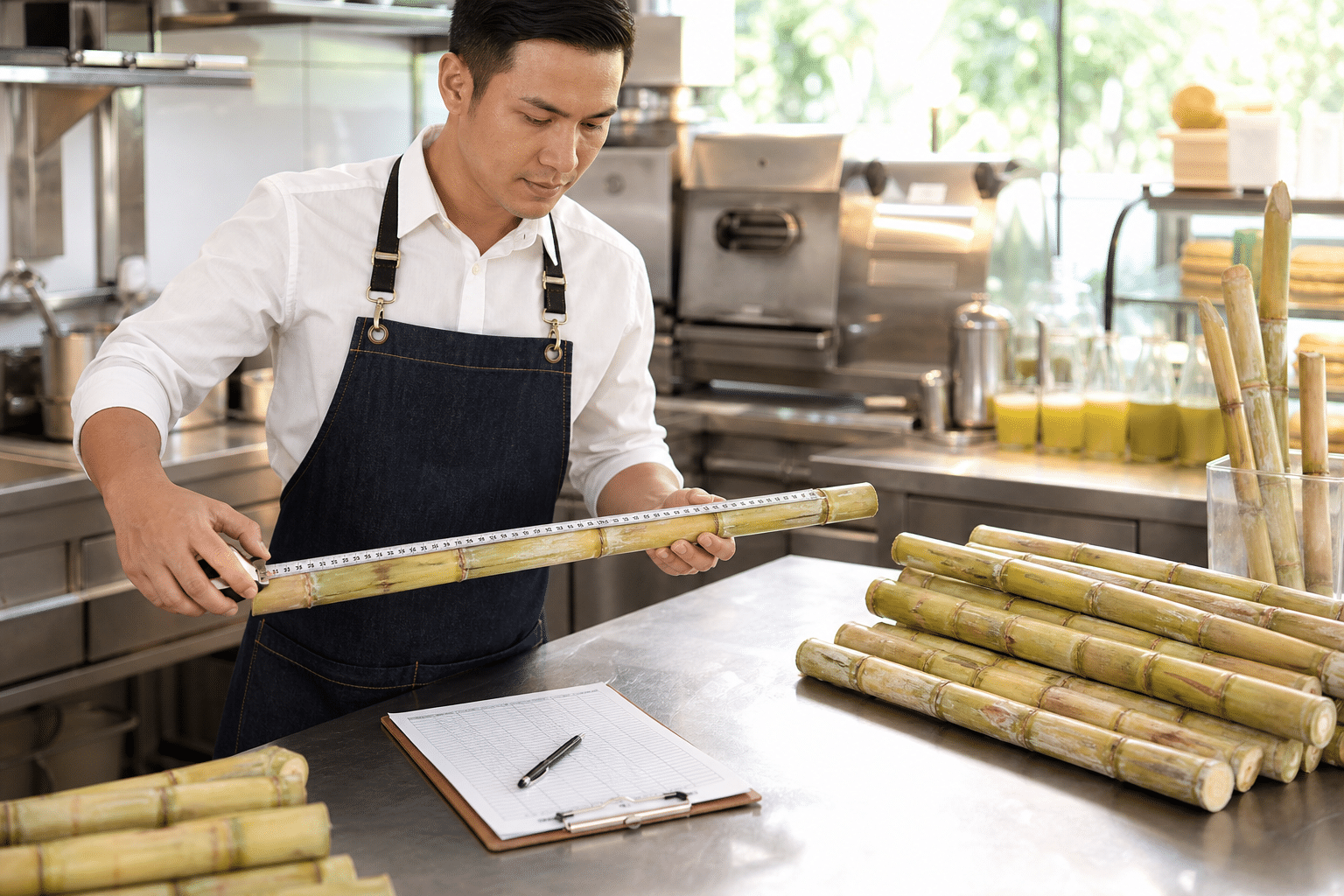
Not all sugarcane is suitable for juicing. You generally require soft-skin varieties (often yellow or purple/black cane) specifically grown for chewing or juicing, not the hard varieties used for sugar crystal production.

Process Tip: Cane must be scraped and washed thoroughly before juicing. Many operators neglect this, leading to machinery jams and “grassy” tasting juice.

Menu Engineering

While pure sugarcane juice is popular, blends drive higher average order values and cater to diverse palates. Common additives include kumquat, ginger, lemon, and mint. These acidic additions not only enhance flavor but also lower the pH, slightly delaying oxidation. Expanding Your Menu: Profitable Sugarcane Juice Blends and Recipes can significantly widen your customer base, attracting those who might find pure cane juice too sweet.

Waste Management

Bagasse (the dry fibrous residue) is a byproduct of extraction. In a high-volume business, this waste adds up quickly. Plan for disposal or partnerships with local farms/composting facilities, as bagasse makes excellent organic fertilizer.

Buying Guide: Evaluating Suppliers

When procuring machinery for 2026, look beyond the price tag. The total cost of ownership includes maintenance, spare parts availability, and downtime.

  • Spare Parts Availability: Can the supplier ship replacement gears or rollers within 48 hours?
  • Warranty: Look for at least a 1-2 year warranty on the motor and gearbox.
  • Cleaning Mechanisms: Does the machine have detachable parts for easy sanitization? If a machine takes 30 minutes to clean, your staff will likely cut corners, leading to hygiene risks.
  • Safety Features: Ensure the machine has emergency stops and finger guards. Industrial accidents are a major liability in this sector.

Conclusion

Starting a sugarcane juice business in 2026 offers a compelling balance of low raw material costs and high consumer demand for natural energy drinks. However, the simplicity of the ingredient list belies the complexity of the processing.

Success requires treating the operation with industrial discipline: selecting 304 stainless steel equipment to handle the load, managing oxidation to ensure quality, and diversifying the menu to maximize revenue. By focusing on efficient extraction and reliable machinery, operators can secure a profitable position in the growing natural beverage market.

FAQs

What is the profit margin on sugarcane juice?

Gross margins typically range from 70% to 85%, depending on the cost of cane in your region and your pricing strategy. This is generally higher than citrus or vegetable juices due to lower raw material costs.

How do I prevent sugarcane juice from turning black?

Oxidation causes the color change. To prevent this, add a small amount of acidic juice (lemon or kumquat) during extraction, keep the juice chilled immediately, and use high-quality machinery that minimizes heat buildup during crushing.

How much space do I need for a sugarcane juice setup?

A standard retail setup requires minimal space—often just 10-15 square feet for the machine, a prep sink, and a refrigeration unit. This makes it ideal for kiosks or food trucks.

Can I bottle sugarcane juice without preservatives?

Raw sugarcane juice has a shelf life of only a few hours. To bottle it for retail without chemical preservatives, you must use cold-chain logistics and potentially technologies like HPP (High-Pressure Processing) or flash pasteurization.

What Makes a Sugarcane Juicer Ideal for Juice Bars? A Comprehensive Guide for Operators

In the competitive world of beverage retail, the equipment you choose is more than just a tool; it is the engine of your business. For juice bars, cafes, and beverage kiosks, the resurgence of sugarcane juice as a premium, health-conscious drink offers a significant revenue opportunity. However, processing raw sugarcane requires specialized engineering. Unlike soft fruits, sugarcane is a fibrous, tough grass that demands high torque and robust mechanics to extract juice efficiently.

Choosing the right sugarcane juicer for juice bars is a critical decision that impacts workflow, hygiene, customer experience, and ultimately, your bottom line. An underpowered machine can lead to frequent jams and downtime, while a machine difficult to clean can become a health hazard. This guide explores the essential features, technical specifications, and operational considerations for selecting the ideal commercial sugarcane juice machine.

The Juice Bar Environment: Unique Operational Challenges

Before diving into machine specifications, it is vital to understand the environment in which the machine will operate. A dedicated juice bar or a mall kiosk operates differently from a roadside stall or a large industrial processing plant. The constraints of a retail environment dictate specific requirements for your equipment.

1. Space Constraints and Footprint

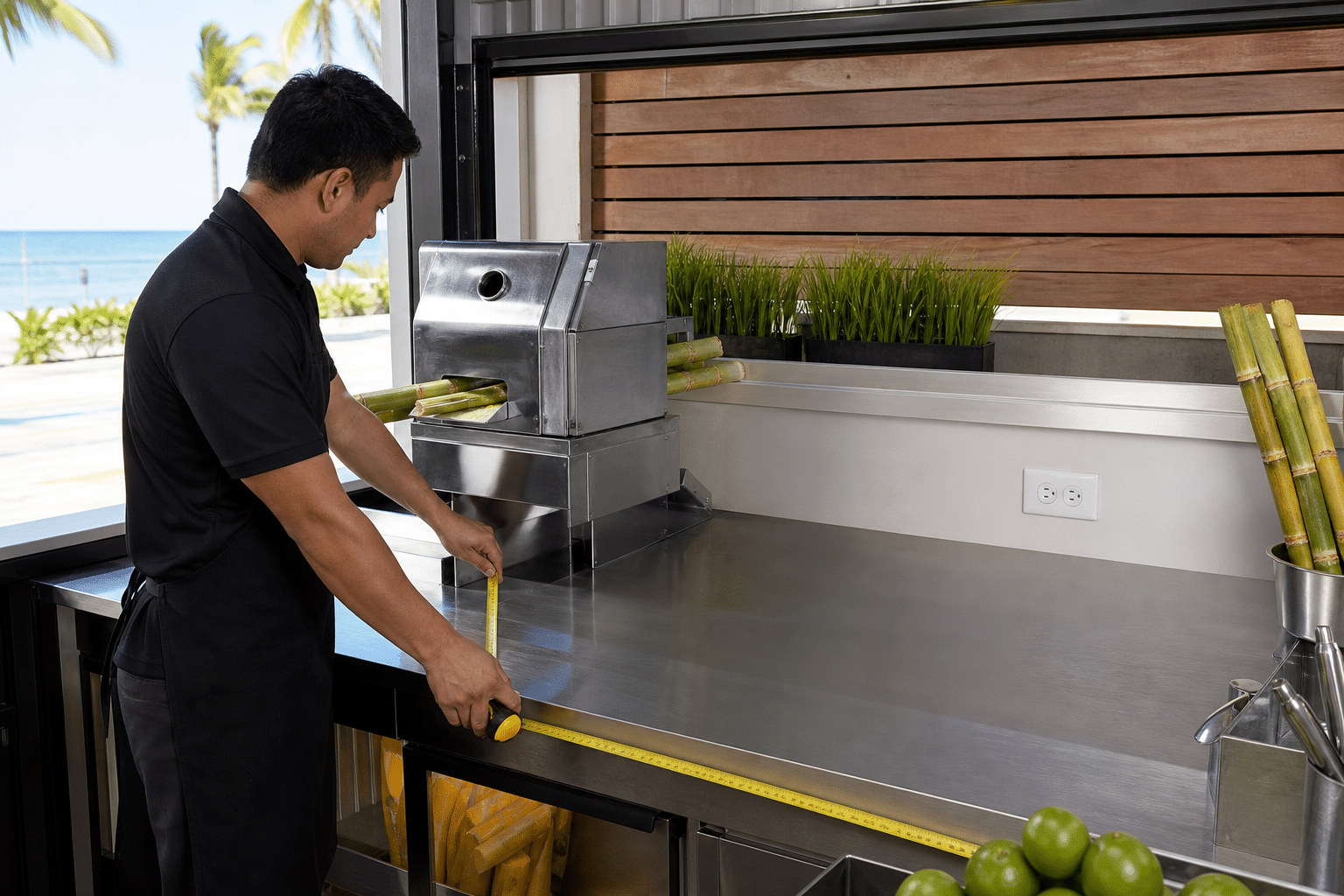
Retail real estate is expensive. Every square inch of counter space must generate revenue. A bulky machine that dominates the counter leaves little room for preparation, point-of-sale systems, or customer interaction. Compact designs that do not compromise on power are essential. Vertical form factors often work better than horizontal ones in tight kiosks.

2. The "Theater" of Juicing

Modern consumers want to see what they are drinking. The process of crushing cane is visually appealing and validates the freshness of the product. Therefore, the machine must be presentable. An industrial-looking, open-gear machine may look out of place in a premium juice bar. Machines with transparent windows and sleek stainless steel finishes allow customers to watch the hygiene and extraction process, turning production into a marketing tool.

3. Noise Sensitivity

In a mall or a quiet café, the roar of a heavy industrial motor is disruptive. It hinders communication between staff and customers and ruins the ambiance. A low noise cane machine is not a luxury; it is a necessity for indoor operations. Gearbox precision and motor quality play huge roles in decibel levels.

Critical Features for Commercial Sugarcane Juicers

When evaluating options, look beyond the price tag. The total cost of ownership includes cleaning time, maintenance, and reliability. Here are the non-negotiable features for a professional juice bar setup.

Hygiene and Cleaning Efficiency

Sugarcane juice is rich in natural sugars, which can ferment quickly if residues are left in the machine. Hygiene is the number one concern for health inspectors and operators alike.

  • Closed Loop vs. Open Rollers: Traditional machines often have exposed rollers which attract flies and dust. A hygienic sugarcane juicer for a retail setting should have a fully enclosed juicing area to prevent contamination.
  • Washability: How long does it take to clean the machine at the end of a shift? If it takes 30 minutes to disassemble parts, staff costs increase. Look for machines where the juicing compartment can be rinsed easily or where parts are detachable for washing.
  • Material Quality: Contact parts must be food-grade. 304 stainless steel is the industry standard for corrosion resistance and hygiene. Avoid machines with plastic rollers or non-food-grade metal components that can rust or degrade over time.

Safety Mechanisms

Sugarcane crushing involves immense pressure. Safety is paramount to protect staff from injury and the machine from damage.

  • Emergency Stop: A prominent, easily accessible e-stop button is mandatory for immediate shutdown in case of emergencies.
  • Overload Protection: Cane density varies. Sometimes a knotty, thick stalk can stall the motor. Overload protection prevents the motor from burning out by automatically cutting power or reversing the rollers when torque limits are exceeded.
  • Restricted Inlet: The feeding inlet should be designed to accept cane but prevent human hands from reaching the rollers. This passive safety feature is crucial in fast-paced environments.

Yield and One-Pass Extraction

Efficiency is defined by how much juice you get from a kilogram of cane. "One-pass" technology means the machine extracts the maximum amount of juice (often 95%+) in a single feed. This improves speed of service—you don’t have to fold the cane and feed it through again—and ensures the dry bagasse (waste fiber) is easily discarded. A high yield cane juicer directly reduces your raw material costs.

Product Comparisons: Choosing the Right Model

Different setups require different capacities. Easimaker offers distinct models tailored to specific volume needs. For a detailed guide on selection, you can refer to our commercial sugarcane machine buying guide.

For Compact Spaces: The TiniForce S3

For kiosks, mobile carts, or cafes where space is at a premium, the TiniForce S3 is engineered to deliver power in a small footprint. Despite its compact size, it utilizes a robust gear system to handle commercial loads without the bulk of traditional industrial units. It is ideal for businesses with moderate volume or limited counter depth.

For High Volume: The EasiDemax S4

Busy juice bars in high-traffic malls or dedicated beverage outlets require a workhorse. The EasiDemax S4 is designed for heavy-duty continuous operation. It typically features enhanced cooling for the motor, larger roller dimensions for faster throughput, and a more robust chassis to withstand constant vibration. If your business model relies on speed—serving hundreds of cups during peak hours—the S4 ensures you don’t face bottlenecks.

The Juice Bar Checklist: Operational Readiness

Buying the machine is step one. Integrating it into your workflow is step two. Use this checklist to ensure your facility is ready.

1. Electrical Specifications

Commercial juicers require stable power. Check the voltage and amperage requirements of your chosen model. While many modern units like the S3 and S4 are designed for standard outlets, ensuring a dedicated circuit can prevent tripping during peak loads when other appliances (blenders, fridges) are running.

2. Waste Management (Bagasse)

Sugarcane juicing generates a large volume of dry fiber waste (bagasse). For every 10kg of cane, you might have 3-5kg of waste.

  • Through-Counter Chute: Ideally, position the machine over a hole in the counter so waste falls directly into a large bin below. This keeps the countertop clean and speeds up service.
  • Bin Capacity: Ensure your under-counter bin is large enough to handle a full shift, or plan for frequent emptying schedules.

3. Drainage and Cleaning Station

Even with an easy clean cane juicer, you need a water source nearby. A spray hose or a sink within arm’s reach allows for quick rinsing of the inlet and outlet between batches to prevent stickiness and attractants for pests.

4. Cane Preparation Area

Raw cane often needs to be scraped or washed before juicing. Do you have a wet prep area? If you are buying pre-peeled cane, you need adequate refrigeration space, as peeled cane oxidizes and ferments faster than unpeeled stalks.

Enhancing Customer Experience

The machine contributes to the ambiance. A quiet, clean machine signals quality. Furthermore, the visual aspect of a compact footprint juice kiosk with a transparent crushing chamber allows customers to see the fresh cane entering and the juice flowing out. This transparency builds trust.

To see these machines in action and understand the noise levels and workflow, check out our reviews and videos page. Seeing the speed of extraction can help you visualize the throughput for your specific layout.

Maintenance, Uptime, and Warranty

In B2B operations, uptime is currency. If your machine fails on a Saturday afternoon, you lose weekend revenue. Reliability is built into the design—high-quality bearings, solid steel gears (instead of nylon), and moisture-sealed electronics.

However, even the best machines need support. Verify the warranty terms before purchase. Does the supplier offer spare parts? Is there technical support available? A comprehensive warranty policy is a sign of manufacturer confidence. Regular maintenance, such as checking lubrication levels (if applicable) and inspecting seals, will extend the lifespan of your investment significantly.

ROI and Cost Considerations

A cheaper machine often costs more in the long run due to lower yield. If a budget machine extracts 70% of the juice and a premium machine extracts 90%, you are throwing away 20% of your inventory with every stalk. Over a year, the cost of wasted cane far exceeds the price difference of the machine.

Example ROI Calculation:
If you process 50kg of cane daily at $1/kg cost.
Machine A (75% yield) produces 37.5L juice.
Machine B (90% yield) produces 45L juice.
Difference: 7.5L per day. At a sales price of $10/L, that is $75/day in lost revenue opportunity.

Investing in high-yield, durable juice bar equipment pays for itself through efficiency and waste reduction.

Frequently Asked Questions

Can I juice other ingredients with a sugarcane machine?

Commercial sugarcane juicers are specifically designed for the fibrous nature of cane. While some operators add small pieces of ginger or lemon (halved) alongside the cane for flavor, the machine is not designed for soft fruits like oranges or apples, nor for hard roots like carrots, unless specified. Always consult the manual.

How often should I clean the machine?

For food safety, a full clean should be done at the end of every operational day. During the day, a quick water flush (running water through the machine while it runs) is recommended every few hours to keep the rollers sticky-free.

What power supply do I need?

Most compact commercial units run on standard single-phase power (110V or 220V depending on the region). However, always check the specific amperage, especially for heavy-duty models like the S4.

Why is the machine jamming?

Jamming usually occurs if the cane is too thick for the inlet or if the motor lacks torque. Using a machine with overload protection and a reverse function helps clear jams quickly without damaging the gearbox.

Conclusion

Selecting the right sugarcane juicer is about balancing performance, hygiene, and customer experience. Whether you choose the compact TiniForce S3 for a tight kiosk or the robust EasiDemax S4 for a high-volume bar, ensure your choice features 304 stainless steel construction, safety protections, and a design that facilitates easy cleaning.

Ready to upgrade your juice bar operations? Contact us today to discuss which model fits your business plan.

Request a Quote / Get a Sample