
Table of Contents
- What buyers should inspect first
- What rollers do in a sugarcane juicer
- Seven roller design points to examine
- Roller design comparison
- How to inspect a machine before purchase
- Operation and maintenance considerations
- Spare parts and supplier support
- Buyer summary
The roller assembly is the working core of a sugarcane juicer. Commercial buyers should inspect its material, surface profile, alignment, cleanability, drive connection, bearing protection, and parts availability before selecting a machine.
What Buyers Should Inspect First
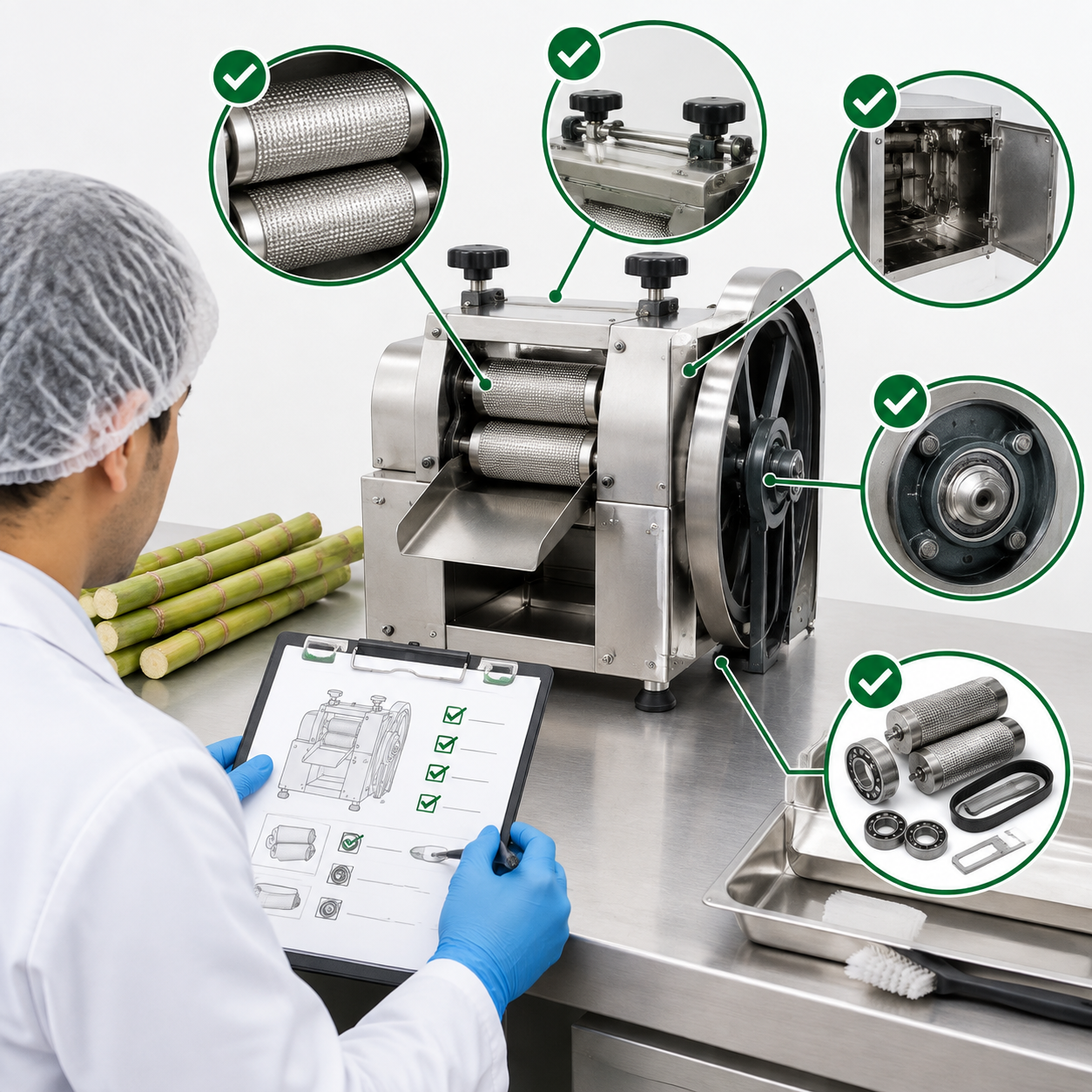
When assessing sugarcane juicer roller design, inspect the roller material and finish, gripping profile, roller alignment, clearance consistency, food-contact cleaning access, bearing protection, drive connection, and replacement-part availability. These points affect how steadily cane feeds, how easily residue can be removed, and how practical the machine will be to maintain in daily commercial service.
A buyer should not judge the roller system only by looking through the feed opening or by asking for a general statement about extraction. Ask the supplier for clear photos or video of the roller area with safe access panels open, the parts diagram, cleaning instructions, and the recommended inspection or replacement procedure. Confirm the configuration against the actual machine being quoted, as roller arrangements and access methods can vary by model.
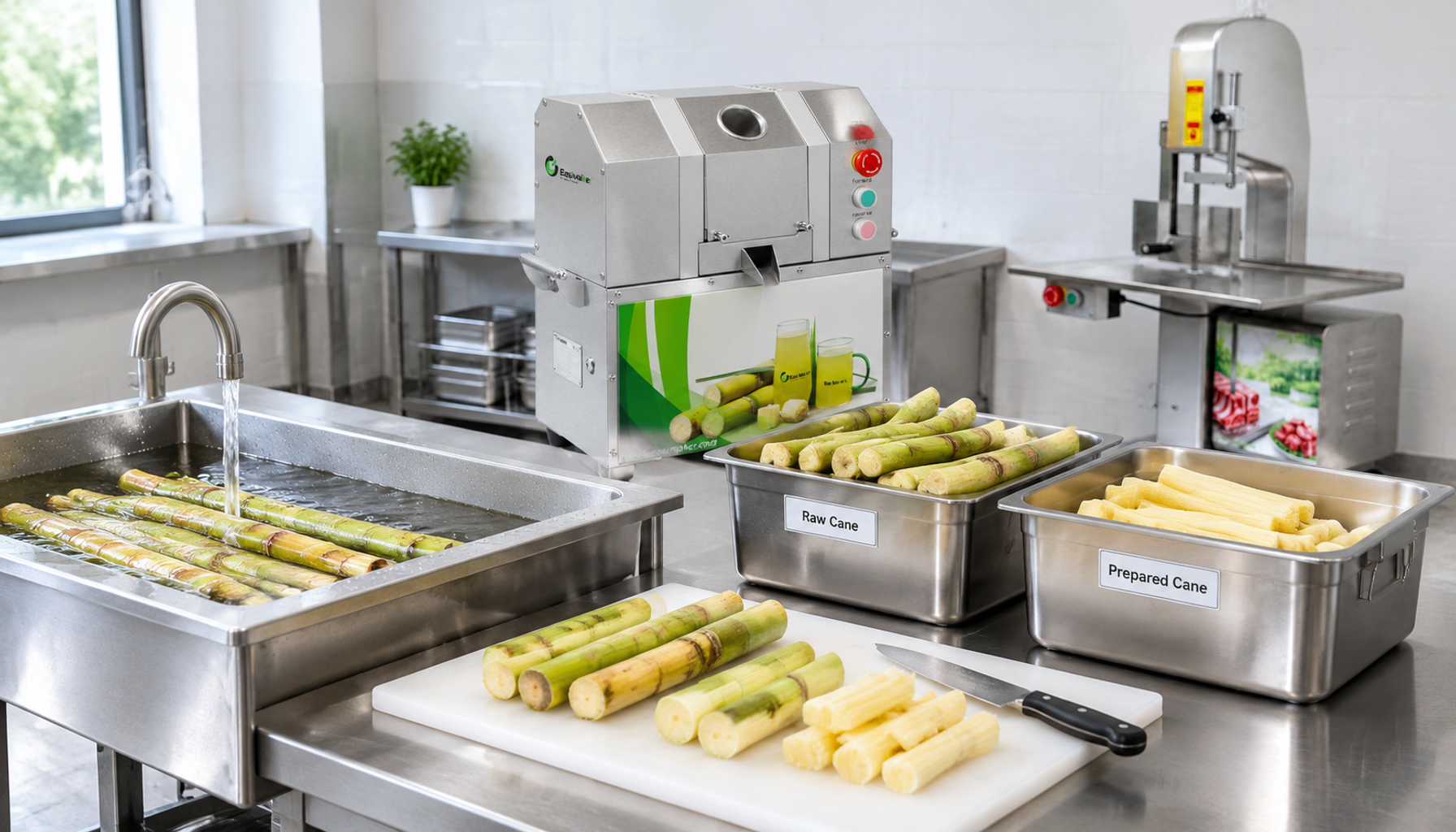
Rollers are only one part of a workable juice line. Cane receiving, washing, trimming, cutting, juice handling, and cleaning procedures should be planned together. Review a practical shop cane-preparation workflow before finalising the feed method and machine location.
What Rollers Do in a Sugarcane Juicer
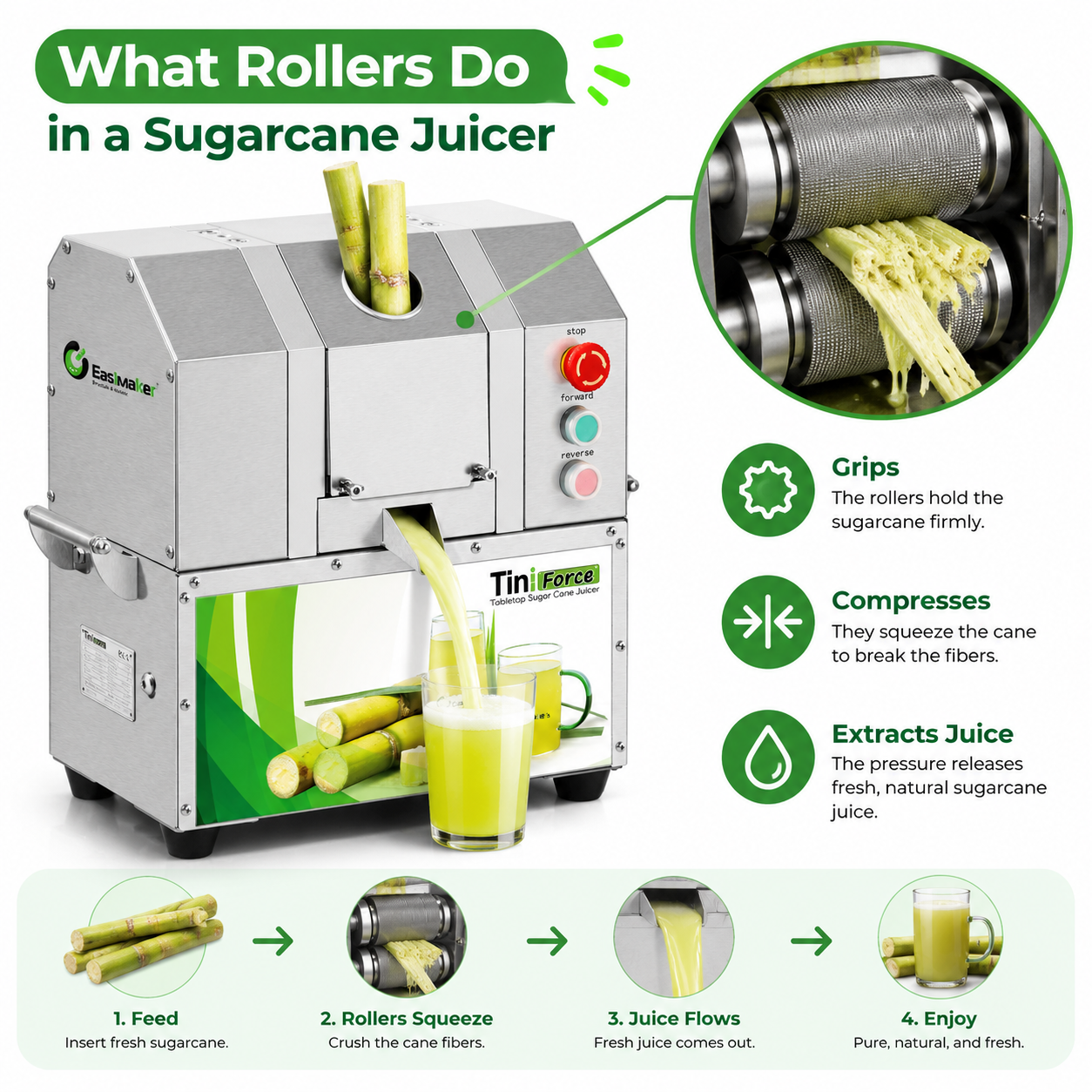
Sugarcane juice extractor rollers draw prepared cane through a controlled compression path. Their job is to grip the cane without uncontrolled slipping, apply compression through the roller gap, move the cane through the machine, and direct expressed juice toward the collection and drainage path. The fibrous residue, often called bagasse, leaves through the designated discharge route.
Commercial machines may use different roller counts, diameters, profiles, and drive layouts. A higher roller count is not automatically better, and a deeply textured surface is not automatically preferable. The suitable design depends on cane condition, operator workflow, intended service volume, cleaning requirements, and the manufacturer’s complete machine design.
Roller performance also depends on the condition of the cane. Dirty, poorly trimmed, unusually hard, or irregular pieces can add contamination, create inconsistent feeding, and increase residue around the machine. For this reason, buyers should specify how their team will wash, peel or trim where appropriate, and size cane before juicing.
Seven Roller Design Points to Examine
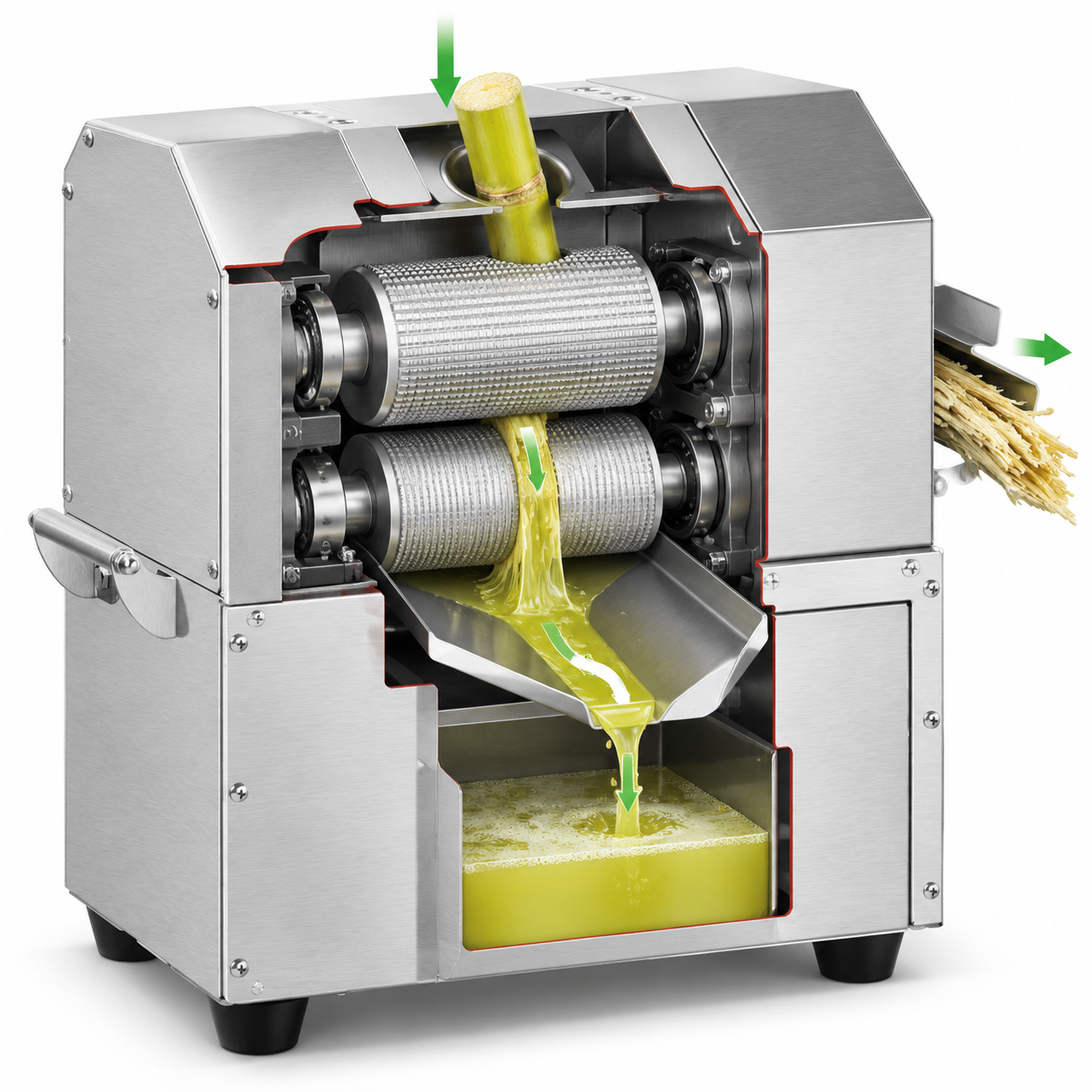
1. Food-contact material and surface condition
Ask which roller surfaces contact cane and juice, and request the material specification where available. The key practical concern is a smooth, intact, cleanable surface with no obvious corrosion, peeling coating, cracks, or difficult-to-clean damage. If a roller has a patterned grip surface, its geometry should still allow practical removal of fibrous residue during the documented cleaning process.
2. Roller profile and grip
Rollers may use smooth, grooved, serrated, or otherwise formed surfaces. The profile must grip cane predictably while allowing the operator to feed material at the intended pace. Inspect for uniform machining, even patterning, and no sharp burrs or visibly damaged edges. Avoid assuming that a more aggressive profile will always improve results; it can also influence cleaning effort and how different cane diameters feed.
3. Alignment and parallelism
Roller axes should appear parallel and the working gap should look consistent across the accessible roller width. Misalignment can contribute to uneven wear, irregular feed, excess vibration, or one-sided loading. During a demonstration, listen for abnormal scraping or repeated knocking and observe whether prepared cane enters straight rather than pulling strongly to one side.
4. Gap control and adjustment method
Some designs use fixed geometry; others may have service adjustments. Buyers should ask whether roller clearance is adjustable, who is authorised to make the adjustment, what tools are required, and how the setting is verified. A poorly understood adjustment point can create avoidable maintenance problems. Do not alter the roller gap without the manufacturer’s instructions.
5. Bearings, seals, and moisture protection
Rollers operate under repeated load in a wet, fibrous environment. Examine how bearings are located and protected from juice, wash water, and cane fibres. Ask whether seals, bearing housings, or related components are accessible for inspection and whether lubrication is required. Follow the supplier’s documented lubrication guidance only; using an unsuitable lubricant near food-contact areas is not acceptable.
6. Drive-side connection
Ask how roller torque is transferred: for example, through gears, shafts, couplings, or another enclosed drive arrangement. The buyer does not need to dismantle the machine at inspection, but should understand which service points are accessible, what guards must remain in place during operation, and what signs could indicate a drive issue.
7. Cleaning access and safe enclosure
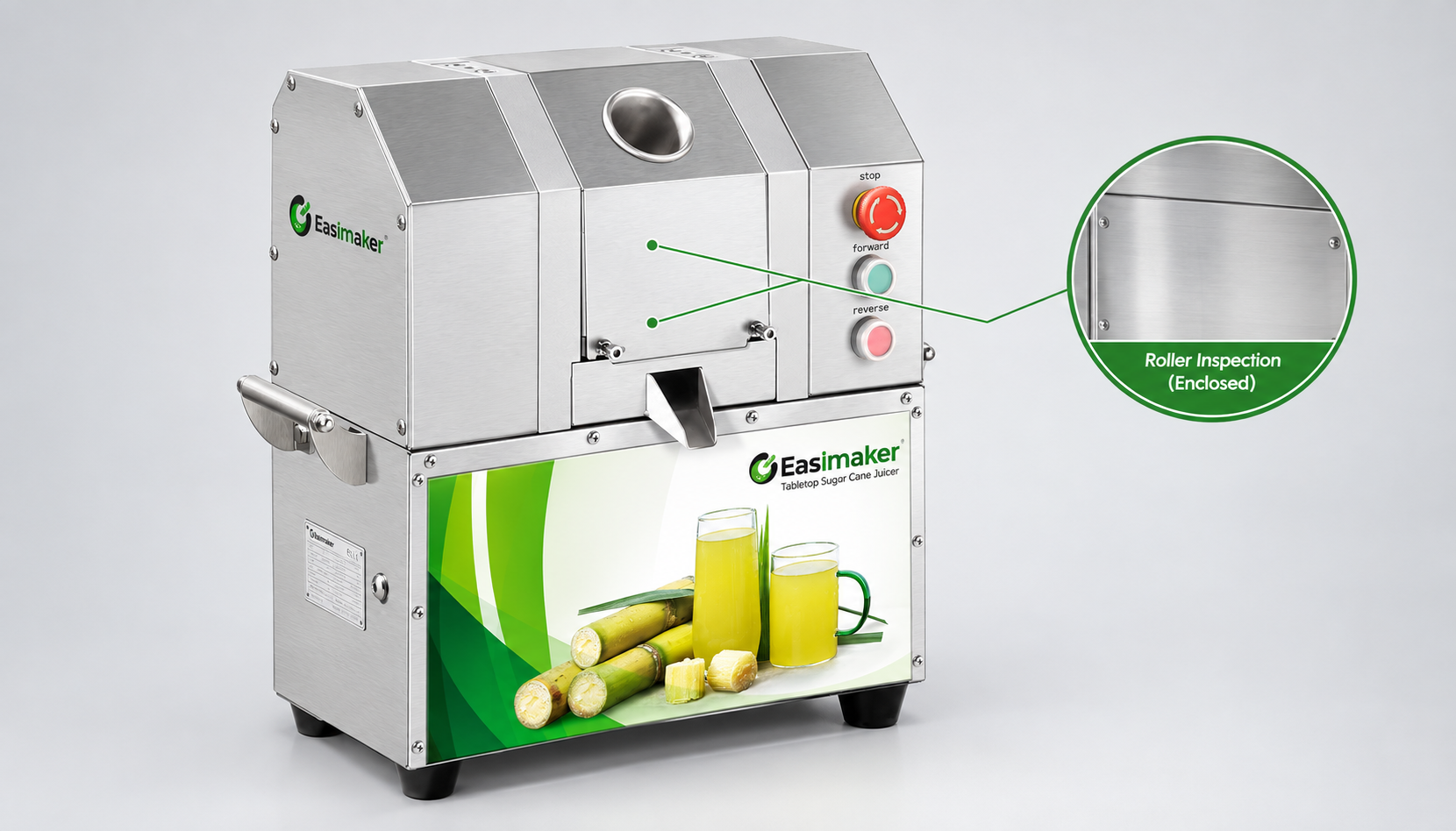
A practical commercial design balances access with guarding. Operators need a documented way to remove accessible cane residue and clean food-contact areas after isolation from power, while the roller nip points and drive components must be guarded in normal use. Inspect the access-panel arrangement, drainage areas, fasteners, and reassembly steps. A simple-looking exterior is not enough if the internal cleaning route is unclear.
Roller Design Comparison: Questions That Matter More Than a Single Feature
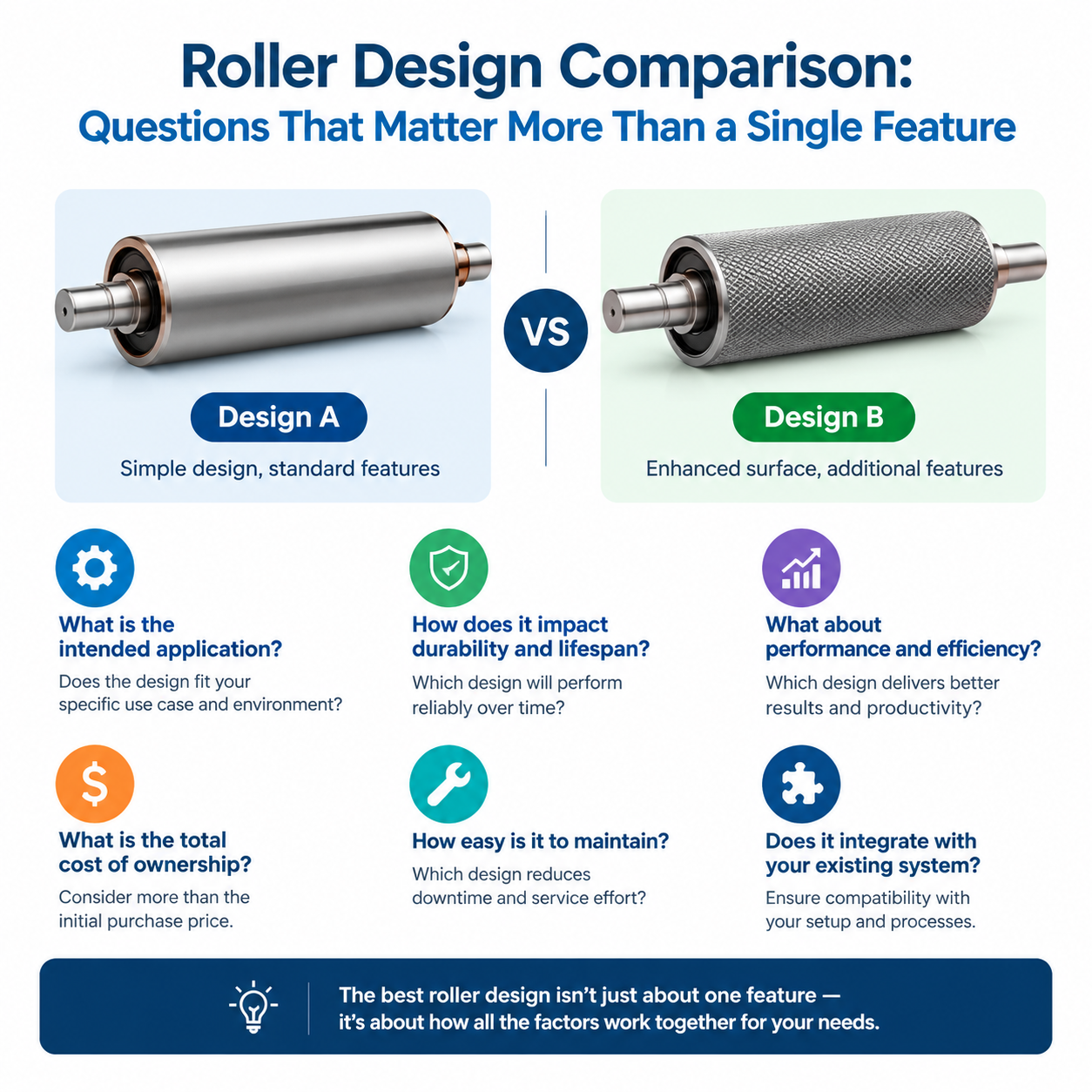
The table below compares common design considerations rather than declaring one configuration universally superior. Buyers should use it to structure supplier discussions and inspection records.
| Design consideration | What to inspect | Potential operational implication | Question for the supplier |
|---|---|---|---|
| Surface profile | Uniform grooves, texture, or smooth finish; no burrs or damage | Influences grip, feed behaviour, and cleaning effort | How is this roller surface cleaned and inspected? |
| Roller spacing | Consistent visible gap and specified adjustment method, if applicable | Can affect loading consistency and wear pattern | Is the gap fixed or service-adjustable, and by whom? |
| Roller arrangement | Actual roller count and cane path on the quoted machine | Influences machine layout and processing sequence | Can you provide a roller-path drawing or demonstration video? |
| Bearings and seals | Protected location, access points, service instructions | Relevant to reliability in wet, fibrous conditions | What routine inspection is required for these components? |
| Access and guards | Cleaning doors, fasteners, interlocks if fitted, and guard coverage | Influences sanitation time and operator safety procedures | Which parts can be cleaned by the operator after power isolation? |
| Replacement components | Part numbers, lead-time process, and service documentation | Supports planned maintenance and repair decisions | Which roller-related parts are normally stocked or supplied? |
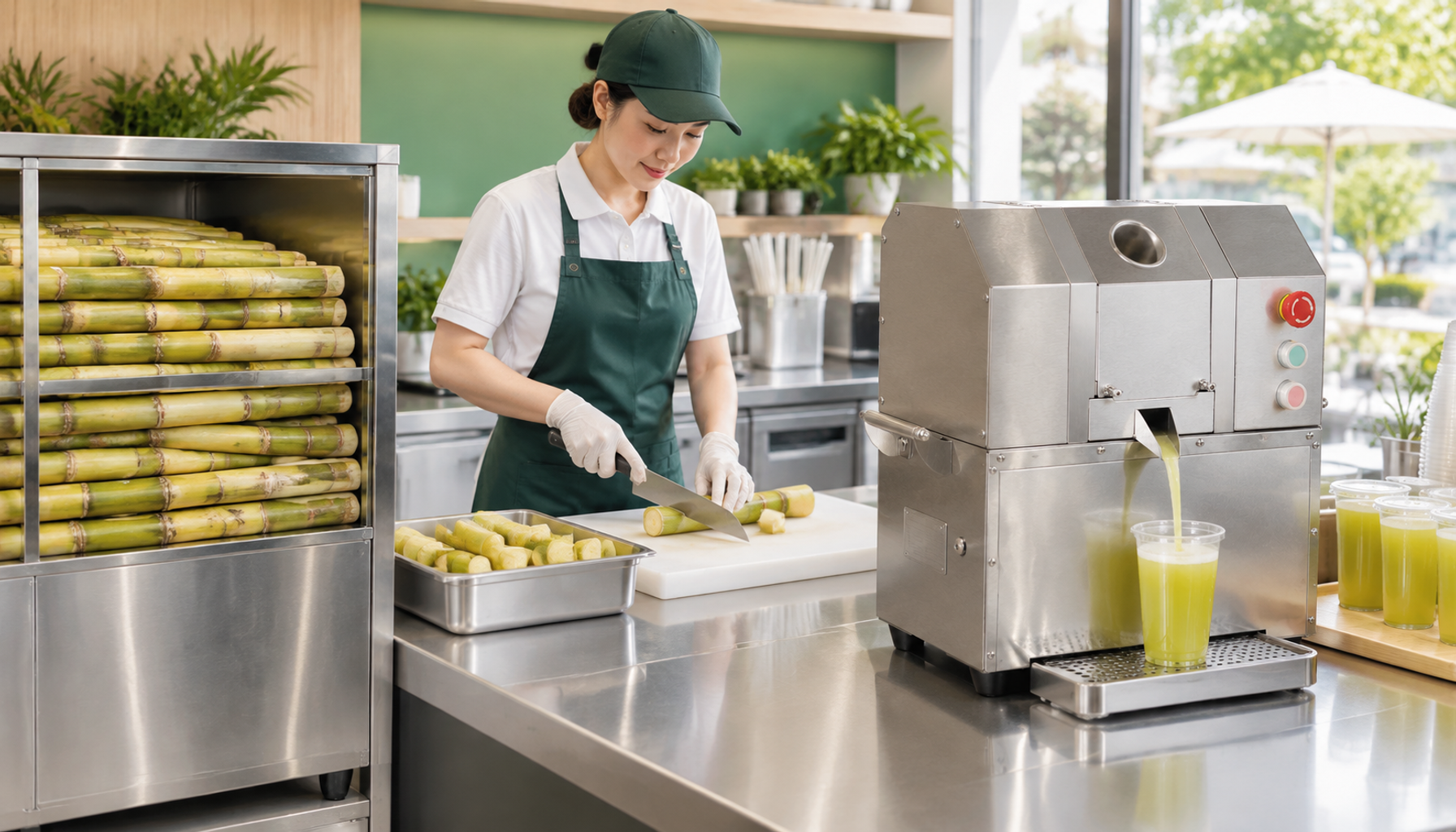
For a front-fed enclosed format, review the physical cane entry, front juice outlet, and rear bagasse path as a complete workflow. The street-vendor sugarcane machine setup guide can help buyers consider counter clearance, operator position, and waste handling around the equipment.
How to Inspect a Machine Before Purchase
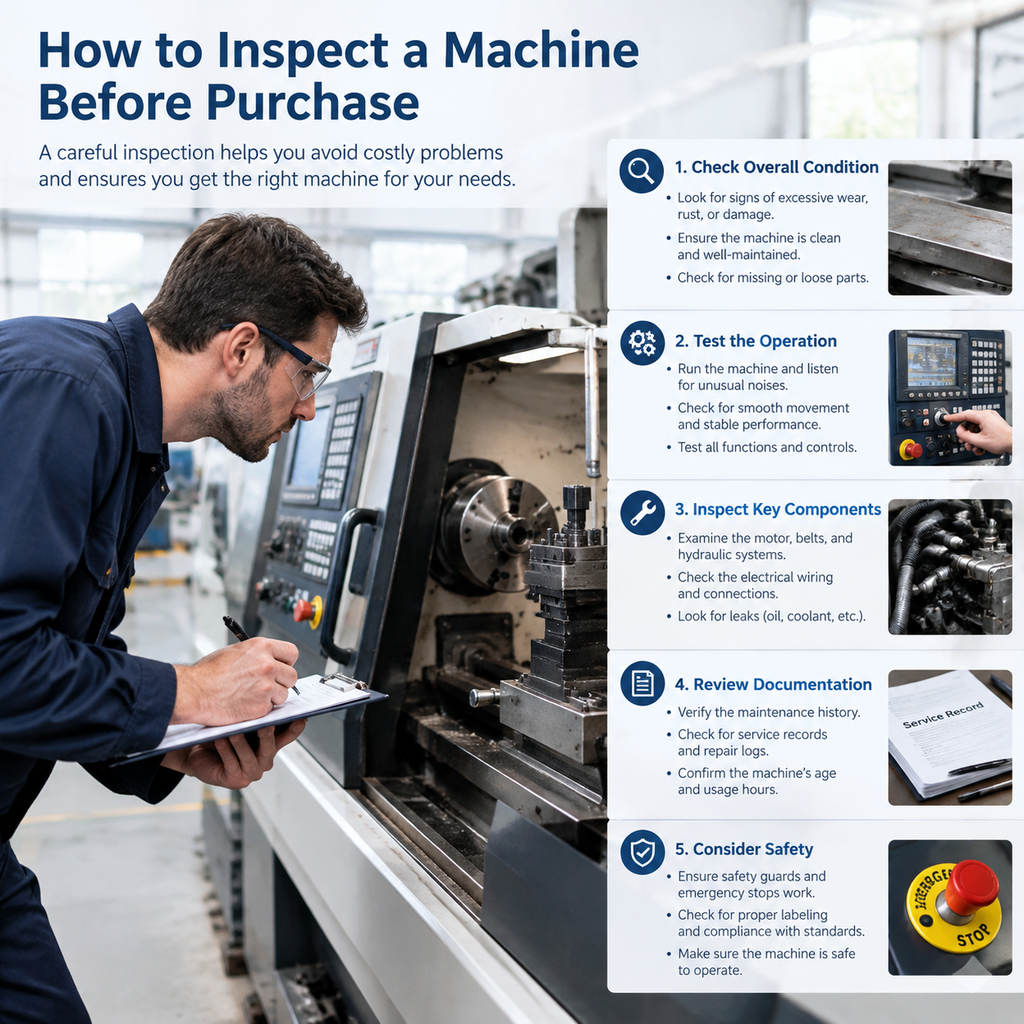
Use a repeatable inspection process so that roller design is evaluated on evidence rather than marketing language.
- Confirm the exact model and configuration. Match the quotation, photos, electrical version, and parts list. Do not assume that images of another version show the same roller assembly.
- Request roller-area documentation. Ask for high-resolution images, a video of safe access for cleaning, and an exploded diagram or parts list where available.
- Review the cane path. Identify feed entry, roller compression zone, juice drainage route, and bagasse exit. Check that this path fits your counter or production layout.
- Observe a controlled demonstration. Where practical, see prepared cane fed according to the operating instructions. Watch for steady feeding, unusual noise, leakage from unintended areas, or accumulation that cannot be readily cleaned.
- Check accessible workmanship. Examine fasteners, panel fit, guards, drainage edges, and the condition of accessible roller surfaces. A visual inspection cannot prove internal durability, but it can identify obvious concerns.
- Verify service boundaries. Clarify which tasks are operator cleaning, which are routine maintenance, and which require trained service personnel.
- Document spare-part identification. Obtain part names or numbers for roller-related service items before placing the order.
Importers should also verify power compatibility, shipping terms, documentation, and local requirements. See the U.S. importer checklist for sugarcane machines for a wider pre-purchase review.
Operation and Maintenance Considerations for Sugarcane Machine Rollers
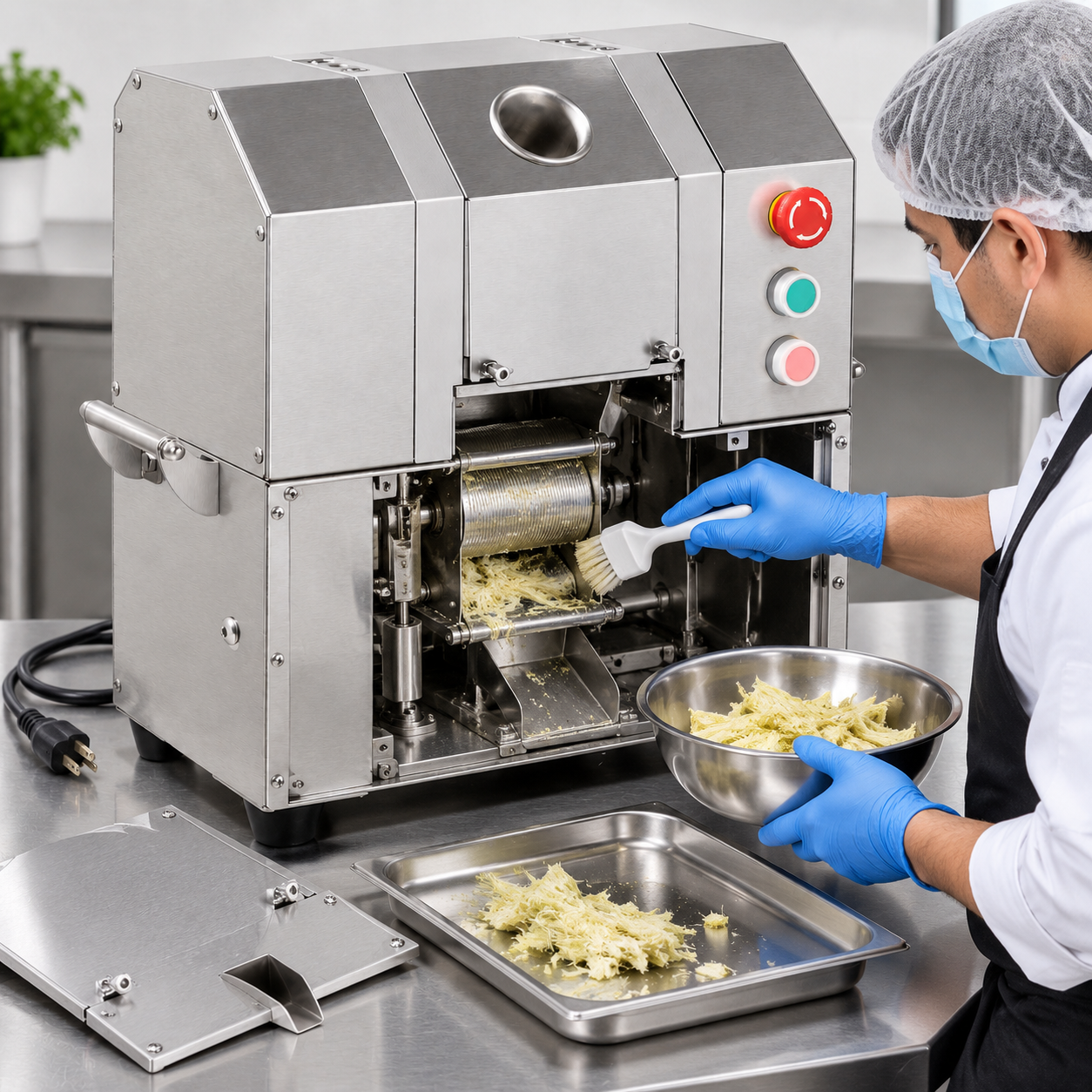
Even a well-designed roller assembly needs disciplined operation. Train staff to use cane within the machine’s stated preparation and feed guidance. Do not force oversized, heavily contaminated, or unsuitable material through the feed opening. Never reach into the feed path or attempt to clear fibres while the machine is energised.
At the end of service, isolate the power supply before removing accessible residue and cleaning the machine according to its manual. Inspect the roller area for trapped fibres, unusual surface wear, loose hardware, leaks, or changes in sound and vibration. Record concerns early so that a minor issue can be assessed before it affects service.
Cleaning is not the same as mechanical adjustment. Daily sanitation tasks should follow the operator instructions, while roller removal, bearing work, clearance changes, and drive repairs should follow approved service procedures. A documented daily sugarcane juicer cleaning SOP helps separate routine hygiene work from technical maintenance.
For planning, assign daily cleaning and visual checks, then schedule periodic inspection points based on the manufacturer’s documentation and actual use conditions. The commercial preventive-maintenance schedule provides a useful framework for recording checks and assigning responsibility.
Spare Parts and Supplier Support: What to Confirm
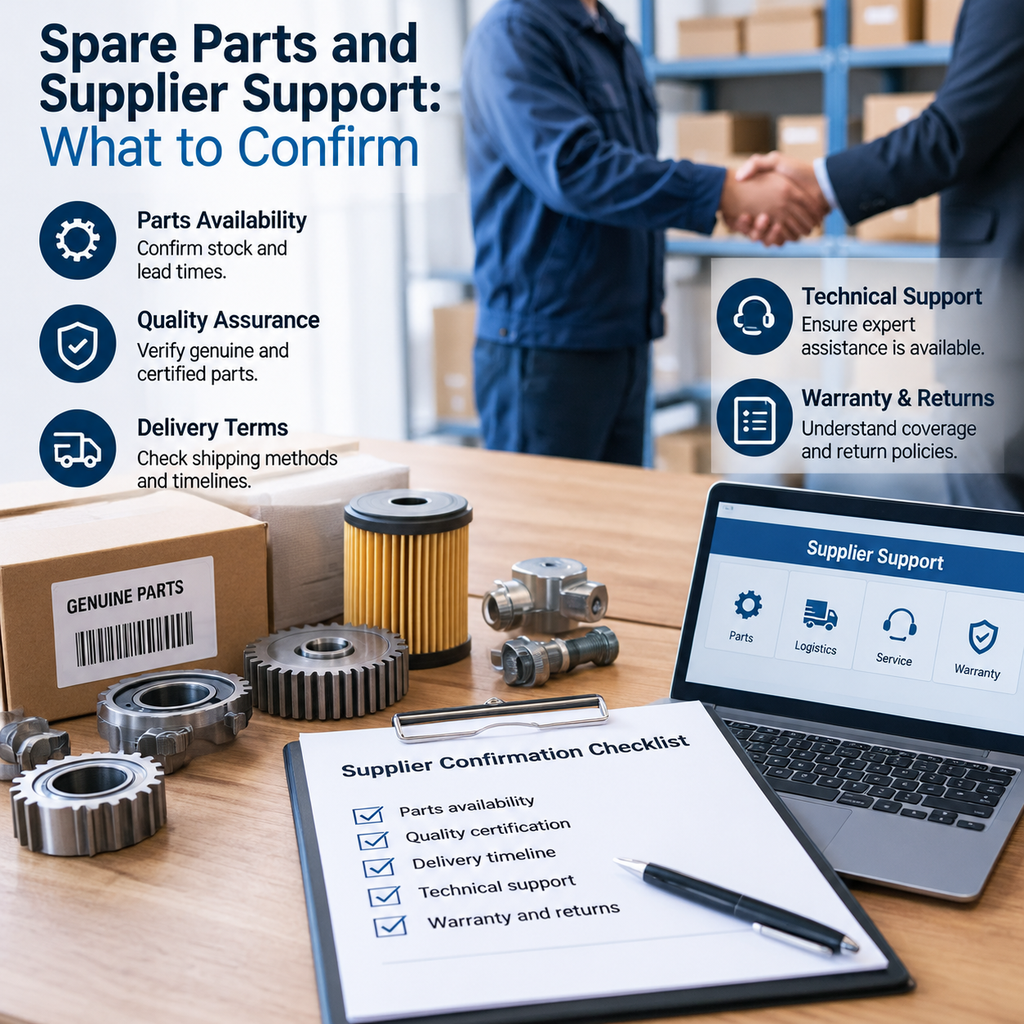
Commercial sugarcane machine parts should be considered before the machine arrives, not only when a repair is needed. Ask the supplier to identify the roller-related components that may require inspection or replacement over the equipment life, such as rollers, shafts, bearings, seals, gears, couplings, fasteners, guards, and access-panel hardware. The exact parts will depend on the model.
Request a machine-specific manual, exploded view or parts list where supplied, serial-number identification method, warranty terms, and the process for technical support. It is useful to know whether the supplier needs photos, video, measurements, or a serial number to diagnose a concern. Clear records can reduce delay when a machine is in daily service.
For distributors, private-label buyers, or businesses that need a tailored configuration, discuss documentation, service expectations, and component continuity at the project stage. The purpose is not simply to obtain a spare-parts list; it is to establish a realistic maintenance path for the market where the equipment will operate.
Buyer Summary

The best sugarcane juicer roller design for a commercial buyer is not defined by one visible feature. It is a complete, serviceable system: rollers that are suitably finished and aligned, a controlled cane path, protected working components, safe guards, practical cleaning access, clear maintenance instructions, and identifiable replacement parts.
During supplier comparison, ask the same questions of every quoted machine. Request evidence of the actual roller assembly, not a generic description. Then assess whether the design fits your cane preparation method, operator skill level, cleaning routine, counter layout, and support plan. This approach gives purchasing teams a more useful basis for selection than focusing on roller count or appearance alone.
FAQ
What are sugarcane juicer rollers made of?
Materials vary by machine design. Buyers should ask the supplier which roller surfaces contact cane and juice and request material information for the quoted model. In practice, inspect for an intact, corrosion-resistant, cleanable food-contact surface and follow the manufacturer’s cleaning instructions.
Should commercial sugarcane machine rollers be grooved?
Grooved or textured rollers can be used to support cane grip, but no single surface profile is right for every operation. Inspect whether the profile is uniform, free of burrs, practical to clean, and supported by the supplier’s operating and maintenance instructions.
Can an operator adjust sugarcane juicer roller clearance?
Only if the specific manufacturer documentation permits it. Some machines may use fixed roller geometry, while others may have service adjustments. Do not alter roller clearance without approved instructions, suitable tools, and appropriate technical competence.
How often should roller areas be checked?
Accessible residue and visible condition should be checked during the documented daily cleaning routine after power isolation. The interval for deeper mechanical inspection depends on the model, operating conditions, and manufacturer guidance. Keep inspection records and investigate changes in noise, vibration, feeding, or leakage promptly.
What roller-related spare parts should buyers ask about?
Ask about the availability and identification of rollers, shafts, bearings, seals, gears or couplings where applicable, fasteners, guards, and access-panel components. The relevant list varies by model, so request machine-specific documentation rather than relying on a generic list.
Discuss the Right Roller System for Your Commercial Workflow
Tell Easimaker about your cane preparation method, expected operating routine, market, and service requirements. Our team can help you review the appropriate commercial sugarcane juicer configuration and discuss OEM/ODM or distributor requirements where relevant.