Sugarcane Juice Shop Layout: How to Plan a Clean and Efficient Workstation

Table of Contents

A practical sugarcane juice shop layout separates raw cane, food preparation, juicing, service, cleaning, and waste handling. Plan the workflow before buying counters or equipment so staff can work cleanly, safely, and efficiently during busy periods.

The Best Layout Starts With a One-Way Workflow
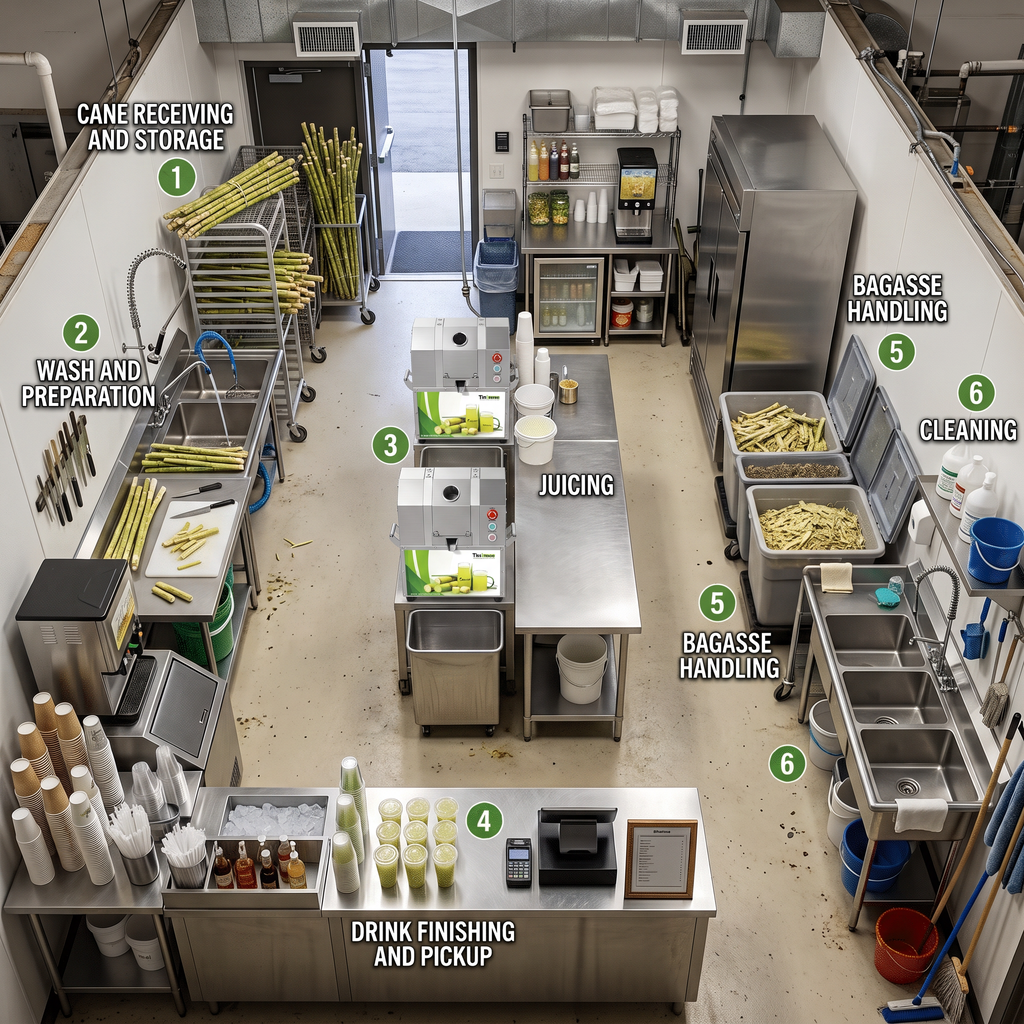
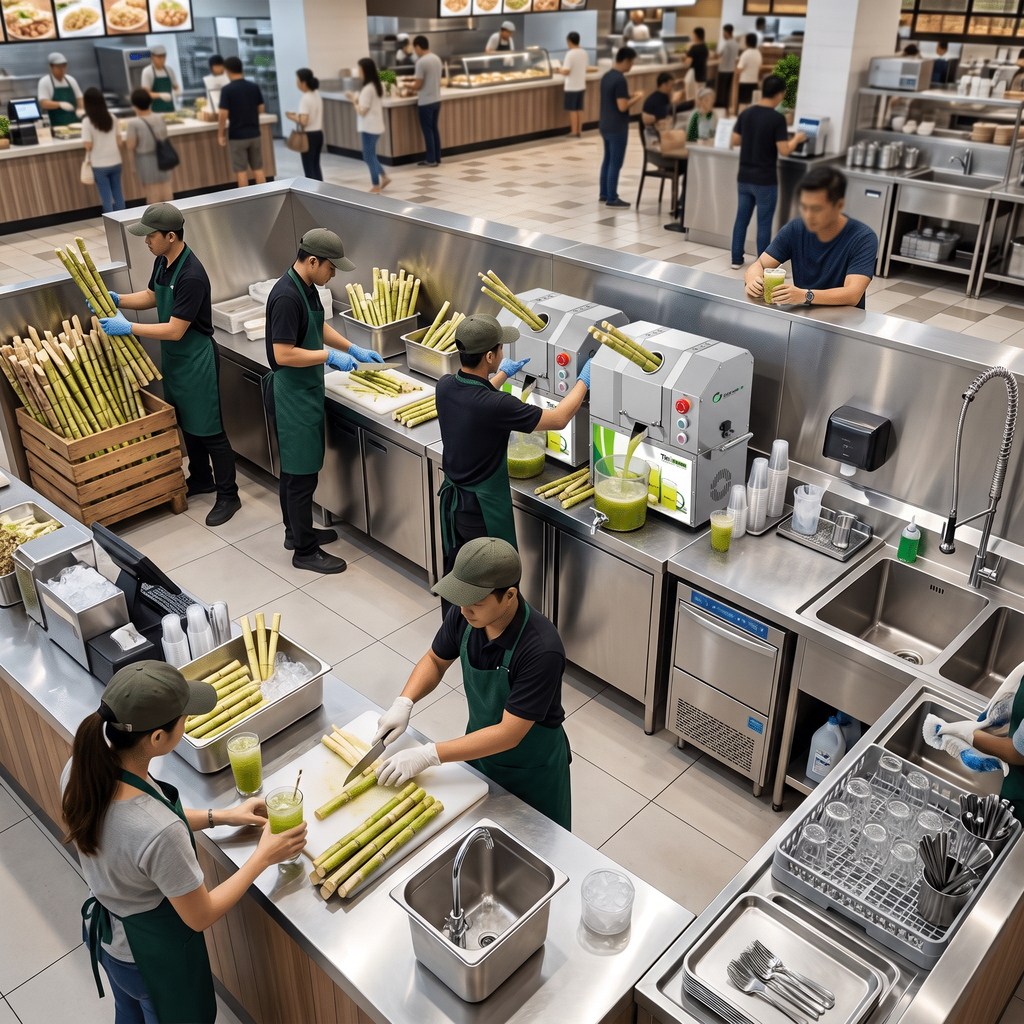
Overhead view of one-way workflow zones in a sugarcane juice shop

A practical sugarcane juice shop layout moves materials in one direction: receive and store whole cane, wash and prepare it, feed it into the juicer, collect and finish the drink, serve the customer, then remove waste and clean the work area. This prevents staff from carrying raw cane, used cleaning tools, or bagasse back through the serving line.

For most small commercial operations, the workstation should be organized around five linked areas: raw-cane storage, preparation, juicing, finishing and handoff, and cleaning or waste handling. The exact footprint varies by local food rules, service volume, equipment dimensions, and whether the shop prepares other drinks or food. The workflow principle does not change: keep clean work and customer-facing service separate from raw-material and waste activity.

Start with the journey of one cane stalk and one drink order. Mark each movement on a simple floor plan. If staff need to cross paths repeatedly, reach over the juicer, or walk through the customer queue to wash tools, adjust the plan before counters are installed.

Create Clear Work Zones
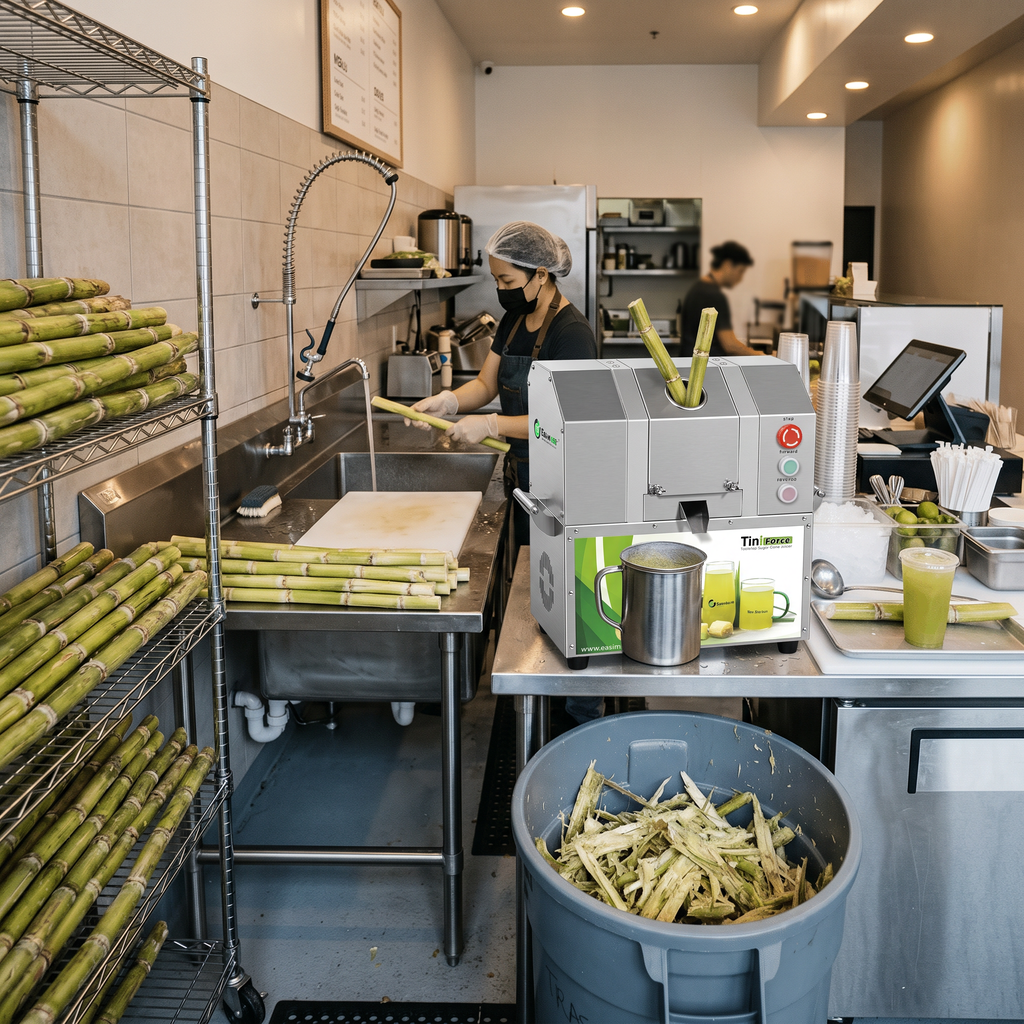
Separated storage, preparation, juicing, and waste zones in a sugarcane juice bar

A shop does not need a large floor area to have a disciplined workflow. It does need clearly assigned zones. Use counter edges, undercounter storage, splash barriers, labels, and staff habits to make the zones obvious.

1. Receiving and raw-cane storage

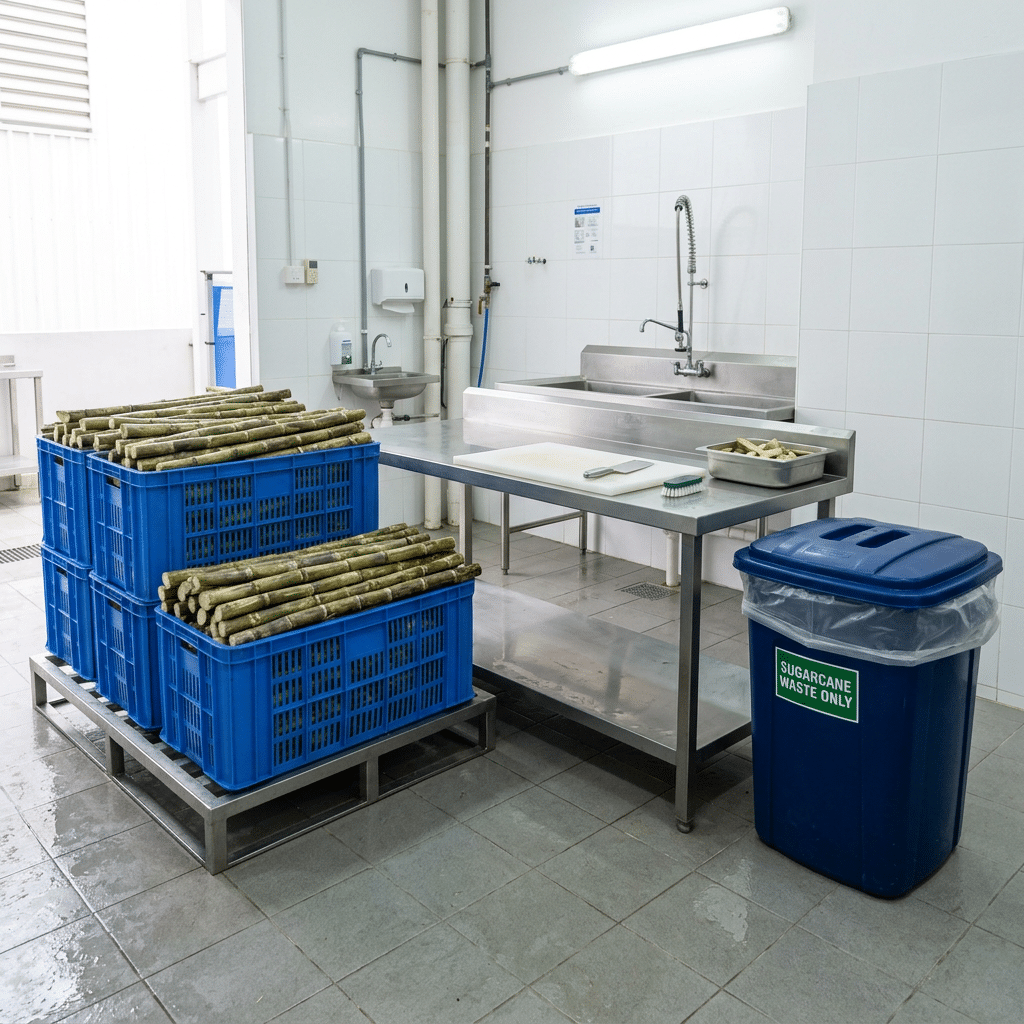
Put delivery receiving and cane storage away from the customer handoff point. Store cane off the floor on suitable racks or shelves, with enough access for stock rotation and cleaning around the storage area. Avoid placing bulk cane directly beside a handwashing sink, finished-drink counter, or open ingredient containers.

2. Washing and preparation

Provide a dedicated preparation surface near washing facilities. Staff need room to inspect cane, wash it according to the operation’s approved procedure, trim it where necessary, and stage a manageable quantity for juicing. Keep cutting tools, containers, and any trimming waste contained in this zone. The preparation surface should not become a general storage shelf during service.

3. Juicing and drink finishing

The juicer belongs between preparation and serving. Place cups, lids, ice, permitted flavor additions, strainers, and point-of-sale supplies within the finishing zone so the operator does not step away from the machine for every order. A short, clean route from juicer outlet to cup improves speed and reduces drips on adjacent counters.

4. Cleaning and waste

Bagasse collection, used utensils, cleaning chemicals, and mop equipment require their own controlled location. Do not let a bagasse bin block access to the juicer or become an improvised step in the production flow. For operations in a compact footprint, review practical approaches in this guide to integrating compact sugarcane machines into limited spaces.

Place the Sugarcane Juicer for Daily Service
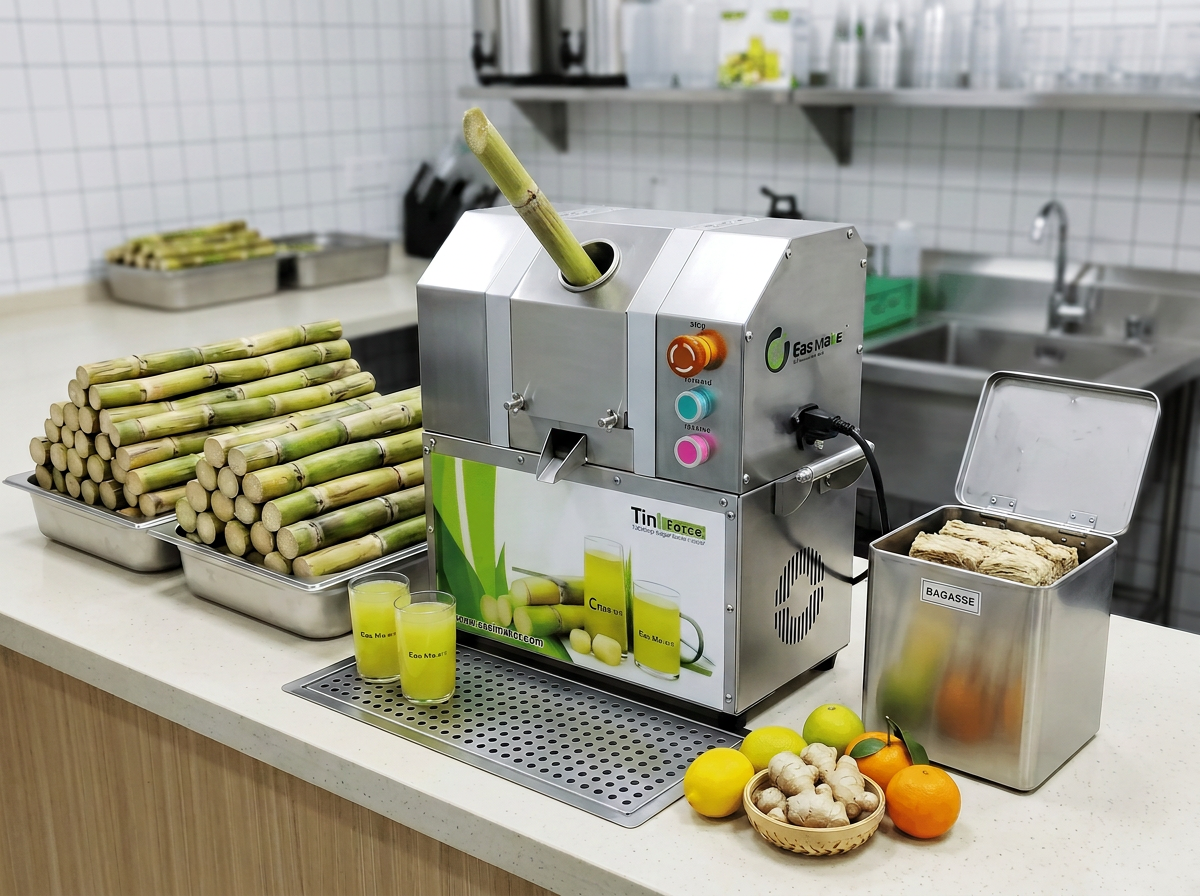
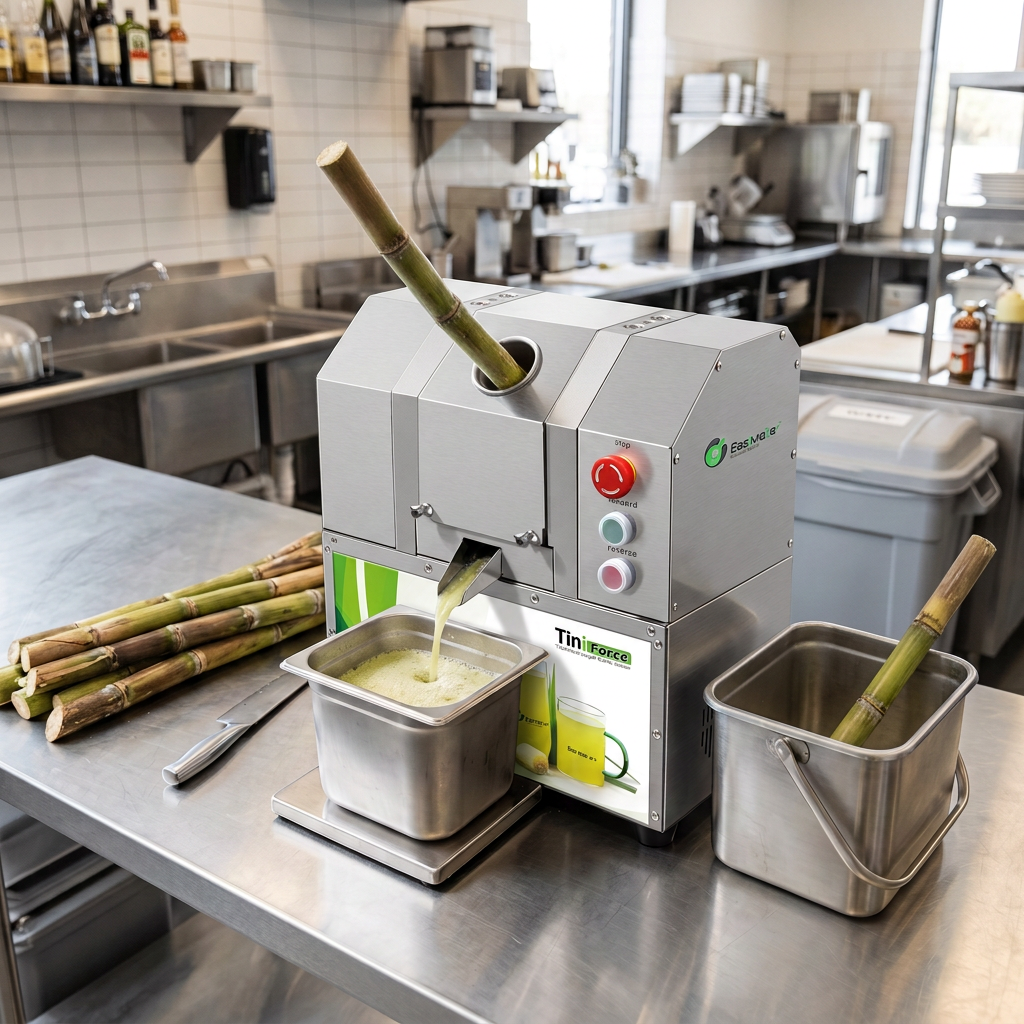
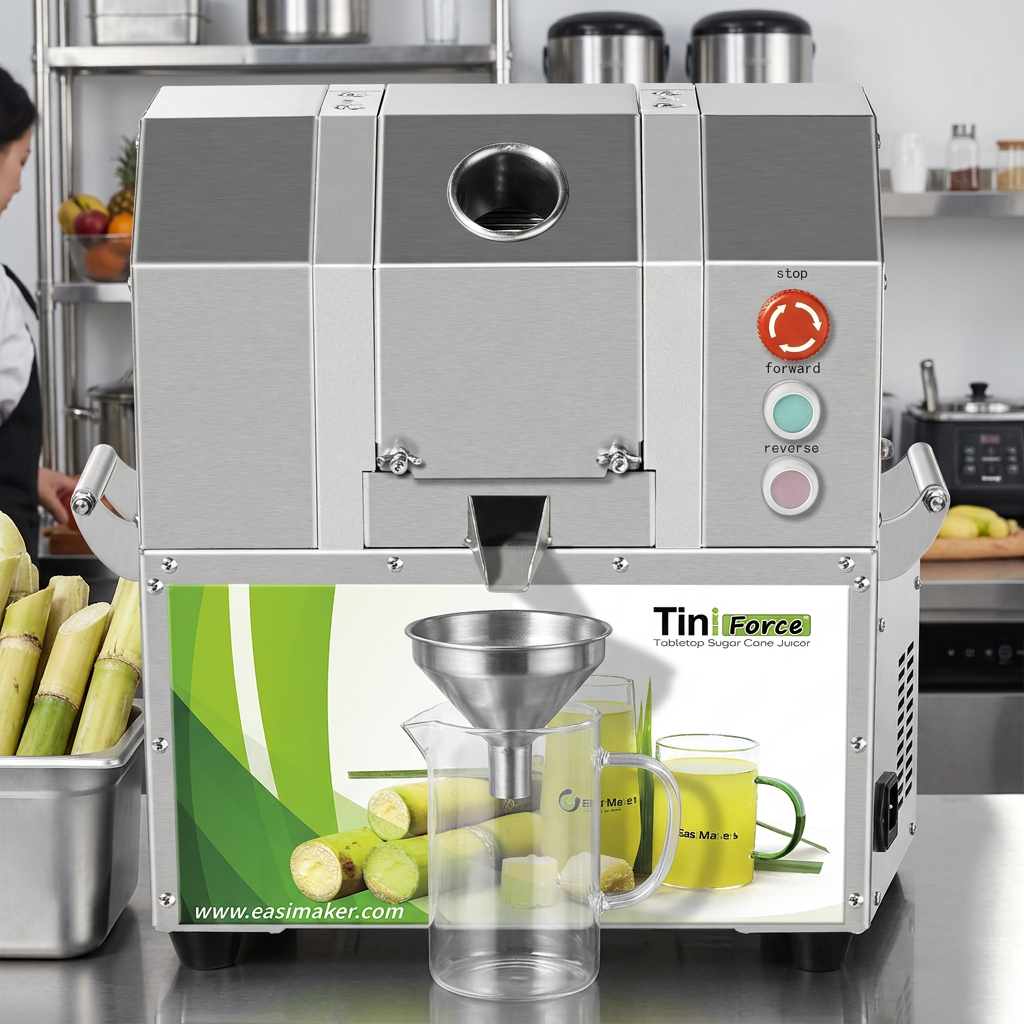
TiniForce S3 placed on a clean commercial counter with adequate workstation clearance

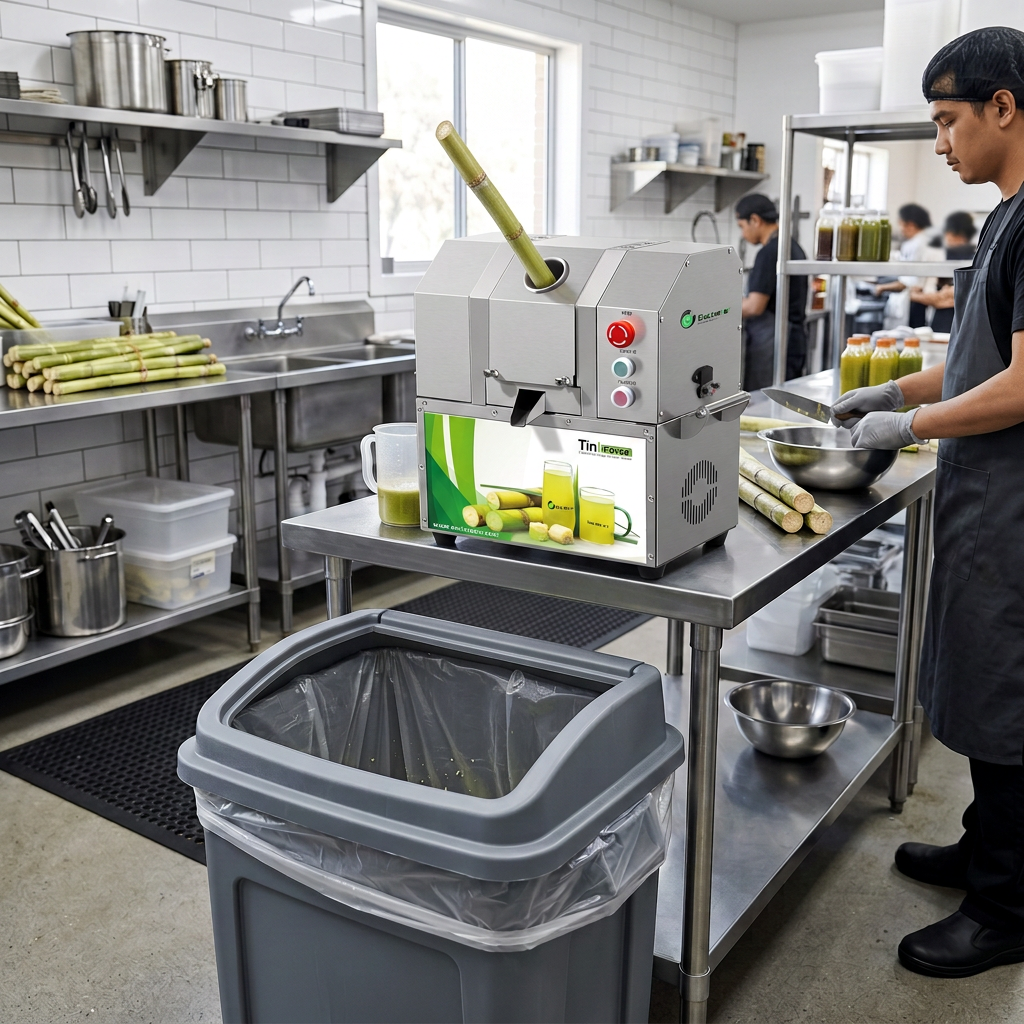
The commercial sugarcane juicer is the center of the workstation, but it should not be treated as an isolated display item. Its location determines operator movement, cleaning access, customer visibility, noise exposure, and where cane residue and bagasse are managed.

Choose a stable, level, cleanable counter or stand that is suitable for the machine’s installed weight and operating conditions. Confirm the machine’s actual dimensions, clearance needs, electrical requirements, access panels, and manufacturer instructions before finalizing millwork. Leave sufficient space for staff to feed cane in a controlled manner, remove juice containers as intended, access collection areas, and clean around the equipment at the end of service.

Do not wedge the juicer tightly between fixed cabinets merely to save a few centimetres. Restricted access can make routine cleaning, inspection, and servicing harder. It can also force awkward staff posture during repeated feeding and reduce visibility around the work area.

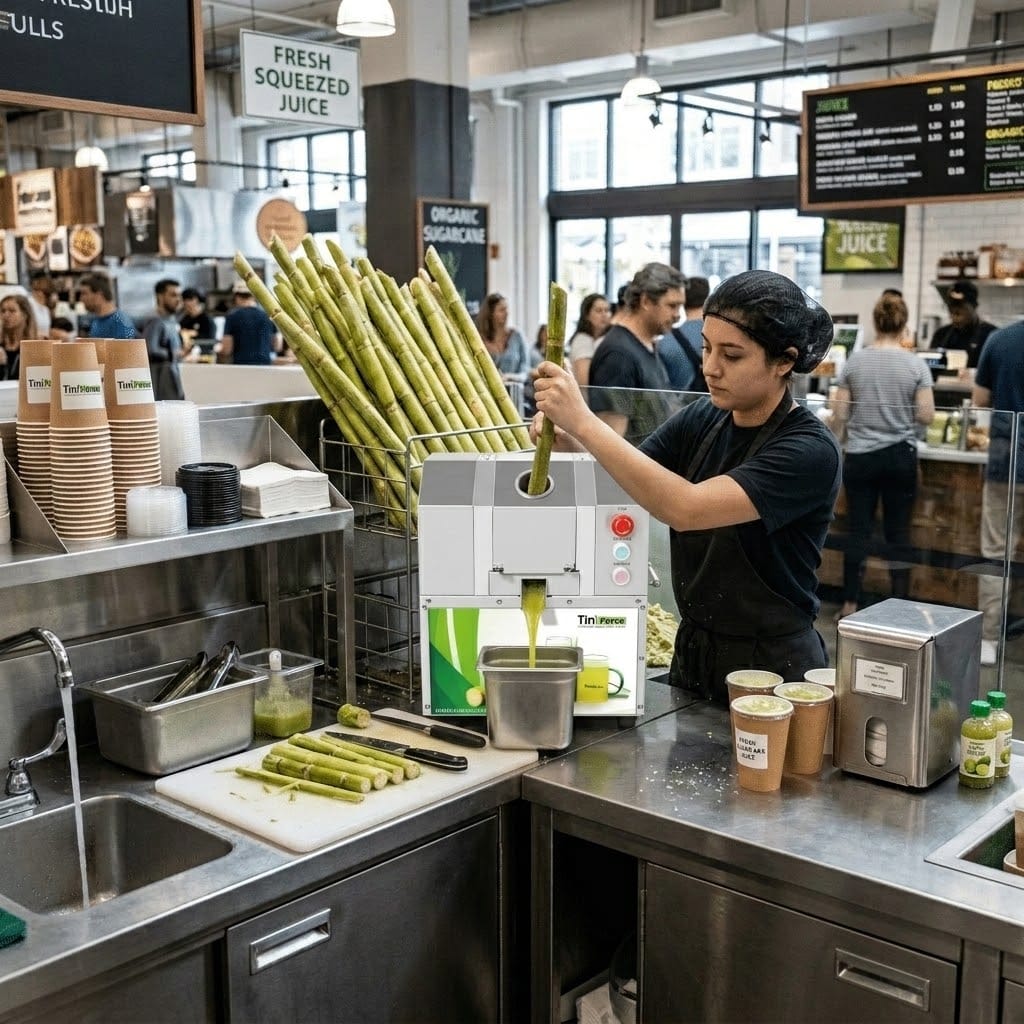
Where customers can see the juicing process, a front-facing machine position can support an open service experience. The operator still needs a protected back-of-counter route to prepared cane, cups, and cleaning facilities. Consider sound, heat, vibration, and staff comfort alongside visual presentation; this resource on creating a comfortable workspace around sugarcane machines is useful during site planning.

A compact machine such as the TiniForce S3 may suit a counter-based workflow where its confirmed installation requirements and service clearances are met. Select the machine and final location from verified product documentation rather than assuming that all commercial juicers share the same footprint or connection needs.

Plan Counters, Sinks, and Storage Around the Work
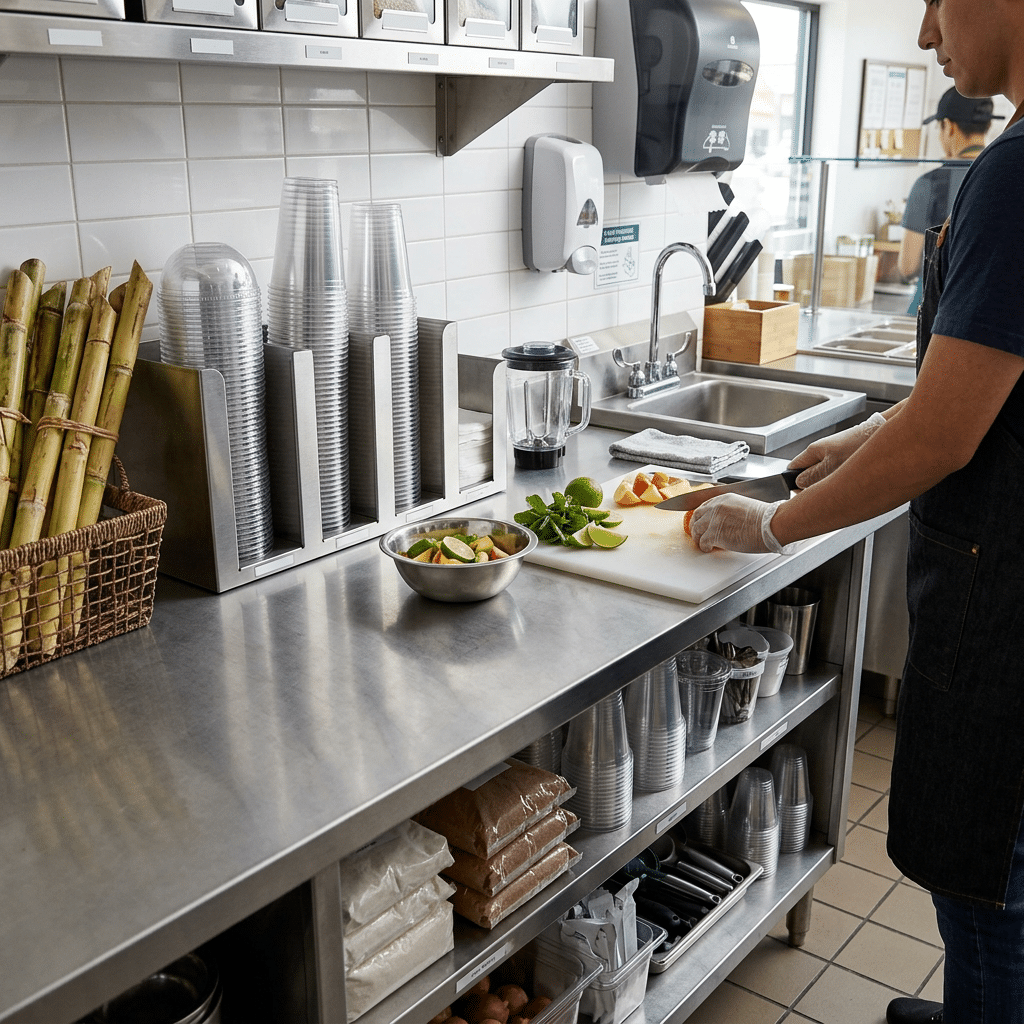
Organized counters and storage for a commercial sugarcane juice workstation

Counter planning should follow the actual order of work. A visually neat counter that forces staff to turn, carry wet cane across the service area, or search for supplies during every order is not efficient.

  • Preparation counter: Locate it close to the cane washing point and the juicer feed side. Keep only the tools and containers needed for active preparation on top.
  • Juicing counter: Reserve enough uninterrupted surface for the machine, its intended collection containers, and safe operator movement. Select smooth, durable, easy-to-clean finishes suitable for the local foodservice environment.
  • Finishing counter: Position cups, lids, ice, and permitted additions so the operator can complete an order without crossing into the raw-cane area.
  • Handwashing: Staff should be able to wash hands promptly without passing through a customer queue or leaving the production area for an extended distance.
  • Washing-up: Keep utensil washing and sanitation procedures separate from active drink assembly where local regulations and the operation’s procedures require it.
  • Dry and cold storage: Use undercounter or nearby storage for packaging and approved ingredients. Keep reserve stock accessible but out of the immediate splash and spill zone.

Design storage for peak service, not only for a quiet morning. The operator should be able to replenish cups, lids, and prepared cane in batches without stacking cartons in walkways or placing supplies on the floor. Make sure doors, drawers, and waste containers can open without conflicting with another staff member’s standing position.

Design for Fast, Controlled Service

Service speed comes from fewer unnecessary motions, clear responsibilities, and reliable replenishment. It does not come from crowding more equipment onto a counter.

In a single-operator shop, arrange the workstation in a shallow arc or straight line: prepared cane on the feed side, machine in the middle, drink finishing immediately beside the outlet, then customer handoff at the front. The operator should be able to take payment or acknowledge the next order without turning their back on an active preparation area for long periods.

In a two-person setup, divide the work intentionally. One person can prepare cane and operate the juicer while the other finishes drinks, manages orders, replenishes packaging, and handles customer handoff. This division works only when each person has defined space. Avoid placing the card terminal, cup storage, or topping station directly in the juicer operator’s movement path.

Keep the customer queue away from staff routes, cleaning access, and emergency exits. A visible menu and pickup point reduce repeated questions at the production counter. Where presentation matters, use a clean sightline to the juicing activity without giving customers access to raw preparation tools, food-contact surfaces, or electrical equipment. More retail presentation ideas are covered in these visual merchandising tips for sugarcane juice bars.

Build Cleaning and Waste Handling Into the Layout
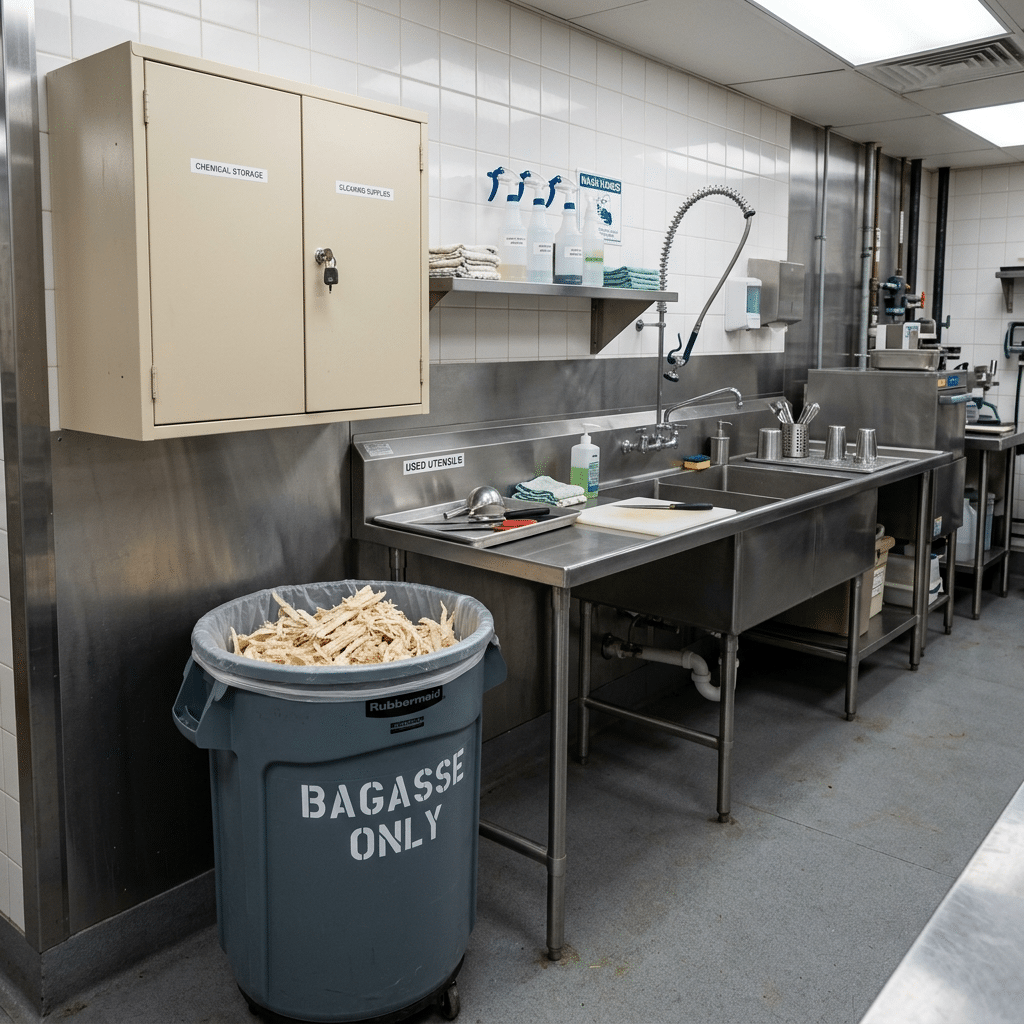
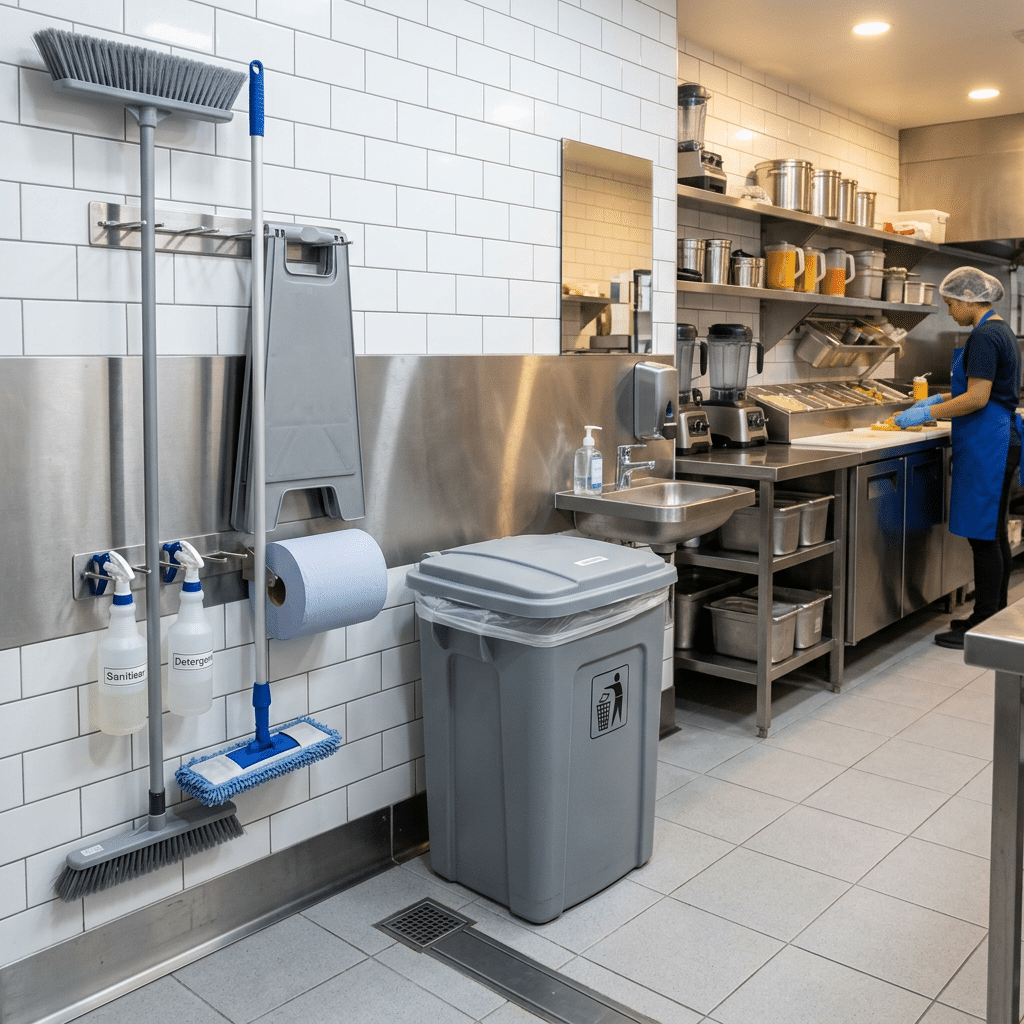
Separate cleaning and bagasse handling area in a sugarcane juice shop

Cleaning is a layout requirement, not an afterthought. A workstation should allow the team to clean food-contact areas and nearby surfaces without moving equipment through customer areas or improvising with unsuitable storage.

Locate waste handling close enough to the juicer for prompt bagasse removal, while keeping it out of the clean drink-finishing zone. Use a waste container and handling method appropriate to the operation’s volume, local requirements, and cleaning schedule. Do not allow bagasse to accumulate in loose piles near electrical equipment, under counters, or in customer walkways.

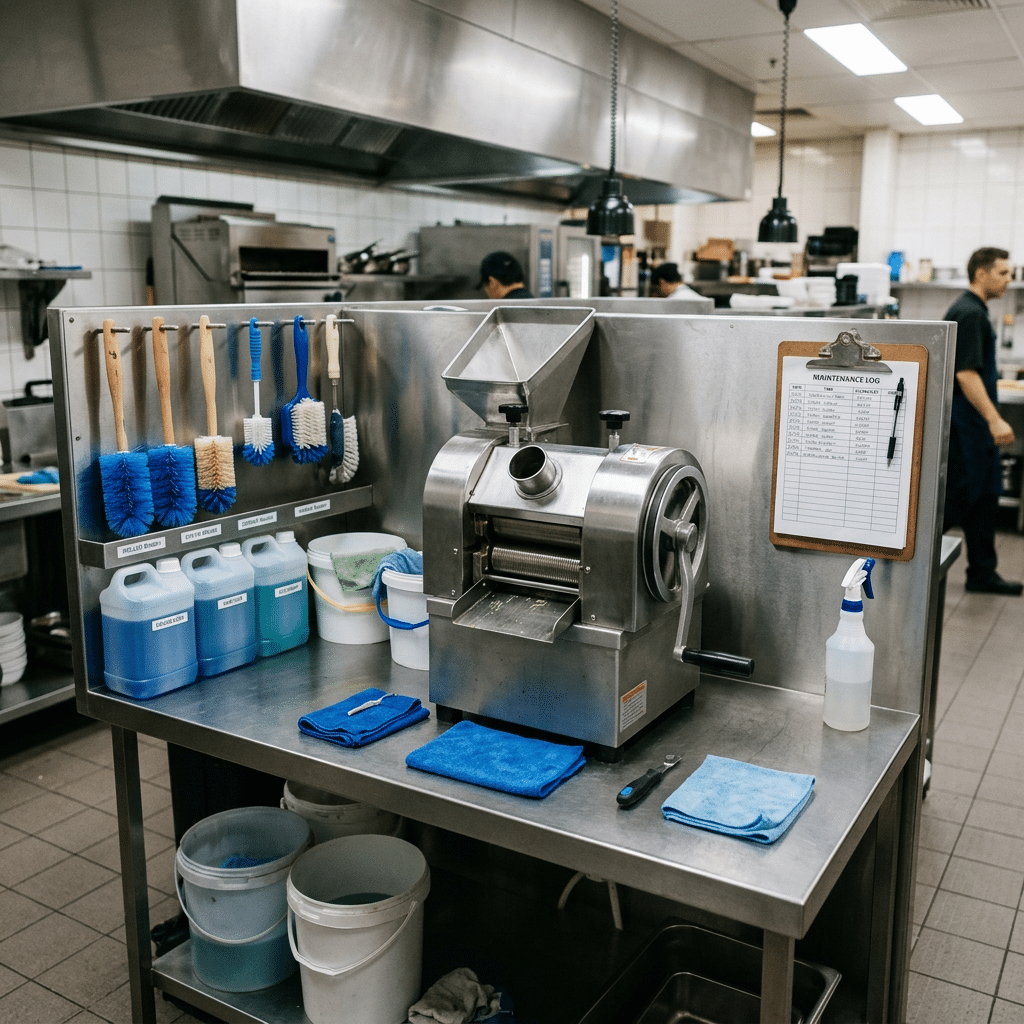
Provide defined places for clean utensils, used utensils, cleaning tools, and cleaning chemicals. Chemicals should be stored separately from ingredients, cups, and food-contact equipment. The layout should also allow staff to wipe spills promptly without walking across the production flow carrying wet cloths or waste.

At closing, staff need unobstructed access to the machine exterior, collection areas, counter edges, floors, and sink facilities. Establish cleaning procedures based on the machine manual, local food safety requirements, and approved cleaning products. Review a daily sugarcane juice machine safety checklist alongside the layout so routine inspection and cleaning tasks are practical to complete.

Check Utilities, Ventilation, and Site Conditions

Confirm site conditions before committing to a machine location or custom counter. The required electrical supply, outlet position, water access, drainage, ventilation, floor finish, lighting, and local compliance obligations depend on the selected equipment and the premises.

Electrical planning should use the voltage, frequency, plug type, circuit requirements, and protection specified for the exact machine supplied to your market. Do not rely on a generic assumption based on another juicer model. Keep outlets and cables arranged to prevent trip hazards, water exposure, pinching, or obstruction of cleaning access.

Water and drainage needs should support the shop’s approved cane washing, handwashing, utensil cleaning, and floor-cleaning procedures. Evaluate the expected wet work carefully, especially in kiosks, malls, mobile units, or heritage buildings where drainage and pipe routing can be constrained.

Also assess ambient heat, airflow, lighting over the preparation counter, and the effect of operating vibration on lightweight furniture or display shelving. For larger installations, this guide to site selection and utility requirements for sugarcane juicers provides a useful pre-installation checklist.

Test the Layout Before Opening

Before opening day, run a realistic service rehearsal with the planned equipment, containers, packaging, cleaning tools, and waste bins in place. Ask staff to receive a mock delivery, prepare cane, make a series of drinks, restock cups, remove bagasse, wash hands, clean the station, and close down.

Watch for bottlenecks rather than judging the layout only by appearance. Common issues include a feed side blocked by stock, a sink too far from the operator, cup storage behind another worker, bagasse containers that cannot be removed cleanly, doors that collide, and a customer queue that cuts across staff movement.

Record the changes needed, then adjust shelf positions, bin locations, labels, and small counter equipment before altering fixed joinery. A well-planned sugarcane juice workstation supports consistent work habits, makes cleaning easier, and gives operators room to serve customers with control during busy periods.
Sugarcane Juice Bar Equipment Checklist for a New Shop

Table of Contents

A new sugarcane juice bar needs more than a commercial cane juicer. This checklist covers the equipment, work zones, hygiene tools, utilities, service supplies, and maintenance provisions needed to build a practical daily operation.

The essential equipment for a new sugarcane juice bar

Sugarcane juice bar workstation organised into preparation, extraction, and service zones

A practical sugarcane juice bar equipment plan starts with a commercial sugarcane juicer, then builds around safe cane preparation, washable work surfaces, cold storage, cleaning tools, packaging, and a layout that lets staff move from receiving to serving without crossing clean and dirty tasks.

For a new shop, do not select equipment only by its purchase price or countertop appearance. The right setup must match your expected order flow, cane dimensions, available floor or counter space, electrical supply, local food-service rules, staff skill level, and cleaning routine. It should also allow room for cane handling, waste collection, handwashing, and stock replenishment during busy periods.

The checklist below separates must-have equipment from items that depend on your menu and service model. Confirm local requirements with the relevant food-safety and building authorities before finalising your layout, drainage, electrical work, or storage plan.

Complete sugarcane juice bar equipment checklist

Use this list as a planning framework. The final quantities and equipment specifications should be based on your menu, operating hours, local regulations, and forecast demand.

Core extraction and preparation

  • Commercial sugarcane juicer suited to the intended duty cycle.
  • Food-safe receiving tubs, crates, or racks for whole sugarcane.
  • Dedicated preparation bench with a cleanable, food-contact surface.
  • Suitable cane trimming or cutting tools where stalk length or condition requires preparation.
  • Food-safe containers for washed and prepared cane.
  • Collection bin or container for bagasse and other solid waste.

Hygiene and cold storage

  • Handwashing point and hand hygiene supplies, as required by local rules.
  • Wash basin or sink arrangement appropriate for produce and utensil washing.
  • Refrigerated storage for perishable ingredients, garnishes, and prepared items when used.
  • Food-safe, lidded containers and date-label supplies.
  • Cleaning brushes, approved cleaning products, sanitising supplies, and disposable towels or clean reusable cloths.

Service and administration

  • Serving cups, lids, straws or alternative drink accessories, and cup storage.
  • Ice handling tools if ice is part of the menu.
  • Point-of-sale device, receipt capability where needed, and a protected area for payment equipment.
  • Menu display, order labels, and storage for dry consumables.
  • Basic first-aid provision and staff personal protective equipment appropriate to the site.

Also allow for tables, shelving, task lighting, waste segregation, and enough free counter space to prevent finished drinks from being placed beside unwashed cane or cleaning chemicals.

Choose the commercial sugarcane juicer first

Commercial sugarcane juicer with room for safe feeding, juice collection, and bagasse handling

The juicer is the centre of the production line, so choose it before fixing the counter design or purchasing supporting equipment. A commercial sugarcane juicer is equipment designed for repeated food-service operation rather than occasional household use. Its suitability still depends on the actual machine configuration, operator practices, cane condition, and service environment.

Before requesting a quotation or approving a model, define the following:

  • Expected workflow: Estimate the number of orders likely to arrive during peak service, rather than relying only on average daily sales.
  • Cane profile: Record typical stalk length, thickness, freshness, and source. These factors affect preparation needs and smooth feeding.
  • Installation space: Check the machine footprint, access around the feeding and collection areas, and room to clean safely.
  • Power supply: Confirm the voltage, frequency, plug arrangement, and circuit requirements available at the site before ordering.
  • Operator access: Ensure staff can feed cane, collect juice, remove waste, and reach cleaning areas without unsafe reaching or crowding.
  • Service support: Ask about operating instructions, cleaning guidance, wear parts, technical support, and the process for obtaining replacement parts.

A low initial price can create higher operating difficulty if the machine is not suited to your workload or if its installation is poorly planned. Include delivery, commissioning, site preparation, consumables, maintenance, and contingency stock in the investment review.

Cane receiving, storage, and preparation equipment

Food-safe sugarcane receiving and preparation area with storage crates and preparation bench

Good extraction begins with orderly cane handling. Your shop needs a defined route for receiving whole stalks, inspecting them, storing them off the floor, washing or trimming them as required by your process, and moving prepared cane to the juicer. Separating these steps helps reduce clutter around the extraction station.

Choose sturdy, food-safe crates, trays, or racks that keep cane organised and permit practical cleaning. A dedicated preparation bench should be positioned near the receiving or preparation zone, not in the finished-drink area. Where cane must be shortened or trimmed, use equipment and methods appropriate to the stalks supplied and train staff in safe handling.

Plan a clearly marked container for bagasse. Bagasse can build up quickly during service and should be removed often enough to keep the work area clear. The container should be easy to empty and clean, but should not interfere with staff movement or access to the juicer.

Thick, uneven, or poorly prepared stalks can disrupt service and increase the chance of feeding difficulties. Define an acceptance standard with suppliers, inspect deliveries, and prepare cane consistently before peak periods. This reduces last-minute preparation at the counter and helps operators work more steadily.

Workstation layout and utility requirements

A compact shop can operate efficiently when the layout follows the product flow: receive cane, store it, prepare it, extract juice, finish the drink, hand it to the customer, then clean and reset. Avoid layouts that require staff to carry unwashed cane through the serving area or carry dirty parts across finished drinks.

Before building counters, measure the full working envelope, not only the juicer base. Include space for feeding cane, a juice collection vessel, bagasse removal, ingredient containers, cleaning access, and safe operator standing room. Confirm that drawers, doors, refrigerator lids, and waste bins can open without blocking the route.

Electrical planning deserves the same attention. A qualified local professional should verify the available supply, circuit protection, outlet position, and compliance with local requirements. Keep cables, plugs, and electrical components protected from splash zones. Water points, drainage, and cleaning sinks should be planned early because retrofitting them after counters are installed can be disruptive.

If the site has limited counter space, create separate zones with visual markings, shelving, or under-counter storage rather than placing every task beside the juicer. Clear zoning supports faster training and makes daily closing checks easier.

Hygiene, handwashing, and cold-holding equipment

Hygiene equipment is operational equipment, not an optional add-on. At minimum, plan the handwashing, utensil washing, cleaning, sanitising, waste handling, and chemical storage arrangements required for your local food-service operation. The exact sink configuration and procedures vary by jurisdiction, so obtain local approval before opening.

Keep cleaning chemicals in a dedicated, labelled area away from food, cups, lids, and prepared ingredients. Use separate brushes or tools for food-contact parts and for floors, drains, or external surfaces. Food-contact equipment should be cleaned and sanitised using products and concentrations appropriate to local requirements and the product instructions.

Cold holding may be needed for ingredients such as citrus, ginger, herbs, prepared garnishes, or other menu additions. Choose refrigerated storage with enough practical space for labelled containers and stock rotation. Do not assume that every component of a sugarcane beverage requires the same handling; define your process according to your recipe, holding time, local food rules, and supplier guidance.

For shops that prepare and sell fresh juice, train staff to clean as they work. Small spills, cane fibres, and sticky surfaces are easier to manage promptly than at the end of a busy period.

Service, packaging, and payment equipment

The service zone should support quick, clean handover without becoming a storage area for cane or cleaning supplies. Start with the actual drink format: cup sizes, lids, straws or other accessories, optional ingredients, ice, and takeaway carriers. Buy packaging that fits the menu and store it where staff can reach it without turning away from the customer line.

Use covered or protected dispensers and containers where appropriate, especially for dry accessories and garnishes. If ice is served, provide a dedicated scoop and a sanitary storage method. Keep payment equipment away from splash-prone areas and create a clear sequence for taking orders, preparing drinks, collecting payment, and handing over finished beverages.

Labelled storage makes daily stock control more reliable. Separate opening stock from reserve stock, and keep a simple count of cups, lids, cleaning products, labels, and other consumables. A juice bar can pause service because of a missing low-cost item just as easily as because of a machine problem.

Finally, consider the customer-facing presentation. A clean counter, uncluttered menu, and visible separation between preparation and service help communicate a professional operating standard without making unsupported product claims.

Cleaning, maintenance, and spare-parts planning

Organised cleaning and maintenance supplies beside a commercial sugarcane juicer workstation

Reliable daily operation depends on a routine that starts before the first order and ends after the last clean-down. Allocate storage for the tools needed to clean the juicer and the surrounding workstation. This usually includes suitable brushes, food-safe cleaning and sanitising products, containers for removable parts where applicable, drying space, and a secure place for the operating manual.

Create a simple written schedule with three levels of work:

  • During service: Keep the outer work area tidy, clear cane fibres and spills promptly, monitor the bagasse container, and avoid allowing waste to obstruct the workstation.
  • At close: Shut down equipment according to the manufacturer instructions, clean accessible food-contact and external surfaces, wash and sanitise removable components as applicable, and leave the area ready for inspection.
  • At planned intervals: Inspect components, fasteners, guards, cable condition, and any designated wear items according to the machine documentation. Record issues before they interrupt service.

Keep a maintenance log that records cleaning completion, inspections, unusual noise or vibration, feeding problems, staff reports, repairs, and replacement parts used. This gives managers a factual record when discussing service needs with the equipment supplier.

Do not improvise repairs, bypass safety features, or use cleaning methods that conflict with the machine manual. If your shop relies heavily on one juicer, discuss an appropriate spare-parts plan and service route before opening.

Pre-opening equipment readiness check

Complete a practical trial before launch rather than discovering workflow issues on the first busy day. Test the route from receiving cane to handing over a finished drink using the actual supplies, cups, cleaning tools, staff positions, and waste containers planned for service.

  • Verify the juicer is installed, accessible, and connected according to applicable requirements and manufacturer instructions.
  • Confirm that staff understand safe feeding, shutdown, cleaning, and reporting procedures.
  • Check that cane storage, preparation, extraction, serving, and cleaning zones are distinct and easy to follow.
  • Confirm that wash, hand hygiene, waste, and chemical storage arrangements meet local requirements.
  • Test whether packaging, labels, ice tools where used, and payment equipment are within easy reach.
  • Make sure manuals, supplier contacts, cleaning instructions, and maintenance records are available to the manager.
  • Review opening stock and reserve stock for consumables, sanitation products, and key service items.

The best checklist is one that becomes part of the daily operating system. Review it after the first weeks of trade, gather feedback from operators, and adjust storage positions or routines where the real workflow shows a weakness.

Plan the right equipment package for your shop

If you are setting up a new sugarcane juice bar, contact Easimaker to discuss the commercial juicer, supporting equipment, operating workflow, and OEM/ODM requirements that fit your intended market and site conditions.

Discuss Your Equipment Plan

How to Handle Sugarcane Bagasse in a Juice Business

Table of Contents

Sugarcane bagasse is a wet, fibrous by-product that needs prompt collection, clean storage, and a disposal route suited to your local rules and daily volume. This guide explains how juice businesses can manage bagasse safely, reduce handling problems, and assess practical reuse options.

The Practical Approach to Sugarcane Bagasse Disposal

Fresh sugarcane bagasse collected in a dedicated covered container beside a commercial juice machine

For most sugarcane juice businesses, the best approach to sugarcane bagasse disposal is to collect the pressed fibre immediately in a dedicated covered container, keep it separate from general rubbish and food-contact areas, and move it out of the premises on a regular schedule. The final route may be general organic waste collection, a licensed waste contractor, a composting partner, or another local recovery channel. The right choice depends on your daily volume, available storage space, local waste rules, and whether a reliable receiver will accept wet fibrous material.

Bagasse should not be left around the juicer, pushed into drains, or stored in open piles. It is moist after extraction and can ferment, smell, leak, and attract insects if handling is delayed. A simple documented workflow protects the cleanliness of the service area, makes closing duties easier, and helps managers understand the real cost of producing each cup of juice.

Start with a small, repeatable system: place a suitable bin at the discharge side of the machine, line it if local collection rules and your operating method require it, empty it before it becomes difficult to move, clean the bin after use, and confirm where the material goes. If you operate a seasonal stand or high-demand location, build extra collection capacity into the busiest trading periods.

What Is Sugarcane Bagasse?

Close-up of freshly pressed sugarcane bagasse fibre

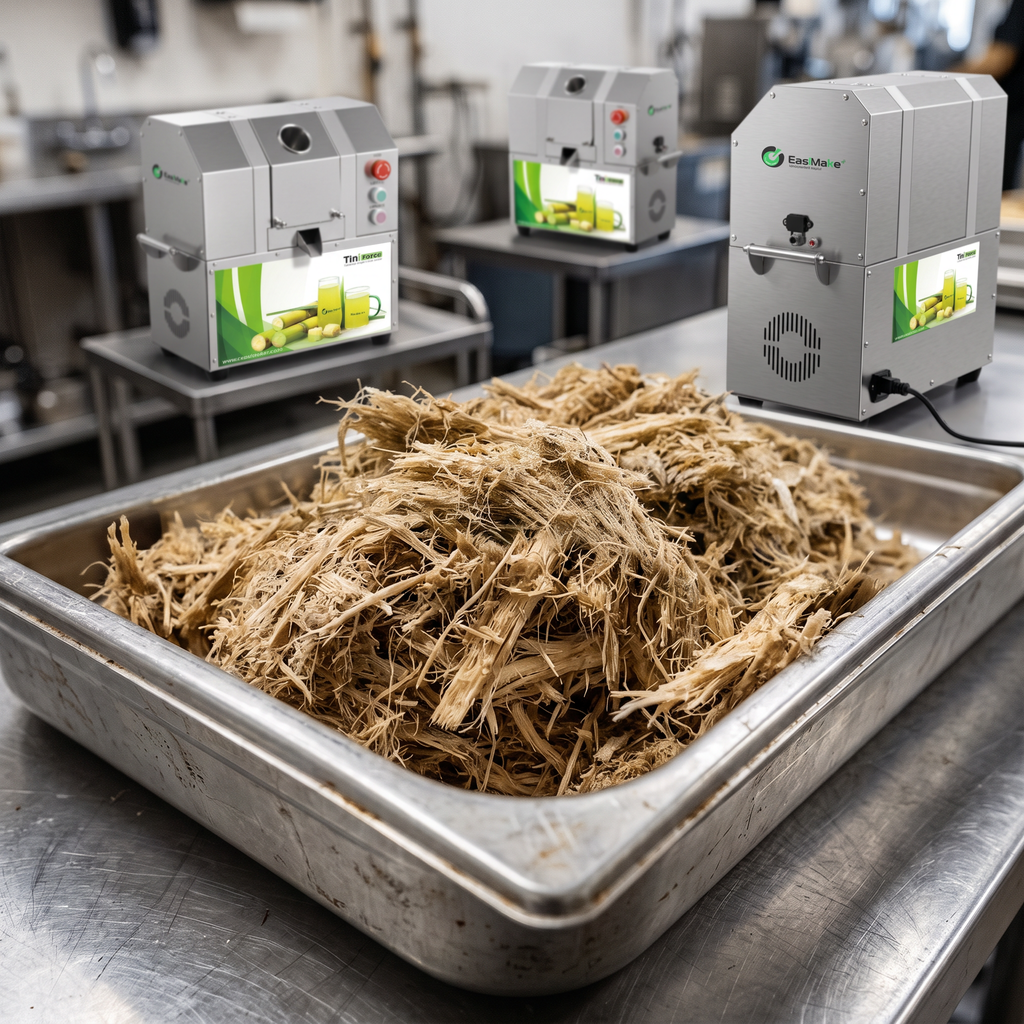
Sugarcane bagasse is the fibrous residue left after sugarcane stalks pass through a sugarcane juice machine. It is mostly plant fibre, but fresh bagasse also retains moisture and small amounts of juice. Its condition changes quickly after pressing, especially in warm weather or enclosed service areas.

For a juice operator, bagasse is not the same as dry garden waste. It may be sticky, heavy when wet, and variable in size according to the cane supplied and the machine setup. It can also include accidental contaminants such as drink straws, gloves, packaging, labels, soil from poorly cleaned cane, or cleaning materials. Once mixed with these items, reuse and composting options can become more limited.

Managing bagasse well begins before disposal. Wash and inspect sugarcane according to your food-handling process, keep waste containers close enough to avoid spills, and prevent non-organic rubbish from entering the bagasse bin. Separation makes the material easier to handle and gives your business more options if a composting or recovery partner is available.

Build a Clean Bagasse Collection Workflow

Dedicated bagasse collection bin positioned beside a commercial sugarcane juicer

A collection process should fit naturally into the operator’s work sequence. If the bagasse container is too small, too far away, or awkward to remove, staff are more likely to let waste accumulate near the machine. That creates unnecessary cleaning work and can interfere with a tidy customer-facing counter.

Set up the collection point

  • Use a dedicated, clearly identified container for bagasse only.
  • Choose a stable container that can be closed or covered when not actively receiving fibre.
  • Position it at the bagasse exit without obstructing the operator, customer flow, or access for cleaning.
  • Use a secondary larger bin in the back-of-house area when front-counter capacity is limited.
  • Keep a route for moving full bins that does not pass unnecessarily through clean preparation areas.

Define staff responsibilities

Make bagasse removal part of opening, peak-period, and closing checklists. One team member should know who empties the collection bin, where the material is transferred, how the container is cleaned, and what to do if the planned collection point is full. During busy trading, check the bin more often rather than waiting for an overflow.

Counter layout affects waste handling as much as machine placement. A well-planned service station leaves room for cane preparation, juice service, bagasse collection, and cleaning without forcing staff to reach across the machine. Practical layout guidance in this article on integrating compact sugarcane machines into cafe workflow can help operators identify pinch points before they become daily problems.

Choose the Right Disposal or Recovery Route

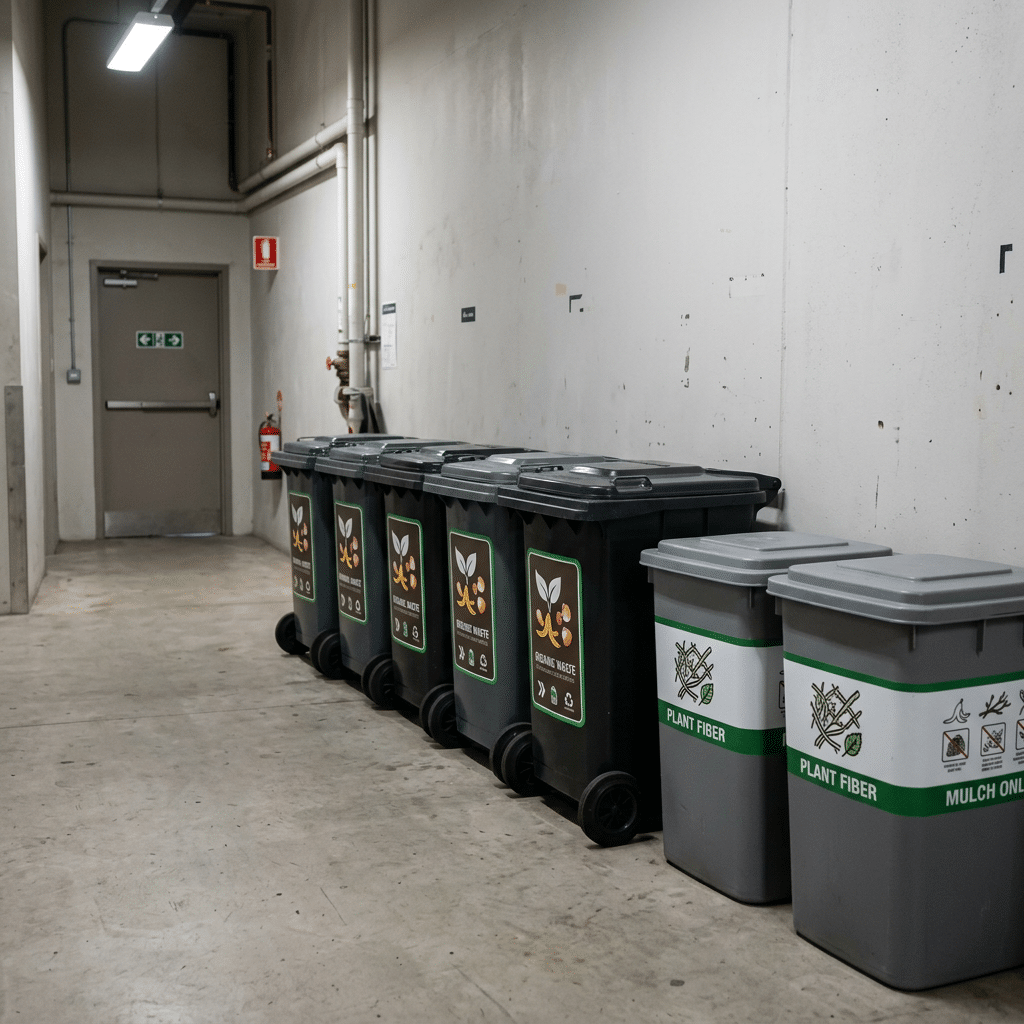
Covered containers prepared for commercial organic waste collection

There is no single disposal route that suits every juice business. A small kiosk may need regular municipal collection, while a larger outlet with reliable local partners may be able to separate bagasse for composting or another approved recovery use. Confirm what local authorities, property managers, and waste providers allow before promoting or relying on a particular method.

General organic or commercial waste collection

This is often the simplest route when a recognised collection service accepts bagasse. Ask the provider whether it accepts wet plant fibre, whether liners are required, how often bins are collected, and whether contamination affects collection. Keep bagasse separated from plastics and general rubbish wherever possible.

Composting through a suitable partner

Bagasse can be a useful carbon-rich plant material in a properly managed composting system, but it is not automatically suitable for every composting program. Its moisture level, freshness, contamination risk, and the receiving facility’s rules all matter. A commercial composting partner should confirm acceptance in writing or through its published collection guidance.

Licensed waste contractor

Where volume is high, storage time is longer, or local collection is limited, a commercial contractor may be the most controlled option. This can be especially relevant in shopping centres, event venues, airports, or dense urban sites where waste movement is managed by the landlord or site operator.

On-site use

Only consider on-site composting, mulch use, or transfer to farms after confirming local requirements, site hygiene controls, and a realistic operating method. A small business should not create an unmanaged stockpile simply because bagasse is plant-based. The cost of labour, space, odour control, and failed material handling can outweigh the apparent benefit.

Storage, Hygiene, and Pest Control

Clean covered bin station for temporary bagasse storage

Fresh bagasse should move from the juicer to a controlled waste container without delay. Because it is damp and contains residual organic matter, warm storage conditions can lead to fermentation odours and attract flies or other pests. The objective is not to make bagasse sterile; it is to prevent the waste stream from compromising a clean, orderly food-service operation.

Use containers that are durable, easy to clean, and suitable for the area where they are used. Keep lids closed between disposal tasks where practical. If liners are used, ensure they are strong enough for wet material and compatible with the collection provider’s rules. Do not overfill bins, because a heavy wet load is harder to lift safely and more likely to spill.

At closing, remove remaining bagasse according to your disposal schedule. Clean the container, the surrounding floor, and any surfaces exposed during waste transfer. Inspect machine discharge areas for trapped fibre as part of normal machine cleaning. Follow the cleaning method and chemicals approved for your equipment and food-contact environment; do not spray cleaning chemicals into areas where they could contaminate juice or cane.

For temporary outdoor storage, protect the material from rainwater, animals, and wind-blown litter. Rain increases weight and leachate risk, while an uncovered bin makes contamination more likely. If a collection is missed, use your contingency procedure rather than trying to compress excess bagasse into unsuitable bins or drains.

When Bagasse Can Be Reused

Some businesses want to reduce waste by finding a second use for bagasse. This can be worthwhile when there is a dependable local partner and the material can remain clean and segregated. However, reuse should be planned as a managed supply stream, not treated as an informal giveaway.

Potential receiving partners may include composting facilities, community gardens, farms, landscaping operations, or organisations with approved biomass-handling processes. Each partner may have different acceptance criteria. They may ask about cane washing, collection frequency, packaging, contamination controls, storage time, or the presence of cleaning residues. Be transparent about how your bagasse is produced and stored.

Do not make assumptions about using bagasse as an ingredient, animal feed, fuel, or food-contact packaging material. These uses can involve technical, legal, hygiene, and processing requirements beyond the scope of a juice outlet. A business should only supply bagasse for a proposed use when the receiver is qualified to accept it and local requirements are met.

Waste reduction also works best when it is considered alongside packaging and purchasing decisions. For example, keeping compostable-looking service packaging separate from bagasse may still be necessary if the local organic-waste processor does not accept it. Review practical options in our guide to eco-friendly packaging for fresh sugarcane juice businesses, but always match packaging choices to the waste streams available at your site.

Control Costs and Record Your Waste Handling

Bagasse handling has a cost even when collection is included in a site service charge. Labour to empty bins, cleaning materials, liners, storage space, missed collection risks, and waste contractor fees can all affect daily operations. Recording these factors helps a manager compare disposal choices on a practical basis rather than choosing a route only because it appears environmentally attractive.

Track a few simple points for several weeks: how many bins are filled each day, when peak waste volume occurs, how often staff empty them, whether spills or odours occur, and what the collection provider charges. If you test a new composting or recovery partner, record collection reliability and rejected loads as well. This information will show whether the route is genuinely workable for the business.

Bagasse volume is also connected to production planning. Higher sales periods require more cane, more preparation space, and more waste capacity. Include bags, bins, collection arrangements, and cleaning time when reviewing unit economics. Our article on calculating the true cost per cup in a sugarcane juice operation provides a useful framework for looking beyond ingredient cost alone.

For temporary stands and event operations, confirm waste arrangements with the organiser before arrival. A venue may provide a waste compound but prohibit loose organic material, require specific bins, or limit when staff can access the collection area. Planning this early avoids avoidable disruption during service.

A Simple Bagasse Handling Plan for Your Juice Business

A reliable system does not need to be complicated. Write a short procedure that staff can follow consistently, then review it after busy periods. Include the following steps:

  1. Identify the waste stream: Confirm whether bagasse goes to organic collection, general commercial waste, a contractor, or an approved recovery partner.
  2. Select containers: Choose the number, size, location, and lid type based on your actual production and cleaning routine.
  3. Set collection intervals: Define when front-counter bins are emptied and when back-of-house containers leave the site.
  4. Keep bagasse separate: Train staff not to add plastics, food packaging, gloves, cleaning cloths, or general rubbish.
  5. Clean and inspect: Include bins, transfer points, floors, and the machine’s bagasse discharge area in the closing checklist.
  6. Prepare for exceptions: State what to do if a bin is full, a collection is delayed, or a recovery partner rejects a load.
  7. Review monthly: Use staff feedback and waste records to improve bin placement, collection frequency, and purchasing decisions.

The most effective sugarcane bagasse disposal program is the one your team can carry out every day. Prioritise cleanliness, safe handling, local compliance, and a disposal route that remains dependable during your busiest service periods.

Sugarcane Juicer Cost: Budgeting for a Juice Business

Table of Contents

A commercial sugarcane juicer budget should cover more than the machine price. Plan for the right equipment class, site preparation, cane handling, hygiene supplies, maintenance, utilities, packaging, and working capital before opening or expanding.

What does a sugarcane juicer really cost?

The sugarcane juicer cost for a business is not only the purchase price of the machine. A realistic budget also includes freight, taxes and import charges where applicable, electrical preparation, counter or floor space, cane cutting and storage, cleaning supplies, packaging, initial inventory, staff training, routine maintenance, and cash reserve for the first operating period.

For commercial buyers, the best way to compare quotations is to evaluate the total cost of ownership. Start with the machine configuration that suits your expected service volume and cane type, then add every cost required to put it into safe, sanitary, repeatable daily use. A lower initial quote can become more expensive if it creates slow preparation, difficult cleaning, incompatible power requirements, frequent stoppages, or limited access to parts and technical support.

Do not select a machine based on a generic online price alone. Ask the supplier to confirm the exact model, electrical rating, included accessories, delivery terms, warranty scope, consumable and spare-part availability, and documentation. You can then compare like with like and build a budget that reflects your own market and premises.

What a complete sugarcane juice equipment budget includes

Key cost categories for a commercial sugarcane juice operation

Separating one-time spending from recurring spending makes a business plan easier to review. The exact line items vary by location, sales channel, and local regulations, but most commercial projects need the following categories.

One-time or pre-opening costs

  • Juicing equipment: the commercial sugarcane juicer and any specified accessories.
  • Cane preparation equipment: a cutter or saw may be needed when delivered stalk lengths do not fit your workflow or storage area.
  • Premises preparation: worktop, drainage approach, water access, electrical work, lighting, signage, and storage changes as needed.
  • Delivery and import costs: freight, insurance, brokerage, duty, local tax, and inland delivery, depending on the agreed trade terms.
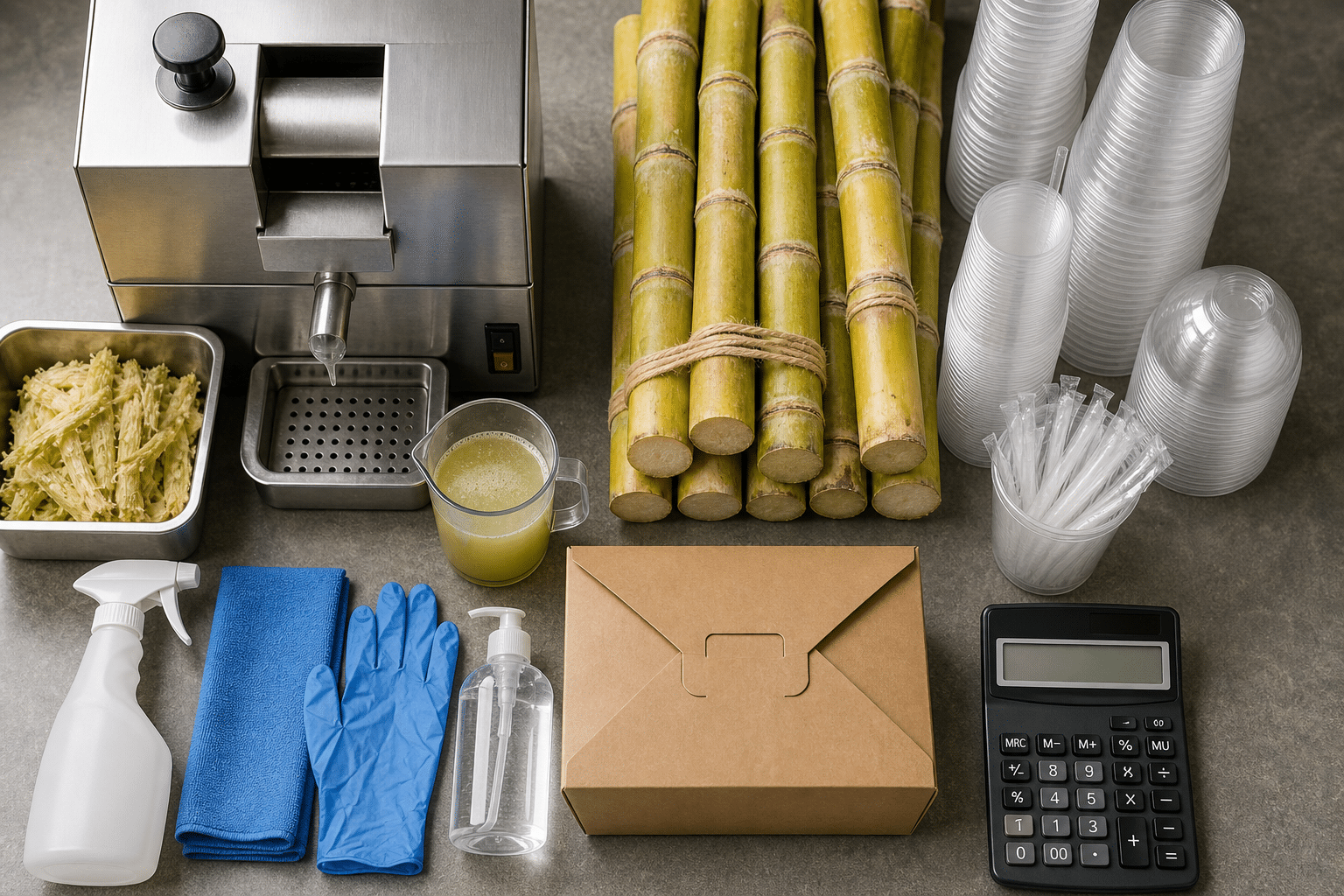
  • Food-service setup: food-safe containers, strainers if used in your process, waste bins, handwashing and cleaning tools, refrigerated storage where required, and point-of-sale equipment.
  • Opening stock: sugarcane, cups, lids, straws or other packaging, ice or complementary ingredients if offered, labels, and sanitation chemicals.

Recurring costs

  • Sugarcane purchasing, transport, trimming loss, and storage loss.
  • Labour for receiving, washing, cutting, juicing, serving, cleaning, and closing.
  • Utilities, including electricity and water, based on local tariffs and site conditions.
  • Packaging, cleaning materials, waste removal, payment processing, rent, and local permits or inspections.
  • Preventive maintenance, replacement wear items, and an allowance for unexpected repairs.

This structure gives owners a clearer view of the capital needed before launch and the cash needed to keep operating after launch.

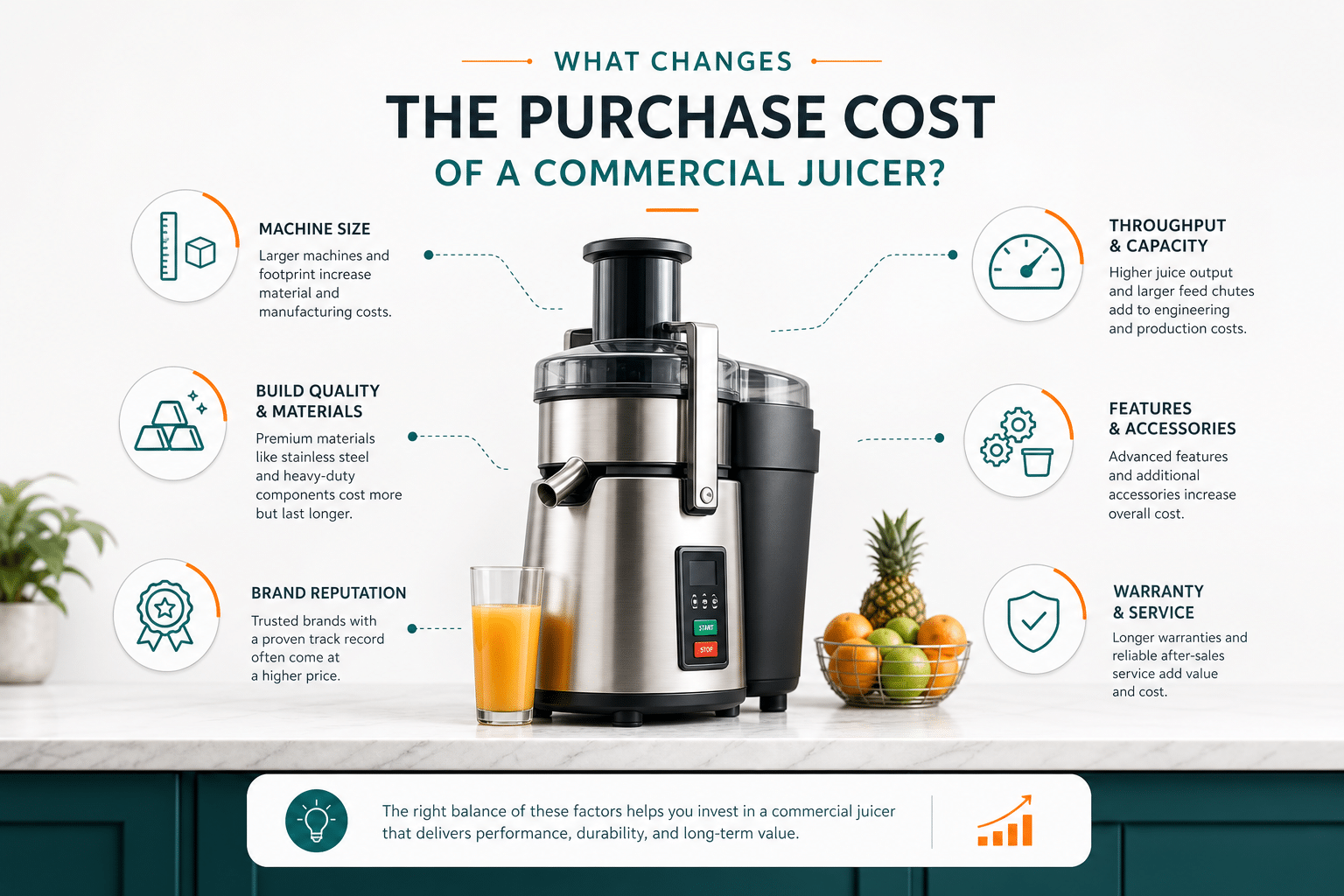
What changes the purchase cost of a commercial juicer?

What changes the purchase cost of a commercial juicer?

Commercial sugarcane juicer prices vary because machines are built for different operating environments. Rather than assuming that a higher or lower price is automatically better, examine the specifications and service requirements behind the quotation.

  • Machine format and construction: countertop and larger formats can suit different layouts and service patterns. Materials, guarding, finish quality, and service access all affect the equipment design.
  • Drive system and intended workload: select a machine suited to the planned pace of service, staff workflow, and cane condition. The relevant question is whether it can support your realistic peak period, not an unverified headline figure.
  • Roller and feed arrangement: the crushing configuration influences how operators feed cane and manage each batch. Review it alongside your intended preparation method.
  • Electrical configuration: voltage, frequency, plug type, and phase requirements may affect both the quoted machine configuration and your installation cost.
  • Cleaning and serviceability: accessible food-contact areas and clear cleaning procedures can reduce daily operational friction. However, the operator must still clean the machine correctly and at the required frequency.
  • Support package: manuals, troubleshooting help, spare parts, warranty terms, and response arrangements are commercial considerations, particularly for a machine used every day.
  • Customization: branding, private-label requirements, electrical adaptations, packaging changes, and other OEM/ODM work can change project cost and lead time.

Request a written quotation with the model reference and scope of supply. It is also sensible to ask which components are routine wear items, how they are ordered, and what basic operator checks are expected.

Choose equipment for your operating model

Choose equipment for your operating model

The right equipment budget begins with the way you will sell juice. A compact outlet with a controlled menu, a mobile concession, a café adding sugarcane juice, and a high-traffic dedicated juice counter may all need different levels of preparation space, operator capacity, storage, and backup planning.

Define your expected trading pattern before requesting quotations:

  • How many hours will the business operate each day?
  • When are the busiest service windows?
  • Will juice be prepared only to order, or will the operation handle pre-service preparation under its food-safety procedure?
  • What stalk diameter, length, freshness, and supplier consistency can you expect?
  • How many people will work the station during peaks?
  • How much counter, back-of-house, and cold-storage space is available?
  • What level of interruption can the business tolerate if the machine requires service?

For example, a smaller site may place greater value on footprint, straightforward cleaning, and a simple workflow. A busier location may need to focus more on preparation flow, stock staging, staffing, and service continuity. Neither approach is universally cheaper; the lowest-cost choice is the one that avoids paying for unsuitable capacity while still supporting normal peak demand.

If you are comparing two equipment formats, review the operating fit alongside cost. This TiniForce S3 and EasiDeMax S4 comparison outlines practical factors such as service volume, counter space, cane preparation, cleaning, and local electrical requirements.

Budget for site preparation and installation

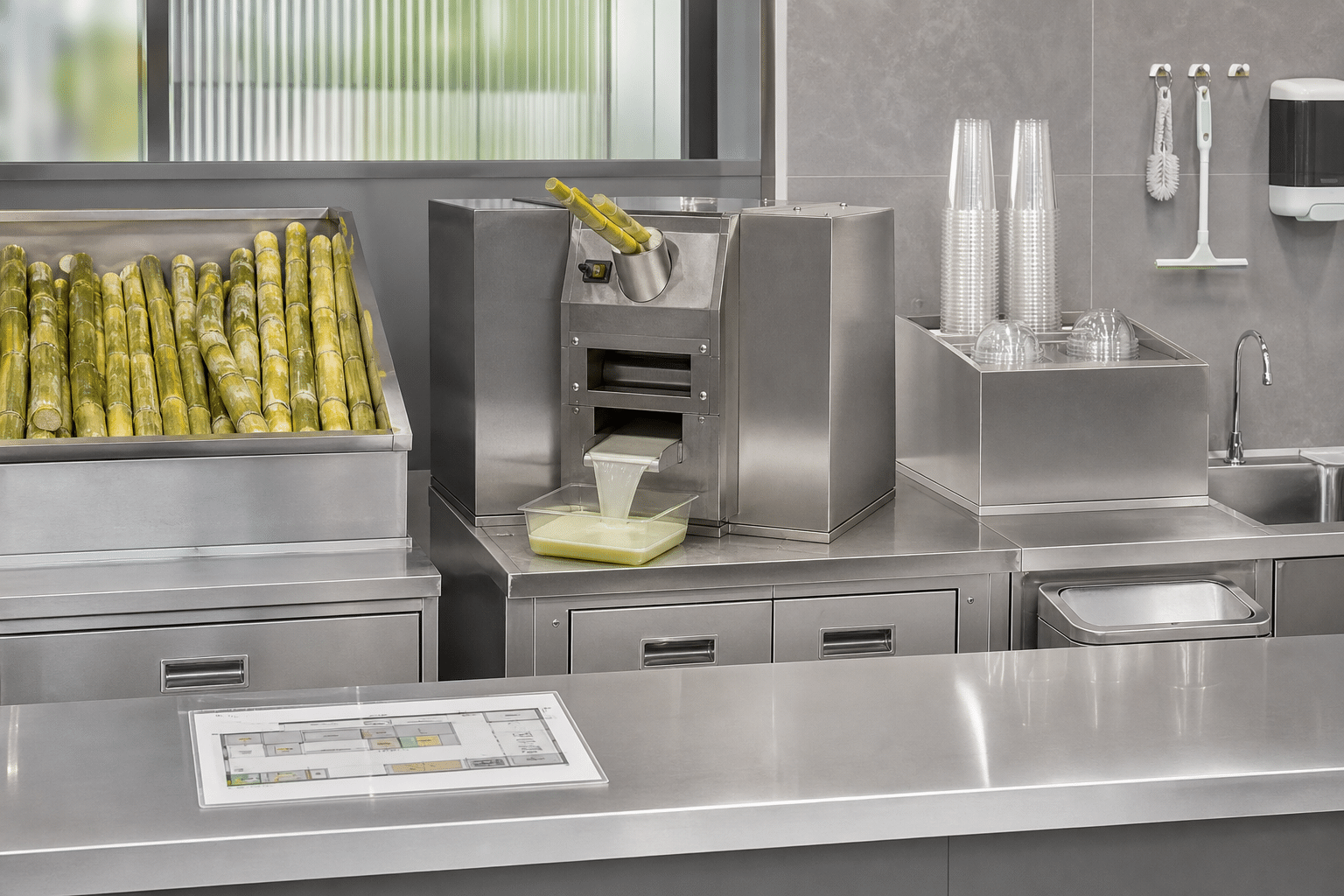
Commercial sugarcane juicer counter layout with workspace and supplies

Site readiness is a frequent source of budget variation. Even a correctly selected machine can be inconvenient or unsafe to operate if the surrounding work area is not planned properly. Review the physical route from cane delivery to serving before placing an order.

Measure the available counter or floor area, but do not budget from the machine footprint alone. Leave room for the operator to feed cane, collect juice, remove residue, clean accessible surfaces, and move safely. Also allow for cane staging, waste containers, cups and lids, cleaning tools, and a clear route for restocking.

Confirm the site electrical supply against the rating required for the selected machine. Do not assume that plug type or voltage can be changed without technical review. Electrical work should be planned and completed in line with local rules by appropriately qualified personnel. Water access, drainage arrangements, cleaning routines, ventilation needs, and local food-service requirements should also be considered before opening.

A simple layout drawing is useful when discussing installation. It can identify bottlenecks early and help you estimate worktop fabrication, utility changes, and staff movement. For small locations, use a measured layout rather than visual estimates; planning countertop space for a commercial sugarcane juicer is a helpful starting point.

Account for cane preparation and handling

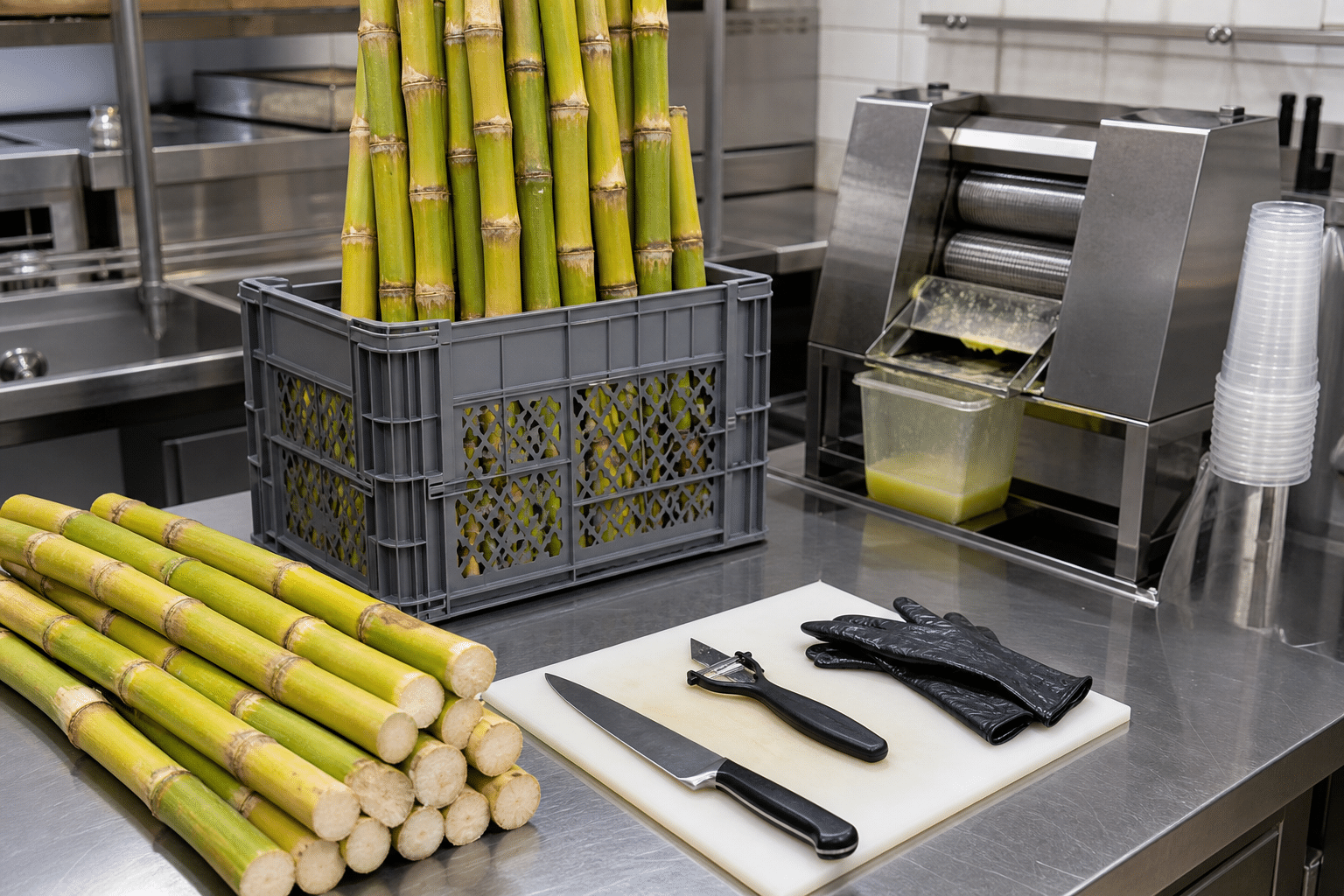
Organized sugarcane preparation area for commercial juice production

Cane preparation is part of the production system, not an afterthought. The condition and dimensions of incoming stalks influence labour time, storage needs, workstation congestion, and the smoothness of juicing. Include these tasks in your budget: receiving, checking quality, washing as required by your procedure, trimming, cutting to a manageable length where needed, staging, and residue disposal.

If cane must be shortened before feeding, evaluate a dedicated cutting solution as part of the capital plan rather than relying on an improvised process. The correct tool and procedure should be selected for your stalk supply, staff training, guarding requirements, and local safety expectations. Also budget for safe storage of prepared and unprepared cane, as well as routine cleaning of the preparation area.

Stalk diameter can vary by variety, growing conditions, and supplier. Thick or irregular cane can slow a service line when it is not managed well. Operators should follow the machine instructions and avoid forcing stalks into the feed area. For practical guidance, see techniques for processing thick sugarcane stalks without unnecessary motor strain or jamming.

Estimate recurring operating costs

Once the equipment budget is set, calculate the cost of serving one drink in your own market. This does not require guessing machine performance figures. Use your supplier pricing, staff roster, packaging invoices, utility tariff, rent allocation, and actual operating trials when available.

A practical per-serving worksheet can include:

  • Cane cost per serving: purchase cost plus delivery and expected handling or storage loss, divided by the number of sellable servings achieved under your normal process.
  • Packaging cost: cup, lid, straw or alternative, napkin, label, and carry bag where applicable.
  • Ingredient and ice cost: only for items actually included in your menu.
  • Direct labour: receiving, preparation, service, cleaning, and closing time, not just the seconds spent at the juicer.
  • Utilities and consumables: electricity, water, cleaning chemicals, cloths, and waste handling.
  • Equipment allocation: a planned amount for maintenance, wear parts, and eventual replacement.
  • Fixed-cost allocation: rent, licences, insurance, marketing, and administration, using a sensible basis for the business.

Review gross margin and cash flow separately. A menu item can appear profitable on a per-cup basis while the business still lacks cash to cover initial inventory, rent deposits, payroll timing, or a seasonal slowdown. Keep a working-capital reserve rather than spending the full startup fund on equipment and fit-out.

Actual results should be recorded after opening and used to revise the plan. Track cane purchased, waste, cups sold, labour hours, cleaning time, breakdowns, and customer waiting time. These records provide a better basis for future equipment and staffing decisions than assumptions made before launch.

Plan for maintenance, spares, and downtime

Maintenance is a controllable operating cost when it is planned. Daily cleaning, inspection, and correct use help protect hygiene and reduce avoidable disruptions. The exact tasks and intervals depend on the specific machine manual, usage level, and operating conditions, so the manufacturer’s instructions should be the primary reference.

Before purchase, ask the supplier for the operating manual, cleaning guidance, recommended inspection points, spare-parts process, warranty terms, and support contact route. Identify who on your team is responsible for opening checks, closing cleaning, and escalation when something unusual occurs. Keep records of maintenance and part replacement; they are useful for diagnosing recurring issues and planning future spend.

Build a modest contingency into the annual budget for ordinary wear items and service needs. The appropriate amount cannot be universal because it depends on hours of operation, cane condition, water and cleaning practices, staff habits, and local labour costs. For a structured approach, use a preventive maintenance schedule for a commercial sugarcane juicer and adapt it to the model manual and your operating routine.

Downtime also has a business cost. Consider what the team will do if the juicer is temporarily unavailable: pause service, offer other menu items, use a backup arrangement, or schedule service outside the busiest hours where possible. A clear plan can be more valuable than an untested assumption about repair speed.

A practical budgeting process before you buy

Use this sequence to turn a broad sugarcane juicer cost estimate into a purchase-ready budget.

  1. Set the operating assumptions. Define location, opening days and hours, expected peak periods, menu, service format, supplier plan, and available space.
  2. Map the process. Draw the route from cane delivery through storage, preparation, juicing, serving, cleaning, and waste removal. Note every task, utility point, and handoff.
  3. Specify the machine fit. Match the juicer to your workflow, cane characteristics, electrical supply, cleaning routine, and expected demand rather than selecting solely by price.
  4. Request comparable quotations. Ask each supplier to state the model, electrical configuration, included items, lead time, delivery terms, payment terms, warranty, technical documentation, and support arrangement.
  5. Add landed and installation costs. Include freight, tax or duty as applicable, brokerage, local delivery, electrical work, benches, water or drainage work, and initial setup items.
  6. Build the first-period operating plan. Budget cane, packaging, payroll, utilities, rent, marketing, permits, cleaning materials, and a cash reserve.
  7. Stress-test the plan. Consider delayed opening, higher freight, slower early sales, cane supply variability, or an equipment service event. Adjust the reserve if the business cannot absorb those changes.

This approach supports a more useful procurement conversation because the supplier can advise on a defined application rather than an isolated price request.

Common budgeting mistakes to avoid

  • Comparing quoted prices without delivery terms. A machine price may exclude freight, tax, insurance, customs costs, inland transport, or installation.
  • Ignoring the electrical rating. An unsuitable local supply can lead to additional work, delays, or the need to reconsider the configuration.
  • Leaving out cane preparation labour. Receiving, washing, trimming, cutting, and cleaning can be significant parts of the daily workflow.
  • Buying for average demand only. Your workflow should cope with ordinary peak periods without creating excessive queues or unsafe shortcuts.
  • Using unverified output claims in financial forecasts. Build forecasts from measured trials and your own serving process whenever possible.
  • Spending all available funds on opening day. Keep working capital for stock, payroll, rent, service events, and normal business variation.
  • Treating cleaning as a minor task. Inadequate time, tools, or training can affect both compliance and machine reliability.
  • Not checking support and parts access. The cost of a stoppage can outweigh a small difference in purchase price.

A disciplined budget is not about predicting every cost perfectly. It is about making assumptions visible, checking them before purchase, and retaining enough flexibility to operate responsibly when conditions change.

Build a budget around reliable daily operation

The most useful way to assess sugarcane juicer cost is to budget from the complete operating system: equipment, premises, cane preparation, utilities, sanitation, labour, packaging, maintenance, and working capital. This gives decision-makers a more realistic view of investment and helps prevent avoidable costs after installation.

When requesting a commercial quotation, provide clear information about your location, available electrical supply, planned operating hours, expected cane characteristics, space constraints, and service model. In return, ask for a defined equipment scope and the documentation needed to assess installation, operation, and after-sales support.