
Table of Contents
- Compact or tabletop: the short answer
- What compact and tabletop mean
- Compact vs tabletop comparison
- How to choose for your shop
- Plan the complete juicing station
- Daily operation and maintenance factors
- Equipment planning table
- Make the decision with real measurements
A compact sugarcane juicer is usually the better choice when counter depth, service access, and back-of-house space are limited. A tabletop sugarcane juicer is a stronger fit when the shop can provide a stable dedicated station and expects more continuous juicing. Compare the full workstation, workflow, cleaning access, and supplier support before deciding.
Compact or tabletop: the short answer
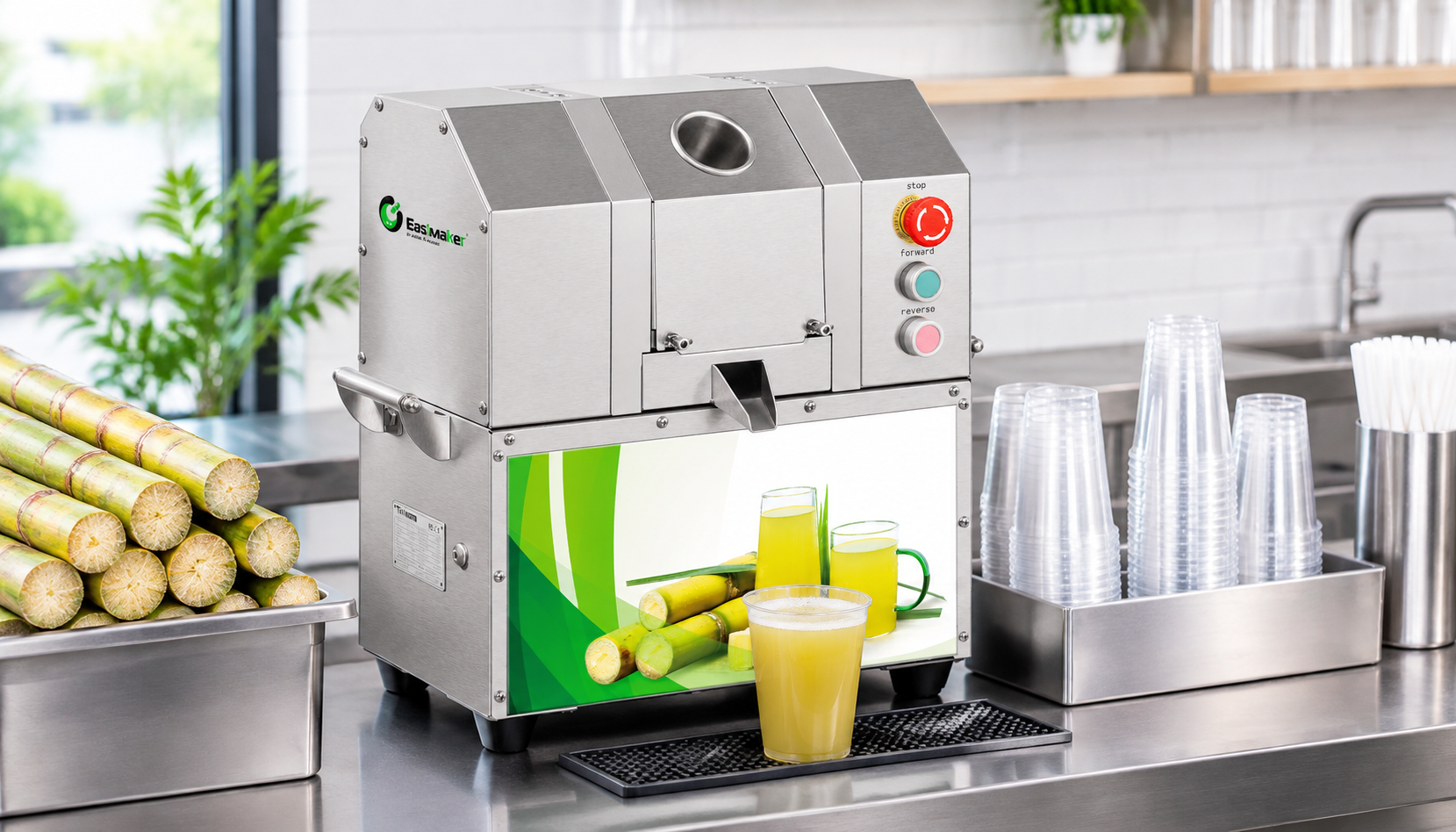
Choose a compact sugarcane juicer when your main constraint is available counter space and you need a small, clearly organised service station. Choose a tabletop sugarcane juicer when you can allocate a stable bench position, manage rear bagasse discharge, and expect the machine to work through repeated orders during service.
For a small commercial sugarcane juice machine, physical dimensions alone are not enough. Buyers should measure the full operating envelope: cane loading space at the front, cup placement at the juice outlet, operator standing room, cleaning access, and bagasse collection behind the unit. A compact machine can still require a well-planned counter. A tabletop machine can be practical in a small shop when its station is dedicated and the workflow is one-directional.
Do not select solely by a product photo or a claimed output figure. Confirm the current model specifications, electrical version, installation requirements, and service support with the supplier before placing an order.
What compact and tabletop mean
In commercial buying discussions, these terms often overlap. It is more useful to treat them as installation and workflow categories rather than fixed technical standards.
Compact sugarcane juicer
A compact unit is intended to minimise the machine footprint on a counter or workbench. It is commonly considered by kiosks, cafés, bubble tea shops, market stalls, and juice counters with limited back-of-house room. The key benefit is not simply small size; it is the ability to build a workable station without blocking customer service, drink assembly, or sanitation tasks.
Tabletop sugarcane juicer
A tabletop sugarcane juicer is designed to operate on a suitable counter, bench, or stand rather than directly on the floor. It may be compact, but it still needs a level, strong, cleanable surface and enough clearance for feeding cane and collecting bagasse. Tabletop equipment is often a sound choice for operators who want the machine at a comfortable working height and easy visual control during service.
The distinction matters because a sugarcane juicer for a small shop must fit the station, not merely fit through the doorway. For a broader model-selection process, see this commercial sugarcane juicer selection guide.
Compact vs tabletop sugarcane juicer comparison
| Decision factor | Compact juicer | Tabletop juicer | What to check |
|---|---|---|---|
| Counter footprint | Usually prioritises a smaller occupied area. | Requires a dedicated bench or counter position. | Measure width, depth, height, and clearance around the machine. |
| Best operating setting | Small café, kiosk, beverage counter, or limited-space shop. | Juice bar, food court unit, café back bar, or dedicated prep counter. | Match the station to your peak service pattern. |
| Cane handling | Needs a nearby but separate clean cane staging area. | Can be integrated with a larger prep and staging bench. | Keep raw cane away from ready-to-serve cups and lids. |
| Bagasse handling | Can be overlooked in tight layouts. | Often easier to plan with a fixed rear collection area. | Confirm the discharge direction and bin position. |
| Cleaning access | May be restricted if pushed tightly against walls or equipment. | Can be planned around a dedicated work surface. | Leave access for daily cleaning and inspection. |
| Future growth | Useful for a cautious launch or secondary service point. | Better suited to a permanent, repeatable juice station. | Consider peak periods, menu plans, and staffing. |
Neither category is automatically better. A cramped tabletop installation can slow service and make cleaning difficult. Conversely, a compact unit with no room for cane preparation or bagasse collection may create the same problem. The right choice is the unit that supports a safe, clean, repeatable sequence from cane to cup.
How to choose for your shop
1. Start with the counter plan, not the machine label
Draw the actual counter or bench to scale. Include walls, sinks, refrigeration, cup sealers, point-of-sale hardware, doors, and customer-facing edges. Mark where the operator stands and where cane enters and bagasse exits. A compact machine should not be installed so tightly that staff cannot clean around it or remove its collection container.
2. Assess your service pattern
Estimate when customers order sugarcane juice, not just how many drinks you hope to sell in a day. A small shop may have a short but intense lunch, evening, or weekend rush. If juicing will be continuous during those periods, choose a station that gives the operator space to feed cane, receive juice, add ice or other ingredients, and hand over the drink without crossing paths.
3. Check the material flow
Cane should move from receiving or storage to washing and preparation, then to juicing. The finished drink should move away from raw cane and bagasse. This reduces clutter and makes staff responsibilities easier to follow. Review a standard commercial cane preparation workflow before finalising the station.
4. Verify utility and bench conditions
Ask for the electrical requirements for the exact machine version offered to your market. Confirm that the bench is level, stable, and suitable for the machine weight in operation. Do not assume that one model’s voltage, plug, dimensions, or accessories apply to every market version.
5. Consider who will operate and maintain it
A simple layout is especially valuable where several staff members share the station. They need enough room to follow start-up, feeding, cleaning, and shutdown procedures consistently. Confirm the availability of operating instructions, technical assistance, and replacement parts before purchase.
Plan the complete juicing station
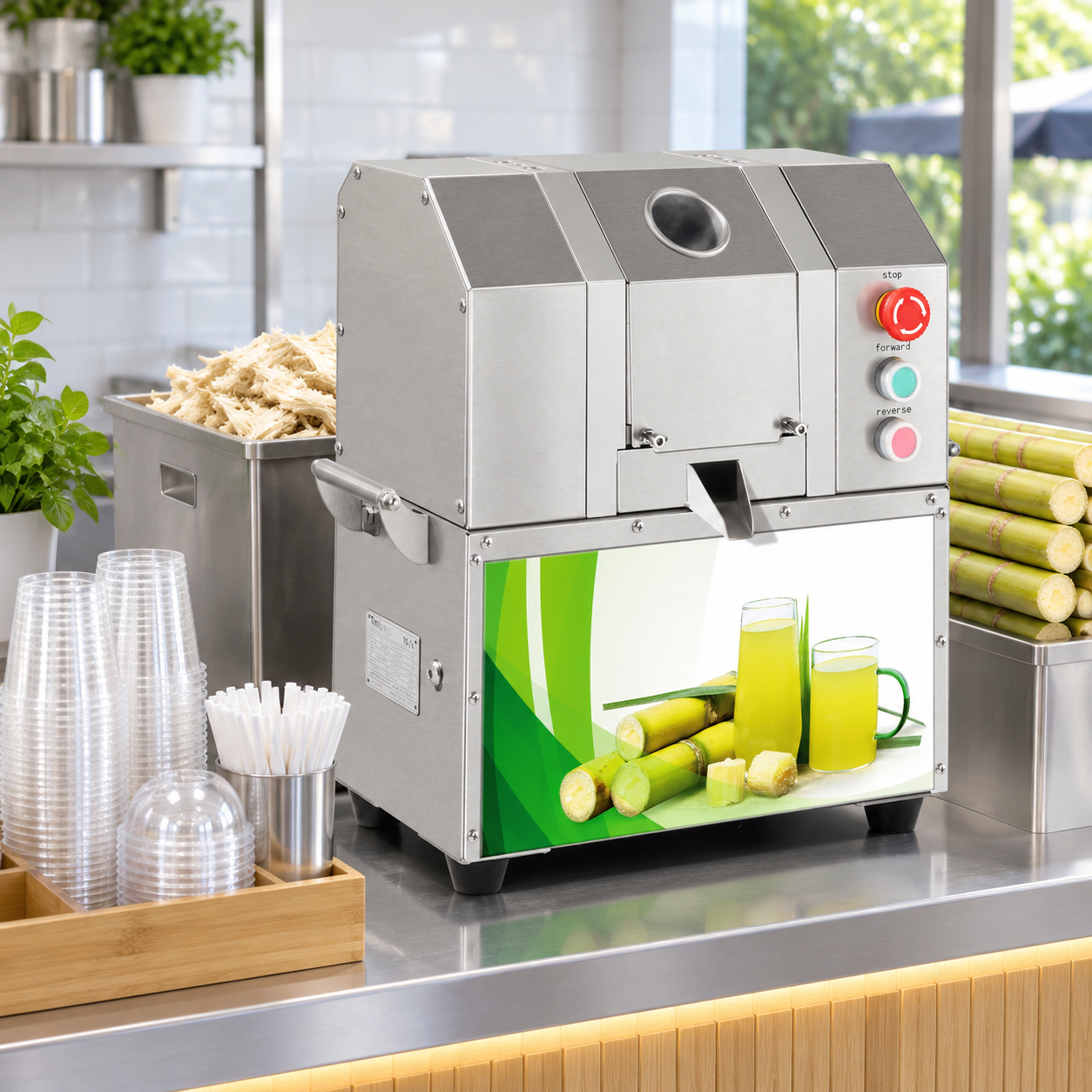
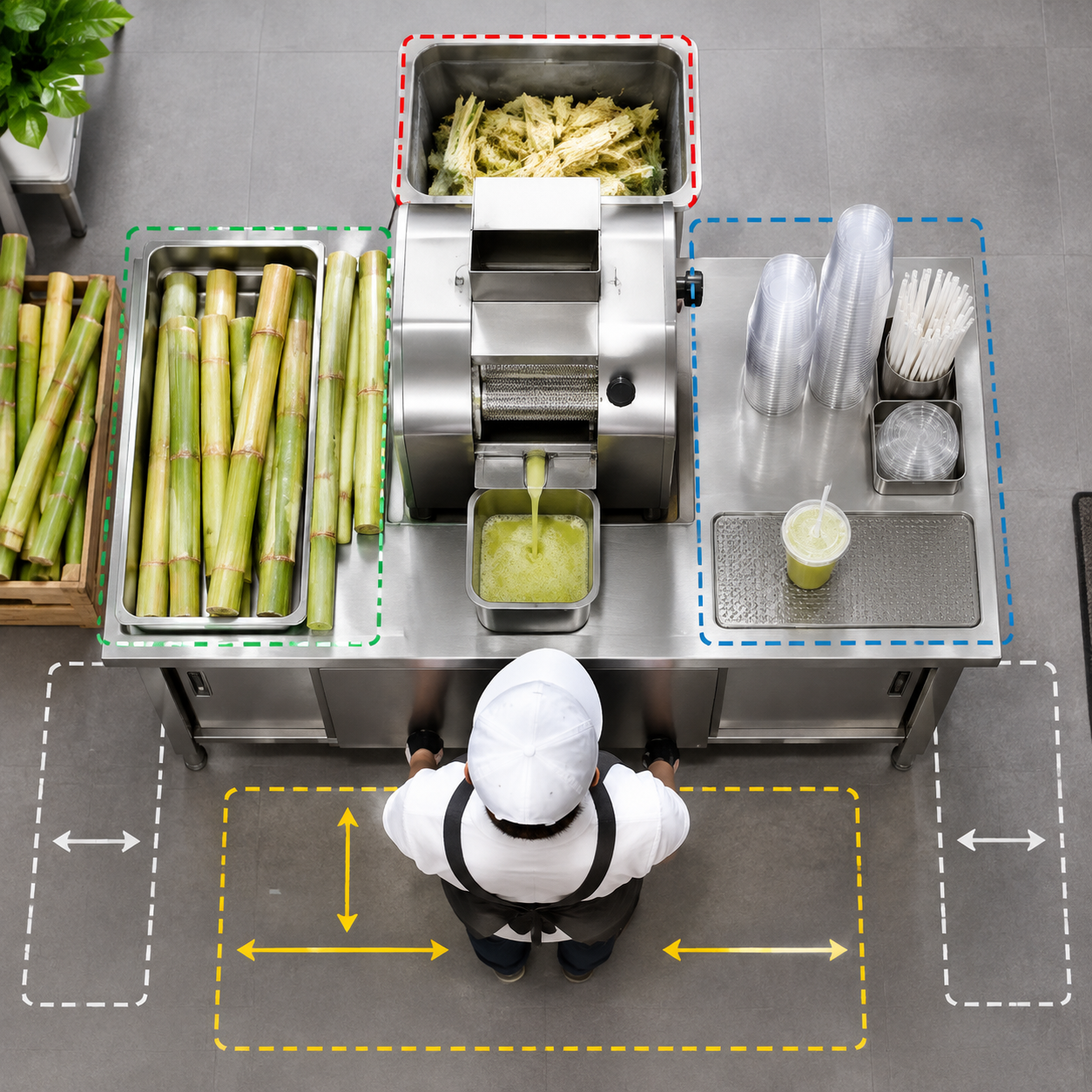
Good small-shop design separates raw materials, processing, finished drinks, and waste. Whether you select a compact or tabletop sugarcane juicer, plan these zones:
- Cane staging: a clean location that keeps prepared cane accessible without obstructing the operator.
- Juicing zone: a level bench with clear front access for feeding and cup positioning.
- Drink finishing zone: space for cups, ice, flavour additions where used, lids, and handover.
- Bagasse zone: a correctly positioned container based on the machine’s discharge arrangement.
- Cleaning zone: access to approved cleaning tools and a nearby cleaning process without placing wet items around electrical equipment.
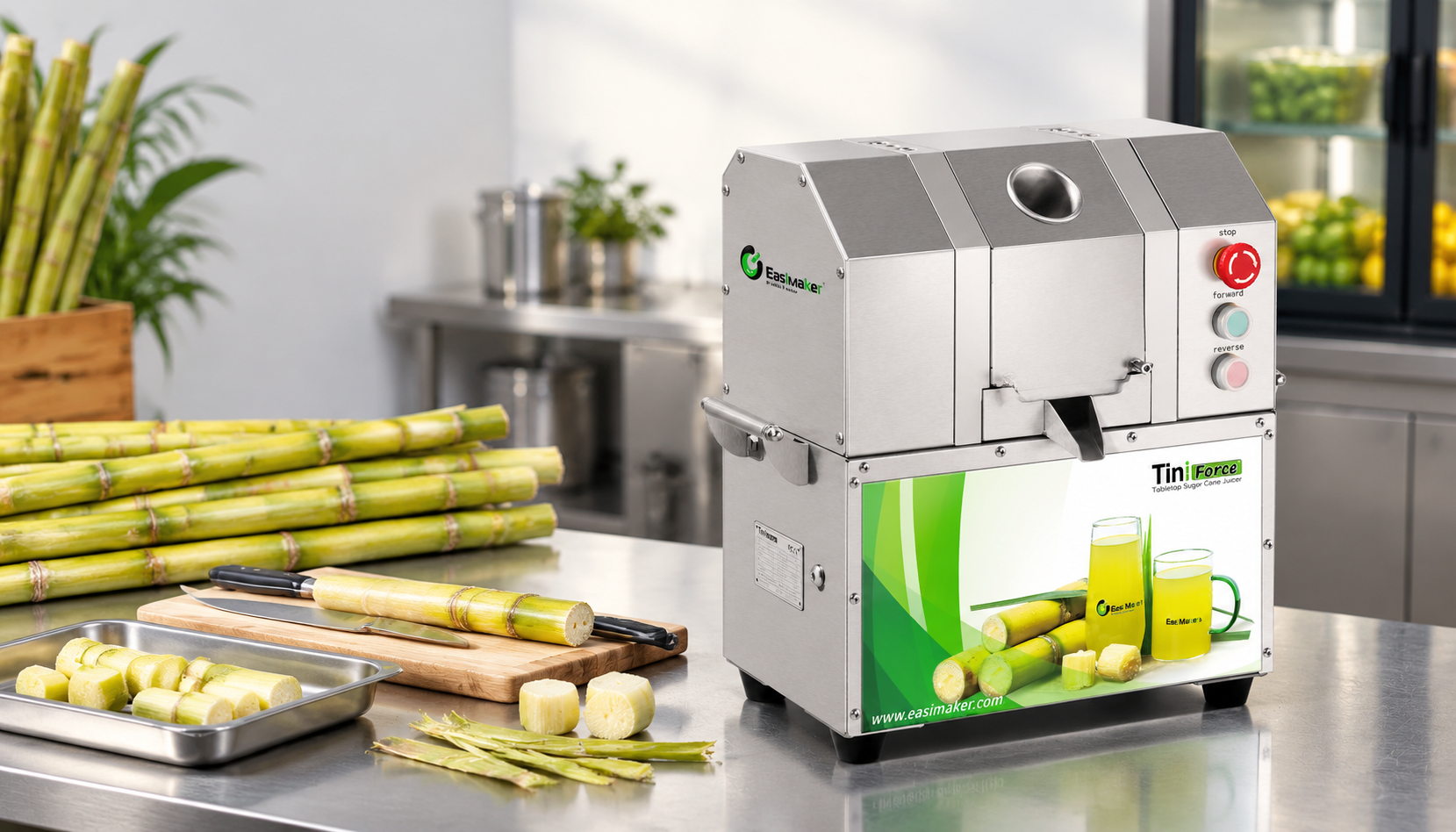
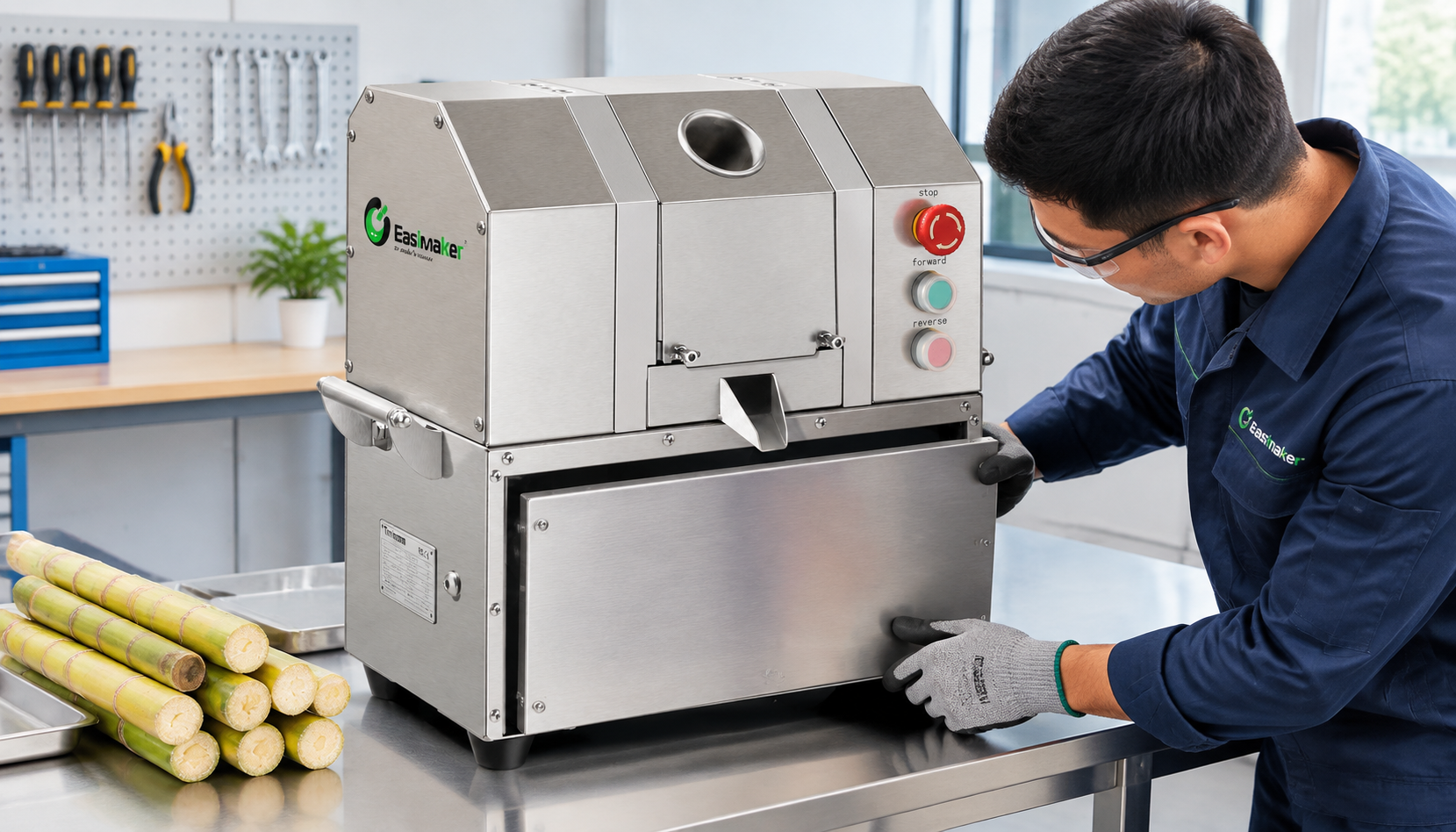
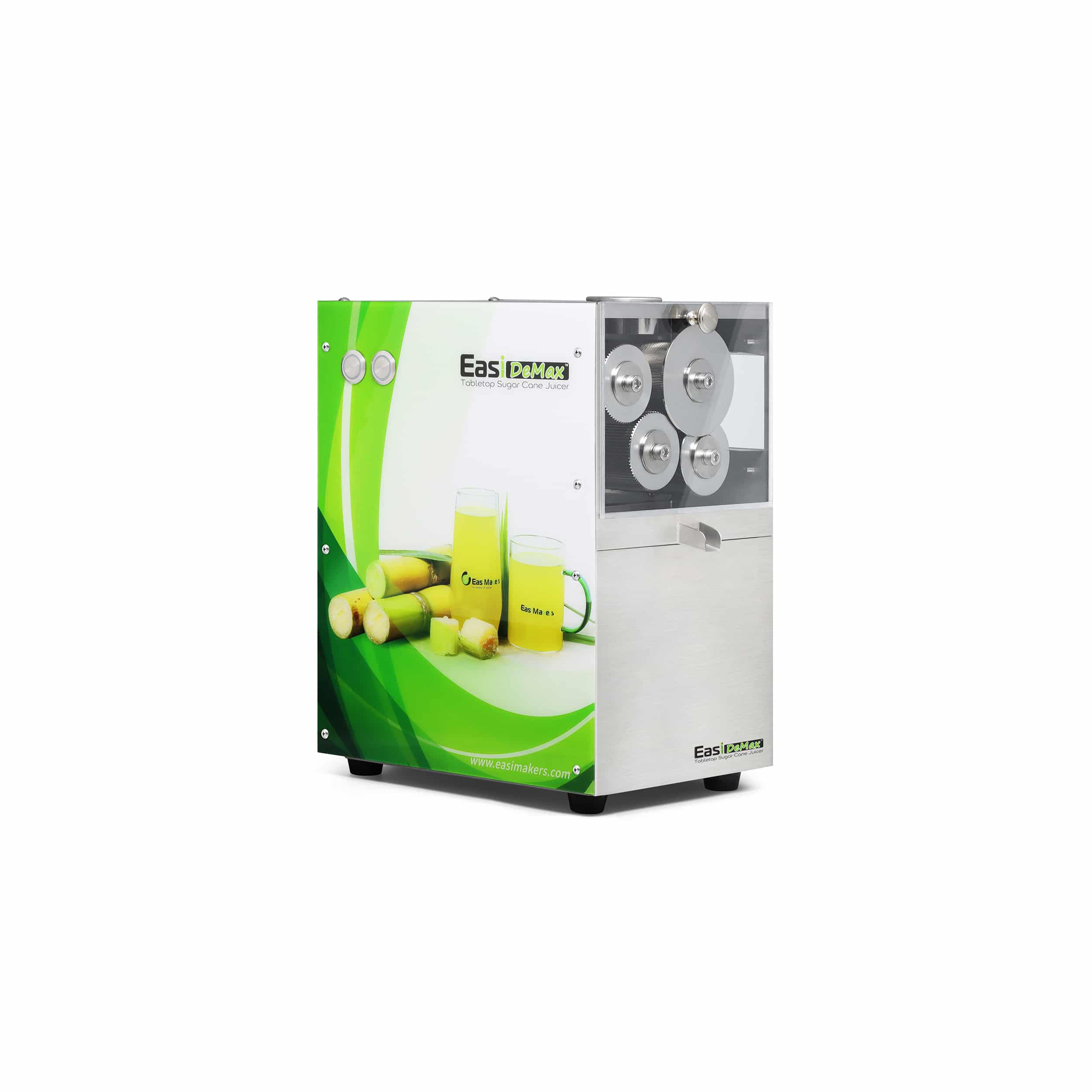
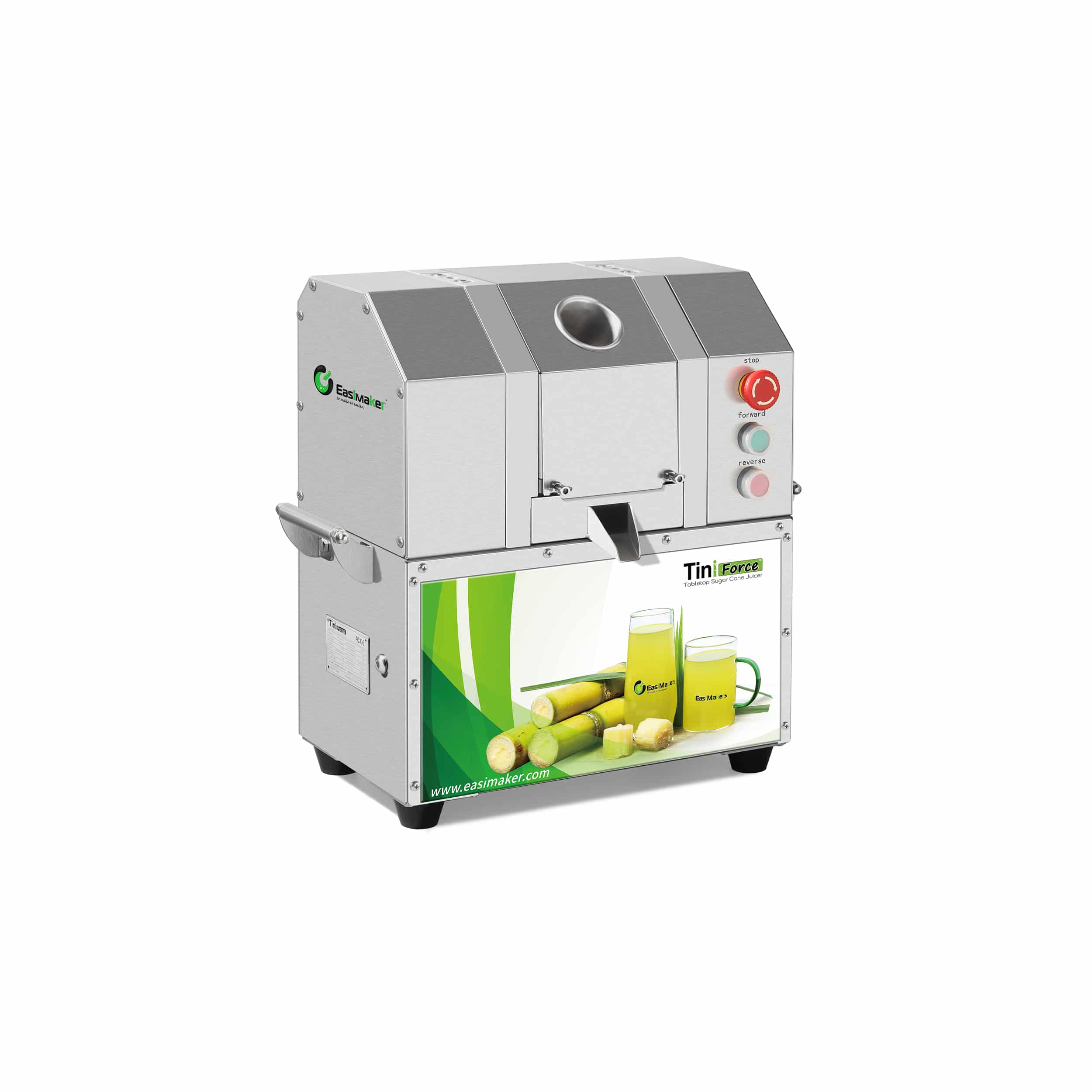
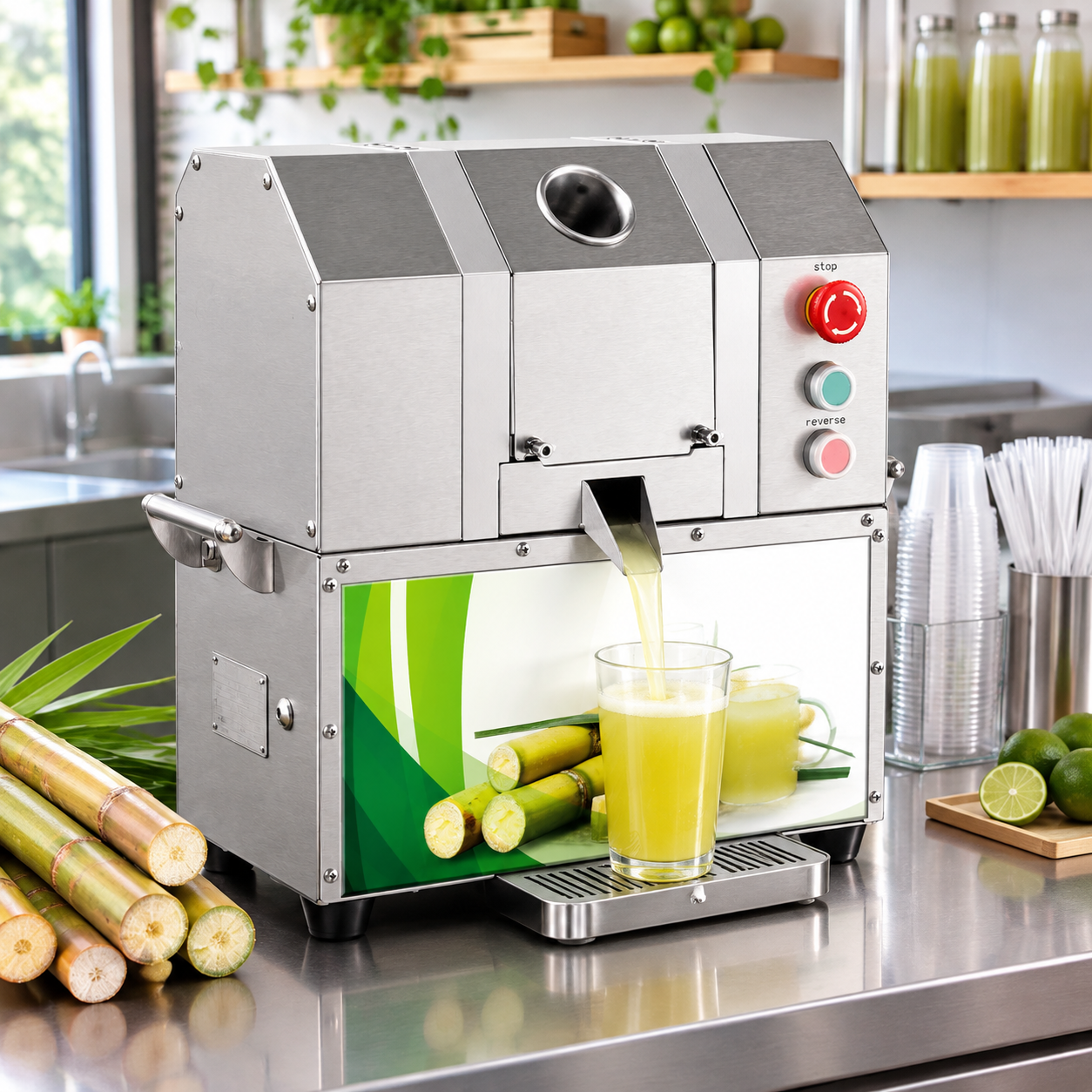
The TiniForce-style compact format shown in product materials has front cane feeding and a front juice outlet, while bagasse is discharged to the rear. That arrangement makes rear clearance a practical requirement, even when the machine body is narrow. For limited counters, this guide to integrating compact sugarcane machines into café workflow can help with station planning.
Where takeaway is important, keep cups and sealing materials downstream from the juicer rather than on the cane preparation surface. See the practical guide to packaging sugarcane juice for takeaway and delivery for service considerations.
Daily operation and maintenance factors
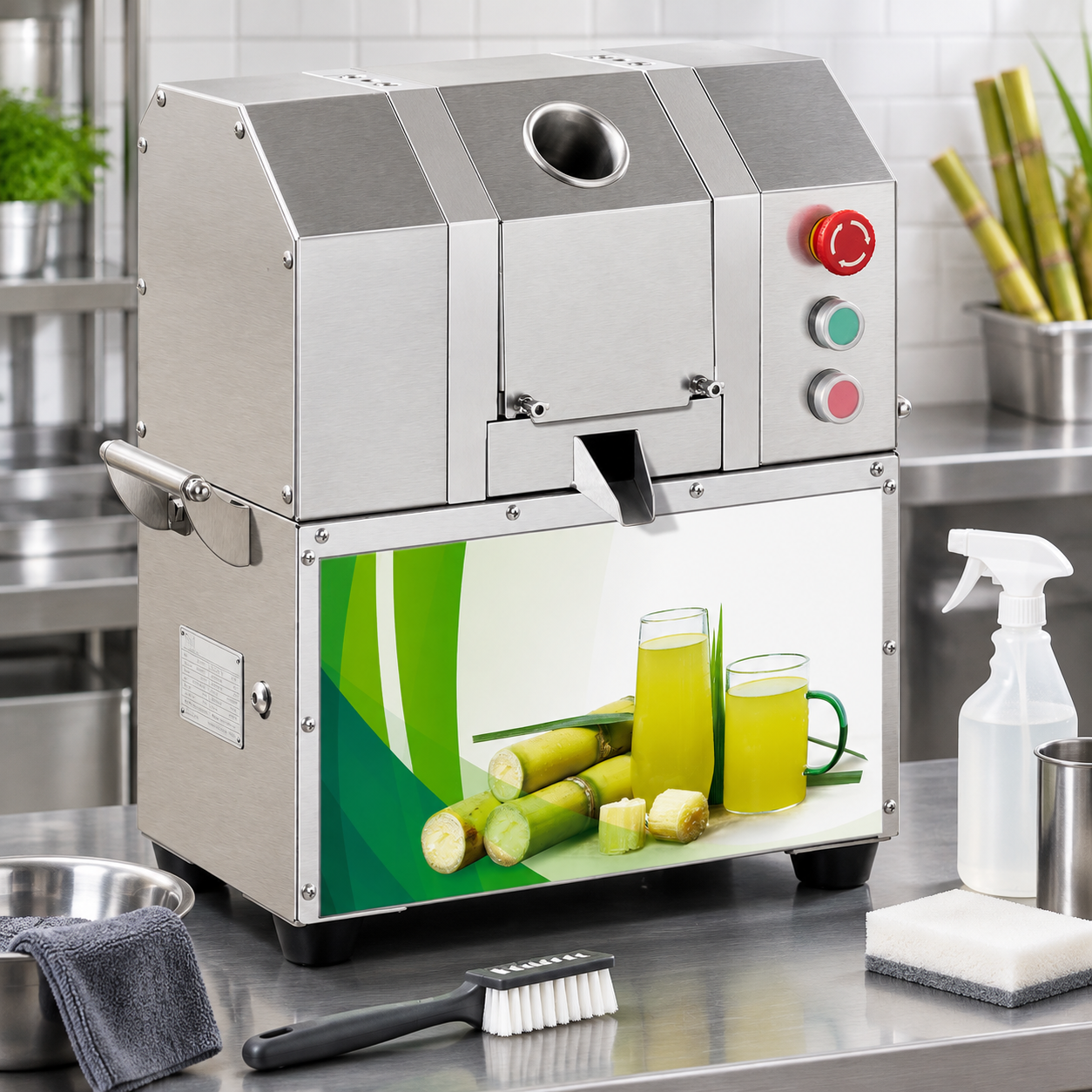
Space decisions affect daily care. A machine that is difficult to reach is more difficult to inspect and clean properly. Before buying, ask the supplier how operators access the areas that require routine cleaning and whether the proposed location allows safe access without moving other equipment.
Build the following into your operating routine:
- Inspect the feed area, outlet, and surrounding surfaces before service.
- Use prepared cane that suits the machine’s feeding process; do not force unsuitable pieces into the inlet.
- Keep the juice receiving area clear so cups can be placed and removed without contacting raw cane or waste.
- Empty the bagasse container before it becomes overfilled or obstructs the discharge path.
- Switch off and isolate power before cleaning or inspection, following the supplied instructions.
- Record recurring concerns and address them before they affect service.
A documented routine is more reliable than cleaning only when the station looks untidy. Use a preventive maintenance schedule for commercial sugarcane juicers to assign daily, weekly, and periodic checks to named staff.
Equipment planning table for a small juice operation
| Equipment or area | Compact-focused setup | Tabletop-focused setup | Buyer question |
|---|---|---|---|
| Sugarcane juicer | Prioritise a modest footprint and clear access around the unit. | Allocate a dedicated stable bench position. | What are the exact overall dimensions and required clearances? |
| Cane preparation surface | Use a nearby separate surface where possible. | Integrate into a longer prep bench while keeping zones separate. | Can staff prepare cane without blocking juicing? |
| Bagasse container | Choose a container that fits the discharge side without narrowing the walkway. | Position a fixed collection point behind or beside the bench as appropriate. | Where does bagasse exit on this exact model? |
| Finished-drink area | Keep a small dedicated cup and lid zone downstream. | Provide a wider assembly and handover area. | Can one person juice and finish drinks without crossing the raw-material path? |
| Support planning | Confirm manuals, parts route, and service contact before launch. | Do the same, especially for a permanent high-use station. | Who supplies technical guidance and replacement parts in your market? |
If your business also processes food ingredients beyond beverages, keep unrelated preparation equipment in separate work zones. For example, an overview of TiniForce S3 compared with manual juicing equipment may help clarify the benefits of a dedicated commercial juicing process, but each machine should be evaluated against its own current documentation.
Make the decision with real measurements
The compact vs tabletop sugarcane juicer decision is fundamentally a workstation decision. Compact equipment is often suitable when every centimetre of counter space matters. Tabletop equipment is often the better long-term choice when a shop can dedicate a stable, accessible station to regular juice service.
Measure the complete work area, map cane and bagasse movement, verify the electrical supply, and ask for model-specific documentation. This practical approach helps buyers avoid a machine placement that looks efficient on paper but creates congestion during real service.
FAQ
Is a compact sugarcane juicer always better for a small shop?
No. A compact machine can be a good fit for a small shop, but it still needs space for cane feeding, cup handling, cleaning access, and bagasse collection. A tabletop model may work better if the shop has a dedicated bench and regular periods of continuous service.
What clearance should I leave around a tabletop sugarcane juicer?
Use the supplier’s requirements for the exact model. In addition to the machine dimensions, allow working room at the feed point, juice outlet, cleaning access points, and bagasse discharge direction. Do not place the unit tightly against a wall before confirming these requirements.
Can a tabletop sugarcane juicer be used at a customer-facing counter?
It can be used at a customer-facing counter when the counter is stable, the workflow remains clean, and staff have adequate operating space. Plan cane staging and bagasse collection so they do not interfere with customer service or finished-drink handling.
What should I ask a supplier before choosing a small commercial sugarcane juice machine?
Ask for the current overall dimensions, machine weight, electrical version, feeding and bagasse discharge arrangement, cleaning instructions, operating manual, replacement-parts process, warranty terms, and available after-sales support for your market.
Should bagasse collection influence my machine choice?
Yes. Bagasse collection affects rear or side clearance, cleaning time, walkway space, and the overall cleanliness of the station. Confirm the discharge direction of the exact machine and plan a container that can be emptied without disrupting service.
Discuss the right juicer layout for your operation
Share your available counter dimensions, expected service pattern, local electrical supply, and target market with Easimaker. Our team can help you discuss a suitable commercial sugarcane juicer configuration, practical workstation requirements, and OEM/ODM options where relevant.