Table of Contents
- What a Commercial Bowl Cutter Can Process
- How a Commercial Bowl Cutter Works
- Meat, Poultry, and Fish
- Sausage Meat and Emulsified Mixtures
- Vegetables, Herbs, and Aromatics
- Fats, Seasonings, and Other Additions
- Prepared Food Mixtures
- What Should Not Go Into a Bowl Cutter
- Selection and Process-Control Factors
- Cleaning and Maintenance After Processing
- Conclusion
A commercial bowl cutter can chop, mince, mix, and emulsify many food ingredients, especially meat, fat, seasonings, vegetables, herbs, and selected prepared-food mixtures. Results depend on ingredient preparation, knife condition, batch size, processing time, and temperature control.
What a Commercial Bowl Cutter Can Process
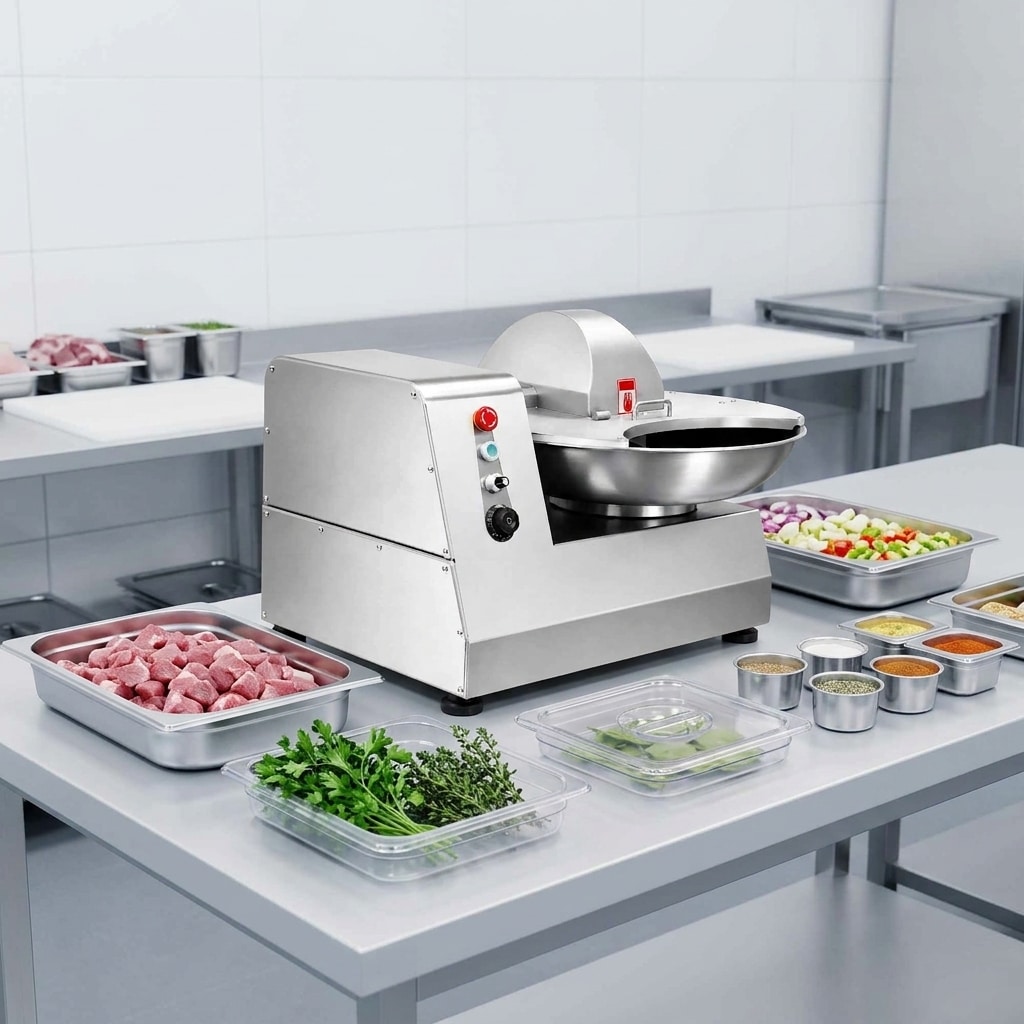
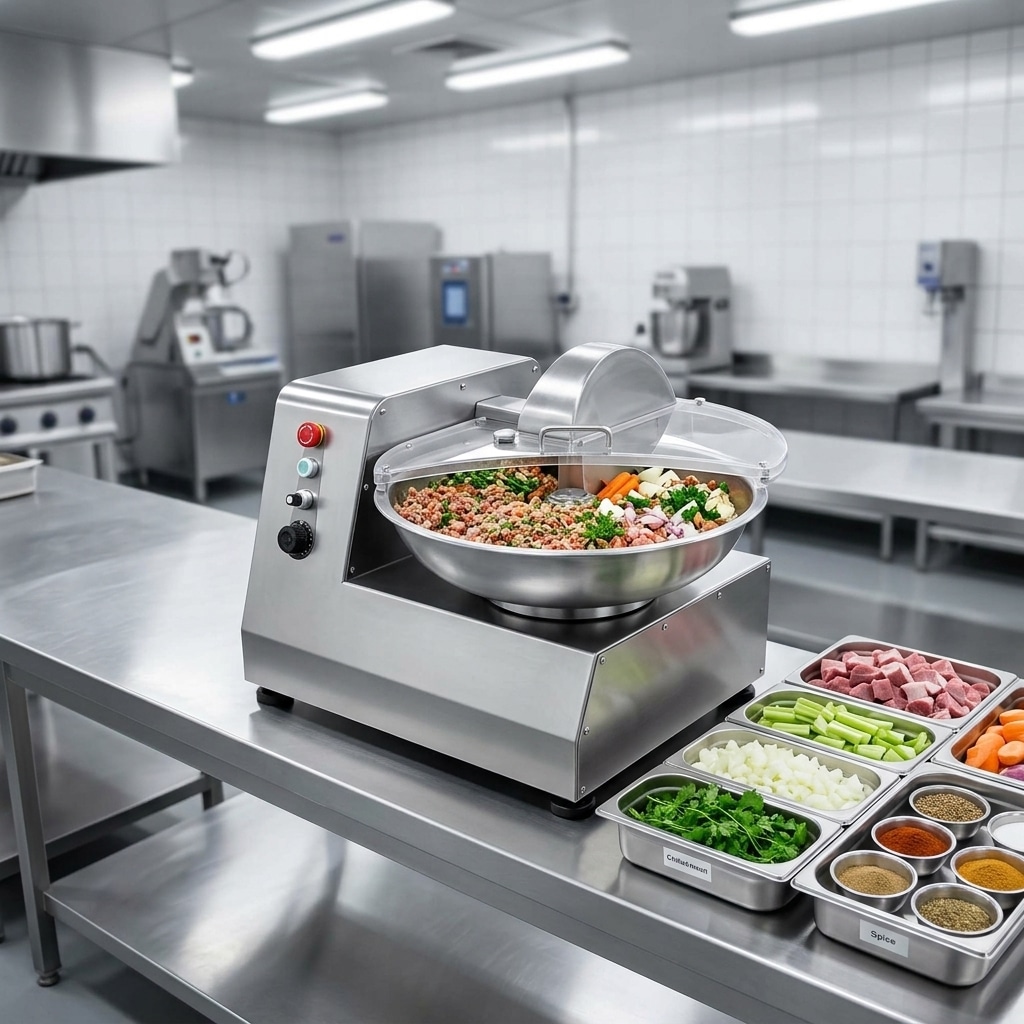
A commercial bowl cutter can process chilled meat, poultry, fish, fat, vegetables, herbs, aromatics, seasonings, and many mixed food preparations. It is commonly used to chop, mince, blend, and, where the recipe and process allow, create a fine meat or food emulsion. Typical applications include sausage meat, burger mixes, meat fillings, pâté-style mixtures, chopped vegetables, herb blends, and selected prepared-food ingredients.
The machine is not a universal grinder or a bone-processing machine. Good results depend on using ingredients that are appropriate for knife cutting, preparing them to a manageable size, controlling the batch, and stopping at the intended texture. Hard foreign objects, bones, frozen solid blocks, and unsuitable packaging must be kept out of the bowl.
For a buyer asking what can a commercial bowl cutter process, the practical answer is: ingredients that need controlled cutting and mixing in one batch. The final product may be coarse, medium, finely chopped, or smooth, depending on the recipe, knife action, ingredient order, and processing time.
How a Commercial Bowl Cutter Works
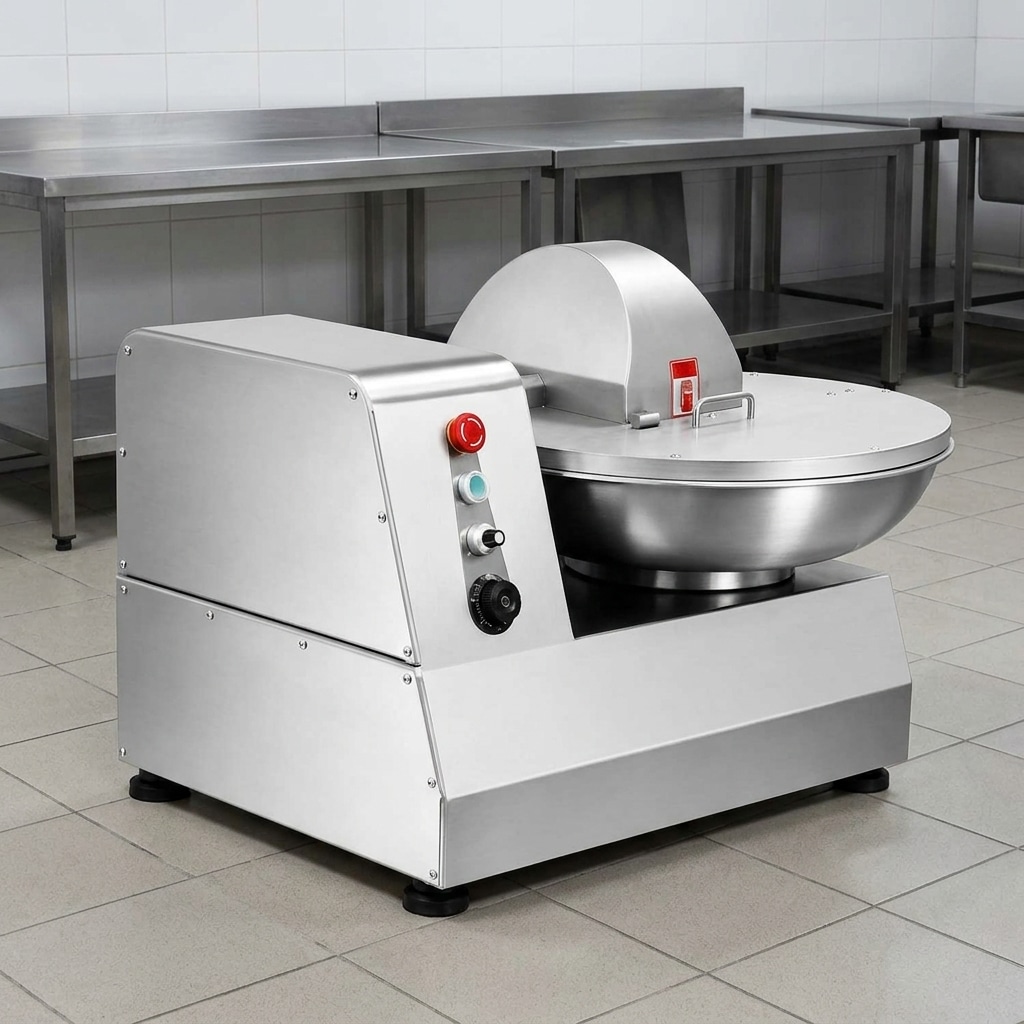
A bowl cutter, also called a bowl chopper in some markets, uses rotating knives and a moving bowl to repeatedly cut ingredients. As material travels through the knife zone, it is reduced and redistributed through the batch. This action allows operators to combine cutting and mixing instead of moving ingredients between separate machines for every stage.
The result is controlled by several connected variables:
- Raw-material condition: chilled, trimmed, and portioned ingredients generally process more predictably than warm, irregular, or oversized pieces.
- Knife condition: sharp, correctly maintained knives cut more cleanly than dull knives.
- Batch size: an underloaded or overloaded bowl can reduce mixing consistency.
- Processing time: longer processing usually creates a finer texture, but it can also change the product unnecessarily.
- Ingredient sequence: the point at which water, ice, fat, seasonings, binders, or vegetables are added affects the result.
- Temperature: temperature monitoring is important for meat and other sensitive food products.
A bowl cutter is therefore best viewed as a process machine, not simply a chopping machine. Operators should define the intended texture before processing and use a repeatable loading and timing procedure.
Meat, Poultry, and Fish
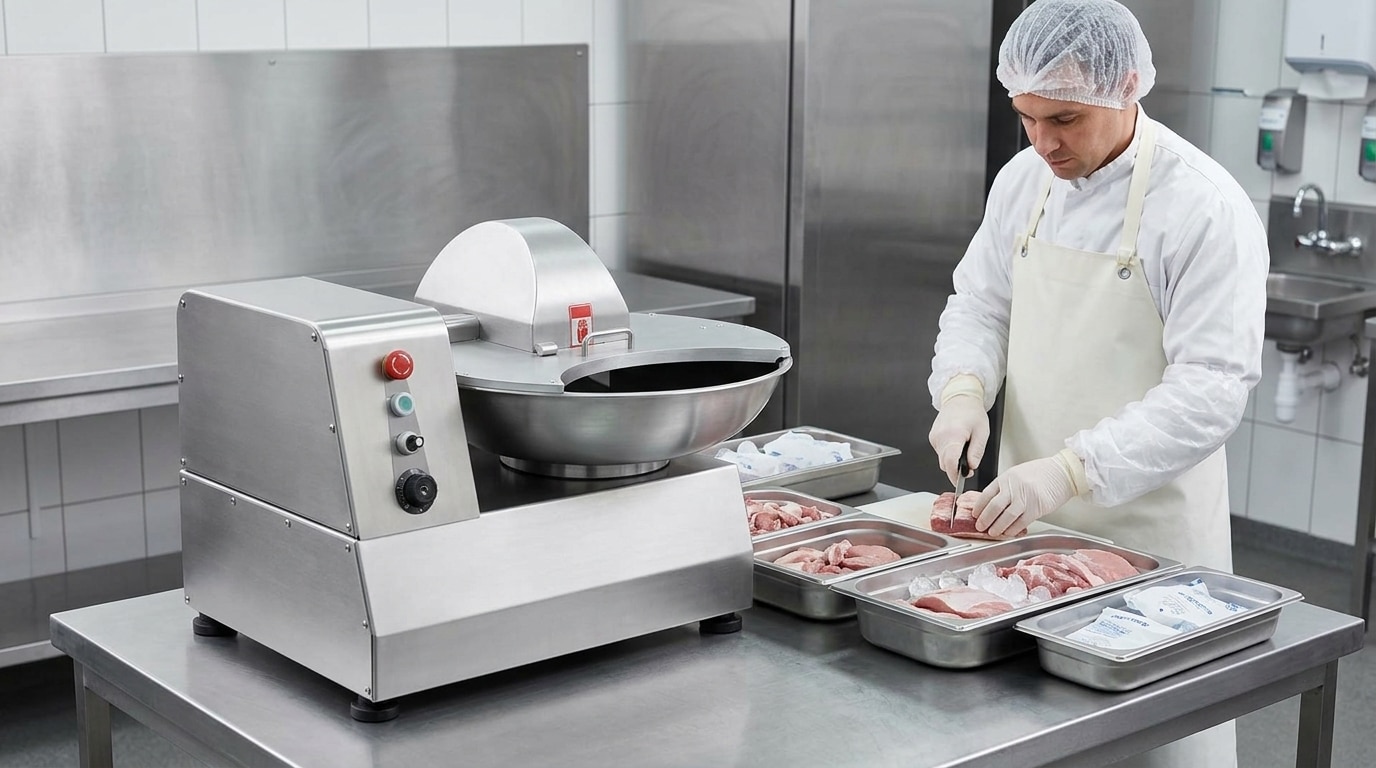
Meat is one of the main commercial bowl cutter applications. Beef, pork, poultry, lamb, and many fish products can be chopped or mixed when they are prepared correctly for the machine and the required product specification. A bowl cutter can support a range of textures, from visibly chopped meat for fillings to a finer matrix for formed or emulsified products.
Before loading, remove bones, hard cartilage, packaging, clips, and other foreign material. Trim ingredients to suit the bowl cutter and avoid feeding pieces that are too large for safe, even circulation. Chilled raw materials are commonly used because processing friction can increase product temperature. The appropriate starting temperature and maximum process temperature should be set by the operator’s food-safety system and recipe requirements.
For coarse products, use short, controlled processing intervals and inspect the particle size rather than relying only on a timer. For finer products, add ingredients in stages and avoid processing beyond the required texture. This helps maintain repeatability between batches. For further operating guidance, see how to make consistent meat texture with a bowl cutter.
Fish and seafood require similar attention to raw-material condition, bones or shell fragments, temperature, and sanitation. Where the recipe contains delicate fish flesh, trial batches are useful to establish the knife time and ingredient sequence that give the desired texture without overworking the mixture.
Sausage Meat and Emulsified Mixtures
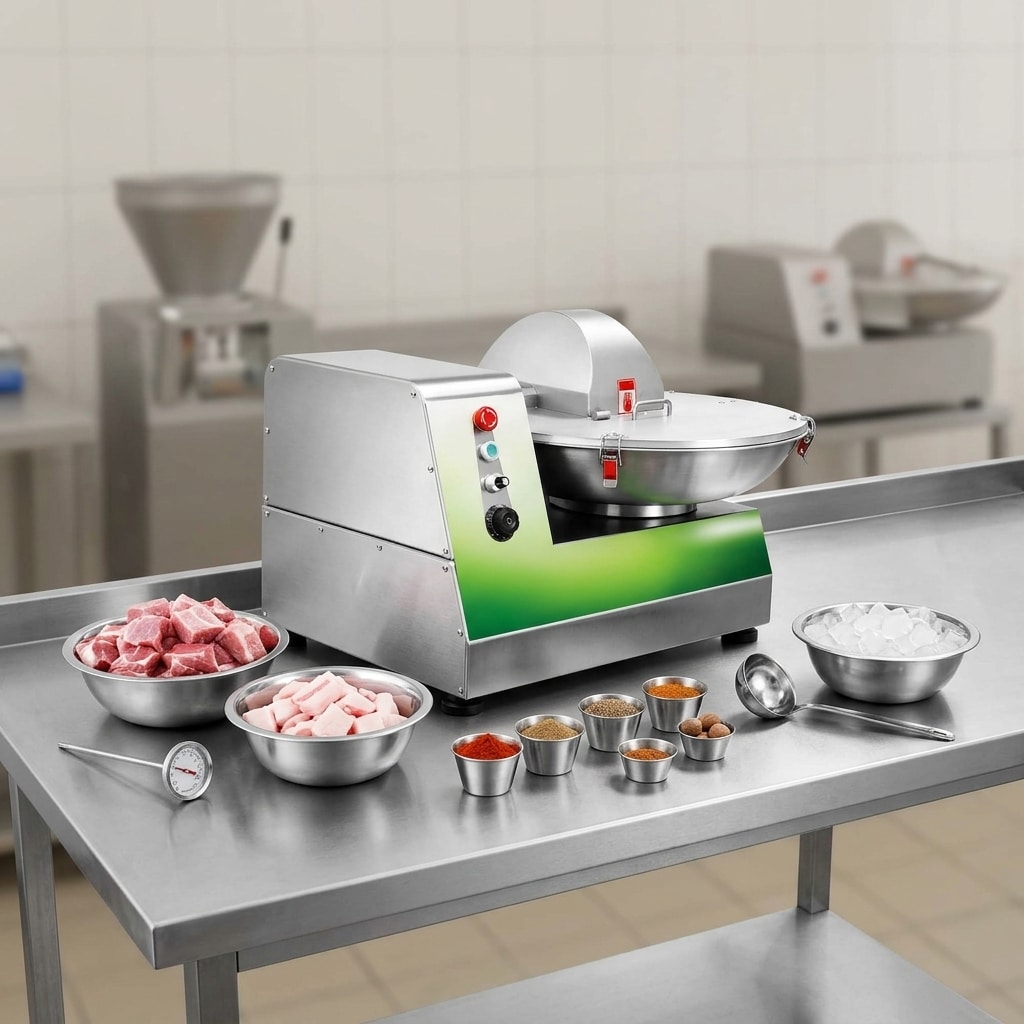
A commercial bowl cutter is widely used for sausage meat preparation because it can cut meat and fat while distributing seasonings and other recipe ingredients through the batch. Depending on the formulation, it may be used for fresh sausage mixtures, cooked sausage systems, meat fillings, and other finely processed products.
For this work, ingredient order matters. Many operations begin with chilled lean meat and salt or a recipe-specific seasoning stage, then add liquid, ice, fat, spices, and other components according to the formulation. There is no single sequence for every product, so operators should follow a validated recipe and applicable local food requirements.
Texture is not the only control point. Operators should monitor the mixture during processing for temperature, distribution of ingredients, and visual consistency. A smooth-looking mixture is not automatically the correct mixture; the target should always be the specification for that product. Documented batch procedures are especially useful when several operators use the same machine.
Read the practical guide to using a bowl cutter for sausage meat preparation for a closer look at chilled ingredients, loading sequence, texture checks, and cleaning steps.
Vegetables, Herbs, and Aromatics
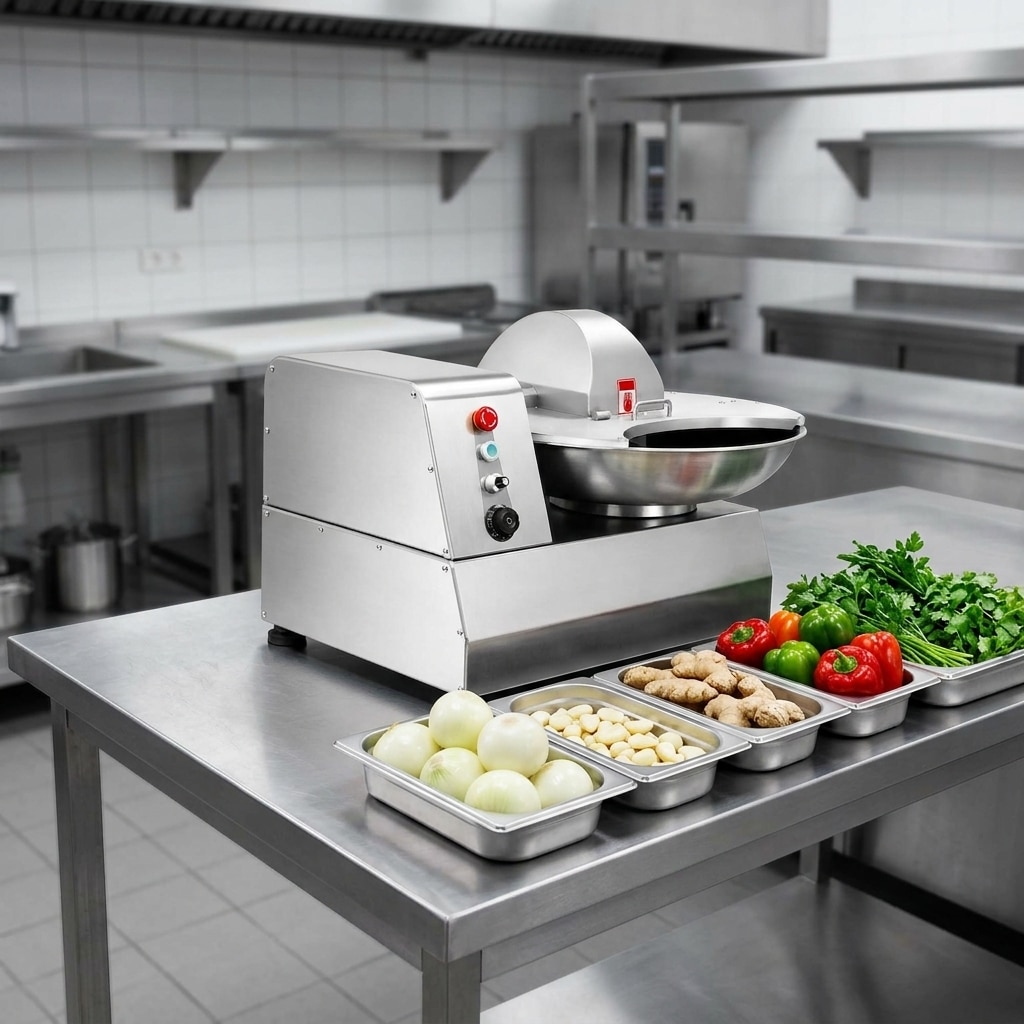
Commercial bowl cutters can also process many vegetables, herbs, and aromatics. Common examples include onions, garlic, ginger, leafy herbs, peppers, mushrooms, and cooked or soft vegetables used in fillings, sauces, prepared foods, and seasoning bases. The machine can create anything from a rough chop to a fine paste-like texture, depending on the ingredient and processing method.
Wash and inspect produce before processing, then remove unsuitable parts such as stems, stones, ties, labels, and damaged material. Cut large vegetables into manageable pieces before loading. Very dry or light ingredients may not circulate in the bowl in the same way as a moist product, while watery vegetables can release liquid quickly when finely cut. Both factors affect the batch result.
Operators should separate allergen-containing recipes and strongly flavoured ingredients from other production where required by their site controls. Garlic, onion, chilli, herbs, and spice blends can leave residues and aromas on food-contact surfaces, making prompt cleaning important before a different product is run.
For vegetable-heavy recipes, it is sensible to make a small trial batch first. This helps determine whether the desired result needs a coarse chop, a short fine-cut stage, or another preparation method before the bowl cutter is used.
Fats, Seasonings, and Other Additions
A bowl cutter processes more than the main protein or vegetable ingredient. It can distribute fats, salt, dry spices, fresh herbs, approved recipe liquids, ice, and certain binders or functional ingredients through a mixture. This makes it useful where even distribution is important to product appearance, texture, and batch consistency.
These additions should be loaded in a planned sequence rather than all at once. Fine powders can clump if added poorly, while liquids may pool or splash if they are introduced too quickly. Fat should be in a condition appropriate for the product and process. The correct approach depends on the recipe, raw materials, knife action, and target texture.
Measure additions accurately and keep a batch record when repeatability matters. This is particularly important for products that contain allergens, curing ingredients, or recipe components subject to local labelling and food-control requirements. A bowl cutter can help distribute ingredients, but it does not replace recipe validation, weighing procedures, or operator checks.
When changing products, inspect the bowl, knives, cover area, discharge points, and adjacent surfaces for residue. Small deposits of spices, powders, or fat can affect the next batch if cleaning is incomplete.
Prepared Food Mixtures
Beyond meat applications, a commercial bowl cutter may be used for selected prepared-food mixtures where controlled chopping and blending are needed. Examples can include stuffing mixtures, dumpling or pie fillings, vegetable blends, dips, spreads, cooked ingredient mixtures, and sauce bases. Suitability depends on the product’s texture, moisture level, ingredient size, and required final consistency.
Some recipes contain a combination of meat, vegetables, cooked starches, cheese, sauces, or seasonings. In these cases, operators should consider which ingredients should be cut first and which should be folded in near the end. An ingredient that is intended to remain visible in the finished product should not be subjected to the same knife time as an ingredient intended to form a smooth base.
For operations handling multiple product lines, a bowl cutter can support efficient batch preparation when the workflow includes clear separation of raw and ready-to-eat materials, controlled recipe changeovers, and thorough sanitation. Learn more about how commercial bowl cutters support high-volume food preparation when planning a broader production workflow.
What Should Not Go Into a Bowl Cutter
A commercial bowl cutter is designed for food ingredients that can safely circulate and be cut by the machine’s knife system. It should not be used as a substitute for a bone saw, a frozen-meat saw, or equipment intended for hard materials.
Do not load the following unless the machine manufacturer specifically confirms suitability for the product and application:
- bones, shell fragments, hard pits, stones, or other hard foreign material;
- solid frozen blocks that cannot circulate safely through the cutting zone;
- metal clips, plastic packaging, ties, labels, or utensils;
- excessively large pieces that have not been pre-cut;
- non-food materials or cleaning tools;
- ingredients that conflict with the site’s allergen, raw-to-ready-to-eat, or sanitation controls.
For bone-in or frozen meat cuts, use equipment designed for that task. A suitable cutting process protects the product, helps avoid premature knife damage, and supports safer operation. If a production line includes both cutting and bowl processing, review the intended role of each machine before purchase or installation.
Selection and Process-Control Factors
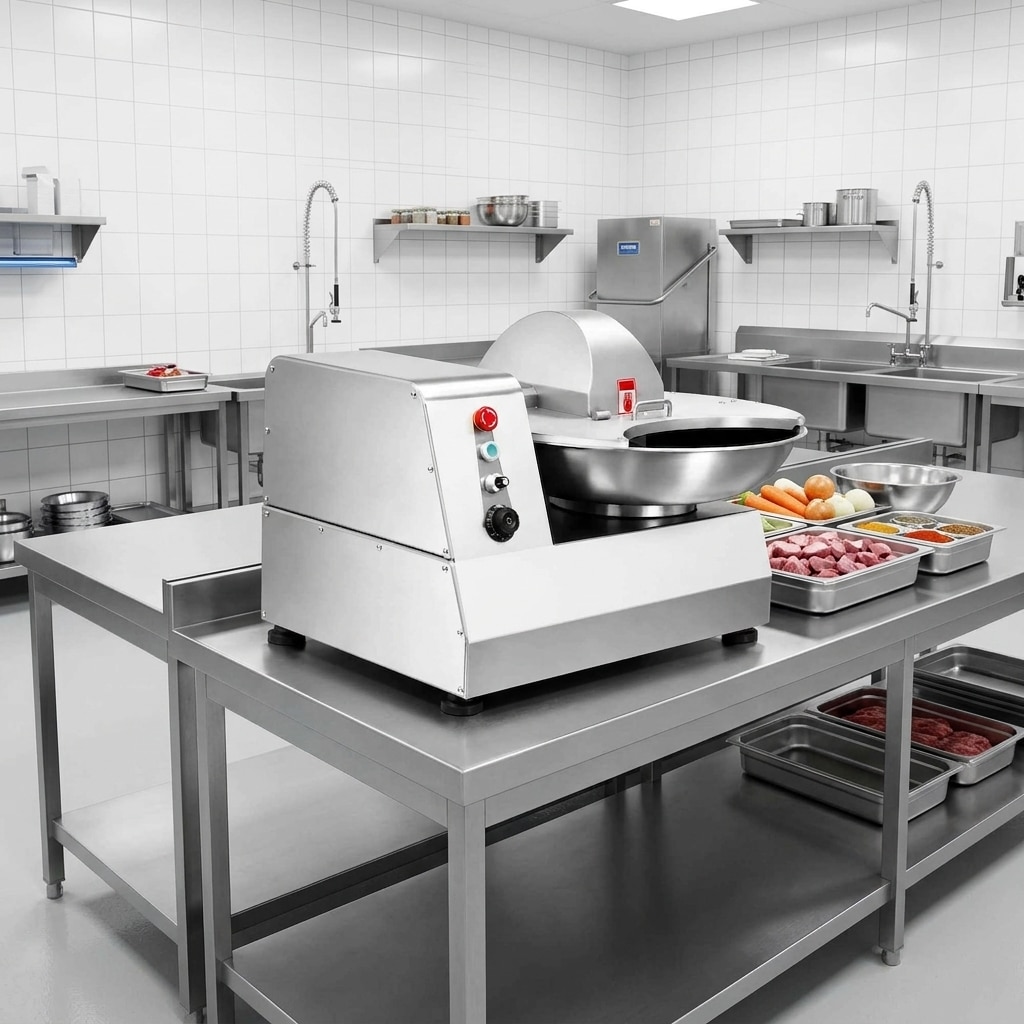
When selecting a commercial bowl cutter, start with the products you intend to make rather than choosing by machine size alone. A processor making coarse burger mix, a deli producing fine sausage meat, and a prepared-food kitchen making vegetable fillings may require different bowl size, knife configuration, process controls, and workflow arrangements.
Key questions for buyers include:
- What ingredients will be processed, and are they raw, cooked, chilled, or partly frozen?
- What texture is required: coarse chop, defined particle size, fine mince, or a smooth emulsion?
- What batch size fits the production schedule without routinely underloading or overloading the bowl?
- How will product temperature be monitored and managed?
- What electrical supply, floor space, access clearance, and cleaning area are available?
- What operator training, cleaning procedure, spare-parts access, and service support are needed?
Installation also affects process reliability. A stable position, correct electrical connection, safe access around the machine, and a defined cleaning routine should be established before production begins. Review this guide on setting up a bowl cutter in a commercial kitchen to plan the work area and operating controls.
Before committing to a production method, test representative ingredients and recipes. A trial should assess texture, temperature movement, ingredient distribution, cleaning time, and how the machine fits the wider workflow. This is more useful than assuming that one setting or knife time will work for every product.
Cleaning and Maintenance After Processing
The range of foods a bowl cutter processes makes cleaning especially important. Meat proteins, fat, vegetable fibres, herbs, spice powders, and allergens can remain on the bowl, knives, cover, discharge area, and nearby surfaces. Cleaning should take place according to the site’s food-safety procedure and the machine instructions after each relevant production run or changeover.
Before cleaning, stop the machine, isolate it from its energy source, and follow the manufacturer’s safe-access instructions. Do not reach into the knife area while the machine is connected to power. Use appropriate tools and personal protective equipment required by the site, particularly around sharp blades.
Knife care also affects both product quality and operating consistency. Dull or damaged blades can change cutting performance and may encourage operators to extend processing times unnecessarily. Check knife condition routinely and investigate unusual vibration, noise, poor cutting, or inconsistent texture before continuing production.
Use the step-by-step resource on how to clean and sanitize a commercial bowl cutter to support a structured cleaning routine. For blade-related operating factors, see how to prevent bowl cutter blades from dulling early.
Conclusion
A commercial bowl cutter can process a broad range of suitable food ingredients, including chilled meat, poultry, fish, fat, vegetables, herbs, seasonings, and selected prepared-food mixtures. Its value is the ability to combine controlled cutting and mixing within a batch, but the correct result depends on recipe design, raw-material preparation, temperature management, knife condition, and disciplined cleaning.
For the best fit, define the ingredients, required texture, batch pattern, site utilities, sanitation plan, and operator workflow before selecting equipment. This approach helps ensure that the bowl cutter supports the products you actually intend to make and the daily routine needed to make them consistently.