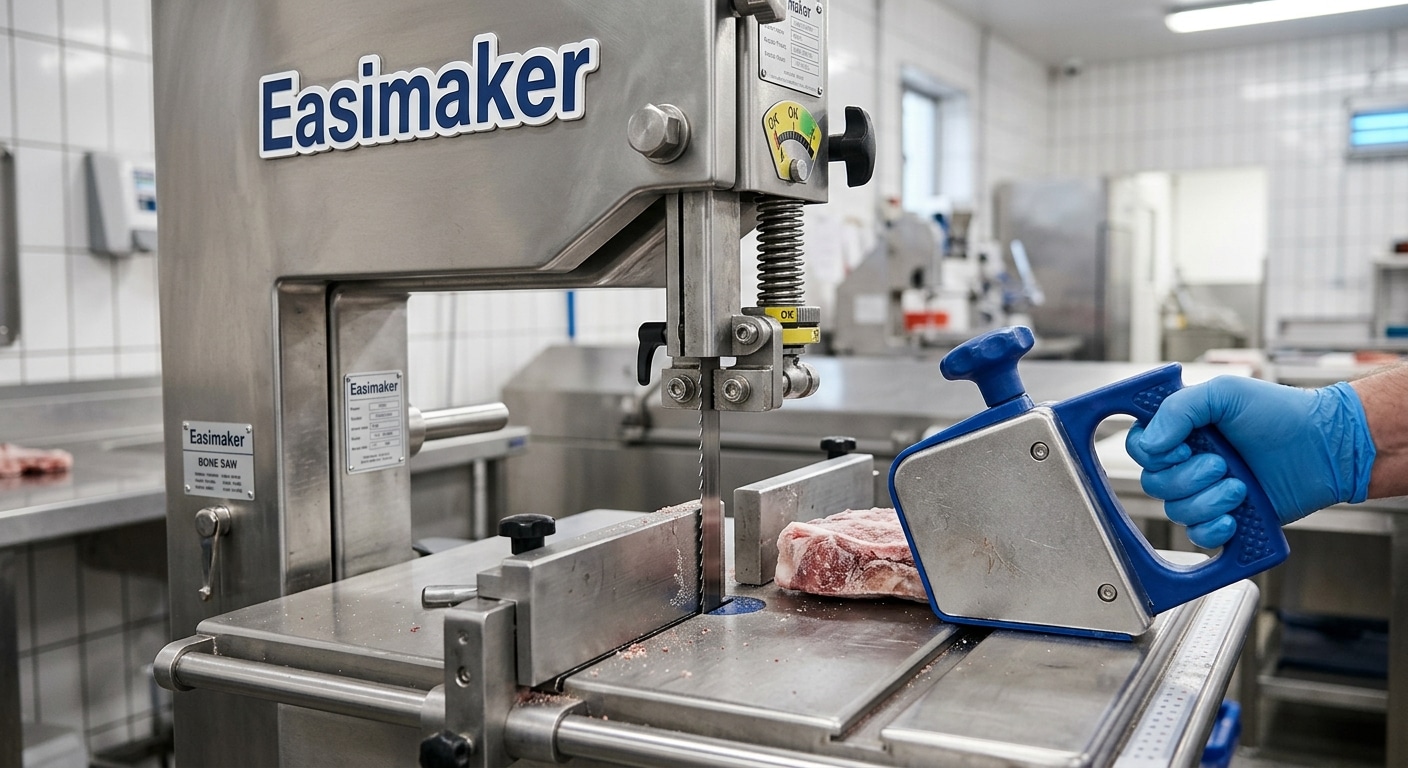
Commercial Meat Bone Saw Buying Guide for Processors

Table of Contents

Choosing a commercial meat bone saw requires more than comparing motor power. Processors should evaluate the products being cut, portion dimensions, workload, cleaning requirements, operator safety, installation conditions, and after-sales support. This guide explains the practical factors that affect machine selection and daily operation.

What Processors Should Look For
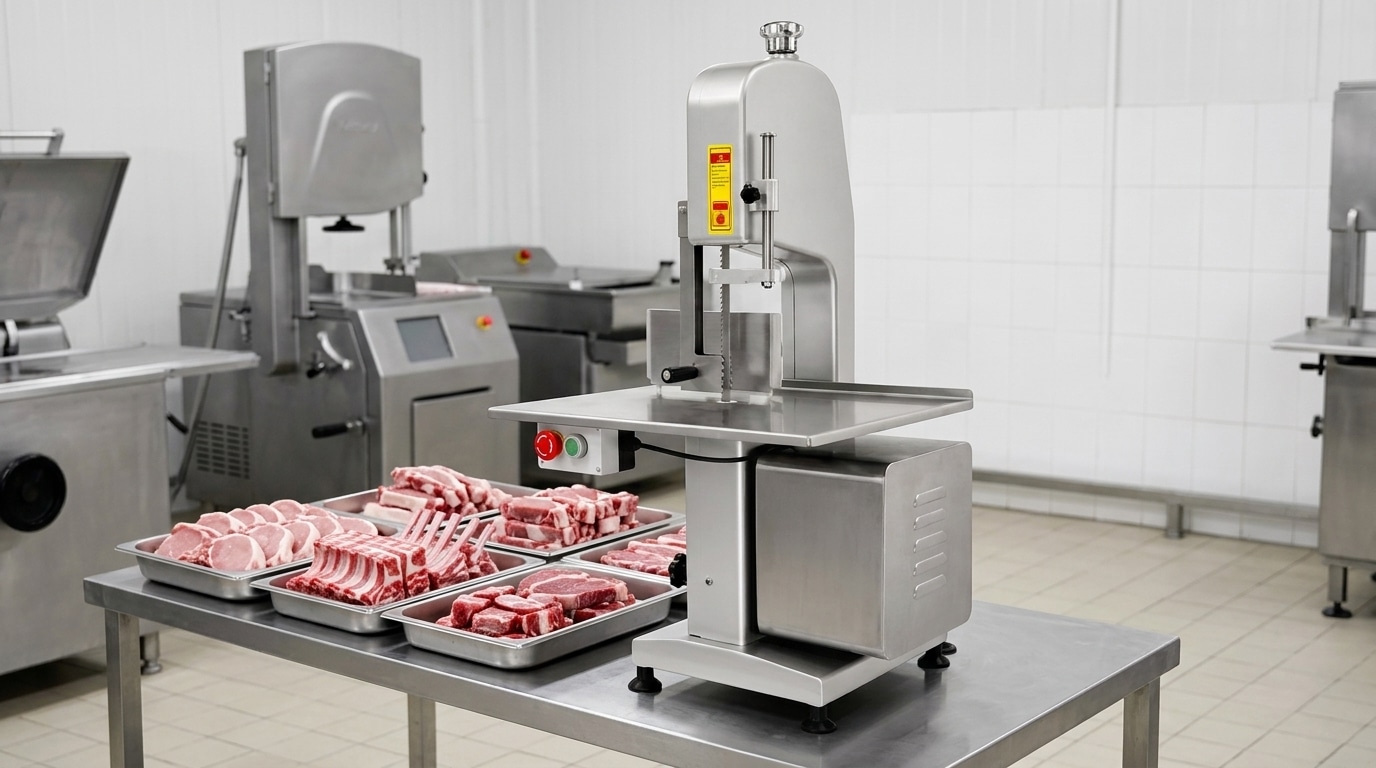
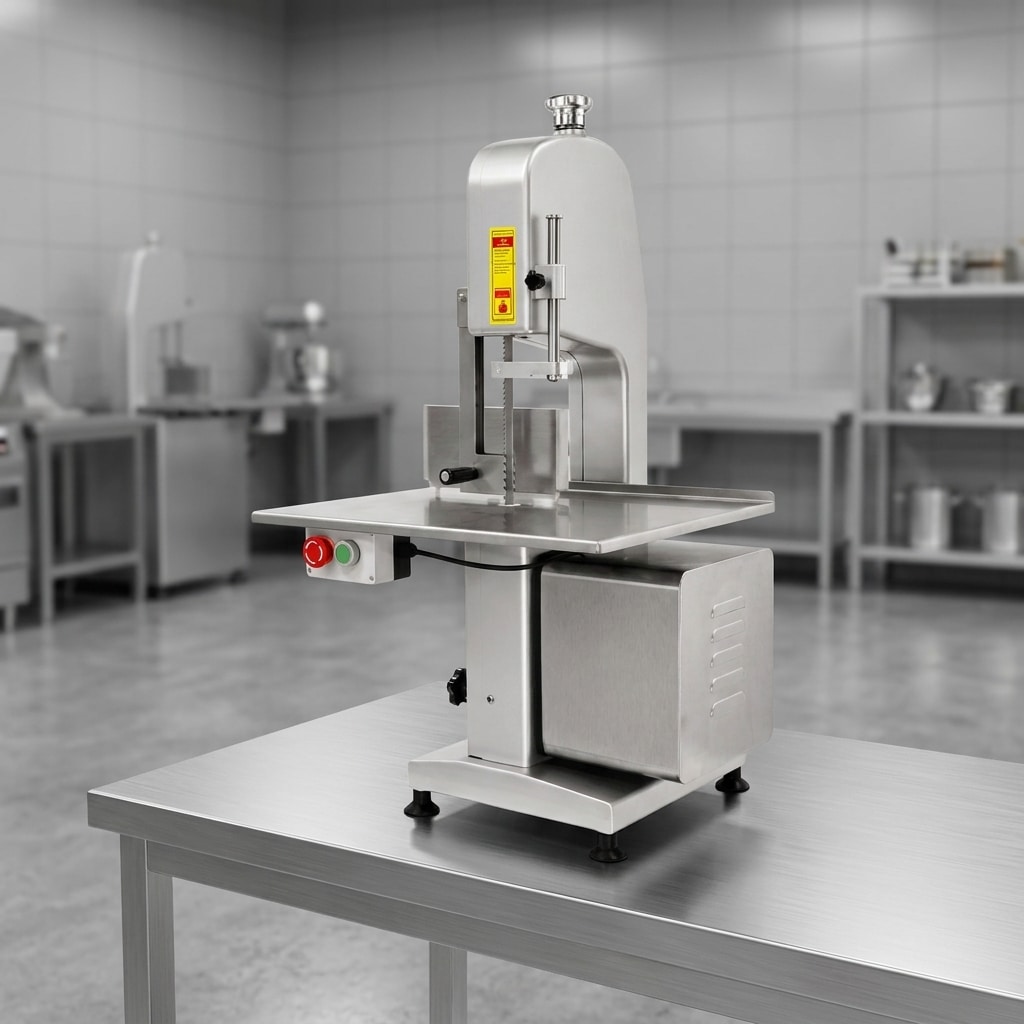
Commercial meat bone saw prepared for processor operations

The right commercial meat bone saw should match the products you cut, the size and thickness of your portions, your daily workload, available floor or bench space, local electrical supply, cleaning procedure, and operator skill level. A suitable machine should provide stable cutting, practical access for cleaning, appropriate guarding, and dependable support for replacement and service parts.

Start by documenting the actual work the machine will perform. Record whether you cut fresh or chilled meat, frozen products, poultry, fish, or products containing hard bone. Note the largest product dimensions, the target portion sizes, the number of operating hours per day, and how many operators will use the saw. These details are more useful than choosing a machine from motor power alone.

For a broader purchasing checklist, see the guide to commercial bone saw machine buying considerations. It can help organize questions before requesting quotations.

What Is a Commercial Meat Bone Saw?
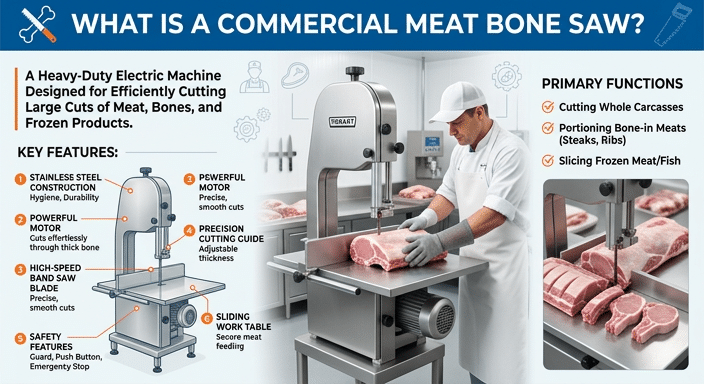
What Is a Commercial Meat Bone Saw?

A commercial meat bone saw is a powered cutting machine that uses a continuous band blade to divide meat, bone, and selected frozen or semi-frozen food products into portions. The blade runs around a set of wheels while the operator guides the product across the cutting table or through the cutting area. Depending on the machine design, it may be installed on a workbench or supplied as a freestanding unit.

Bone saws are commonly used by butcher shops, meat processors, supermarkets, restaurants, hotels, catering businesses, and food distribution operations. They are intended for repeatable portioning and controlled cutting where a hand saw would be slower, less consistent, or more physically demanding.

A meat bone saw is not the same as a meat grinder or bowl cutter. A grinder reduces meat into smaller particles, while a bowl cutter chops, mixes, or emulsifies prepared ingredients. A bone saw divides larger pieces into sections or portions without performing the same mixing or mincing process.

The machine should be selected according to its intended product range. A saw designed for routine meat and bone portioning may not be suitable for every frozen product, oversized cut, or industrial production line. Always confirm the manufacturer’s stated application limits and operating instructions before purchase.

Match the Saw to Your Products
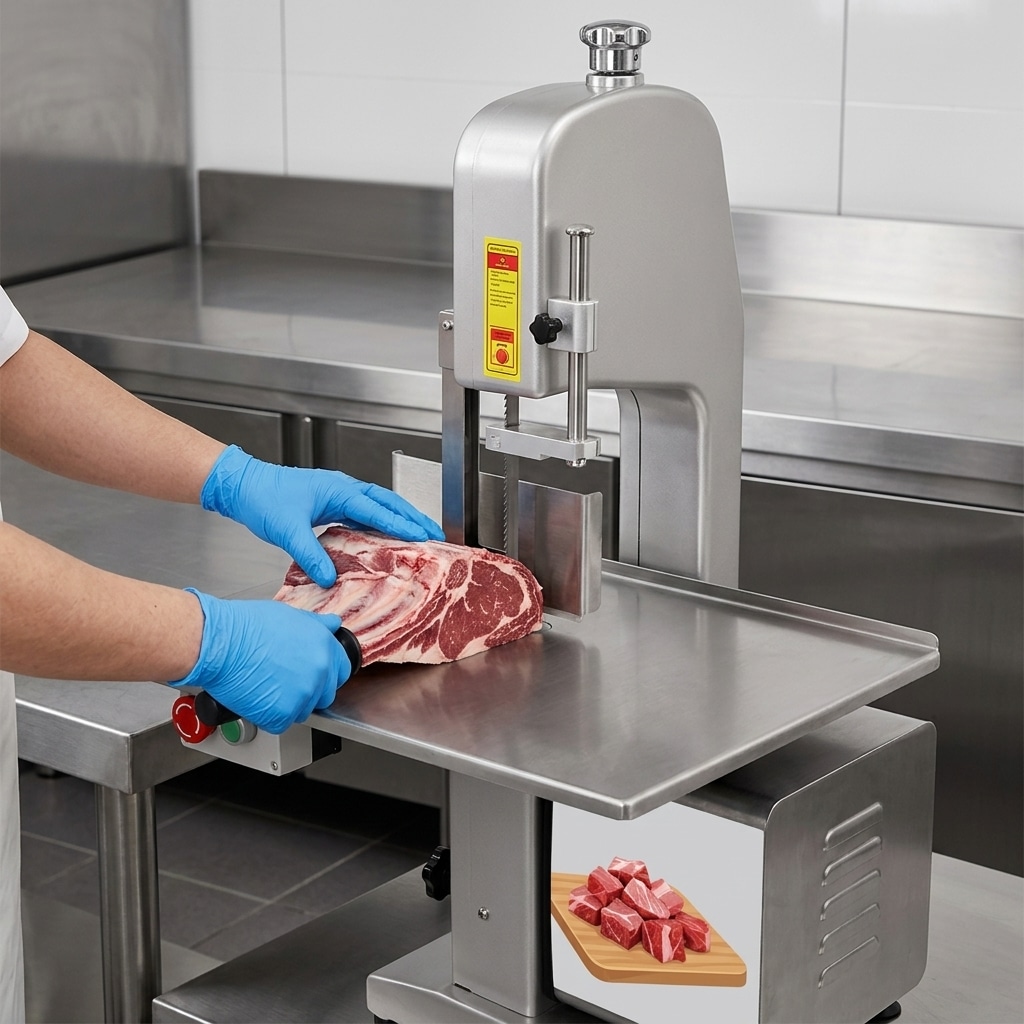
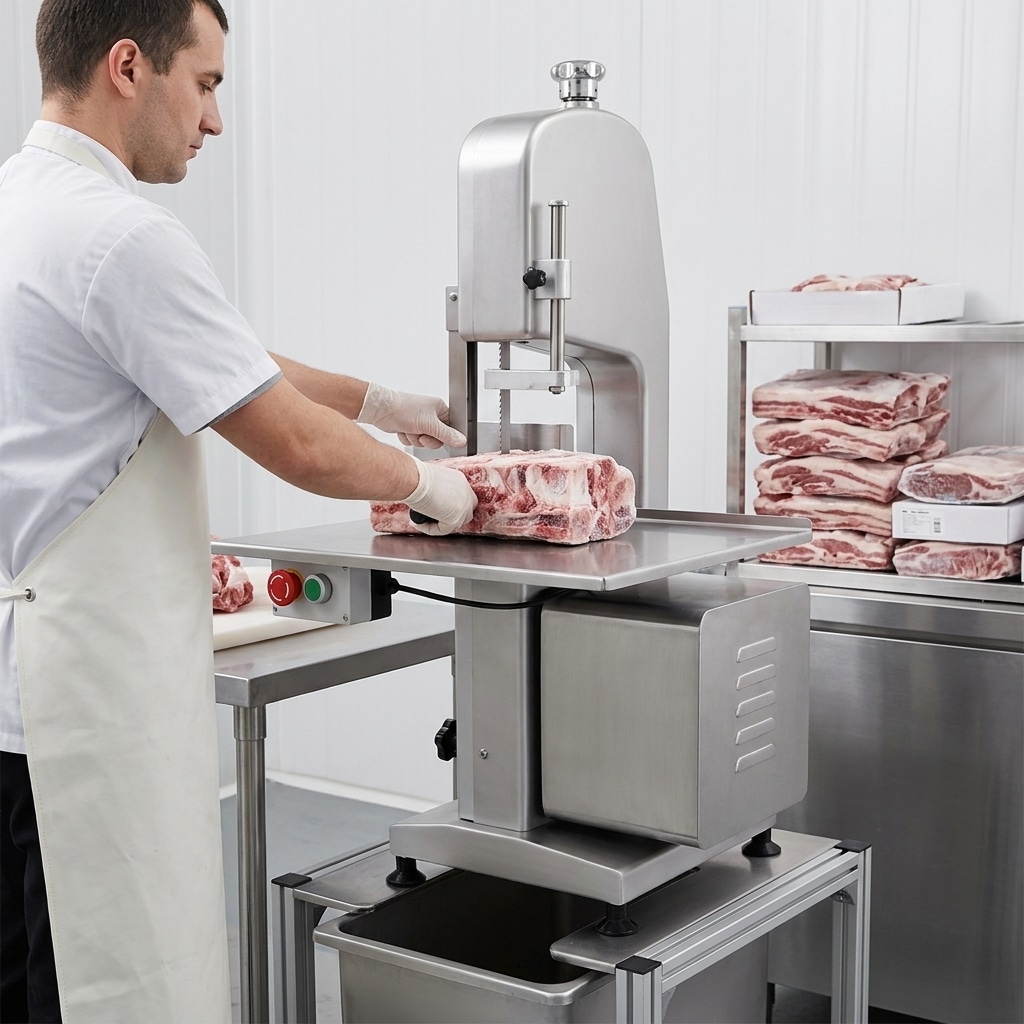
Operator positioning a meat and bone cut for portioning

Product fit is the first technical question to resolve. The machine must accommodate the material’s size, temperature, structure, and cutting requirements. A processor handling small retail portions has different needs from a facility cutting large primal sections or frozen blocks.

Product dimensions and cutting height

Check the maximum cutting height and throat or passage width. These dimensions determine whether the saw can accept the largest piece you expect to process. Consider the product’s shape as well as its weight. An irregular cut may require more table space and operator clearance than a compact, uniform piece.

Fresh, chilled, frozen, or semi-frozen product

Product temperature affects cutting resistance, blade choice, surface quality, and operator control. Fresh and chilled meat may require a different operating approach from hard frozen material. Do not assume that a machine suitable for routine bone cutting is automatically suitable for every frozen product. Ask the supplier to confirm the intended temperature range and blade configuration.

Bone structure and portion requirements

Different bones and product shapes place different demands on the blade. Dense sections, joints, and mixed meat-and-bone cuts may require careful feeding and a suitable tooth pattern. If you need consistent portions, define the required thickness and confirm that the table, guide, and operator position support repeatable movement.

Practical cutting methods also matter. The guide to meat band saw cutting techniques for consistent portions covers product preparation, guide settings, blade condition, and controlled feed pressure.

Evaluate Capacity and Workflow

Evaluate Capacity and Workflow

Capacity should be assessed from the complete workflow rather than a single advertised figure. A saw may have enough cutting power for the product but still be unsuitable if loading, unloading, cleaning, or portion handling creates a bottleneck.

Estimate the number of cuts per hour, the average product size, the expected peak workload, and the time available for cleaning and inspection. These figures help determine whether a tabletop machine is adequate or whether a floor-standing model would better support the operation. They also provide a clearer basis for comparing suppliers.

Consider the space around the machine. Operators need enough room to position raw material, guide it safely, collect portions, and keep finished product separate. The location should also allow access to surfaces, guards, blade components, and other areas that require routine cleaning.

Workflow design affects consistency. A stable infeed position, clear product path, practical thickness guide, and easy access to collection containers can reduce unnecessary handling. The best configuration depends on your facility layout, product flow, and staffing pattern.

Before ordering, ask for confirmed dimensions, net weight, table or working height, electrical requirements, blade information, and recommended operating limits. Where the supplier cannot confirm a figure, treat it as an open specification rather than estimating from a similar model.

Check Construction and Hygiene
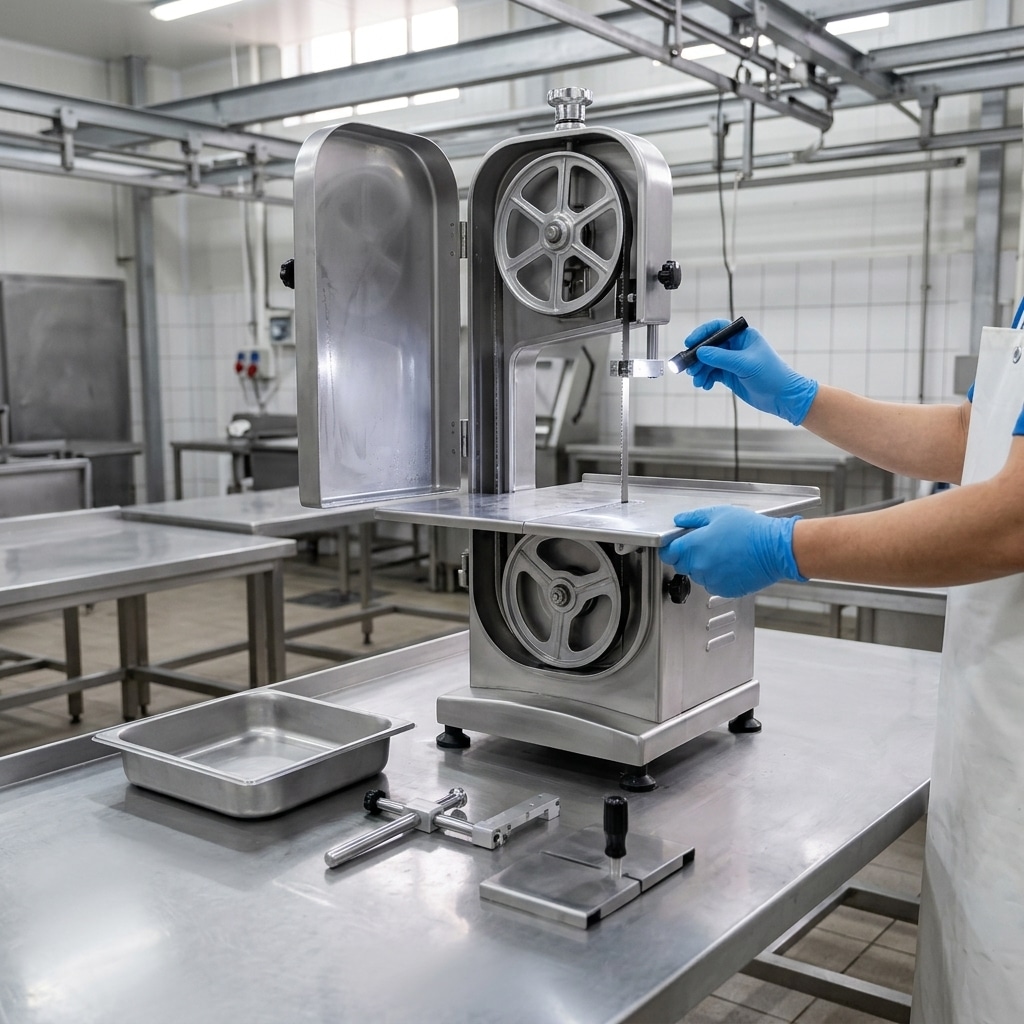
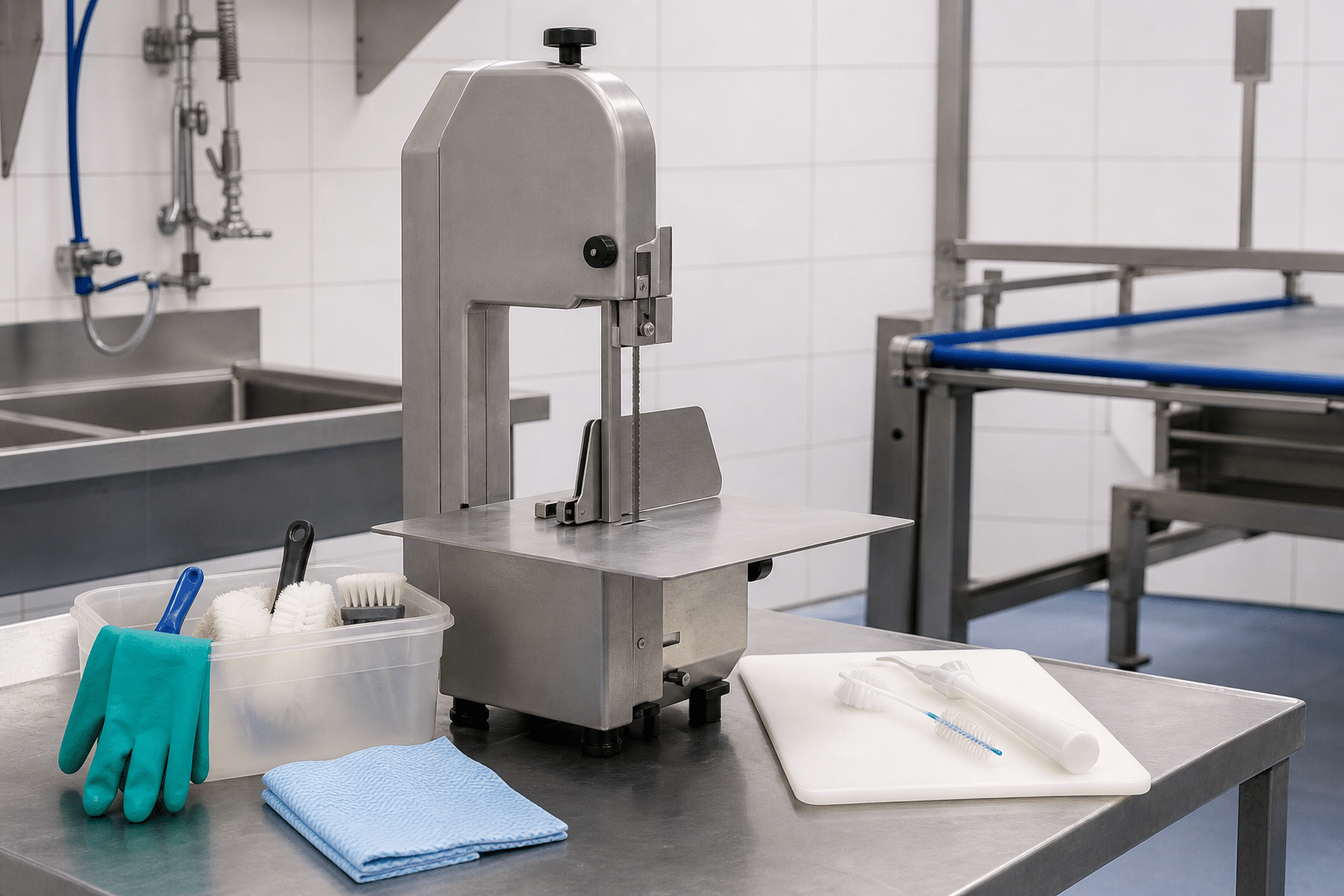
Cleaning and inspecting a stainless steel meat bone saw

Construction influences durability, cleaning time, corrosion resistance, and the machine’s suitability for a food-processing environment. Review the materials used for the frame, table, guards, product-contact areas, and fasteners. The exact material specification should be confirmed in the quotation or technical documentation.

Look for a design that gives operators practical access to areas where meat particles, fat, moisture, and bone residue can collect. Smooth surfaces, limited dirt traps, removable components where appropriate, and clear cleaning instructions support a more consistent sanitation routine. A machine that is difficult to disassemble or inspect can create avoidable maintenance and hygiene problems.

Cleaning procedures must follow the manufacturer’s manual and the processor’s own food-safety program. Operators should understand which components may be removed, which electrical parts must be protected, which detergents are suitable, and how the machine must be dried before reassembly.

Bone dust is a process concern that should be managed through blade selection and condition, stable product preparation, controlled feeding, and correct guide use. See how to reduce bone dust when using a meat band saw for practical operating and maintenance points.

Review Safety and Operation

Review Safety and Operation

A commercial meat bone saw contains a continuously moving blade, so guarding, controls, operator training, and working discipline are essential selection factors. Ask the supplier to explain the safety functions included with the specific model and how they should be checked during operation.

Review the position and function of the start and stop controls, emergency stopping arrangements, blade guards, door or cover interlocks if fitted, product pusher or thickness guide, and any access restrictions around the cutting area. Confirm that these functions are described in the manual and can be maintained locally.

Operators should be trained to inspect the blade and guards before use, keep hands away from the cutting path, use the supplied guides or pushers, avoid forcing product through the blade, and stop the machine before clearing a blockage or making an adjustment. Only trained personnel should change or tension the blade.

A written operating procedure should also cover start-up, shutdown, cleaning, inspection, fault reporting, and blade replacement. Safe operation depends on the complete system of equipment, training, supervision, and maintenance, not on a machine feature considered in isolation.

Plan Cleaning, Maintenance, and Service
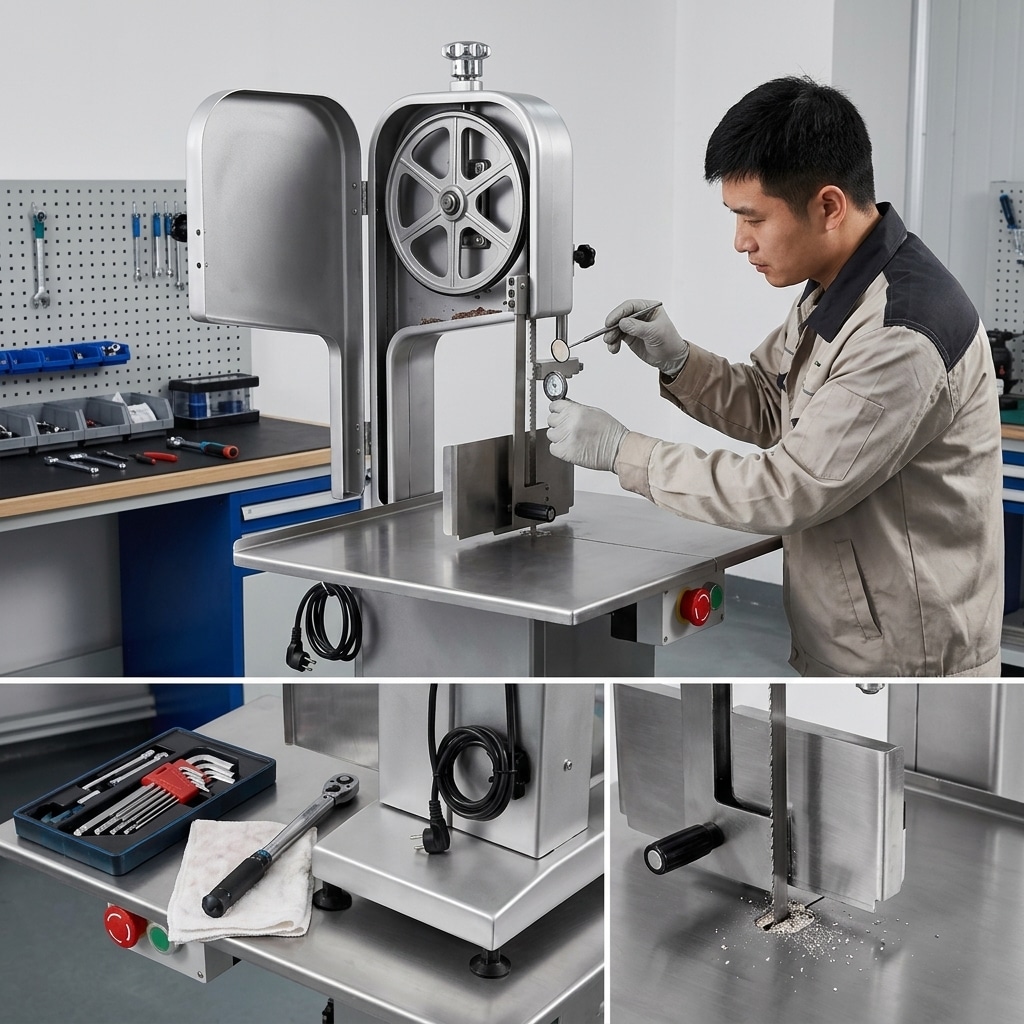
Technician inspecting a commercial meat bone saw blade and guard

Before purchase, ask what routine maintenance the saw requires and which parts are considered wear items. The list may include blades, guides, scrapers, bearings, seals, switches, or other components, depending on the model. Confirm availability, lead times, and ordering channels for the market where the machine will operate.

Blade condition has a direct effect on cutting control and the quality of the cut. A damaged, dull, incorrectly tensioned, or incorrectly installed blade can increase resistance and create inconsistent results. Operators should follow the manual for inspection, tensioning, alignment, cleaning, sharpening policy, and replacement.

Daily checks should include the blade, guards, table, guides, wheels, controls, and visible electrical or mechanical damage. After production, clean and sanitize the machine according to the approved procedure, then dry and reassemble the relevant parts. Keep a simple record of cleaning, blade changes, faults, and service work.

Supplier support matters when a machine is part of a daily production process. Compare the clarity of the manual, training information, spare-parts response, troubleshooting assistance, warranty terms, and local dealer or service options. A lower purchase price may not be the most practical option if routine support is difficult to obtain.

Commercial Meat Bone Saw Buying Checklist
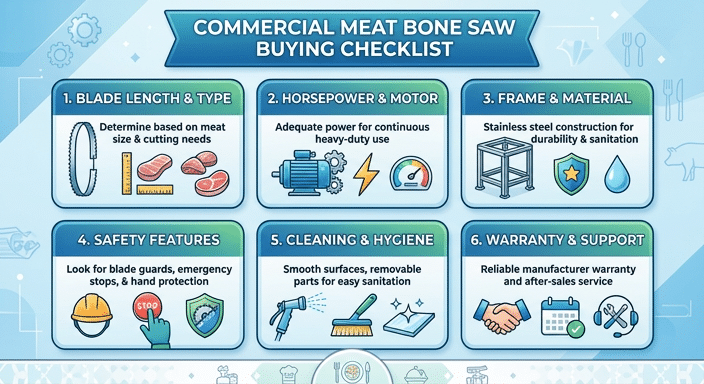
Commercial Meat Bone Saw Buying Checklist

Use the following checklist when comparing commercial meat bone saw machines or preparing a request for quotation:

  • Product: What meat, bone, poultry, fish, frozen, or semi-frozen products will be cut?
  • Dimensions: What are the largest product height, width, length, and weight?
  • Portions: What cut thickness and level of consistency are required?
  • Workload: How many cuts, batches, or operating hours are expected per day?
  • Installation: Is a tabletop or floor-standing format more suitable for the available space?
  • Power: Does the machine match the site’s voltage, phase, frequency, and connection requirements?
  • Hygiene: Can operators reach, remove, clean, dry, and reassemble the relevant parts?
  • Safety: What guards, controls, emergency stops, guides, and interlocks are included?
  • Blades: Which blade types are supplied, and how are replacements sourced?
  • Support: What manuals, spare parts, warranty coverage, training, and service assistance are available?

Send this information to the supplier with photos or drawings of unusual products where possible. A clear application description allows the supplier to confirm suitability and identify specifications that still need verification.

For a second perspective on model selection, review how to choose a commercial meat bone saw machine. The final decision should be based on documented product fit, operating conditions, total workflow, and support arrangements.

Discuss Your Processing Requirements

Share your product dimensions, target portions, daily workload, installation conditions, and local power requirements with Easimaker. Our team can help clarify the suitable commercial meat bone saw configuration, confirm open specifications, and discuss quotation or support requirements for your market.
Request a Quote

Tabletop vs Floor Bone Saws: Which Fits Your Operation?

Table of Contents

A tabletop bone saw is usually the practical choice for compact, moderate-volume cutting stations, while a floor bone saw better suits operations that need a dedicated cutting area, larger work surface, or more continuous processing. The right decision depends on workflow, product size, sanitation access, electrical supply, and operator safety—not machine size alone.

Quick Answer: Tabletop or Floor Bone Saw?

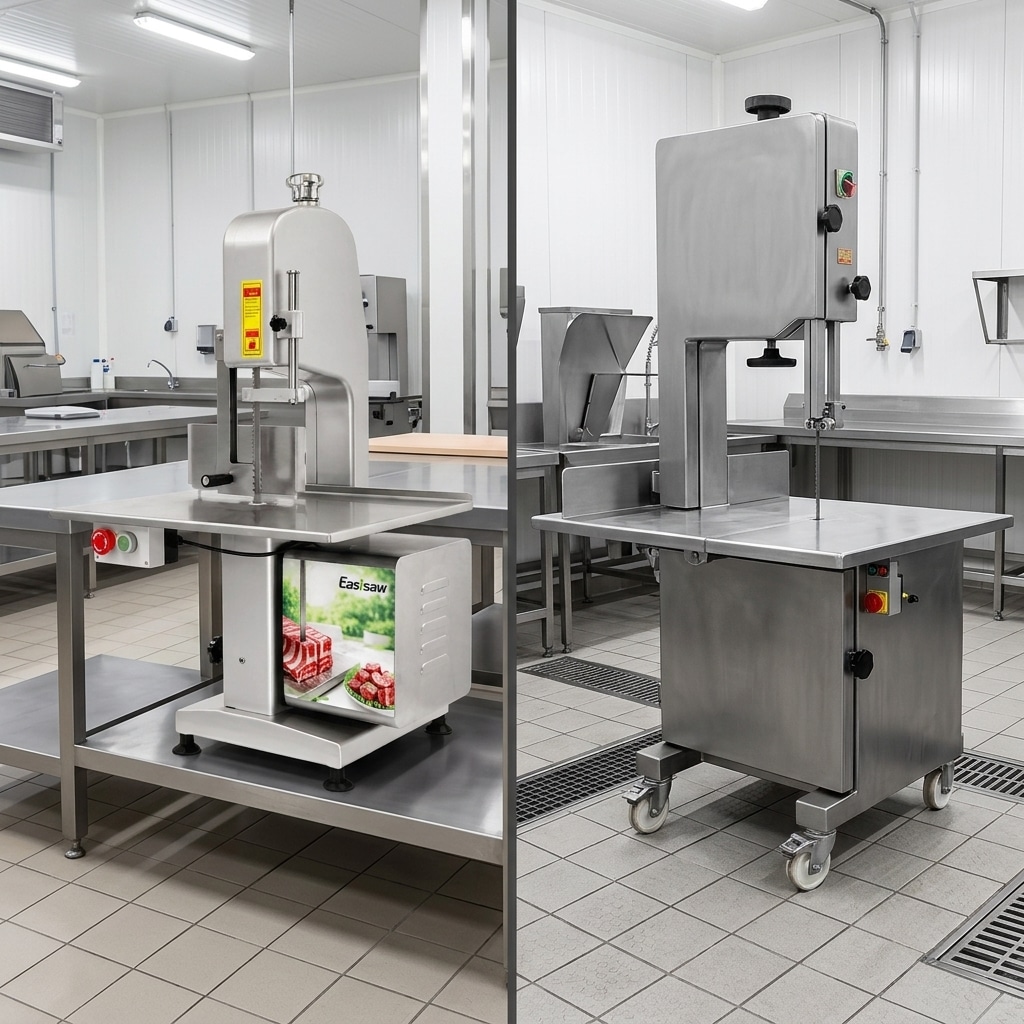
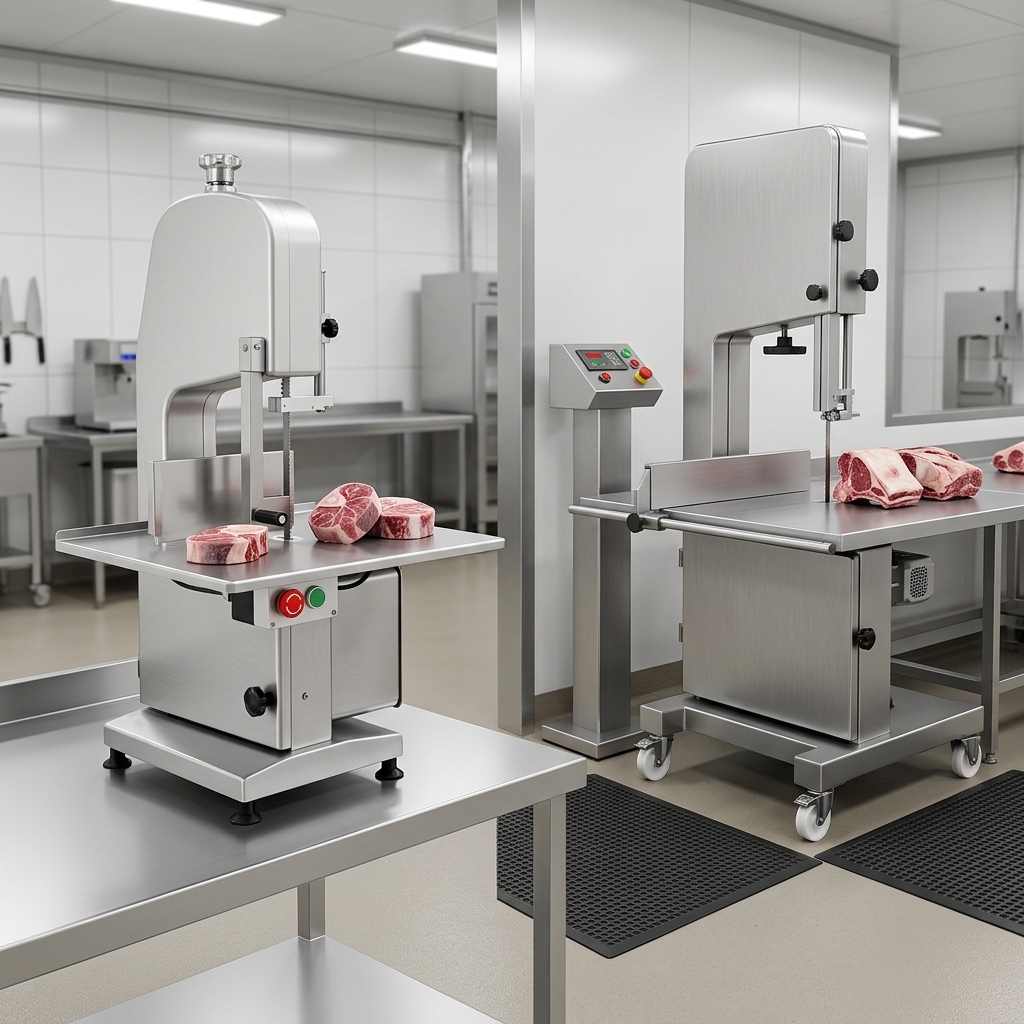
Tabletop and floor commercial bone saws in separate hygienic food-processing workstations

For most buyers comparing a tabletop vs floor bone saw, the correct choice comes down to the cutting station you are building.

A tabletop bone saw is generally suitable when you have a sound, hygienic bench, limited floor area, moderate cutting demand, and a workflow based on short processing periods. It can be a sensible format for butcher counters, small meat shops, restaurant preparation areas, and specialist retail operations where the machine must fit into an existing work line.

A floor bone saw is generally more suitable when the saw is a dedicated production station. It may be the better fit for larger cuts, repeated portioning work, higher daily handling volume, or facilities that can allocate permanent floor space around the machine for loading, cutting, collection, and cleaning.

Do not assume that a larger machine is automatically the better commercial choice. A floor-standing unit can create an inefficient workflow if it is oversized for the available room or difficult to clean around. Equally, a tabletop unit can become a poor fit if operators lack enough bench strength, clear working space, or room to handle incoming and cut product safely.

Understanding Tabletop and Floor Bone Saws

Commercial tabletop bone saw installed on a stainless-steel workbench

Commercial bone saws are commonly used to portion meat, poultry, fish, and bone-in products. Depending on the machine design and the product being processed, they may also be described as meat band saws. They use a continuous saw blade running through a guarded cutting area, with a work table that supports the product during the cut.

Tabletop models are designed to sit on a suitable workbench or purpose-built stand. Their compact format helps businesses use vertical space rather than allocate a full floor position. However, the supporting surface is part of the installation: it must be stable, level, hygienic, correctly sized, and capable of supporting the machine and normal handling activity.

Floor models are freestanding machines that occupy a defined work zone. Their format can make sense where a business wants a dedicated cutting area and more room for product handling. In practice, the useful difference is not simply height. It is how the machine integrates with receiving, chilled storage, preparation tables, packaging, waste handling, and cleaning routines.

Specifications differ substantially by model. Before comparing formats, review the manufacturer’s published dimensions, cutting clearance, table arrangement, blade specification, electrical requirements, guarding, and cleaning instructions for the exact machine under consideration.

Choose by Workflow, Not Footprint Alone

Planned meat-processing workflow with a dedicated bone saw cutting station

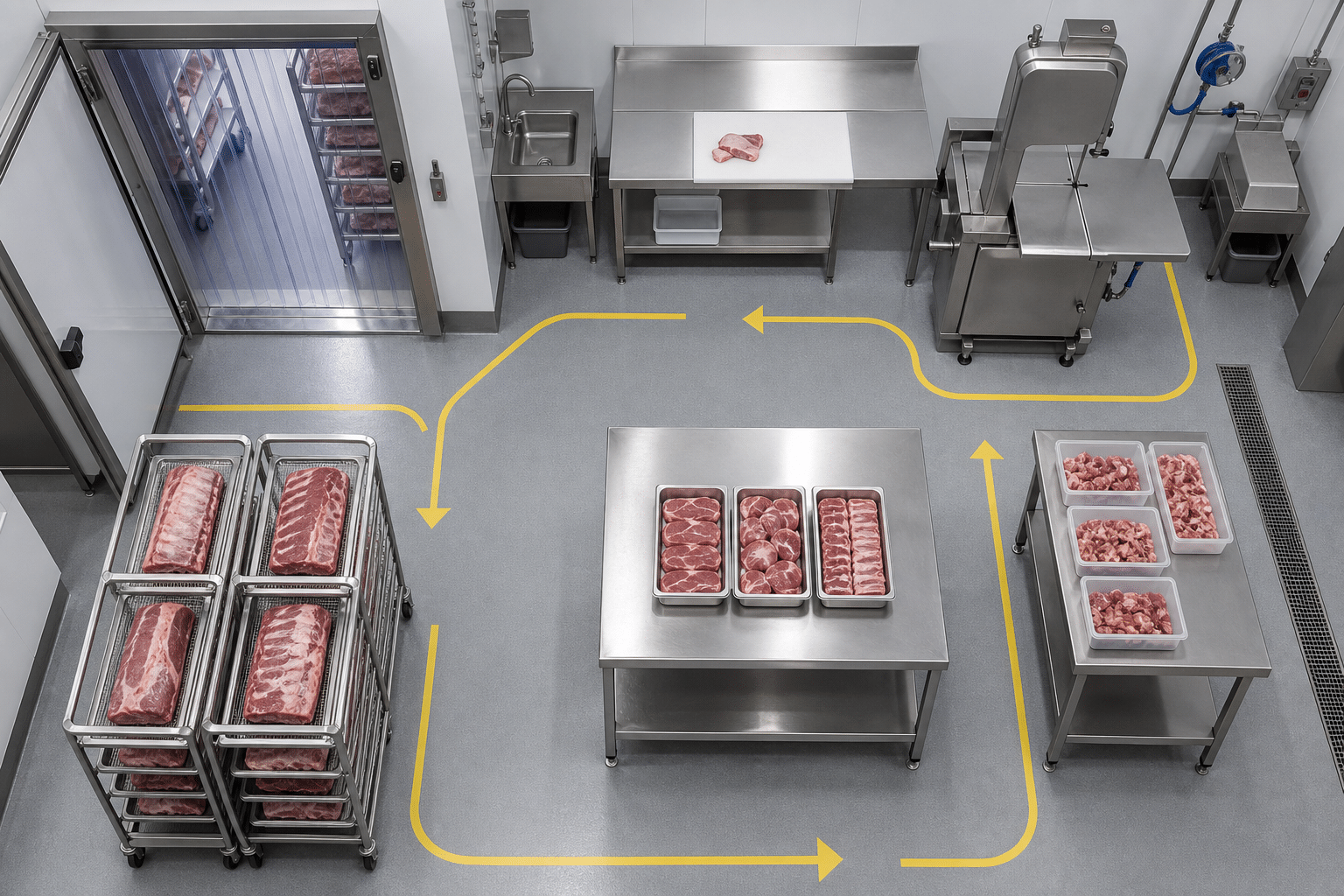
Start the selection process by mapping one normal working day. Identify where product arrives, where it is kept chilled, where it is unwrapped, where it is cut, and where portions go next. This simple exercise often makes the right format clearer than a catalogue comparison.

When a tabletop bone saw may fit best

  • You have a compact preparation room or retail backroom.
  • Cutting is one step within a broader preparation task rather than a continuous production activity.
  • A properly designed stainless-steel workbench or equipment stand is already available.
  • Operators need the saw close to other counter-height preparation equipment.
  • Product can be staged safely before and after cutting without blocking walkways.

When a floor bone saw may fit best

  • The saw will be used frequently throughout the day.
  • You need a permanent, dedicated cutting station with clear access on all working sides.
  • The product mix includes larger or awkward bone-in pieces that need more handling room.
  • Your facility can support an orderly flow from chilled storage to cutting, packing, and sanitation.
  • You want to avoid placing a heavy machine on an existing bench that was not designed for the task.

Also consider downstream preparation. Where portioned material moves into grinding, mixing, or further processing, the saw should be positioned to reduce unnecessary carrying and cross-traffic. In larger food-preparation workflows, a commercial bowl cutter workflow guide can help teams consider how separate processing stations should be arranged and sequenced.

Key Selection Criteria for Commercial Buyers

Use the following criteria to compare a tabletop and floor machine on an operational basis.

1. Product range and cutting envelope

List the products you expect to cut, including typical dimensions, temperature condition, bone density, and the largest occasional item. The available cutting clearance and work-table layout must suit real products, not only the average item. If products arrive frozen or partially frozen, confirm that the intended use is permitted by the machine supplier and applicable local food-safety rules.

2. Daily workload pattern

Consider whether cutting occurs in short batches, at retail service intervals, or as a sustained production task. A compact tabletop machine can be efficient for intermittent work. A floor unit may support a more organised dedicated station when demand is frequent or product handling is more involved. Avoid selecting solely by a claimed output figure; actual results depend on product condition, cut type, operator technique, blade condition, and safe working procedures.

3. Available work area

Measure more than the machine footprint. Allow space for the operator, product trays, safe loading, discharge of cut pieces, cleaning access, and unobstructed passage. A tabletop saw also requires a stable support surface with enough surrounding clearance. A floor saw requires an appropriate floor location that does not conflict with doors, drains, cold-room access, or emergency routes.

4. Electrical compatibility

Confirm voltage, frequency, phase, plug type, earthing, and local installation requirements from the rating plate and product documentation before purchase. Electrical requirements are model-specific and can vary by market. Equipment should be installed by a qualified person where local rules require it.

5. Cleaning access and hygiene controls

Look carefully at how the blade area, table, guides, guards, doors, and residue collection areas can be accessed for daily cleaning. A machine that is difficult to clean consistently can create avoidable downtime and food-safety risk. Your cleaning chemicals and method should always follow the machine manual and your site’s hygiene programme.

6. Service and spare-parts planning

Blade replacement, tensioning checks, guide adjustment, and inspection of safety components should be practical within your maintenance plan. Ask about documentation, recommended routine checks, replacement parts, and the support process before committing to a machine.

Installation and Workspace Planning

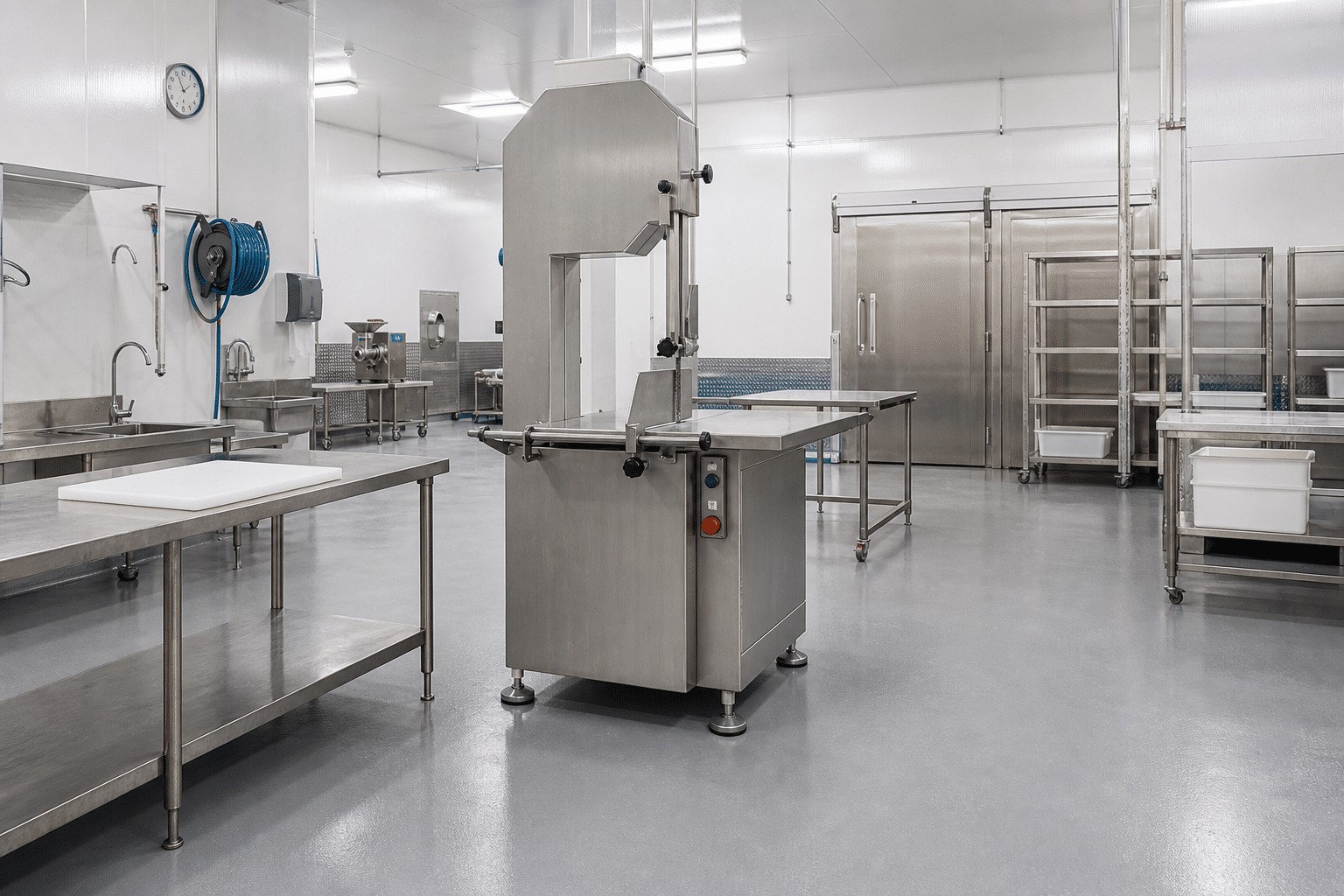
Floor bone saw with clear workspace around a dedicated cutting area

A well-planned installation protects both productivity and safe handling. For a tabletop saw, confirm that the bench or stand is level, rigid, corrosion-resistant, easy to clean, and designed for the installed equipment load. Do not place a machine on a movable, damaged, or unsuitable counter simply because the footprint appears to fit.

For a floor saw, plan the location as a complete workstation. The operator needs room to position product, use the supplied pusher or handling tools, collect cut portions, and access controls without reaching across the blade path. The area should also allow safe cleaning and inspection with the machine isolated from power.

In either format, consider these practical points:

  • Keep the machine away from congested routes and door swings.
  • Provide suitable lighting so operators can see the work surface and product clearly.
  • Keep packaging materials, loose tools, and unnecessary containers out of the cutting zone.
  • Plan separate clean and raw-product handling areas in line with your food-safety procedures.
  • Check drainage, wall clearance, and washdown arrangements against the machine documentation.
  • Make sure power isolation is accessible and that the electrical supply matches the machine requirement.

Before commissioning, document the intended use, train operators on the specific machine, and retain the operating manual at the site. A correct layout cannot replace operator training, but it makes safe practices easier to maintain during busy periods.

Cleaning, Safety, and Maintenance Requirements

Commercial bone saw prepared for safe cleaning and routine inspection

Whether you select a tabletop or floor unit, operating discipline matters more than the format. Bone saws involve a moving blade and sharp cut surfaces. The machine must be used only by trained personnel who understand the manufacturer instructions, site procedures, and relevant local workplace and food-safety requirements.

Basic operating controls should include keeping hands clear of the blade path, using the supplied pusher or product-holding method where applicable, ensuring guards are correctly fitted, avoiding unstable product positioning, and stopping the machine before clearing jams or carrying out adjustments. Never bypass safety devices or improvise a guard, blade, or electrical repair.

Daily hygiene should begin after the machine is safely shut down and isolated according to its instructions. Remove product residue from accessible areas, clean and sanitise components as permitted by the manufacturer, dry parts where required, and reassemble correctly before the next use. Do not direct water or cleaning chemicals at electrical components unless the equipment documentation specifically permits the method.

A preventive maintenance routine should include inspection of blade condition, blade tracking and tension where applicable, guards, table surfaces, guides, fasteners, switches, and electrical cable condition. Replace worn or damaged parts promptly with compatible parts. For a practical overview, review these bone saw safety and maintenance protocols alongside the instructions for your exact machine.

Common Buying Mistakes to Avoid

The following errors can lead to avoidable installation changes, difficult cleaning routines, or an inefficient cutting line.

  • Choosing only by machine dimensions: A compact unit may still need significant operator and tray clearance, while a large machine may not improve workflow if it is poorly positioned.
  • Ignoring the support surface: Tabletop equipment is only as stable and hygienic as the bench or stand beneath it.
  • Buying for the average product only: Check the largest, heaviest, and most awkward products expected during normal operation.
  • Overlooking power supply details: Do not assume that voltage or plug arrangements match your site. Verify all electrical requirements before shipment and installation.
  • Separating purchasing from sanitation planning: Cleaning access, local washdown practices, chemical compatibility, and drainage should be reviewed before the machine arrives.
  • Underestimating operator training: The safest machine design still depends on correct setup, product handling, cleaning, and inspection by trained staff.

A more reliable buying process is to prepare a short site brief covering product types, daily workflow, room dimensions, utility details, hygiene procedures, and operator requirements. This gives suppliers enough information to advise on a suitable equipment format without relying on assumptions.

Making the Final Decision

Choose a tabletop bone saw when a compact, stable, easy-to-integrate counter-height station matches your product mix and workload. Choose a floor bone saw when you need a permanent cutting zone with more surrounding handling space and a workflow built around regular processing activity.

The best decision is based on the complete operating picture: product dimensions, cutting frequency, available room, bench or floor suitability, cleaning access, local electrical supply, operator training, and support requirements. Ask suppliers to assess these factors against the documented specifications of the exact model, rather than relying on a broad tabletop-versus-floor label.

Easimaker Technology Limited supports commercial buyers with practical equipment discussions for daily food-processing operations. If your business also requires adjacent preparation equipment, it is useful to evaluate each station as part of one coordinated production flow rather than purchasing machines in isolation.

How to Choose a Commercial Meat Bone Saw Machine

Table of Contents

Choose a commercial meat bone saw machine around the products you cut, the size of each cut, daily workload, available space, cleaning routine, and local power supply. A suitable machine should fit the operator’s real workflow rather than simply offering the largest table or motor.

How to choose the right commercial bone saw

Commercial meat bone saw machine in a clean food processing workspace

Choose a commercial meat bone saw machine by first defining what you will cut: fresh meat, frozen meat, bone-in portions, poultry, fish, or larger primal cuts. Then confirm the maximum product dimensions, expected cutting periods, available counter or floor space, electrical supply, cleaning process, and the support available after installation.

The best choice is not automatically the largest machine. A compact butcher counter may need a tabletop saw that is easy to position and clean. A dedicated processing room may need a floor-standing machine with a larger working area and more space around the cutting zone. In both cases, the machine, blade, guards, worktable, and operator procedures must suit the actual product and daily routine.

Before comparing models, make a simple list of your hardest product, largest product, busiest service period, staff experience level, and site limitations. This turns a broad equipment search into a practical specification that a supplier can assess accurately.

Start with the products and workflow

Fresh and frozen meat products prepared for commercial bone saw selection

Product condition has a major effect on saw selection. Fresh cuts, chilled meat, frozen blocks, and bone-in products do not present the same cutting resistance or handling requirements. A machine intended for occasional trimming of chilled cuts may not be the right fit for repeated cutting of hard frozen products. Be precise about the temperature condition in which product normally reaches the cutting station.

Also consider the cut you need to produce. Portioning ribs, cutting poultry, splitting bone-in meat, and reducing larger blocks can require different table support, clearance, blade characteristics, and operator handling. Bring sample dimensions or a written range of product sizes to the supplier discussion. The maximum width, height, and length matter more than an average piece.

Workflow is equally important. Ask whether staff will make intermittent cuts during retail service or process batches in a preparation period. A busy batch operation needs a clear route for receiving product, cutting, collecting portions, packing, and cleaning down. A poorly planned layout can slow work even when the saw itself is capable of the required cut.

For a more detailed assessment of product hardness and handling, review this guide to choosing a bone saw for fresh versus frozen meat. It is useful when one operation handles both chilled and frozen inventory.

Choose between tabletop and floor models

Tabletop and floor-standing commercial bone saw workspace layouts

The first format decision is usually tabletop versus floor-standing. A tabletop commercial bone saw can be a practical option where counter space is available, product sizes are moderate, and the cutting station must fit into a compact butcher shop, market, restaurant, or deli preparation area. The supporting bench must be stable, level, capable of carrying the equipment safely, and positioned to allow cleaning around the machine.

A floor-standing bone saw is generally better suited to a dedicated cutting area where operators need more working room, a larger table surface, or easier handling of larger products. It can also simplify workstation planning by creating a permanent processing position rather than occupying a multi-use counter.

Do not decide by footprint alone. Measure the full operating envelope, including access for loading product, using the pusher, collecting cut portions, opening removable parts for cleaning, changing blades, and allowing staff to move safely. Confirm doorways, delivery routes, floor condition, drainage arrangements, and the distance to refrigerated storage.

See the practical comparison of tabletop and floor bone saws for commercial operations before choosing a format. It can help buyers match the machine style to available room and expected workload.

Check cutting area, clearance, and machine layout

Evaluate the usable cutting area rather than relying on overall machine dimensions. The worktable must support the product securely while leaving the operator enough room to guide it with the intended pusher or feeding aid. If the product overhangs the table or cannot be held in a controlled position, the cutting task may be unsuitable for that model.

Confirm the manufacturer’s stated cutting clearance and compare it with the largest product you expect to process, including irregular shapes. A large bone-in cut may need more height or throat clearance than a regular frozen block. Allow a sensible margin rather than selecting a machine that only just accommodates the largest item.

Look at the layout of the table, fence, blade area, scrap collection zone, and product exit path. An adjustable guide can support consistent portion sizes, but it should be easy for staff to set, verify, and clean. The collection area should prevent cut pieces from falling into an unsuitable location or interrupting the operator’s movement.

Where repeatable portioning is important, establish a documented setting and check it during the shift. This is often more reliable than expecting operators to judge every cut by eye. Training, product preparation, and a stable guide setting all contribute to a consistent result.

Match the blade and electrical supply

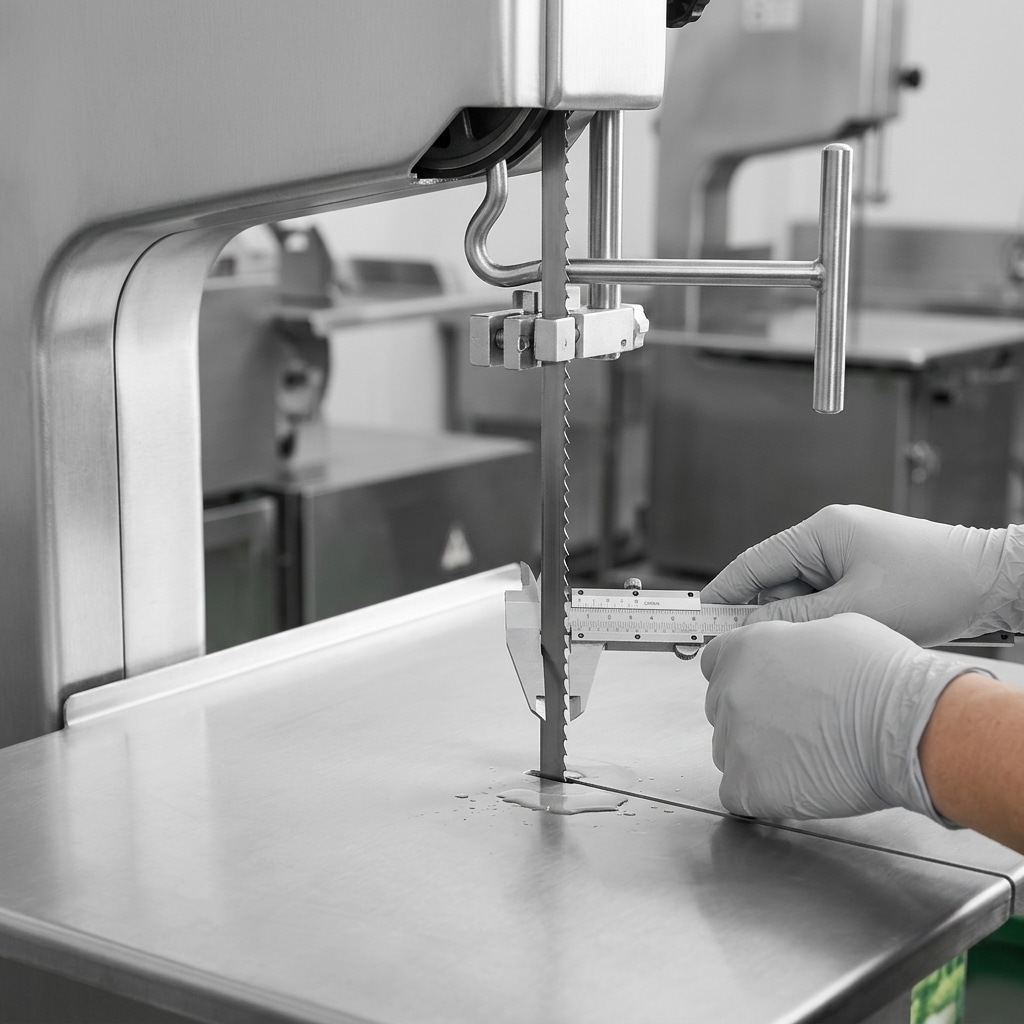
Inspection of a commercial meat band saw blade

The blade is a working component, not an afterthought. Its dimensions must match the saw manufacturer’s requirements exactly. Blade tooth form and tooth pitch should be selected for the product being cut, especially where frozen meat, bone, or different product types are involved. An unsuitable or worn blade can reduce cut quality, increase product handling time, and place unnecessary stress on the equipment.

Ask the supplier which blade specification is recommended for your planned products, whether replacements are readily available in your market, and what the correct fitting procedure is. Keep replacement blades in suitable storage and establish a clear inspection routine. Staff should know when to stop using a blade because of damage, poor cutting performance, or other visible concerns.

This commercial meat band saw blade selection guide explains why blade size and tooth configuration need to match both the machine and the product.

Electrical compatibility also requires careful confirmation. Check the rating plate requirements for voltage, frequency, phase, plug type, and any installation requirements against the actual supply at the intended location. Do not assume that a machine supplied for one market will connect correctly in another. A qualified local professional should assess site electrical work where required by local rules.

Prioritise hygiene and practical cleaning

A commercial meat bone saw machine should be selected with the cleaning routine in mind. Meat and bone residue can collect on the table, guide, blade area, guards, wheels, and nearby surfaces. The machine should be positioned so that operators can access the parts that need cleaning without unsafe reaching or moving heavy equipment unnecessarily.

Before purchase, ask which components are removable for routine cleaning, how they are removed, whether tools are needed, and how parts should be reassembled. Request the operating and cleaning instructions for the specific model. A cleaning process that is too complex for the available shift time is less likely to be carried out consistently.

Plan cleaning as part of the work schedule rather than treating it as an extra task. Separate clean and unclean tools, use food-contact-safe cleaning and sanitising products according to their instructions, and allow parts to dry appropriately before reassembly. Follow local food hygiene regulations and your site’s documented sanitation procedures.

Also review the floor and surrounding workstation. Splash control, waste handling, drainage, handwashing access, and cleaning-tool storage all influence whether the saw can be maintained hygienically in day-to-day use.

Review operator safety requirements

Bone saw selection must include operator safety from the beginning. Confirm that the machine configuration, guards, intended pusher or product-holding methods, controls, and emergency-stop arrangements are suitable for your local requirements and workplace risk assessment. The operator needs a clear, stable position with adequate lighting and enough space to handle product without rushing.

Never treat training as optional. Operators should be trained on startup and shutdown, correct product feeding, use of guards and pushers, blade awareness, cleaning, blade replacement procedures, fault reporting, and isolation before maintenance. Supervisors should verify that the documented operating method is followed, particularly when new staff start work or product types change.

Do not use a damaged blade, missing guard, loose component, or machine that behaves unexpectedly. Remove the equipment from service, isolate it as required by site procedure, and arrange inspection by an appropriately competent person. Routine checks before a shift can identify visible issues before they become an operating problem.

For an operational reference, read the essential safety and maintenance protocols for commercial bone saw machines. Always follow the instructions supplied with the specific machine and applicable local rules.

Consider service, spares, and total operating cost

Purchase price is only one part of the decision. A dependable commercial bone saw programme also considers delivery, installation preparation, operator training, routine cleaning time, blades, wear parts, planned maintenance, repair support, and possible downtime. The lowest initial price may not offer the best value if replacement parts or technical guidance are difficult to obtain.

Ask practical support questions before placing an order: Which routine parts are expected to require replacement? How can the correct blade be identified and ordered? What information is needed when requesting technical help? Are manuals and parts diagrams available? Who will provide support in your region? Clear answers help the buyer plan rather than react to a stoppage.

For multi-site businesses, standardising equipment and consumables can simplify staff training, blade purchasing, cleaning documentation, and maintenance records. For a single site, it is still useful to keep a machine record containing model details, serial information, installation date, blade specification, service history, and reported issues.

When comparing quotations, ensure they describe the same scope. Check whether the quoted configuration, electrical version, included accessories, blade supply, documentation, packaging, shipping terms, and support arrangements are directly comparable.

Commercial bone saw purchase checklist

Use this checklist when speaking with a commercial meat bone saw machine supplier:

  • What fresh, chilled, frozen, and bone-in products will be cut?
  • What are the maximum product dimensions and approximate product weights?
  • Will cutting be occasional service work or regular batch processing?
  • Is a tabletop or floor-standing layout more suitable for the site?
  • What usable cutting area and clearance are required?
  • What blade dimensions and tooth configuration are specified for the planned products?
  • Does the site electrical supply match the machine rating requirements?
  • Can staff access all required cleaning areas and carry out reassembly correctly?
  • What training, safety procedures, spare parts, and technical support will be available?
  • Does the proposed machine fit local food hygiene and workplace requirements?

A well-defined brief helps a supplier recommend an appropriate configuration and reduces the risk of selecting a machine that is oversized, undersized, or unsuitable for the product mix. Keep product details and site photographs ready when requesting a quotation, as they can help clarify fit before delivery.

What Can a Commercial Bowl Cutter Process?

Table of Contents

A commercial bowl cutter can chop, mince, mix, and emulsify many food ingredients, especially meat, fat, seasonings, vegetables, herbs, and selected prepared-food mixtures. Results depend on ingredient preparation, knife condition, batch size, processing time, and temperature control.

What a Commercial Bowl Cutter Can Process

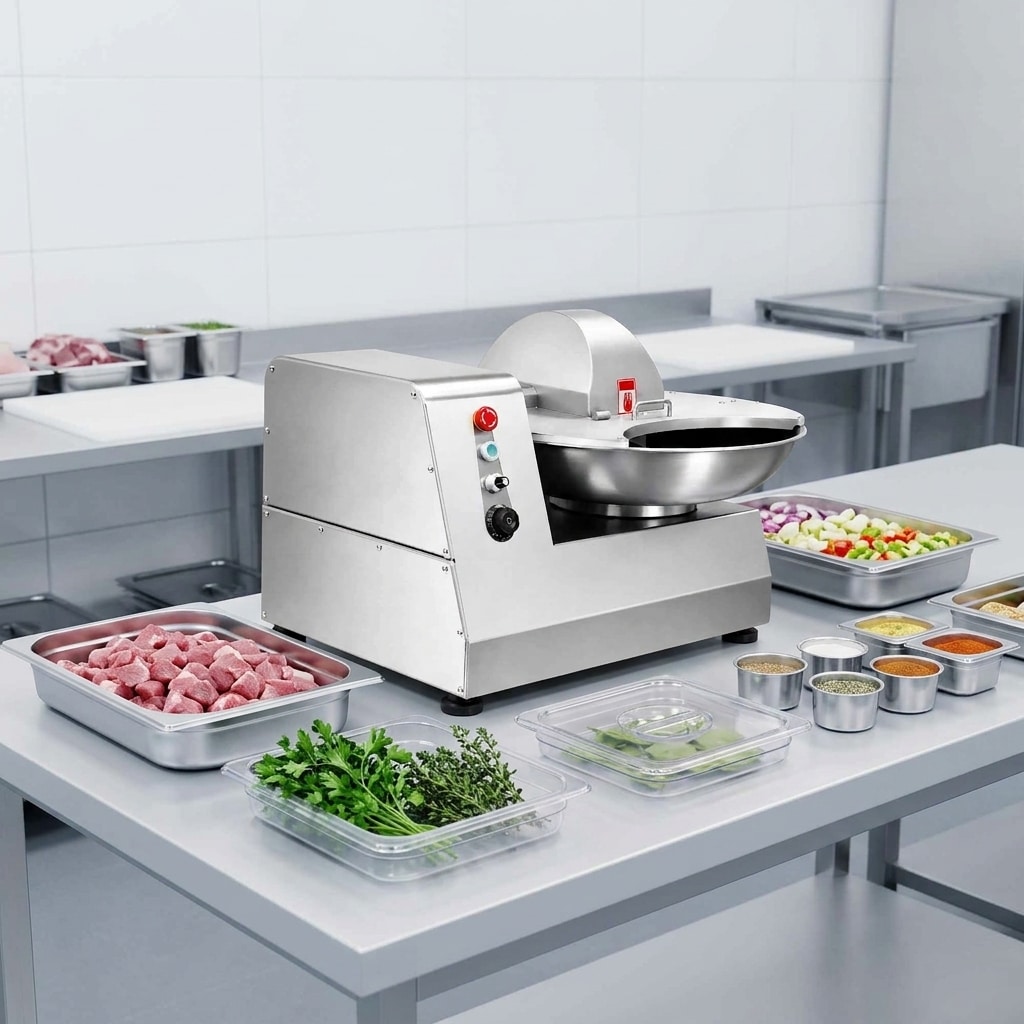
Commercial bowl cutter with suitable meat, vegetables, herbs, and seasonings ready for processing

A commercial bowl cutter can process chilled meat, poultry, fish, fat, vegetables, herbs, aromatics, seasonings, and many mixed food preparations. It is commonly used to chop, mince, blend, and, where the recipe and process allow, create a fine meat or food emulsion. Typical applications include sausage meat, burger mixes, meat fillings, pâté-style mixtures, chopped vegetables, herb blends, and selected prepared-food ingredients.

The machine is not a universal grinder or a bone-processing machine. Good results depend on using ingredients that are appropriate for knife cutting, preparing them to a manageable size, controlling the batch, and stopping at the intended texture. Hard foreign objects, bones, frozen solid blocks, and unsuitable packaging must be kept out of the bowl.

For a buyer asking what can a commercial bowl cutter process, the practical answer is: ingredients that need controlled cutting and mixing in one batch. The final product may be coarse, medium, finely chopped, or smooth, depending on the recipe, knife action, ingredient order, and processing time.

How a Commercial Bowl Cutter Works

Commercial bowl cutter in a clean food production setting

A bowl cutter, also called a bowl chopper in some markets, uses rotating knives and a moving bowl to repeatedly cut ingredients. As material travels through the knife zone, it is reduced and redistributed through the batch. This action allows operators to combine cutting and mixing instead of moving ingredients between separate machines for every stage.

The result is controlled by several connected variables:

  • Raw-material condition: chilled, trimmed, and portioned ingredients generally process more predictably than warm, irregular, or oversized pieces.
  • Knife condition: sharp, correctly maintained knives cut more cleanly than dull knives.
  • Batch size: an underloaded or overloaded bowl can reduce mixing consistency.
  • Processing time: longer processing usually creates a finer texture, but it can also change the product unnecessarily.
  • Ingredient sequence: the point at which water, ice, fat, seasonings, binders, or vegetables are added affects the result.
  • Temperature: temperature monitoring is important for meat and other sensitive food products.

A bowl cutter is therefore best viewed as a process machine, not simply a chopping machine. Operators should define the intended texture before processing and use a repeatable loading and timing procedure.

Meat, Poultry, and Fish

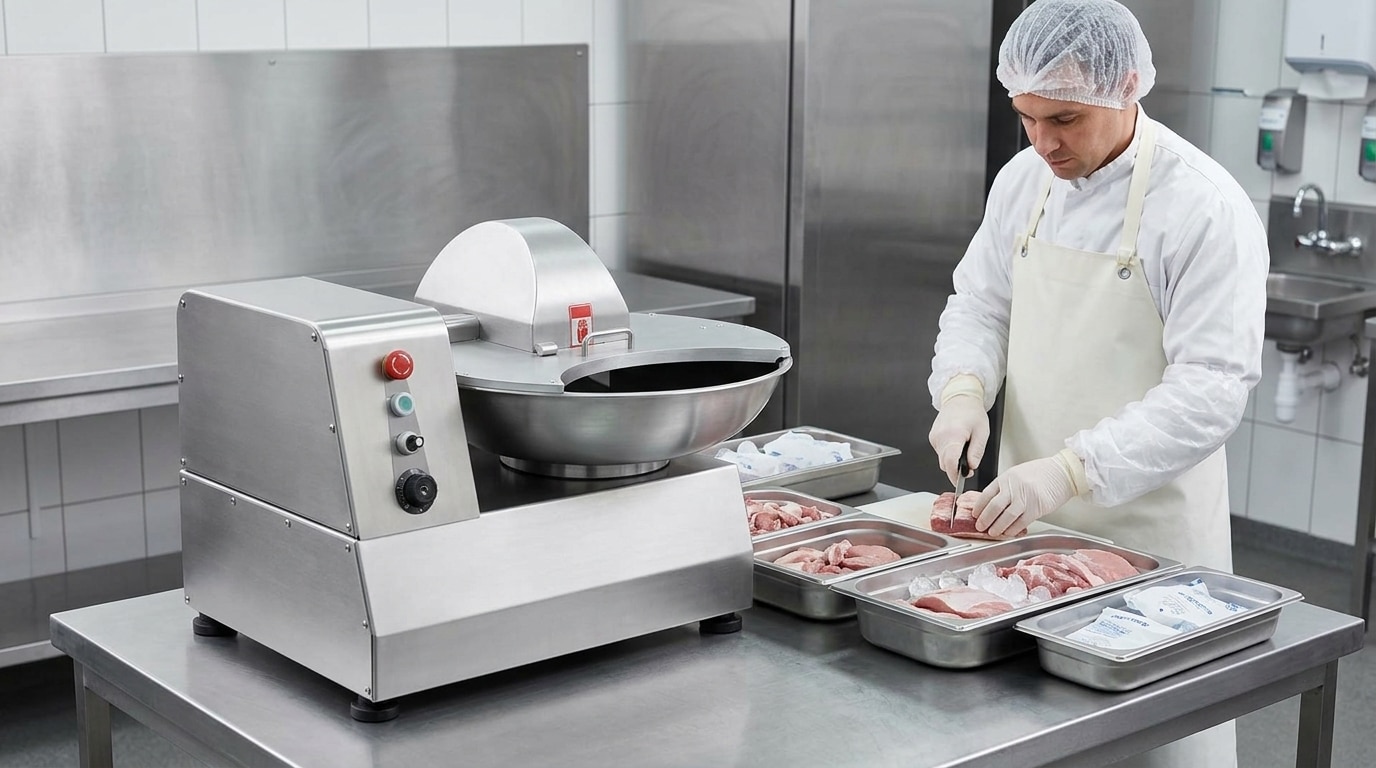
Chilled trimmed meat prepared for commercial bowl cutter processing

Meat is one of the main commercial bowl cutter applications. Beef, pork, poultry, lamb, and many fish products can be chopped or mixed when they are prepared correctly for the machine and the required product specification. A bowl cutter can support a range of textures, from visibly chopped meat for fillings to a finer matrix for formed or emulsified products.

Before loading, remove bones, hard cartilage, packaging, clips, and other foreign material. Trim ingredients to suit the bowl cutter and avoid feeding pieces that are too large for safe, even circulation. Chilled raw materials are commonly used because processing friction can increase product temperature. The appropriate starting temperature and maximum process temperature should be set by the operator’s food-safety system and recipe requirements.

For coarse products, use short, controlled processing intervals and inspect the particle size rather than relying only on a timer. For finer products, add ingredients in stages and avoid processing beyond the required texture. This helps maintain repeatability between batches. For further operating guidance, see how to make consistent meat texture with a bowl cutter.

Fish and seafood require similar attention to raw-material condition, bones or shell fragments, temperature, and sanitation. Where the recipe contains delicate fish flesh, trial batches are useful to establish the knife time and ingredient sequence that give the desired texture without overworking the mixture.

Sausage Meat and Emulsified Mixtures

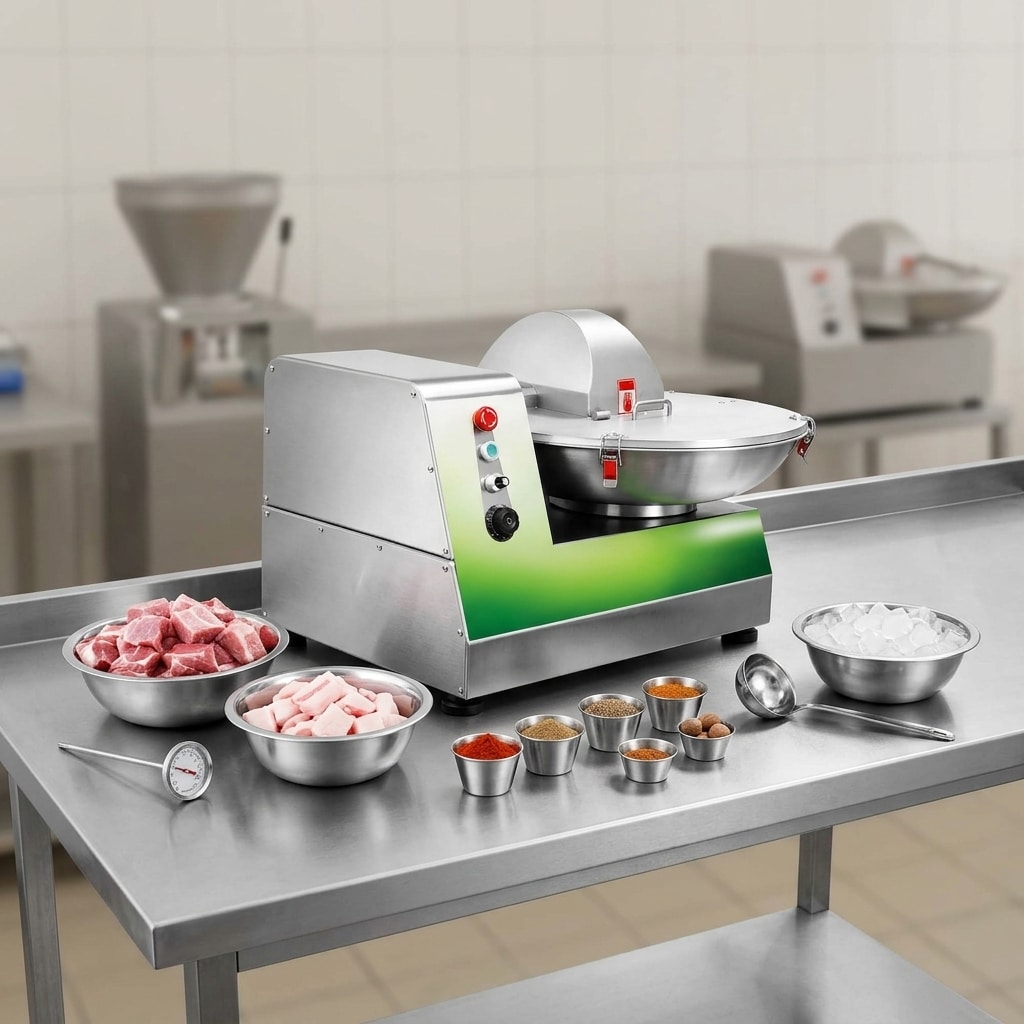
Measured ingredients for sausage meat preparation with a commercial bowl cutter

A commercial bowl cutter is widely used for sausage meat preparation because it can cut meat and fat while distributing seasonings and other recipe ingredients through the batch. Depending on the formulation, it may be used for fresh sausage mixtures, cooked sausage systems, meat fillings, and other finely processed products.

For this work, ingredient order matters. Many operations begin with chilled lean meat and salt or a recipe-specific seasoning stage, then add liquid, ice, fat, spices, and other components according to the formulation. There is no single sequence for every product, so operators should follow a validated recipe and applicable local food requirements.

Texture is not the only control point. Operators should monitor the mixture during processing for temperature, distribution of ingredients, and visual consistency. A smooth-looking mixture is not automatically the correct mixture; the target should always be the specification for that product. Documented batch procedures are especially useful when several operators use the same machine.

Read the practical guide to using a bowl cutter for sausage meat preparation for a closer look at chilled ingredients, loading sequence, texture checks, and cleaning steps.

Vegetables, Herbs, and Aromatics

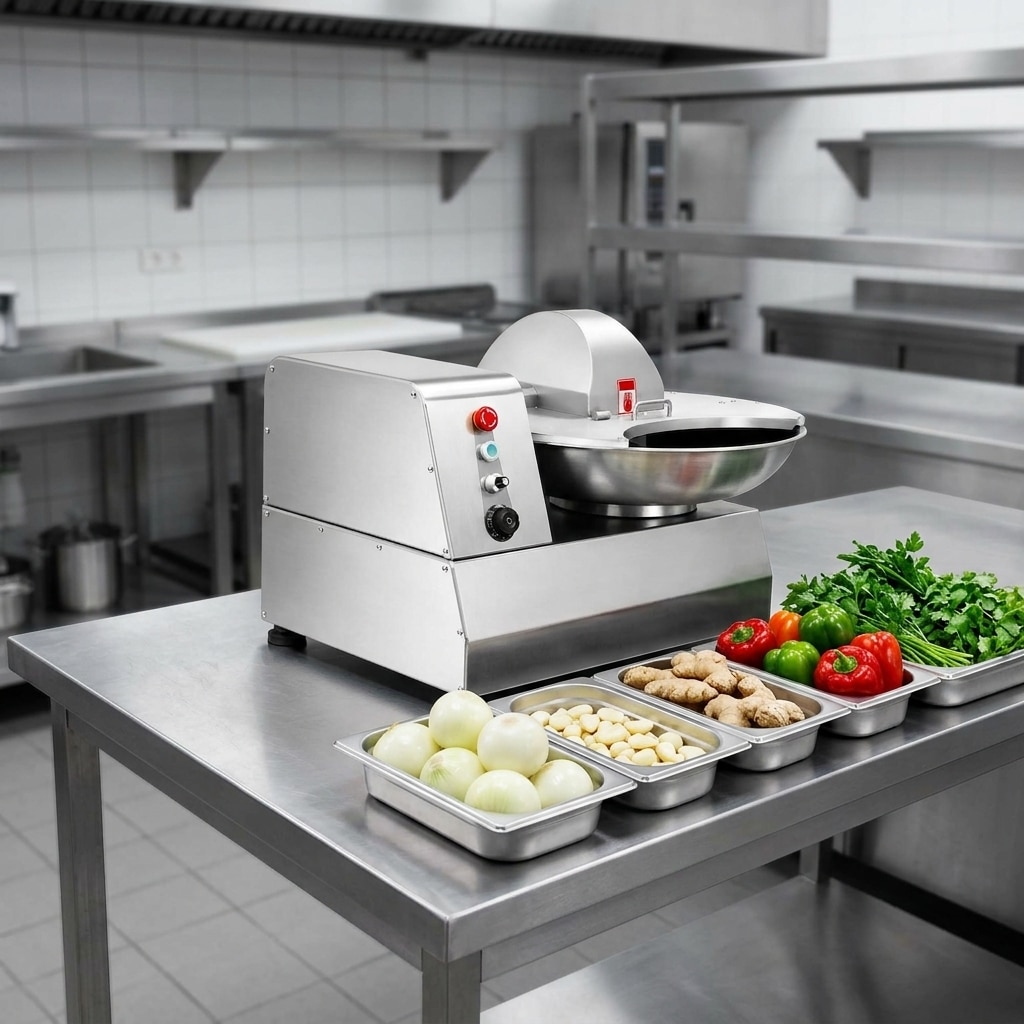
Vegetables, herbs, and aromatics prepared for bowl cutter processing

Commercial bowl cutters can also process many vegetables, herbs, and aromatics. Common examples include onions, garlic, ginger, leafy herbs, peppers, mushrooms, and cooked or soft vegetables used in fillings, sauces, prepared foods, and seasoning bases. The machine can create anything from a rough chop to a fine paste-like texture, depending on the ingredient and processing method.

Wash and inspect produce before processing, then remove unsuitable parts such as stems, stones, ties, labels, and damaged material. Cut large vegetables into manageable pieces before loading. Very dry or light ingredients may not circulate in the bowl in the same way as a moist product, while watery vegetables can release liquid quickly when finely cut. Both factors affect the batch result.

Operators should separate allergen-containing recipes and strongly flavoured ingredients from other production where required by their site controls. Garlic, onion, chilli, herbs, and spice blends can leave residues and aromas on food-contact surfaces, making prompt cleaning important before a different product is run.

For vegetable-heavy recipes, it is sensible to make a small trial batch first. This helps determine whether the desired result needs a coarse chop, a short fine-cut stage, or another preparation method before the bowl cutter is used.

Fats, Seasonings, and Other Additions

A bowl cutter processes more than the main protein or vegetable ingredient. It can distribute fats, salt, dry spices, fresh herbs, approved recipe liquids, ice, and certain binders or functional ingredients through a mixture. This makes it useful where even distribution is important to product appearance, texture, and batch consistency.

These additions should be loaded in a planned sequence rather than all at once. Fine powders can clump if added poorly, while liquids may pool or splash if they are introduced too quickly. Fat should be in a condition appropriate for the product and process. The correct approach depends on the recipe, raw materials, knife action, and target texture.

Measure additions accurately and keep a batch record when repeatability matters. This is particularly important for products that contain allergens, curing ingredients, or recipe components subject to local labelling and food-control requirements. A bowl cutter can help distribute ingredients, but it does not replace recipe validation, weighing procedures, or operator checks.

When changing products, inspect the bowl, knives, cover area, discharge points, and adjacent surfaces for residue. Small deposits of spices, powders, or fat can affect the next batch if cleaning is incomplete.

Prepared Food Mixtures

Beyond meat applications, a commercial bowl cutter may be used for selected prepared-food mixtures where controlled chopping and blending are needed. Examples can include stuffing mixtures, dumpling or pie fillings, vegetable blends, dips, spreads, cooked ingredient mixtures, and sauce bases. Suitability depends on the product’s texture, moisture level, ingredient size, and required final consistency.

Some recipes contain a combination of meat, vegetables, cooked starches, cheese, sauces, or seasonings. In these cases, operators should consider which ingredients should be cut first and which should be folded in near the end. An ingredient that is intended to remain visible in the finished product should not be subjected to the same knife time as an ingredient intended to form a smooth base.

For operations handling multiple product lines, a bowl cutter can support efficient batch preparation when the workflow includes clear separation of raw and ready-to-eat materials, controlled recipe changeovers, and thorough sanitation. Learn more about how commercial bowl cutters support high-volume food preparation when planning a broader production workflow.

What Should Not Go Into a Bowl Cutter

A commercial bowl cutter is designed for food ingredients that can safely circulate and be cut by the machine’s knife system. It should not be used as a substitute for a bone saw, a frozen-meat saw, or equipment intended for hard materials.

Do not load the following unless the machine manufacturer specifically confirms suitability for the product and application:

  • bones, shell fragments, hard pits, stones, or other hard foreign material;
  • solid frozen blocks that cannot circulate safely through the cutting zone;
  • metal clips, plastic packaging, ties, labels, or utensils;
  • excessively large pieces that have not been pre-cut;
  • non-food materials or cleaning tools;
  • ingredients that conflict with the site’s allergen, raw-to-ready-to-eat, or sanitation controls.

For bone-in or frozen meat cuts, use equipment designed for that task. A suitable cutting process protects the product, helps avoid premature knife damage, and supports safer operation. If a production line includes both cutting and bowl processing, review the intended role of each machine before purchase or installation.

Selection and Process-Control Factors

Commercial bowl cutter installed in an organised food processing kitchen

When selecting a commercial bowl cutter, start with the products you intend to make rather than choosing by machine size alone. A processor making coarse burger mix, a deli producing fine sausage meat, and a prepared-food kitchen making vegetable fillings may require different bowl size, knife configuration, process controls, and workflow arrangements.

Key questions for buyers include:

  • What ingredients will be processed, and are they raw, cooked, chilled, or partly frozen?
  • What texture is required: coarse chop, defined particle size, fine mince, or a smooth emulsion?
  • What batch size fits the production schedule without routinely underloading or overloading the bowl?
  • How will product temperature be monitored and managed?
  • What electrical supply, floor space, access clearance, and cleaning area are available?
  • What operator training, cleaning procedure, spare-parts access, and service support are needed?

Installation also affects process reliability. A stable position, correct electrical connection, safe access around the machine, and a defined cleaning routine should be established before production begins. Review this guide on setting up a bowl cutter in a commercial kitchen to plan the work area and operating controls.

Before committing to a production method, test representative ingredients and recipes. A trial should assess texture, temperature movement, ingredient distribution, cleaning time, and how the machine fits the wider workflow. This is more useful than assuming that one setting or knife time will work for every product.

Cleaning and Maintenance After Processing

The range of foods a bowl cutter processes makes cleaning especially important. Meat proteins, fat, vegetable fibres, herbs, spice powders, and allergens can remain on the bowl, knives, cover, discharge area, and nearby surfaces. Cleaning should take place according to the site’s food-safety procedure and the machine instructions after each relevant production run or changeover.

Before cleaning, stop the machine, isolate it from its energy source, and follow the manufacturer’s safe-access instructions. Do not reach into the knife area while the machine is connected to power. Use appropriate tools and personal protective equipment required by the site, particularly around sharp blades.

Knife care also affects both product quality and operating consistency. Dull or damaged blades can change cutting performance and may encourage operators to extend processing times unnecessarily. Check knife condition routinely and investigate unusual vibration, noise, poor cutting, or inconsistent texture before continuing production.

Use the step-by-step resource on how to clean and sanitize a commercial bowl cutter to support a structured cleaning routine. For blade-related operating factors, see how to prevent bowl cutter blades from dulling early.

Conclusion

A commercial bowl cutter can process a broad range of suitable food ingredients, including chilled meat, poultry, fish, fat, vegetables, herbs, seasonings, and selected prepared-food mixtures. Its value is the ability to combine controlled cutting and mixing within a batch, but the correct result depends on recipe design, raw-material preparation, temperature management, knife condition, and disciplined cleaning.

For the best fit, define the ingredients, required texture, batch pattern, site utilities, sanitation plan, and operator workflow before selecting equipment. This approach helps ensure that the bowl cutter supports the products you actually intend to make and the daily routine needed to make them consistently.

Commercial Bowl Cutter Troubleshooting and Operator Checks

Table of Contents

Commercial bowl cutter problems are often linked to setup, ingredients, blade condition, electrical supply, cleaning, or operator technique. This guide explains the checks operators can complete safely before requesting technical service.

Direct Troubleshooting Answer

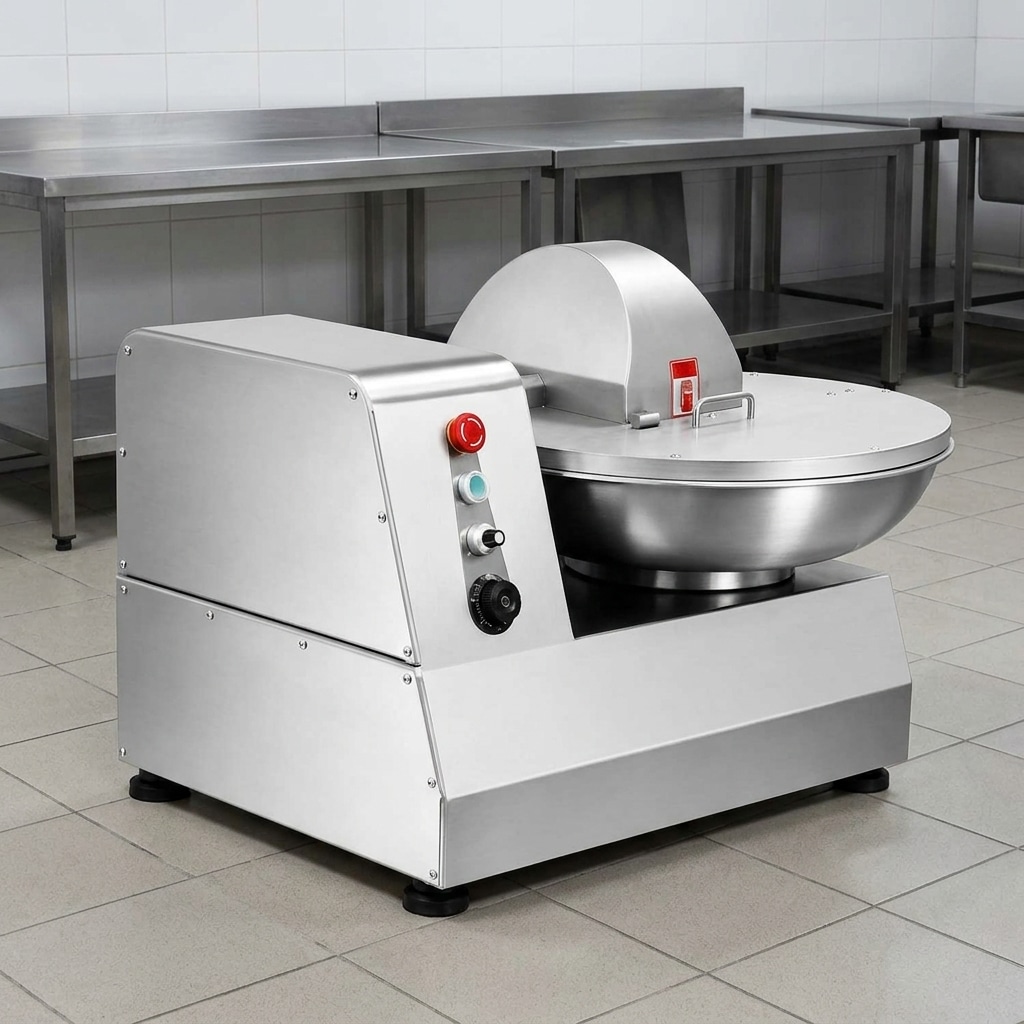
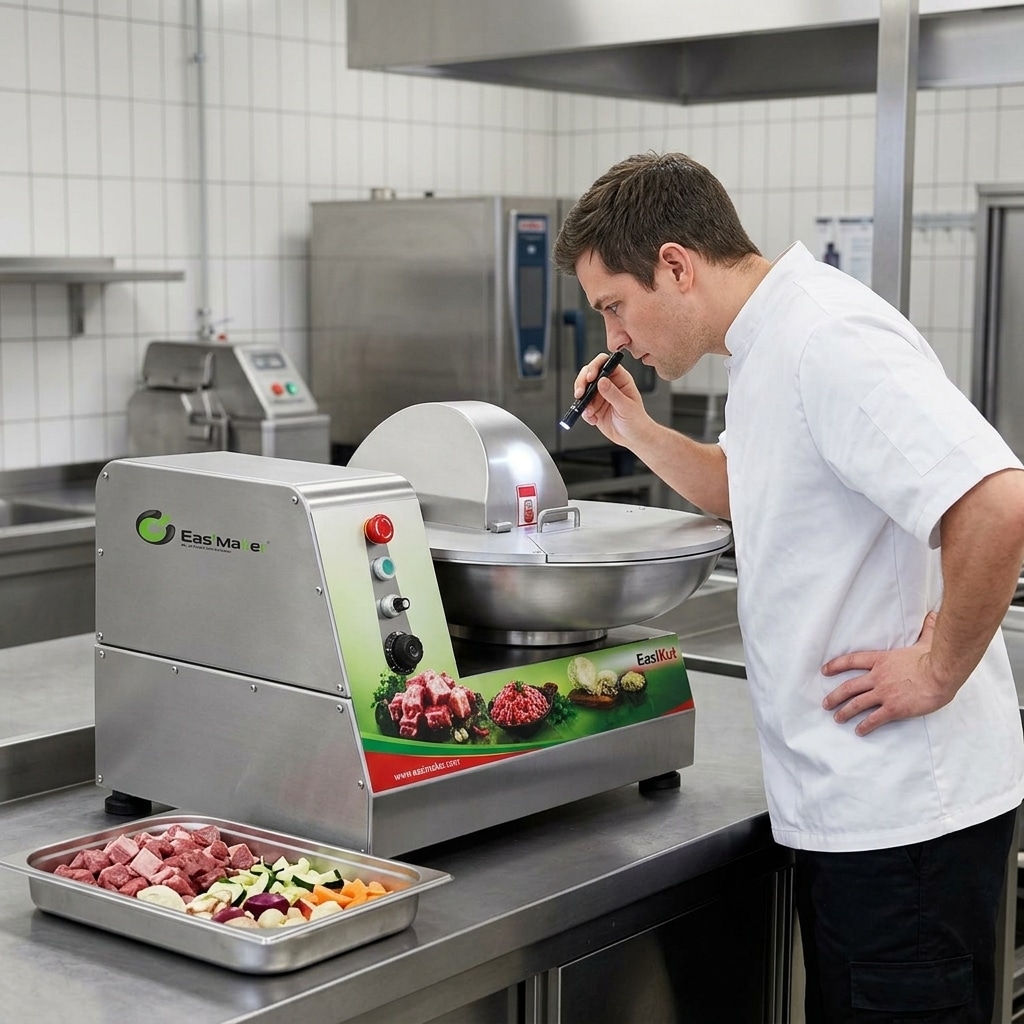
Operator checking an EasiKut BC25 commercial bowl cutter before food processing

For commercial bowl cutter troubleshooting, start by stopping the machine and isolating the power. Check the basic conditions first: the bowl and cover are correctly positioned, safety interlocks are engaged, the machine is receiving the correct electrical supply, the blades are installed securely, and the ingredients are within the equipment’s intended working range.

If the machine runs but produces uneven texture, inspect the batch size, ingredient temperature, cutting time, blade sharpness, and loading order. If the machine is noisy or vibrates, stop operation and check for an unbalanced load, loose blade assembly, foreign material, poor footing, or damaged components. Do not bypass a safety switch or continue operating when there is burning odour, smoke, exposed wiring, abnormal movement, or repeated circuit trips.

Operators can complete visual, cleaning, loading, and setup checks. Electrical repairs, motor work, damaged guards, safety switch faults, and bearing or drive problems should be handled by qualified service personnel or the manufacturer.

Understand the Equipment

EasiKut BC25 commercial food bowl cutter in a processing workspace

A commercial bowl cutter is a food processing machine that uses rotating knives and a rotating or driven bowl to chop, mince, mix, or emulsify selected ingredients. It is commonly used for meat mixtures, sausage preparation, fillings, seasonings, vegetables, and other prepared-food applications. The exact result depends on the machine design, blade arrangement, ingredient condition, batch size, processing time, and operator settings.

A bowl cutter is different from a general food processor because it is designed around controlled cutting and mixing in a production workflow. Before diagnosing a problem, confirm that the machine is suitable for the product being processed. The guide what a commercial bowl cutter can process can help operators compare suitable applications with ingredients that may require another machine.

For kitchens deciding between equipment types, review bowl cutter versus food processor. Choosing the wrong equipment for the material can appear to be a machine fault when the real issue is an unsuitable process.

Before-Startup Operator Checks

Operator completing pre-start checks on a commercial bowl cutter

A consistent pre-start inspection prevents many avoidable stoppages. The operator should complete the checks at the beginning of each shift and whenever the machine has been moved, cleaned, or reassembled.

Check the work area

  • Place the machine on a stable, level surface with enough clearance for loading, unloading, cleaning, and service access.
  • Keep the floor dry and remove loose tools, packaging, and other objects from around the machine.
  • Confirm that the power cable, plug, isolator, and socket are undamaged and suitable for the machine’s required supply.

Check the bowl, cover, and safety systems

  • Make sure the bowl is seated correctly and can rotate or operate without obstruction.
  • Confirm that the cover, guard, and access panels are closed and secured.
  • Test the normal start and stop controls according to the manufacturer’s instructions.
  • Never tape down, remove, or bypass an interlock or guard to keep production moving.

Check the blade assembly

  • Inspect the knives for damage, cracks, excessive wear, or food residue.
  • Confirm that the blade assembly and retaining hardware are fitted correctly and securely.
  • Use the specified tools and isolation procedure when removing or installing blades.

Check the ingredients

  • Remove bones, hard foreign material, packaging, and unsuitable pieces before loading.
  • Keep the batch within the machine’s stated working capacity. Do not assume that a physically full bowl is a suitable production load.
  • Use a consistent ingredient size and loading sequence so that the knives can work evenly.

Common Operating Problems

Safe diagnosis of common commercial bowl cutter operating problems

The machine does not start

First check whether the machine is receiving power and whether the local isolator, plug, socket, or circuit protection has operated. Then check that the bowl, lid, and access points are correctly positioned. Many commercial machines will not start when a safety condition is open. Check the emergency stop control and reset it only after confirming that the work area is safe.

If the power supply is present and the machine still does not start, do not repeatedly cycle the controls or open the electrical cabinet. Record the symptoms and contact qualified service personnel. A failed switch, interlock, control component, or motor protection device requires a controlled diagnosis.

The bowl or blades do not rotate correctly

Stop the machine, isolate the power, and remove the product only when it is safe to do so. Look for an overloaded batch, a foreign object, product packed around the blade, or an incorrectly fitted blade assembly. Do not reach into the bowl while components can move. If the machine hums without turning, trips protection, or starts and stops repeatedly, the cause may be electrical or mechanical and should be escalated.

The product is uneven

Uneven chopping often results from inconsistent ingredient size, an overloaded bowl, insufficient processing time, a dull or damaged knife, or an unsuitable loading sequence. Check whether the product is distributed evenly and whether the batch is too large for the process. Use repeatable ingredient preparation and record the operating sequence that produces the required texture. Avoid extending processing time without checking product temperature and machine loading.

The product is too fine or becomes a paste

Reduce processing time or use a more suitable cycle if the equipment and recipe allow it. Excessive cutting can change the intended texture. Ingredient temperature, fat condition, moisture, and loading order also affect the result, so operators should change one process variable at a time and record the outcome. If the same settings produce a sudden change, inspect blade condition and bowl movement before changing the recipe.

The mixture is not combining properly

Confirm that the batch size is sufficient for the machine to move the ingredients through the cutting zone, while remaining within the permitted load. Check the loading order and allow the machine to stop before adding ingredients unless the manufacturer’s operating instructions specifically permit another method. Persistent poor mixing may indicate incorrect blade installation, restricted bowl movement, or a component fault.

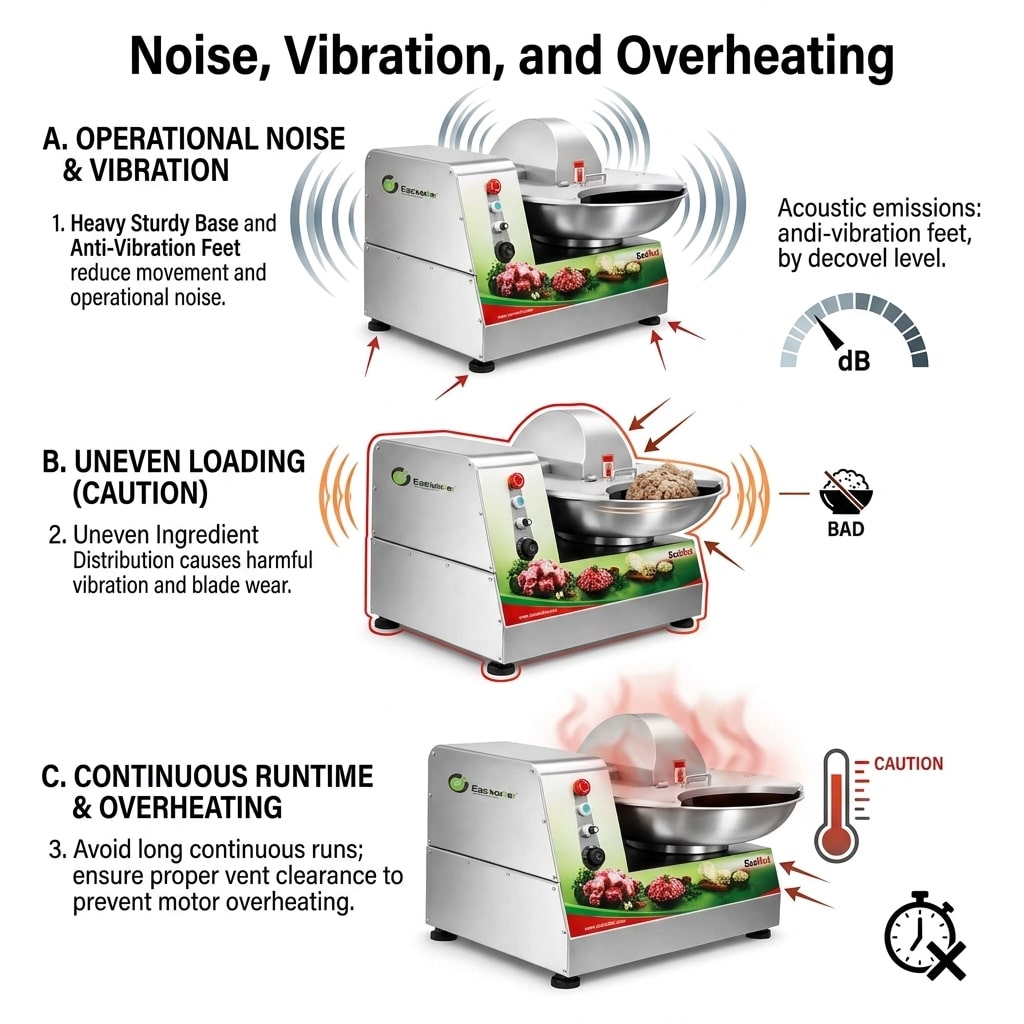
Noise, Vibration, and Overheating

Noise, Vibration, and Overheating

Abnormal noise

Unusual scraping, knocking, squealing, or grinding is a stop condition. Isolate the machine before inspecting it. Check for loose hardware, material trapped near moving parts, an incorrectly fitted blade, contact between the bowl and a fixed component, or a damaged guard. Do not operate the machine to listen for the fault with the cover removed.

Normal operating sound varies by model and product. A new sound, a sound that changes with load, or noise accompanied by vibration should be recorded and reported. A service technician may need to inspect the drive, bearings, coupling, blade shaft, or other internal parts.

Excessive vibration

Check that the machine is level and stable. Then inspect the batch for uneven distribution, oversized pieces, foreign material, or a blade assembly that is not seated correctly. Confirm that the bowl and cover are correctly installed. If vibration remains after the load is removed, stop using the equipment until the cause is identified.

Motor or machine overheating

Overheating can be associated with excessive loading, extended continuous operation, restricted ventilation, high ambient temperature, incorrect electrical supply, or a mechanical problem. Allow the machine to stop and cool according to the manufacturer’s instructions. Check that ventilation openings are clear and that the processing cycle matches the equipment’s intended duty. Do not keep resetting thermal protection without investigating why it operated.

Burning smell, smoke, melted insulation, discoloured wiring, or repeated overheating requires immediate isolation and professional inspection. Operators should not continue production to determine whether the problem clears by itself.

Cleaning and Maintenance Checks

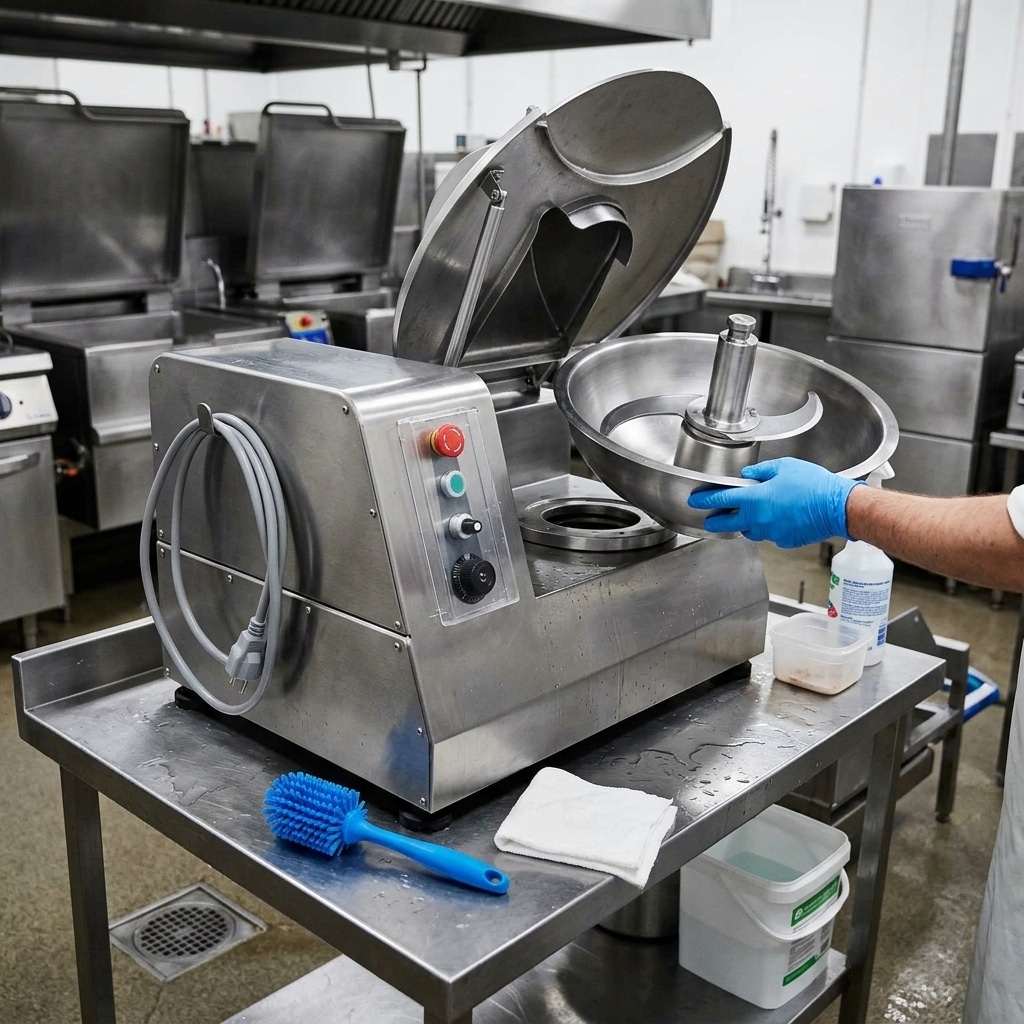
Cleaning and maintenance of a commercial bowl cutter after production

Cleaning problems can become operating problems. Food residue around the bowl, blade assembly, seals, covers, and discharge areas may restrict movement, affect hygiene, contribute to odour, or make it harder to identify damage.

Follow the machine manual for the approved cleaning method, chemical compatibility, water exposure, and component removal procedure. Before cleaning, stop the machine, isolate the electrical supply, and wait for all movement to cease. Use appropriate protective equipment when handling sharp blades and cleaning chemicals. Keep electrical controls, motors, and other non-washable components protected from water.

After cleaning, inspect the blade area and bowl for cracks, chips, corrosion, loose fasteners, and trapped residue. Check that removable parts are dry and correctly reinstalled before the next batch. Do not use a damaged knife or guard. A clean machine also makes it easier to notice changes in wear, alignment, and component condition.

For broader food-processing workflow guidance, the article on designing a hygienic food workstation explains practical principles such as cleanable surfaces, separation of raw and finished product areas, and safe access around equipment.

Keep a simple maintenance record. Note the date, operator, product, batch conditions, unusual sounds, cleaning completed, blade inspection result, and any service request. This information helps distinguish a one-off loading issue from a recurring mechanical or electrical fault.

When to Contact Service

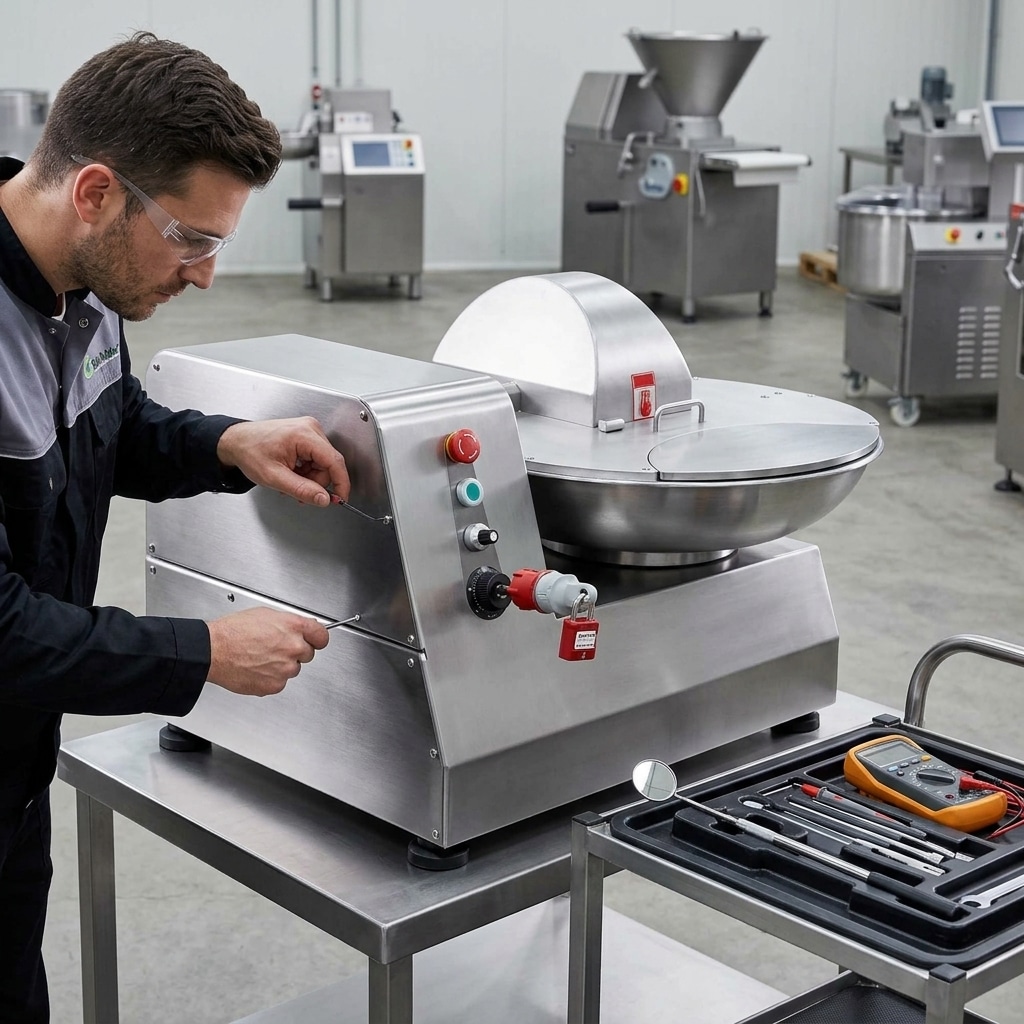
Technician inspecting an isolated commercial bowl cutter for service

Stop troubleshooting at the operator level when the issue involves electrical components, internal wiring, the motor, drive system, bearings, shaft alignment, safety interlocks, structural damage, or repeated protection trips. These faults can create safety risks and may worsen if the machine is operated without a proper diagnosis.

Contact the manufacturer, distributor, or qualified technician when:

  • The machine will not start after basic power and safety-position checks.
  • The motor hums, trips the circuit, overheats, or gives off a burning smell.
  • The blade shaft, bowl, or drive shows abnormal movement or vibration.
  • A guard, lid, interlock, emergency stop, or control does not work correctly.
  • The machine leaks, has damaged seals, or shows cracks or deformation.
  • The same texture or production problem returns after loading and blade checks.

Before requesting assistance, prepare the model and serial information, electrical supply, product being processed, approximate batch conditions, operating sequence, cleaning history, and a clear description of what happened. Photos or short videos can help show the position of the blade, bowl, guard, or damaged component, provided they are taken with the machine stopped and isolated.

Do not modify the machine, substitute unknown parts, or change electrical components without confirming compatibility with the manufacturer. Correct spare parts and documented service procedures protect both equipment reliability and operator safety.

Essential Safety and Maintenance Protocols for Commercial Bone Saw Machines

Introduction to Bone Saw Operational Excellence

In high-volume meat processing facilities and professional butcher shops, the commercial bone saw machine is an indispensable asset. These powerful units slice through frozen meat, dense bone, and thick cuts with precision and speed, directly impacting production efficiency and product yield. However, the sheer power of this equipment introduces significant workplace risks if not managed correctly.

Establishing rigorous bone saw safety protocols and consistent maintenance routines is not just about regulatory compliance; it is a fundamental requirement for protecting operators, extending machine lifespan, and maintaining the hygiene standards critical to food processing. This guide provides facility managers and butcher shop owners with actionable protocols for safe operation, blade tensioning, and daily sanitation.

Essential Operator Safety Gear

Human error or momentary lapses in concentration can lead to severe injuries when operating heavy-duty butcher shop machinery. Equipping operators with the correct Personal Protective Equipment (PPE) is the first line of defense.

  • Cut-Resistant Chainmail Gloves: Operators must wear stainless steel mesh gloves on the non-dominant hand (the hand guiding the meat, though always using a pusher when possible). Note that chainmail protects against slicing but will not stop a powered band saw blade, making spatial awareness paramount.
  • Safety Glasses or Face Shields: Bone fragments and meat shards can become high-velocity projectiles during cutting. Industrial-grade eye protection is mandatory.
  • Heavy-Duty Cut-Resistant Aprons: A reinforced apron protects the operator’s torso from accidental slips or kickbacks from the cutting table.
  • Slip-Resistant Footwear: Meat processing floors frequently become slick with water, fat, and debris. High-traction, steel-toed boots prevent falls near operating machinery.

Safe Operation Guidelines for Commercial Bone Saws

Implementing strict operational procedures ensures that meat processing equipment is used efficiently and safely. Train all personnel on the following protocols before allowing them to operate the saw.

Pre-Operation Inspection

Before powering on the machine, operators should conduct a brief visual and physical inspection:

  • Verify that all safety guards and wheel covers are securely locked in place.
  • Check the cutting table for stability and ensure the sliding mechanism (if applicable) moves smoothly.
  • Inspect the blade for missing teeth, cracks, or dullness.
  • Ensure the scrapers are properly aligned to keep the wheels free of fat buildup.

Feeding and Cutting Techniques

The most common injuries occur during the feeding process. Operators should never push meat through the blade using their bare hands. Always use the integrated pusher block or a dedicated meat pusher tool to guide the product. Maintain a steady, consistent feed rate; forcing the meat through the blade too quickly can cause the blade to jump, bind, or snap, while feeding too slowly can cause the meat to burn or smear.

Bone Saw Blade Maintenance and Tensioning

Proper bone saw blade maintenance is critical for achieving clean cuts, minimizing meat waste, and preventing dangerous blade failures.

How to Check and Adjust Blade Tension

Blade tension directly affects the performance of your commercial bone saw machine. A loose blade will wander, creating wavy cuts and potentially slipping off the drive wheels. An overtensioned blade is prone to snapping under load and causes premature wear on the wheel bearings.

  1. Disconnect Power: Always utilize lockout/tagout (LOTO) procedures before opening the machine cabinet.
  2. Locate the Tension Mechanism: Most commercial saws feature a tensioning knob at the top of the upper wheel housing.
  3. Adjust the Tension: Turn the knob to tighten the blade. Many modern industrial saws include a built-in tension gauge or a spring-loaded mechanism that clicks or aligns with a marker when the optimal tension is reached.
  4. Test the Deflection: If your machine lacks a gauge, a general industry rule of thumb is that the blade should deflect no more than 1/8 to 1/4 inch when pressed lightly in the center of the longest exposed span. (Always consult your specific manufacturer’s manual for exact tolerances.)
  5. Manually Track the Blade: Spin the upper wheel by hand (while wearing protective gloves) to ensure the blade tracks perfectly in the center of the wheel without rubbing against the back flange.

Signs It Is Time to Replace the Blade

Do not wait for a blade to break before replacing it. Replace the blade immediately if you notice:

  • The machine requires significantly more physical effort to push the meat through.
  • The cuts are jagged, uneven, or producing excessive bone dust.
  • Visible hairline cracks along the back edge or gullets of the blade.
  • Missing or chipped teeth.

Daily Cleaning Procedures for Meat Processing Equipment

Sanitation is a non-negotiable aspect of meat processing. Bone saws accumulate fat, marrow, and meat particles that rapidly harbor bacteria if not thoroughly cleaned. Follow this daily teardown and sanitization protocol:

Step-by-Step Sanitation Protocol

  1. Power Down and LOTO: Disconnect the machine from the power source.
  2. Disassemble Components: Remove the blade, upper and lower wheels, scrapers, sliding table, and thickness guide. Handle the blade with extreme care and store it safely or discard it if worn.
  3. Remove Debris: Use a plastic scraper or brush to remove large chunks of meat and fat from the machine housing and components.
  4. Apply Detergent: Use an industry-approved, foaming degreaser. Allow it to sit for the recommended contact time to break down stubborn proteins and fats.
  5. Scrub and Rinse: Scrub all surfaces, paying special attention to the wheel grooves, scraper mounts, and the blade guide blocks. Rinse thoroughly with warm water. Note: Unless your machine is specifically IP-rated for high-pressure washdowns, avoid spraying high-pressure water directly into the motor housing or electrical switches.
  6. Sanitize and Air Dry: Apply a food-safe sanitizer (such as a quaternary ammonium solution) and allow all components to air dry completely before reassembly to prevent corrosion.

Troubleshooting Common Bone Saw Issues

Quickly identifying and resolving operational issues keeps production lines moving and prevents equipment damage.

Symptom Potential Cause Solution
Blade slipping off wheels Insufficient blade tension or worn wheel flanges Re-tension the blade. Inspect wheels for wear and replace if grooved.
Wavy or uneven cuts Dull blade or worn blade guides Replace the blade. Check and replace worn upper/lower guide blocks.
Motor stalls during cutting Forcing meat too fast or improper power supply Reduce feed rate. Verify the machine is connected to the correct voltage phase.
Excessive squealing noise Friction in blade guides or dry wheel bearings Clean and adjust blade guides. Inspect bearings and lubricate per manual.

Buying Guide: What to Look for in Butcher Shop Machinery

When upgrading or expanding your facility, selecting the right commercial bone saw machine is critical for long-term ROI. Look for the following specifications:

  • Material Construction: The entire body, table, and internal components should be constructed from 304 food-grade stainless steel to resist corrosion and withstand harsh chemical cleaners.
  • Integrated Safety Features: Modern machines should include magnetic safety switches that prevent the motor from running when the door is open, easily accessible emergency stop (E-stop) buttons, and robust meat pushers.
  • Ease of Maintenance: Look for tool-less disassembly features. Machines that allow operators to remove the wheels, scrapers, and tables without wrenches significantly reduce daily cleaning times.
  • Motor Power: Ensure the horsepower (HP) matches your throughput needs. High-volume processing of frozen sub-primals typically requires a 2HP to 3HP motor to prevent stalling and ensure clean cuts.

Frequently Asked Questions (FAQs)

How often should I change the blade on a commercial bone saw?

Blade lifespan depends entirely on usage volume and the type of product being cut. In a high-volume processing plant cutting frozen bones, blades may need replacement every few days. In a standard butcher shop, a blade might last one to two weeks. Inspect daily and replace at the first sign of dullness.

Can I cut fresh, unfrozen meat with a bone saw?

Yes, but it is generally less efficient than using a slicer or butcher knife, as the high-speed blade can tear soft, fresh meat and cause excessive smearing. Bone saws are optimized for frozen meat, dense bones, and hard cartilage.

What is the best way to prevent rust on the machine?

Ensure the machine is made of high-quality 304 stainless steel. After daily cleaning and sanitizing, ensure all parts are thoroughly air-dried. Applying a light coating of food-grade mineral oil to the blade and bare metal moving parts can further prevent oxidation.

Why is my bone saw producing so much bone dust?

Excessive bone dust is usually a symptom of a dull blade or an incorrect tooth pitch (TPI) for the product being cut. Ensure you are using a sharp blade with the correct tooth configuration for your specific meat type.

Are specialized electrical connections required?

Most industrial bone saws require a 220V/240V single-phase or three-phase power supply due to their high-torque motors. Always verify your facility’s electrical capacity before purchasing and have a certified electrician handle the installation.

Upgrade Your Meat Processing Capabilities

Maintaining rigorous safety and maintenance protocols ensures your commercial bone saw machine delivers years of reliable, high-yield performance. If you are looking to upgrade your facility with robust, easy-to-clean, and operator-safe meat processing equipment, we are here to help you find the perfect solution for your operational needs.

Request a quote / Get a sample today to learn more about our advanced machinery options.