
Table of Contents
- How to Prepare Sugarcane for a Juicing Machine
- Commercial Sugarcane Preparation Workflow
- How to Cut and Size Sugarcane
- Feeding Sugarcane Into the Machine
- Preparation Methods Compared
- Cleaning and Preparation Checks
To prepare sugarcane for a juicing machine, inspect and wash the stalks, remove unsuitable ends and damaged sections, cut them to a manageable length, and feed straight pieces gradually according to the machine inlet and operating manual.
How to Prepare Sugarcane for a Juicing Machine
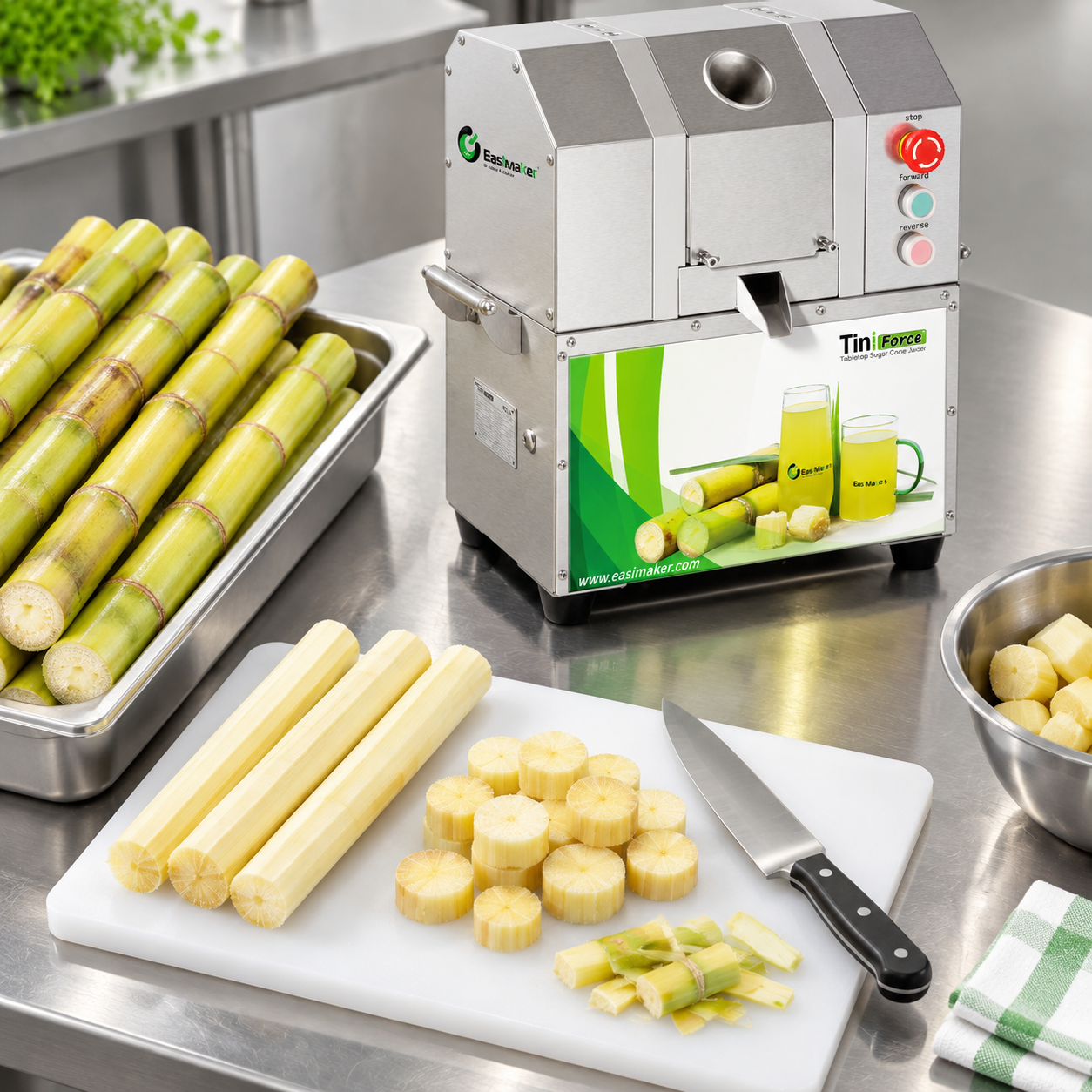
To prepare sugarcane for a juicing machine, first inspect the delivery, remove soil and damaged material, wash the stalks with potable water, trim the hard ends and leaves, and cut long stalks into manageable sections. Feed only clean, straight pieces that fit the machine inlet without forcing them.
The correct sugarcane stalk size for juicing depends on the machine’s feed opening, roller arrangement, and operating instructions. There is no single universal length or diameter. Operators should confirm the permitted dimensions before setting a preparation routine.
- Keep raw cane away from finished juice and clean service tools.
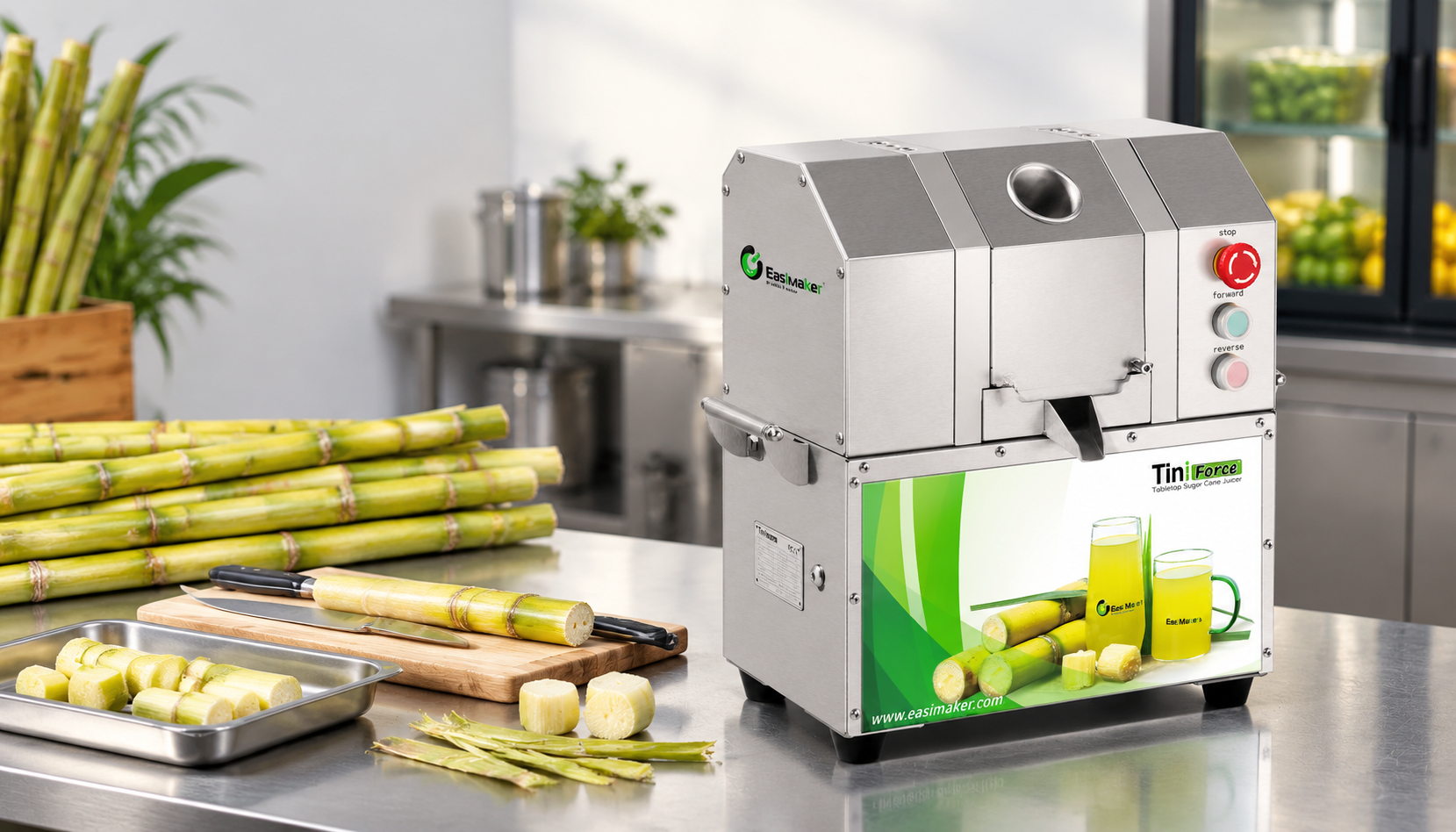
- Use a stable cutting board and a suitable knife or cane cutter.
- Do not place hands near the feed inlet or push cane with tools unless the manufacturer specifically permits it.
- Stop the machine before clearing a blockage.
Commercial Sugarcane Preparation Workflow
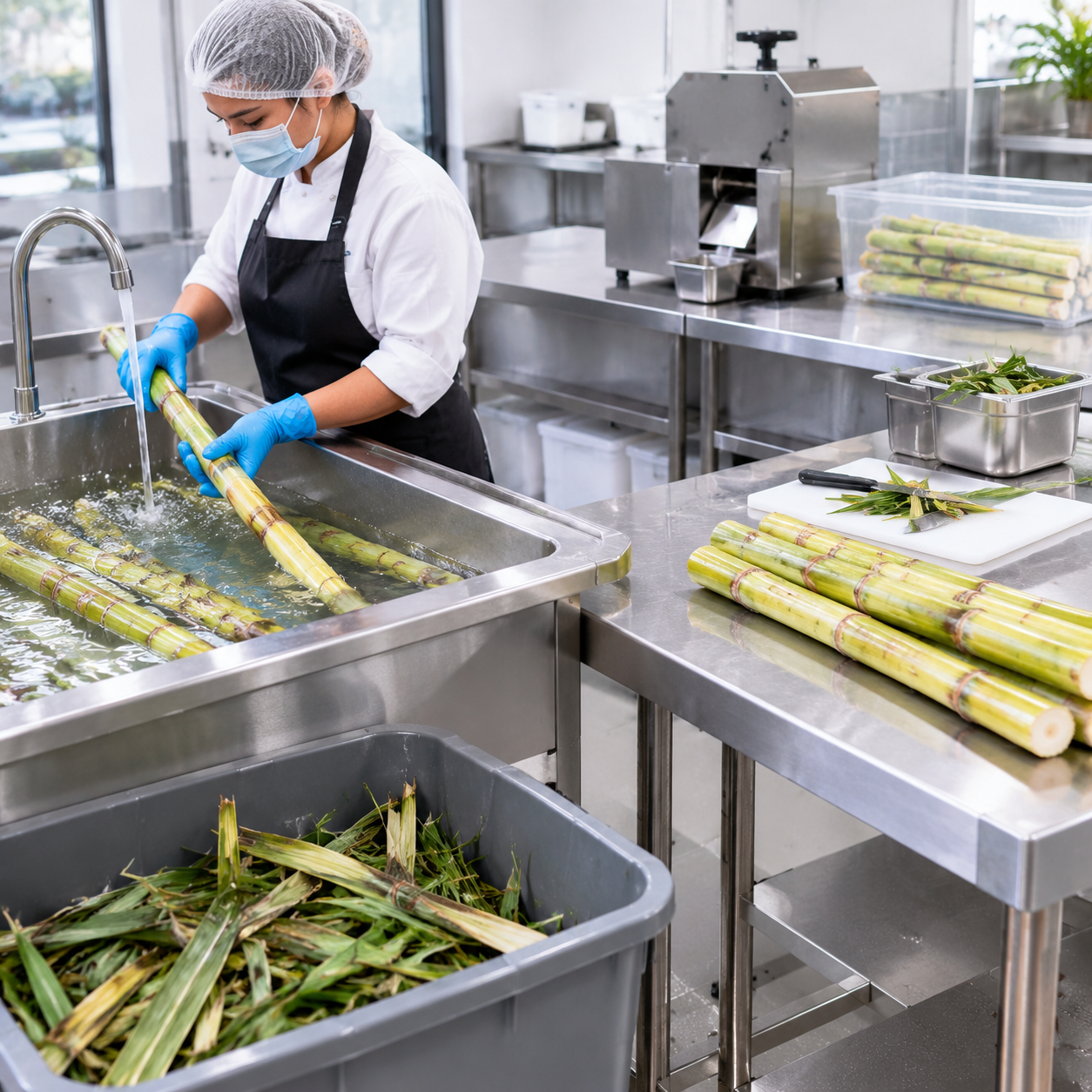
A repeatable preparation station helps staff produce more consistent feed pieces and reduces avoidable interruptions during service. Arrange the area so cane moves from receiving to inspection, washing, cutting, temporary holding, and juicing in one direction.
- Inspect the cane. Separate stalks with heavy mould, unusual odour, excessive softness, deep cracks, or contamination. Follow the site’s food-handling procedure for disposal.
- Remove leaves and loose outer material. Trim away leaf blades, dry sheaths, and protruding growth that could interfere with handling or the inlet.
- Wash the stalks. Rinse away visible soil and debris using potable water. Keep washed cane on a clean, drainable surface rather than directly on the floor.
- Trim both ends. Cut off visibly dirty, split, or excessively dry ends. Make square cuts where practical so pieces are easier to position.
- Cut into feedable sections. Divide long stalks into lengths that the operator can control and that fit the feed opening. Check the manual for machine-specific limits.
- Stage only a working quantity. Avoid leaving prepared cane exposed longer than necessary. Use covered or clean containers suitable for food contact.
Keep the cutting tools clean, sharp, and assigned to this task. A blunt tool can crush the stalk, increase handling effort, and create irregular pieces.
How to Cut and Size Sugarcane
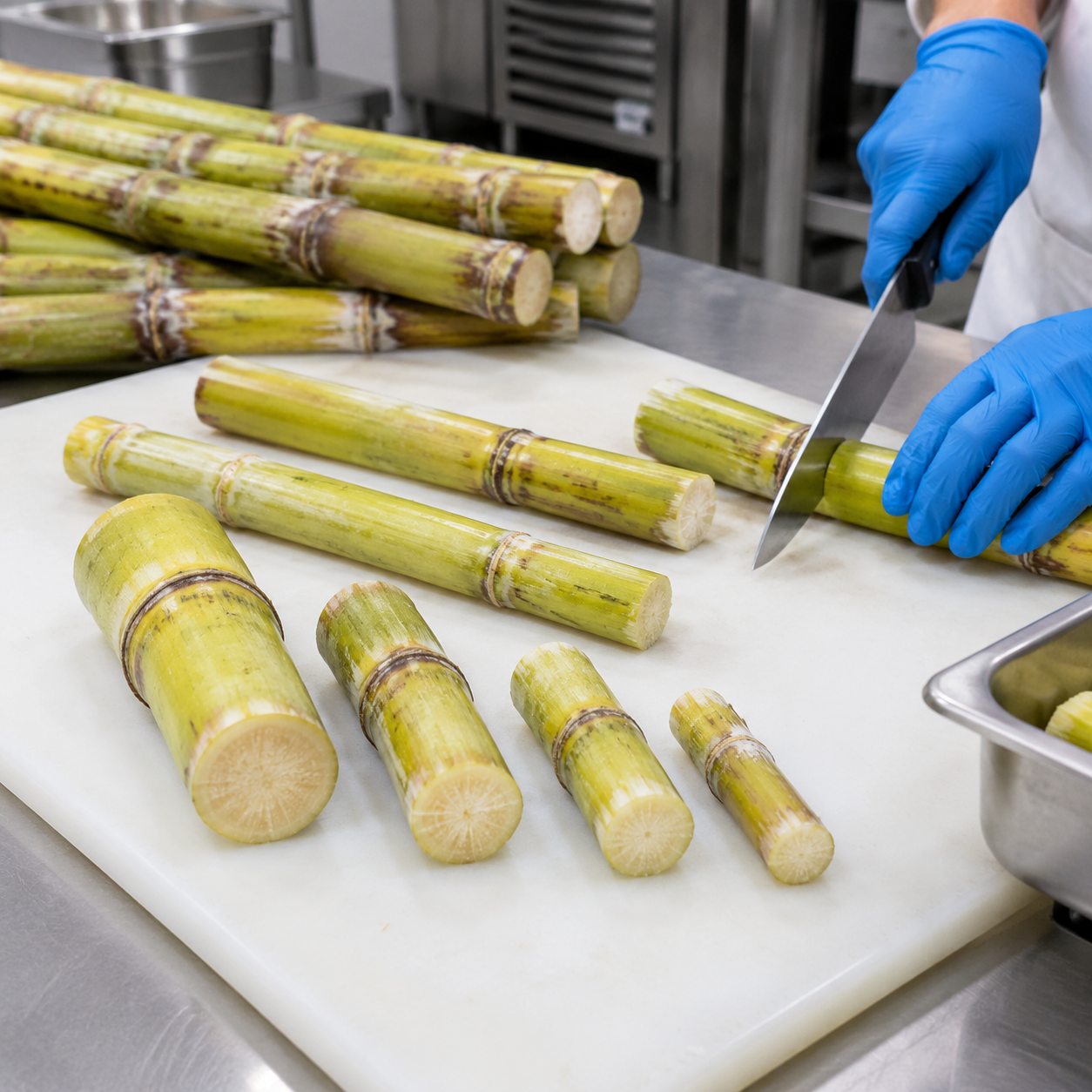
When operators cut sugarcane for a juicer, the objective is not to make every piece identical. The objective is to create clean, manageable sections that enter the feed opening smoothly and do not require excessive force.
Length
Long stalks may be difficult to control at a counter or kiosk. Shorter sections are usually easier to align, but cutting them too short can increase handling and staging work. Select a practical length after checking the machine inlet and the manufacturer’s instructions.
Diameter and shape
Sort unusually thick, sharply curved, split, or flattened stalks before feeding. Do not assume that a piece will fit because its average diameter appears acceptable; a swollen joint or damaged section may catch at the inlet.
Cut surface
Fresh, square-ended cuts help staff handle the cane. Remove splintered sections and avoid leaving loose fragments on the preparation surface. If the cane is too large for the specified inlet, do not force it through or improvise a cutting method without confirming that it is suitable.
Keep a simple first-in, first-out system for prepared cane. This supports stock rotation and helps staff identify material that has been exposed for too long under local operating conditions.
Feeding Sugarcane Into the Machine
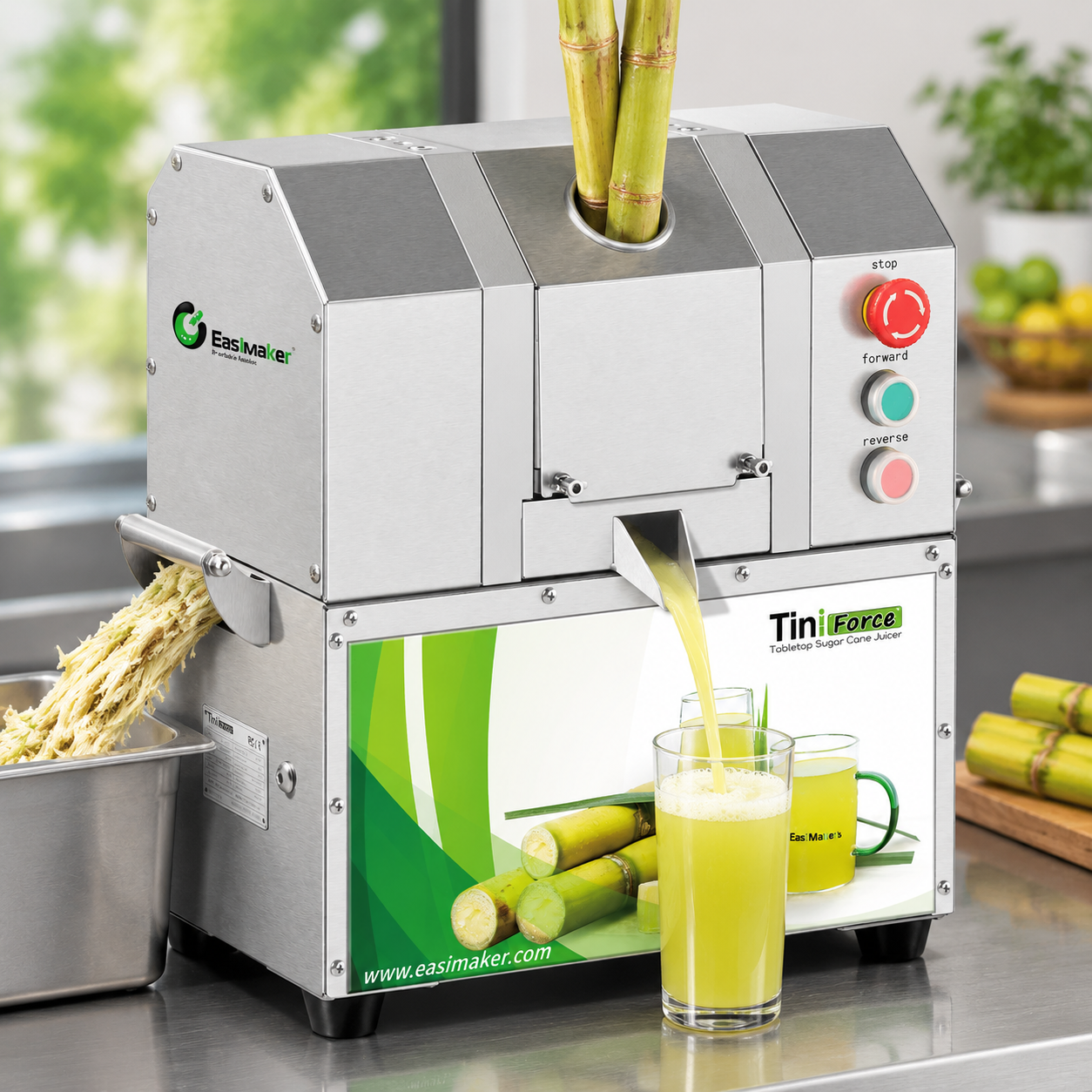
A safe sugarcane machine feeding guide starts with the machine manual, not with a guessed feed rate. Confirm the electrical setup, guards, switches, inlet dimensions, and approved operating method before production.
- Place the machine on a stable, level surface with enough room for the operator and the rear bagasse discharge area.
- Check that the juice outlet and collection container are clean and correctly positioned.
- Start the machine only as instructed by the manufacturer.
- Hold one prepared section at a time and align it with the feed opening.
- Allow the machine’s rollers or feed system to draw the cane in. Do not force, twist, or reach into the inlet.
- Feed the next piece only when the previous piece has cleared the working area and the machine is operating normally.
- If cane stops moving, switch off and isolate the machine before investigating.
For example, the Easimaker TiniForce S3 uses a front circular feeding port, a central front juice spout, and rear bagasse discharge. Operators should therefore position the cane preparation area and waste container around that flow rather than placing equipment directly behind the machine.
Consistent feeding depends on prepared cane as well as machine design. If staff repeatedly need to force pieces, stop production and review the stalk size, cutting method, cleanliness, and machine instructions.
Preparation Methods Compared
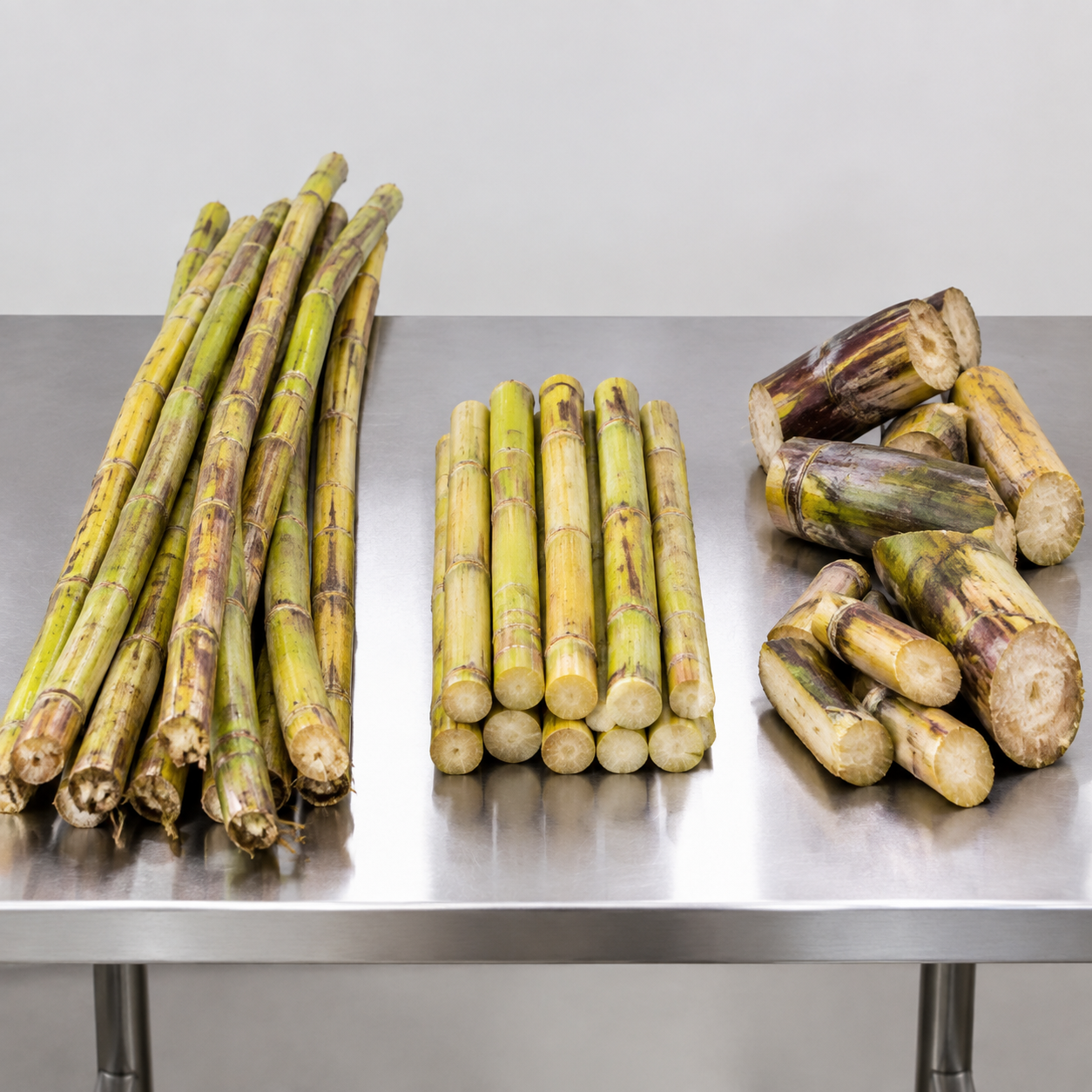
The best preparation method depends on the cane condition, available labour, service volume, and the machine’s feed design. The comparison below helps operators choose a practical routine without treating one method as universal.
| Method | Best fit | Advantages | Points to control |
|---|---|---|---|
| Cut to short, uniform sections | Counter service with frequent small batches | Easy to handle and stage | More cutting and container handling |
| Cut to longer manageable sections | Higher-volume service with adequate workspace | Fewer individual pieces to prepare | Requires better control at the inlet |
| Minimal trimming | Clean, straight cane with limited loose material | Fast initial preparation | Leaves, damaged ends, or irregular shapes may interrupt feeding |
| Detailed sorting and trimming | Mixed-quality deliveries or strict process control | More consistent feed material | Needs additional labour and a clear disposal routine |
Use the method that matches the machine’s documented inlet requirements. If the manufacturer has not specified a permitted stalk length or diameter, request confirmation rather than inventing a target size.
Cleaning and Preparation Checks Before Service
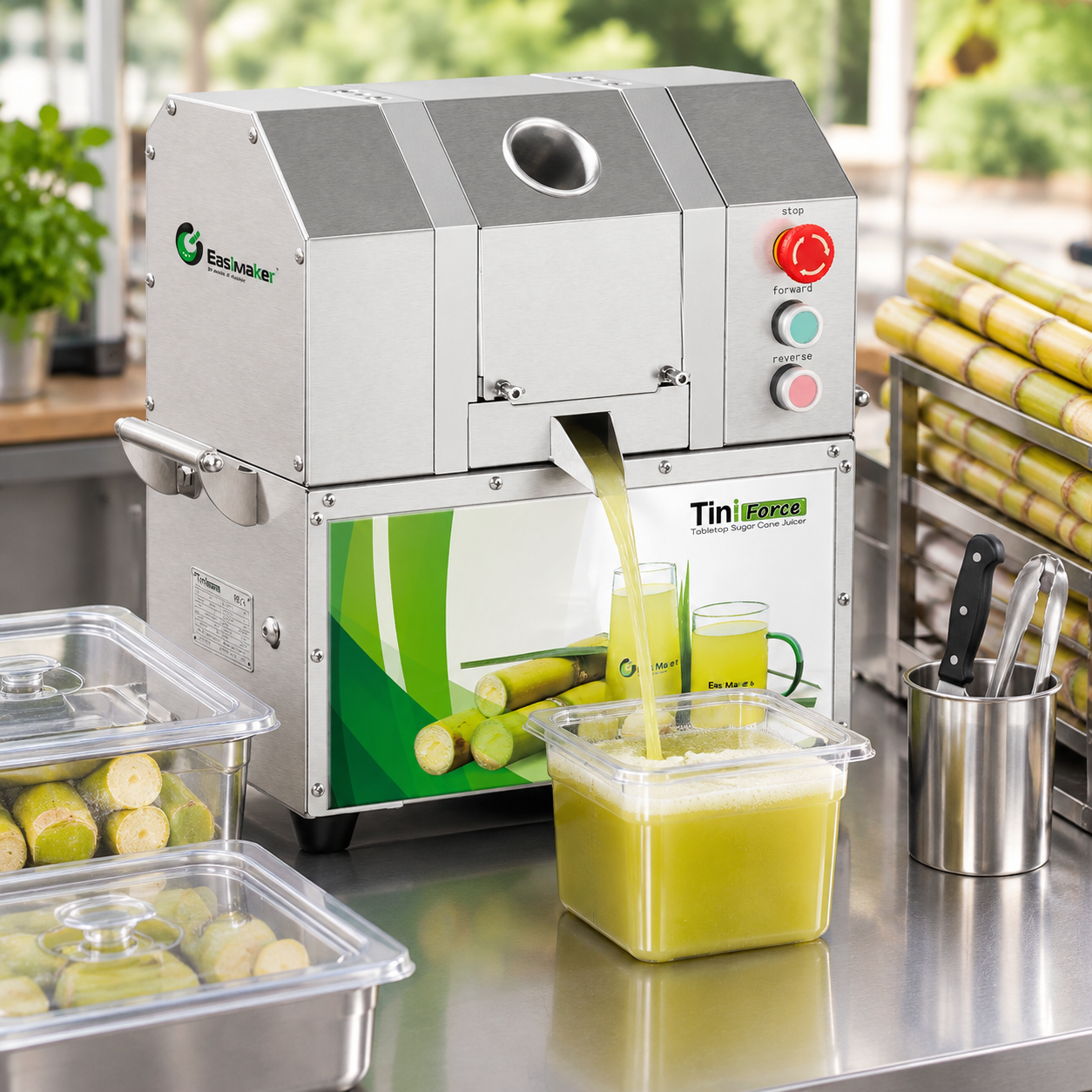
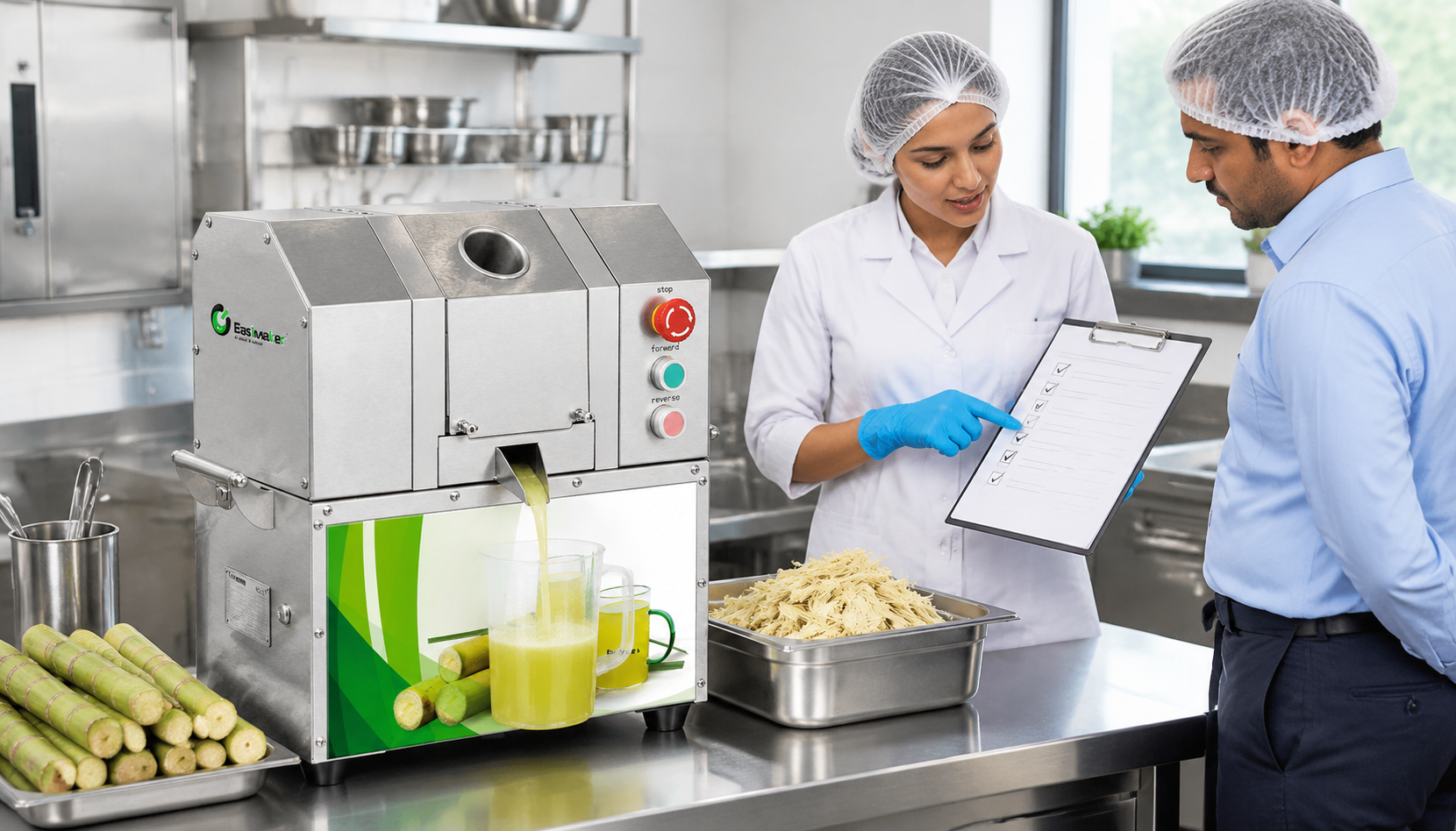
Preparation quality should be checked before the first customer order and during longer service periods. Use a short checklist:
- Are the raw and prepared cane areas separated from the juice collection area?
- Are cane pieces free from visible soil, loose leaves, and damaged fragments?
- Are knives, boards, containers, and contact surfaces clean and suitable for the task?
- Does each piece fit the machine inlet without forcing?
- Is the juice container positioned below the outlet, with bagasse directed to the intended waste container?
- Are staff clear on how to stop and isolate the machine?
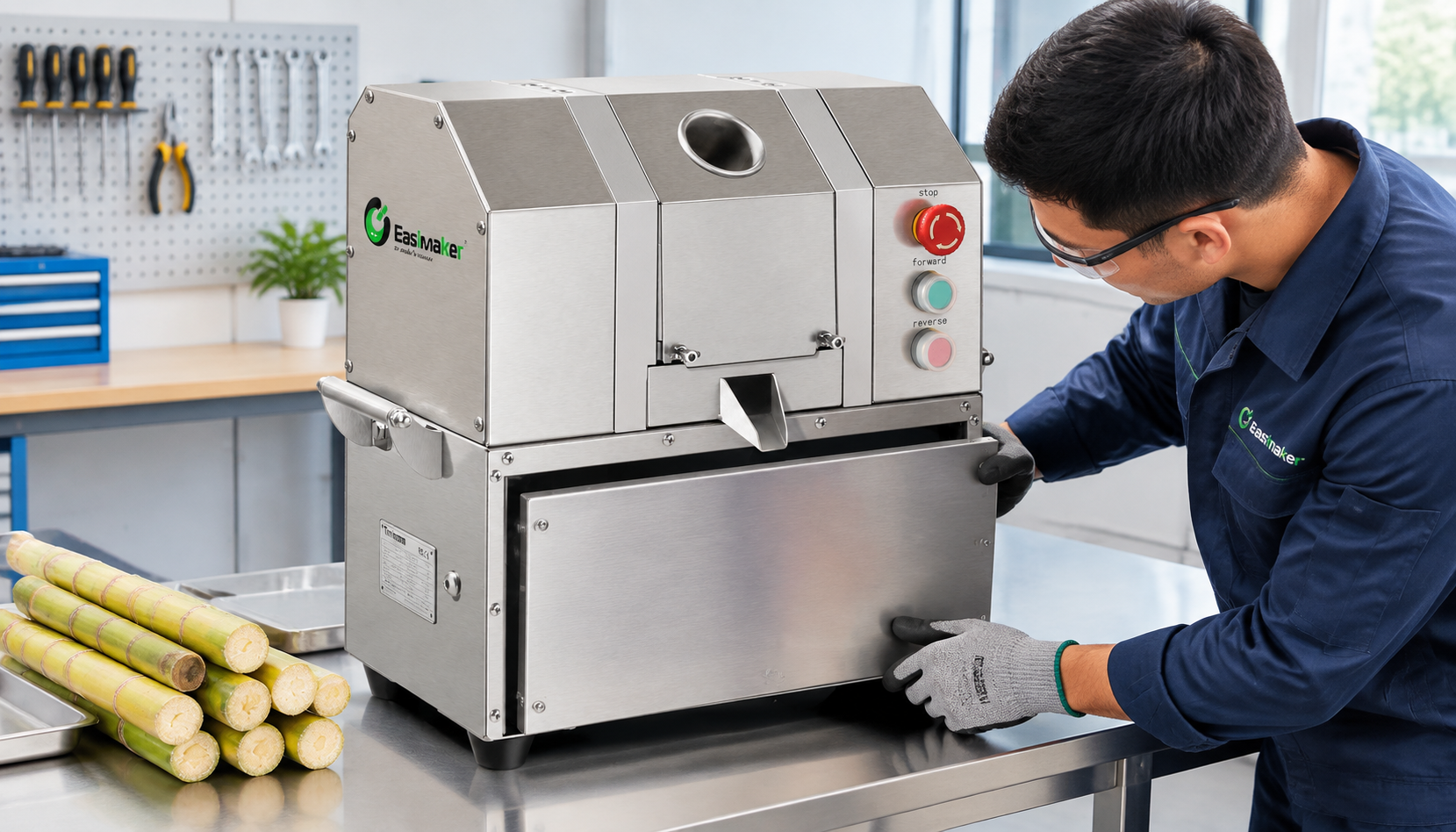
Clean the machine according to its manual and your food-handling procedure. Do not spray water into electrical controls or enclosed components unless the manufacturer states that this is safe. If the machine shows unusual noise, vibration, slow feeding, or repeated jams, stop and inspect it rather than compensating with greater force.
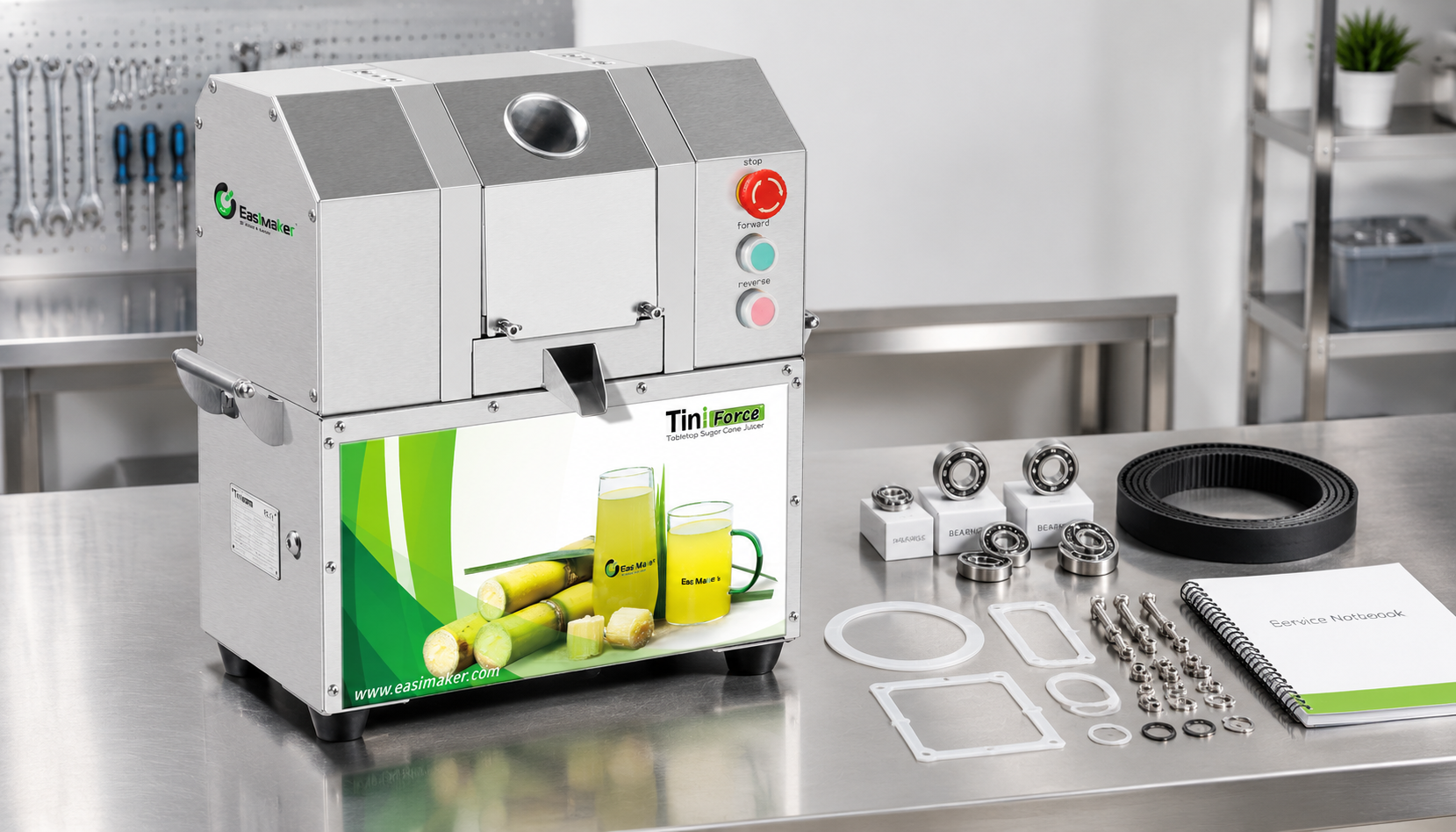
Preparation is part of equipment performance, but it cannot correct a machine that is incorrectly configured, overloaded, or overdue for service. Keep operating records and contact the supplier when the issue cannot be resolved through the approved procedure.
FAQ
What is the best length to cut sugarcane for a juicer?
There is no universal length. Cut the stalk into sections that the operator can control and that fit the machine’s feed opening without forcing. Confirm the permitted dimensions in the machine manual or with the manufacturer.
Should sugarcane be washed before machine juicing?
Yes. Remove visible soil and debris with potable water, then keep the washed cane on a clean, suitable surface. Follow the site’s food-handling procedure and local requirements.
Can whole sugarcane stalks be fed into a commercial juicer?
That depends on the machine design and inlet dimensions. Long or irregular stalks may be difficult to control. Use prepared sections unless the manufacturer specifically confirms another method.
What should I do if sugarcane jams in the machine?
Stop the machine and isolate it from power according to the operating procedure before investigating. Never reach into a moving inlet or use force to clear a jam. Check the stalk size, shape, cleanliness, and machine instructions.
Does cutting sugarcane into smaller pieces improve juice extraction?
Cutting mainly improves handling and feed control. It does not guarantee a particular extraction result. Machine condition, cane quality, roller settings, and the approved operating method also affect operation.
Need Help Matching Cane Preparation to Your Machine?
Share your cane dimensions, service format, expected operating routine, and target market with Easimaker. Our team can help you discuss a suitable commercial sugarcane juicing setup and the preparation points to confirm before ordering.