Table of Contents
- What buyers should actually measure
- Translate orders into required juice volume
- Run a representative timed service test
- Record working time, interruptions, and rest
- Compare advertised output and completed orders
- Evaluate TiniForce S3 and EasiDeMax S4 consistently
- Complete your capacity worksheet
- Capacity and peak-service FAQ
- Prepare a documented capacity discussion
Measure sugarcane juicer capacity by timing usable juice production and completed customer orders under realistic service conditions. Include cane handling, drink preparation, waste removal, interruptions, and manufacturer-required rest periods. Report extraction throughput separately from finished drinks per hour: a machine can crush cane quickly while the service counter still falls behind.
Sugarcane juicer capacity: what buyers should actually measure
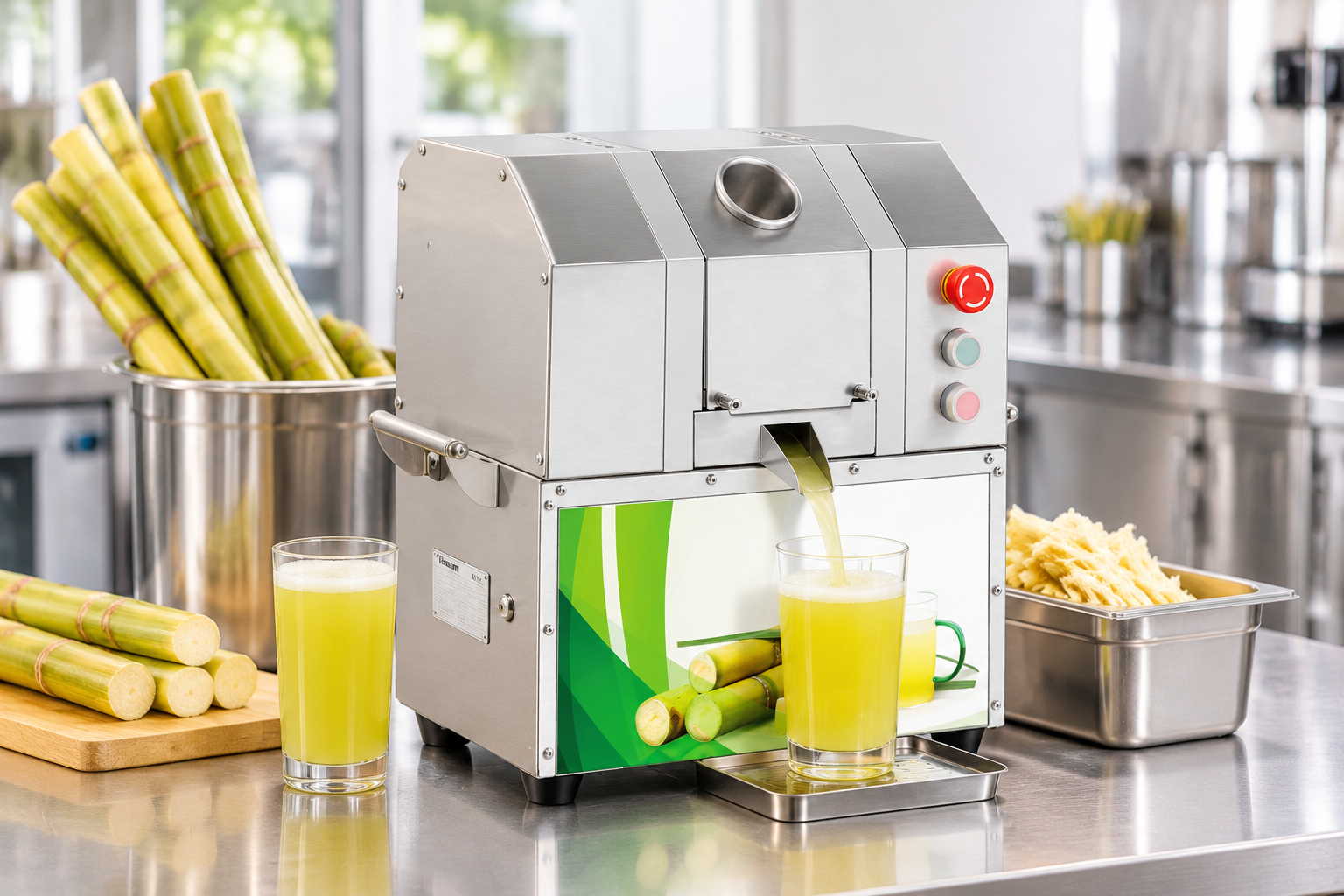
A commercial sugarcane juicer crushes prepared stalks between rollers, separating juice from fibrous bagasse. Its practical capacity depends on the cane, operating limits, staff, and surrounding workstation.
- Extraction throughput
- Juice collected per unit of extraction time, with the timing boundary stated.
- Usable juice output
- Juice available for recipes after the normal straining and handling process.
- Completed service output
- Accepted drinks or orders handed over during the entire service interval.
Keep drinks and orders separate. An order containing several drinks takes more production work than a single-drink order. Record both counts and the actual recipe mix.
Also distinguish cane processed in kilograms per hour from juice collected in liters per hour. Converting between them requires measured yield for the tested cane. For broader equipment sizing, see the peak-demand capacity planning guide; this article focuses on verifying output through a repeatable trial.
Translate peak orders and cup recipes into required juice volume
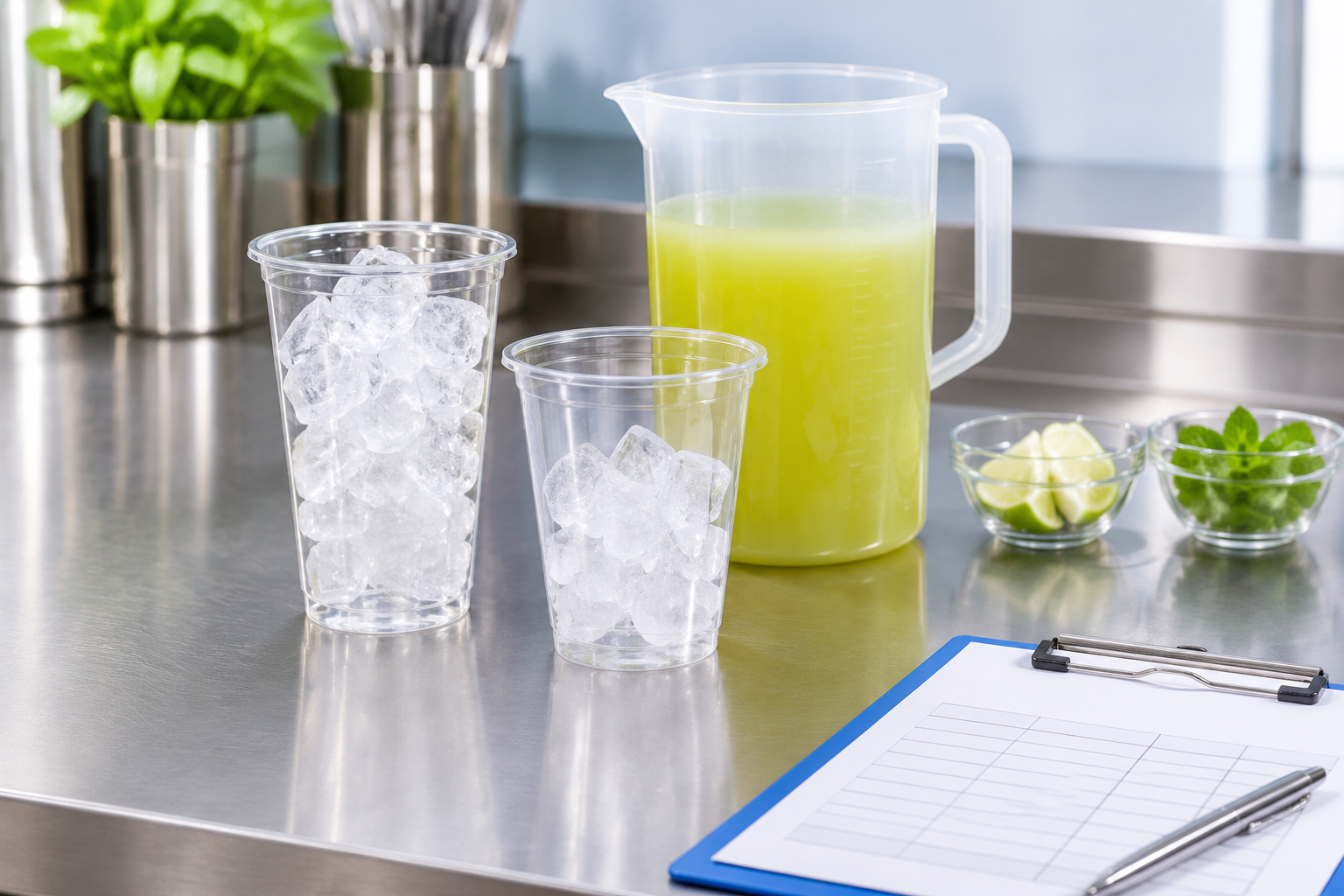
Convert liters into potential servings using the measured cane-juice portion in each recipe. Cup size alone is insufficient because ice and other ingredients occupy space.
Required usable juice = sum of each drink quantity × its cane-juice portion.
Volume-based serving equivalent = usable juice liters ÷ cane-juice liters per serving. This calculation describes ingredient availability; a service trial must establish completed output.
Hypothetical planning example: assume 24 orders arrive within 20 minutes, each containing one drink. Sixteen drinks require 250 mL of cane juice each, while eight require 200 mL. Required usable juice is (16 × 0.25) + (8 × 0.20) = 5.6 liters. That equals a demand rate of 16.8 liters per hour during this interval, before measured spills or remakes.
These assumptions are illustrative, not a machine rating. Use your own ticket data to reproduce juice bar peak demand, including clustered arrivals. A comfortable hourly average can conceal a queue that grows during a shorter rush.
Run a timed service test with representative cane and staff
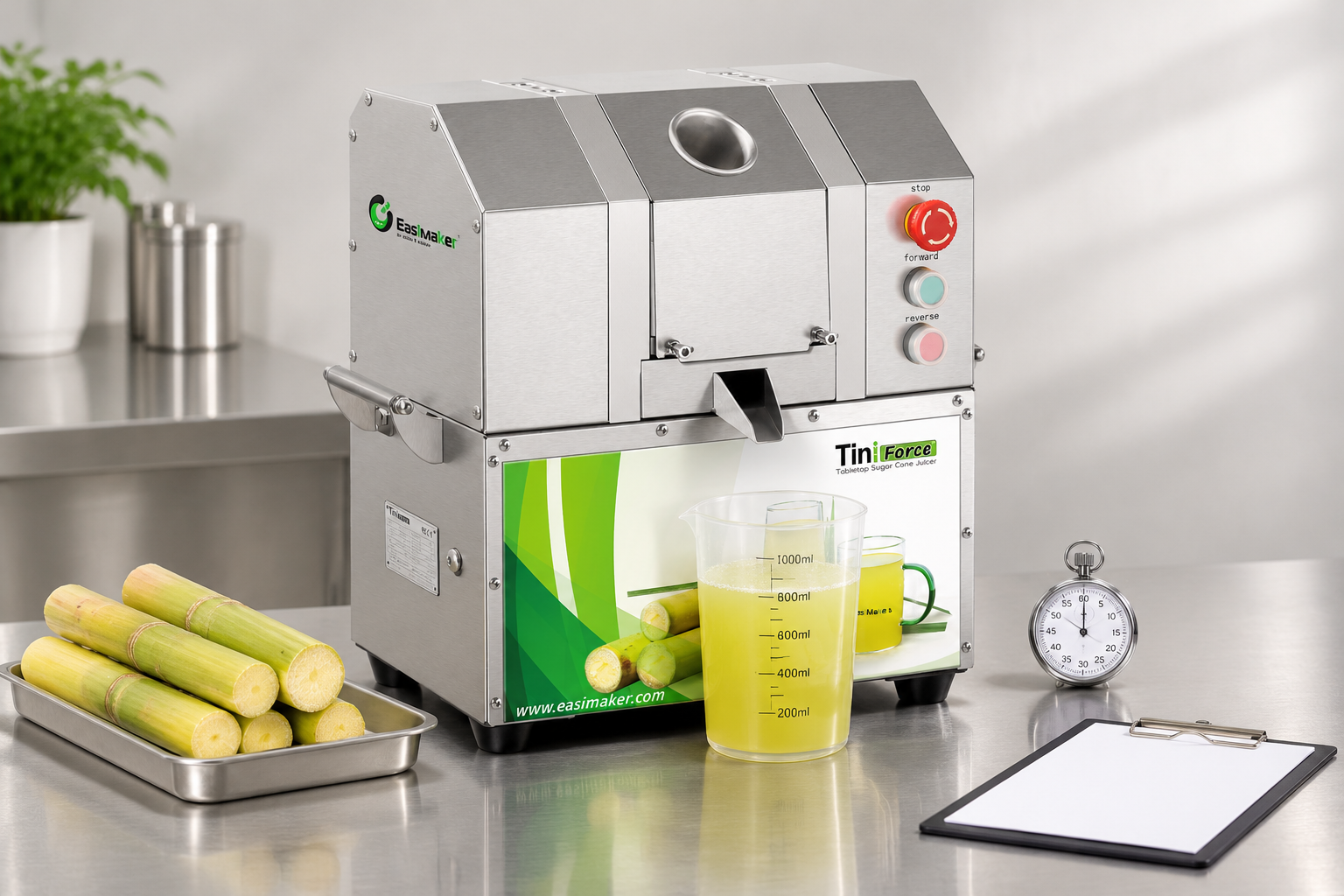
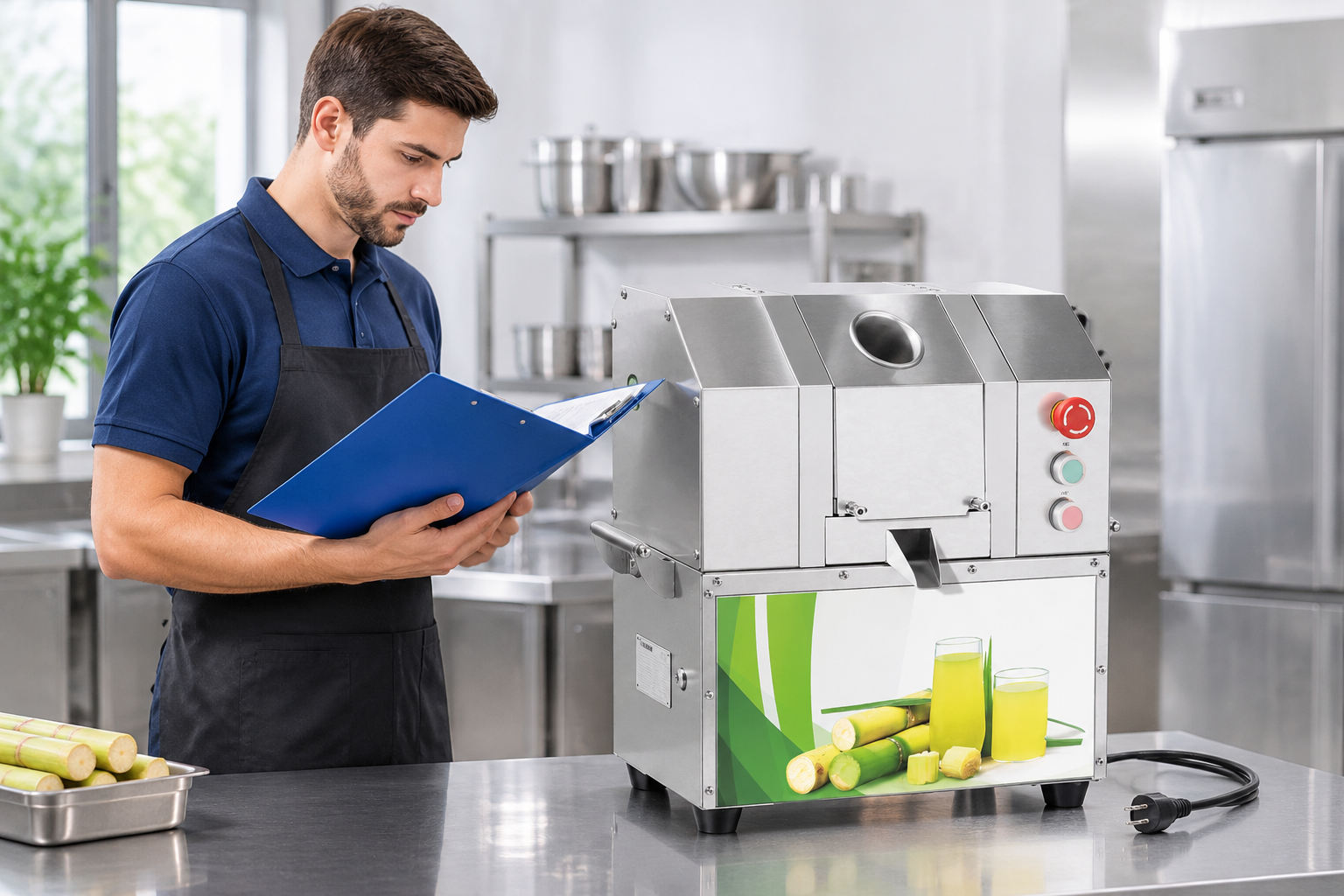
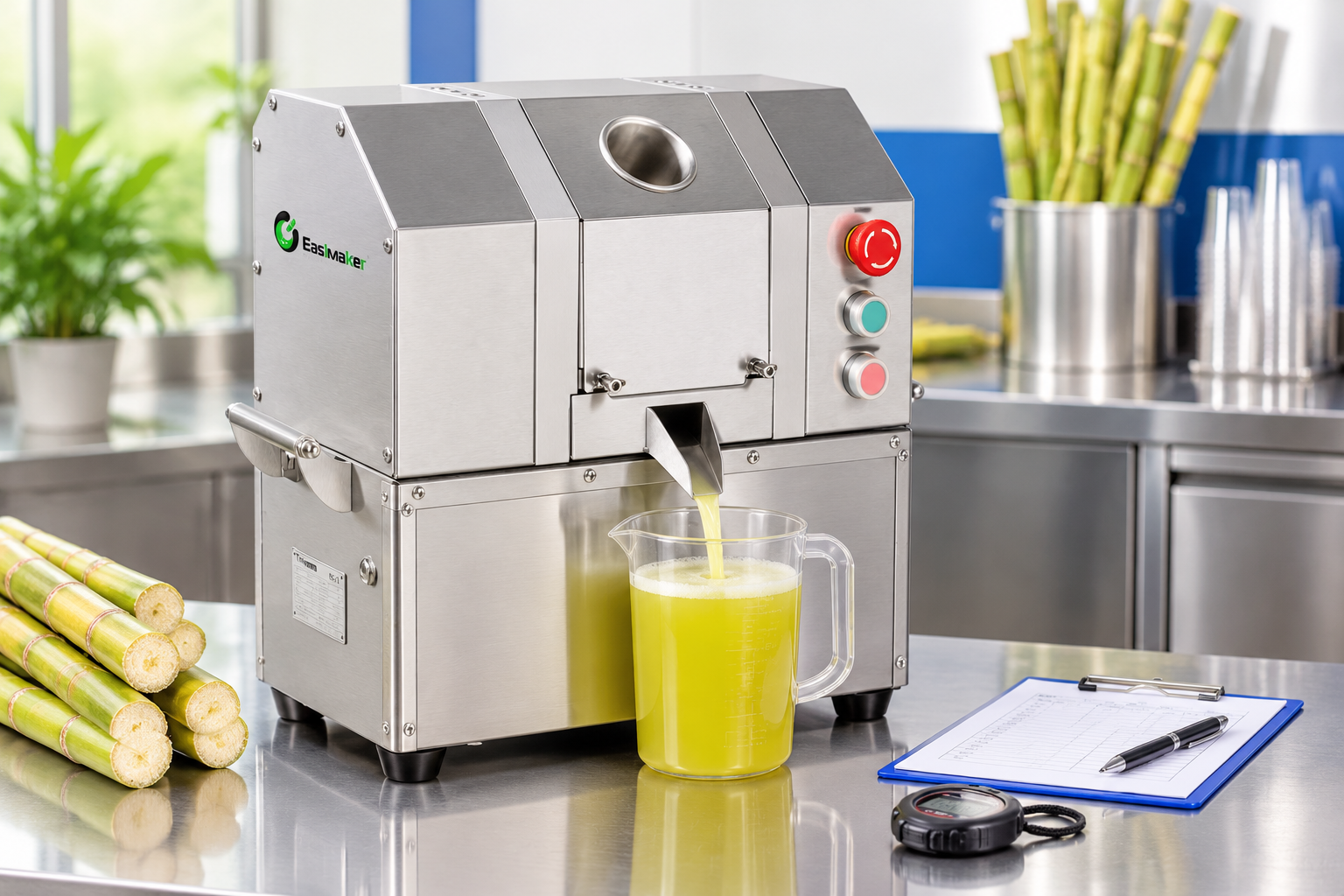
Run the sugarcane juice machine output test with the cane, recipes, staffing, and operating pattern expected in your shop. Agree on the procedure before starting.
- Identify the configuration. Record the model, electrical rating, approved settings, accessories, and relevant manual revision. For U.S. installations, confirm that the intended supply matches the exact machine configuration.
- Prepare representative cane. Record its source, condition, diameter range, preparation method, and input weight. Include normal variation within the machine’s permitted feed requirements.
- Define the starting condition. State how much prepared cane, juice, ice, and packaging is available. Starting with collected juice can overstate extraction-supported service output.
- Replay realistic orders. Use your expected menu mix and staffing. Include payment and handoff if the same operator normally performs them.
- Measure continuously. Record juice volume, drinks completed, order arrival and completion times, interruptions, and remaining queue.
- Repeat representative trials. Retain every valid result and explain differences. Test the intended peak duration within documented operating limits.
Use graduated vessels and consistent volume readings. Request a continuous demonstration recording with visible timing and the complete log. A brief edited clip cannot establish sustained commercial sugarcane juicer throughput.
Record preparation, extraction, serving, interruptions, and permitted rest periods
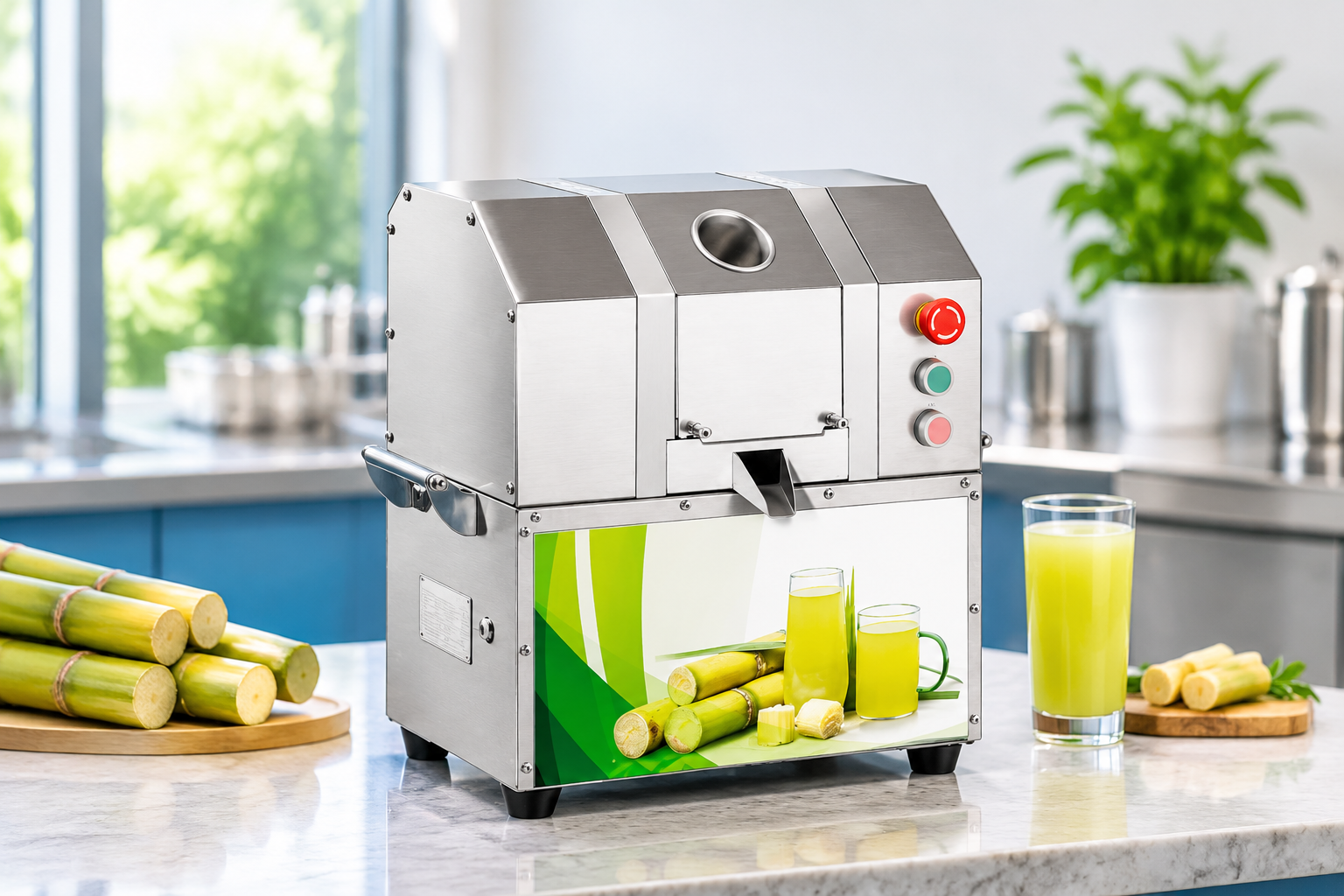
Keep the overall service clock running through normal interruptions. Record individual activities alongside it so you can identify the bottleneck.
- Preparation: washing, trimming, staging, and replenishing cane; identify work completed before service.
- Extraction: feeding, collection, and any additional passes permitted by the manual.
- Serving: portioning, mixing, adding ice, lidding, payment, and handoff.
- Interruptions: bagasse removal, spills, stock replenishment, and approved jam recovery.
- Rest and sanitation: required cooling periods and scheduled hygiene tasks.
The sugarcane juicer duty cycle defines permitted running and rest conditions. Obtain model-specific instructions from Easimaker’s datasheets and manuals and confirm any unclear limits in writing. A protection shutdown is an interruption requiring investigation, not evidence of an acceptable rest schedule.
With multiple staff, tasks may overlap. Do not add overlapping task durations and call that elapsed time. Record overall elapsed time and staff involvement separately. Follow the prescribed shutdown and power-isolation procedure before clearing blockages or accessing working parts.
Comparison table: advertised output, measured extraction, and completed orders
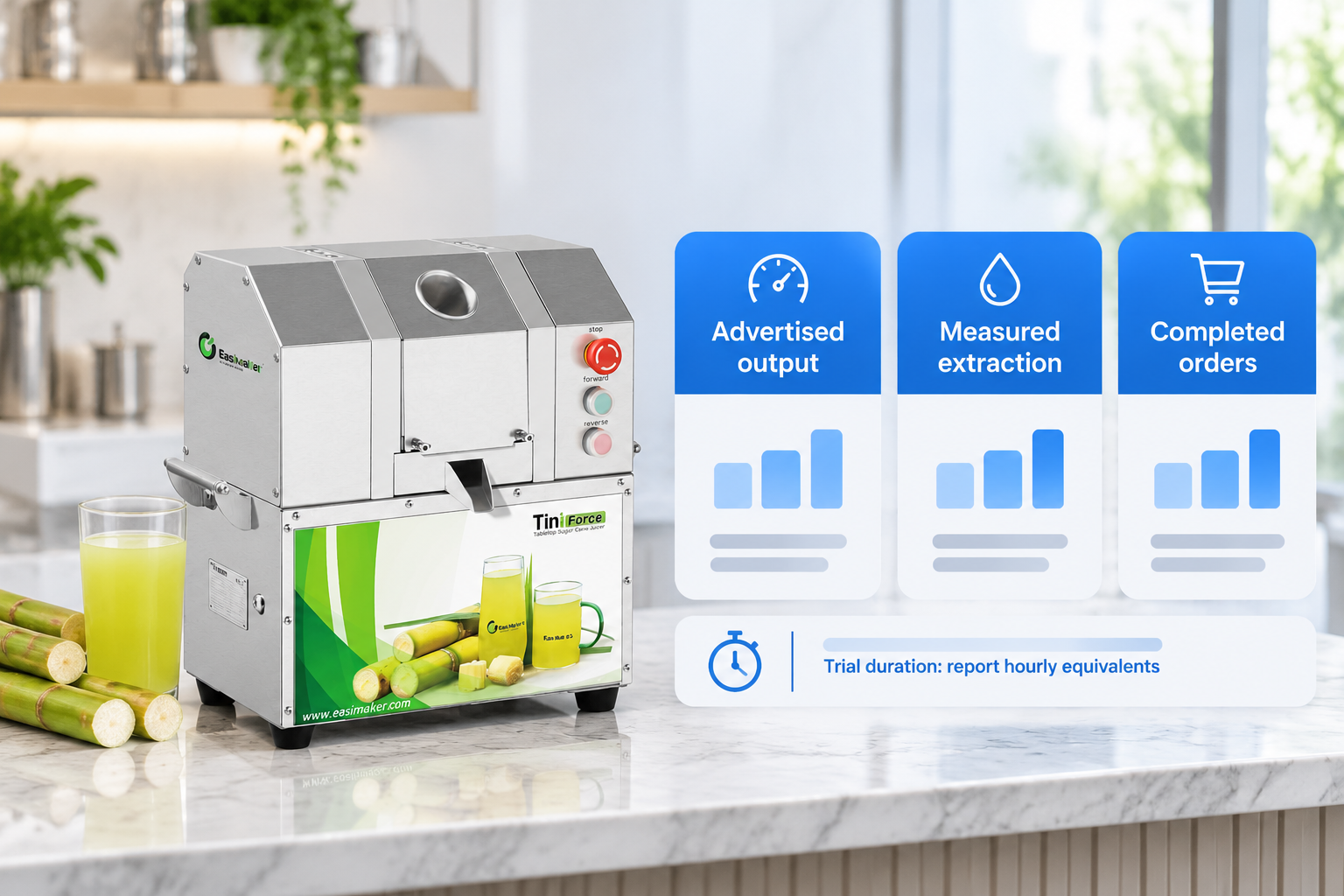
Actual service output can differ from advertised output because the measurement boundaries and operating conditions differ. Compare each figure using its units, denominator, and supporting evidence.
| Measure | Calculation or evidence | What it establishes | Main limitation |
|---|---|---|---|
| Advertised output | Supplier-stated value and test conditions | A starting point for evaluation | May describe cane input or brief extraction only |
| Measured extraction | Collected liters ÷ stated extraction minutes × 60 | Extraction rate under recorded conditions | Can exclude serving, replenishment, and rest |
| Usable juice output | Recipe-ready liters ÷ total service minutes × 60 | Ingredient availability during the trial | Does not prove drink completion speed |
| Completed drinks | Accepted drinks handed over ÷ total service minutes × 60 | Finished-drink service rate | Depends on recipes and staffing |
| Completed orders | Fully completed tickets ÷ total service minutes × 60 | Customer-order completion rate | Depends on drinks per ticket and arrival pattern |
Label any hourly figure calculated from a shorter trial as an hourly equivalent. It does not demonstrate an uninterrupted hour of operation. Report the actual trial duration beside every normalized result.
Assess TiniForce S3 and EasiDeMax S4 using the same test conditions
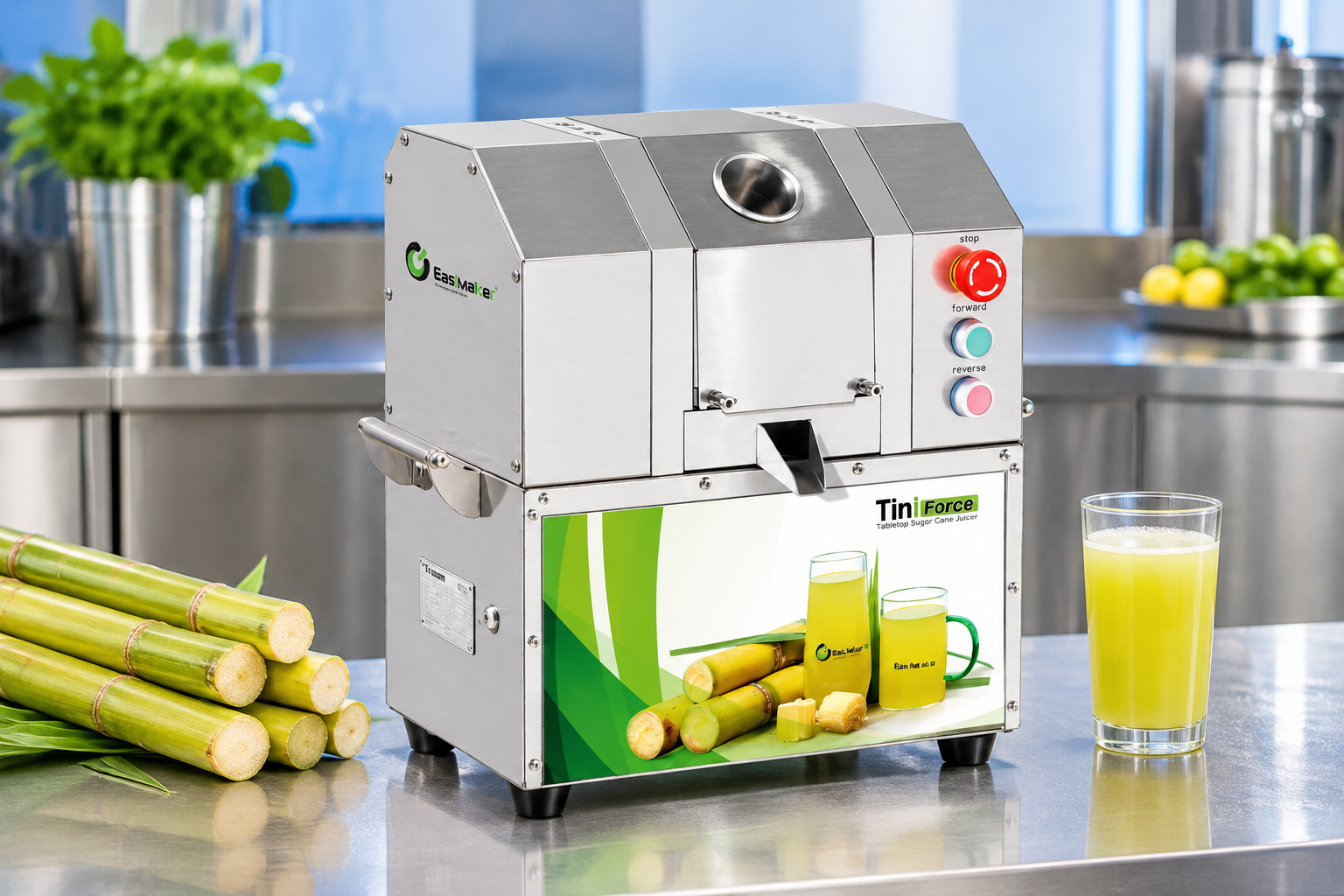
Evaluate both models against the same service requirement while respecting each model’s documented operating limits. Model names and physical size do not establish a verified capacity difference.
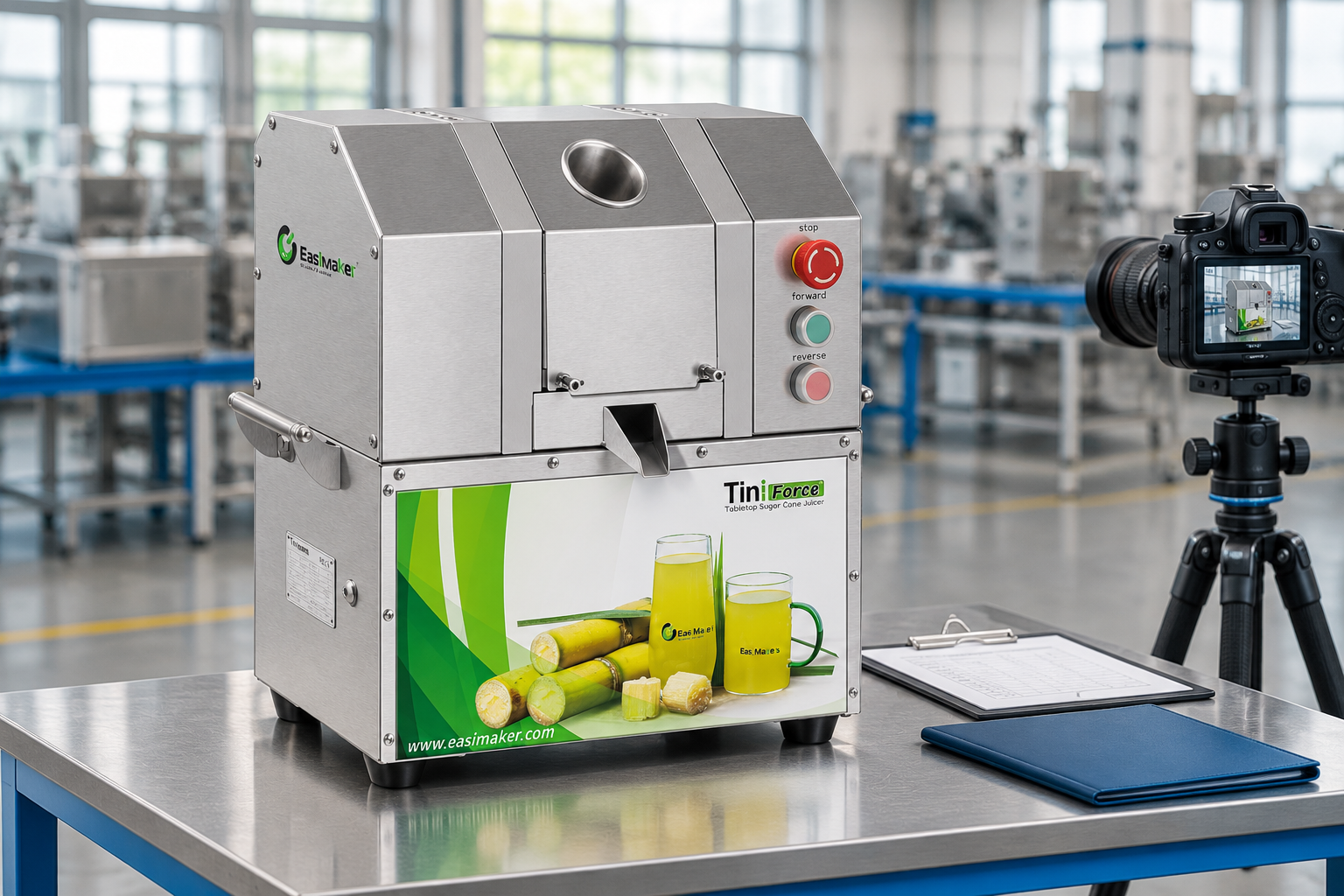
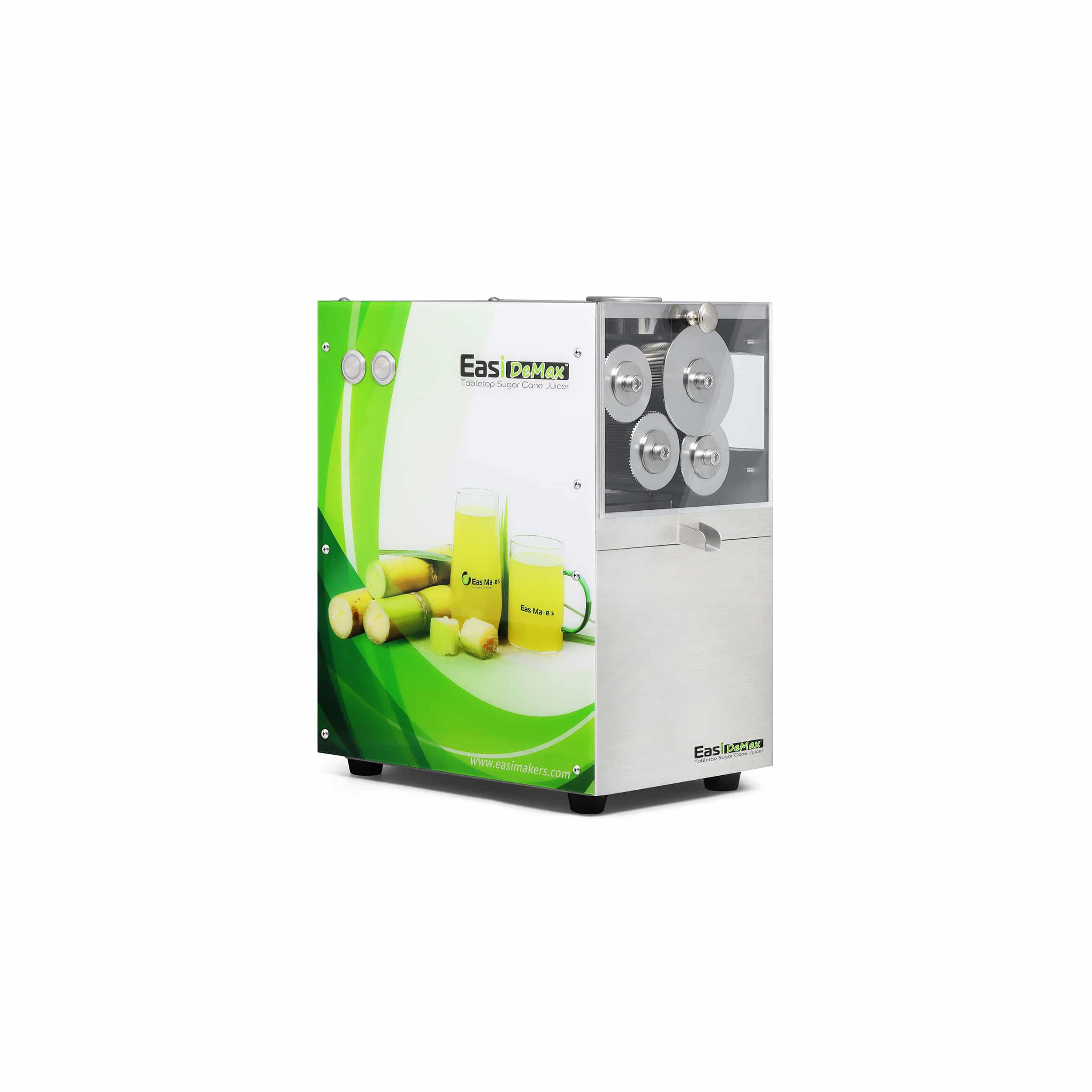
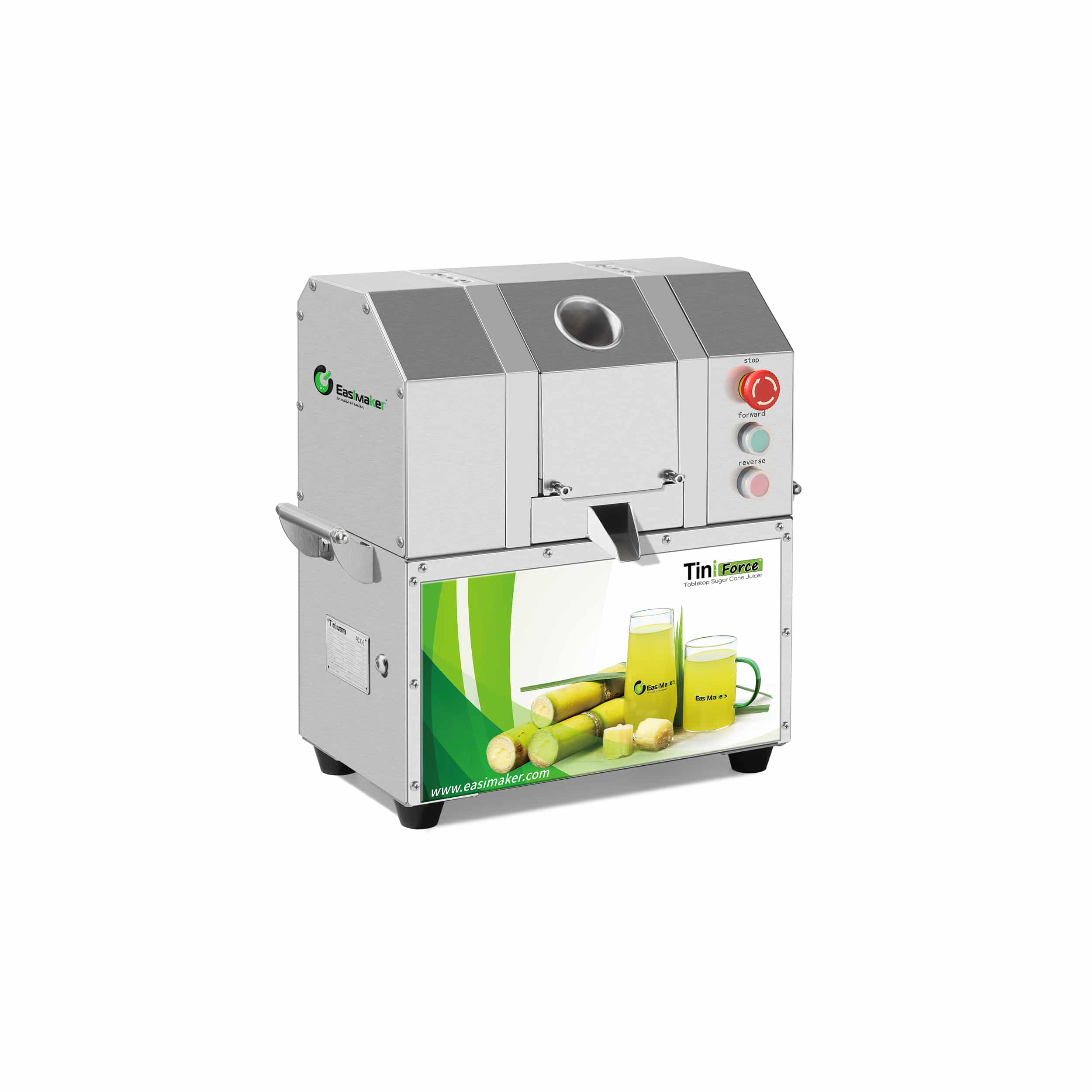
The TiniForce S3 compact sugarcane juicer is positioned for compact and portable applications. The EasiDeMax S4 tabletop sugarcane juice machine includes a transparent viewing window. These characteristics inform workstation fit; their effect on your service output requires measurement.
Use matched cane batches, identical recipes, comparable operator experience, and the same order-arrival schedule. Record configuration differences and any required changes to preparation or rest periods. Confirm U.S. electrical compatibility for each supplied version.
No verified capacity or duty-cycle figures for either model are supplied here. Request current documentation and representative test evidence. If one demonstration uses extra staff or pre-extracted juice, document that difference before drawing conclusions.
Summarize results in a capacity worksheet before choosing equipment
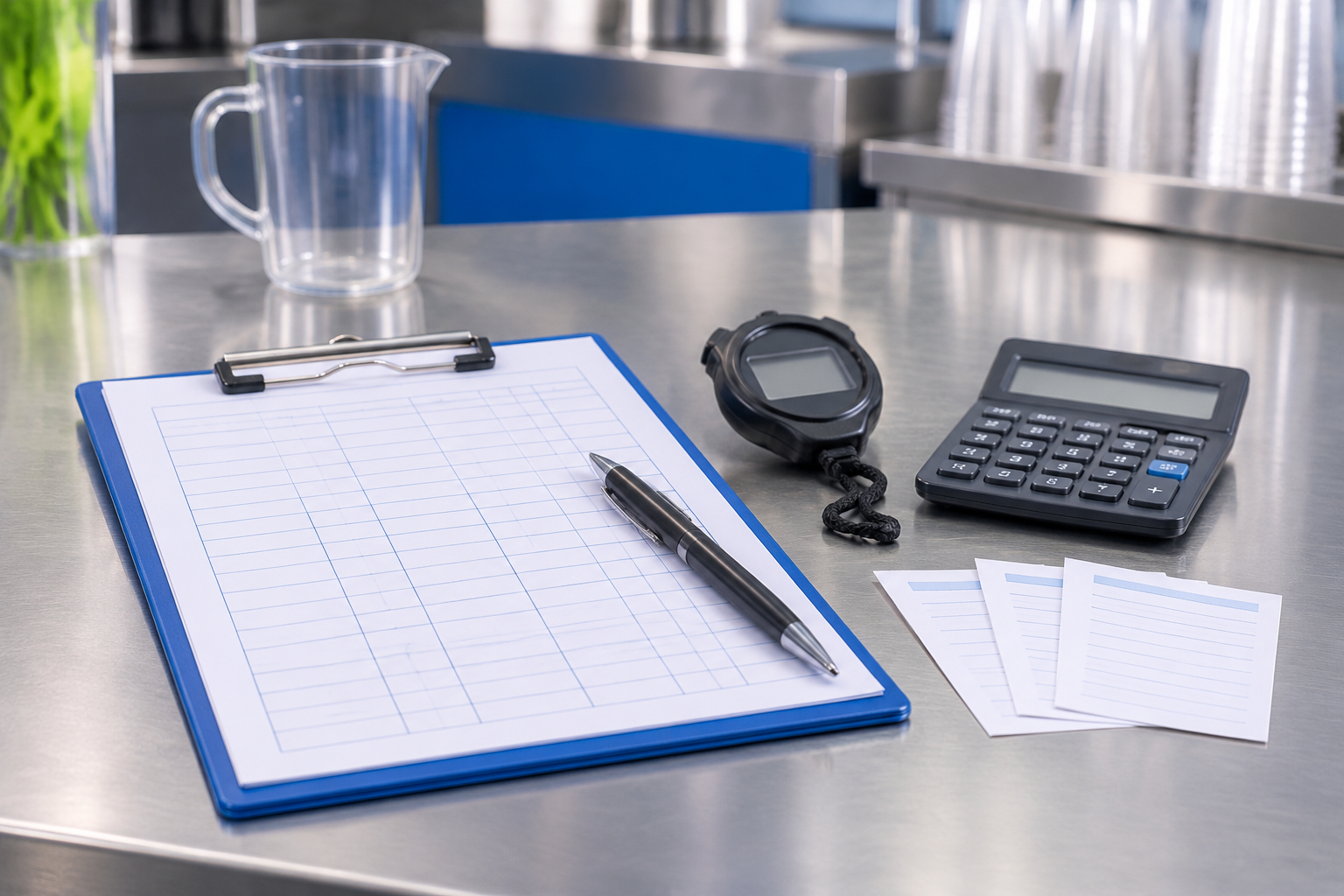
Complete one worksheet per trial and retain the original timing records. Leave unknown specifications blank until confirmed.
- Identity: date; model/configuration; electrical rating; manual revision; operators.
- Inputs: cane source, condition, dimensions, and weight; starting prepared stock and juice.
- Demand: arrival schedule; orders; drinks per order; recipes; cane-juice portion per drink.
- Time: overall elapsed time; extraction time; interruptions; required rest; sanitation.
- Output: collected liters; usable liters; accepted drinks; completed orders; spills and remakes; ending juice inventory.
- Service result: order waiting times; unfinished tickets; ending queue; bottleneck; corrective action.
Reconcile usable production with recipe consumption, losses after measurement, and starting and ending inventory. Otherwise, starting juice stock may make an inadequate extraction rate appear sufficient.
Set acceptance criteria before testing: required drink mix, acceptable waiting time, intended peak duration, and compliance with operating limits. Investigate serving or preparation delays before adding equipment. Consider additional juicing equipment when repeated trials identify extraction as the limiting step after practical workflow improvements.
FAQ: five questions about capacity and peak service
How should a juice shop measure sugarcane juicer capacity?
Time a realistic service interval and record usable juice, completed drinks, completed orders, interruptions, and required rest. Keep extraction timing separate.
How do liters per hour translate into finished cups?
Divide usable liters by cane-juice liters per recipe to calculate potential servings. Confirm finished cups through a timed service trial that includes preparation and handoff.
Why can actual service output differ from advertised output?
Advertised figures may use different cane, staffing, timing boundaries, or units. Actual service also includes portioning, packaging, replenishment, waste handling, sanitation, and rest.
What should buyers record during a supplier demonstration?
Record configuration, cane condition and weight, staff, starting inventory, recipes, elapsed time, juice volumes, completed tickets, delays, rest, and ending inventory. Retain continuous video where available.
When should a shop consider additional juicing equipment?
Consider it when representative repeat trials show extraction cannot meet peak recipe demand within approved limits, after addressing preparation and serving bottlenecks.
Send Easimaker your peak demand and request a documented capacity discussion
A useful capacity decision connects measured usable juice, completed orders, and permitted operating conditions. Your completed worksheet provides a practical basis for discussing machine suitability, unresolved specifications, and the evidence needed before purchase.
FAQ
How should a juice shop measure sugarcane juicer capacity?
Time a realistic service interval and record usable juice, completed drinks, completed orders, interruptions, and required rest. Keep extraction timing separate.
How do liters per hour translate into finished cups?
Divide usable liters by cane-juice liters per recipe to calculate potential servings. Confirm finished cups through a timed service trial that includes preparation and handoff.
Why can actual service output differ from advertised output?
Advertised figures may use different cane, staffing, timing boundaries, or units. Actual service also includes portioning, packaging, replenishment, waste handling, sanitation, and rest.
What should buyers record during a supplier demonstration?
Record configuration, cane condition and weight, staff, starting inventory, recipes, elapsed time, juice volumes, completed tickets, delays, rest, and ending inventory. Retain continuous video where available.
When should a shop consider additional juicing equipment?
Consider it when representative repeat trials show extraction cannot meet peak recipe demand within approved limits, after addressing preparation and serving bottlenecks.
Find the Right Sugarcane Juicer or Food Processing Solution
Send Easimaker your peak order schedule, cane-juice portions, staffing, U.S. installation requirements, and completed test worksheet. Our team can discuss suitable equipment, current configuration details, and representative capacity evidence, then prepare a quote for your project.