Table of Contents
- When a secondhand purchase makes sense
- Verify identity, ownership, and configuration
- Inspect surfaces, guards, rollers, and repairs
- Arrange a safe demonstration and technical inspection
- Compare used purchase costs with a new quotation
- Confirm parts and warranty terms
- Use TiniForce S3 and EasiDeMax S4 as references
- Five questions about secondhand equipment
- Complete your comparison
Before buying a used sugarcane juicer, verify its model and serial number, inspect accessible food-contact surfaces and guards, review service records, and arrange a safe demonstration with qualified technical checks. Confirm replacement parts and any remaining warranty in writing. A low asking price can disappear into missing guards, unavailable components, or undocumented repairs, so establish identity and support availability before negotiating.
Used sugarcane juicer: when a secondhand purchase makes sense
A secondhand purchase makes sense when the machine fits your operation, its condition can be verified, and the total cost leaves a worthwhile saving after repairs and installation.
Definition: A used sugarcane juicer is a previously owned machine that extracts juice by crushing cane between rollers. A secondhand sugarcane juice machine is not necessarily refurbished, inspected, or covered by a warranty.
For a first-time juice bar, street stand, or restaurant, assess counter space, cane preparation, power supply, cleaning access, and expected service demand. Previous use in a food business does not establish suitability for yours.
Decision summary: Proceed only when identity, safe condition, parts support, and commissioning costs are sufficiently clear. Pause when the seller refuses inspection, ownership is uncertain, or required repairs cannot be priced. Avoid treating an unverified machine as ready for opening day.
Verify the model, ownership history, and supplied configuration

Delay a purchase if the machine cannot be reliably identified, the seller cannot establish authority to sell it, or essential operating and electrical information is unavailable.
Photograph the rating plate and serial number. Match them against the invoice, manual, and seller’s description. Record voltage, frequency, phase, and rated electrical information without assuming that a familiar plug proves compatibility.
- Ask for the purchase date, previous locations, typical workload, storage conditions, and reason for sale.
- Request the sugarcane juicer service history, including repair invoices, replacement components, recurring faults, and modification records.
- List everything included: guards, collection parts, filters where fitted, accessories, manuals, and spare parts.
- Obtain a written bill of sale identifying the machine, disclosed defects, included items, and agreed inspection or return terms.
Missing maintenance records create uncertainty; they do not prove failure. However, missing identity or safety information may prevent a meaningful inspection. For U.S. commercial use, ask the local reviewing authorities what evidence they require for this exact machine and installation.
Inspect accessible surfaces, guards, rollers, and signs of unauthorized repairs
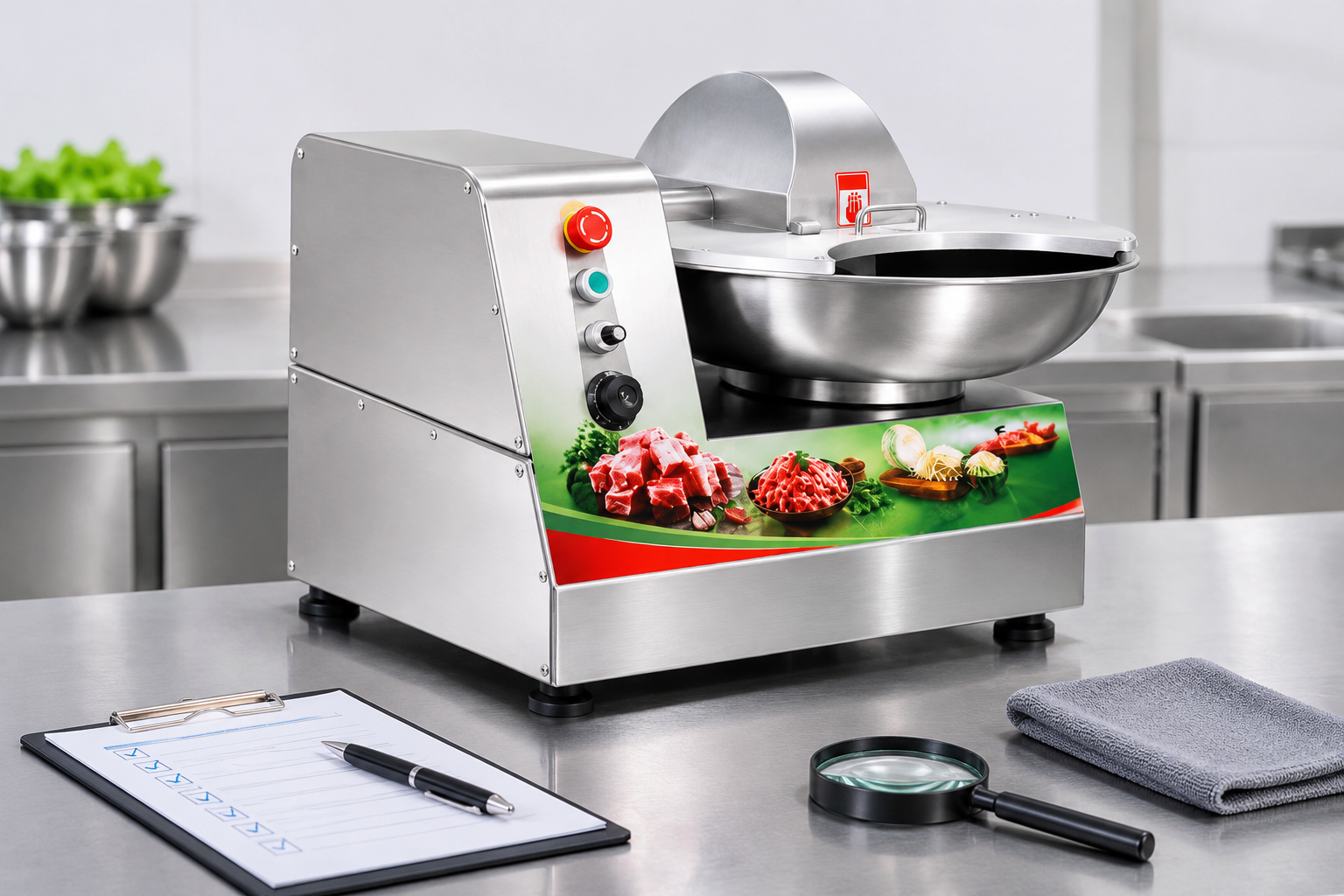
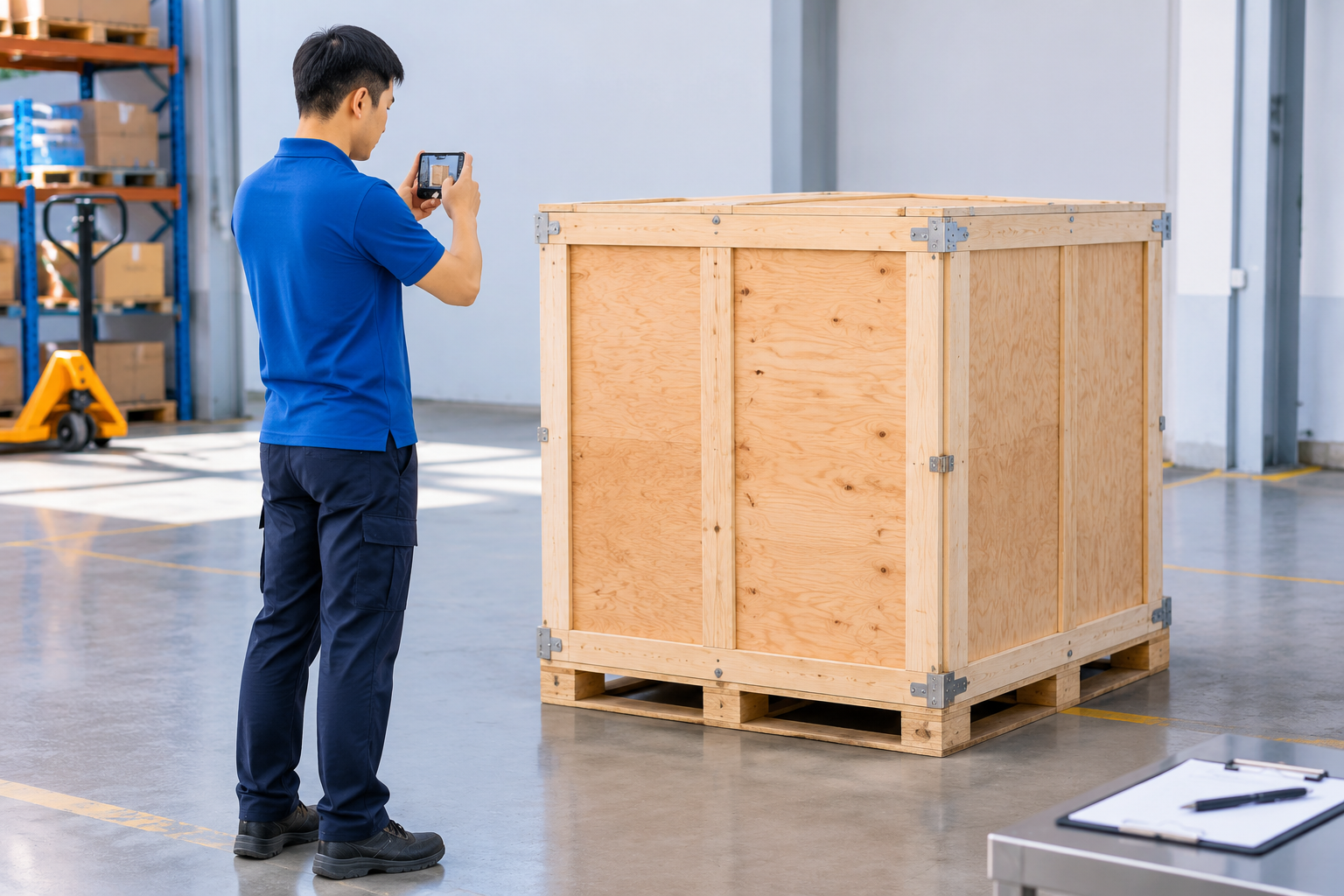
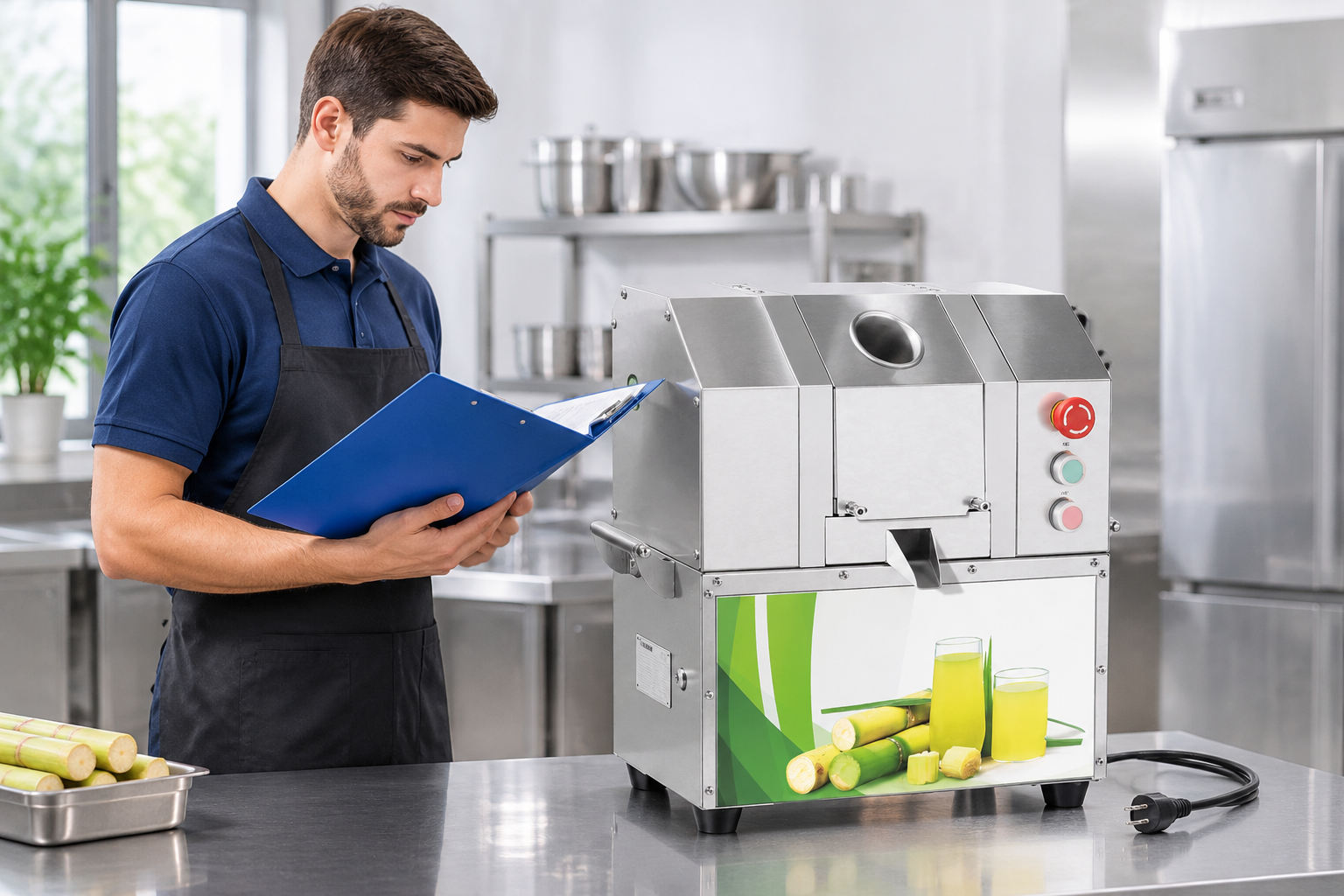
Inspect the machine stopped and isolated from power, following the model manual. Limit your checks to safely accessible areas; leave internal access and dismantling to qualified personnel.
- Food-contact areas: Look for pitting, cracks, flaking coatings, damaged seals, trapped residue, and rough repairs around the juice path.
- Guards and housing: Check for missing covers, loose fasteners, bent panels, damaged latches, and altered feed openings.
- Visible rollers: Record chips, corrosion, uneven wear, or apparent misalignment without reaching into the crushing area or rotating parts by hand.
- Repair evidence: Flag added switches, taped cables, improvised brackets, fresh welds, or components that differ from documented construction.
An attractive exterior cannot establish the condition of bearings, drive components, or electrical insulation. Ask who performed each repair and whether the manufacturer approved the replacement or modification.
Use the commercial sugarcane juicer cleaning guide to frame questions about cleaning access. Residue may be removable; damaged surfaces or inaccessible contamination can require a more substantial remedy.
Arrange a safe demonstration and qualified technical inspection
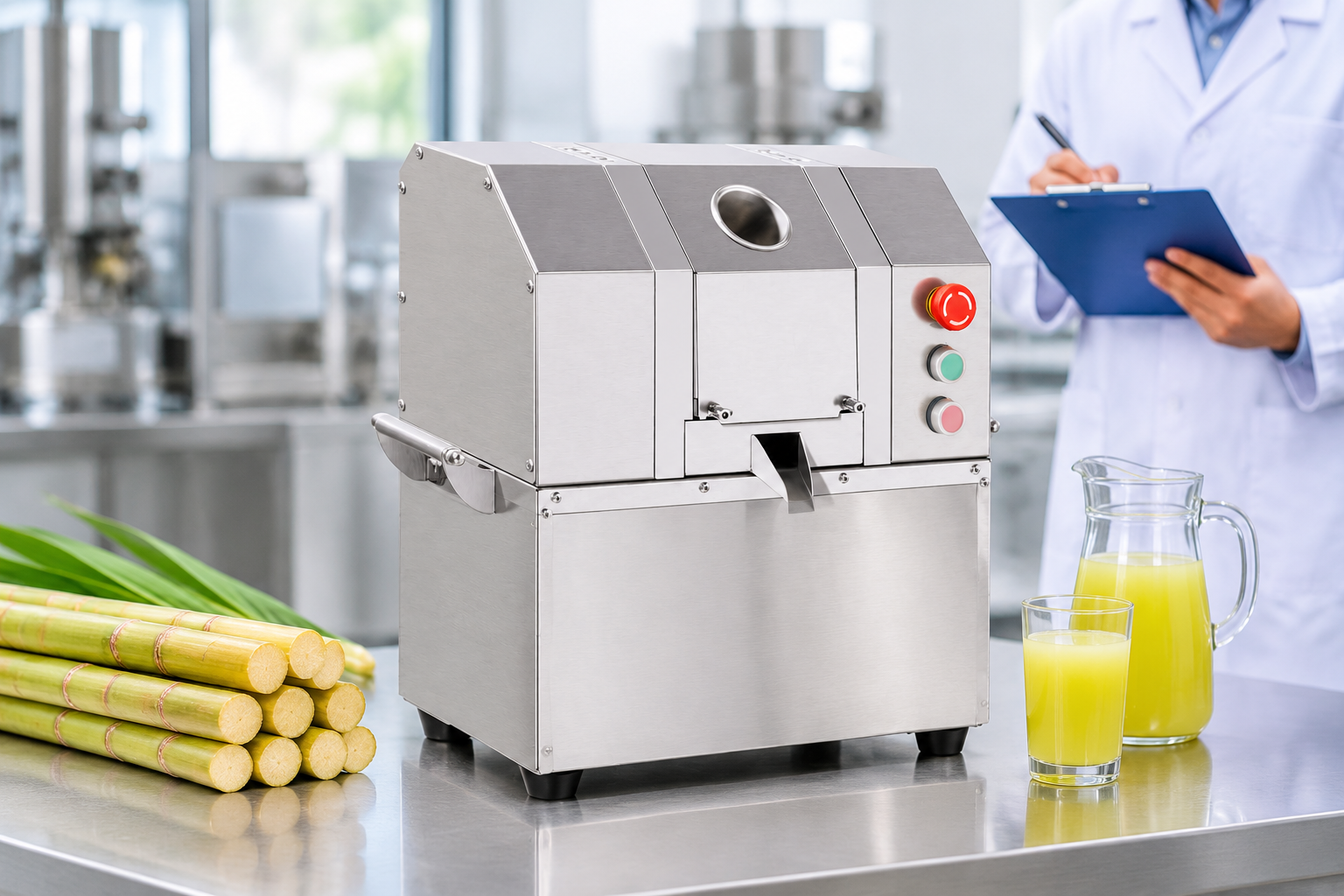
A demonstration should follow a satisfactory preliminary safety check. A machine that starts is not automatically fit for commercial service.
- Confirm the setup. Have a qualified person check electrical compatibility, visible cable condition, stability, guarding, and readiness before energizing.
- Observe normal operation. A trained operator should demonstrate the controls according to the manual, with guards secured and hands clear of openings.
- Use representative cane. Observe feeding, juice collection, bagasse discharge, abnormal noise, vibration, leakage, and interruptions under permitted operating conditions.
- Record the conditions. Note cane preparation, input weight, collected juice, passes, and elapsed time if performance is measured. These observations apply to that test, not every future batch.
- Inspect after shutdown. Isolate power before checking residue, cleaning access, and any new leakage.
Stop if there is smoke, burning odor, grinding, exposed moving parts, or unreliable stopping. Never bypass a guard or deliberately jam the machine to test protection.
A used commercial sugarcane juicer inspection should include a qualified technician’s written findings on relevant mechanical and electrical condition, repair scope, and estimated costs. A seller’s video alone cannot establish internal condition or remaining service life.
Comparison table: used purchase costs versus a new machine quotation
Compare both options at the point they are ready for your intended service. Use written quotations and the same operating requirements.
| Cost or condition | Used machine | New machine quotation |
|---|---|---|
| Purchase scope | Agreed price and verified included items | Quoted configuration and accessories |
| Delivery | Collection, packing, freight, and handling | Freight, delivery terms, and applicable import charges |
| Condition checks | Independent inspection and fault diagnosis | Documented checks and receipt inspection |
| Remedial work | Missing guards, worn parts, cleaning, and repair labor | Any options or site work outside the quotation |
| Commissioning | Electrical work, setup, testing, and training | Confirm which commissioning services are included |
| Support and downtime | Confirmed parts lead times, repair access, and warranty status | Written warranty, exclusions, and support arrangements |
Comparison basis: Purchase price + delivery + inspection + required repairs + site preparation + commissioning. Add applicable taxes and fees consistently. Track uncertain downtime and future repairs separately using stated assumptions.
An unavailable safety component is an unresolved purchase condition. A contingency allowance cannot make the machine usable. If a major repair remains unpriced, the comparison is incomplete.
Confirm parts availability and warranty transfer terms in writing
Check parts availability with the manufacturer or an authorized supplier using the exact model, serial number, photographs, and component identifiers. Similar appearance does not establish compatibility.
Request written confirmation of the correct part, price, availability, lead time, shipping origin, and installation requirements. Include any missing guard and the components identified during inspection. Establish who can perform repairs locally and whether older revisions remain supported.
A used machine does not automatically retain its original warranty. Ask the warranty provider to confirm eligibility, any remaining coverage, transfer requirements, exclusions, and responsibility for labor and freight. Keep seller-provided guarantees separate from manufacturer coverage.
For an Easimaker machine, consult the Warranty & Support policy, then obtain confirmation for that individual unit. A published policy alone does not establish transferability or coverage for undocumented modifications.
Use current TiniForce S3 and EasiDeMax S4 information as comparison references
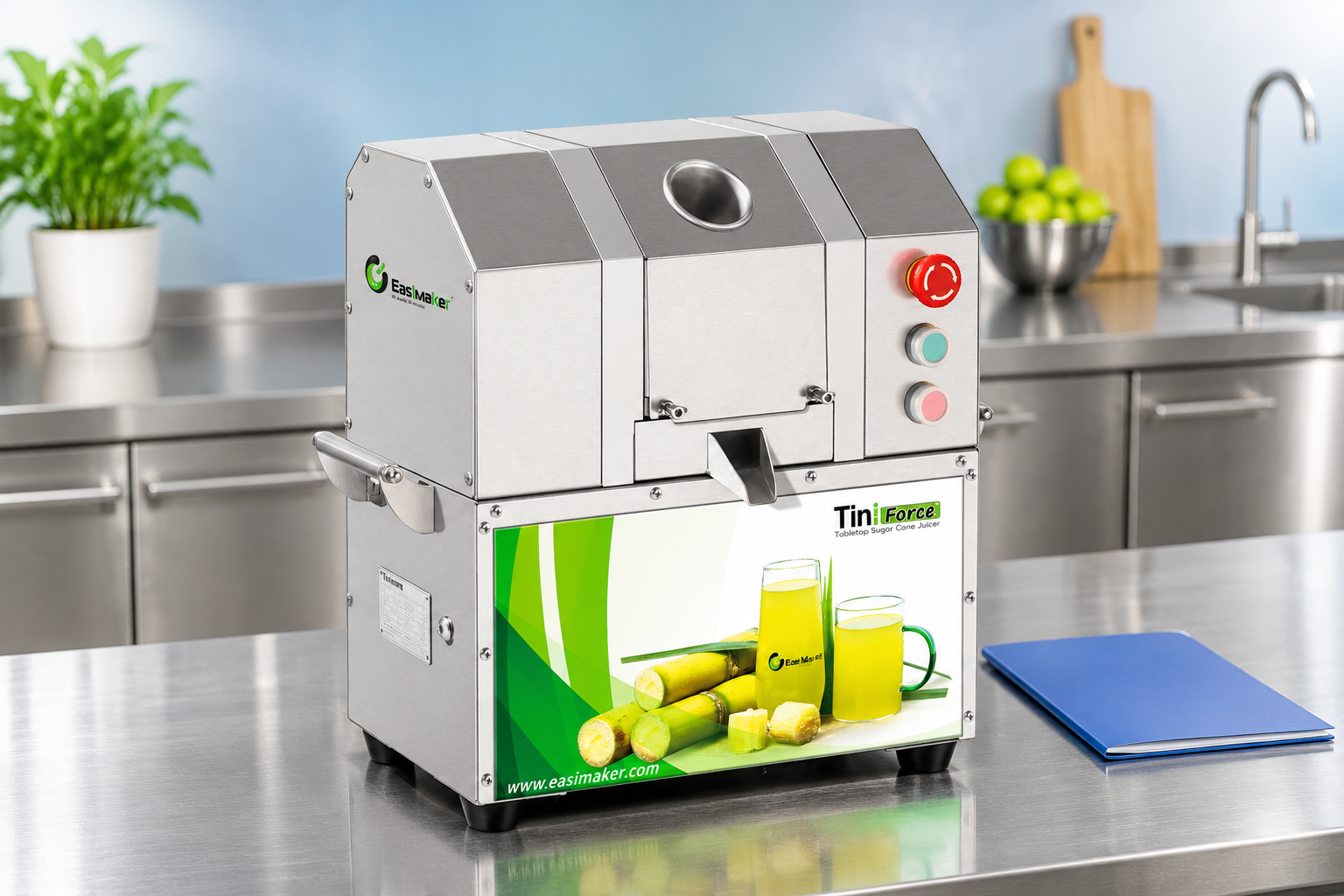
Current model information provides a reference for a new alternative; it cannot establish the specification or condition of an older machine.
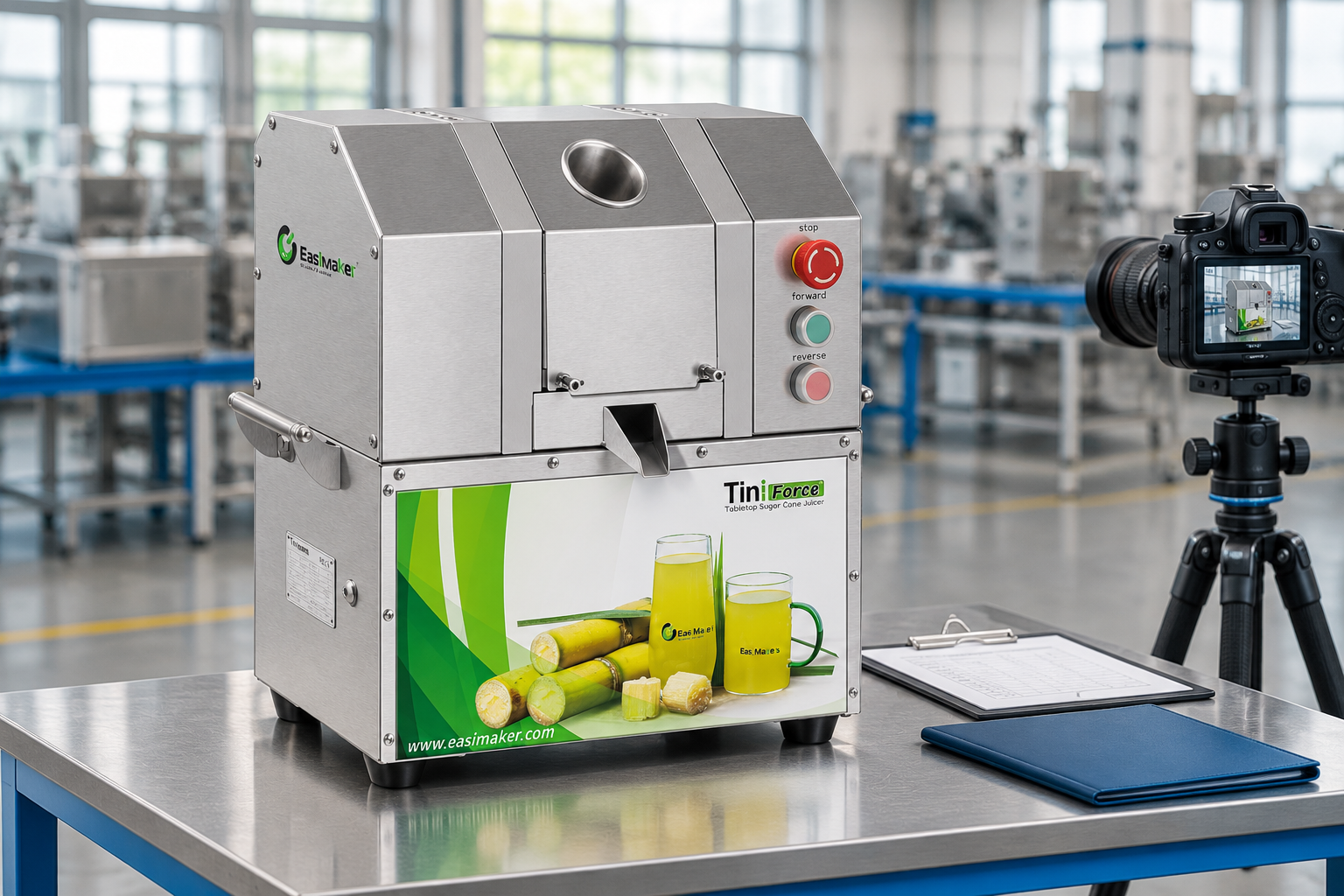
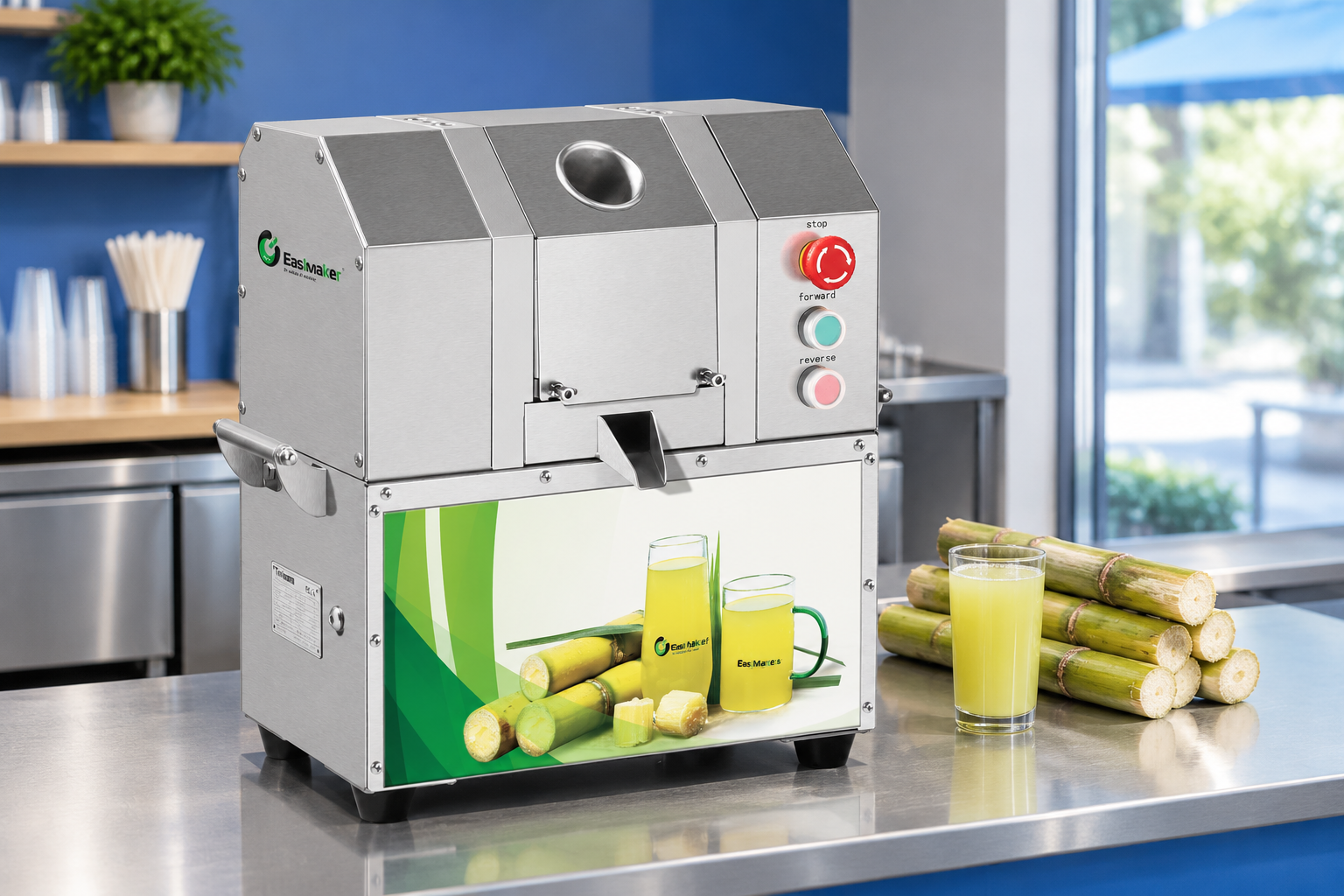
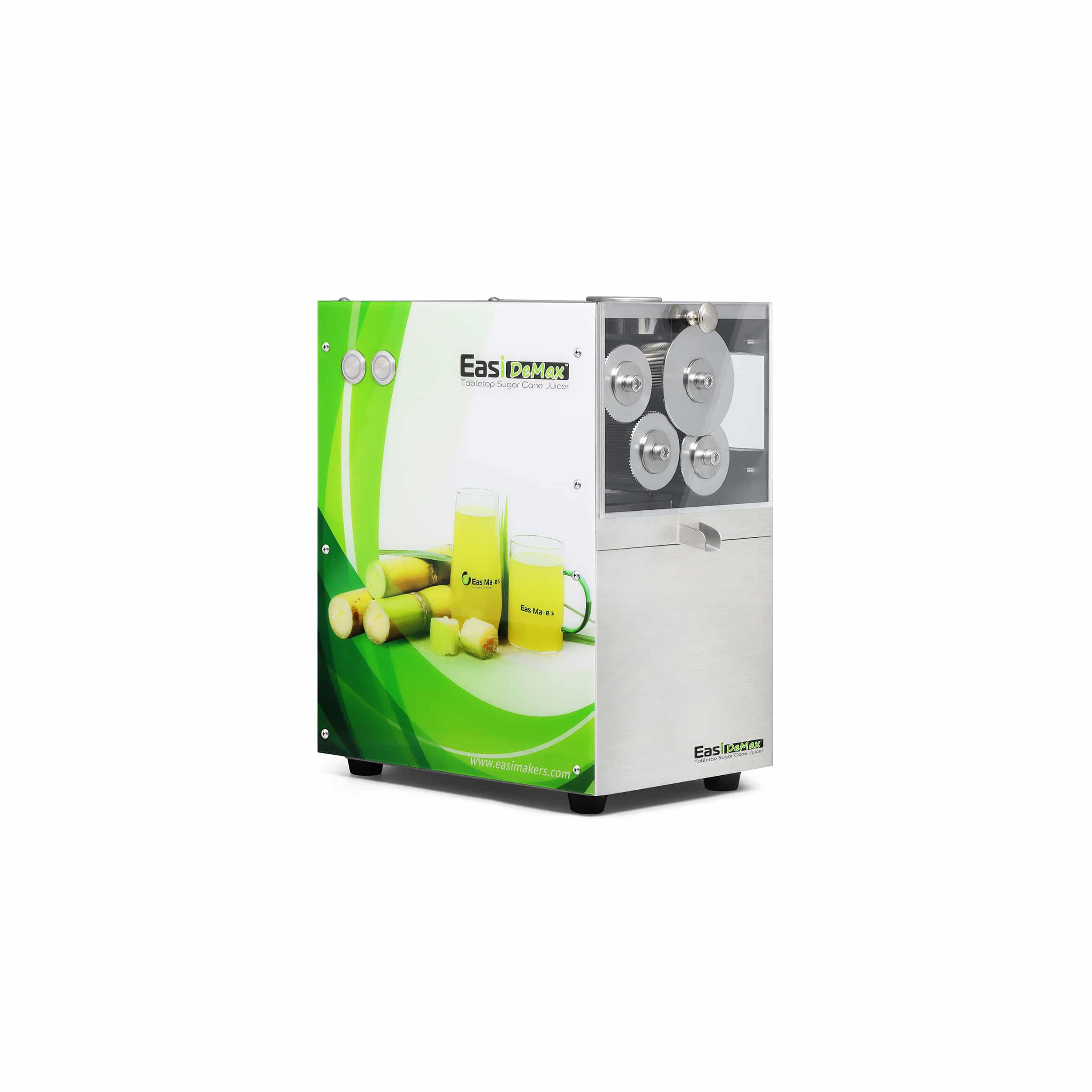
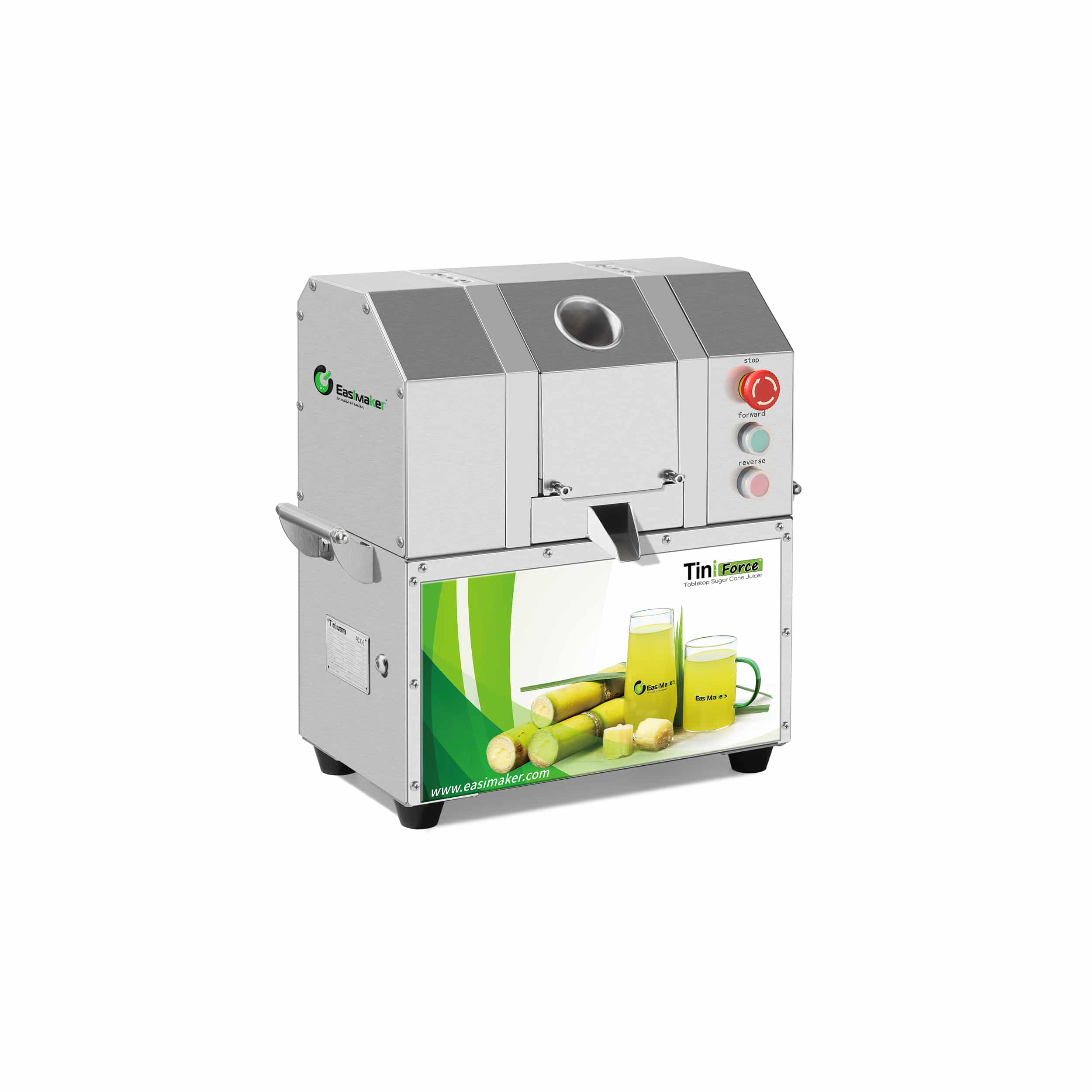
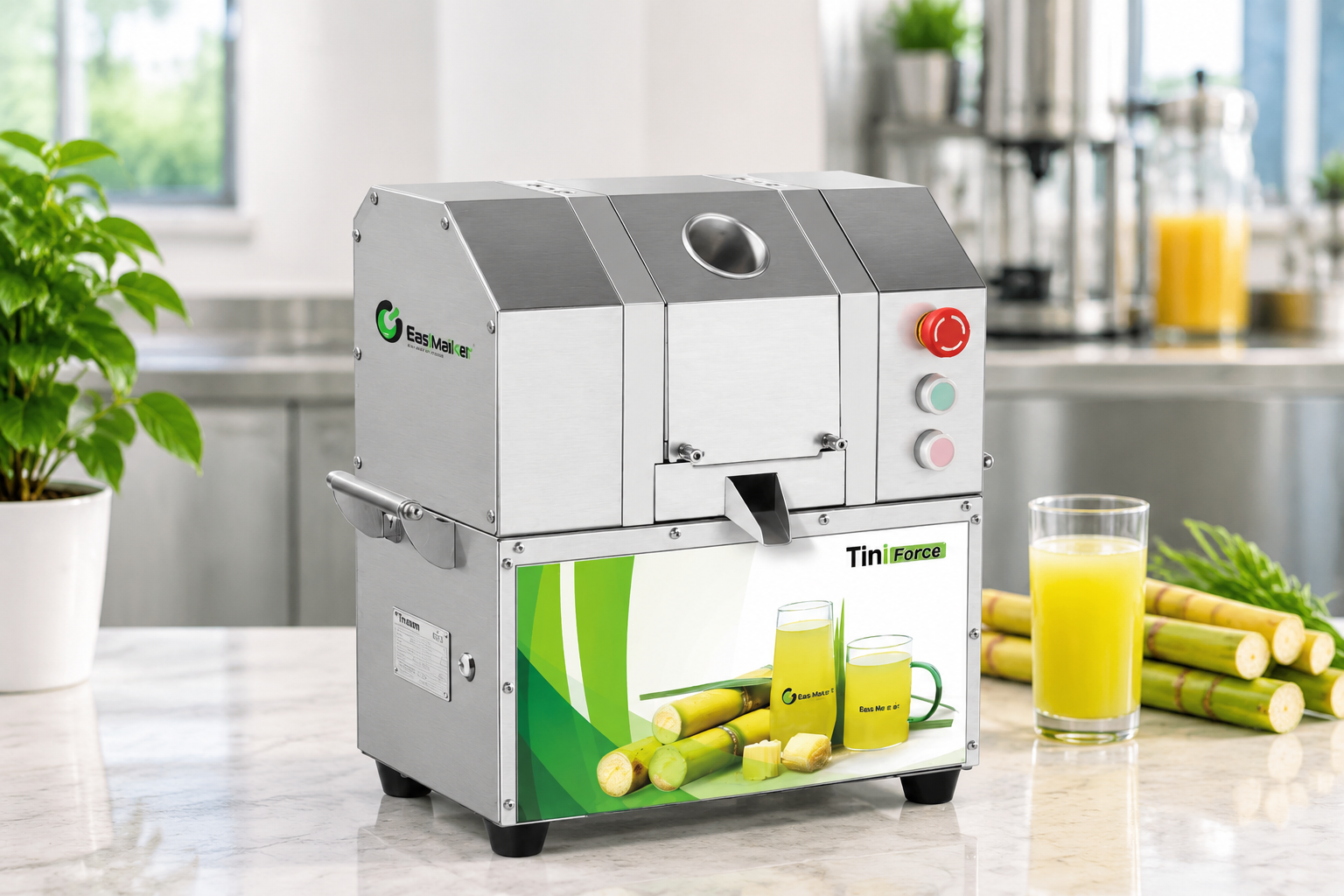
The TiniForce S3 compact sugarcane juicer is described as a compact, portable option. The EasiDeMax S4 tabletop sugarcane juice machine includes a transparent viewing window. Compare their current quoted configurations against your workstation, cleaning process, electrical supply, and service requirements.
Obtain current dimensions, operating guidance, documented performance conditions, included accessories, delivery terms, and support scope. Compare equivalent applications rather than assuming a particular model is suitable from its name alone. These references do not imply that Easimaker sells refurbished equipment or accepts responsibility for another seller’s repairs.
FAQ: five questions about buying secondhand equipment
- What should I inspect before buying a used sugarcane juicer?
Verify identity, food-contact condition, guards, visible roller wear, repair history, electrical compatibility, and parts support. Arrange a safe demonstration and qualified technical inspection.
- Which missing documents should delay a purchase?
Pause when ownership evidence, reliable model identification, essential operating instructions, or necessary electrical information is unavailable. Missing service records require further investigation.
- How can I check whether replacement parts are available?
Send the exact model, serial number, photographs, and component identifiers to the manufacturer or authorized supplier. Obtain written compatibility, availability, price, and lead-time confirmation.
- Does a used machine retain its original warranty?
Not automatically. The warranty provider must confirm transfer eligibility, remaining coverage, exclusions, and required purchase records for that unit.
- How should I compare used and new machine costs?
Compare purchase, delivery, inspection, repairs, site preparation, and commissioning on equivalent terms. Record uncertain downtime and future repairs separately with explicit assumptions.
Request a new-machine quotation to complete your comparison
A new-machine quotation completes the decision by giving you a documented alternative to the individual used machine.
Key takeaways: Verify identity before negotiating, price essential repairs before committing, confirm support in writing, and compare the full cost of readiness. Choose the option whose condition, operating fit, and support arrangements you can substantiate.
FAQ
What should I inspect before buying a used sugarcane juicer?
Verify identity, food-contact condition, guards, visible roller wear, repair history, electrical compatibility, and parts support. Arrange a safe demonstration and qualified technical inspection.
Which missing documents should delay a purchase?
Pause when ownership evidence, reliable model identification, essential operating instructions, or necessary electrical information is unavailable. Missing service records require further investigation.
How can I check whether replacement parts are available?
Send the exact model, serial number, photographs, and component identifiers to the manufacturer or authorized supplier. Obtain written compatibility, availability, price, and lead-time confirmation.
Does a used machine retain its original warranty?
Not automatically. The warranty provider must confirm transfer eligibility, remaining coverage, exclusions, and required purchase records for that unit.
How should I compare used and new machine costs?
Compare purchase, delivery, inspection, repairs, site preparation, and commissioning on equivalent terms. Record uncertain downtime and future repairs separately with explicit assumptions.
Find the Right Sugarcane Juicer or Food Processing Solution
Tell Easimaker your expected output, U.S. installation location, available power supply, workspace, and project requirements. Request a current new-machine quotation with configuration, delivery, and support terms to compare against your secondhand option.