Table of Contents
- Why approval depends on location and use
- Ask the right authorities before ordering
- Separate sanitation and electrical evidence
- Check model identity and document scope
- Buyer verification matrix
- A pre-purchase verification process
- If documentation is missing or insufficient
- Conclusion
Commercial sugarcane juicer approval in the United States depends on the location, use, and requirements of the authority reviewing the equipment. Before placing an order, ask the local health department and other relevant authorities what evidence they need, then verify that documents identify the exact model and configuration you plan to buy. A supplier’s general certificate, material statement, or brochure logo does not by itself establish acceptance for your site.
Why commercial sugarcane juicer approval depends on location and use
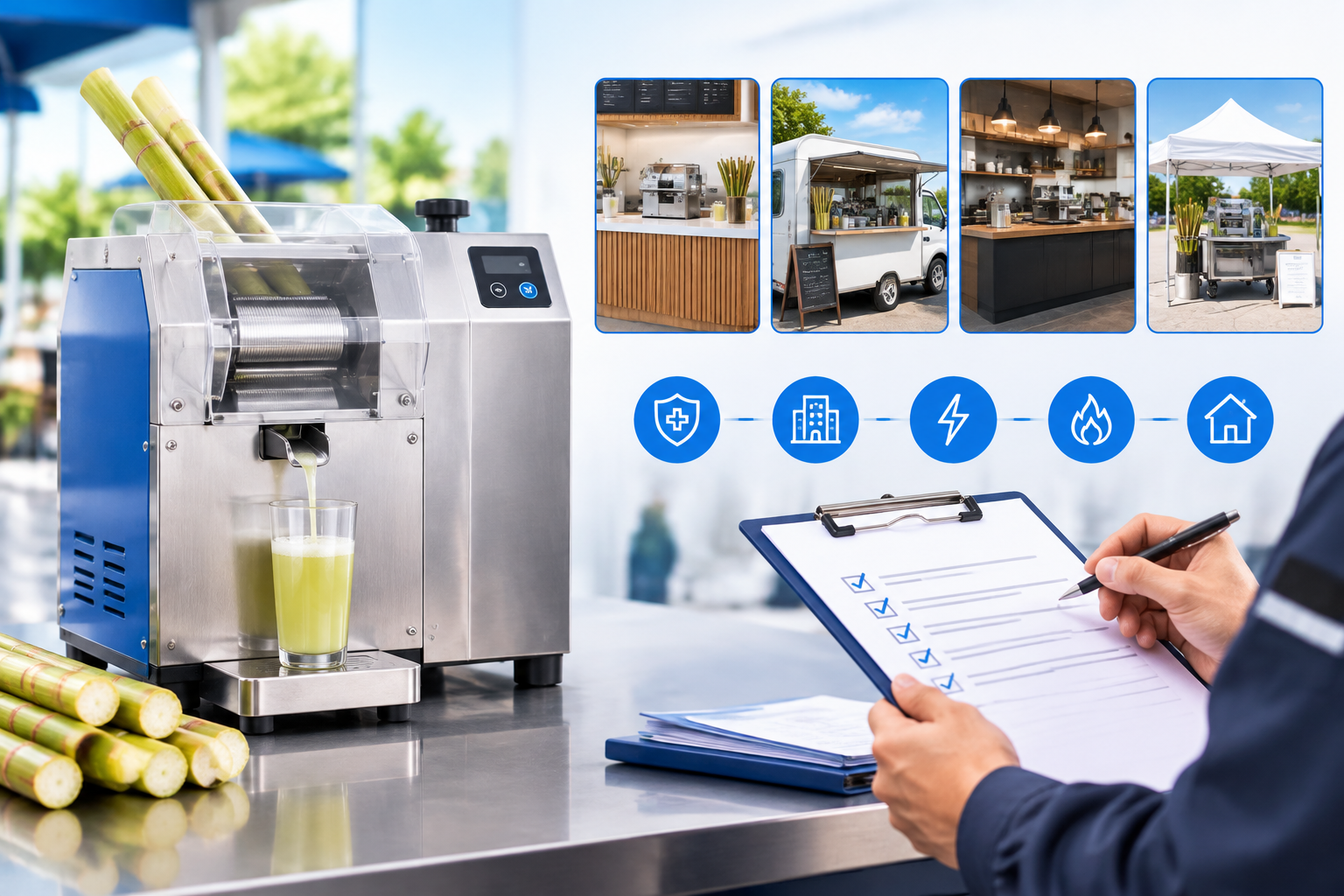
Definition: Commercial sugarcane juicer approval is the determination by a relevant authority, inspector, or project reviewer that a specific machine and its planned use meet the requirements applicable to a particular food-service location. It is not one universal U.S. certificate or a guarantee that applies automatically to every state, county, city, or business format.
The review may involve the local health department, building or electrical officials, a fire authority, a landlord, or another party responsible for the premises. Which parties apply depends on the site and how the machine will be installed and operated. A fixed juice bar, a mobile unit, a restaurant counter, and a temporary vending setup may face different review steps.
That is why broad searches for sugarcane juicer health department requirements often do not lead to a single national checklist. Ask the authority with jurisdiction over your location what it needs for your particular operation. Confirm whether the reviewer wants equipment documentation before purchase, as part of plan review, during an inspection, or at more than one stage.
For broader operating context, Easimaker’s guide to starting a sugarcane juice business in the USA covers local compliance alongside equipment and workflow planning.
Ask the right authorities before ordering

Contact the local health department or plan-review office responsible for the proposed food-service site. Explain that you intend to extract and serve fresh sugarcane juice with a commercial machine, and describe the sales format, intended location, and whether the equipment will be fixed or mobile. Ask which other local departments need to review the installation.
Request the answer in writing where possible. An email or documented plan-review response gives you something specific to share with the supplier and compare with the documents received. Do not assume a verbal comment from a different jurisdiction or a general supplier statement will be accepted by your inspector.
- Does the authority review equipment before purchase or only during plan review or inspection?
- Which sanitation, food-contact, cleaning, and operating documents must be submitted?
- Does it require a particular third-party listing or certification, and for which scope?
- Are electrical details, installation instructions, or an electrician’s review required?
- Does the planned mobile or temporary format change the review process?
Requirements may also depend on the full workstation: sink access, surfaces, drainage, handwashing arrangements, and separation of raw cane handling from juice service. A machine document cannot substitute for review of the complete food operation. For electrical planning, confirm the proposed machine’s rating and site supply separately; see the U.S. commercial sugarcane juicer electrical requirements checklist.
Separate sanitation and electrical evidence
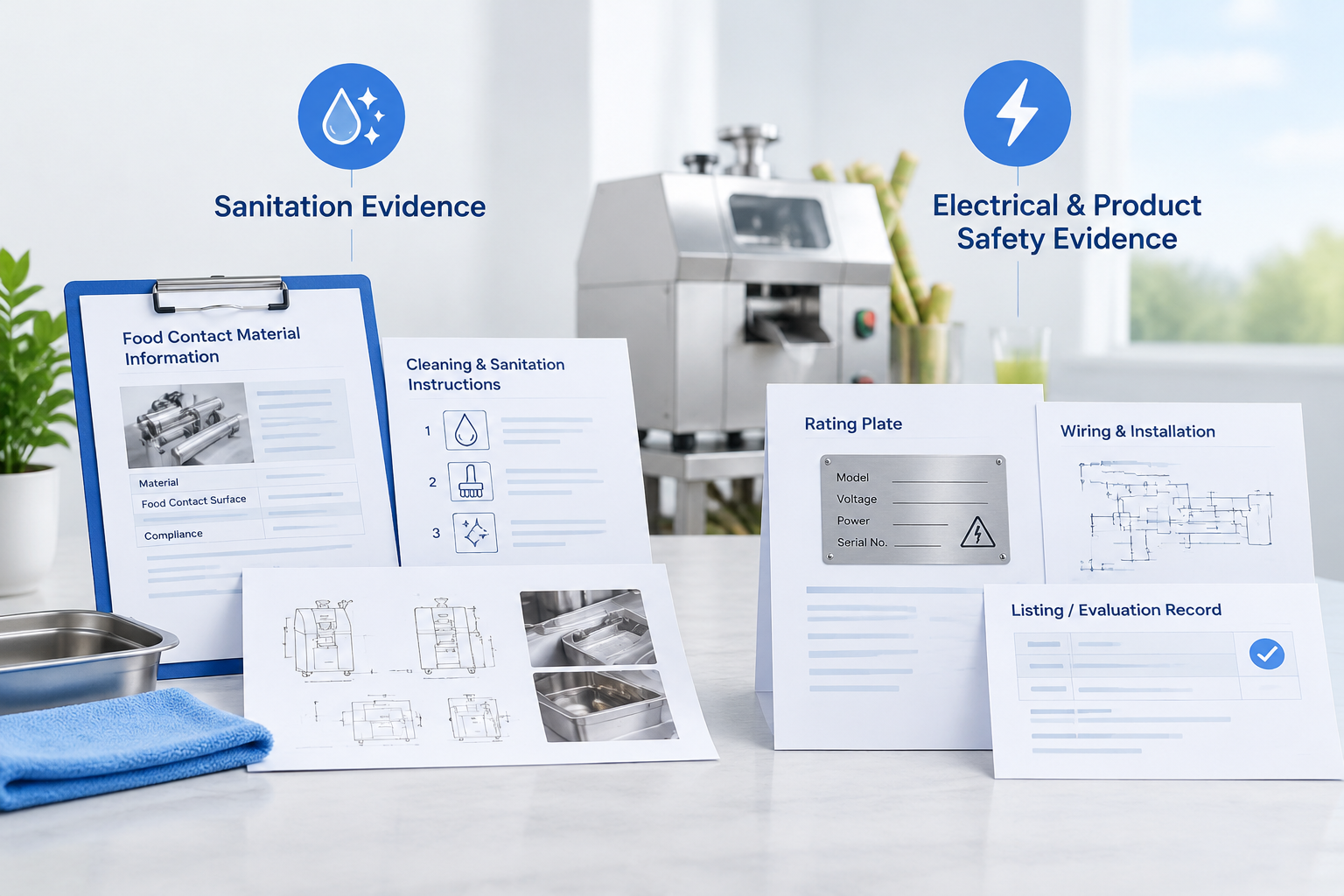
Sanitation documentation and electrical safety documentation address different questions. A document relevant to one review should not be represented as proof of the other.
Sanitation and food-contact evidence may include material identification for food-contact parts, cleaning and sanitation instructions, drawings or photographs showing food-contact areas, and any third-party sanitation listing specifically requested by the authority. A statement that a machine is made with stainless steel is not a complete sanitation assessment. Surface finish, joints, residue traps, access for cleaning, disassembly instructions, and the way the machine is installed can all matter to the reviewer.
Electrical and product-safety evidence may include the rating plate, wiring or connection information, installation instructions, and a listing or evaluation record if one is required. Ask who issued the document, what standard or scope it covers, and whether the exact machine configuration is included. A plug type, voltage statement, or CE mark alone does not establish that a U.S. local authority will accept the machine for the intended use.
The phrase sugarcane machine sanitation certification can refer to different things in supplier discussions. Ask the supplier to identify the issuer, document title, covered model, tested or evaluated configuration, and limitations. Then ask the local reviewer whether that specific evidence addresses its requirement.
For sanitation planning after installation, use the machine manual and the operation’s approved cleaning procedure. Easimaker’s daily sugarcane juicer cleaning SOP describes a practical cleaning sequence, but operating guidance is not a certification or approval document.
Check model identity and document scope
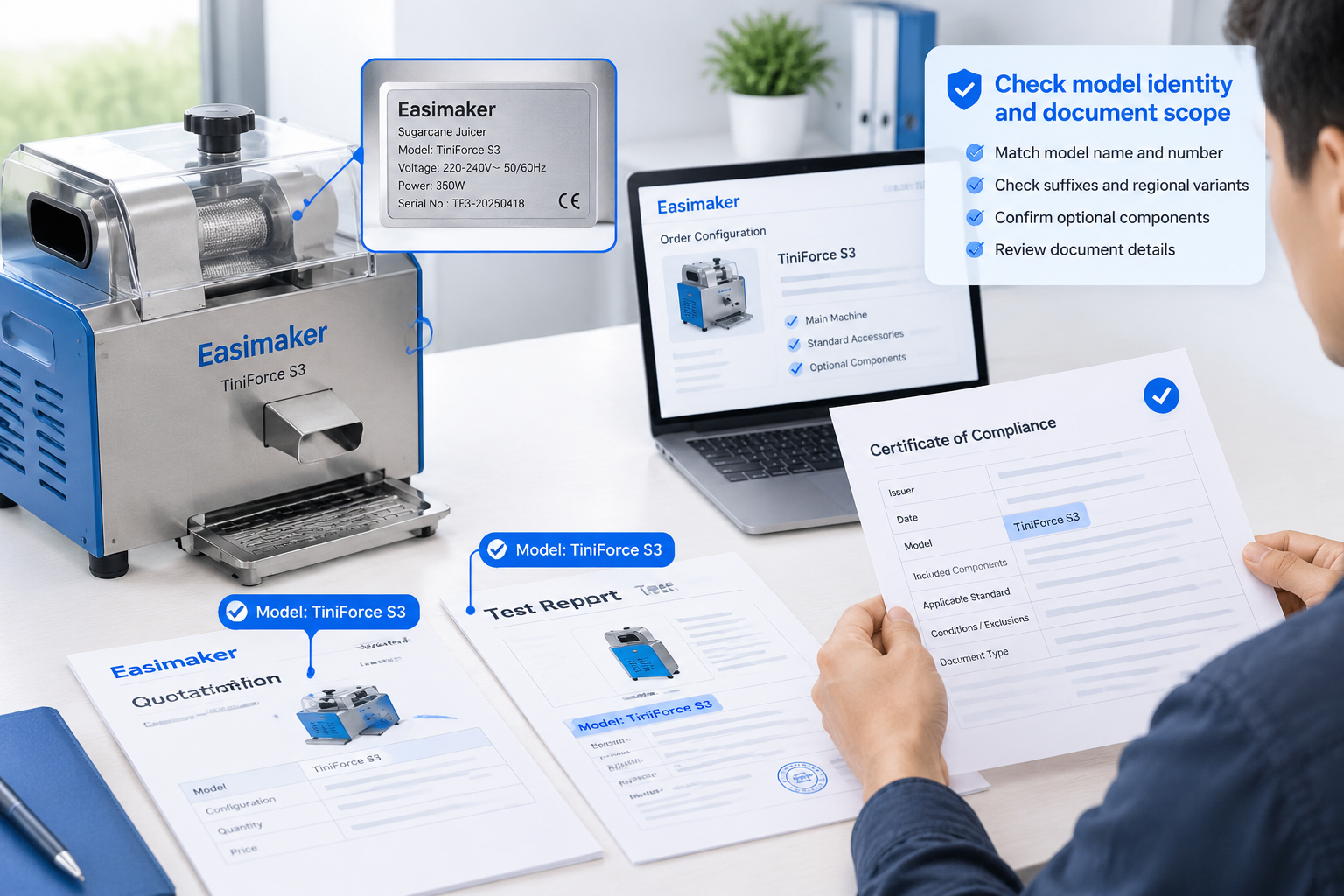
Approval evidence is useful only if it can be tied to the machine you are buying. Match the model name and number on every document to the quotation, product label, rating plate, and final order configuration. Check for suffixes, regional variants, optional components, and revisions that could affect the document’s scope.
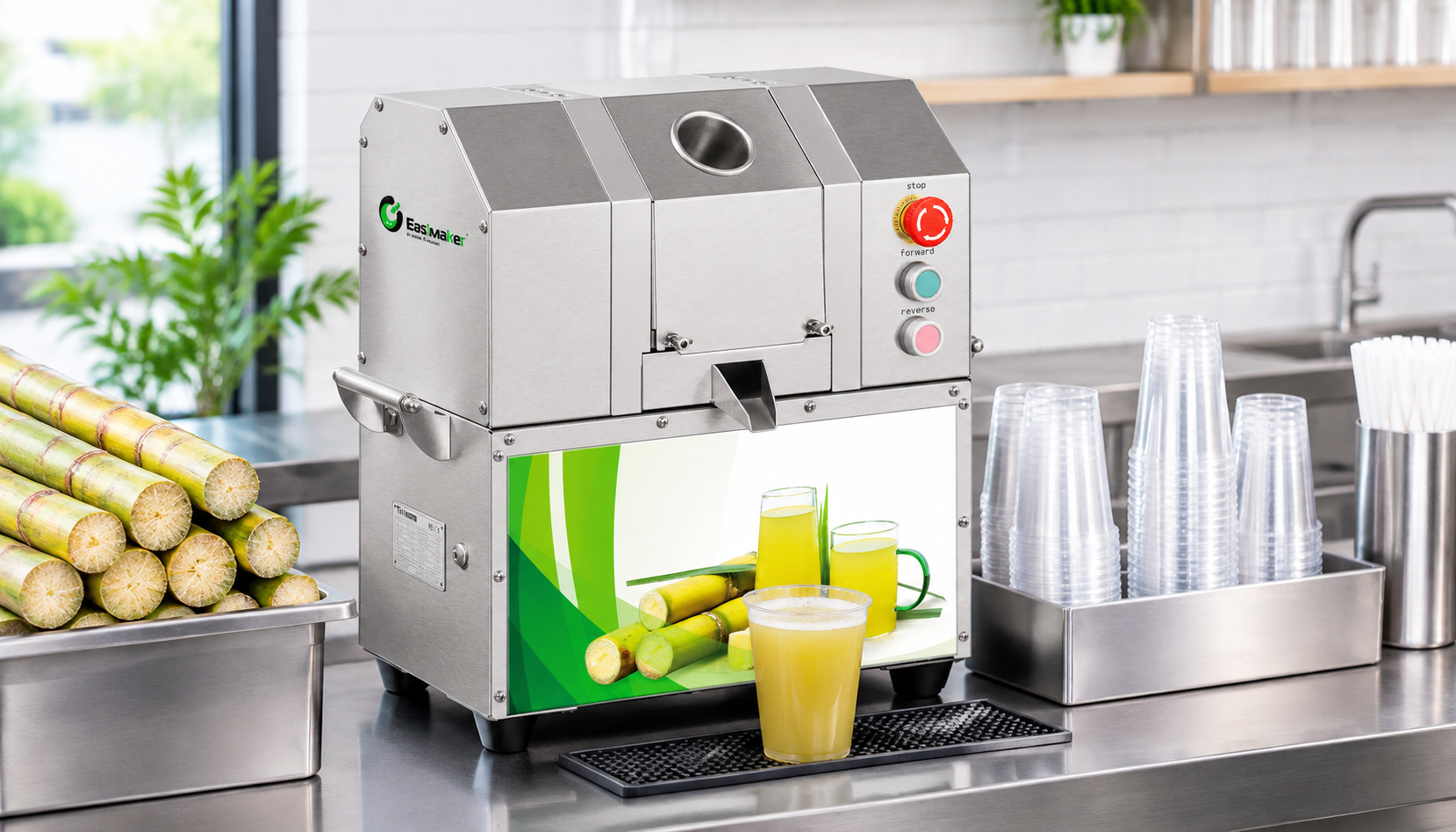
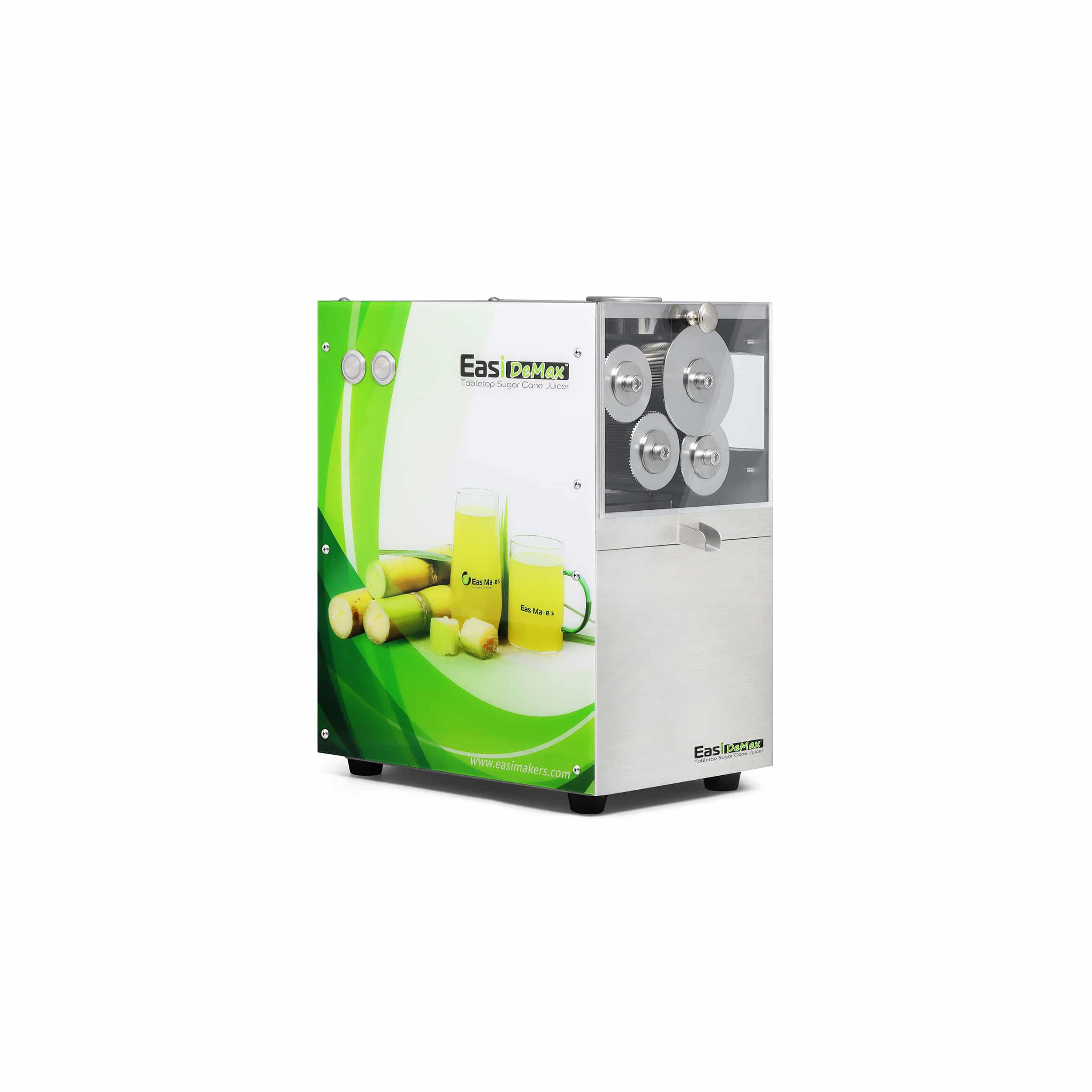
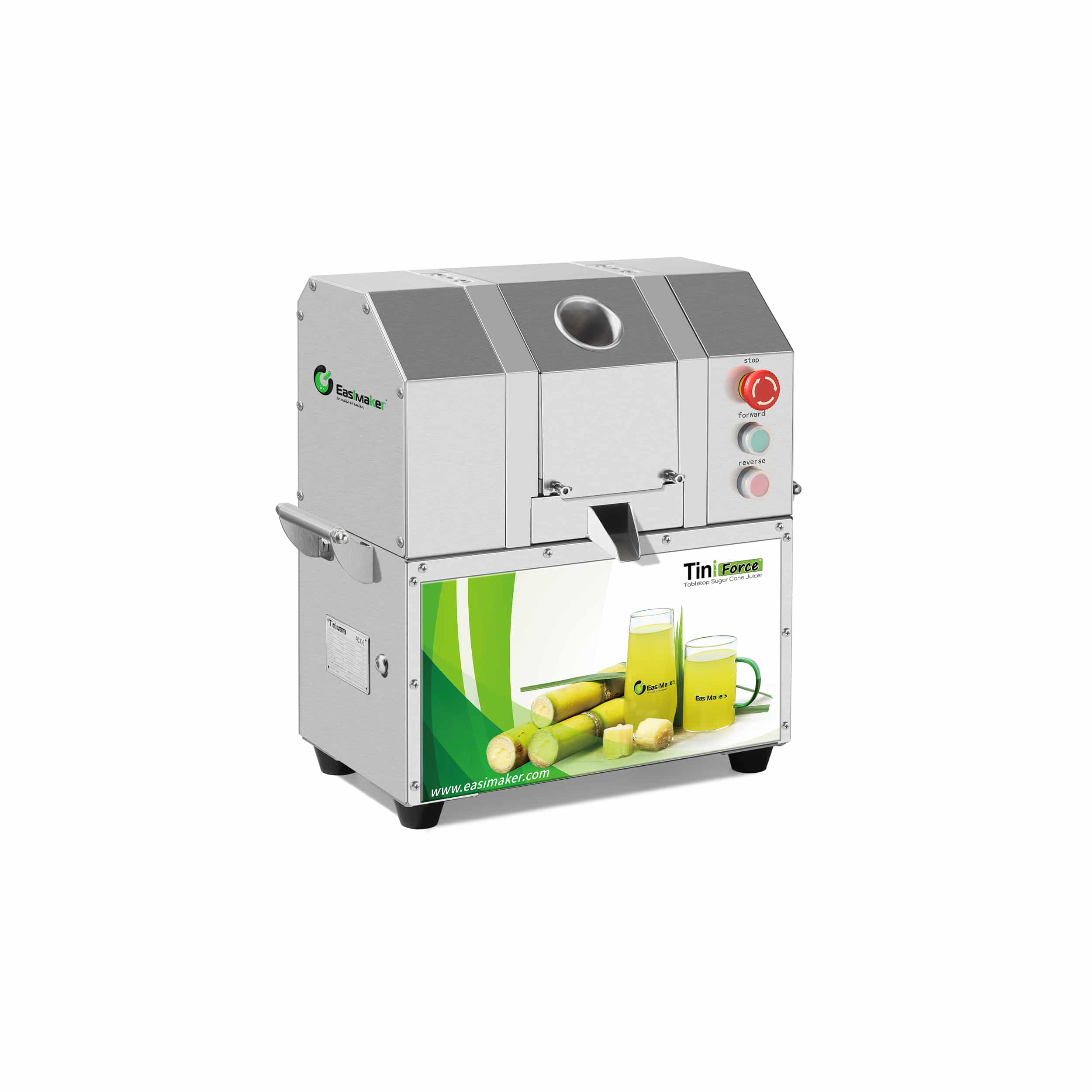
For example, a buyer considering the TiniForce S3 model information should ask for documents that explicitly identify the TiniForce S3 and the configuration being quoted. A buyer reviewing the EasiDeMax S4 model information should make the same model-specific request. A document for another machine, a similar-looking product, a component, or a factory system is not automatically evidence for either model.
The supplied information does not establish that either model has a particular sanitation certification, electrical listing, or U.S. local acceptance status. Do not infer one from product descriptions or images. Request the actual available records and give them to the authority for its assessment.
Review document details: issuer and date; model identifiers; included components; applicable standard or evaluation scope; conditions or exclusions; and whether the record is a certificate, test report, declaration, or supplier statement. Those document types are not interchangeable. If a file is unclear, ask the issuer or supplier to clarify it in writing before relying on it.
Buyer verification matrix
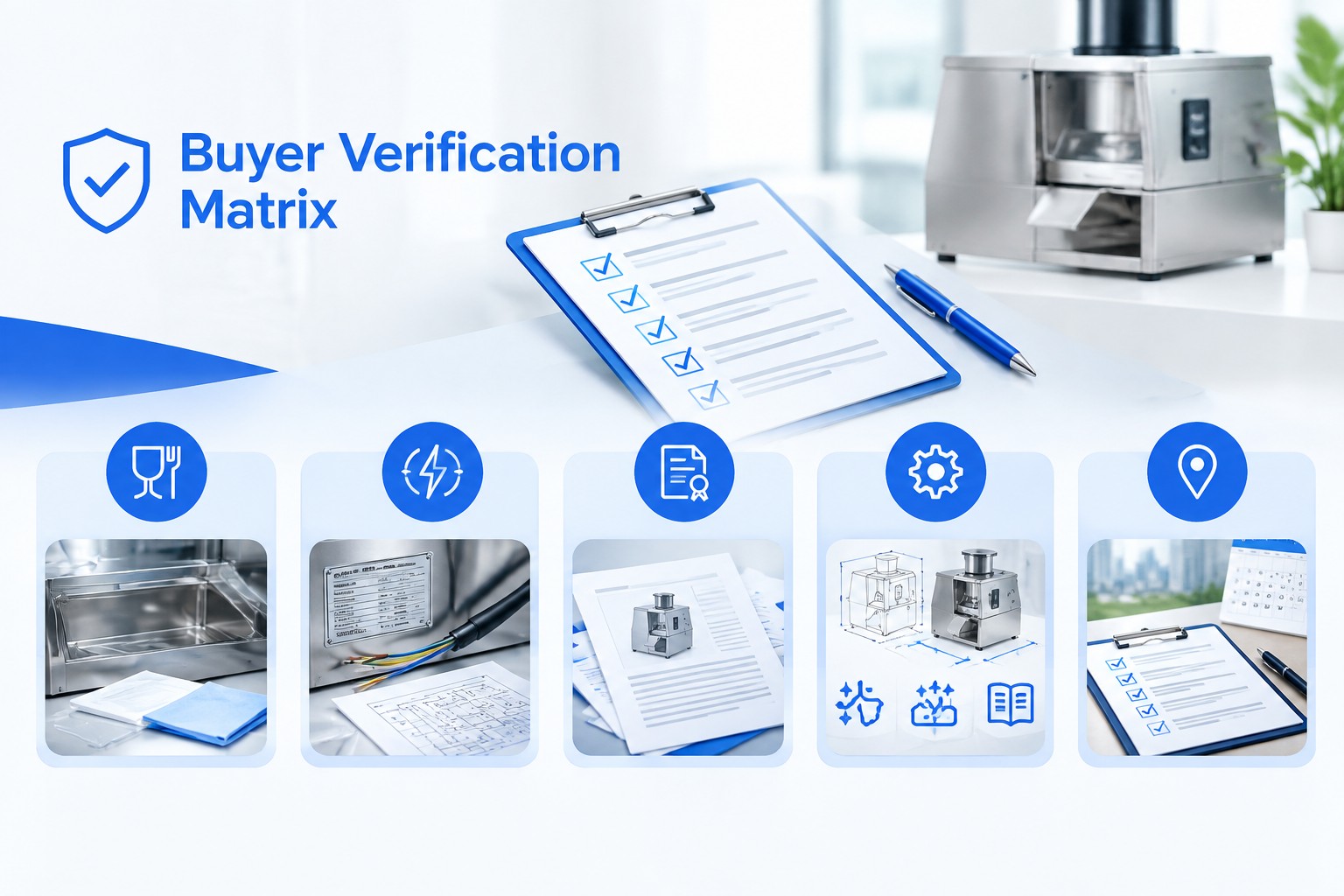
Use this matrix to organize questions and prevent a general supplier claim from being mistaken for local acceptance. The authority’s written instructions take precedence over this general checklist.
| Approval question | Who to consult | Model-specific evidence to request | Purchase decision affected |
|---|---|---|---|
| What sanitation or food-contact evidence is needed? | Local health department or plan reviewer | Food-contact material details, cleaning instructions, relevant listing or evaluation record if requested | Whether the proposed machine can proceed to review |
| Is electrical listing or evaluation required? | Electrical inspector, building official, or authority named by the site | Rating plate data, wiring information, installation instructions, exact-model listing or report if available | Electrical acceptance, installation, and any required corrections |
| Does the record cover the machine being quoted? | Supplier and document issuer | Document with exact model, configuration, scope, issuer, and limitations identified | Whether evidence can be submitted for the selected SKU |
| Does the machine fit the proposed operation? | Health department and site reviewer | Dimensions, food-contact layout, cleaning access, operating and maintenance instructions | Site layout, workflow, or equipment choice |
| Are additional local conditions involved? | Relevant local departments, landlord, or project team | Requested forms, installation details, and written review comments | Order timing, site preparation, and opening schedule |
This is a verification aid, not a statement that every authority asks for every item. Record the answer, the person or office providing it, and any conditions or follow-up requests.
A pre-purchase verification process
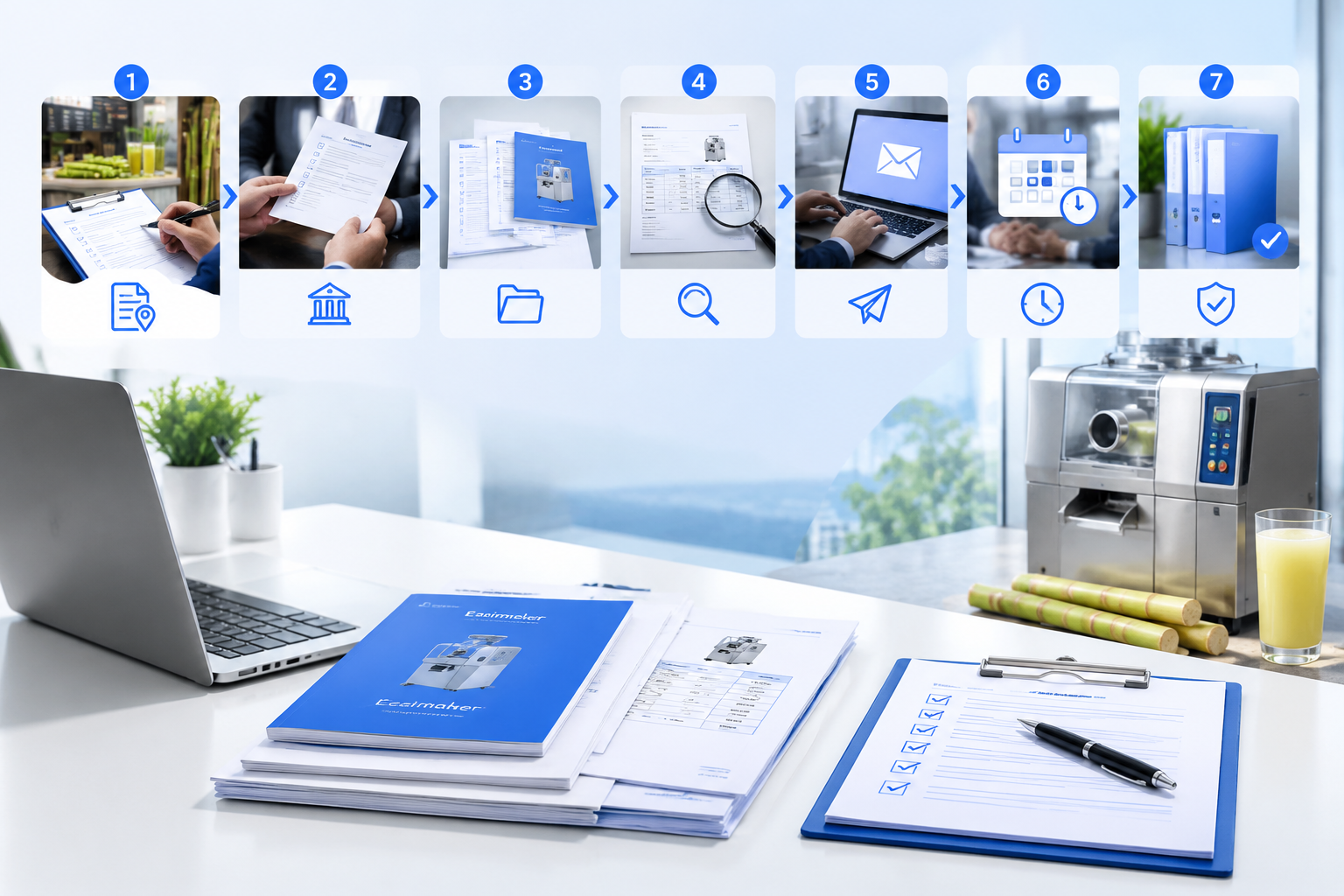
- Describe the proposed operation. Identify the address or mobile format, food-service activity, and how juice will be prepared and served.
- Get the authority’s document list. Ask the reviewing office what it needs and whether it expects to see the equipment information before you order.
- Request a model-specific document pack. Ask the supplier for the quotation configuration, rating plate details, manuals, cleaning instructions, food-contact information, and any applicable third-party records. Easimaker’s datasheets and manuals page is a starting point for available product documentation; confirm directly if the reviewer needs a document not shown there.
- Compare every identifier. Check the records against the exact model, options, and configuration on the quotation. Flag missing pages, unclear scope, or mismatched model names.
- Submit documents for review. Send the authority the information it requested and ask whether anything else is needed for its process.
- Wait for clarification before making an irreversible commitment. If the authority’s requirements are not clear, resolve the gap with the reviewer and supplier before paying a non-refundable deposit or arranging installation.
- Retain the full record. Save emails, documents, the approved quotation, and any written review response with the machine’s operating records.
Approval is not a substitute for operational planning. Confirm that staff can clean the machine as instructed, the workstation supports hygienic handling, and the power supply and installation are appropriate for the site. Keep the manufacturer’s manual available so cleaning and maintenance follow the supplied machine instructions.
If documentation is missing or insufficient

Do not fill documentation gaps with assumptions. Ask the supplier what records are available for the exact model and what each record establishes. If a report covers a different configuration, request clarification from its issuer or an updated document where applicable. If a requested certification or listing is not available, tell the authority that plainly and ask whether it will consider alternative evidence. The authority decides whether an alternative is acceptable.
When the reviewer requests additional information, record the request and pass it to the supplier verbatim. Ask for a response that addresses the specific point, such as the identity of food-contact components, cleaning access, electrical connection, or document scope. Avoid relying on a broad claim such as “commercial grade” or “food-safe” without supporting details that answer the reviewer’s question.
Commercial juicer equipment approval is ultimately specific to the review and location. The practical goal is to identify the required evidence early, verify that it matches the quoted machine, and preserve written responses before committing to purchase and installation.
Conclusion
For U.S. buyers, the reliable route to commercial sugarcane juicer approval is to confirm local requirements first, separate sanitation evidence from electrical documentation, and check that every record covers the exact model and configuration under consideration. Treat supplier claims as items to verify, and get the reviewer’s requirements and responses in writing before committing to the purchase.
FAQ
Does every U.S. jurisdiction accept the same commercial juicer documentation?
No. Requirements and review procedures can vary by location, site, and sales format. Ask the authority responsible for your proposed operation which documents it needs and whether it wants to review them before purchase.
Does a stainless steel body establish sanitation approval?
No. A material description alone does not establish approval or show that every food-contact area is suitable and cleanable. Ask what material and cleaning evidence the local reviewer requires, and provide the documentation for the exact machine configuration.
Does an electrical safety listing establish sanitation acceptance?
No. Electrical evaluation and sanitation review address different concerns. A listing may be relevant to electrical safety if the authority accepts its scope, but it does not by itself establish food-contact or sanitation acceptance.
How can I check whether a document covers the model I am buying?
Compare the model and configuration on the document with the quotation, rating plate, and supplied machine. Check the issuer, scope, included components, limitations, and date. Ask the supplier or document issuer to clarify any mismatch in writing.
What should I do if the local authority requests additional documentation?
Ask the reviewer to specify the missing evidence, record the request, and send it to the supplier. Submit the supplier’s response to the authority and ask whether it satisfies the request. Do not assume an alternative document will be accepted until the reviewer confirms.
Find the Right Sugarcane Juicer or Food Processing Solution
Tell us your product interest, expected output, market, and project requirements. Share the machine model you are considering and the written requirements from your local authority. Our sales team can clarify which supporting documents are available, provide technical guidance, and discuss OEM/ODM or distribution options.