Table of Contents
- The direct selection answer
- How the processing actions differ
- Match the machine to your menu
- Batch workflow and temperature
- Cleaning and operator safeguards
- Run a recipe trial before buying
- A practical conclusion
For a menu built around ground meat with a defined, relatively coarse texture, a meat grinder is usually the more direct choice. For finer chopping, mixing meat with seasonings or other ingredients, or developing a cohesive filling or sausage mixture, a bowl cutter chopper may fit better. The right decision in the bowl cutter chopper vs meat grinder comparison depends on the finished product, recipe, batch workflow, and the machine’s verified operating limits, not simply on the fact that both reduce particle size.
Bowl Cutter Chopper vs Meat Grinder: The Direct Answer
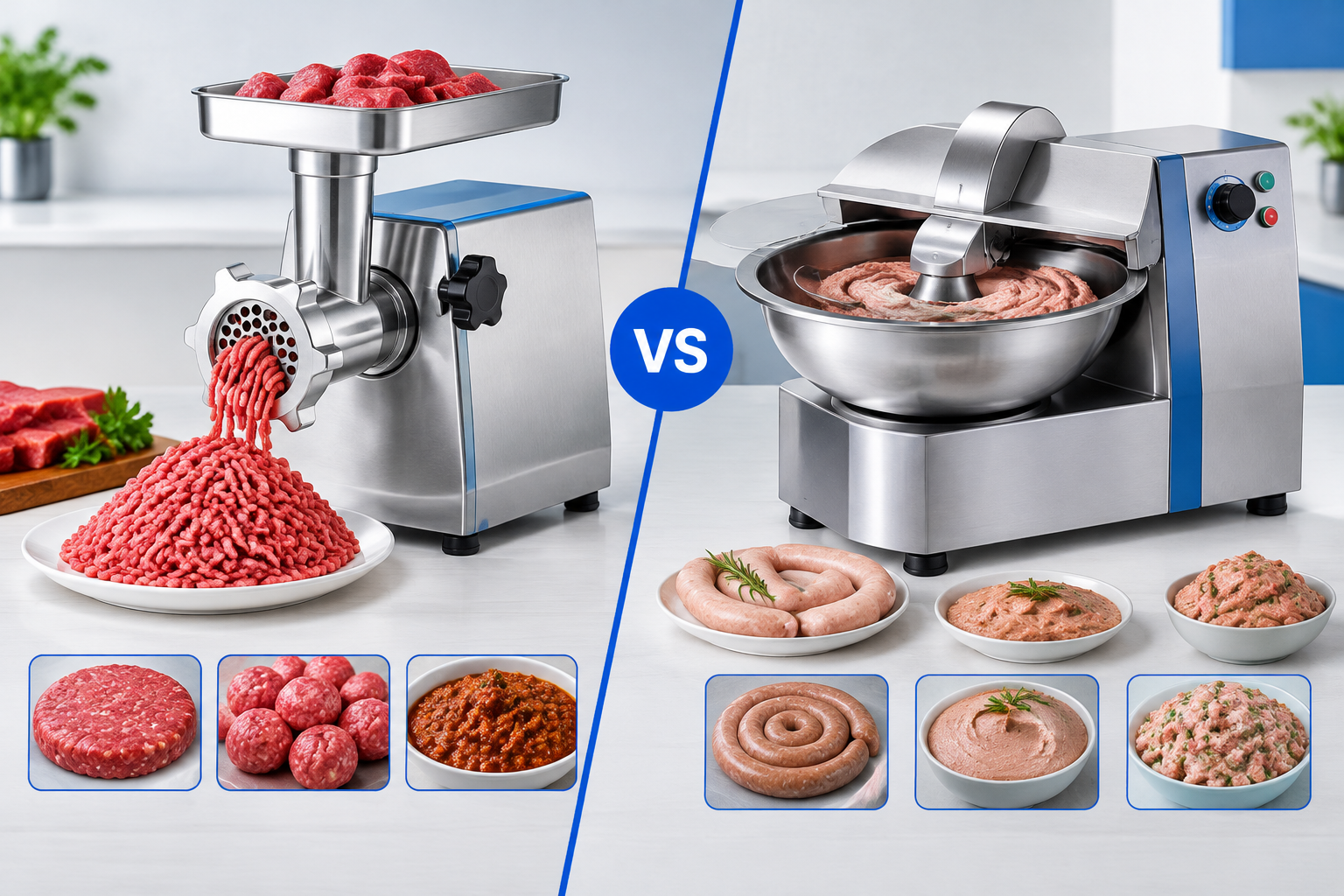
Choose a meat grinder when the main task is converting prepared meat into ground material for burgers, meatballs, fillings, or recipes where a recognizable grind is wanted. Choose a bowl cutter chopper when the process calls for finer chopping and mixing, such as a more uniform sausage mixture, pâté-style preparation, or a cohesive filling. These are general process distinctions, not guarantees about every machine or recipe.
If you already own a grinder, assess whether the bowl cutter would add a genuinely different finishing step rather than duplicate existing preparation. If your menu relies on both a consistent initial grind and further chopping or mixing, two machines may serve complementary roles. Confirm ingredient suitability, batch limits, permitted operation, and expected results with the equipment supplier before purchase.
In brief: start with the texture and recipe. A grinder primarily produces ground meat through a plate; a bowl cutter primarily chops and mixes ingredients in a bowl. Neither label alone establishes the capacity, texture range, or suitability of a particular model.
How a Bowl Cutter and Meat Grinder Process Ingredients
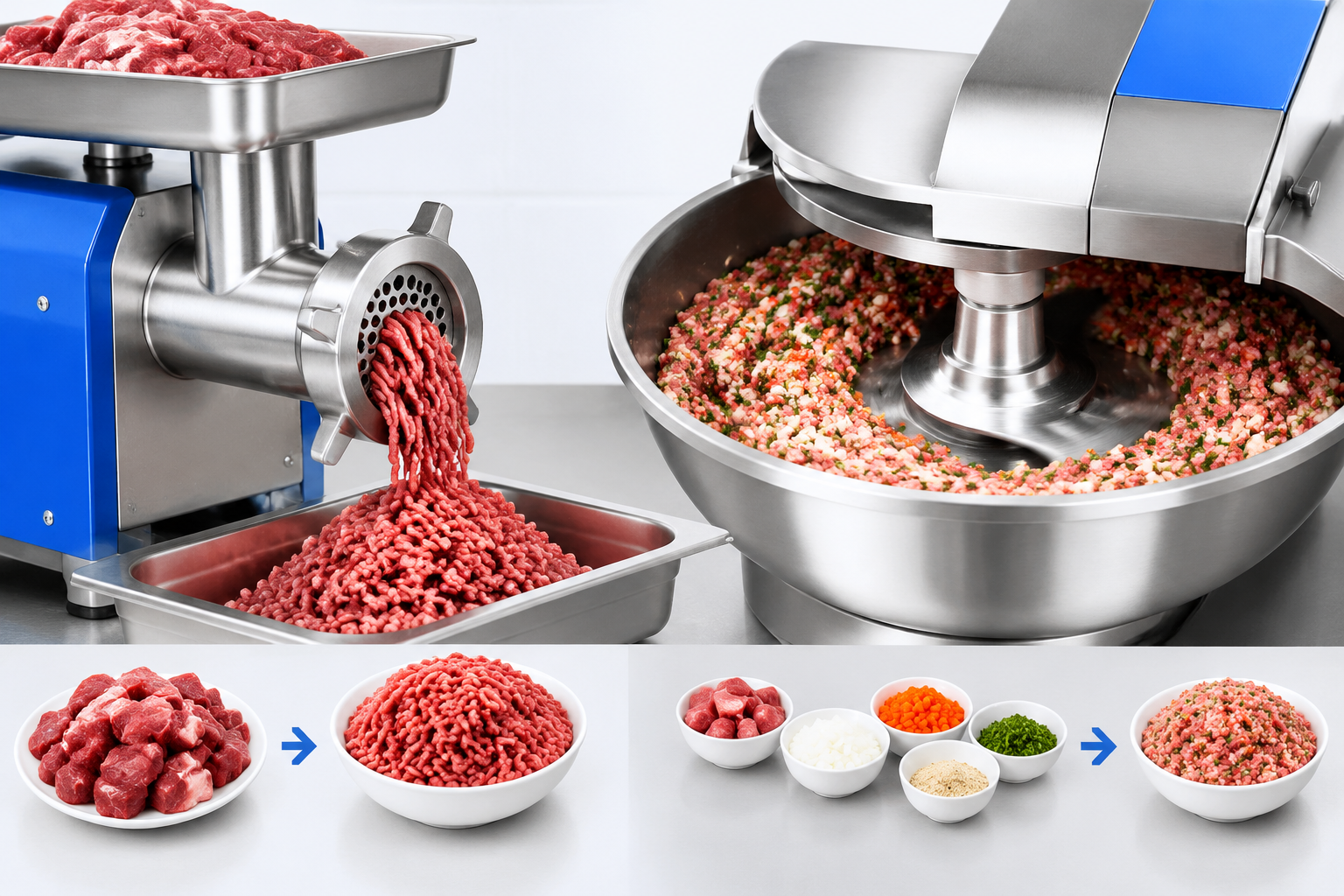
A meat grinder draws meat through a feed system and forces it against a rotating cutting element and perforated plate. The plate openings help determine the resulting particle size, subject to the grinder configuration, meat condition, feed technique, and recipe. A grinder is commonly used as an initial size-reduction step. Some operations pass meat through more than once, but each pass should be deliberate and compatible with the recipe and machine instructions.
A bowl cutter uses rotating knives to cut ingredients in a bowl. Depending on the machine and process, the action can chop meat and combine it with fat, seasonings, vegetables, or other recipe components. The operator controls the process by following the manufacturer’s instructions and judging the mixture against a defined endpoint. Do not assume every bowl cutter has adjustable knife speed, a particular bowl motion, or the ability to produce an emulsion; verify these capabilities for the model being considered.
This distinction matters in a meat processing equipment comparison: a grinder organizes the process around a feed path and plate, while a bowl cutter organizes it around a batch in a bowl. The resulting textures can overlap, but the machines do not automatically produce identical results. Ingredient preparation, blade or plate condition, recipe, loading, and processing time all influence the outcome.
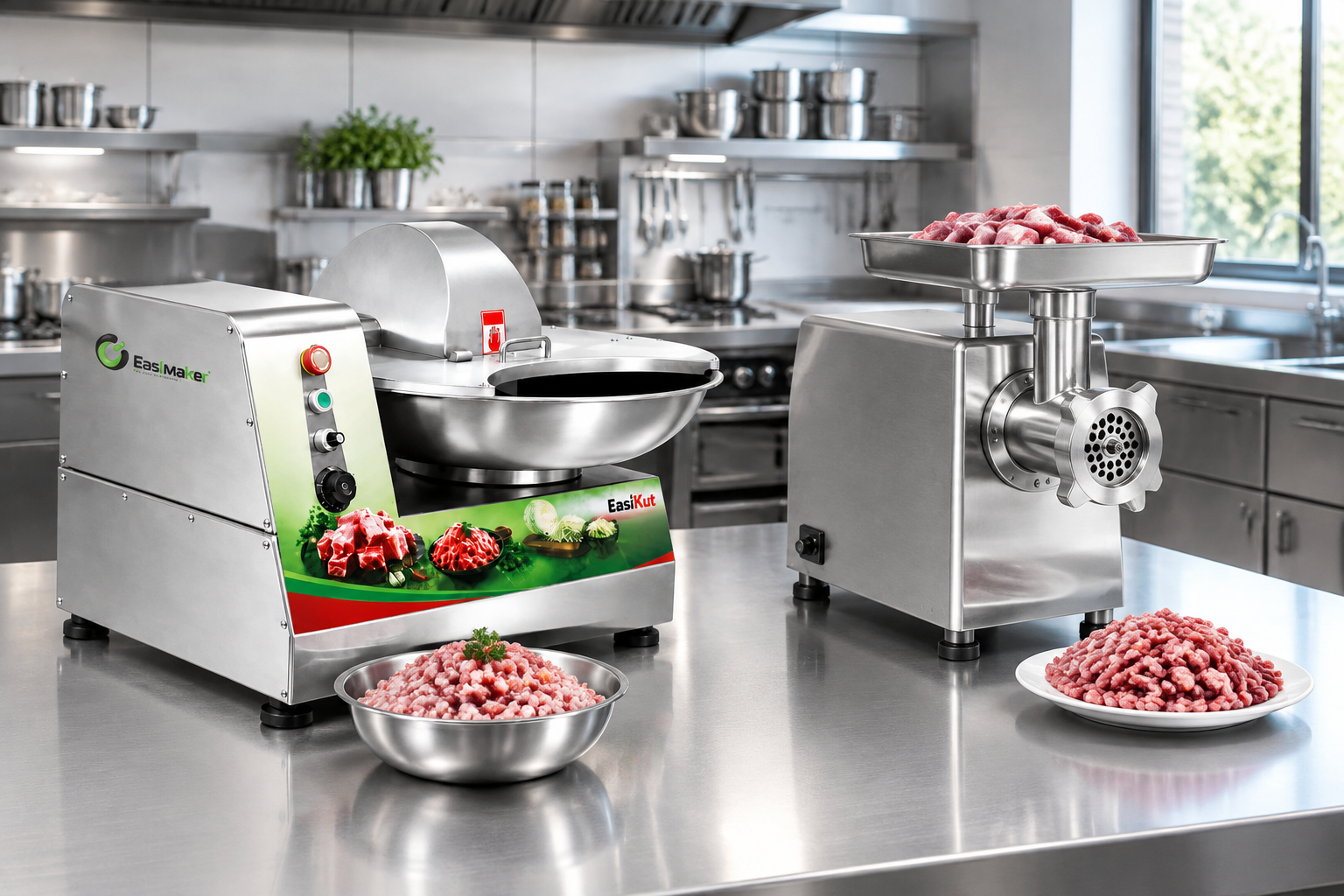
For a closer look at one available model, review the EasiKut BC25 food and meat bowl cutter chopper. Its published product information describes it as a food and meat bowl cutter. Confirm the permitted ingredients, batch limits, operating instructions, and fit for your specific recipe before selecting it.
Match the Machine to Your Menu and Target Texture
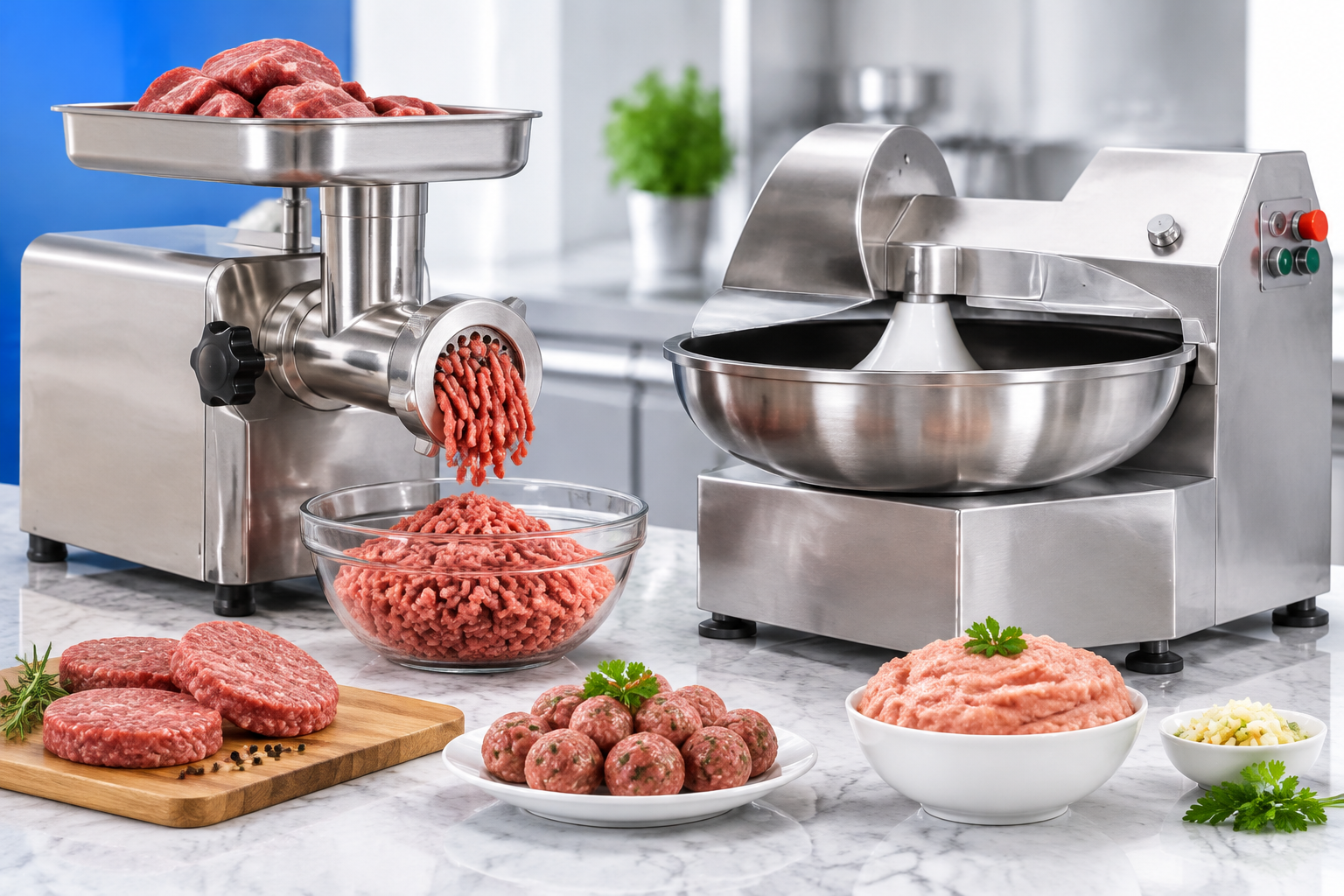
Translate menu items into processing requirements before comparing equipment. Write down whether each recipe needs a coarse, distinct grind; a finer, more uniform chop; or a mixed preparation where meat, fat, and seasonings need to be distributed together. Also note whether the product is served after cooking, stuffed, shaped, spread, or used as a filling. These use cases help define the output you need to test.
- Ground burgers or meatballs: A grinder is often a practical starting point when the recipe calls for a defined grind. Confirm that the plate and process produce the texture your kitchen expects.
- Sausage preparation: A grinder may prepare the initial mince, while a bowl cutter may be used for further chopping and mixing where the recipe calls for it. The best sequence depends on the formulation and your intended texture.
- Fine fillings or cohesive mixtures: A bowl cutter may be a better match when chopping and combining ingredients in one batch is central to the recipe. Test the actual formula; do not infer a guaranteed result from the equipment category.
- Mixed menus: If you make both coarse-ground products and finely processed mixtures, consider whether separate machines improve workflow enough to justify their footprint, cleaning tasks, and cost.
For meat bowl cutter applications, include non-meat ingredients only when the equipment manufacturer confirms they are suitable. Fibrous vegetables, hard ingredients, frozen material, and ingredients with bones or other hard inclusions may require different equipment or preparation. Never put ingredients into a machine solely because they appear in a recipe; check its operating instructions first.
When a bowl cutter is under consideration, Easimaker’s EasiKut BC25 is a relevant model to evaluate, not an automatic recommendation. The published reference information gives a 25 L bowl capacity and an approximate 20 kg-per-bowl figure; these are product reference values, not a promise of usable batch size for every ingredient or recipe. Ask Easimaker to confirm the applicable loading limits and recipe suitability for your intended process.
Compare Batch Workflow, Ingredient Temperature, and Time
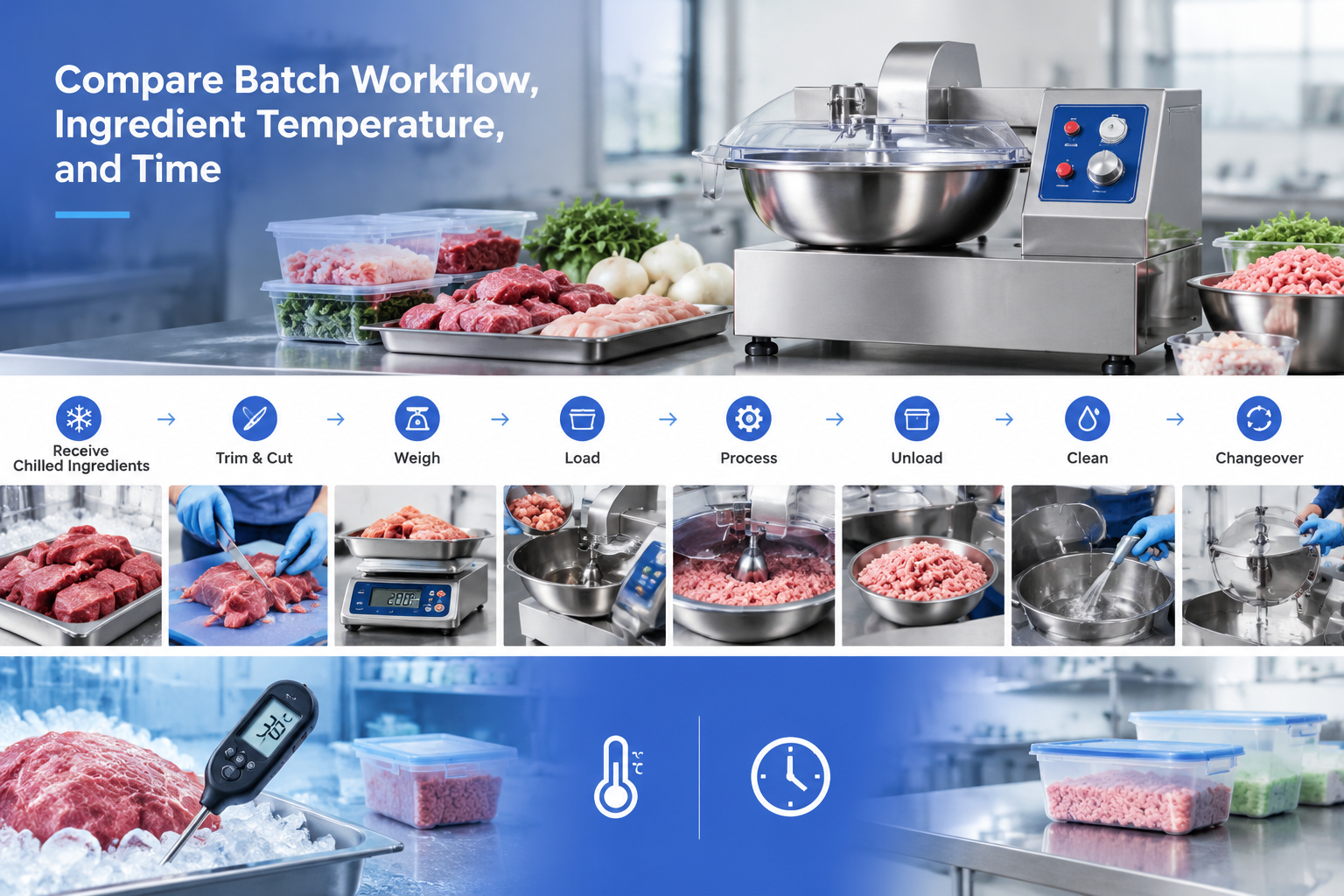
Capacity claims need context. A bowl’s volume or a stated nominal capacity does not tell you how much of a specific mixture should be loaded, how long a batch takes, or what output the machine can sustain in your kitchen. Usable batch size depends on the recipe, ingredient condition, loading guidance, machine limits, and the result you are trying to achieve. Ask for model-specific written guidance rather than estimating from bowl volume alone.
Map the full workflow from receiving chilled ingredients to returning the finished mixture to controlled storage. Include trimming and cutting, weighing, loading, processing, unloading, cleaning, and changeover between recipes. A grinder may be easier to integrate when the workflow already handles meat in a continuous feed-and-collect sequence. A bowl cutter may suit a kitchen that plans production in batches and can manage loading and unloading between recipes. The right choice depends on how your staff actually work and on the machine’s confirmed duty and operating guidance.
Ingredient temperature deserves particular attention in meat processing. Chopping and mixing create friction, and the product may warm during processing. Excessive warming can affect handling and recipe consistency, so begin with the temperature and preparation requirements set by your food-safety procedures and recipe. Work in controlled batches, avoid unnecessary processing, and check product temperature as part of the trial. There is no single temperature or processing time that applies to every meat, recipe, and machine.
Plan enough chilled storage and clean containers to keep raw ingredients and finished product managed appropriately. In U.S. operations, follow applicable local food-safety requirements and your established time-and-temperature controls. A machine does not replace safe handling procedures. Ask the supplier how the machine should be loaded, whether ingredients must be cut or chilled in a particular way, and what operating intervals or rest periods apply.
Check Cleaning Access and Operator Safeguards
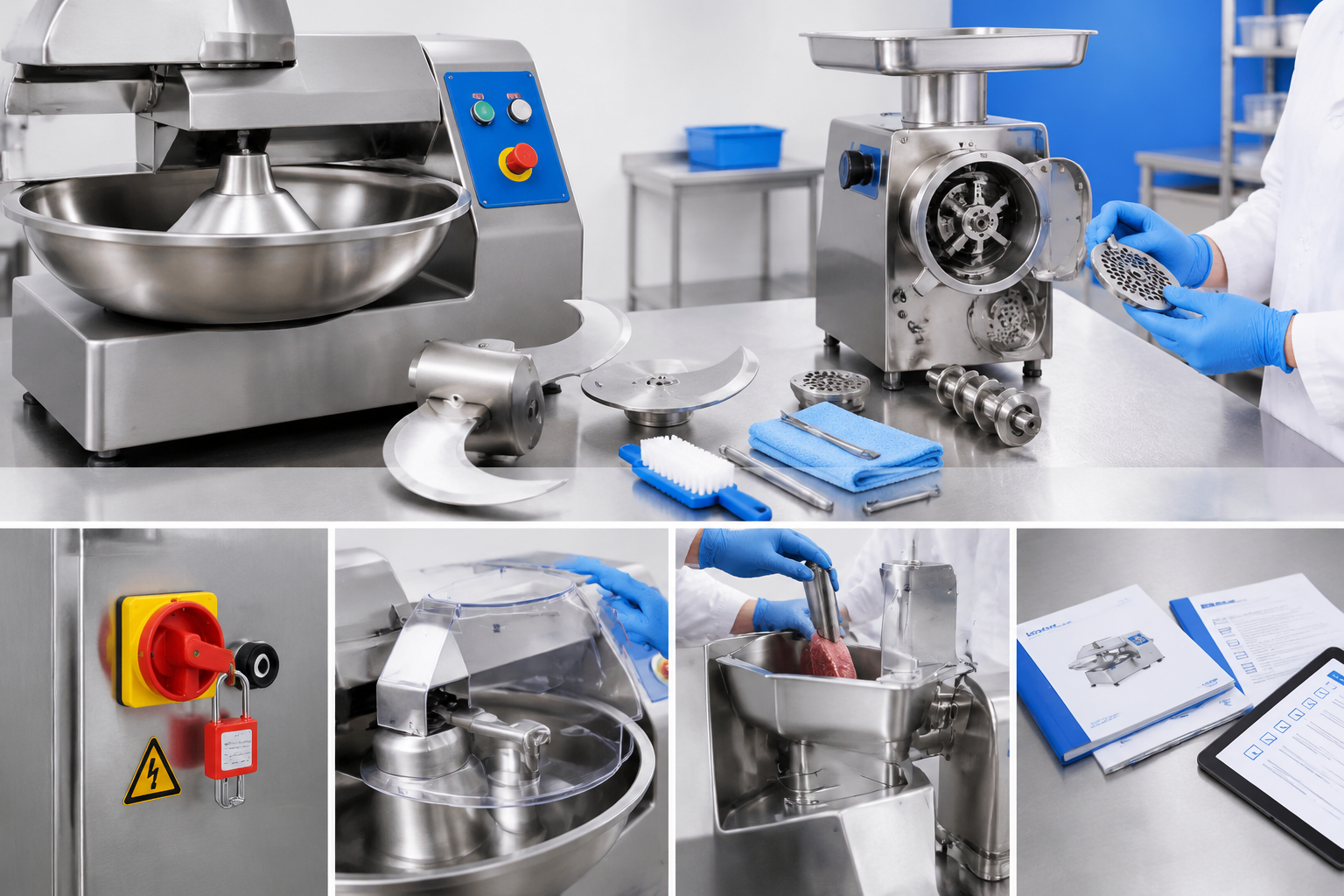
Cleaning is part of the equipment decision, not a task to assess after installation. Meat residue can collect around food-contact parts and assemblies, so review which parts can be removed, how they are accessed, and what the manufacturer specifies for washing, sanitizing, drying, and reassembly. Confirm whether tools are needed and how staff can verify that the machine is clean before the next batch.
For a bowl cutter, ask how to isolate power, secure the machine against accidental start-up, access the bowl and knife area, and handle sharp components during cleaning. Never reach near knives while the machine is energized or moving. For a grinder, ask how the feed components, cutting elements, and plate are removed and cleaned, and how they should be inspected and reassembled. Use the machine’s own instructions: cleaning methods and removable components vary by model.
Assess safeguards and training requirements before purchase. Operators should understand the correct loading method, how guards and interlocks work, what to do if the machine jams, and how to stop and isolate it before cleaning or inspection. Do not bypass guards or use hands to force product into a feed opening. Ask the supplier to identify included safeguards and provide relevant manuals and operating guidance.
For model-specific preparation, consult the equipment manuals and datasheets and Easimaker’s maintenance and support resources. Confirm that the documents apply to the exact configuration being quoted. If your operation has a sanitation standard or inspection checklist, compare the machine’s cleaning procedure against that standard before ordering.
Run a Recipe Trial Before Choosing a Machine
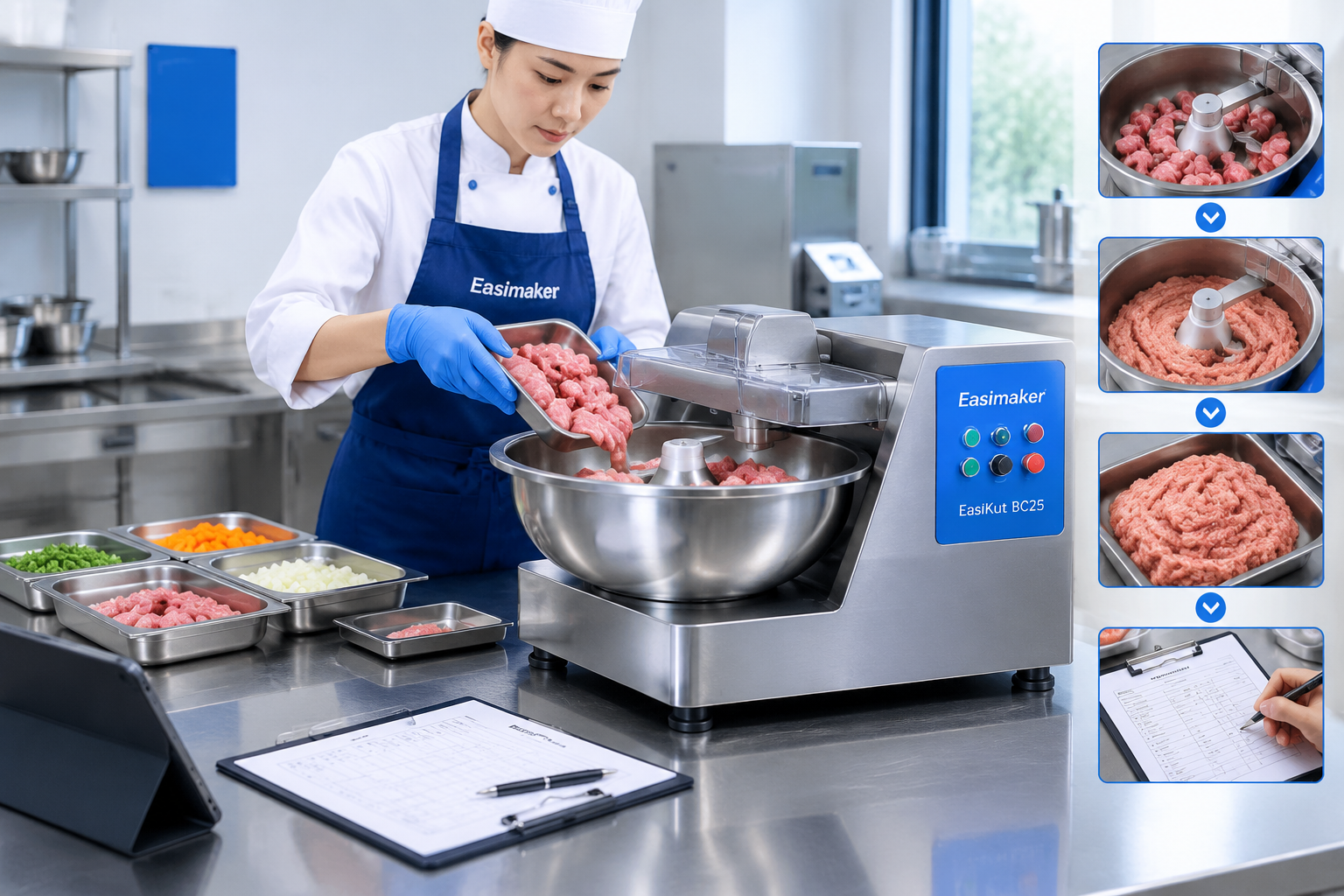
A controlled trial gives buyers better evidence than a general equipment description. Use the recipe that represents your real menu and follow the candidate machine’s operating instructions. Agree on the desired finished texture before the trial, then record the process and result so the kitchen can compare options consistently.
- Define the product. Write down the recipe, ingredient list, intended use, target texture, and any visible or handling characteristics that matter to your team.
- Prepare the ingredients consistently. Use the same cuts, starting condition, proportions, and temperature controls for each test. Exclude any ingredient the manufacturer has not confirmed as suitable.
- Confirm machine limits. Ask the supplier to verify permitted ingredients, safe loading, batch limits, operating sequence, and any restrictions for the candidate model.
- Run the process and record it. Note loading and unloading steps, operator involvement, processing sequence, observed product temperature, and cleaning or changeover tasks. Do not exceed the machine’s instructions to chase a target.
- Evaluate the output. Compare texture, ingredient distribution, handling, and suitability for the next recipe step. Use your team’s actual product standards rather than an assumed universal benchmark.
- Review the whole shift. Include cleaning time, storage needs, footprint, staff training, service support, and the effect on adjacent preparation tasks.
For Easimaker’s EasiKut BC25, the reference product information states a 25 L bowl capacity and approximately 20 kg per bowl. Treat this as manufacturer-provided reference information, not a guaranteed working batch for every mixture. Before making a purchase decision, ask Easimaker to confirm the usable batch limits, permitted ingredients, and suitability of your recipe and target texture.
This approach also helps determine whether the bowl cutter complements an existing grinder or whether one machine can meet the actual menu requirement. Keep trial notes and request written confirmation of any model-specific assumptions before finalizing a specification.
A Practical Conclusion
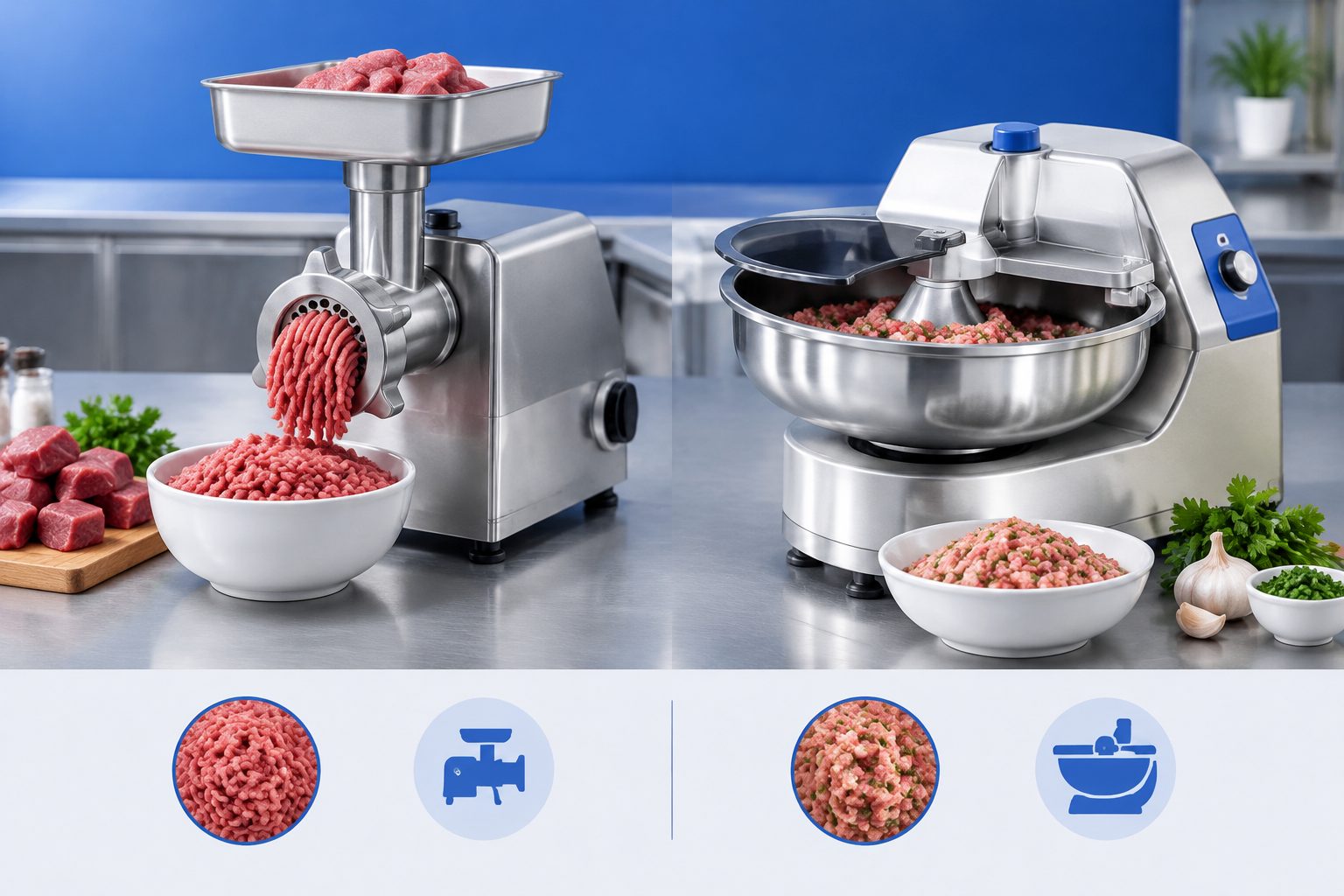
In the bowl cutter chopper vs meat grinder decision, choose around the product you need to serve: a grinder for a defined ground-meat step, or a bowl cutter when chopping and mixing are central to the recipe. Where both textures appear on the menu, evaluate whether their separate roles justify the added footprint, cleaning, and operating steps. Test your recipe and confirm the chosen model’s limits before ordering.
FAQ
Can a bowl cutter replace a meat grinder?
Not in every workflow. A bowl cutter can chop meat finely and mix ingredients, but a grinder produces ground meat through a cutting element and plate. Whether a bowl cutter can meet your required texture and output depends on the recipe and the specific model. Trial the intended product and confirm the machine’s permitted use before replacing a grinder.
When might a kitchen need both machines?
A kitchen may need both when recipes call for an initial grind followed by finer chopping or mixing, or when the menu includes distinct coarse-ground and finely processed products. Compare the added workflow, footprint, cleaning, training, and cost with the value of keeping those steps separate.
What ingredients should be tested before buying a bowl cutter?
Test the actual ingredients in your intended recipe, including meat, fat, seasonings, and any vegetables or other components the manufacturer confirms are suitable. Ask specifically about hard, fibrous, frozen, or bone-containing ingredients. Do not test unapproved ingredients or exceed the machine’s operating instructions.
Why does ingredient temperature matter during chopping?
Chopping and mixing create friction, which can warm the product. Temperature changes can affect handling and recipe consistency. Follow your food-safety procedures and the supplier’s preparation guidance, work in controlled batches, and monitor product temperature during a recipe trial.
What should I include in a bowl cutter recipe trial?
Use a representative recipe and record ingredient preparation, starting condition, batch loading, process sequence, operator steps, temperature observations, finished texture, unloading, and cleaning. First confirm the model’s permitted ingredients and batch limits with the supplier, then compare the result with your kitchen’s product standard.
Find the Right Sugarcane Juicer or Food Processing Solution
Tell us your ingredients, desired texture, batch requirements, market, and current preparation process. Easimaker’s team can discuss whether a bowl cutter fits your kitchen, confirm model-specific operating details, and provide technical guidance for your project.