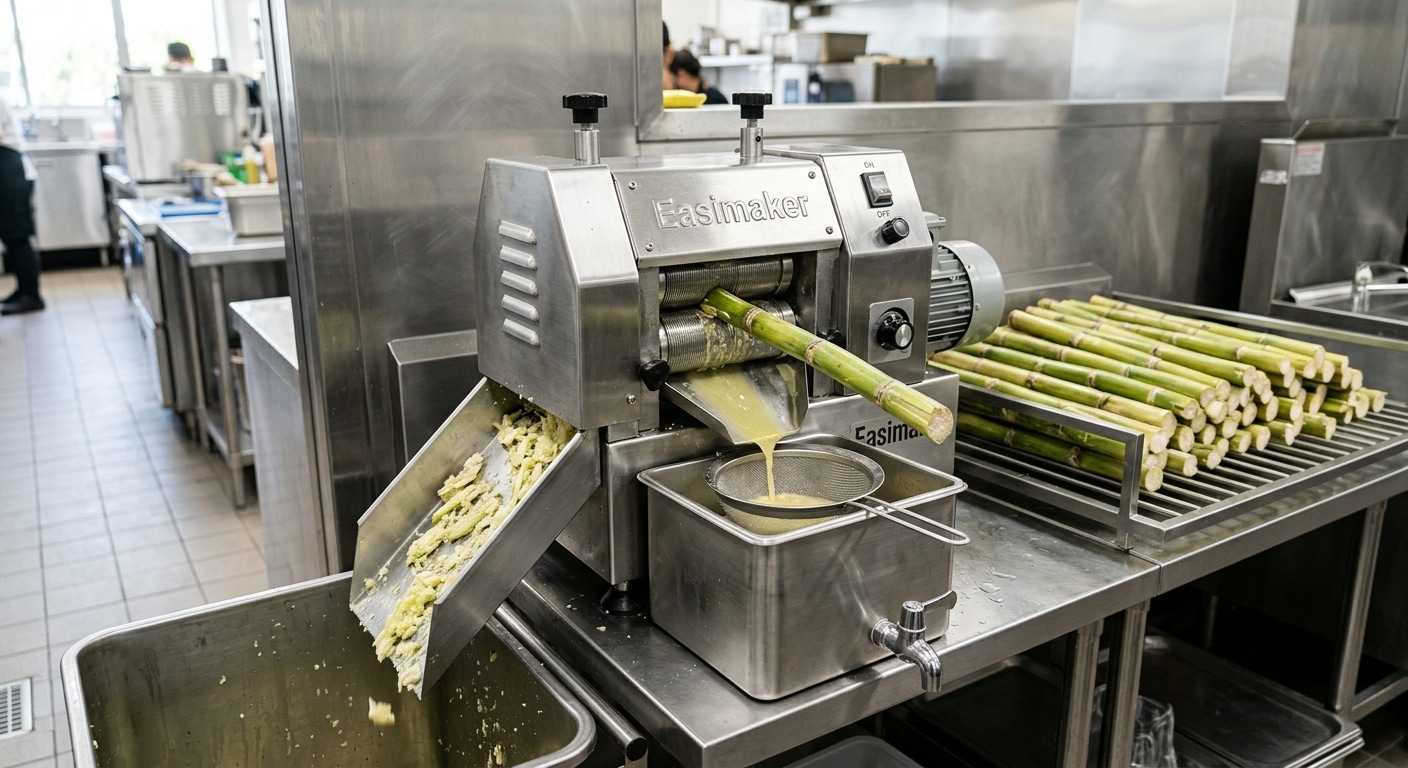
Processing Thick Sugarcane Stalks: Techniques to Prevent Motor Strain and Jamming

For high-volume juice bar operators and commercial beverage facilities, maximizing extraction yield is critical to profitability. However, processing thick sugarcane stalks presents a unique set of operational challenges. Dense, large-diameter canes require significantly more torque to crush, which can quickly lead to sugarcane juicer jamming and severe commercial juicer motor strain if not handled correctly.

This technical guide outlines best practices for hard sugarcane extraction. By implementing proper stalk preparation, refining feeding techniques, and recognizing the early signs of equipment fatigue, operators can extend the lifespan of their electric extractors while maintaining consistent operational throughput.

The Mechanics of Hard Sugarcane Extraction
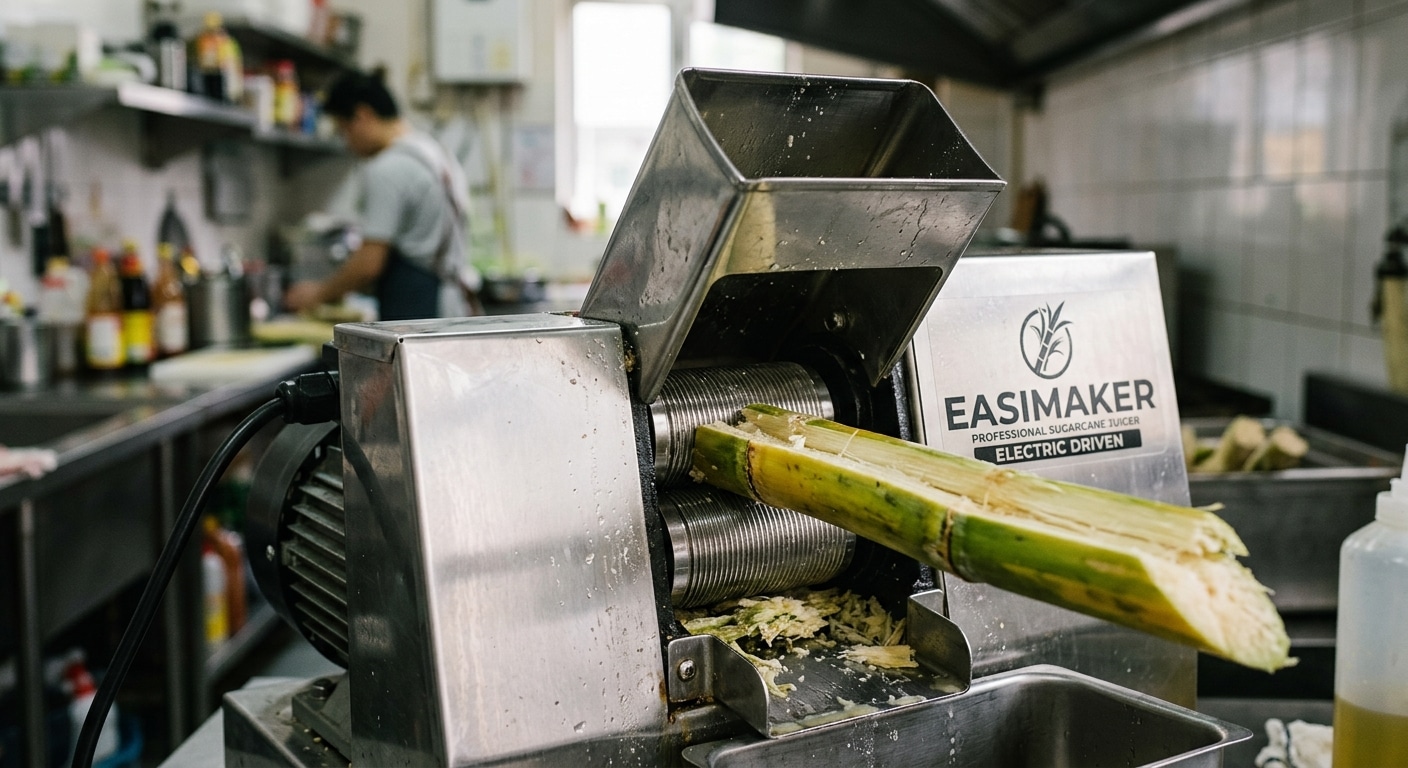
Commercial electric sugarcane juicers rely on a series of precisely calibrated stainless steel rollers to compress the stalk and extract the juice. The gap between these rollers is engineered to handle an average stalk diameter. When operators introduce exceptionally thick or mature (hardened) sugarcane, the machine’s motor must draw additional current to generate the torque necessary to pull and crush the material.

If the resistance exceeds the motor’s capacity, the rollers stall. Repeated stalling not only damages the gearbox but also degrades the motor windings due to excessive heat generation. Understanding this mechanical limitation is the first step in preventing catastrophic equipment failure.

Pre-Processing: Preparing Thick Sugarcane Stalks

Proper stalk preparation is the most effective defense against machine jamming. Juice bar staff should be trained to evaluate and prep canes before they ever touch the machine.

1. Splitting Oversized Canes

Electric extractors operate optimally when the feed material matches the roller intake dimensions. If a sugarcane stalk exceeds the maximum recommended diameter for your specific machine (often around 50mm to 60mm, depending on the model), it must be split longitudinally. Using a heavy-duty cleaver or a specialized sugarcane splitter to halve thick stalks reduces the required crushing force by more than 50%, virtually eliminating the risk of a jam.

2. Beveling the Lead Edge

A blunt, flat-cut end struggles to catch between the initial intake rollers, forcing the operator to push the cane aggressively. Instead, cut the leading end of the stalk at a 45-degree angle. This wedge shape allows the rollers to grip the cane smoothly and initiate the pulling process without sudden shock-loading the motor.

3. Managing Hard Nodes

The joints, or nodes, of the sugarcane stalk are the densest parts of the plant. On particularly old or thick canes, these nodes can act like speed bumps, causing momentary spikes in motor strain. While modern commercial machines are built to handle them, trimming protruding nodes on unusually hard stalks can smooth out the extraction process.

Optimal Feeding Techniques to Prevent Sugarcane Juicer Jamming

How the operator feeds the machine is just as important as the preparation of the cane itself. Inconsistent or forced feeding is a primary cause of equipment downtime.

  • Let the Machine Do the Work: Never force or shove the stalk into the feed chute. Once the initial rollers grip the beveled edge, release your forward pressure and allow the machine’s gearing to pull the cane through at its own engineered speed.
  • Maintain Proper Angles: Feed the stalk straight into the chute. Angling the cane sideways can cause it to track unevenly across the rollers, leading to asymmetrical wear on the bearings and potential binding.
  • Pacing the Feed: Do not feed a second stalk until the first has completely cleared the final roller. Overcrowding the extraction chamber exponentially increases the load on the motor and gearbox.

Recognizing Early Indicators of Commercial Juicer Motor Strain

Operators must be trained to monitor the acoustic and physical feedback of their equipment. Catching motor strain early prevents permanent damage.

  • Acoustic Changes (Whining or Grinding): A healthy electric extractor operates with a steady, low-pitched hum. If the motor pitch suddenly drops or begins to whine loudly when a thick stalk is introduced, it is struggling to maintain RPM. Grinding noises indicate gearbox stress.
  • Sudden RPM Drops: If the rollers visibly slow down during hard sugarcane extraction, the motor is nearing its stall point. Operators should immediately use the reverse function (if available) to back the cane out and split it before trying again.
  • Excessive Heat Output: While motors naturally generate heat, the exterior casing should never be too hot to touch. Excessive heat is a byproduct of the motor drawing high amperage to overcome a jam, which can melt internal winding insulation.

Equipment Selection: Specifications for Heavy-Duty Processing

If your supply chain consistently provides thick, dense sugarcane, ensuring you have the right commercial extractor is paramount. Below are key specifications to consider when evaluating equipment for heavy-duty use.

Component Standard Duty Heavy-Duty (Thick Stalks)
Motor Power 400W – 750W 1000W – 1500W+ (High Torque)
Roller Configuration 3 Rollers 4 to 5 Rollers (Gradual compression)
Gearbox Standard Chain/Belt Direct Gear-Driven (All-steel gears)
Reverse Function Optional Mandatory (for safe jam clearing)

Routine Sugarcane Machine Maintenance

Preventative maintenance is crucial for machines subjected to the rigors of processing thick sugarcane. A well-maintained machine operates with less friction, reserving maximum motor power for the crushing process.

  • Daily Cleaning: Sugar residue acts as an adhesive. If left to dry on the rollers or gears, it forces the motor to work harder upon startup. Flush the extraction chamber with warm water and a food-safe brush at the end of every shift.
  • Lubrication: Regularly inspect and lubricate the drive gears and bearing housings according to the manufacturer’s schedule. Dry gears under heavy loads will strip or shatter.
  • Tension Adjustment: For machines with adjustable roller gaps, ensure the tension is set correctly. A gap that is too tight will cause unnecessary motor strain, while a gap that is too loose will result in poor juice yield.

Frequently Asked Questions (FAQs)

Why does my commercial sugarcane juicer keep jamming?

Jamming is typically caused by feeding stalks that are too thick for the roller gap, feeding multiple stalks simultaneously, or a lack of routine maintenance causing sticky buildup on the rollers.

Can I process hard, mature sugarcane in an electric juicer?

Yes, provided you prepare the stalks properly by splitting oversized canes, cutting the ends at an angle, and ensuring your machine has a sufficiently powerful motor (typically 1000W or higher) designed for commercial extraction.

What should I do if a thick stalk gets stuck in the machine?

Immediately turn off the machine to prevent motor burnout. Use the machine’s reverse switch to back the stalk out. If it remains stuck, disconnect the power and manually clear the jam according to the manufacturer’s safety guidelines. Never force it through.

How often should I clean my commercial sugarcane extractor?

Commercial machines should undergo a basic water flush between different batches if sitting idle, and a thorough, deep cleaning of the rollers, juice tray, and filter at the end of every business day.

Does splitting the sugarcane affect the juice yield?

No. Splitting the cane longitudinally exposes more surface area to the rollers, which can actually improve extraction efficiency while significantly reducing the mechanical load on the juicer’s motor.

Optimize Your Juice Bar Operations

Processing thick sugarcane stalks doesn’t have to result in costly downtime or equipment failure. By training your staff on proper stalk preparation and feeding techniques, you can ensure smooth operations and maximum yield. If your current equipment is struggling to keep up with the demands of hard sugarcane extraction, it may be time to upgrade to a more robust commercial solution.

Ready to enhance your extraction efficiency? Request a quote / Get a sample today to learn more about high-performance, electric sugarcane juicers designed for commercial reliability.
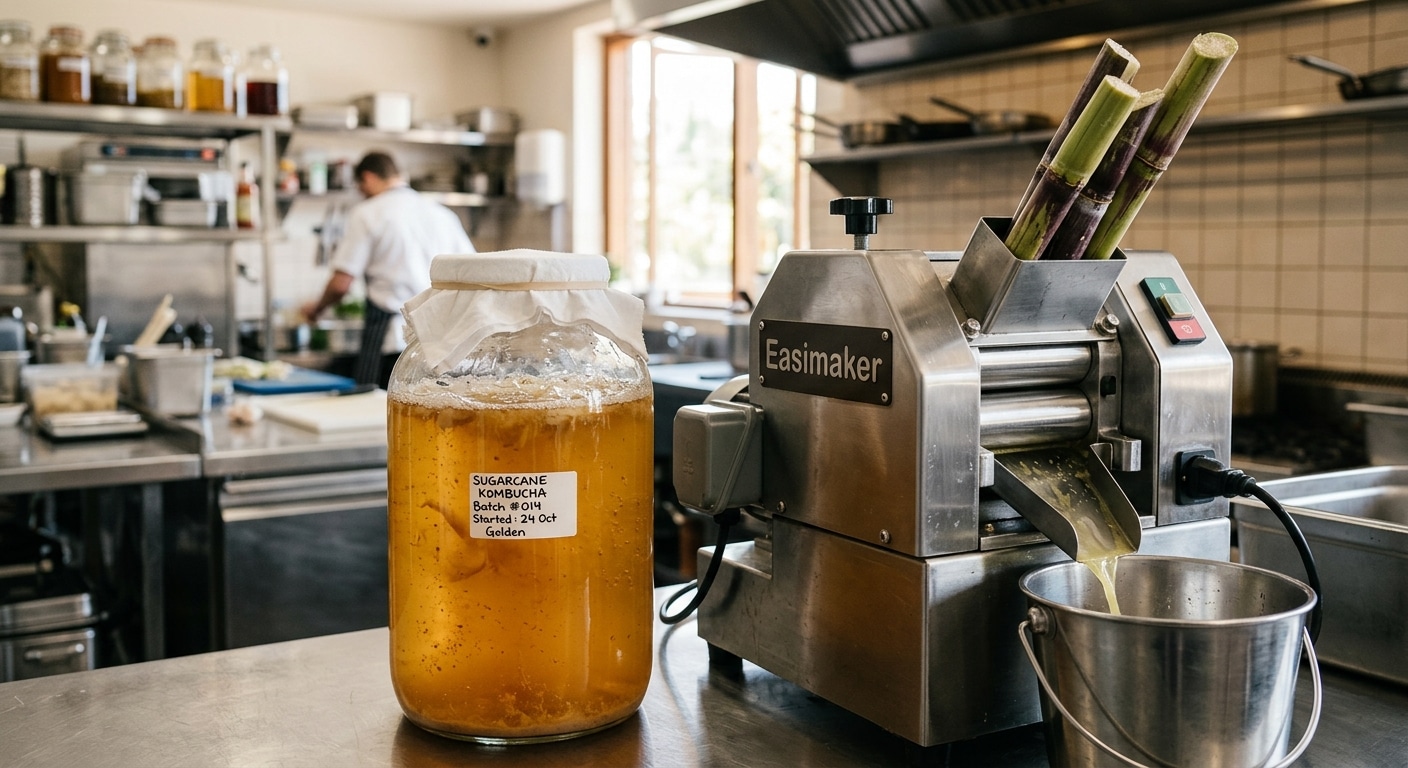
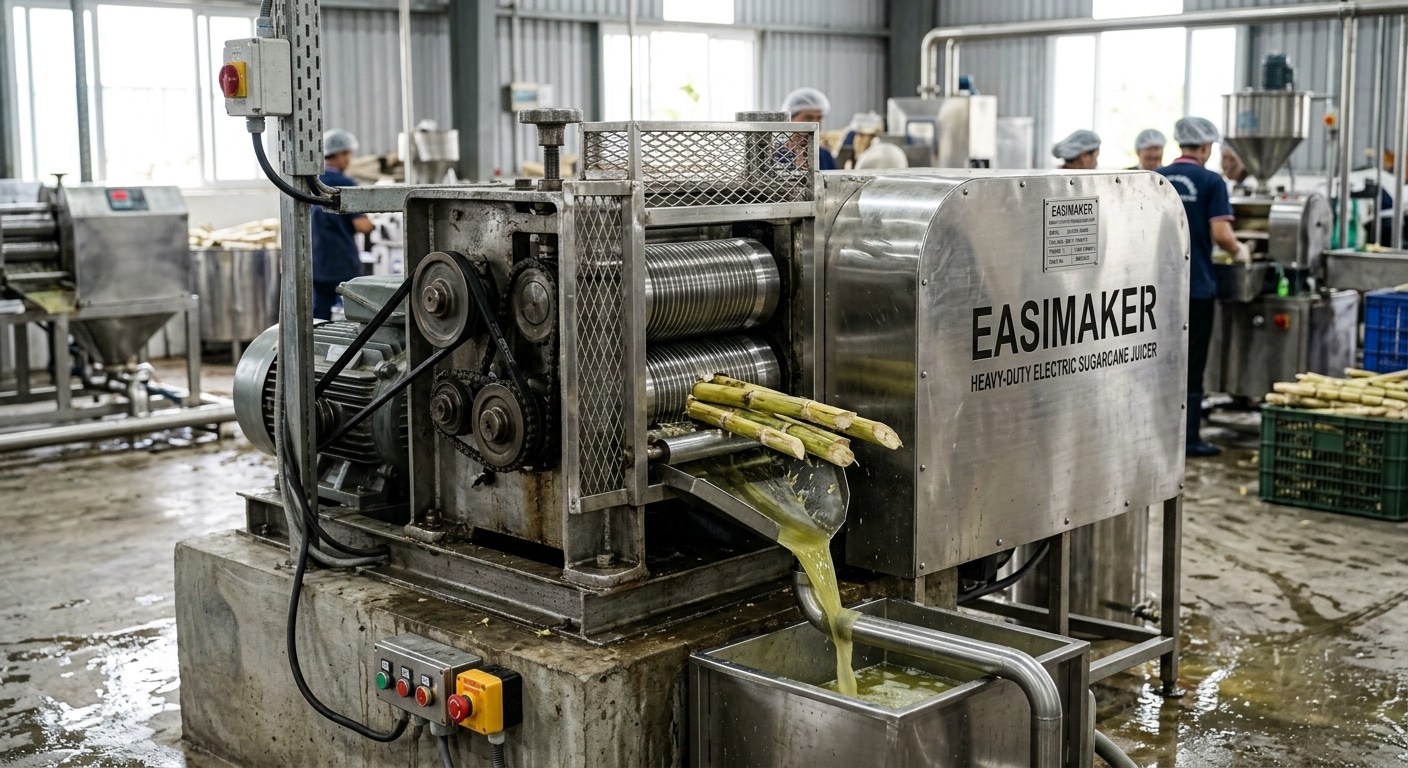
Brewing Sugarcane Kombucha: Using Fresh Cane Juice for Fermented Beverages

The craft beverage industry is experiencing a significant shift as consumers increasingly demand minimally processed, functionally beneficial drinks. For commercial kombucha and water kefir producers, the choice of sweetener dictates not only the fermentation kinetics but also the final flavor profile and nutritional value. While refined white cane sugar has been the industry standard for decades, sugarcane kombucha—fermented using fresh, raw sugarcane juice—is emerging as a premium differentiator.

Using fresh cane juice introduces complex carbohydrates, essential minerals, and unique botanical flavor notes that refined sugars simply cannot offer. This guide explores the technical aspects of transitioning to fresh fermented cane juice, the equipment required for commercial extraction, and how to optimize your brewing process for scale and consistency.

The Shift Toward Natural Fermentation Sweeteners

At its core, kombucha requires a nitrogen source (tea) and a carbon source (sugar) to feed the Symbiotic Culture of Bacteria and Yeast (SCOBY). Refined sugar provides a highly predictable, easily fermentable sucrose source. However, it strips away the natural molasses, vitamins, and minerals inherent to the sugarcane plant.

By utilizing fresh sugarcane juice, craft beverage makers can tap into a nutrient-dense substrate. The presence of natural magnesium, calcium, potassium, and iron acts as a catalyst for yeast and bacterial activity, often resulting in a more robust SCOBY and a more complex, earthy flavor profile. For brand owners, “sweetened with 100% fresh-pressed sugarcane juice” serves as a powerful clean-label marketing claim.

Refined Sugar vs. Fresh Sugarcane Juice

Understanding the tradeoffs between these two sugar sources is critical for commercial kombucha brewing operations. Below is a comparison to guide your formulation strategy:

Characteristic Refined Cane Sugar Fresh Sugarcane Juice
Nutrient Profile Empty calories; ~99.9% pure sucrose. Rich in vitamins, minerals, and antioxidants.
Flavor Impact Neutral; allows tea and added flavorings to dominate. Grassy, earthy, with subtle molasses and vanilla notes.
Fermentation Speed Standard, predictable timeline. Often faster due to high mineral content boosting yeast activity.
Processing & Prep Simple dissolution in hot water. Requires commercial electric extraction, filtration, and Brix adjustment.
Microbial Load Sterile/inert. Contains wild yeasts (may require flash pasteurization prior to pitching).

Technical Factors in Sugarcane Kombucha Production

Transitioning to fresh juice requires precise operational adjustments to maintain batch-to-batch consistency.

1. Managing Brix Levels

Freshly extracted sugarcane juice typically measures between 15° and 20° Brix, depending on the cane variety, seasonality, and geographic origin. Standard kombucha recipes usually require a starting Brix of 6° to 10°. Therefore, commercial brewers must dilute the fresh juice with filtered water or a brewed tea base to hit the target sugar concentration before pitching the SCOBY.

2. SCOBY Adaptation

Sudden changes in the nutrient environment can stress a commercial SCOBY. When transitioning to fresh cane juice, it is recommended to adapt your culture gradually. Start by replacing 25% of your refined sugar with fresh juice in the starter batch, gradually increasing the ratio over 3 to 4 fermentation cycles until the culture is fully acclimated to the new substrate.

3. Handling Wild Yeasts

Raw sugarcane juice naturally hosts wild yeasts and lactic acid bacteria on the stalk’s exterior. While some craft brewers embrace these wild microbes for a more complex “farmhouse” flavor, large-scale commercial operations requiring strict consistency should consider flash-pasteurizing the juice (e.g., 71°C/160°F for 15 seconds) before adding it to the brewing vessel.

Commercial Extraction: Equipment Considerations

Scaling up sugarcane kombucha production requires moving away from pre-packaged syrups and investing in reliable, high-throughput extraction equipment. The efficiency of your juicing process directly impacts your bottom line.

When selecting a commercial electric sugarcane juicer for beverage production, prioritize the following specifications:

  • Food-Grade Materials: All contact parts (rollers, juice trays, filters) must be constructed from 304 or 316 stainless steel to comply with commercial food safety regulations and resist the acidic nature of the juice.
  • Extraction Yield: High-quality electric juicers feature multi-roller systems (typically 3 to 5 rollers) that can extract up to 70-80% of the juice by weight in a single pass, minimizing waste.
  • Throughput Capacity: Look for machines capable of processing 300kg to 1000kg of cane per hour, depending on your fermentation vessel sizes.
  • Ease of Cleaning: Hygiene is paramount. Opt for machines with easily removable rollers or integrated Clean-in-Place (CIP) compatibility to prevent microbial buildup between batches.

Innovative Juice Recipes and Flavor Pairings

The natural flavor of fermented cane juice pairs exceptionally well with a variety of botanicals, allowing for innovative juice recipes that stand out on retail shelves. The grassy, slightly caramel-like undertones of the cane juice complement:

  • Roots and Rhizomes: Ginger and turmeric enhance the earthy notes while adding a spicy kick that balances the natural sweetness.
  • Tropical Fruits: Passionfruit, guava, and pineapple harmonize perfectly with sugarcane, creating a vibrant, island-inspired profile.
  • Herbs and Botanicals: Lemongrass, mint, and hibiscus add bright, acidic, and floral top notes that cut through the richness of the cane base.

Quality Control and Shelf Stability

Because fresh sugarcane juice is highly nutrient-dense, secondary fermentation (conditioning) can happen rapidly. To prevent over-carbonation and exploding bottles, commercial brewers must monitor titratable acidity (TA) and residual sugars closely. Once the target flavor and carbonation levels are reached, immediate cold crashing (dropping the temperature to 2°C – 4°C) or sterile filtration is necessary to halt fermentation and ensure shelf stability during distribution.

Frequently Asked Questions (FAQs)

Can I use 100% fresh sugarcane juice without adding water?

While possible for creating a highly potent fermented tonic, standard kombucha requires dilution. 100% fresh juice has a Brix level too high for standard kombucha yeast, which may result in sluggish fermentation or excessive alcohol production.

Do I need to peel the sugarcane before juicing?

For commercial electric juicers, peeling is generally not required, provided the stalks are thoroughly washed and sanitized. The rind contains essential oils that can contribute to the complex flavor of the final beverage.

How does fermented cane juice affect the alcohol by volume (ABV)?

Because fresh juice is rich in nutrients, yeast can become highly active, potentially increasing the ABV. Brewers must strictly control fermentation temperatures and times to ensure the final product remains below the legal non-alcoholic threshold (typically 0.5% ABV).

What is the shelf life of raw sugarcane juice before fermentation?

Raw juice oxidizes and ferments rapidly. It should be used immediately after extraction, or frozen/pasteurized if storage is necessary. Delaying processing can lead to off-flavors and uncontrolled wild fermentation.

Can I use an electric sugarcane juicer for other ingredients?

Heavy-duty electric sugarcane juicers are specifically calibrated for the hard, fibrous texture of cane stalks. While some brewers use them for ginger or turmeric, it is best to consult the equipment manufacturer to avoid damaging the rollers.

Elevate Your Commercial Brewing Setup

Transitioning to fresh sugarcane juice can redefine your kombucha or water kefir brand, offering consumers a truly natural, functional beverage. To achieve this at scale, partnering with the right equipment manufacturer is essential. Our commercial electric sugarcane juicers are engineered for high yield, strict hygiene, and continuous operation in demanding brewery environments.

Ready to scale your natural beverage production? Request a quote / Get a sample today to learn more about our commercial extraction solutions tailored for craft beverage makers.

Single-Pass vs. Multi-Pass Crushing: Which Sugarcane Extraction Method is Best?

The Efficiency Dilemma in Commercial Sugarcane Juicing

For high-volume beverage operations, commercial juice bars, and industrial food processing facilities, equipment efficiency directly impacts profitability. When scaling sugarcane juice production, one of the most critical equipment decisions is choosing the right extraction method. The debate typically comes down to two primary mechanical designs: single-pass versus multi-pass crushing.

While both methods utilize heavy-duty rollers to press juice from sugarcane stalks, their operational workflows, labor requirements, and ultimate commercial juicer efficiency differ significantly. Understanding the technical mechanics behind these two designs is essential for procurement managers and facility engineers looking to optimize throughput and minimize operational bottlenecks.

Understanding the Mechanics

What is Multi-Pass Crushing?

Multi-pass crushing is the traditional method of sugarcane extraction. In this setup, an electric machine typically features two or three rollers with a wider gap. The operator feeds a sugarcane stalk into the machine, retrieves the partially crushed stalk from the other side, folds it in half, and feeds it through again. This process is repeated three to four times until the maximum juice yield is achieved.

While multi-pass machines are generally simpler in internal gearing and have a lower initial capital expenditure, they rely heavily on manual intervention and constant operator attention.

What is a Single-Pass Sugarcane Juicer?

A single-pass sugarcane juicer is engineered to extract the maximum amount of juice in one continuous motion. These advanced electric machines utilize a precisely calibrated multi-roller system (often three to five rollers) arranged in a specific geometric configuration. As the cane is pulled through the machine, it passes through progressively tighter clearances between the rollers.

This design effectively crushes, presses, and expels the dry bagasse in a single fluid operation, eliminating the need for the operator to handle the crushed cane repeatedly.

Single-Pass vs. Multi-Pass: A Technical Comparison

To make an informed purchasing decision, buyers must evaluate how each method aligns with their production goals. Below is a comparison of key operational metrics:

Operational Factor Multi-Pass Crushing Single-Pass Crushing
Sugarcane Extraction Rate High (only after 3-4 manual passes) High (75%-85% yield by weight in one pass)
Labor Requirements Intensive (operator must fold and re-feed cane) Minimal (feed once and move to the next stalk)
Throughput / Speed Low to Moderate (bottlenecked by manual re-feeding) High (ideal for continuous commercial processing)
Operator Safety Lower (frequent handling near feed zones) Higher (hands-free after initial feed, enclosed rollers)
Equipment Cost Lower initial investment Higher initial investment, but faster ROI via labor savings

Key Factors Influencing Sugarcane Extraction Rates

Regardless of the method chosen, the juice yield comparison between machines often comes down to the quality of the internal components. When evaluating commercial juicers, pay close attention to the following engineering specifications:

  • Roller Material and Machining: Food-grade stainless steel (such as SUS304) is mandatory for hygiene and corrosion resistance. Rollers with precision-machined knurling or grooving grip the cane better, preventing slippage and ensuring a thorough crush.
  • Motor Power and Gearbox Efficiency: Commercial electric juicers require robust motors (typically ranging from 400W to 1500W depending on capacity) paired with heavy-duty gear reducers. A high-torque, low-RPM setup ensures the machine can crush thick, dense cane without stalling.
  • Clearance Tolerances: In single-pass machines, the micro-clearance between the final set of rollers dictates the ultimate extraction rate. Tighter tolerances leave the bagasse nearly dry, maximizing yield per kilogram of raw material.

Operational Impact: Labor Costs and Workflow Efficiency

In a B2B context, equipment procurement is rarely just about the machine’s price tag; it is about the total cost of ownership (TCO). Labor is one of the most significant ongoing expenses in any food service or processing operation.

Multi-pass crushing ties an operator to the machine for the entire duration of the extraction process. Conversely, a single-pass sugarcane juicer allows the operator to feed a stalk and immediately prepare the next one, or attend to customers, handle packaging, and manage point-of-sale transactions. For a busy commercial environment, the labor hours saved by utilizing a single-pass system often offset the higher initial equipment cost within the first few months of operation.

Buying Guide: Selecting the Right Commercial Juicer

When sourcing sugarcane extraction equipment for your facility, consider the following checklist to ensure you select the optimal machine:

  • Assess Your Volume: If you process hundreds of kilograms of cane daily, a single-pass electric machine is indispensable. For low-volume, occasional use, a multi-pass machine might suffice.
  • Hygiene and Cleaning: Look for machines with easily removable rollers or accessible crushing chambers. Daily sanitation is critical to prevent bacterial growth and comply with food safety regulations.
  • Durability and Maintenance: Check the availability of spare parts (like seals, bearings, and drive chains). Opt for machines with sealed bearings to prevent juice ingress.
  • Power Supply Compatibility: Ensure the machine’s voltage and frequency specifications match your facility’s electrical infrastructure (e.g., 110V/60Hz vs. 220V/50Hz).

Frequently Asked Questions (FAQs)

Does a single-pass machine extract as much juice as a multi-pass machine?

Yes. High-quality single-pass machines are engineered with advanced roller configurations that apply immense, progressive pressure, achieving extraction rates comparable to or exceeding three manual passes through a traditional machine.

Can single-pass juicers handle thick sugarcane stalks?

Commercial electric single-pass juicers are designed with powerful gearboxes and wide feed chutes to accommodate thick stalks. However, exceptionally thick cane may need to be split lengthwise depending on the specific machine’s feed diameter limits.

How often do the rollers need to be replaced?

With proper maintenance and regular cleaning, solid stainless steel rollers can last for years in a commercial setting. Wear and tear typically occur on the bearings or drive gears before the rollers themselves degrade.

Is an electric multi-pass machine safer than a manual one?

While electric multi-pass machines eliminate manual cranking, they still require the operator to repeatedly handle crushed cane near the feed chute. Single-pass machines are generally safer as they minimize operator interaction with the crushing mechanism.

What is the typical ROI for upgrading to a single-pass system?

ROI varies based on local labor rates and daily volume, but many high-volume operations report recovering the cost difference within 3 to 6 months due to reduced labor hours and increased throughput.

Optimize Your Beverage Operations Today

Choosing between single-pass and multi-pass crushing ultimately depends on your operational scale, labor availability, and efficiency goals. For modern commercial facilities focused on high throughput, superior hygiene, and optimized labor costs, a single-pass sugarcane juicer is the clear industry standard.

Ready to upgrade your extraction capabilities with reliable, commercial-grade equipment? Request a quote / Get a sample today to discover how our electric sugarcane juicers can streamline your production line.

Ergonomics in Juice Bars: Positioning Your Sugarcane Machine to Prevent Operator Fatigue

The Hidden Cost of Operator Fatigue in Commercial Juice Bars

In high-volume commercial beverage operations, throughput is directly tied to operator efficiency. While procurement teams often focus on extraction yield and motor durability when sourcing equipment, the physical interaction between the staff and the machine is frequently overlooked. Poor juice bar ergonomics can lead to operator fatigue, reduced extraction rates during peak hours, and increased staff turnover due to repetitive strain injuries (RSI).

For franchises, distributors, and independent operators, optimizing sugarcane machine placement is not just a matter of comfort—it is a critical operational strategy. A well-designed commercial kitchen layout minimizes unnecessary movement, reduces physical exertion, and ensures a safer, more productive juicing workflow.

Understanding the Physical Toll of High-Volume Juicing

Processing sugarcane requires handling long, heavy stalks and feeding them into a crushing mechanism. Even with high-efficiency electric juicers, operators must repeatedly lift, guide, and sometimes apply slight pressure to initiate the crush. When multiplied by hundreds of servings per shift, this repetitive motion takes a physical toll.

  • Shoulder and Neck Strain: Occurs when the machine’s feeding port is positioned too high, forcing the operator to lift their arms above a natural resting angle.
  • Lower Back Pain: Results from twisting the spine to reach for raw stalks or leaning forward over deep counters to feed the machine.
  • Wrist and Forearm Fatigue: Caused by improper feeding angles that force the wrists out of a neutral alignment.

Designing the Ergonomic Juicing Workflow

To mitigate these risks, brand owners and operations managers must design workstations that adapt to the human body, rather than forcing the body to adapt to the equipment.

Optimal Counter Heights for Sugarcane Machines

Standard commercial stainless steel prep tables are typically 36 inches (91 cm) high. However, commercial sugarcane juicers are often tall, placing the feeding port significantly higher than the counter surface. If an operator has to raise their elbows above 90 degrees to feed the stalk, fatigue will set in rapidly.

Operator Height Range Recommended Feeding Port Height Ideal Counter/Stand Height
5’2″ – 5’6″ (157-167 cm) 36″ – 38″ (91-96 cm) 24″ – 26″ (61-66 cm)
5’7″ – 5’11” (170-180 cm) 39″ – 42″ (99-106 cm) 27″ – 30″ (68-76 cm)
6’0″+ (183 cm+) 43″ – 45″ (109-114 cm) 31″ – 33″ (78-83 cm)

Recommendation: Instead of standard counters, use custom drop-stands or adjustable equipment legs to ensure the machine’s feeding port aligns with the operator’s natural waist-to-elbow “strike zone.”

Machine Feeding Angles and Posture

The operator should be able to stand squarely in front of the feeding port. Positioning the machine at an awkward angle or tucking it into a deep corner forces the operator to twist their torso. The machine should be placed no more than 4 to 6 inches (10-15 cm) from the front edge of the counter to prevent excessive leaning.

Material Flow: Raw Cane to Bagasse Disposal

An ergonomic juicing workflow follows a linear path—typically left-to-right or right-to-left—eliminating the need for the operator to cross their arms or pivot 180 degrees.

  1. Staging Area: Pre-cut, washed sugarcane stalks should be stored in vertical bins or elevated horizontal racks immediately adjacent to the operator’s dominant hand.
  2. Extraction Zone: The electric sugarcane machine is positioned centrally.
  3. Waste Management: Bagasse (crushed cane fiber) must exit the machine smoothly. Position a high-capacity waste bin directly beneath the ejection chute, ideally utilizing a counter drop-hole, so operators do not have to manually clear or sweep heavy, wet bagasse.

Equipment Selection: The Role of Electric Juicers

Manual juicers have no place in a high-volume commercial setting due to the severe ergonomic hazards they present. Investing in robust electric sugarcane juicers is mandatory for operator safety. High-quality electric models handle 100% of the crushing force. The operator’s only physical task should be guiding the stalk into the feed port.

When sourcing machines for your franchise or distribution network, look for models with self-feeding roller designs. Once the stalk engages with the first set of rollers, the machine should pull the cane through automatically, eliminating the need for the operator to push forcefully against the machine.

Best Practices for Repetitive Strain Injury (RSI) Prevention

Beyond machine placement, operational protocols play a vital role in preventing fatigue:

  • Anti-Fatigue Mats: Install commercial-grade, slip-resistant anti-fatigue mats (at least 5/8-inch thick) to reduce lower limb and back stress caused by standing on hard tile or concrete floors.
  • Task Rotation: Implement shift schedules where staff rotate between juicing, POS/cashier duties, and prep work every 2 hours to utilize different muscle groups.
  • Proper Footwear: Mandate supportive, non-slip footwear for all back-of-house staff.

Procurement and Standardization for Franchises

For brand owners and distributors, standardizing the ergonomic layout across multiple locations ensures consistent operational efficiency. When working with equipment manufacturers, discuss bulk ordering (MOQ) for machines alongside custom stainless steel drop-stands designed specifically for those units. Standardizing the equipment package simplifies training, reduces maintenance variables, and guarantees that every location adheres to your ergonomic safety standards.

Frequently Asked Questions (FAQs)

What is the ideal distance between the sugarcane staging area and the juicer?

The raw sugarcane should be within an arm’s reach (approximately 16 to 24 inches from the operator’s center) to prevent overreaching or stepping away from the machine during a rush.

Can we put a commercial sugarcane machine on a standard prep table?

While possible, it is rarely ergonomic. Standard 36-inch tables often elevate the machine’s feeding port too high for average-height operators. A lowered equipment stand is highly recommended.

How do we handle heavy bagasse waste ergonomically?

Use a direct-drop chute system where bagasse falls directly into a rolling bin beneath the counter. This prevents staff from having to manually lift heavy, wet waste bags out of standard trash cans.

Are electric sugarcane machines safer for staff than manual ones?

Yes. Electric machines eliminate the extreme physical exertion required to crank manual gears, drastically reducing the risk of shoulder, back, and wrist injuries in high-volume settings.

How often should staff rotate off the juicing station?

In high-volume environments, rotating staff every 2 to 3 hours is a standard best practice to prevent muscle fatigue and maintain high concentration and safety levels.

Optimize Your Juice Bar Operations Today

Protecting your staff from fatigue directly protects your bottom line. By investing in ergonomic layouts and high-efficiency electric sugarcane processing equipment, you ensure a faster, safer, and more profitable operation. If you are a distributor, franchise owner, or commercial buyer looking to upgrade your beverage equipment, we can help you source the right solutions.

Ready to improve your juicing workflow? Request a quote / Get a sample today to learn more about our commercial electric sugarcane juicers.