Commercial Sugarcane Juice Hygiene Checklist for Shops

Table of Contents

A practical hygiene checklist for commercial sugarcane juice shops, covering raw cane, juicer cleaning, staff practices, serving controls, and documented daily routines.

The daily hygiene priority
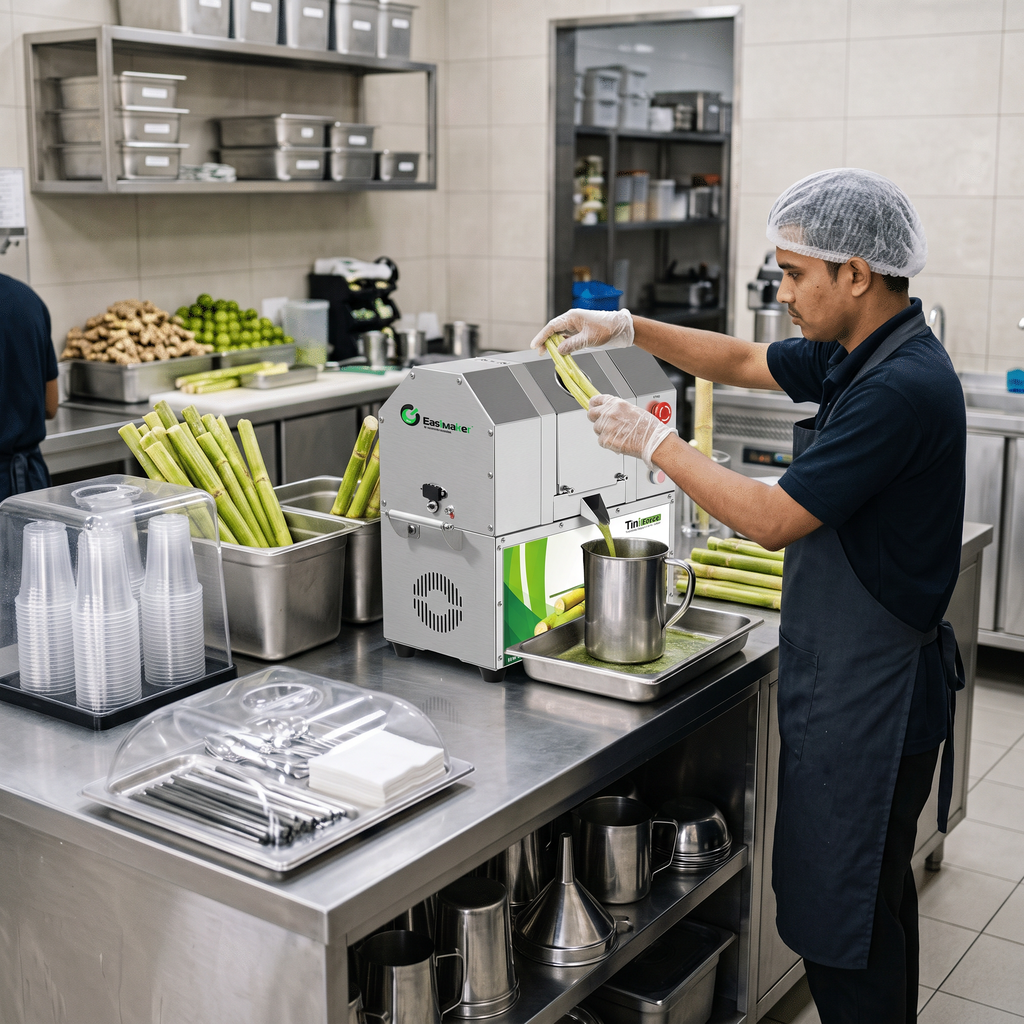
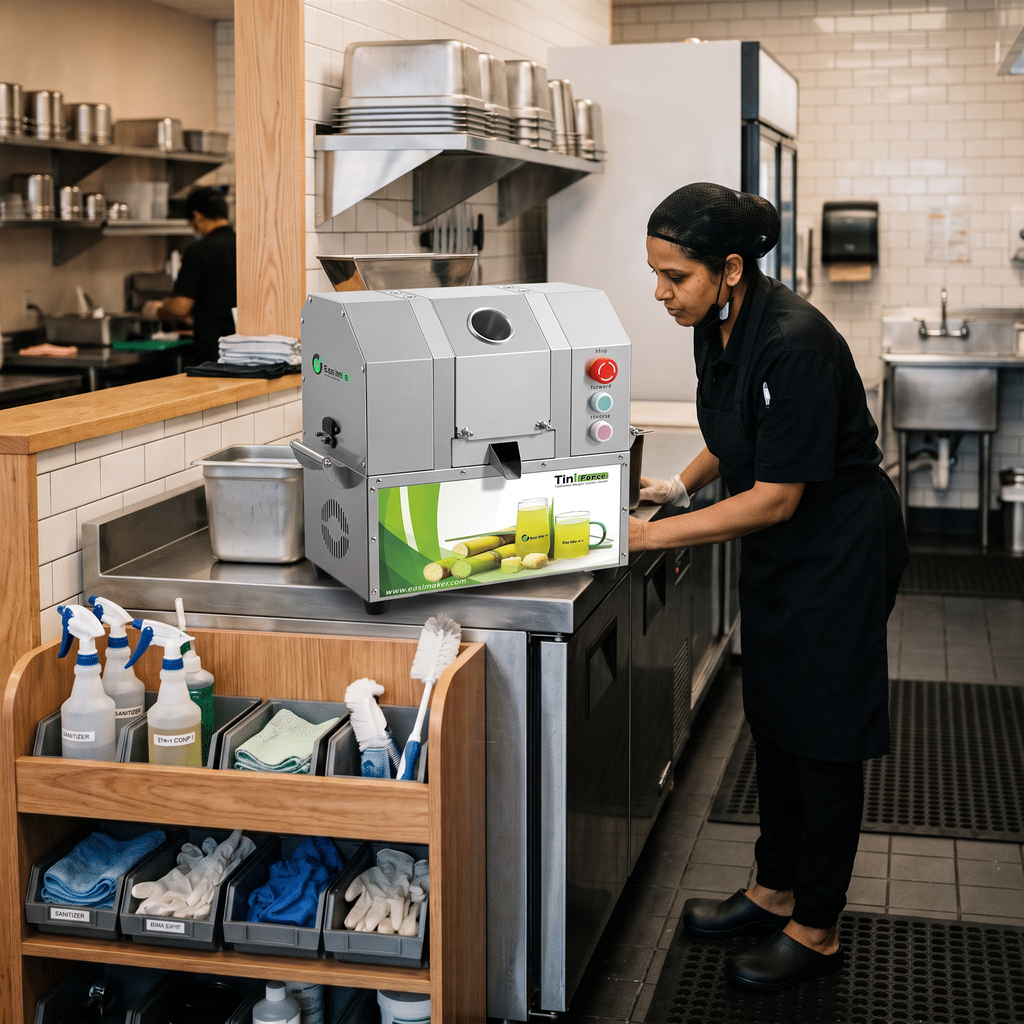
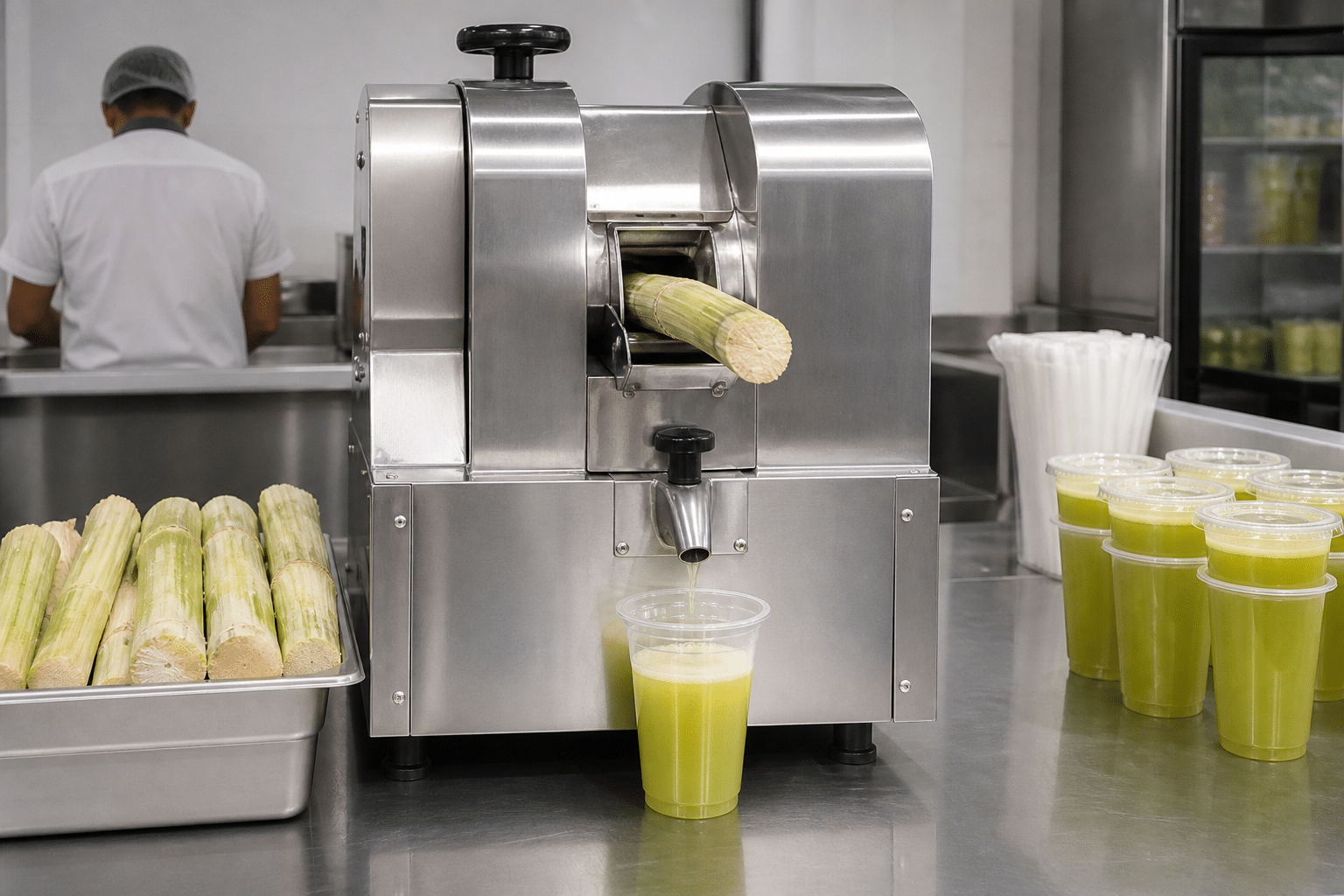
Clean commercial sugarcane juice preparation station with juicer and protected serving supplies

Commercial sugarcane juice hygiene depends on controlling the full workflow: receive sound cane, keep the preparation area clean, clean and sanitize food-contact parts correctly, protect juice during service, and complete a documented closing routine. A clean-looking counter alone is not enough. The rollers, feed area, juice path, collection container, utensils, ice handling tools, and staff hands all need practical controls.

For most shops, the most useful approach is a short opening checklist, clear rules during service, and a full cleaning and sanitizing procedure at closing. Local food-safety rules, approved chemicals, contact times, water quality requirements, and recordkeeping obligations vary by market. Follow the requirements that apply to your premises and use the machine manual as the primary reference for parts, access points, and safe cleaning limits.

This checklist helps operators turn those requirements into a repeatable routine for a commercial sugarcane juice operation.

Why sugarcane juice hygiene needs a system

Sugarcane is an agricultural raw material that can carry soil, dust, handling contamination, and damaged outer material into the shop. Pressing exposes inner cane surfaces and produces a ready-to-serve drink. That makes clean receiving, trimming, washing where appropriate, and controlled storage important before the cane reaches the juicer.

The machine also requires attention beyond its visible exterior. Juice and cane fibre can remain around rollers, scrapers, guards, spouts, trays, and collection points. If residue is left in place, it can dry, become difficult to remove, and compromise the next cleaning cycle. Operators should distinguish between cleaning, which removes visible soil and residue, and sanitizing, which is applied after cleaning according to the sanitizer supplier’s instructions and relevant local rules.

A good hygiene system assigns responsibility. One person should be accountable for confirming that the machine is ready to open, while every operator should know when to stop service, clean a spill, replace contaminated utensils, or report a damaged component. Include staff training, cleaning verification, and corrective actions in routine supervision rather than relying on memory alone.

Opening checklist
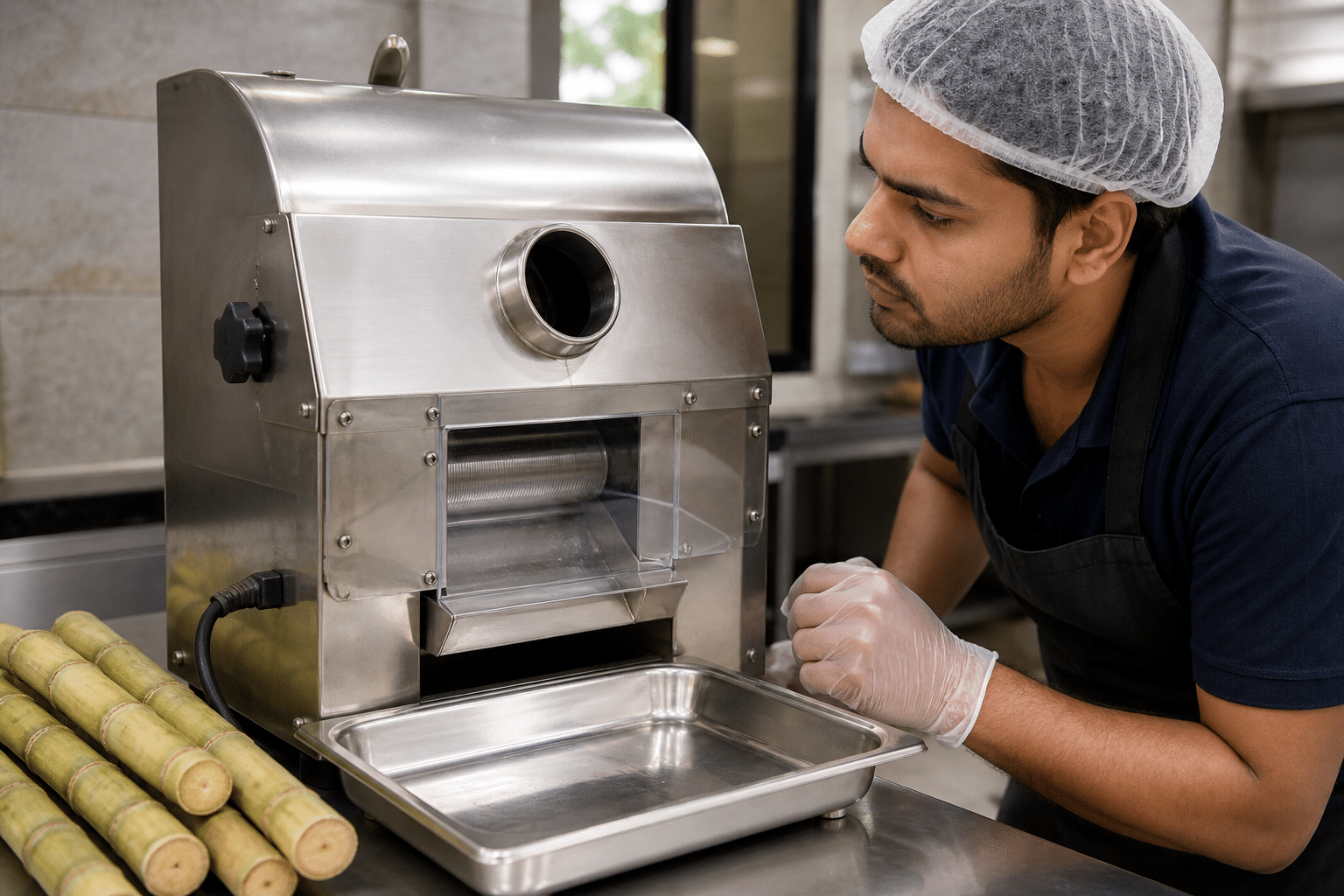
Operator inspecting a clean commercial sugarcane juicer before service

Complete this check before food preparation or service begins. Do not start production if the prior cleaning is incomplete, food-contact surfaces are visibly soiled, or a machine fault prevents proper cleaning.

  • Personal hygiene: Confirm that operators have clean work clothing, clean hands, appropriate hair control where required, and no task that could contaminate food handling. Cover cuts as required by local food-safety procedures.
  • Work area: Clean and inspect counters, sinks, drainage areas, waste bins, preparation boards, and storage containers. Keep chemicals clearly identified and separate from ingredients and packaging.
  • Machine condition: Inspect accessible food-contact surfaces, the juice outlet, drip area, guards, and collection components. Confirm that parts are clean, dry where required, correctly fitted, and undamaged before operation.
  • Utensils and packaging: Use clean cups, lids, straws, knives, tongs, scoops, containers, and cloths. Separate cleaning cloths from food-use items.
  • Water and ice: Check that water and ice used in drinks, rinsing, or cleaning are handled in line with local requirements. Use a dedicated scoop or tool for ice rather than hands or drinking cups.
  • Raw cane: Move only inspected cane into the active preparation area. Keep unwashed cane separate from prepared cane to avoid recontamination.

Keep the checklist close to the work area and make it specific to the actual machine layout. A generic list is less useful than a short list that names the parts and stations staff must inspect every day.

Raw sugarcane handling
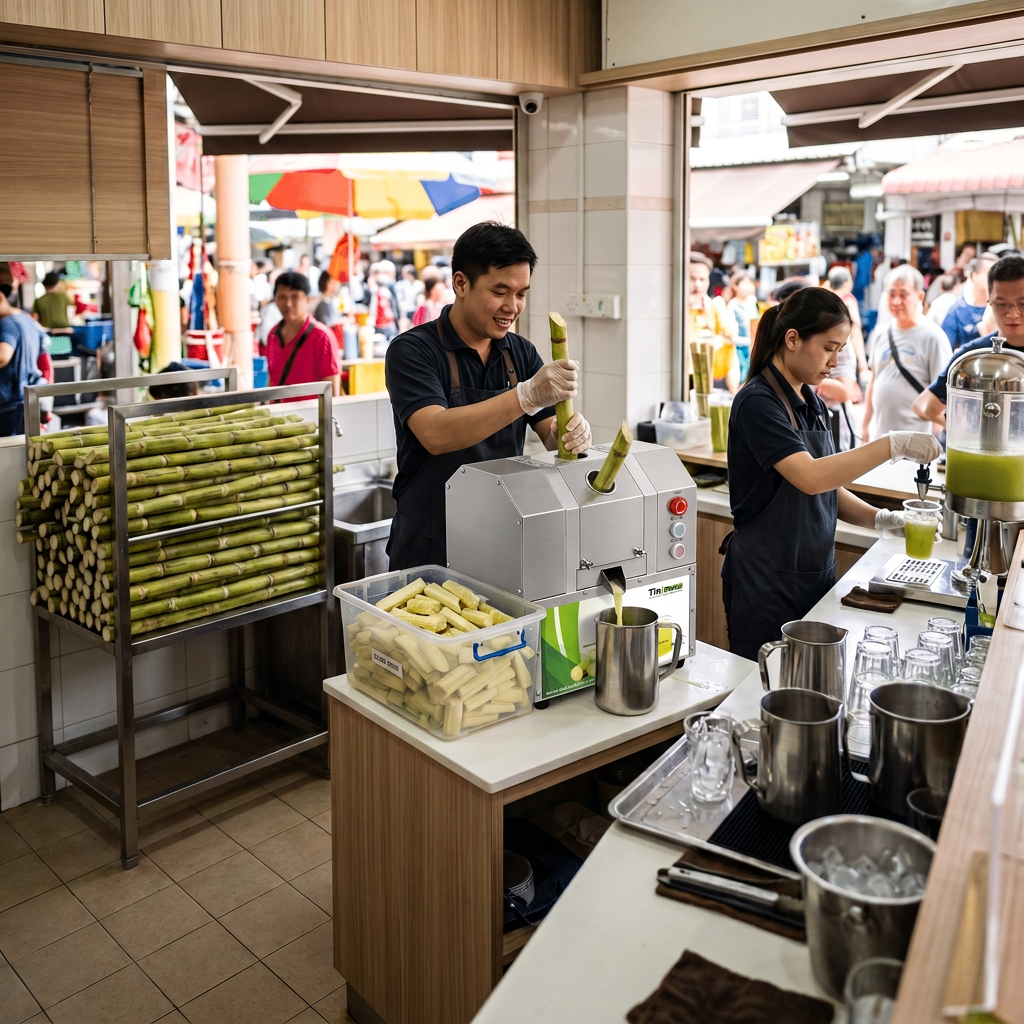
Separate storage of raw and prepared sugarcane in a commercial juice shop

Set up a one-way flow from receiving to preparation to pressing. This reduces the chance that soil from outer cane surfaces returns to cleaned equipment, prepared cane, cups, or finished drinks. Use cleanable containers or racks that keep cane off the floor and away from waste, chemicals, standing water, and pest risks.

At receiving, inspect cane for excessive soil, visible spoilage, mould, leaks from damaged packaging, pest contamination, or other conditions that make it unsuitable for use. Establish a clear decision rule for rejection or segregation. Do not assume that pressing will correct poor raw-material condition.

Prepare cane using clean equipment and a cleanable surface. If your local process includes washing, control the water source, wash area, and change frequency so that washing does not simply transfer contamination. Trim or peel only as needed for the shop’s process, and remove trimmings promptly to a designated waste container. Avoid placing prepared cane back into a container that held unprepared cane unless it has been cleaned and sanitized as required.

Limit preparation to what the shop can process under controlled conditions. A practical batch system helps staff identify when cane was prepared and prevents older material from being mixed without review. Storage conditions and permitted holding times should be set according to local regulations, the condition of the cane, and the shop’s documented procedures.

Juicer cleaning and sanitizing

Clean the juicer at the frequency required by your operation and local rules, and whenever contamination, a spill, a changeover issue, or an extended interruption makes cleaning necessary. Always stop the machine and isolate its power supply before accessing rollers, guards, scrapers, or other internal areas. Do not spray electrical areas or use tools and methods that are not permitted by the manufacturer.

A controlled cleaning sequence usually includes the following steps:

  1. Stop the machine, isolate power, and allow moving components to come to a complete stop.
  2. Remove cane fibre and loose residue using tools suitable for the equipment. Dispose of waste without spreading it across clean surfaces.
  3. Remove only the components the manufacturer identifies as removable. Keep fasteners and small parts organized to avoid loss or incorrect reassembly.
  4. Wash accessible food-contact parts and surfaces with the approved detergent and water method for the premises. Follow the detergent supplier’s dilution and use instructions.
  5. Rinse when the chemical instructions require it. Check seams, rollers, spouts, trays, corners, and drains for remaining residue.
  6. Apply sanitizer to cleaned surfaces at the correct dilution and contact time, following the sanitizer label and local food-safety rules.
  7. Allow surfaces to drain or dry as the approved process requires. Reassemble correctly, then inspect before returning the machine to service.

Do not use sanitation as a substitute for cleaning. Sanitizer works on a properly cleaned surface; it is not a solution for dried fibre, juice residue, or accumulated soil. Create a cleaning record with the date, time, operator, chemical used where required, and any corrective action.

Cleaning access should be part of the buying decision. The commercial sugarcane juicer selection guide explains why workflow, cleanable access, and local service support should be assessed alongside expected output.

Hygienic juice service
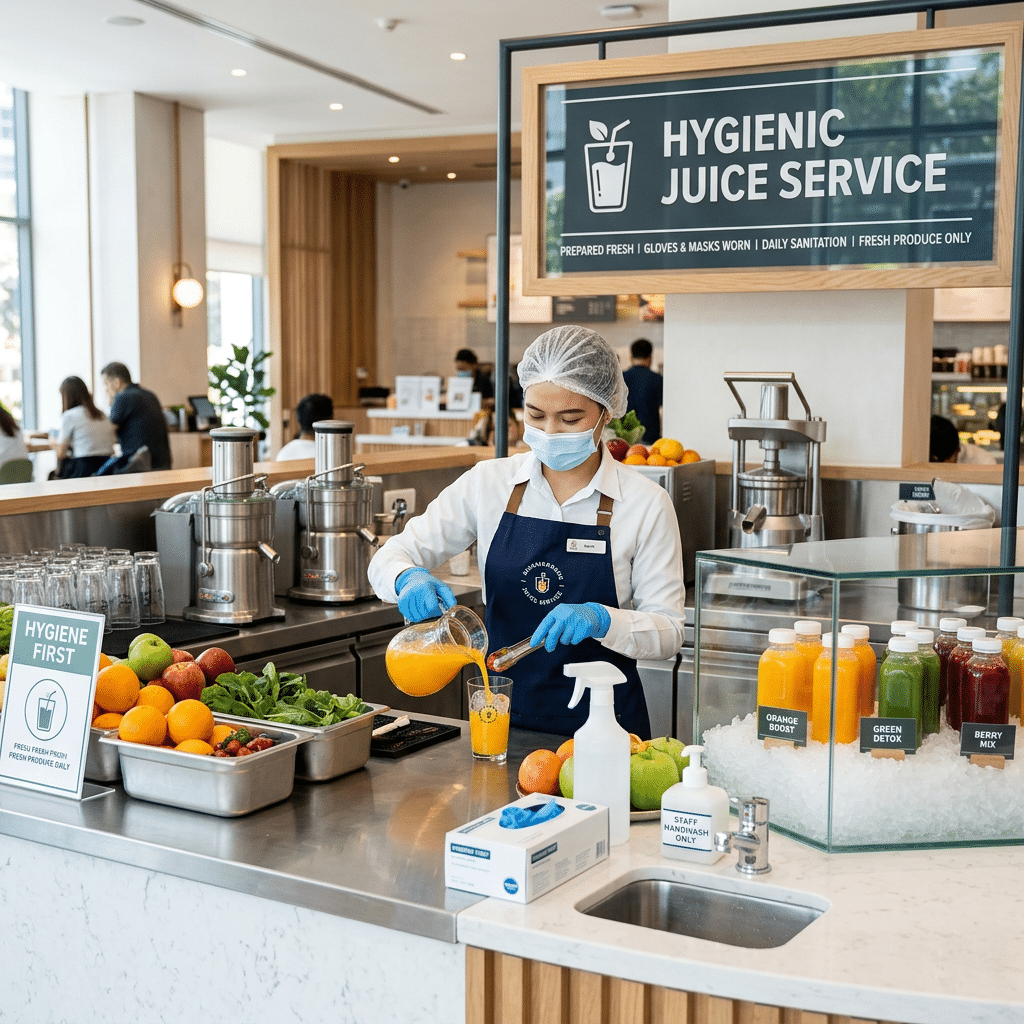
Hygienic juice service

During busy periods, hygiene controls need to be simple enough to follow without interrupting service unnecessarily. Keep finished drinks separate from raw-cane preparation and waste handling. Use a dedicated handwashing routine after handling waste, cleaning tools, money, personal items, or any non-food task. Local rules may require additional controls for gloves; gloves do not replace handwashing and should be changed when contaminated.

Keep cups, lids, straws, and other single-use packaging protected from splashes, dust, and unnecessary handling. Store them in dispensers or clean containers where possible. Use dedicated tools for ice, garnish, or other additions, and clean or replace those tools according to the shop’s schedule.

Juice should be collected and served in clean food-contact containers. Avoid leaving filled cups or bulk containers uncovered in a preparation zone. Where a shop prepares juice in advance, it must follow applicable local requirements for storage, temperature control, labels, and permitted holding time. Do not invent a holding time without a validated local procedure.

Respond immediately to contamination events. Examples include a cup falling into an ice bin, a utensil touching an unclean surface, a broken part near the juice path, or raw-cane debris entering a clean service area. Stop the affected task, remove or discard affected materials as appropriate, clean and sanitize the area or equipment, and record the issue when your food-safety plan requires it.

Closing checklist and records

Closing is the point at which the next day’s hygiene performance is determined. Remove leftover cane and waste according to the shop’s approved process. Clean and sanitize the juicer, preparation surfaces, utensils, sinks, waste stations, floors, and drainage areas. Do not leave cane fibre or juice residue in hidden machine areas simply because the counter has been wiped.

  • Inspect rollers, scrapers, guards, juice outlets, drip trays, collection containers, and accessible joints after cleaning.
  • Check for worn brushes, cracked containers, damaged seals, loose guards, blocked drains, or components that cannot be cleaned adequately.
  • Store cleaned tools and removable parts in a protected, clean location.
  • Empty and clean waste bins, then return them to the correct location.
  • Record completed cleaning, faults, missing parts, chemical stock issues, and corrective actions.
  • Escalate any equipment issue that affects cleanability, safety, or normal juice flow before the next opening.

Maintenance and hygiene are linked. A worn or damaged food-contact component may trap residue or make inspection difficult. Maintain a machine file with the model, serial number, manual, parts information, service contacts, and cleaning records. The sugarcane juicer spare parts and support checklist can help shops prepare the information needed when replacing routine parts or discussing a service issue.

Common hygiene gaps to correct

Many hygiene failures come from routine shortcuts rather than a lack of effort. Reviewing these gaps during staff training can make the daily checklist more effective.

  • Cleaning only visible surfaces: Review the full juice path and fibre collection areas, not just the exterior panels and counter.
  • Mixing clean and unclean tools: Use clear storage and labeling so brushes, cloths, scoops, and food-use utensils are not confused.
  • Using damaged equipment: Cracks, worn seals, loose parts, and difficult-to-clean areas should be assessed promptly.
  • Keeping prepared cane without a control point: Identify preparation batches and follow the shop’s approved holding procedure.
  • Assuming an occasional-use machine is suitable for shop cleaning demands: Equipment intended for home use may not suit repeated service, cleaning access, or support needs in a commercial setting. Review the practical differences between commercial and home sugarcane juicers before purchasing.
  • No written verification: A simple signed log makes missed tasks and recurring problems easier to identify.

Use observation as well as records. A completed form is valuable only when staff have actually inspected the machine, handled chemicals correctly, and corrected identified issues.

Choose equipment that supports cleaning

Hygiene is easier to manage when the equipment fits the operation. Before purchasing a commercial sugarcane juicer, assess the service volume, cane dimensions, available work area, electrical supply, operator access, cleaning process, and local technical support. Ask practical questions: Which parts need daily attention? Which components can be removed safely? Where does fibre collect? How will staff inspect the juice outlet and collection area? What replacement parts and documentation are available?

Do not select equipment only by its stated output. A machine that fits the shop’s workflow and can be cleaned consistently is more useful than a machine that creates bottlenecks or leaves staff without a workable sanitation routine. Build the machine’s cleaning steps into onboarding, shift handovers, and preventive maintenance planning from day one.

For a consistent routine, keep the latest machine manual available at the point of use, train operators on safe isolation and reassembly, and contact the supplier whenever the manual does not clearly address a cleaning or replacement-part question. This prevents staff from improvising around guards, electrical components, or food-contact assemblies.
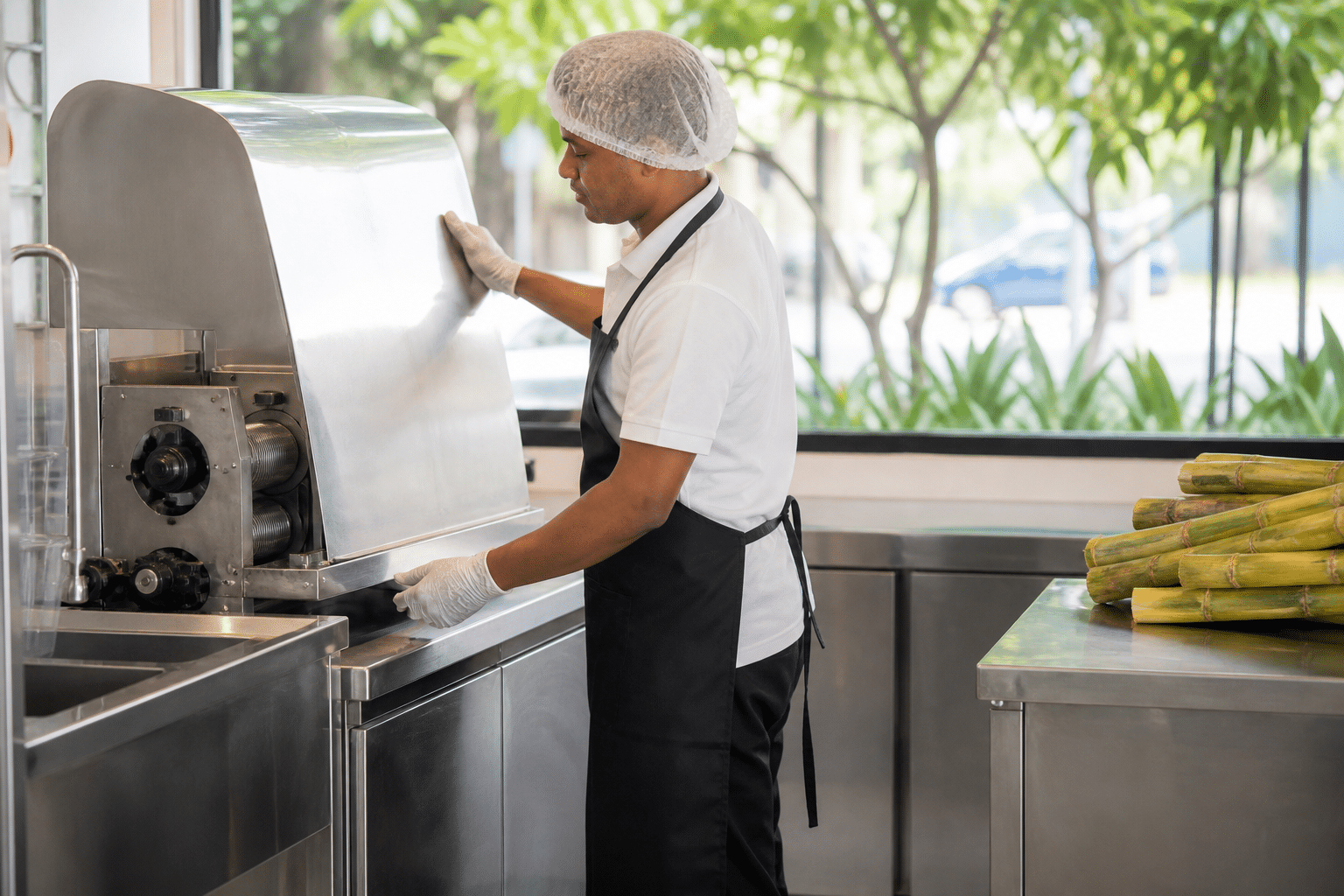
Sugarcane Juice Machine Safety Checklist for Daily Service

Table of Contents

A commercial sugarcane juicer should be checked before every shift, operated with guards in place, cleaned safely after service, and inspected for wear before the next day. This checklist helps managers and operators build a repeatable daily safety routine.

The Daily Safety Routine at a Glance

Commercial sugarcane juice machine prepared for a daily safety inspection

Effective sugarcane juice machine safety starts with a simple rule: inspect the machine before service, keep guards and hands clear during extraction, isolate power before cleaning or adjustment, and stop operation when a fault is found. A commercial sugarcane juicer contains powered rollers and pinch points. Daily checks help operators identify problems before they affect staff safety, product hygiene, or service continuity.

Use this sequence for every shift:

  1. Check the work area, electrical supply, machine stability, guards, feed opening, rollers, and collection area.
  2. Confirm that food-contact surfaces are clean and that the machine has been reassembled correctly after the previous cleaning cycle.
  3. Test controls only in accordance with the machine manual, with hands and tools away from moving parts.
  4. Feed prepared cane steadily using the intended feed path; never push cane with fingers or improvised objects.
  5. Keep the counter dry, clear spent cane promptly, and manage queues so operators do not rush.
  6. Switch off, isolate, clean, inspect, and record faults at the end of service.

These steps are a practical operating checklist, not a replacement for the operating manual, local food-hygiene rules, electrical requirements, or workplace safety procedures. Site managers should adapt the checklist to the exact machine model and local regulations.

Why Daily Safety Checks Matter for Commercial Sugarcane Juicers

Organised commercial sugarcane juicer workstation with clear operator space

A sugarcane juice machine is a food-service asset that combines mechanical extraction with direct food contact. Its operating risks are straightforward but important: rotating rollers can create pinch points, wet floors and counters can increase slip or electrical risks, and poor cleaning can leave residue in food-contact areas.

Daily inspection is therefore not just a maintenance task. It supports three operating controls:

  • Operator protection: guards, covers, controls, stable installation, and safe feeding practices reduce exposure to moving parts.
  • Food hygiene: cleaned and properly reassembled contact parts help keep the preparation process controlled.
  • Service reliability: unusual noise, vibration, loose parts, damaged cables, or reduced roller grip can be reported before a more serious interruption develops.

Commercial equipment is generally selected for repeated business use and a managed operating workflow, rather than occasional household use. For a useful purchasing and workflow context, read commercial versus home sugarcane juicer differences. Even with commercial equipment, safe results depend on correct installation, trained operators, suitable cleaning procedures, and access to model-specific support.

Assign clear responsibility at the start and end of every shift. One trained person should confirm the checklist, while the manager or designated supervisor should decide whether a fault requires the machine to be isolated and serviced.

Pre-Start Sugarcane Juicer Safety Checklist

Operator completing a pre-start safety inspection on a sugarcane juice machine

Complete the following inspection before connecting the machine for service. Do not rely on a visual check alone if the machine was moved, cleaned, or reassembled since the previous shift.

1. Check the location and work area

  • Place the machine on a stable, level, cleanable surface suitable for its weight and normal operation.
  • Keep sufficient clear space around the feed side, juice outlet, bagasse discharge area, and operator position.
  • Remove loose packaging, cleaning tools, knives, cloths, cups, and other items that could interfere with the workflow.
  • Ensure the surrounding floor is dry and that any spills can be dealt with promptly.
  • Keep customers, children, and untrained staff away from the operating zone, especially when the service counter is busy.

2. Inspect the electrical connection

  • Check that the power cord, plug, strain relief, switch, and visible connections show no damage, exposed conductors, overheating marks, or loose fit.
  • Confirm that the local electrical supply matches the rating shown on the machine nameplate and the model documentation.
  • Use the intended grounded outlet and avoid unsafe extension arrangements. Do not operate the equipment with wet hands.
  • Make sure the power cord does not cross a wet area, sharp edge, walkway, or hot surface.

3. Inspect guards, covers, and food-contact parts

  • Confirm that all guards, covers, trays, and removable components are fitted, secure, and undamaged.
  • Check that the feed opening is unobstructed and that there is no old cane fibre, cleaning material, or foreign object near the rollers.
  • Verify that juice collection containers, strainers, and other food-contact accessories are clean, dry where required, and correctly positioned.
  • Never bypass an interlock, remove a guard for faster feeding, or operate a machine with a loose or cracked cover.

4. Prepare the sugarcane safely

Use clean cane appropriate for your recipe and operating process. Wash or prepare raw material according to the site food-safety plan before it approaches the juicer. Trim cane only with suitable tools, on a separate stable preparation surface, and keep blades away from the extraction station. Cut cane to a length that can be guided through the normal feed path without forcing it.

Pre-start checks should also include the machine’s model-specific instructions. The supplier’s sugarcane juicer spare parts and support checklist can help managers record machine identification details and plan for parts that may be needed over the equipment life.

Safe Operating Practices During Service

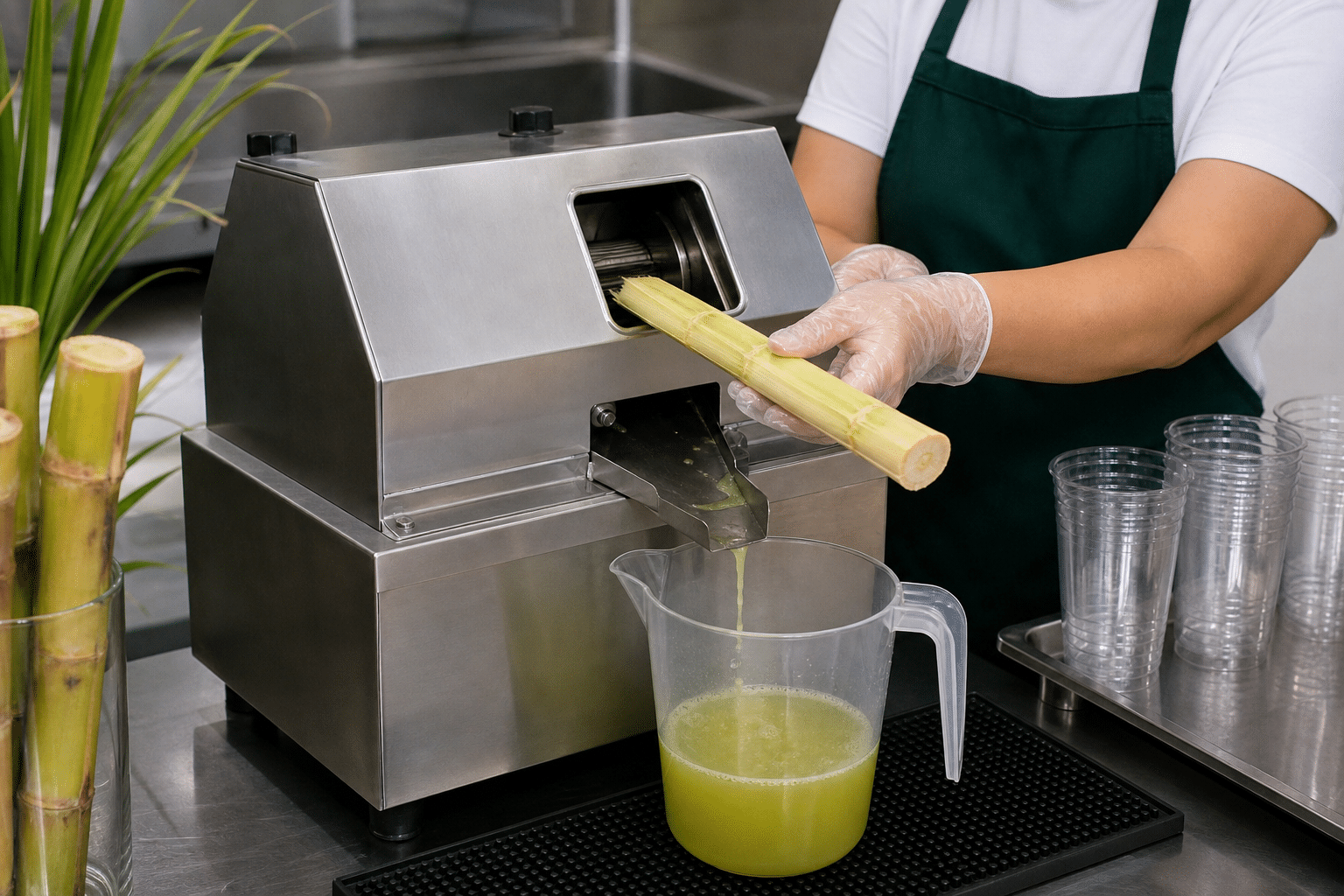
Safe feeding of prepared sugarcane into a commercial juice machine

Once the machine is running, the operator’s main job is to keep hands, clothing, tools, and distractions away from moving parts. A well-designed counter layout and consistent routine are safer than trying to correct problems while the machine is operating.

Feed cane only through the intended path

Guide each piece of prepared sugarcane into the feed opening in a controlled manner. Keep fingers outside the danger area at all times. Do not reach into the opening to reposition cane, clear fibre, or retrieve a dropped item. Never use fingers, metal tools, knives, spoons, or improvised pushers to force material into the rollers.

If cane stalls, feeds unevenly, or appears caught, stop the machine using the normal control. Isolate it from power before inspecting or attempting to clear the issue. Follow the exact clearing procedure in the machine manual. If the cause is not clear, do not restart until a qualified person has checked the machine.

Maintain a controlled station

  • Keep the juice cup or collection vessel stable and correctly located before extraction begins.
  • Remove spent cane and fibre using a safe method only after movement has stopped, unless the machine documentation specifically states otherwise.
  • Wipe spills as soon as it is safe to do so. Use a separate cloth or cleaning method for the surrounding counter; do not introduce cloths near rollers.
  • Tie back long hair, avoid loose sleeves, jewellery, lanyards, and gloves that could be drawn toward moving parts.
  • Do not leave an operating sugarcane juicer unattended.
  • Limit operation to trained staff who understand the start, stop, cleaning, and fault-reporting process.

Respond to abnormal operation early

Stop service and investigate if you notice unusual noise, vibration, burning smell, inconsistent roller movement, an electrical issue, a loose component, leakage where it should not occur, or damage to a guard. Continuing to operate a machine after an abnormal condition is identified can increase the risk of injury or equipment damage. Place a clear out-of-service notice on the machine until it has been checked.

Safe Shutdown, Cleaning, and Sanitising

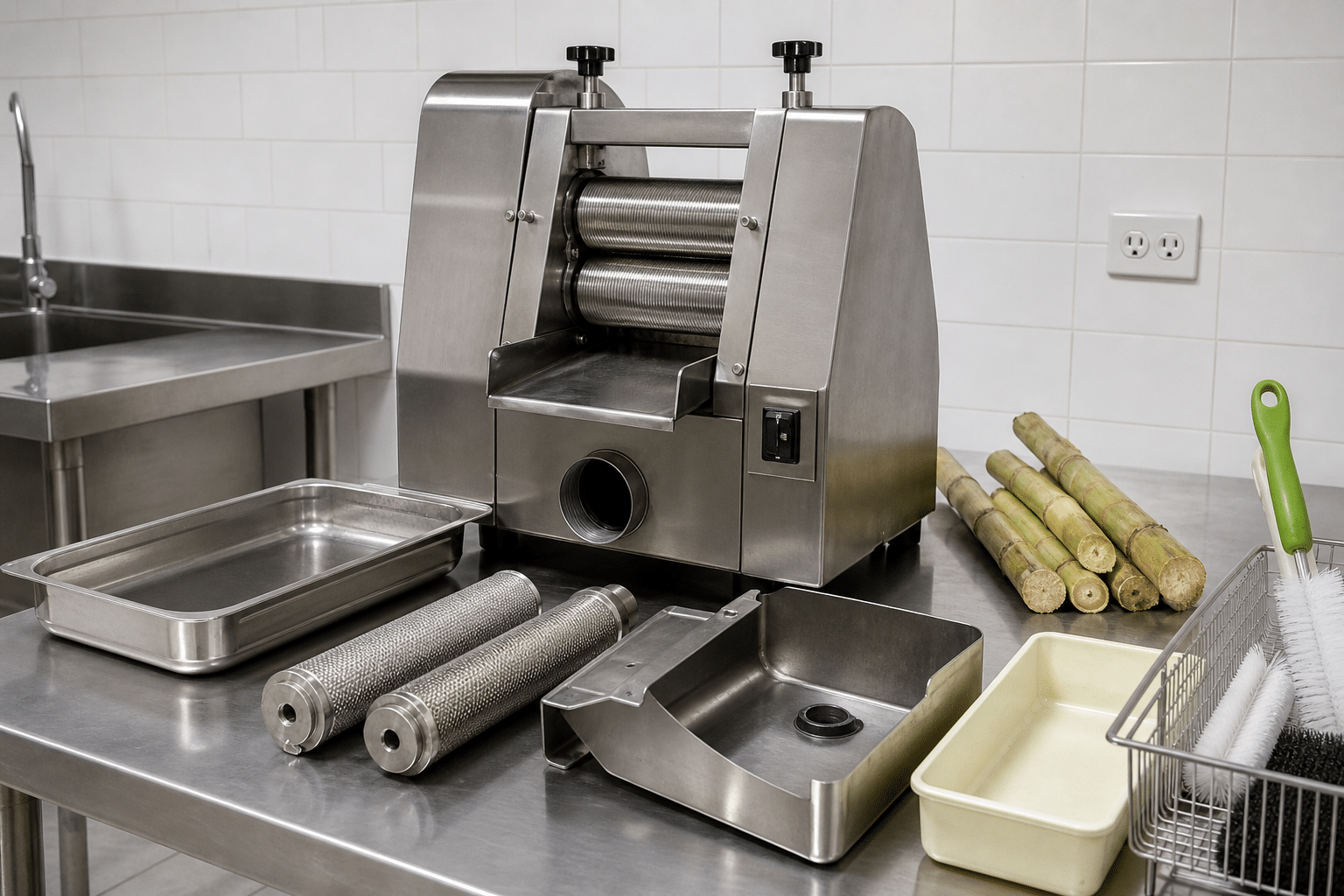
Commercial sugarcane juicer isolated from power before cleaning

Cleaning is one of the highest-risk times for sugarcane juicer operators because staff may be tempted to remove residue while rollers are still moving. Establish a non-negotiable shutdown sequence: stop the machine, disconnect or isolate its power supply, confirm movement has fully stopped, and only then begin cleaning or disassembly.

End-of-service cleaning sequence

  1. Turn the machine off using the normal control.
  2. Disconnect the plug or use the approved isolation method for the installation. Prevent accidental reconnection while cleaning.
  3. Wait until all moving parts have stopped completely.
  4. Remove detachable parts only as described in the manual. Place small parts in a clean, controlled area so they are not lost or contaminated.
  5. Remove cane fibre and residue with tools and methods suitable for the machine. Do not use hands near rollers or sharp edges.
  6. Wash, rinse, and sanitise food-contact components in line with the site hygiene programme and the instructions for the cleaning chemicals used.
  7. Clean non-removable exterior surfaces carefully. Do not spray or flood electrical components, switches, motors, plugs, or areas that the manual says must remain dry.
  8. Allow components to dry as required, inspect them, and reassemble the machine correctly before storage or the next shift.

Cleaning chemicals must be suitable for food-equipment use and used at the dilution, contact time, and rinsing requirements specified by their manufacturer and local food-safety procedures. More chemical is not automatically better; incorrect concentration can create residue, damage surfaces, or reduce cleaning effectiveness.

Managers should make the shutdown procedure visible at the workstation. The same approach used when planning support parts is helpful here: keep accurate model and serial information with the cleaning record, then use the commercial juicer support planning guide when replacement parts or technical guidance are required.

Maintenance Checks and When to Stop Using the Machine

Daily cleaning does not replace preventive maintenance. It does, however, create the best opportunity to find developing issues before the next shift. During the post-clean inspection, look for looseness, cracks, wear, corrosion, damaged seals, incomplete reassembly, and residue that was difficult to remove.

Remove the sugarcane juicer from service and report it if any of the following conditions are found:

  • A guard, cover, feed component, tray, or other fitted part is missing, loose, cracked, or cannot be secured correctly.
  • The power cord, plug, switch, or electrical enclosure is damaged, wet internally, overheated, or otherwise suspect.
  • The machine does not start, stop, or run normally according to its control procedure.
  • Rollers or other moving components make unusual sounds, bind, vibrate excessively, or appear misaligned.
  • There is a burning smell, smoke, visible sparking, or repeated tripping of the electrical protection device.
  • A food-contact component is damaged, heavily worn, difficult to clean, or no longer fits correctly.
  • The machine has been dropped, knocked, flooded, or exposed to an event that could affect its safe condition.

Do not attempt unauthorised repairs, improvised electrical work, or modifications to guards and controls. Order genuine or supplier-approved replacement components that match the machine model. Keep records of service work, parts replacement, and recurring faults. This information helps technicians diagnose issues and helps buyers plan maintenance across multiple sites.

A planned support process is particularly useful for cafés, juice bars, kiosks, hospitality venues, and distributors that depend on daily availability. Keep the machine model, serial number, purchase information, photos of the fault, and a concise description of symptoms ready before requesting assistance.

Document the Daily Safety Check

A short signed checklist makes the safety routine easier to manage across shifts and locations. It also helps supervisors see repeated faults, missed cleaning steps, or training gaps. The record can be paper-based or digital, but it should be quick enough for staff to use consistently.

Include these fields in a daily sugarcane juice machine safety record:

  • Date, shift, site, and machine identification.
  • Name or initials of the trained operator completing the check.
  • Confirmation that the work area, electrical connection, guards, food-contact parts, and controls were checked.
  • Confirmation that cleaning and correct reassembly were completed.
  • Any abnormal noise, vibration, damage, jam, spill, or hygiene concern found.
  • Action taken, including whether the machine was removed from service.
  • Supervisor review where required by the business procedure.

Use the record as a working document rather than a box-ticking exercise. If the same issue appears repeatedly, investigate its cause. It may indicate an operator training need, unsuitable raw-material preparation, a cleaning process that needs adjustment, or a component that requires professional inspection.

For operations comparing equipment types or reviewing whether a current unit matches the workload, the guide to choosing between commercial and home sugarcane juicers provides useful context on commercial-duty operating expectations. A documented routine, correct staff training, and responsive technical support remain essential regardless of machine type.