Fresh Sugarcane Juice Workflow: From Cane Delivery to Customer Cup

Table of Contents

A reliable sugarcane juice workflow keeps raw cane, fresh juice, customer service, cleaning, and bagasse handling moving in one clear direction. This guide gives shops and operators a practical daily process.

The commercial sugarcane juice workflow at a glance
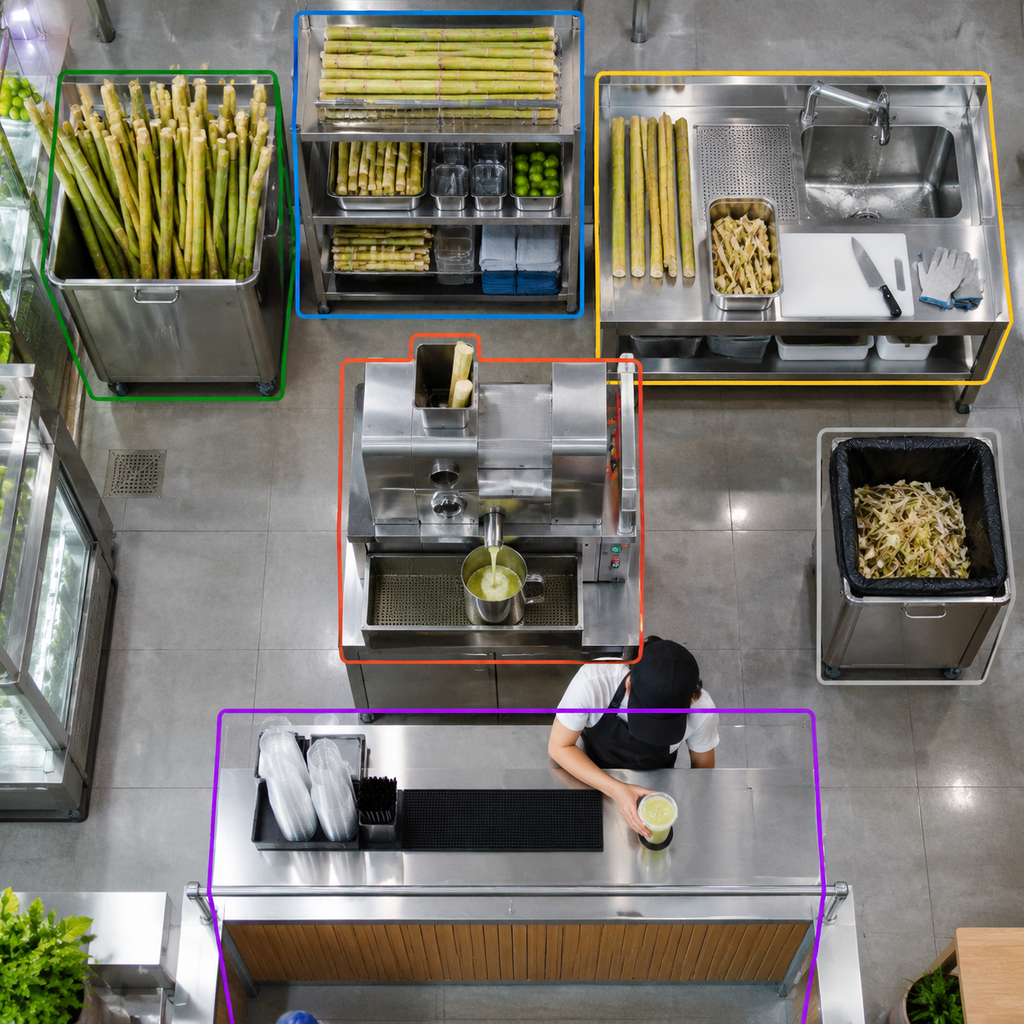
One-way workflow zones in a commercial sugarcane juice shop

A commercial sugarcane juice workflow should move in one direction: receive cane, inspect and store it, wash and trim it, extract juice, serve promptly, then clean the equipment and remove bagasse. The practical aim is to prevent congested counters, reduce unnecessary handling, and keep raw cane away from cups, ice, finished juice, and customer-contact surfaces.

For most shops, the best workflow is not the one with the most steps. It is the one every staff member can repeat during a busy period. Define who prepares cane, who operates the juicer, who handles payment and cups, and who completes cleaning checks. If one person covers several roles, arrange the counter so those activities still follow a logical order.

Start with the physical route: delivery door or receiving area → cane storage → wash and trimming bench → juicer → cup finishing and handover → dishwashing and waste area. Avoid carrying used tools, bagasse containers, or unwashed cane back through the finished-drink zone.

1. Receive, inspect, and store sugarcane
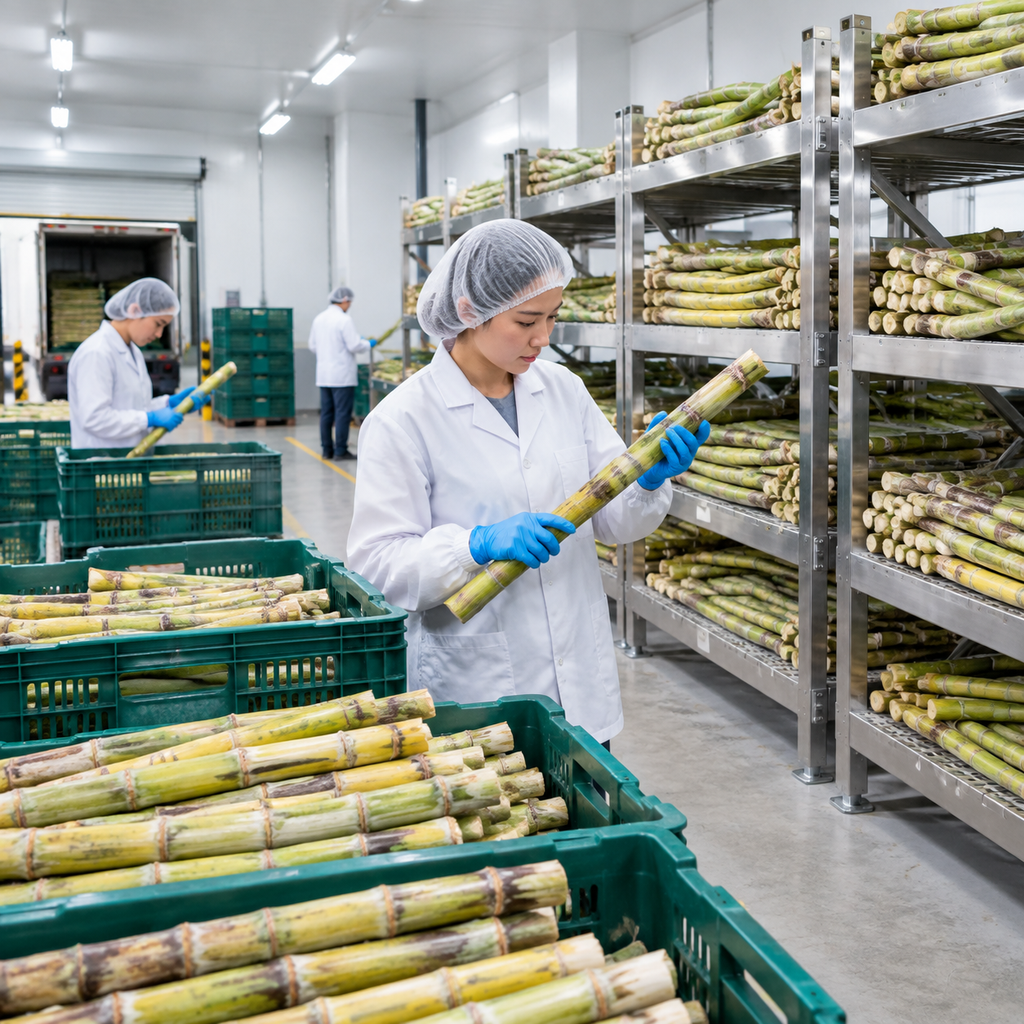
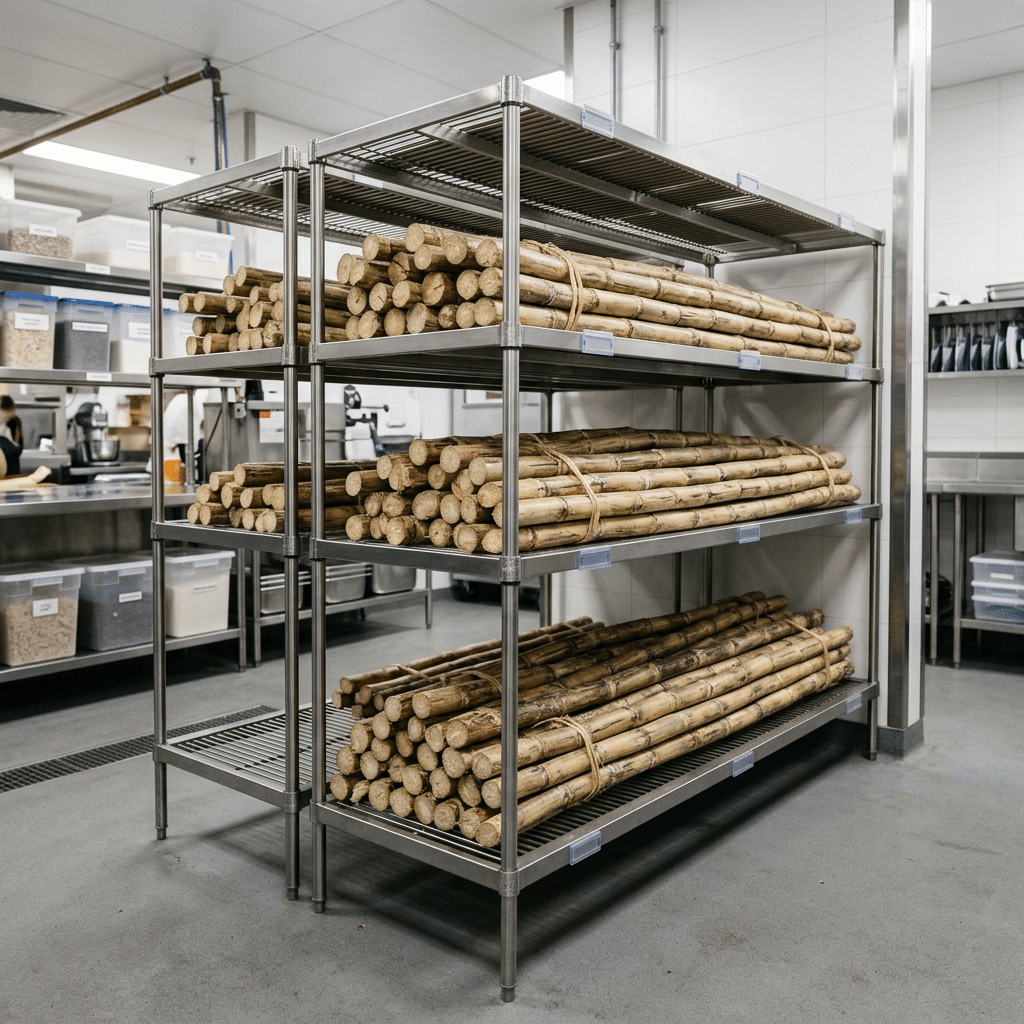
Sugarcane delivery inspection and elevated storage for a juice shop

The workflow begins before the juicer is switched on. On delivery, check the cane for visible damage, excessive dryness, mould, pests, off odours, or contamination from transport. Record the supplier, delivery date, and any lot or invoice reference that your local operating procedures require. Move acceptable cane promptly into the designated storage area.

Store cane off the floor, protected from splash, pests, cleaning chemicals, and direct heat. Use a simple first-in, first-out rotation so older acceptable stock is used before newer deliveries. Keep the storage method appropriate to your local climate, delivery frequency, and food-safety requirements; the correct temperature and holding time depend on local rules and the condition of the cane.

Do not use cane that appears spoiled or contaminated. A lower purchase price does not compensate for poor product quality, difficult preparation, or avoidable service waste.

2. Prepare cane at a separate raw-product station
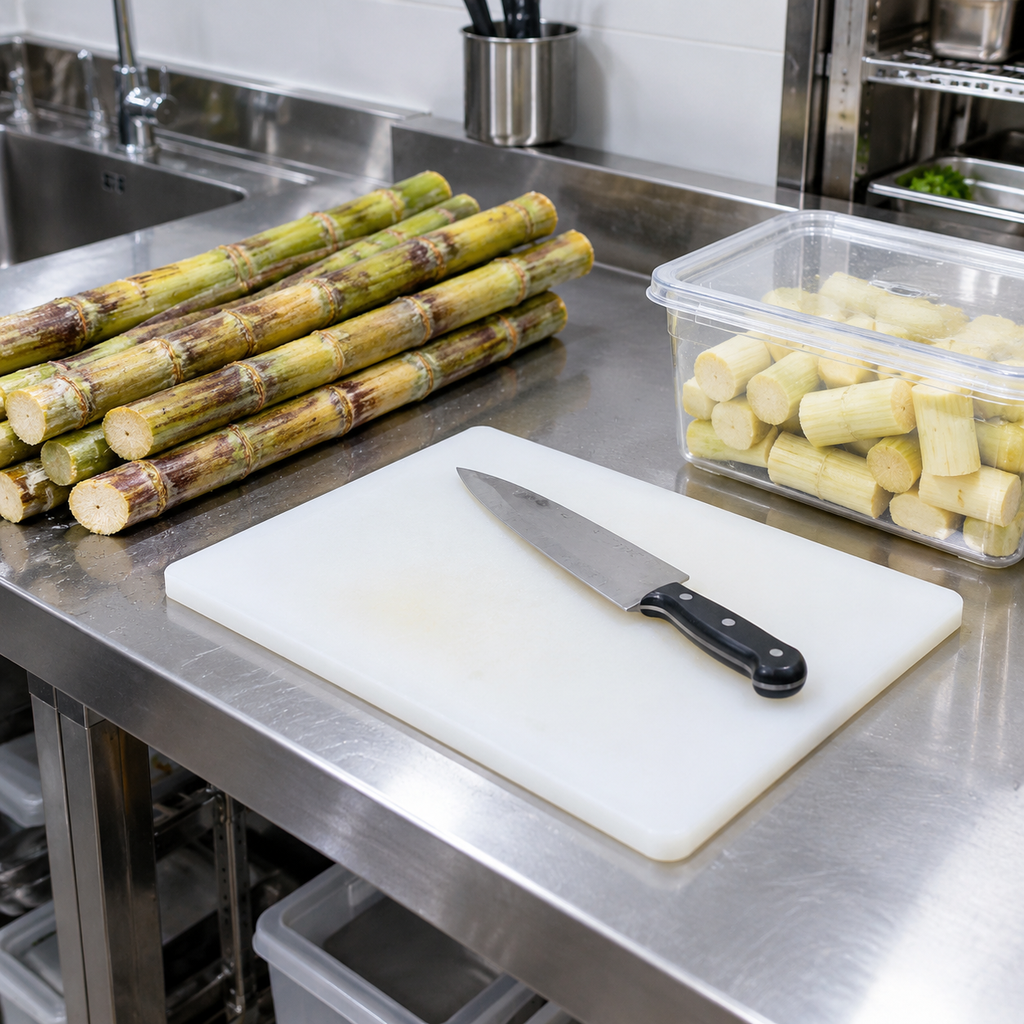
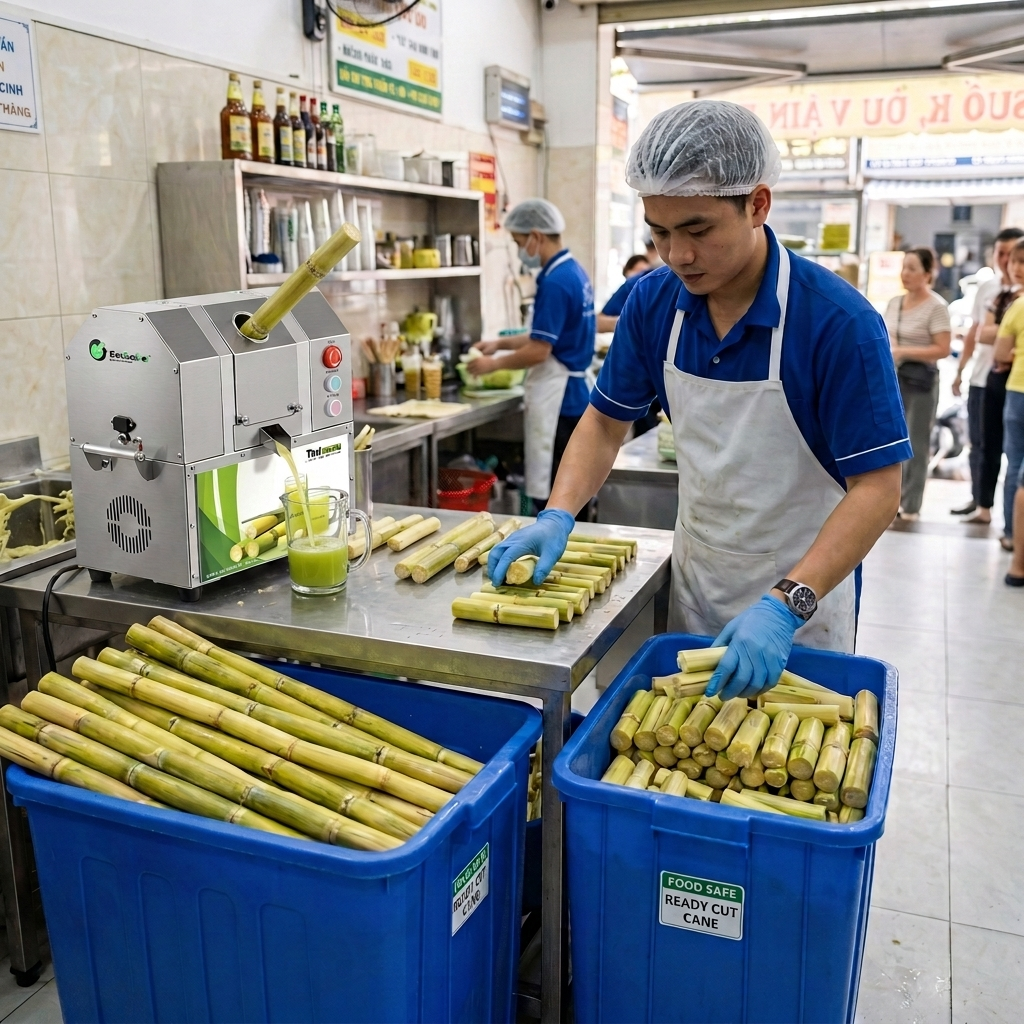
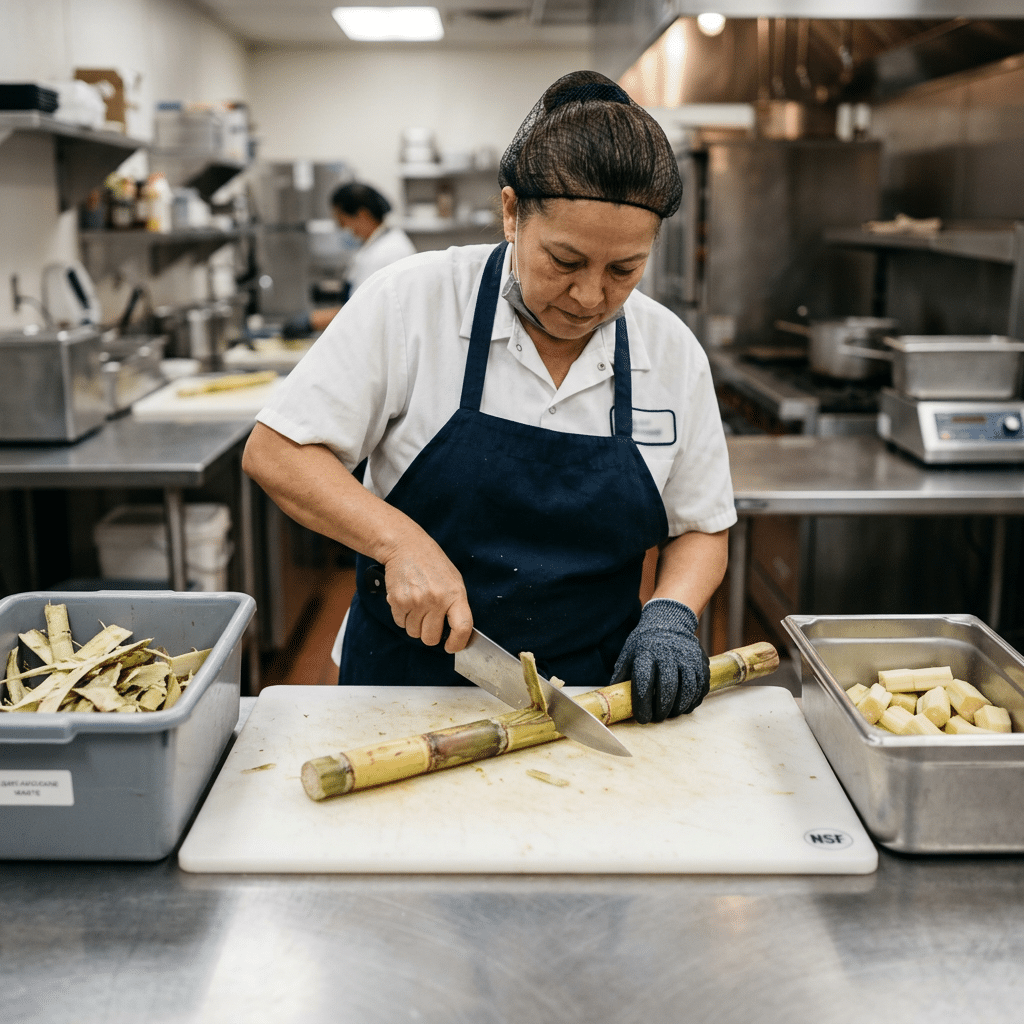
Dedicated preparation station with trimmed sugarcane ready for juicing

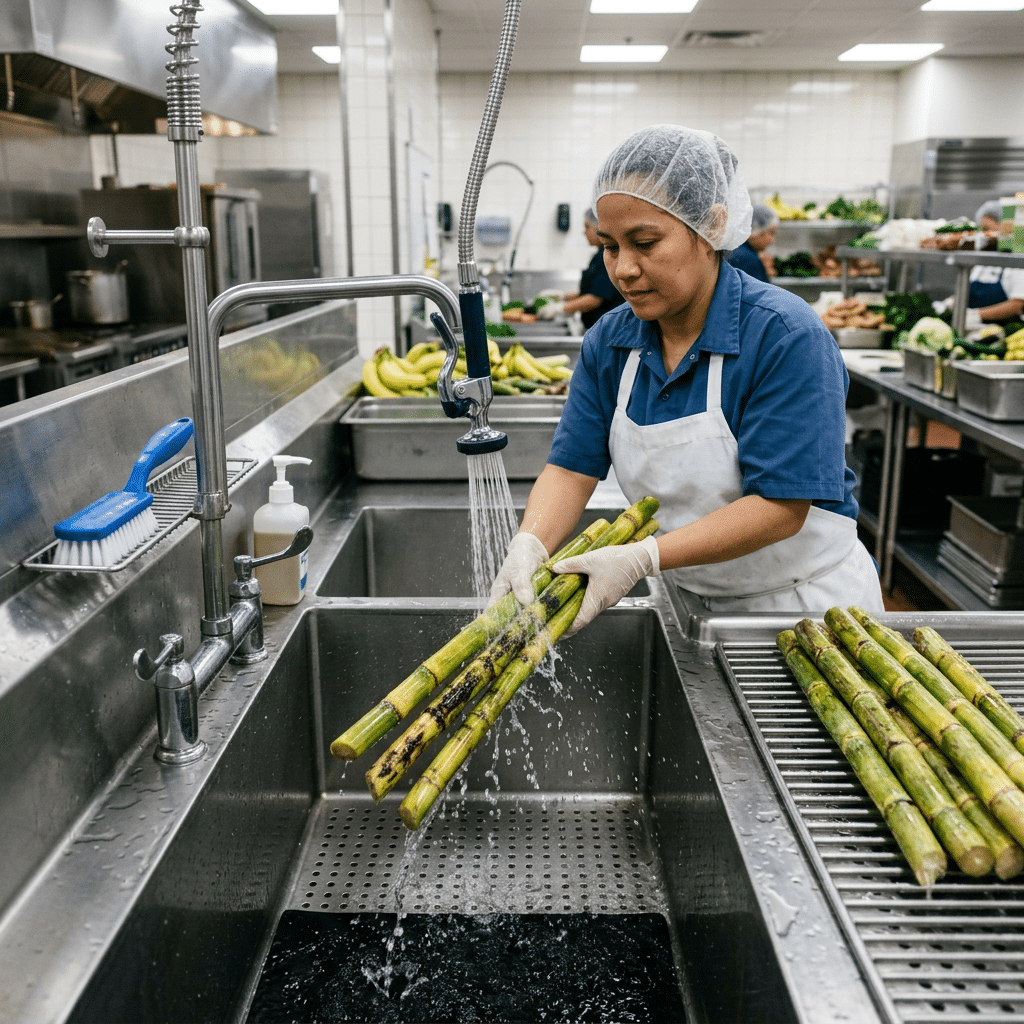
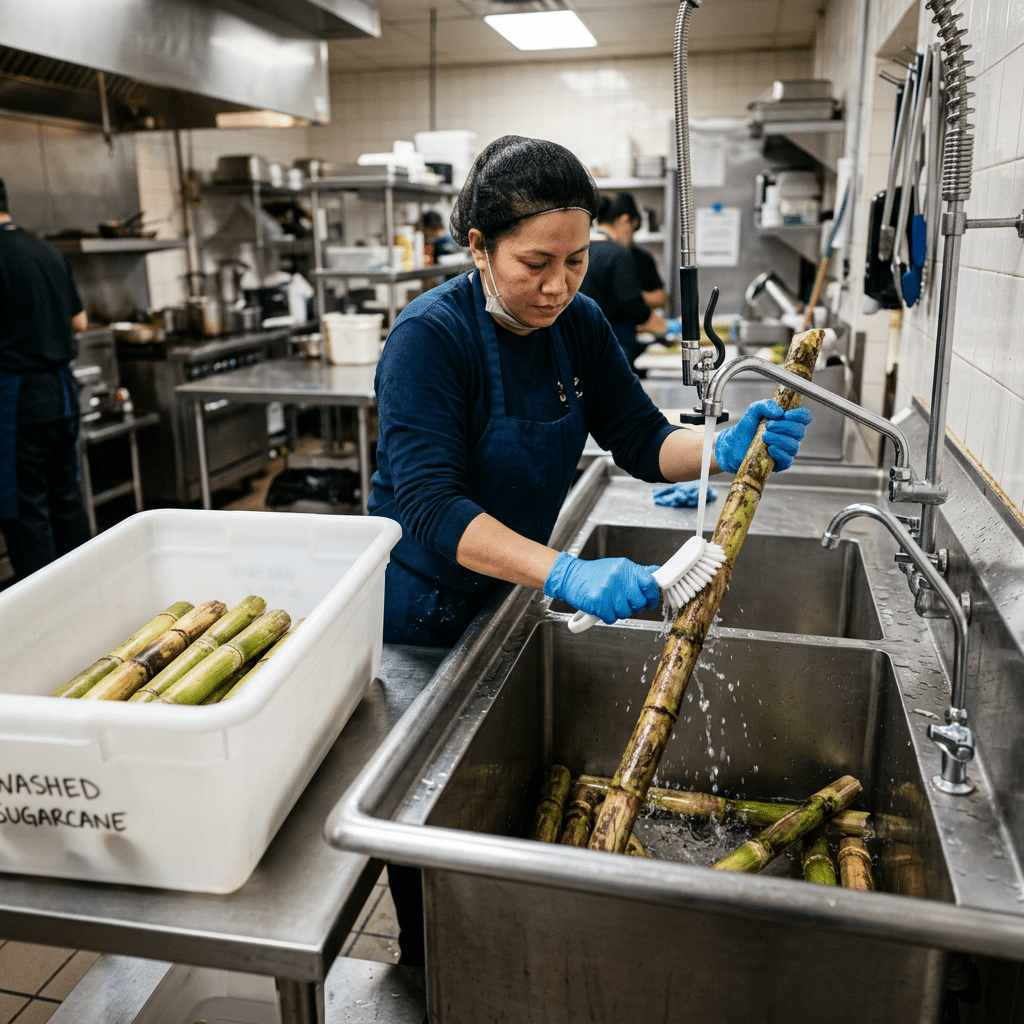
Preparation turns delivered cane into juicer-ready pieces. Set up this work at a washable, easy-to-clean bench that is separated from the cup and finished-drink area. Staff should wash hands before starting, use clean food-contact tools, and follow the shop’s approved washing and sanitation procedures.

  1. Select cane needed for the current service period rather than overcrowding the counter with stock.
  2. Rinse or wash the outside of cane as required by your procedure, removing visible soil and debris.
  3. Trim damaged ends and remove unsuitable sections.
  4. Cut stalks to the length and shape accepted by the selected juicer’s feed opening.
  5. Place prepared pieces in a clean, covered or otherwise protected food container near the machine.

Keep knives and cutting boards controlled. A knife used for trimming raw cane should not be left on the cup assembly counter. If your menu includes lemon, ginger, mint, or other additions, prepare and hold these ingredients under their own suitable procedures rather than treating them as part of the cane-prep task.

3. Juice, finish, and serve to order
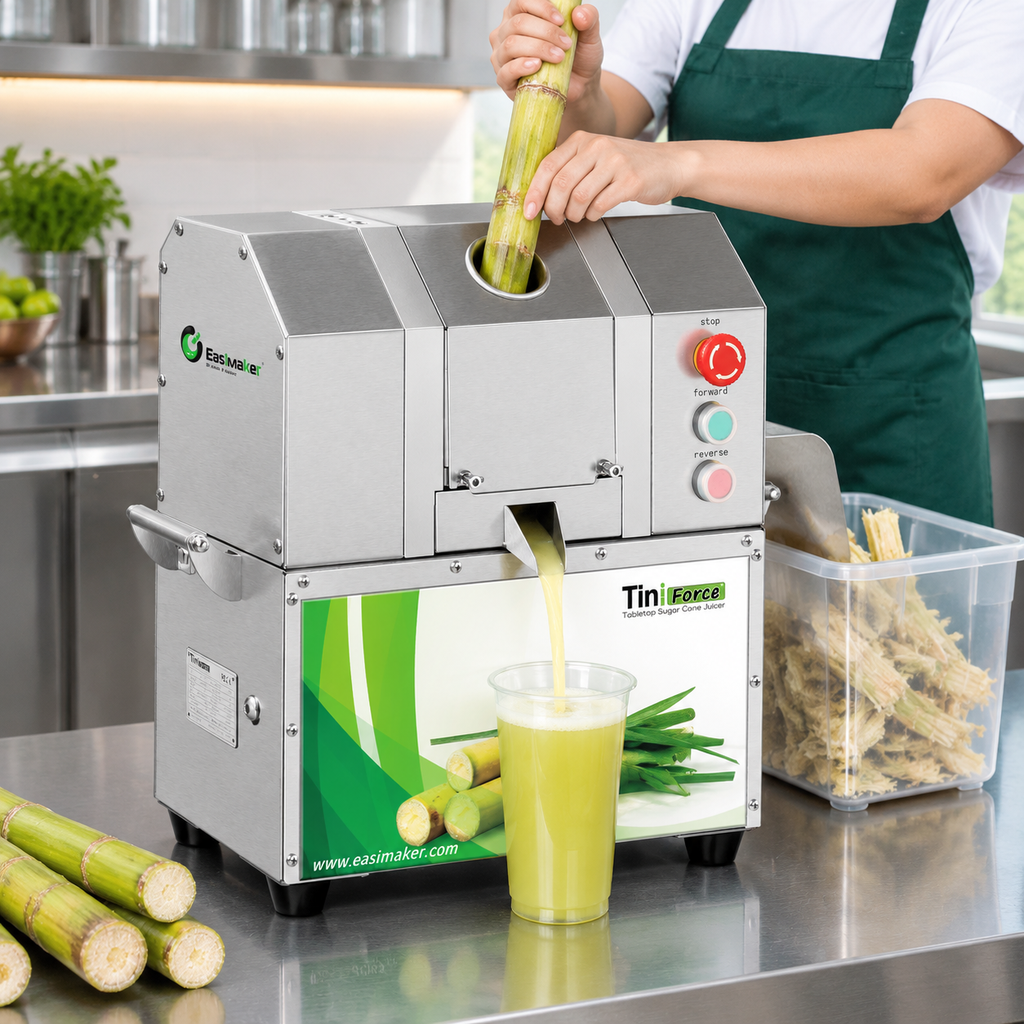
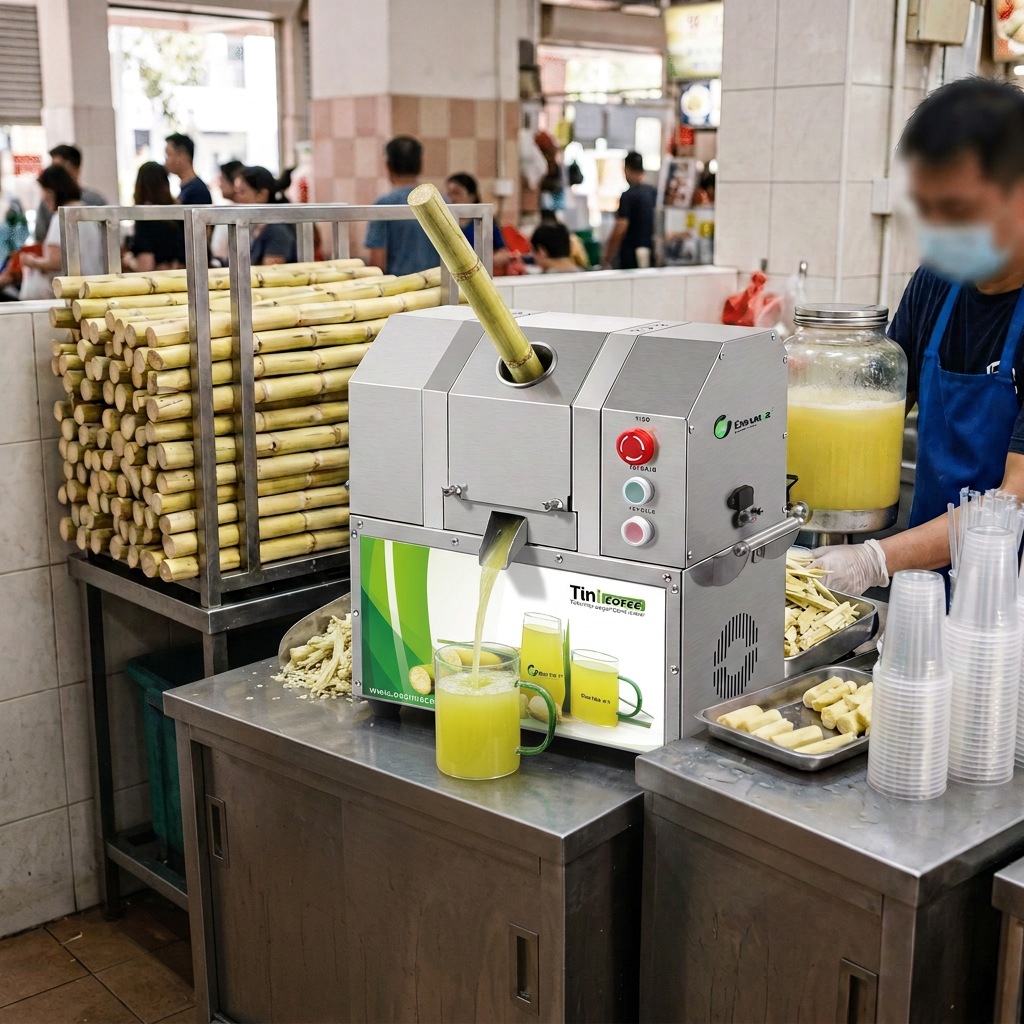
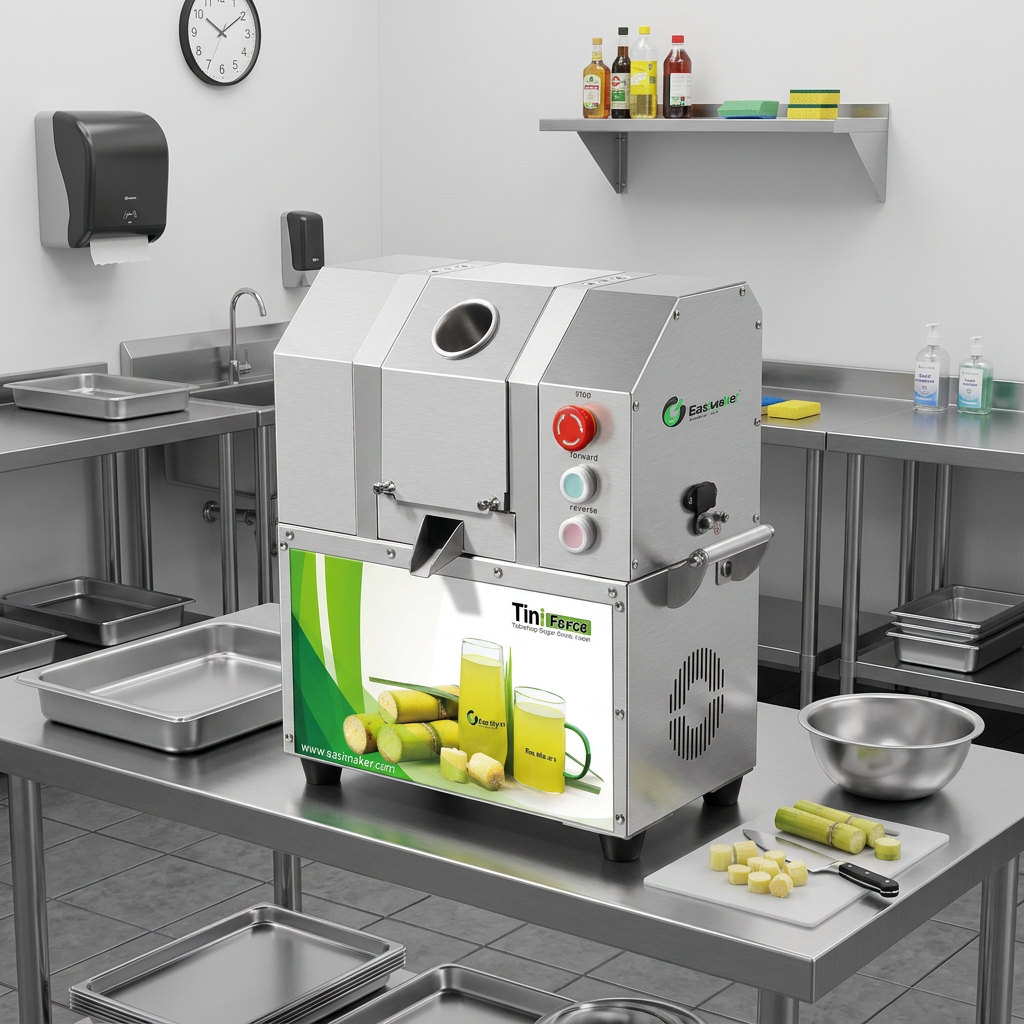
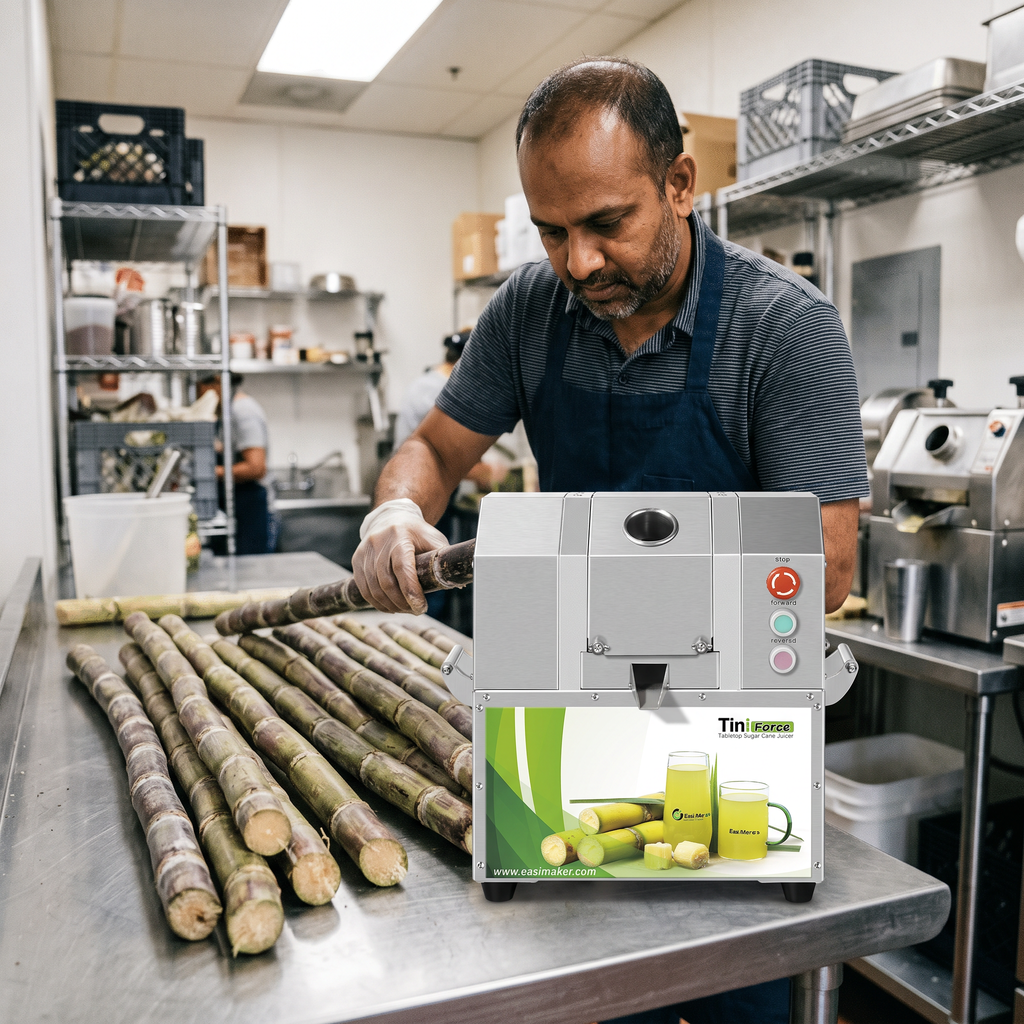
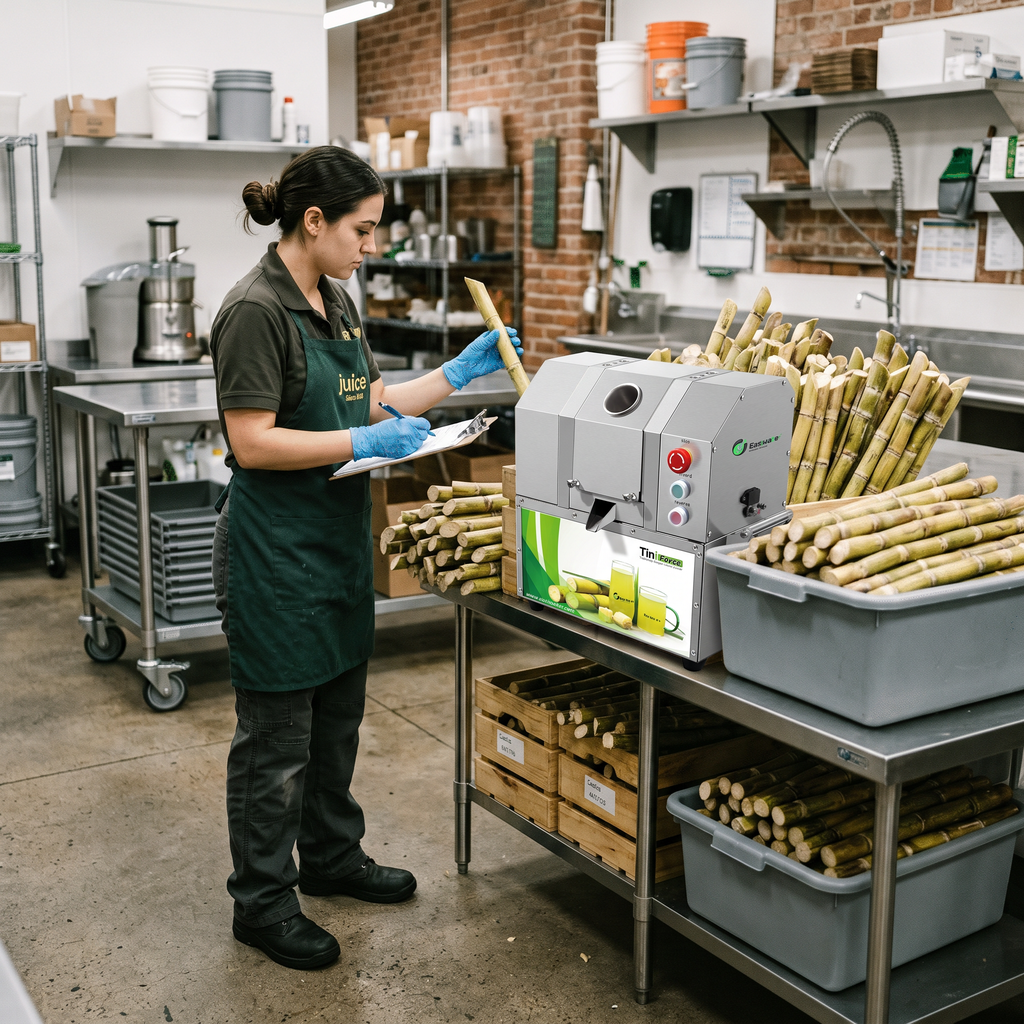
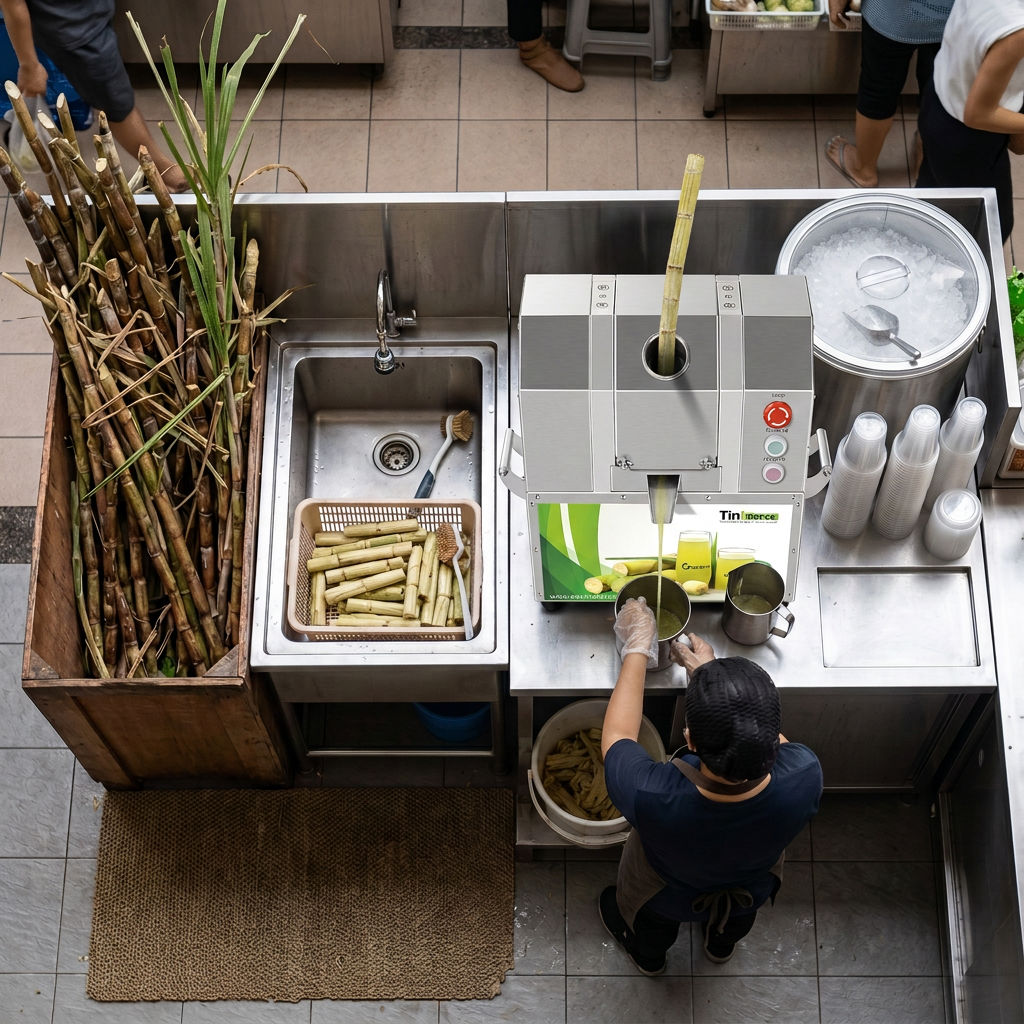
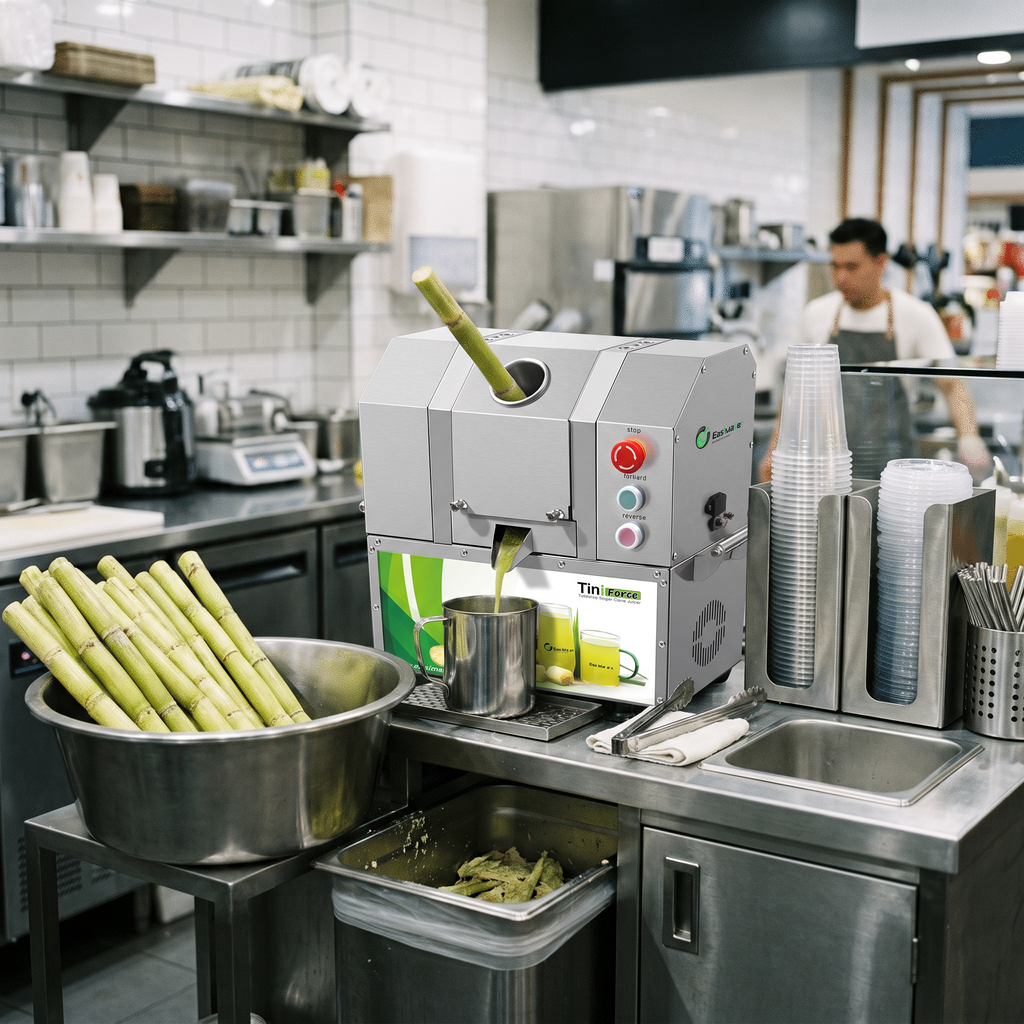
Commercial sugarcane juicer dispensing fresh juice at a clean service counter

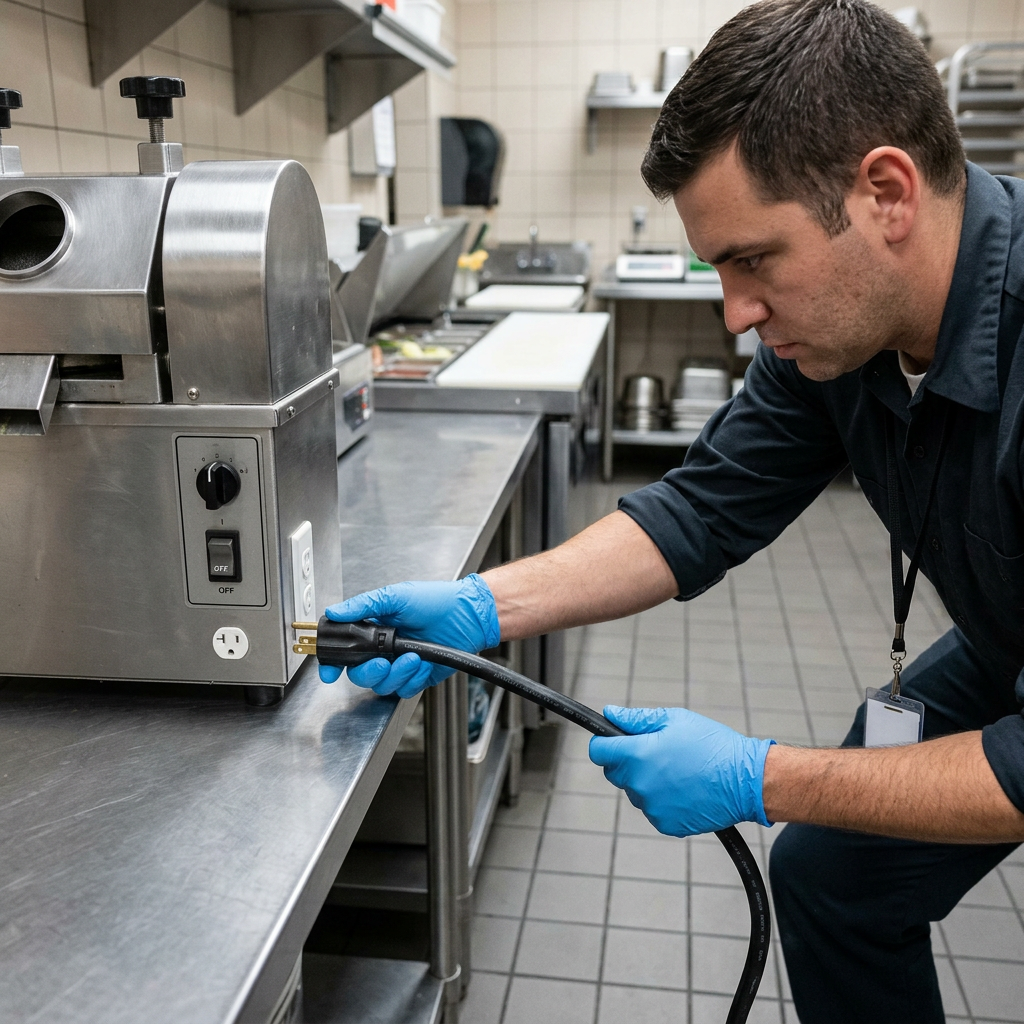
Fresh extraction is the centre of the commercial sugarcane juice process. Before each shift, check that the machine is correctly positioned, connected to the matching electrical supply, assembled as instructed, and clean. Keep a usable clearance around the feed inlet, front juice outlet, and rear bagasse discharge. Never try to feed cane by hand beyond the machine’s intended feed point, and stop the machine before clearing any obstruction.

During service, an operator should feed prepared cane steadily, collect juice in a clean food-contact container or directly into the intended cup where the setup allows, and keep the outlet area free of drips and buildup. Add ice, permitted flavour ingredients, and a lid only with clean utensils or controlled dispensers. Hand the drink to the customer promptly.

Use a simple order sequence: take order and payment, prepare the cup, juice to order, add selected extras, close the cup, confirm the order, and hand over. This reduces remakes and makes it easier to identify which drink belongs to which customer during peak service.

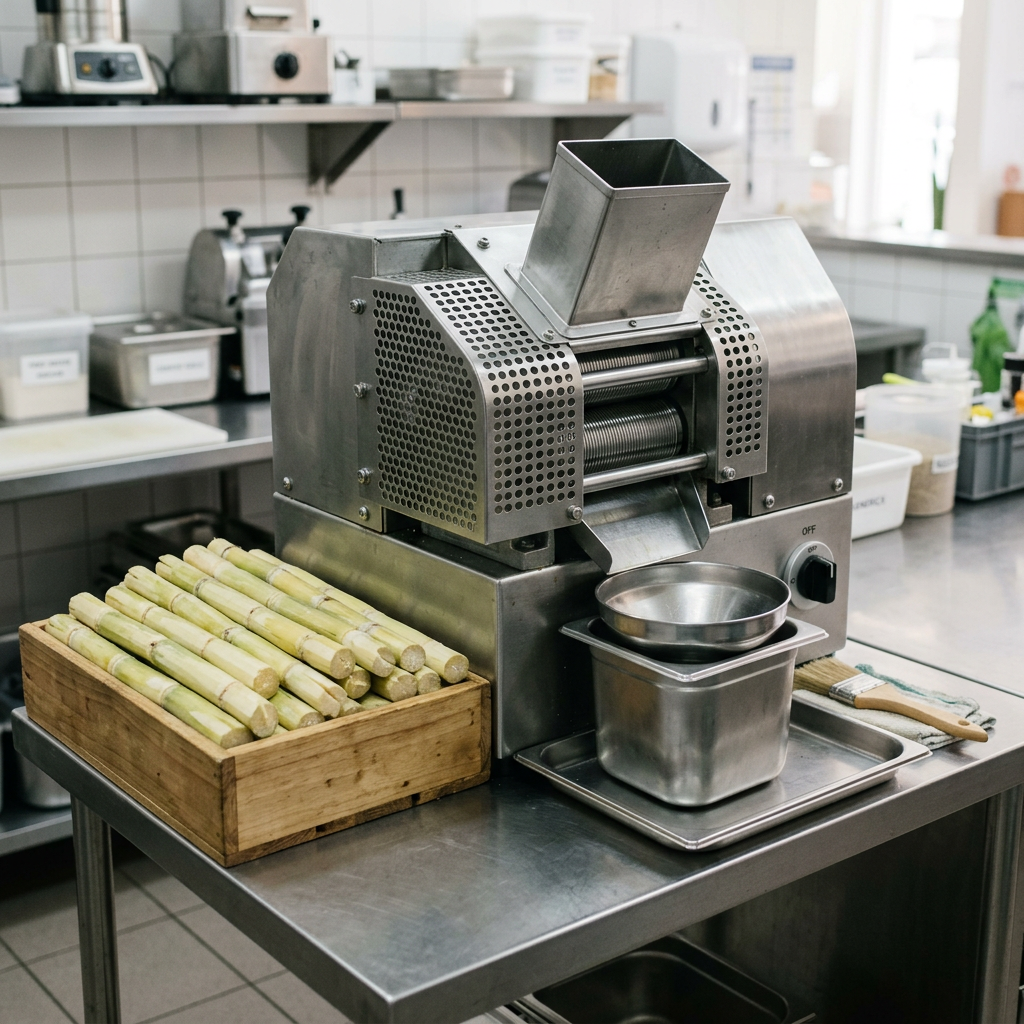
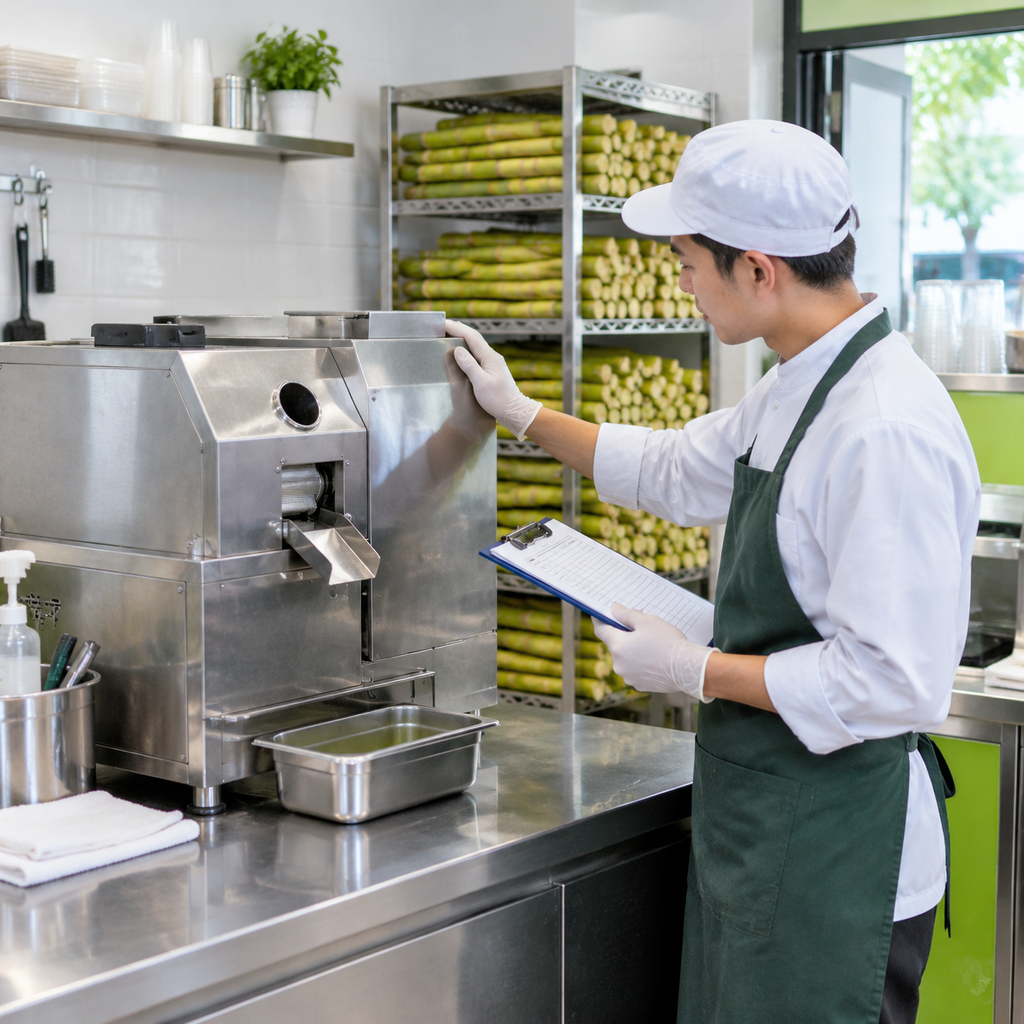
For a compact front-feed machine, confirm how its physical layout suits the counter. The illustrated unit uses an upper-front feed inlet, a central front juice spout, and rear bagasse discharge; this means staff need clear working room at both the front and back of the machine.

Workstation zones and control points

Workflow zoneMain taskWhat should stay in the zoneKey control point
Receiving and storageInspect, record, rotate caneUnwashed cane, delivery records, storage racksKeep stock off the floor and separate from chemicals.
PreparationWash, trim, and cut caneWashable bench, knife, board, protected prepared-cane containerKeep raw-product tools away from cup assembly.
JuicingExtract juice and manage bagasse flowJuicer, juice collection vessel, bagasse binMaintain safe access to feed, outlet, and discharge areas.
Finishing and handoverAdd ice or menu options, lid, label, serveCups, lids, clean ice tools, payment and order systemProtect finished drinks from raw cane and splash.
Cleaning and wasteWash equipment and remove wasteCleaning tools, approved chemicals, waste containersDo not return used cleaning items to food-preparation zones.

The exact footprint will vary by shop, but each zone needs a defined purpose. When a counter is too small for fully separate stations, use time separation and clear container control: finish raw-cane preparation, clean and reset the work surface, then begin cup assembly.

4. Close, clean, and prepare for the next shift

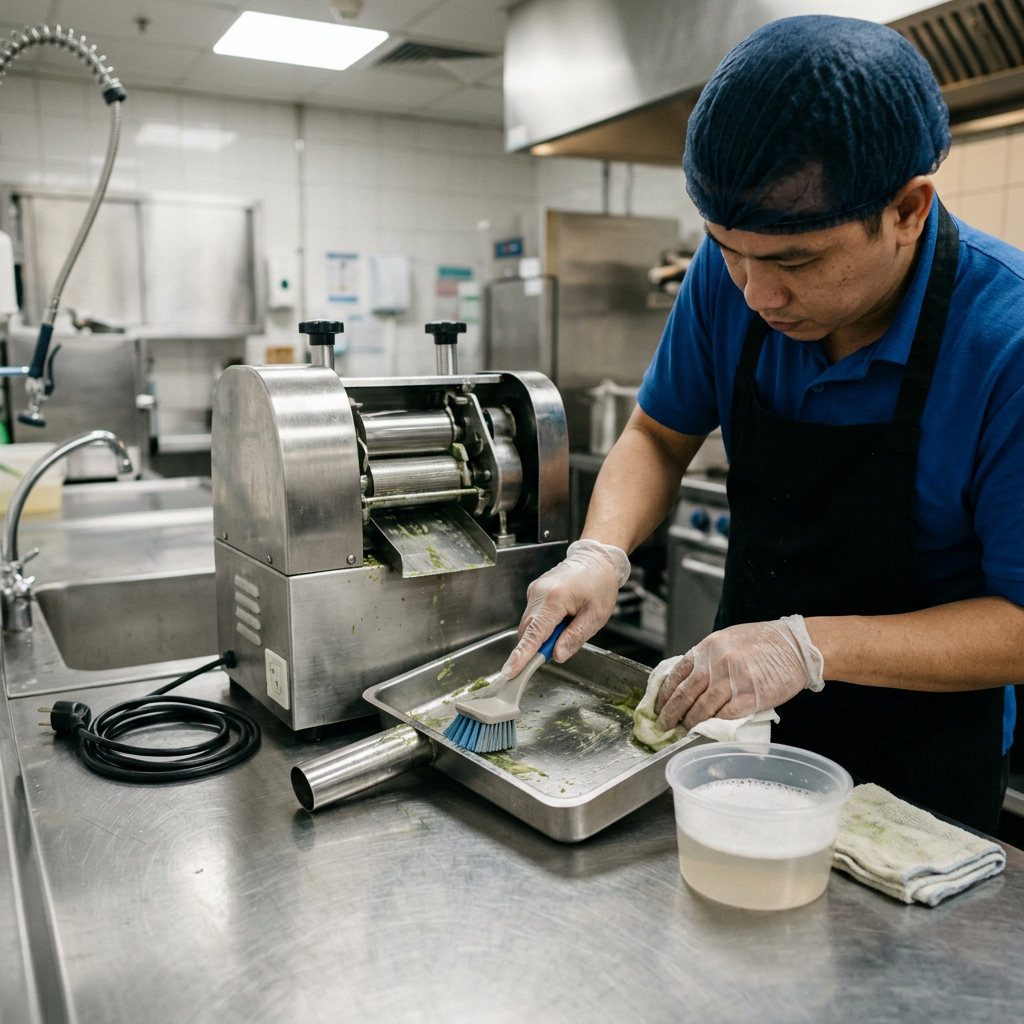
Closing is part of the fresh juice service workflow, not an optional task after sales end. Stop the machine, isolate power as instructed, and follow the manufacturer’s cleaning guidance for the food-contact and accessible areas. Remove bagasse promptly into the designated waste stream. Clean spills from the counter, floor, outlet area, and surrounding surfaces before they dry or attract pests.

Use a written closing checklist that covers: remaining cane stock and condition, prepared-cane disposition, machine cleaning, removable parts where applicable, cup and ingredient storage, waste removal, floor cleaning, and a visual check for damage or unusual machine operation. Report issues before the next shift rather than asking staff to work around them.

Track recurring problems such as cane that does not fit the inlet, persistent drips, slow counter reset, or bagasse congestion. These are often workflow design issues that can be corrected by changing cane cut length, container placement, staff allocation, or equipment selection.

Choose equipment around the workflow

A commercial juicer should fit the way your staff actually receive, prepare, extract, and serve cane. Before choosing a machine, confirm the available counter dimensions, feed direction, juice outlet position, bagasse discharge direction, electrical requirements, cleaning access, expected service pattern, and locally available technical support. Do not assume that a machine suited to a low-volume counter will automatically suit a continuous queue.

Also consider the upstream preparation method. If whole stalks must be cut before feeding, allow for a safe cutting area and a controlled route to the juicer. The correct equipment package depends on your menu, operating volume, site layout, and local requirements.

A workflow review before purchase can prevent common installation problems, including no room for bagasse collection, a blocked front service counter, or insufficient access for cleaning and maintenance.

FAQ

What is the best order for a sugarcane juice shop workflow?

Use a one-way sequence: receive and inspect cane, store and rotate it, wash and cut it at a preparation station, juice it, finish and hand over the drink, then clean equipment and remove bagasse. Keep raw cane and preparation tools away from finished drinks and cup assembly.

Should sugarcane be prepared in advance for a busy shift?

Prepare only an amount your shop can protect, identify, and use within its approved operating procedure. Keeping prepared cane controlled and separate from unwashed stock helps service flow, but the handling method and holding period should follow local food-safety requirements.

Where should bagasse collection be placed?

Place the bagasse container where staff can access it without crossing the customer handover area or blocking the machine’s discharge path. Empty it often enough to prevent overflow, obstruction, and unnecessary handling during service.

How can a small sugarcane juice counter avoid cross-traffic?

Use clearly marked containers and time separation. Complete raw-cane preparation first, remove raw tools and waste, clean and reset the surface, then assemble drinks. Keep cups, lids, ice tools, and finished orders on the clean service side of the counter.

Plan a workflow that fits your counter and service model

Easimaker can help B2B buyers discuss a commercial sugarcane juicer configuration that matches their cane preparation route, counter space, expected service pattern, and target market. Request a practical equipment discussion or quote for your project.
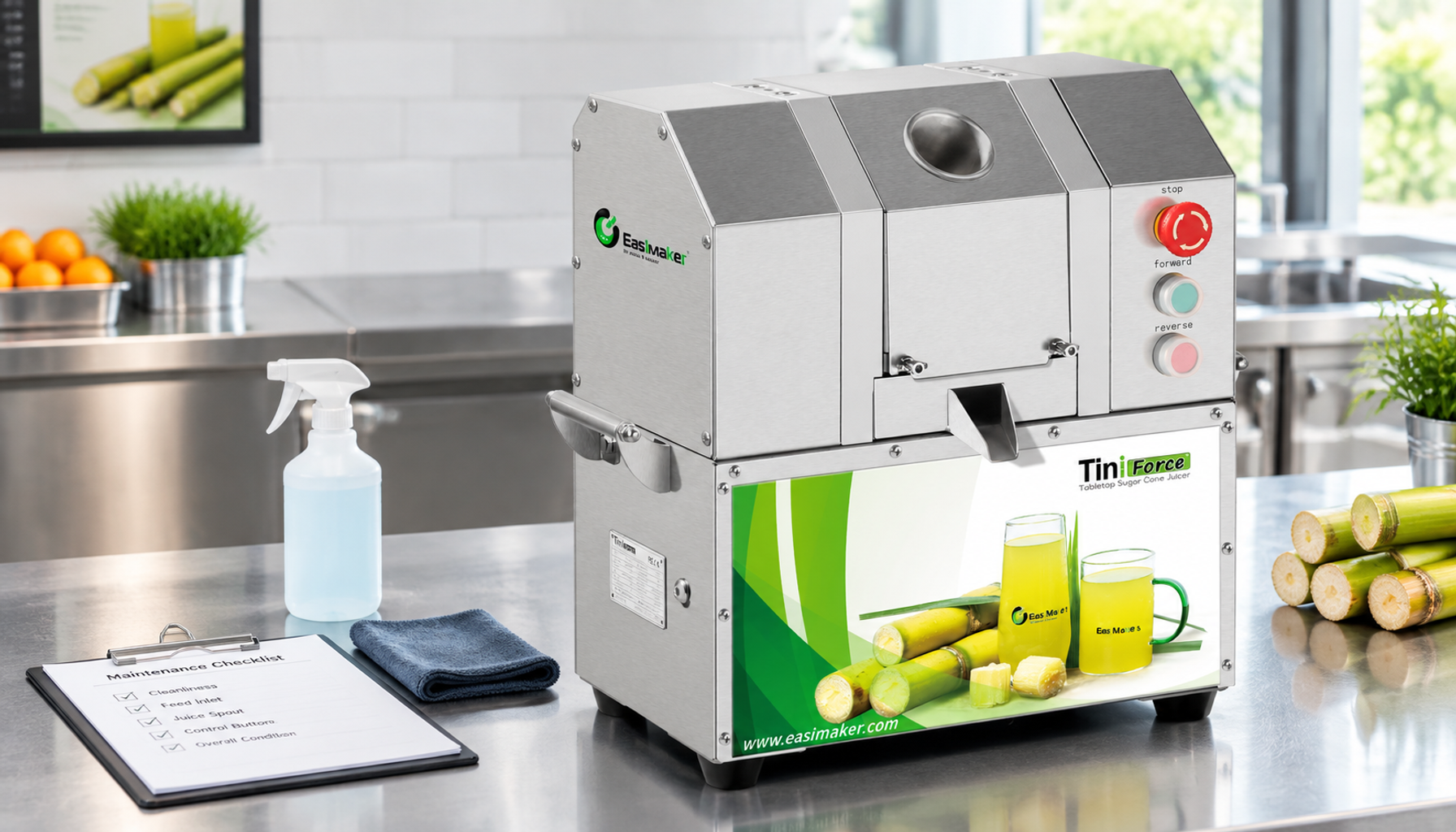
Discuss Your Sugarcane Juicer Project

Sugarcane Juice Machine Preventive Maintenance Schedule for Commercial Shops

Table of Contents

A preventive maintenance routine helps commercial sugarcane juice shops keep their juicers clean, safe to operate, and ready for daily service. Use this schedule to assign daily, weekly, monthly, and service-interval checks.

Quick Answer: Preventive Maintenance Frequency

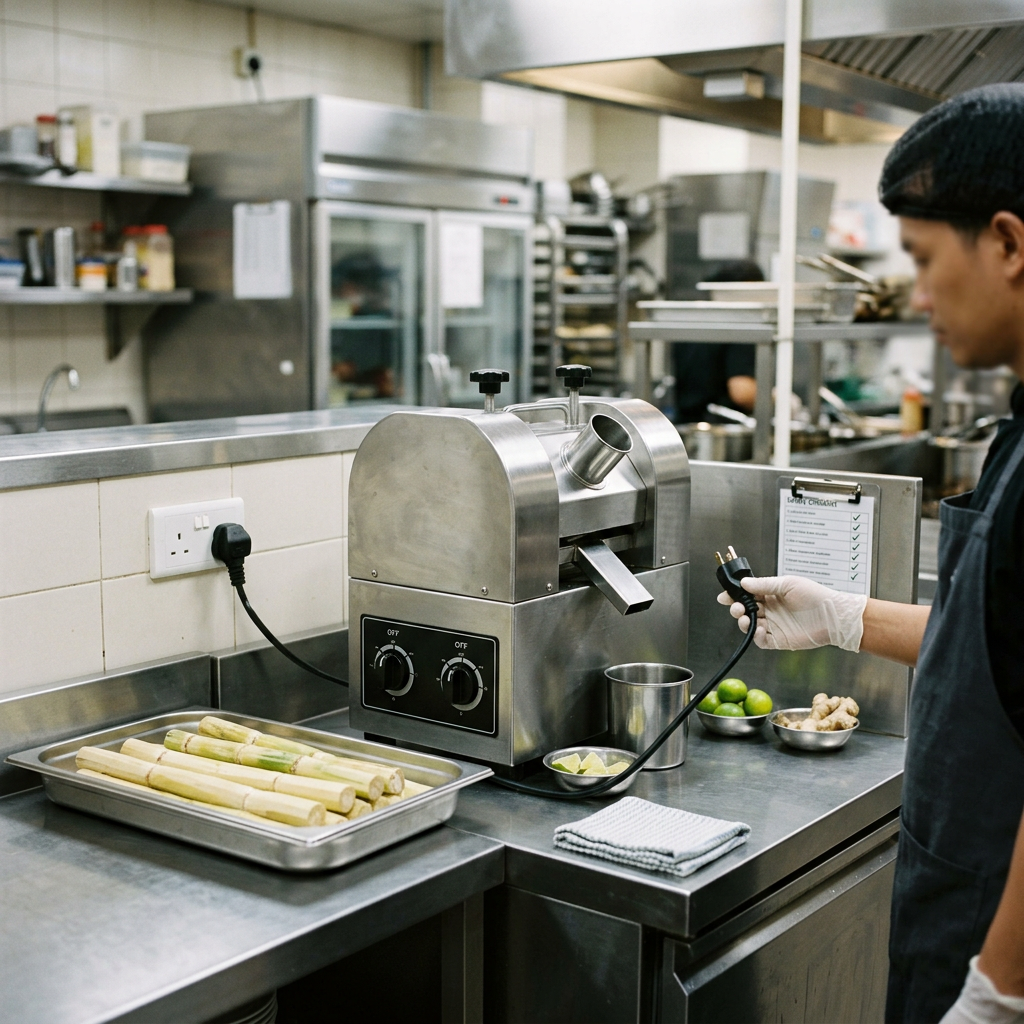
Commercial sugarcane juice machine prepared for preventive maintenance on a clean shop counter

A commercial sugarcane juice machine maintenance schedule should include cleaning and inspection at the end of every service day, a more detailed check each week, functional and condition checks each month, and planned professional service or part replacement based on the machine manual, operating hours, cane condition, and actual wear.

The most important rule is simple: do not wait for a stoppage before checking the juicer. Sugarcane fibre, juice residue, moisture, vibration, and repeated loading can affect roller areas, guards, drainage, switches, fasteners, and the drive system over time. A short documented routine is generally easier to manage than an emergency repair during a busy trading period.

Always follow the manufacturer-specific manual for disassembly limits, approved cleaning products, lubrication instructions, electrical requirements, and replacement parts. If the manual differs from a general checklist, the manual takes priority.

Why Preventive Maintenance Matters in a Juice Shop

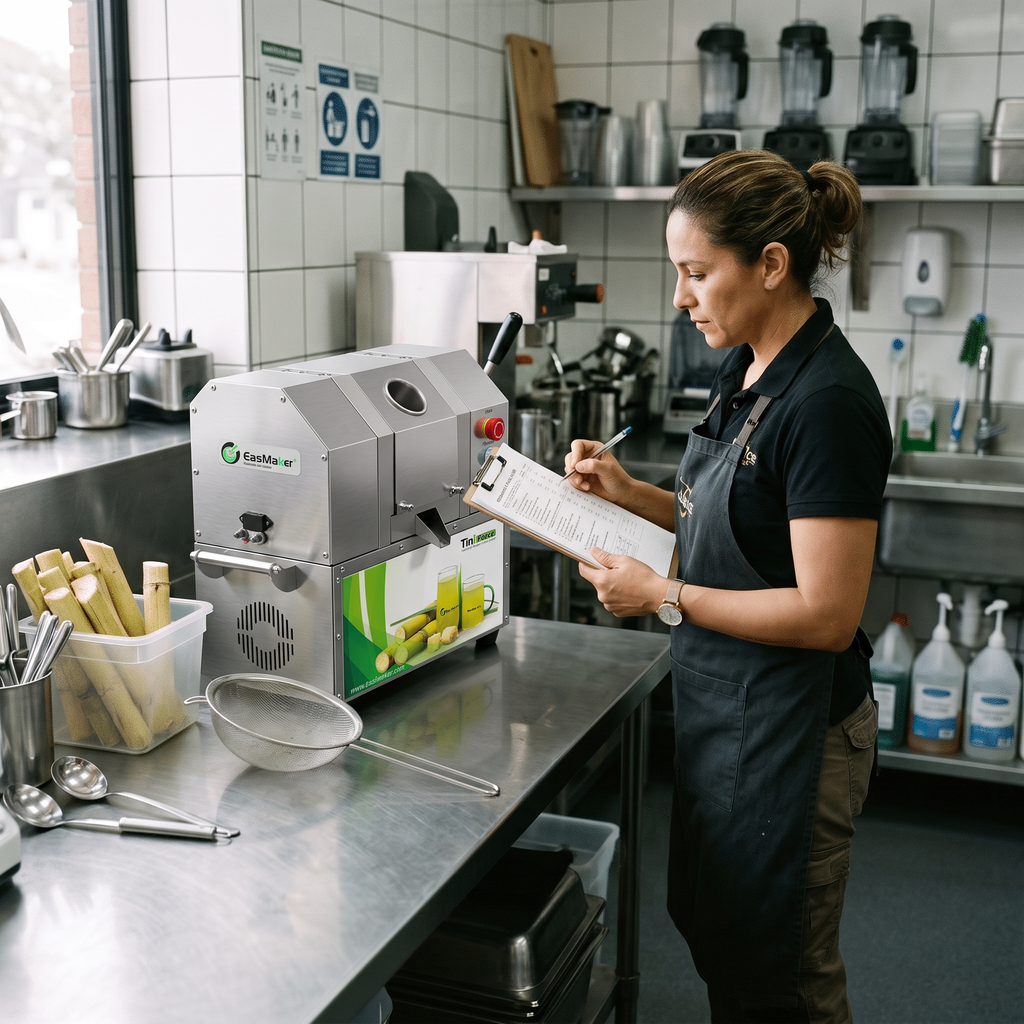
Operator completing a visual inspection of commercial sugarcane juicer before service

A commercial sugarcane juicer is both a food-contact work tool and a powered machine. Preventive maintenance supports four practical operating goals:

  • Hygiene control: removing visible cane fibre and juice residue reduces the chance that old residue remains in accessible food-contact and drainage areas.
  • Reliable workflow: regular checks can identify loose parts, obstructed outlets, worn components, or unusual operation before they interrupt service.
  • Operator safety: guards, covers, controls, feet, and power connections should remain secure and functional.
  • More predictable costs: planned inspection and timely replacement are easier to budget than unplanned downtime.

Maintenance is not the same as cleaning. Cleaning removes food residue and prepares the machine for hygienic use. Preventive maintenance adds inspection, tightening where permitted, condition monitoring, and timely service. Both should be built into the shop’s opening and closing routines.

For a broader sanitation routine around raw cane, staff handling, serving surfaces, and records, use this commercial sugarcane juice hygiene checklist for shops.

Daily Sugarcane Juicer Service Checklist

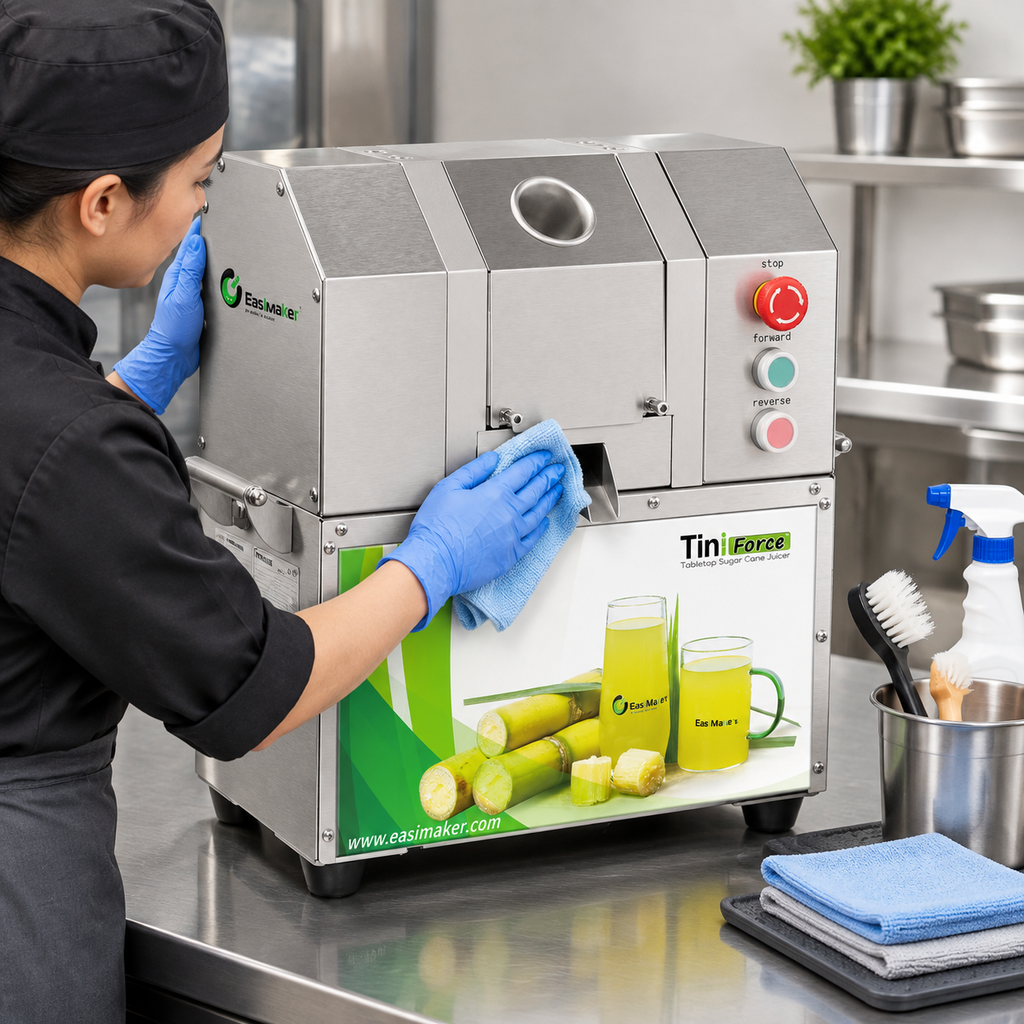
Safe end-of-day cleaning of a commercial sugarcane juice machine with power isolated

Complete the following checks before opening and after closing. Assign the task to a trained operator and record exceptions for the supervisor or service contact.

Before opening

  • Confirm the machine is stable on a level, clean work surface and that its feet are seated correctly.
  • Check the power cord, plug, socket area, switch, and visible cable route for damage, moisture, or loose connections. Do not operate damaged electrical equipment.
  • Confirm guards, covers, access panels, and fasteners are present and secure.
  • Inspect the feed inlet and accessible roller or crushing area for remaining fibre, foreign material, or cleaning cloth fragments.
  • Check that the juice outlet, collection container, and drainage path are clean, correctly positioned, and unobstructed.
  • Run only the manufacturer-approved pre-operation check. Listen for abnormal noise or vibration and stop if operation is unusual.

During service

  • Feed cane only in the intended direction and do not force oversized, heavily damaged, or contaminated pieces into the feed opening.
  • Keep the outlet clear and remove bagasse according to the shop workflow, without reaching into a moving or energised machine.
  • Watch for repeated feed hesitation, unusual noise, leaking, excessive vibration, or reduced juice flow. These are inspection signals, not conditions to ignore.

After closing

  • Turn off and isolate power before cleaning or inspection.
  • Remove cane residue from accessible areas using the procedure and tools specified by the manufacturer.
  • Clean, rinse, sanitise where required by the shop procedure, and dry accessible food-contact components before reassembly.
  • Wipe external surfaces, control areas, outlet surfaces, and the bench; avoid directing water into motors, switches, vents, or electrical enclosures.
  • Inspect for loose fasteners, cracked seals, damaged guards, blocked drainage, or fresh leaks. Record any finding.

Detailed cleaning steps matter because residue can harden if left overnight. See the daily SOP for cleaning a sugarcane juice machine for a structured close-down sequence.

Weekly and Monthly Maintenance Tasks

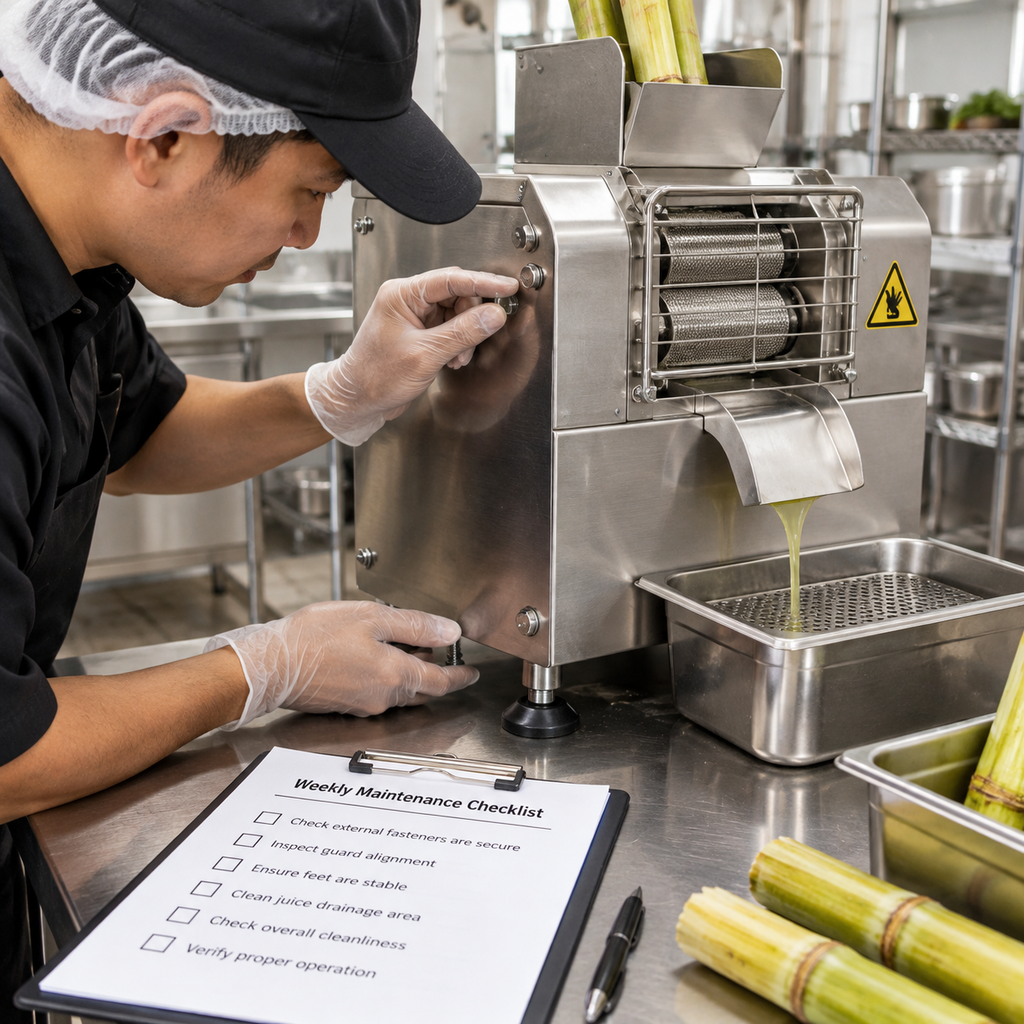
Weekly preventive maintenance inspection of a commercial sugarcane juicer

Weekly and monthly checks allow the operator to look beyond the visible cleaning points. The following table is a practical planning template. Adapt it to your specific model and manual.

IntervalWhat to checkWhat good condition looks likeAction if not satisfactory
WeeklyAccessible feed and crushing zone; juice outlet; bagasse exitNo compacted fibre, blockage, damaged accessible parts, or abnormal residue build-upClean according to the manual; stop and report damage or persistent obstruction
WeeklyGuards, panels, latches, feet, and visible fastenersSecure, aligned, and free from cracks or loosenessTighten only where the manual permits; replace or service damaged items
WeeklyExternal drive or ventilation areas, if accessible without opening protected assembliesClean and free from fibre accumulation or blocked airflowClean safely with power isolated; arrange service for internal access if required
MonthlyPower cord, plug, controls, labels, and emergency-stop function if fittedNo damage; controls operate normally; labels remain legibleRemove from service if electrical or control problems are present
MonthlyNoise, vibration, juice drainage, and feed behaviourOperation is consistent with normal shop experienceDocument the change and request technical assessment before failure develops
MonthlyMaintenance log and cleaning recordsDaily tasks completed and recurring issues identifiedUpdate training, workflow, or service plan as needed

Do not lubricate rollers, bearings, gearboxes, or drive components unless the machine manual expressly identifies the correct location, product, and interval. Unapproved lubricant can create food-safety and equipment problems.

Periodic Service and Replacement Planning

Periodic service intervals cannot be set accurately from calendar time alone. A shop that juices cane throughout the day may need inspection sooner than a low-volume seasonal outlet. Use a combination of operating hours, daily cane throughput, raw cane cleanliness, start-stop frequency, and observed condition.

Ask a qualified technician or authorised service provider to assess items that require protected-area access, electrical testing, alignment checks, drive-system work, or replacement of wear components. Depending on the machine design, this may include rollers, bearings, seals, transmission parts, switches, wiring, or motor-related components. Only use compatible replacement parts and follow the model documentation.

When buying equipment, serviceability should be part of the selection decision. Confirm who supplies routine parts, how technical guidance is provided, what information is needed for support, and whether your team can obtain operating documentation. New operators can also use a sugarcane machine setup guide for vendors to review practical placement, cleaning access, and daily workflow considerations.

A useful periodic-service record includes machine model and serial number, service date, operating observations, parts replaced, technician details, and the next review date. This history helps identify repeatedly failing components and supports clearer discussions with a supplier or technician.

Maintenance Records and Operator Responsibilities

A maintenance log does not need to be complicated. A single sheet, digital checklist, or closing record can be enough if it is completed consistently. Record the date, operator, cleaning completion, inspection result, issues found, action taken, and whether the machine was returned to service.

Set clear responsibility levels:

  • Operator: daily cleaning, visual checks, normal-use observation, and reporting.
  • Shift lead or manager: review logs, verify weekly checks, arrange service, and hold equipment out of use when needed.
  • Qualified technician: protected-area repairs, electrical work, adjustments specified for technical service, and replacement of non-operator-serviceable parts.

Use recurring entries to improve operations. For example, repeated fibre build-up may indicate that cleaning timing, cane preparation, staff training, or bagasse handling needs review. Maintenance records are useful operational information, not just paperwork.

When to Stop the Machine and Arrange Service

Stop operation, isolate power, and arrange assessment when you observe any of the following:

  • Damaged power cable, plug, switch, electrical enclosure, or exposed wiring.
  • A loose, missing, cracked, or misaligned guard, cover, panel, or feed-area component.
  • Unusual grinding, knocking, persistent squealing, burning smell, smoke, or unexpected heat.
  • Excessive vibration, machine movement, or a sudden change in normal feed behaviour.
  • Repeated blockage, poor drainage, unexplained leakage, or juice flowing where it should not.
  • A control that does not respond normally or a safety function that appears unreliable.

Do not bypass safety devices, operate with protective parts removed, or attempt repairs beyond the manual and your training. A short interruption is preferable to an injury risk, electrical hazard, or more serious mechanical damage.

For operators planning the wider juice-shop workflow, including equipment placement and daily work sequence, review the mobile sugarcane juice business setup guide; its workflow principles can also help fixed-location shops.

FAQ

How often should a commercial sugarcane juice machine be cleaned?

Clean the machine at the end of every service day and whenever the shop procedure requires it during operation. Remove accessible cane residue, clean food-contact areas according to the manufacturer instructions, and dry the machine before reassembly or storage.

What is included in sugarcane machine preventive maintenance?

Preventive maintenance includes daily cleaning and visual checks, weekly inspection of accessible residue areas and external hardware, monthly checks of electrical condition and normal operation, documented records, and qualified service for technical or protected components.

Can operators lubricate a commercial sugarcane juicer?

Only if the manufacturer manual specifically states that an operator may lubricate a named point with an approved lubricant at a stated interval. Do not apply lubricant based on general assumptions, especially near food-contact areas.

Why does a sugarcane juicer need a maintenance log?

A log shows that routine work was completed, helps identify repeated problems, gives managers a basis for scheduling service, and provides useful information when discussing an issue with a technician or equipment supplier.

What should I do if the juicer starts making an unusual noise?

Stop operation, isolate the power, and inspect only the accessible areas permitted by the manual. Do not continue operating the machine to test it repeatedly. Record the symptom and request qualified technical assessment if the cause is not an approved operator-level correction.

Build a Service Plan Around Your Shop Workflow

Easimaker can help commercial buyers discuss a suitable sugarcane juice machine, practical cleaning access, and support considerations for their market and expected operating pattern. Request a quote or speak with our team about your equipment requirements.

Request a Commercial Juicer Quote

Packaging Sugarcane Juice for Takeaway and Delivery: A Practical Shop Guide

Table of Contents

Fresh sugarcane juice needs packaging that controls leaks, protects product quality, supports clean service, and suits the actual travel time. This guide helps juice shops select cups, lids, seals, labels, and delivery packing procedures.

Quick Answer: What Packaging Works Best?

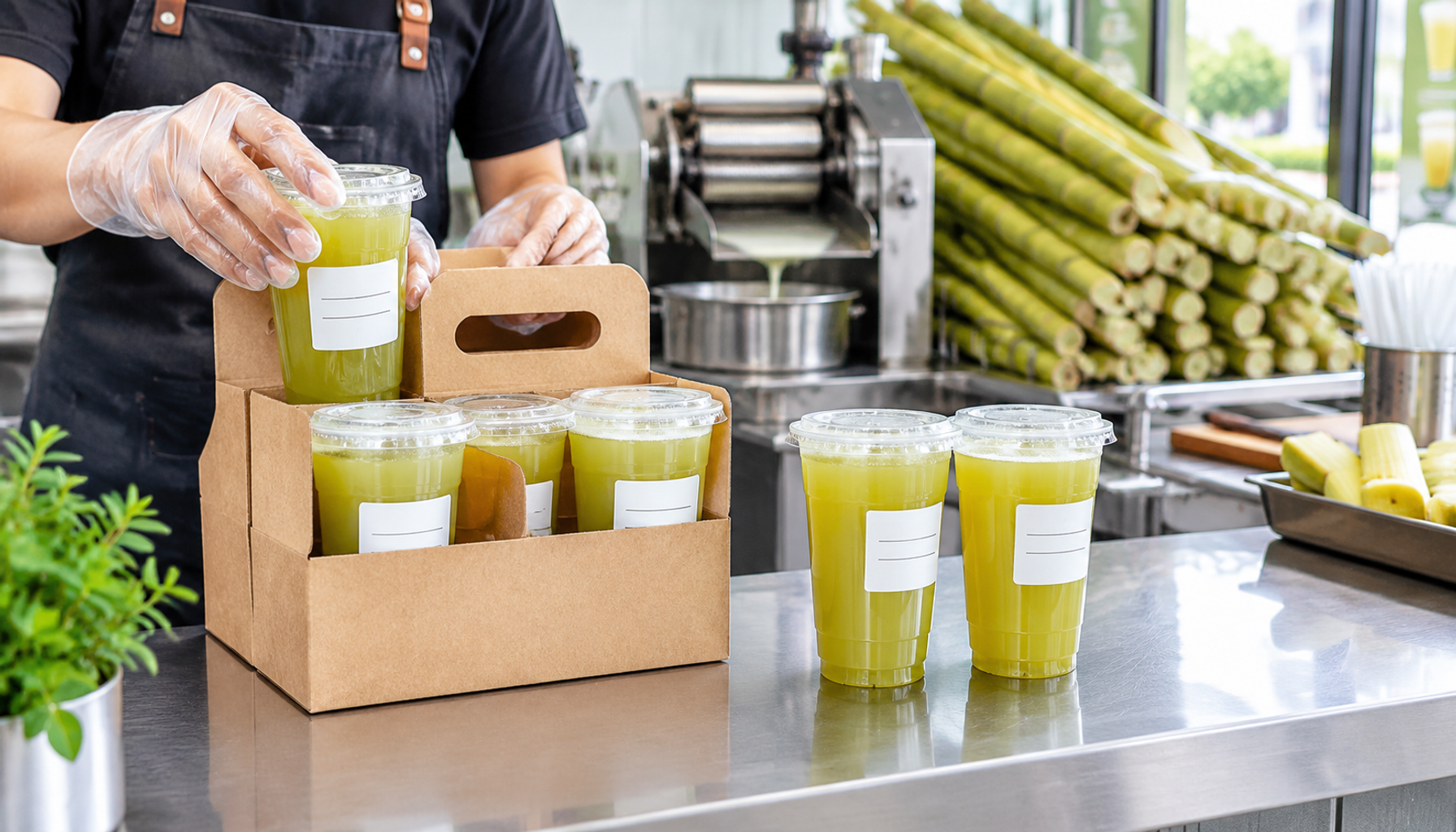
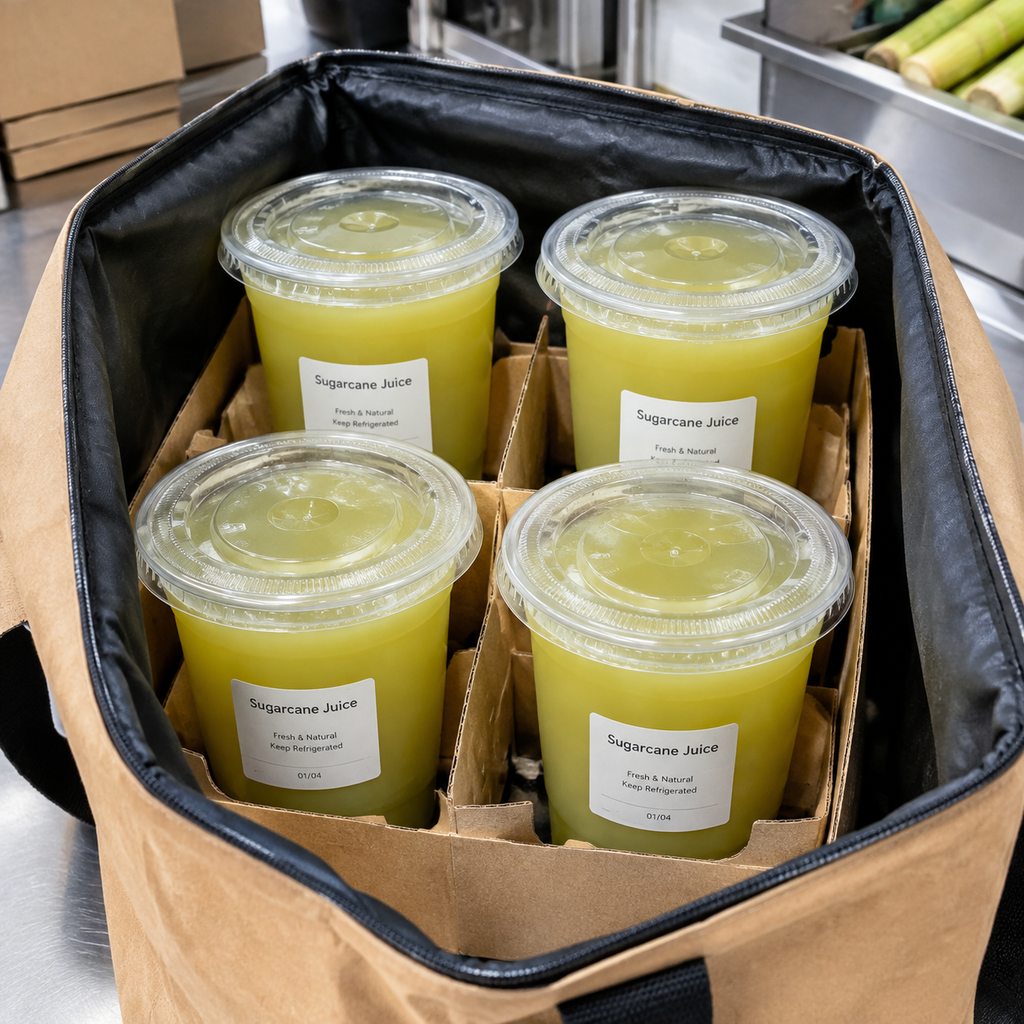
Fresh sugarcane juice packed in takeaway cups with lids and an upright carrier

The best sugarcane juice packaging for most takeaway shops is a food-contact suitable cold-drink cup with a secure matching lid, clear order identification, and a separate outer carrier when multiple drinks are collected or delivered. For short walk-away orders, a well-fitted flat or dome lid may be sufficient. For courier delivery, use a more leak-resistant closure, avoid overfilling, place cups upright in a compartmented carrier, and use a sealed bag only as secondary protection.

Freshly extracted sugarcane juice is a perishable drink. Packaging does not make it shelf-stable or replace appropriate hygiene, temperature control, and local food-service requirements. The practical goal is to get a freshly prepared drink from the juicing counter to the customer with minimal leakage, contamination risk, order confusion, and loss of presentation.

Before ordering large quantities of cups, run a real service test: fill each proposed cup as staff normally would, add the intended ice and garnishes, fit the lid, place it in the delivery carrier, and assess it after the longest realistic trip time. Test one drink and multi-cup orders separately.

What Sugarcane Juice Packaging Must Do

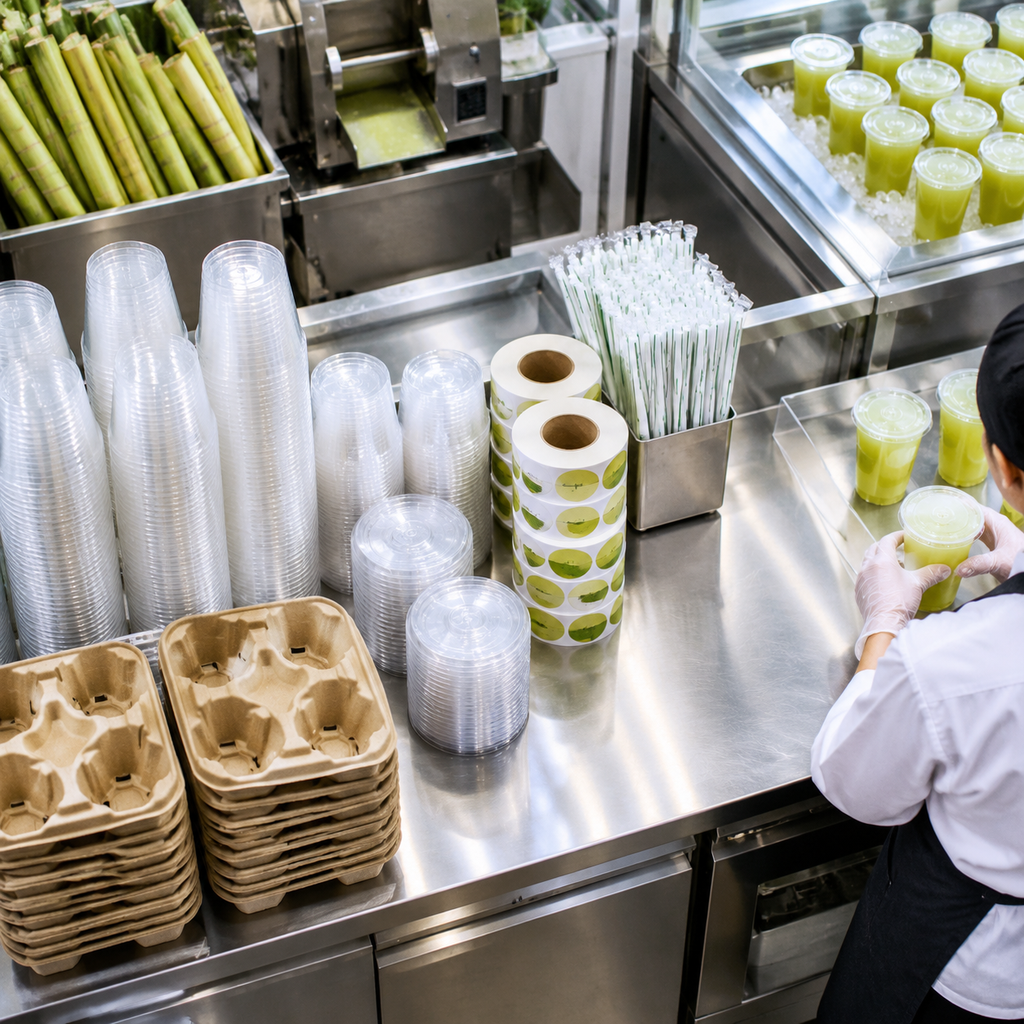
Organized packaging station for fresh sugarcane juice takeaway orders

Sugarcane juice packaging is the complete service system around the drink, not only the cup. It includes the cup or bottle, closure, straw or sip opening, tamper solution where appropriate, label, carrier, bag, and the staff procedure used to assemble an order.

A suitable system should address the following operating needs:

  • Containment: the cup and lid must fit securely and tolerate normal handling.
  • Product protection: food-contact surfaces should be clean, stored hygienically, and handled to limit unnecessary contact with the finished drink.
  • Cold-service suitability: the material should suit cold beverages and the expected amount of ice or condensation.
  • Order identification: staff and riders need to distinguish drink size, customization, and quantity quickly.
  • Transport stability: multi-drink orders need an upright carrier that limits movement.
  • Brand and local compliance needs: packaging choices should be checked against applicable local rules for food-contact materials, labeling, single-use items, waste, and delivery.

Packaging should be planned alongside the counter workflow. A clean line from cane preparation to extraction, filling, sealing, and handoff reduces unnecessary crossing of raw materials, used tools, and ready-to-serve drinks. See this guide to planning a clean sugarcane juice shop workstation when reviewing your service area.

Choosing Cups, Lids, and Seals

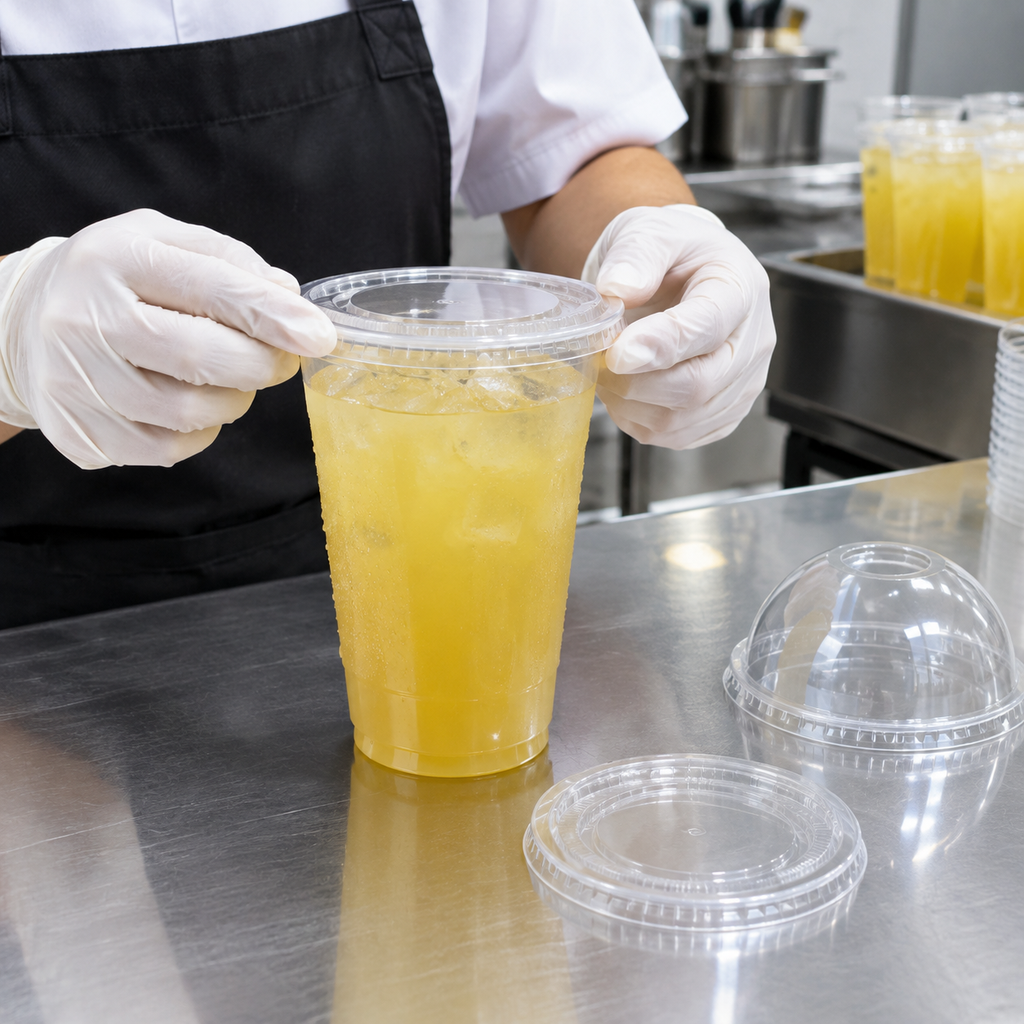
Staff member checking the lid fit on a sugarcane juice takeaway cup

Do not choose sugarcane juice takeaway cups by appearance alone. Cup geometry, lid fit, rim design, stiffness, and availability from a dependable local or regional packaging supplier matter in daily operation. A lid from one supplier may not seal correctly on a visually similar cup from another supplier, so treat cups and lids as matched components.

Packaging formatBest fitStrengthsPoints to check before use
Cold-drink cup with flat lidSimple takeaway juice without large toppingsCompact profile; straightforward filling and stackingRim-to-lid fit, sip-hole controls, straw position, leakage when tilted
Cold-drink cup with dome lidJuice served with a visible garnish or more headspaceExtra space above the drink; familiar customer formatCarry stability, lid fit, and whether the dome adds unnecessary bulk
Sealed cup with film topHigh-volume counter service or delivery where compatible sealing equipment is availableCan create a consistent closure and clear tamper indicationCompatibility between cup, film, machine, fill level, and drink temperature
Rigid bottle with capPre-arranged short-hold service only where the operating process and local requirements support itCap closure can be convenient for travelCleaning or single-use controls, filling process, labeling, and product-holding procedure

For most made-to-order shops, a matched cup-and-lid system is the least complicated starting point. Choose a size range that matches the menu rather than stocking many near-duplicate cup sizes. Fewer formats simplify inventory, reduce staff selection errors, and help carriers fit cups consistently.

Straws should also match the intended menu. If the drink contains cane pieces, fruit additions, or other solids, test whether the selected straw diameter allows normal drinking without damaging the lid opening. If you offer a strawless sip lid, test it with condensation and motion, not only on a stationary counter.

Takeaway vs Delivery Packaging: Use Different Controls

Sugarcane juice delivery cups secured upright in a compartmented carrier

A customer collecting one drink may keep it upright and consume it soon after purchase. A delivery order can be moved between a counter, shelf, rider bag, vehicle, and customer handover point. That difference changes the packaging requirement.

Control pointCounter takeawayThird-party or in-house delivery
ClosureSecure lid fitted and checkedSecure lid plus a tamper-evident approach where appropriate to the business model
Fill levelLeave sensible headspace for lid fitting and movementMaintain headspace; avoid overfilling even during rush periods
CarrierSingle-cup handoff or basic tray may be sufficientUse an upright, compartmented carrier sized for the cup base
Outer bagUseful for customer convenienceUse as secondary containment, not as the main method of preventing spills
Ice and garnishSet by customer preference and service styleReview against realistic travel time and the potential for dilution or movement
Final checkConfirm drink, size, lid, and strawConfirm order count, labels, seals, carrier stability, and any platform handover instructions

For delivery, build the order from the inside outward: close the cup, label it, place it in a fitted carrier, keep the carrier level, then place the complete order in its outer bag. A bag cannot correct a loose lid or a cup that is moving freely inside the order.

Notify delivery customers that fresh juice is intended for prompt consumption and provide storage or handling notes only when they reflect your validated process and local requirements. Avoid broad claims about how long the drink remains suitable unless you have an appropriate, documented basis for making them.

How to Fill and Seal Fresh Sugarcane Juice

A repeatable filling procedure supports cleaner service and fewer delivery complaints. The exact sequence depends on your menu and local operating requirements, but the following is a practical baseline:

  1. Prepare a clean cup at the finished-drink station. Keep unused cups, lids, straws, and seals protected from splashes and unnecessary handling.
  2. Confirm the order details before filling, especially size, ice choice, additions, and delivery or collection status.
  3. Extract juice using your normal controlled workflow. Keep the dispensing area clear and use clean, service-dedicated tools for finished drinks.
  4. Add approved ingredients in the defined order. Do not rely on packaging to compensate for poor handling controls.
  5. Fill to a consistent line below the rim. Headspace helps the lid engage fully and provides room for normal movement.
  6. Fit the lid or apply the sealing method according to the packaging supplier’s instructions. Check the entire rim rather than pressing only one point.
  7. Wipe any exterior drips, apply the label, add the intended straw or accessory, and place delivery orders in a stable carrier.

Cleaning and sanitation routines remain essential because packaging is applied after juicing, when the drink is ready for the customer. Review a documented daily sugarcane juice machine cleaning SOP and align the packaging station with the same disciplined routine.

Operators should be trained to stop and replace a cup if the rim is cracked, the lid does not engage evenly, or the outside of the cup is heavily soiled. The cost of replacing one cup is generally lower than the operational disruption of a spilled customer order.

Labels, Order Accuracy, and Customer Information

A small label or written order marker can prevent a large number of handoff mistakes. It is especially useful when several similar green-yellow drinks are waiting at the counter. The label does not need to be complicated; it needs to be legible and consistently placed.

Include information that supports your process, such as:

  • order name or order number;
  • drink size;
  • ice level or no-ice instruction;
  • approved additions or exclusions;
  • time prepared, if this is part of your internal procedure;
  • staff initials or station code, where helpful for traceability and training.

Keep labels away from the drinking opening and apply them to a dry external cup surface so they remain attached. For sealed cups, ensure labels do not interfere with the seal inspection area. For multiple drinks, label each individual cup as well as the outer bag; a correct bag label alone may not prevent a mix-up after handover.

The best order-control system is one staff can follow during a rush. Standardize the position of labels, straws, carriers, and completed-order staging. A logical counter sequence is also covered in this guide to a small-shop sugarcane machine counter layout.

Juice Shop Packaging Checklist

Use this juice shop packaging checklist at setup, during staff training, and when changing a cup, lid, carrier, or delivery provider.

  • Matched food-contact suitable cups and lids are approved for the intended cold beverage use.
  • Staff use only the cup-and-lid combinations that have been tested together.
  • Packaging is stored clean, dry, and protected from dust, splashes, pests, and floor contact.
  • Standard fill lines are defined for each cup size and ice option.
  • Every available lid has been checked for secure engagement around the full rim.
  • Straws, sip lids, or other drinking accessories fit the menu format.
  • Labels identify individual drinks clearly and do not cover drinking openings.
  • Multi-drink delivery orders use carriers that keep cup bases separated and upright.
  • Staff perform a final count, closure, label, and stability check before release.
  • Damaged cups, warped lids, and packaging with uncertain fit are removed from service.
  • Spill feedback and delivery complaints are logged by packaging type and order format.
  • The packaging plan is reviewed whenever menu items, delivery radius, cup suppliers, or order volumes change.

Packaging controls work best with a broader hygiene routine covering cane receiving, staff practices, equipment cleaning, finished-drink handling, and documented checks. Use a commercial sugarcane juice hygiene checklist to review the operation as a complete system.

Common Packaging Mistakes to Avoid

Using lids and cups from different systems without testing. Similar diameters do not guarantee a dependable seal. Test each supplier combination before it reaches service.

Filling too close to the rim. A cup can look generous yet spill immediately when the lid is pressed on or when it is carried over uneven ground. Set a practical fill line.

Sending delivery cups loose in a bag. Cups can tip, knock together, or lift from the base of the bag. Use a carrier that matches the cup shape and order quantity.

Adding a seal without an inspection step. A tamper label or outer bag seal is only useful when staff are trained to confirm the primary closure first.

Holding too much made juice for later orders. Packaging fresh sugarcane juice should support a controlled service process, not encourage unvalidated holding practices. Produce to order where practical and follow the requirements that apply to your location.

Ignoring feedback from drivers and customers. Note the route, cup size, lid type, carrier, drink temperature, and reported failure. This turns a vague complaint into a packaging test you can repeat and improve.

Select Packaging Around Your Actual Workflow

The right sugarcane juice delivery packaging is the option that your team can assemble accurately, your carrier can transport upright, and your customers can open and drink conveniently. Start with a limited, tested set of cup sizes and compatible closures. Then validate it under real conditions: peak-hour filling, two- and four-drink orders, condensation, vehicle movement, and the longest delivery distance you accept.

As your shop grows, review packaging together with juicer location, finishing space, refrigeration arrangements, delivery handoff, and cleaning access. Equipment and packaging should support one continuous workflow rather than create extra handling between extraction and service.

FAQ

What type of cup is best for fresh sugarcane juice?

For many made-to-order shops, a food-contact suitable cold-drink cup with a properly matched lid is a practical choice. Select the format after testing the actual drink, ice level, fill line, and transport method. The best option for counter takeaway may not be the best option for courier delivery.

How can a juice shop prevent sugarcane juice from leaking during delivery?

Use tested cup-and-lid combinations, leave adequate headspace, inspect the full lid rim, label each cup, and place drinks upright in a carrier with compartments sized for the cup base. Do not rely on an outer bag as the primary spill-control measure.

Should sugarcane juice delivery orders use tamper seals?

Tamper-evident seals can be useful for delivery operations, but they should be treated as an additional control. The cup’s primary closure must still be fitted and checked correctly. Choose a sealing method that does not obstruct the drinking area or hide an improperly fitted lid.

Can fresh sugarcane juice be bottled for later sale?

Bottling fresh juice involves product-holding, hygiene, temperature-control, labeling, and local compliance considerations that go beyond selecting a bottle and cap. Do not assume that a capped bottle makes freshly extracted juice shelf-stable. Establish the process according to the requirements and guidance that apply in your market.

What should be on a sugarcane juice cup label?

For order control, include a clear order name or number, drink size, ice instruction, and approved additions or exclusions. Your business may also need other information depending on its process and local requirements. Keep the label on the dry exterior of the cup and away from the drinking opening.

Plan a More Reliable Sugarcane Juice Service Workflow

Need to align your juicer, counter flow, and takeaway service with your expected order volume? Contact Easimaker to discuss the right commercial sugarcane juice machine and workflow for your market.

Discuss Your Juice Shop Setup

How to Start a Sugarcane Juice Business in the USA

Table of Contents

Starting a sugarcane juice business in the USA requires more than buying a juicer. This practical guide covers business format, local compliance, equipment selection, cane sourcing, workflow, cleaning, and operating planning for commercial buyers.

What You Need to Start a Sugarcane Juice Business

Organized commercial sugarcane juice workstation

To start a sugarcane juice business in the USA, first choose a service format that fits your market, confirm the local requirements that apply to your location, secure a dependable source of food-grade sugarcane, and build a clean workflow around a commercial sugarcane juicer. Your machine, preparation area, cold holding, waste handling, cleaning routine, and staff training should work together from the first day of service.

Sugarcane juice is usually made to order by feeding cleaned cane through a roller-based juicing machine, then serving the juice promptly or handling it under the procedures required for the operation. It can suit a dedicated juice counter, food court kiosk, restaurant, specialty grocery, farmers market stall, mobile unit, or seasonal event operation. The right format depends on local rules, foot traffic, operating hours, labor, and how consistently you can receive fresh cane.

Do not begin with equipment alone. Treat the business as a foodservice operation: verify the premises and permit path, document your processes, select equipment for repeated commercial use, and ensure that you can clean and maintain it between service periods. A simple, controlled opening setup is often easier to manage than a broad menu and high-volume promise before demand has been tested.

Choose a Business Model Before You Buy Equipment

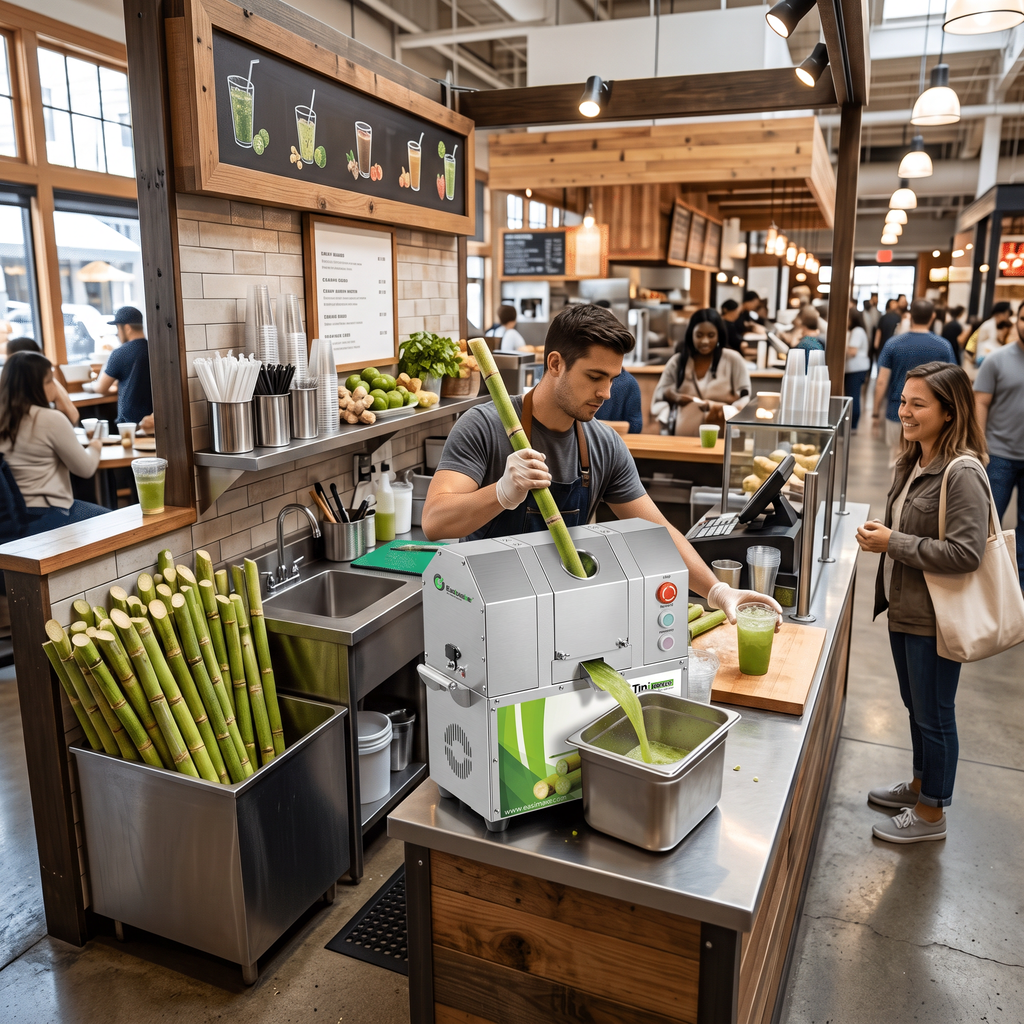
Sugarcane juice kiosk with a commercial service layout

The business model determines your utility needs, prep space, staffing pattern, equipment footprint, and compliance questions. Define it before comparing machines or signing a lease.

Common formats

  • Dedicated juice shop or counter: Best when you can support regular operating hours, a visible preparation area, cold storage, wash facilities, and a focused beverage menu.
  • Restaurant or cafe add-on: Can be practical when an existing licensed kitchen, sink access, refrigeration, staff, and point-of-sale system are already in place. Consider whether cane preparation will interrupt other production work.
  • Food court or mall kiosk: Requires close attention to power, drainage, ventilation rules where applicable, storage limits, landlord approval, and peak-period throughput.
  • Mobile or event vending: Can help test demand, but vehicle or temporary-event requirements, water supply, wastewater handling, generator power, transport, and limited preparation space must be planned early.
  • Specialty retail or wholesale supply: Adds packaging, labeling, storage, and distribution considerations. The correct process depends on the product, shelf-life approach, and local regulatory requirements.

For a first operation, a made-to-order model with a short menu is often the clearest place to begin. It keeps the customer proposition simple and helps the operator understand actual demand before adding packaged products, multiple sites, or a wider food menu.

Write a one-page operating brief that records your expected opening hours, busiest periods, service location, number of operators, available electrical supply, water and drainage access, cane storage space, and daily cleaning responsibility. This brief will make supplier conversations and equipment comparisons more productive.

Check Local Requirements Before Launch

Clean sugarcane preparation area in a commercial foodservice setting

Food business requirements in the USA are not uniform across every city, county, or state. The details may depend on whether you operate from a fixed shop, shared commercial kitchen, restaurant, temporary event booth, farmers market, or mobile food unit. Speak with the relevant local health or food-service authority before committing to a site, layout, or machine.

Ask what applies to your exact operation, including food establishment permits, plan review, approved water and wastewater arrangements, handwashing facilities, warewashing, refrigeration or cold holding, employee food-safety training, pest control, waste disposal, and mobile or temporary-vending permits. A landlord, event organizer, commissary kitchen, or mall operator may also have separate construction, insurance, access, and utility requirements.

Do not assume that a workflow accepted at one venue will be accepted at another. The way you wash cane, store ingredients, collect bagasse, sanitize food-contact surfaces, hold prepared products, and transport stock should be reviewed against the requirements for your location. If you plan to sell bottled juice or distribute beyond the point of preparation, obtain specific guidance before designing labels or making shelf-life decisions.

From a business perspective, also establish the legal entity, tax registration, insurance, payment processing, bookkeeping, and supplier records appropriate to your operation. Local professional advice is useful where you need it. Equipment suppliers can explain machine specifications and service arrangements, but they cannot determine your local compliance obligations.

Plan Your Menu and Sugarcane Supply

Your menu should match the production process you can perform consistently. A made-to-order sugarcane juice menu may include plain cane juice and a limited number of clearly defined additions, subject to your local requirements and food-safety plan. Each menu item adds ingredients, storage needs, allergen or cross-contact considerations where relevant, preparation steps, and cleaning work.

Sugarcane quality directly affects service consistency. Establish a supplier relationship that can provide cane suitable for food use and capable of meeting your expected delivery schedule. Ask practical questions: where is it packed, how is it transported, what are the typical cane lengths and diameters, how is it protected from damage, and what happens when a delivery is delayed or inconsistent? Inspect incoming cane for cleanliness, damage, deterioration, and suitability before it enters production.

Plan storage around the physical volume of the cane. Whole stalks need protected space, orderly rotation, and a process that prevents incoming stock from mixing carelessly with stock already prepared for service. Keep receiving, washing, trimming, juicing, and waste handling logically separated as your site allows. The goal is not a complicated layout; it is a repeatable path that employees can follow during a busy period.

Build your initial menu around ingredients you can source reliably. Record the recipe, portion method, serving cup or packaging, price, and preparation sequence for every item. This creates a baseline for training and helps reveal whether the menu is realistic for one operator during peak traffic.

Choose Commercial Equipment for Daily Service

A commercial sugarcane juicer should be selected for your real workflow, not for a vague idea of future volume. The machine must suit the cane you receive, the number of drinks you expect to prepare during busy periods, available counter or floor space, electrical supply, cleaning access, and the support you can obtain after installation.

Start by comparing commercial equipment against your operating conditions. A home-oriented juicer may be appropriate for occasional personal use, but a public-facing business needs a machine designed around repeated operation, operator safety, maintainability, and a service environment. Review the practical differences in this guide to commercial and home sugarcane juicers before making a budget decision.

Key buying questions include:

  • Can the feed opening and roller arrangement accommodate the usual cane size after your preparation process?
  • Does the machine fit the electrical characteristics available at your location? Confirm voltage, frequency, plug arrangement, and any installation needs before ordering.
  • Can staff safely access the areas that require daily cleaning and inspection?
  • Is there enough nearby work surface for prepared cane, cups, ingredients, and sanitary handling without crowding the juicer?
  • How will the operation collect and remove bagasse during service?
  • Which wear items and replacement parts should be available, and how will you identify the correct parts for your model?
  • What manufacturer, distributor, or local technician support is available in your market?

A structured comparison is more useful than choosing by price alone. Use a commercial sugarcane juicer selection guide to compare service volume, workspace, power supply, cleaning needs, and support. Before placing an order, ask the supplier detailed questions about compatibility, cleaning access, construction, parts, warranty terms, and delivery documentation. This checklist of questions for a sugarcane juicer manufacturer is a useful procurement reference.

Design a Practical Production Workflow

Good workflow protects product quality and makes service easier for the operator. Place the equipment so each step follows a clear order: receive and inspect cane, store it, wash and prepare it according to your procedure, feed the juicer, collect the juice, serve or transfer it as permitted, manage bagasse, and clean down the station.

Separate clean and waste paths where the layout allows. Cane preparation should not compete for space with finished drinks. Bagasse containers should be stable, easy to remove, and emptied on a planned schedule so waste does not accumulate around the machine. Cups, lids, straws, and permitted added ingredients should be within reach without forcing staff to cross the preparation area repeatedly.

Plan for the busy hour, not only the quiet hour. Run a service simulation before opening: one person receives an order, prepares cane, juices, serves, takes payment, restocks, and manages waste. Observe where the sequence slows down or creates a hygiene problem. You may find that a second prep surface, a better cane rack, additional cold storage, a dedicated waste cart, or a different counter orientation matters more than adding menu items.

Staff training should cover safe use of the machine, the exact preparation method, handwashing and surface sanitation procedures, approved cleaning chemicals, shutdown checks, and when to stop using equipment that appears damaged or abnormal. Keep operating instructions available at the station and ensure that staff know who to contact for support.

Manage Cleaning, Maintenance, and Support

Cleaning is a core operating process, not an end-of-day afterthought. Set a written schedule for pre-opening inspection, cleaning during service as needed, end-of-day cleaning, and periodic maintenance. Follow the machine manual and the chemical supplier instructions, and use only cleaning procedures that are compatible with the equipment materials and your local food-service requirements.

Daily records can be simple but useful. Note the date, operator, cleaning completion, unusual machine noise or movement, visible wear, drainage or waste issues, and any part replaced. These records help managers identify recurring problems before they interrupt service.

Keep the machine identification, purchase documents, manual, and service contact details accessible. Before opening, discuss the spare-parts path with your supplier. A practical sugarcane juicer spare-parts and support checklist can help you identify the model information, routine wear items, and service questions that should be documented for your operation.

Do not improvise repairs or continue operating a machine that has a damaged guard, unstable installation, electrical issue, unexpected noise, or abnormal performance. Isolate the equipment, follow the manufacturer guidance, and arrange qualified assessment where required. Preventive attention is generally easier to schedule than an unplanned interruption during a busy service day.

Test, Launch, and Grow Carefully

Before a full launch, run a controlled trial with the actual cane, cups, ingredients, staff, counter layout, and equipment you will use in service. Time each stage, record waste, note cleaning needs, and listen to staff feedback. The purpose is to validate the process, not to make assumptions about demand or output.

Track a small number of useful operating measures from day one: number of drinks sold by time period, cane deliveries and condition, stock loss, waste removal frequency, cleaning completion, equipment downtime, customer comments, and peak staffing needs. These records help you decide whether to adjust pricing, opening hours, inventory, layout, staffing, or equipment capacity.

Expand only after the first workflow is stable. A second machine, an additional location, a broader menu, or packaged products each add complexity. When adding a distributor range or a branded equipment programme, clarify target users, electrical-market requirements, documentation, service responsibilities, and spare-parts planning. The OEM sugarcane juicer guide for distributors and brands outlines the commercial planning questions for that type of project.

A sustainable sugarcane juice business is built on consistent purchasing, clean daily operation, suitable equipment, responsive support, and a service model matched to the local market. Focus on those fundamentals before pursuing rapid expansion.

How to Prepare Sugarcane Before Juicing in a Shop

Table of Contents

Proper sugarcane preparation helps a juice shop maintain cleaner handling, smoother service, and more consistent machine operation. Follow a practical process for receiving, washing, trimming, cutting, staging, and cleaning the preparation area.

Quick answer: prepare sugarcane in a controlled sequence

Washed and cut sugarcane separated for commercial juicing

To prepare sugarcane for juicing in a shop, inspect each delivery, reject cane that is visibly spoiled or heavily contaminated, wash the remaining stalks with potable water, trim damaged ends and unwanted material, cut stalks to the feed length required by the juicer, and hold the prepared cane in clean covered containers or a protected food-preparation area. Keep washed cane separate from unwashed stock, and clean the knives, boards, bins, and juicer food-contact surfaces according to the shop’s hygiene procedure.

The aim is not simply to make cane fit into a machine. Good preparation reduces the chance of dirt entering the juice area, prevents avoidable feed interruptions, supports safer handling, and gives operators a more predictable workflow during busy periods. The exact cutting length, whether the rind is left on, and the preferred crushing sequence depend on the juicer model, its feed opening, the supplier’s cane, and local food-handling requirements.

Use the machine manual as the final instruction for feed size and operating limits. A commercial machine should be selected for its expected duty cycle and service workflow, not only for its appearance or initial purchase price. See the practical differences between commercial and home sugarcane juicers when setting up a shop process.

What sugarcane preparation means in a commercial shop

Commercial sugarcane preparation is the controlled work completed before a stalk enters the crushing rollers. It normally includes receiving, visual inspection, dry removal of loose debris, washing, draining, trimming, cutting, temporary storage, and cleaning of the preparation station. In some operations, it may also include separating cane by diameter or cutting longer stalks into feed-ready lengths.

It is important to separate preparation from extraction. Preparation makes the raw material suitable for the machine and the shop’s hygiene workflow; extraction is the crushing process that expresses the juice. When these tasks are mixed together without defined areas or tools, operators can bring outer-surface dirt close to clean cups, ice, fruit garnishes, and finished juice.

A practical layout uses a one-way flow: unwashed receiving area, wash and trim area, clean staging area, then juicer. The flow should not require an operator to carry washed cane back through dirty stock. If space is limited, use clearly labelled containers and clean the work surface between tasks. This simple separation is often more useful than adding unnecessary steps that staff cannot maintain during service.

Before changing the routine, confirm what your local food-safety authority requires for produce washing, chemical use, storage time, and cleaning records. The process should also reflect the instructions supplied with your equipment.

1. Receive, inspect, and sort the sugarcane

Inspecting sugarcane stalks before washing and juicing

Preparation starts when cane arrives, not when a customer orders a drink. Put new deliveries on a receiving surface or in a designated bin rather than directly on the juice counter or floor. Check several stalks from each batch, especially if the supplier, delivery condition, or cane variety has changed.

Look for practical issues that can affect hygiene or feeding:

  • heavy soil, mud, insects, plant matter, twine, labels, or other foreign material;
  • soft, leaking, mouldy, unusually dry, or badly split sections;
  • damaged ends that may need trimming;
  • stalks that are too wide, bent, or long for the planned feed method; and
  • signs that the shipment has been stored or transported poorly.

Do not try to solve every defect by cutting around it. If a stalk has widespread spoilage, unusual odour, or contamination that cannot be removed through normal handling, set it aside and follow the shop’s rejection procedure. Record supplier or batch concerns where your purchasing process requires it. Early inspection prevents staff from discovering unsuitable cane at the juicer during a rush.

Sort acceptable cane into workable groups. For example, keep washed, feed-ready pieces separate from whole, unwashed stalks. Where stalk diameter varies significantly, grouping similar pieces can help staff choose an appropriate feed sequence without forcing large or awkward pieces into the machine. Avoid guessing that all cane should be processed the same way; machine geometry and local service habits matter.

Your output plan also affects receiving volume. The article on budgeting a sugarcane juice business explains why cane handling, cleaning supplies, storage, and workflow should be considered alongside the machine itself.

2. Wash sugarcane and control hygiene risks

Washing sugarcane at a commercial shop preparation station

Wash suitable sugarcane before it reaches the clean staging area. Use potable water and a clean sink, wash station, or other arrangement appropriate to the shop. Rinse the outside of each stalk thoroughly and remove visible soil from crevices, nodes, and damaged outer areas with a dedicated food-safe brush where needed. The brush, sink, and surrounding work surface must be cleaned and maintained so they do not become a source of contamination.

Do not wash cane in the same container used for waste, floor tools, or dirty equipment parts. Change wash water whenever it becomes visibly dirty if using a basin-based process. Draining is also important: let excess water run off before cutting or staging so work surfaces do not become unnecessarily wet and slippery.

Produce washing and surface sanitising are not interchangeable tasks. Cleaning removes soil and residues. Sanitising is normally applied to cleaned food-contact tools and surfaces at the concentration, contact time, and rinsing condition specified by the product label and local rules. Do not apply a chemical treatment to cane unless it is permitted for that purpose and your procedure clearly controls its use.

Use separate, clearly identified tools for raw-cane receiving and clean preparation where possible. Wash hands when moving from delivery handling to trimming or serving. Keep chemicals, lubricant, cleaning cloths, and non-food tools away from cane and juice-contact items.

A complete commercial sugarcane juicer hygiene guide can help align cane preparation with cleaning of the feed area, rollers, guards, juice collection parts, and surrounding counter.

3. Trim and cut cane to suit the juicer

Trimming and cutting sugarcane to fit a commercial juicer

After washing and draining, trim only what needs to be removed for clean, safe, consistent feeding. Remove damaged or questionable ends, loose leaves, roots, ties, packaging remnants, and any material that is not intended to enter the machine. Use a stable cutting board or purpose-built preparation surface, a suitable sharp knife or cutter, and a collection bin for trimmings. Dull tools increase handling effort and can lead to poor control.

Cut stalks to a length that fits the specific juicer’s feed opening and operating instructions. There is no universal commercial cut length. A piece that is too long may be difficult to control in a compact work area; a piece that is too short can be awkward to guide through some feed arrangements. Measure the actual feed path, review the manual, and test the workflow with the machine switched off before setting a staff standard.

Whether to peel cane is also machine- and market-dependent. Some operators process properly washed cane with its outer rind intact, while others use a peeling step to suit their service method or customer preference. Do not assume peeling is mandatory or that it can replace washing. If peeling is used, maintain the same separation between unwashed stock, peel waste, and clean feed-ready cane.

Never use the juicer rollers as a cutting tool, and never use hands or improvised objects to push unsuitable pieces into a feed opening. Equipment guards, push tools, and feed methods must be used exactly as instructed by the manufacturer. The operational considerations in these sugarcane juice machine best practices are useful when defining a safe handoff from preparation to crushing.

4. Stage prepared cane for steady service

Prepared cane should be easy to identify, protected from re-contamination, and close enough to the juicer for efficient service without blocking the operator’s movement. Use clean food-safe containers, racks, or covered bins that are suitable for the site. Avoid placing feed-ready cane directly on counters that are also used for payment, packaging waste, dirty cups, or customer belongings.

Prepare a practical amount for the expected service period rather than cutting every stalk at the start of a long day. Smaller batches make it easier to protect product condition, rotate stock, and identify problems. The appropriate batch size depends on demand pattern, staff numbers, storage conditions, and local requirements. If demand is uncertain, retain more cane whole and wash or cut it in controlled batches.

Label or organise containers so staff can distinguish unwashed cane, washed whole stalks, cut feed-ready pieces, and trimming waste. A simple first-in, first-out approach helps prevent older prepared stock from being overlooked. If a prepared batch becomes contaminated, falls on an unclean surface, or cannot be confidently identified, remove it from the clean workflow and assess it under the shop’s food-safety procedure.

Plan staff roles during peak service. One person can wash and cut while another operates the juicer and handles finished drinks, provided the work areas and hand hygiene remain controlled. In a small kiosk, the same operator may need to pause, clean hands, and reset the surface before switching from raw handling to serving.

5. Protect the machine and operators during preparation

Good preparation protects more than the finished drink. It can reduce the likelihood of loose debris reaching the feed area, help the operator present cane at a workable size, and make cleaning between service periods more manageable. It does not remove the need for correct machine use or scheduled maintenance.

Before opening, check that the juicer is clean, assembled correctly, and ready for operation according to its manual. Confirm that guards and covers are correctly fitted, the collection area is clean, and the work area is dry enough for safe footing. Keep the preparation knife, cutter, brush, and waste bin positioned so the operator does not reach across moving equipment.

During service, stop the machine and isolate its power before clearing a blockage, removing wrapped fibres, inspecting rollers, or cleaning areas that are not intended to be accessed while running. Never bypass a guard or reach into an active feed area. If cane repeatedly fails to feed smoothly, review its cut size, straightness, cleaning condition, and the machine instructions rather than trying to force it through.

Crushing method may also affect how you stage and re-handle bagasse. For a process review, read single-pass versus multi-pass sugarcane crushing. Use only the approach that is appropriate for your machine, product workflow, and local hygiene controls.

Build a repeatable daily preparation routine

The most reliable preparation method is a simple one that every trained operator can follow. Document the sequence in short, observable steps and adapt it after reviewing real service conditions. A practical daily routine can include:

  1. Inspect the preparation area, tools, containers, and juicer before use.
  2. Receive and inspect cane, keeping unwashed stock in its designated area.
  3. Wash acceptable stalks with potable water and allow them to drain.
  4. Trim and cut to the approved feed size for the specific machine.
  5. Stage clean, identified batches near the juicer.
  6. Keep waste moving out of the clean workflow.
  7. Clean and reset the station at defined intervals and at closing.

Train staff on the reason behind each step: separate dirty and clean work, prevent foreign material from reaching the machine, avoid unsafe feeding, and maintain an orderly counter. Supervisors should periodically observe the routine rather than relying only on a written checklist. If staff regularly skip a step, the issue may be poor layout, unclear ownership, inadequate tools, or an unrealistic preparation volume.

Review the procedure whenever the cane supplier changes, a new juicer is installed, the menu changes, or seasonal demand increases. Track recurring problems such as difficult feeding, excess debris, wet floors, or slow cleaning, then adjust the receiving, cutting, staging, or staffing process. This approach keeps sugarcane preparation practical while supporting consistent daily operation.

Fresh Sugarcane Juice Food Safety Workflow for U.S. Shops

Table of Contents

A practical food safety workflow for U.S. shops serving fresh sugarcane juice, from cane receiving and washing to sanitation, service control, and daily records.

The Food Safety Workflow in Brief

Employee inspecting fresh sugarcane during receiving in a commercial juice shop

For a U.S. shop, sugarcane juice food safety depends on controlling the full workflow: buy sound cane from a traceable supplier, protect it during storage, wash and inspect it before cutting, juice it with clean food-contact surfaces, serve it promptly or manage holding under the requirements that apply locally, and clean and sanitize the machine between service periods.

Fresh sugarcane juice is made from raw agricultural material and is commonly served without a kill step after extraction. That means operators should treat cane condition, employee hygiene, equipment sanitation, time control, and documentation as connected parts of one operating system. The exact requirements can differ by state, county, city, facility type, and whether juice is made to order or packaged. Confirm the local health department’s requirements before opening or changing the process.

A written workflow helps staff make the same decisions during a busy shift. It also gives managers a practical basis for training, verification, corrective action, and discussions with inspectors or distributors.

Understand the Main Control Points

Separated raw cane and clean juice preparation zones in a commercial shop

The purpose of a food safety workflow is to identify where contamination can enter the process and where it can be prevented, reduced, or detected. For fresh sugarcane juice, the main points are usually the cane itself, water and ice, employee handling, food-contact surfaces, and the time between juicing and customer service.

  • Raw cane: Cane can carry soil, field debris, damaged outer material, and contamination introduced during harvesting, transport, or storage.
  • Wash water: Water used for rinsing must be suitable for food use. Dirty wash water or a poorly maintained wash sink can spread contamination rather than remove it.
  • Hands and utensils: Employees can transfer contamination from cash, phones, waste, raw cane, or cleaning tasks to ready-to-drink juice and clean equipment.
  • The juicer: Rollers, feed openings, guards, collection areas, filters, cups, and any removable parts may retain juice fibers and residue if cleaning is incomplete.
  • Holding and add-ins: Prepared juice, ice, fruit, herbs, flavorings, and garnishes create additional handling and storage decisions.

Map the actual workflow in your shop from delivery door to customer handoff. This often reveals preventable cross-traffic, such as carrying unwashed cane through a clean preparation area or using the same sink for produce washing and equipment cleaning without a controlled sequence.

Receive and Store Sugarcane Carefully

Fresh sugarcane stored off the floor on clean racks

Food safety starts before the machine is switched on. Purchase cane from suppliers that can identify the product and delivery source. Keep receiving information that is useful for tracing a concern, such as supplier name, delivery date, product description, and any lot or shipment reference supplied with the order.

At receiving, inspect cane before it enters the preparation area. Reject or segregate cane that is visibly moldy, heavily decayed, unusually slimy, contaminated with chemicals or unknown material, or damaged beyond normal trimming. A shop does not need to diagnose every defect; the practical rule is to avoid processing cane that is not sound enough to clean and prepare safely.

Store accepted cane off the floor, protected from splash, pests, refuse, and cleaning chemicals. Use clean racks, bins, or pallets that can be cleaned. Rotate stock so older acceptable cane is assessed and used before newer deliveries. Do not assume that later washing makes poor storage conditions acceptable.

Keep receiving and storage distinct from the clean assembly and serving area. Where space is limited, use a scheduled process: receive and move cane first, clean the area, then begin washing and juice preparation. Clear physical or time separation is often easier for staff to follow than an informal rule.

Wash and Prepare Cane Before Juicing

Employee washing sugarcane with clean water and a brush before juicing

Move only the amount of cane needed for the current preparation period into the washing area. Before washing, remove obvious ties, packaging fragments, loose debris, and cane that should not be processed. Staff should wash hands and use clean, suitable tools before beginning this work.

Wash cane using potable water and a method appropriate for the condition of the product and the shop’s approved procedure. Mechanical brushing or manual scrubbing may be needed to remove adhering soil from the exterior. Rinsing alone may not be enough for visibly dirty cane. Avoid practices that can recontaminate cleaned cane, such as placing it back into a dirty receiving bin or onto an unclean counter.

After washing, inspect again and trim away damaged or visibly unsuitable portions with clean, maintained cutting equipment. Keep washed cane in clean, designated containers. Do not return trimmed waste to the preparation bench. Remove waste promptly so it does not attract pests or create a source of splash or contact contamination.

Any sanitizer, produce wash, or chemical treatment should be used only where it is permitted, suitable for the intended food-contact use, and applied according to its label and local requirements. More chemical is not better. A shop should document the product, dilution method, contact time where applicable, test method, and employee responsible when its sanitation program calls for those controls.

Control Juicing and Service

Clean commercial sugarcane juicing station prepared for service

Set up the juicing station as a clean zone. Before service, verify that the juicer, collection container, strainers, tools, cup dispenser, and immediate work surfaces have completed the shop’s cleaning and sanitation process. Assemble removable parts correctly, and conduct the manufacturer’s pre-use checks before operating the machine.

Use washed, prepared cane only. Employees should avoid touching cup rims, ice-contact surfaces, straws, or the inside of lids. Assigning separate duties for payment handling and drink assembly can reduce hand-contact risk during peak periods. When one employee must do both tasks, establish a clear handwashing and glove-change routine that staff can realistically follow.

Make-to-order service simplifies control because it limits holding time. If the shop prepares juice ahead, batches, bottles, or combines juice with other ingredients, the process needs additional review. Holding temperature, date marking, packaging, cleaning of filling tools, allergen management for added ingredients, and any local licensing or process requirements may apply. Do not adopt a holding time or temperature from a general online article; establish it with the local authority and your documented operating procedure.

Use ice and water from approved sources, and keep scoop handles out of the ice. Do not use the customer cup as an ice scoop. Dispose of product that has been contaminated, mishandled, or held outside the shop’s approved procedure.

Clean and Sanitize the Juicer

Cleaning removes juice residue, fibers, and soil. Sanitizing is a separate step intended to reduce microorganisms on already-clean food-contact surfaces. Both are necessary. Sanitizer applied over residue is not a substitute for cleaning.

Build cleaning around the machine manufacturer’s instructions and the approved chemicals used in your facility. Before disassembly or cleaning, stop the equipment, disconnect or isolate power as required, and wait until moving parts have fully stopped. Never reach into a feed opening or roller area while the machine is energized.

  1. Remove cane fibers and product residue using suitable tools.
  2. Disassemble removable food-contact components only as instructed by the manufacturer.
  3. Wash parts and accessible surfaces with the correct detergent and water conditions for the soil and chemical program.
  4. Rinse where the detergent instructions require it.
  5. Sanitize with an approved food-contact sanitizer mixed and used according to its label.
  6. Allow surfaces to drain or air dry when required. Avoid wiping sanitized surfaces with a cloth that may reintroduce contamination.
  7. Reassemble only after parts are clean, sanitized, dry as required, and checked for correct fit.

Cleaning frequency should reflect the manufacturer’s directions, the amount of product processed, visible residue, service interruptions, and local requirements. At minimum, staff need a defined end-of-day procedure and a clear response when product residue accumulates during service. Verify sanitizer concentration with the test method specified for the chemical being used, rather than estimating by smell or appearance.

A support plan also matters. Keep the machine model, serial number, parts list, cleaning instructions, and service contact information accessible to the manager responsible for the station. The sugarcane juicer spare parts and support checklist can help shops organize machine information and identify the components that need routine attention.

Use Records and Staff Training

A workable food safety program is short enough to use during a busy day and specific enough to show what happened. Managers do not need paperwork for its own sake. They need records that confirm critical routine work was completed and show how a deviation was handled.

Useful records may include receiving checks, daily cleaning and sanitation sign-offs, sanitizer test results where used, employee training, equipment maintenance, pest observations, and corrective actions. Match the records to the procedures your shop is required to follow. Keep them legible, dated, and reviewed by a responsible person.

Training should be practical and repeated. New employees need to understand the difference between raw cane handling and ready-to-drink juice assembly, when to wash hands, which surfaces are food-contact surfaces, how to disassemble the machine safely, and when to stop and ask a manager for help. Demonstrate the task, observe the employee performing it, and correct issues before independent work.

Managers should also define escalation rules. Examples include cane arriving in poor condition, a sanitizer test outside the target range, a broken or difficult-to-clean machine component, a water interruption, an employee illness concern, or an extended power disruption. The response may be to stop production, discard affected product, clean and sanitize, contact service, or seek direction from the appropriate authority. The correct response depends on the situation and the shop’s local requirements.

Daily Sugarcane Juice Food Safety Checklist

Manager reviewing a daily sanitation checklist beside a cleaned sugarcane juicer

Adapt the following checklist to the facility, local requirements, equipment manual, and approved cleaning program.

Before opening

  • Inspect the juicing and serving area for cleanliness, pests, splash exposure, and unnecessary items.
  • Confirm the machine is assembled correctly and food-contact parts have completed the required cleaning and sanitation procedure.
  • Check that handwashing supplies, approved water, cups, lids, straws, cleaning tools, and waste containers are available.
  • Inspect cane selected for use and move only washed, prepared cane into the clean juicing area.

During service

  • Keep raw cane, trimmed waste, cleaning chemicals, and ready-to-drink juice separated.
  • Maintain employee handwashing and task changes between cash handling, cleaning, waste handling, and drink assembly.
  • Remove juice fibers and residue according to the established between-service procedure.
  • Protect ice, cups, lids, and drink-contact surfaces from unnecessary handling.
  • Stop and correct any loss of sanitation, equipment damage, or questionable product condition.

After service

  • Discard product that cannot remain under the shop’s approved procedure.
  • Power down and clean the juicer safely following manufacturer instructions.
  • Wash, rinse where required, sanitize, and air dry applicable parts and surfaces.
  • Record completion, sanitizer verification where applicable, defects, and corrective actions.
  • Store the machine and cleaned utensils to protect food-contact surfaces until the next use.

Choose Equipment and Support for Daily Control

Food safety procedures are easier to sustain when the equipment fits the actual shop workflow. Before purchase, review the machine’s food-contact components, access for cleaning, disassembly instructions, drainage and residue management, operator safeguards, available service support, and replacement-part process. Ask for the applicable manual and confirm what routine inspection and maintenance the operator is expected to perform.

A commercial machine should be selected for the operating pattern, available work area, electrical supply, staffing, cleaning routine, and support expectations. The guide to commercial and home sugarcane juicer differences outlines why repeated business use requires a different evaluation from occasional personal use.

For a new shop, document the intended menu and service process before finalizing the equipment layout. This helps identify whether the operation will be make-to-order only, whether add-ins create separate controls, where cane will be washed, and who will be accountable for end-of-day sanitation. For branded projects or equipment adaptation discussions, review Easimaker OEM/ODM options with the operational requirements in hand.

Sugarcane Juicer Troubleshooting: Common Problems and Fixes

Table of Contents

A practical troubleshooting guide for commercial sugarcane juicer operators. Learn what to check first when a machine will not start, extracts poorly, jams, vibrates, leaks, or develops hygiene issues.

Start With These Safe Checks

Commercial sugarcane juicer disconnected from power before inspection

The fastest way to resolve a sugarcane juicer problem is to stop the machine safely, isolate the power supply, and check the simple causes first: the correct electrical supply, a fully closed guard or cover, a cleared feed path, clean rollers, and secure removable parts. Do not place hands or tools into the feed opening or roller area while the machine is connected to power.

Many operating faults come from cane that is too dirty, excessively thick, poorly trimmed, or fed too quickly. However, repeated tripping, burning smells, damaged cables, loose guards, grinding sounds, or a machine that will not restart after basic checks should be handled by a qualified technician or the supplier’s service team.

Before restarting, record what happened: the time of the fault, whether cane was being processed, any sound or smell, and what the operator had already checked. This gives a technician useful information and helps prevent repeated trial-and-error actions.

Understanding Sugarcane Juicer Faults

A commercial sugarcane juicer separates juice from prepared cane by passing the cane through driven crushing rollers. Its practical performance depends on several connected systems: the electrical supply and controls, drive components, rollers and feed area, drainage path, guards, and the operator’s preparation and cleaning routine.

For sugarcane juicer troubleshooting, separate the symptom from the suspected cause. A low-output complaint, for example, may be caused by cane condition, inconsistent feeding, buildup on the rollers, or a mechanical issue. Replacing parts before checking preparation and cleaning can increase cost without fixing the underlying problem.

Commercial equipment is intended for repeated service, but it still needs appropriate installation, daily cleaning, and an operating pace suited to the machine. If you are comparing equipment classes or reviewing whether a current unit suits the workload, see this guide to commercial versus home sugarcane juicers.

Problem 1: The Machine Will Not Start

Checking the power connection for a commercial sugarcane juicer

Likely causes: no power at the outlet, an incorrect power supply, a switch or protective device not reset, a safety interlock or guard not correctly positioned, or an electrical component fault.

What to check

  1. Turn the machine off and unplug or isolate it before inspection.
  2. Confirm that the outlet, plug, cable, and any external isolator are in good condition. Do not use a damaged cable or plug.
  3. Check that the local voltage, frequency, and phase match the machine rating plate exactly.
  4. Make sure all required guards, covers, collection trays, and safety components are fitted as intended. Do not bypass an interlock or protective device.
  5. Allow the machine to cool if it stopped after extended work, then follow the manufacturer restart procedure.

If the correct supply is available but the machine remains unresponsive, do not open the electrical enclosure unless you are qualified and authorized to do so. Electrical diagnosis should be performed safely. Review the detailed guide to sugarcane juicer power requirements before installation or relocation, especially when the machine is moving to a different market or site.

Problem 2: The Machine Stops or Trips During Use

Likely causes: an overloaded feed, a jam, an unstable or unsuitable power supply, overheating, or a fault in the electrical or drive system.

First, stop feeding cane and isolate the machine. Wait until all movement has stopped. Remove cane only according to the safe clearing procedure in the machine manual; never pull material from moving rollers and never use metal tools near energized equipment.

Inspect the cane preparation process. Very thick sections, hard nodes, foreign material, or several pieces forced into the feed area can overload the machine. Wash cane thoroughly, remove debris, and cut it to a size the operator can guide steadily. Feed individual pieces at a controlled rate instead of pushing against resistance.

If a circuit breaker or protective device trips repeatedly, treat it as a fault condition rather than simply resetting it again. The cause may involve the supply, wiring, motor, controls, or mechanical load. For a focused fault-isolation process, read diagnosing electrical faults in commercial sugarcane machines.

Problem 3: Low Juice Extraction or Wet Bagasse

Prepared sugarcane and clean roller area for consistent juicing

Likely causes: cane quality or freshness, unsuitable cane size, inconsistent feeding, dirty roller surfaces, incorrect adjustment where the model permits adjustment, or wear in components that affect crushing.

Start with the cane, not the machine. Cane varies by variety, maturity, storage conditions, and diameter. Dry, old, damaged, or poorly stored cane may provide a different result from fresh, well-prepared cane. Compare performance using similar prepared cane before concluding that the machine has a mechanical issue.

Then clean the accessible food-contact and roller-area surfaces according to the manual. Fibres and sticky residue can affect grip and smooth feeding. Ensure operators are not rushing material through the rollers or feeding pieces that are difficult to control.

Do not change roller gaps, tension, or other factory settings unless the machine documentation specifically permits it and your team understands the procedure. Incorrect adjustment can reduce performance, damage parts, or create a safety risk. For a deeper process, see what to do when a sugarcane machine has low juice yield.

Problem 4: Cane Will Not Feed Properly or Jams

Likely causes: cane is too large or irregularly cut, debris is present, fibres have accumulated, the rollers are contaminated, or the operator is forcing material through the inlet.

Prepare cane consistently. Wash it, remove visible soil and foreign material, trim damaged ends, and cut pieces to a manageable size for the model in use. The operator should present the cane straight to the inlet and let the rollers take it in. Forcing cane sideways or pushing a second piece into a restricted feed path increases the chance of a jam.

After isolating the machine, inspect accessible areas for fibres and residue. Clean only with the approved method and tools. Check that juice and bagasse paths are not obstructed and that removable trays or guides are seated correctly.

If jams are frequent despite good cane preparation and cleaning, stop operating the machine until the cause is assessed. Recurrent jams can indicate a worn, misaligned, or damaged component, and continuing to force the machine may lead to more extensive repair.

Problem 5: Unusual Noise or Vibration

Likely causes: the machine is not level or is sitting on an unstable counter, fasteners or removable parts are loose, debris is in the processing area, or an internal drive component requires inspection.

A commercial sugarcane juicer should stand on a stable, level surface with enough surrounding space for safe feeding, cleaning, and access. With the machine switched off and isolated, check visible fasteners, trays, covers, and guards for secure fitting. Follow the manual for any routine checks that an operator is allowed to perform.

Do not continue normal production if you hear grinding, metal-on-metal contact, sudden knocking, or a new vibration that does not disappear after cleaning and confirming the installation surface. Do not remove protective covers to investigate moving parts. These symptoms should be reported promptly, together with a short video if it can be taken safely while standing clear of the machine.

When selecting or replacing equipment, consider the expected duty cycle, installation space, cane preparation process, and cleaning access—not only the purchase price. This sugarcane juicer cost budgeting guide explains the wider operating factors buyers should plan for.

Problem 6: Leaks, Residue, or Hygiene Concerns

Cleaning the juice collection and drainage area of a sugarcane juicer

Likely causes: a blocked drainage path, an incorrectly installed juice tray or container, food residue around accessible components, worn seals where applicable, or incomplete cleaning between service periods.

Turn off and isolate the machine before inspecting the juice collection and drainage area. Confirm that containers are correctly placed and that accessible channels are free from fibre buildup. Follow the cleaning and reassembly sequence in the equipment manual. A part that is clean but incorrectly seated can still cause leakage or poor drainage.

Clean at the end of each operating period and whenever residue becomes visible. Use cleaning agents and methods that are suitable for food-contact equipment and compatible with the machine materials. Avoid abrasive tools or chemicals that the manufacturer does not approve. Dry accessible parts as required before reassembly and do not leave cane residue in the machine overnight.

A repeat leak after correct cleaning and assembly may indicate a component that needs replacement. Do not use makeshift seals, tape, or unapproved modifications on food-contact or protective areas.

When to Stop and Call for Service

Operators can safely handle routine cleaning, cane preparation, installation checks, and the basic checks allowed by the machine manual. Stop using the sugarcane juicer and arrange professional support when you find any of the following:

  • Repeated electrical trips, a burning smell, smoke, damaged wiring, or a hot plug or outlet.
  • Grinding, sharp knocking, visible damage, persistent vibration, or rollers that do not operate normally.
  • A jam that cannot be cleared using the documented safe procedure.
  • Recurring low extraction after comparable cane, correct preparation, and cleaning have been checked.
  • A safety guard, cover, switch, or food-contact component that is damaged, missing, or does not fit correctly.
  • A leak that continues after the machine has been cleaned and reassembled correctly.

When contacting support, provide the machine model, serial number if available, local power details, purchase or installation history, a description of the symptom, and clear photos or video where safe. This information helps the service team identify whether the next step is an operating correction, a replacement part, or a technician inspection.

Preventive Routine to Reduce Downtime

Consistent daily care prevents many sugarcane juicer troubleshooting calls. Build the following checks into the operating routine:

  • Before opening: inspect the plug, cable, guards, trays, and installation surface; confirm the feed and drainage areas are clean.
  • During service: use clean, suitably prepared cane; feed steadily; remove visible fibre buildup only after isolating power; listen for changes in normal operating sound.
  • After service: clean and dry accessible parts following the manual, clear juice and bagasse paths, and reassemble components correctly.
  • Periodically: schedule inspection of wear items and drive-related components by qualified personnel in line with the manufacturer guidance and your actual service volume.

Keep a simple maintenance log with cleaning completion, faults, parts replaced, and service visits. Over time, the record can reveal patterns such as recurring jams from a particular cane preparation method or electrical interruptions at a specific site. For more detailed planning, refer to the commercial sugarcane juicer maintenance guide.

A disciplined routine protects workflow, helps operators spot changes early, and supports a more informed service request when a technical problem does occur.