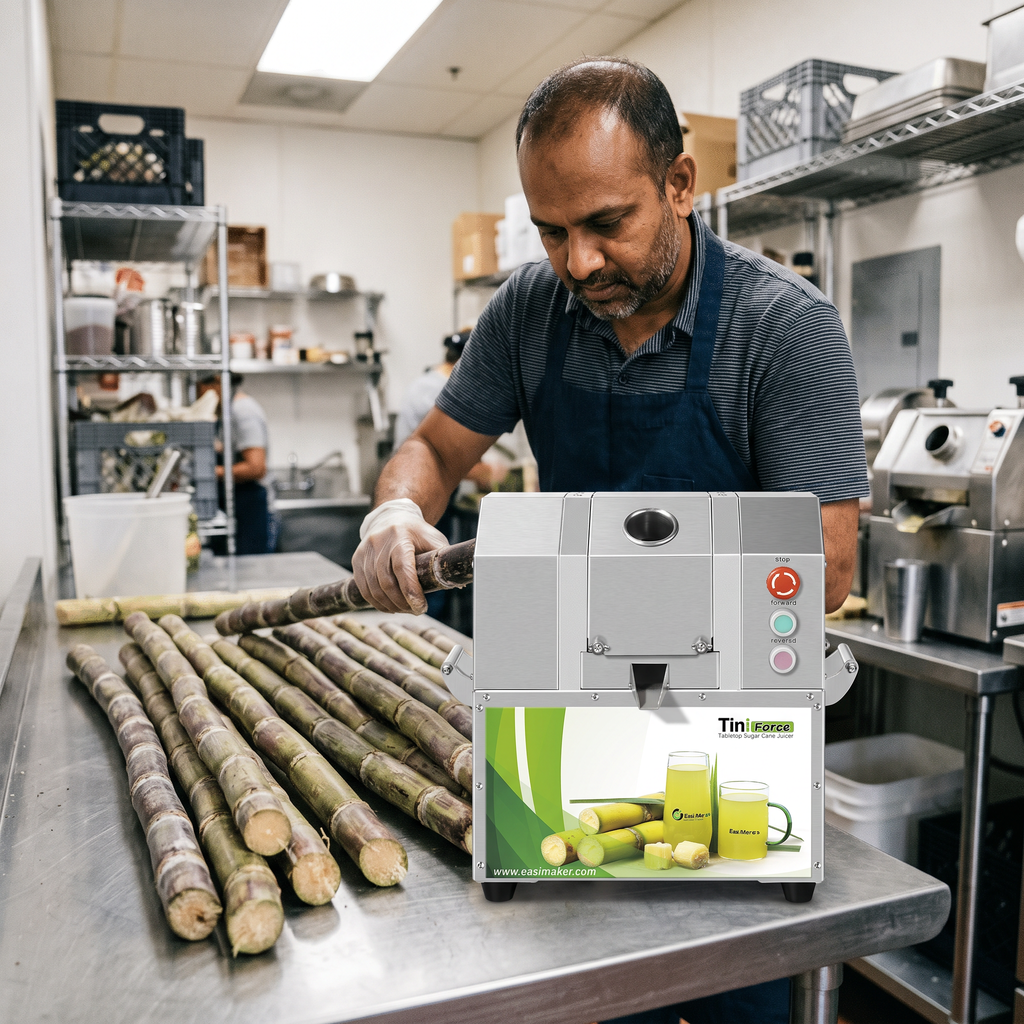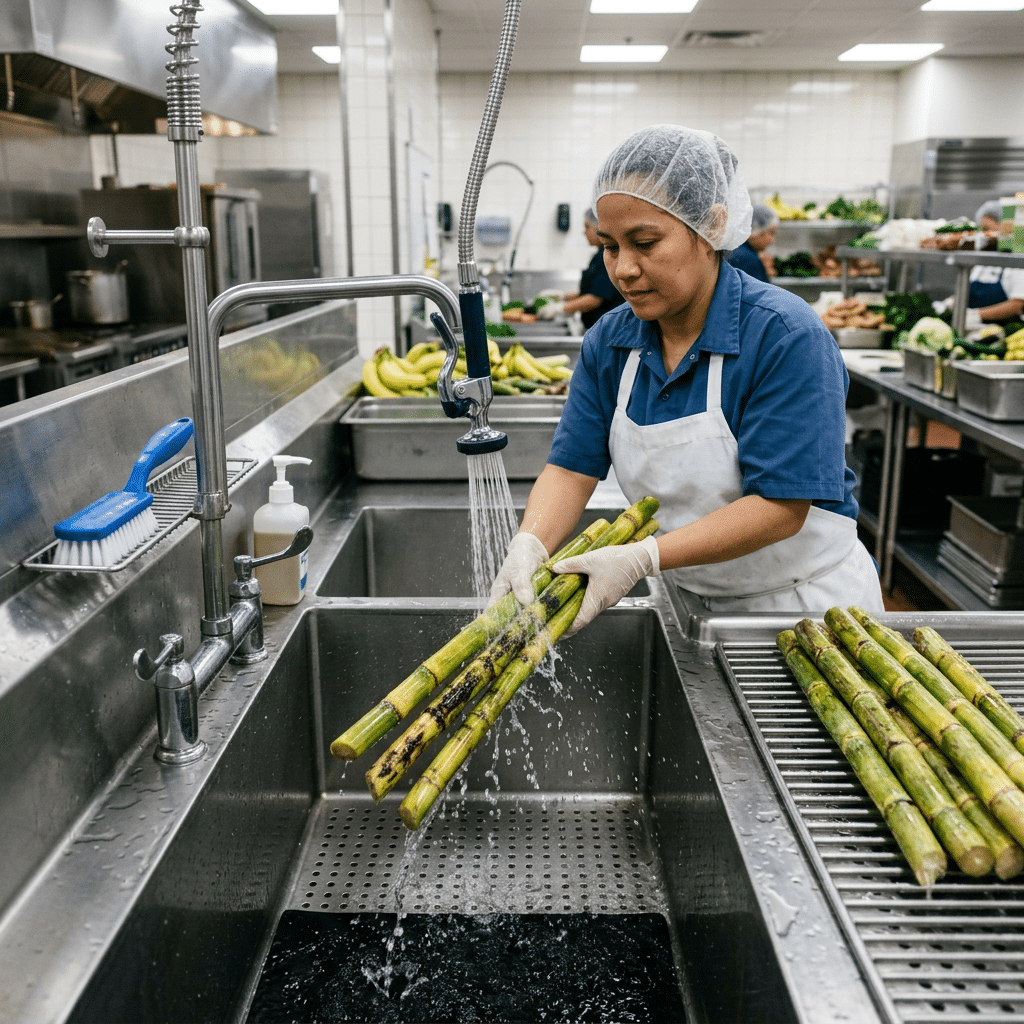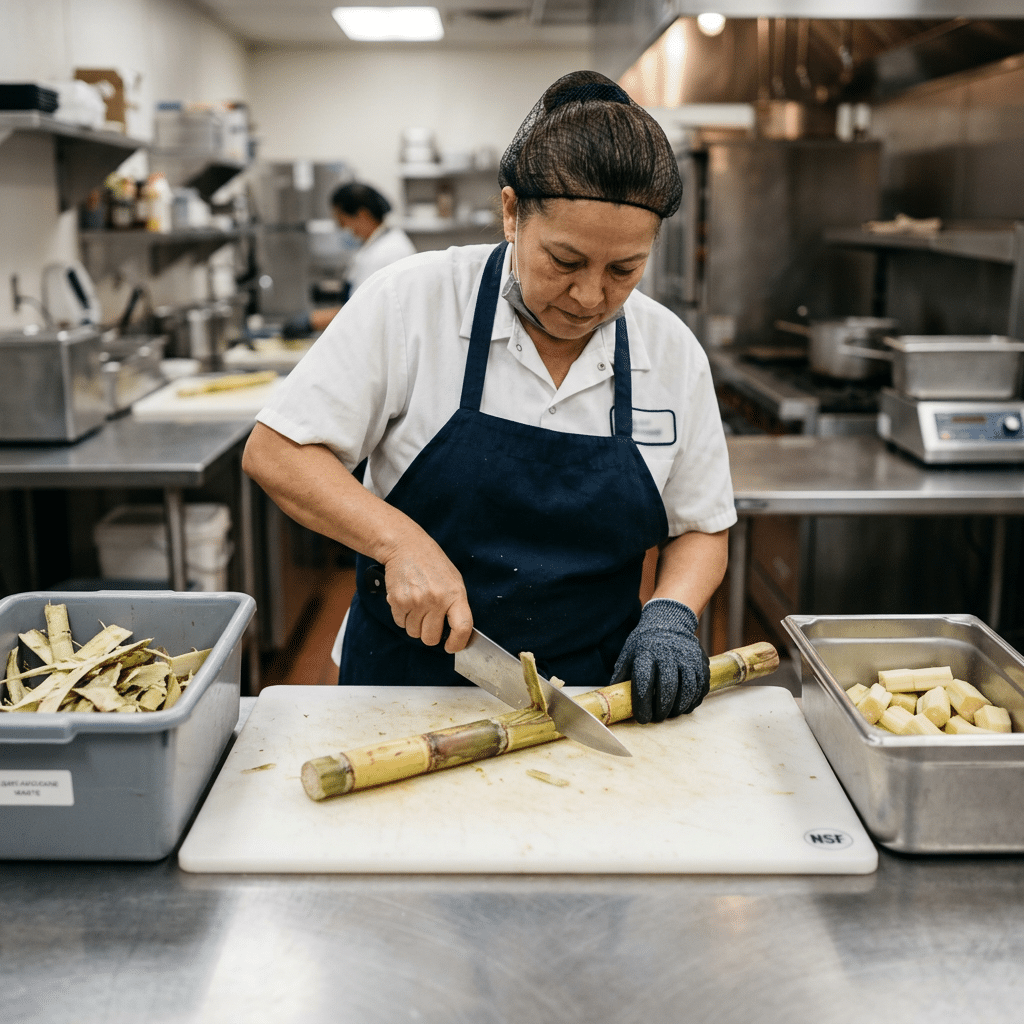
How to Prepare Sugarcane for a Juicing Machine: Cutting, Trimming, and Feeding

Table of Contents

To prepare sugarcane for a juicing machine, inspect and wash the stalks, remove unsuitable ends and damaged sections, cut them to a manageable length, and feed straight pieces gradually according to the machine inlet and operating manual.

How to Prepare Sugarcane for a Juicing Machine
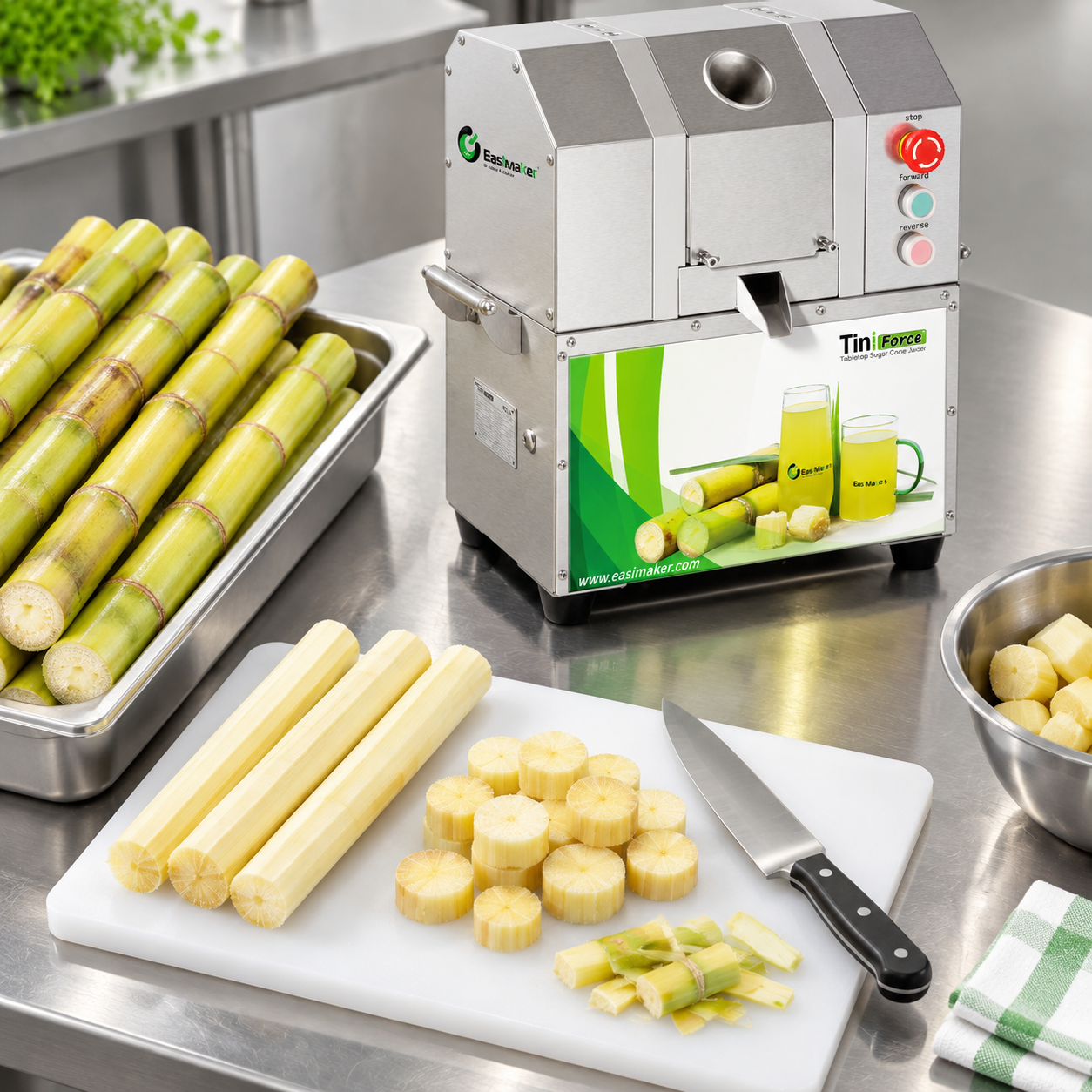
Whole and trimmed sugarcane prepared for a commercial juicing machine

To prepare sugarcane for a juicing machine, first inspect the delivery, remove soil and damaged material, wash the stalks with potable water, trim the hard ends and leaves, and cut long stalks into manageable sections. Feed only clean, straight pieces that fit the machine inlet without forcing them.

The correct sugarcane stalk size for juicing depends on the machine’s feed opening, roller arrangement, and operating instructions. There is no single universal length or diameter. Operators should confirm the permitted dimensions before setting a preparation routine.

  • Keep raw cane away from finished juice and clean service tools.
  • Use a stable cutting board and a suitable knife or cane cutter.
  • Do not place hands near the feed inlet or push cane with tools unless the manufacturer specifically permits it.
  • Stop the machine before clearing a blockage.

Commercial Sugarcane Preparation Workflow
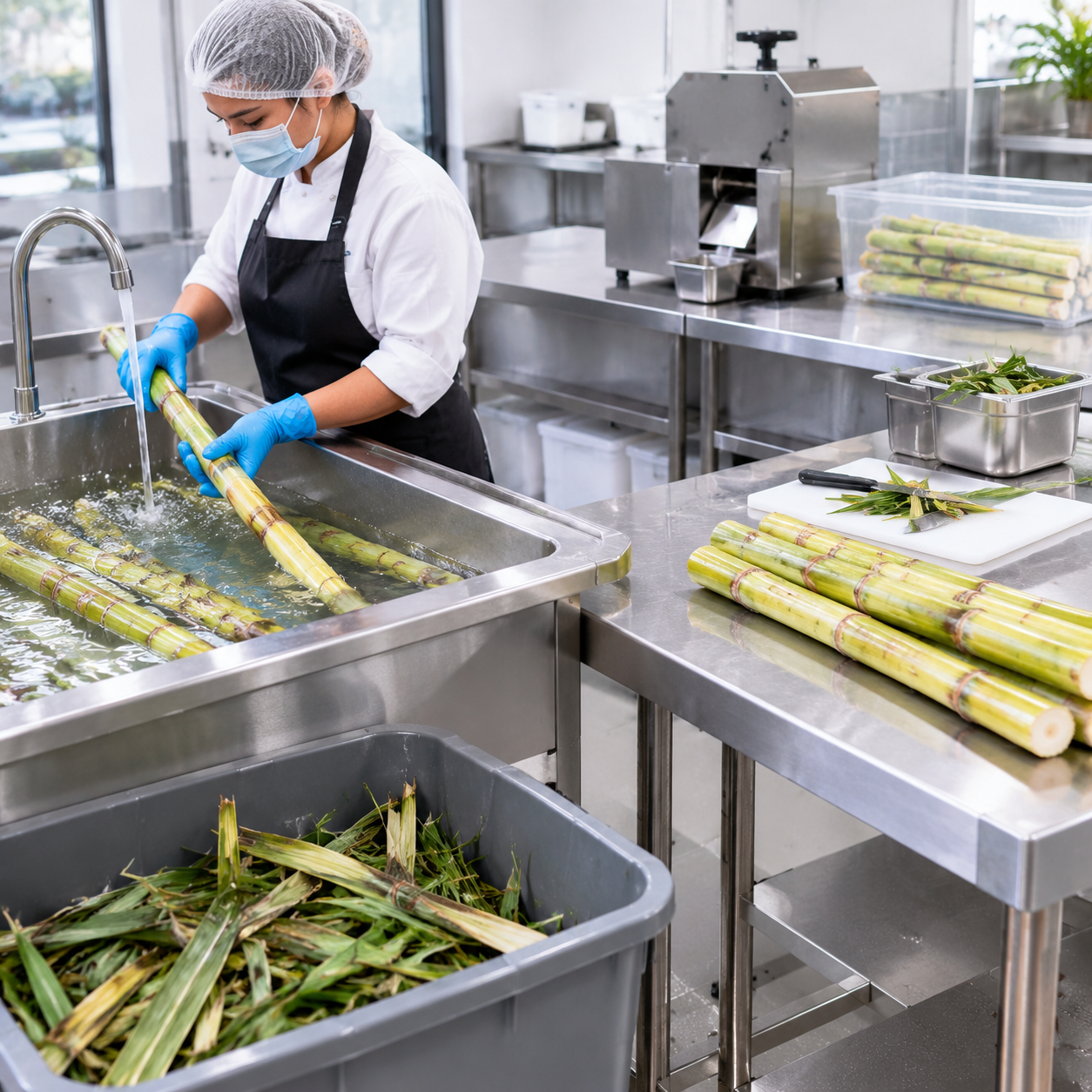
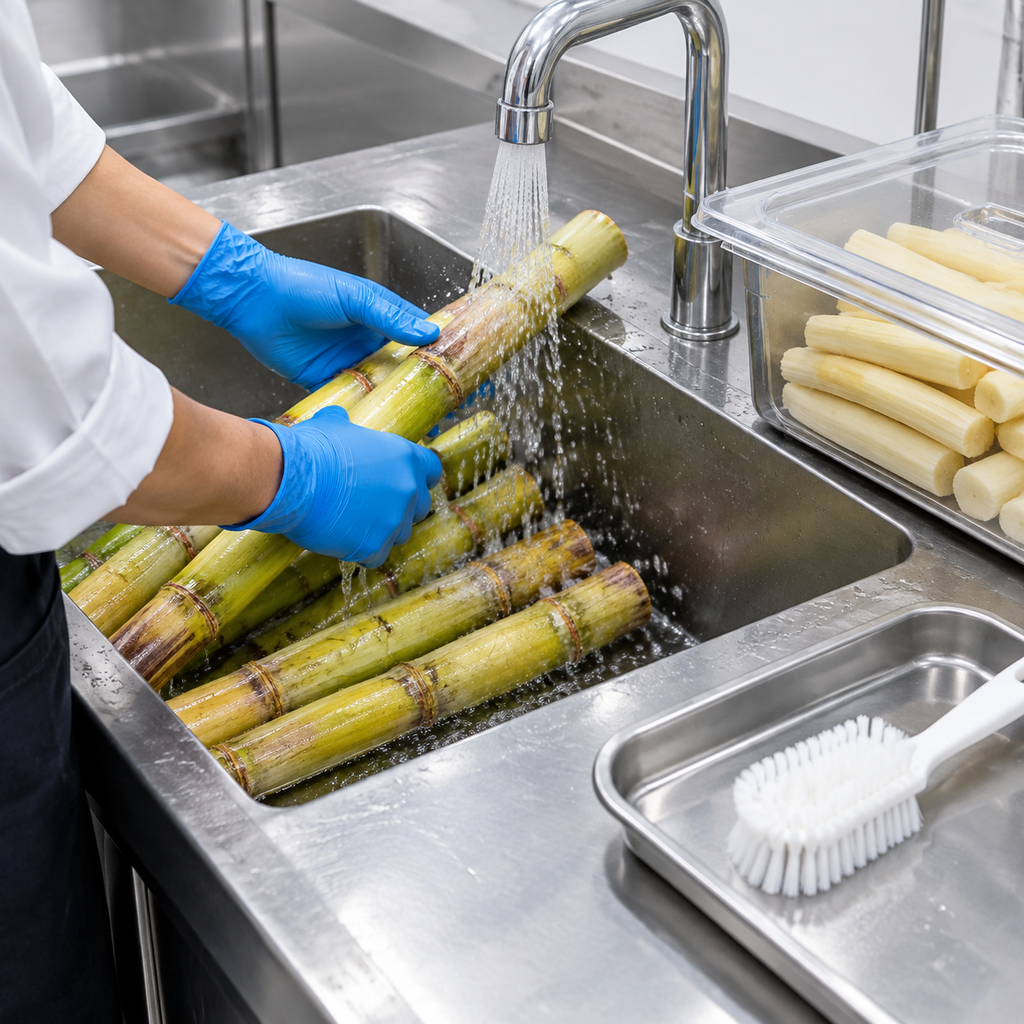
Commercial workstation for washing and trimming sugarcane

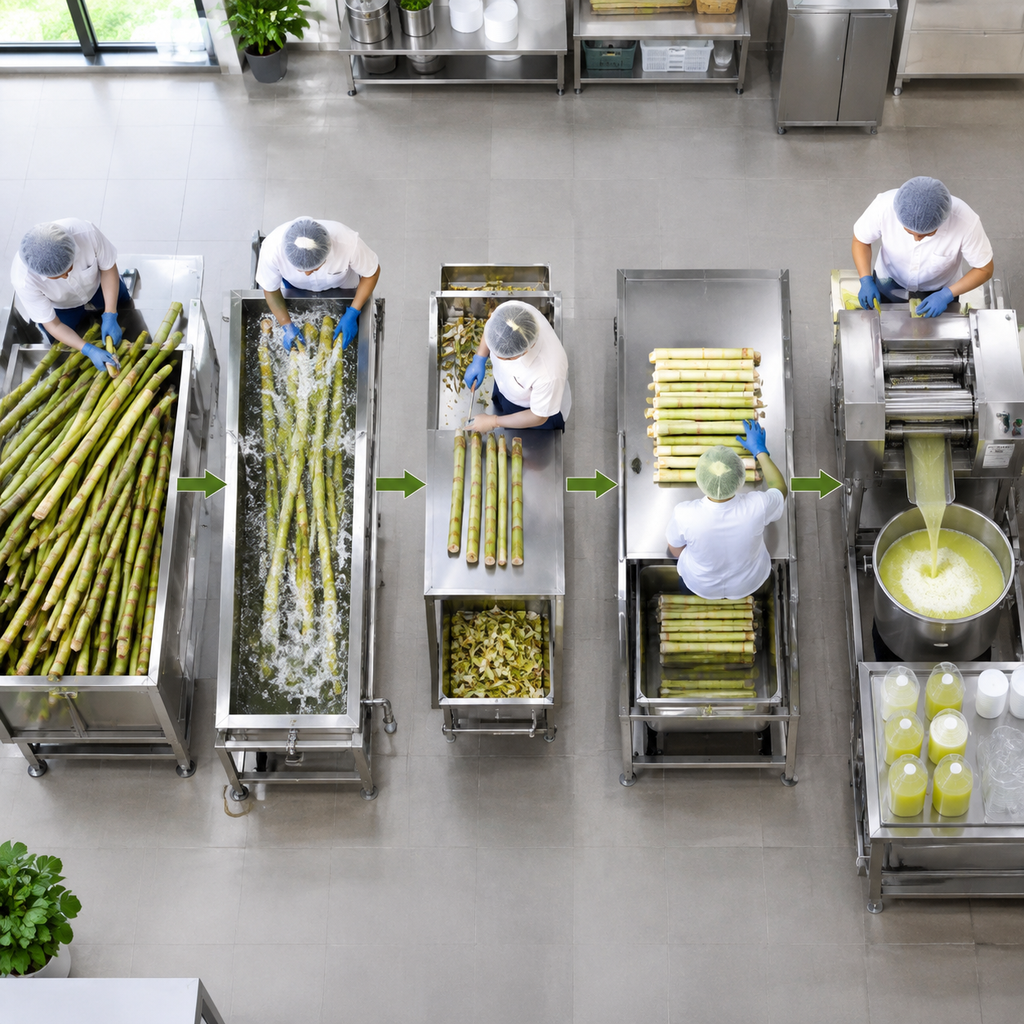
A repeatable preparation station helps staff produce more consistent feed pieces and reduces avoidable interruptions during service. Arrange the area so cane moves from receiving to inspection, washing, cutting, temporary holding, and juicing in one direction.

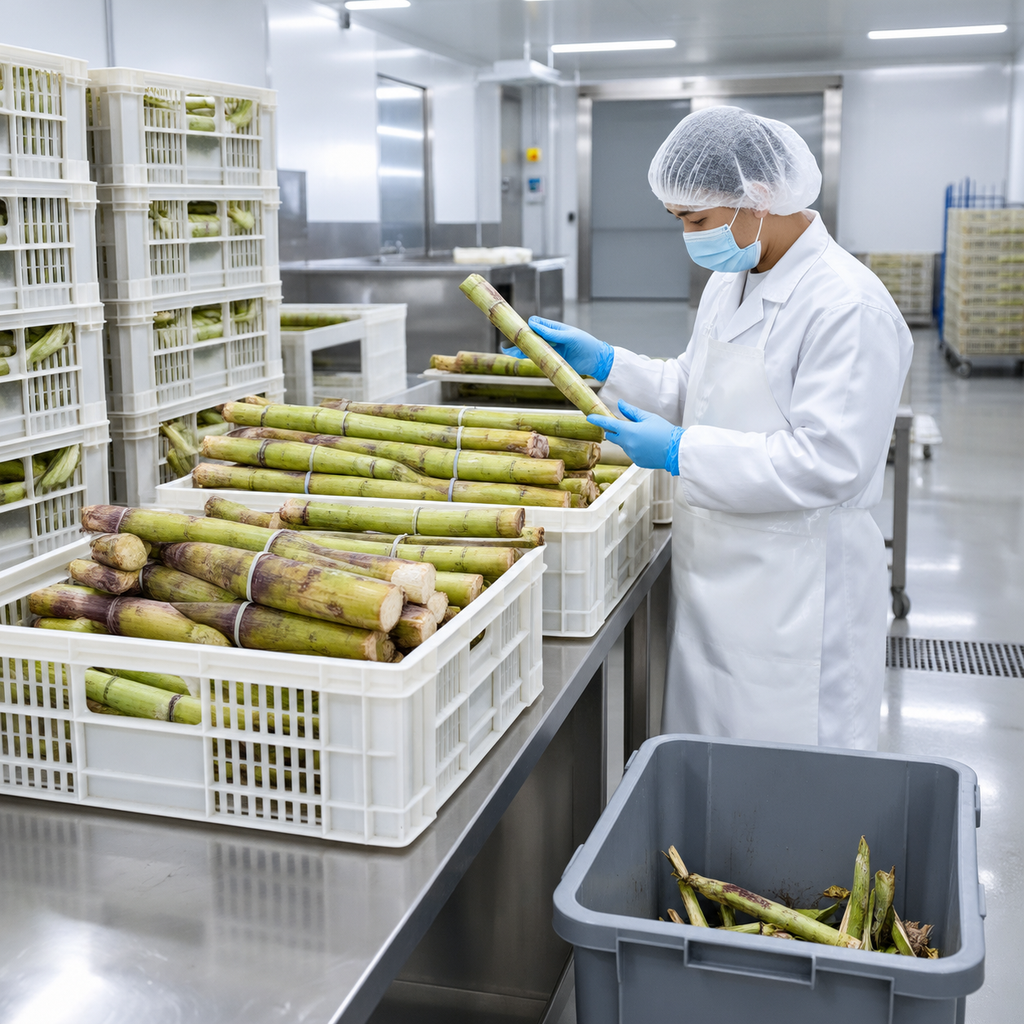
  1. Inspect the cane. Separate stalks with heavy mould, unusual odour, excessive softness, deep cracks, or contamination. Follow the site’s food-handling procedure for disposal.
  2. Remove leaves and loose outer material. Trim away leaf blades, dry sheaths, and protruding growth that could interfere with handling or the inlet.
  3. Wash the stalks. Rinse away visible soil and debris using potable water. Keep washed cane on a clean, drainable surface rather than directly on the floor.
  4. Trim both ends. Cut off visibly dirty, split, or excessively dry ends. Make square cuts where practical so pieces are easier to position.
  5. Cut into feedable sections. Divide long stalks into lengths that the operator can control and that fit the feed opening. Check the manual for machine-specific limits.
  6. Stage only a working quantity. Avoid leaving prepared cane exposed longer than necessary. Use covered or clean containers suitable for food contact.

Keep the cutting tools clean, sharp, and assigned to this task. A blunt tool can crush the stalk, increase handling effort, and create irregular pieces.

How to Cut and Size Sugarcane
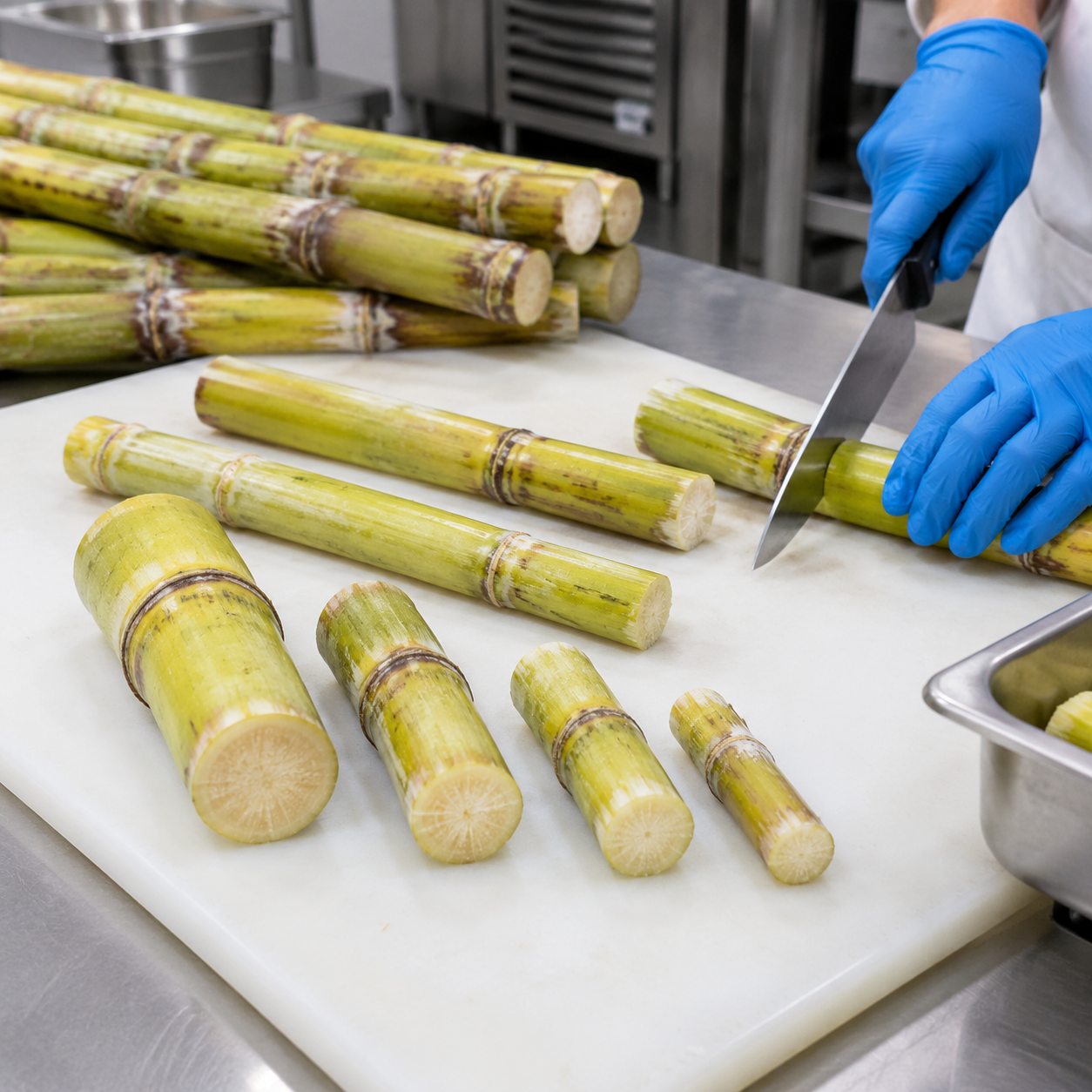
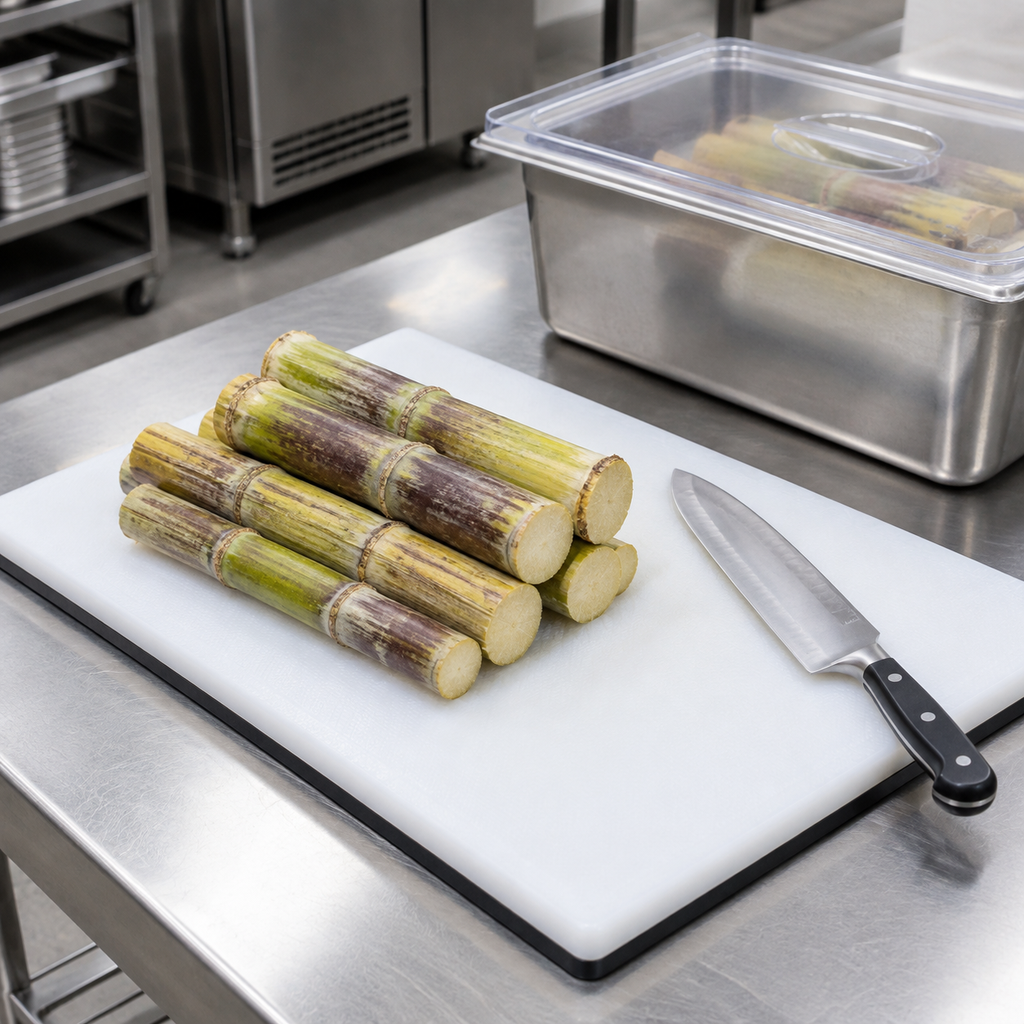
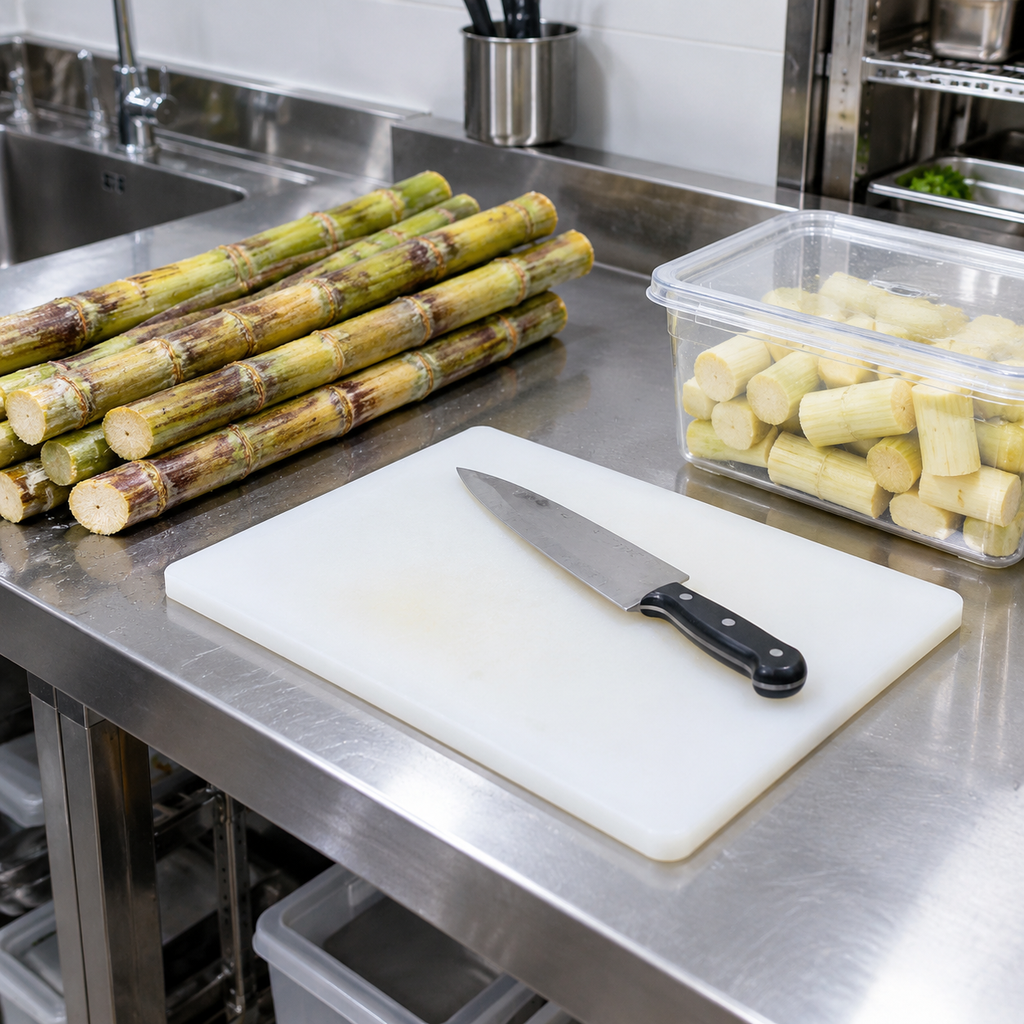
Sugarcane stalks cut into manageable sections for juicing

When operators cut sugarcane for a juicer, the objective is not to make every piece identical. The objective is to create clean, manageable sections that enter the feed opening smoothly and do not require excessive force.

Length

Long stalks may be difficult to control at a counter or kiosk. Shorter sections are usually easier to align, but cutting them too short can increase handling and staging work. Select a practical length after checking the machine inlet and the manufacturer’s instructions.

Diameter and shape

Sort unusually thick, sharply curved, split, or flattened stalks before feeding. Do not assume that a piece will fit because its average diameter appears acceptable; a swollen joint or damaged section may catch at the inlet.

Cut surface

Fresh, square-ended cuts help staff handle the cane. Remove splintered sections and avoid leaving loose fragments on the preparation surface. If the cane is too large for the specified inlet, do not force it through or improvise a cutting method without confirming that it is suitable.

Keep a simple first-in, first-out system for prepared cane. This supports stock rotation and helps staff identify material that has been exposed for too long under local operating conditions.

Feeding Sugarcane Into the Machine
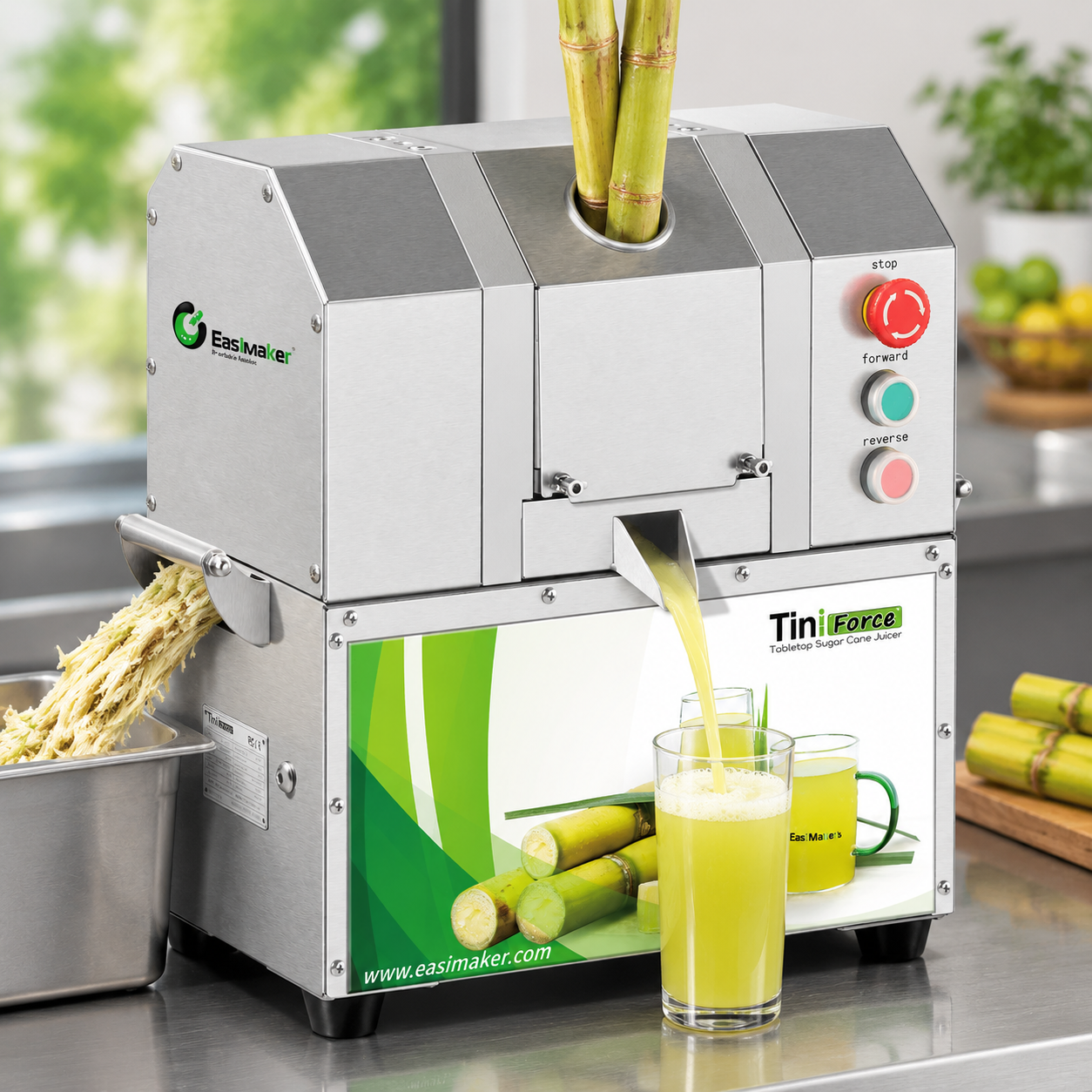
Prepared sugarcane aligned with the front feed inlet of a commercial juicer

A safe sugarcane machine feeding guide starts with the machine manual, not with a guessed feed rate. Confirm the electrical setup, guards, switches, inlet dimensions, and approved operating method before production.

  1. Place the machine on a stable, level surface with enough room for the operator and the rear bagasse discharge area.
  2. Check that the juice outlet and collection container are clean and correctly positioned.
  3. Start the machine only as instructed by the manufacturer.
  4. Hold one prepared section at a time and align it with the feed opening.
  5. Allow the machine’s rollers or feed system to draw the cane in. Do not force, twist, or reach into the inlet.
  6. Feed the next piece only when the previous piece has cleared the working area and the machine is operating normally.
  7. If cane stops moving, switch off and isolate the machine before investigating.

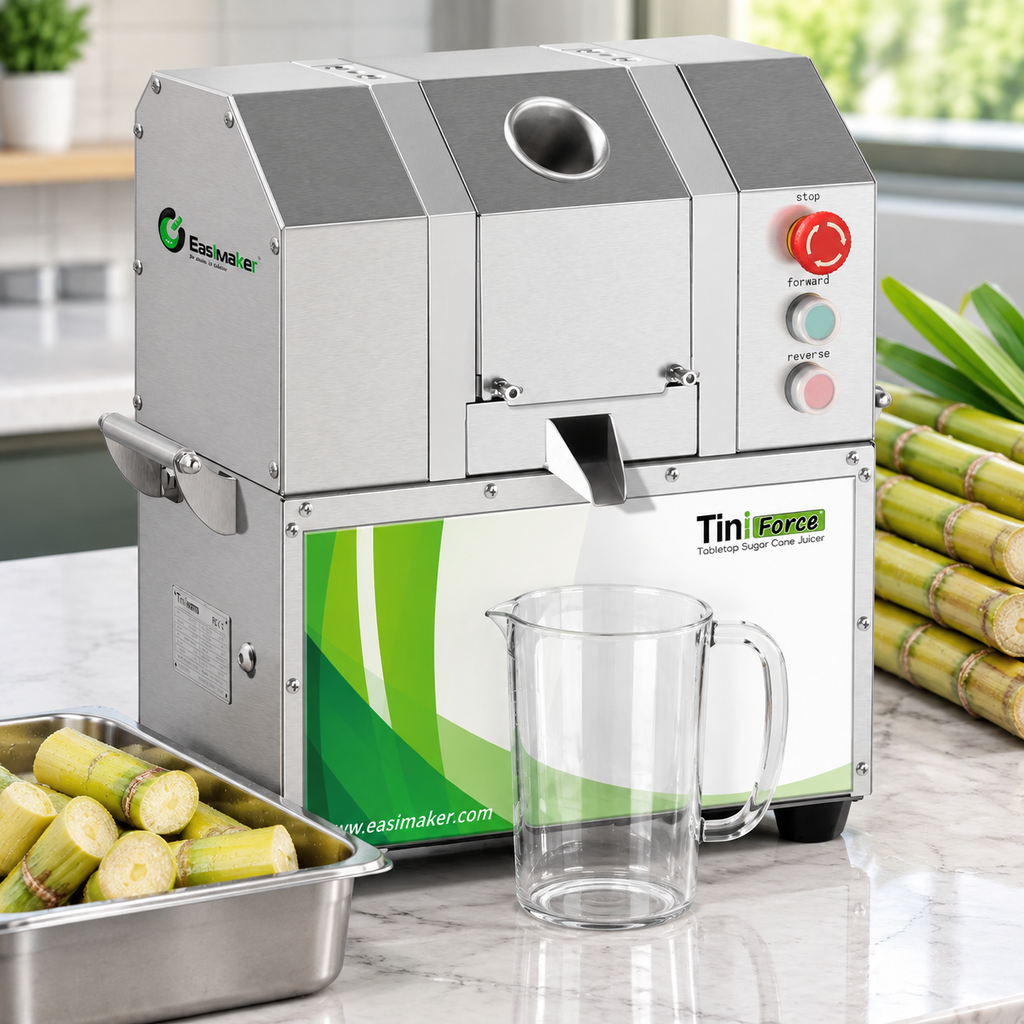
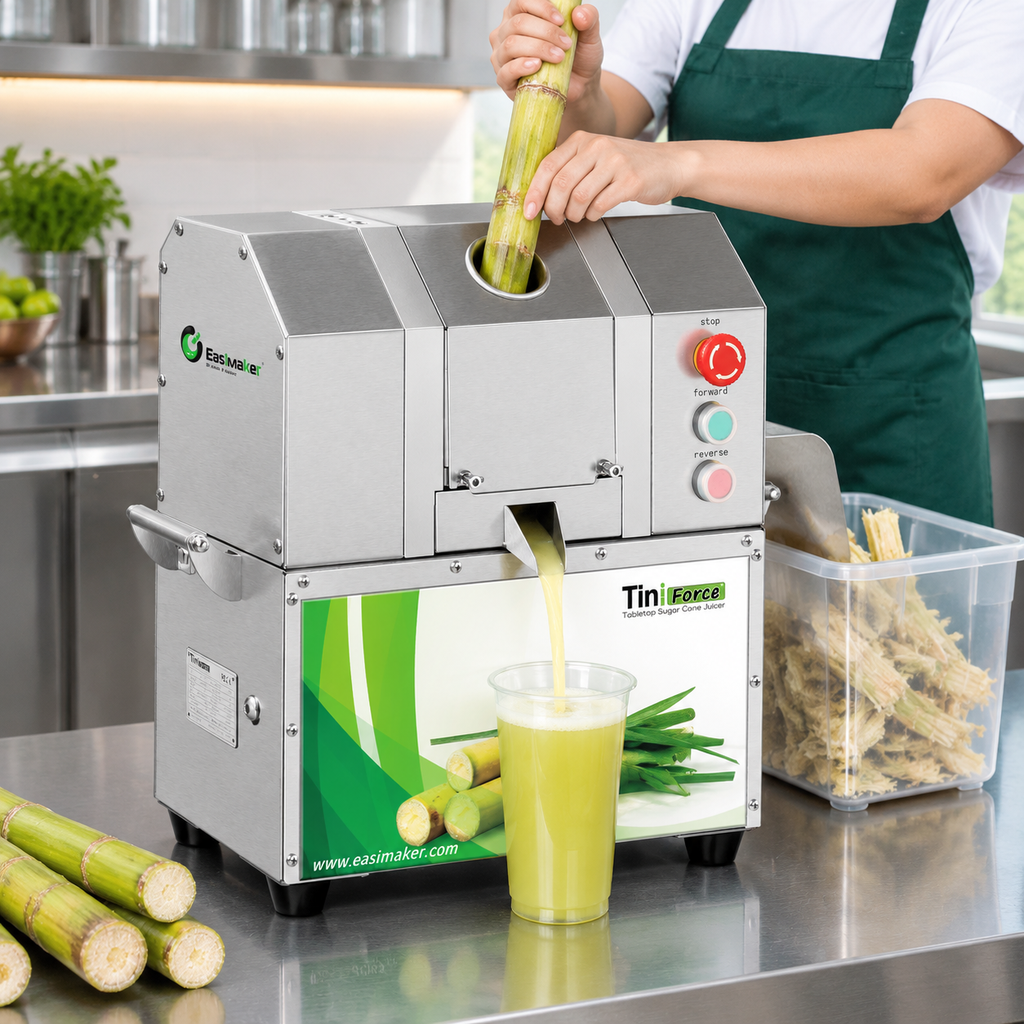
For example, the Easimaker TiniForce S3 uses a front circular feeding port, a central front juice spout, and rear bagasse discharge. Operators should therefore position the cane preparation area and waste container around that flow rather than placing equipment directly behind the machine.

Consistent feeding depends on prepared cane as well as machine design. If staff repeatedly need to force pieces, stop production and review the stalk size, cutting method, cleanliness, and machine instructions.

Preparation Methods Compared
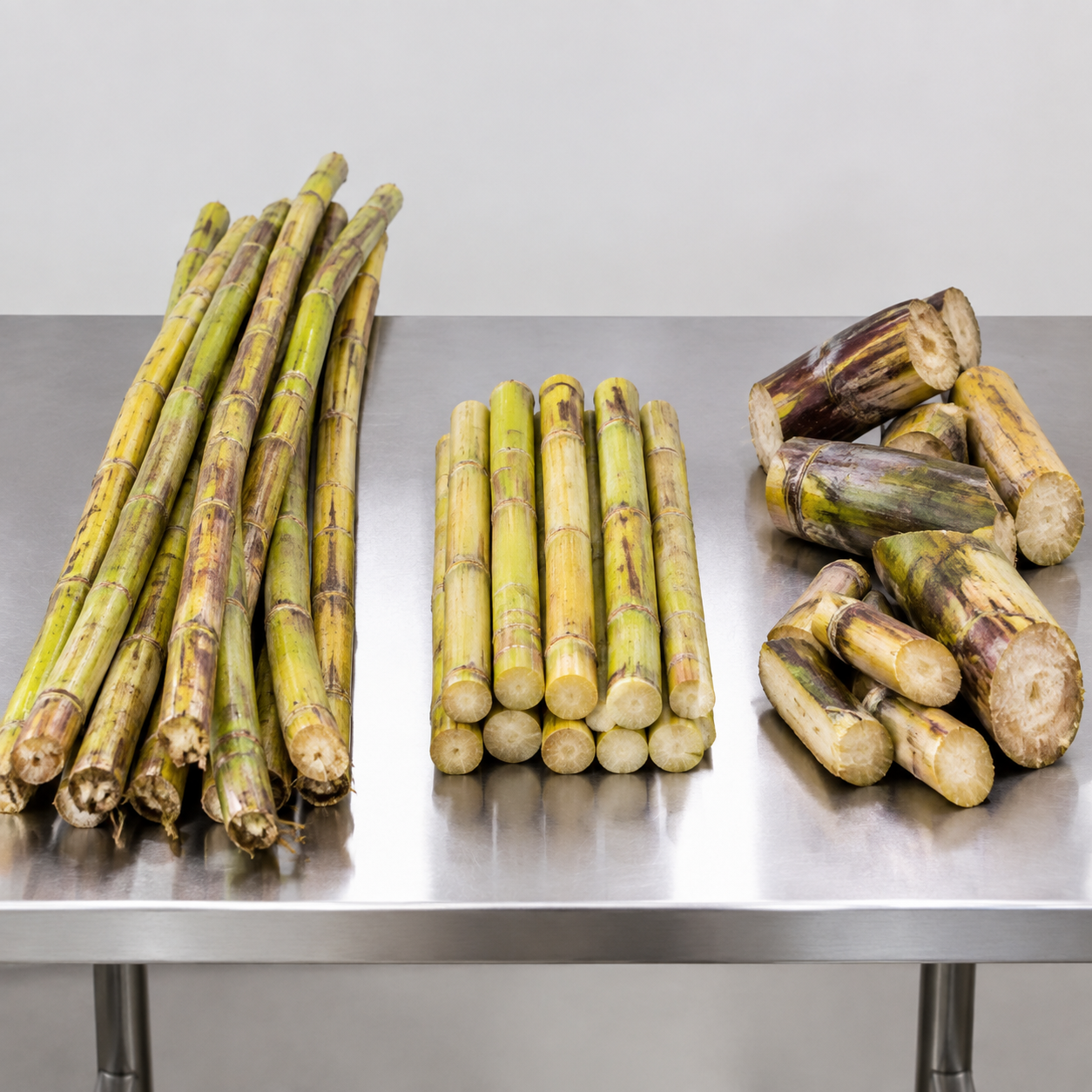
Comparison of sugarcane pieces suitable and unsuitable for machine feeding

The best preparation method depends on the cane condition, available labour, service volume, and the machine’s feed design. The comparison below helps operators choose a practical routine without treating one method as universal.

MethodBest fitAdvantagesPoints to control
Cut to short, uniform sectionsCounter service with frequent small batchesEasy to handle and stageMore cutting and container handling
Cut to longer manageable sectionsHigher-volume service with adequate workspaceFewer individual pieces to prepareRequires better control at the inlet
Minimal trimmingClean, straight cane with limited loose materialFast initial preparationLeaves, damaged ends, or irregular shapes may interrupt feeding
Detailed sorting and trimmingMixed-quality deliveries or strict process controlMore consistent feed materialNeeds additional labour and a clear disposal routine

Use the method that matches the machine’s documented inlet requirements. If the manufacturer has not specified a permitted stalk length or diameter, request confirmation rather than inventing a target size.

Cleaning and Preparation Checks Before Service
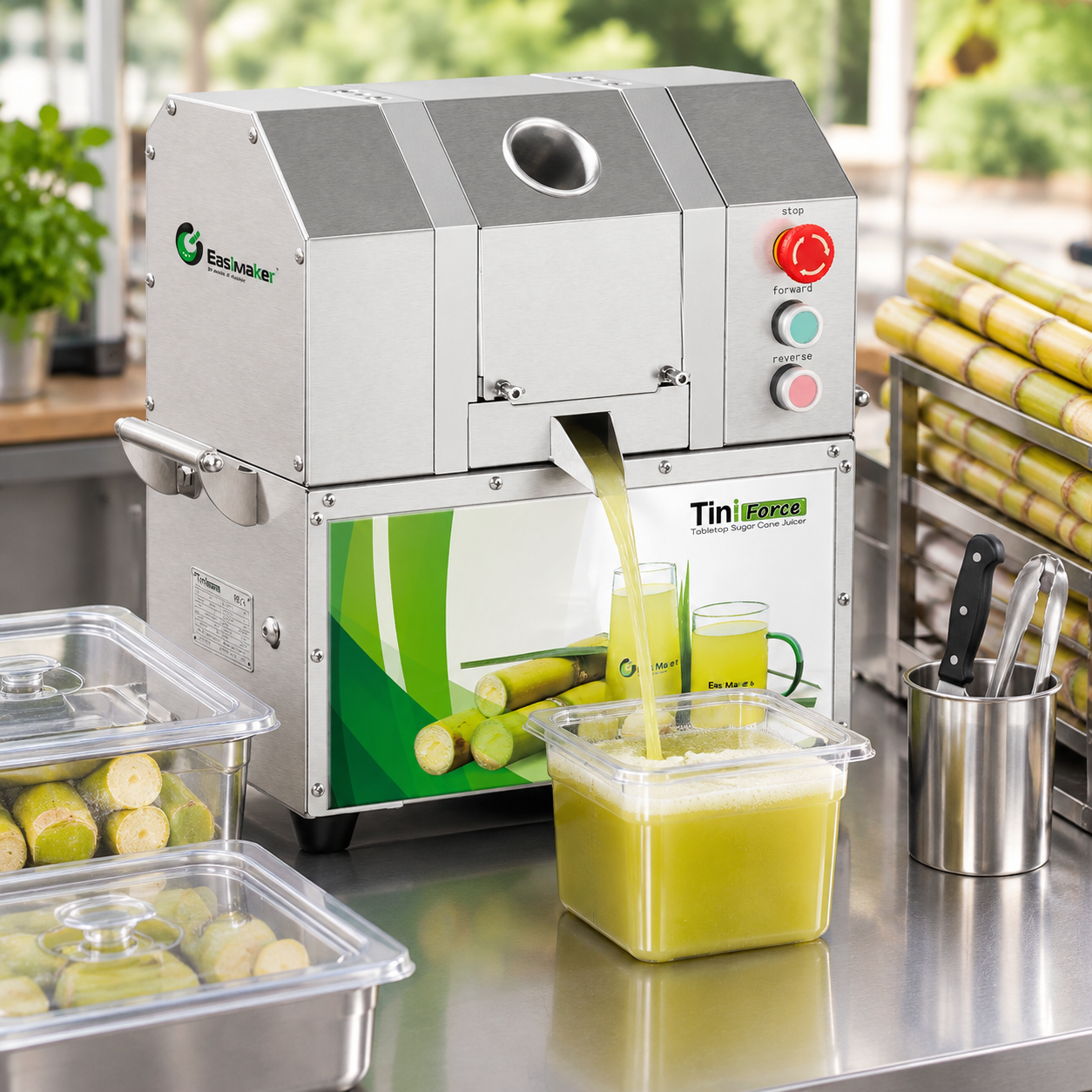
Clean commercial workstation ready for sugarcane juicing

Preparation quality should be checked before the first customer order and during longer service periods. Use a short checklist:

  • Are the raw and prepared cane areas separated from the juice collection area?
  • Are cane pieces free from visible soil, loose leaves, and damaged fragments?
  • Are knives, boards, containers, and contact surfaces clean and suitable for the task?
  • Does each piece fit the machine inlet without forcing?
  • Is the juice container positioned below the outlet, with bagasse directed to the intended waste container?
  • Are staff clear on how to stop and isolate the machine?

Clean the machine according to its manual and your food-handling procedure. Do not spray water into electrical controls or enclosed components unless the manufacturer states that this is safe. If the machine shows unusual noise, vibration, slow feeding, or repeated jams, stop and inspect it rather than compensating with greater force.

Preparation is part of equipment performance, but it cannot correct a machine that is incorrectly configured, overloaded, or overdue for service. Keep operating records and contact the supplier when the issue cannot be resolved through the approved procedure.

FAQ

What is the best length to cut sugarcane for a juicer?

There is no universal length. Cut the stalk into sections that the operator can control and that fit the machine’s feed opening without forcing. Confirm the permitted dimensions in the machine manual or with the manufacturer.

Should sugarcane be washed before machine juicing?

Yes. Remove visible soil and debris with potable water, then keep the washed cane on a clean, suitable surface. Follow the site’s food-handling procedure and local requirements.

Can whole sugarcane stalks be fed into a commercial juicer?

That depends on the machine design and inlet dimensions. Long or irregular stalks may be difficult to control. Use prepared sections unless the manufacturer specifically confirms another method.

What should I do if sugarcane jams in the machine?

Stop the machine and isolate it from power according to the operating procedure before investigating. Never reach into a moving inlet or use force to clear a jam. Check the stalk size, shape, cleanliness, and machine instructions.

Does cutting sugarcane into smaller pieces improve juice extraction?

Cutting mainly improves handling and feed control. It does not guarantee a particular extraction result. Machine condition, cane quality, roller settings, and the approved operating method also affect operation.

Need Help Matching Cane Preparation to Your Machine?

Share your cane dimensions, service format, expected operating routine, and target market with Easimaker. Our team can help you discuss a suitable commercial sugarcane juicing setup and the preparation points to confirm before ordering.
Discuss Your Equipment Requirements

Sugarcane Preparation Before Juicing: A Standard Commercial Workflow

Table of Contents

A reliable sugarcane preparation workflow helps commercial operators protect product handling standards, reduce service delays, and feed cane into the juicer more consistently.

The Commercial Sugarcane Preparation Sequence

One-way commercial workflow for preparing sugarcane before juicing

Sugarcane preparation before juicing should follow one controlled direction: receive and inspect the cane, wash the exterior, remove unsuitable sections, trim ends and nodes as needed, cut stalks to suit the machine inlet, keep prepared cane protected, then feed it steadily into the juicer. This sequence separates raw-material handling from juice collection and service.

For a commercial operator, preparation is not simply cutting cane into shorter pieces. It is the process that helps prevent soil and damaged material from reaching the juicing area, keeps staff from improvising during busy periods, and makes the feedstock more consistent for the equipment. The exact cutting length, whether to peel, and the number of preparation stations depend on the stalk size, shop layout, machine design, local food-handling requirements, and expected order flow.

A practical workflow should have separate zones or clearly separated containers for unwashed cane, washed cane, trimmed cane, juice-service tools, and bagasse. For a broader station plan, see this guide to a clean and efficient sugarcane juice shop layout.

1. Receive and Select Cane Before It Enters the Preparation Area

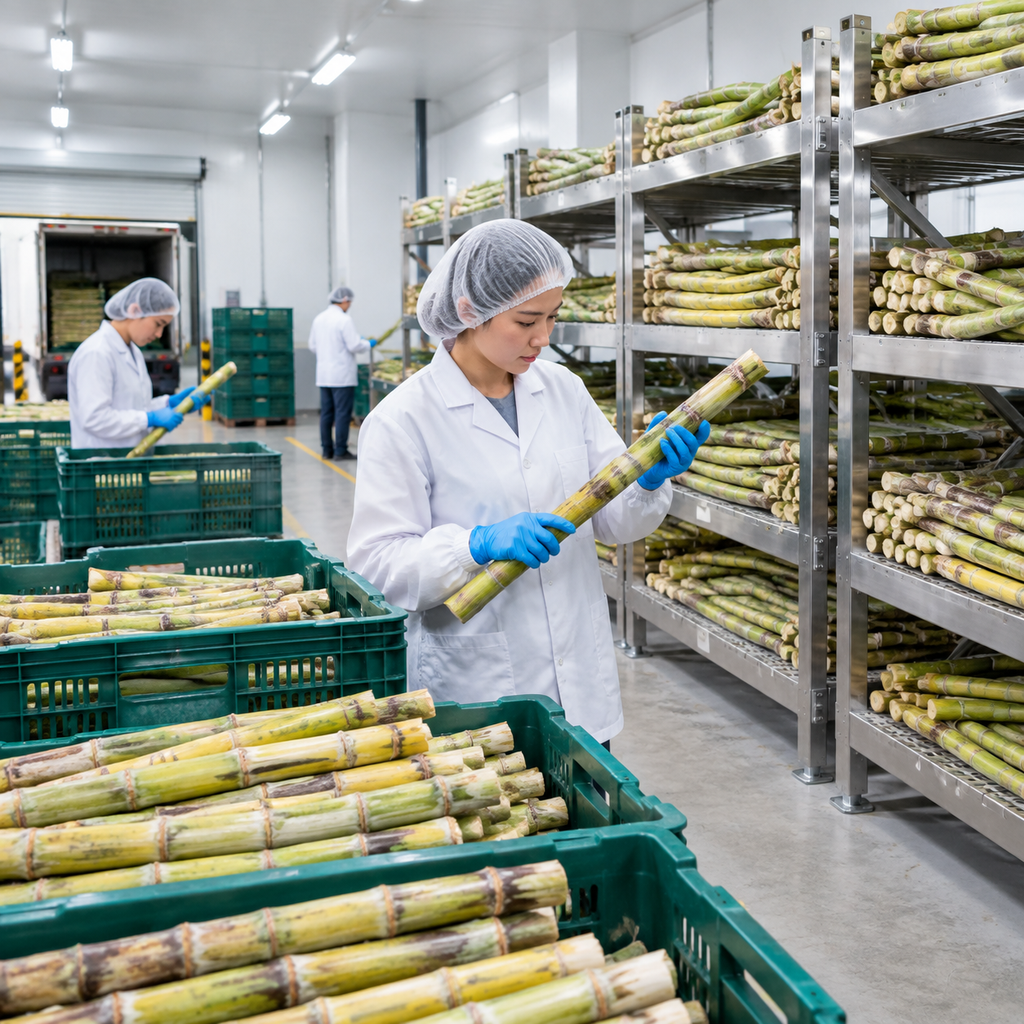
Sugarcane receiving and inspection area in a commercial juice operation

Start with a receiving check. Keep delivered cane off the floor and away from clean utensils, cups, and finished juice. Check the outside of the bundle for excessive dirt, visible mould, soft or leaking sections, pest damage, unusual odour, or heavily split stalks. Set questionable stalks aside for management review or disposal according to your site procedure.

Choose sound stalks that are appropriate for your product and equipment. Cane diameter and straightness vary by variety and supply source, so do not assume one cutting method fits every delivery. A short trial run at the start of a new batch can confirm whether the pieces feed smoothly through your juicer.

Record supplier, delivery date, and any receiving issue in a simple log when your operation needs traceability. Rotate stock so older acceptable cane is prepared first. Storage conditions and holding time affect the practical quality of cane, which is why receiving, storage, and preparation should be managed as one process rather than isolated tasks.

2. Wash, Inspect, and Trim the Exterior

Washing and trimming sugarcane in a dedicated preparation area

Washing is the core hygiene step in commercial sugarcane juice preparation because the outer rind can carry soil and handling debris. Use potable water and a dedicated wash sink or washing area that is not used for dishwashing or waste handling. Rinse each stalk thoroughly and scrub where needed with a food-contact brush reserved for this task.

After washing, inspect again under good lighting. Trim away visibly damaged, dried-out, dirty, or discoloured ends. Remove loose fibres and any material that could interfere with feeding. Knuckles or nodes do not always need removal, but prominent or hard sections may be trimmed when they make the stalk difficult to cut or feed.

Sanitising is not a substitute for washing. Follow the approved cleaning and food-contact procedures for your location, including requirements for sinks, brushes, knives, boards, and staff handwashing. Keep cleaned cane in a clean, covered or otherwise protected staging container rather than returning it to a raw-cane crate.

A documented cleaning routine for the juicer is equally important. Pair cane preparation with a defined daily sugarcane juice machine cleaning SOP so that clean raw material does not meet an inadequately cleaned extraction path.

3. Make Deliberate Cutting and Peeling Decisions

Prepared sugarcane sections and safe cutting setup for commercial juicing

When operators ask how to prepare sugarcane for juicing, cutting length is usually the first practical question. Cut washed cane into pieces that fit the machine’s feed opening and can be held and guided safely. Do not force overlong, bent, or oversized stalks through an inlet. Refer to the operating instructions for the particular machine instead of applying a universal length.

Use a stable food-preparation surface, a suitable sharp knife or approved cutter, and a non-slip method of securing the cane. Train staff to keep hands clear of the cutting path, cut away from the body, and place cut pieces directly into a clean staging container. Dull tools increase effort and can lead to rough, inconsistent cuts.

Full peeling is not automatically required for every commercial juice program. Some operators retain the cleaned rind and use a juicer designed to process prepared stalks. Others peel sections when local product standards, customer expectations, the condition of the rind, or machine guidance make it appropriate. If peeling is used, it should be consistent: remove peel in a designated raw-prep area, control peel waste, and avoid re-contaminating cleaned cane.

Never treat a general-purpose saw or a meat-processing band saw as a default cane-cutting tool. Sugarcane cutting and peeling for juice should use a process and equipment that are suitable for the product, safely guarded, cleanable, and permitted by site procedures.

4. Stage Prepared Cane and Feed the Juicer at a Controlled Pace

Commercial sugarcane juicer set up with prepared cane and juice collection container

Prepare only the amount of cane that the team can protect and use within its defined operating window. Over-preparing can crowd the counter, complicate stock rotation, and increase handling. During peak periods, a small staged batch of washed and cut cane can keep the juicer operator focused on extraction and customer service.

Before starting, check that the machine is assembled correctly, the juice collection container is clean and positioned correctly, and bagasse can discharge without obstruction. Feed one prepared piece at a time in the direction specified by the manufacturer. Keep hands, utensils, and loose clothing clear of the feed opening. Use only the supplied or approved method for advancing cane; never reach into the inlet to clear material while the machine is energised.

For example, the front-feed configuration shown in the commercial sugarcane juicer selection guide should be matched with a counter position that allows the operator to load cane from the front while managing juice collection and rear bagasse clearance. Choose a machine only after confirming its physical workflow and operating instructions against your actual site.

If a stalk does not enter smoothly, stop and assess the piece. Do not use excessive force. It may need further trimming, a different orientation, or removal if it is not suitable for the machine.

Preparation Tools and Equipment Roles

The best equipment list is the one that supports a clear, clean workflow without adding unnecessary handling steps. Confirm material suitability, cleanability, guarding, local compliance, and available counter space before purchase.

Item or equipmentPrimary roleWhat to evaluateOperator note
Receiving crate or rackKeeps incoming cane off the floorCleanable construction and separation from clean zonesUse only for unwashed cane.
Wash sink and dedicated brushRemoves exterior soil and debrisPotable-water access, drainage, and cleanable food-contact surfacesStore brushes clean and dry between uses.
Knife and preparation boardTrims ends and cuts stalks to feed sizeSafe handling, stable board, cleaning routine, and staff trainingMatch cut length to the actual juicer inlet.
Covered staging containerHolds washed and cut cane before extractionFood-contact suitability and easy cleaningLabel or position it to prevent raw/clean mix-up.
Commercial sugarcane juicerExtracts juice from prepared caneFeed arrangement, workspace, cleaning access, power requirements, service supportFollow the specific manual for operation and safe clearing.

New operators can cross-check the full operating station against this sugarcane juice bar equipment checklist, including collection, refrigeration, cleaning, and waste-handling needs.

Daily Controls That Keep Preparation Consistent

Consistency comes from short checks repeated every day, not from a complicated process that staff cannot maintain. A shift lead can use the following controls:

  • Opening check: verify that wash, cutting, staging, juicing, and waste areas are clean and ready.
  • Raw-to-clean direction: move cane from receiving to washing to preparation to juicing; do not send it backward.
  • Tool control: keep knives, boards, brushes, and containers assigned to their task and cleaned between shifts.
  • Batch discipline: prepare practical quantities and rotate staged cane in order.
  • Machine readiness: inspect the feed area, juice path, bagasse discharge area, and collection container before service.
  • Exception handling: stop when cane is unusually hard to feed, visibly unsuitable, or associated with a machine concern.

Common avoidable mistakes include washing cane in a sink used for dirty equipment, placing clean cane back into raw crates, cutting every stalk to one assumed size, leaving prepared cane exposed on a crowded counter, and trying to clear a running machine by hand. These shortcuts can disrupt both hygiene and service flow.

Once juice is extracted, maintain the same discipline through handoff. This practical guide to packaging sugarcane juice for takeaway and delivery covers cup, lid, sealing, and handling considerations after the preparation and juicing stages.

FAQ

Do you need to peel sugarcane before juicing?

Not always. The need to peel depends on the juicer design, the condition of the cane, your intended product standard, and local operating requirements. Washed and inspected cane is essential; full peeling should be a deliberate process decision rather than an assumption.

How long should sugarcane pieces be before juicing?

There is no single correct length for all machines. Cut pieces to fit the specific feed opening and to allow safe, controlled handling. Check the machine manual and test a new cane batch before high-volume service.

Can washed sugarcane be stored for later service?

It can be staged only under your defined food-handling procedure and in a clean, protected container. Avoid preparing more than the operation can properly protect, rotate, and use within its established holding practice.

What should staff do if a cane piece will not feed into the juicer?

Do not force it. Stop the feed attempt, follow the machine’s operating instructions, and inspect the stalk for excess size, hard nodes, bending, or damage. Trim or discard the piece as appropriate, and never place hands inside an energised feed opening.

Plan a Preparation Workflow That Fits Your Juicing Operation

Easimaker can help B2B buyers discuss a commercial sugarcane juicer setup that matches their expected output, available counter space, cane preparation process, and service market. Contact our team to discuss equipment selection or OEM/ODM requirements.

Discuss Your Commercial Setup

Fresh Sugarcane Juice Workflow: From Cane Delivery to Customer Cup

Table of Contents

A reliable sugarcane juice workflow keeps raw cane, fresh juice, customer service, cleaning, and bagasse handling moving in one clear direction. This guide gives shops and operators a practical daily process.

The commercial sugarcane juice workflow at a glance

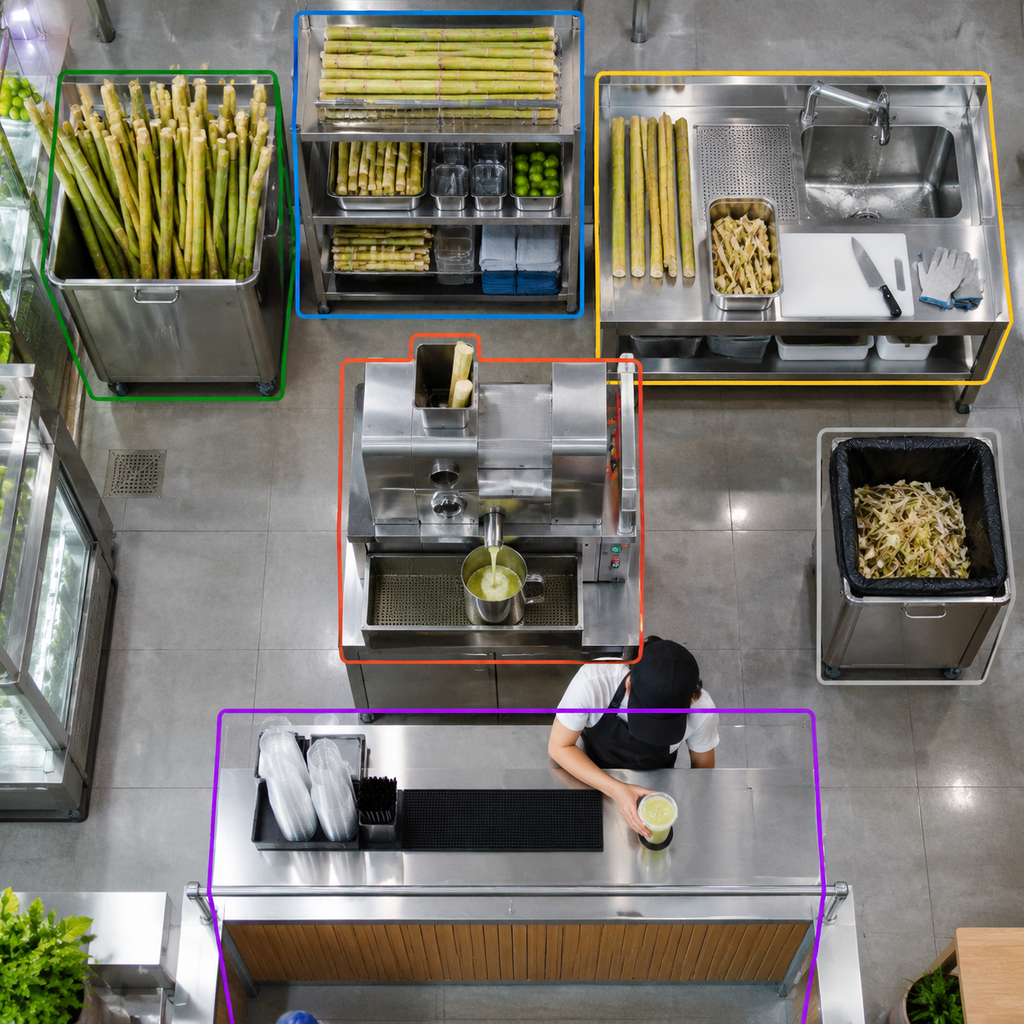
One-way workflow zones in a commercial sugarcane juice shop

A commercial sugarcane juice workflow should move in one direction: receive cane, inspect and store it, wash and trim it, extract juice, serve promptly, then clean the equipment and remove bagasse. The practical aim is to prevent congested counters, reduce unnecessary handling, and keep raw cane away from cups, ice, finished juice, and customer-contact surfaces.

For most shops, the best workflow is not the one with the most steps. It is the one every staff member can repeat during a busy period. Define who prepares cane, who operates the juicer, who handles payment and cups, and who completes cleaning checks. If one person covers several roles, arrange the counter so those activities still follow a logical order.

Start with the physical route: delivery door or receiving area → cane storage → wash and trimming bench → juicer → cup finishing and handover → dishwashing and waste area. Avoid carrying used tools, bagasse containers, or unwashed cane back through the finished-drink zone.

1. Receive, inspect, and store sugarcane

Sugarcane delivery inspection and elevated storage for a juice shop

The workflow begins before the juicer is switched on. On delivery, check the cane for visible damage, excessive dryness, mould, pests, off odours, or contamination from transport. Record the supplier, delivery date, and any lot or invoice reference that your local operating procedures require. Move acceptable cane promptly into the designated storage area.

Store cane off the floor, protected from splash, pests, cleaning chemicals, and direct heat. Use a simple first-in, first-out rotation so older acceptable stock is used before newer deliveries. Keep the storage method appropriate to your local climate, delivery frequency, and food-safety requirements; the correct temperature and holding time depend on local rules and the condition of the cane.

Do not use cane that appears spoiled or contaminated. A lower purchase price does not compensate for poor product quality, difficult preparation, or avoidable service waste.

2. Prepare cane at a separate raw-product station

Dedicated preparation station with trimmed sugarcane ready for juicing

Preparation turns delivered cane into juicer-ready pieces. Set up this work at a washable, easy-to-clean bench that is separated from the cup and finished-drink area. Staff should wash hands before starting, use clean food-contact tools, and follow the shop’s approved washing and sanitation procedures.

  1. Select cane needed for the current service period rather than overcrowding the counter with stock.
  2. Rinse or wash the outside of cane as required by your procedure, removing visible soil and debris.
  3. Trim damaged ends and remove unsuitable sections.
  4. Cut stalks to the length and shape accepted by the selected juicer’s feed opening.
  5. Place prepared pieces in a clean, covered or otherwise protected food container near the machine.

Keep knives and cutting boards controlled. A knife used for trimming raw cane should not be left on the cup assembly counter. If your menu includes lemon, ginger, mint, or other additions, prepare and hold these ingredients under their own suitable procedures rather than treating them as part of the cane-prep task.

3. Juice, finish, and serve to order

Commercial sugarcane juicer dispensing fresh juice at a clean service counter

Fresh extraction is the centre of the commercial sugarcane juice process. Before each shift, check that the machine is correctly positioned, connected to the matching electrical supply, assembled as instructed, and clean. Keep a usable clearance around the feed inlet, front juice outlet, and rear bagasse discharge. Never try to feed cane by hand beyond the machine’s intended feed point, and stop the machine before clearing any obstruction.

During service, an operator should feed prepared cane steadily, collect juice in a clean food-contact container or directly into the intended cup where the setup allows, and keep the outlet area free of drips and buildup. Add ice, permitted flavour ingredients, and a lid only with clean utensils or controlled dispensers. Hand the drink to the customer promptly.

Use a simple order sequence: take order and payment, prepare the cup, juice to order, add selected extras, close the cup, confirm the order, and hand over. This reduces remakes and makes it easier to identify which drink belongs to which customer during peak service.

For a compact front-feed machine, confirm how its physical layout suits the counter. The illustrated unit uses an upper-front feed inlet, a central front juice spout, and rear bagasse discharge; this means staff need clear working room at both the front and back of the machine.

Workstation zones and control points

Workflow zoneMain taskWhat should stay in the zoneKey control point
Receiving and storageInspect, record, rotate caneUnwashed cane, delivery records, storage racksKeep stock off the floor and separate from chemicals.
PreparationWash, trim, and cut caneWashable bench, knife, board, protected prepared-cane containerKeep raw-product tools away from cup assembly.
JuicingExtract juice and manage bagasse flowJuicer, juice collection vessel, bagasse binMaintain safe access to feed, outlet, and discharge areas.
Finishing and handoverAdd ice or menu options, lid, label, serveCups, lids, clean ice tools, payment and order systemProtect finished drinks from raw cane and splash.
Cleaning and wasteWash equipment and remove wasteCleaning tools, approved chemicals, waste containersDo not return used cleaning items to food-preparation zones.

The exact footprint will vary by shop, but each zone needs a defined purpose. When a counter is too small for fully separate stations, use time separation and clear container control: finish raw-cane preparation, clean and reset the work surface, then begin cup assembly.

4. Close, clean, and prepare for the next shift

Closing is part of the fresh juice service workflow, not an optional task after sales end. Stop the machine, isolate power as instructed, and follow the manufacturer’s cleaning guidance for the food-contact and accessible areas. Remove bagasse promptly into the designated waste stream. Clean spills from the counter, floor, outlet area, and surrounding surfaces before they dry or attract pests.

Use a written closing checklist that covers: remaining cane stock and condition, prepared-cane disposition, machine cleaning, removable parts where applicable, cup and ingredient storage, waste removal, floor cleaning, and a visual check for damage or unusual machine operation. Report issues before the next shift rather than asking staff to work around them.

Track recurring problems such as cane that does not fit the inlet, persistent drips, slow counter reset, or bagasse congestion. These are often workflow design issues that can be corrected by changing cane cut length, container placement, staff allocation, or equipment selection.

Choose equipment around the workflow

A commercial juicer should fit the way your staff actually receive, prepare, extract, and serve cane. Before choosing a machine, confirm the available counter dimensions, feed direction, juice outlet position, bagasse discharge direction, electrical requirements, cleaning access, expected service pattern, and locally available technical support. Do not assume that a machine suited to a low-volume counter will automatically suit a continuous queue.

Also consider the upstream preparation method. If whole stalks must be cut before feeding, allow for a safe cutting area and a controlled route to the juicer. The correct equipment package depends on your menu, operating volume, site layout, and local requirements.

A workflow review before purchase can prevent common installation problems, including no room for bagasse collection, a blocked front service counter, or insufficient access for cleaning and maintenance.

FAQ

What is the best order for a sugarcane juice shop workflow?

Use a one-way sequence: receive and inspect cane, store and rotate it, wash and cut it at a preparation station, juice it, finish and hand over the drink, then clean equipment and remove bagasse. Keep raw cane and preparation tools away from finished drinks and cup assembly.

Should sugarcane be prepared in advance for a busy shift?

Prepare only an amount your shop can protect, identify, and use within its approved operating procedure. Keeping prepared cane controlled and separate from unwashed stock helps service flow, but the handling method and holding period should follow local food-safety requirements.

Where should bagasse collection be placed?

Place the bagasse container where staff can access it without crossing the customer handover area or blocking the machine’s discharge path. Empty it often enough to prevent overflow, obstruction, and unnecessary handling during service.

How can a small sugarcane juice counter avoid cross-traffic?

Use clearly marked containers and time separation. Complete raw-cane preparation first, remove raw tools and waste, clean and reset the surface, then assemble drinks. Keep cups, lids, ice tools, and finished orders on the clean service side of the counter.

Plan a workflow that fits your counter and service model

Easimaker can help B2B buyers discuss a commercial sugarcane juicer configuration that matches their cane preparation route, counter space, expected service pattern, and target market. Request a practical equipment discussion or quote for your project.

Discuss Your Sugarcane Juicer Project

How to Prepare Sugarcane Before Juicing in a Shop

Table of Contents

Proper sugarcane preparation helps a juice shop maintain cleaner handling, smoother service, and more consistent machine operation. Follow a practical process for receiving, washing, trimming, cutting, staging, and cleaning the preparation area.

Quick answer: prepare sugarcane in a controlled sequence

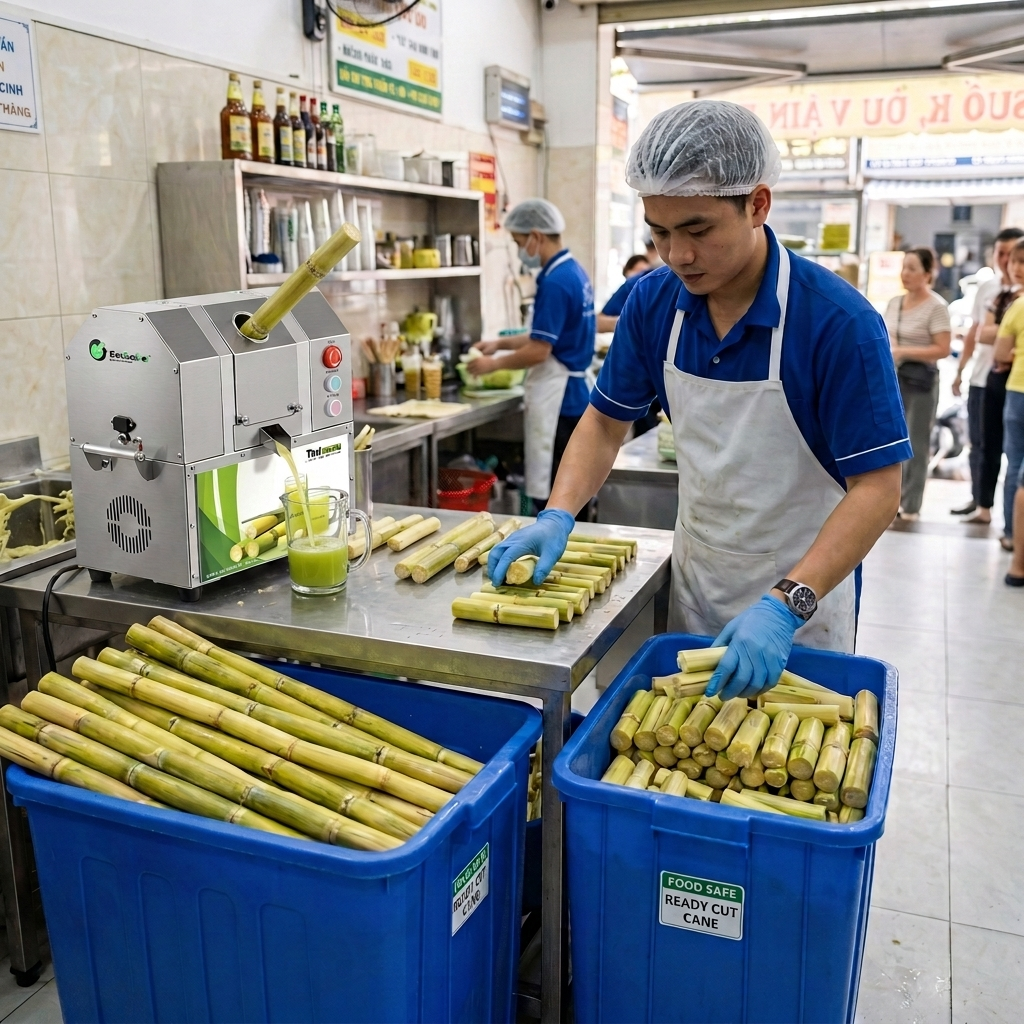
Washed and cut sugarcane separated for commercial juicing

To prepare sugarcane for juicing in a shop, inspect each delivery, reject cane that is visibly spoiled or heavily contaminated, wash the remaining stalks with potable water, trim damaged ends and unwanted material, cut stalks to the feed length required by the juicer, and hold the prepared cane in clean covered containers or a protected food-preparation area. Keep washed cane separate from unwashed stock, and clean the knives, boards, bins, and juicer food-contact surfaces according to the shop’s hygiene procedure.

The aim is not simply to make cane fit into a machine. Good preparation reduces the chance of dirt entering the juice area, prevents avoidable feed interruptions, supports safer handling, and gives operators a more predictable workflow during busy periods. The exact cutting length, whether the rind is left on, and the preferred crushing sequence depend on the juicer model, its feed opening, the supplier’s cane, and local food-handling requirements.

Use the machine manual as the final instruction for feed size and operating limits. A commercial machine should be selected for its expected duty cycle and service workflow, not only for its appearance or initial purchase price. See the practical differences between commercial and home sugarcane juicers when setting up a shop process.

What sugarcane preparation means in a commercial shop

Commercial sugarcane preparation is the controlled work completed before a stalk enters the crushing rollers. It normally includes receiving, visual inspection, dry removal of loose debris, washing, draining, trimming, cutting, temporary storage, and cleaning of the preparation station. In some operations, it may also include separating cane by diameter or cutting longer stalks into feed-ready lengths.

It is important to separate preparation from extraction. Preparation makes the raw material suitable for the machine and the shop’s hygiene workflow; extraction is the crushing process that expresses the juice. When these tasks are mixed together without defined areas or tools, operators can bring outer-surface dirt close to clean cups, ice, fruit garnishes, and finished juice.

A practical layout uses a one-way flow: unwashed receiving area, wash and trim area, clean staging area, then juicer. The flow should not require an operator to carry washed cane back through dirty stock. If space is limited, use clearly labelled containers and clean the work surface between tasks. This simple separation is often more useful than adding unnecessary steps that staff cannot maintain during service.

Before changing the routine, confirm what your local food-safety authority requires for produce washing, chemical use, storage time, and cleaning records. The process should also reflect the instructions supplied with your equipment.

1. Receive, inspect, and sort the sugarcane

Inspecting sugarcane stalks before washing and juicing

Preparation starts when cane arrives, not when a customer orders a drink. Put new deliveries on a receiving surface or in a designated bin rather than directly on the juice counter or floor. Check several stalks from each batch, especially if the supplier, delivery condition, or cane variety has changed.

Look for practical issues that can affect hygiene or feeding:

  • heavy soil, mud, insects, plant matter, twine, labels, or other foreign material;
  • soft, leaking, mouldy, unusually dry, or badly split sections;
  • damaged ends that may need trimming;
  • stalks that are too wide, bent, or long for the planned feed method; and
  • signs that the shipment has been stored or transported poorly.

Do not try to solve every defect by cutting around it. If a stalk has widespread spoilage, unusual odour, or contamination that cannot be removed through normal handling, set it aside and follow the shop’s rejection procedure. Record supplier or batch concerns where your purchasing process requires it. Early inspection prevents staff from discovering unsuitable cane at the juicer during a rush.

Sort acceptable cane into workable groups. For example, keep washed, feed-ready pieces separate from whole, unwashed stalks. Where stalk diameter varies significantly, grouping similar pieces can help staff choose an appropriate feed sequence without forcing large or awkward pieces into the machine. Avoid guessing that all cane should be processed the same way; machine geometry and local service habits matter.

Your output plan also affects receiving volume. The article on budgeting a sugarcane juice business explains why cane handling, cleaning supplies, storage, and workflow should be considered alongside the machine itself.

2. Wash sugarcane and control hygiene risks

Washing sugarcane at a commercial shop preparation station

Wash suitable sugarcane before it reaches the clean staging area. Use potable water and a clean sink, wash station, or other arrangement appropriate to the shop. Rinse the outside of each stalk thoroughly and remove visible soil from crevices, nodes, and damaged outer areas with a dedicated food-safe brush where needed. The brush, sink, and surrounding work surface must be cleaned and maintained so they do not become a source of contamination.

Do not wash cane in the same container used for waste, floor tools, or dirty equipment parts. Change wash water whenever it becomes visibly dirty if using a basin-based process. Draining is also important: let excess water run off before cutting or staging so work surfaces do not become unnecessarily wet and slippery.

Produce washing and surface sanitising are not interchangeable tasks. Cleaning removes soil and residues. Sanitising is normally applied to cleaned food-contact tools and surfaces at the concentration, contact time, and rinsing condition specified by the product label and local rules. Do not apply a chemical treatment to cane unless it is permitted for that purpose and your procedure clearly controls its use.

Use separate, clearly identified tools for raw-cane receiving and clean preparation where possible. Wash hands when moving from delivery handling to trimming or serving. Keep chemicals, lubricant, cleaning cloths, and non-food tools away from cane and juice-contact items.

A complete commercial sugarcane juicer hygiene guide can help align cane preparation with cleaning of the feed area, rollers, guards, juice collection parts, and surrounding counter.

3. Trim and cut cane to suit the juicer

Trimming and cutting sugarcane to fit a commercial juicer

After washing and draining, trim only what needs to be removed for clean, safe, consistent feeding. Remove damaged or questionable ends, loose leaves, roots, ties, packaging remnants, and any material that is not intended to enter the machine. Use a stable cutting board or purpose-built preparation surface, a suitable sharp knife or cutter, and a collection bin for trimmings. Dull tools increase handling effort and can lead to poor control.

Cut stalks to a length that fits the specific juicer’s feed opening and operating instructions. There is no universal commercial cut length. A piece that is too long may be difficult to control in a compact work area; a piece that is too short can be awkward to guide through some feed arrangements. Measure the actual feed path, review the manual, and test the workflow with the machine switched off before setting a staff standard.

Whether to peel cane is also machine- and market-dependent. Some operators process properly washed cane with its outer rind intact, while others use a peeling step to suit their service method or customer preference. Do not assume peeling is mandatory or that it can replace washing. If peeling is used, maintain the same separation between unwashed stock, peel waste, and clean feed-ready cane.

Never use the juicer rollers as a cutting tool, and never use hands or improvised objects to push unsuitable pieces into a feed opening. Equipment guards, push tools, and feed methods must be used exactly as instructed by the manufacturer. The operational considerations in these sugarcane juice machine best practices are useful when defining a safe handoff from preparation to crushing.

4. Stage prepared cane for steady service

Prepared cane should be easy to identify, protected from re-contamination, and close enough to the juicer for efficient service without blocking the operator’s movement. Use clean food-safe containers, racks, or covered bins that are suitable for the site. Avoid placing feed-ready cane directly on counters that are also used for payment, packaging waste, dirty cups, or customer belongings.

Prepare a practical amount for the expected service period rather than cutting every stalk at the start of a long day. Smaller batches make it easier to protect product condition, rotate stock, and identify problems. The appropriate batch size depends on demand pattern, staff numbers, storage conditions, and local requirements. If demand is uncertain, retain more cane whole and wash or cut it in controlled batches.

Label or organise containers so staff can distinguish unwashed cane, washed whole stalks, cut feed-ready pieces, and trimming waste. A simple first-in, first-out approach helps prevent older prepared stock from being overlooked. If a prepared batch becomes contaminated, falls on an unclean surface, or cannot be confidently identified, remove it from the clean workflow and assess it under the shop’s food-safety procedure.

Plan staff roles during peak service. One person can wash and cut while another operates the juicer and handles finished drinks, provided the work areas and hand hygiene remain controlled. In a small kiosk, the same operator may need to pause, clean hands, and reset the surface before switching from raw handling to serving.

5. Protect the machine and operators during preparation

Good preparation protects more than the finished drink. It can reduce the likelihood of loose debris reaching the feed area, help the operator present cane at a workable size, and make cleaning between service periods more manageable. It does not remove the need for correct machine use or scheduled maintenance.

Before opening, check that the juicer is clean, assembled correctly, and ready for operation according to its manual. Confirm that guards and covers are correctly fitted, the collection area is clean, and the work area is dry enough for safe footing. Keep the preparation knife, cutter, brush, and waste bin positioned so the operator does not reach across moving equipment.

During service, stop the machine and isolate its power before clearing a blockage, removing wrapped fibres, inspecting rollers, or cleaning areas that are not intended to be accessed while running. Never bypass a guard or reach into an active feed area. If cane repeatedly fails to feed smoothly, review its cut size, straightness, cleaning condition, and the machine instructions rather than trying to force it through.

Crushing method may also affect how you stage and re-handle bagasse. For a process review, read single-pass versus multi-pass sugarcane crushing. Use only the approach that is appropriate for your machine, product workflow, and local hygiene controls.

Build a repeatable daily preparation routine

The most reliable preparation method is a simple one that every trained operator can follow. Document the sequence in short, observable steps and adapt it after reviewing real service conditions. A practical daily routine can include:

  1. Inspect the preparation area, tools, containers, and juicer before use.
  2. Receive and inspect cane, keeping unwashed stock in its designated area.
  3. Wash acceptable stalks with potable water and allow them to drain.
  4. Trim and cut to the approved feed size for the specific machine.
  5. Stage clean, identified batches near the juicer.
  6. Keep waste moving out of the clean workflow.
  7. Clean and reset the station at defined intervals and at closing.

Train staff on the reason behind each step: separate dirty and clean work, prevent foreign material from reaching the machine, avoid unsafe feeding, and maintain an orderly counter. Supervisors should periodically observe the routine rather than relying only on a written checklist. If staff regularly skip a step, the issue may be poor layout, unclear ownership, inadequate tools, or an unrealistic preparation volume.

Review the procedure whenever the cane supplier changes, a new juicer is installed, the menu changes, or seasonal demand increases. Track recurring problems such as difficult feeding, excess debris, wet floors, or slow cleaning, then adjust the receiving, cutting, staging, or staffing process. This approach keeps sugarcane preparation practical while supporting consistent daily operation.