
Table of Contents
- Quick answer: what to check before buying
- What is a commercial bone saw machine?
- 1. Start with your products and cutting workload
- 2. Choose tabletop or floor configuration
- 3. Check cutting clearance and worktable support
- 4. Confirm blade compatibility and cutting setup
- 5. Assess safety, cleaning, and sanitation
- 6. Confirm power and installation requirements
- 7. Review service, spare parts, and total ownership
- Final pre-purchase checklist
A commercial bone saw should match the products you cut, daily workload, available space, cleaning routine, electrical supply, and service requirements. This checklist helps butchers compare machines on practical operating factors before purchase.
Quick answer: what to check before buying
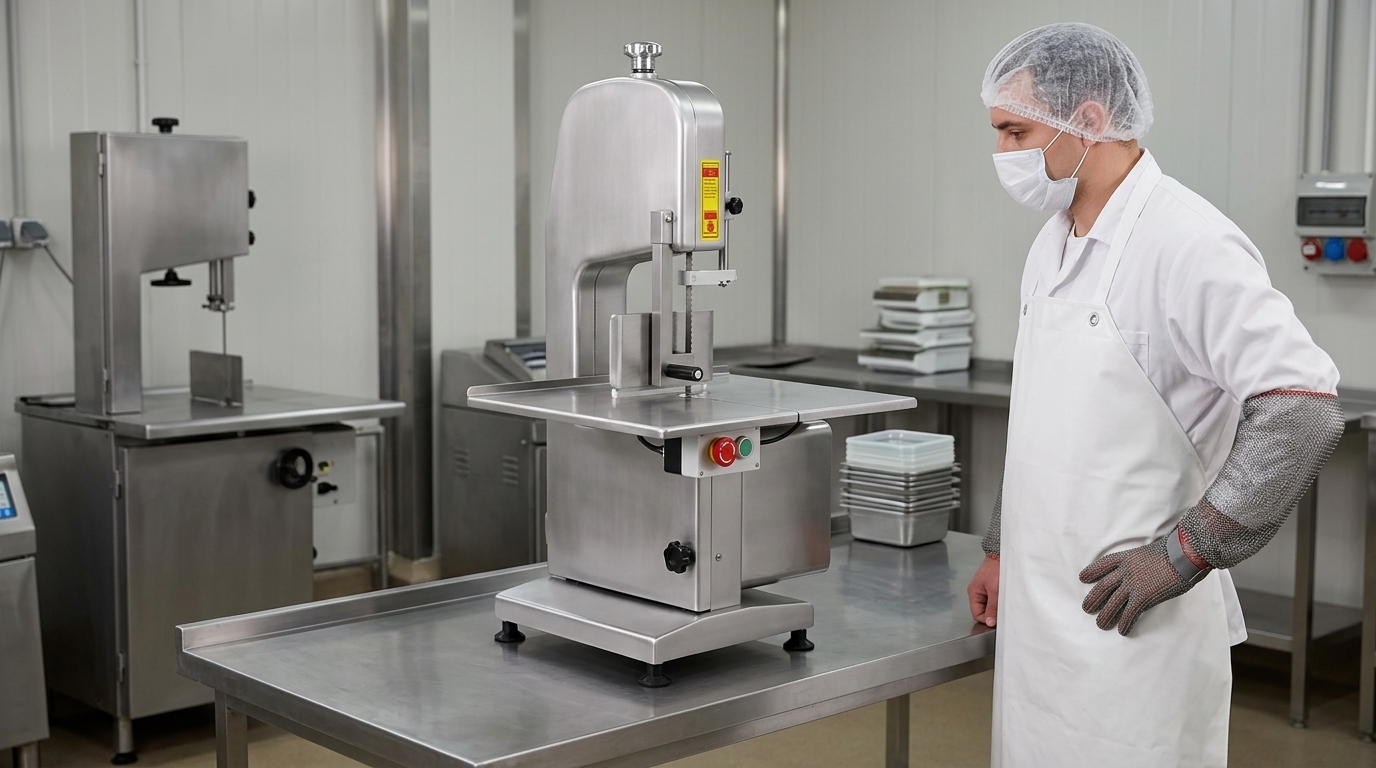
The right commercial bone saw machine is the one that safely handles your usual product size, temperature, and daily cutting volume without creating a difficult cleaning or service burden. Before comparing prices, confirm the meat and bone-in products you will cut, the largest product dimensions, the required bench or floor space, local electrical supply, blade availability, and the safety procedures your team can consistently follow.
For most butcher shops, meat counters, restaurants, and small processing rooms, the buying decision should be based on workflow rather than motor ratings alone. A machine may appear suitable on paper but still be a poor fit if its worktable is too small, its cutting clearance does not accept your typical cuts, or replacement blades are difficult to source.
Use this bone saw machine buying checklist to create a written specification before requesting quotations. Ask each supplier to confirm the supplied configuration, compatible blade dimensions, electrical requirements, cleaning instructions, available parts, and service process for your market.
What is a commercial bone saw machine?
A commercial bone saw machine, often called a meat band saw or butcher band saw, uses a continuous band blade to portion meat, bone-in cuts, poultry, fish, or frozen products. It is commonly used where consistent portions and clean, repeatable cuts are needed before retail display, further processing, or kitchen preparation.
It is not a general-purpose workshop saw. Food-contact construction, guarding, blade tensioning, worktable design, washable surfaces, and safe handling procedures are central to its intended use. The correct machine must also suit the condition of the product. Fresh bone-in meat, chilled poultry, and frozen blocks can behave very differently during cutting.
Operators should follow the machine manual, their local food hygiene requirements, and workplace safety rules. A bone saw is only one part of the process: receiving, chilled or frozen storage, preparation space, packaging, cleaning tools, and staff training all affect the result.
1. Start with your products and cutting workload
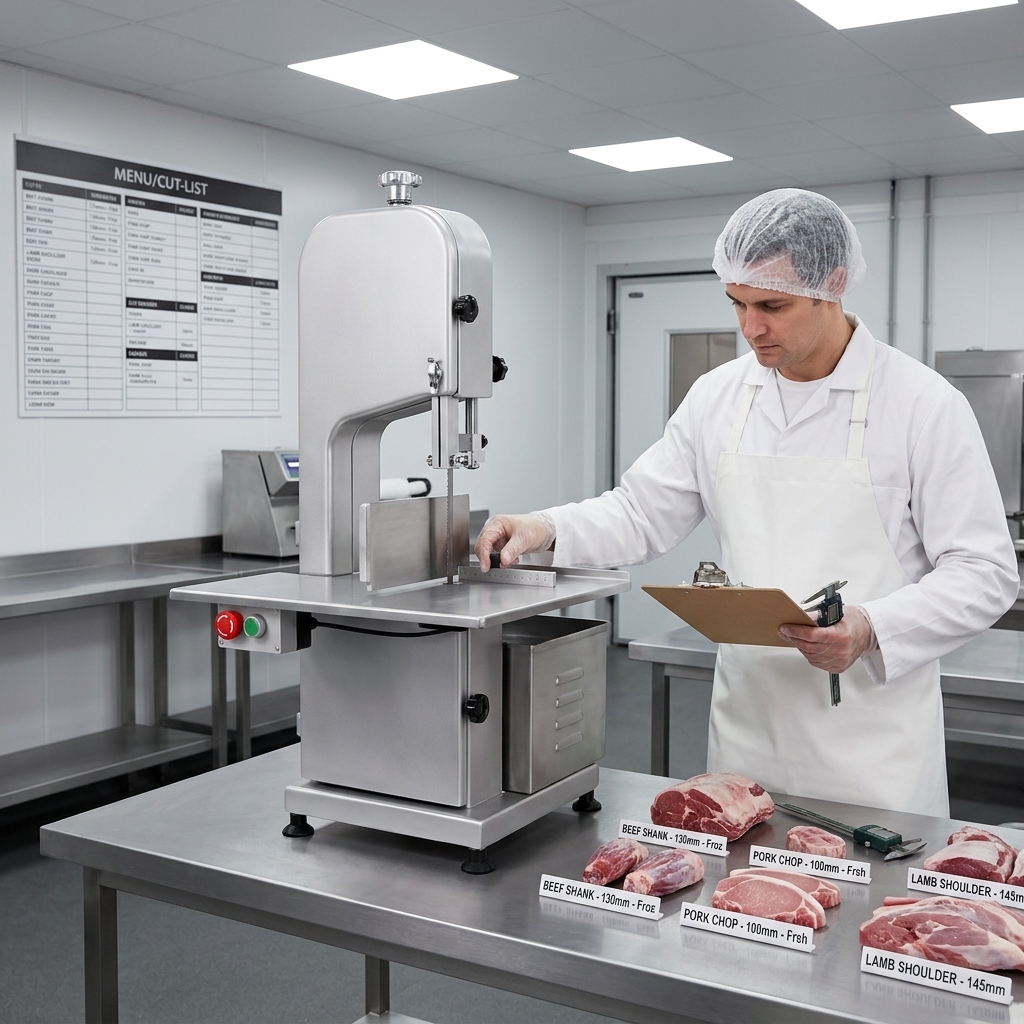
List what the machine will cut during a normal day, not only the occasional difficult item. Include product type, whether it is fresh, chilled, tempered, or frozen, typical dimensions, the heaviest pieces, and the desired finished portion. This information is more useful than a vague request for a “powerful” saw.
Questions to answer before selecting a machine
- Which products will be cut: beef, pork, lamb, poultry, fish, ribs, shanks, chops, or frozen blocks?
- Are products normally fresh or chilled, fully frozen, or partially tempered before cutting?
- What are the maximum height and width of the products at the cutting station?
- How many cutting sessions occur in a day, and how long does each session last?
- Do you need repeated portions of a fixed thickness, or flexible one-off cuts?
- Will the same machine be used by several operators across shifts?
Frozen material generally requires a more deliberate selection process because hardness, product shape, and blade tooth configuration affect cutting behaviour. Do not assume that a saw suitable for fresh bone-in products will be appropriate for every frozen item. Review the practical differences in this guide to choosing a bone saw for fresh versus frozen meat before finalising the intended application.
Be realistic about peak periods. A machine chosen for a few occasional cuts may not suit a busy counter preparing multiple product lines before service. Conversely, selecting a large machine for a compact operation can waste valuable space and complicate cleaning.
2. Choose tabletop or floor configuration
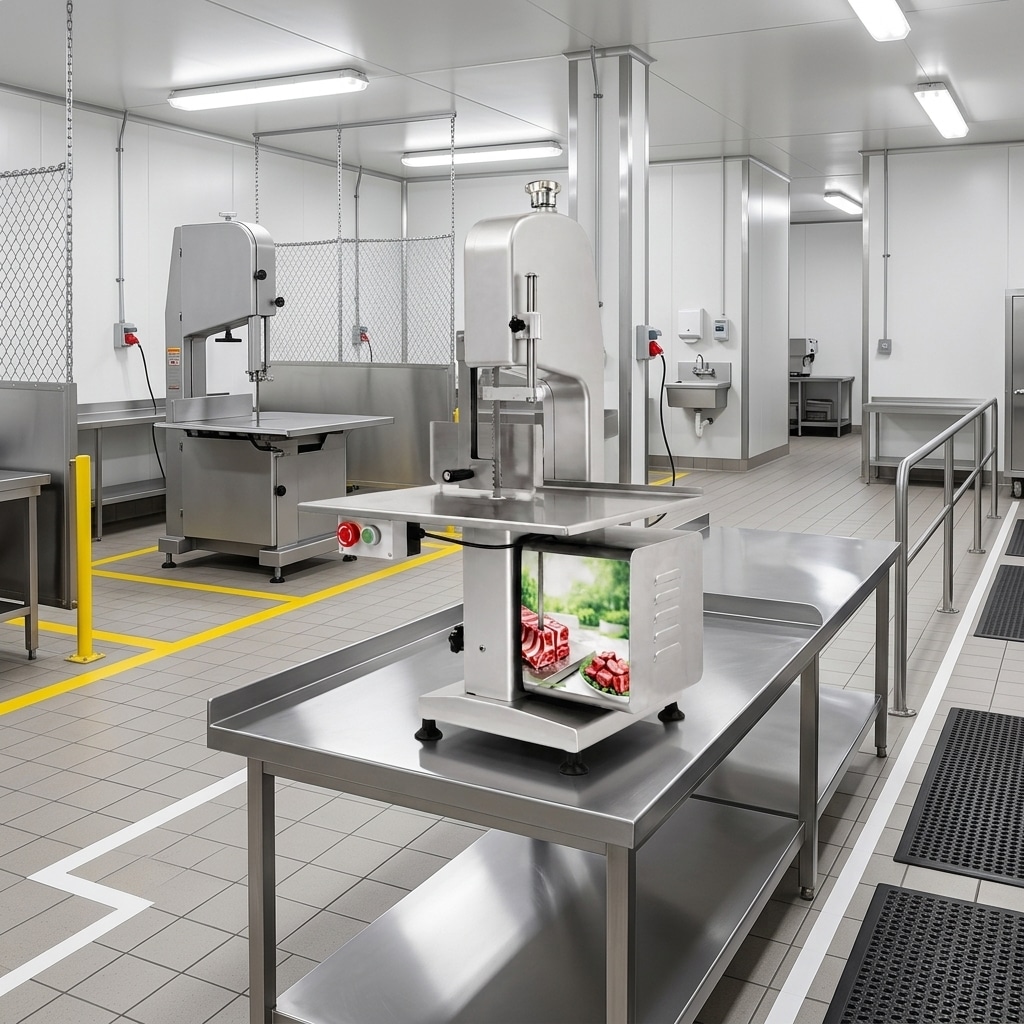
The machine footprint should suit the cutting area, operator movement, product flow, and cleaning access. Tabletop machines can be practical where a stable, suitably sized workbench is available and cutting demand is moderate. Floor models may suit operations that need a dedicated cutting station, a larger working area, or more room to manage larger products.
Measure more than the installation footprint. Leave practical space for product infeed and discharge, packaging trays, cleaning access, and safe operator positioning. Consider where chilled or frozen product arrives, where it waits before cutting, and where finished portions move next. A saw placed in a narrow route can create congestion and increase handling risk.
The bench or floor must support the machine securely and remain stable in use. In wet food-processing areas, assess drainage, splash control, lighting, and the distance to a suitable handwashing and cleaning area. If the machine is expected to move for cleaning, check how that movement can be done safely.
For a more detailed layout comparison, see tabletop versus floor bone saw considerations for commercial operations. The best format is not automatically the largest one; it is the one that provides adequate product support and safe working space in your actual room.
3. Check cutting clearance and worktable support
Cutting clearance is the usable space available for the product around the blade and under the upper guide assembly. It must accommodate the largest items you plan to cut with enough room to position them safely. Do not estimate this from product photographs or overall machine dimensions; request the manufacturer’s stated usable cutting dimensions for the exact model.
The worktable should give the operator stable support while keeping the product under control. Review the fence or thickness guide if uniform portions are important. It should be straightforward to set, easy to clean, and secure during use. Also consider whether the product can be supported without operators placing hands close to the blade path.
Bring a dimensioned product list to the supplier discussion. Include items such as large bone-in joints, long rib sections, poultry frames, or frozen blocks that may be awkward to manoeuvre. If products are received in cartons or bags, make sure the material is removed and the product is properly prepared according to your process before it reaches the saw.
A good specification states the maximum product envelope, the typical cut thickness range required by the business, and the need for a suitable guide or fence. It should not rely on assumptions such as “standard butcher cuts.”
4. Confirm blade compatibility and cutting setup
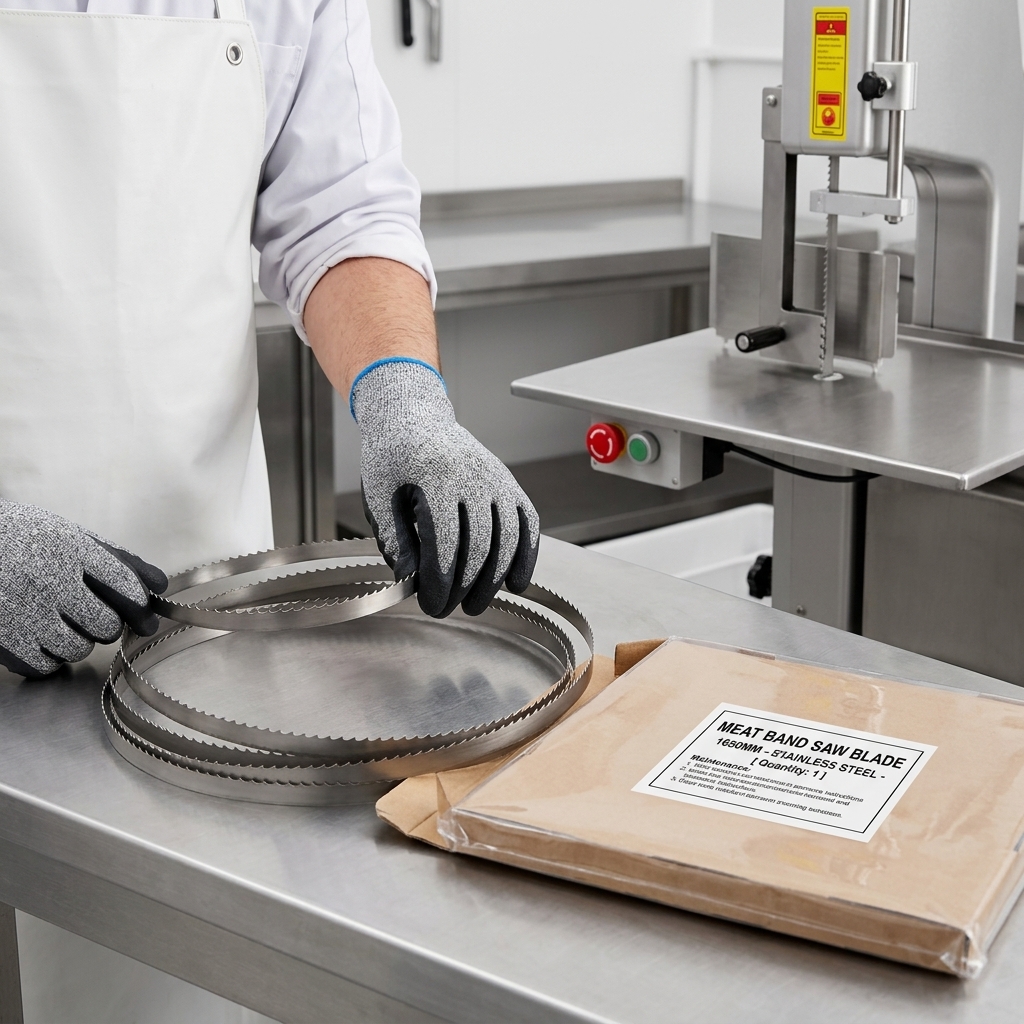
The blade is a consumable working component, not an afterthought. Before purchase, confirm the required blade length, width, tooth pitch, material specification, and approved replacement options for the model being considered. Keep these details with the machine records so that the team does not order an incompatible blade later.
Blade selection should reflect product hardness and the type of cut. A tooth pattern that works well for one application may not be the best choice for another. Rather than selecting by appearance alone, discuss the product list with the supplier and follow the machine manufacturer’s guidance. This commercial meat band saw blade selection guide explains why blade dimensions and tooth pitch should be matched to the saw and application.
Ask how blade tension is set and checked, how guides are adjusted, and which components should be inspected before each shift. Poorly fitted, worn, or incorrectly tensioned blades can affect cut quality and may create avoidable operational risk. Operators should never attempt improvised substitutions or adjustments beyond the manufacturer’s instructions.
Plan a controlled blade inventory. Keep the correct replacement blades in clean, protected storage; label them by model and specification; and establish a documented process for changing and disposing of blades. Your local procedures should address safe handling of sharp components and food-area hygiene.
5. Assess safety, cleaning, and sanitation
A commercial bone saw should be selected with safe daily use and complete cleaning in mind. Examine the blade guard arrangement, upper and lower blade coverage, product guide, emergency stopping method, non-slip footing or stable mounting, and access to areas that need routine cleaning. The safety features must be used correctly; they do not replace training, supervision, and a documented safe operating procedure.
Ask the supplier to explain the normal shutdown, isolation, disassembly, cleaning, rinsing, sanitising where required by your procedure, drying, reassembly, and pre-use inspection steps. Avoid equipment that cannot be practically cleaned within the time and staffing available. Areas around blade guides, wheels, doors, worktables, and product guides deserve particular attention because residue can build up during service.
Operators should be trained to use the pusher or product-handling tool supplied or specified for the machine, keep hands away from the blade path, avoid loose clothing and jewellery, and stop work if guards, blades, or controls are not in proper condition. Cleaning and blade changes should only be performed after the machine has been stopped and isolated according to the manual and site procedure.
Use essential commercial bone saw safety and maintenance protocols as a starting point for building your routine. Your site plan should also comply with local occupational safety and food hygiene obligations.
6. Confirm power and installation requirements
Confirm the electrical requirements for the exact machine and destination market before ordering. Check the rating plate specification or formal supplier documentation for voltage, frequency, phase, plug arrangement, and any local installation requirements. Never assume that an available outlet is suitable because the plug appears similar.
Share the site electrical details with the supplier early. If a qualified electrician is required to prepare the circuit, arrange that work before delivery. The electrical connection, protective device, grounding arrangements, and any local inspection requirements should be handled in accordance with applicable regulations and by qualified personnel where required.
Also plan the physical delivery route. Measure doorways, corridors, lifts, ramps, and the final installation point. Confirm whether the machine is shipped assembled, what must be fitted on site, and who is responsible for commissioning. Installation should include a stability check, verification of guards and controls, and operator familiarisation before production begins.
7. Review service, spare parts, and total ownership
The purchase price is only one part of ownership. A practical commercial bone saw program includes replacement blades, routine inspection, cleaning supplies, operator training, planned maintenance, and a clear route for obtaining parts or technical support.
Ask the supplier which wear items are expected to need routine attention, how spare parts are identified, how technical questions are handled, and whether manuals are supplied in a language suitable for your operators. Request a parts list or exploded diagram where available. Keep machine serial number, model information, blade specification, purchase documents, and maintenance records together.
For distributors, multi-site operators, and private-label buyers, discuss packaging, documentation, market-specific electrical configuration, branding, and after-sales responsibilities before placing an order. A clear agreement is more valuable than assumptions about what support is included.
Finally, assess the supplier’s responsiveness during the quotation stage. If product questions about configuration, product fit, or support cannot be answered clearly before purchase, that may indicate difficulty after commissioning. Select a partner that can help you define a machine specification appropriate to your process rather than simply offering a generic model.
Final pre-purchase checklist
Use the following checklist before approving a commercial bone saw machine purchase:
- Documented list of products, temperature condition, and maximum dimensions.
- Expected daily and peak cutting workflow defined.
- Tabletop or floor configuration selected for the actual layout.
- Usable cutting clearance confirmed in writing for the exact model.
- Worktable, fence, and product support assessed for your portions.
- Correct blade dimensions and application-appropriate tooth configuration confirmed.
- Replacement blade source and controlled storage plan established.
- Guarding, product-handling method, emergency stop, and safety procedures reviewed.
- Cleaning access and end-of-shift sanitation routine evaluated.
- Voltage, frequency, phase, plug, and installation requirements confirmed.
- Delivery route, final placement, and commissioning responsibilities checked.
- Manuals, parts information, maintenance guidance, and support route confirmed.
A complete checklist reduces the chance of buying a machine that is too small, poorly matched to frozen products, difficult to clean, or unsupported in your operating market. Keep the completed document with your purchasing records and use it to compare quotations on the same basis.