
Introduction: The Rise of the Drive-Thru Juice Bar
For quick service restaurant (QSR) entrepreneurs, the drive-thru model offers unparalleled convenience and volume potential. While coffee and fast food have dominated this space, the demand for fresh, functional beverages is carving out a lucrative niche for the drive-thru juice bar. Sugarcane juice, with its high profit margins and growing global appeal, is an excellent candidate for this model. However, extracting fresh juice on demand presents unique operational challenges.
Unlike pre-packaged beverages, fresh sugarcane juice requires immediate extraction to maintain flavor, color, and nutritional value. In a drive-thru setting where the industry standard for speed of service is measured in seconds, the logistics of your operation can make or break your profitability. This guide explores how to design a highly efficient drive-thru sugarcane juice concept, focusing on commercial juicer placement, workflow optimization, and equipment selection.
Key Concepts: Drive-Thru Dynamics for Fresh Juice
Operating a drive-thru requires a delicate balance between product quality and transaction speed. When dealing with fresh agricultural products like sugarcane, operators must consider three primary metrics:
- Throughput Rate: The volume of juice extracted per minute.
- Operator Footsteps: The distance an employee must travel between the order screen, the juicing station, and the handoff window.
- Visual Appeal (The Theater of Juicing): Customers perceive higher value when they can see their beverage being made fresh.
Commercial Juicer Placement Strategies
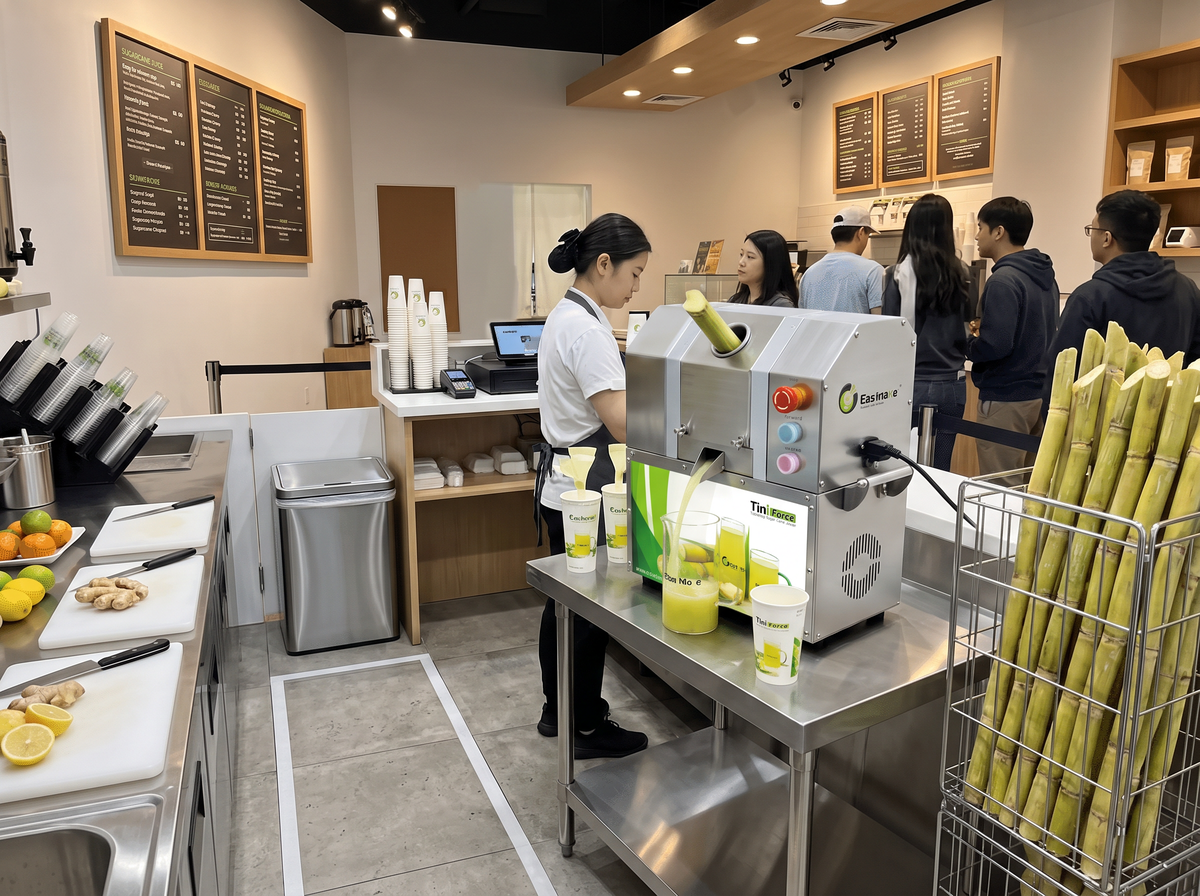
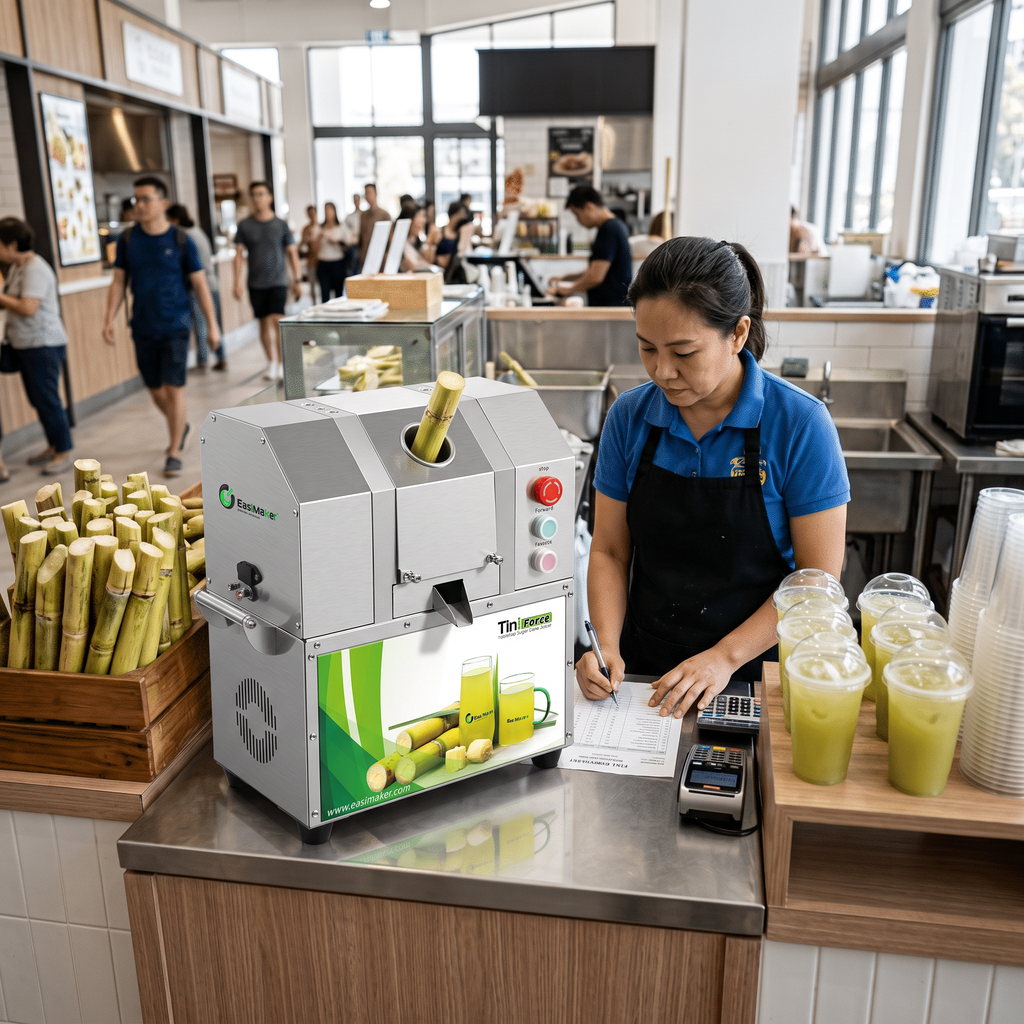
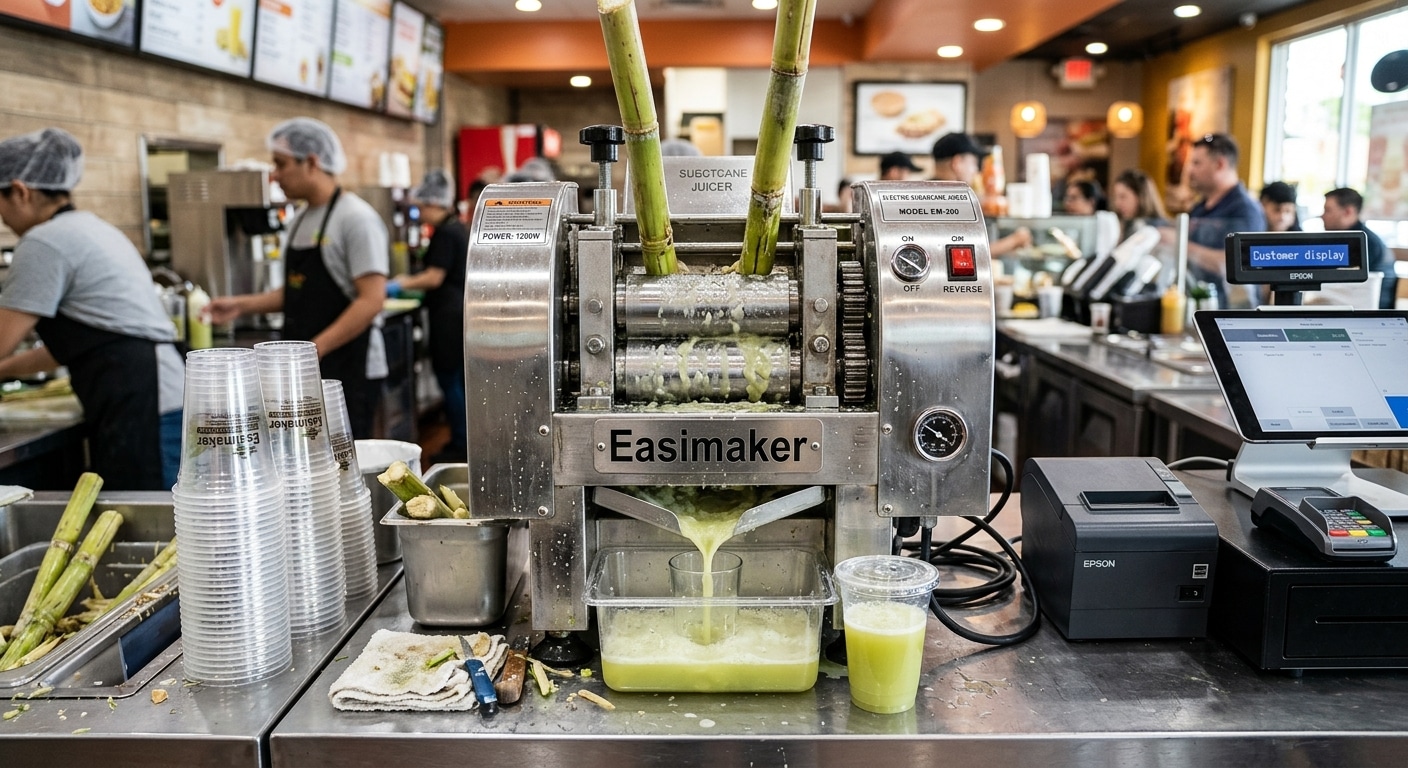
Where you place your electric sugarcane juicer dictates your entire operational workflow. The machine must be positioned to maximize operator efficiency while capitalizing on the visual appeal of fresh extraction.
Option A: Window-Adjacent Placement (The “Showcase” Method)
Positioning the juicer directly next to the drive-thru handoff window allows the customer to watch the extraction process from their vehicle.
- Pros: High transparency builds consumer trust; reinforces the “freshly squeezed” value proposition; requires zero footsteps from extraction to handoff.
- Cons: Takes up premium real estate at the window; requires strict adherence to cleanliness, as the machine and waste bin are highly visible.
- Best For: Concepts where sugarcane juice is the primary signature item.
Option B: Back-Line Prep Station (The “High-Volume” Method)
Placing the machine on a dedicated beverage prep line, slightly set back from the window.
- Pros: Keeps raw material handling (bagasse/waste) out of direct customer sight; allows multiple operators to work simultaneously; better integration with ice and cup staging areas.
- Cons: Adds 2-3 footsteps to the handoff process; reduces the visual “theater” for the customer.
- Best For: Multi-beverage QSRs where sugarcane is one of several menu options.
Placement Comparison Table
| Placement Strategy | Workflow Efficiency | Customer Visibility | Space Requirement |
|---|---|---|---|
| Window-Adjacent | Excellent (0-1 steps) | High (Showcase) | High (Premium Window Space) |
| Back-Line Prep Station | Good (2-3 steps) | Low to Moderate | Flexible (Standard Counter) |
Optimizing Speed of Service
To meet the aggressive speed-of-service targets typical of drive-thru operations (often under 120 seconds from order to handoff), your equipment and workflow must be flawless.
1. Single-Pass Extraction
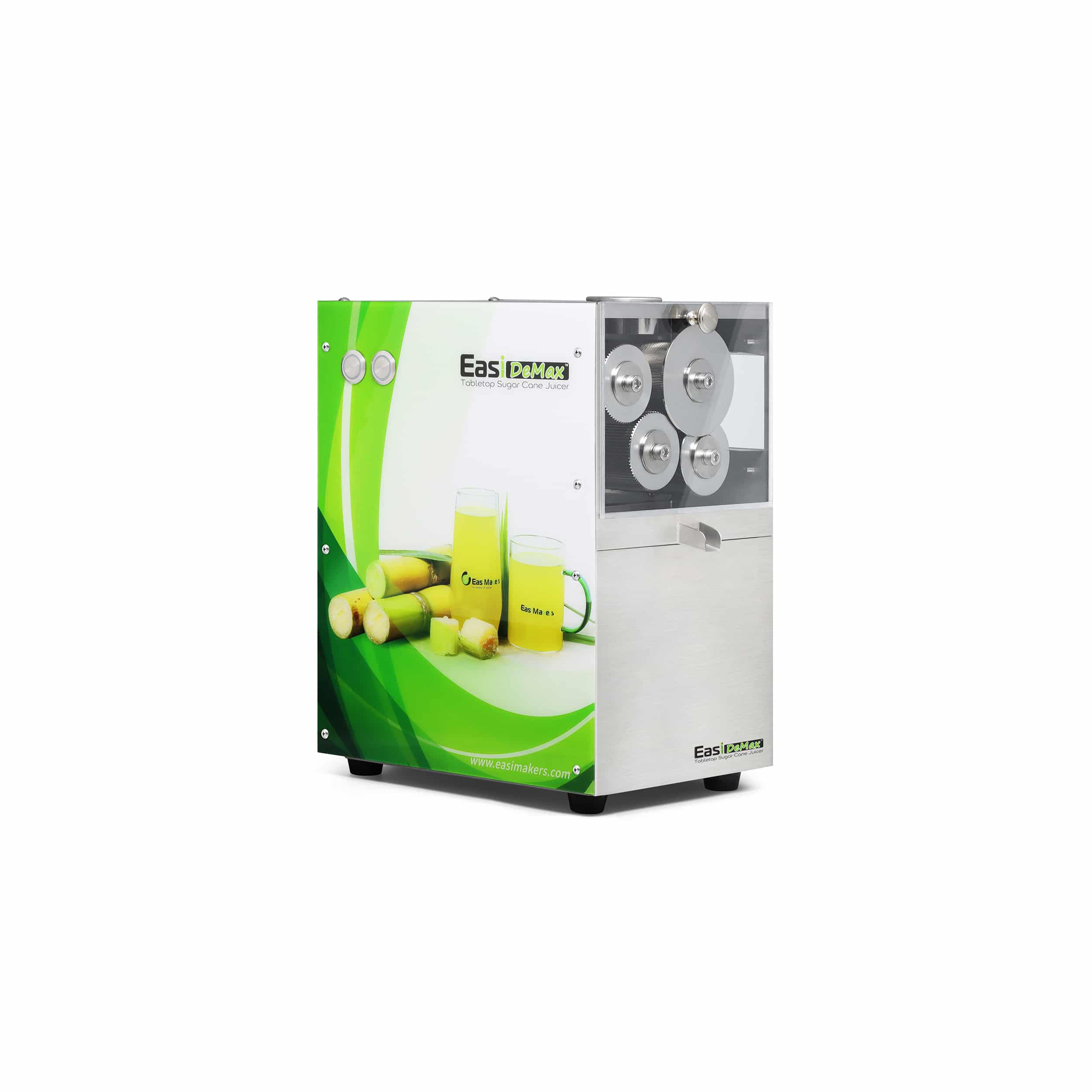
Time is your most valuable asset. Drive-thru operators cannot afford to pass the same sugarcane stalk through a machine multiple times. You must utilize a commercial electric sugarcane juicer designed for single-pass extraction. These machines use heavy-duty gearboxes and multiple stainless steel rollers to extract up to 80-90% of the juice in one continuous motion.
2. Ergonomic Staging
Pre-cut, pre-washed, and peeled (or scraped) sugarcane stalks should be staged in food-safe, refrigerated bins immediately adjacent to the machine’s feed chute. The operator should be able to grab a stalk with one hand and feed it into the machine without taking a single step.
3. Automated Waste Management
Bagasse (sugarcane fiber waste) accumulates rapidly. Ensure your juicer placement allows for a direct drop-chute into a high-capacity waste bin beneath the counter. Stopping to empty small waste trays will severely bottleneck a drive-thru lane.
Equipment Specifications for Drive-Thru Operations
Not all commercial juicers are built for the rigors of a drive-thru. When sourcing equipment, prioritize the following specifications:
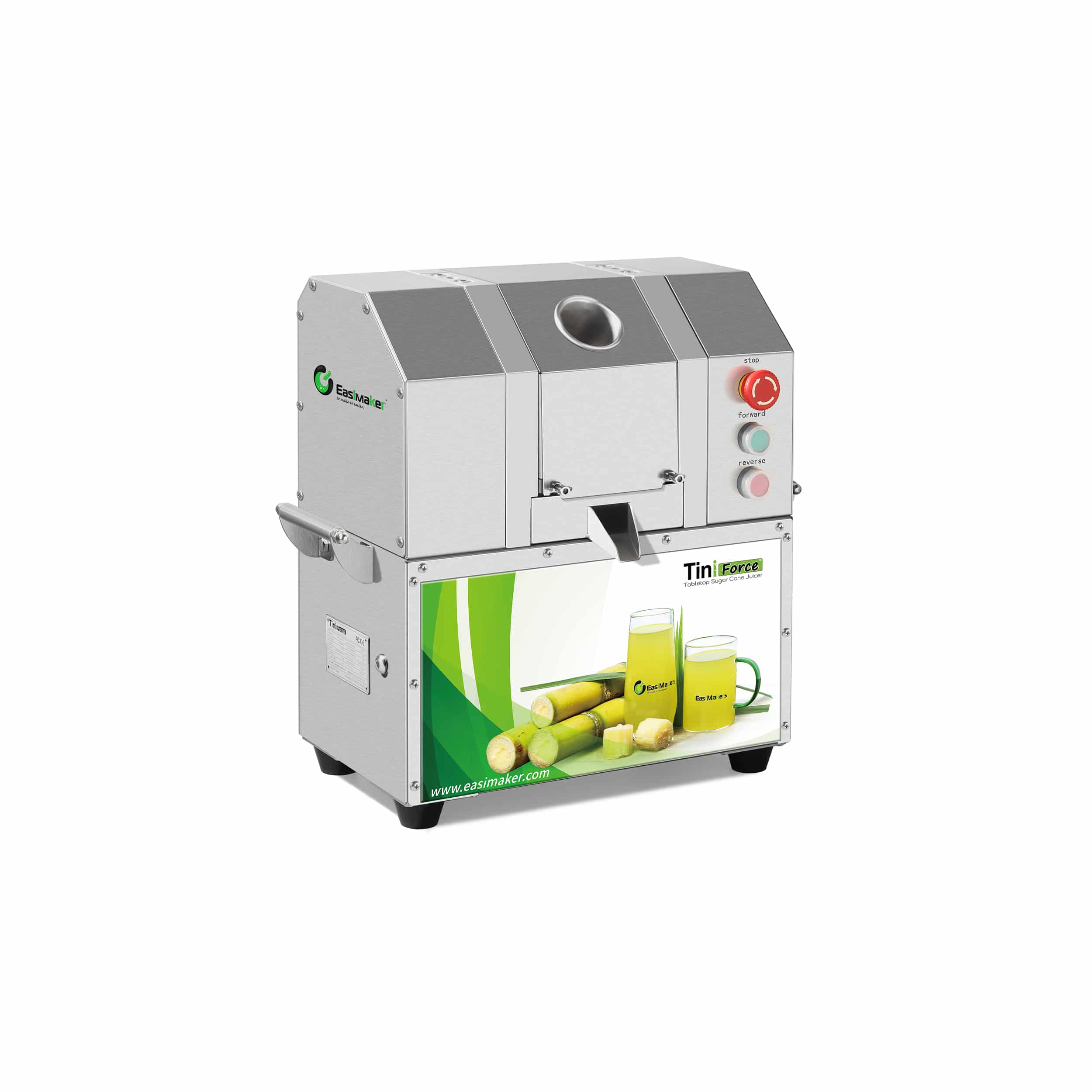
- Electric Powertrain: Manual machines are strictly unviable for QSRs. Look for high-torque electric motors (typically 400W to 750W or higher, depending on capacity needs) capable of continuous operation during peak hours.
- Acoustic Profile: Drive-thru operations rely heavily on headset communication. A loud motor or grinding gears will disrupt order taking. Select machines with enclosed motors and precision-cut gears designed for low-decibel operation.
- Sanitation and CIP (Clean-in-Place): Sugarcane juice is highly susceptible to fermentation. Machines must feature food-grade 304 stainless steel rollers and easily removable components for rapid sanitization between shifts.
Buying Guide: Sourcing the Right Equipment
When outfitting a drive-thru concept, consistency across locations is key for brand owners and franchisees.
- MOQ and Scaling: If you are piloting a single drive-thru location, ensure your supplier has flexible Minimum Order Quantities (MOQs) but possesses the manufacturing capacity to scale as you open additional units.
- Customization: Consider custom branding on the machine chassis to align with your QSR’s aesthetic, especially if utilizing the Window-Adjacent placement strategy.
- Spare Parts Availability: Drive-thrus cannot afford downtime. Ensure your supplier provides accessible replacement parts for high-wear components like bearings and seals.
Frequently Asked Questions (FAQs)
How fast should an electric sugarcane juicer process a stalk for a drive-thru?
A high-quality commercial electric juicer should process a standard 1-meter stalk in 10 to 15 seconds, allowing an operator to fulfill a large beverage order in under a minute.
Can I use a manual juicer as a backup?
It is highly discouraged in a quick-service environment. Manual extraction is too slow, physically taxing on employees, and yields inconsistent results. Always rely on robust electric models with appropriate warranties.
How do I manage the noise of the juicer near the drive-thru microphone?
Invest in electric juicers with enclosed, gear-driven motors which operate much quieter than chain-driven models. Additionally, position the machine slightly away from the primary order-taking headset station if acoustic testing shows interference.
What is the best way to handle bagasse in a high-volume setting?
Modify your stainless steel prep tables to include a counter-flush drop hole directly beneath the juicer’s waste output. This allows bagasse to fall straight into a large, easily removable rolling bin.
Are there specific electrical requirements for these commercial machines?
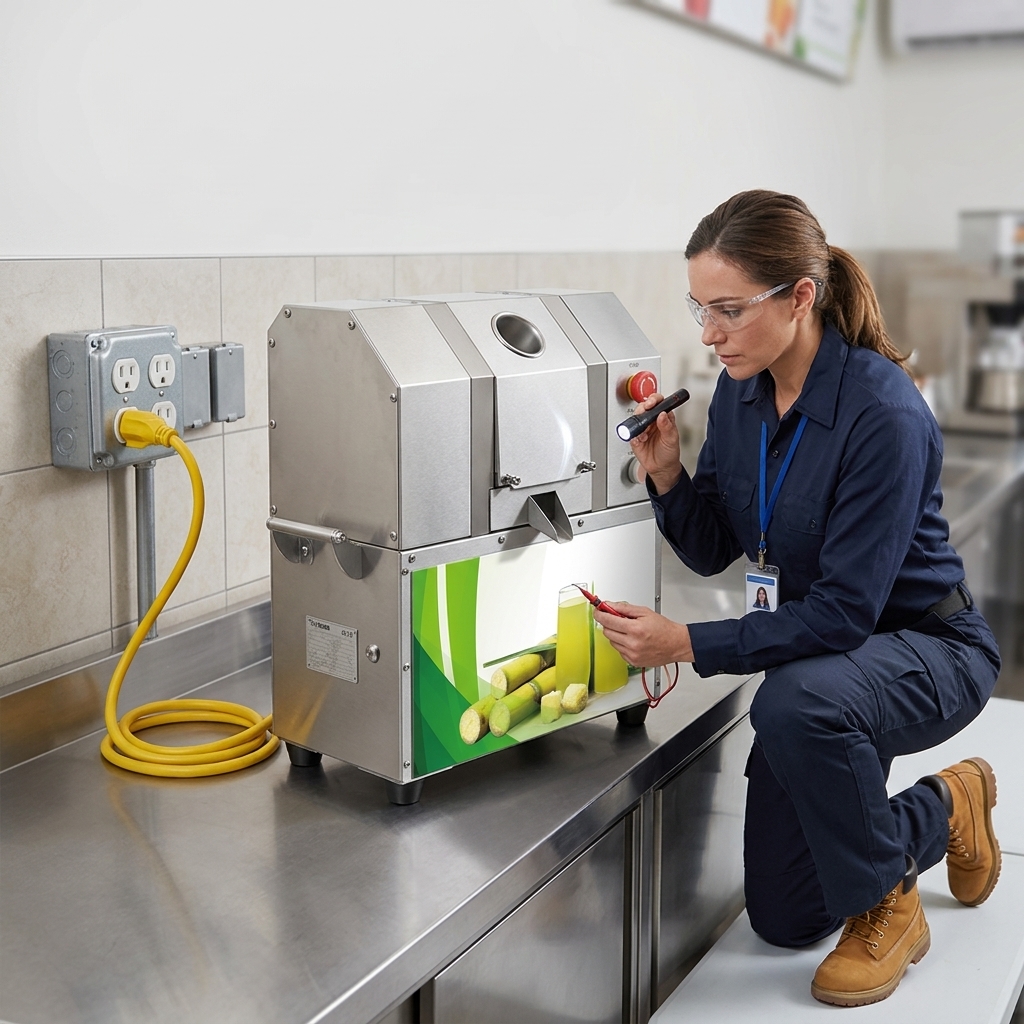
Most commercial electric sugarcane juicers operate on standard 110V or 220V power, but high-capacity models may draw significant amperage. Always verify the machine’s specifications with your facility’s electrical layout before installation.
Ready to Optimize Your Drive-Thru Operation?
Equipping your drive-thru juice bar with the right technology is the first step toward high margins and rapid service times. Focus on reliable, electric extraction and smart spatial design to keep your drive-thru lane moving. Request a quote / Get a sample today to find the perfect commercial sugarcane juicer for your quick service concept.