Single-Pass vs. Multi-Pass Crushing: Which Sugarcane Extraction Method is Best?

The Efficiency Dilemma in Commercial Sugarcane Juicing

For high-volume beverage operations, commercial juice bars, and industrial food processing facilities, equipment efficiency directly impacts profitability. When scaling sugarcane juice production, one of the most critical equipment decisions is choosing the right extraction method. The debate typically comes down to two primary mechanical designs: single-pass versus multi-pass crushing.

While both methods utilize heavy-duty rollers to press juice from sugarcane stalks, their operational workflows, labor requirements, and ultimate commercial juicer efficiency differ significantly. Understanding the technical mechanics behind these two designs is essential for procurement managers and facility engineers looking to optimize throughput and minimize operational bottlenecks.

Understanding the Mechanics

What is Multi-Pass Crushing?

Multi-pass crushing is the traditional method of sugarcane extraction. In this setup, an electric machine typically features two or three rollers with a wider gap. The operator feeds a sugarcane stalk into the machine, retrieves the partially crushed stalk from the other side, folds it in half, and feeds it through again. This process is repeated three to four times until the maximum juice yield is achieved.

While multi-pass machines are generally simpler in internal gearing and have a lower initial capital expenditure, they rely heavily on manual intervention and constant operator attention.

What is a Single-Pass Sugarcane Juicer?

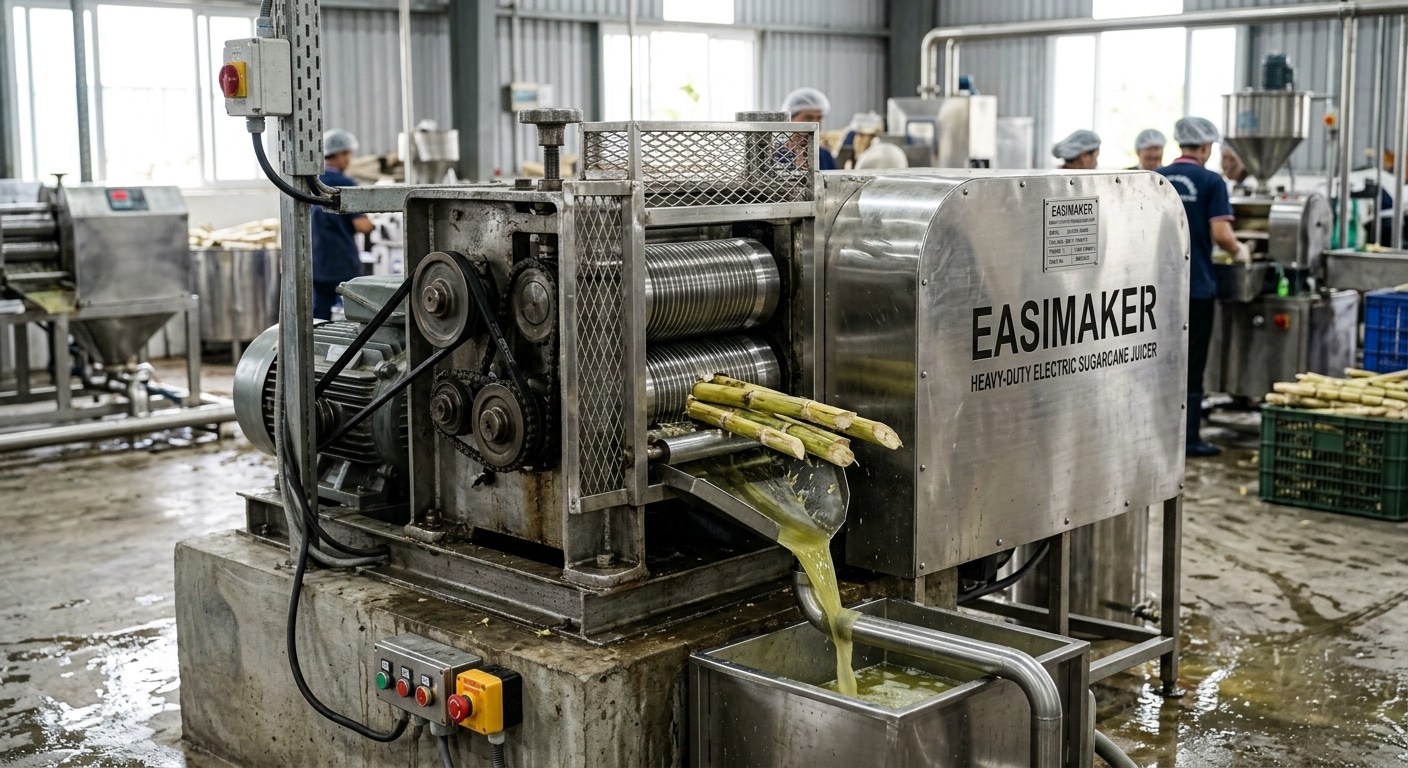
A single-pass sugarcane juicer is engineered to extract the maximum amount of juice in one continuous motion. These advanced electric machines utilize a precisely calibrated multi-roller system (often three to five rollers) arranged in a specific geometric configuration. As the cane is pulled through the machine, it passes through progressively tighter clearances between the rollers.

This design effectively crushes, presses, and expels the dry bagasse in a single fluid operation, eliminating the need for the operator to handle the crushed cane repeatedly.

Single-Pass vs. Multi-Pass: A Technical Comparison

To make an informed purchasing decision, buyers must evaluate how each method aligns with their production goals. Below is a comparison of key operational metrics:

Operational Factor Multi-Pass Crushing Single-Pass Crushing
Sugarcane Extraction Rate High (only after 3-4 manual passes) High (75%-85% yield by weight in one pass)
Labor Requirements Intensive (operator must fold and re-feed cane) Minimal (feed once and move to the next stalk)
Throughput / Speed Low to Moderate (bottlenecked by manual re-feeding) High (ideal for continuous commercial processing)
Operator Safety Lower (frequent handling near feed zones) Higher (hands-free after initial feed, enclosed rollers)
Equipment Cost Lower initial investment Higher initial investment, but faster ROI via labor savings

Key Factors Influencing Sugarcane Extraction Rates

Regardless of the method chosen, the juice yield comparison between machines often comes down to the quality of the internal components. When evaluating commercial juicers, pay close attention to the following engineering specifications:

  • Roller Material and Machining: Food-grade stainless steel (such as SUS304) is mandatory for hygiene and corrosion resistance. Rollers with precision-machined knurling or grooving grip the cane better, preventing slippage and ensuring a thorough crush.
  • Motor Power and Gearbox Efficiency: Commercial electric juicers require robust motors (typically ranging from 400W to 1500W depending on capacity) paired with heavy-duty gear reducers. A high-torque, low-RPM setup ensures the machine can crush thick, dense cane without stalling.
  • Clearance Tolerances: In single-pass machines, the micro-clearance between the final set of rollers dictates the ultimate extraction rate. Tighter tolerances leave the bagasse nearly dry, maximizing yield per kilogram of raw material.

Operational Impact: Labor Costs and Workflow Efficiency

In a B2B context, equipment procurement is rarely just about the machine’s price tag; it is about the total cost of ownership (TCO). Labor is one of the most significant ongoing expenses in any food service or processing operation.

Multi-pass crushing ties an operator to the machine for the entire duration of the extraction process. Conversely, a single-pass sugarcane juicer allows the operator to feed a stalk and immediately prepare the next one, or attend to customers, handle packaging, and manage point-of-sale transactions. For a busy commercial environment, the labor hours saved by utilizing a single-pass system often offset the higher initial equipment cost within the first few months of operation.

Buying Guide: Selecting the Right Commercial Juicer

When sourcing sugarcane extraction equipment for your facility, consider the following checklist to ensure you select the optimal machine:

  • Assess Your Volume: If you process hundreds of kilograms of cane daily, a single-pass electric machine is indispensable. For low-volume, occasional use, a multi-pass machine might suffice.
  • Hygiene and Cleaning: Look for machines with easily removable rollers or accessible crushing chambers. Daily sanitation is critical to prevent bacterial growth and comply with food safety regulations.
  • Durability and Maintenance: Check the availability of spare parts (like seals, bearings, and drive chains). Opt for machines with sealed bearings to prevent juice ingress.
  • Power Supply Compatibility: Ensure the machine’s voltage and frequency specifications match your facility’s electrical infrastructure (e.g., 110V/60Hz vs. 220V/50Hz).

Frequently Asked Questions (FAQs)

Does a single-pass machine extract as much juice as a multi-pass machine?

Yes. High-quality single-pass machines are engineered with advanced roller configurations that apply immense, progressive pressure, achieving extraction rates comparable to or exceeding three manual passes through a traditional machine.

Can single-pass juicers handle thick sugarcane stalks?

Commercial electric single-pass juicers are designed with powerful gearboxes and wide feed chutes to accommodate thick stalks. However, exceptionally thick cane may need to be split lengthwise depending on the specific machine’s feed diameter limits.

How often do the rollers need to be replaced?

With proper maintenance and regular cleaning, solid stainless steel rollers can last for years in a commercial setting. Wear and tear typically occur on the bearings or drive gears before the rollers themselves degrade.

Is an electric multi-pass machine safer than a manual one?

While electric multi-pass machines eliminate manual cranking, they still require the operator to repeatedly handle crushed cane near the feed chute. Single-pass machines are generally safer as they minimize operator interaction with the crushing mechanism.

What is the typical ROI for upgrading to a single-pass system?

ROI varies based on local labor rates and daily volume, but many high-volume operations report recovering the cost difference within 3 to 6 months due to reduced labor hours and increased throughput.

Optimize Your Beverage Operations Today

Choosing between single-pass and multi-pass crushing ultimately depends on your operational scale, labor availability, and efficiency goals. For modern commercial facilities focused on high throughput, superior hygiene, and optimized labor costs, a single-pass sugarcane juicer is the clear industry standard.

Ready to upgrade your extraction capabilities with reliable, commercial-grade equipment? Request a quote / Get a sample today to discover how our electric sugarcane juicers can streamline your production line.

A Guide to Franchising Your Sugarcane Juice Brand: Operations and Scaling

Transitioning from a Single Location to a Franchise Network

Scaling a successful sugarcane juice bar into a regional or national franchise requires a fundamental shift in business strategy. When operating a single location, brand owners can personally oversee daily operations, monitor juice extraction, and manage equipment maintenance. However, as you scale a sugarcane juice brand, success depends entirely on standardization, reliable commercial equipment fleets, and comprehensive training systems.

For B2B brand owners, procurement managers, and operations directors, franchising means building a replicable model. Franchisees are investing in a proven system. If your equipment fails or juice quality varies between locations, the brand’s reputation suffers. This guide outlines the operational steps necessary to successfully franchise your juice business, focusing on equipment standardization, training, and quality control.

Step 1: Standardizing Your Commercial Juicer Fleet

The core of any sugarcane juice franchise is the extraction equipment. You cannot rely on a patchwork of different machines across various franchise locations. Standardizing your commercial juicer fleet ensures consistent yield, identical maintenance schedules, and uniform safety protocols.

Why Electric Commercial Juicers are Mandatory

Manual or light-duty juicers are entirely unsuited for a franchise environment. To maintain high throughput and operational safety, franchises must specify heavy-duty, electric commercial sugarcane juicers in their Franchise Disclosure Document (FDD). When selecting an electric juicer fleet for your franchisees, consider the following technical factors:

  • Extraction Yield: High-efficiency electric rollers (typically utilizing a 3-roller or 4-roller system) ensure maximum juice extraction in a single pass, directly impacting the franchisee’s profit margins.
  • Material Specifications: Food-grade stainless steel (such as 304 or 316) is non-negotiable for all contact parts to comply with international food safety standards and resist the corrosive nature of natural plant acids.
  • Motor Durability: Commercial environments require motors capable of continuous operation during peak hours without overheating. Look for gear-driven electric motors with built-in thermal protection.
  • Ease of Cleaning: Machines must feature accessible roller compartments and removable components to allow for rapid, thorough sanitization between shifts.

Step 2: Developing Comprehensive Training Manuals

Franchisees and their staff will have varying levels of food service experience. Standard Operating Procedures (SOPs) must be meticulously documented. A robust training manual for a juice bar operations team should include:

Equipment Operation and Safety

Document the exact startup, operation, and shutdown procedures for the electric sugarcane juicers. Include visual diagrams of emergency stop buttons, reverse functions (to clear jams), and proper feeding techniques to prevent operator injury and machine damage.

Sanitation Protocols

Sugarcane juice is highly susceptible to fermentation and bacterial growth. Your SOPs must dictate cleaning frequencies (e.g., mid-shift wipe downs, end-of-day deep cleans). Specify the exact food-safe sanitizers to be used, the correct dilution ratios, and step-by-step instructions for dismantling and reassembling the juicer’s extraction chamber.

Step 3: Maintaining Consistent Juice Quality

Customers expect the same taste profile whether they visit a franchise in New York or London. Maintaining consistent juice quality across a decentralized network involves strict supply chain management.

  • Raw Material Sourcing: Specify the exact cultivars of sugarcane franchisees must purchase, or establish a centralized supply chain. Factors like maturity, soil type, and harvest time drastically affect the Brix level (sugar content).
  • Storage and Handling: Sugarcane stalks must be stored at specific temperatures to prevent moisture loss and souring. Outline refrigeration requirements and maximum shelf-life metrics for cut cane.
  • Preparation Standards: Define how the cane should be prepped before juicing. This includes washing protocols, peeling requirements (if applicable to your brand standard), and cutting lengths to optimize the electric juicer’s feed rate.

Comparing Equipment Strategies: Standalone vs. Franchise Fleet

Understanding the shift in equipment strategy is vital for operations managers planning a franchise rollout.

Operational Factor Standalone Juice Bar Franchised Juice Brand
Equipment Sourcing Ad-hoc purchasing based on immediate local availability. Centralized procurement; standardized electric juicer fleet.
Maintenance Reactive repairs; potential extended downtime. Preventative maintenance schedules; stocked spare parts inventory.
Yield Consistency Variable, dependent on the individual operator’s machine. Highly consistent due to uniform roller calibration across the fleet.
Training On-the-job, informal shadowing. Documented SOPs tailored to the specific standardized equipment.

Procurement and Fleet Management for Franchisors

As the franchisor, you must establish a reliable pipeline for equipment. Partnering directly with a manufacturer for your commercial electric juicers offers significant advantages. Negotiating Minimum Order Quantities (MOQs) for fleet rollouts can reduce capital expenditure for new franchisees. Furthermore, establishing a direct line for OEM spare parts (such as replacement rollers, gears, and bearings) ensures that franchisee downtime is minimized.

Frequently Asked Questions (FAQs)

How do I ensure franchisees maintain the equipment properly?

Incorporate mandatory preventative maintenance schedules into the franchise agreement. Require franchisees to log daily cleaning and monthly inspections, and conduct periodic corporate audits to verify compliance.

What is the typical lifespan of a commercial electric sugarcane juicer?

With strict adherence to daily cleaning and regular maintenance of gears and bearings, a high-quality stainless steel electric juicer can operate efficiently for 5 to 10 years in a high-volume commercial setting.

Should the franchisor supply the sugarcane or rely on local distributors?

This depends on geographic scale. Regional franchises often benefit from a centralized commissary or approved local agricultural suppliers to maintain strict control over the cane’s Brix levels and freshness.

How do we handle equipment breakdowns in a franchise network?

Require franchisees to keep essential spare parts (like fuses, switches, and basic seals) on-site. The franchisor should maintain a relationship with the equipment manufacturer to expedite shipping of major replacement components.

Can we customize the juicers with our franchise branding?

Yes, many B2B equipment manufacturers offer customization options for fleet orders, including laser-etched logos, custom housing colors, and branded warning labels to align with your franchise’s visual identity.

Ready to Scale Your Juice Brand?

Standardizing your equipment is the first step toward a successful franchise rollout. Ensure your franchisees have the reliable, high-yield extraction technology they need to succeed. Request a quote today to discuss fleet pricing, technical specifications, and procurement strategies for your commercial electric sugarcane juicers.

Essential Staff Training Protocols for Operating Commercial Sugarcane Juicers

The Importance of Standardized Training in Commercial Juice Production

Commercial sugarcane juicers are high-torque, heavy-duty machines designed to extract maximum yield from dense, fibrous stalks. While modern equipment is engineered for durability and efficiency, improper operation by untrained staff can lead to severe workplace injuries, mechanical jams, and premature motor failure. For business owners, brand operators, and facility managers, implementing a strict, standardized training protocol is not just a regulatory formality—it is a critical step in protecting your workforce and maximizing the return on your equipment investment.

This comprehensive guide provides a structured checklist for training new employees on safe machine operation, efficient feeding techniques, and rigorous daily shutdown procedures. By standardizing these processes, businesses can significantly reduce downtime, lower maintenance costs, and ensure a consistent, hygienic product.

Comprehensive Staff Training Checklist for Sugarcane Juicers

A robust training program should be divided into distinct phases, ensuring operators understand the mechanics of the equipment before they ever power it on. Use the following checklist as the foundation for your internal training manuals.

Phase 1: Pre-Operation Safety and Setup

Before any sugarcane is processed, operators must verify that the machine and the workspace are safe and ready for production.

  • Personal Protective Equipment (PPE): Ensure operators are wearing cut-resistant gloves (for handling raw cane), safety glasses (to protect against flying debris or juice splatter), and non-slip footwear. Loose clothing, jewelry, and long untied hair must be strictly prohibited near the rotating rollers.
  • Visual Machine Inspection: Train staff to inspect the power cord for fraying and ensure the machine is plugged into a properly grounded outlet.
  • Component Verification: Operators must confirm that the stainless steel rollers are clean, the juice collection tray is properly seated, and the micro-mesh filter is locked in place.
  • Safety Guard Check: Verify that all transparent safety shields and roller guards are securely fastened. The machine should never be operated with exposed gears or missing panels.

Phase 2: Sugarcane Preparation and Efficient Feeding Techniques

How the raw material is introduced to the machine directly impacts juice yield and motor longevity. Improper feeding is the leading cause of equipment jams.

  • Stalk Preparation: Teach staff to inspect sugarcane stalks for excessive dirt or rot. Stalks should be washed, and the ends should be cut at a slight bevel to allow the rollers to grip the cane smoothly.
  • Angle of Insertion: Sugarcane should be fed directly into the intake chute at the angle specified by the manufacturer (typically straight or at a slight downward angle). Forcing cane in at an awkward angle puts uneven pressure on the bearings.
  • Pacing the Feed: Operators must allow the machine to fully process one section of cane before forcefully pushing the next. Overloading the intake can trigger the motor’s thermal overload switch or strip the internal gears.
  • Handling Thick Stalks: If a stalk exceeds the maximum diameter capacity of the juicer (often 2 to 2.5 inches, depending on the model), it must be split lengthwise before feeding.

Phase 3: Safe Machine Operation and Hazard Mitigation

Active operation requires continuous situational awareness. Staff must know exactly how to react if the machine malfunctions.

  • Clearing Jams Safely: If a stalk becomes stuck, operators must never use their hands or a secondary tool to push it through. Train them to immediately use the “Reverse” switch to back the cane out.
  • Emergency Stop Protocol: Every operator must instinctively know the location of the emergency stop (E-stop) button. Conduct physical drills so they can hit the E-stop without looking.
  • Auditory Monitoring: Teach staff to listen to the machine. A smooth, consistent humming indicates normal operation. Grinding, squealing, or sudden drops in motor pitch indicate mechanical stress, requiring immediate shutdown and inspection.

Phase 4: Daily Shutdown and Sanitation Procedures

Sugarcane juice is high in sucrose, making it a prime breeding ground for bacteria if not cleaned promptly. Proper shutdown procedures also protect the machine’s internal components from corrosion.

  • Power Disconnect: Always power down the machine and physically unplug it from the wall (or apply lockout/tagout procedures) before beginning disassembly.
  • Disassembly: Remove the juice tray, filter, and any removable safety guards. Wash these components in a dedicated three-compartment sink using warm, soapy water and food-safe sanitizers.
  • Roller Cleaning: Use a stiff-bristled brush to remove fibrous pulp from the stainless steel rollers. Never spray high-pressure water directly onto the machine housing, as water ingress can permanently damage the motor and electrical relays. Use a damp, sanitized cloth to wipe down the exterior.
  • Lubrication: Train maintenance staff or lead operators to apply food-grade lubricant to the drive chains and gears at the manufacturer-recommended intervals to prevent seizing.

Technical Factors Impacting Equipment Longevity

Understanding the relationship between operator actions and machine mechanics helps reinforce the importance of training. Below is a breakdown of common operational errors and their technical consequences.

Operator Error Mechanical Consequence Preventative Training Action
Forcing oversized cane into the intake Excessive torque strips gear teeth and overheats the motor. Train staff to measure and split large stalks; enforce feed pacing.
Using high-pressure hoses for cleaning Water penetrates bearing seals, causing rust and electrical shorts. Demonstrate proper wipe-down techniques and manual brush cleaning.
Ignoring squeaking noises Unlubricated chains snap or wear down sprockets prematurely. Implement a daily reporting log for unusual machine sounds.
Bypassing safety guards High risk of operator entanglement and severe injury. Zero-tolerance policy for operating without guards; daily safety checks.

Procurement Considerations for Safer Operations

While training is essential, safety begins with the procurement process. When sourcing commercial sugarcane juicers for your facilities, prioritize equipment designed with operator safety in mind. Look for machines featuring fully enclosed gearboxes, easily accessible emergency stop buttons, reverse functionality, and tool-less disassembly for cleaning. Investing in high-quality, well-engineered equipment reduces the learning curve for new staff and minimizes the inherent risks of commercial juice extraction.

Frequently Asked Questions (FAQs)

How long should initial training take for a new operator?

Comprehensive training typically requires 2 to 4 hours of dedicated instruction, followed by a few days of supervised operation. This ensures the operator is comfortable with feeding techniques, jam resolution, and sanitation protocols.

What is the most common cause of sugarcane juicer jams?

Jams are most frequently caused by feeding stalks that are too thick for the machine’s intake capacity, or by feeding multiple stalks too quickly without allowing the rollers to clear the previous batch.

How often should the rollers be sanitized?

Rollers should be thoroughly cleaned and sanitized at the end of every business day. Additionally, if the machine sits idle for several hours during a shift, a mid-day wipe-down is recommended to prevent sticky residue buildup.

Can operators wear standard kitchen gloves?

Operators should wear heavy-duty, cut-resistant gloves when handling raw sugarcane to prevent splinters and cuts. However, gloves must be tight-fitting to ensure they do not get caught in the machine’s intake mechanism.

What should an operator do if the machine makes a grinding noise?

The operator should immediately hit the emergency stop button and disconnect the power. Grinding noises typically indicate a lack of lubrication, a failing bearing, or a foreign object caught in the gears. The machine should not be used until inspected by a qualified technician.

Equip Your Team for Success

Standardized training paired with reliable, high-performance equipment is the key to a safe and profitable juice operation. If you are looking to upgrade your facility with commercial-grade sugarcane juicers engineered for safety, durability, and ease of use, we are here to help. Request a quote / Get a sample today to discover equipment solutions tailored to your operational needs.

Solid vs. Hollow Rollers: The Hidden Factor in Sugarcane Juicer Longevity

In the commercial beverage equipment industry, the difference between a machine that lasts a decade and one that fails within six months often lies in components hidden from plain view. For sugarcane juicers, the rollers (or crushing drums) are the most critical mechanical element. They bear the immense torque and compressive force required to extract liquid from fibrous cane stalks.

Procurement officers and engineers evaluating sugarcane extraction machinery often face a choice between equipment utilizing solid stainless steel rollers and those using hollow, capped tubes. While hollow rollers reduce manufacturing costs and shipping weight, they introduce significant risks regarding durability, hygiene, and extraction efficiency.

This technical guide analyzes the structural and operational differences between solid and hollow rollers, helping B2B buyers make informed decisions for heavy-duty commercial applications.

The Physics of Sugarcane Extraction

To understand why roller composition matters, one must first consider the mechanical stress involved in juicing sugarcane. Unlike soft fruits, sugarcane is a dense, fibrous grass. Extracting juice requires high-pressure crushing, often involving a multi-stage process of breaking the hard outer rind and compressing the internal fibers.

The rollers must endure two primary forces:

  • Radial Compression: The force exerted perpendicular to the roller surface to crush the cane.
  • Torque (Shear Stress): The rotational force required to pull the cane through the gap while resisting the stalk’s structural integrity.

Under these loads, the structural rigidity of the roller is paramount. Any deflection (bending) in the roller reduces the pressure applied to the cane, resulting in lower juice yields and wetter waste pulp (bagasse).

Hollow Rollers: The Economy Option

Hollow rollers are typically manufactured by taking a steel tube and welding end-caps or shafts onto the sides. This method significantly reduces material costs and machine weight. However, for commercial and industrial applications, this design presents several failure points.

1. Structural Deflection and Fatigue

Under the high pressure of crushing sugarcane, hollow tubes are prone to elastic deformation. The center of the roller—furthest from the supported ends—may flex inward. This deflection creates an uneven gap between rollers, causing inconsistent extraction and forcing the operator to pass the cane through multiple times to get a dry crush.

Over time, this cyclic flexing leads to metal fatigue. In high-volume environments, hollow rollers are susceptible to cracking, particularly near the weld points where the tube meets the drive shaft.

2. The Hygiene Risk of “Dead Space”

Perhaps the most critical concern for food safety compliance is the internal cavity of a hollow roller. If a microscopic crack forms in a weld, or if a seal fails, sugarcane juice can penetrate the hollow interior.

Once inside, the juice cannot be cleaned out. It ferments, leading to bacterial growth and mold accumulation inside the roller. This “dead space” becomes a permanent contaminant source. In severe cases, the internal pressure from fermentation can cause the roller to deform further or rupture. Solid rollers eliminate this risk entirely as there is no internal cavity.

Solid Stainless Steel Rollers: The Heavy-Duty Standard

Solid rollers are machined from a single billet of stainless steel. While this increases the upfront cost and the shipping weight of the machine, it provides mechanical and sanitary advantages that are essential for commercial reliability.

Maximum Torque Transmission

A solid steel cylinder has a significantly higher moment of inertia compared to a hollow tube of the same diameter. This mass allows the roller to maintain rotational momentum, powering through tough knots and thick stalks without stalling. The lack of deflection ensures that the gap setting remains precise, maximizing single-pass yield.

Sanitary Design and Compliance

For B2B buyers supplying markets with strict food safety regulations (such as the FDA in the US or CE in Europe), solid rollers are often a requirement for hygienic design. Since there are no welds to crack and no hollow cavities to harbor pathogens, solid rollers are easier to clean and sanitize. They represent a “monolithic” component where the surface visible to the operator is the only surface that exists.

Comparative Analysis: Solid vs. Hollow

The following table outlines the operational trade-offs between the two manufacturing approaches.

Feature Hollow Rollers Solid Steel Rollers
Primary Material Cost Low High
Weight Lightweight (lower shipping cost) Heavy (high stability)
Durability Prone to denting/warping Extremely high impact resistance
Hygiene Risk High (internal bacterial harborage) Zero (no internal cavities)
Juice Yield Variable (due to deflection) Consistent / High
Typical Lifespan 1–3 years (commercial use) 10+ years

Material Grade Considerations: Why 304 Matters

Specifying “solid rollers” is not enough; the grade of steel is equally important. Industrial buyers should verify that the rollers are machined from AISI 304 Stainless Steel (or 316 for highly saline environments).

Some manufacturers may offer solid rollers made from carbon steel plated with chrome. While these are solid, the plating will eventually chip under the abrasive friction of sugarcane fibers. Once the plating is compromised, the underlying iron will rust, contaminating the juice. Solid 304 stainless steel is corrosion-resistant throughout its entire mass, ensuring that surface wear does not compromise food safety.

Buying Guide: How to Verify Roller Quality

When sourcing sugarcane juicers from international manufacturers, it can be difficult to verify internal components without disassembling the machine. Here are strategies for procurement teams to validate roller quality:

1. Check the Machine Weight

Density is a reliable indicator. A commercial juicer with three solid steel rollers will be significantly heavier than a competitor’s model of the same size using hollow rollers. If a “heavy-duty” machine feels surprisingly light, inquire about the roller construction.

2. Request Cross-Sectional Drawings

Ask the supplier for technical drawings or CAD files of the roller assembly. Look for indications of a solid fill versus a tube profile.

3. Ask About Manufacturing Tolerances

Solid rollers are typically CNC machined to tight tolerances. Ask about the run-out tolerance. Solid rollers generally maintain a run-out of less than 0.05mm, whereas welded hollow rollers often have higher variance due to thermal distortion during welding.

Maintenance and TCO (Total Cost of Ownership)

While machines with solid rollers command a higher initial price point, the Total Cost of Ownership is often lower. Hollow rollers that crack or warp necessitate expensive replacement parts and result in unplanned downtime. In a high-volume juice bar or processing plant, a single day of downtime can cost more than the price difference between the two machine types.

Furthermore, solid rollers can be resurfaced. If the knurling (the textured pattern that grips the cane) wears down after years of use, a solid roller can often be re-machined. A hollow roller with worn knurling usually requires complete disposal.

Frequently Asked Questions (FAQs)

Do solid rollers require a more powerful motor?

Yes, generally. Because solid rollers are heavier, they require a motor with higher starting torque to overcome inertia. This usually indicates that the rest of the machine (gearbox, bearings) is also built to a higher heavy-duty standard.

Can I replace hollow rollers with solid ones later?

Rarely. The bearings and shafts designed for lightweight hollow rollers are often insufficient to support the weight and torque of solid steel replacements. It is best to select the correct specification at the time of purchase.

How do I know if my current rollers are hollow?

If the end of the roller is visible, look for a weld line connecting a cap to the cylinder. Alternatively, a “tap test” can sometimes reveal the difference—solid steel produces a dull thud, while hollow tubes may ring slightly.

Are solid rollers necessary for home use?

For occasional home use, hollow rollers may suffice. However, for any commercial setting—restaurants, street vendors, or bottling plants—solid rollers are the recommended standard for reliability and hygiene.

Conclusion

The choice between solid and hollow rollers is a choice between short-term savings and long-term reliability. For B2B buyers responsible for equipment longevity and brand reputation, solid stainless steel rollers offer the necessary assurance of hygiene, durability, and yield efficiency.

When requesting quotes for sugarcane extraction machinery, explicitly specify solid 304 stainless steel rollers to ensure your equipment can handle the demands of commercial operation.

Ready to upgrade your production line? Contact us today to discuss heavy-duty sugarcane solutions tailored to your volume requirements.