
Table of Contents
- How to Cut Consistent Portions on a Meat Band Saw
- What Is a Meat Band Saw?
- Prepare the Product and Machine
- Core Meat Band Saw Cutting Techniques
- A Repeatable Portion-Cutting Workflow
- Common Causes of Inconsistent Cuts
- Safe, Clean Operation
- Match the Saw to the Work
Consistent portions from a meat band saw depend on stable product temperature, correct blade condition, a repeatable guide setting, controlled feed pressure, and disciplined cleaning. This guide explains how butchers and food processors can build a reliable cutting routine.
How to Cut Consistent Portions on a Meat Band Saw
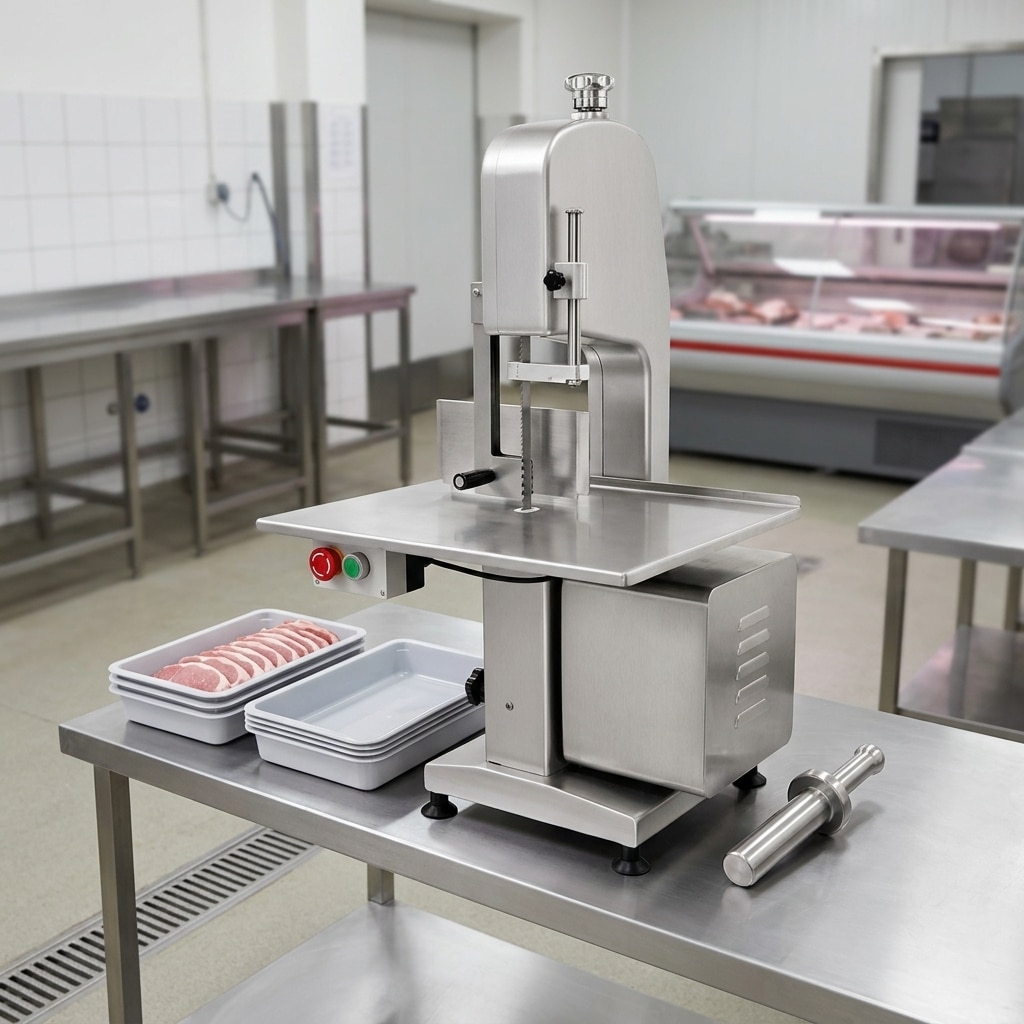
The most reliable meat band saw cutting technique is to prepare product to a stable cutting condition, set the fence or thickness guide before the run, keep the product supported against the guide, and feed it steadily with the correct pusher or holding device. Do not use speed or force to compensate for poor setup. Consistent portions come from a repeatable system rather than from operator judgement alone.
For butcher shops, meat processors, wholesalers, and central kitchens, the practical controls are straightforward: use a suitable and properly tensioned blade, keep the table and guides clean, square the product where possible, make a test cut, check the first pieces against the required specification, and recheck at planned intervals. Separate cutting routines may be needed for boneless chilled meat, bone-in cuts, and firm frozen product because each material behaves differently at the blade.
Before production begins, confirm the machine-specific operating procedure, guards, blade condition, electrical isolation method, and local food-safety requirements. A commercial meat band saw is often also called a bone saw, but the correct method always depends on the product and the machine manufacturer’s instructions.
What Is a Meat Band Saw?
A meat band saw is a food-processing machine that uses a continuous band blade running around wheels to cut meat and, on suitable machines, bone-in or frozen products. The worktable supports the product while a fence, guide, or measuring arrangement helps the operator set a repeatable cut width. Depending on the market, it may be described as a meat saw, butcher saw, bone saw, or commercial bone saw.
It is useful where a business needs repeated cross-cuts or portion cuts that would be slow or difficult to maintain by hand. Typical applications include cutting bone-in pieces, portioning firm blocks, preparing chops, dividing ribs, and producing uniform raw material for a downstream process. It is not a substitute for trimming, deboning, or knife-finishing work; those tasks require their own tools and trained handling methods.
The machine should be selected according to the largest product cross-section, product temperature, expected workload, available space, cleaning access, power supply, and service plan. For a broader equipment assessment, use this commercial bone saw buying checklist for butchers before comparing models.
Prepare the Product and Machine Before Cutting
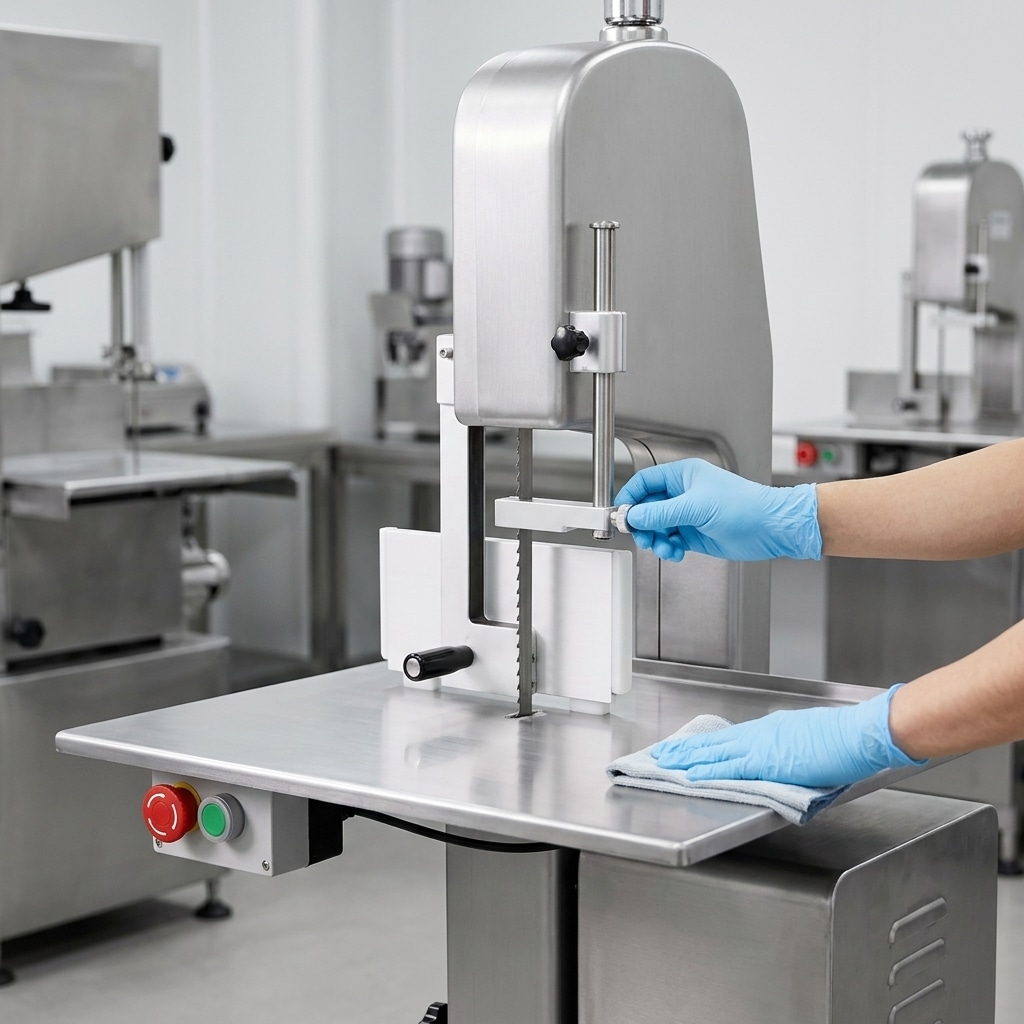
Portion consistency starts before the blade is switched on. Product that is soft, partly thawed, unevenly shaped, or not fully supported can flex during cutting. This may produce slices that vary in thickness, rough cut faces, or a cut that does not remain square. Prepare the raw material so it can sit securely on the table and travel through the blade in a controlled line.
Prepare the product
- Use a consistent product state: Group products by chilled, firm frozen, or other approved production condition. Avoid mixing conditions in one cutting run without resetting the method.
- Remove loose packaging and foreign material: Follow your site’s approved preparation procedure. Never cut through materials that are not intended for the blade.
- Create a stable reference face: Where the product specification permits, square one end or trim an unstable surface before portioning the full batch.
- Sort by size: Cutting similar-sized pieces together reduces repeated guide changes and makes inspection easier.
- Plan for bone orientation: For bone-in products, establish the intended presentation and cutting direction before starting the run.
Prepare the machine
- Clean and inspect the table, fence, pusher, blade area, and collection area according to the approved sanitation procedure.
- Confirm that guards, doors, interlocks, blade guides, and the fence are correctly positioned. Do not operate equipment with a missing, damaged, or bypassed safety component.
- Inspect the blade for obvious damage, contamination, poor tracking, or signs that it no longer cuts cleanly. Replace or service it in accordance with the manufacturer procedure.
- Set the guide to the required nominal thickness and lock it securely. Make a measured test cut before releasing production pieces.
For detailed daily checks, cleaning sequence, and blade-related precautions, see these safety and maintenance protocols for commercial bone saw machines.
Core Meat Band Saw Cutting Techniques
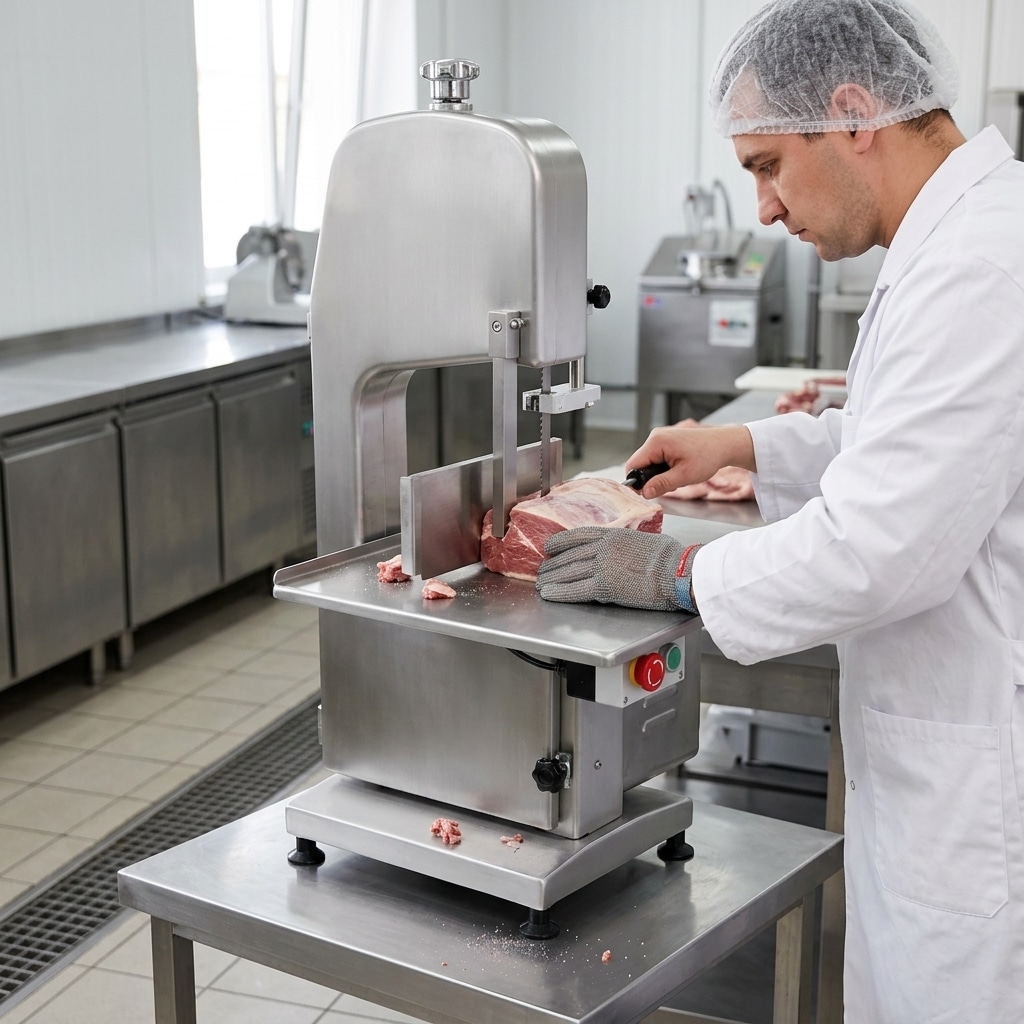
The objective is to move product through the cutting zone without twisting, lifting, rocking, or forcing it. The operator should use the machine’s intended fence, carriage, pusher, or product-holding accessory. Hands should remain outside the defined danger area at all times; use a suitable pushing device when the remaining piece becomes small or difficult to control.
1. Establish the thickness with the fence, not by eye
Set the guide to the target dimension using the machine scale only as an initial reference unless it has been verified for the current setup. Cut one or more test pieces, measure them with an appropriate tool, and adjust the fence if needed. Once accepted, keep the setting locked and document it when the product specification requires traceability.
2. Keep the reference face against the guide
Place the squared or stable face firmly against the fence throughout the cut. If the product drifts away from the guide, the slice can taper. A stable, light lateral contact is usually more useful than excessive pressure. Pressing too hard can distort soft meat or create unnecessary resistance.
3. Feed at a steady rate
Use deliberate, even forward movement. A feed rate that is too fast can lead to tearing, vibration, blade deflection, or poor surface finish. Feeding too slowly may also encourage the operator to pause in the cutting zone. The appropriate rate depends on the product, blade condition, and saw design. Train operators to respond to changes in sound, resistance, and cut quality by stopping and checking the setup rather than increasing force.
4. Control long, irregular, and bone-in pieces
Long pieces need support at both the infeed and outfeed sides so their weight does not pull the cut out of square. Irregular items may need an approved fixture, a stable orientation, or a preliminary cut to create a flat contact surface. With bone-in products, choose a direction that keeps the item stable and follows the required portion specification. Do not attempt to rotate or reposition a product while it is in contact with a moving blade.
5. Manage the last piece safely
As the remaining piece becomes shorter, it may no longer be safely controlled by hand. Use the supplied pusher or another approved accessory and follow the machine manual. If a desired end piece cannot be safely held, stop and use an alternative approved cutting method. Yield goals should never override safe handling.
A Repeatable Portion-Cutting Workflow
A documented workflow helps different operators achieve the same result and makes deviations easier to identify. The exact records will vary by business, product, and local requirements, but the following sequence is a practical starting point.
- Review the production specification. Confirm the product identity, target portion dimension or weight range, cut orientation, packaging plan, and any inspection requirement.
- Prepare a controlled batch. Use product in the planned cutting condition and group pieces that have similar size and shape.
- Inspect and set up the saw. Complete the pre-use check, fit or verify the blade as required, set the guide, and ensure the work area is clean and clear.
- Run and measure test cuts. Inspect the cut face and measure thickness, or weigh portions when weight is the controlling specification. Adjust the setup before the main run.
- Cut using one repeatable motion. Keep each item against the guide, use steady feed pressure, and place cut portions in the designated clean container or transfer area.
- Verify during the run. Check portions at a frequency that suits the process risk and product variation. Recheck after a blade change, guide adjustment, interruption, or change of product condition.
- Separate nonconforming pieces. Identify off-spec portions immediately so they can be reworked, repurposed, or handled according to the site’s procedure.
- Clean down and record issues. At the end of the batch, follow the approved cleaning routine and note blade, guide, product, or process issues for the next shift.
If the saw is part of a wider sausage or formed-meat process, consistent portioning should be coordinated with upstream preparation. For example, raw material temperature and cut size can affect subsequent mixing; see guidance on making consistent meat texture with a bowl cutter when planning the full workflow.
Common Causes of Inconsistent Cuts
When portions vary, the source is usually a combination of product condition, setup, blade performance, and operator handling. Address the underlying cause before increasing speed or changing the target setting.
- Tapered slices: The product may not be held against the fence, the reference face may be uneven, or the product may be unsupported and pulling away during the cut.
- Variable thickness: Check whether the fence has moved, whether the setting was verified with a measured test cut, and whether operators are using the same product orientation.
- Ragged or torn surfaces: Review blade condition, product condition, feed method, and whether the item is suitable for the current blade and machine setup.
- Uneven bone-in portions: Confirm the intended cutting direction, product stability, guide setting, and whether the incoming pieces vary too much in anatomy or size for a single fixed setting.
- Product slipping or rocking: Stop the run and create a stable face, use an approved holding method, or process the item with another suitable technique. Do not attempt to control an unstable piece by placing hands closer to the blade.
- Output drifting over time: Look for blade wear, accumulated residue around guides or the fence, loose adjustments, changing product temperature, or inconsistent operator practice.
A simple corrective-action record can be valuable: note the product, time, portion deviation, observed cause, action taken, and result. This creates useful evidence for training and preventive maintenance without relying on memory alone.
Safe, Clean Operation Protects Portion Quality
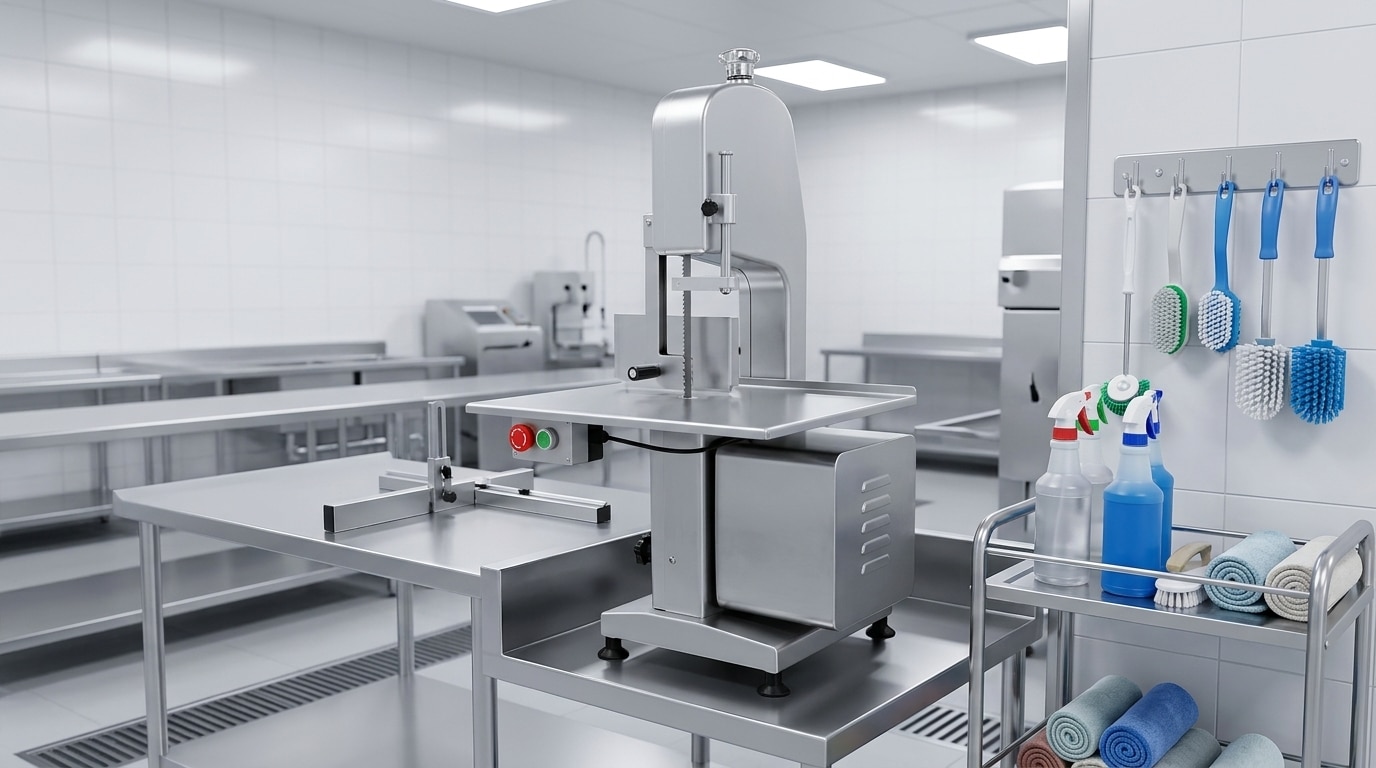
Safety, sanitation, and cut consistency are closely connected. Residue on the table or guide can affect how product tracks. A worn blade can affect both surface quality and operator control. Poorly organized infeed and outfeed areas can cause operators to rush or reach across the machine. A clean, orderly saw station is therefore part of portion control, not merely an end-of-shift requirement.
Build the following practices into the operating standard:
- Train only authorized personnel on the specific machine and retain the machine manual at the point of use or in an accessible controlled system.
- Keep guards, doors, blade protection, guide assemblies, and pushers in place and usable. Never defeat a safety function to save time.
- Switch off and isolate the machine before cleaning, blade work, adjustment beyond normal operating controls, or clearing a jam, following the applicable lockout or isolation procedure.
- Use food-safe cleaning chemicals and concentrations that match the site’s sanitation plan and the equipment manufacturer’s guidance. Rinse and dry as required before reassembly.
- Inspect food-contact areas after cleaning and before production. Ensure removable components are reinstalled correctly.
- Keep a planned spare blade and maintenance arrangement appropriate for the operation, rather than continuing to cut with a blade that no longer performs acceptably.
For businesses comparing footprints and work patterns, this guide to tabletop versus floor bone saws can help assess how layout, product handling, and cleaning access affect daily operation.
Match the Saw to the Work
Good technique cannot overcome a machine that is unsuitable for the product or production environment. Before purchasing or specifying a commercial meat band saw, define the product range, maximum piece dimensions, proportion of bone-in work, product temperature at cutting, expected operating pattern, available bench or floor space, electrical supply, washdown and cleaning requirements, and local service access.
Also consider the workflow around the saw. There should be enough infeed space to load product safely, sufficient outfeed space to collect portions without obstructing the operator, and a hygienic route to the next stage. A larger machine is not automatically the better choice; the correct decision is the one that supports the product, operator, cleaning method, and daily workload without creating unnecessary complexity.
When discussing a machine with a supplier, provide representative product dimensions and photos where appropriate, describe whether products are boneless, bone-in, chilled, or frozen, and explain the target cut types. This enables a more useful technical discussion about fit, setup, operator workflow, consumables, and after-sales support.