Table of Contents
- Start With These Safe Checks
- Understanding Sugarcane Juicer Faults
- Problem 1: The Machine Will Not Start
- Problem 2: The Machine Stops or Trips During Use
- Problem 3: Low Juice Extraction or Wet Bagasse
- Problem 4: Cane Will Not Feed Properly or Jams
- Problem 5: Unusual Noise or Vibration
- Problem 6: Leaks, Residue, or Hygiene Concerns
- When to Stop and Call for Service
- Preventive Routine to Reduce Downtime
A practical troubleshooting guide for commercial sugarcane juicer operators. Learn what to check first when a machine will not start, extracts poorly, jams, vibrates, leaks, or develops hygiene issues.
Start With These Safe Checks
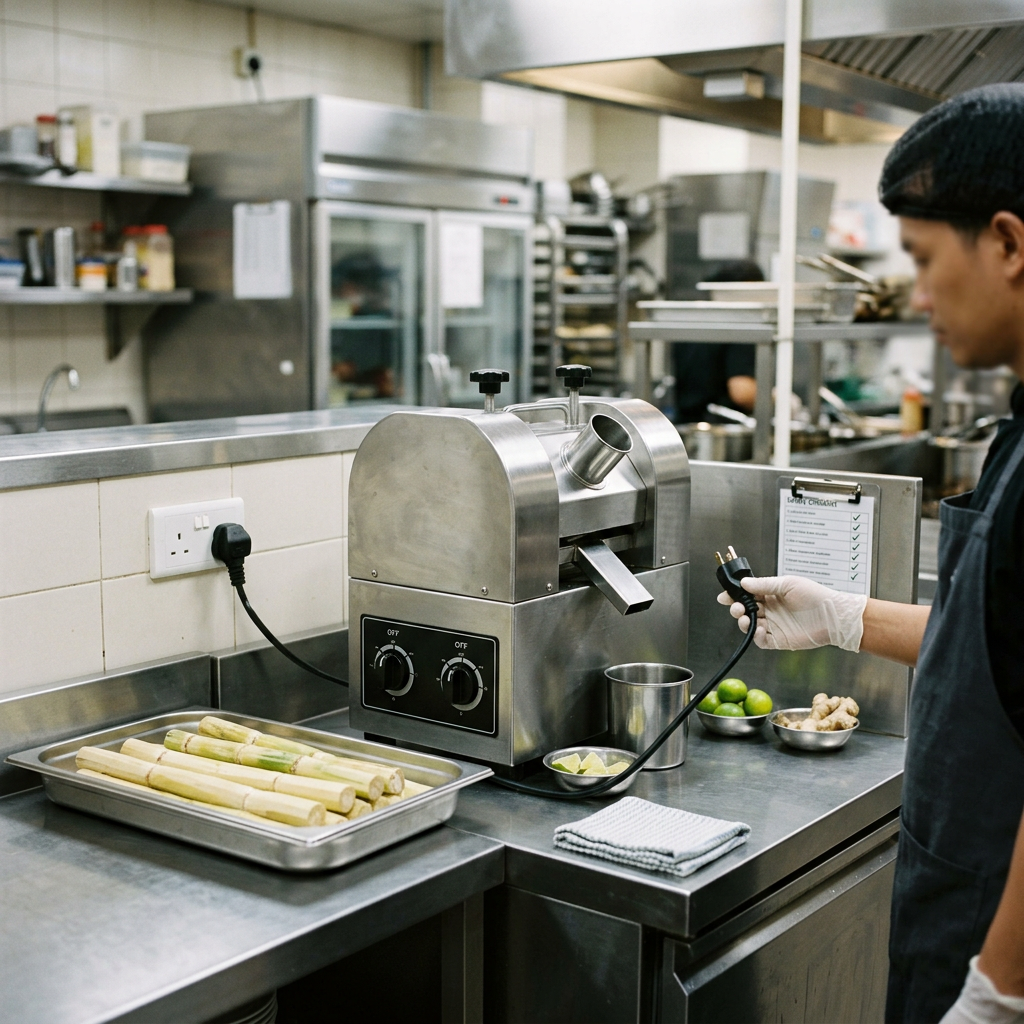
The fastest way to resolve a sugarcane juicer problem is to stop the machine safely, isolate the power supply, and check the simple causes first: the correct electrical supply, a fully closed guard or cover, a cleared feed path, clean rollers, and secure removable parts. Do not place hands or tools into the feed opening or roller area while the machine is connected to power.
Many operating faults come from cane that is too dirty, excessively thick, poorly trimmed, or fed too quickly. However, repeated tripping, burning smells, damaged cables, loose guards, grinding sounds, or a machine that will not restart after basic checks should be handled by a qualified technician or the supplier’s service team.
Before restarting, record what happened: the time of the fault, whether cane was being processed, any sound or smell, and what the operator had already checked. This gives a technician useful information and helps prevent repeated trial-and-error actions.
Understanding Sugarcane Juicer Faults
A commercial sugarcane juicer separates juice from prepared cane by passing the cane through driven crushing rollers. Its practical performance depends on several connected systems: the electrical supply and controls, drive components, rollers and feed area, drainage path, guards, and the operator’s preparation and cleaning routine.
For sugarcane juicer troubleshooting, separate the symptom from the suspected cause. A low-output complaint, for example, may be caused by cane condition, inconsistent feeding, buildup on the rollers, or a mechanical issue. Replacing parts before checking preparation and cleaning can increase cost without fixing the underlying problem.
Commercial equipment is intended for repeated service, but it still needs appropriate installation, daily cleaning, and an operating pace suited to the machine. If you are comparing equipment classes or reviewing whether a current unit suits the workload, see this guide to commercial versus home sugarcane juicers.
Problem 1: The Machine Will Not Start
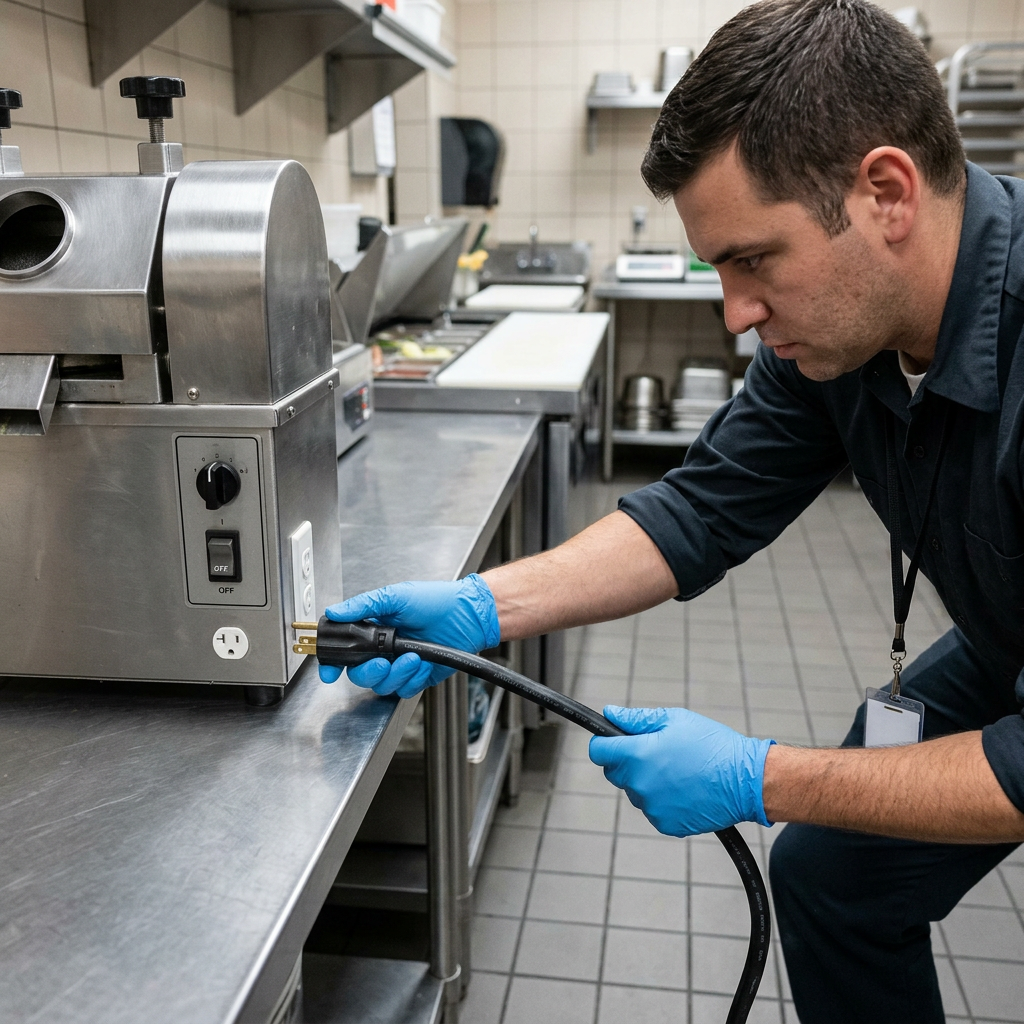
Likely causes: no power at the outlet, an incorrect power supply, a switch or protective device not reset, a safety interlock or guard not correctly positioned, or an electrical component fault.
What to check
- Turn the machine off and unplug or isolate it before inspection.
- Confirm that the outlet, plug, cable, and any external isolator are in good condition. Do not use a damaged cable or plug.
- Check that the local voltage, frequency, and phase match the machine rating plate exactly.
- Make sure all required guards, covers, collection trays, and safety components are fitted as intended. Do not bypass an interlock or protective device.
- Allow the machine to cool if it stopped after extended work, then follow the manufacturer restart procedure.
If the correct supply is available but the machine remains unresponsive, do not open the electrical enclosure unless you are qualified and authorized to do so. Electrical diagnosis should be performed safely. Review the detailed guide to sugarcane juicer power requirements before installation or relocation, especially when the machine is moving to a different market or site.
Problem 2: The Machine Stops or Trips During Use
Likely causes: an overloaded feed, a jam, an unstable or unsuitable power supply, overheating, or a fault in the electrical or drive system.
First, stop feeding cane and isolate the machine. Wait until all movement has stopped. Remove cane only according to the safe clearing procedure in the machine manual; never pull material from moving rollers and never use metal tools near energized equipment.
Inspect the cane preparation process. Very thick sections, hard nodes, foreign material, or several pieces forced into the feed area can overload the machine. Wash cane thoroughly, remove debris, and cut it to a size the operator can guide steadily. Feed individual pieces at a controlled rate instead of pushing against resistance.
If a circuit breaker or protective device trips repeatedly, treat it as a fault condition rather than simply resetting it again. The cause may involve the supply, wiring, motor, controls, or mechanical load. For a focused fault-isolation process, read diagnosing electrical faults in commercial sugarcane machines.
Problem 3: Low Juice Extraction or Wet Bagasse
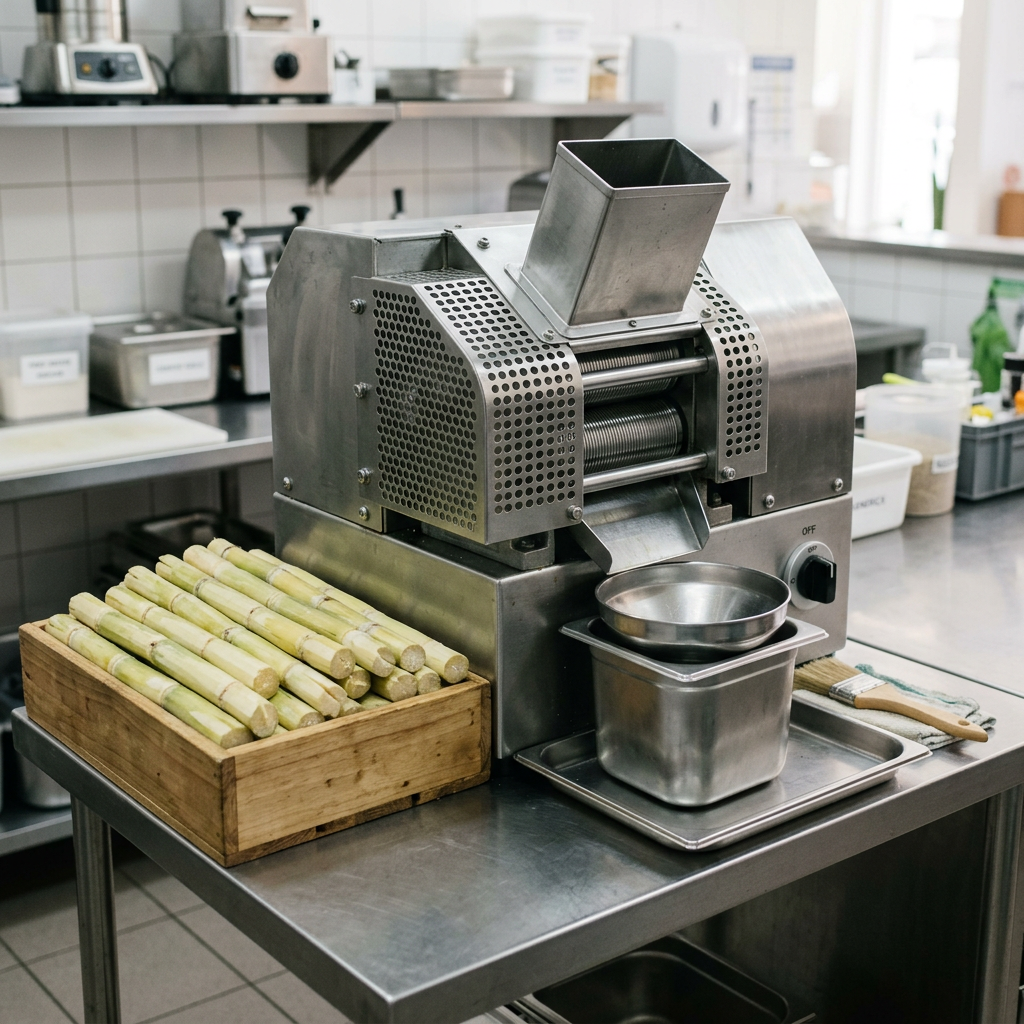
Likely causes: cane quality or freshness, unsuitable cane size, inconsistent feeding, dirty roller surfaces, incorrect adjustment where the model permits adjustment, or wear in components that affect crushing.
Start with the cane, not the machine. Cane varies by variety, maturity, storage conditions, and diameter. Dry, old, damaged, or poorly stored cane may provide a different result from fresh, well-prepared cane. Compare performance using similar prepared cane before concluding that the machine has a mechanical issue.
Then clean the accessible food-contact and roller-area surfaces according to the manual. Fibres and sticky residue can affect grip and smooth feeding. Ensure operators are not rushing material through the rollers or feeding pieces that are difficult to control.
Do not change roller gaps, tension, or other factory settings unless the machine documentation specifically permits it and your team understands the procedure. Incorrect adjustment can reduce performance, damage parts, or create a safety risk. For a deeper process, see what to do when a sugarcane machine has low juice yield.
Problem 4: Cane Will Not Feed Properly or Jams
Likely causes: cane is too large or irregularly cut, debris is present, fibres have accumulated, the rollers are contaminated, or the operator is forcing material through the inlet.
Prepare cane consistently. Wash it, remove visible soil and foreign material, trim damaged ends, and cut pieces to a manageable size for the model in use. The operator should present the cane straight to the inlet and let the rollers take it in. Forcing cane sideways or pushing a second piece into a restricted feed path increases the chance of a jam.
After isolating the machine, inspect accessible areas for fibres and residue. Clean only with the approved method and tools. Check that juice and bagasse paths are not obstructed and that removable trays or guides are seated correctly.
If jams are frequent despite good cane preparation and cleaning, stop operating the machine until the cause is assessed. Recurrent jams can indicate a worn, misaligned, or damaged component, and continuing to force the machine may lead to more extensive repair.
Problem 5: Unusual Noise or Vibration
Likely causes: the machine is not level or is sitting on an unstable counter, fasteners or removable parts are loose, debris is in the processing area, or an internal drive component requires inspection.
A commercial sugarcane juicer should stand on a stable, level surface with enough surrounding space for safe feeding, cleaning, and access. With the machine switched off and isolated, check visible fasteners, trays, covers, and guards for secure fitting. Follow the manual for any routine checks that an operator is allowed to perform.
Do not continue normal production if you hear grinding, metal-on-metal contact, sudden knocking, or a new vibration that does not disappear after cleaning and confirming the installation surface. Do not remove protective covers to investigate moving parts. These symptoms should be reported promptly, together with a short video if it can be taken safely while standing clear of the machine.
When selecting or replacing equipment, consider the expected duty cycle, installation space, cane preparation process, and cleaning access—not only the purchase price. This sugarcane juicer cost budgeting guide explains the wider operating factors buyers should plan for.
Problem 6: Leaks, Residue, or Hygiene Concerns
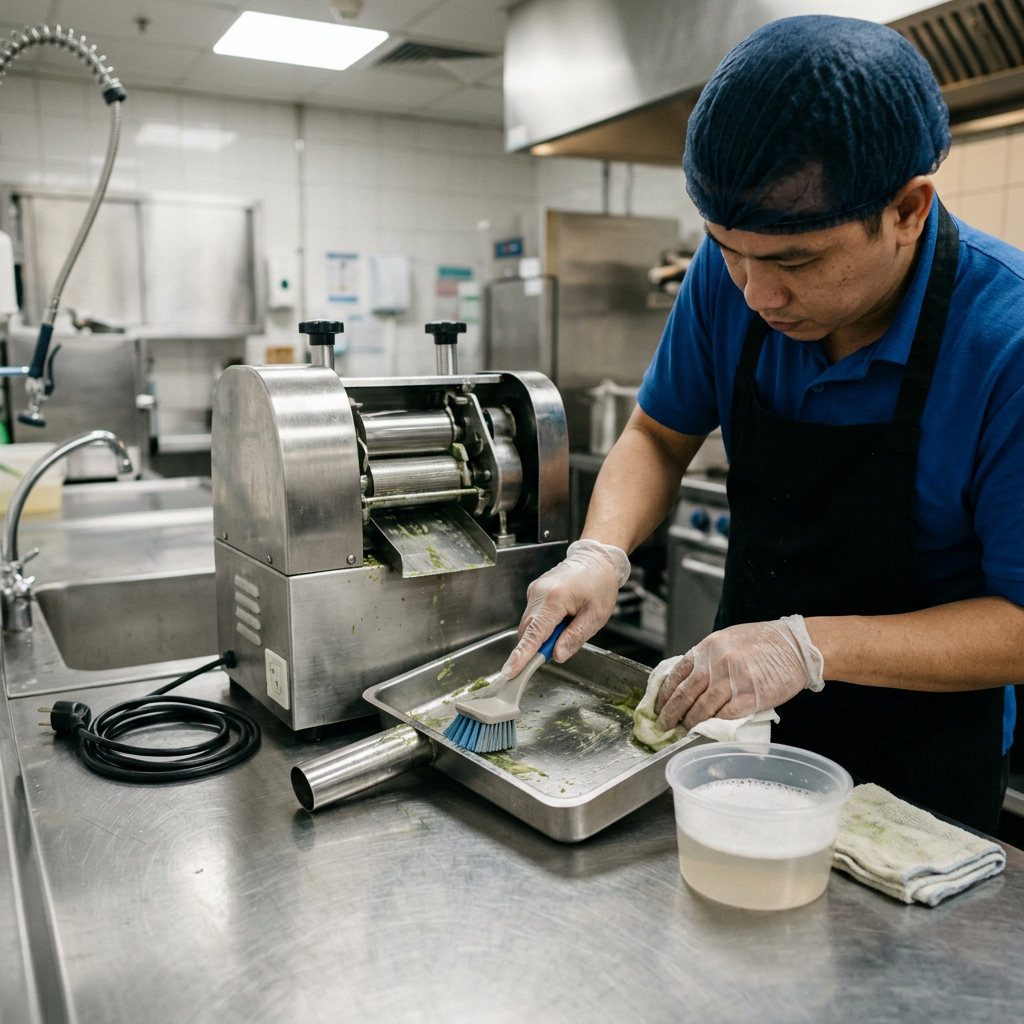
Likely causes: a blocked drainage path, an incorrectly installed juice tray or container, food residue around accessible components, worn seals where applicable, or incomplete cleaning between service periods.
Turn off and isolate the machine before inspecting the juice collection and drainage area. Confirm that containers are correctly placed and that accessible channels are free from fibre buildup. Follow the cleaning and reassembly sequence in the equipment manual. A part that is clean but incorrectly seated can still cause leakage or poor drainage.
Clean at the end of each operating period and whenever residue becomes visible. Use cleaning agents and methods that are suitable for food-contact equipment and compatible with the machine materials. Avoid abrasive tools or chemicals that the manufacturer does not approve. Dry accessible parts as required before reassembly and do not leave cane residue in the machine overnight.
A repeat leak after correct cleaning and assembly may indicate a component that needs replacement. Do not use makeshift seals, tape, or unapproved modifications on food-contact or protective areas.
When to Stop and Call for Service
Operators can safely handle routine cleaning, cane preparation, installation checks, and the basic checks allowed by the machine manual. Stop using the sugarcane juicer and arrange professional support when you find any of the following:
- Repeated electrical trips, a burning smell, smoke, damaged wiring, or a hot plug or outlet.
- Grinding, sharp knocking, visible damage, persistent vibration, or rollers that do not operate normally.
- A jam that cannot be cleared using the documented safe procedure.
- Recurring low extraction after comparable cane, correct preparation, and cleaning have been checked.
- A safety guard, cover, switch, or food-contact component that is damaged, missing, or does not fit correctly.
- A leak that continues after the machine has been cleaned and reassembled correctly.
When contacting support, provide the machine model, serial number if available, local power details, purchase or installation history, a description of the symptom, and clear photos or video where safe. This information helps the service team identify whether the next step is an operating correction, a replacement part, or a technician inspection.
Preventive Routine to Reduce Downtime
Consistent daily care prevents many sugarcane juicer troubleshooting calls. Build the following checks into the operating routine:
- Before opening: inspect the plug, cable, guards, trays, and installation surface; confirm the feed and drainage areas are clean.
- During service: use clean, suitably prepared cane; feed steadily; remove visible fibre buildup only after isolating power; listen for changes in normal operating sound.
- After service: clean and dry accessible parts following the manual, clear juice and bagasse paths, and reassemble components correctly.
- Periodically: schedule inspection of wear items and drive-related components by qualified personnel in line with the manufacturer guidance and your actual service volume.
Keep a simple maintenance log with cleaning completion, faults, parts replaced, and service visits. Over time, the record can reveal patterns such as recurring jams from a particular cane preparation method or electrical interruptions at a specific site. For more detailed planning, refer to the commercial sugarcane juicer maintenance guide.
A disciplined routine protects workflow, helps operators spot changes early, and supports a more informed service request when a technical problem does occur.