Table of Contents
- Quick Answer: The Best Way to Store Sugarcane
- Why Sugarcane Storage Matters for Juice Service
- Buy and Receive Sugarcane in Serviceable Batches
- Set Up a Clean, Dry Sugarcane Storage Area
- Manage Temperature, Moisture, and Airflow
- Use First-In, First-Out Stock Rotation
- Wash and Prepare Sugarcane at the Right Time
- Daily Quality Checks and Common Storage Problems
- Plan Storage Around Your Service Model
Store whole sugarcane clean, dry, shaded, and protected from heat, standing water, pests, and damage. Buy in manageable batches, inspect every delivery, rotate stock first-in-first-out, and wash and trim cane shortly before extraction for a more consistent fresh juice service.
Quick Answer: The Best Way to Store Sugarcane
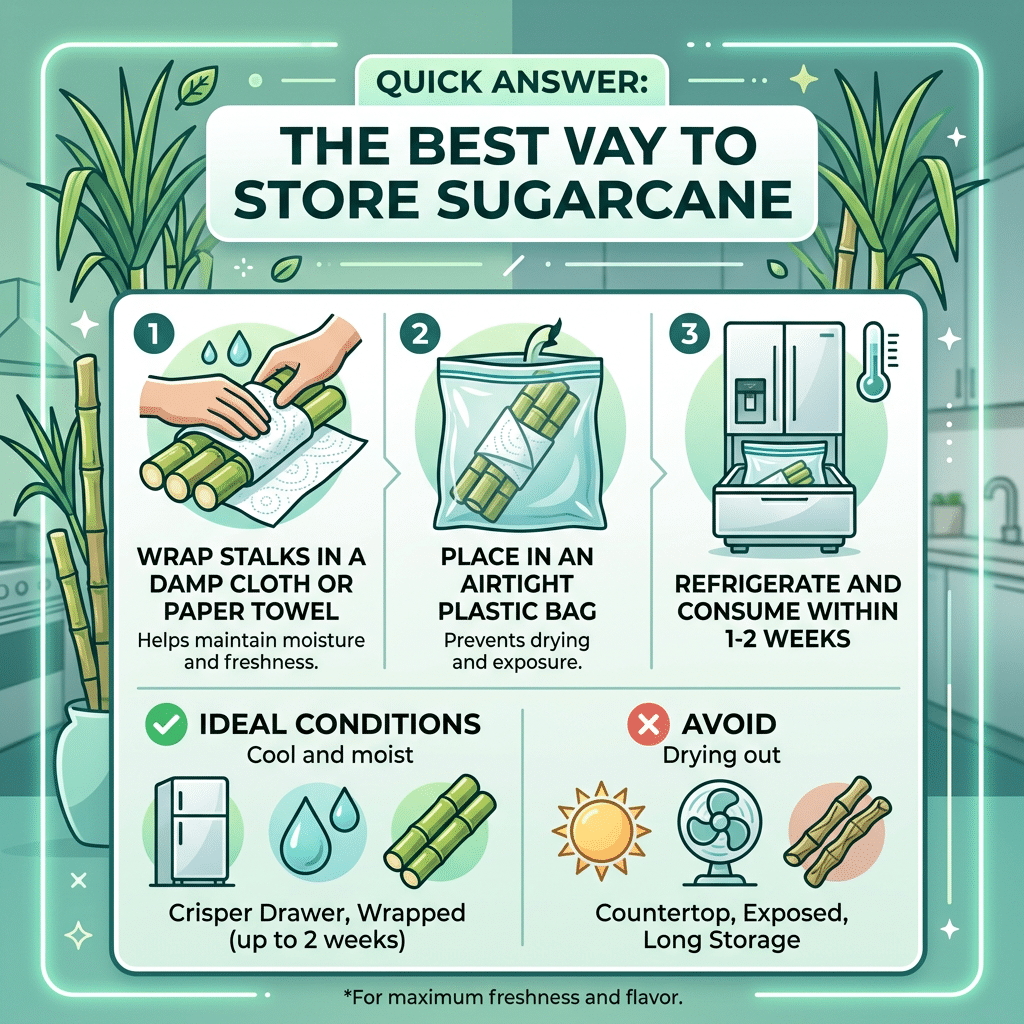
For fresh juice service, store whole sugarcane in a clean, dry, shaded, well-ventilated area, away from direct sun, rain, standing water, chemical products, pests, and strong odours. Keep canes off the floor on clean racks, pallets, or food-safe bins where practical. Do not leave cut ends, peeled cane, or washed cane exposed for long periods; prepare only the quantity your team expects to juice soon.
The most reliable commercial approach is to buy sugarcane in manageable deliveries, inspect it on arrival, label the receiving date, and use the oldest acceptable stock first. Storage time varies with cane variety, harvest condition, transport, local climate, and the condition of the stalks at delivery. Rather than relying on one fixed number of days, set an internal quality standard and inspect stock every day.
Before feeding cane into a commercial sugarcane juice machine, wash the exterior with potable water, remove visibly damaged sections, and keep the preparation area separate from dirty receiving stock. This protects juice quality, supports cleaner operations, and helps operators work more consistently during busy service.
Why Sugarcane Storage Matters for Juice Service
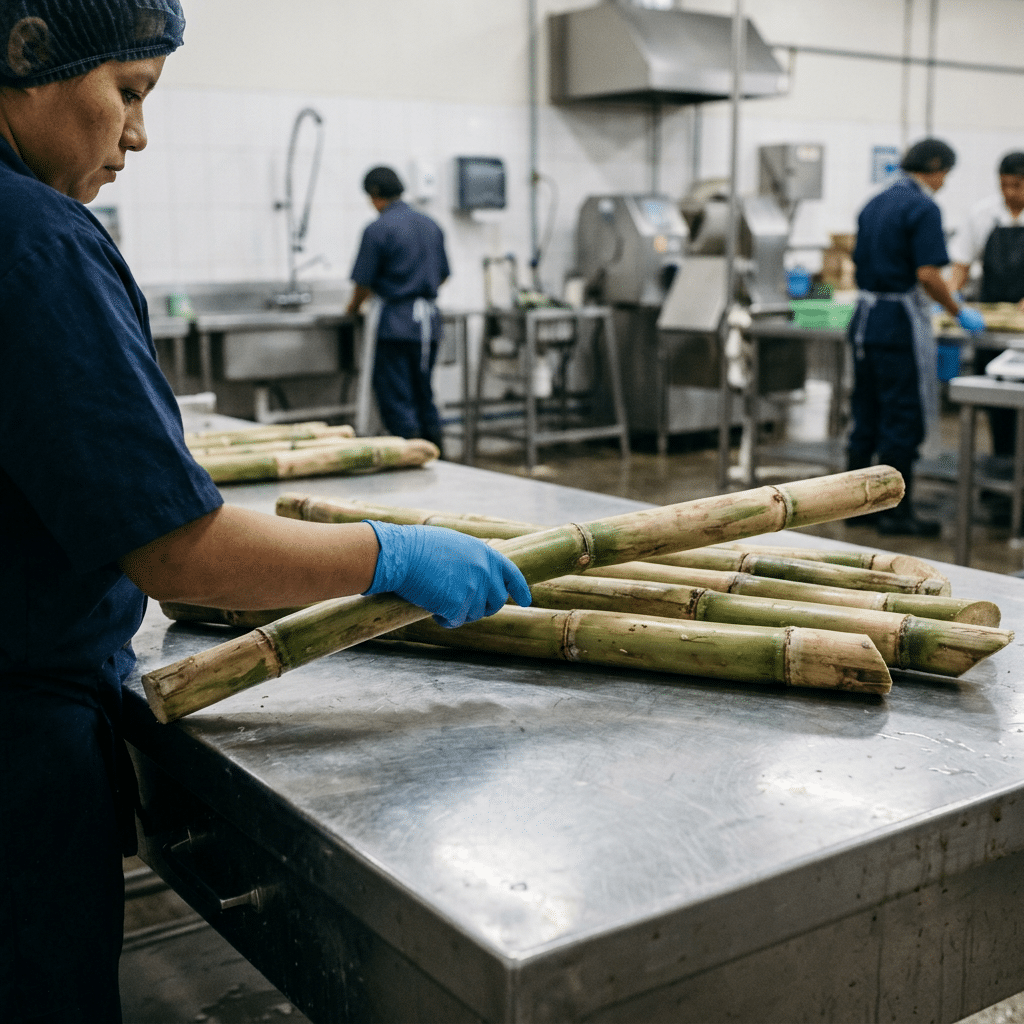
Sugarcane is a raw agricultural material, not a shelf-stable ingredient. From harvest through delivery and storage, stalks can lose moisture, develop surface spoilage, collect dirt, or sustain handling damage. These changes can affect how easy the cane is to prepare and press, as well as the appearance, aroma, and consistency of the juice served to customers.
Good storage does not mean trying to hold cane indefinitely. It means slowing avoidable deterioration and giving staff a simple process for identifying stock that should be used, trimmed, or rejected. For a commercial operator, this is especially important because a single weak batch can create slower preparation, more cleaning work, and inconsistent service at the counter.
It is also useful to separate two operating questions: how to store whole raw sugarcane before pressing, and how to handle extracted sugarcane juice after pressing. Raw-cane storage is mainly about receiving, cleanliness, temperature exposure, moisture control, and rotation. Extracted juice requires a separate preservation and food-safety process. For guidance on the latter, see our article on methods for handling the shelf life of fresh sugarcane juice.
Buy and Receive Sugarcane in Serviceable Batches
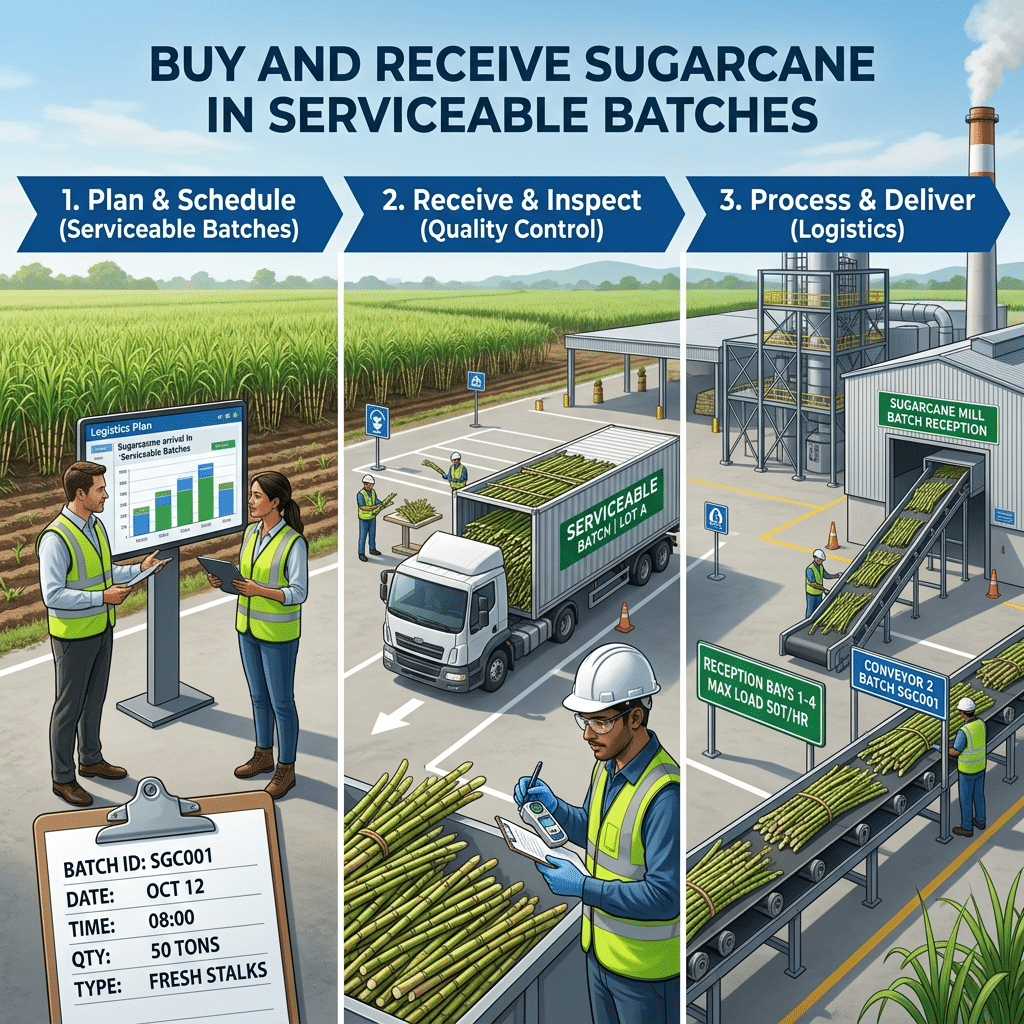
Storage starts with purchasing. Ordering more cane than your operation can inspect, store properly, and use while it remains acceptable increases waste risk. Build deliveries around realistic demand, expected weather, storage space, supplier lead time, and your ability to receive stock without disrupting service.
At receiving, check a representative sample from each delivery. Look for stalks that are reasonably firm and intact, with no obvious mould growth, fermentation odour, excessive softness, leaking areas, pest damage, or heavy dirt accumulation. Some external dryness or colour variation may occur naturally, but canes with suspect odour, widespread discolouration, wet breakdown, or extensive damage should be separated and assessed against your site procedure.
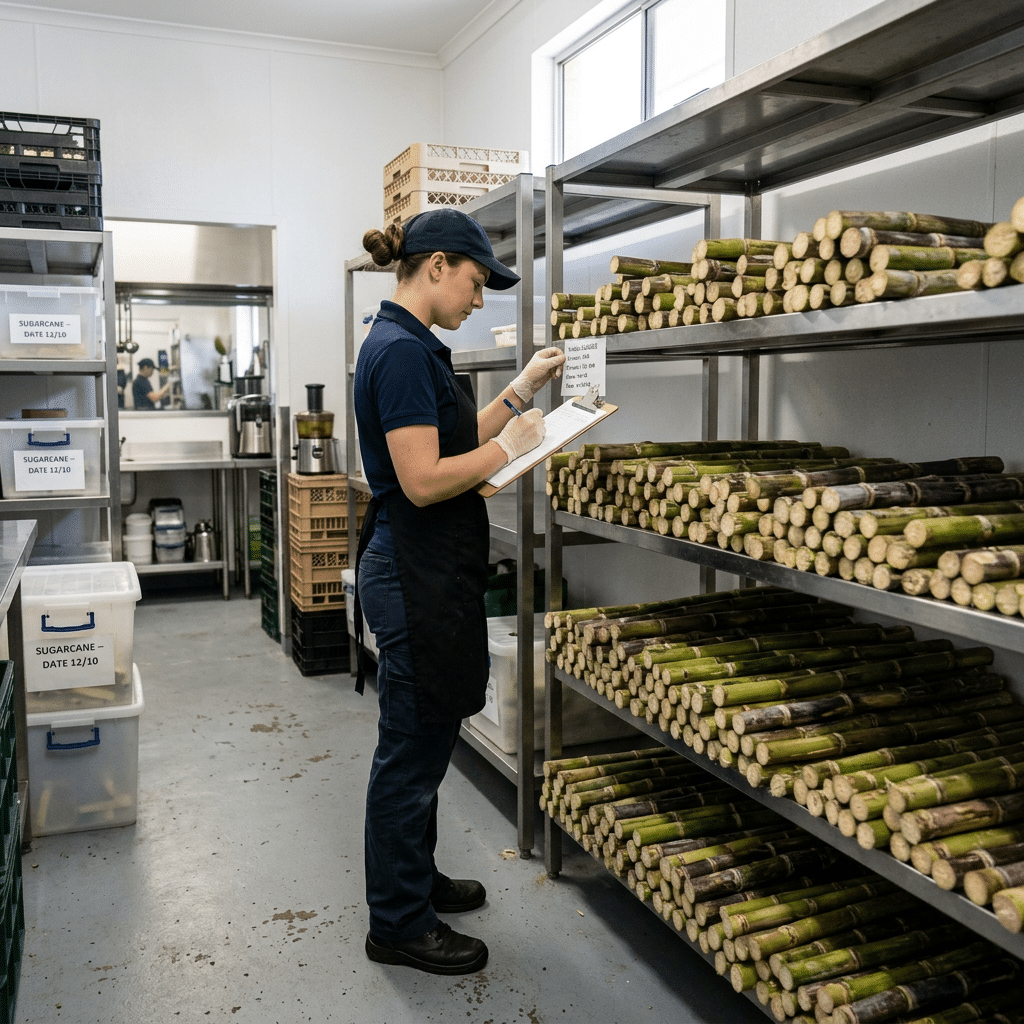
Record the supplier, delivery date, batch or lot information if available, and the staff member who accepted the stock. A simple receiving label makes first-in, first-out rotation much easier. If a delivery arrives wet from rain or transport washing, avoid stacking it tightly in a closed area. Allow surface moisture to dry under clean, shaded, ventilated conditions before placing it into normal storage.
Do not treat receiving as a paperwork exercise only. It is the point where a manager can prevent poor raw material from reaching the juicing station. Clear acceptance criteria also help suppliers understand the condition your business needs for daily fresh juice service.
Set Up a Clean, Dry Sugarcane Storage Area
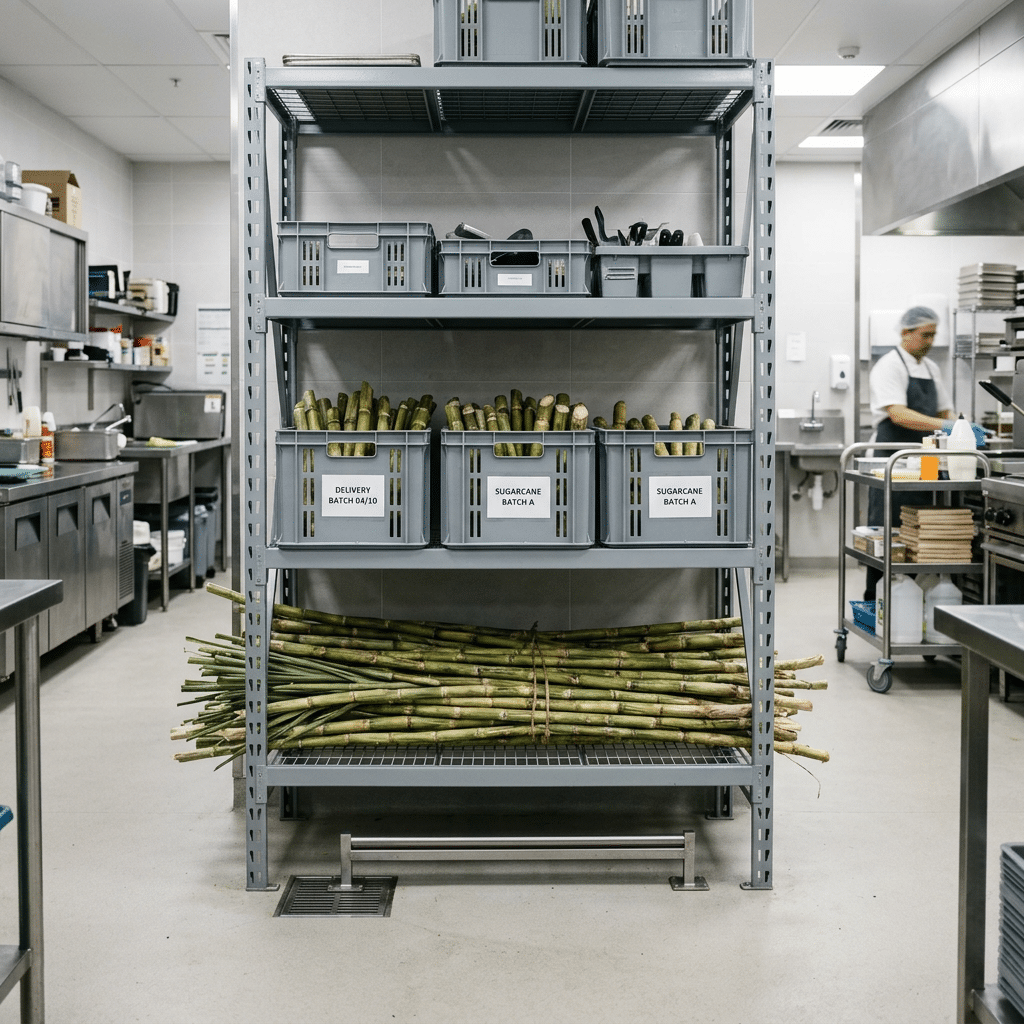
A suitable sugarcane storage area should be easy to clean, protected from weather, and separate from waste, chemicals, cleaning tools, and pest access points. Keep the cane away from floor drains, damp walls, refuse containers, raw meat or seafood storage, and areas where it may be sprayed or splashed during cleaning.
Use clean racks, pallets, or sturdy food-appropriate containers to lift stalks off the floor. Raising stock improves access for cleaning and inspection and reduces the chance that cane will sit in water or collect dirt from foot traffic. Avoid overloading stacks. Heavy or poorly arranged piles can crush lower stalks, make rotation difficult, and create safety issues for staff.
Where possible, assign separate zones for newly received cane, approved stock ready for use, and stock waiting for inspection or disposal. This does not require a large warehouse. Even a small kiosk can use labelled crates or clearly marked shelf positions to prevent old and new deliveries from becoming mixed together.
Keep the area tidy. Cardboard, loose leaves, damaged stalk pieces, and standing water can attract pests and make it harder to identify stock condition. A short opening and closing inspection by the shift lead is often more useful than an occasional deep check after a problem has already developed.
Manage Temperature, Moisture, and Airflow
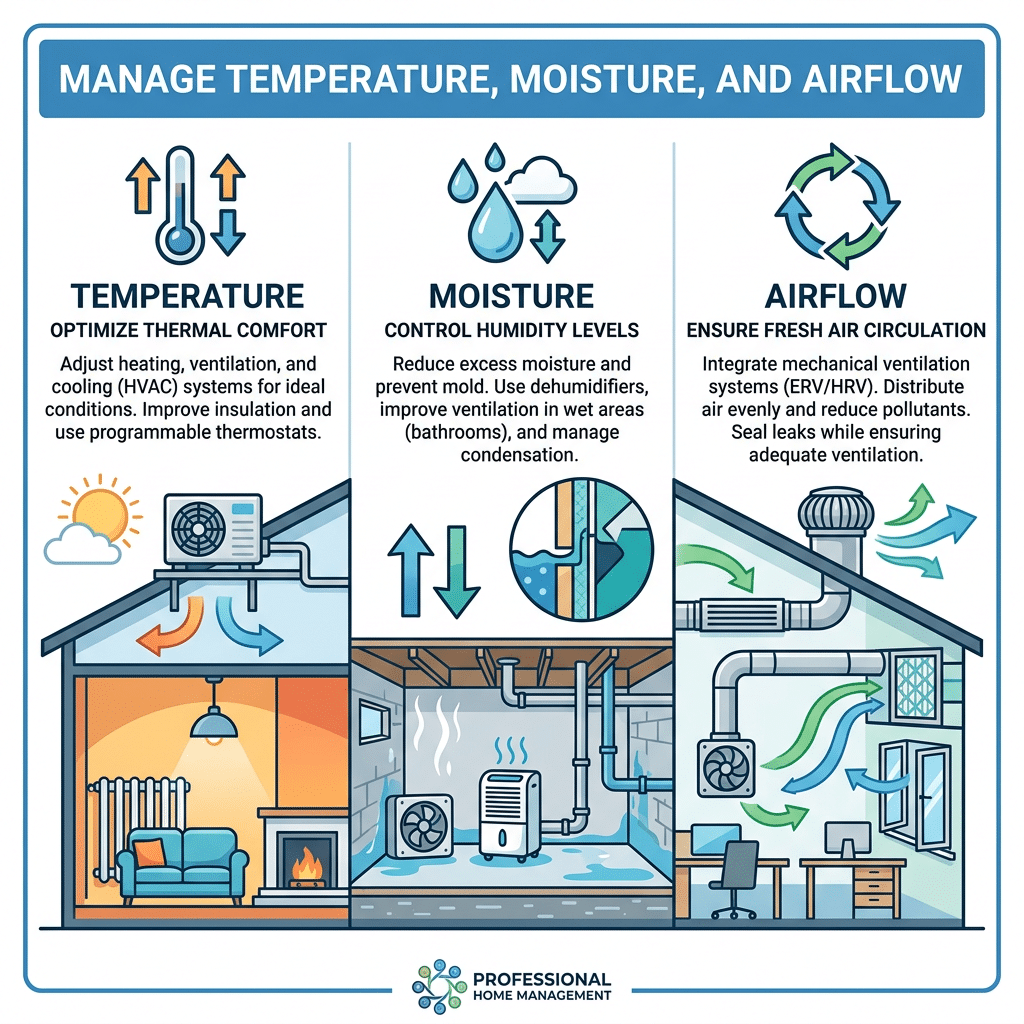
Heat, direct sunlight, excessive moisture, and poor airflow are common causes of avoidable sugarcane quality loss. A shaded, cool, dry location is generally easier to manage than an exposed outdoor area or a hot back room. The correct temperature arrangement depends on local climate, the condition of the delivered cane, available facilities, and your local food-handling requirements, so operators should follow their documented site process rather than assume one storage setting suits every market.
Dry storage does not mean allowing cane to dehydrate in direct airflow or sun. The aim is to protect the stalks from weather and surface wetness while maintaining a clean environment with reasonable air movement. Never store cane in pooled water, seal damp stalks in non-breathable packaging, or wrap wet cane tightly. Trapped moisture can encourage surface deterioration.
If you use refrigerated storage, make sure the space is clean, not overloaded, and suitable for storing raw produce. Monitor for condensation. Cold surfaces and wet floors can create problems if stalks are stored against walls or packed too tightly. If your team is unsure whether chilled storage is appropriate for the cane supplied in your market, test a small controlled batch and compare condition, preparation time, and juice-service results with your usual method.
Mobile operators need particular care because food trucks and pop-up sites may have limited protected storage. Power availability, interior heat, and workflow should be planned before purchasing large quantities of raw cane. Our guide to integrating sugarcane juicers into food trucks covers related space and utility planning considerations.
Use First-In, First-Out Stock Rotation
First-in, first-out, often called FIFO, is the simplest stock-control rule for sugarcane juice operations: use the oldest acceptable delivery before opening newer stock. Put the receiving date on each rack position, crate, or batch label, and physically position older cane where staff will select it first.
FIFO works only when it is combined with daily condition checks. The oldest batch is not automatically suitable just because it arrived first. If stalks show spoilage, unusual odour, serious softness, contamination, or damage that cannot be safely trimmed according to your internal procedure, remove them from the production flow. Do not hide poor stock beneath new cane or leave it in the storage area until the next delivery.
A practical routine is to inspect stock before the first shift, estimate the quantity required for the day, move that quantity to the preparation area, and leave reserve stock protected in storage. This reduces repeated handling and keeps the juicing counter from becoming a raw-material holding area.
During high-demand periods, review purchase frequency rather than simply increasing the order size. Seasonal venues can use demand forecasts, delivery schedules, and a clearly marked rotation system to keep service moving. The operational approach discussed in operating sugarcane juice stands during busy summer periods can also help managers plan stock and staffing for variable footfall.
Wash and Prepare Sugarcane at the Right Time
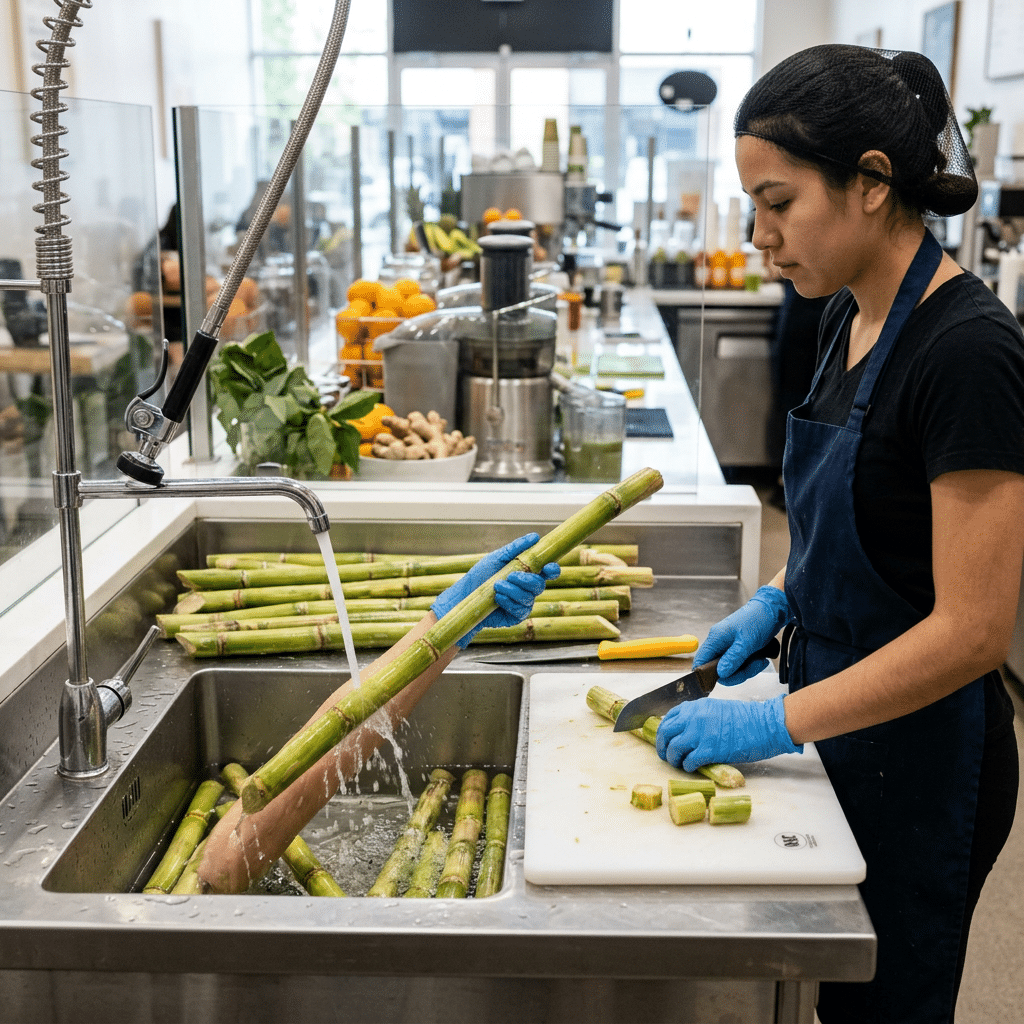
Keep raw-cane washing and trimming close to the time of extraction. This reduces the amount of wet, cut material waiting around the juicing station. Whole cane usually tolerates handling better than cane that has already been cut into short sections, peeled, or washed, so avoid preparing an entire delivery far in advance unless your documented process and storage controls support it.
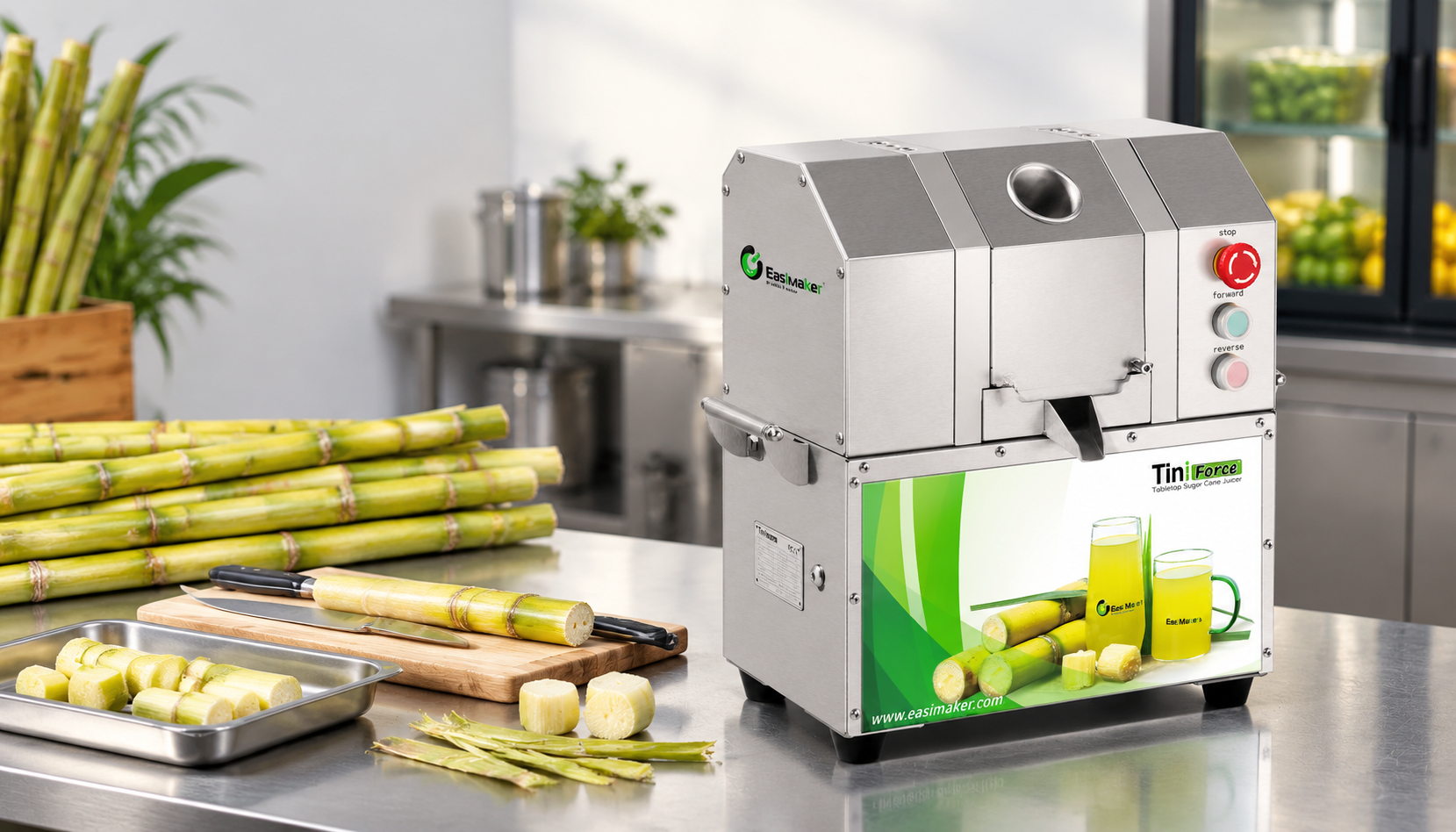
Use potable water to wash the exterior of the stalk. Brush away visible soil where needed, then allow excess surface water to drain before feeding the cane into the machine. Use clean preparation surfaces, knives, cutting boards, and containers. Staff should wash hands and follow the same hygiene controls used for other ready-to-serve beverage ingredients.
Trim visibly damaged ends and remove sections that do not meet your quality standard. The exact cutting method depends on the cane diameter, the feed opening of your machine, and your operator safety procedure. Never force oversized, badly bent, or foreign-material-contaminated stalks into the rollers. Prepare pieces that can be fed steadily and safely.
Separate raw-cane preparation from the clean side of the beverage operation. Cups, ice, garnishes, finished drinks, and cleaned machine parts should not share a cluttered surface with unwashed cane. This layout is important whether you serve juice immediately or plan to bottle products for local distribution. If bottling is part of your business model, review our guidance on bottling and distributing fresh sugarcane juice locally alongside local regulatory requirements.
Daily Quality Checks and Common Storage Problems
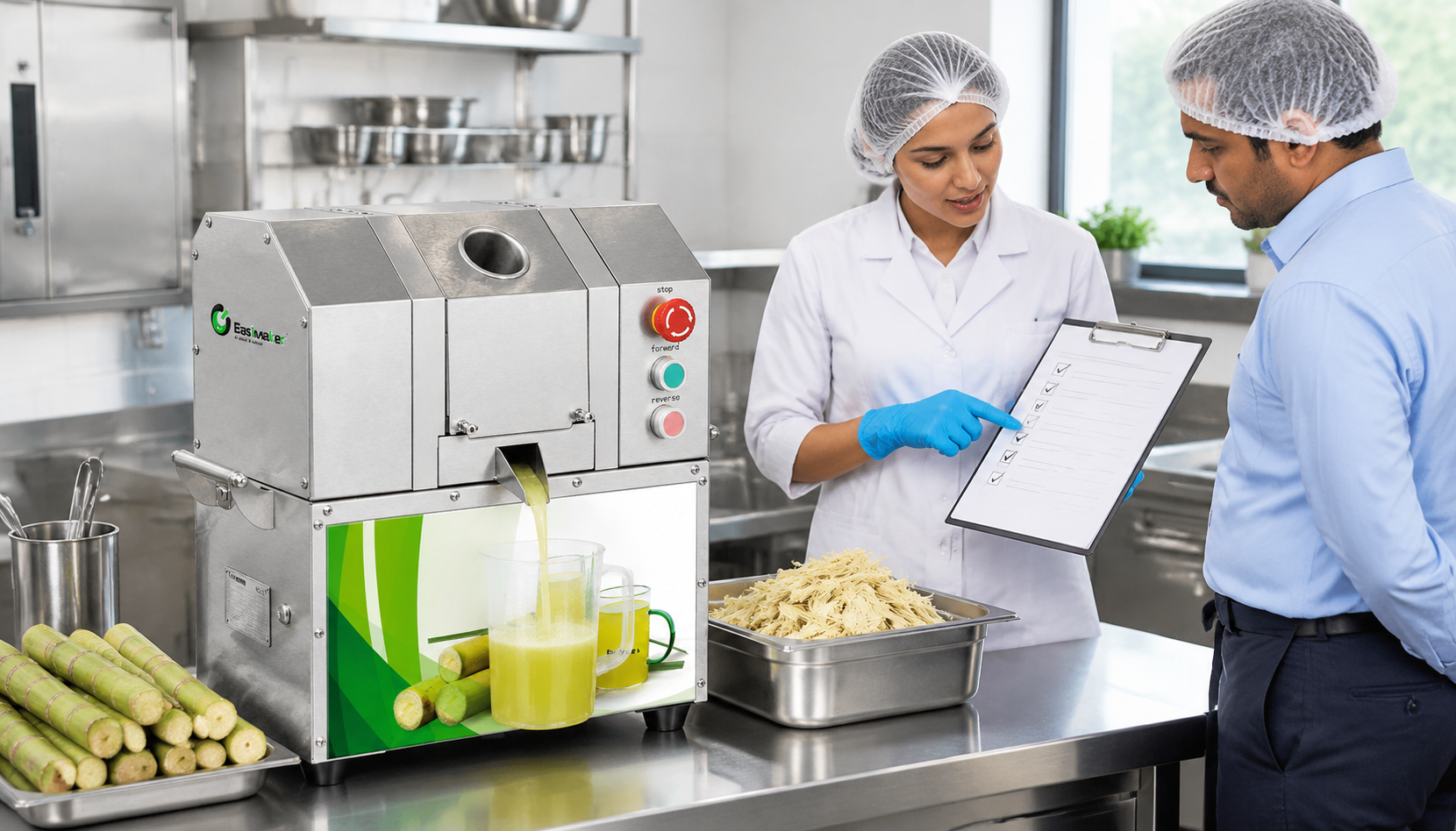
A short daily inspection protects both product quality and staff efficiency. Check several stalks from the batch that will be used first, not only the top stalks in a stack. Record recurring issues so that purchasing and supplier discussions are based on clear observations rather than memory.
- Soft, wet, or leaking areas: isolate affected cane and assess it under your site quality procedure. Check whether racks, packaging, or storage surfaces are retaining moisture.
- Mould or unusual odour: remove suspect stock from the production area. Clean and inspect nearby storage surfaces before placing new cane in the same location.
- Excessive dryness or shrivelling: review exposure to heat, sun, direct airflow, and the age of stock. Smaller, more frequent deliveries may be more suitable.
- Dirty cane at the juicing counter: improve receiving and move washing into a dedicated preparation step rather than trying to clean stalks during customer service.
- Mixed dates and unclear stock order: simplify labels and assign one team member per shift to check rotation.
- Pest activity: remove food debris, inspect entry points, and follow your approved pest-control process. Do not apply uncontrolled chemicals around raw produce.
Clean storage equipment regularly. Pallets, crates, shelves, and nearby floors should be included in the site cleaning schedule. If an issue repeats across deliveries, photograph the condition where appropriate, document the batch details, and discuss it with the supplier promptly.
Plan Storage Around Your Service Model
The right sugarcane storage process should fit the way you sell juice. A fixed juice bar may have room for labelled racks, a separate washing bench, and frequent deliveries. A food truck may need compact containers, strict daily ordering, and a clear plan for heat exposure. A seasonal kiosk may require closer coordination between delivery timing, peak traffic, and staff preparation capacity.
Match your storage process to the machine workflow as well. Operators need enough prepared cane near the equipment to maintain service, but not so much that wet or cut stock accumulates beside the machine. Position raw stock, wash stations, cutting surfaces, waste bins, and finished-drink assembly points to minimise crossing paths. A well-organised layout reduces unnecessary lifting, repeated handling, and congestion during busy periods.
Write the procedure down in simple steps: receive, inspect, label, store, select by FIFO, wash, trim, juice, clean, and review waste. Train every operator to follow the same sequence. This is more dependable than relying on one experienced staff member to judge cane condition informally.
For commercial buyers, equipment selection and raw-material workflow should be planned together. Easimaker works with operators that need practical sugarcane juice equipment for daily service and can help discuss machine fit, workspace considerations, and production workflow for the intended market.