
Table of Contents
- Quick Answer
- What Is a Bowl Cutter?
- What Is a Food Processor?
- Key Differences Between Bowl Cutters and Food Processors
- When a Bowl Cutter Is the Better Choice
- When a Food Processor Is the Better Choice
- How to Choose for Your Kitchen
- Operation, Cleaning, and Maintenance Considerations
- The Bottom Line
A bowl cutter is usually the better choice for commercial kitchens that need repeatable meat texture, controlled mixing, and regular production of sausage meat, emulsions, or fillings. A food processor is better suited to lighter, smaller-batch chopping, slicing, puréeing, and general prep. The right choice depends on your products, batch frequency, texture standard, cleaning process, and available workspace.
Quick Answer: Bowl Cutter vs Food Processor
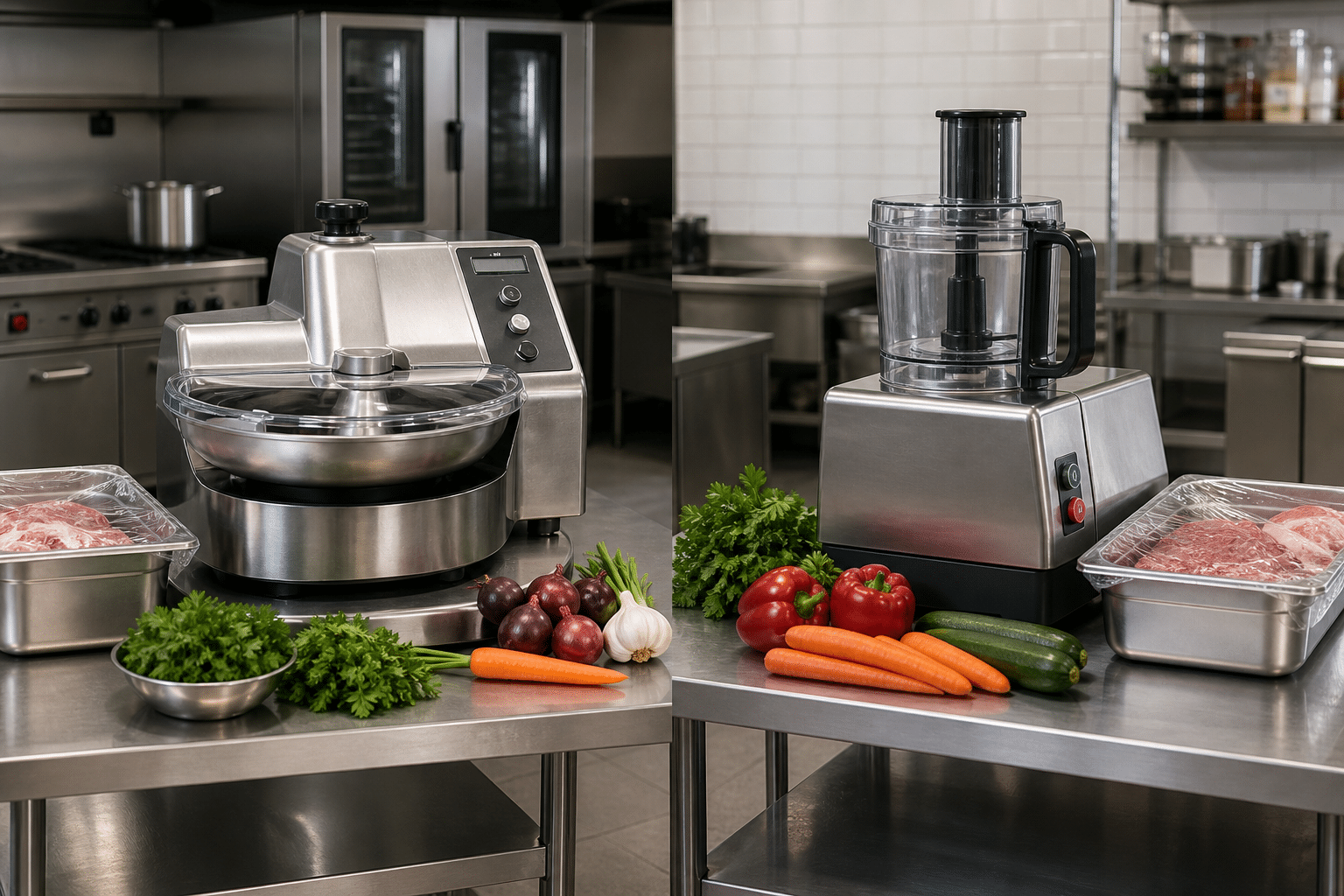
A commercial bowl cutter is generally the right choice when your kitchen regularly prepares minced, chopped, blended, or emulsified meat products and needs consistent texture from batch to batch. It is especially relevant for sausage meat, meat fillings, pâté-style mixtures, formed products, and other recipes where knife action, mixing, ingredient order, and processing time must be controlled.
A food processor is generally better for broad, lighter-duty preparation tasks such as chopping vegetables and herbs, making sauces or purées, preparing breadcrumbs, and processing smaller batches. It can be a useful all-purpose prep machine, but it is not automatically a substitute for a bowl cutter in sustained meat-production work.
The practical decision is not simply about which machine has blades. Compare the products you make, batch size, frequency of use, target texture, cleaning process, safety controls, work area, and service access. In many professional kitchens, the two machines perform different roles rather than competing directly.
What Is a Bowl Cutter?
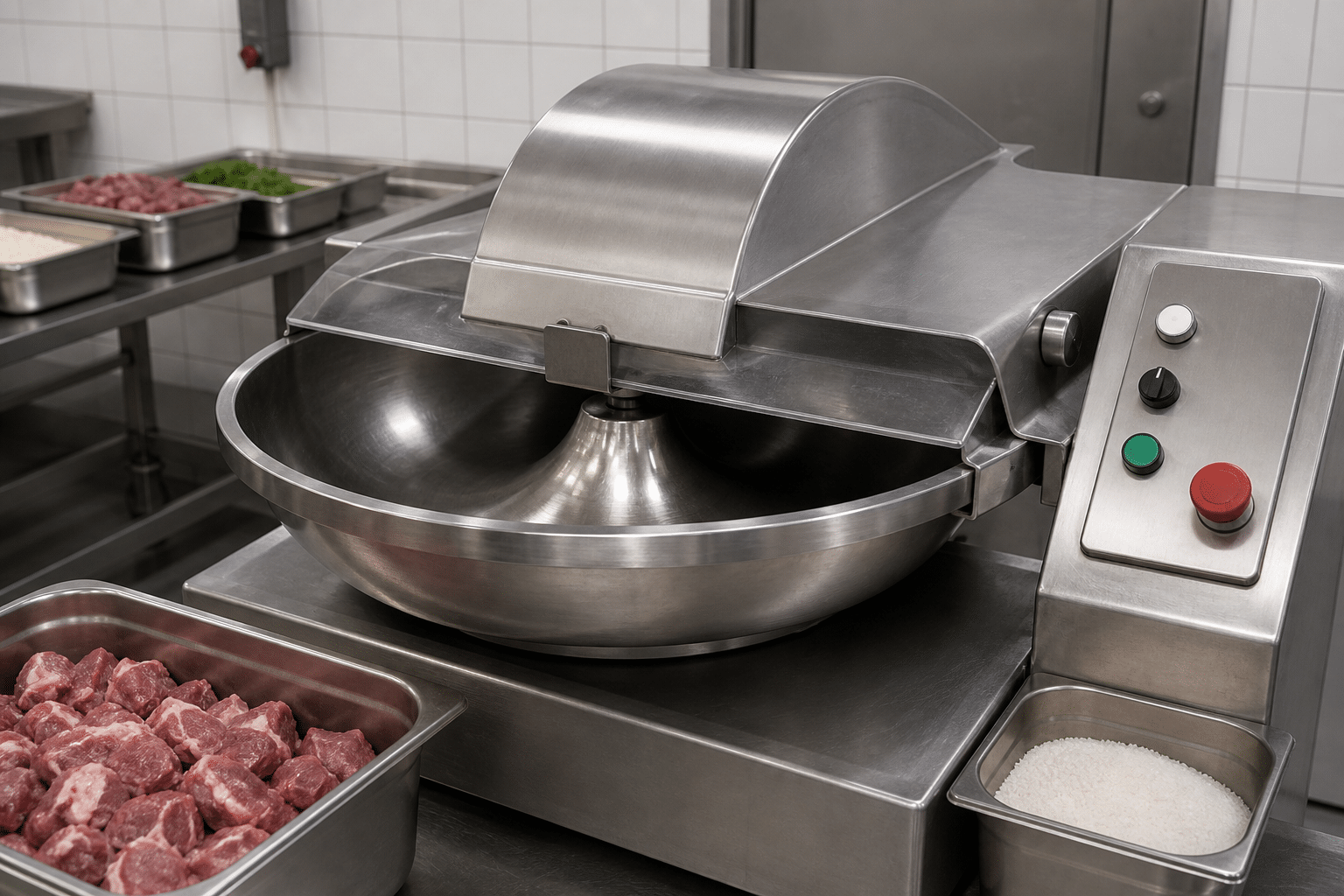
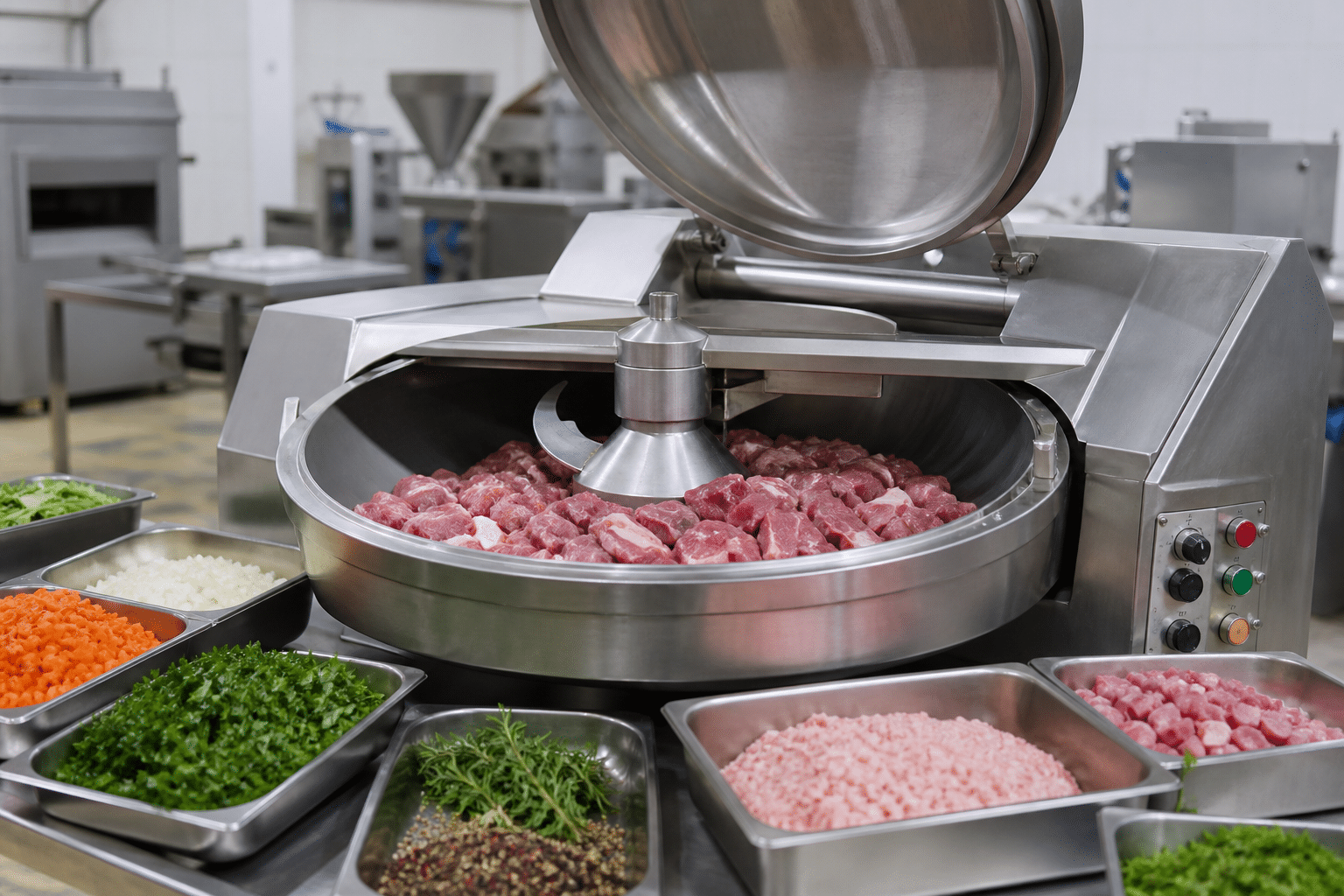
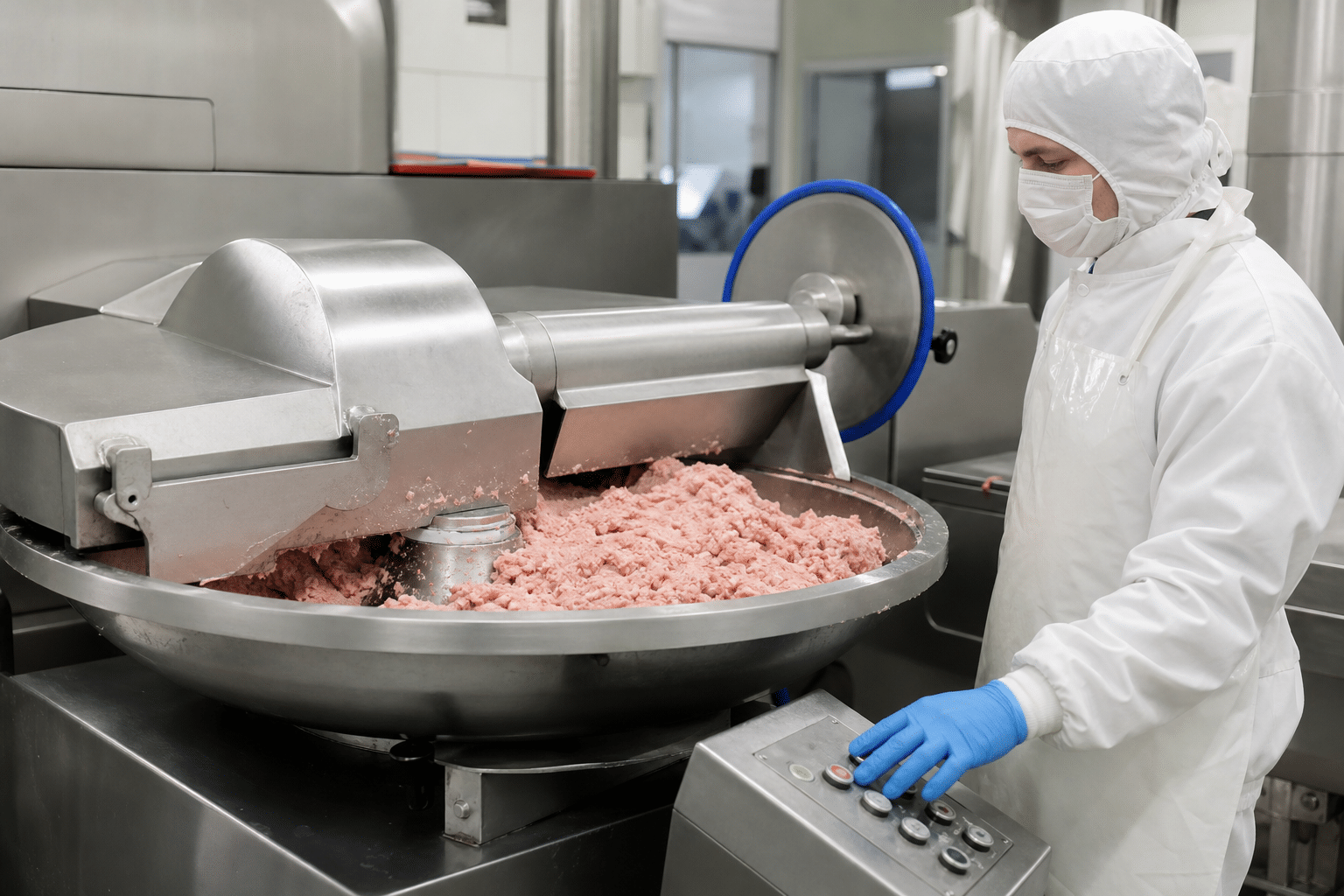
A bowl cutter, also called a bowl chopper in some markets, is a food-processing machine built around a rotating bowl and a set of knives. During processing, the bowl moves ingredients through the knife zone while the operator controls the process according to the product recipe and machine instructions.
This design is particularly useful when cutting and mixing must happen as one controlled operation. For meat applications, operators can add ingredients in stages, observe the developing texture, and stop before the mixture is overprocessed. Results still depend on raw-material condition, knife sharpness, batch loading, processing time, and temperature management; the machine alone does not guarantee a finished product standard.
Commercial bowl cutters are commonly considered by butcher shops, delicatessens, central kitchens, caterers, meat processors, and food manufacturers. They may also be used for selected vegetable, cheese, seafood, or filling applications when the recipe and machine instructions allow.
For meat work, process control begins before the machine is switched on. Chilled raw materials, a sensible loading sequence, and observation during the cut are central to repeatable results. Our guide to making consistent meat texture with a bowl cutter explains the operating factors that deserve attention during production.
What Is a Food Processor?
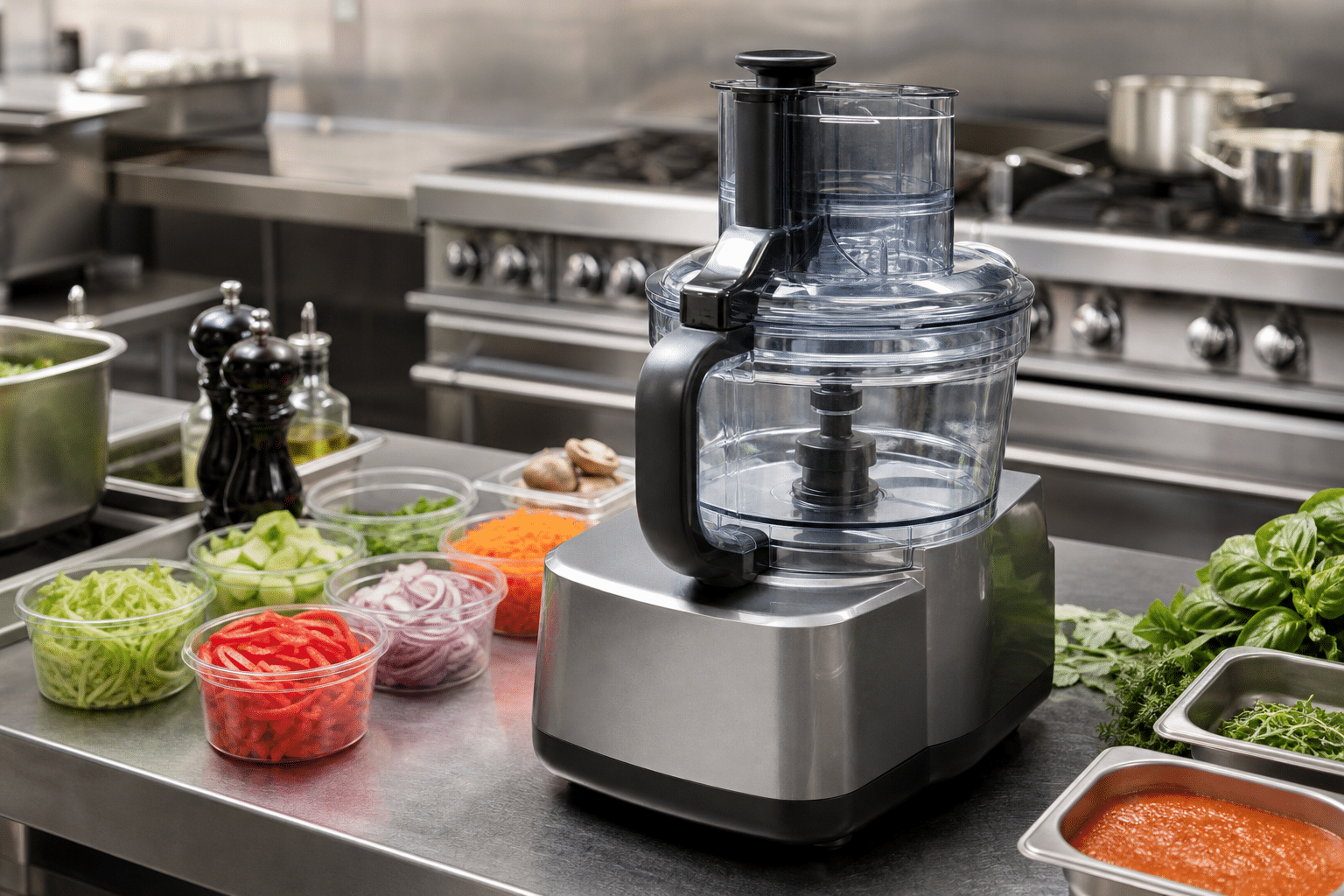
A food processor is a general-purpose preparation machine that typically uses a work bowl and interchangeable cutting, chopping, slicing, grating, or mixing tools, depending on the model. It is designed to reduce manual preparation for a range of ingredients rather than to focus solely on meat emulsification or sausage preparation.
In a commercial setting, food processors are often valuable at the vegetable-prep station, cold kitchen, bakery, or sauce-production area. They can support everyday tasks such as chopping onions, preparing herb blends, making dressings, processing cooked ingredients into purées, or producing breadcrumbs.
However, a food processor’s suitability for meat depends on the particular machine, recipe, and production demand. Small or intermittent meat batches may be workable where permitted by the equipment instructions. Repeated heavy batches, a precise fine texture, or a product that requires controlled cutting and mixing may call for dedicated bowl-cutter equipment instead.
Do not select a food processor only because it appears less complex or has a lower initial purchase price. Consider whether its bowl size, duty cycle, tool design, cleaning requirements, and workflow actually suit the products your team must prepare every day.
Key Differences Between Bowl Cutters and Food Processors
The central difference in a bowl cutter vs food processor comparison is the intended processing method. A bowl cutter continuously presents the product to moving knives through a rotating bowl. A food processor usually processes ingredients within a fixed work bowl using a central tool or disc system. Both can cut ingredients, but the way they handle product and the level of process control are different.
Texture and product control
A bowl cutter is normally selected where the development of a meat mixture matters. Operators can manage the cut as the product moves through the machine, using the recipe, visual checks, and established operating procedures. This is useful for products where an uneven chop, insufficient bind, or excess processing can affect the final result.
A food processor can produce useful chopped or blended results for many prep tasks, but it may be less suitable when the operation requires a repeatable fine meat texture across frequent batches. The exact outcome depends on the machine configuration and ingredient preparation.
Workload and workflow
For regular production, a bowl cutter can support a dedicated meat-preparation workflow. It is more appropriate to evaluate it as part of a production station, including ingredient staging, chilled storage, cleaning space, safe operator access, and downstream filling or forming steps.
A food processor is often more flexible across a menu, particularly where staff process many different non-meat ingredients in modest quantities. It may help a compact kitchen avoid repetitive manual chopping, but frequent task changes can increase cleaning and changeover time.
Equipment role
A bowl cutter is a specialist machine. A food processor is an all-purpose prep machine. Choosing between them becomes easier when buyers identify the operation that creates the most labour, inconsistency, or production delay. Buy for that limiting process, not for the broadest possible description on a product label.
When a Bowl Cutter Is the Better Choice
A commercial bowl cutter is usually the stronger fit when meat processing is a routine and important part of your operation. Consider this type of equipment if your kitchen needs to do one or more of the following:
- Prepare sausage meat, meat fillings, forcemeat, or similar mixtures on a regular schedule.
- Produce chopped or emulsified products where texture needs to be monitored and repeated.
- Combine cutting and mixing in one controlled batch process.
- Handle production that is too frequent or too demanding for a general-purpose prep appliance.
- Establish a dedicated, documented procedure for meat preparation, cleaning, and operator training.
A bowl cutter may also be suitable where you need to standardise a recipe across shifts. Standardisation does not mean removing operator responsibility. It means giving trained staff a repeatable method: defined ingredient preparation, a controlled loading order, established processing checks, and a clear endpoint for each batch.
For sausage applications, the most useful comparison is often between your current manual or general-purpose process and the texture your finished product requires. See the practical steps in our article on using a bowl cutter for sausage meat preparation, including chilled ingredient handling and processing observation.
Before purchase, confirm the machine’s actual specifications with the supplier. Required batch size, electrical supply, dimensions, guarding, supplied accessories, and local compliance responsibilities should be reviewed for the exact model and destination market.
When a Food Processor Is the Better Choice
A food processor is often the better investment when your main need is flexible preparation across many ingredients rather than dedicated meat production. It may suit your kitchen if you mainly need to:
- Chop vegetables, onions, garlic, herbs, nuts, or cooked ingredients.
- Prepare sauces, dips, dressings, purées, or breadcrumb mixtures.
- Slice or grate ingredients where compatible discs or attachments are available.
- Handle smaller batches with frequent changes between recipes.
- Save preparation time in a compact kitchen with a varied menu.
It can be the sensible starting point for cafés, restaurants, bakery kitchens, and caterers whose meat preparation is limited or occasional. Even then, teams should avoid using any machine outside its stated purpose or instructions. The need to process raw meat should be assessed separately from vegetable and cooked-food tasks because of sanitation, allergen control, and cross-contamination procedures.
When one unit is expected to perform too many unrelated tasks, the apparent convenience can create a bottleneck. Waiting for cleaning, tool changes, or sanitation checks between raw and ready-to-eat ingredients can disrupt service. A separate bowl cutter and food processor may be more practical once volume and product range increase.
How to Choose for Your Kitchen
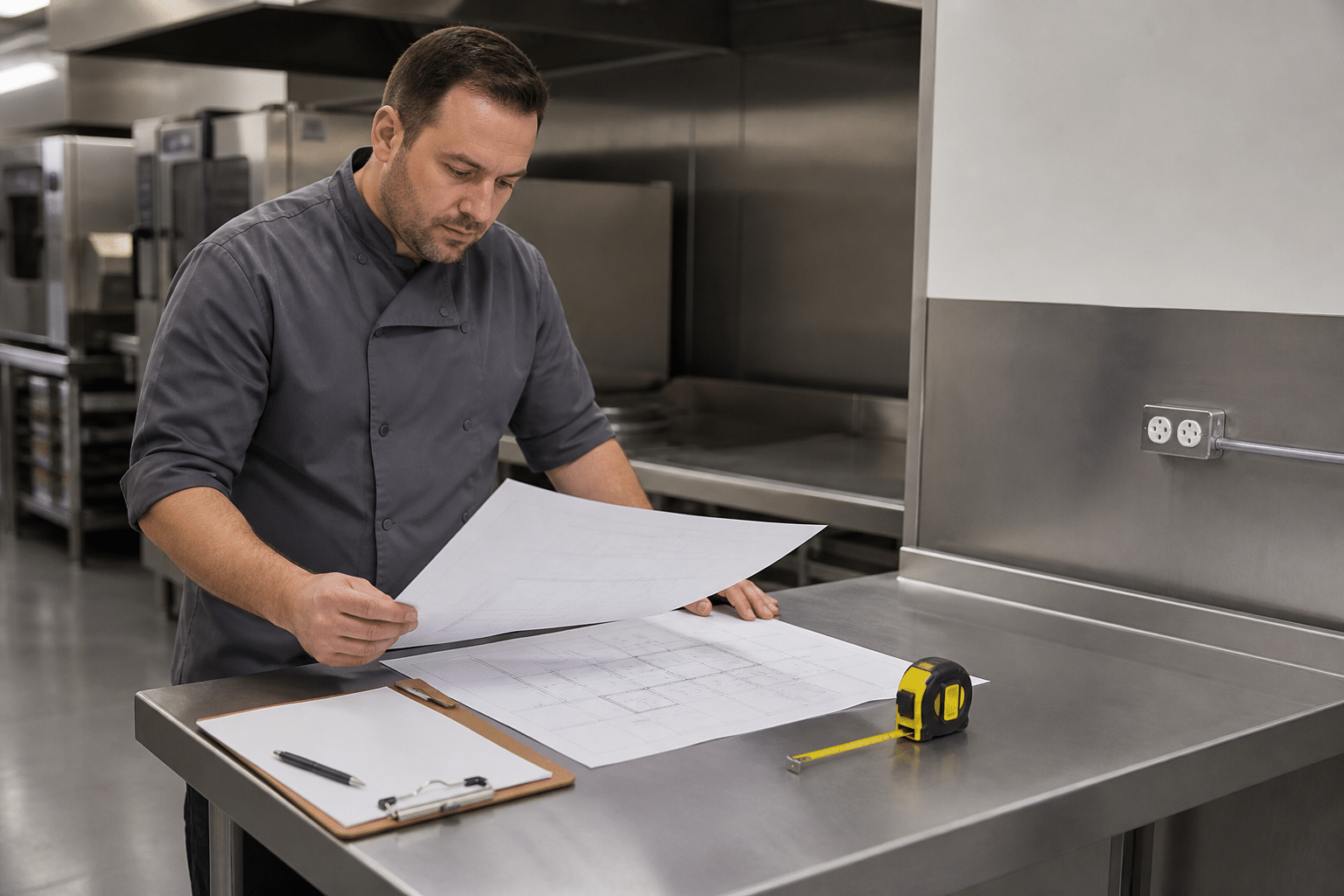
Use the following questions to make a practical equipment decision.
1. What products create the most work?
List your top products by frequency, not only by sales value. If staff repeatedly prepare meat mixtures, a bowl cutter deserves serious consideration. If the main workload is vegetables, sauces, and general prep, a food processor may meet the need more directly.
2. What texture must you achieve?
Define whether the finished product should be coarse, chopped, fine, blended, or emulsified. Describe the acceptable result in operational terms your team can check. If the standard depends on a controlled meat-cutting process, evaluate a bowl cutter with your actual ingredients rather than relying on generic demonstrations.
3. How large and how frequent are your batches?
Look at the busiest realistic period, not only the average day. Record how many batches are needed, the time allowed between them, and whether the machine must be cleaned before changing products. Match machine size and workflow to demand without assuming that a larger machine is automatically better for every recipe.
4. Can the work area support the machine?
Measure the installation location, operator standing area, cleaning access, and route for bringing ingredients in and taking product out. Check the local electrical supply against the selected model. A safe, stable installation is part of equipment performance, not an afterthought. Review our guidance on setting up a bowl cutter in a commercial kitchen before finalising the layout.
5. Who will operate and maintain it?
Assign responsibility for daily inspection, safe use, cleaning, and reporting problems. Ask the supplier about operating information, spare parts, service communication, and support for your market. Equipment is easier to manage when the purchasing team considers its full operating life, not just delivery and installation.
Operation, Cleaning, and Maintenance Considerations
Whichever machine you choose, safe and hygienic operation depends on a written routine. Operators should receive training on the manufacturer’s instructions, guards and interlocks, loading practices, shutdown, cleaning, and what to do if equipment does not operate normally. Never reach into a machine while moving parts can operate, and isolate the equipment before cleaning or maintenance as required by the applicable procedure.
For a bowl cutter, knife condition is a direct operational issue. Dull or damaged knives can affect cut quality and may encourage staff to extend processing time in an attempt to reach the desired texture. This can make results less predictable. Read our advice on preventing bowl cutter blades from dulling early to help build a practical inspection and handling routine.
Cleaning should be planned around the foods you process. Remove residue promptly, clean food-contact surfaces using suitable methods and chemicals, rinse where required, sanitise according to your procedure, and allow parts to dry appropriately before reassembly. Follow the machine manual and local food-safety requirements. For a more detailed sequence, see how to clean and sanitise a commercial bowl cutter.
Food processors need the same discipline. Blades, discs, lids, seals, bowls, and food-contact accessories should be inspected and cleaned according to the manufacturer’s instructions. If the same equipment is used for raw ingredients and ready-to-eat foods, establish clear separation, sanitation, and scheduling controls.
The Bottom Line
In a bowl cutter vs food processor decision, choose a bowl cutter when repeatable meat texture and regular cutting-and-mixing production are central to your business. Choose a food processor when broad, smaller-batch preparation for vegetables, sauces, and similar tasks is the main requirement.
For operations with both needs, the best answer may be to use each machine where it adds the most value: a bowl cutter at the dedicated meat-processing station and a food processor at the general-prep station. This approach can make procedures clearer, reduce avoidable changeovers, and support more consistent work.
Before buying, document your products, busiest production periods, ingredient condition, available installation space, cleaning process, and local power supply. Then compare specific models and confirmed specifications with the supplier rather than making a decision based on machine category alone.
Discuss the Right Setup for Your Food Production
If you are planning a commercial meat-preparation workflow, Easimaker can help you discuss the equipment type, batch requirements, installation considerations, and support needs for your market. Request a quote or share your application details with our team.