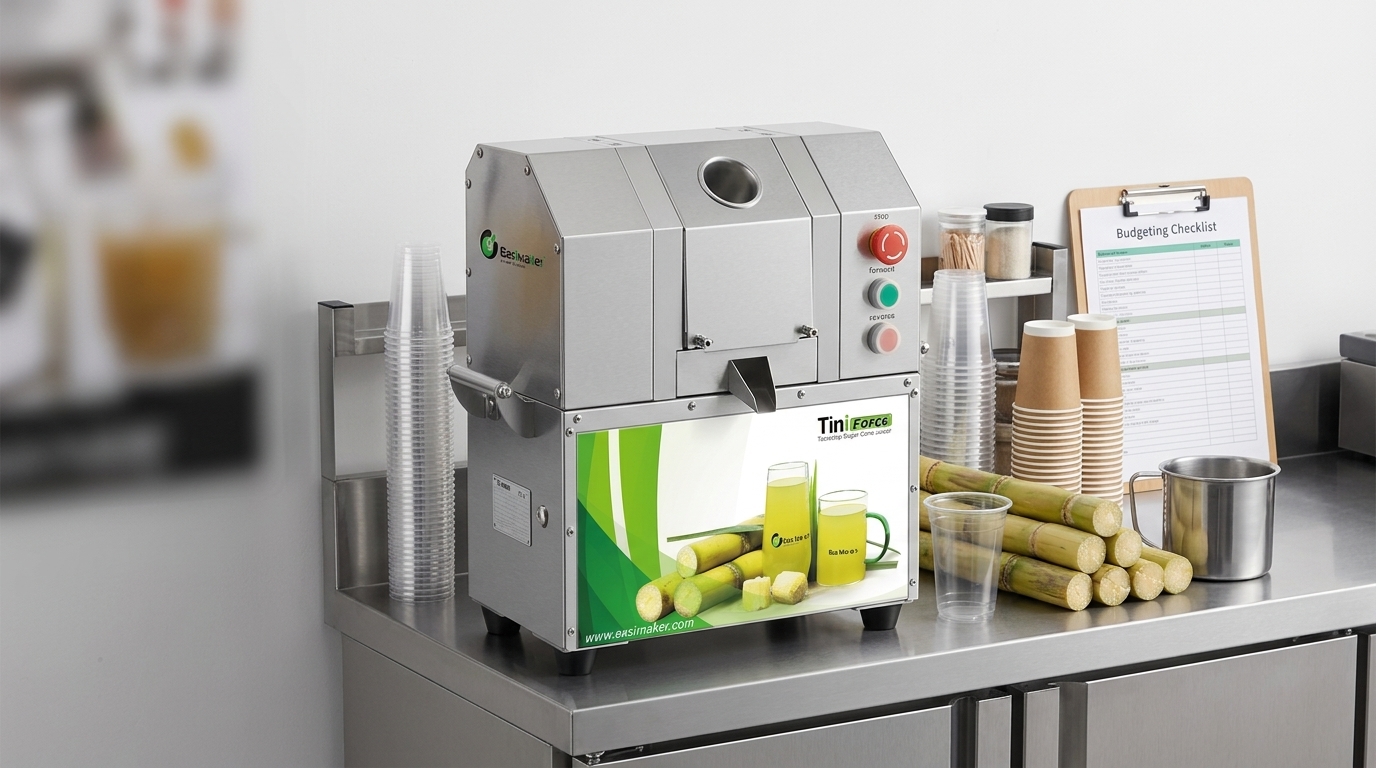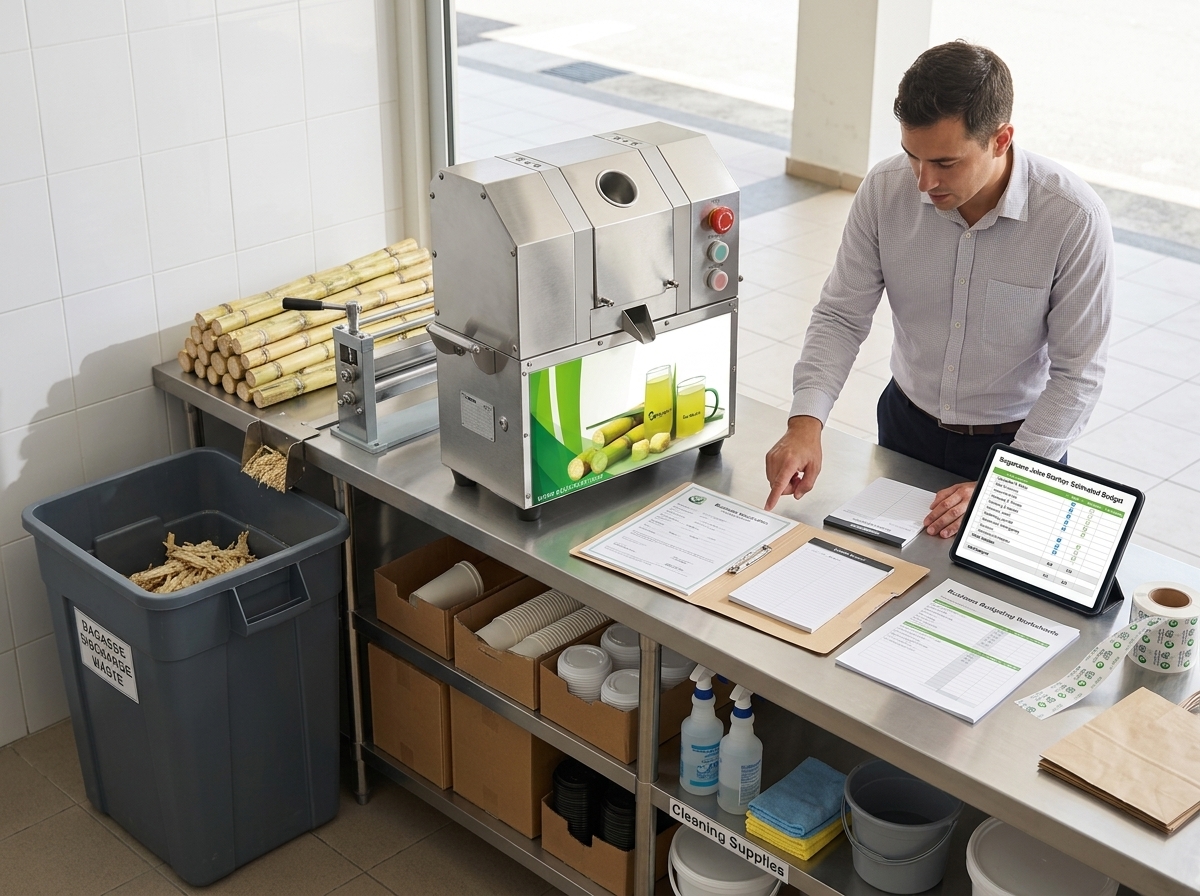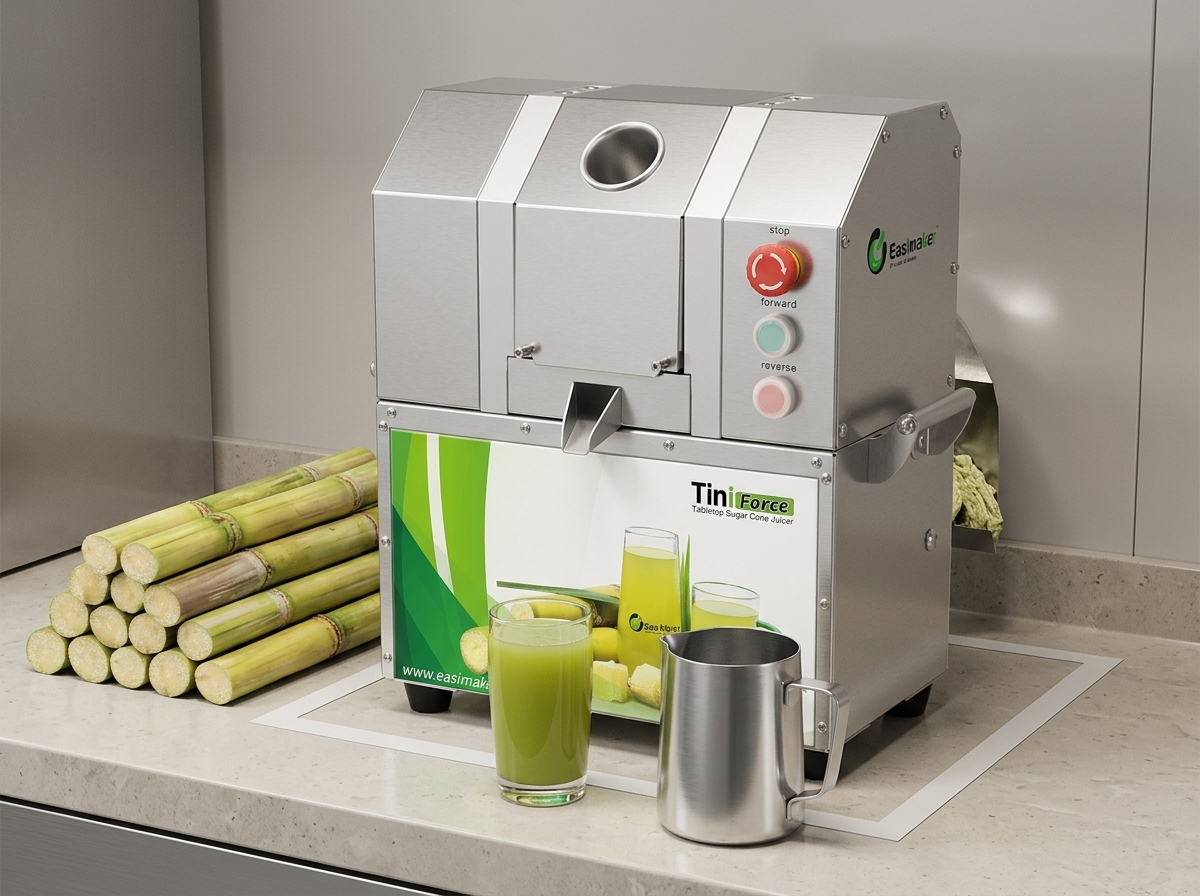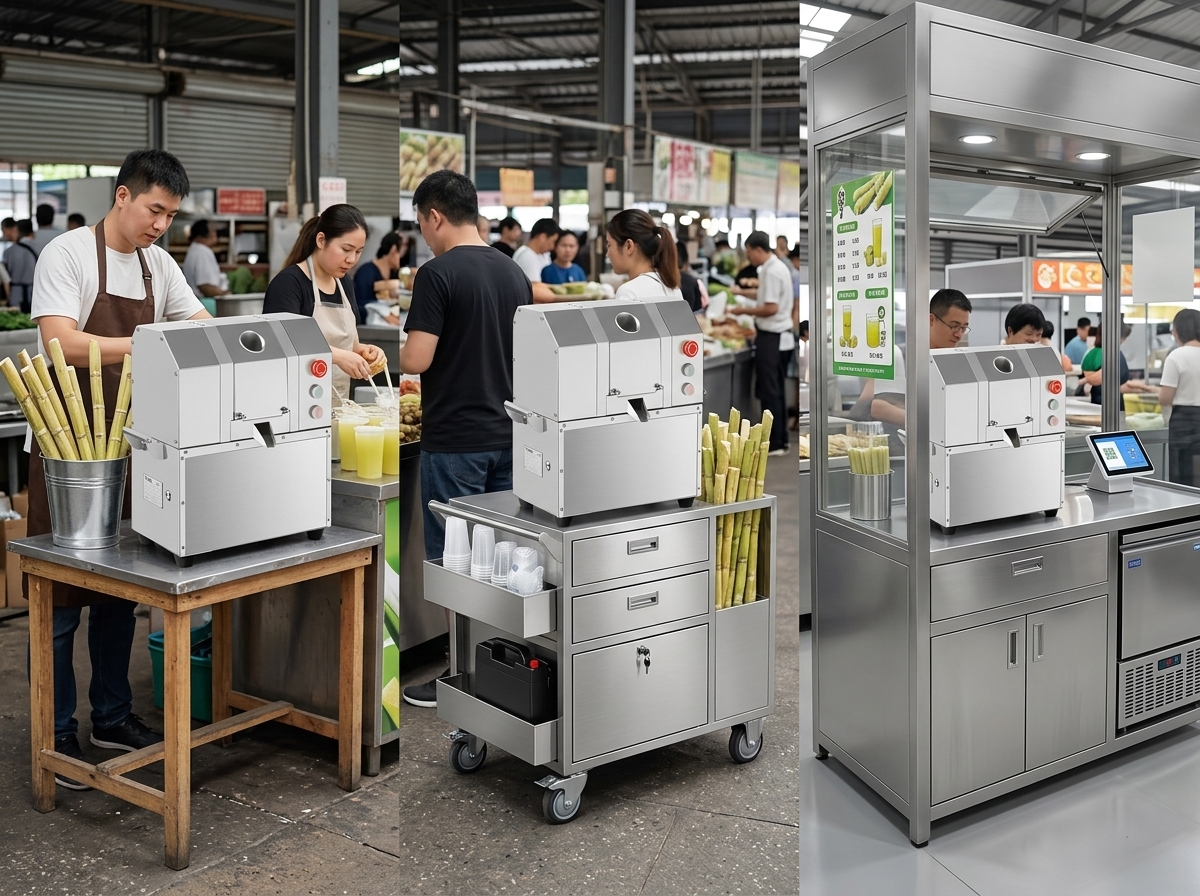
Importing Commercial Sugarcane Juicers Into the U.S.: A Practical Buyer Guide

Table of Contents

Importing a commercial sugarcane juicer into the United States requires more than arranging freight. Buyers should confirm the machine specification, food-contact materials, electrical compatibility, import documentation, customs process, local installation requirements, spare-parts support, and total landed cost before placing an order.

What U.S. Buyers Need to Do Before Importing a Commercial Sugarcane Juicer

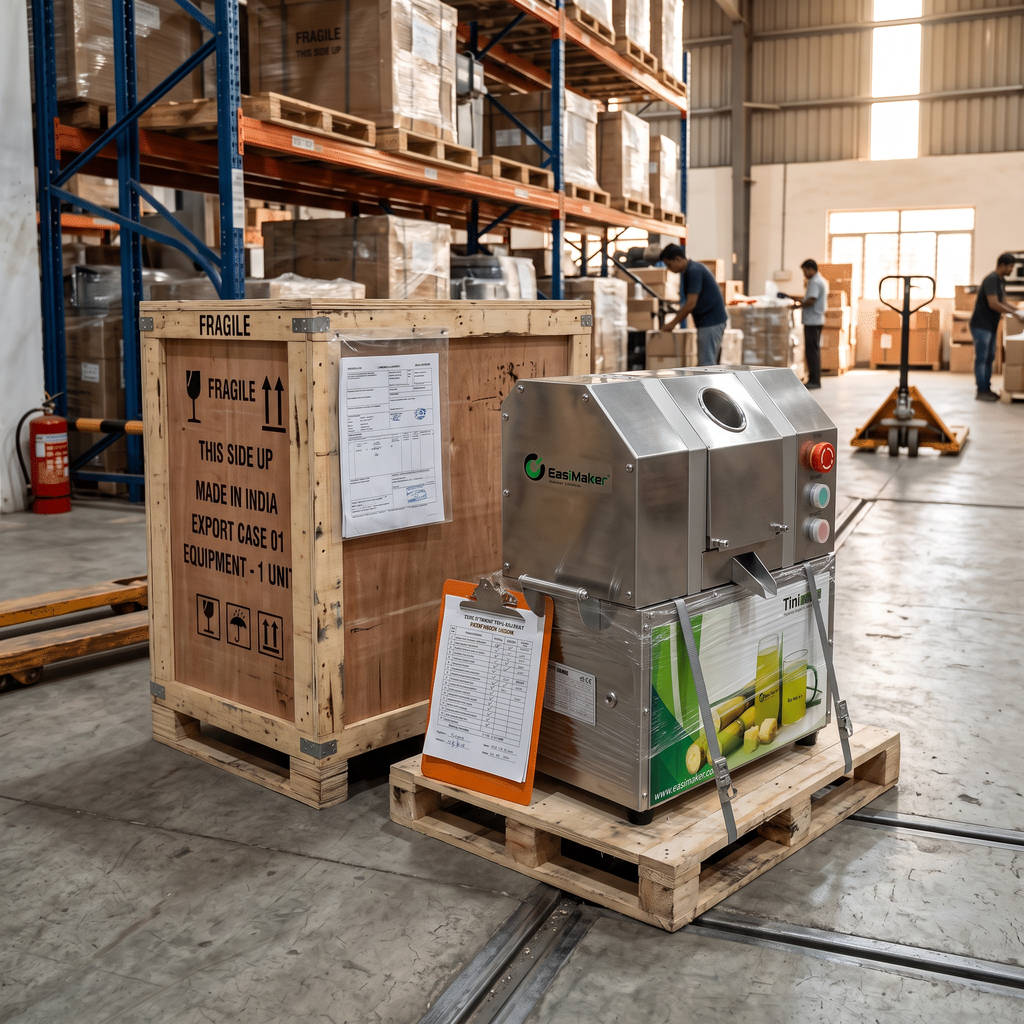
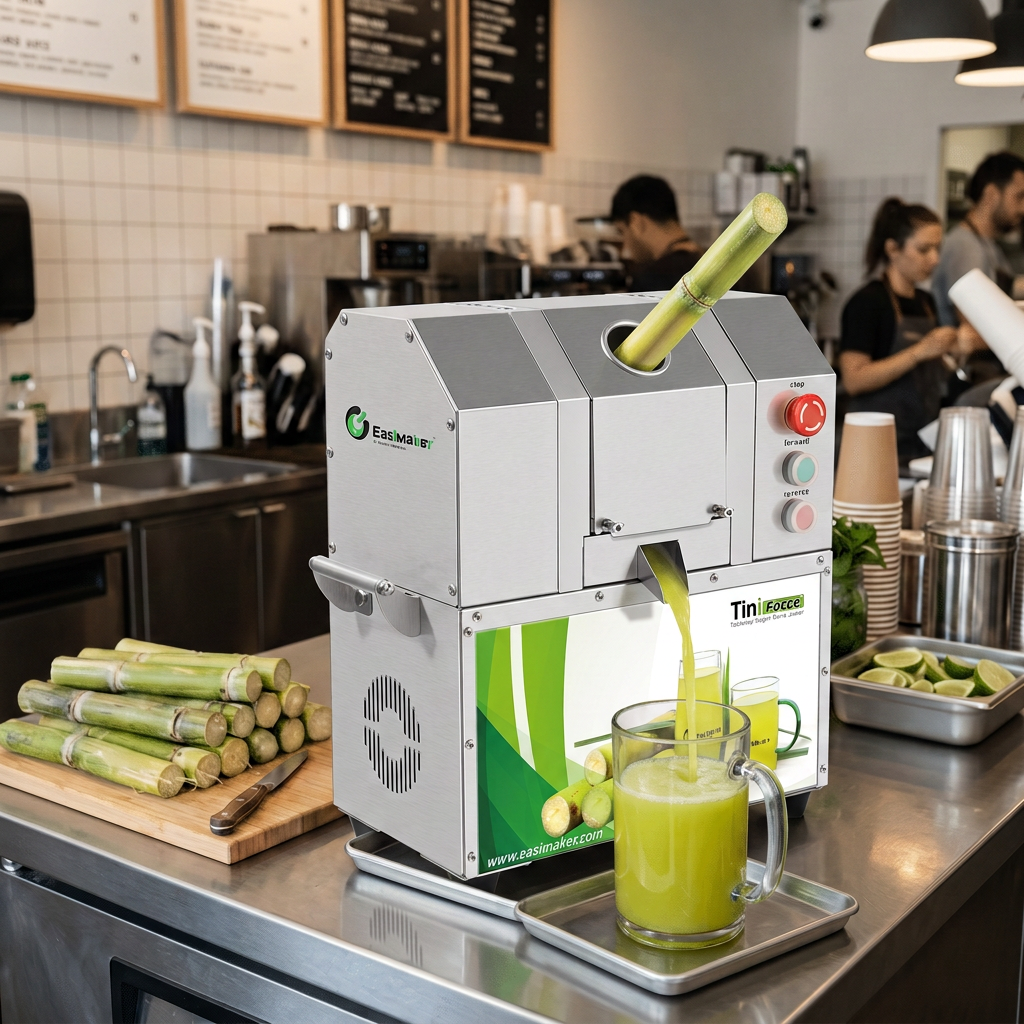
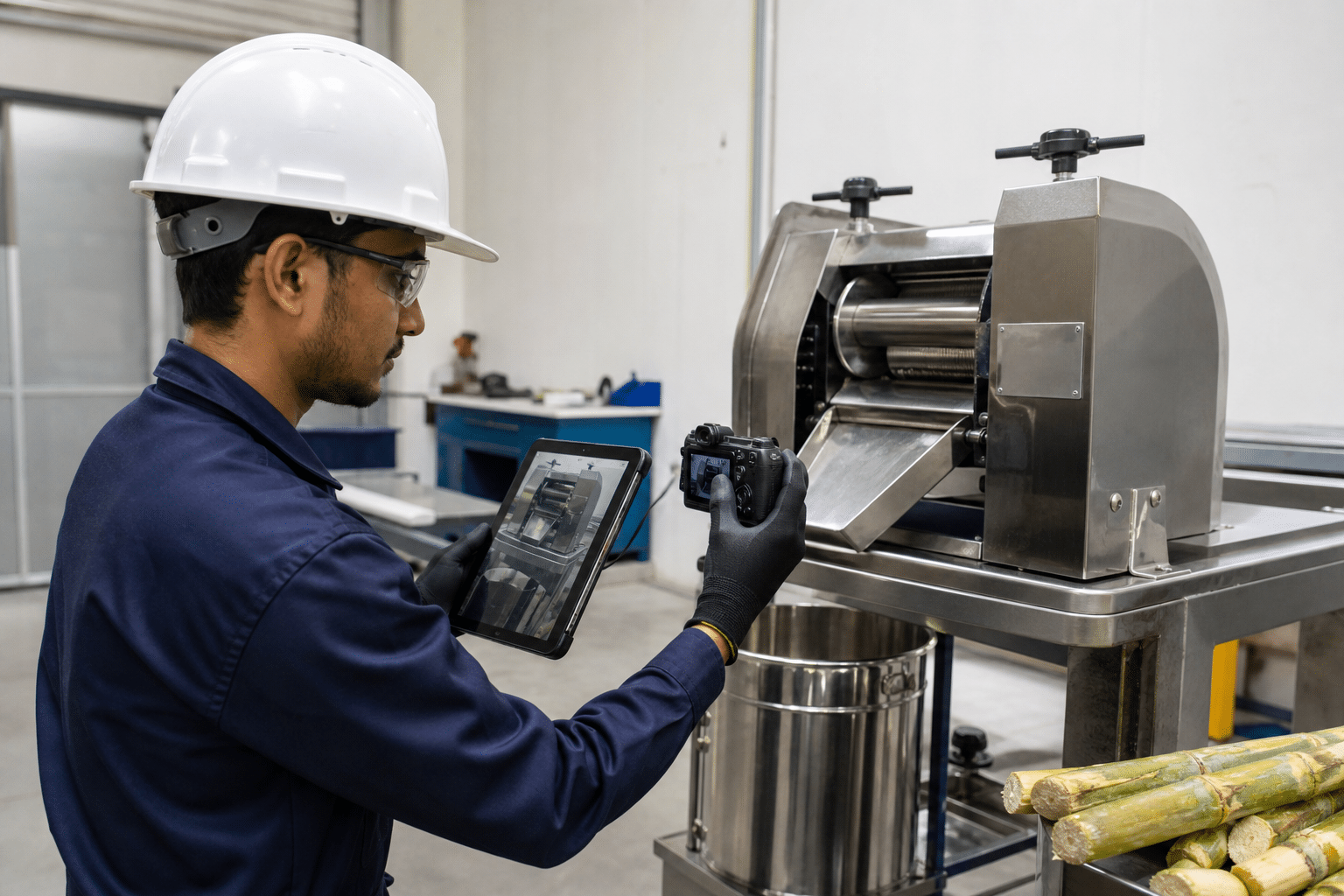
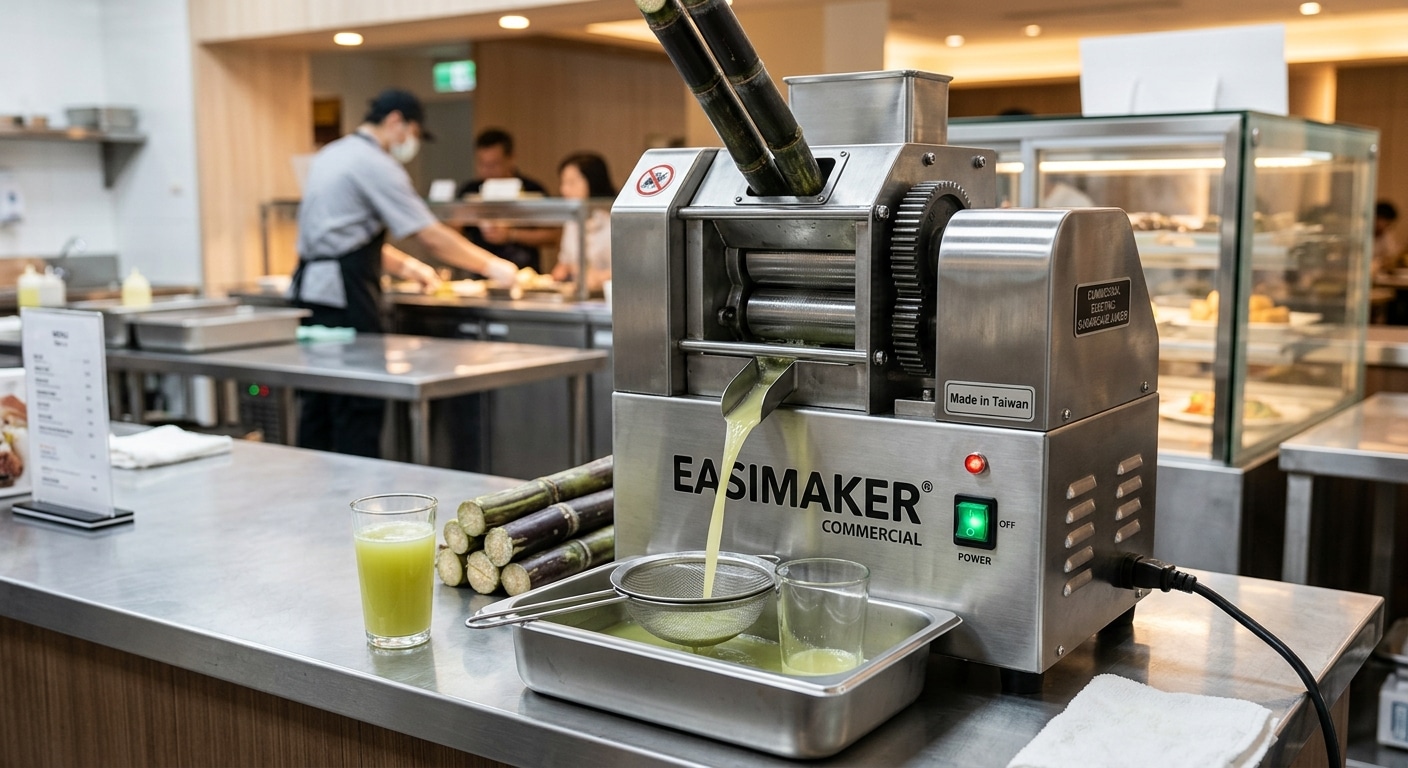
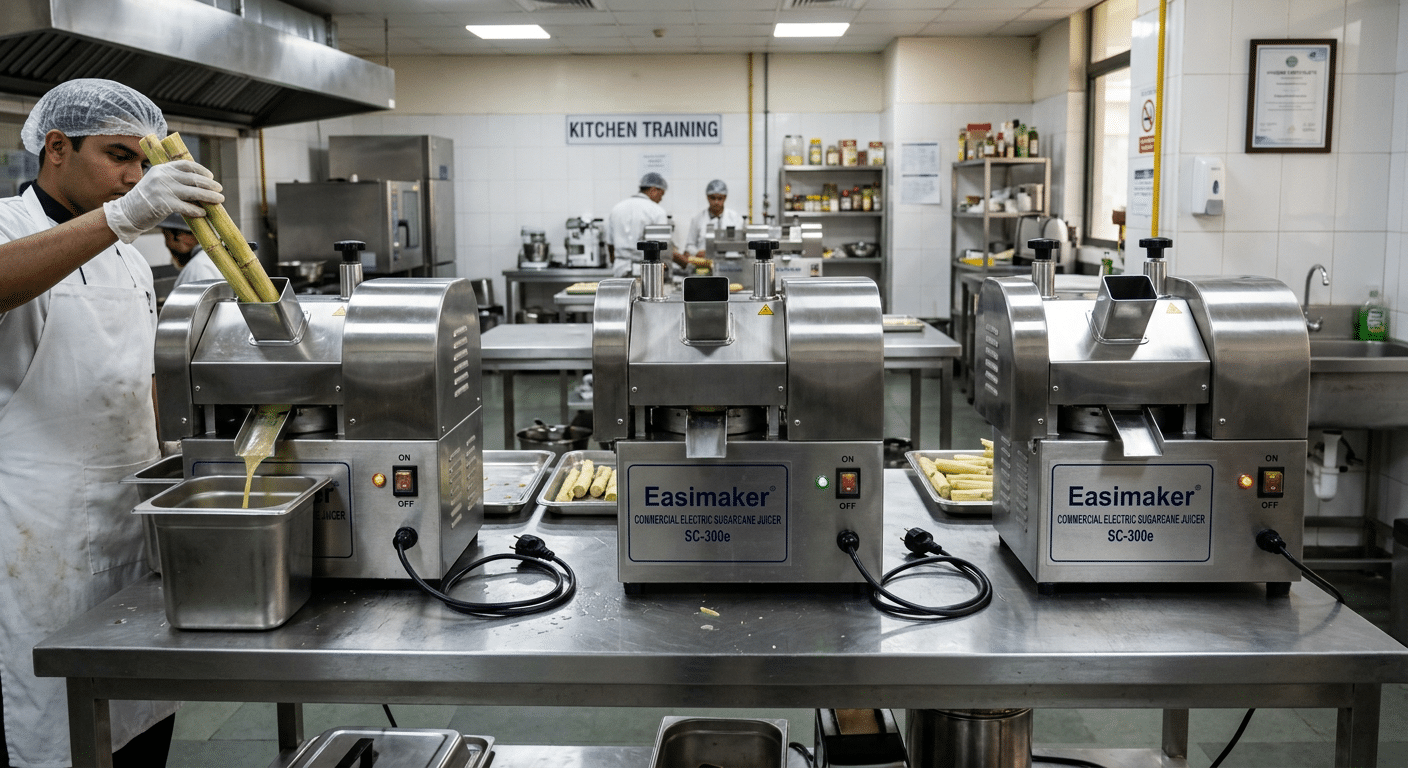
Commercial sugarcane juicer prepared for import shipment to the United States

To import a commercial sugarcane juicer into the U.S., first confirm that the machine is suitable for your intended foodservice use and local electrical supply. Then agree on an accurate product specification, obtain complete supplier documents, work with a licensed customs broker or qualified freight forwarder, calculate landed cost, and prepare for inspection and installation on arrival.

A commercial sugarcane juicer is food-processing equipment that mechanically presses prepared sugarcane stalks through rollers to extract juice. It is commonly used by juice bars, restaurants, cafés, food courts, mobile beverage operators, and distributors. The import process is manageable when equipment selection, compliance planning, and logistics are handled together rather than as separate tasks.

Do not assume that a machine sold internationally is automatically ready for every U.S. location. Import requirements can depend on the exact product configuration, declared value, country of origin, port of entry, electrical design, materials in food-contact areas, and the requirements of your local authority having jurisdiction, property manager, or customer. Confirm these points before production and shipment.

Define the Product and the Importer’s Role

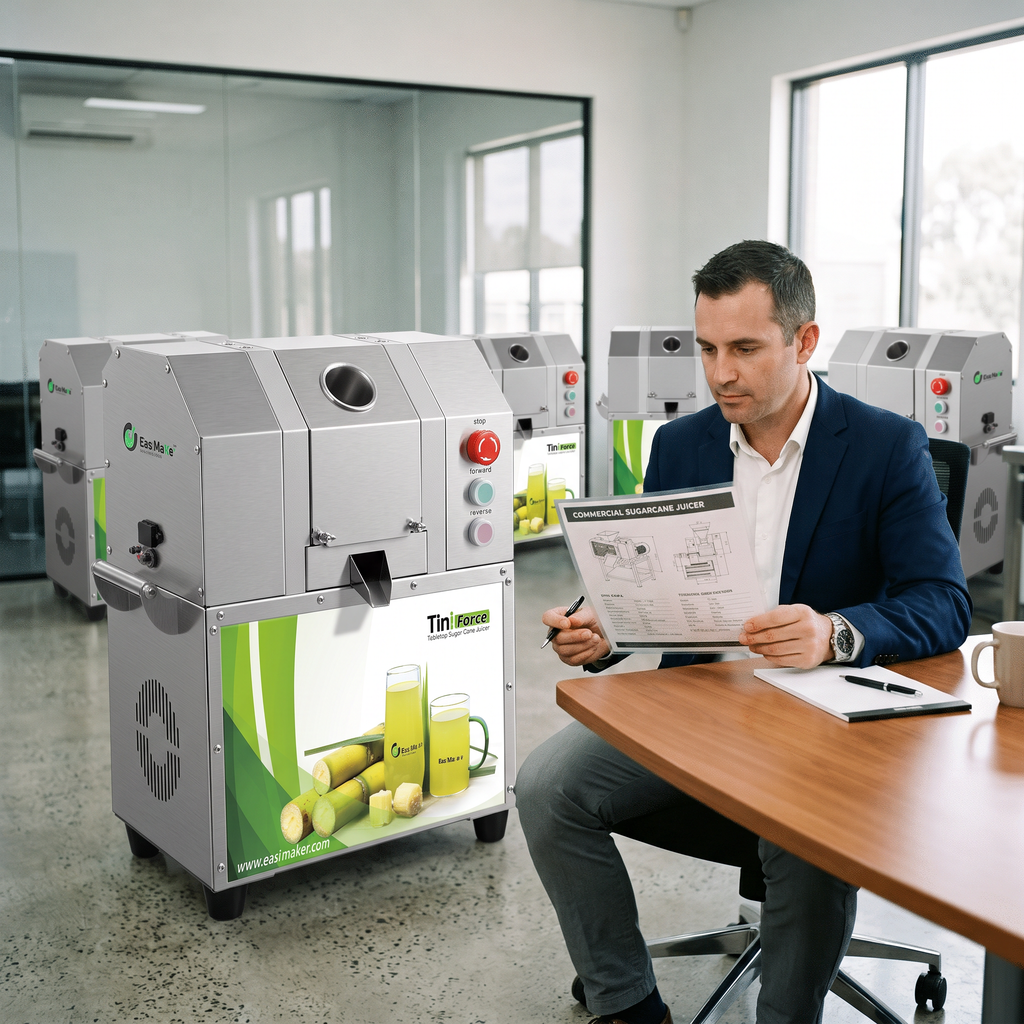
Buyer reviewing a commercial sugarcane juicer import specification

Before requesting a quotation, write a short import specification. This document should identify the buyer, final user, machine model or configuration, quantity, destination, agreed Incoterms, target delivery date, and the documents required before shipment. It reduces misunderstandings between the supplier, freight provider, customs broker, and receiving team.

For a direct import, the buyer may act as the importer of record or appoint an appropriately qualified party to do so. The importer of record is generally responsible for ensuring that entry information is accurate and that applicable duties, taxes, and regulatory obligations are addressed. A customs broker can prepare and file entry documentation, but the importer should still provide correct product information and maintain records.

Describe the equipment accurately. A sugarcane juicer is not the same as a household blender, a citrus juicer, or a cane harvester. The product description on commercial documents should match the actual machine, its intended commercial use, and the country of origin. Avoid vague descriptions such as “kitchen appliance,” which can create unnecessary questions during customs clearance.

New operators should also verify that they are buying commercial equipment rather than a light-duty unit intended for occasional domestic use. Commercial machines are selected around repeated operation, cleaning access, safe workflow, maintainability, and service planning. This guide to commercial versus home sugarcane juicers explains the practical distinction for buyers.

Confirm Compliance and Supplier Documents Before Production

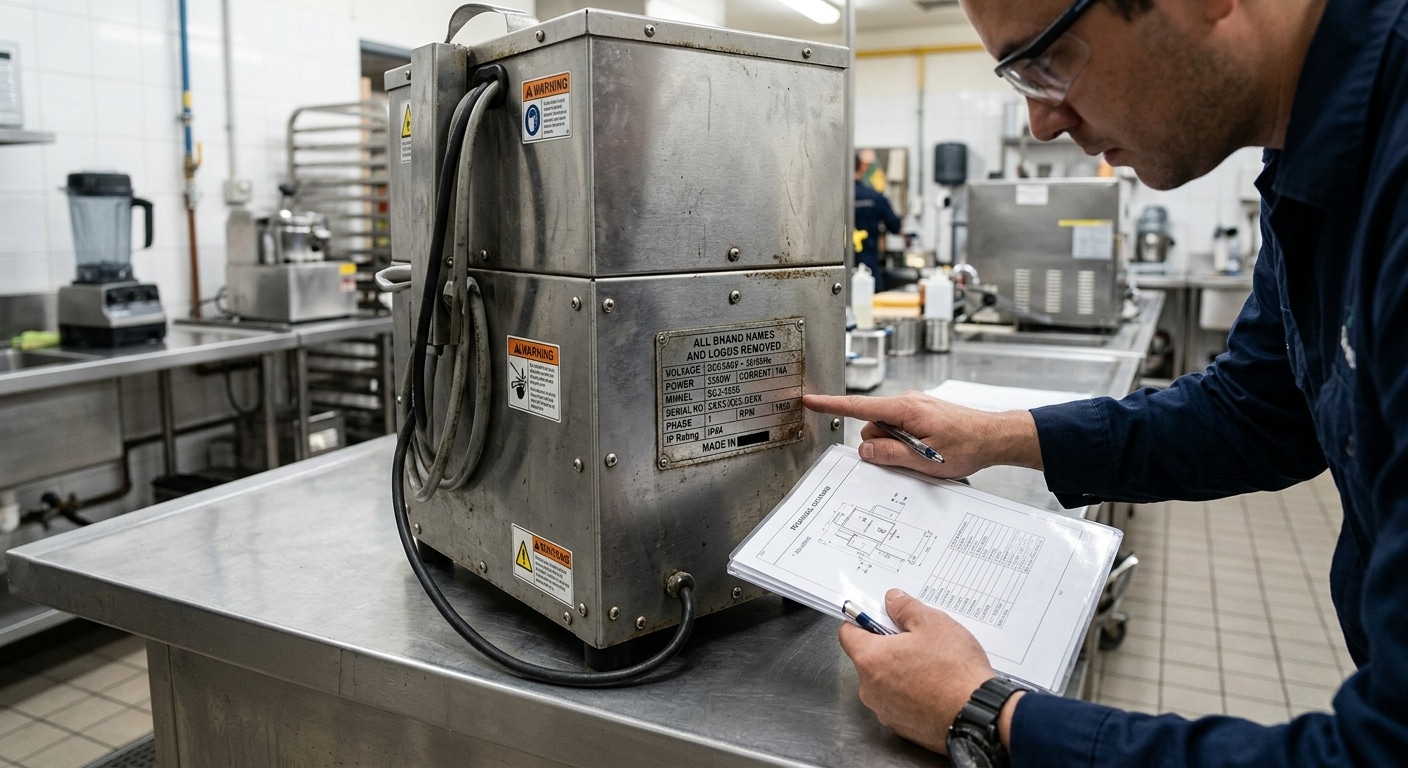
Reviewing electrical rating details for a commercial sugarcane juicer

U.S. import compliance is product-specific, so use qualified customs, legal, and local regulatory advisers when needed. Do not rely only on a supplier statement or a product listing. For foodservice equipment, buyers should examine the material specification, electrical configuration, safety design, labels, and the documents available for the exact model being imported.

Food-contact and hygiene considerations

Identify all surfaces that reasonably contact cane, extracted juice, or splash during normal operation. Request a clear material list for those areas and ask how the machine is intended to be cleaned. Food-contact material compliance is not established merely by saying that a machine is “food grade.” The operator must also maintain hygienic handling, cleaning, storage, and local foodservice practices after installation.

If a machine will be used in a restaurant, retail food establishment, commissary, or other regulated setting, ask the local health authority, property manager, or prospective customer whether they have particular equipment acceptance expectations. Requirements can vary by jurisdiction and by installation type. If a buyer needs a specific sanitation or safety listing, it should be identified as a purchase requirement before the order is confirmed.

Electrical and labeling considerations

Match the machine’s rating plate to the actual U.S. site supply, including voltage, frequency, phase, plug arrangement, and grounding method. A 60 Hz requirement, electrical listing expectation, or local inspection requirement should never be assumed from a product photograph. In some locations, an authority having jurisdiction or commercial landlord may require equipment evaluated by a nationally recognized testing laboratory. Confirm the local requirement before selecting a configuration.

Ask the supplier for the final rating-plate artwork, wiring information, operating manual, packing list, commercial invoice, and any test or inspection records that apply to the ordered model. The useful question is not whether a document exists for a similar product, but whether it applies to the precise model, component set, and electrical version you are importing.

For a practical pre-purchase check, review the machine’s power supply requirements for commercial sugarcane juicers alongside your site electrician’s information.

Specify the Right Commercial Sugarcane Juicer for the U.S. Site

Importing the correct machine starts with the operating environment, not the factory price. A compact counter-service operation may prioritize footprint and straightforward daily cleaning. A higher-volume venue may need a machine and preparation workflow that better suit sustained service. Sugarcane condition also matters: stalk diameter, fiber level, trimming method, and consistency affect feeding and operator workload.

Define the following points in writing before the supplier starts production:

  • Required electrical configuration for the final installation site.
  • Machine dimensions, net weight, crated dimensions, and access route into the premises.
  • Food-contact and exterior material specification.
  • Included accessories, collection containers, tools, and operating documentation.
  • Expected cane preparation process, including peeling, cutting, and stalk length.
  • Cleaning procedure, removable items, and recommended consumables.
  • Available spare parts, lead times, warranty terms, and remote support process.
  • Retail branding, packaging, manuals, or labeling requirements where private labeling is planned.

Do not select a machine solely by a quoted output figure. Actual production depends on cane preparation, operator technique, queue pattern, cleaning intervals, feed consistency, and the final product configuration. It is usually more useful to discuss your service pattern and menu than to rely on a single theoretical capacity number.

Buyers comparing common commercial configurations can review how the TiniForce S3 and EasiDeMax S4 fit different operations. If your supply includes thick or irregular stalks, establish the preparation process early; these techniques for processing thick sugarcane stalks can help operators reduce avoidable strain and jamming.

Plan Freight, Customs, and Total Landed Cost

Freight is only one part of the import cost. Before placing a purchase order, ask for an itemized quote that separates machine price, packing, inland transport, export handling, main freight, insurance if selected, destination charges, customs brokerage, duty and tax estimates where available, delivery, unloading, and site installation. The buyer should understand which party handles each stage under the agreed Incoterm.

For customs entry, your broker will need complete and consistent commercial information. Typical records include the commercial invoice, packing list, bill of lading or air waybill, importer details, country of origin, product description, quantity, value, and the classification information used for entry. Classification and duty treatment should be confirmed with a customs professional based on the final product and current rules. Do not use an internet estimate as a substitute for a formal customs determination.

Crated dimensions and weight influence not only freight pricing but also receiving. Confirm whether the shipment needs a liftgate, loading dock, pallet jack, forklift, appointment delivery, or inside placement. If the juicer is shipped by ocean, allow realistic time for production, consolidation if applicable, sailing, port handling, customs clearance, and final delivery. Air freight can reduce transit time but may materially change landed cost.

Budget beyond the purchase price by using a complete commercial sugarcane juicer cost planning guide. This helps buyers account for site preparation, cane handling, hygiene supplies, packaging, maintenance, and operating equipment alongside the imported machine.

Inspect, Install, and Support the Machine After Arrival

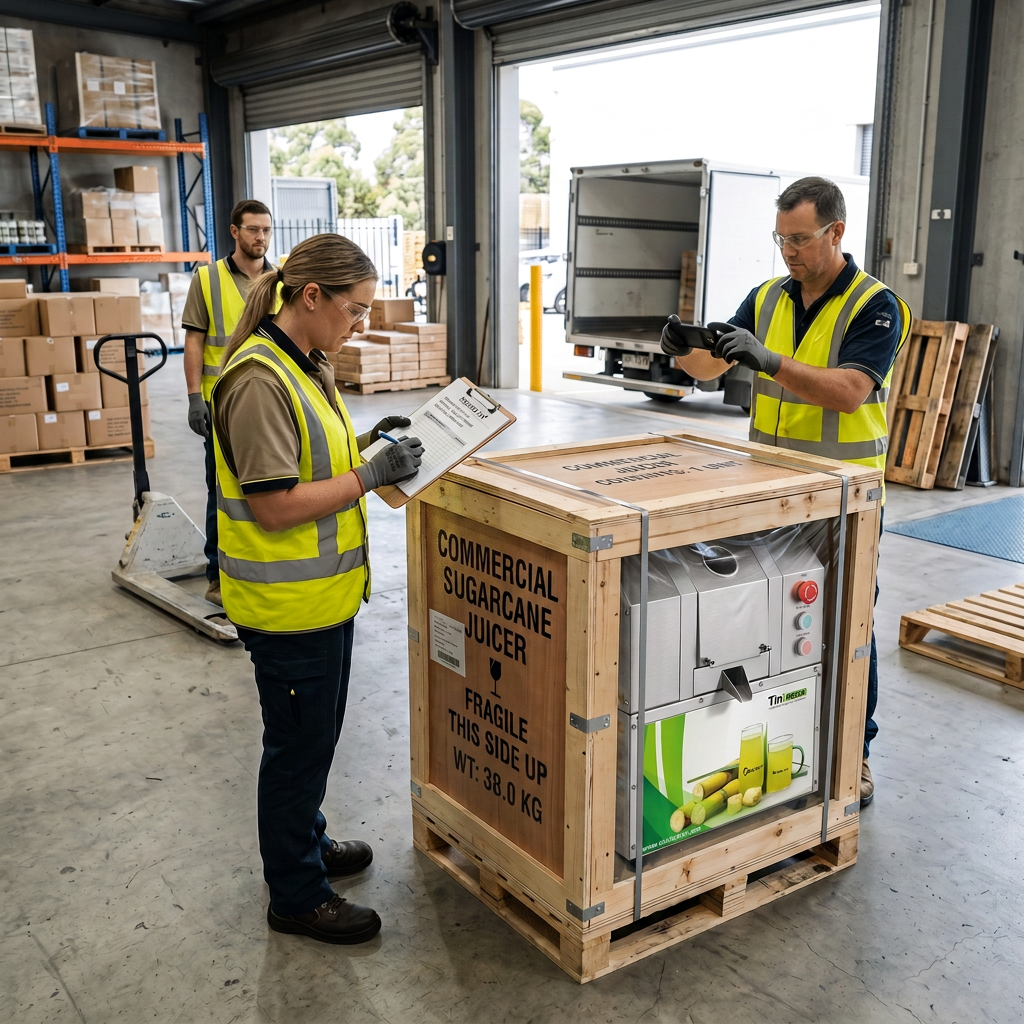
Inspecting a commercial sugarcane juicer shipment after delivery

Receiving inspection is your opportunity to identify transit damage or shipment discrepancies while carrier records are still current. Before signing final delivery paperwork where practical, inspect the crate condition, photograph visible damage, count packages, and note exceptions. After unpacking, compare the machine, accessories, rating plate, and documentation with the purchase order and packing list.

Before production use, place the machine on a stable work surface with the working clearance needed for feeding, juice collection, cleaning, and safe operator movement. Have the electrical connection checked against the rating plate by a qualified person where required. Never alter plugs, bypass guards, or modify wiring to make an incompatible unit fit the site supply.

Commissioning should include a no-load check, a review of controls and safety features, a cleaning demonstration, and a first-use trial with properly prepared cane. Record the machine model, serial number, order number, electrical details, and photos of the rating plate in your equipment file. This makes later troubleshooting and parts identification much more efficient.

Service planning is especially important for imported equipment. Keep a routine cleaning schedule, inspect components according to the operating guidance, and order critical wear items before they are urgently needed. Use this sugarcane juicer spare parts and support checklist to organize the information your team and supplier will need.

Pre-Shipment Checklist for U.S. Importers

Use this final checklist before authorizing shipment of a commercial sugarcane juicer to the United States:

  • Confirm the final model, quantity, finish, accessories, and packaging configuration.
  • Confirm rating-plate details against the site’s voltage, frequency, phase, plug, and grounding requirements.
  • Review the final machine dimensions, net weight, crate size, and delivery access plan.
  • Obtain commercial invoice, packing list, transport document details, and country-of-origin information.
  • Give the customs broker an accurate product description and final product details early enough to review entry planning.
  • Check whether your local health authority, landlord, customer, or inspector requires specific equipment documentation or listings.
  • Confirm cleaning instructions, operating manual, warranty scope, remote support contact, and spare-parts process.
  • Plan receiving inspection, safe unpacking, installation, operator training, and first cleaning.

A well-prepared import project lowers the risk of unsuitable electrical configuration, incomplete documents, unexpected delivery constraints, and avoidable downtime. The best result is not simply a machine that clears customs, but equipment that can be installed, cleaned, supported, and used reliably in the intended daily workflow.

Discuss Your U.S. Import Specification

If you are planning to import a commercial sugarcane juicer, Easimaker can help you discuss a suitable machine configuration, electrical requirements, packing details, documentation needs, and after-sales support for your target market.
Request an Import Equipment Quote

How to Start a Sugarcane Juice Business in the United States

Table of Contents

Starting a sugarcane juice business in the United States requires a viable local market, a permitted food-service setup, dependable cane sourcing, a commercial juicer, and a practical daily cleaning and service plan.

Start with a practical business model

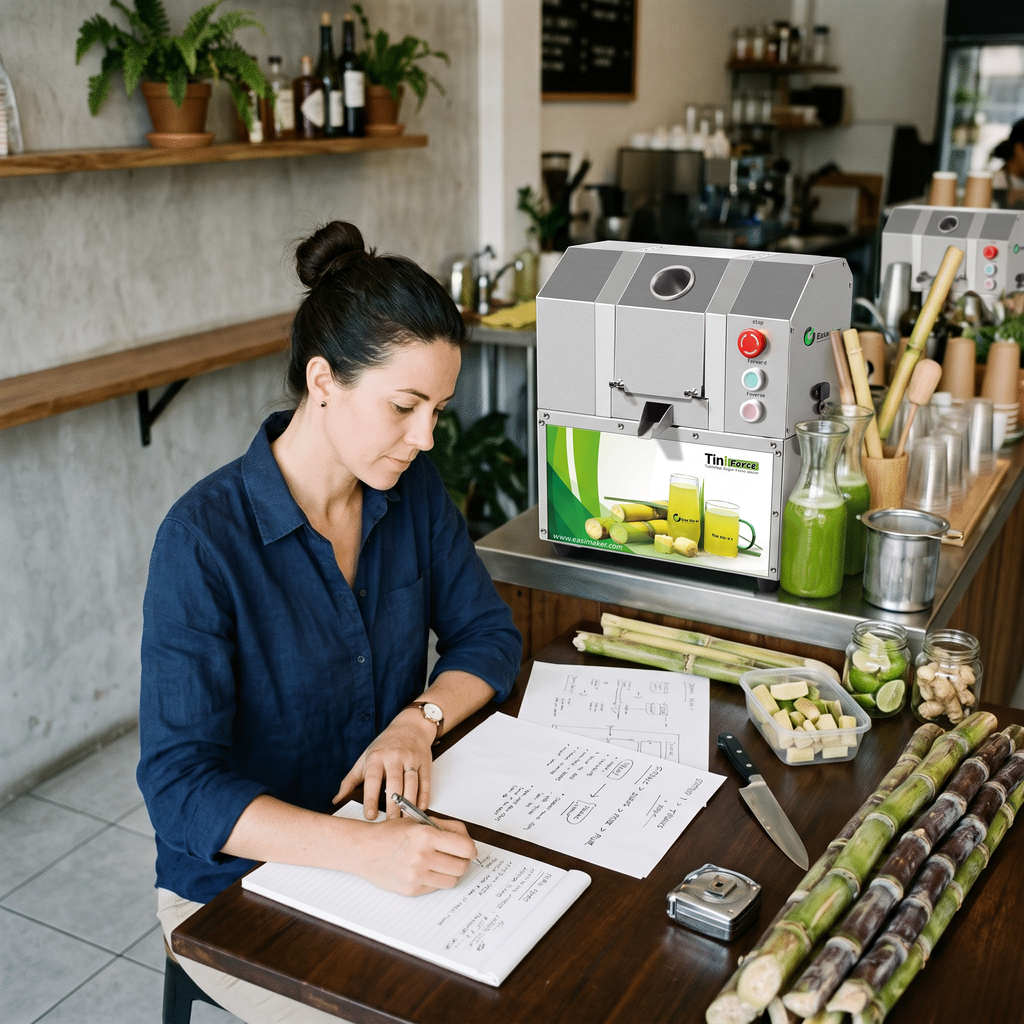
Business owner planning a commercial sugarcane juice operation

To start a sugarcane juice business in the United States, first confirm local demand, select a permitted sales format, secure a dependable sugarcane supply, and build the operation around a commercial-grade juicing and sanitation workflow. The machine is important, but the business succeeds or fails on the full system: location, compliance, ingredient handling, labor, packaging, cleaning, and repeatable service.

Sugarcane juice is a fresh beverage made by mechanically pressing prepared sugarcane stalks. It can be sold as a focused menu item or alongside fruit drinks, snacks, or other food-service products. It may fit areas with established familiarity with cane beverages, busy shopping districts, tourist areas, farmers markets, multicultural retail zones, and events. Demand is local, so validate it in the city or neighborhood where you plan to trade rather than relying on broad trends.

Before signing a lease or buying equipment, write a one-page operating concept. Define your customer, sales channel, service hours, menu, expected peak periods, ingredient storage plan, and the amount of product you expect to prepare during a normal shift. This document gives you a practical basis for speaking with regulators, landlords, suppliers, and equipment partners.

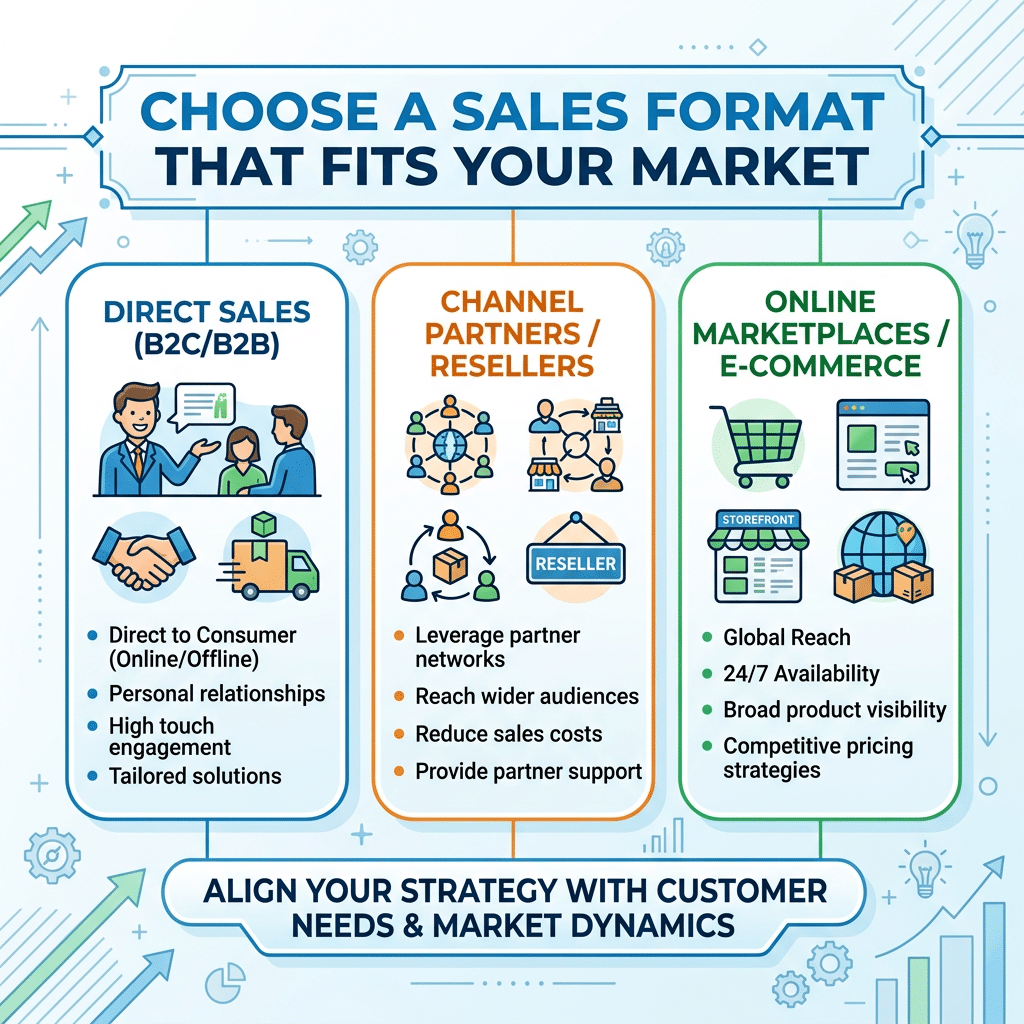
Choose a sales format that fits your market

Choose a sales format that fits your market

Your sales format determines much of the startup work. A small fixed juice counter, kiosk, mobile unit, market stall, and wholesale supply model can all use sugarcane juice equipment, but they have different rules, space needs, utility requirements, and staffing patterns.

  • Fixed juice bar or retail counter: Best when you need a stable daily presence and room for chilled storage, washing, preparation, service, and cleaning. It generally involves the most site-planning work.
  • Kiosk or food-court unit: Can provide strong foot traffic, but confirm drainage, electrical supply, storage access, waste handling, and landlord operating restrictions before committing.
  • Mobile cart, trailer, or truck: May support events and changing locations. It also requires careful planning for potable water, wastewater, handwashing, refrigeration, transport, and local mobile-food approvals.
  • Farmers market or event stand: Useful for testing a market with lower commitment. Sales can be seasonal and event-dependent, so plan inventory and labor around the calendar.
  • Wholesale or catering: Requires additional discipline around packaging, temperature control, labeling, delivery timing, and any rules that apply to packaged beverages in your state.

Start with the smallest format that can safely deliver your intended customer experience. A compact operation still needs enough room to receive cane, clean it, trim or cut it when required, press juice, collect waste, wash components, and store service supplies without crossing clean and dirty tasks.

Research permits and food rules before committing to a site

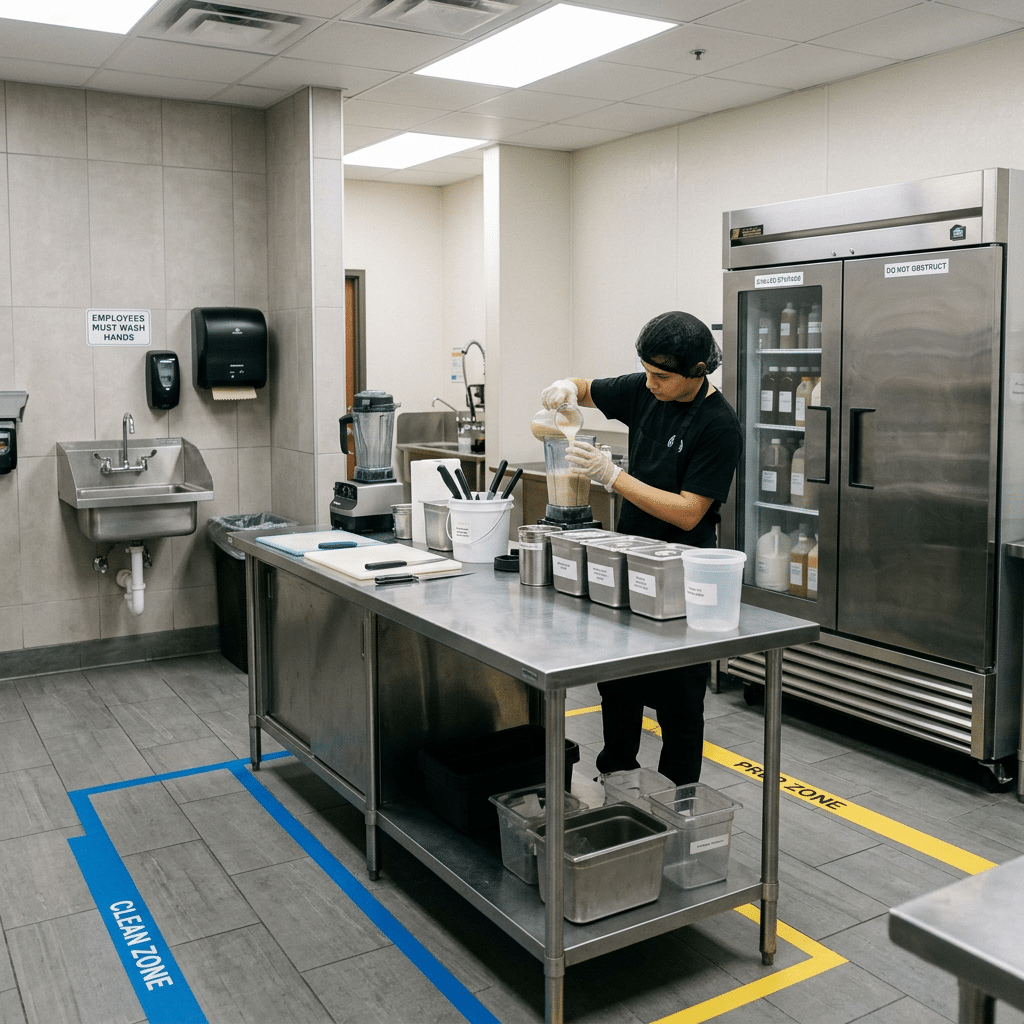
Clean sugarcane juice preparation area with food-service hygiene facilities

Food-business requirements in the United States are set and enforced through a mix of state, county, and city authorities. Requirements vary by location and by whether you sell drinks for immediate consumption, operate a mobile unit, package product for later sale, or distribute across jurisdictions. Contact the local health department or equivalent food-safety authority early, ideally before you finalize a lease or purchase a vehicle.

Ask the authority what applies to your exact concept. Typical topics include business registration, food establishment permits, plan review, zoning, building approval, fire requirements, handwashing facilities, warewashing, potable water, wastewater, refrigeration, employee food-safety training, and inspections. A landlord may also require proof of insurance and approved construction plans.

For packaged or bottled juice, do not assume that rules for made-to-order drinks are sufficient. Labeling, processing controls, shelf-life decisions, and distribution rules may be different. Discuss the intended product and process with the relevant authority and qualified food-safety professionals before making shelf-life or preservation claims.

Create a compliance file containing your proposed menu, layout, equipment list, supplier information, cleaning procedures, utility details, and records required by your jurisdiction. Keeping these materials organized helps during plan review and makes staff training more consistent after opening.

Build a complete cost and pricing plan

A realistic budget goes beyond the purchase price of a juicer. List every one-time and recurring cost before setting a selling price. Important startup items can include deposits, construction or fit-out, permits, legal and accounting setup, refrigeration, sinks, preparation tables, a commercial sugarcane juicer, cane cutting tools where appropriate, smallwares, packaging, point-of-sale equipment, signage, initial inventory, and working capital.

Recurring costs may include cane, ice and other ingredients, cups and lids, labor, rent, utilities, waste collection, cleaning supplies, repairs, insurance, card-processing fees, delivery, marketing, and replacement parts. Your business plan should also account for cane loss from poor quality, trimming, spoilage, and handling. Actual costs differ substantially by city, location, supplier, and business format.

Set price from local market conditions and your verified operating costs, not from a competitor’s menu alone. Calculate the ingredient and packaging cost for each size and recipe, estimate labor required at peak service, and review gross margin alongside rent and overhead. Track the result by product once trading begins, then adjust purchasing, menu design, and scheduling based on real records.

For a broader pre-purchase checklist, review this guide to budgeting for a commercial sugarcane juicer and juice business. It is particularly useful when comparing the initial equipment cost with site preparation, maintenance, and operating supplies.

Source sugarcane reliably

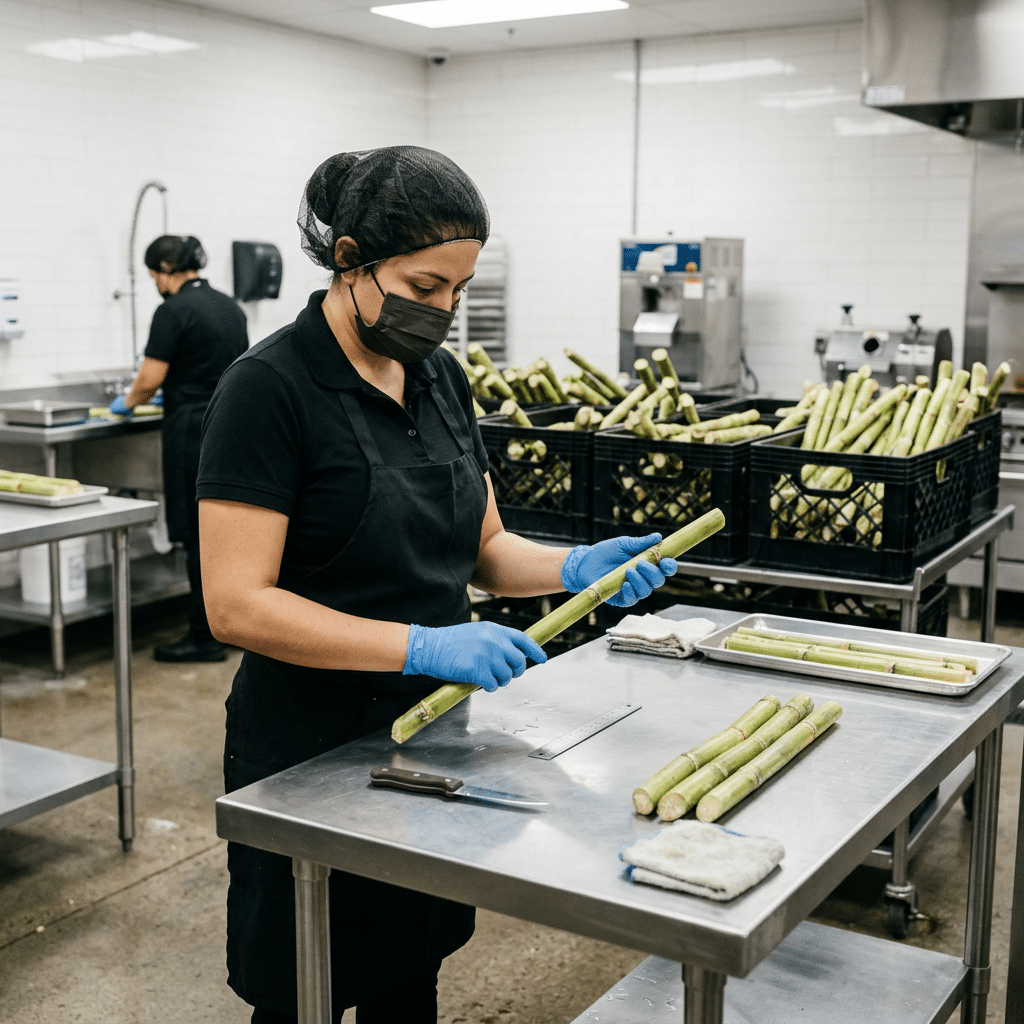
Worker inspecting fresh sugarcane for commercial juice preparation

Sugarcane supply is a core operating risk. Identify more than one possible supplier where practical, and confirm how product will be packed, transported, received, stored, and replaced if quality is unacceptable. Availability and freight conditions can vary by region and season, so do not build your menu around assumptions that cannot be supported by written supplier discussions.

Inspect incoming cane for cleanliness, visible damage, mold, excessive drying, and other signs that it is not suitable for your operation. Establish a receiving procedure: record supplier and delivery date, check condition, rotate stock, and separate any cane that needs review. Store cane according to your local requirements and supplier guidance, in a clean area protected from contamination and pests.

Preparation affects both service speed and machine reliability. Train staff to wash and inspect stalks using your approved procedure, trim only as needed, and cut stalks to a length suitable for the machine and workstation. Avoid forcing unusually thick or hard stalks into equipment. Practical guidance on processing thick sugarcane stalks without unnecessary motor strain can help managers create safer preparation rules.

Select commercial equipment for the actual workflow

Commercial sugarcane juicer on a clean juice bar workstation

Choose equipment based on your expected service pattern, not simply the lowest purchase price or an assumed output figure. A commercial sugarcane juicer should fit the size and hardness of cane you plan to use, the available electrical supply, counter or floor space, cleaning access, and the number of consecutive orders staff may need to serve. Confirm the exact model specifications, local electrical compatibility, guarding, cleaning procedure, and spare-parts availability with the supplier before ordering.

Commercial equipment is intended for repeated food-service use and maintainable daily operation, while a domestic appliance may not suit a busy retail workflow. This comparison of commercial and home sugarcane juicers explains the operational differences buyers should assess.

Your equipment plan may also require a handwashing sink, warewashing arrangement, food-safe preparation surfaces, cold storage, ingredient containers, waste bins, scales or measuring tools, cups and lids, and a point-of-sale system. If staff need to shorten stalks, select a cutting method appropriate to your preparation volume and safety procedure. Keep a clear separation between cane receiving, washing, cutting, pressing, serving, and dirty-equipment cleaning.

Ask a supplier how routine service is handled and which wear or service items should be planned in advance. The sugarcane juicer spare-parts and support checklist outlines the machine details and service records worth keeping from day one.

Design a safe daily workflow

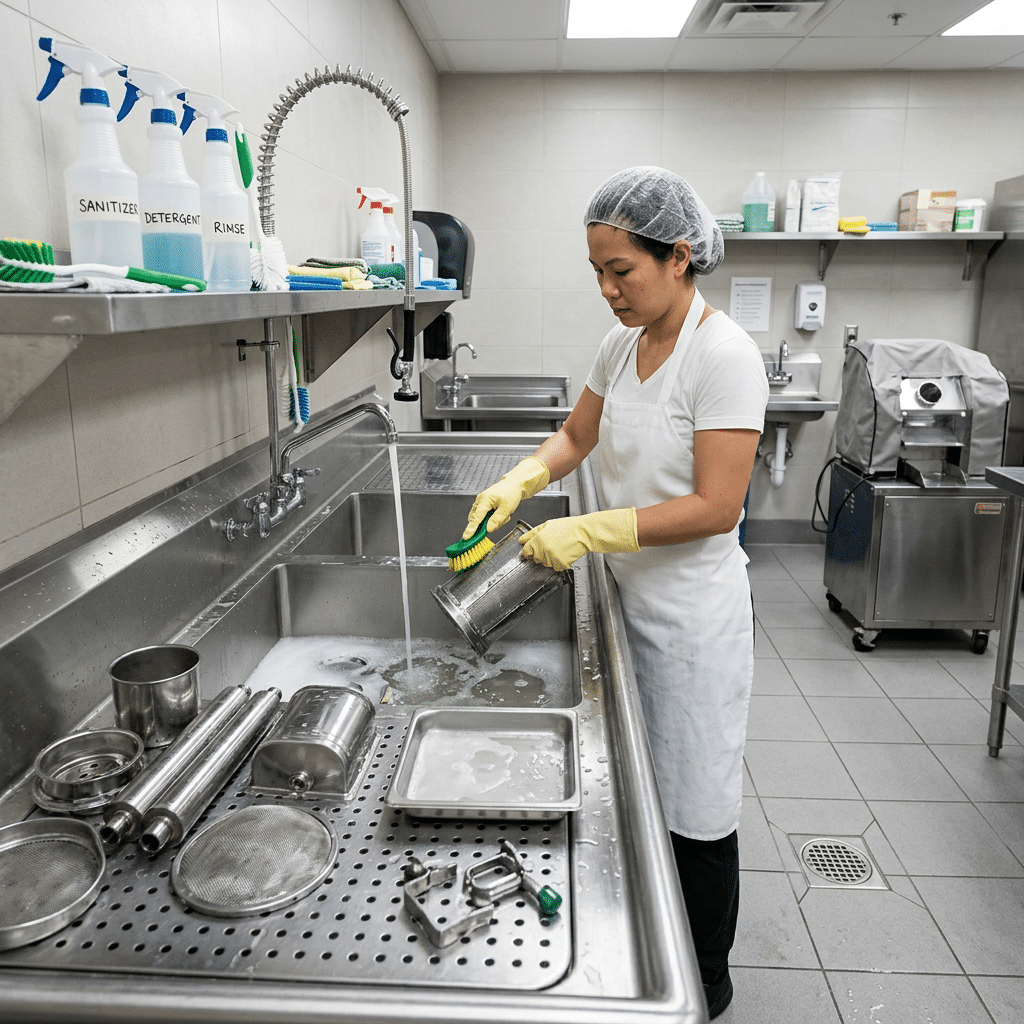
Operator cleaning commercial sugarcane juice equipment components

A consistent workflow protects product quality and helps operators work efficiently. Write simple opening, service, closing, cleaning, and maintenance procedures for the exact machine and site. Use the manufacturer’s instructions as the basis for operation and cleaning, then align the procedure with the requirements of your local food authority.

A typical shift may include:

  1. Inspect the workstation, machine condition, guards, collection containers, and cleaning status before use.
  2. Receive and prepare cane according to the approved handling procedure.
  3. Press juice in a controlled sequence, using only the tools and feed method specified for the machine.
  4. Serve in clean food-contact packaging and manage orders to avoid unnecessary delay.
  5. Empty waste promptly and keep waste away from clean preparation and service areas.
  6. Clean and sanitize food-contact components and work surfaces at the required intervals and at the end of service.
  7. Record any abnormal noise, jamming, leakage, electrical issue, or damaged component, and remove equipment from service when safe operation is uncertain.

Train every operator rather than relying on one experienced person. A short competency check is useful: each new staff member should demonstrate safe feeding, shutdown, cleaning, reassembly, and fault reporting before working alone. Never bypass guards or use improvised tools to push cane into an operating machine.

Launch, measure, and improve

Open with a focused menu and a workflow your team can execute consistently. Too many recipes or customization options can slow a new operation before staff have mastered preparation, pressing, payment, and cleaning. Start with clear serving sizes, straightforward ingredient lists, and packaging that suits your service format.

During the first weeks, record daily cane deliveries, product condition, sales by item and time period, labor hours, customer questions, waste, equipment downtime, and cleaning issues. These records will show whether the bottleneck is demand, preparation, staffing, storage, machine placement, or supplier consistency. Make one operational change at a time so you can see what improves the result.

Keep equipment support information accessible and maintain an ordered list of consumables and service contacts. A reliable machine plan includes proper use, daily cleaning, preventive attention, and a clear response if parts or technical guidance are needed. With this foundation, you can assess whether to extend trading hours, add a second service point, introduce catering, or expand the menu.

Starting carefully is usually faster than correcting an unsuitable site or weak workflow after launch. Confirm compliance locally, buy equipment that matches the real job, and build a process your team can repeat every day.

Sugarcane Juicer Spare Parts and Support Checklist

Table of Contents

A commercial sugarcane juicer needs more than routine cleaning to stay ready for service. This checklist helps operators identify critical spare parts, record the right machine information, plan support requests, and reduce avoidable downtime.

Quick Answer: What Spare Parts Should You Plan For?

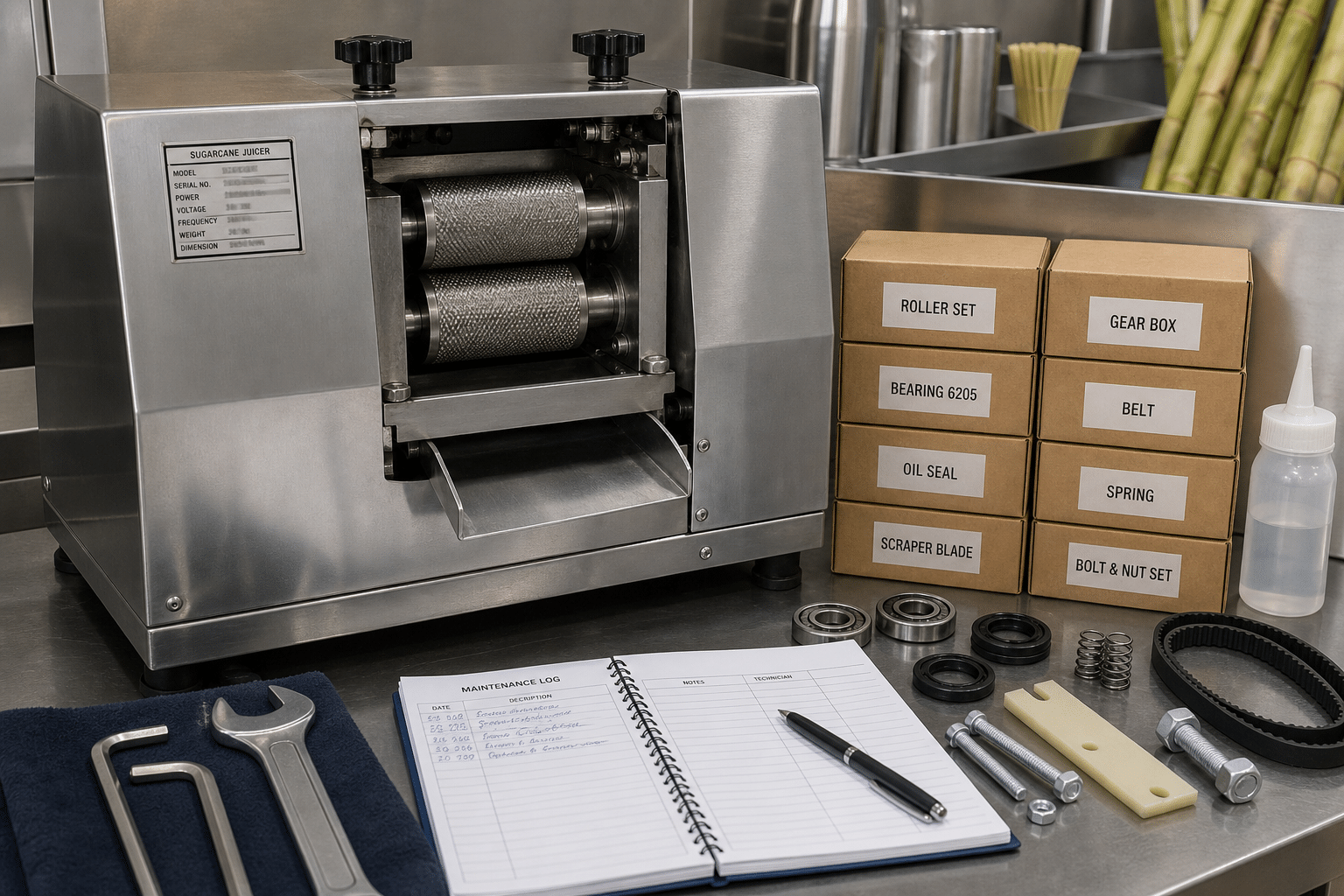
Organised spare-parts inventory for a commercial sugarcane juicer

For a commercial operation, the most useful sugarcane juicer spare parts are the parts that wear through normal use, can delay service when unavailable, or are needed to restore safe operation after a fault. A practical spares plan normally covers food-contact wear components, seals and scrapers where applicable, drive-system components, electrical protection items, and the correct fasteners or tools for approved servicing.

Do not order parts by appearance alone. Confirm the machine model, serial number, electrical specification, part description or reference, and clear photographs before placing an order. Keep a simple maintenance record and inspect the machine at defined intervals. This approach helps an operator spot wear early, request the right replacement part, and avoid keeping unsuitable inventory.

The exact parts list differs by machine design and local electrical configuration. Use the machine manual and the supplier’s technical guidance as the controlling reference. If you are comparing machine formats or planning spares for a new site, review the operational differences in this TiniForce S3 and EasiDeMax S4 comparison before standardising your purchasing list.

What Counts as a Sugarcane Juicer Spare Part?

A spare part is a replaceable component used to repair, maintain, or return a machine to its intended operating condition. For a sugarcane juicer, it is helpful to separate parts into four groups rather than treating all items as the same type of stock.

  • Routine wear parts: components subject to friction, repeated cleaning, pressure, or normal contact during processing. Their condition should be checked regularly.
  • Food-contact components: removable items, guards, collection components, seals, or other parts that come into contact with cane or juice, depending on the machine design. These require careful hygiene handling and model-specific identification.
  • Drive and mechanical components: items related to the transmission of power, alignment, movement, or crushing assembly. Replacement should follow the supplier’s service instructions.
  • Electrical and control components: switches, protection devices, wiring-related parts, and control components. These must match the machine’s electrical configuration and should be handled by a qualified technician where required.

Consumables such as approved cleaning materials may support daily operation, but they are not automatically spare parts. Keep them in a separate hygiene stock list. Likewise, do not substitute generic parts simply because they seem to fit. Material compatibility, dimensions, load, sealing performance, and electrical ratings can all matter.

Critical Spare Parts Checklist

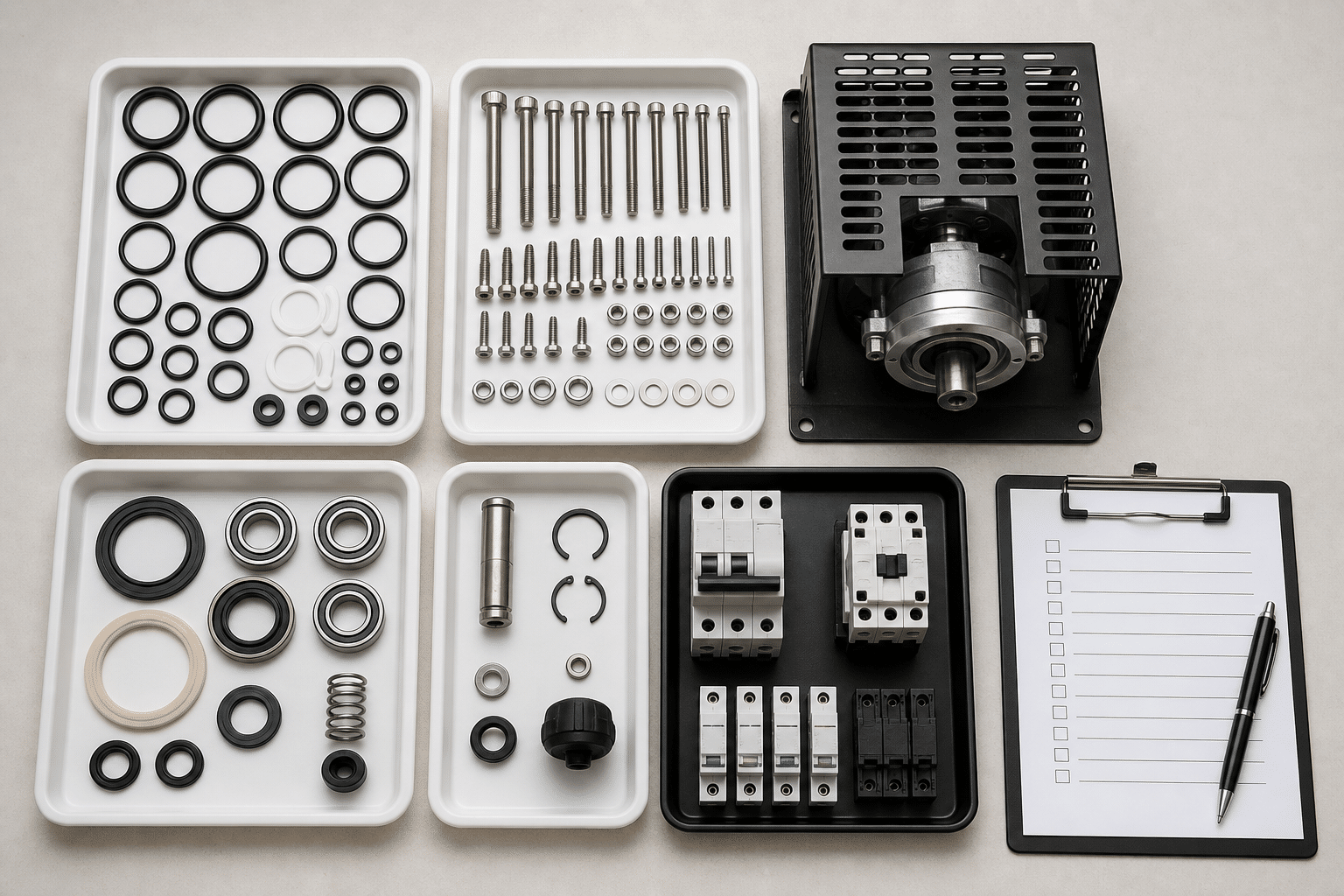
Organised commercial juicer spare components and service checklist

Build your stock list around the machine’s manual, actual service pattern, and supplier advice. The following checklist is a planning framework, not a claim that every machine uses every item.

1. Food-contact and cleaning-related items

  • Specified seals, gaskets, O-rings, or similar sealing components where fitted.
  • Approved juice collection or drainage components if these are removable or damage-prone.
  • Scrapers, wipers, or cleaning-related replaceable components where the model uses them.
  • Replacement fasteners for removable guards or food-zone assemblies, only when supplied or approved for the machine.

2. Mechanical and drive-related items

  • Machine-specific rollers, bearings, bushings, belts, chains, gears, couplings, or springs only where applicable to the design.
  • Specified roller or drive-assembly fasteners and retaining hardware.
  • Approved guards or covers if damage prevents safe use.

3. Electrical and control-related items

  • Correctly rated fuses or circuit-protection items where the manual identifies them as user-serviceable.
  • Model- and voltage-specific switches, buttons, connectors, or control parts when recommended by technical support.
  • An approved power cord or plug assembly only if it matches the local electrical requirements and machine specification.

For most operators, it is more sensible to hold a small quantity of high-turnover, approved wear items than to hold expensive assemblies without a clear maintenance plan. A failed major drive or electrical component may require diagnostic work before a replacement is selected. When planning a broader operating budget, include maintenance supplies, service access, and contingency stock alongside the machine purchase; this is covered in the commercial sugarcane juicer budgeting guide.

Information to Confirm Before Ordering Parts

Ordering the wrong component costs time and can create a safety or hygiene problem. Give the supplier enough information to identify the part accurately on the first request.

  1. Machine identification: record the brand, model, serial number, purchase date if known, and the country or region of installation.
  2. Electrical information: photograph the rating label and state the voltage, frequency, phase, and plug arrangement shown on the machine. Do not rely on a general description such as “standard power.”
  3. Part identification: provide the part number from the manual or parts diagram when available. If no number is visible, give the component name, location, dimensions where useful, and several clear photographs.
  4. Fault description: explain what happened before the issue, when it occurs, whether it is constant or intermittent, and what checks have already been completed.
  5. Machine condition: state whether there is unusual noise, vibration, resistance during operation, leakage, damage, overheating, or a tripped protective device. Do not continue using the machine if safe operation is uncertain.

Keep these details in a shared service log rather than in an individual employee’s phone. A consistent record is especially important for multi-site operators, distributors, and franchise systems. It also makes it easier to identify repeated failures that may be linked to cleaning practices, cane preparation, setup, or operating conditions.

How to Prepare an Effective Support Request

Technician documenting a commercial sugarcane juicer for a support request

A clear support request allows technical teams to decide whether an issue is likely related to cleaning, adjustment, wear, installation, operation, or a replacement component. Before contacting support, safely stop the machine if needed and prepare the following:

  • A photo of the machine rating label and a full photo of the machine.
  • Close-up photos of the affected area and any visible damage or wear.
  • A short video showing the issue, if it can be recorded without bypassing guards or creating risk.
  • The date of installation, approximate usage pattern, and the last cleaning or maintenance action.
  • The cane preparation process, including whether cane is washed, trimmed, or cut before feeding.
  • A description of any recent changes, such as relocation, electrical work, staff change, cleaning chemical change, or impact damage.

Describe observations rather than diagnosing the cause yourself. For example, “the machine stops after several seconds and the protective device trips” is more useful than “the motor has failed.” This gives the support team a better starting point and reduces the risk of an unnecessary part order.

For structured routine work, use a documented preventive maintenance schedule for a commercial sugarcane juicer alongside your support log. The schedule should be adapted to the model, operating hours, local conditions, and instructions supplied with the equipment.

Inspection, Cleaning, and Parts Storage

Many spare-parts problems begin with an incomplete cleaning routine, poor storage, or a missed inspection. Follow the cleaning and disassembly instructions for your specific machine. Turn off and isolate the equipment from power before cleaning, inspection, or any service activity, and do not defeat safety guards or interlocks.

At the end of service, inspect accessible areas for cane fibres, residue buildup, loose hardware, damaged guards, leakage, abnormal wear, and signs of corrosion. Clean parts with the products and methods approved for the machine materials. Abrasive tools or unsuitable chemicals can damage surfaces, seals, and clear components, so they should not be used unless the manufacturer specifically permits them.

Store spare parts clean, dry, labelled, and protected from dust, moisture, pests, direct sunlight, and chemicals. Keep food-contact components separate from lubricants, electrical items, and workshop materials. Retain parts in sealed bags or original packaging where possible, and mark each container with the machine model and part number. Rotate stock so older approved items are inspected before use.

Also consider cane preparation as part of maintenance control. Feeding cane that is poorly cleaned, excessively irregular, or not prepared according to the machine instructions can increase contamination risk and place unnecessary stress on processing components. The choice between different crushing approaches can affect workflow and maintenance planning; see this guide to single-pass and multi-pass sugarcane crushing for operational context.

Build a Downtime-Reduction Plan

A good parts plan is only one part of reliable daily operation. Create a simple downtime-reduction process that your shift teams can follow:

  1. Assign one person to own the machine asset record and approved parts list.
  2. Set inspection frequencies based on the manufacturer guidance and your real operating pattern.
  3. Record every replacement part, the reason for replacement, date, technician, and any observation from the repair.
  4. Set a reorder point for frequently used approved parts, allowing for supplier lead time and your peak-season needs.
  5. Train staff to recognise stop-use conditions and to report changes early.
  6. Review the log monthly to identify recurring issues and whether a process change is needed.

For operators with several locations, standardise models where practical and keep a central register of serial numbers, electrical configurations, approved suppliers, manuals, and service contacts. This makes it easier to transfer stock appropriately and prevents a part intended for one machine version from being installed on another.

Do not measure preparedness only by the number of parts on the shelf. The better measure is whether the team can identify the correct item, operate safely while awaiting service, and access the correct technical support when a fault is outside routine maintenance.

When to Stop the Machine and Call Support

Stop operating the machine, isolate it from power, and seek qualified support if you observe damaged guards, exposed wiring, burning smell, smoke, repeated electrical tripping, unexpected movement, persistent abnormal noise or vibration, significant leakage, or a part that no longer fits securely. The same applies if the machine has been dropped, flooded, modified, or connected to an unsuitable power supply.

Do not bypass a safety device, force a jammed assembly, or continue production to finish a rush period. Repeated resets, improvised repairs, and unapproved replacement parts can make diagnosis harder and may create further damage or risk. Use the manufacturer’s manual and approved technical channels for the next step.

A reliable support process starts with complete machine information, accurate photos, and a clear account of the issue. This allows the supplier or distributor to advise on the correct replacement part or whether on-site technical assessment is needed.

Tapping into Corporate Wellness: How to Introduce Sugarcane Juice to Office Cafeterias

Elevating Corporate Dining with Fresh, Natural Energy

Corporate wellness programs have evolved far beyond discounted gym memberships. Today, human resources and facility managers are actively transforming office cafeteria menus to boost employee productivity, health, and satisfaction. As companies move away from processed snacks and high-caffeine energy drinks, a lucrative opportunity has emerged for juice business owners: introducing fresh sugarcane juice setups into corporate dining facilities.

For B2B juice suppliers and operators, pitching healthy workplace beverages requires a strategic approach. Corporate decision-makers prioritize hygiene, operational efficiency, and clear employee benefits. This guide outlines how to successfully position commercial sugarcane juice stations as a premium employee perk, detailing the sales strategies, equipment requirements, and operational models needed to secure lucrative corporate contracts.

Why Sugarcane Juice Fits Modern Corporate Wellness Programs

Before approaching corporate procurement teams or food service operators (like Sodexo or Compass Group), you must clearly articulate the value proposition of sugarcane juice in a workplace setting.

The Natural Energy Alternative

Mid-afternoon fatigue is a recognized productivity killer in corporate environments. While coffee and synthetic energy drinks provide a quick spike followed by a crash, fresh sugarcane juice offers a more sustained energy release. It is rich in natural carbohydrates, electrolytes, and essential minerals like calcium and potassium. Positioning this as a natural hydration and energy solution directly aligns with the goals of corporate wellness programs.

Meeting the Demand for “Clean Label” Beverages

Modern employees demand transparency in their food. Freshly pressed sugarcane juice is a single-ingredient beverage. Pitching a live-extraction juice station demonstrates a company’s commitment to providing unadulterated, fresh, and healthy workplace beverages, elevating the overall perceived value of the office cafeteria menu.

B2B Sales Strategies: Pitching to Corporate Facilities

Selling to corporate cafeterias is a B2B transaction that involves multiple stakeholders, including HR directors, facility managers, and catering executives. Your pitch must address their specific pain points.

1. Identify the Right Decision-Makers

Do not pitch directly to the cafeteria cashier. Identify the contracted food service provider or the internal Facilities/HR manager responsible for corporate wellness initiatives. Tailor your pitch: emphasize employee satisfaction and retention to HR, and highlight footprint, safety, and margins to the facility manager.

2. Propose a Low-Risk Pilot Program

Corporate buyers are risk-averse. Offer a 30-day or 60-day pilot program. Install a commercial electric sugarcane juicer on a trial basis, provide the raw materials, and track employee engagement and sales metrics. Data gathered during the pilot—such as peak consumption hours and repeat purchases—will be your strongest tool for securing a long-term contract.

3. Highlight Turnkey Operational Models

Corporate cafeterias do not want equipment that complicates their workflow. Offer turnkey solutions. This could mean you provide the machine, daily delivery of pre-cleaned and peeled sugarcane stalks, and scheduled maintenance. The less friction involved for the cafeteria staff, the higher your chances of closing the deal.

Equipment Placement and Specifications: The Easimaker Standard

The success of a corporate juice program hinges heavily on the equipment. Office cafeterias require machines that are safe, quiet, and aesthetically pleasing. Manual crank juicers are entirely unsuitable for commercial B2B environments due to safety risks and low throughput.

Key Specifications for Corporate Juicers

  • Fully Electric Operation: High-volume corporate environments demand electric juicers to ensure consistent throughput and minimize operator fatigue.
  • Enclosed Safety Designs: Corporate liability is a major concern. Machines must feature fully enclosed gearboxes and safety switches that prevent operation when the protective cover is removed.
  • Food-Grade Stainless Steel (304/316): To meet commercial health and safety standards, all contact parts (rollers, juice trays, filters) must be made of high-quality stainless steel to prevent corrosion and ensure easy sanitization.
  • Noise Control: Office cafeterias are often adjacent to meeting rooms or open-plan workspaces. High-quality electric juicers with precision-engineered gearboxes operate quietly, minimizing workplace disruption.

Comparing Implementation Models

Implementation Model Pros Cons Best For
Staffed Juice Bar (Live Pressing) High visual appeal; guarantees maximum freshness; premium perception. Requires dedicated staff time; higher initial equipment footprint. Large corporate campuses with high daily foot traffic.
Self-Serve Automated Station Low labor cost; 24/7 availability for shift workers. Requires highly reliable, jam-proof electric equipment; strict cleaning protocols. Tech companies and facilities with staggered employee schedules.
Pre-Bottled Daily Delivery Zero cafeteria labor; no equipment footprint required. Shorter shelf life; loses the “theatrical” appeal of fresh pressing. Smaller offices or facilities without dedicated food service staff.

Overcoming Common Corporate Objections

During your pitch, expect pushback. Being prepared to address these B2B objections will establish your authority.

Objection 1: “Isn’t it just sugar?”
Response: Educate the buyer on the difference between refined sugar and natural sugarcane juice. Provide nutritional fact sheets highlighting the low glycemic index (GI) compared to typical cafeteria sodas, alongside the presence of natural electrolytes.

Objection 2: “Our staff doesn’t have time to clean a juicer.”
Response: Highlight the design of modern electric juicers. Demonstrate how models with removable rollers and accessible juice trays can be fully broken down, sanitized, and reassembled in under 10 minutes at the end of a shift.

Objection 3: “We don’t have space for raw material storage.”
Response: Offer a Just-In-Time (JIT) delivery model. Supply pre-cut, vacuum-sealed sugarcane billets that fit easily into standard commercial refrigerators, eliminating the need for bulk stalk storage.

Buying Guide: Scaling Your B2B Juice Business

If you are a juice business owner looking to expand into commercial juice markets, you need a reliable equipment partner. When sourcing electric sugarcane juicers for multiple corporate deployments, consider the following:

  • Minimum Order Quantities (MOQs): Work with manufacturers who offer flexible MOQs, allowing you to scale your equipment purchases as you land more corporate contracts.
  • Customization: Can the manufacturer brand the machines with your company logo or the corporate client’s branding? Custom wraps can make the machine look like a native part of the cafeteria.
  • Spare Parts Availability: Ensure your supplier guarantees fast shipping on consumable parts like seals, filters, and bearings to prevent downtime in your clients’ cafeterias.

Frequently Asked Questions (FAQs)

How much space does a commercial sugarcane juicer require in a cafeteria?

Most modern electric countertop models require a footprint of approximately 1.5 to 2 square feet. They fit comfortably on standard commercial stainless steel prep tables alongside other beverage dispensers.

What are the electrical requirements for these machines?

Standard commercial electric juicers typically operate on 110V or 220V depending on your region, pulling between 400W to 750W. They can usually be plugged into standard commercial cafeteria outlets without requiring dedicated high-voltage lines.

How do we handle the bagasse (sugarcane waste) in an office setting?

Bagasse is 100% compostable. Position this as a sustainability win for the corporation. Provide dedicated, odor-sealed compost bins next to the machine, and coordinate with the facility’s existing organic waste management protocols.

What is the shelf life of the raw sugarcane before pressing?

Whole stalks can last up to a week in a cool, dry place. However, for corporate settings, pre-peeled and vacuum-sealed sugarcane billets stored in a commercial refrigerator (around 4°C) will remain fresh for 5 to 7 days, ensuring optimal hygiene and taste.

Are these machines safe for self-service by employees?

While live pressing is highly safe with modern enclosed electric juicers, self-service is generally only recommended if the machine features automated feeding mechanisms and safety interlocks. Otherwise, it is best operated by trained cafeteria staff.

Ready to Upgrade Your Corporate Beverage Offerings?

Equip your business with the most reliable, efficient, and safe electric sugarcane juicers designed for high-end commercial environments. Expand your B2B operations today.

Request a quote / Get a sample

A Guide to Franchising Your Sugarcane Juice Brand: Operations and Scaling

Transitioning from a Single Location to a Franchise Network

Scaling a successful sugarcane juice bar into a regional or national franchise requires a fundamental shift in business strategy. When operating a single location, brand owners can personally oversee daily operations, monitor juice extraction, and manage equipment maintenance. However, as you scale a sugarcane juice brand, success depends entirely on standardization, reliable commercial equipment fleets, and comprehensive training systems.

For B2B brand owners, procurement managers, and operations directors, franchising means building a replicable model. Franchisees are investing in a proven system. If your equipment fails or juice quality varies between locations, the brand’s reputation suffers. This guide outlines the operational steps necessary to successfully franchise your juice business, focusing on equipment standardization, training, and quality control.

Step 1: Standardizing Your Commercial Juicer Fleet

The core of any sugarcane juice franchise is the extraction equipment. You cannot rely on a patchwork of different machines across various franchise locations. Standardizing your commercial juicer fleet ensures consistent yield, identical maintenance schedules, and uniform safety protocols.

Why Electric Commercial Juicers are Mandatory

Manual or light-duty juicers are entirely unsuited for a franchise environment. To maintain high throughput and operational safety, franchises must specify heavy-duty, electric commercial sugarcane juicers in their Franchise Disclosure Document (FDD). When selecting an electric juicer fleet for your franchisees, consider the following technical factors:

  • Extraction Yield: High-efficiency electric rollers (typically utilizing a 3-roller or 4-roller system) ensure maximum juice extraction in a single pass, directly impacting the franchisee’s profit margins.
  • Material Specifications: Food-grade stainless steel (such as 304 or 316) is non-negotiable for all contact parts to comply with international food safety standards and resist the corrosive nature of natural plant acids.
  • Motor Durability: Commercial environments require motors capable of continuous operation during peak hours without overheating. Look for gear-driven electric motors with built-in thermal protection.
  • Ease of Cleaning: Machines must feature accessible roller compartments and removable components to allow for rapid, thorough sanitization between shifts.

Step 2: Developing Comprehensive Training Manuals

Franchisees and their staff will have varying levels of food service experience. Standard Operating Procedures (SOPs) must be meticulously documented. A robust training manual for a juice bar operations team should include:

Equipment Operation and Safety

Document the exact startup, operation, and shutdown procedures for the electric sugarcane juicers. Include visual diagrams of emergency stop buttons, reverse functions (to clear jams), and proper feeding techniques to prevent operator injury and machine damage.

Sanitation Protocols

Sugarcane juice is highly susceptible to fermentation and bacterial growth. Your SOPs must dictate cleaning frequencies (e.g., mid-shift wipe downs, end-of-day deep cleans). Specify the exact food-safe sanitizers to be used, the correct dilution ratios, and step-by-step instructions for dismantling and reassembling the juicer’s extraction chamber.

Step 3: Maintaining Consistent Juice Quality

Customers expect the same taste profile whether they visit a franchise in New York or London. Maintaining consistent juice quality across a decentralized network involves strict supply chain management.

  • Raw Material Sourcing: Specify the exact cultivars of sugarcane franchisees must purchase, or establish a centralized supply chain. Factors like maturity, soil type, and harvest time drastically affect the Brix level (sugar content).
  • Storage and Handling: Sugarcane stalks must be stored at specific temperatures to prevent moisture loss and souring. Outline refrigeration requirements and maximum shelf-life metrics for cut cane.
  • Preparation Standards: Define how the cane should be prepped before juicing. This includes washing protocols, peeling requirements (if applicable to your brand standard), and cutting lengths to optimize the electric juicer’s feed rate.

Comparing Equipment Strategies: Standalone vs. Franchise Fleet

Understanding the shift in equipment strategy is vital for operations managers planning a franchise rollout.

Operational Factor Standalone Juice Bar Franchised Juice Brand
Equipment Sourcing Ad-hoc purchasing based on immediate local availability. Centralized procurement; standardized electric juicer fleet.
Maintenance Reactive repairs; potential extended downtime. Preventative maintenance schedules; stocked spare parts inventory.
Yield Consistency Variable, dependent on the individual operator’s machine. Highly consistent due to uniform roller calibration across the fleet.
Training On-the-job, informal shadowing. Documented SOPs tailored to the specific standardized equipment.

Procurement and Fleet Management for Franchisors

As the franchisor, you must establish a reliable pipeline for equipment. Partnering directly with a manufacturer for your commercial electric juicers offers significant advantages. Negotiating Minimum Order Quantities (MOQs) for fleet rollouts can reduce capital expenditure for new franchisees. Furthermore, establishing a direct line for OEM spare parts (such as replacement rollers, gears, and bearings) ensures that franchisee downtime is minimized.

Frequently Asked Questions (FAQs)

How do I ensure franchisees maintain the equipment properly?

Incorporate mandatory preventative maintenance schedules into the franchise agreement. Require franchisees to log daily cleaning and monthly inspections, and conduct periodic corporate audits to verify compliance.

What is the typical lifespan of a commercial electric sugarcane juicer?

With strict adherence to daily cleaning and regular maintenance of gears and bearings, a high-quality stainless steel electric juicer can operate efficiently for 5 to 10 years in a high-volume commercial setting.

Should the franchisor supply the sugarcane or rely on local distributors?

This depends on geographic scale. Regional franchises often benefit from a centralized commissary or approved local agricultural suppliers to maintain strict control over the cane’s Brix levels and freshness.

How do we handle equipment breakdowns in a franchise network?

Require franchisees to keep essential spare parts (like fuses, switches, and basic seals) on-site. The franchisor should maintain a relationship with the equipment manufacturer to expedite shipping of major replacement components.

Can we customize the juicers with our franchise branding?

Yes, many B2B equipment manufacturers offer customization options for fleet orders, including laser-etched logos, custom housing colors, and branded warning labels to align with your franchise’s visual identity.

Ready to Scale Your Juice Brand?

Standardizing your equipment is the first step toward a successful franchise rollout. Ensure your franchisees have the reliable, high-yield extraction technology they need to succeed. Request a quote today to discuss fleet pricing, technical specifications, and procurement strategies for your commercial electric sugarcane juicers.

The Profitability of Sugarcane Juice Kiosks on University Campuses

University campuses present a unique and highly lucrative environment for food and beverage entrepreneurs. With thousands of students, faculty, and staff moving through concentrated areas daily, high-foot-traffic educational settings are ideal for quick-service beverage concepts. Among the emerging trends, the sugarcane juice business stands out as a high-margin, health-conscious alternative to traditional sugary sodas and artificial energy drinks.

For operators looking to establish a profitable university campus juice kiosk, success hinges on three critical factors: understanding student demographics, optimizing a compact footprint, and deploying the right commercial electric juicer setup to handle peak volume. This guide breaks down the operational requirements, financial models, and equipment specifications needed to launch and scale a campus-based sugarcane juice operation.

Understanding the Student Demographic and Demand

Today’s university students (predominantly Gen Z) are driving a massive shift in the food and beverage industry. They prioritize functional, plant-based, and minimally processed foods. Sugarcane juice—naturally sweet, rich in electrolytes, and completely unrefined—aligns perfectly with these consumer preferences.

  • Health and Wellness Focus: Students increasingly view food as fuel. Sugarcane juice offers a natural energy boost without the crash associated with synthetic caffeine or high-fructose corn syrup.
  • Speed of Service: Campus life revolves around tight schedules. Students typically have 10 to 15 minutes between classes, meaning transaction times must be under two minutes.
  • Visual Appeal: The process of extracting fresh juice on demand provides a transparent, engaging, and highly “shareable” experience that appeals to younger demographics.

Space and Infrastructure Requirements for Campus Kiosks

Real estate on university campuses is at a premium. Student unions, recreation centers, and library cafes require vendors to operate within strict spatial constraints. Fortunately, a sugarcane juice stand can be highly profitable even within a micro-footprint.

Optimal Kiosk Dimensions

A fully functional sugarcane juice kiosk can operate in a space as small as 40 to 60 square feet (roughly 4×10 or 6×10 feet). This compact footprint reduces monthly leasing costs and allows for placement in high-traffic corridors where larger concepts cannot fit.

Essential Utilities

  • Power Supply: Commercial electric juicers require stable power. Most compact commercial models operate efficiently on standard 110V or 220V single-phase outlets (depending on your region), drawing between 400W and 750W.
  • Water and Drainage: Health codes require handwashing and equipment-washing sinks. If direct plumbing is unavailable, self-contained portable sink systems with fresh and wastewater tanks are often permitted for modular kiosks.
  • Storage: Sugarcane stalks require cool, dry storage. Undercounter refrigeration is recommended to store pre-washed, pre-cut stalks, ensuring they remain fresh and hygienic throughout the day.

Selecting the Best Compact Machines for Campus Kiosks

The core of your business is the extraction equipment. In a high-volume campus setting, manual juicers are entirely unfeasible due to slow processing times, inconsistent yields, and the physical strain on operators. A high-quality, fully electric commercial sugarcane juicer is mandatory for profitability and operational efficiency.

When sourcing an electric juicer for a university kiosk, consider the following technical factors:

1. Extraction Yield and Efficiency

Profit margins are directly tied to extraction rates. Advanced electric models feature three to four stainless steel rollers that compress the cane multiple times in a single pass. Look for machines that offer an extraction rate of 70% to 80%. Higher yields mean fewer stalks are required per cup, driving down the cost of goods sold (COGS).

2. Compact Footprint

Counter space is your most valuable asset. The ideal machine should have a vertical or streamlined horizontal design that occupies less than 2 square feet of counter space, leaving ample room for point-of-sale (POS) systems, cup storage, and prep areas.

3. Noise Levels

Because campus kiosks are often located near study areas, libraries, or lecture halls, noise pollution is a critical concern. Standard industrial juicers can exceed 80 decibels. Look for enclosed, gear-driven electric juicers engineered for quiet operation (ideally under 65 decibels) to comply with campus noise regulations.

4. Hygiene and Maintenance

Food safety is paramount. The juicer must feature food-grade 304 stainless steel components. Removable rollers and transparent, easy-to-clean splash guards allow staff to perform rapid sanitization between peak rushes without disassembling the entire machine.

Comparison: Standard Commercial vs. Compact Campus Electric Juicers

Feature Standard Industrial Juicer Compact Campus Electric Juicer
Footprint Large (Floor-standing) Small (Countertop, <2 sq ft)
Noise Level High (>80 dB) Low (<65 dB)
Processing Speed Very High High (Optimized for single-serve)
Cleaning Time 30+ minutes 10-15 minutes (Removable parts)
Best For Wholesale, Factories University Kiosks, Malls, Cafes

Financials: Student-Friendly Pricing and Margins

To maximize the profitability of a juice stand, operators must strike a balance between high gross margins and student-friendly pricing. Students are budget-conscious, but they are willing to pay a premium for fresh, made-to-order health beverages compared to bottled alternatives.

Cost of Goods Sold (COGS) Breakdown

Note: The following figures are typical industry ranges and will vary based on local agricultural sourcing and seasonality.

  • Raw Material (Sugarcane): Depending on wholesale sourcing, the cane required for a 12 oz serving typically costs between $0.30 and $0.60.
  • Packaging: Eco-friendly cups, lids, and paper straws add approximately $0.15 to $0.25 per serving.
  • Flavor Add-ins: Adding ginger, lime, or mint (highly recommended for flavor profiles) adds about $0.05 to $0.10 per cup.

Total COGS per 12 oz cup: $0.50 – $0.95

Retail Pricing and ROI

In a university setting, a competitive retail price for a 12 oz fresh-pressed sugarcane juice ranges from $3.50 to $5.00. This yields a gross profit margin of 75% to 85%.

If a kiosk processes just 150 cups a day (easily achievable during class changeovers and lunch hours) at an average price of $4.00, the daily gross revenue is $600. With high margins and low overhead due to the small footprint, the return on investment (ROI) for the kiosk build-out and commercial juicer setup can often be realized within the first academic semester.

Operational Best Practices for Campus Environments

To ensure smooth operations and repeat business, implement the following standard operating procedures (SOPs):

  • Pre-Processing: Wash, peel, and cut sugarcane stalks into manageable lengths at a commissary kitchen or before opening hours. This ensures rapid feeding into the electric juicer during peak times.
  • Waste Management: Sugarcane bagasse (the fibrous byproduct) accumulates quickly. Ensure you have high-capacity, heavy-duty waste bins. Consider partnering with the university’s agriculture or sustainability departments to compost the bagasse, which strongly appeals to eco-conscious students.
  • Menu Simplicity: Keep the menu streamlined. Offer a standard sugarcane juice, alongside 2-3 variations (e.g., Sugarcane-Lime, Sugarcane-Ginger). Complex menus slow down the queue.

Frequently Asked Questions (FAQs)

1. Do I need a special permit to sell sugarcane juice on campus?

Yes, you will need standard local health department permits for food service, as well as an operating agreement or vendor license from the university’s auxiliary services or student union board.

2. Why are manual juicers not recommended for campus kiosks?

Manual juicers are too slow for the high-volume bursts typical of campus environments. They also pose hygiene challenges and require significant physical exertion, leading to inconsistent yields and employee fatigue. Electric models are essential for commercial viability.

3. How long does fresh sugarcane juice last?

Sugarcane juice is highly prone to oxidation and fermentation. It should be pressed to order and consumed immediately. If refrigerated, it must be consumed within a few hours to maintain its flavor and nutritional profile.

4. How do I handle equipment maintenance during the semester?

Choose a commercial electric juicer with easily accessible, modular parts. Daily maintenance involves flushing the rollers and wiping down the exterior. Schedule deep cleaning and lubrication of gears during weekends or campus holidays.

5. What is the typical lead time for ordering commercial electric juicers?

For standard compact commercial models, lead times can range from 2 to 6 weeks depending on the manufacturer’s stock and shipping logistics. Always factor this into your kiosk launch timeline.

Conclusion

Launching a sugarcane juice kiosk on a university campus is a highly profitable venture when executed with the right strategy. By catering to student demands for healthy, fast beverages, minimizing your footprint, and investing in a high-yield, compact electric juicer, you can establish a high-margin business with excellent growth potential.

Ready to equip your campus kiosk with the most efficient commercial juicing technology on the market?

Request a quote / Get a sample today to find the perfect electric juicer for your operational needs.

Calculating the True Cost Per Cup: A Profitability Breakdown for Commercial Juice Operations

The Economics of Extraction: Why Margins Matter

In the commercial beverage sector, particularly with fresh extraction businesses like sugarcane juice, the gap between gross revenue and net profit is often determined by cents, not dollars. For B2B operators—whether you are launching a specialized juice kiosk, adding a revenue stream to a restaurant, or distributing machines—understanding the granular economics of a single cup is mandatory.

Sugarcane juice is widely regarded for its high profit margins compared to bottled beverages or complex smoothies. However, realizing this potential requires a rigorous analysis of your Cost of Goods Sold (COGS). This guide provides a detailed financial framework to calculate the true cost per cup, factoring in raw material yield, machine efficiency, electricity, and labor.

1. Raw Material Yield: The Primary Variable

The most significant cost component in fresh juice production is the raw ingredient. Unlike syrups or powders, sugarcane varies in size, moisture content, and sugar density (Brix). To calculate cost accurately, you must first establish your Extraction Rate.

  • Typical Yield: High-quality commercial rollers typically achieve an extraction rate of 70% to 80% by weight. This means 1 kg of raw sugarcane yields approximately 700ml to 800ml of juice.
  • Calculation Example: If raw sugarcane costs $0.50 per kg and your machine yields 750ml per kg, your raw material cost is approximately $0.06 per 100ml.

Note: Inefficient machines with poor roller tension may only yield 50-60%, significantly inflating your raw material costs over time.

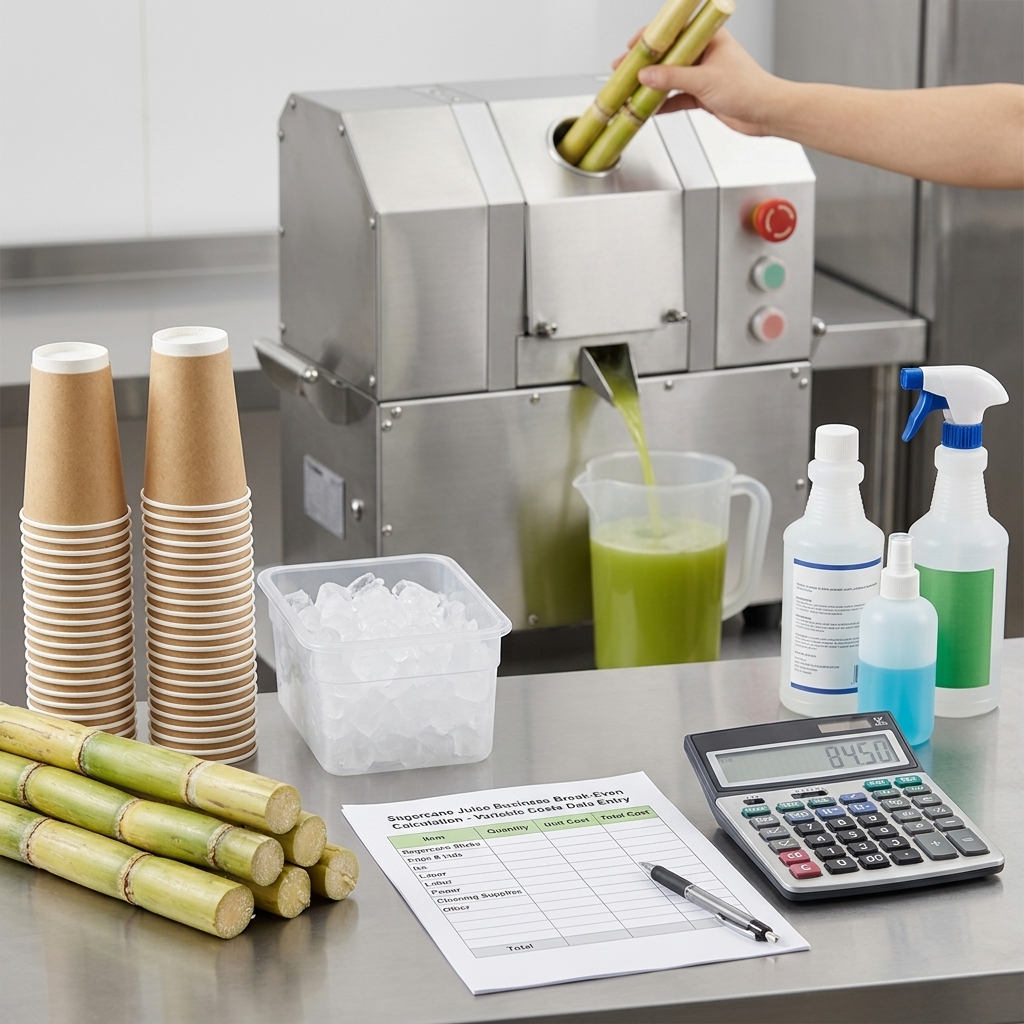
2. The Breakdown: Variable Costs Per Cup

To determine the true cost of a standard 350ml (12oz) serving, we must aggregate all direct variable costs. Below is a representative breakdown based on typical global market averages. Operators should adjust these figures based on local supplier rates.

Raw Ingredients

  • Sugarcane: Assuming a 350ml serving requires roughly 0.5kg of raw cane (at 70% yield).
  • Additives: Cost of lemon, ginger, or mint often added for flavor balance.
  • Ice: If serving over ice, the liquid volume decreases, lowering the cane cost, but the ice production cost must be added.

Packaging (Consumables)

Never overlook the vessel. In premium markets, the packaging is part of the value proposition.

  • Cup (PET/PLA/Paper): $0.05 – $0.15
  • Lid/Sealing Film: $0.02 – $0.05
  • Straw: $0.01 – $0.03

Electricity & Utilities

Commercial sugarcane machines usually range from 400W to 800W. Even at high commercial electricity rates, the cost per cup is negligible but should be tracked.

  • Example: An 800W machine running for 1 hour consumes 0.8 kWh. If electricity is $0.15/kWh, the hourly cost is $0.12. If that machine produces 120 cups per hour, the electricity cost is $0.001 per cup.

3. Labor and Operational Efficiency

Labor is often a fixed cost (hourly wages), but for profitability modeling, it helps to view it as a variable cost per unit based on throughput.

If an employee is paid $15/hour and can prep, press, and serve 30 cups an hour, the labor cost is $0.50 per cup. Increasing throughput via faster machines or automated feeding systems directly reduces this cost. High-efficiency machines that require only one pass (rather than multiple feeds) significantly reduce operator time.

4. Profitability Scenario: The 350ml Cup

The following table illustrates a hypothetical cost structure for a standard serving in a mid-range commercial setting.

Cost Component Estimated Cost (USD) Notes
Raw Sugarcane (0.5kg) $0.25 Based on $0.50/kg bulk price
Flavor (Lemon/Ginger) $0.05 Optional but recommended
Cup, Lid, Straw $0.12 Standard clear PET cup
Electricity $0.01 Negligible per unit
Total Material Cost $0.43 Excluding Labor
Labor (Allocated) $0.40 Varies by volume
Total Cost Per Cup $0.83
Average Selling Price $4.00 – $6.00 Premium market pricing
Gross Profit Margin ~80% – 85% Depending on pricing strategy

5. Hidden Costs: Maintenance and Depreciation

While the gross margin on sugarcane juice is impressive, net profit calculations must account for equipment longevity.

Machine Depreciation

A high-quality stainless steel press is an asset. If a machine costs $2,500 and has a lifespan of 5 years (producing 100,000 cups), the depreciation cost is $0.025 per cup. Cheaper machines may have a lower upfront cost but fail sooner, increasing the depreciation cost per cup and risking downtime revenue loss.

Waste Management

Sugarcane bagasse (the fibrous waste) is voluminous. Disposal logistics or composting arrangements can incur costs in urban environments. However, some operators monetize this by selling bagasse as animal feed or fertilizer.

6. Pricing Strategy for B2B Clients

Once the baseline cost is established ($0.83 in our example), pricing should be determined by market positioning rather than a simple markup.

  • Volume Strategy: Lower price ($3.00) to maximize throughput in high-traffic areas (malls, transit hubs).
  • Premium Strategy: Higher price ($6.00+) for organic cane, glass bottle packaging, or boutique cafe settings.

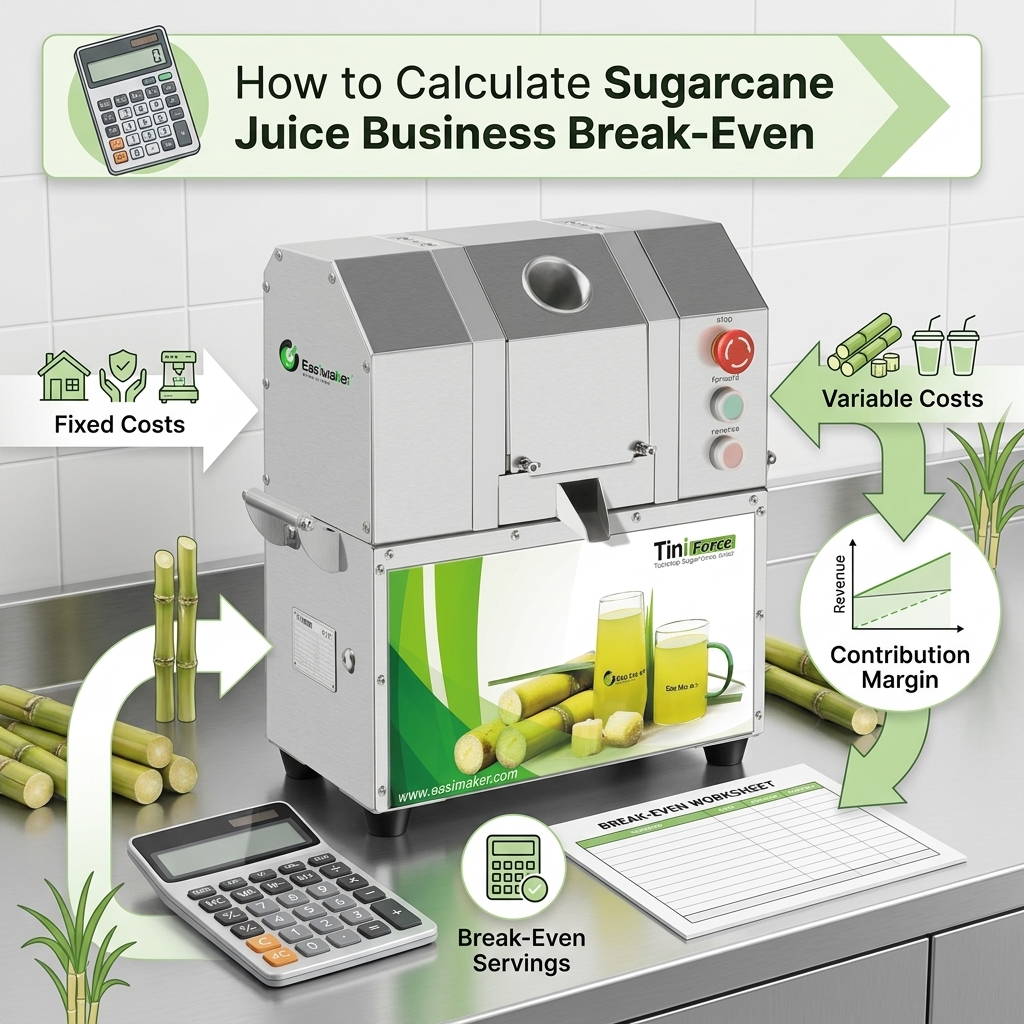
Understanding the break-even point is critical. If your fixed monthly overhead (rent, insurance) is $2,000, and your profit per cup is $3.17 ($4.00 price – $0.83 cost), you need to sell approximately 631 cups per month (or ~21 cups per day) to break even.

Frequently Asked Questions

How does machine efficiency affect the cost per cup?

A machine with higher extraction efficiency (e.g., 80% vs. 60%) reduces raw material waste. Over a year, a 20% difference in juice yield can amount to thousands of dollars in saved sugarcane costs.

Should I factor in cleaning time?

Yes. Machines that are difficult to clean increase labor hours at the start and end of shifts. Look for designs with removable rollers or easy-flush systems to minimize non-productive labor costs.

Is it better to buy pre-peeled cane or peel it on-site?

Pre-peeled cane costs more per kg but significantly reduces labor and prep time. For high-volume kiosks with limited staff, the higher material cost is often offset by the reduction in labor and faster service times.

What is the typical ROI for a commercial sugarcane machine?

Due to the high margins (often exceeding 80%), many operators see a return on investment (ROI) on the equipment within 2 to 4 months, depending on daily volume.

Conclusion

Profitability in the juice business is not just about sales volume; it is about rigorous cost control. By analyzing the cost per cup down to the cent—factoring in yield, consumables, and labor—operators can set prices that ensure sustainability and growth. The choice of equipment plays a pivotal role here; a reliable, high-yield machine is an investment in lower long-term operating costs.

Ready to optimize your juice business margins? Contact us today to discuss high-efficiency extraction equipment tailored to your volume requirements.

The Strategic Benefits of Becoming an OEM Dealer for Sugarcane Machines

Introduction: Capitalizing on the Global Natural Beverage Boom

The global beverage industry is witnessing a decisive shift toward natural, unprocessed, and health-conscious options. Among these, fresh sugarcane juice has emerged as a high-margin, high-demand product in markets ranging from Southeast Asia and India to the Americas and Europe. For equipment distributors and entrepreneurs, this trend represents a significant opportunity—not just to sell juice, but to supply the critical infrastructure required to produce it.

However, entering the market with generic, off-the-shelf equipment often leads to price wars and low customer loyalty. The strategic alternative is becoming an OEM (Original Equipment Manufacturer) dealer. By partnering directly with a specialized manufacturer, distributors can offer branded, customized, and technically superior solutions that command better margins and build long-term brand equity.

This comprehensive guide explores the tangible benefits of partnering with a factory for OEM and ODM manufacturing of sugarcane machines. We will examine the economic advantages, technical customization options, and the step-by-step process of building a private label machinery brand.

1. The Business Case: Why Sugarcane Machines?

Before diving into the OEM model, it is essential to understand the underlying asset class. Sugarcane juicers are industrial-grade appliances designed for high torque and heavy loads. Unlike standard fruit blenders, these machines must crush fibrous stalks while separating juice from bagasse (dry pulp) instantly.

Market Drivers

  • High Profit Margins for End-Users: Sugarcane is an inexpensive raw material. A single stalk can yield significant juice volume, offering high ROI for juice bars, hotels, and street vendors. This makes the machinery an easy sell to B2B end-users.
  • Hygiene Standards: Modern consumers demand hygiene. Old-fashioned, open-roller crushers are being replaced by enclosed, stainless steel models that meet international food safety standards.
  • Versatility: Machines are now needed in various formats, from heavy-duty floor-standing units for shopping malls to compact battery-operated models for mobile carts.

2. Factory-Direct Pricing and Margin Control

One of the primary motivations for becoming an OEM dealer is the economic advantage of factory-direct sourcing. Buying from wholesalers or intermediaries dilutes profit margins and limits pricing flexibility.

Eliminating the Middleman

By establishing a direct line to the manufacturer, dealers secure the lowest possible unit cost (Landed Cost). This allows for a flexible pricing strategy:

  • Competitive Pricing: Undercut competitors who are sourcing through multi-tier distribution channels.
  • Higher Margins: Maintain market pricing while retaining a larger percentage of profit to reinvest in marketing and service.

Volume Incentives

Manufacturers reward volume. As your dealership grows, tiered pricing structures typically unlock further discounts, creating a compounding effect on profitability. For established distributors, this financial leverage is critical for sustaining growth in competitive markets.

3. The Power of OEM/ODM Customization

Generic equipment is a commodity; a brand is an asset. OEM and ODM services allow dealers to transform a standard machine into a unique product that reflects their brand’s identity and meets specific local market needs.

Brand Identity and Private Labeling

In the machinery business, trust is conveyed through branding. An OEM partnership allows you to:

  • Logo Placement: Laser-etch or silk-screen your company logo directly onto the stainless steel chassis.
  • Custom Packaging: Design full-color boxes and user manuals that carry your contact information, reinforcing customer retention for after-sales service.
  • Model Naming: Create your own model numbers and series names to prevent customers from price-shopping your inventory against other sellers.

Technical Adaptation (ODM)

Different regions have distinct technical requirements. A capable manufacturing partner can adapt the machine specifications:

  • Voltage and Frequency: Customizing motors for 110V/60Hz (Americas), 220V/50Hz (Europe/Asia), or even DC battery power for mobile vendors.
  • Plug Standards: Installing the correct UK, EU, US, or South African plugs at the factory level, eliminating the need for post-import modifications.
  • Material Upgrades: upgrading rollers from SS201 to food-grade SS304 for markets with stricter sanitation regulations.

4. Small MOQ: Lowering the Barrier to Entry

Historically, OEM manufacturing required massive Minimum Order Quantities (MOQs), often filling 40-foot containers. However, modern agile manufacturing has changed this landscape.

Many manufacturers now support Small MOQ initiatives to help new dealers test the market without overcommitting capital. This approach allows distributors to:

  • Launch a private label with a manageable initial investment.
  • Test different models (e.g., a 3-roller countertop unit vs. a 4-roller heavy-duty unit) to see which performs best.
  • Scale up production gradually as demand is validated.

5. Technical Reliability and Quality Assurance

When you sell machinery under your own brand, your reputation hinges on the product’s reliability. Partnering with a reputable OEM ensures that the equipment meets rigorous standards before it leaves the factory floor.

Key Components of Quality Sugarcane Machines

  • Gearbox Durability: The gearbox is the heart of the machine. High-quality OEM models utilize heavy-duty gear systems designed to withstand the high torque required to crush cane without slipping or overheating.
  • Roller Precision: The gap between rollers must be precise to maximize juice extraction in a single pass while preventing jamming.
  • Motor Efficiency: Copper-wound motors are preferred over aluminum for their longevity and heat dissipation properties.

Factory Testing Protocols

A professional manufacturing process includes multiple QC checkpoints:

  1. Incoming Material Inspection: Verifying stainless steel grades and motor specs.
  2. Assembly Line Testing: Running the machine to check for noise, vibration, and alignment.
  3. Load Testing: Actual juicing tests to ensure extraction efficiency.
  4. Electrical Safety: Grounding and insulation resistance tests.

6. After-Sales Support and Spare Parts Availability

Machinery requires maintenance. A significant benefit of an official Branch & Dealer partnership is the structured support for after-sales service.

Spare Parts Ecosystem

An OEM partner provides access to a comprehensive catalog of spare parts—gears, bearings, switches, and rollers. Dealers can stock essential wear-and-tear kits to offer immediate repairs to their local customers, a service that purely transactional importers cannot match.

Warranty Assurance

Reliable manufacturers stand behind their products. Understanding the Warranty terms is crucial. Typically, factories provide warranty coverage for core components (motor and gearbox), giving dealers the confidence to offer their own guarantees to end-users.

7. Marketing and Global Market Potential

Manufacturers often support their dealers with high-quality marketing assets. Instead of spending thousands on professional photography and videography, OEM dealers often receive:

  • High-resolution product images for e-commerce listings.
  • Demonstration videos showing the machine in action.
  • Technical datasheets and brochures ready for translation.

This support accelerates the go-to-market timeline, allowing dealers to focus on sales channels rather than content creation.

8. How the OEM Process Works: From Concept to Delivery

Understanding the workflow helps manage expectations and timelines. Here is the typical lifecycle of an OEM order for sugarcane machines:

Phase 1: Requirement Gathering

The process begins with a detailed consultation. You define your target market, preferred models, voltage requirements, and branding elements. Contacting the manufacturer early to discuss feasibility is key.

Phase 2: Sampling and Prototyping

Before mass production, a sample unit is produced. This allows you to verify the build quality, finish, and performance. Any adjustments—such as changing a button placement or upgrading the splash guard—are made at this stage.

Phase 3: Order Confirmation and Deposit

Once the sample is approved, a commercial invoice is issued. Production begins upon receipt of the deposit. Artwork for logos and packaging is finalized and signed off.

Phase 4: Mass Production

The factory sources raw materials and begins fabrication. This involves laser cutting stainless steel sheets, welding chassis, assembling gearboxes, and installing motors.

Phase 5: Quality Control (QC)

Finished units undergo rigorous testing. For sugarcane machines, this often involves a “dry run” to ensure smooth mechanical operation and an electrical safety check.

Phase 6: Packaging and Shipping

Machines are cleaned, wrapped in protective film, and packed into reinforced cartons or wooden crates (essential for heavy machinery to prevent transit damage). The shipment is then handed over to the freight forwarder for export.

9. Buying Guide: Key Considerations for Aspiring Dealers

To maximize the success of your OEM partnership, consider the following factors during procurement:

  • Stainless Steel Grades: Clarify whether you need SS201 (standard, lower cost) or SS304 (higher corrosion resistance, often required for food contact zones in strict markets).
  • Safety Features: Ensure the machine has an emergency stop button and reverse function (to clear jams). These are critical selling points for safety-conscious buyers.
  • Cleaning Mechanism: Machines with removable rollers or easy-access panels are much easier to sell, as cleaning is the biggest pain point for juice bar operators.
  • Lead Times: Factor in production time (usually 15–30 days depending on quantity) plus shipping time when planning your inventory.

Frequently Asked Questions (FAQs)

What is the typical MOQ for an OEM sugarcane machine order?

While this varies by model, many manufacturers offer flexible MOQs, sometimes as low as 10–20 units for trial orders, allowing new dealers to enter the market with lower risk.

Can I customize the machine’s appearance?

Yes. OEM services typically allow for custom logo placement, sticker designs, and packaging. ODM services can go further, modifying the chassis shape or adding specific features.

Do sugarcane machines require specific maintenance?

Yes, lubrication of the chain and gears is required periodically. As a dealer, you should stock food-grade grease and basic spare parts like bearings and belts.

How do I handle warranty claims for my customers?

Dealers generally handle the direct relationship with the end-user. The factory supports the dealer by providing free replacement parts for defects covered under the warranty terms.

Is it possible to get a sample before a bulk order?

Absolutely. Requesting a sample is standard procedure and highly recommended to verify quality and performance before committing to a larger investment.

Conclusion: Take the Next Step

Becoming an OEM dealer for sugarcane machines offers a pathway to building a sustainable, scalable business in the growing natural beverage sector. By leveraging factory-direct pricing, customizing products to your market’s needs, and utilizing manufacturer support, you can establish a strong brand presence.

Whether you are an established distributor looking to expand your portfolio or an entrepreneur launching a new brand, the right manufacturing partner is your most valuable asset.

Ready to build your brand? Request a quote today or order a sample to experience the quality firsthand.

7 Proven Marketing Strategies to Attract Customers to Your New Juice Bar

Opening a new juice bar involves significant capital investment in commercial juicing machinery, location, and supply chains. However, possessing high-efficiency equipment and premium ingredients is only half the battle. To ensure a return on investment (ROI), business owners must implement robust marketing strategies that drive consistent foot traffic and encourage repeat purchases.

For entrepreneurs operating sugarcane juicers or cold-press stations, marketing is not just about advertising; it is about optimizing the customer experience, leveraging the visual appeal of the production process, and clearly communicating value. This guide outlines actionable, professional strategies to attract customers and build a loyal client base for your juice business.

1. Leverage “Machine Theater” and Visual Merchandising

In the fresh juice industry, the production process is a powerful marketing tool. Unlike bottled beverages, fresh juice is made on demand. Highlighting this process builds trust and creates a sensory experience that attracts passersby.

  • Showcase the Machinery: Place your commercial juicer—especially if it is a sugarcane crusher or citrus press—in a visible location. The mechanical action of crushing cane or squeezing fruit signals freshness instantly.
  • Transparency is Key: Use clear barriers or open-counter layouts where customers can see the hygiene standards and the raw ingredients being processed. Visible cleanliness is a critical factor in customer retention for food and beverage businesses.
  • Ingredient Display: Stack fresh sugarcane stalks, baskets of oranges, or vibrant vegetables near the point of sale. This reinforces the “all-natural” messaging without saying a word.

2. Highlight Health Benefits (Compliantly)

Today’s consumers are increasingly health-conscious. They are not just buying a drink; they are buying hydration, energy, or a vitamin boost. However, it is vital to avoid unsubstantiated medical claims. Focus on nutritional facts and general wellness.

Effective Messaging Angles

  • Sugarcane Juice: Market it as a “Natural Energy Booster” or “Electrolyte Rich.” Highlight that it is a low-glycemic index alternative to processed sodas.
  • Cold-Pressed Blends: Focus on “Nutrient Retention” and “No Added Sugar.”
  • Signage: Use concise bullet points on your menu boards. For example: “100% Natural,” “No Preservatives,” or “Freshly Pressed to Order.”

3. Optimize Menu Engineering for Upselling

A well-structured menu guides customer decision-making and increases the average transaction value. Avoid cluttering the board with too many options, which can cause decision paralysis.

  • The Anchor Effect: Place your high-margin signature blends at the top or center of the menu.
  • Bundling: Offer combinations, such as a juice paired with a healthy snack, at a slightly reduced total price to encourage larger orders.
  • Add-Ons: Create an option to add ginger, lemon, or mint for a small premium. This is particularly popular with sugarcane juice, where these additions balance sweetness and enhance flavor profiles.

4. Operational Efficiency as a Retention Strategy

Marketing brings customers in, but operations bring them back. In a high-traffic location, speed of service is your primary competitive advantage. If your queue moves slowly, potential customers will bypass your store.

Ensure your equipment is rated for the volume you expect. A commercial machine that jams frequently or requires constant cleaning downtime will directly impact sales revenue. Train staff to maintain a workflow that minimizes wait times, ensuring the “fast” in fast-casual dining remains a promise kept.

5. Digital Presence and Local SEO

Even for brick-and-mortar stalls, digital visibility is essential. B2B buyers and office managers often search online for catering options or local break-time spots.

  • Google Business Profile: Claim your location. Upload high-quality photos of your juice, your clean machinery, and your menu.
  • Social Proof: Encourage satisfied customers to leave reviews. Positive feedback regarding hygiene and taste is influential for new customers.
  • Visual Content: Instagram and TikTok are highly effective for juice bars. Short videos of the juicing process (e.g., a sugarcane stalk being crushed) are visually satisfying and shareable.

6. Strategic Sampling and Partnerships

The biggest barrier to entry for a new customer is the fear of not liking the product. This is especially true for sugarcane juice in markets where it is less common.

  • Sampling Campaigns: Offer small, 1-ounce sample cups during peak hours. If your product is high quality, the conversion rate from sample to sale is typically high.
  • Local B2B Partnerships: Partner with nearby gyms, yoga studios, or corporate offices. Offer a discount to their members or employees. This drives targeted traffic from health-conscious demographics directly to your counter.

FAQs: Promoting Your Juice Business

How can I differentiate my juice bar from competitors?

Differentiation often comes from equipment quality and ingredient sourcing. Using a machine that extracts more juice with less foam, or sourcing organic produce, allows you to market a superior end product. Branding consistency and hygiene are also major differentiators.

Is sampling cost-effective?

Yes, generally. The cost of a few ounces of juice is minimal compared to the lifetime value of a loyal customer. It is one of the most direct ways to prove product quality.

How important is the machine’s appearance?

Very important. In a juice bar, the machine is front-of-house. A sleek, stainless steel machine implies cleanliness and professionalism, whereas a rusted or noisy machine can deter customers.

What is the best way to market sugarcane juice specifically?

Focus on the “freshness” aspect. Emphasize that it is pressed instantly and contains no additives. Educating customers on the natural electrolyte benefits is also a strong selling point for active demographics.

Conclusion

Attracting customers to a new juice bar requires a blend of strategic marketing, operational excellence, and high-quality equipment. By turning your production process into visual entertainment, communicating health benefits clearly, and ensuring rapid service, you can build a thriving business.

Success starts with the right foundation. Ensure your operation is equipped with reliable, high-efficiency juicing machinery that supports your marketing promises.

Ready to upgrade your juice bar operations? Request a quote for our commercial juicing solutions today.

Adapting Your Sugarcane Juice Business for Winter and Off-Peak Seasons

For many commercial operators, sugarcane juice is synonymous with summer heat. It is traditionally marketed as the ultimate thirst quencher, served over ice with a splash of lime. However, treating your sugarcane juice extraction equipment as purely seasonal hardware leaves significant revenue on the table during colder months. To maximize the Return on Investment (ROI) of your machinery, it is essential to transition from a seasonal stall mindset to a year-round beverage operation.

Adapting your business for winter requires a strategic shift in menu development, equipment maintenance, and marketing. By introducing warm variations—such as ginger-infused cane juice—and leveraging the health-conscious winter market, operators can maintain steady cash flow even when temperatures drop.

Expanding the Menu: The Warm Sugarcane Strategy

The most effective way to combat the winter slump is to alter the product temperature and flavor profile. Sugarcane juice does not have to be served cold. In many traditional markets, warm sugarcane beverages are a staple for boosting immunity and providing comfort.

1. Warm Ginger-Infused Cane Juice

Ginger is a natural warming agent and a popular flavor during flu season due to its perceived immune-boosting properties. Offering a warm ginger-cane blend allows you to market a product that feels medicinal and comforting rather than just refreshing.

Preparation Tip: Avoid boiling sugarcane juice directly for long periods, as high heat can alter the delicate flavor compounds and cause caramelization. Instead, extract fresh ginger juice using your machine (if compatible) or a separate extractor, mix it with the cane juice, and gently warm the mixture to a drinkable temperature (approx. 60–70°C / 140–158°F) using a beverage warmer or steam wand.

2. Spiced Variants (Kumquat, Turmeric, and Cinnamon)

Winter palates prefer complex, spicy notes. Consider adding:

  • Turmeric: Adds a golden hue and appeals to the health-conscious demographic looking for anti-inflammatory options.
  • Cinnamon & Cloves: These spices transform a tropical drink into a festive holiday beverage.
  • Hot Kumquat Cane: The acidity of kumquat cuts through the sweetness, balancing the drink when served warm.

Operational Adjustments for Cold Weather

Operating sugarcane juicers in colder climates or off-peak seasons requires specific technical considerations regarding raw material storage and machine care.

Raw Material Storage

Sugarcane stalks are sensitive to temperature extremes. In freezing conditions, the liquid inside the stalk can freeze, potentially damaging the fibers or altering the taste. Conversely, storing cane in heated indoor environments without humidity control can cause the stalks to dry out, reducing yield.

  • Best Practice: Store stalks in a cool, distinct area (above freezing but below 15°C/59°F) to maintain freshness.
  • Inventory Management: Reduce bulk orders to align with slightly lower throughput to prevent spoilage, as turnover may be slower than in peak summer.

Preventative Maintenance During Slow Periods

If your volume decreases in winter, use the downtime to perform deep maintenance that is difficult to schedule during the summer rush. This ensures your equipment is in peak condition when demand surges again.

  • Roller Inspection: Check stainless steel rollers for any misalignment or wear.
  • Lubrication: Regrease bearings and chains according to the manufacturer’s manual.
  • Deep Cleaning: Disassemble removable parts to remove any sticky residue build-up that might have accumulated in hard-to-reach areas.

Marketing Health Benefits Over Refreshment

In summer, the marketing hook is “cooling” and “hydration.” In winter, the hook must pivot to “energy” and “immunity.”

Sugarcane juice has a low glycemic index compared to processed sugars and is rich in antioxidants. Positioning your product as a natural energy booster for the winter blues or a vitamin-rich alternative to hot chocolate can attract a different customer segment. Highlight the fresh, raw nature of the juice, emphasizing that it is not pasteurized or heavily processed.

Diversifying Revenue Streams

Off-peak seasons are ideal for exploring B2B opportunities that are less dependent on foot traffic.

Event Catering

Corporate holiday parties and winter festivals often seek unique, non-alcoholic beverage options. A mobile sugarcane juice station offering warm, spiced drinks provides “theater” (the visual of crushing cane) and a premium product.

Bottling for Take-Home Consumption

If your local regulations allow, bottling fresh juice (with proper labeling and shelf-life warnings) allows customers to buy in bulk for home consumption. Since people stay indoors more in winter, offering 1-liter bottles for family consumption can increase average transaction value.

Technical Considerations for Year-Round Equipment

When selecting or upgrading a machine for year-round use, consider versatility and durability.

Feature Summer Benefit Winter Benefit
High Torque Motor Handles high volume/speed. Powers through tougher, potentially drier winter cane stalks.
Stainless Steel Body Corrosion resistance against humidity. Easy to clean and maintains hygiene for warm beverage prep.
Compact Footprint Fits in busy outdoor stalls. Easily moves indoors for winter cafe setups.

FAQs: Winter Sugarcane Operations

Can I put hot water through the sugarcane machine to clean it?

Yes, flushing the rollers with warm water is an excellent way to dissolve sugar residue. However, avoid using boiling water if your machine has plastic components or specific seals that may degrade. Always consult your user manual.

Does heating sugarcane juice destroy nutrients?

Excessive boiling can degrade certain vitamins and enzymes. Gentle warming (pasteurization temperatures or lower) preserves the majority of the nutritional profile while making the drink palatable for cold weather.

How do I prevent the juice from turning dark (oxidation) in winter?

Oxidation happens regardless of the season. Adding a splash of lemon or kumquat during the extraction process lowers the pH and helps maintain the bright green/yellow color, which is even more critical when serving the drink warm in clear cups.

Is ginger the only additive for winter?

No. While ginger is the most popular, you can experiment with black pepper, mint, lemon grass, and even pineapple, which pairs well with warm temperatures.

Conclusion

Treating your sugarcane juice business as a seasonal venture limits your revenue potential. By adapting your menu to include warm, spiced beverages and shifting your marketing focus to health and immunity, you can keep your machines running profitably throughout the winter. Use the slower periods to refine your maintenance protocols and explore catering opportunities, ensuring your business is resilient year-round.

Ready to upgrade your equipment for year-round reliability? Contact us today to request a quote on our heavy-duty sugarcane juicers or to discuss accessories for your beverage business.

How to Start a Profitable Sugarcane Juice Business in 2026

Introduction: The Sugarcane Opportunity in the 2026 Beverage Market

As the global beverage industry shifts toward natural, functional, and minimally processed drinks, sugarcane juice has emerged from niche street markets to become a premium offering in the commercial juice sector. For B2B investors and entrepreneurs, the appeal lies not just in consumer demand for “clean label” products, but in the operational efficiency of the business model itself.

Unlike complex smoothie operations requiring vast inventories of perishable fruits, a sugarcane juice business relies on a hardy, single-ingredient supply chain that delivers exceptional yield. However, the barrier to entry is technical: sugarcane requires specialized heavy-duty extraction equipment and strict oxidation management to ensure a commercially viable product.

This guide analyzes the operational, financial, and technical requirements for starting a scalable sugarcane juice business in 2026, comparing its profitability metrics directly against other fresh juice models.

Market Comparison: Sugarcane vs. Citrus and Cold-Press Models

To understand the profitability of sugarcane, it is essential to compare the data against established juice business models like fresh-squeezed orange juice or multi-ingredient cold-pressed juices. The following comparison highlights why sugarcane is increasingly attractive for commercial operators.

Metric Sugarcane Juice Fresh Orange Juice Cold-Pressed Blends
Raw Material Cost (COGS) Low (15%–20%) Medium-High (30%–45%) High (40%–50%)
Yield Efficiency High (70%–75% extraction by weight) Medium (45%–50% extraction) Variable (depends on produce)
Inventory Complexity Low (Single ingredient + distinct shelf life) Medium (Seasonal sourcing issues) High (Multiple SKUs, spoilage risks)
Equipment Wear High (Requires heavy-duty gearboxes) Medium (Acidic corrosion risk) Medium (Hydraulic/Screw press maintenance)
Oxidation Rate Rapid (Turns brown in minutes without treatment) Moderate (Flavor changes over hours) Slow to Moderate

The Margin Advantage

The primary driver for sugarcane profitability is the low cost of raw cane relative to the yield. A high-quality commercial machine can extract up to 75% of the cane’s weight as juice. In contrast, citrus operations often face fluctuating commodity prices and lower extraction rates, squeezing margins. However, the trade-off is the technical requirement: you cannot process sugarcane with standard kitchen equipment.

Technical Requirements: Selecting the Right Machinery

The success of your operation hinges almost entirely on the reliability and efficiency of your extraction equipment. Unlike soft fruits, sugarcane is fibrous and hard, requiring immense torque to crush effectively.

1. Roller Material and Hygiene

For commercial compliance (FDA, CE, etc.), the rollers—the components that come into direct contact with the cane—must be manufactured from solid 304-grade stainless steel. Cheaper alternatives use aluminum or plastic-coated iron, which degrade quickly under pressure and can contaminate the juice with metal shavings or rust.

2. Oxidation Management

Sugarcane juice is notorious for oxidizing rapidly, turning from a vibrant green to a muddy brown within minutes of extraction due to enzymatic reactions. This impacts shelf life and consumer appeal. Modern commercial machines mitigate this through enclosed crushing chambers and instant cooling integration. Preventing Oxidation: How Quality Machines Keep Sugarcane Juice Green and Fresh is critical for maintaining the visual appeal and nutritional integrity of the product, allowing for longer retail display times.

3. Single-Pass Efficiency

Time is money in a commercial setting. A professional machine should achieve maximum extraction in a single pass. Repeatedly feeding the same cane stalk back into the machine increases labor time, introduces contaminants from the husk, and creates a bitter aftertaste.

Business Models and ROI Analysis

There are three primary ways to structure a sugarcane juice business. Choosing the right model depends on your capital, location, and target volume.

Model A: The Kiosk / Retail Counter

This is the “fresh-pressed” model seen in malls and high-foot-traffic areas. The machine is front-and-center, providing theater for the customer.

  • Pros: Premium pricing ($5–$8 per cup), instant cash flow, low inventory.
  • Cons: High rent, requires constant staffing.
  • Equipment Need: Compact, aesthetic table-top machines with noise reduction.

Model B: Bottling and Wholesale

Producing bottled juice for distribution to supermarkets, gyms, or cafes. This requires strict pasteurization or HPP (High-Pressure Processing) protocols to extend shelf life.

  • Pros: Scalable volume, B2B contracts.
  • Cons: Lower margin per unit, higher regulatory compliance (HACCP), logistics costs.
  • Equipment Need: Industrial-grade floor-standing machines capable of processing tons per hour.

Model C: The “Add-On” Revenue Stream

Existing cafes or restaurants adding sugarcane juice to the menu. This is often the highest ROI approach because overheads (rent, staff) are already covered. Analyzing the Return on Investment for High-End Sugarcane Juice Machines reveals that for many existing food businesses, the break-even point on a high-end machine can be reached in as little as 3–6 months due to the high margins of the beverage.

Operational Workflow: From Stalk to Cup

To run a profitable operation, you must standardize your workflow to minimize waste and labor.

Sourcing and Preparation

Not all sugarcane is suitable for juicing. You generally require soft-skin varieties (often yellow or purple/black cane) specifically grown for chewing or juicing, not the hard varieties used for sugar crystal production.

Process Tip: Cane must be scraped and washed thoroughly before juicing. Many operators neglect this, leading to machinery jams and “grassy” tasting juice.

Menu Engineering

While pure sugarcane juice is popular, blends drive higher average order values and cater to diverse palates. Common additives include kumquat, ginger, lemon, and mint. These acidic additions not only enhance flavor but also lower the pH, slightly delaying oxidation. Expanding Your Menu: Profitable Sugarcane Juice Blends and Recipes can significantly widen your customer base, attracting those who might find pure cane juice too sweet.

Waste Management

Bagasse (the dry fibrous residue) is a byproduct of extraction. In a high-volume business, this waste adds up quickly. Plan for disposal or partnerships with local farms/composting facilities, as bagasse makes excellent organic fertilizer.

Buying Guide: Evaluating Suppliers

When procuring machinery for 2026, look beyond the price tag. The total cost of ownership includes maintenance, spare parts availability, and downtime.

  • Spare Parts Availability: Can the supplier ship replacement gears or rollers within 48 hours?
  • Warranty: Look for at least a 1-2 year warranty on the motor and gearbox.
  • Cleaning Mechanisms: Does the machine have detachable parts for easy sanitization? If a machine takes 30 minutes to clean, your staff will likely cut corners, leading to hygiene risks.
  • Safety Features: Ensure the machine has emergency stops and finger guards. Industrial accidents are a major liability in this sector.

Conclusion

Starting a sugarcane juice business in 2026 offers a compelling balance of low raw material costs and high consumer demand for natural energy drinks. However, the simplicity of the ingredient list belies the complexity of the processing.

Success requires treating the operation with industrial discipline: selecting 304 stainless steel equipment to handle the load, managing oxidation to ensure quality, and diversifying the menu to maximize revenue. By focusing on efficient extraction and reliable machinery, operators can secure a profitable position in the growing natural beverage market.
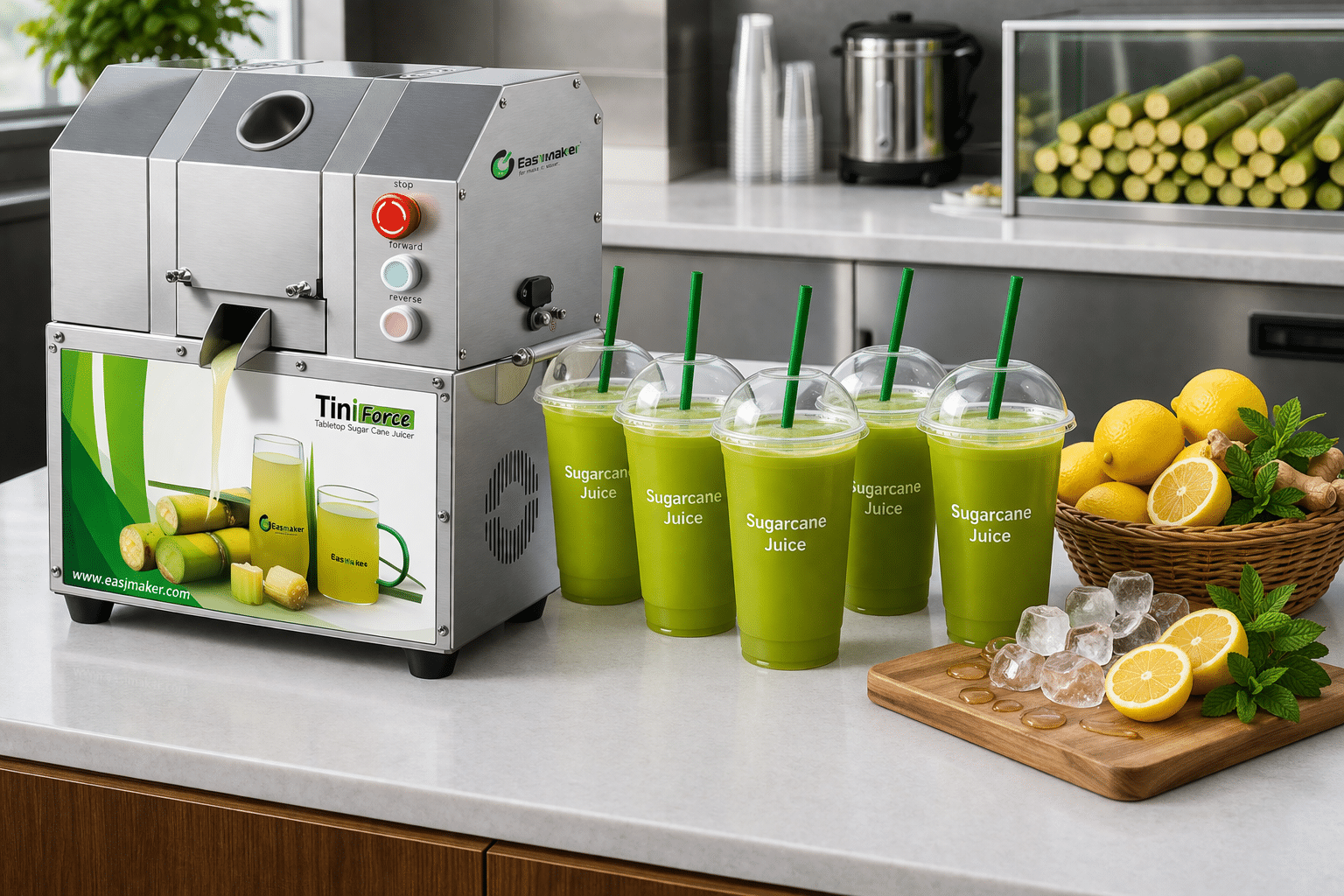
FAQs

What is the profit margin on sugarcane juice?

Gross margins typically range from 70% to 85%, depending on the cost of cane in your region and your pricing strategy. This is generally higher than citrus or vegetable juices due to lower raw material costs.

How do I prevent sugarcane juice from turning black?

Oxidation causes the color change. To prevent this, add a small amount of acidic juice (lemon or kumquat) during extraction, keep the juice chilled immediately, and use high-quality machinery that minimizes heat buildup during crushing.

How much space do I need for a sugarcane juice setup?

A standard retail setup requires minimal space—often just 10-15 square feet for the machine, a prep sink, and a refrigeration unit. This makes it ideal for kiosks or food trucks.

Can I bottle sugarcane juice without preservatives?

Raw sugarcane juice has a shelf life of only a few hours. To bottle it for retail without chemical preservatives, you must use cold-chain logistics and potentially technologies like HPP (High-Pressure Processing) or flash pasteurization.