
University campuses present a unique and highly lucrative environment for food and beverage entrepreneurs. With thousands of students, faculty, and staff moving through concentrated areas daily, high-foot-traffic educational settings are ideal for quick-service beverage concepts. Among the emerging trends, the sugarcane juice business stands out as a high-margin, health-conscious alternative to traditional sugary sodas and artificial energy drinks.
For operators looking to establish a profitable university campus juice kiosk, success hinges on three critical factors: understanding student demographics, optimizing a compact footprint, and deploying the right commercial electric juicer setup to handle peak volume. This guide breaks down the operational requirements, financial models, and equipment specifications needed to launch and scale a campus-based sugarcane juice operation.
Understanding the Student Demographic and Demand
Today’s university students (predominantly Gen Z) are driving a massive shift in the food and beverage industry. They prioritize functional, plant-based, and minimally processed foods. Sugarcane juice—naturally sweet, rich in electrolytes, and completely unrefined—aligns perfectly with these consumer preferences.
- Health and Wellness Focus: Students increasingly view food as fuel. Sugarcane juice offers a natural energy boost without the crash associated with synthetic caffeine or high-fructose corn syrup.
- Speed of Service: Campus life revolves around tight schedules. Students typically have 10 to 15 minutes between classes, meaning transaction times must be under two minutes.
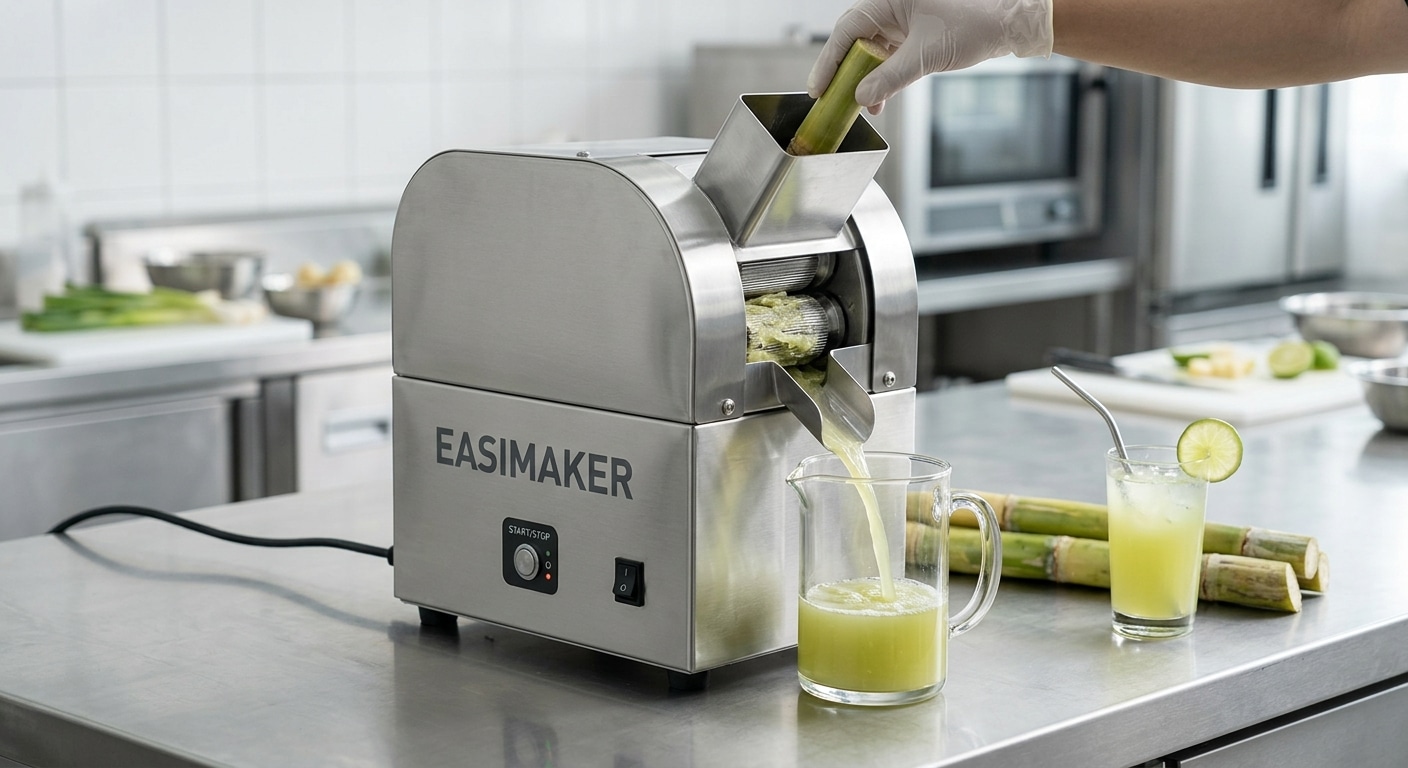
- Visual Appeal: The process of extracting fresh juice on demand provides a transparent, engaging, and highly “shareable” experience that appeals to younger demographics.
Space and Infrastructure Requirements for Campus Kiosks
Real estate on university campuses is at a premium. Student unions, recreation centers, and library cafes require vendors to operate within strict spatial constraints. Fortunately, a sugarcane juice stand can be highly profitable even within a micro-footprint.
Optimal Kiosk Dimensions
A fully functional sugarcane juice kiosk can operate in a space as small as 40 to 60 square feet (roughly 4×10 or 6×10 feet). This compact footprint reduces monthly leasing costs and allows for placement in high-traffic corridors where larger concepts cannot fit.
Essential Utilities
- Power Supply: Commercial electric juicers require stable power. Most compact commercial models operate efficiently on standard 110V or 220V single-phase outlets (depending on your region), drawing between 400W and 750W.
- Water and Drainage: Health codes require handwashing and equipment-washing sinks. If direct plumbing is unavailable, self-contained portable sink systems with fresh and wastewater tanks are often permitted for modular kiosks.
- Storage: Sugarcane stalks require cool, dry storage. Undercounter refrigeration is recommended to store pre-washed, pre-cut stalks, ensuring they remain fresh and hygienic throughout the day.
Selecting the Best Compact Machines for Campus Kiosks
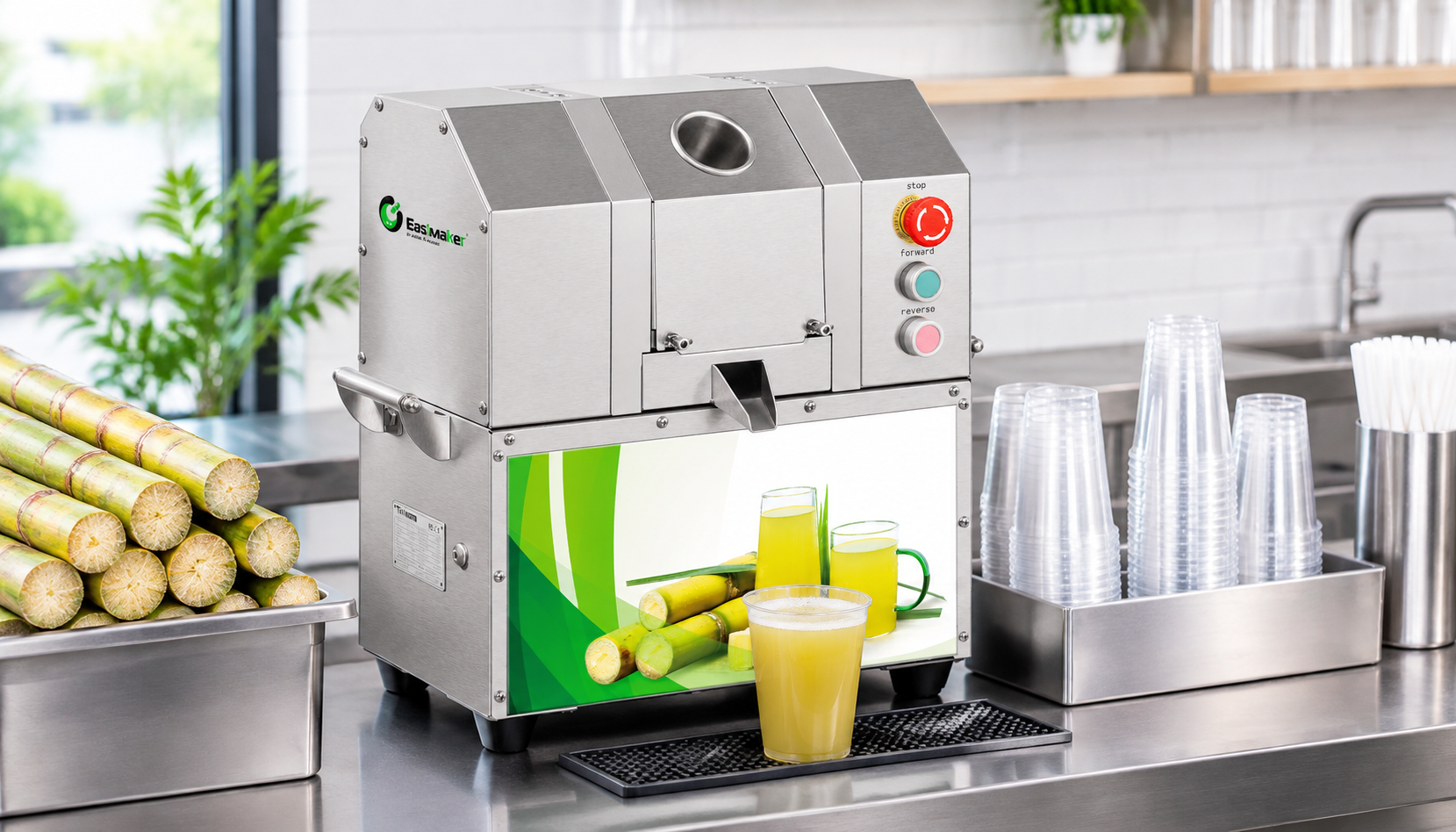
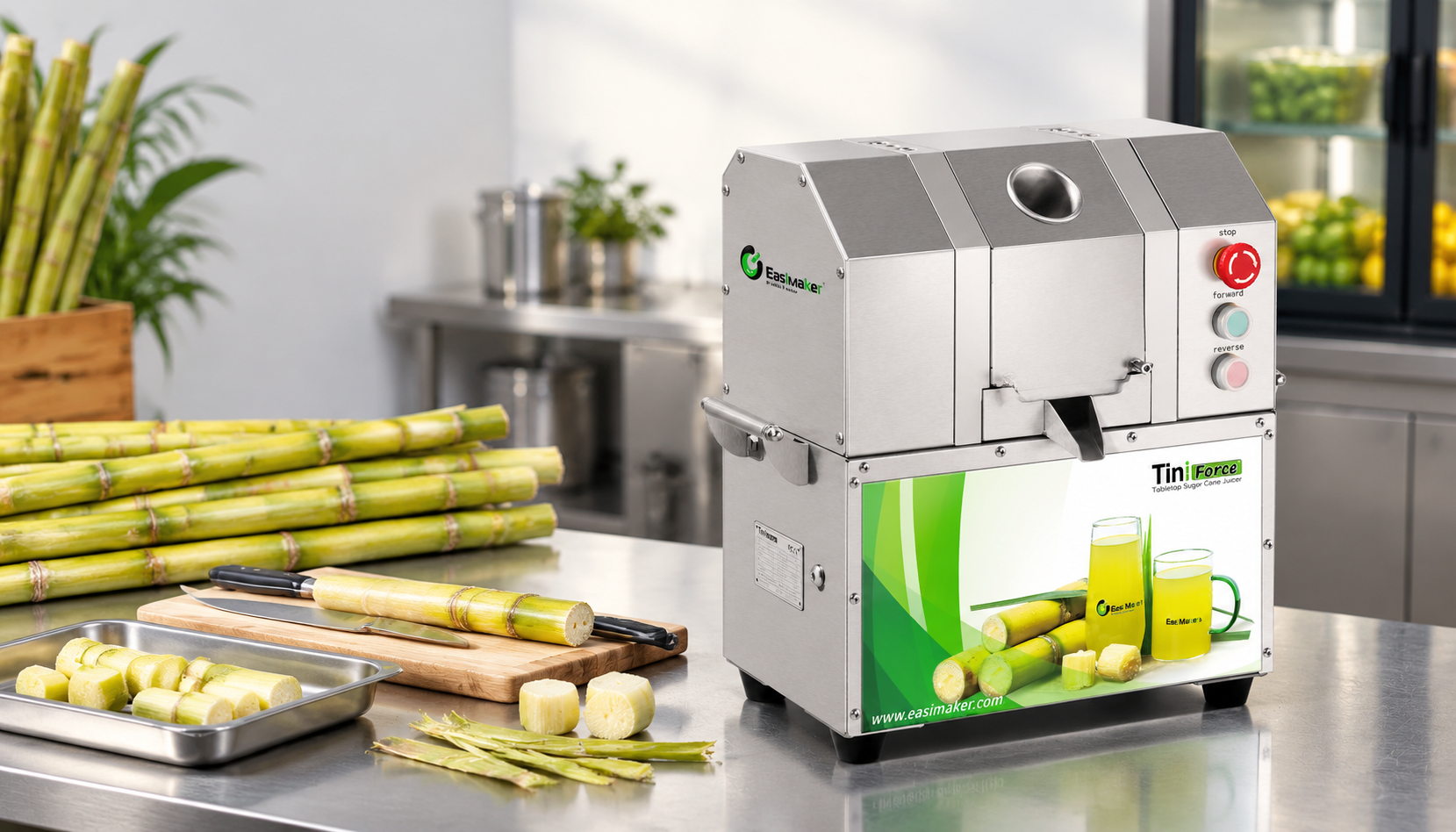
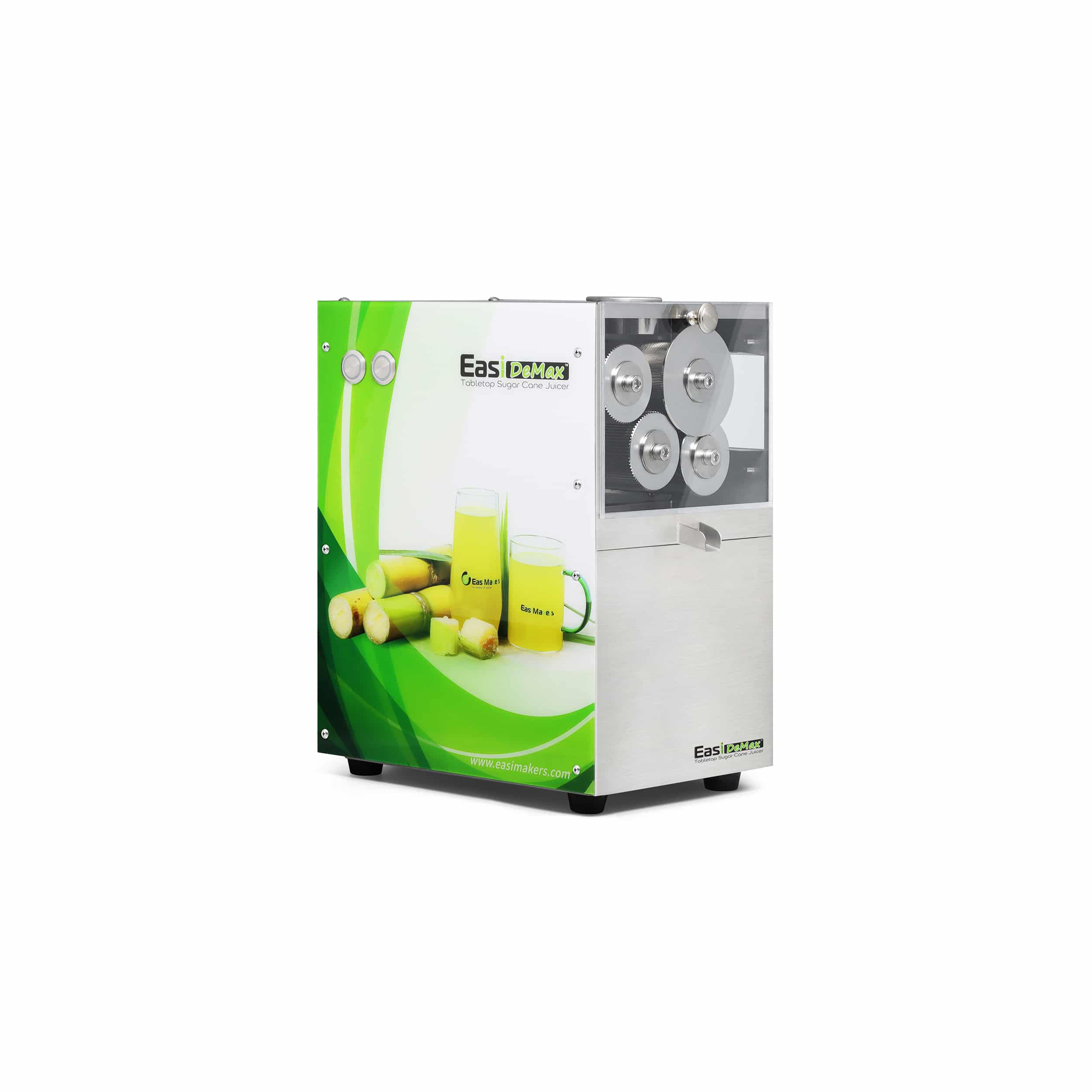
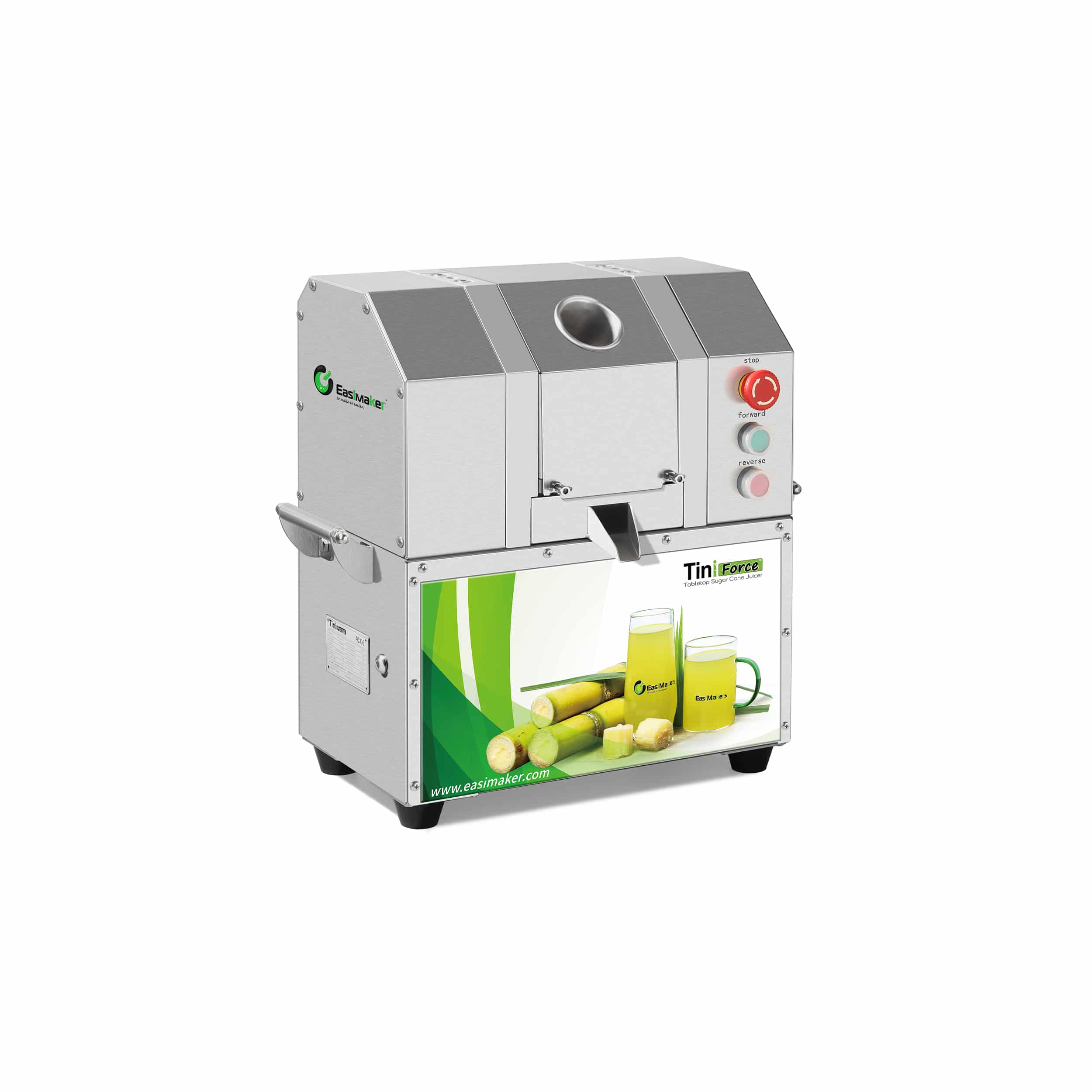
The core of your business is the extraction equipment. In a high-volume campus setting, manual juicers are entirely unfeasible due to slow processing times, inconsistent yields, and the physical strain on operators. A high-quality, fully electric commercial sugarcane juicer is mandatory for profitability and operational efficiency.
When sourcing an electric juicer for a university kiosk, consider the following technical factors:
1. Extraction Yield and Efficiency
Profit margins are directly tied to extraction rates. Advanced electric models feature three to four stainless steel rollers that compress the cane multiple times in a single pass. Look for machines that offer an extraction rate of 70% to 80%. Higher yields mean fewer stalks are required per cup, driving down the cost of goods sold (COGS).
2. Compact Footprint
Counter space is your most valuable asset. The ideal machine should have a vertical or streamlined horizontal design that occupies less than 2 square feet of counter space, leaving ample room for point-of-sale (POS) systems, cup storage, and prep areas.
3. Noise Levels
Because campus kiosks are often located near study areas, libraries, or lecture halls, noise pollution is a critical concern. Standard industrial juicers can exceed 80 decibels. Look for enclosed, gear-driven electric juicers engineered for quiet operation (ideally under 65 decibels) to comply with campus noise regulations.
4. Hygiene and Maintenance
Food safety is paramount. The juicer must feature food-grade 304 stainless steel components. Removable rollers and transparent, easy-to-clean splash guards allow staff to perform rapid sanitization between peak rushes without disassembling the entire machine.
Comparison: Standard Commercial vs. Compact Campus Electric Juicers
| Feature | Standard Industrial Juicer | Compact Campus Electric Juicer |
|---|---|---|
| Footprint | Large (Floor-standing) | Small (Countertop, <2 sq ft) |
| Noise Level | High (>80 dB) | Low (<65 dB) |
| Processing Speed | Very High | High (Optimized for single-serve) |
| Cleaning Time | 30+ minutes | 10-15 minutes (Removable parts) |
| Best For | Wholesale, Factories | University Kiosks, Malls, Cafes |
Financials: Student-Friendly Pricing and Margins
To maximize the profitability of a juice stand, operators must strike a balance between high gross margins and student-friendly pricing. Students are budget-conscious, but they are willing to pay a premium for fresh, made-to-order health beverages compared to bottled alternatives.
Cost of Goods Sold (COGS) Breakdown
Note: The following figures are typical industry ranges and will vary based on local agricultural sourcing and seasonality.
- Raw Material (Sugarcane): Depending on wholesale sourcing, the cane required for a 12 oz serving typically costs between $0.30 and $0.60.
- Packaging: Eco-friendly cups, lids, and paper straws add approximately $0.15 to $0.25 per serving.
- Flavor Add-ins: Adding ginger, lime, or mint (highly recommended for flavor profiles) adds about $0.05 to $0.10 per cup.
Total COGS per 12 oz cup: $0.50 – $0.95
Retail Pricing and ROI
In a university setting, a competitive retail price for a 12 oz fresh-pressed sugarcane juice ranges from $3.50 to $5.00. This yields a gross profit margin of 75% to 85%.
If a kiosk processes just 150 cups a day (easily achievable during class changeovers and lunch hours) at an average price of $4.00, the daily gross revenue is $600. With high margins and low overhead due to the small footprint, the return on investment (ROI) for the kiosk build-out and commercial juicer setup can often be realized within the first academic semester.
Operational Best Practices for Campus Environments
To ensure smooth operations and repeat business, implement the following standard operating procedures (SOPs):
- Pre-Processing: Wash, peel, and cut sugarcane stalks into manageable lengths at a commissary kitchen or before opening hours. This ensures rapid feeding into the electric juicer during peak times.
- Waste Management: Sugarcane bagasse (the fibrous byproduct) accumulates quickly. Ensure you have high-capacity, heavy-duty waste bins. Consider partnering with the university’s agriculture or sustainability departments to compost the bagasse, which strongly appeals to eco-conscious students.
- Menu Simplicity: Keep the menu streamlined. Offer a standard sugarcane juice, alongside 2-3 variations (e.g., Sugarcane-Lime, Sugarcane-Ginger). Complex menus slow down the queue.
Frequently Asked Questions (FAQs)
1. Do I need a special permit to sell sugarcane juice on campus?
Yes, you will need standard local health department permits for food service, as well as an operating agreement or vendor license from the university’s auxiliary services or student union board.
2. Why are manual juicers not recommended for campus kiosks?
Manual juicers are too slow for the high-volume bursts typical of campus environments. They also pose hygiene challenges and require significant physical exertion, leading to inconsistent yields and employee fatigue. Electric models are essential for commercial viability.
3. How long does fresh sugarcane juice last?
Sugarcane juice is highly prone to oxidation and fermentation. It should be pressed to order and consumed immediately. If refrigerated, it must be consumed within a few hours to maintain its flavor and nutritional profile.
4. How do I handle equipment maintenance during the semester?
Choose a commercial electric juicer with easily accessible, modular parts. Daily maintenance involves flushing the rollers and wiping down the exterior. Schedule deep cleaning and lubrication of gears during weekends or campus holidays.
5. What is the typical lead time for ordering commercial electric juicers?
For standard compact commercial models, lead times can range from 2 to 6 weeks depending on the manufacturer’s stock and shipping logistics. Always factor this into your kiosk launch timeline.
Conclusion
Launching a sugarcane juice kiosk on a university campus is a highly profitable venture when executed with the right strategy. By catering to student demands for healthy, fast beverages, minimizing your footprint, and investing in a high-yield, compact electric juicer, you can establish a high-margin business with excellent growth potential.
Ready to equip your campus kiosk with the most efficient commercial juicing technology on the market?
Request a quote / Get a sample today to find the perfect electric juicer for your operational needs.