What to Ask a Sugarcane Juicer Manufacturer Before Buying

Table of Contents

Before buying a commercial sugarcane juicer, ask the manufacturer clear questions about your cane, expected workflow, machine construction, electrical compatibility, cleaning access, spare parts, warranty, and technical support. Written answers help you compare suppliers on operational fit rather than headline claims alone.

The Questions That Matter Before You Buy

The best sugarcane juicer manufacturer questions focus on whether the machine fits your real operating conditions: cane diameter and condition, sales volume, available counter space, local power supply, cleaning routine, and access to support after delivery.

Do not choose only by appearance, a quoted output figure, or the lowest purchase price. Ask the manufacturer to explain the intended application, provide the relevant technical documentation, identify wear parts, and state what support is available in your market. A reliable supplier should answer clearly, identify any assumptions behind its recommendation, and avoid promising results that depend on your operator, cane supply, or site conditions.

For commercial buyers, the central question is simple: can this machine be operated, cleaned, maintained, and supported consistently within our daily workflow? The sections below provide a practical question list for evaluating that answer.

Start With Your Operating Requirements

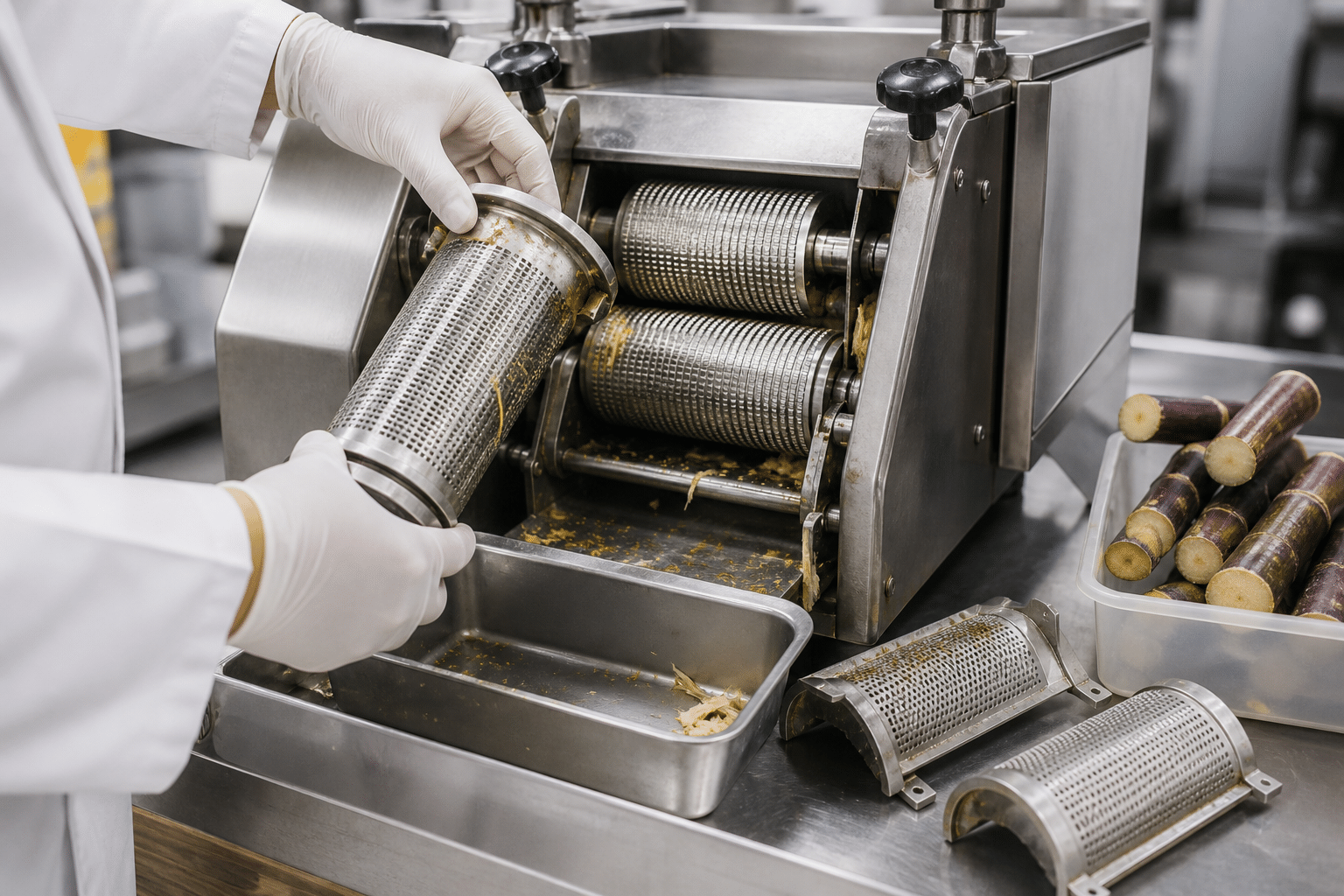
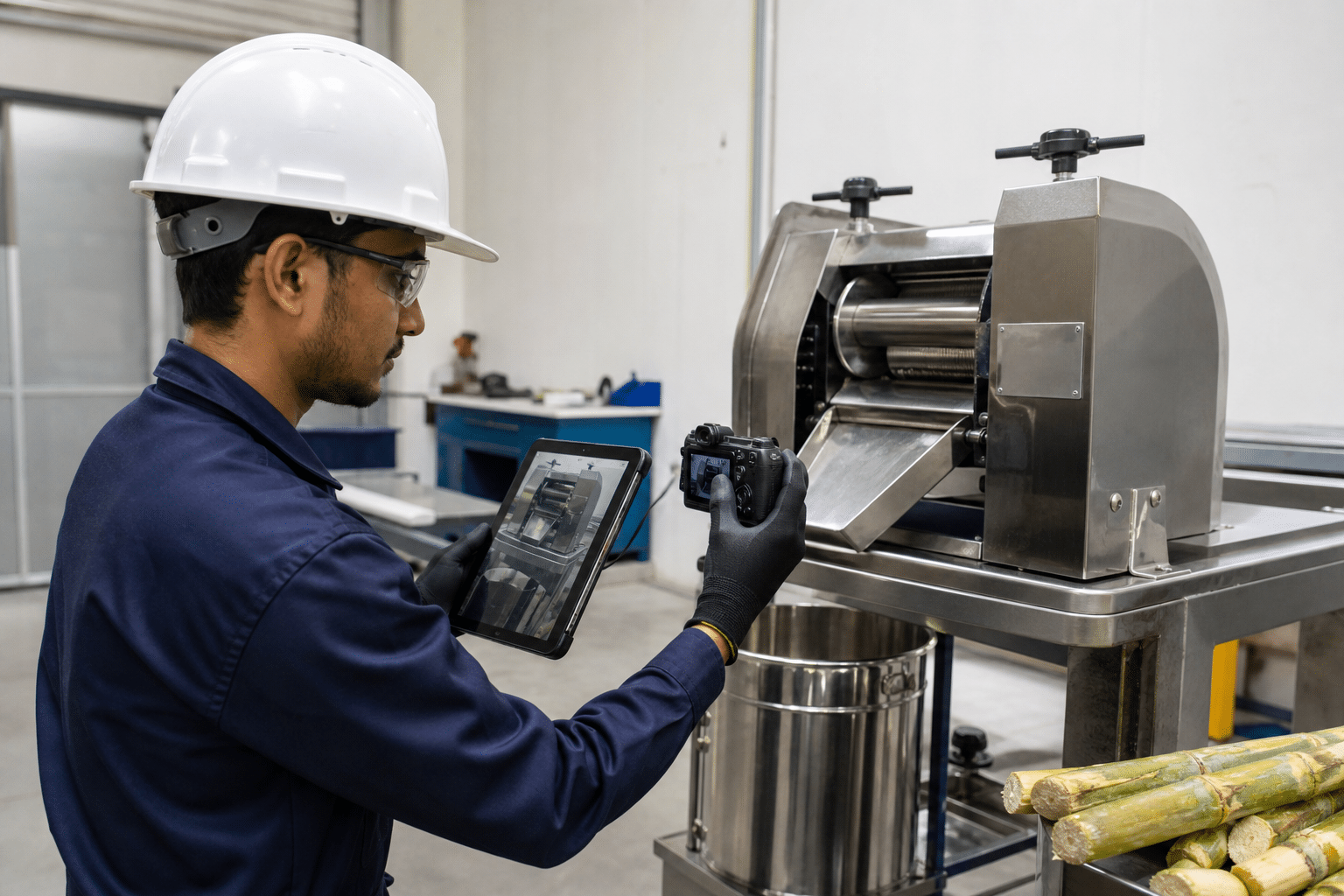
Operator reviewing sugarcane stalk condition and juice bar workflow before equipment selection

Before asking a manufacturer to recommend a model, give them a concise description of your operation. A useful supplier recommendation depends on the details you provide.

Questions to ask the manufacturer

  • What type of business is this machine intended for: kiosk, juice bar, restaurant, hotel, cafeteria, mobile unit, or central preparation area?
  • What volume do you expect during normal trading and during peak periods?
  • What sugarcane stalk sizes and varieties will we process?
  • Will the cane be freshly delivered, chilled, washed on site, or stored before juicing?
  • Will one operator run the machine continuously, or will several employees use it across shifts?
  • What preparation steps are required before cane enters the feed area?

These questions prevent a common purchasing error: selecting a machine based on an ideal test condition rather than the cane and workflow found at the point of sale. Cane that is unusually thick, dry, fibrous, curved, or inconsistently trimmed may require different preparation and operating practices. Review practical guidance for processing thick sugarcane stalks without unnecessary motor strain when this is relevant to your supply.

Ask the manufacturer what operating assumptions were used for its recommendation. A useful written reply should distinguish between typical operating conditions and conditions that may require slower feeding, additional cane preparation, or a different equipment configuration.

Ask How the Machine Is Built for Daily Use

Technician inspecting accessible components of a commercial sugarcane juicer

A commercial sugarcane juicer is more than a set of crushing rollers. Its useful design depends on the interaction of the feeding path, roller assembly, drive system, guards, juice collection area, residue discharge, and parts that staff must clean or inspect.

Questions about construction and usability

  • Which areas contact cane or juice, and what materials are used in those areas?
  • Which components are designed to be removed or accessed for cleaning?
  • How are guards fitted, and what safety procedures should operators follow during use and cleaning?
  • How is cane residue discharged and contained?
  • Which parts are expected to wear during normal use?
  • What routine inspection points should the operator check before starting a shift?
  • Does the manufacturer provide cleaning instructions specific to the model?

Ask for current product photos, an operator manual, and a parts diagram rather than relying solely on generic catalogue images. These materials help your team assess whether the feed opening, cleaning access, drip area, and residue handling suit the staff workflow.

It is also reasonable to ask how crushing speed is selected for the model and how operating practice can affect the result. Speed is only one part of machine performance; cane condition, roller condition, feed consistency, and cleaning all matter. This overview of sugarcane machine RPM and crushing speed considerations can help buyers discuss the subject more precisely with a supplier.

Confirm Site, Power, and Cleaning Compatibility

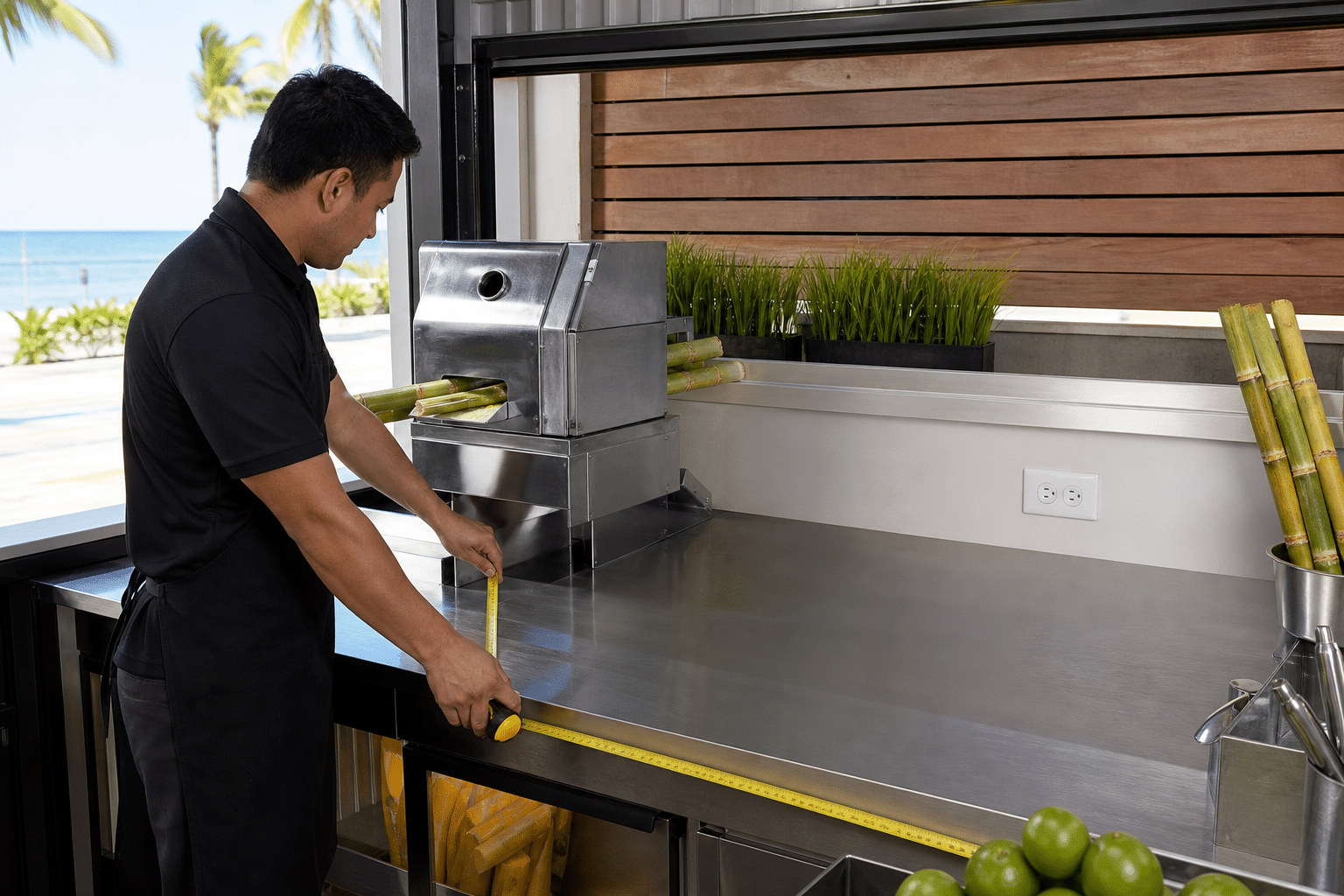
Measuring counter space and clearance for commercial sugarcane juicer installation

A machine that is technically suitable can still be a poor purchase if it does not fit the installation site. Confirm the practical site requirements before issuing a purchase order.

Questions about installation

  • What are the machine dimensions, weight, and recommended working clearance?
  • What electrical supply, plug type, frequency, and power arrangement does the quoted version require?
  • Is the machine intended for countertop use, and what type of supporting surface is appropriate?
  • What clearance is needed for feeding cane, collecting juice, removing residue, and cleaning?
  • What cleaning method does the manufacturer recommend?
  • Can water be used around the machine, and what precautions are required for electrical safety?
  • Does the machine need a dedicated circuit or any specific installation checks by a qualified local professional?

Measure the complete work zone, not just the equipment footprint. Operators need room to bring in cane, position containers, dispose of residue, and access removable parts. Use this guide to measure a countertop for a commercial sugarcane juicer as a planning reference.

Water exposure is another point that requires precise language. “Easy to clean” does not automatically mean that every part can be sprayed or washed down. Ask for the model-specific cleaning procedure and any enclosure or ingress-protection information available for the exact configuration you are considering. For context, read about IP ratings and washdown safety for commercial sugarcane juicers.

Request Evidence for Performance Claims

Manufacturers may describe throughput, extraction, or operating speed differently. Instead of comparing isolated numbers, ask what was tested, how it was tested, and what conditions may change the result.

Questions to make claims comparable

  • What cane type, stalk condition, and preparation method were used for any stated performance figure?
  • Was the machine run continuously or intermittently during the test?
  • What operator actions are required between stalks?
  • How are juice residue, foam, and filtration handled in the demonstrated setup?
  • Can you provide an unedited operating video of the quoted machine version?
  • Can we review a live remote demonstration or arrange an inspection where practical?

Ask the supplier to explain the workflow around the machine, not only the crushing step. Real counter service may include washing, trimming, feeding, collecting juice, filtering, serving, wiping surfaces, and clearing residue. The slowest step in that chain can determine practical service speed.

For buyers planning a branded menu or repeatable multi-site operation, request standard operating instructions for cane preparation, sanitation, and daily checks. This makes it easier to train teams and compare supplier support on a like-for-like basis.

Check Service, Spare Parts, and Documentation

After-sales capability is a purchasing criterion, not an afterthought. Commercial equipment needs a clear path for routine maintenance, diagnosis, and replacement parts.

Questions about ownership support

  • What warranty terms apply to the machine, and what exclusions apply?
  • Which consumable and wear parts should we keep in stock?
  • Can you provide a spare-parts list with part numbers and current availability guidance?
  • What documents are included: operating manual, cleaning instructions, electrical information, exploded view, and troubleshooting guide?
  • How are technical questions handled after delivery?
  • What information should our team provide when reporting a fault?
  • Are remote troubleshooting, video guidance, or local service partners available for our market?

Request the recommended maintenance schedule before purchase. It should explain routine cleaning, inspection intervals, adjustment checks where applicable, and signs that a component may need attention. A planned approach can reduce avoidable interruptions and makes responsibilities clearer for shift supervisors. See this practical resource on developing a preventative maintenance schedule for a commercial sugarcane juicer.

Also ask whether the supplier can identify the machine by serial number and provide version-specific support. This is particularly important if your business expects to add units over time or operate equipment in more than one location.

Clarify Commercial Terms Before Placing an Order

Once you have identified a technically suitable machine, confirm the commercial scope in writing. A complete quotation should make it clear what is included and what remains the buyer’s responsibility.

Questions for the quotation and order

  • What exact model, electrical version, accessories, and optional items are included?
  • What is the unit price, quotation validity period, payment structure, and applicable trade term?
  • What packaging is used, and how are shipping arrangements defined?
  • What is the estimated production and dispatch timing after order confirmation?
  • What pre-shipment inspection or acceptance process is available?
  • What support materials will be supplied with the shipment?
  • For import purchases, which documents can the supplier provide and which local approvals remain the buyer’s responsibility?

Do not assume that a machine configured for one market will automatically be appropriate for another. Electrical supply, plug format, language requirements, food-service rules, import procedures, and local installation practices may differ. Discuss these items early, particularly for distributor, private-label, or multi-unit projects.

If you require branding, packaging changes, a special configuration, or ongoing supply for a network, ask the manufacturer to define feasibility, minimum order requirements, lead time, documentation, and change-control process before committing.

Use a Written Purchase Checklist

Before making a final decision, compare each supplier’s answers in one document. This helps your purchasing, operations, and finance teams identify differences that may not be visible in a short product specification.

Final buyer checklist

  • The manufacturer has received an accurate description of our cane and daily workflow.
  • The selected machine fits our available space, power supply, and cleaning arrangement.
  • We have reviewed model-specific operating and cleaning documentation.
  • Performance discussions are linked to stated test conditions rather than unsupported assumptions.
  • Warranty, wear parts, maintenance responsibilities, and technical support are documented.
  • The quotation identifies the exact configuration, included items, commercial terms, and delivery scope.
  • Our team understands what training, site preparation, and local checks are needed before installation.

A strong manufacturer relationship begins with clear questions and documented answers. This approach gives you a more reliable basis for choosing a commercial sugarcane juicer that supports your operating plan rather than creating avoidable uncertainty after delivery.

Discuss Your Commercial Sugarcane Juicer Requirements

If you are comparing suppliers or preparing a purchase specification, contact Easimaker with your expected workflow, cane condition, site power, and market requirements. Our team can help you clarify the questions needed for a practical equipment discussion.

Contact Easimaker

How to Clean and Sanitize a Commercial Bowl Cutter

Table of Contents

To clean a commercial bowl cutter, first stop and isolate the machine, remove product residue with suitable tools, wash removable food-contact parts with detergent, rinse, sanitize at the correct concentration and contact time, air-dry, then inspect and reassemble. Never clean around bowl-cutter knives while the machine can be energised.

The correct cleaning sequence

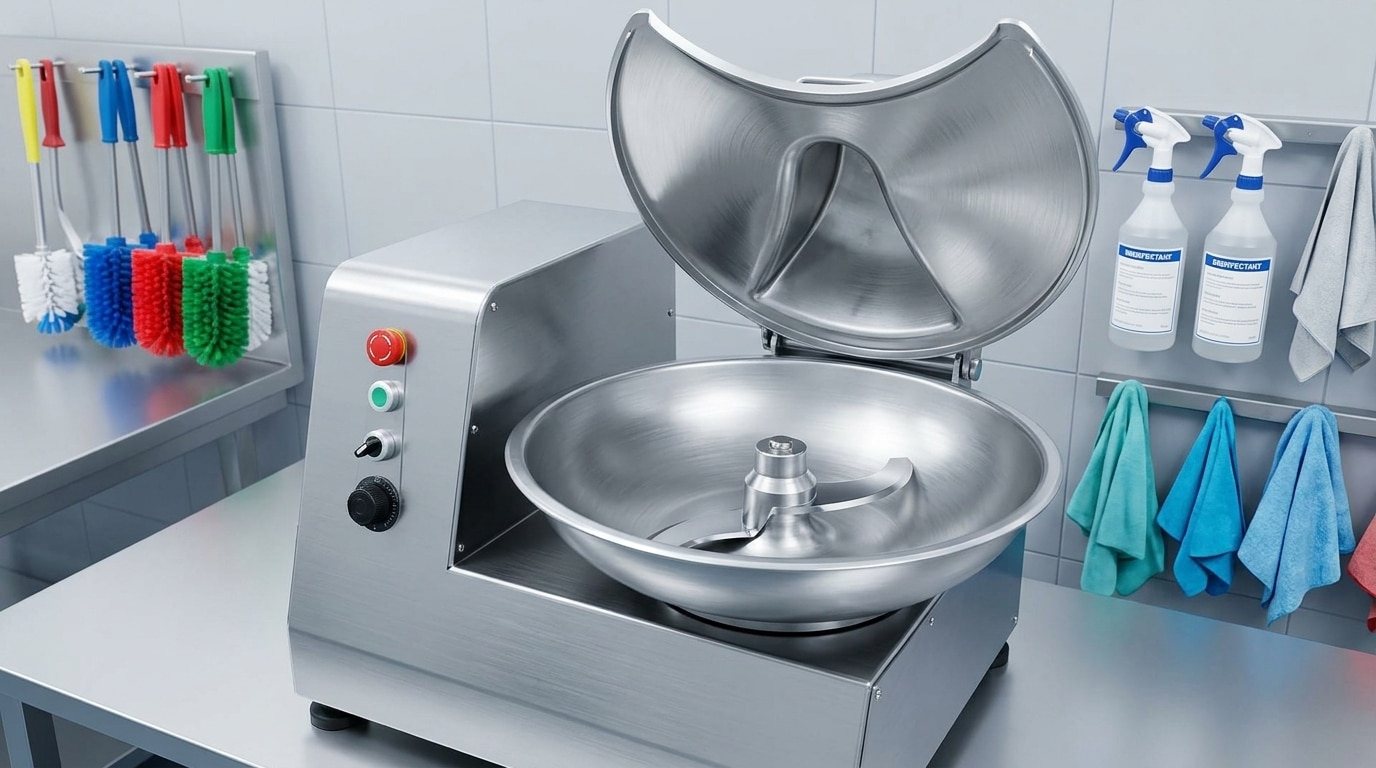
Commercial bowl cutter prepared for a safe cleaning procedure

To clean a commercial bowl cutter safely, stop the machine, disconnect and secure its power supply, remove product residue, wash accessible food-contact components with an approved detergent, rinse, sanitize, air-dry, inspect, and reassemble. The exact removable parts, chemical compatibility, and disassembly method depend on the machine model. Always follow the equipment manual and your local food-hygiene requirements where they set a stricter procedure.

A bowl cutter combines a rotating bowl, sharp knife assembly, covers, seals, and drive components. This makes cleaning more than a quick wipe-down. Product residue can remain beneath the lid, around the bowl rim, at knife hubs, and inside small crevices. At the same time, the knife area presents a serious cut hazard. A reliable procedure protects both food safety and the people cleaning the machine.

For operations evaluating how this equipment fits into a production line, see how commercial bowl cutters support high-volume food preparation. Cleaning time, safe access, and staff training should be considered alongside processing requirements when planning the workflow.

Cleaning and sanitizing are different steps

Cleaning removes visible food soil, fat, protein deposits, and other residue. Sanitizing is a separate step intended to reduce microorganisms on a surface that has already been properly cleaned. Sanitizer does not work reliably through grease, dried product, or detergent residue.

The correct order is therefore:

  1. Remove loose product and gross soil.
  2. Wash with water and a food-equipment detergent suitable for the material.
  3. Rinse away detergent and loosened soil.
  4. Apply a food-contact sanitizer at the manufacturer-specified dilution and contact time.
  5. Allow surfaces to drain and air-dry unless the sanitizer label specifically instructs otherwise.

Do not assume that a stronger chemical mix is better. Excess concentration can leave residues, damage surfaces or seals, and create an avoidable handling risk. Use the sanitizer supplier’s instructions, verify concentration with the appropriate test method when required by your hygiene programme, and never mix chemicals unless the chemical manufacturer explicitly permits it.

Prepare the bowl cutter safely before cleaning

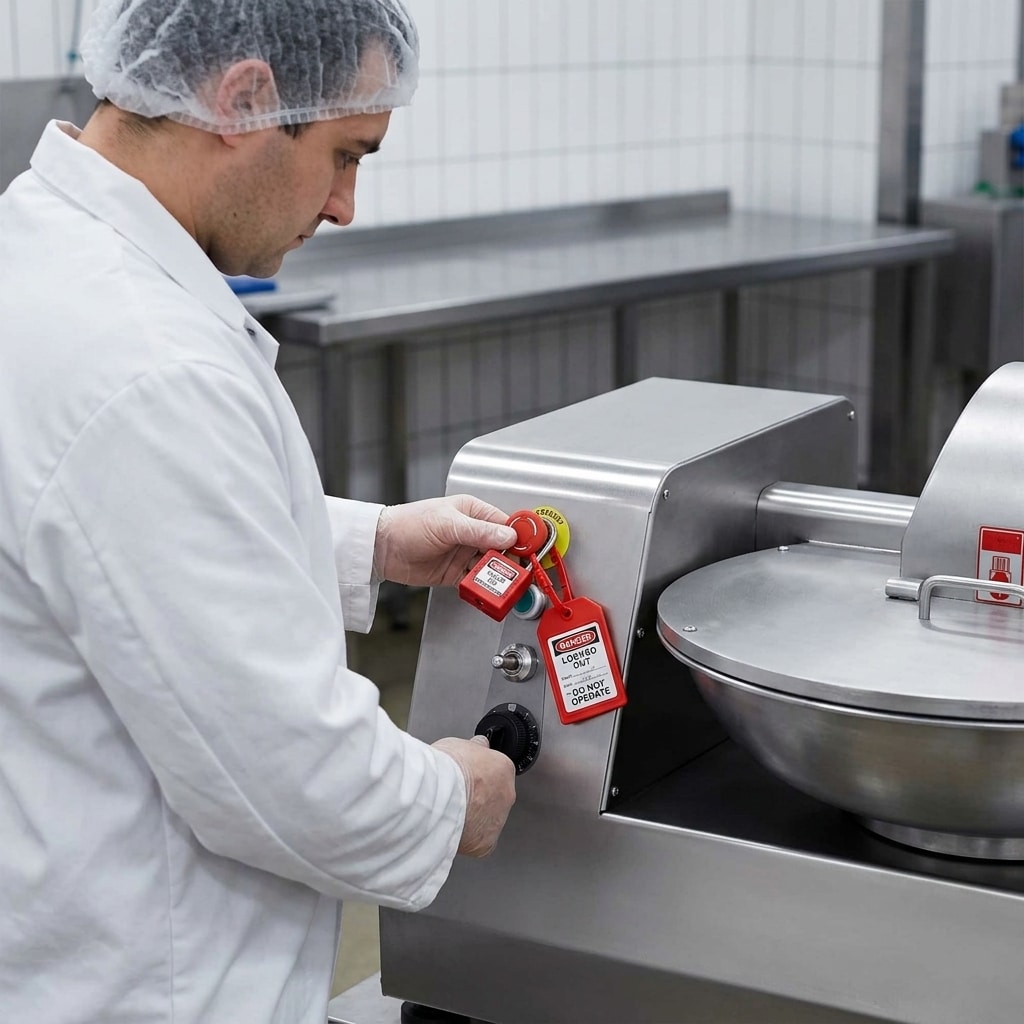
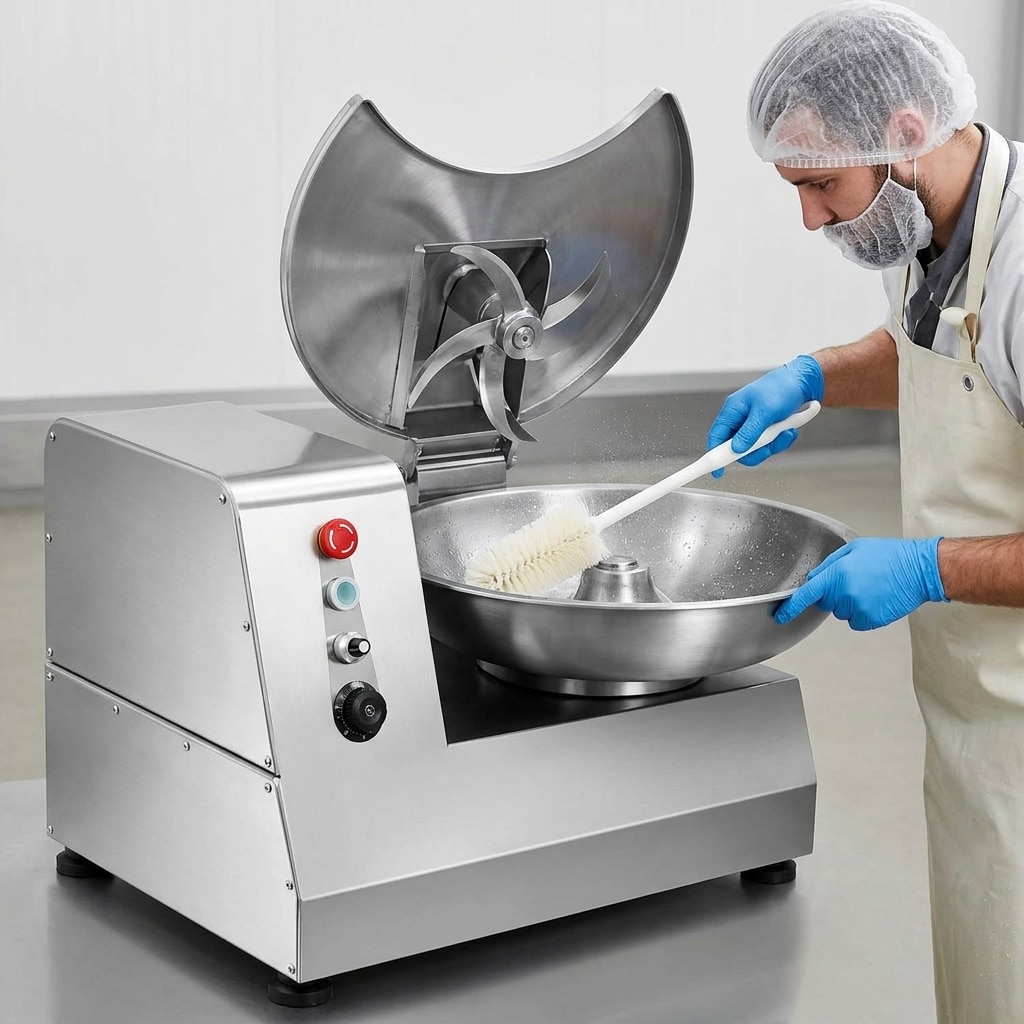
Commercial bowl cutter isolated before cleaning

Do not start cleaning immediately after processing. First make the machine safe. A bowl cutter must not be capable of starting while hands, brushes, or cloths are near the knives or bowl.

  • Finish the current batch and switch the machine off using its normal stop control.
  • Isolate the electrical supply according to your site’s lockout or isolation procedure. Where applicable, use a lock and warning tag.
  • Wait until the bowl and knife assembly have come to a complete stop.
  • Confirm that guards and covers are stable before opening them.
  • Wear suitable personal protective equipment for the task, such as cut-resistant gloves where safe work procedures require them, eye protection, and chemical-resistant gloves when handling detergents or sanitizer.
  • Prepare clearly labelled wash, rinse, and sanitizer tools. Use clean, food-safe brushes and cloths reserved for this equipment or area.

Never reach toward the knife assembly to remove material while the machine is plugged in, isolated only by a control switch, or coasting to a stop. Do not bypass guards or safety interlocks to make cleaning faster. If access is restricted or a component cannot be safely removed, consult the machine manual or an authorised service provider rather than forcing the part.

Step-by-step: how to clean a commercial bowl cutter

Washing the bowl interior of an isolated commercial bowl cutter with a food-safe brush

1. Remove product residue

Use a non-damaging scraper, brush, or other tool approved for the machine to remove remaining product from the bowl, lid, discharge or transfer areas, and accessible surfaces. Work away from knife edges. Do not use hands to clear compacted material around the knives. Place waste in the correct container promptly so it cannot contaminate the clean-down area.

2. Disassemble only the parts intended for routine removal

Refer to the manufacturer’s instructions for removable covers, scraper assemblies, bowl accessories, knife covers, or other food-contact components. Keep fasteners and small components in a clean, designated tray. Do not dismantle sealed bearings, electrical housings, knife hubs, or drive assemblies unless the manual identifies this as an operator task.

3. Pre-rinse carefully

Use water at a temperature appropriate for the detergent and soil being removed. Avoid high-pressure spray near bearings, electrical controls, vents, safety switches, and seals. High-pressure water can drive soil and moisture into areas that are difficult to dry and may affect electrical or mechanical components.

4. Wash with detergent

Apply a food-equipment detergent at the supplier’s specified dilution. Brush the bowl interior and exterior, underside of the cover, splash zones, scraper surfaces, handle areas, and accessible knife-related components using tools that can reach seams without damaging surfaces. Change brushes or wash solution if they become heavily soiled. Give particular attention to fat or protein deposits, which can form a film that looks clean but is not fully removed.

5. Rinse and inspect before sanitizing

Rinse all washed areas with clean water to remove detergent and dislodged residue. Then inspect under good lighting. Surfaces should be visibly free of food particles, greasy film, and chemical foam. Repeat washing where necessary. Sanitizing a surface that is still dirty is not an acceptable substitute for re-cleaning it.

How to sanitize food-contact surfaces

After washing and rinsing, apply a sanitizer that is approved and suitable for food-contact surfaces in your location. Follow the sanitizer label for dilution, water conditions, application method, required contact time, and whether a final potable-water rinse is required. These instructions vary by chemistry and local rules, so they should not be replaced with a generic time or concentration.

Apply sanitizer to all cleaned food-contact surfaces, including the bowl, lid underside, removable scraper parts, accessible knife-adjacent surfaces, and any product transfer components. Use the method approved in your sanitation programme, such as a clean low-pressure spray bottle, a dedicated cloth, immersion for suitable removable parts, or another controlled method. Avoid creating aerosol or overspray around electrical equipment.

Keep the surface wet for the stated contact time. If it dries too early, reapply sanitizer as necessary. After the required contact time, allow components to drain and air-dry on a clean rack or clean surface. Do not dry food-contact parts with a reused towel, as it may reintroduce contamination. Reassemble only when parts are dry enough to avoid trapping moisture in enclosed areas.

The same clean-rinse-sanitize-air-dry principle applies across many food machines. For a related example of organising an end-of-service hygiene routine, read this guide to cleaning a commercial sugarcane juicer.

Areas that need extra attention

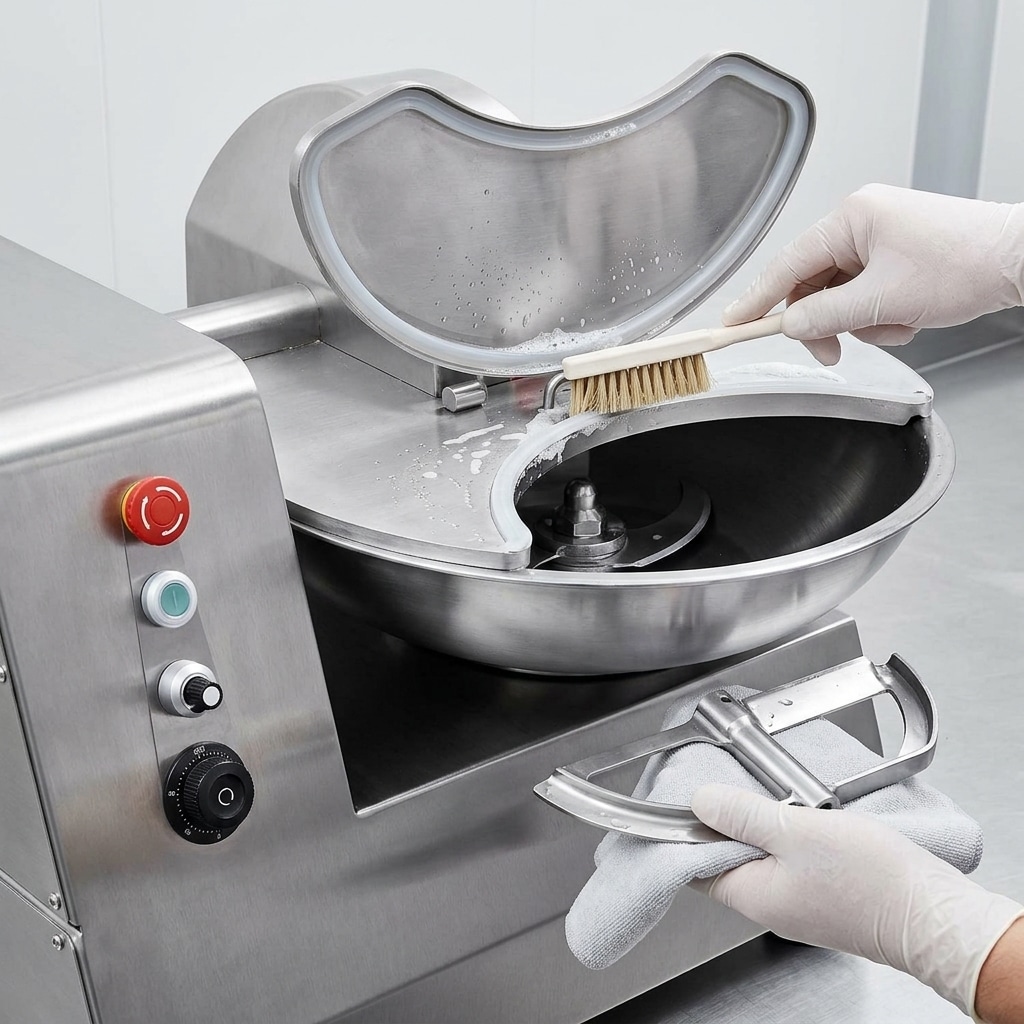
Cleaning the bowl rim, lid seal, and scraper of a commercial bowl cutter

Most cleaning failures occur in small, shaded, or awkward-to-reach areas rather than on the open bowl surface. Build these points into the cleaning checklist:

  • Bowl rim and cover seal area: Product can collect where the cover closes against the bowl. Clean both mating surfaces and inspect seals for splits, compression damage, or embedded residue.
  • Knife hub and mounting zone: Clean only as far as the operator-safe design and manual permit. Use a suitable brush rather than fingers or a loose cloth that could catch on an edge.
  • Underside of the lid and splash guard: These surfaces may receive fine particles during cutting and mixing.
  • Scraper and scraper contact edge: Remove and wash the scraper if the design allows. Check for worn, cracked, or hardened material that may prevent effective cleaning.
  • Controls, handles, and exterior touch points: These are not always food-contact surfaces, but they need routine cleaning and disinfection under the site’s environmental hygiene procedure.
  • Drainage and surrounding bench or floor: Clean the area around the machine after equipment cleaning so splash, waste, and standing water do not undermine the result.

If seals, plastic components, brushes, or knife guards show damage, replace them with compatible parts before the next production run. Damaged surfaces are harder to clean effectively and may affect safe operation.

Reassembly, inspection, and records

Once the cleaned parts have air-dried, reassemble the bowl cutter in the sequence specified by the manufacturer. Check that covers, scrapers, knife guards, fasteners, and safety devices are seated correctly. Do not restart the machine with removed components, loose fasteners, or an improperly fitted guard.

Before returning the unit to production, complete a simple pre-use check:

  • All food-contact surfaces are visually clean and dry.
  • The bowl, cover, knives, and attachments are correctly positioned.
  • Guards and interlocks have not been altered or bypassed.
  • There is no water pooled near electrical controls, cable entries, or the base of the machine.
  • There are no unusual signs of wear, corrosion, cracks, or loose parts.

A documented sanitation log helps supervisors confirm that the procedure was completed and identify recurring issues. Record the date, time, equipment identification, cleaner’s initials, chemicals used if your programme requires it, and any corrective action. A recurring residue problem may indicate that the cleaning tools, chemical selection, disassembly method, or production schedule needs review.

Safe cleaning should sit within the wider preventive-maintenance plan. The operational discipline described in commercial food machine safety and maintenance protocols is also useful when building staff checks, cleaning records, and escalation procedures for cutting equipment.

Common cleaning mistakes to avoid

  • Sanitizing before washing: This leaves soil in place and reduces sanitizer effectiveness.
  • Cleaning while the machine is still energised: The normal stop button alone is not an adequate safeguard for knife-area cleaning.
  • Using a pressure washer indiscriminately: Water can be forced into bearings, electrical components, seals, and inaccessible spaces.
  • Using abrasive pads or unapproved chemicals: These can scratch stainless steel, cloud plastics, attack seals, or shorten component life.
  • Using one cloth for dirty and clean stages: This can spread soil back onto already cleaned surfaces.
  • Skipping inspection: A quick visual check is necessary to identify remaining film, trapped food, damaged seals, and loose parts.
  • Reassembling wet parts too soon: Trapped moisture can create an avoidable hygiene issue in enclosed joints or under covers.

Train new operators on the machine-specific procedure before assigning cleaning duties. A printed checklist positioned near the wash area can reduce missed steps, particularly during busy shifts or handovers.

How often to clean a commercial bowl cutter

At a minimum, carry out a full clean and sanitation after the production period or at the end of each day of use. Additional cleaning is normally needed between product types, after allergen changeovers, after extended pauses, and whenever residue builds up. Your required frequency may be higher depending on the ingredients, product temperature, local regulations, customer standards, and documented food-safety plan.

Use three practical levels of care:

  • During production: Keep external touch points and the surrounding area orderly; remove spills safely; do not attempt to clear knives or internal areas while the machine is live.
  • Between batches or changeovers: Perform the cleaning and sanitation level required by the product and allergen-control plan.
  • End of shift: Complete the full isolate, disassemble as permitted, wash, rinse, sanitize, air-dry, inspect, and reassemble process.

A well-planned cleaning routine supports reliable daily operation because it makes residue, component wear, and seal damage easier to spot before they become a larger service issue.

Sugarcane Juicer Spare Parts and Support Checklist

Table of Contents

A commercial sugarcane juicer needs more than routine cleaning to stay ready for service. This checklist helps operators identify critical spare parts, record the right machine information, plan support requests, and reduce avoidable downtime.

Quick Answer: What Spare Parts Should You Plan For?

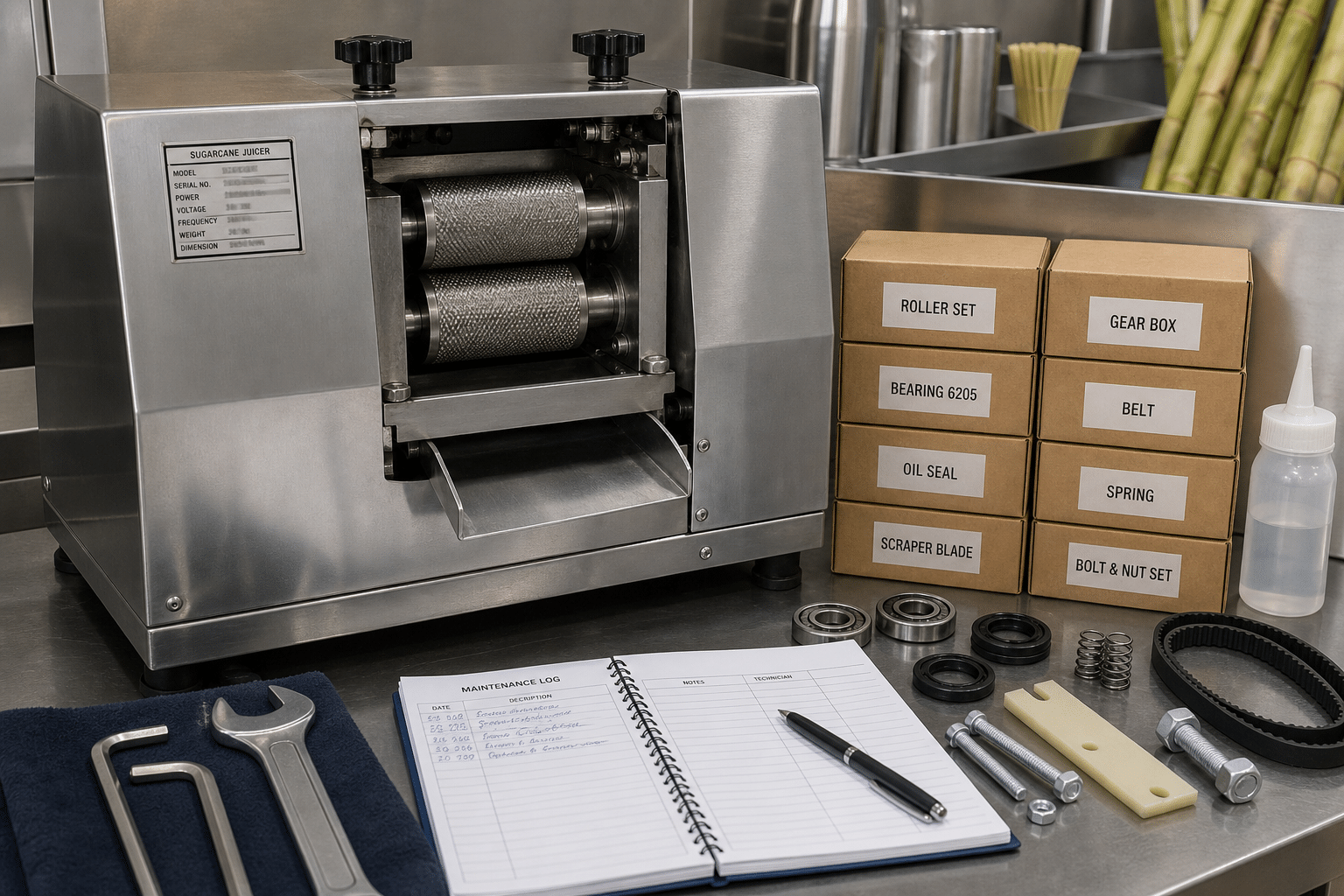
Organised spare-parts inventory for a commercial sugarcane juicer

For a commercial operation, the most useful sugarcane juicer spare parts are the parts that wear through normal use, can delay service when unavailable, or are needed to restore safe operation after a fault. A practical spares plan normally covers food-contact wear components, seals and scrapers where applicable, drive-system components, electrical protection items, and the correct fasteners or tools for approved servicing.

Do not order parts by appearance alone. Confirm the machine model, serial number, electrical specification, part description or reference, and clear photographs before placing an order. Keep a simple maintenance record and inspect the machine at defined intervals. This approach helps an operator spot wear early, request the right replacement part, and avoid keeping unsuitable inventory.

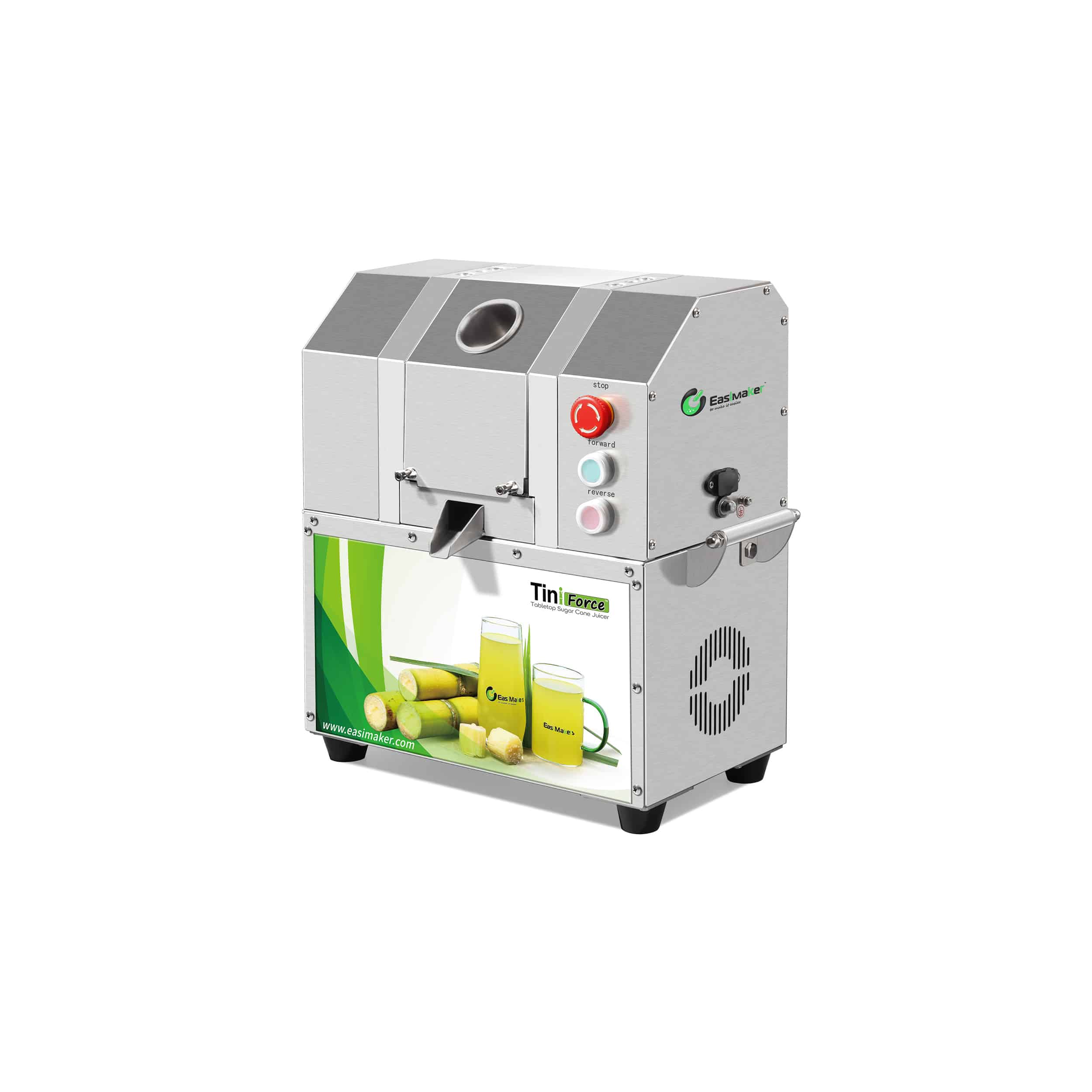
The exact parts list differs by machine design and local electrical configuration. Use the machine manual and the supplier’s technical guidance as the controlling reference. If you are comparing machine formats or planning spares for a new site, review the operational differences in this TiniForce S3 and EasiDeMax S4 comparison before standardising your purchasing list.

What Counts as a Sugarcane Juicer Spare Part?

A spare part is a replaceable component used to repair, maintain, or return a machine to its intended operating condition. For a sugarcane juicer, it is helpful to separate parts into four groups rather than treating all items as the same type of stock.

  • Routine wear parts: components subject to friction, repeated cleaning, pressure, or normal contact during processing. Their condition should be checked regularly.
  • Food-contact components: removable items, guards, collection components, seals, or other parts that come into contact with cane or juice, depending on the machine design. These require careful hygiene handling and model-specific identification.
  • Drive and mechanical components: items related to the transmission of power, alignment, movement, or crushing assembly. Replacement should follow the supplier’s service instructions.
  • Electrical and control components: switches, protection devices, wiring-related parts, and control components. These must match the machine’s electrical configuration and should be handled by a qualified technician where required.

Consumables such as approved cleaning materials may support daily operation, but they are not automatically spare parts. Keep them in a separate hygiene stock list. Likewise, do not substitute generic parts simply because they seem to fit. Material compatibility, dimensions, load, sealing performance, and electrical ratings can all matter.

Critical Spare Parts Checklist

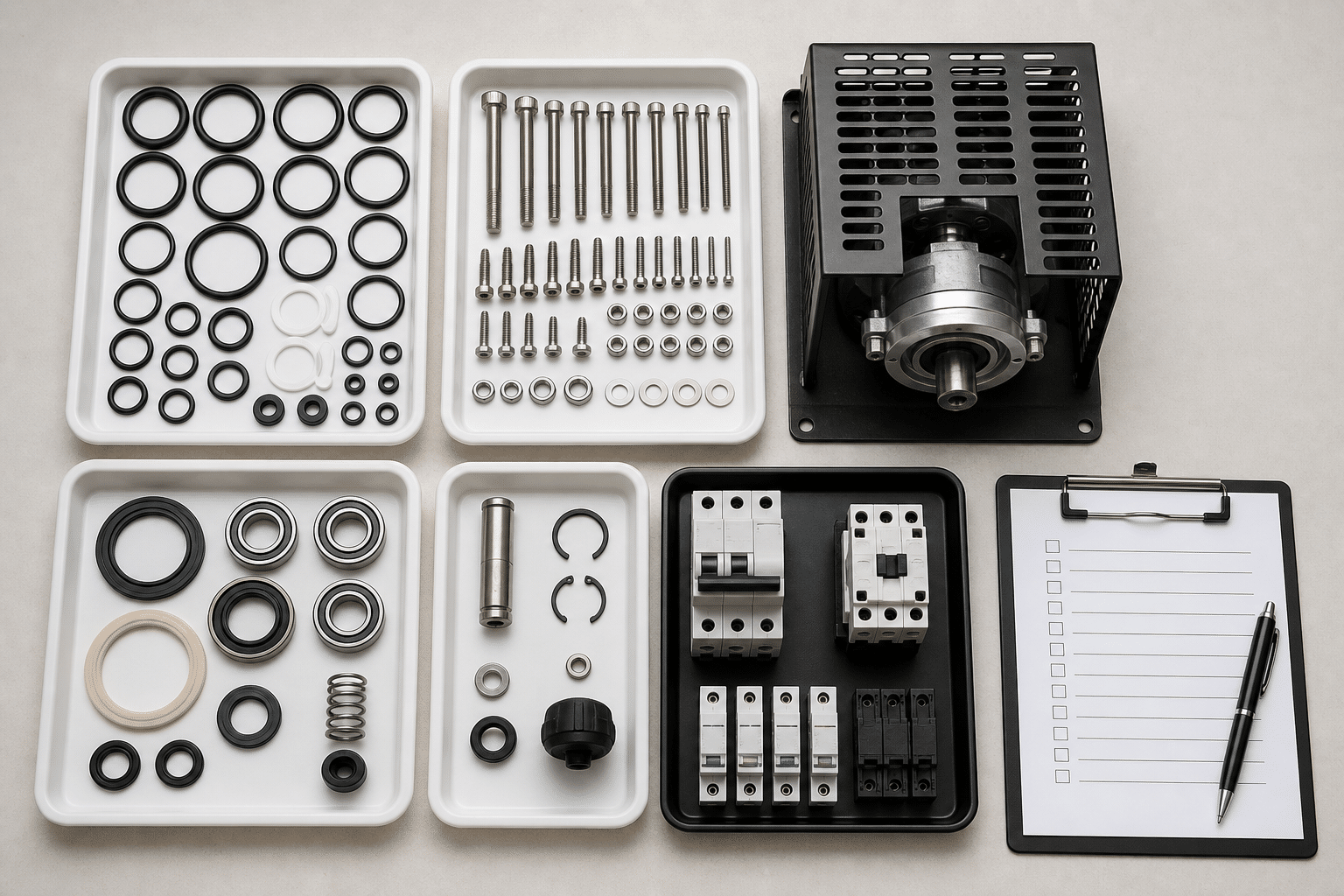
Organised commercial juicer spare components and service checklist

Build your stock list around the machine’s manual, actual service pattern, and supplier advice. The following checklist is a planning framework, not a claim that every machine uses every item.

1. Food-contact and cleaning-related items

  • Specified seals, gaskets, O-rings, or similar sealing components where fitted.
  • Approved juice collection or drainage components if these are removable or damage-prone.
  • Scrapers, wipers, or cleaning-related replaceable components where the model uses them.
  • Replacement fasteners for removable guards or food-zone assemblies, only when supplied or approved for the machine.

2. Mechanical and drive-related items

  • Machine-specific rollers, bearings, bushings, belts, chains, gears, couplings, or springs only where applicable to the design.
  • Specified roller or drive-assembly fasteners and retaining hardware.
  • Approved guards or covers if damage prevents safe use.

3. Electrical and control-related items

  • Correctly rated fuses or circuit-protection items where the manual identifies them as user-serviceable.
  • Model- and voltage-specific switches, buttons, connectors, or control parts when recommended by technical support.
  • An approved power cord or plug assembly only if it matches the local electrical requirements and machine specification.

For most operators, it is more sensible to hold a small quantity of high-turnover, approved wear items than to hold expensive assemblies without a clear maintenance plan. A failed major drive or electrical component may require diagnostic work before a replacement is selected. When planning a broader operating budget, include maintenance supplies, service access, and contingency stock alongside the machine purchase; this is covered in the commercial sugarcane juicer budgeting guide.

Information to Confirm Before Ordering Parts

Ordering the wrong component costs time and can create a safety or hygiene problem. Give the supplier enough information to identify the part accurately on the first request.

  1. Machine identification: record the brand, model, serial number, purchase date if known, and the country or region of installation.
  2. Electrical information: photograph the rating label and state the voltage, frequency, phase, and plug arrangement shown on the machine. Do not rely on a general description such as “standard power.”
  3. Part identification: provide the part number from the manual or parts diagram when available. If no number is visible, give the component name, location, dimensions where useful, and several clear photographs.
  4. Fault description: explain what happened before the issue, when it occurs, whether it is constant or intermittent, and what checks have already been completed.
  5. Machine condition: state whether there is unusual noise, vibration, resistance during operation, leakage, damage, overheating, or a tripped protective device. Do not continue using the machine if safe operation is uncertain.

Keep these details in a shared service log rather than in an individual employee’s phone. A consistent record is especially important for multi-site operators, distributors, and franchise systems. It also makes it easier to identify repeated failures that may be linked to cleaning practices, cane preparation, setup, or operating conditions.

How to Prepare an Effective Support Request

Technician documenting a commercial sugarcane juicer for a support request

A clear support request allows technical teams to decide whether an issue is likely related to cleaning, adjustment, wear, installation, operation, or a replacement component. Before contacting support, safely stop the machine if needed and prepare the following:

  • A photo of the machine rating label and a full photo of the machine.
  • Close-up photos of the affected area and any visible damage or wear.
  • A short video showing the issue, if it can be recorded without bypassing guards or creating risk.
  • The date of installation, approximate usage pattern, and the last cleaning or maintenance action.
  • The cane preparation process, including whether cane is washed, trimmed, or cut before feeding.
  • A description of any recent changes, such as relocation, electrical work, staff change, cleaning chemical change, or impact damage.

Describe observations rather than diagnosing the cause yourself. For example, “the machine stops after several seconds and the protective device trips” is more useful than “the motor has failed.” This gives the support team a better starting point and reduces the risk of an unnecessary part order.

For structured routine work, use a documented preventive maintenance schedule for a commercial sugarcane juicer alongside your support log. The schedule should be adapted to the model, operating hours, local conditions, and instructions supplied with the equipment.

Inspection, Cleaning, and Parts Storage

Many spare-parts problems begin with an incomplete cleaning routine, poor storage, or a missed inspection. Follow the cleaning and disassembly instructions for your specific machine. Turn off and isolate the equipment from power before cleaning, inspection, or any service activity, and do not defeat safety guards or interlocks.

At the end of service, inspect accessible areas for cane fibres, residue buildup, loose hardware, damaged guards, leakage, abnormal wear, and signs of corrosion. Clean parts with the products and methods approved for the machine materials. Abrasive tools or unsuitable chemicals can damage surfaces, seals, and clear components, so they should not be used unless the manufacturer specifically permits them.

Store spare parts clean, dry, labelled, and protected from dust, moisture, pests, direct sunlight, and chemicals. Keep food-contact components separate from lubricants, electrical items, and workshop materials. Retain parts in sealed bags or original packaging where possible, and mark each container with the machine model and part number. Rotate stock so older approved items are inspected before use.

Also consider cane preparation as part of maintenance control. Feeding cane that is poorly cleaned, excessively irregular, or not prepared according to the machine instructions can increase contamination risk and place unnecessary stress on processing components. The choice between different crushing approaches can affect workflow and maintenance planning; see this guide to single-pass and multi-pass sugarcane crushing for operational context.

Build a Downtime-Reduction Plan

A good parts plan is only one part of reliable daily operation. Create a simple downtime-reduction process that your shift teams can follow:

  1. Assign one person to own the machine asset record and approved parts list.
  2. Set inspection frequencies based on the manufacturer guidance and your real operating pattern.
  3. Record every replacement part, the reason for replacement, date, technician, and any observation from the repair.
  4. Set a reorder point for frequently used approved parts, allowing for supplier lead time and your peak-season needs.
  5. Train staff to recognise stop-use conditions and to report changes early.
  6. Review the log monthly to identify recurring issues and whether a process change is needed.

For operators with several locations, standardise models where practical and keep a central register of serial numbers, electrical configurations, approved suppliers, manuals, and service contacts. This makes it easier to transfer stock appropriately and prevents a part intended for one machine version from being installed on another.

Do not measure preparedness only by the number of parts on the shelf. The better measure is whether the team can identify the correct item, operate safely while awaiting service, and access the correct technical support when a fault is outside routine maintenance.

When to Stop the Machine and Call Support

Stop operating the machine, isolate it from power, and seek qualified support if you observe damaged guards, exposed wiring, burning smell, smoke, repeated electrical tripping, unexpected movement, persistent abnormal noise or vibration, significant leakage, or a part that no longer fits securely. The same applies if the machine has been dropped, flooded, modified, or connected to an unsuitable power supply.

Do not bypass a safety device, force a jammed assembly, or continue production to finish a rush period. Repeated resets, improvised repairs, and unapproved replacement parts can make diagnosis harder and may create further damage or risk. Use the manufacturer’s manual and approved technical channels for the next step.

A reliable support process starts with complete machine information, accurate photos, and a clear account of the issue. This allows the supplier or distributor to advise on the correct replacement part or whether on-site technical assessment is needed.

How to Clean a Commercial Sugarcane Juicer Properly

Table of Contents

A commercial sugarcane juicer should be cleaned after each service period and fully cleaned at the end of the day. This practical guide explains the correct shutdown, disassembly, washing, sanitising, drying, and inspection process for commercial operators.

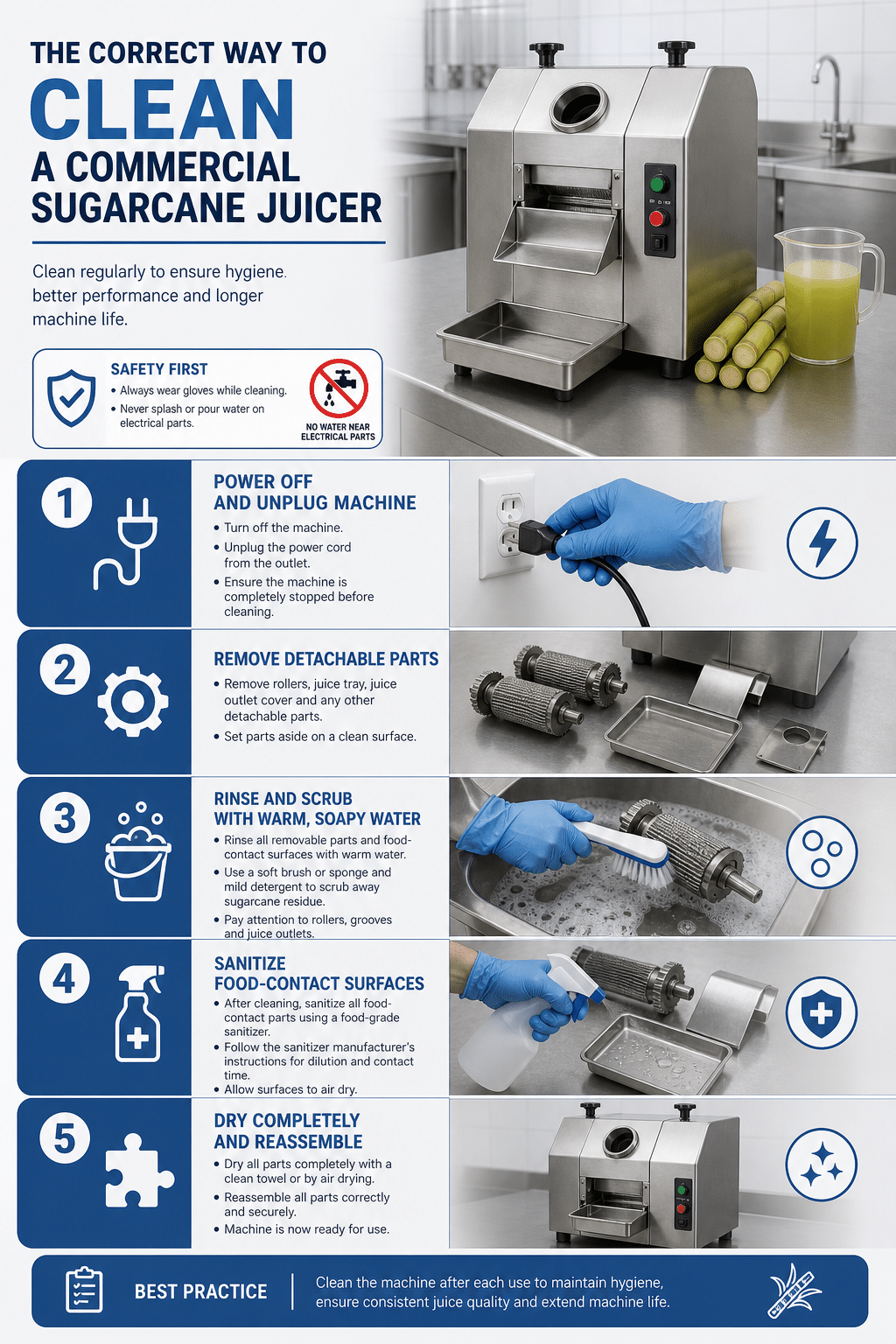
The correct way to clean a commercial sugarcane juicer

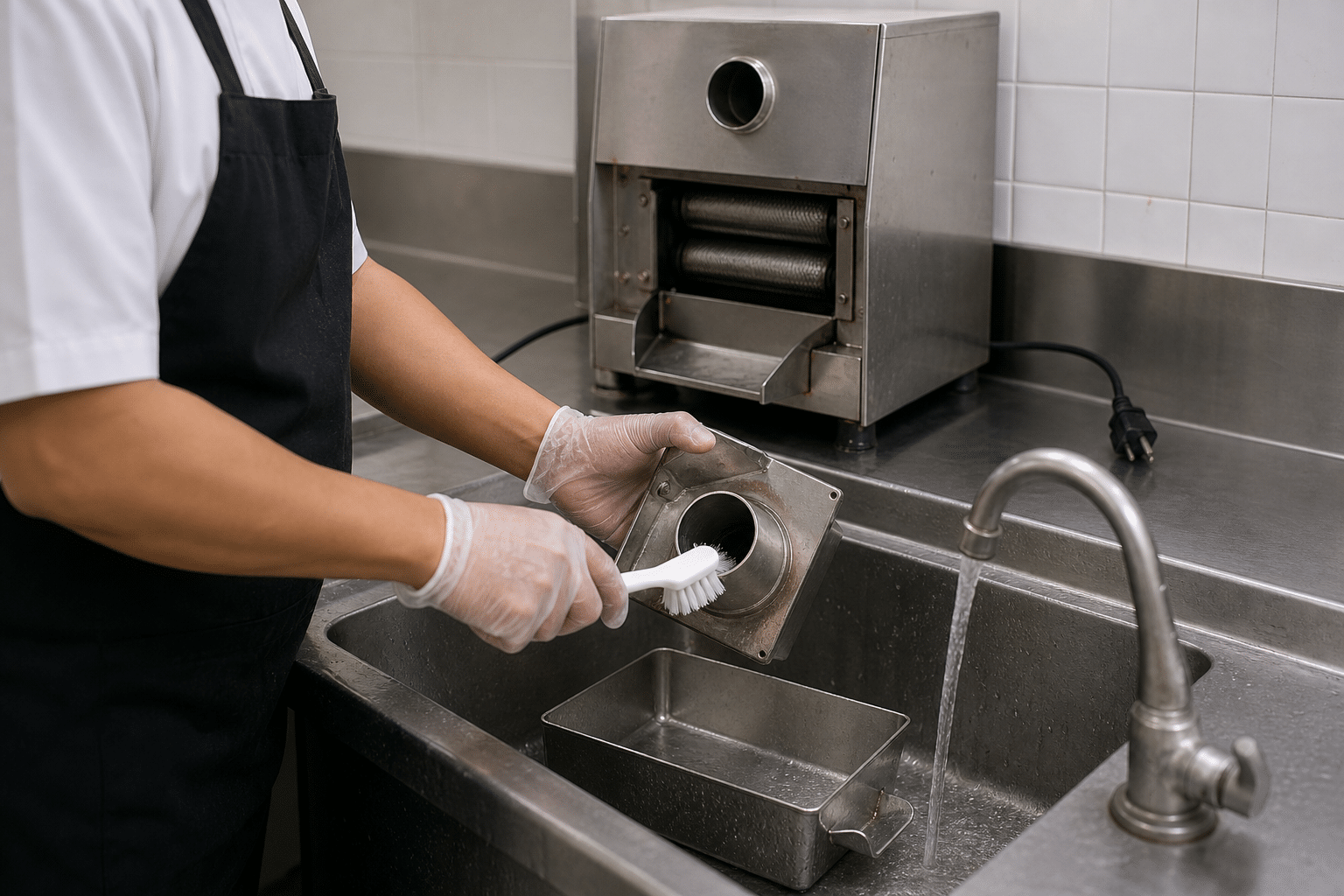
The correct way to clean a commercial sugarcane juicer

To clean a commercial sugarcane juicer properly, switch it off, unplug it, remove cane residue, take off only the parts identified as removable in the machine manual, wash food-contact parts with warm water and suitable detergent, rinse, sanitise where required, air-dry completely, and reassemble after inspection.

Do not hose down or immerse the motor housing unless the manufacturer specifically confirms that the machine is designed for that washdown method. Sugarcane juice is sticky, and fibres can collect around rollers, guards, spouts, trays, and drainage areas. A quick wipe is not a full clean. Operators need to remove visible debris, clean residues from accessible food-contact surfaces, and keep moisture away from electrical parts.

The exact disassembly sequence, approved chemicals, and whether a component is dishwasher-safe vary by model. Always treat the operating manual for your specific machine as the final instruction. This guide provides a reliable daily process for most commercial roller-type sugarcane juicers.

Why daily cleaning matters for sugarcane juice operations

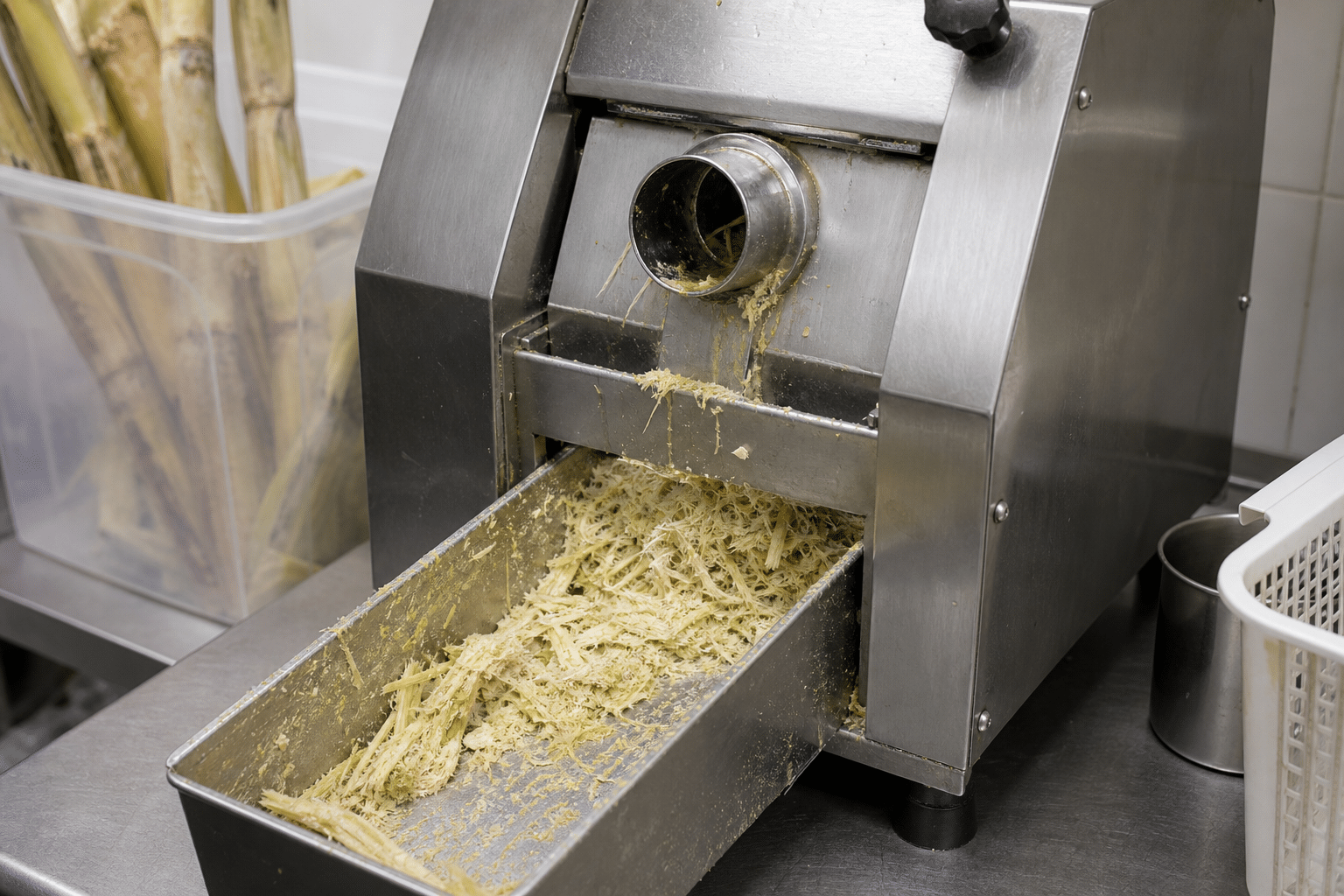
Sugarcane fibre and juice residue on accessible parts of a commercial juicer

Fresh cane leaves juice, fine bagasse fibres, and natural sugars on the machine. If these residues remain in place, they can become difficult to remove, affect the cleanliness of the work area, attract pests, and make the next shift slower to start. Residue can also hide around roller edges, the juice outlet, collection tray, and crevices behind guards.

Cleaning has two separate purposes. Cleaning removes juice, fibre, soil, and grease using water, detergent, friction, and rinsing. Sanitising is a separate step that uses an appropriate food-equipment sanitiser on an already clean surface, following the product label for dilution and contact time. Sanitiser is not a substitute for removing sticky deposits first.

Daily attention also supports equipment reliability. Bagasse caught in accessible areas can interfere with smooth operation, while dried sugar residue can make covers, trays, and outlet parts difficult to remove. Good housekeeping around the machine should be part of the wider hygiene plan, including the counter, waste container, drainage area, and cane-preparation station. For site-level controls, review these pest control and sanitation practices for sugarcane juice bars.

Prepare safely before cleaning

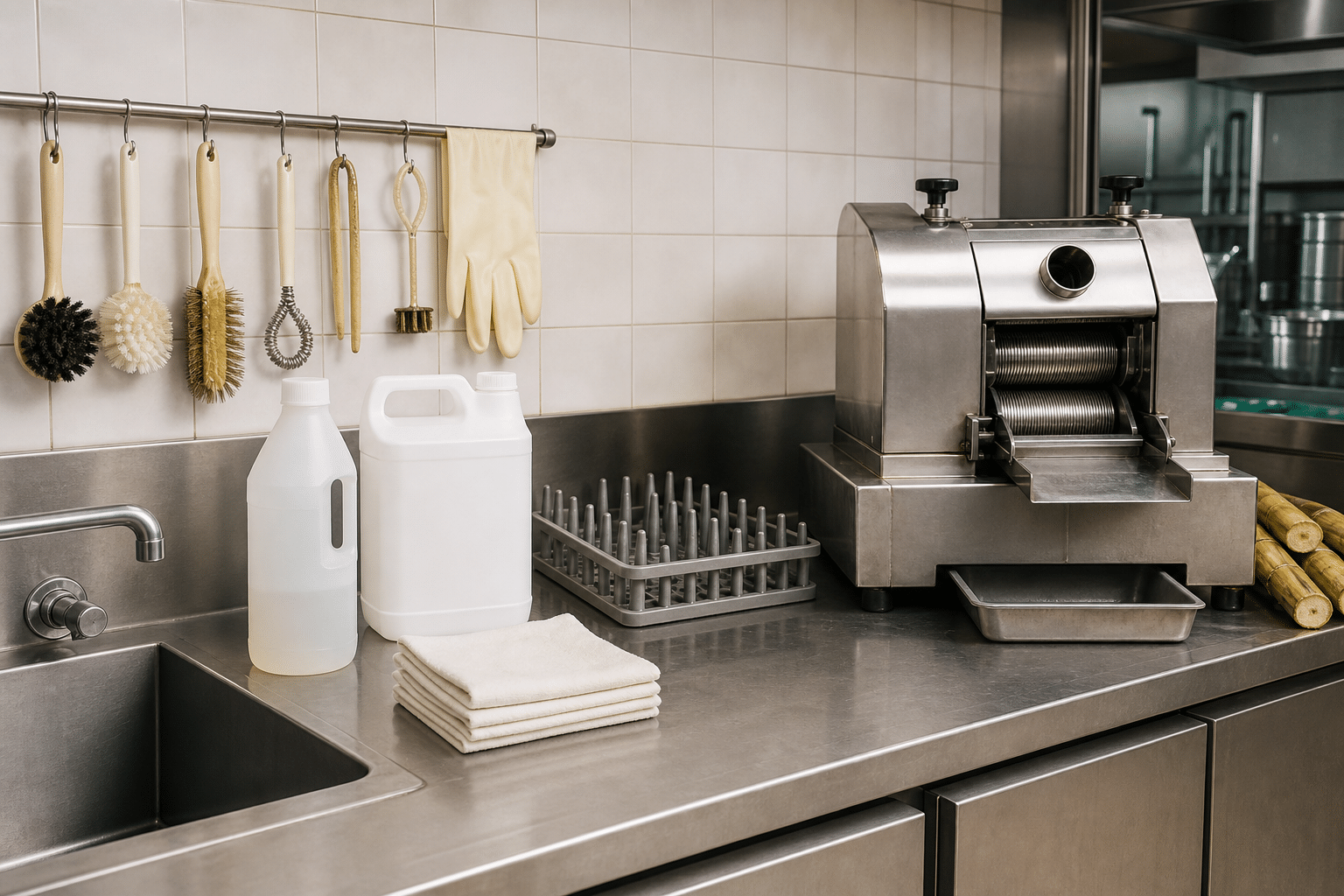
Cleaning supplies prepared beside an unplugged commercial sugarcane juicer

Cleaning should begin only after production has stopped. Assign the task to trained staff who understand the machine controls and the site sanitation procedure.

Shut down and isolate the machine

  1. Stop feeding cane and allow the rollers to clear as far as normal operation permits.
  2. Switch off the machine using its normal control.
  3. Disconnect the power supply before reaching near rollers, guards, or the juice outlet.
  4. Wait until all moving parts have stopped completely.

Never clean inside a running machine or attempt to remove trapped fibre while rollers are moving. If cane is jammed, use the model-specific clearing procedure rather than forcing tools or hands into the feed area. This guide to processing thick sugarcane stalks without jamming can help operators reduce avoidable stoppages during service.

Gather the right cleaning supplies

  • Clean food-safe brushes in suitable sizes for the outlet, tray, and accessible crevices.
  • Warm potable water and a detergent suitable for food equipment.
  • Clean cloths or disposable towels for external surfaces.
  • An approved food-contact sanitiser, used exactly as directed on its label and in line with local requirements.
  • A clean drying rack or designated clean area for removable components.
  • Appropriate personal protective equipment required by your workplace or chemical supplier.

Avoid steel wool, sharp metal scrapers, or abrasive pads unless the manufacturer explicitly permits them. These can scratch surfaces and create places where residue is harder to remove.

Step-by-step: how to clean a sugarcane juicer

Operator washing removable commercial sugarcane juicer components with a food-safe brush

Use this workflow at the end of the day, after a long service period, or whenever visible residue has built up. Adapt it to the manual and food-safety procedure for your particular juicer.

1. Remove cane waste and loose fibres

Remove the bagasse collection container and discard cane waste according to your site procedure. Use a dry brush or scraper approved for the machine to remove loose fibres from accessible external areas. Do not push brush handles, knives, or other tools between rollers.

2. Remove approved detachable parts

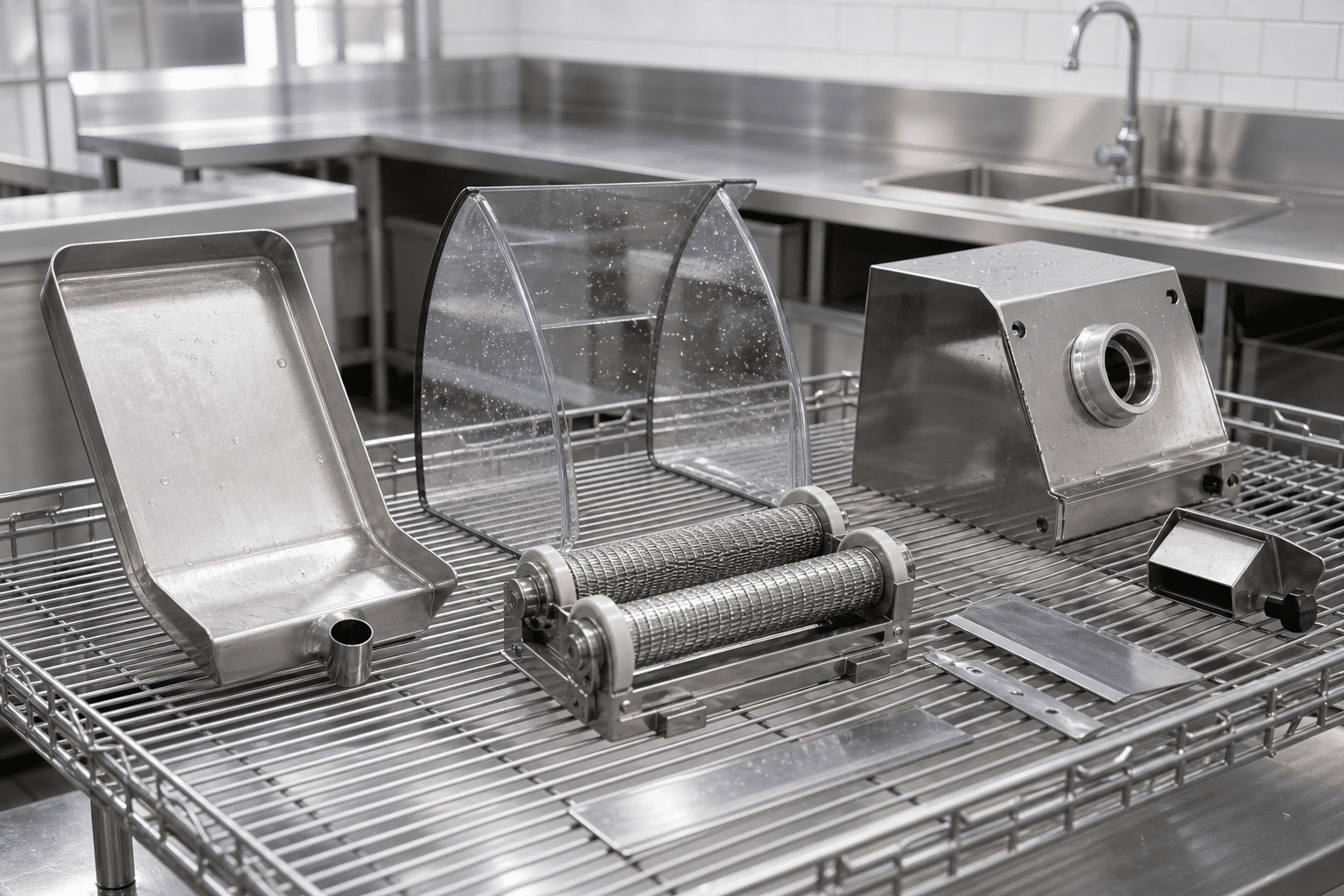
Take off parts such as the juice tray, outlet cover, splash guard, feed guide, or collection container only where the manual identifies them as removable. Place fasteners and small parts in a clean, controlled location. Photographing the correct assembly during staff training can reduce reassembly errors.

3. Wash the removable food-contact parts

Wash parts in warm water with detergent. Use brushes to work around corners, spouts, seams, and undersides where sugar film can remain. Change wash water when it becomes visibly dirty. Rinse with clean potable water so detergent is not left on food-contact surfaces.

4. Clean fixed surfaces carefully

Use a damp cloth and brush to clean accessible fixed surfaces, including the machine exterior, feed opening, visible roller surroundings, juice outlet area, and tray supports. Apply water to the cloth or brush rather than pouring it directly over the machine. Keep liquid away from switches, cable entries, ventilation openings, motor areas, and any part not designed for washdown.

Water resistance varies between models and installations. Before using any spray or washdown method, understand the equipment’s stated protection level and the limitations of that rating. Read more about IP ratings and washdown safety for commercial sugarcane juicers.

5. Inspect while the machine is open

Look for trapped fibre, dried juice, cracks, loose guards, damaged seals, unusual roller wear, or a juice outlet that does not drain freely. Cleaning is the best time to spot a developing issue before the next service period. Do not restart the machine if a safety guard is missing, a part will not fit correctly, or damage is visible.

Sanitise, dry, and reassemble correctly

Clean sugarcane juicer components air-drying on a sanitary rack

After washing and rinsing, sanitise removable food-contact components and accessible food-contact surfaces when required by your food-safety plan. Use a sanitiser intended for food-contact equipment. Follow its label for dilution, temperature, contact time, and any rinse requirement. More chemical does not mean better sanitation; an incorrectly mixed product can leave residue, damage materials, or fail to work as intended.

Allow components to air-dry fully on a clean rack or clean surface. Avoid drying food-contact parts with used bar towels, which can transfer soil back to a clean component. Do not reassemble parts while they are wet if moisture could be trapped in a closed area.

Once dry, reassemble in the documented order. Check that guards, trays, outlet components, and collection containers are seated correctly. Wipe the exterior, clean the counter and floor around the machine, and fit a fresh bagasse bin liner if your operation uses one. Before the next shift, complete a visual pre-operation check in accordance with the machine manual.

A documented cleaning record is useful for multi-shift juice bars, kiosks, cafés, and foodservice teams. Record the date, time, operator, cleaning chemicals used where required, and any defects found. This creates a clear handover between shifts and supports a consistent preventive care routine.

Common sugarcane juicer cleaning mistakes to avoid

  • Cleaning only the visible exterior: Juice residue often remains under trays, around the outlet, and in seams or guard edges.
  • Using sanitiser on dirty surfaces: First wash and rinse away sugar film and fibres; then sanitise if required.
  • Spraying electrical areas: High-pressure or uncontrolled water can create an electrical and equipment-risk issue. Use only the washing method approved for the model.
  • Leaving bagasse in the bin overnight: Empty the waste container and clean the surrounding area as part of closing duties.
  • Using unsuitable brushes or abrasives: Damaged surfaces can become harder to clean. Use non-damaging tools appropriate for food equipment.
  • Ignoring reassembly checks: A cover or guard fitted incorrectly can create an operational and safety concern.
  • Waiting for a fault before inspecting: Routine checks during cleaning can reveal abnormal wear or loose parts earlier.

Some problems that appear to be cleaning issues are actually maintenance issues. For example, recurring poor drainage, abnormal noise, difficult roller movement, or repeated jamming should be assessed rather than masked with extra cleaning effort.

A practical commercial cleaning schedule

The right frequency depends on volume, ambient conditions, local rules, and your written food-safety system. However, a practical baseline is to clean during service as needed and complete a thorough clean at closing.

Timing Recommended focus
Before opening Check that the machine is dry, correctly assembled, visibly clean, and free of old cane fibre or juice residue.
During service Remove spilled juice, empty bagasse before it overfills, keep the outlet and work surface clean, and pause for cleaning if contamination or residue is observed.
At shift change Wipe and inspect key external and food-contact areas, replace soiled containers or cloths, and communicate any issue to the incoming operator.
End of day Perform the full shutdown, disassembly, wash, rinse, sanitise where required, air-dry, inspection, and reassembly process.
Scheduled maintenance interval Inspect machine condition and follow the manufacturer’s maintenance schedule for components that require professional attention.

For a more structured approach, use a written checklist that separates daily sanitation from periodic equipment inspection. Our guide to a preventive maintenance schedule for commercial sugarcane juicers explains how routine checks can be organised alongside day-to-day cleaning.

When cleaning is not enough: signs to arrange service

Stop using the juicer and seek qualified support when you find damage to guards or electrical components, persistent leakage from an area that should remain dry, unusual noise or vibration, a roller that does not move normally, repeated jamming, loose parts, or components that no longer fit securely. Do not attempt electrical repairs or unapproved roller adjustments during routine cleaning.

Keep the model, serial information, cleaning records, and a clear description of the symptom available when requesting help. This allows a service team or distributor to understand the operating context and advise more efficiently. Consistent cleaning protects daily hygiene, while correct maintenance and trained service protect the machine over its working life.


Sugarcane Juice Machine Maintenance: Ensuring Long-Term Durability in Commercial Settings

Sugarcane Juice Machine Maintenance: Ensuring Long-Term Durability in Commercial Settings

In high-traffic juice bars, kiosks, and foodservice operations, a sugarcane juice machine is a revenue-critical asset. Unplanned downtime means lost sales, product waste, and frustrated customers. With structured maintenance and correct daily handling, a quality sugarcane juicer can run reliably for years, even under heavy commercial workloads.

This guide is written for B2B operators, distributors, and purchasing managers who work with commercial sugarcane juice machines and want to maximize machine life, minimize repairs, and protect their investment.

Commercial sugarcane juice machine in stainless steel for foodservice use

1. How Commercial Sugarcane Juice Machines Work (and Why Maintenance Matters)

Most commercial sugarcane juice machines share a similar structure:

  • Food-grade stainless steel housing (commonly 304 or similar grades)
  • Heavy-duty rollers that crush the cane and extract juice
  • Gearbox and drive system (direct drive or chain/belt driven)
  • Motor sized for continuous-duty commercial use
  • Juice outlet and pulp outlet with removable trays

Cane juice is sugary, moist, and slightly acidic. If it remains on metal surfaces, in crevices, or around seals, it can cause:

  • Stickiness and roller slippage
  • Premature wear of moving parts
  • Corrosion of non-stainless components
  • Bacterial growth and hygiene issues

A consistent maintenance routine ensures stable extraction performance, safer operation, and longer machine life.

2. Daily Care Checklist for Commercial Operations

Daily maintenance is the single biggest factor in longevity. The routines below are designed for busy shops running multiple shifts.

2.1 Pre-Shift Checks (Before First Use)

  • Visual inspection: Check housing, covers, and guards are correctly installed and undamaged.
  • Roller area: Ensure no cane fibers, tools, or foreign objects are in the feed area.
  • Power and cable: Inspect power cord and plug for cuts, burns, or loose connections.
  • Test run: Run the machine for 10–20 seconds without cane, listening for unusual noises (grinding, rattling, or knocking).

2.2 During Operation

  • Avoid overfeeding: Feed cane at a steady rate; overloading increases stress on the motor and gearbox.
  • Use appropriate cane size: If cane is too thick, split it before feeding. Forcing oversized cane can damage rollers or stall the motor.
  • Monitor temperature: If the housing feels excessively hot or a burning smell appears, stop and investigate.
  • Keep the area dry: Wipe spills around the base to prevent moisture from entering electrical components.

2.3 End-of-Day Cleaning Routine

End-of-day cleaning should be non-negotiable in any commercial setting:

  • Disconnect power: Always unplug before cleaning to avoid electric shock or accidental start-up.
  • Disassemble removable parts: Remove trays, covers, and any detachable juice guides or filters as instructed in the user manual.
  • Rinse with warm water: Rinse food-contact surfaces to remove cane fibers and sugar residue. Avoid high-pressure jets at electrical sections.
  • Mild detergent only: Use a food-safe, non-corrosive detergent and a soft brush or sponge. Do not use steel wool on stainless surfaces.
  • Rinse thoroughly: Remove all detergent before drying.
  • Dry completely: Wipe with a lint-free cloth and allow air drying where necessary to reduce corrosion risk.
  • Reassemble correctly: Ensure all guards and covers are refitted and secured, following the machine manual.

For distributors and franchise networks, standardizing this daily checklist across outlets can significantly reduce repair calls and warranty issues.

3. Weekly & Monthly Maintenance for Long-Term Durability

In addition to daily cleaning, structured weekly and monthly checks keep the mechanical and electrical systems in good condition.

3.1 Weekly Tasks

  • Deep clean rollers: Inspect rollers for hardened residue or minor rust spots. Clean with warm water and a non-abrasive brush.
  • Check fasteners: Lightly check accessible screws and bolts for looseness (do not overtighten).
  • Inspect seals and gaskets: Look for cracks, deformation, or leaks at juice outlets and covers.
  • Functional test: Run the machine with a small batch of cane and verify normal sound, speed, and juice output.

3.2 Monthly Tasks

Frequency can be adjusted depending on usage (heavy-duty operations may perform these every 2 weeks):

  • Lubrication checks: Where the design allows, inspect recommended lubrication points (e.g., chains, gears, bearings) and apply suitable food-grade lubricant as per the manual.
  • Electrical inspection: Have a qualified technician check connections, plugs, and switches for heat marks or wear.
  • Roller alignment: Check for uneven wear marks or inconsistent squeezing. Misalignment can reduce extraction efficiency and increase stress on the drive system.
  • Drainage and base: Ensure there is no standing liquid around the base or under the machine which can promote corrosion or electrical hazards.

4. Common Problems and Basic Troubleshooting

Proper maintenance reduces issues, but some common problems still appear in commercial environments. Below is a practical overview of symptoms, likely causes, and initial actions.

Symptom Possible Causes Initial Actions (Non-Technical)
Machine does not start Power issue, tripped breaker, safety switch not engaged, loose plug Check plug & outlet, confirm main switch is ON, ensure covers/guards are correctly closed, reset breaker if safe
Motor stalls during crushing Overloading, cane too thick, internal blockage Turn off and unplug, remove cane, reduce cane size, feed more slowly
Unusual noise (grinding, knocking) Foreign object in rollers, loose parts, worn bearings/gears Stop immediately, unplug, inspect visible areas; if noise persists, contact a technician
Reduced juice yield Worn rollers, roller gap too wide, slippage due to sticky residue Perform deep cleaning, check roller surface, avoid overripe/very dry cane; if unresolved, request technical inspection
Minor leaks around juice outlet Damaged gasket, loose fittings, residue buildup Clean thoroughly, check and correctly position gaskets; replace if visibly damaged

For safety and warranty reasons, more complex interventions (gearbox opening, electrical repairs, structural modifications) should be handled by the manufacturer or a qualified service partner.

5. Design and Specification Factors that Impact Maintenance

When selecting a sugarcane juice machine for a commercial project or distribution portfolio, look beyond output capacity and price. Design and material choices will directly affect maintenance effort and long-term durability.

5.1 Material Selection

  • Stainless steel construction: Housing and food-contact parts made of corrosion-resistant stainless steel (often 304 or similar grades) simplify cleaning and extend service life.
  • Food-contact surfaces: Smooth welds, rounded corners, and minimal crevices reduce residue accumulation and make hygiene management easier.
  • Roller material and finishing: Robust, corrosion-resistant rollers with proper surface finishing maintain grip without excessive fiber retention.

5.2 Ease of Disassembly and Cleaning

  • Tool-less or simple-tool access to key areas (rollers, juice tray, pulp outlet) saves time and lowers labor costs.
  • Clear separation between food zones and electrical/drive zones reduces cleaning risk.
  • Accessible drainage to prevent liquid accumulation inside the machine body.

5.3 Drive System and Motor

  • Continuous-duty motor rating: For commercial environments, motors should be chosen for repeated or extended runs, not only intermittent use.
  • Protection features: Overload protection, thermal cut-offs, and emergency stop switches can prevent severe damage under misuse.
  • Enclosed gearbox: Properly sealed gearboxes keep lubrication inside and contaminants out, reducing maintenance frequency.

6. Best Practices to Extend Machine Life in Commercial Use

Beyond routine cleaning, operational discipline and environment management greatly influence durability.

6.1 Train Staff on Correct Usage

  • Provide simple, visual SOPs for starting, operating, and shutting down the machine.
  • Emphasize not forcing objects or oversized cane into the rollers.
  • Remind staff to always unplug the machine before cleaning or removing jammed cane.

6.2 Control the Operating Environment

  • Stable, appropriate power supply: Where power fluctuations are common, consider voltage stabilization to protect the motor and control circuits.
  • Ventilation: Allow sufficient space around the machine so heat can dissipate.
  • Dry placement: Avoid standing water, floor drains directly under the machine, or exposure to rain in outdoor setups.

6.3 Manage Spare Parts and Service Support

  • Keep essential consumables (gaskets, seals, basic fasteners) in stock for multi-outlet operations.
  • Maintain a log of maintenance activities, issues, and replacements; this helps identify patterns and plan preventive servicing.
  • Coordinate with your supplier for recommended service intervals and response times for repairs.

7. Buying & Deployment Considerations for B2B Projects

For distributors, chain accounts, or brand owners planning multiple installations, maintenance should be part of the initial purchasing analysis, not an afterthought.

7.1 Matching Machine Capacity to Usage

  • Estimate peak-hour volume and daily cane throughput.
  • Select a machine model whose capacity comfortably exceeds expected peak demand to avoid constant overloading.

7.2 Installation and Commissioning

  • Verify that electrical requirements (voltage, frequency, plug type) match local conditions.
  • Ensure the counter or stand can support the machine weight and vibration.
  • Provide staff with initial hands-on training and a maintenance checklist from day one.

7.3 Service Agreements and Warranty

  • Clarify how routine maintenance affects warranty coverage.
  • Agree response times and typical spare parts availability with your supplier.
  • Document serial numbers and installation dates for each machine in your network.

8. FAQs: Sugarcane Juice Machine Maintenance and Longevity

1. How often should a commercial sugarcane juice machine be cleaned?

At minimum, food-contact areas should be cleaned at the end of every operating day. In high-volume or hygiene-sensitive environments, a mid-shift rinse and wipe-down can be added. A deeper cleaning of rollers and internal areas is recommended weekly.

2. Can staff use high-pressure water jets to clean the machine?

High-pressure jets are generally not recommended on or near electrical components and sealed gearboxes, as water ingress can damage internal parts. Use controlled water flow and avoid spraying directly at switches, motors, or ventilation openings.

3. What type of detergent is safe for cleaning?

Use a mild, food-safe detergent that is non-corrosive to stainless steel and suitable for food-contact surfaces. Avoid chlorine-heavy or highly abrasive cleaners unless specifically approved by the equipment manufacturer.

4. When should bearings, rollers, or gaskets be replaced?

Replacement intervals depend on usage intensity, cleaning quality, and the specific machine design. Warning signs include persistent noise, vibration, leaks, or notable reduction in juice extraction efficiency. For multi-unit operations, it is helpful to review these symptoms with the supplier and set preventive replacement guidelines.

5. What should be done if the machine frequently trips the circuit breaker?

Frequent tripping may indicate overloading, a power supply issue, or an electrical fault. Check that cane is not being forced through and that the outlet meets the machine’s power requirements. If the issue continues, have a qualified technician or the supplier inspect the machine and the electrical installation.

6. Is lubrication required, and can regular grease be used?

Some designs include sealed components that do not require user lubrication; others may have specified lubrication points. Only use lubricants recommended by the manufacturer, and where food-contact proximity exists, a suitable food-grade lubricant is typically advised. Avoid general-purpose grease unless clearly approved.

7. How can distributors reduce maintenance issues across multiple locations?

Standardize operating and cleaning procedures, provide consistent training, keep basic spare parts at selected sites, and implement a simple reporting system for issues. Monitoring recurring problems helps refine purchasing decisions and maintenance schedules.

9. Plan for Reliability from Day One

In commercial environments, sugarcane juice machines are expected to deliver consistent performance under demanding conditions. A combination of robust machine design, correct installation, disciplined daily care, and periodic technical checks is the most reliable way to extend service life and protect your return on investment.

If you are planning a new installation, upgrading existing equipment, or building a regional distribution program for sugarcane juice machines, it can be useful to discuss maintenance requirements and long-term durability at the quotation stage.

Ready to specify a sugarcane juice machine for your project?

  • Discuss capacity, duty cycle, and maintenance expectations with a specialist.
  • Review cleaning and service guidelines before placing volume orders.
  • Align spare parts and support plans with your deployment schedule.

Request a quote / Get a sample to evaluate a commercial sugarcane juice machine configuration that matches your operational and maintenance requirements.

Sugarcane Juice Machine Maintenance: Ensuring Long-Term Durability in Commercial Settings

In high-volume juice bars, takeaway kiosks, and foodservice chains, sugarcane juice machines often run for many hours a day. Poor maintenance quickly shows up as lower juice yield, overheating, unexpected breakdowns, and higher operating costs.

This guide is written for operators, procurement teams, and distributors who want to extend the service life of their commercial sugarcane juice machines and protect their investment. It focuses on routine maintenance, troubleshooting, and practical tips to keep machines running reliably in demanding environments.

Commercial sugarcane juice machine in stainless steel for retail and foodservice use

1. Why Maintenance Matters for Commercial Sugarcane Juice Machines

A commercial sugarcane juice machine is a compact piece of food-processing equipment that combines mechanical pressing, food-contact surfaces, power transmission, and electrical components in a small footprint. In busy sites, the machine may be started and stopped dozens of times per day and exposed to sugar, moisture, and fine cane fibers.

Consistent maintenance brings clear benefits:

  • Longer equipment life: Proper cleaning and lubrication help reduce wear on rollers, bearings, gears, and motor components.
  • Stable juice yield and quality: Clean, well-aligned rollers maintain good extraction rates and avoid off-flavors caused by residue buildup.
  • Lower downtime: Early detection of abnormal noise, heat, or vibration prevents sudden failures during peak hours.
  • Better hygiene: Regular cleaning supports compliance with local food safety requirements (always confirm with local authorities).

2. Key Components That Affect Durability

Understanding the main wear points helps you design a practical maintenance routine.

2.1 Rollers and Crushing Assembly

Rollers are the core of the machine; they grip and crush the cane to extract juice. In many commercial machines, rollers are made from stainless steel for corrosion resistance and food contact safety.

Key checks:

  • Surface condition: Look for pitting, deep scratches, or visible deformation.
  • Alignment: Misalignment can cause uneven pressing and higher load on the motor.
  • Cleanliness: Fibers and dried sugar on roller surfaces can reduce grip and yield.

2.2 Bearings, Gears, and Drive System

The drive system transfers motor power to the rollers through gears, chains, or couplings. Bearings support the rotating shafts.

Watch for:

  • Unusual noise: Grinding or rattling often indicates bearing or gear wear.
  • Excessive play: Loose chains or worn gear teeth can lead to jerky operation.
  • Lubrication condition: Old grease contaminated by sugar dust or moisture loses effectiveness.

2.3 Motor and Electrical Components

The motor, switches, and wiring are critical for safety and uptime.

  • Motor temperature: Overheating can signal overloading or poor ventilation.
  • Cable and plug condition: Inspect for cuts, burns, or loose connections.
  • Control switches: Check that emergency stop and main switches operate smoothly.

2.4 Food-Contact Surfaces and Housing

Stainless steel housings and food-contact parts are designed for frequent cleaning. However, neglected cleaning can accelerate corrosion, create hygiene risks, and damage seals and gaskets.

3. Daily Maintenance Checklist (End-of-Shift Routine)

A structured daily routine is the simplest way to protect the machine. The following is general guidance; always follow the model-specific manual.

3.1 Pre-Cleaning Safety Steps

  • Switch off the machine and disconnect it from the power supply.
  • Allow hot components to cool before cleaning.
  • Train staff to never reach into the roller area while the machine is powered.

3.2 Cleaning Food-Contact Areas

  • Remove detachable parts (funnels, juice trays, covers) as specified by the manufacturer.
  • Rinse off bulk residue with clean water.
  • Wash with food-safe detergent using soft brushes; avoid abrasive pads that can scratch stainless steel.
  • Rinse thoroughly to remove all detergent.
  • Air-dry or wipe with clean, lint-free towels before reassembly.

3.3 Cleaning Rollers and Crushing Zone

Depending on the machine design, rollers may not be removable by the operator. In such cases:

  • Use a gentle water spray as allowed by the manual, avoiding direct spraying on motor vents or control panels.
  • Use a soft brush to remove attached fibers from accessible areas.
  • Never use sharp tools or metal scrapers on the rollers.

For machines designed for easier access, follow manufacturer instructions for opening guards and cleaning internal surfaces.

3.4 External Surfaces and Work Area

  • Wipe the outer housing with a damp cloth and mild detergent.
  • Dry thoroughly to reduce water spots and potential corrosion.
  • Keep the surrounding floor area clean to reduce dust and sticky residues.

4. Weekly and Monthly Maintenance Tasks

In addition to daily cleaning, schedule deeper checks at least weekly and monthly, depending on usage intensity.

4.1 Weekly Tasks

  • Visual inspection: Check for loose screws, nuts, guards, or covers.
  • Cable and plug check: Inspect for damage or excessive bending.
  • Noise and vibration test: Run the machine empty for a short period and listen for unusual sounds.
  • Roller condition: Inspect as much of the surface as is accessible for buildup or damage.

4.2 Monthly Tasks

  • Lubrication: Where specified by the manufacturer, apply food-grade grease or oil to bearings or chains. Do not over-lubricate; wipe excess to avoid attracting dust and sugar.
  • Fastener tightening: Check key bolts and nuts for tightness to maintain structural integrity.
  • Ventilation check: Confirm that motor vents and cooling openings are dust-free and not blocked by walls or other equipment.
  • Seal and gasket inspection: Check door seals, gaskets, or rubber parts for cracks or hardening and replace where required.

5. Preventive Maintenance Planning for High-Volume Sites

For busy retail or foodservice operations, preventive maintenance should be planned, not reactive.

5.1 Set Operating Hour Intervals

Instead of only using calendar intervals, track machine operating hours where possible. Maintenance at defined hour intervals (for example, every few hundred hours for deeper checks) can be more accurate than monthly or quarterly estimates.

5.2 Standardize Procedures and Training

  • Create a simple, illustrated SOP for daily and weekly tasks.
  • Train all relevant staff during onboarding and repeat periodically.
  • Use a log sheet or digital record for maintenance activities and any issues found.

5.3 Stock Basic Spare Parts

To minimize downtime, keep a small inventory of high-turnover spare parts, such as:

  • Food-contact seals and gaskets
  • Switches or buttons commonly used by staff
  • Fuses (if user-serviceable as per local regulations)

For other components like motors, gear sets, or rollers, coordinate with your supplier on typical lead times and recommended spare strategies for your usage level.

6. Troubleshooting Common Issues

Even with good maintenance, issues can arise. Below is general guidance; specific steps should follow each machine’s manual and local safety regulations.

6.1 Machine Does Not Start

  • Confirm the power source is available and the plug is connected properly.
  • Check that all safety interlocks or covers are correctly closed.
  • Inspect the main switch and any visible fuses (if accessible).
  • If the problem persists, stop troubleshooting at the electrical level and consult a qualified technician or your supplier.

6.2 Low Juice Yield or Poor Extraction

  • Inspect rollers for residue buildup; perform a thorough cleaning.
  • Verify that you are using cane of appropriate size and quality for the machine.
  • Listen for slipping sounds that might indicate loose chains or worn gears.
  • If yield issues continue, request a technical inspection to check alignment or roller wear.

6.3 Excessive Noise or Vibration

  • Stop the machine immediately if noise changes suddenly.
  • Check for foreign objects in the crushing area.
  • Inspect mounting bolts and ensure the machine is on a stable, level surface.
  • Persistent noise may indicate bearing or gear wear and should be reviewed by a technician.

6.4 Overheating or Burning Smell

  • Stop operation at once and disconnect power.
  • Check for blocked ventilation openings or operation in a confined, hot space.
  • Confirm that the machine is not being overloaded with excessively hard or oversized cane.
  • If overheating is recurrent, consult the supplier; continuing to run an overheated motor can cause permanent damage.

7. Operational Practices That Extend Machine Life

How the machine is used day-to-day has as much impact on longevity as the maintenance schedule.

7.1 Respect Capacity and Duty Cycle

  • Do not exceed the recommended cane diameter or feed rate specified in the manual.
  • Avoid continuous operation beyond recommended duty cycles; allow short rest periods during very long shifts when practical.

7.2 Use Proper Cane Preparation

  • Remove stones, dirt, and any foreign materials from cane before feeding.
  • Cut cane to recommended length where applicable; this reduces stress on the crushing mechanism.

7.3 Maintain a Clean Operating Environment

  • Prevent water from pooling under or around the machine.
  • Keep nearby cleaning chemicals away from electrical components.
  • Ensure adequate ventilation around the machine, especially near the motor.

8. Buying Considerations Related to Maintenance and Durability

When specifying sugarcane juice machines for commercial use, maintenance and serviceability should be part of the purchasing decision.

8.1 Material and Build Quality

  • Stainless steel housings and food-contact parts generally offer better corrosion resistance and cleaning performance than painted mild steel.
  • Robust enclosure design and sealed seams help reduce ingress of moisture and sugar dust into the drive system.

8.2 Access for Cleaning

  • Check how easily operators can access the crushing area and food-contact surfaces for cleaning.
  • Consider designs with removable covers, drip trays, and guides that simplify daily hygiene routines.

8.3 Service Support and Spare Parts

  • Confirm availability of key spare parts and typical lead times.
  • Check whether the supplier provides maintenance guidelines, training support, or recommended service intervals.

8.4 Matching Machine Type to Application

Select a machine model that matches your daily volume and operating environment. Different retail formats (street kiosks, shopping malls, restaurants, convenience stores) can have very different patterns of use and cleaning facilities. Discuss your application with the supplier so they can advise on suitable models and maintenance expectations.

9. FAQs: Sugarcane Juice Machine Maintenance

1. How often should a commercial sugarcane juice machine be cleaned?

Most commercial operations benefit from at least one full cleaning at the end of each working day, with light rinsing or wipe-downs during the day as needed. High-volume sites may choose to clean certain parts more frequently. Always follow the machine’s specific instructions and local hygiene requirements.

2. Can I use high-pressure water to clean the machine?

High-pressure cleaning can force water into electrical components and bearings, which may damage the machine. Unless the manufacturer specifically states otherwise, use controlled water flow, soft brushes, and mild detergent, avoiding control panels, motors, and vents.

3. What kind of lubricant should be used?

For any lubrication points that are near food-contact areas, a food-grade lubricant is generally recommended. Check the machine’s manual for the exact specification and re-lubrication interval. Avoid using non-food-grade lubricants where there is any risk of contact with juice or cane.

4. When should rollers or bearings be replaced?

Replacement intervals depend on usage intensity, cleaning practices, and the operating environment. Signs that these parts may need replacement include reduced yield, unusual noise, visible wear, or frequent alignment issues. It is best to consult the supplier or a qualified technician for inspection and recommendations.

5. How can I reduce unexpected breakdowns?

Implement a basic preventive maintenance plan (daily, weekly, monthly tasks), train staff properly, and respond quickly to early warning signs such as noise changes, overheating, or visible leaks. For very busy sites, periodic professional inspection can further reduce unplanned downtime.

6. Are there special considerations for humid or outdoor environments?

In humid or semi-outdoor locations, extra attention to drying after cleaning, protecting electrical components from moisture, and controlling rust is important. Ensure the machine is placed under cover and on a stable, dry surface. Discuss your installation environment with the supplier to select a suitable model and protection measures.

10. Plan for Long-Term Reliability

Well-chosen sugarcane juice machines, combined with disciplined daily maintenance and periodic preventive care, can operate reliably for many years in commercial environments. Small, consistent actions—correct cleaning, proper operation, and early troubleshooting—have a direct impact on total cost of ownership and uptime.

If you are evaluating new machines or planning maintenance for existing equipment, the next step is to align machine selection, spare parts, and service intervals with your actual operating conditions.

Request a Quote or Sample

If you need guidance on selecting sugarcane juice machines suitable for your volume and maintenance capabilities, or you would like to discuss sampling for your project, please contact our team.

Request a quote / Get a sample and we can help you configure the right solution and maintenance plan for your application.

How to Easily Maintain a Sugarcane Juicer to Extend Machine Life: The Complete Commercial Guide

Investing in a high-quality commercial sugarcane juicer is a significant decision for any juice bar, beverage manufacturer, or hospitality business. These machines are the workhorses of your operation, designed to crush tough fibrous stalks and extract sweet, profitable juice day in and day out. However, without a rigorous sugarcane juicer maintenance strategy, even the most robust machine will suffer from premature wear, hygiene issues, and costly downtime.

Sugarcane juice is unique. It is high in sugar, slightly acidic, and leaves behind fibrous residue (bagasse) that can harden like cement if left to dry. Furthermore, the high torque required to crush cane places significant stress on bearings, gears, and rollers. Neglecting maintenance doesn’t just shorten the machine’s life; it compromises the safety and taste of your product.

This comprehensive guide covers everything you need to know about maintaining your commercial sugarcane machine. From daily cleaning protocols to gearbox protection and troubleshooting, we provide the expert insights required to keep your equipment running smoothly for years. We also include a downloadable maintenance schedule to help your team stay on track.

Why Proactive Maintenance is Non-Negotiable

Before diving into the “how-to,” it is vital to understand the “why.” For B2B buyers and operations managers, maintenance is not just a chore—it is an asset protection strategy. Here are the three pillars of why maintenance matters:

  • Hygiene and Food Safety (HACCP): Sugarcane juice is a raw product. Sugar residues in hidden crevices are breeding grounds for yeast and bacteria. A poorly maintained machine can cause fermentation within the crushing mechanism, leading to spoiled juice and health code violations.
  • Mechanical Longevity: The crushing force involved in juicing cane is immense. If rollers are misaligned or bearings are dry, the friction increases exponentially. Preventive care reduces the load on the motor and transmission.
  • Operational ROI: A breakdown during peak hours results in lost revenue and emergency repair costs. Regular checks allow you to identify worn parts—like seals or belts—before they fail completely.

Understanding Your Machine: Key Components

To maintain your equipment effectively, your staff must understand what they are cleaning and protecting. Most commercial sugarcane juicers consist of the following critical systems:

1. The Roller Assembly

This is the heart of the machine, typically consisting of three or four stainless steel rollers. They grip, crush, and extract juice. The gap between these rollers determines the extraction efficiency. If they are dirty, extraction drops; if they are misaligned, the motor overworks.

2. The Gearbox and Motor

The motor provides the power, and the gearbox (reduction gears) increases the torque to crush the cane. These components are usually sealed but require ventilation and protection from moisture ingress.

3. Bearings and Seals

Bearings allow the rollers to spin smoothly. Seals protect those bearings from juice. If a seal fails, acidic juice enters the bearing, leading to rust and seizure. This is the most common cause of catastrophic failure in neglected machines.

The Ultimate Sugarcane Juicer Maintenance Schedule

Structured maintenance is easier to follow. Implement this schedule to ensure consistency across shifts.

Daily Routine: The Hygiene Flush

Frequency: Every day, immediately after the last shift.

Sugarcane juice oxidizes and becomes sticky within minutes. Leaving the machine dirty overnight is the fastest way to damage seals and encourage bacterial growth.

  1. Power Down: Ensure the machine is turned off and unplugged. Safety is paramount.
  2. Remove Bagasse: Clear all fibrous waste from the exit chute.
  3. Disassemble Removable Parts: Take off the feed tray, juice collection tray, and any removable side panels. Wash these in hot, soapy water.
  4. Flush the Rollers: Use warm water to flush the roller mechanism. Note: Never use a high-pressure hose directly on the bearing housings or motor vents.
  5. Brush Scrub: Use a soft-bristle nylon brush to scrub the rollers while manually rotating them (if safe and possible) or by running the machine for brief seconds with water (consult your specific Datasheets & Manuals for safe cleaning modes).
  6. Dry Thoroughly: Moisture is the enemy of longevity. Wipe down all stainless steel surfaces with a dry, clean cloth.

Weekly Routine: Deep Clean & Inspection

Frequency: Once a week (e.g., every Monday morning or Sunday night).

  • Inspect Seals: Look closely at the point where the roller shafts enter the machine body. If you see dark, sticky leakage, a seal may be compromised.
  • Sanitize: After cleaning, use a food-safe sanitizer on the rollers and juice path to eliminate biofilms that soap might miss.
  • Check the Filter/Strainer: If your machine has an integrated tap or reservoir with a mesh filter, check it for tears or clogging. A clogged filter backs up juice, potentially flooding the seals.
  • External Wipe Down: Clean the motor housing and control panel with a damp (not wet) cloth to remove dust and sticky fingerprints.

Monthly Routine: Mechanical Check-Up

Frequency: First week of every month.

  • Roller Gap Inspection: Over time, the gap between rollers may shift due to vibration. Refer to your manual to ensure the gap is set to factory specifications for optimal yield.
  • Electrical Cord Safety: Check the power cord for fraying or cuts, which can happen in busy commercial kitchens.
  • Lubrication (If applicable): Some external chains or drive components may need food-grade grease. Warning: Never grease the crushing rollers themselves. Always check the Maintenance & Support guidelines before applying lubricants.

Deep Dive: Cleaning the Rollers and Juice Compartment

The rollers are where the magic happens, but they are also the hardest part to clean. The grooves in the stainless steel rollers are designed to grip the cane, but they also trap fiber.

The “Reverse” Technique

If your machine has a reverse function, use it during the cleaning process. Run the machine with water, switch to reverse for a few seconds, then forward again. This helps dislodge fibers stuck deep in the grooves.

Avoiding Corrosion

Even Stainless Steel 304 can corrode if exposed to harsh chlorides or left in contact with acidic organic matter for too long.

DO NOT USE: Bleach, steel wool, or wire brushes. Steel wool leaves behind iron particles that will rust and stain your machine.

USE: Soft nylon brushes, sponges, and mild detergents.

Protecting the Motor and Gearbox

The motor and gearbox are the most expensive components to replace. Protecting them is primarily about load management and environment.

1. Prevent Overloading

Do not force oversized cane stalks into the machine. If a stalk is too thick, split it vertically. Forcing the machine causes the motor to draw excessive current, leading to overheating. If the machine stalls, stop immediately and use the reverse function to clear the jam.

2. Ventilation is Key

Commercial juicers generate heat. Ensure the machine’s vents are not blocked by towels, walls, or other equipment. Airflow is essential for cooling the motor during continuous operation.

3. Moisture Protection

Never submerge the main unit in water. While the crushing compartment is wet-area compatible, the motor housing is usually not waterproof. Water ingress into the electrical components is a safety hazard and voids your Warranty.

Troubleshooting Common Issues

Even with great care, issues can arise. Here is a quick guide to common symptoms and solutions.

Symptom Possible Cause Action Required
Machine Squeaking Dry bearings or friction between rollers and housing. Stop immediately. Check for debris rubbing against the housing. If noise persists, bearings may need replacement.
Low Juice Yield Incorrect roller gap or worn rollers. Adjust the roller gap according to the manual. If rollers are smooth (grooves worn down), they may need replacement.
Motor Hums but Won’t Turn Capacitor failure or jammed rollers. Unplug. Check if a hard piece of cane is jammed. If clear, the starting capacitor may be faulty (requires a technician).
Juice Leaking from Shafts Worn seals. This is critical. Contact support to replace seals immediately to prevent motor damage.
Vibration/Shaking Uneven surface or loose components. Ensure the machine is on a level surface. Check rubber feet. Tighten external casing screws.

For more complex issues, visit our FAQs page or contact our technical team.

Signs It’s Time for Professional Service

Operator maintenance can handle cleaning and basic checks, but some tasks require a professional. If you notice any of the following, it is time to schedule a service:

  • Grinding Noises: Indicates internal gearbox wear or bearing failure.
  • Electrical Burning Smell: Indicates motor overheating or wiring insulation failure.
  • Persistent Leaks: If replacing a seal doesn’t stop the leak, the shaft itself may be worn or bent.

Printable Maintenance Checklist

Copy and paste this checklist for your staff to sign off daily.

Daily Sugarcane Juicer Closing Checklist

Date: ___________ Staff Name: ___________

  • [ ] Machine turned off and unplugged.
  • [ ] All bagasse/waste removed from chute.
  • [ ] Feed tray and juice tray washed and sanitized.
  • [ ] Rollers flushed with warm water (no high pressure).
  • [ ] Rollers scrubbed with nylon brush to remove fiber from grooves.
  • [ ] Machine dried with a clean cloth.
  • [ ] Area around the machine wiped down.
  • [ ] Visual check: No loose parts or frayed cords.

Conclusion

A sugarcane juicer is a robust machine designed to generate profit, but it relies on your team to keep it in peak condition. By following a strict cleaning regimen and respecting the mechanical limits of the device, you can extend the life of your equipment significantly. Remember, a clean machine produces better-tasting juice, keeps your customers safe, and protects your bottom line.

Do you need specific parts, a new manual, or advice on upgrading your current setup? We are here to help.

Ready to upgrade or need technical assistance? Contact our support team today or request a quote for our latest models.