
Table of Contents
- The commercial preparation sequence
- Receive and select usable cane
- Wash, inspect, and trim
- Cutting and peeling decisions
- Stage and feed cane safely
- Preparation tools and equipment roles
- Daily controls and common mistakes
A reliable sugarcane preparation workflow helps commercial operators protect product handling standards, reduce service delays, and feed cane into the juicer more consistently.
The Commercial Sugarcane Preparation Sequence
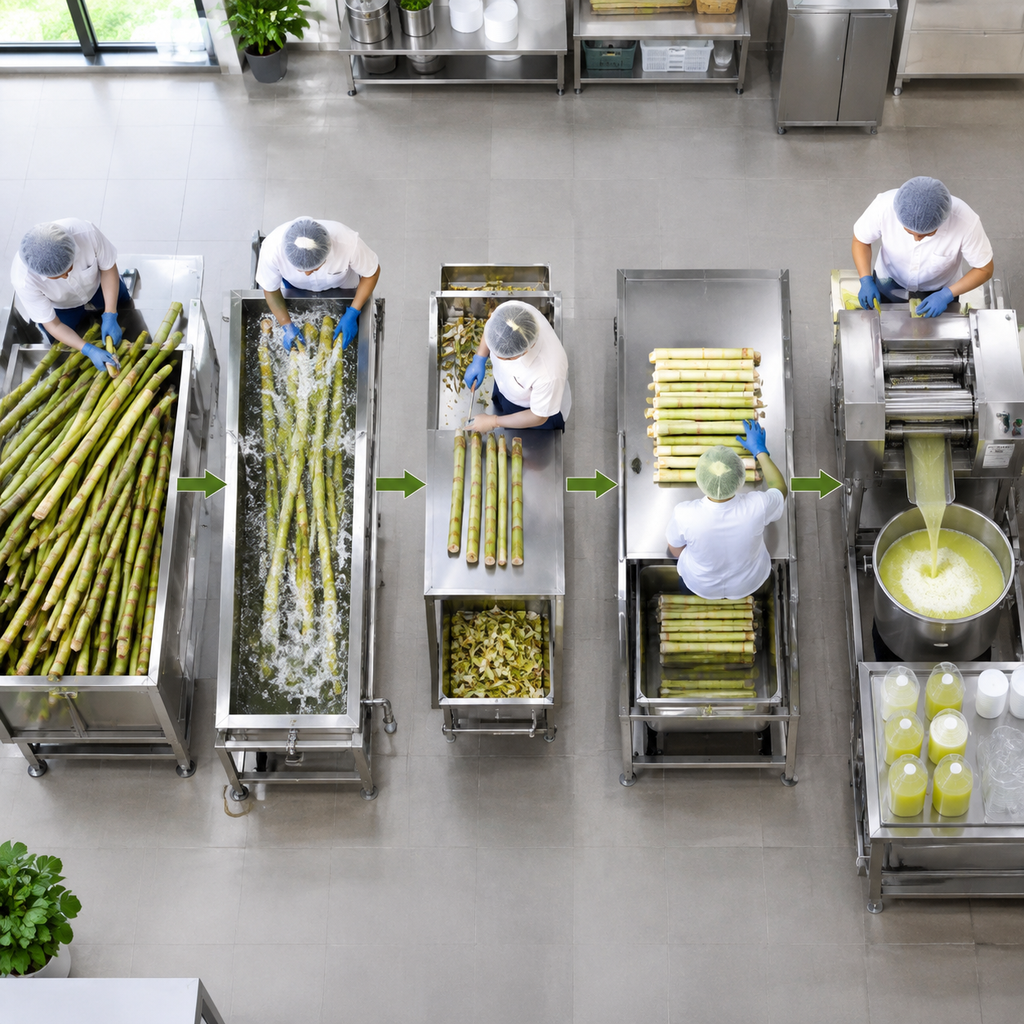
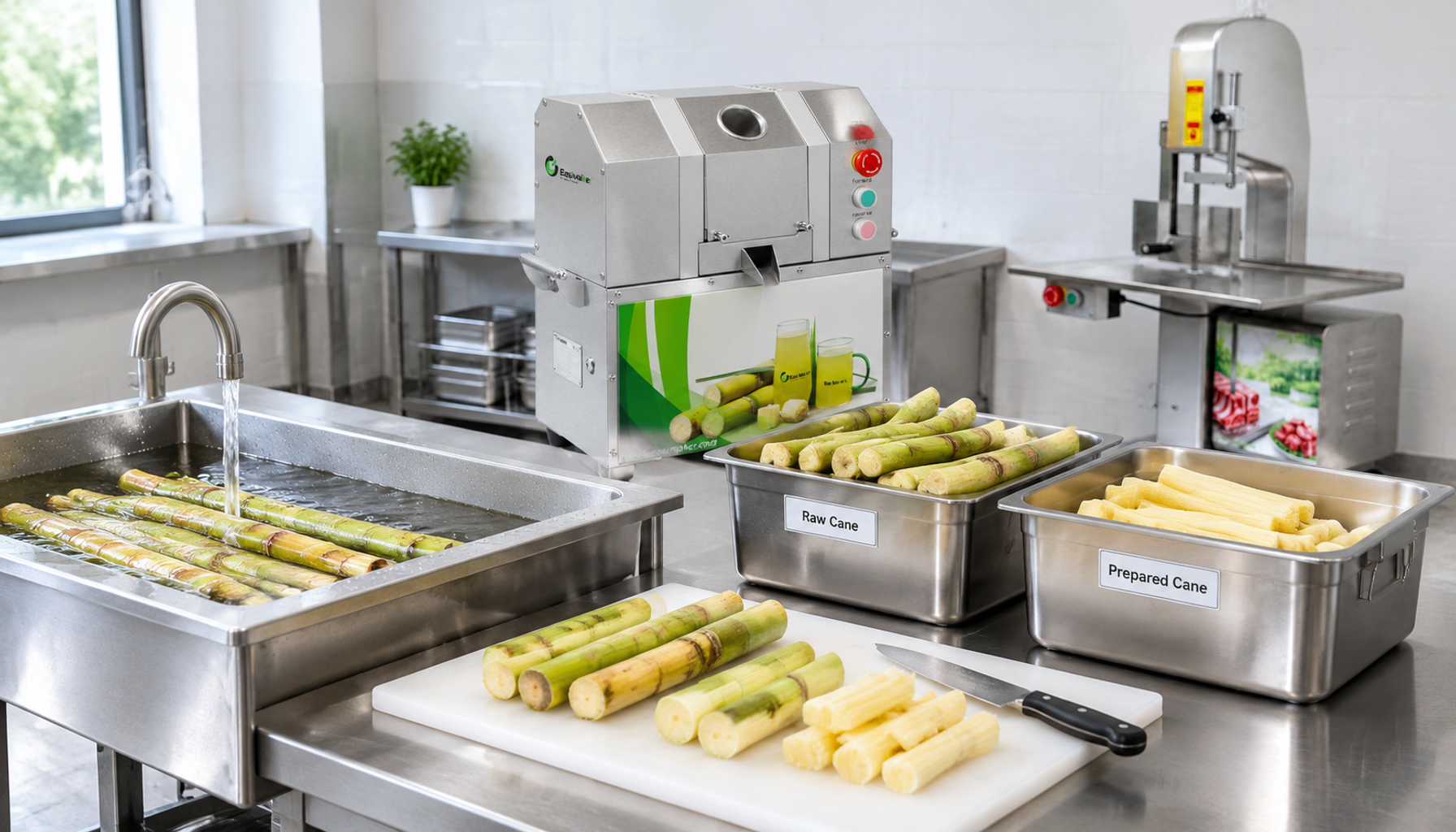
Sugarcane preparation before juicing should follow one controlled direction: receive and inspect the cane, wash the exterior, remove unsuitable sections, trim ends and nodes as needed, cut stalks to suit the machine inlet, keep prepared cane protected, then feed it steadily into the juicer. This sequence separates raw-material handling from juice collection and service.
For a commercial operator, preparation is not simply cutting cane into shorter pieces. It is the process that helps prevent soil and damaged material from reaching the juicing area, keeps staff from improvising during busy periods, and makes the feedstock more consistent for the equipment. The exact cutting length, whether to peel, and the number of preparation stations depend on the stalk size, shop layout, machine design, local food-handling requirements, and expected order flow.
A practical workflow should have separate zones or clearly separated containers for unwashed cane, washed cane, trimmed cane, juice-service tools, and bagasse. For a broader station plan, see this guide to a clean and efficient sugarcane juice shop layout.
1. Receive and Select Cane Before It Enters the Preparation Area
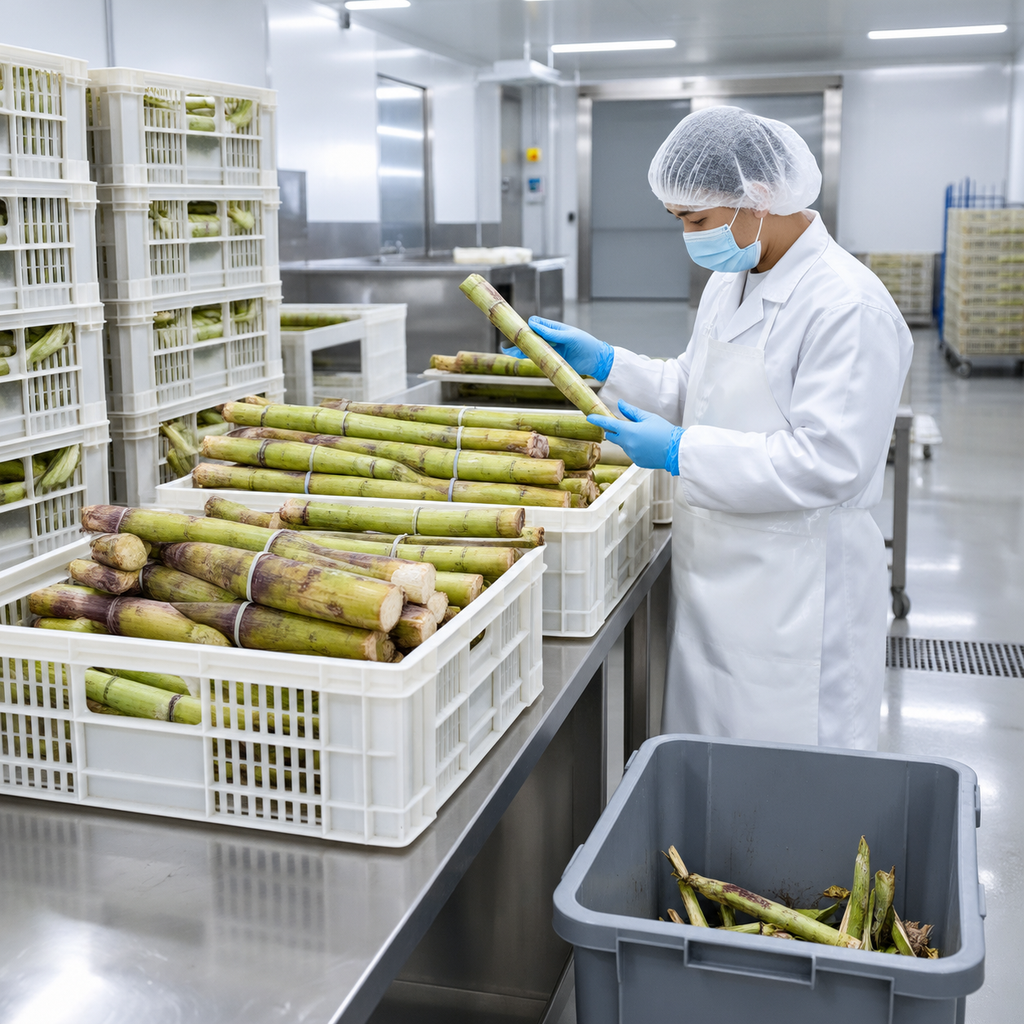
Start with a receiving check. Keep delivered cane off the floor and away from clean utensils, cups, and finished juice. Check the outside of the bundle for excessive dirt, visible mould, soft or leaking sections, pest damage, unusual odour, or heavily split stalks. Set questionable stalks aside for management review or disposal according to your site procedure.
Choose sound stalks that are appropriate for your product and equipment. Cane diameter and straightness vary by variety and supply source, so do not assume one cutting method fits every delivery. A short trial run at the start of a new batch can confirm whether the pieces feed smoothly through your juicer.
Record supplier, delivery date, and any receiving issue in a simple log when your operation needs traceability. Rotate stock so older acceptable cane is prepared first. Storage conditions and holding time affect the practical quality of cane, which is why receiving, storage, and preparation should be managed as one process rather than isolated tasks.
2. Wash, Inspect, and Trim the Exterior
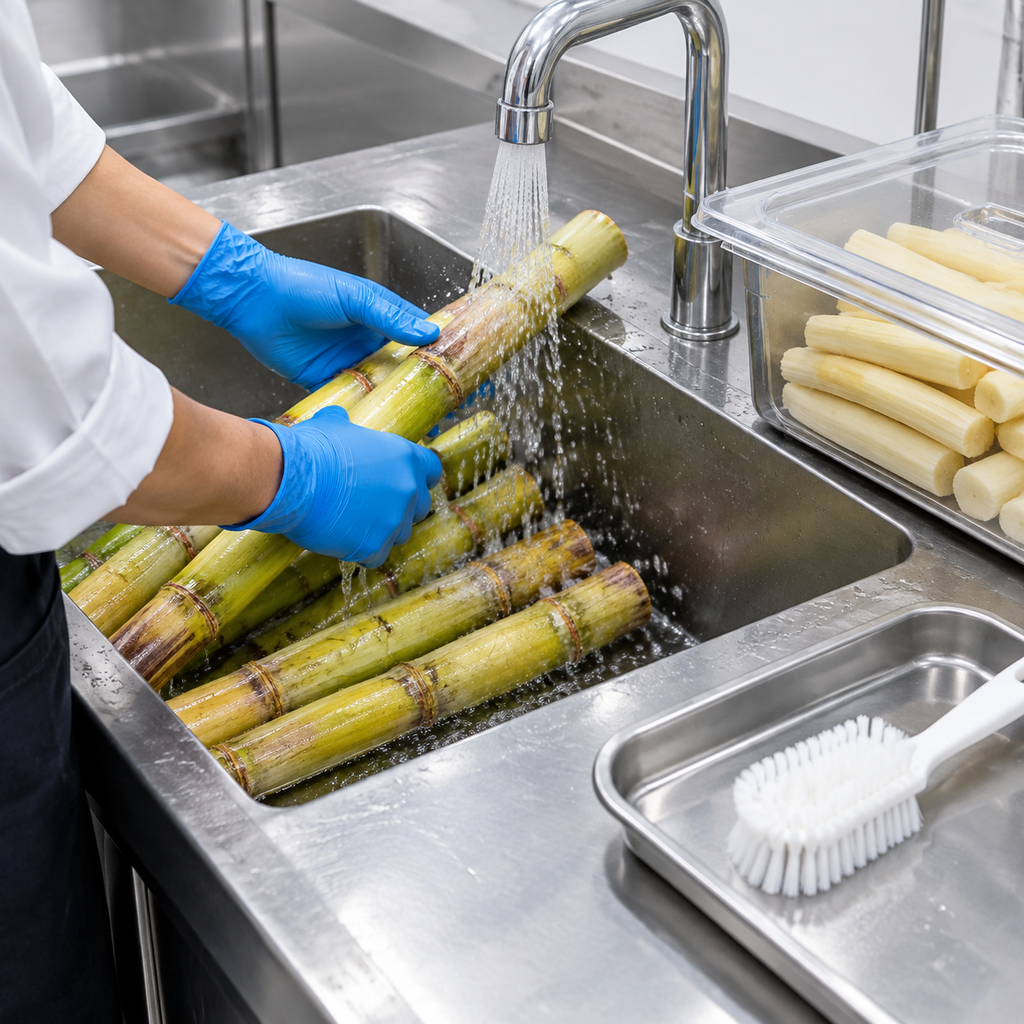
Washing is the core hygiene step in commercial sugarcane juice preparation because the outer rind can carry soil and handling debris. Use potable water and a dedicated wash sink or washing area that is not used for dishwashing or waste handling. Rinse each stalk thoroughly and scrub where needed with a food-contact brush reserved for this task.
After washing, inspect again under good lighting. Trim away visibly damaged, dried-out, dirty, or discoloured ends. Remove loose fibres and any material that could interfere with feeding. Knuckles or nodes do not always need removal, but prominent or hard sections may be trimmed when they make the stalk difficult to cut or feed.
Sanitising is not a substitute for washing. Follow the approved cleaning and food-contact procedures for your location, including requirements for sinks, brushes, knives, boards, and staff handwashing. Keep cleaned cane in a clean, covered or otherwise protected staging container rather than returning it to a raw-cane crate.
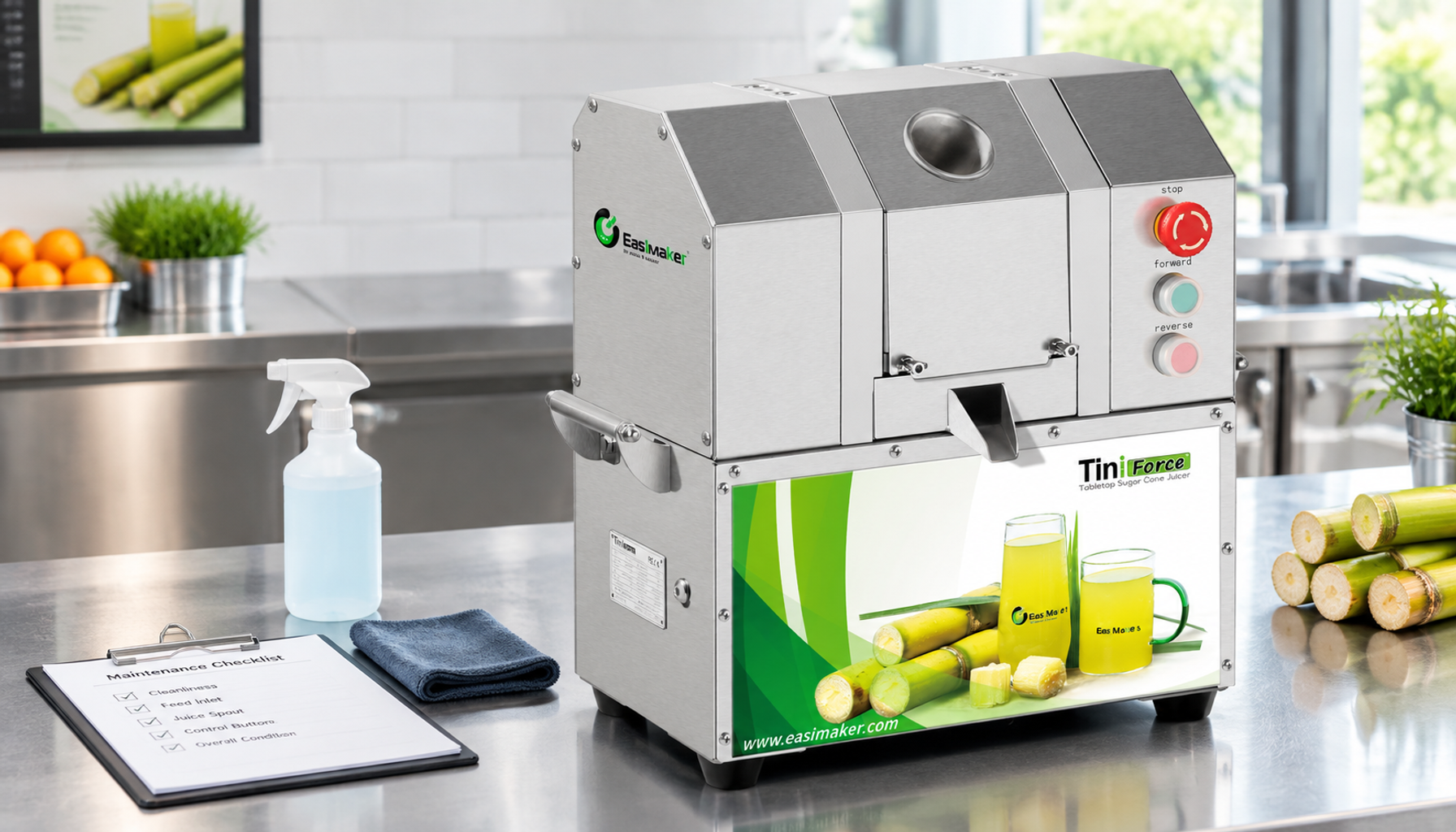
A documented cleaning routine for the juicer is equally important. Pair cane preparation with a defined daily sugarcane juice machine cleaning SOP so that clean raw material does not meet an inadequately cleaned extraction path.
3. Make Deliberate Cutting and Peeling Decisions
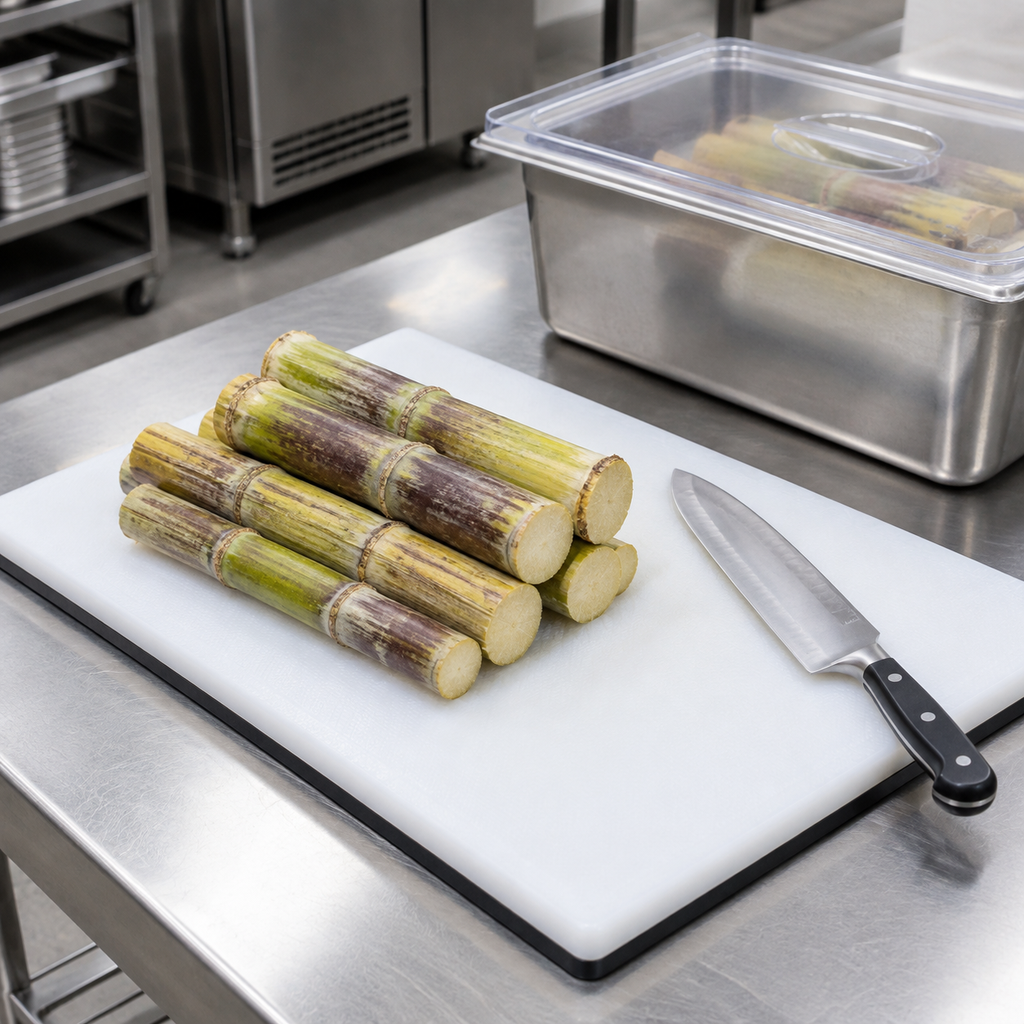
When operators ask how to prepare sugarcane for juicing, cutting length is usually the first practical question. Cut washed cane into pieces that fit the machine’s feed opening and can be held and guided safely. Do not force overlong, bent, or oversized stalks through an inlet. Refer to the operating instructions for the particular machine instead of applying a universal length.
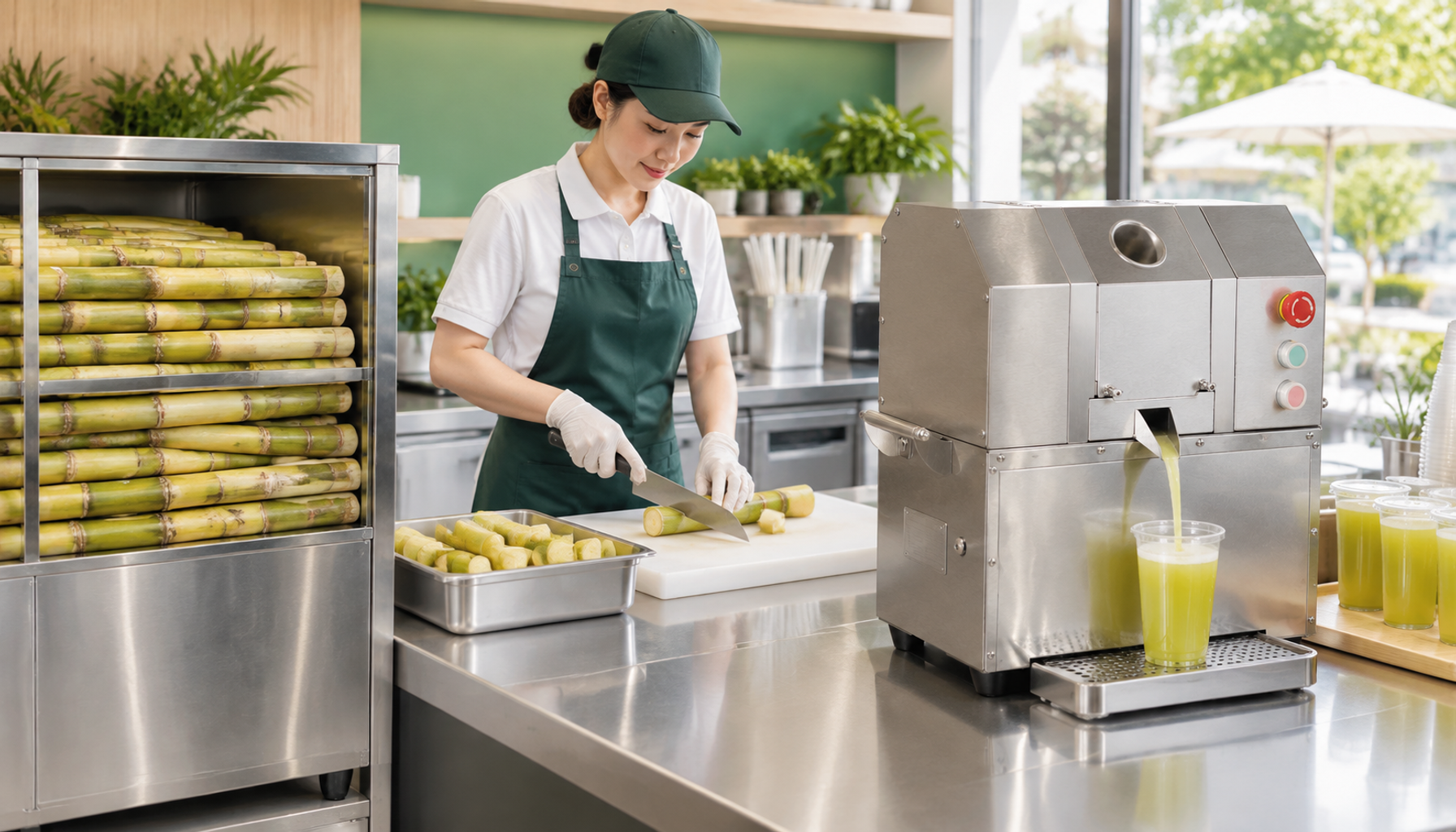
Use a stable food-preparation surface, a suitable sharp knife or approved cutter, and a non-slip method of securing the cane. Train staff to keep hands clear of the cutting path, cut away from the body, and place cut pieces directly into a clean staging container. Dull tools increase effort and can lead to rough, inconsistent cuts.
Full peeling is not automatically required for every commercial juice program. Some operators retain the cleaned rind and use a juicer designed to process prepared stalks. Others peel sections when local product standards, customer expectations, the condition of the rind, or machine guidance make it appropriate. If peeling is used, it should be consistent: remove peel in a designated raw-prep area, control peel waste, and avoid re-contaminating cleaned cane.
Never treat a general-purpose saw or a meat-processing band saw as a default cane-cutting tool. Sugarcane cutting and peeling for juice should use a process and equipment that are suitable for the product, safely guarded, cleanable, and permitted by site procedures.
4. Stage Prepared Cane and Feed the Juicer at a Controlled Pace
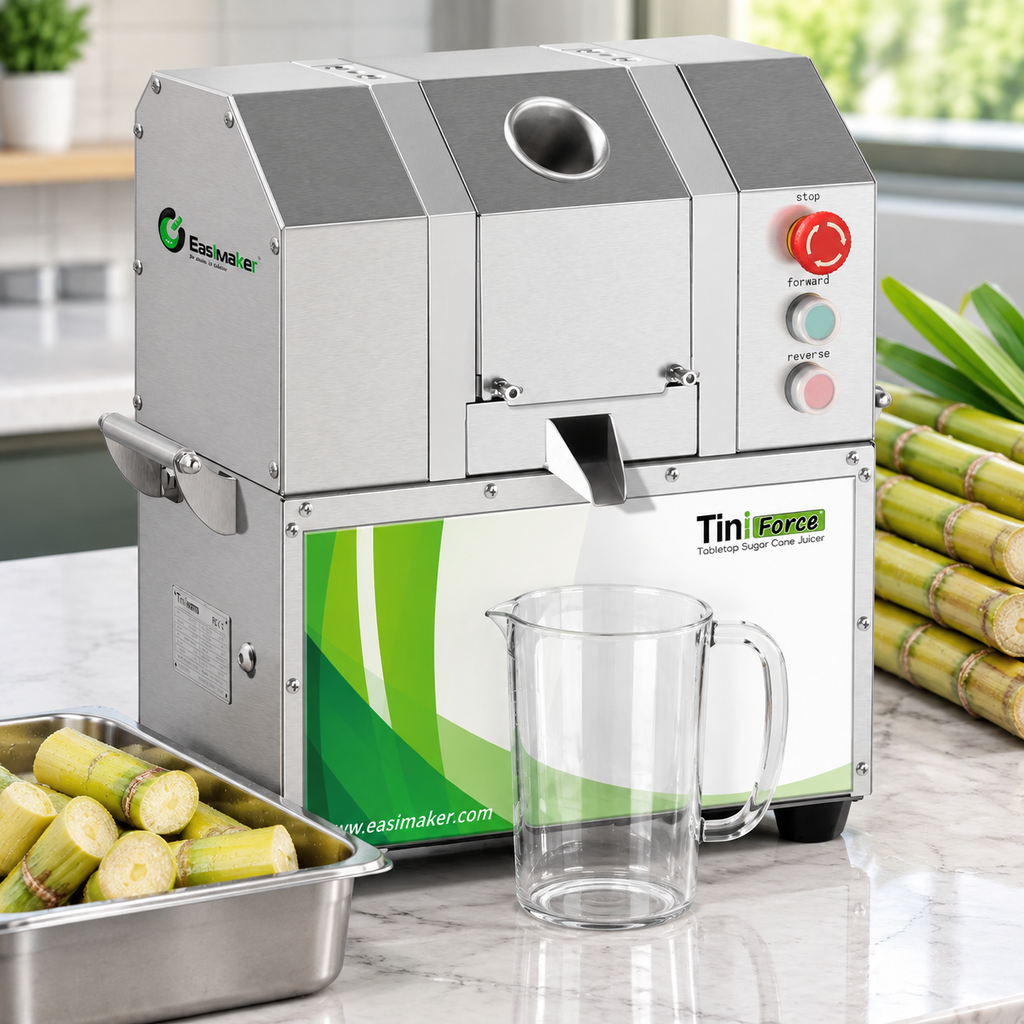
Prepare only the amount of cane that the team can protect and use within its defined operating window. Over-preparing can crowd the counter, complicate stock rotation, and increase handling. During peak periods, a small staged batch of washed and cut cane can keep the juicer operator focused on extraction and customer service.
Before starting, check that the machine is assembled correctly, the juice collection container is clean and positioned correctly, and bagasse can discharge without obstruction. Feed one prepared piece at a time in the direction specified by the manufacturer. Keep hands, utensils, and loose clothing clear of the feed opening. Use only the supplied or approved method for advancing cane; never reach into the inlet to clear material while the machine is energised.
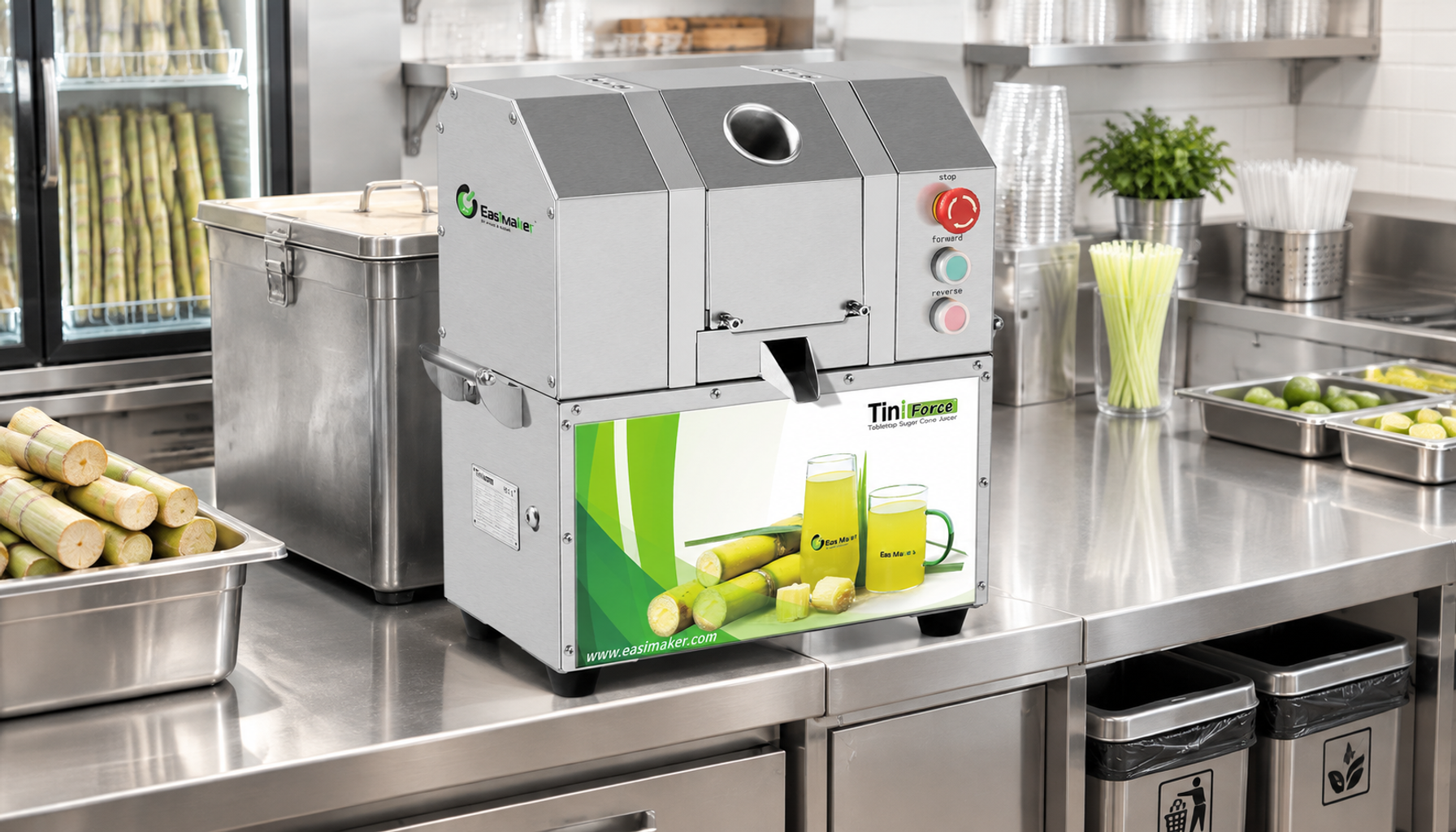
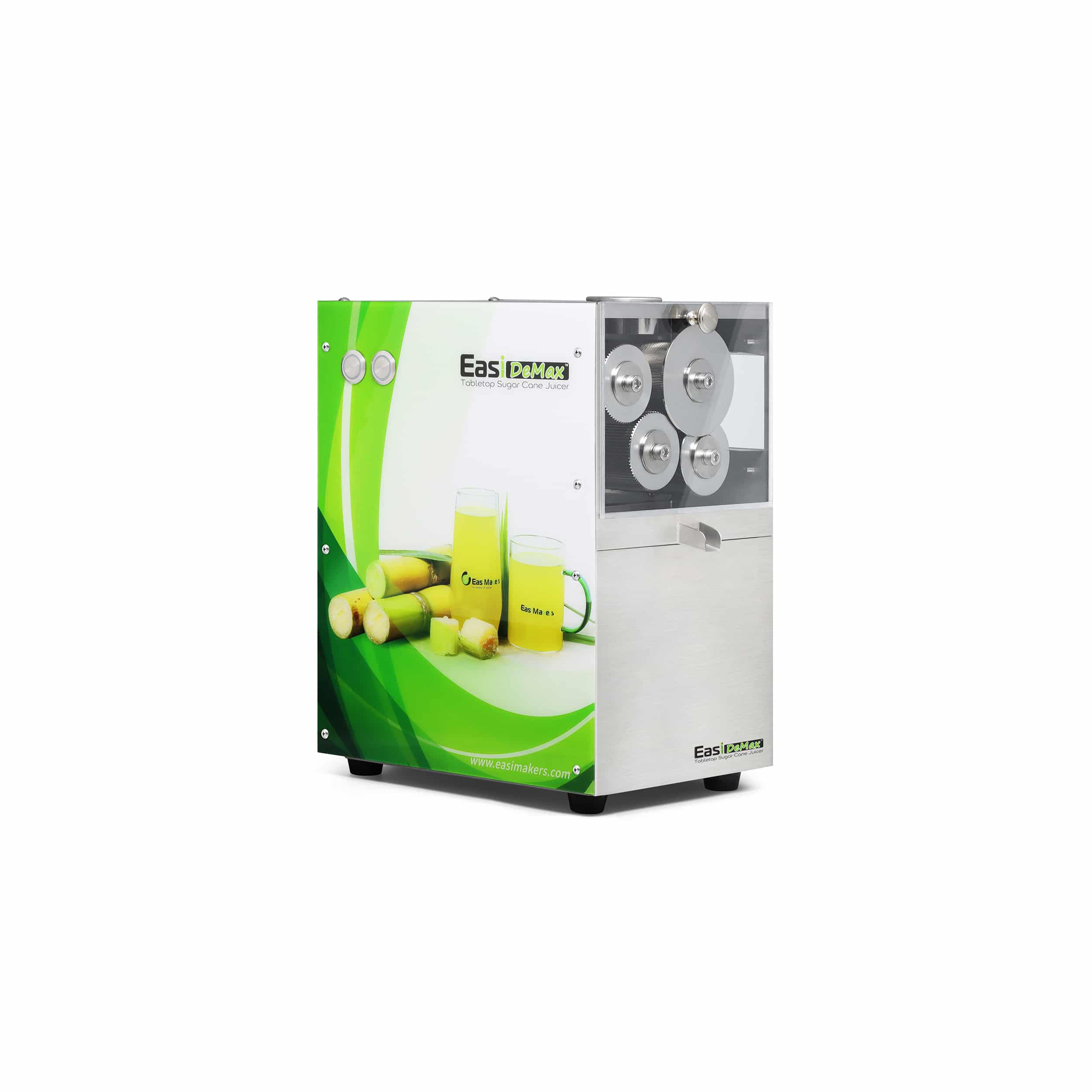
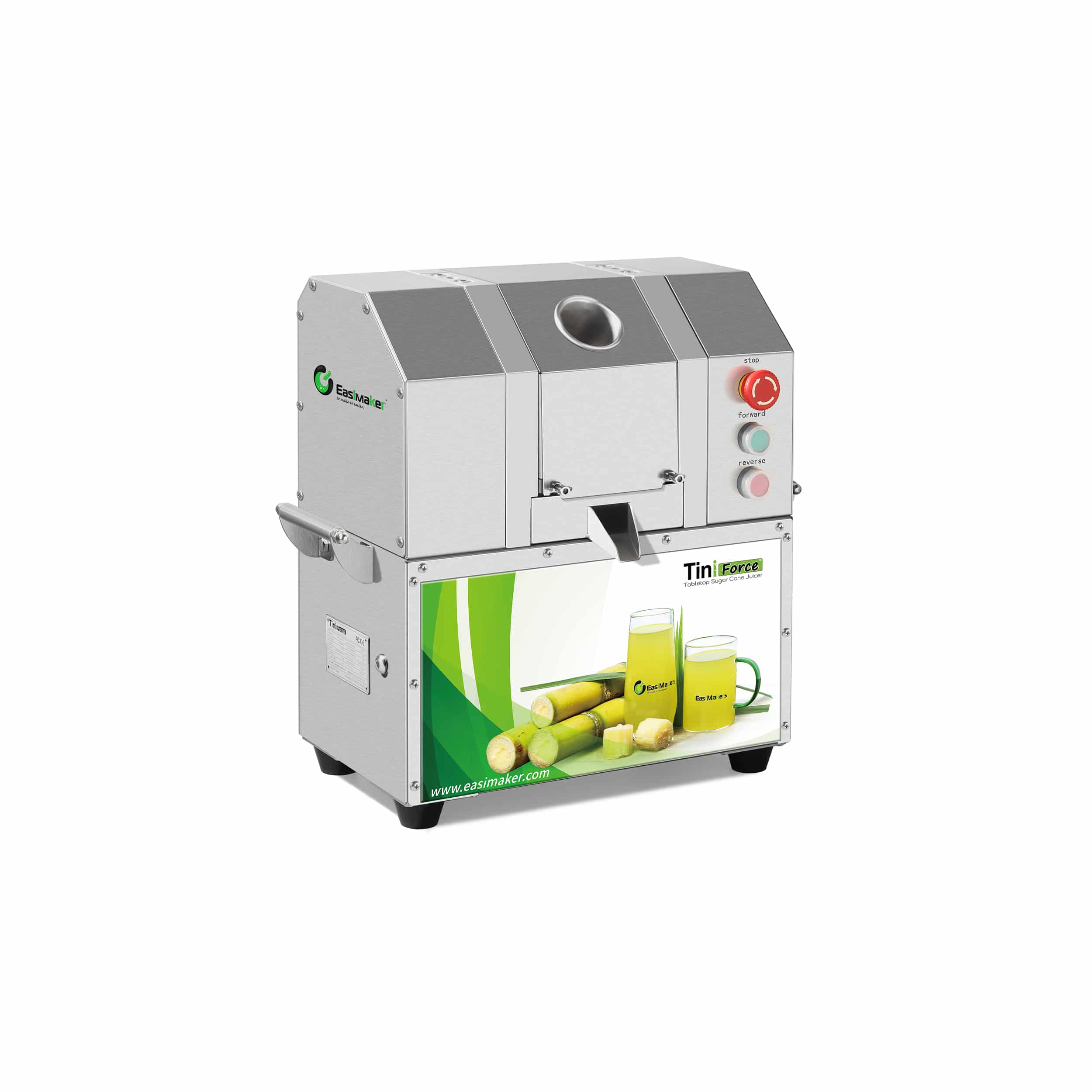
For example, the front-feed configuration shown in the commercial sugarcane juicer selection guide should be matched with a counter position that allows the operator to load cane from the front while managing juice collection and rear bagasse clearance. Choose a machine only after confirming its physical workflow and operating instructions against your actual site.
If a stalk does not enter smoothly, stop and assess the piece. Do not use excessive force. It may need further trimming, a different orientation, or removal if it is not suitable for the machine.
Preparation Tools and Equipment Roles
The best equipment list is the one that supports a clear, clean workflow without adding unnecessary handling steps. Confirm material suitability, cleanability, guarding, local compliance, and available counter space before purchase.
| Item or equipment | Primary role | What to evaluate | Operator note |
|---|---|---|---|
| Receiving crate or rack | Keeps incoming cane off the floor | Cleanable construction and separation from clean zones | Use only for unwashed cane. |
| Wash sink and dedicated brush | Removes exterior soil and debris | Potable-water access, drainage, and cleanable food-contact surfaces | Store brushes clean and dry between uses. |
| Knife and preparation board | Trims ends and cuts stalks to feed size | Safe handling, stable board, cleaning routine, and staff training | Match cut length to the actual juicer inlet. |
| Covered staging container | Holds washed and cut cane before extraction | Food-contact suitability and easy cleaning | Label or position it to prevent raw/clean mix-up. |
| Commercial sugarcane juicer | Extracts juice from prepared cane | Feed arrangement, workspace, cleaning access, power requirements, service support | Follow the specific manual for operation and safe clearing. |
New operators can cross-check the full operating station against this sugarcane juice bar equipment checklist, including collection, refrigeration, cleaning, and waste-handling needs.
Daily Controls That Keep Preparation Consistent
Consistency comes from short checks repeated every day, not from a complicated process that staff cannot maintain. A shift lead can use the following controls:
- Opening check: verify that wash, cutting, staging, juicing, and waste areas are clean and ready.
- Raw-to-clean direction: move cane from receiving to washing to preparation to juicing; do not send it backward.
- Tool control: keep knives, boards, brushes, and containers assigned to their task and cleaned between shifts.
- Batch discipline: prepare practical quantities and rotate staged cane in order.
- Machine readiness: inspect the feed area, juice path, bagasse discharge area, and collection container before service.
- Exception handling: stop when cane is unusually hard to feed, visibly unsuitable, or associated with a machine concern.
Common avoidable mistakes include washing cane in a sink used for dirty equipment, placing clean cane back into raw crates, cutting every stalk to one assumed size, leaving prepared cane exposed on a crowded counter, and trying to clear a running machine by hand. These shortcuts can disrupt both hygiene and service flow.
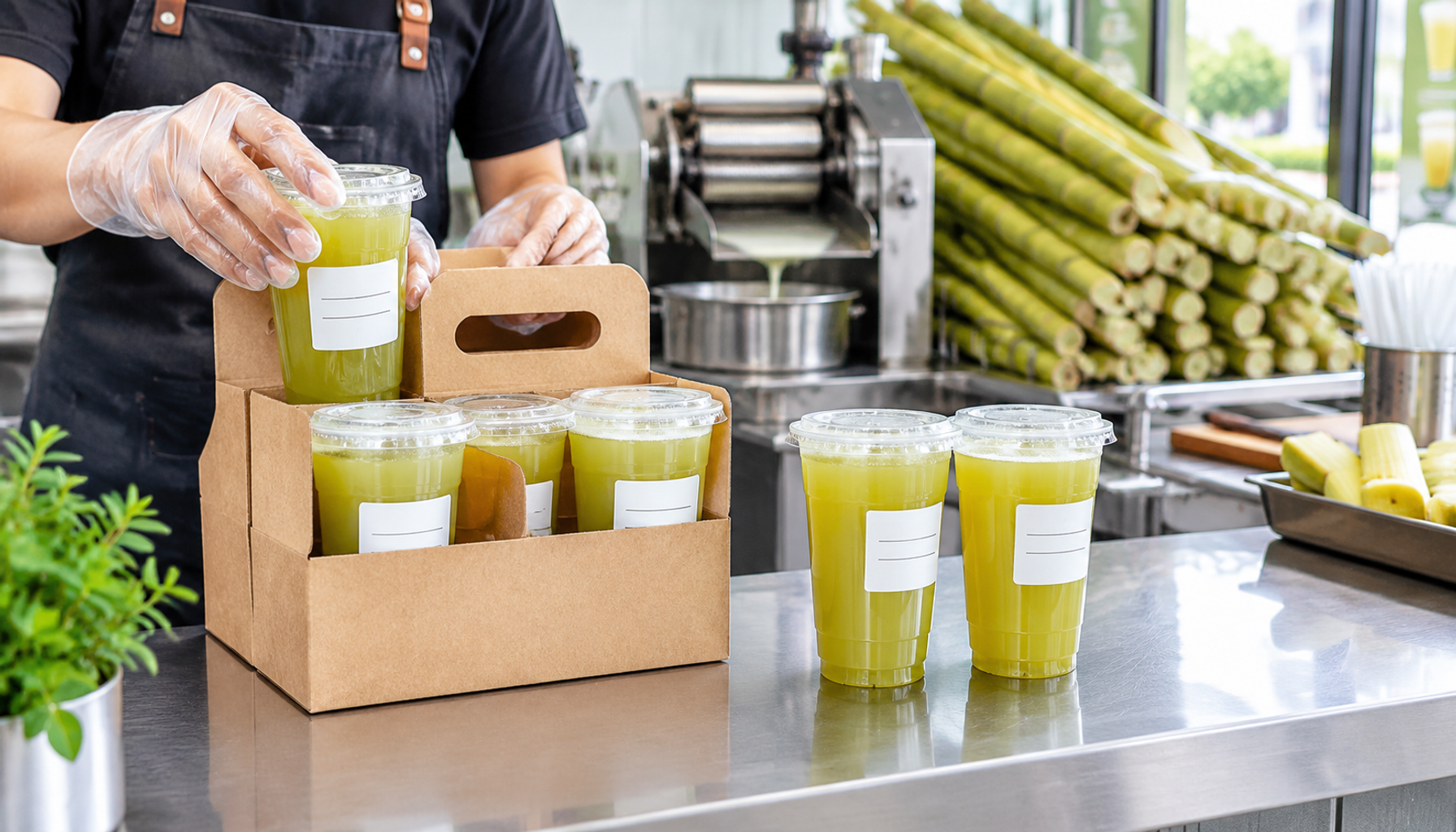
Once juice is extracted, maintain the same discipline through handoff. This practical guide to packaging sugarcane juice for takeaway and delivery covers cup, lid, sealing, and handling considerations after the preparation and juicing stages.
FAQ
Do you need to peel sugarcane before juicing?
Not always. The need to peel depends on the juicer design, the condition of the cane, your intended product standard, and local operating requirements. Washed and inspected cane is essential; full peeling should be a deliberate process decision rather than an assumption.
How long should sugarcane pieces be before juicing?
There is no single correct length for all machines. Cut pieces to fit the specific feed opening and to allow safe, controlled handling. Check the machine manual and test a new cane batch before high-volume service.
Can washed sugarcane be stored for later service?
It can be staged only under your defined food-handling procedure and in a clean, protected container. Avoid preparing more than the operation can properly protect, rotate, and use within its established holding practice.
What should staff do if a cane piece will not feed into the juicer?
Do not force it. Stop the feed attempt, follow the machine’s operating instructions, and inspect the stalk for excess size, hard nodes, bending, or damage. Trim or discard the piece as appropriate, and never place hands inside an energised feed opening.
Plan a Preparation Workflow That Fits Your Juicing Operation
Easimaker can help B2B buyers discuss a commercial sugarcane juicer setup that matches their expected output, available counter space, cane preparation process, and service market. Contact our team to discuss equipment selection or OEM/ODM requirements.