Table of Contents
- What street vendors need from a sugarcane machine
- What is a commercial sugarcane juice machine?
- How to choose a machine for a street-vending site
- Plan the cart, kiosk, or stall layout
- Prepare utilities, cane, and service workflow
- Operate safely and consistently during a shift
- Clean and maintain the machine every day
- Questions to ask before ordering
A practical guide for street vendors choosing and setting up a commercial sugarcane juice machine, from counter layout and electrical planning to hygiene, workflow, cleaning, and supplier support.
What street vendors need from a sugarcane machine
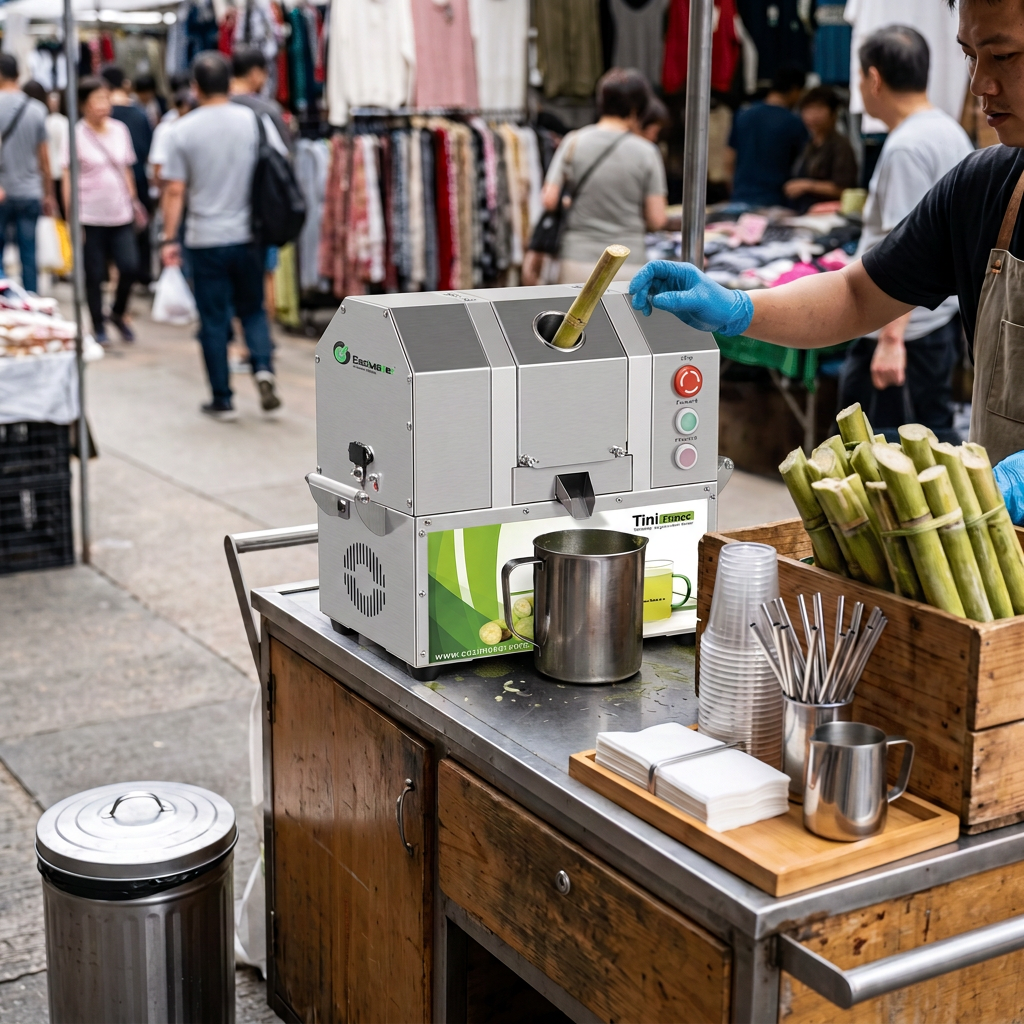
A sugarcane machine for street vendors should fit the actual selling location before it is judged by appearance or headline output. The right commercial unit is one that can be placed securely, connected to the available power supply, cleaned between service periods, and operated at a steady pace by the staff on site.
For most carts, kiosks, market stalls, and roadside counters, the setup process is straightforward: confirm local vending and food-handling requirements; measure the working space; choose a commercial sugarcane juice machine with suitable electrical specifications and accessible cleaning areas; organize cane storage, washing, serving, and waste collection; then establish a daily cleaning and inspection routine.
Do not select a machine based only on an assumed number of cups per hour. Cane diameter, cane condition, staff technique, preparation time, serving format, electrical stability, and cleaning breaks all affect the real workflow. A vendor with a limited counter may benefit more from a compact, serviceable machine and a disciplined process than from equipment that is difficult to accommodate or maintain.
What is a commercial sugarcane juice machine?
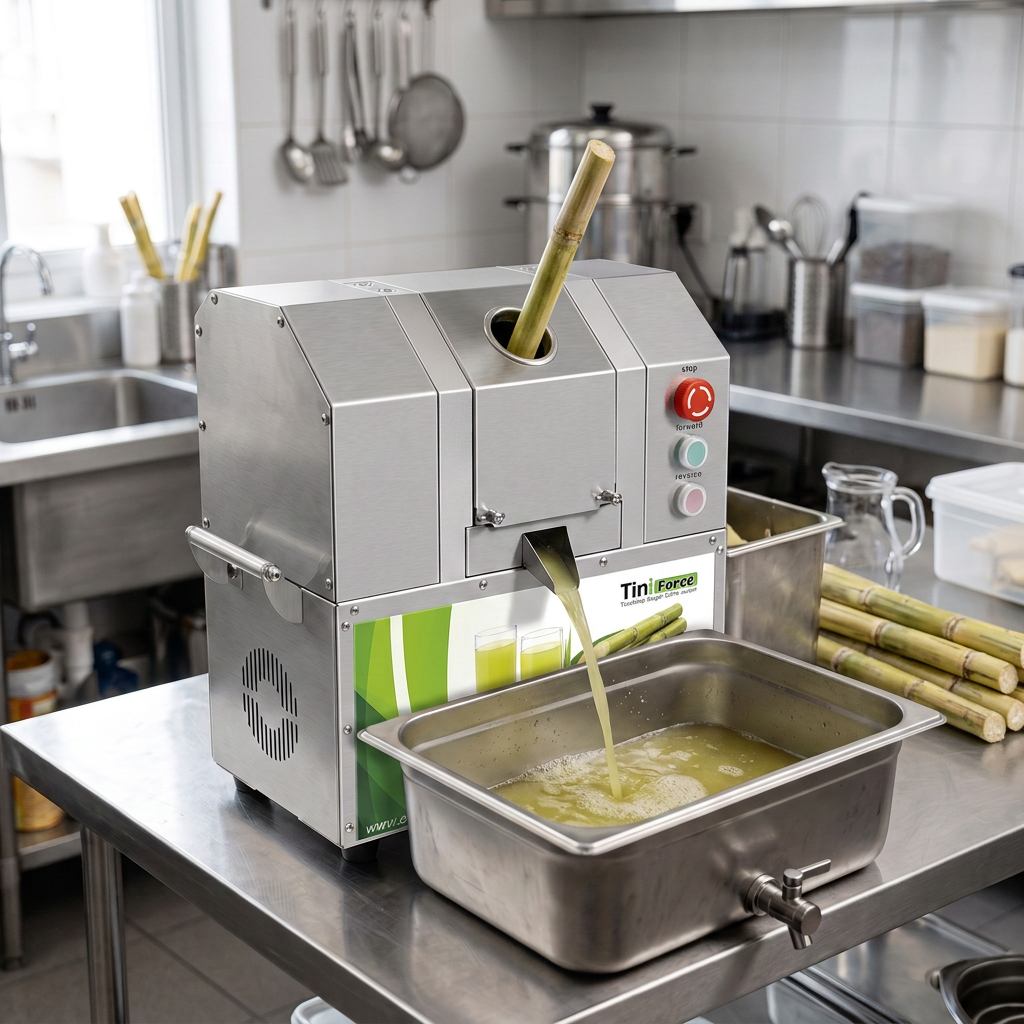
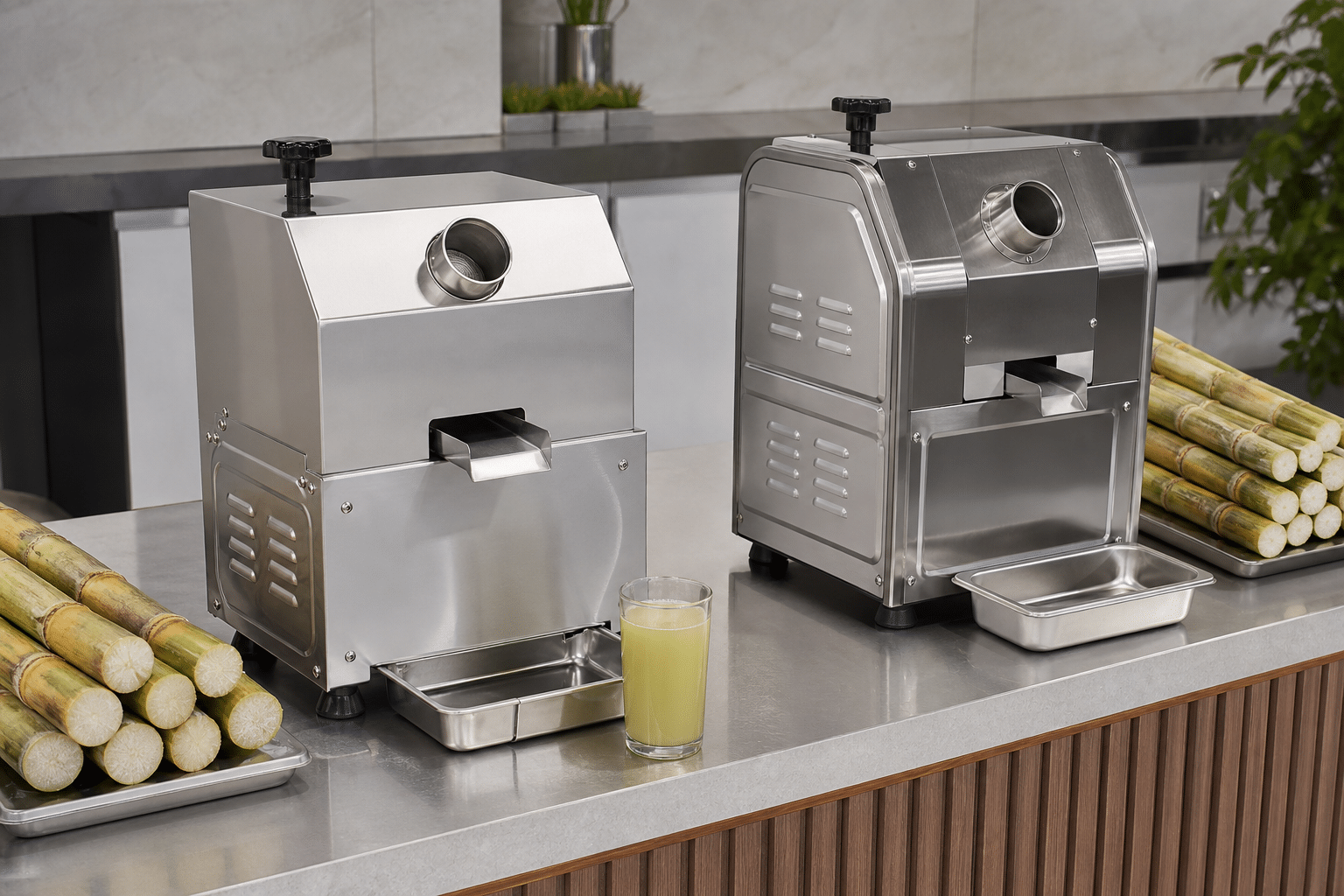
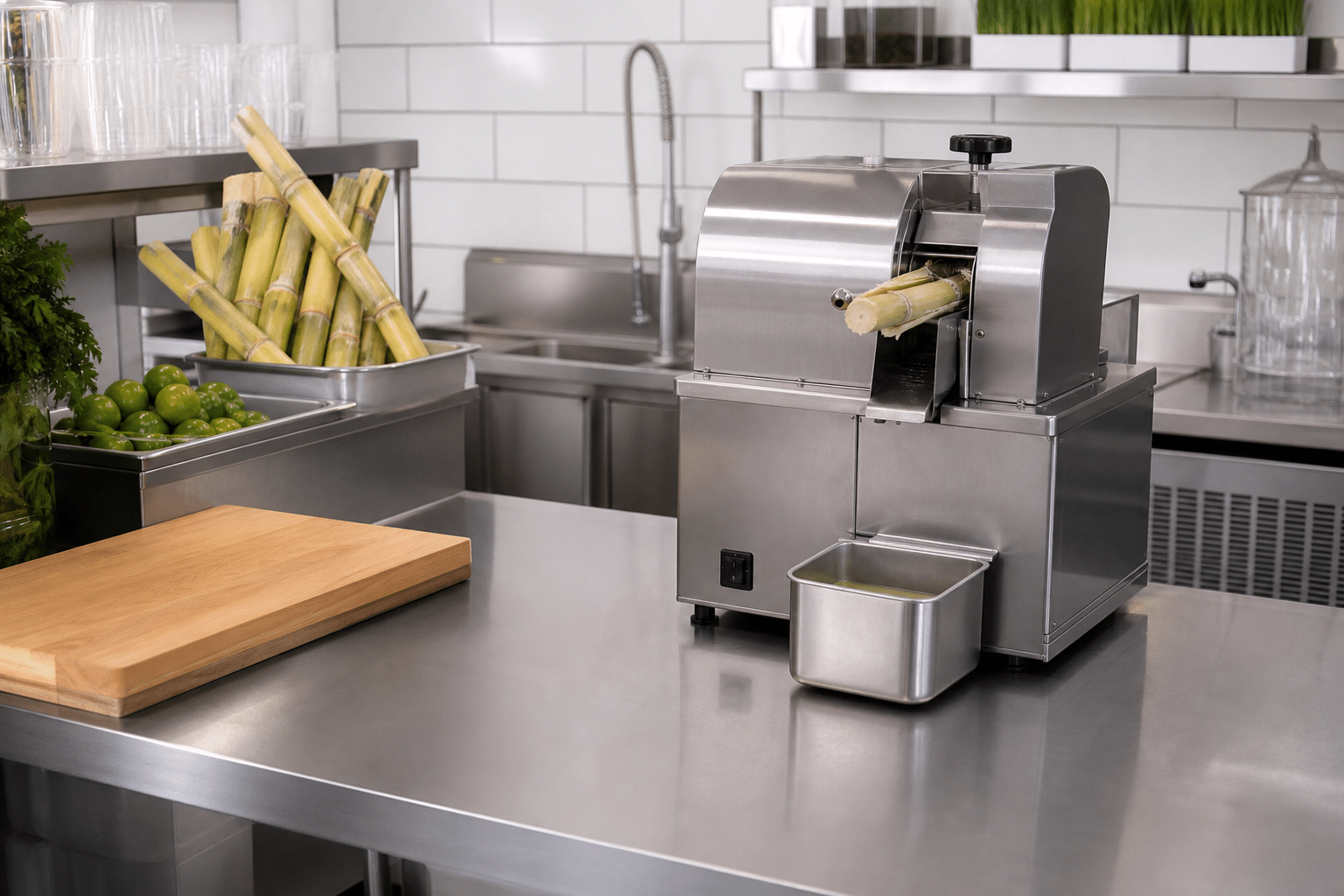
A commercial sugarcane juice machine is a food-service machine designed to press prepared sugarcane and separate juice from the fibrous cane residue. The operating system commonly uses rollers driven by a motor. Depending on the machine design and the condition of the cane, operators may pass cane through the rollers more than once to support extraction. The resulting juice is collected in a food-contact area, while the pressed fibre is directed to a separate waste container.
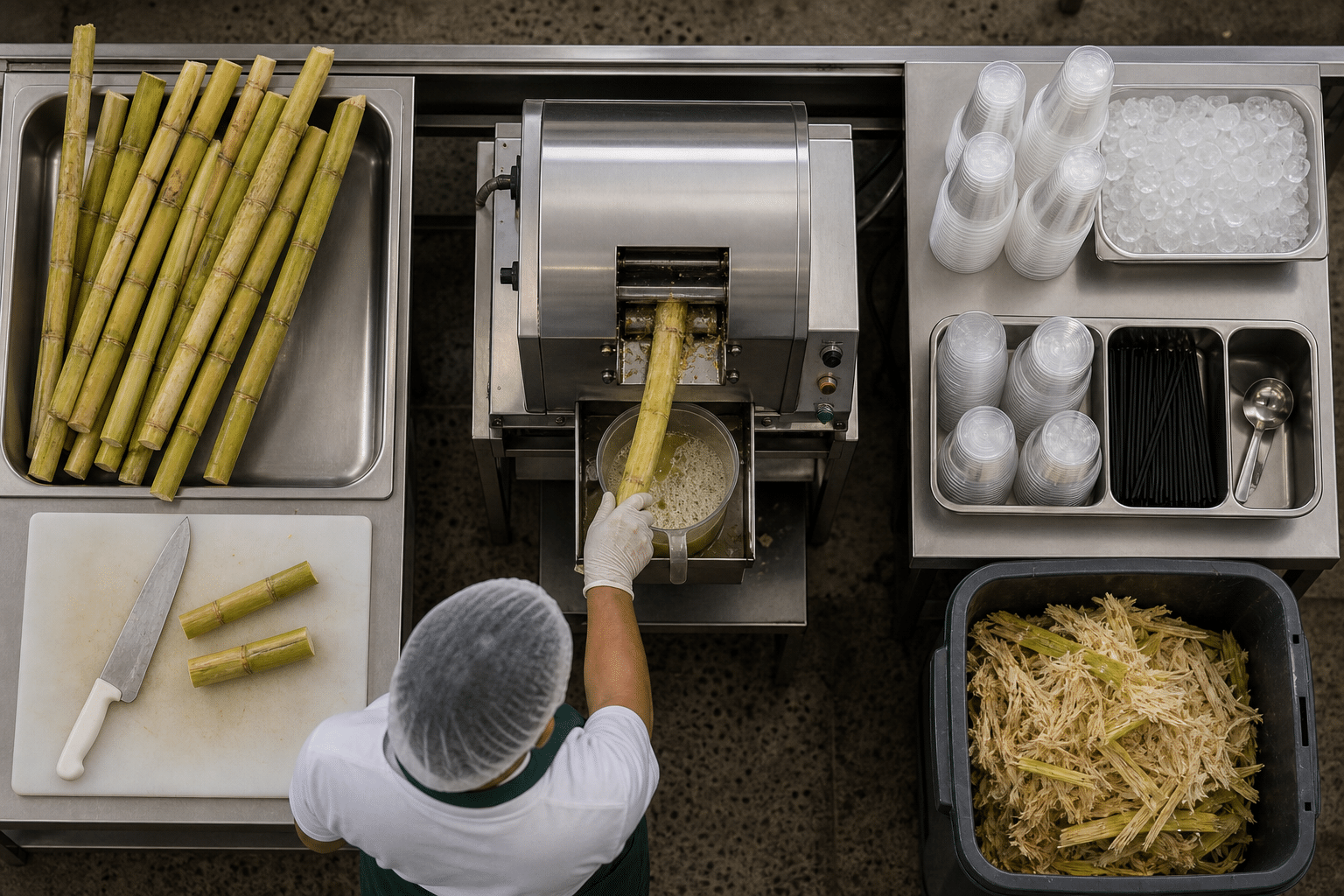
Street-vending equipment needs more than pressing capability. It should support a repeatable sequence: receive and inspect the cane, wash it, trim or cut it where necessary, feed it safely, collect the juice, prepare the drink, and remove waste without crossing dirty and clean tasks. The construction, roller arrangement, guards, access for cleaning, controls, and electrical configuration should all be reviewed against this sequence.
Roller construction is one detail worth discussing with a supplier because it can influence long-term maintenance considerations. Read this guide to solid and hollow sugarcane juicer rollers when comparing machine designs, but confirm the exact material, configuration, and service instructions for the model you intend to buy.
How to choose a machine for a street-vending site
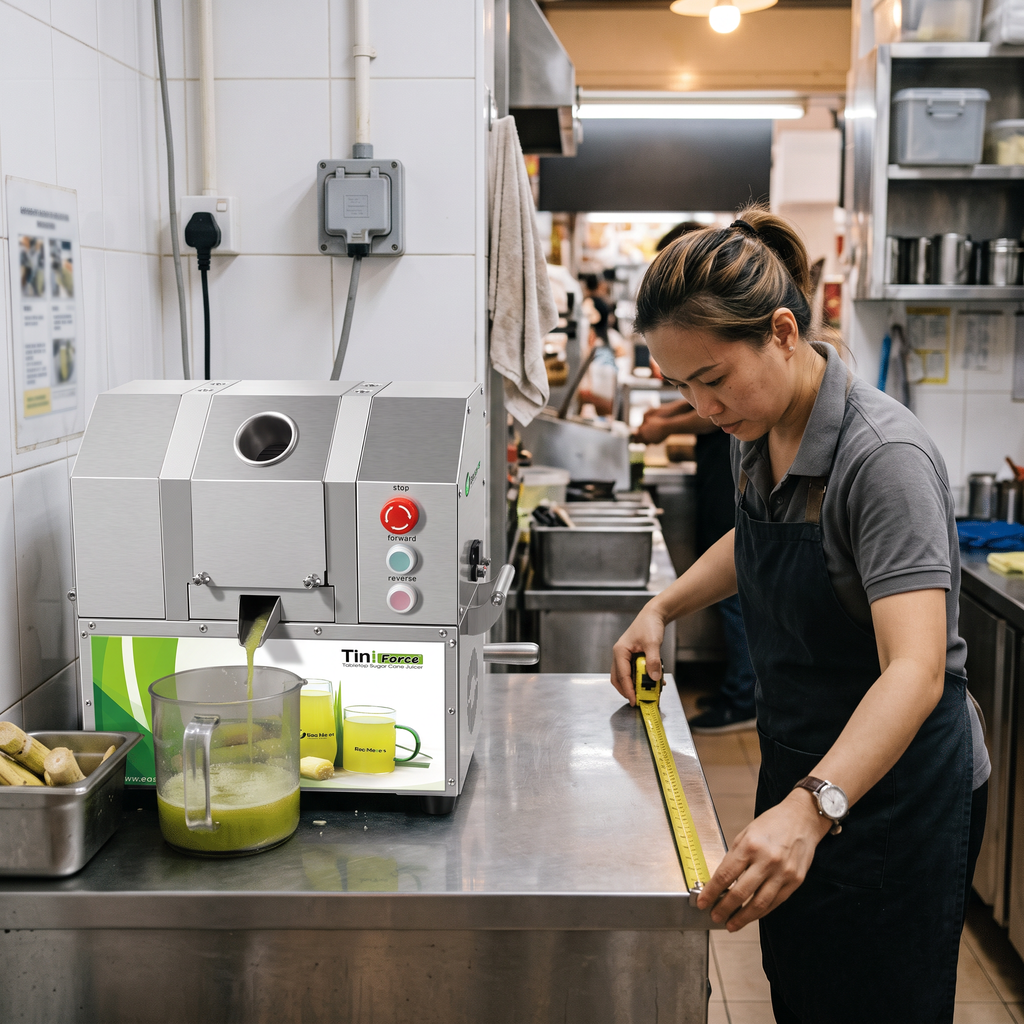
Start with the site rather than a generic machine category. A permanent kiosk with protected utility connections has different needs from a movable cart operating in a market or at an event. Make a short specification sheet before asking for quotations.
1. Match the machine to the available footprint
Measure the counter width, depth, clear height, service-side clearance, and route used to move the machine into place. Leave working space for the operator to feed cane, remove residue, clean the machine, and access the power switch. A machine should stand on a level, rigid surface; it should not be balanced on an improvised cart shelf or positioned where customers can contact moving parts.
2. Confirm electricity before purchase
Ask for the machine’s rated voltage, frequency, plug type, and power requirement, then compare them with the site supply. Do not assume that a plug adapter makes an electrical configuration suitable. Outdoor or semi-outdoor sites may also need protected sockets, appropriate cable routing, and local electrical work by a qualified professional. If power quality is uncertain, raise that condition with the supplier rather than selecting a protective device without technical confirmation.
3. Review hygiene and service access
For a daily vending operation, operators need practical access to food-contact and splash areas for cleaning. Review the cleaning procedure, parts that may be removed, safe reassembly steps, and the availability of replacement items before committing. The broader commercial sugarcane machine selection guide can help structure this evaluation.
4. Plan around the cane you can source
Suppliers should know the usual cane type, approximate diameter range, condition on delivery, and whether it is sold whole or pre-cut. This information helps them advise on suitable preparation and machine fit. Avoid treating capacity statements as universal: cane that is unusually hard, dry, crooked, dirty, or inconsistent can change operator workload and throughput.
Plan the cart, kiosk, or stall layout
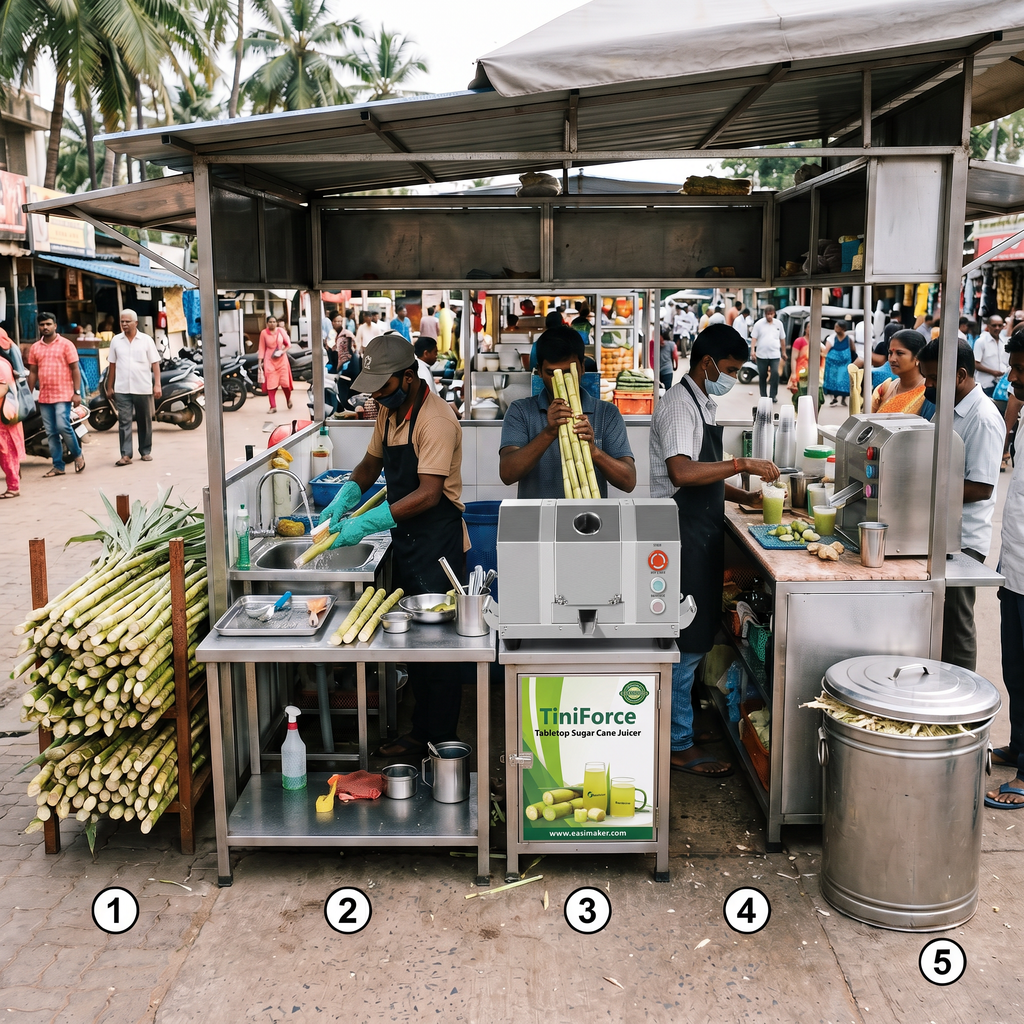
A clear layout reduces unnecessary handling and helps an operator keep the serving area orderly during busy periods. Arrange the stall in the direction the work happens, from incoming raw cane to finished drink.
- Receiving and storage: Keep unwashed cane off the serving counter and protected from dust, standing water, and direct sources of contamination.
- Wash and preparation area: Provide a separate place for washing and trimming cane. Do not prepare cane directly above the juice collection area.
- Pressing station: Set the sugarcane machine on a stable, level, easy-to-clean surface. Maintain enough clear space for safe feeding and residue removal.
- Serving station: Keep cups, lids, ice where used, ingredients, and cash-handling items organized so the operator does not repeatedly reach across the machine.
- Waste station: Place a lined, covered or otherwise appropriately managed bin close to the residue discharge path, following local rules. Empty it before it becomes difficult to handle.
- Handwashing and cleaning supplies: Plan these according to local food-vending rules. Cleaning cloths, brushes, food-safe cleaner, and sanitizing materials should not be stored where they can contaminate ingredients or packaging.
Consider customer flow too. The order and payment point should not crowd the feeding side of the machine. Use physical separation or positioning to keep customers away from operational areas, moving components, electrical cables, and stored cane. For operators developing a more formal mobile business, the discussion of sugarcane juice business operating considerations offers useful market context, though local permits and vendor rules remain the controlling requirements.
Prepare utilities, cane, and service workflow
Before opening, inspect the vending location and prepare the machine according to its manual. Check that the unit is stable, guards and covers are correctly installed, the collection area is clean, and the power connection is dry and protected. Do not operate equipment with damaged cables, loose components, unusual noise, or a condition that prevents safe use.
Prepare cane in batches that match the expected service period. Inspect it and discard material that is visibly spoiled or otherwise unsuitable. Wash cane using a method that meets local food-safety requirements, then trim and cut it to a length that can be fed safely into the machine. Use a dedicated food-preparation tool and keep fingers, loose gloves, jewelry, sleeves, and cleaning tools away from the feed path.
Set up a simple production rhythm: one prepared batch ready, one batch in use, and only the amount of cane exposed that staff can handle hygienically. This prevents the work surface from becoming overloaded. It also makes it easier to pause, clean, replenish supplies, or deal with a queue without losing control of the process.
Before buying, ask a manufacturer for the documentation that supports this setup, including dimensions, electrical data, installation requirements, cleaning instructions, parts information, and warranty or service process. This checklist of questions for a sugarcane juicer manufacturer is a useful starting point.
Operate safely and consistently during a shift
Street vending is a repeated process, so consistency matters more than speed alone. Train every operator to follow the same startup, feeding, serving, cleaning, and shutdown sequence supplied for the machine. The operating manual for the specific model must take priority over general guidance.
- Confirm the machine is assembled correctly and the work area is clean before switching on.
- Feed prepared cane in the orientation and manner specified by the manufacturer. Do not force cane through the rollers or use hands or unsuitable objects to push it through.
- Collect juice in a clean food-contact container or the designated collection area. Use clean serving utensils and packaging.
- Move pressed fibre to the waste container using the machine’s intended discharge route. Do not allow residue to build up around the equipment.
- Pause the operation when cleaning, clearing a problem, adjusting removable parts, or investigating an abnormal condition. Disconnect power first where the manual requires it.
Keep a short operating record for recurring problems such as difficult feeding, vibration, excess residue around the machine, electrical interruptions, or cleaning concerns. The record helps identify whether the cause is cane preparation, staff practice, a site condition, or a service issue. It also gives the supplier useful information when technical support is needed.
Never bypass guards or safety devices to shorten service time. A vendor should stop using the machine and consult the manual or qualified service support if normal operation cannot be restored safely.
Clean and maintain the machine every day
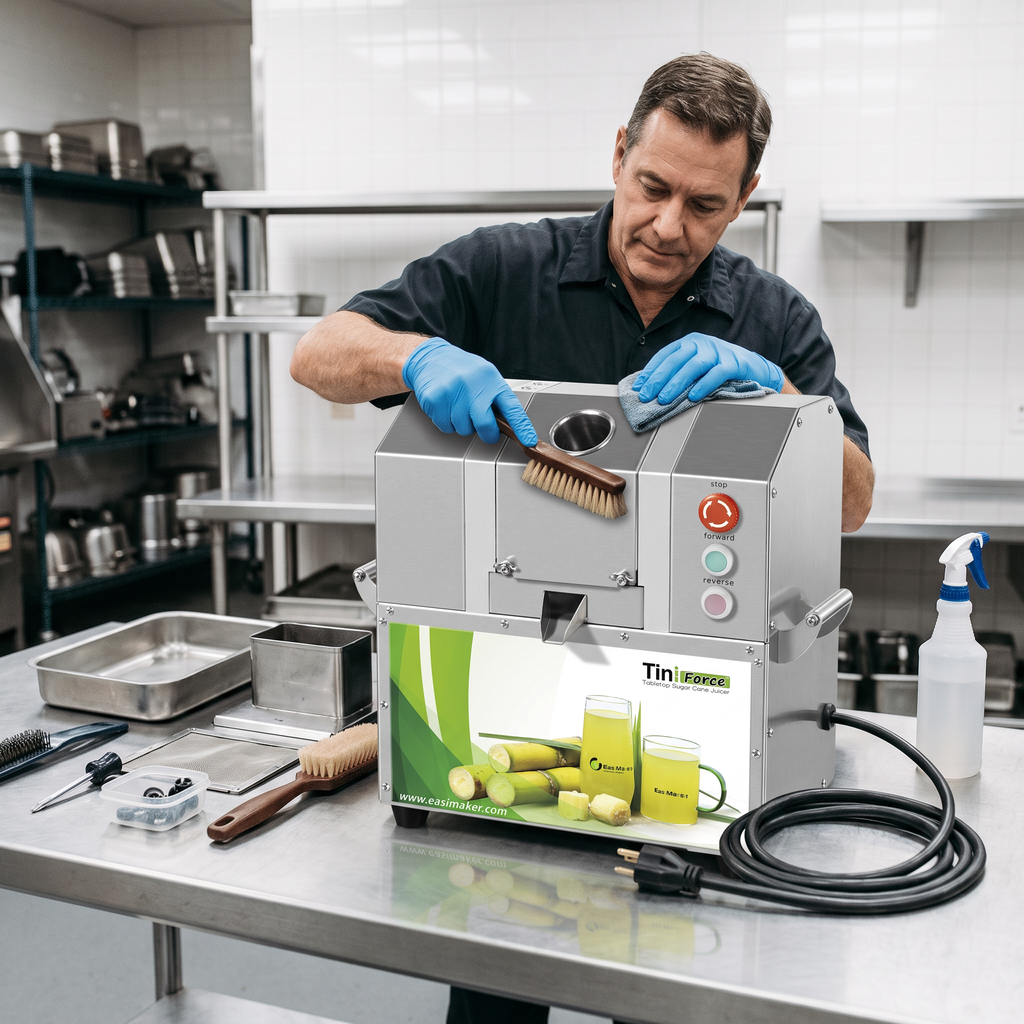
Cleaning is part of the vending operation, not an end-of-day extra. Sugarcane residue and juice can accumulate around the feed area, rollers, collection path, guards, and surrounding counter. The exact cleaning method depends on the model, so use the manufacturer’s manual for permitted cleaning agents, disassembly instructions, water exposure limits, and reassembly checks.
During service
Remove loose residue at planned intervals, keep the collection and serving areas clean, and replace contaminated cleaning materials promptly. Do not spray liquid into electrical areas or use methods that conflict with the machine instructions. If the operation becomes visibly soiled or difficult to control hygienically, pause service and clean it correctly.
At close
Switch off and isolate power as instructed. Remove cane residue, clean accessible food-contact and splash areas, wash and sanitize removable components where applicable, dry parts thoroughly, and reassemble only after inspection. Clean the counter, waste bin exterior, tools, and nearby surfaces as part of the same close-down task.
Weekly and periodic checks
Inspect cables, plugs, fasteners, guards, rollers, collection components, and any points identified in the manual. Look for wear, corrosion, looseness, damage, or changes in normal operation. Use only approved service procedures and suitable replacement parts. A maintenance schedule should include the supplier’s contact details, the machine model and serial information, the date of each inspection, and actions taken.
Good maintenance begins with machine selection. When comparing commercial units, confirm access to technical documents and expected spare-parts support, especially if the machine will operate in a different country from the supplier.
Questions to ask before ordering
A supplier can give a more useful recommendation when the street-vending environment is described clearly. Include these points in your enquiry:
- Where will the machine operate: fixed kiosk, cart, market stall, shop frontage, or event site?
- What counter dimensions, entry routes, and operator clearance are available?
- What voltage, frequency, plug standard, and power conditions are available at the site?
- What type and size range of sugarcane will be used, and how will it be washed and cut?
- How many people will operate the equipment, and what training is needed?
- What cleaning access, water arrangement, waste process, and local food-vending rules apply?
- Which documents, replacement parts, technical support, and warranty terms are available for the destination market?
For distributors or businesses seeking a branded equipment programme rather than a single vending unit, review the OEM sugarcane juicer guide for distributors and brands. OEM or ODM discussions should begin with a defined market, expected operating conditions, electrical requirements, product positioning, and after-sales plan.
A well-prepared enquiry reduces avoidable assumptions. It allows the supplier to discuss machine suitability, installation details, and support arrangements based on the actual street-vending operation.