Table of Contents
- The daily hygiene priority
- Why sugarcane juice hygiene needs a system
- Opening checklist
- Raw sugarcane handling
- Juicer cleaning and sanitizing
- Hygienic juice service
- Closing checklist and records
- Common hygiene gaps to correct
- Choose equipment that supports cleaning
A practical hygiene checklist for commercial sugarcane juice shops, covering raw cane, juicer cleaning, staff practices, serving controls, and documented daily routines.
The daily hygiene priority
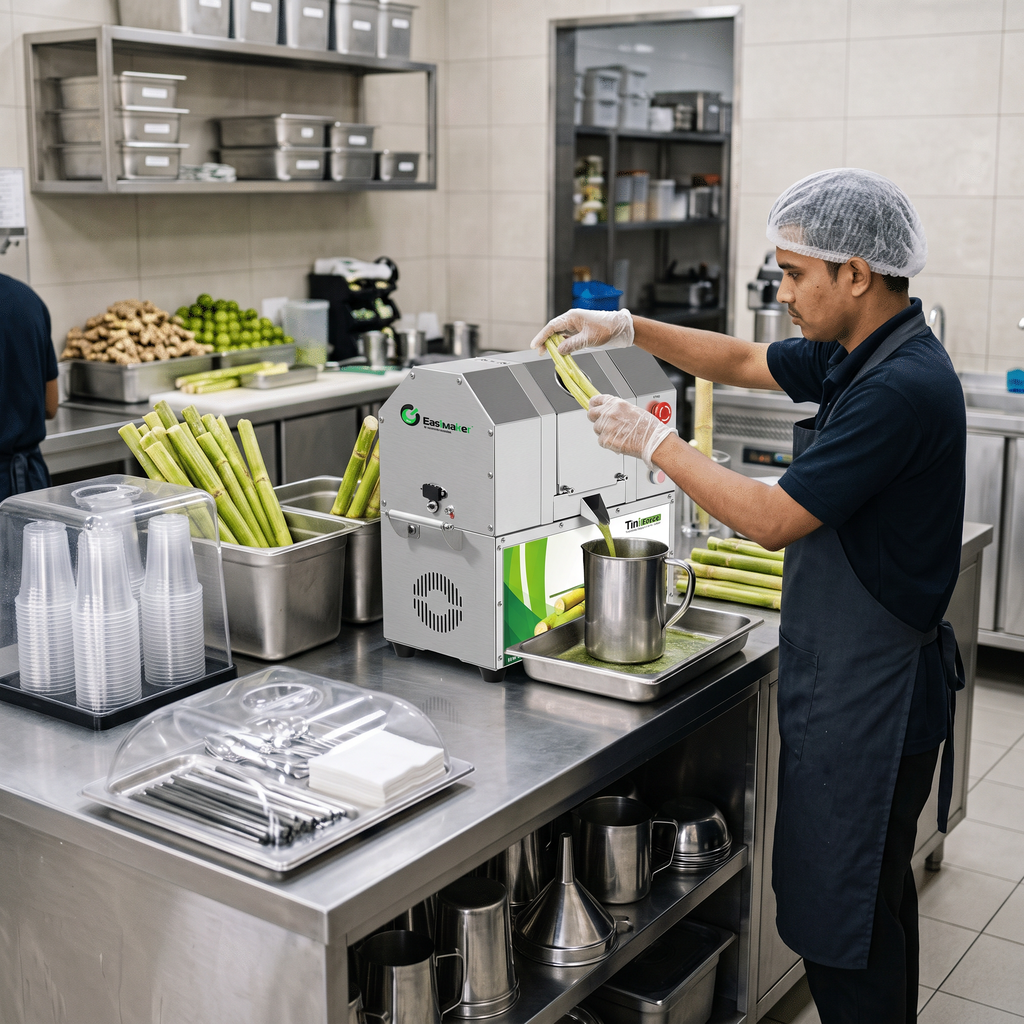
Commercial sugarcane juice hygiene depends on controlling the full workflow: receive sound cane, keep the preparation area clean, clean and sanitize food-contact parts correctly, protect juice during service, and complete a documented closing routine. A clean-looking counter alone is not enough. The rollers, feed area, juice path, collection container, utensils, ice handling tools, and staff hands all need practical controls.
For most shops, the most useful approach is a short opening checklist, clear rules during service, and a full cleaning and sanitizing procedure at closing. Local food-safety rules, approved chemicals, contact times, water quality requirements, and recordkeeping obligations vary by market. Follow the requirements that apply to your premises and use the machine manual as the primary reference for parts, access points, and safe cleaning limits.
This checklist helps operators turn those requirements into a repeatable routine for a commercial sugarcane juice operation.
Why sugarcane juice hygiene needs a system
Sugarcane is an agricultural raw material that can carry soil, dust, handling contamination, and damaged outer material into the shop. Pressing exposes inner cane surfaces and produces a ready-to-serve drink. That makes clean receiving, trimming, washing where appropriate, and controlled storage important before the cane reaches the juicer.
The machine also requires attention beyond its visible exterior. Juice and cane fibre can remain around rollers, scrapers, guards, spouts, trays, and collection points. If residue is left in place, it can dry, become difficult to remove, and compromise the next cleaning cycle. Operators should distinguish between cleaning, which removes visible soil and residue, and sanitizing, which is applied after cleaning according to the sanitizer supplier’s instructions and relevant local rules.
A good hygiene system assigns responsibility. One person should be accountable for confirming that the machine is ready to open, while every operator should know when to stop service, clean a spill, replace contaminated utensils, or report a damaged component. Include staff training, cleaning verification, and corrective actions in routine supervision rather than relying on memory alone.
Opening checklist
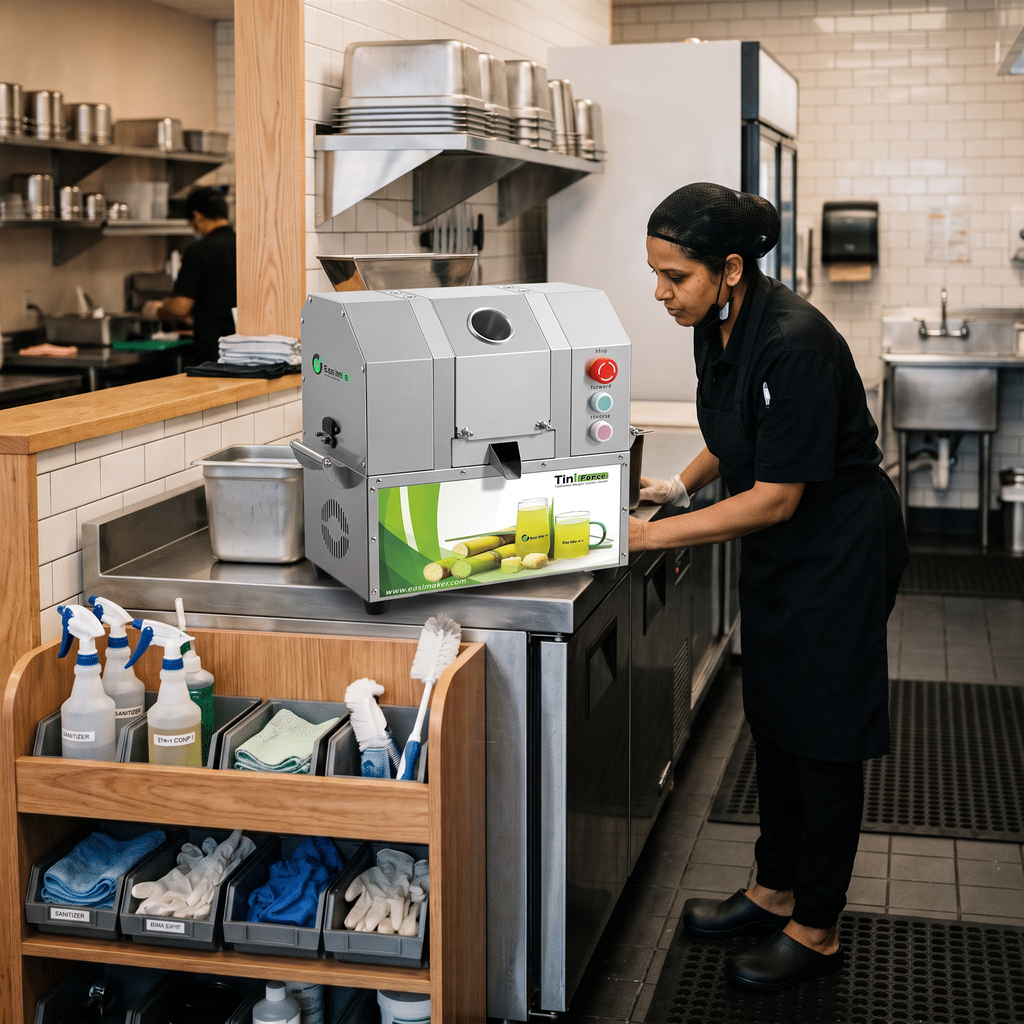
Complete this check before food preparation or service begins. Do not start production if the prior cleaning is incomplete, food-contact surfaces are visibly soiled, or a machine fault prevents proper cleaning.
- Personal hygiene: Confirm that operators have clean work clothing, clean hands, appropriate hair control where required, and no task that could contaminate food handling. Cover cuts as required by local food-safety procedures.
- Work area: Clean and inspect counters, sinks, drainage areas, waste bins, preparation boards, and storage containers. Keep chemicals clearly identified and separate from ingredients and packaging.
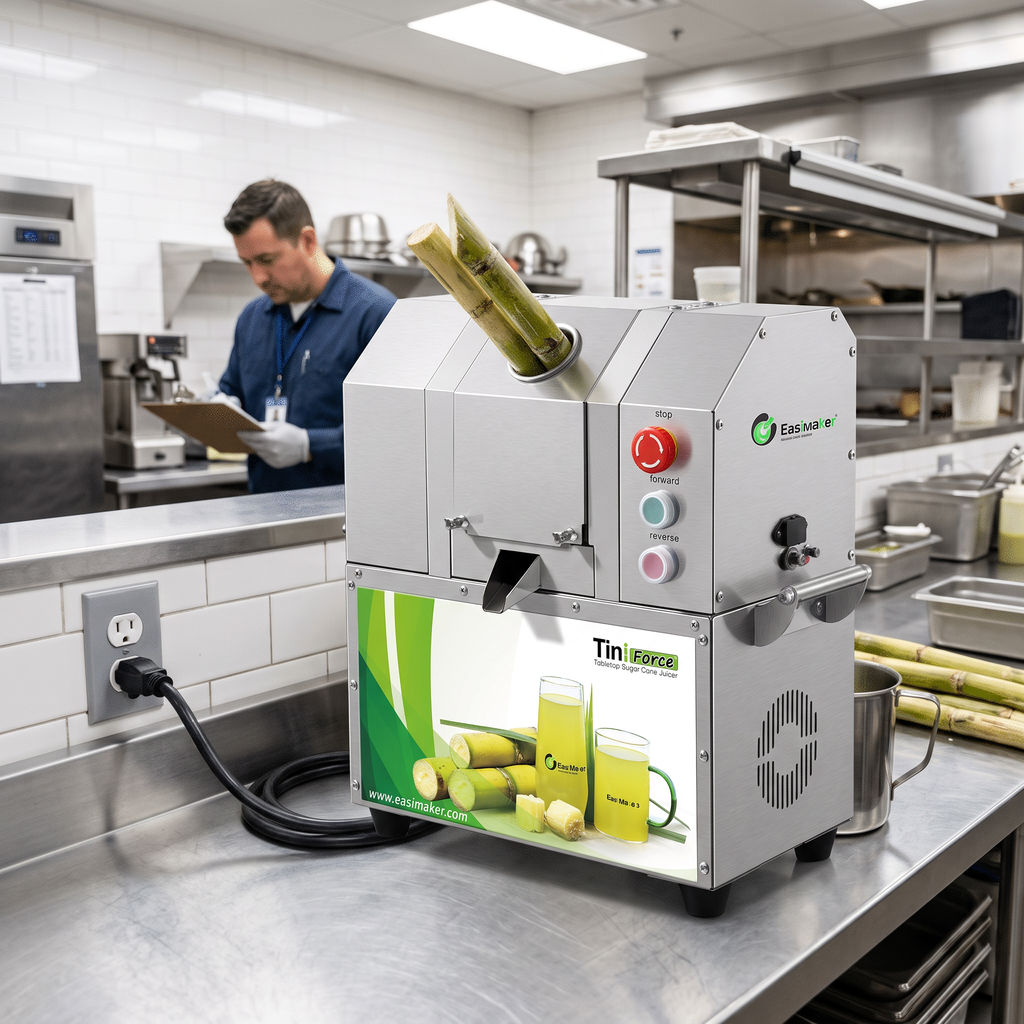
- Machine condition: Inspect accessible food-contact surfaces, the juice outlet, drip area, guards, and collection components. Confirm that parts are clean, dry where required, correctly fitted, and undamaged before operation.
- Utensils and packaging: Use clean cups, lids, straws, knives, tongs, scoops, containers, and cloths. Separate cleaning cloths from food-use items.
- Water and ice: Check that water and ice used in drinks, rinsing, or cleaning are handled in line with local requirements. Use a dedicated scoop or tool for ice rather than hands or drinking cups.
- Raw cane: Move only inspected cane into the active preparation area. Keep unwashed cane separate from prepared cane to avoid recontamination.
Keep the checklist close to the work area and make it specific to the actual machine layout. A generic list is less useful than a short list that names the parts and stations staff must inspect every day.
Raw sugarcane handling
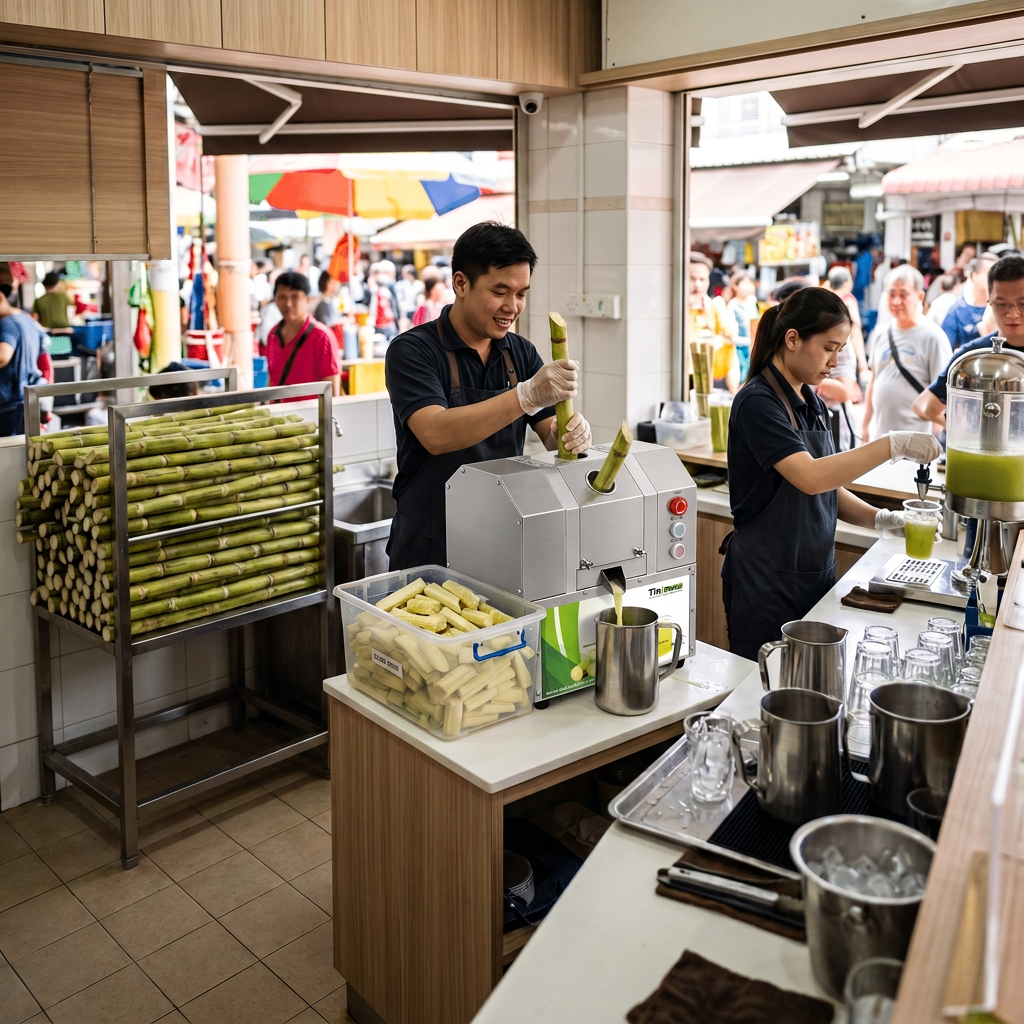
Set up a one-way flow from receiving to preparation to pressing. This reduces the chance that soil from outer cane surfaces returns to cleaned equipment, prepared cane, cups, or finished drinks. Use cleanable containers or racks that keep cane off the floor and away from waste, chemicals, standing water, and pest risks.
At receiving, inspect cane for excessive soil, visible spoilage, mould, leaks from damaged packaging, pest contamination, or other conditions that make it unsuitable for use. Establish a clear decision rule for rejection or segregation. Do not assume that pressing will correct poor raw-material condition.
Prepare cane using clean equipment and a cleanable surface. If your local process includes washing, control the water source, wash area, and change frequency so that washing does not simply transfer contamination. Trim or peel only as needed for the shop’s process, and remove trimmings promptly to a designated waste container. Avoid placing prepared cane back into a container that held unprepared cane unless it has been cleaned and sanitized as required.
Limit preparation to what the shop can process under controlled conditions. A practical batch system helps staff identify when cane was prepared and prevents older material from being mixed without review. Storage conditions and permitted holding times should be set according to local regulations, the condition of the cane, and the shop’s documented procedures.
Juicer cleaning and sanitizing
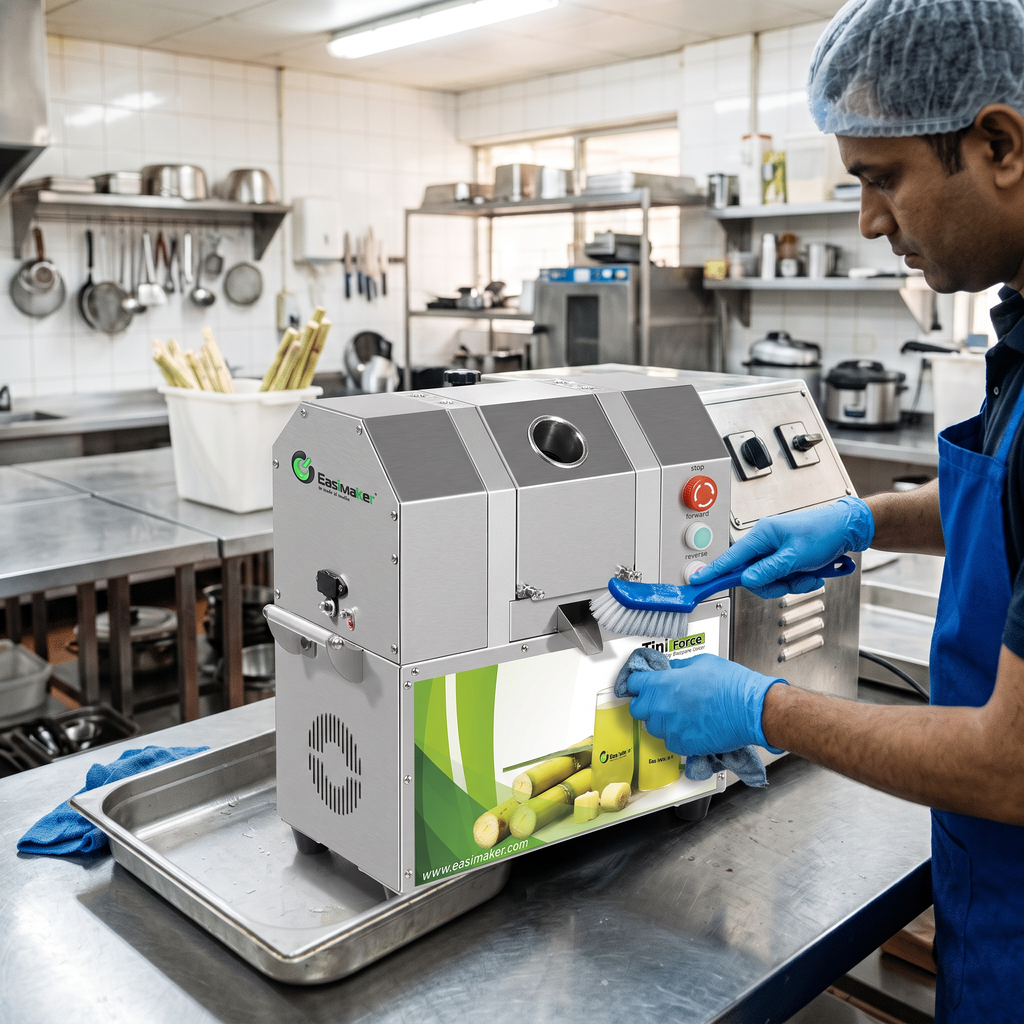
Clean the juicer at the frequency required by your operation and local rules, and whenever contamination, a spill, a changeover issue, or an extended interruption makes cleaning necessary. Always stop the machine and isolate its power supply before accessing rollers, guards, scrapers, or other internal areas. Do not spray electrical areas or use tools and methods that are not permitted by the manufacturer.
A controlled cleaning sequence usually includes the following steps:
- Stop the machine, isolate power, and allow moving components to come to a complete stop.
- Remove cane fibre and loose residue using tools suitable for the equipment. Dispose of waste without spreading it across clean surfaces.
- Remove only the components the manufacturer identifies as removable. Keep fasteners and small parts organized to avoid loss or incorrect reassembly.
- Wash accessible food-contact parts and surfaces with the approved detergent and water method for the premises. Follow the detergent supplier’s dilution and use instructions.
- Rinse when the chemical instructions require it. Check seams, rollers, spouts, trays, corners, and drains for remaining residue.
- Apply sanitizer to cleaned surfaces at the correct dilution and contact time, following the sanitizer label and local food-safety rules.
- Allow surfaces to drain or dry as the approved process requires. Reassemble correctly, then inspect before returning the machine to service.
Do not use sanitation as a substitute for cleaning. Sanitizer works on a properly cleaned surface; it is not a solution for dried fibre, juice residue, or accumulated soil. Create a cleaning record with the date, time, operator, chemical used where required, and any corrective action.
Cleaning access should be part of the buying decision. The commercial sugarcane juicer selection guide explains why workflow, cleanable access, and local service support should be assessed alongside expected output.
Hygienic juice service
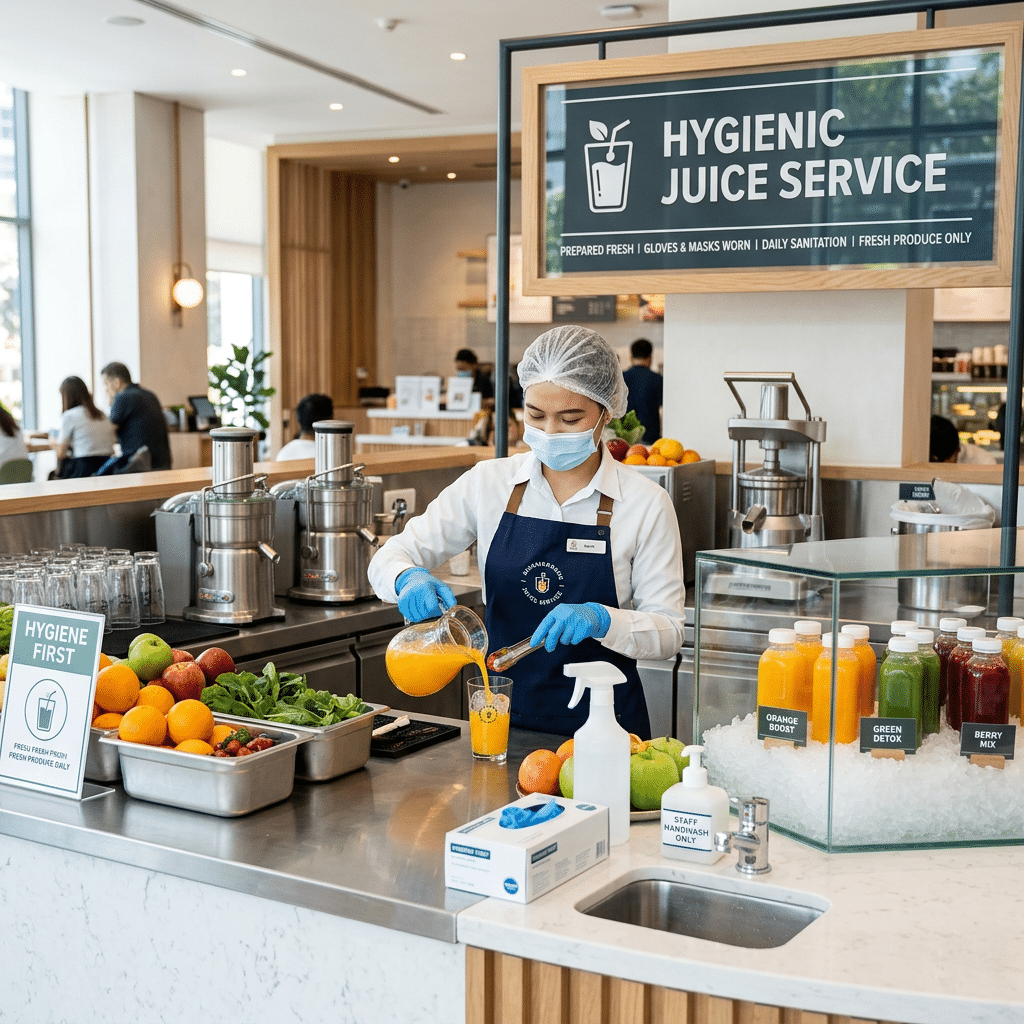
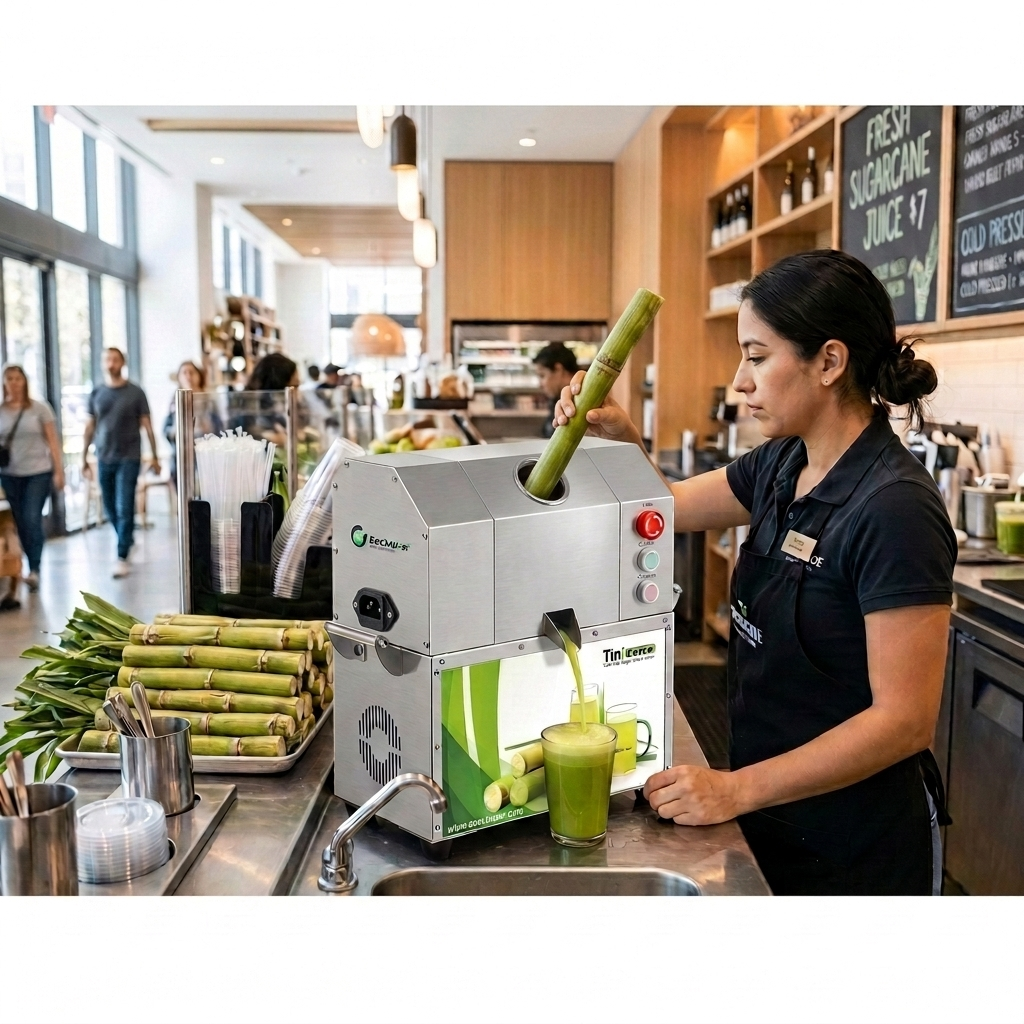
During busy periods, hygiene controls need to be simple enough to follow without interrupting service unnecessarily. Keep finished drinks separate from raw-cane preparation and waste handling. Use a dedicated handwashing routine after handling waste, cleaning tools, money, personal items, or any non-food task. Local rules may require additional controls for gloves; gloves do not replace handwashing and should be changed when contaminated.
Keep cups, lids, straws, and other single-use packaging protected from splashes, dust, and unnecessary handling. Store them in dispensers or clean containers where possible. Use dedicated tools for ice, garnish, or other additions, and clean or replace those tools according to the shop’s schedule.
Juice should be collected and served in clean food-contact containers. Avoid leaving filled cups or bulk containers uncovered in a preparation zone. Where a shop prepares juice in advance, it must follow applicable local requirements for storage, temperature control, labels, and permitted holding time. Do not invent a holding time without a validated local procedure.
Respond immediately to contamination events. Examples include a cup falling into an ice bin, a utensil touching an unclean surface, a broken part near the juice path, or raw-cane debris entering a clean service area. Stop the affected task, remove or discard affected materials as appropriate, clean and sanitize the area or equipment, and record the issue when your food-safety plan requires it.
Closing checklist and records
Closing is the point at which the next day’s hygiene performance is determined. Remove leftover cane and waste according to the shop’s approved process. Clean and sanitize the juicer, preparation surfaces, utensils, sinks, waste stations, floors, and drainage areas. Do not leave cane fibre or juice residue in hidden machine areas simply because the counter has been wiped.
- Inspect rollers, scrapers, guards, juice outlets, drip trays, collection containers, and accessible joints after cleaning.
- Check for worn brushes, cracked containers, damaged seals, loose guards, blocked drains, or components that cannot be cleaned adequately.
- Store cleaned tools and removable parts in a protected, clean location.
- Empty and clean waste bins, then return them to the correct location.
- Record completed cleaning, faults, missing parts, chemical stock issues, and corrective actions.
- Escalate any equipment issue that affects cleanability, safety, or normal juice flow before the next opening.
Maintenance and hygiene are linked. A worn or damaged food-contact component may trap residue or make inspection difficult. Maintain a machine file with the model, serial number, manual, parts information, service contacts, and cleaning records. The sugarcane juicer spare parts and support checklist can help shops prepare the information needed when replacing routine parts or discussing a service issue.
Common hygiene gaps to correct
Many hygiene failures come from routine shortcuts rather than a lack of effort. Reviewing these gaps during staff training can make the daily checklist more effective.
- Cleaning only visible surfaces: Review the full juice path and fibre collection areas, not just the exterior panels and counter.
- Mixing clean and unclean tools: Use clear storage and labeling so brushes, cloths, scoops, and food-use utensils are not confused.
- Using damaged equipment: Cracks, worn seals, loose parts, and difficult-to-clean areas should be assessed promptly.
- Keeping prepared cane without a control point: Identify preparation batches and follow the shop’s approved holding procedure.
- Assuming an occasional-use machine is suitable for shop cleaning demands: Equipment intended for home use may not suit repeated service, cleaning access, or support needs in a commercial setting. Review the practical differences between commercial and home sugarcane juicers before purchasing.
- No written verification: A simple signed log makes missed tasks and recurring problems easier to identify.
Use observation as well as records. A completed form is valuable only when staff have actually inspected the machine, handled chemicals correctly, and corrected identified issues.
Choose equipment that supports cleaning
Hygiene is easier to manage when the equipment fits the operation. Before purchasing a commercial sugarcane juicer, assess the service volume, cane dimensions, available work area, electrical supply, operator access, cleaning process, and local technical support. Ask practical questions: Which parts need daily attention? Which components can be removed safely? Where does fibre collect? How will staff inspect the juice outlet and collection area? What replacement parts and documentation are available?
Do not select equipment only by its stated output. A machine that fits the shop’s workflow and can be cleaned consistently is more useful than a machine that creates bottlenecks or leaves staff without a workable sanitation routine. Build the machine’s cleaning steps into onboarding, shift handovers, and preventive maintenance planning from day one.
For a consistent routine, keep the latest machine manual available at the point of use, train operators on safe isolation and reassembly, and contact the supplier whenever the manual does not clearly address a cleaning or replacement-part question. This prevents staff from improvising around guards, electrical components, or food-contact assemblies.