
Table of Contents
- Quick Answer: Commercial Bowl Cutter Setup
- Understand the Bowl Cutter and Its Intended Use
- Plan the Workstation Before Delivery
- Prepare Electrical and Utility Requirements
- Install and Position the Machine
- Complete Safe Commissioning Checks
- Set Up the Production and Cleaning Workflow
- Train Operators and Maintain the Equipment
A correct commercial bowl cutter setup starts with a stable, cleanable work area, the right electrical connection, safe clearance around moving parts, and a documented cleaning and training routine. This guide explains how commercial kitchens can prepare, install, commission, and operate a bowl cutter responsibly.
Quick Answer: Commercial Bowl Cutter Setup
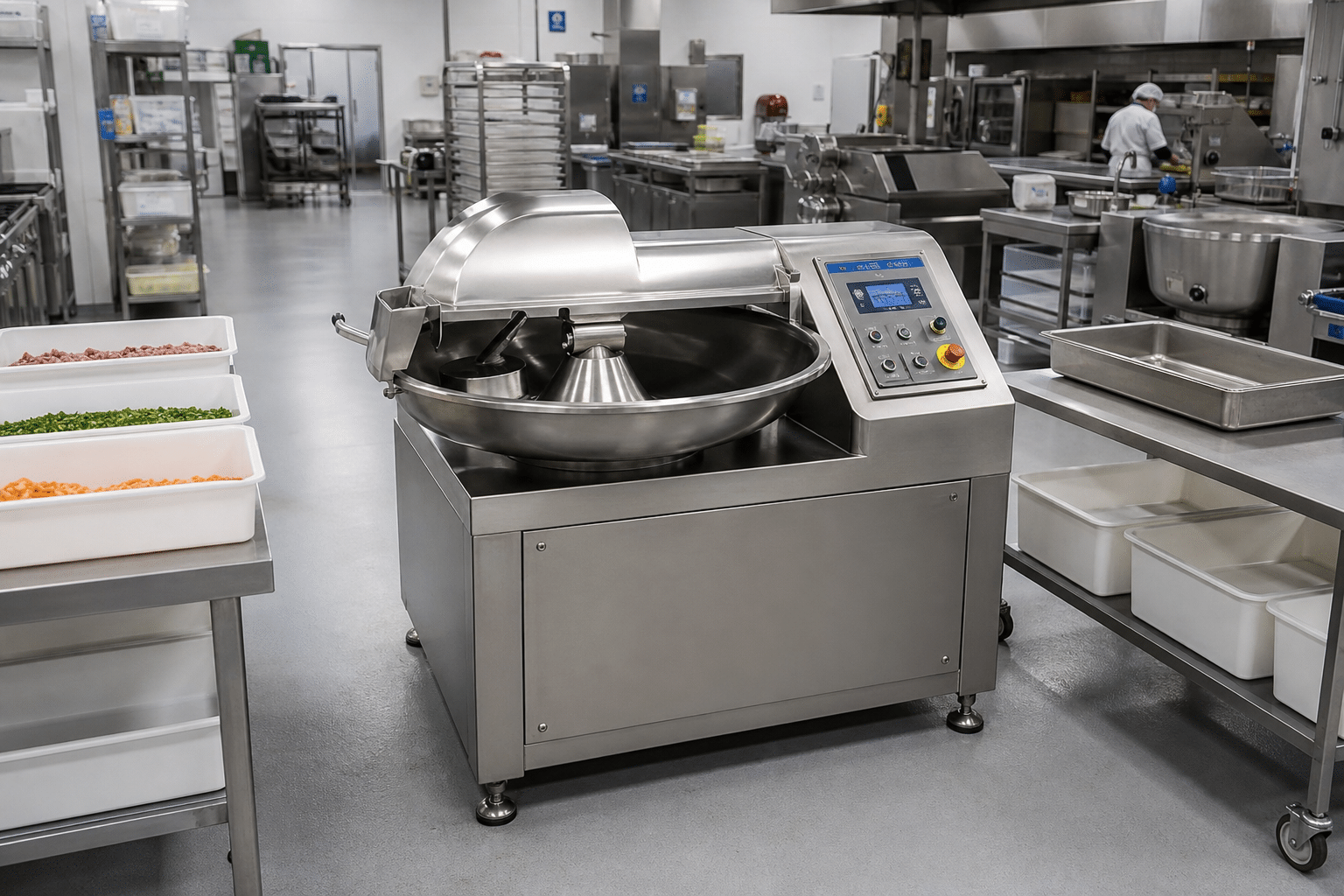
A commercial bowl cutter should be installed on a stable, level, cleanable surface with enough space for safe loading, discharge, cleaning, and service access. Before operation, confirm that the electrical supply matches the machine rating plate, inspect guards and interlocks, establish a raw-to-ready food workflow, and train authorised operators on shutdown and cleaning procedures.
Do not treat installation as simply placing the machine on a bench or floor. A bowl cutter uses a rotating bowl and knife assembly, so its position, power connection, clearance, sanitation routine, and operating controls all affect daily safety and product consistency. Always follow the machine-specific manual and applicable local food safety, electrical, and workplace requirements.
Understand the Bowl Cutter and Its Intended Use
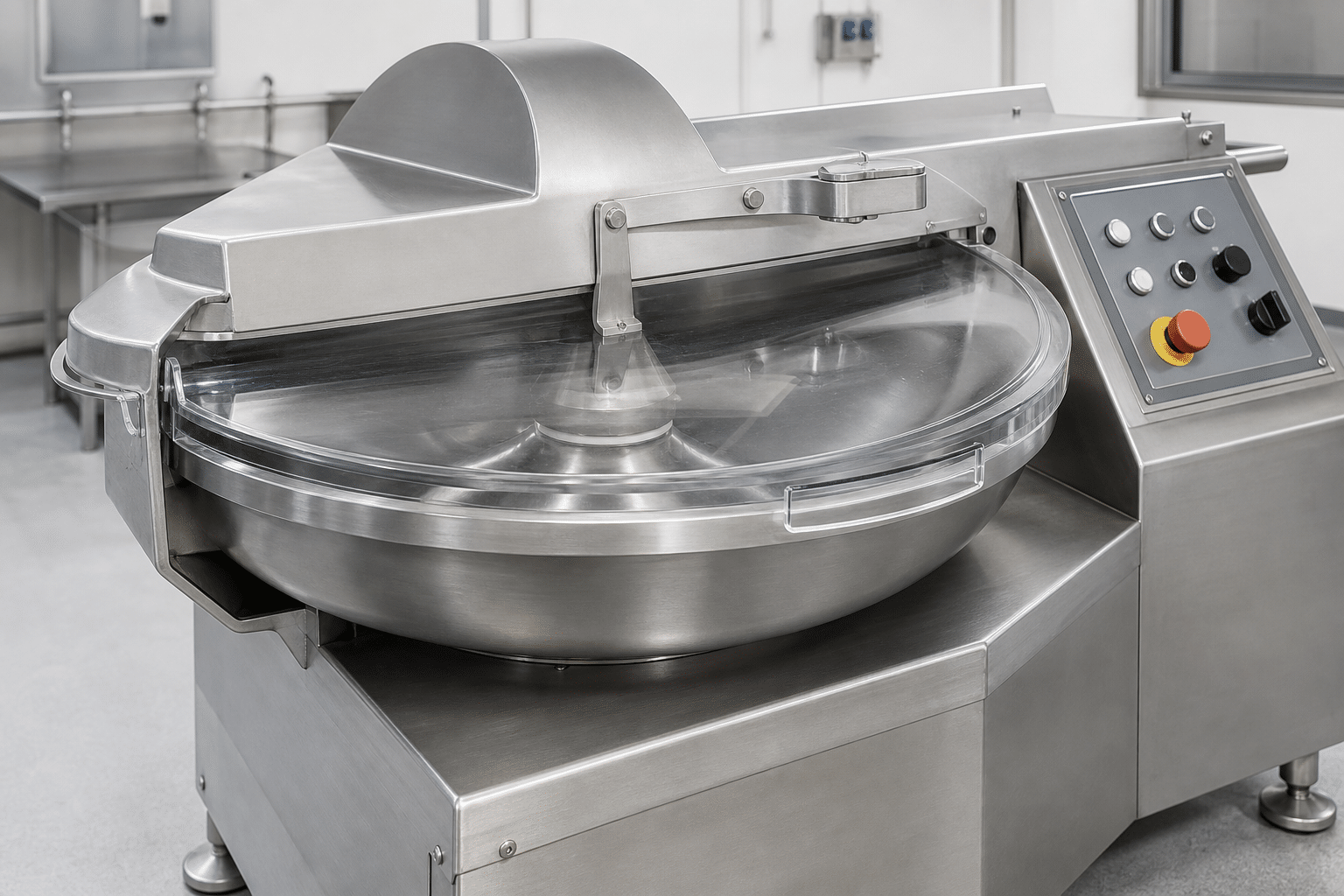
A commercial bowl cutter, also called a bowl chopper in some markets, processes food in a rotating bowl beneath a knife assembly. Depending on the recipe and machine configuration, kitchens may use it to chop, mix, emulsify, or combine prepared ingredients. Typical applications can include meat mixtures, vegetable preparations, sauces, fillings, and other batch products.
The correct setup depends on the products being processed, the batch size, the number of shifts, the cleaning regime, and the available kitchen space. A machine used for raw meat requires a more controlled hygiene plan than one dedicated to ready-to-eat vegetable or sauce preparation. Where allergens are present, the kitchen should also define segregation, scheduling, and validated cleaning steps in line with its food safety plan.
Before planning the location, map the full task: ingredient receipt, chilled storage, trimming or pre-cutting, weighing, bowl cutting, transfer to the next process, washing, and waste handling. This prevents the machine from becoming an isolated bottleneck or creating unnecessary movement between raw and finished-food areas.
For a wider view of how this equipment supports batch preparation, read our guide to commercial bowl cutters in high-volume food preparation.
Plan the Workstation Before Delivery
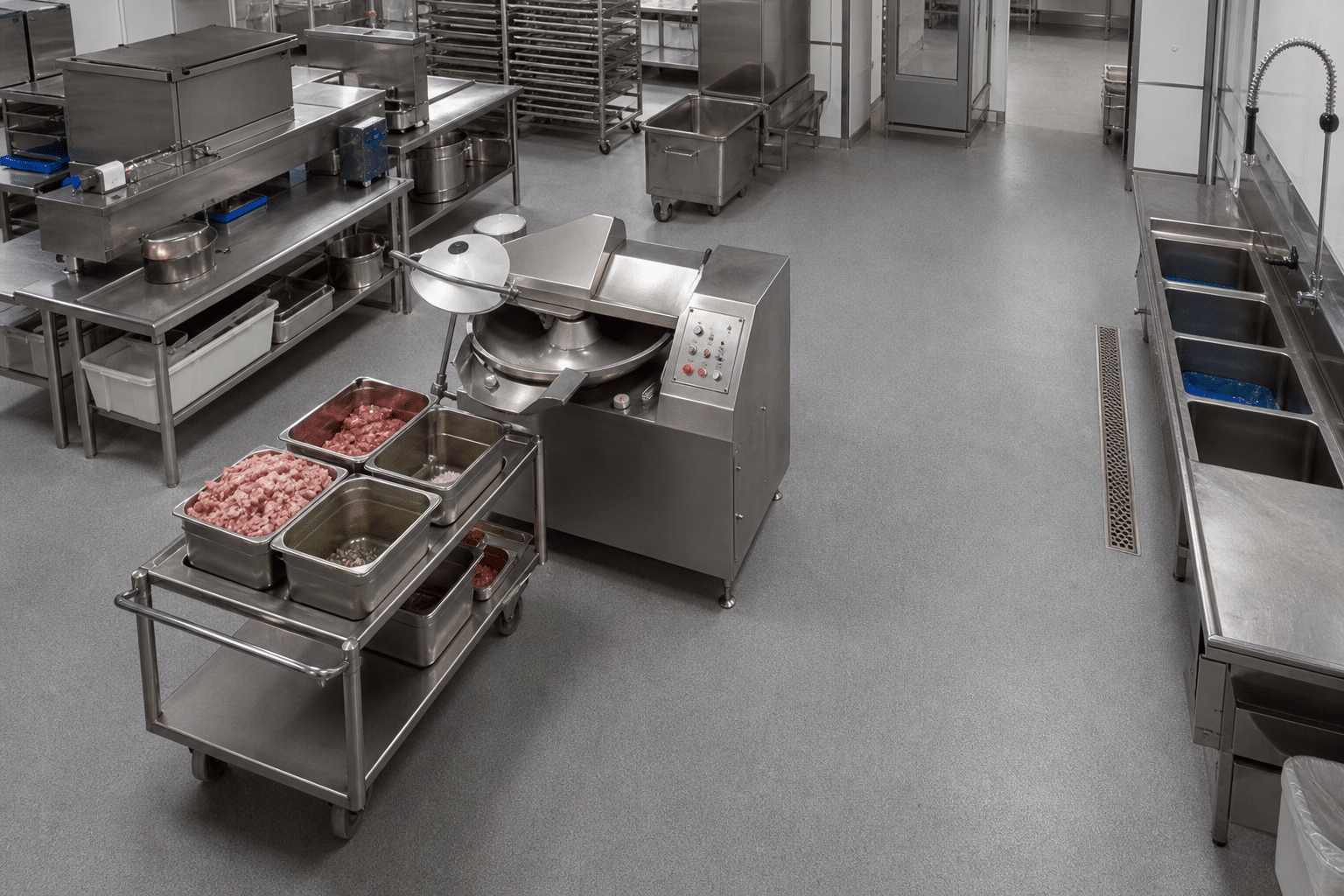
Measure the proposed area before the equipment arrives. Record the machine footprint from the supplier documentation, then allow working clearance around it. Operators need room to bring ingredient tubs to the bowl, use controls without stretching across the machine, remove finished product safely, and open covers or guards as instructed for cleaning. Technicians also need access for inspection and maintenance.
Select a location with a hard, level, non-slip floor or a suitably robust bench, according to the machine design and installation instructions. The supporting surface must safely carry the equipment and normal working load without rocking, flexing, or vibration. Avoid placing the machine where floor drains, uneven tiles, ramps, door swings, or busy through-routes interfere with stable operation.
A practical bowl cutter station normally includes:
- a nearby ingredient staging area that can be cleaned easily;
- food-grade containers for prepared ingredients and finished batches;
- a separate place for tools, scrapers, and approved cleaning materials;
- handwashing access as required by the kitchen hygiene plan;
- adequate task lighting, without glare that makes controls or product condition difficult to see; and
- a clear route for waste and wash-up that does not cross ready-to-eat food handling.
Keep the bowl cutter away from splash zones, excessive steam, direct washdown exposure, and heat sources unless the manufacturer specifically permits that environment. The aim is to protect the equipment while giving staff a dry, controlled area in which to operate it.
Prepare Electrical and Utility Requirements
Electrical preparation should be completed before delivery wherever possible. Check the machine rating plate and technical documentation for the required voltage, frequency, phase, load, plug type, and earthing requirements. These details vary by model and market, so they should never be assumed from another appliance or a previous installation.
Use an electrical supply that matches the specified rating exactly. If a new circuit, outlet, isolator, or hardwired connection is needed, arrange this through a qualified electrician and in accordance with local electrical rules. The power connection should remain accessible for safe isolation, but it should not create a trip hazard or sit where it can be struck by ingredient carts or exposed to routine washdown.
Do not use an extension lead, improvised adapter, damaged plug, or overloaded shared circuit unless the manufacturer and local electrical requirements explicitly allow the arrangement. An unstable or incorrect supply can affect operation and may create an avoidable equipment or safety issue.
Also plan the non-electrical utilities around the station. Staff need accessible handwashing and a suitable cleaning area, but the machine itself should only be exposed to water in the manner allowed by its manual. Confirm how removable components will be carried to the wash area, drained, dried, and returned without crossing clean product zones.
Install and Position the Machine
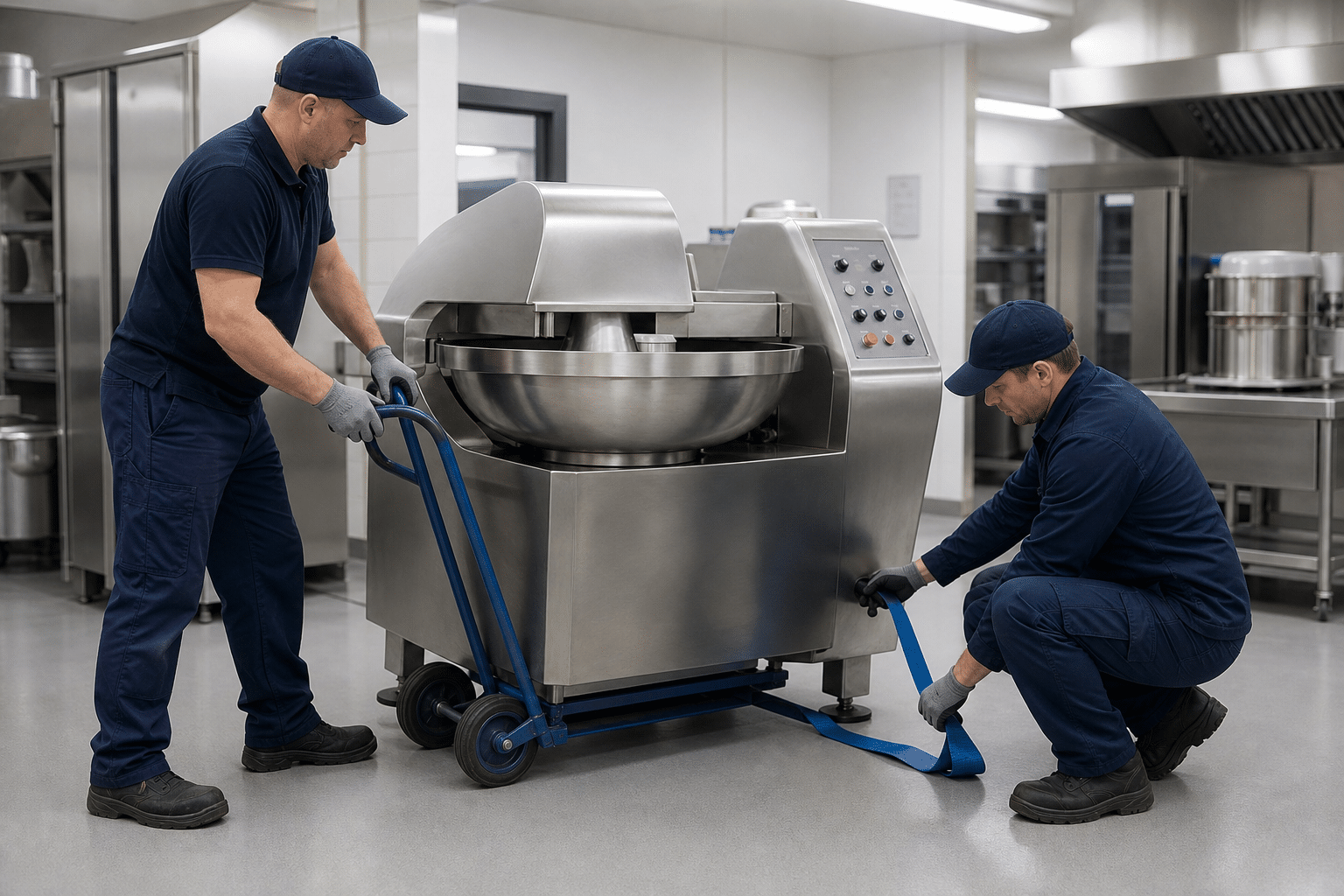
When the bowl cutter arrives, inspect the shipment before installation. Check for visible transport damage, loose parts, missing documentation, and any signs that a guard, cover, control, cable, or bowl assembly has been affected. If there is a concern, document it and contact the supplier before starting the machine.
Move the equipment with suitable handling equipment and trained personnel. Use the manufacturer-approved lifting points or handling method. Do not lift by guards, bowls, control panels, cables, or other parts not intended to carry the machine weight. Once in position, remove transit packaging and protective materials according to the documentation.
Set the machine level using its adjustable feet or the approved installation method, if applicable. A stable position matters because movement during processing can affect safe handling and may damage the work surface or equipment. Confirm that the bowl, knife head, covers, and other removable parts are correctly fitted before connection.
After positioning, ensure that emergency-stop controls, start and stop controls, and the electrical isolator can be reached without leaning over moving components. Keep the front loading position unobstructed. Do not store boxes, tubs, or cleaning tools against the machine, beneath pedals or controls, or inside required service clearances.
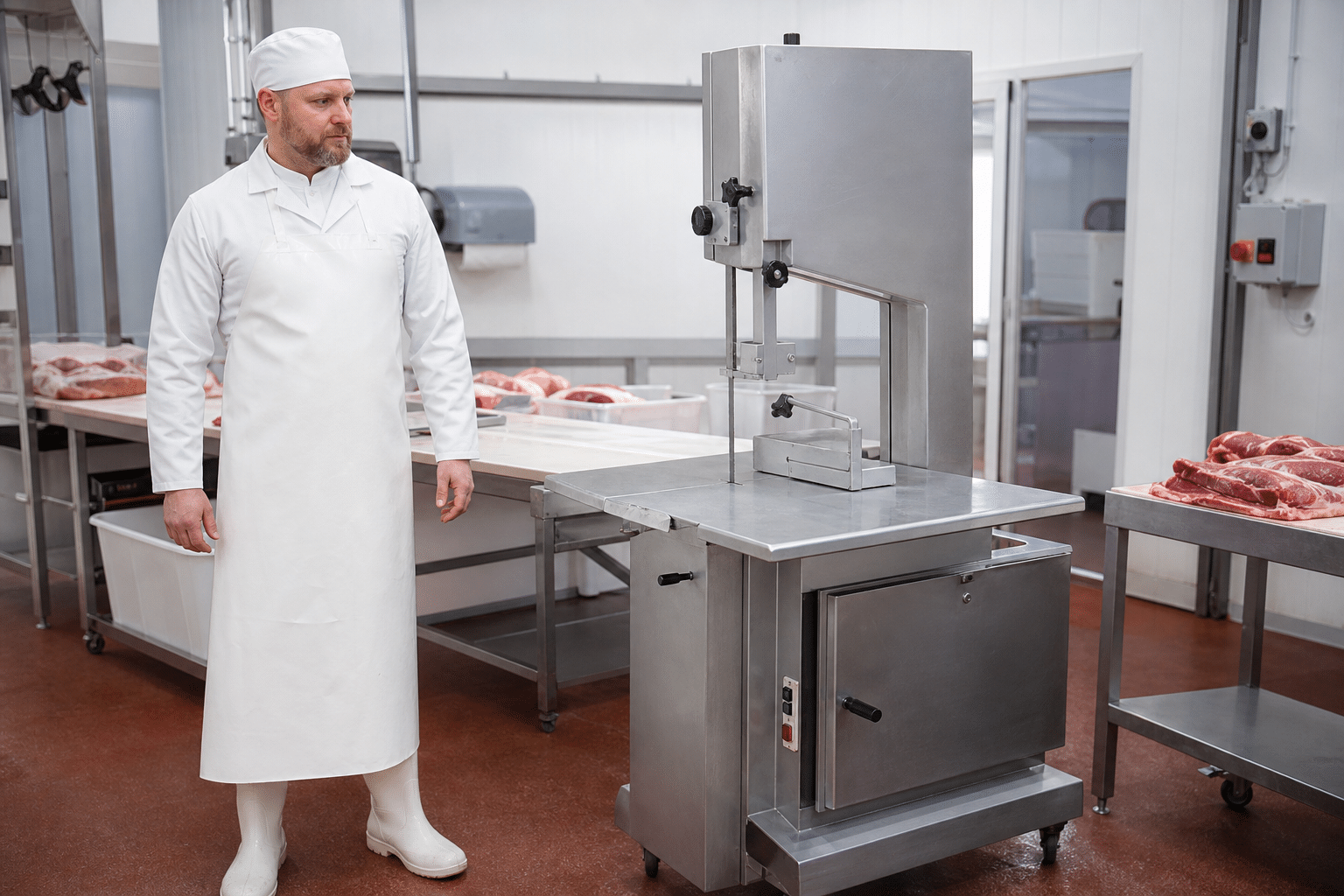
Facilities that also use bone saws should keep these activities in separate, clearly managed stations. The principles in our tabletop versus floor bone saw workspace guide can help managers assess dedicated equipment zones and operator movement around cutting machinery.
Complete Safe Commissioning Checks
Commissioning is the controlled process of confirming that the installed machine is ready for use. It should be carried out by people authorised to do so and with the relevant manual available. Do not start production until the checks are complete.
Before the first operating test, verify the following:
- the power supply and connection match the equipment documentation;
- the machine stands securely and does not rock;
- the bowl, knife assembly, covers, guards, and fasteners are correctly installed;
- all safety devices and interlocks function as described by the manufacturer;
- the emergency-stop function is identifiable and accessible;
- the machine is clean and free from packing material, tools, or loose objects; and
- operators understand the normal stop procedure and the method for isolating power before cleaning or inspection.
Carry out any no-load test only as instructed by the manufacturer. Listen and observe from a safe position for unusual vibration, contact, noise, warning indicators, or unexpected movement. Stop the machine and seek technical guidance if anything is abnormal. Never bypass an interlock, operate with a guard open, or reach into the bowl while the equipment is connected to power.
For kitchens operating several types of cutting equipment, a written safety procedure should distinguish the hazards and shutdown methods for each machine. Our overview of commercial cutting-machine safety and maintenance protocols is also useful background when building a wider equipment safety programme.
Set Up the Production and Cleaning Workflow
A well-positioned machine still needs a disciplined workflow. Establish where ingredients are checked and weighed, where product containers are placed before processing, how finished batches are transferred, and which staff member is responsible for cleaning between products or at the end of a shift.
For raw food preparation, keep raw ingredients, utensils, and containers separate from ready-to-eat products. Use the sequence of work, physical separation, or both controls as required by the kitchen’s food safety system. Where allergens are handled, identify the order of production and cleaning steps needed to avoid unintended carryover.
Only load product in the way stated in the machine instructions. Large, hard, frozen, bone-in, or non-food materials may not be suitable for a particular bowl cutter and can damage components or create a safety risk. Pre-cut ingredients to a manageable size where the recipe and machine guidance require it. Do not use hands or unapproved tools to push food toward moving knives.
Create a cleaning station with the correct brushes, cloths, detergent, sanitiser where required, and a clean drying area. Cleaning tools should not be used interchangeably between raw and ready-to-eat areas unless the site’s sanitation procedure allows it. Keep the machine manual accessible so staff can follow the approved disassembly, cleaning, reassembly, and inspection sequence.
Train Operators and Maintain the Equipment
Only trained and authorised staff should operate the bowl cutter. Training should cover the machine controls, permitted products, maximum loading guidance from the manual, correct use of covers and guards, emergency stopping, isolation before cleaning, cleaning steps, and the process for reporting faults.
A short pre-start check helps make safe operation repeatable. Before each shift, the operator should inspect the visible condition of the machine, confirm that guards and covers are fitted, check that the work area is clear and dry, and ensure the bowl and knife area contain no tools, packaging, or cleaning materials. If a component is damaged, loose, unusually worn, or not functioning as expected, take the machine out of service and follow the support process.
At the end of each use period, isolate the machine before any cleaning, adjustment, or inspection required by the manual. Clean food-contact parts using the specified method, inspect components as they are reassembled, and leave the station ready for the next shift. Maintenance intervals, lubrication requirements, knife servicing, and replacement parts are model-specific; follow the manufacturer’s instructions rather than adopting a generic schedule.
Keep a simple record of training, cleaning, inspections, faults, repairs, and replacement parts. These records support consistency across shifts and give managers useful information when planning preventive maintenance. A careful commercial bowl cutter setup is therefore not a one-time installation task; it is an operating system that should be reviewed whenever menus, volumes, staff, or kitchen layouts change.