Commercial Sugarcane Juicer Supplier Evaluation Guide

Table of Contents

A reliable commercial sugarcane juicer supplier should provide more than a price. Compare machine suitability, electrical documentation, build details, quality checks, spare-parts access, delivery terms, and after-sales support before issuing a purchase order.

What to Check Before Choosing a Supplier
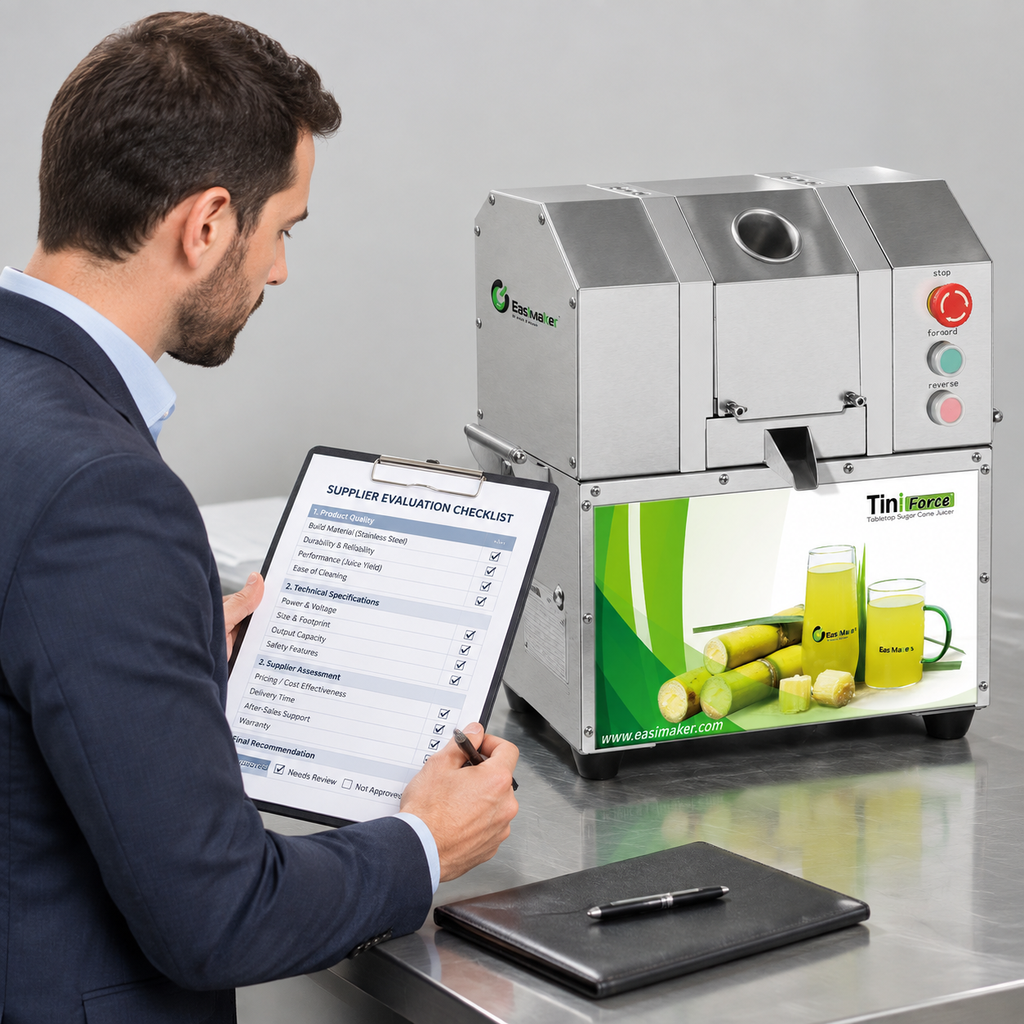
Buyer comparing a commercial sugarcane juicer against a supplier evaluation checklist.

The best commercial sugarcane juicer supplier for your business is one that can document machine suitability for your site, explain the configuration clearly, provide consistent pre-shipment communication, and support the equipment after delivery. Do not select only on unit price or photos.

Evaluate the supplier in five connected areas: the machine’s fit for your cane and service volume; electrical and safety documentation; build and cleanability; quality-control evidence; and the practical availability of manuals, wear parts, and technical help. Ask every shortlisted supplier the same questions, then compare written answers rather than verbal assurances.

For import projects, confirm the complete delivered scope early. This includes the exact model, voltage and frequency, plug or terminal arrangement, included accessories, packing method, Incoterms, lead time, warranty terms, and the party responsible for destination-side requirements.

Manufacturer, Trading Company, or Distributor
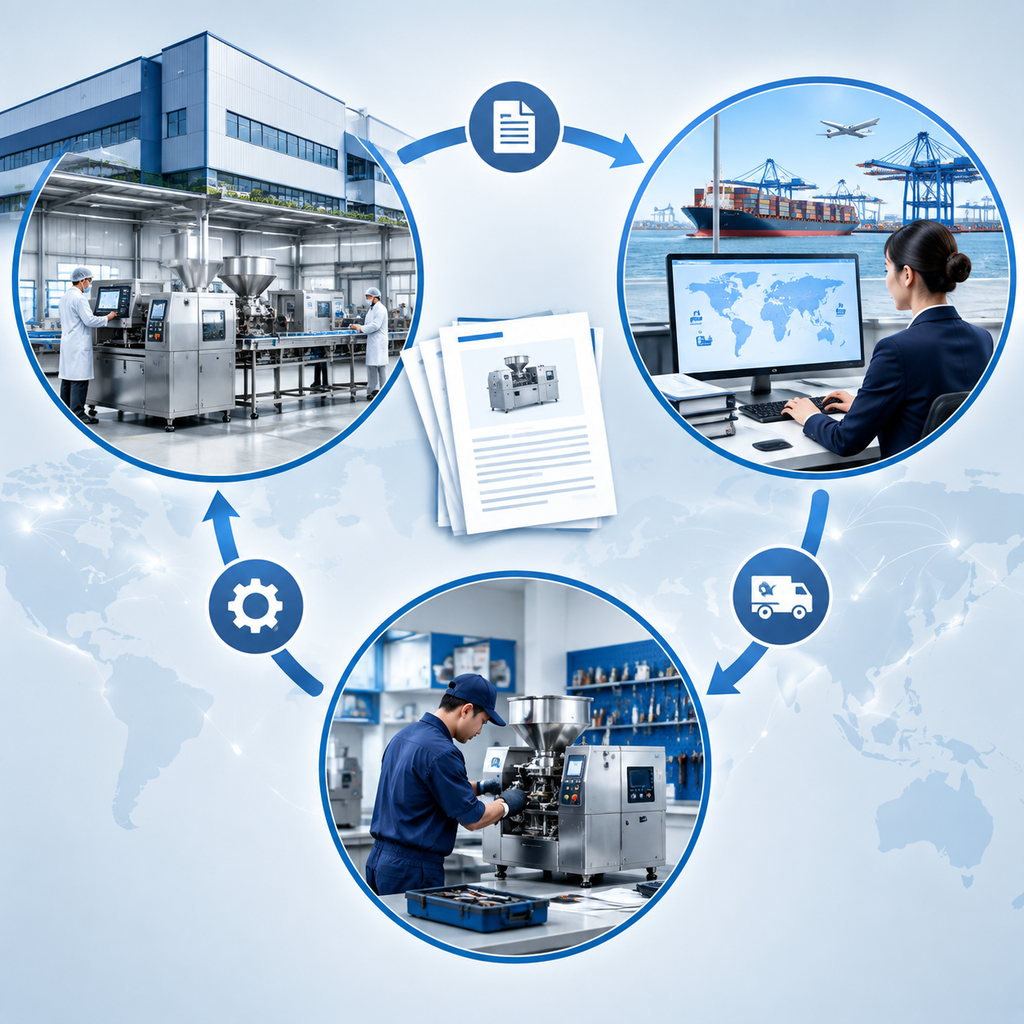
Illustration of manufacturer, exporter, and distributor roles in commercial equipment supply.

A supplier’s business role affects the questions you should ask, but it does not automatically determine reliability. A sugarcane juicer manufacturer may have direct engineering access and more control over production changes. A trading company may consolidate products or manage export logistics. A local distributor may offer faster communication, local service, and easier access to common parts.

Ask the supplier to state its role plainly and identify who will handle technical support, warranty decisions, spare-parts supply, and shipment documentation. If the supplier represents a factory, ask whether it is authorized to quote the model and whether the factory will support the stated configuration.

For branded programs or tailored specifications, confirm whether the supplier can support documented private-label, packaging, or configuration work through an OEM/ODM equipment program. Custom work should be defined in drawings, artwork approvals, samples where needed, and the purchase order—not assumed from a sales conversation.

Eight Supplier Evaluation Criteria
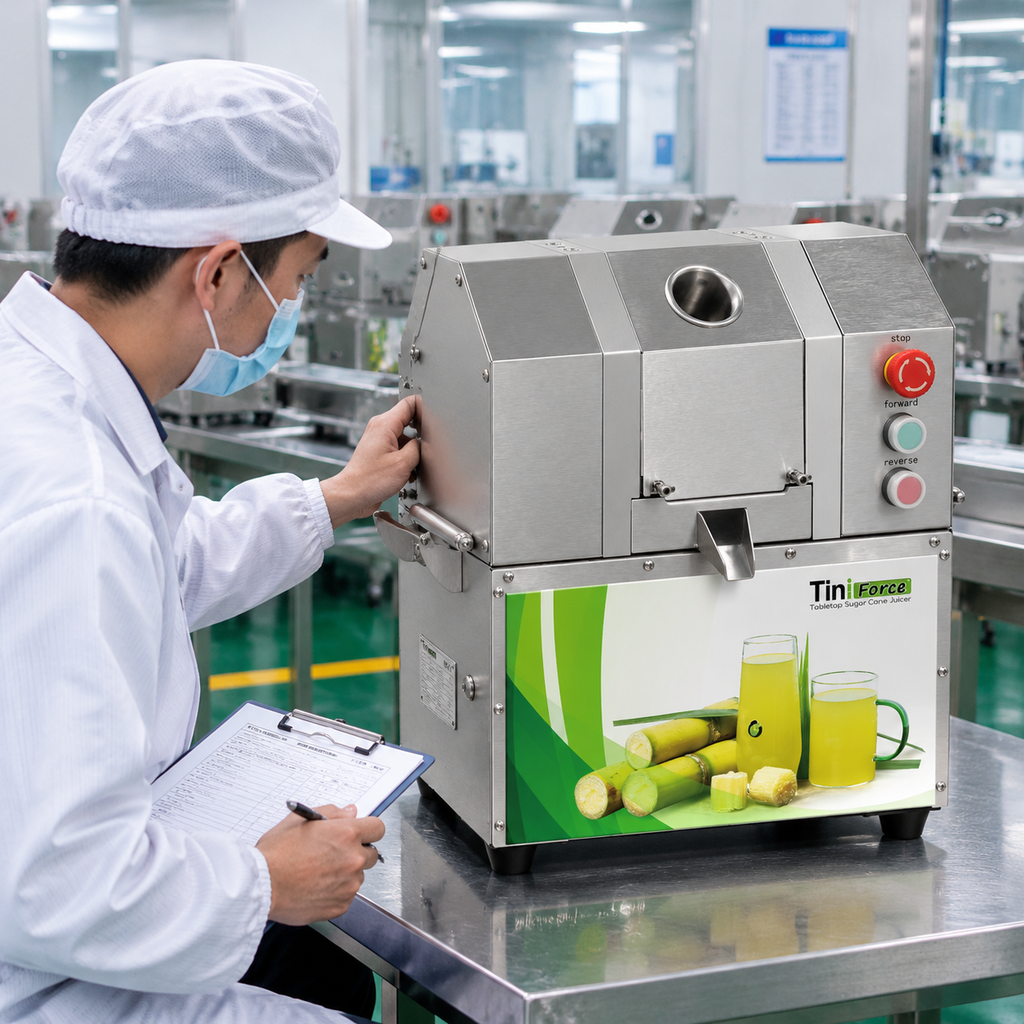
Technician carrying out a pre-shipment quality check on a commercial sugarcane juicer.
  1. Application understanding: The supplier should ask about daily service pattern, cane diameter and condition, available counter space, drainage, operator workflow, and expected cleaning routine.
  2. Configuration accuracy: Require the voltage, frequency, phase where applicable, plug or connection format, and nameplate details in writing. Electrical compatibility must be checked against the installation site.
  3. Machine documentation: Request a specification sheet, dimensions, operating instructions, parts information, cleaning guidance, and photos or video of the quoted configuration.
  4. Food-contact and cleaning access: Ask which accessible components contact juice or cane, how residue is removed, and what cleaning steps are expected between shifts.
  5. Quality-control process: Ask what functional, appearance, assembly, and packing checks occur before shipment. Evidence may include a test record, photos, or a video of the actual unit when available.
  6. Parts and service: Identify normal wear items, recommended spares, ordering process, response channel, and manual availability.
  7. Commercial clarity: Check quotation validity, payment milestones, lead time assumptions, packing, warranty scope, exclusions, and Incoterms.
  8. Communication quality: Reliable suppliers answer technical questions specifically, flag unknowns, and update documents when the configuration changes.

Cleaning support is particularly important for fresh-juice operations. Compare the supplier’s instructions with a practical daily sugarcane machine cleaning SOP so your team can determine whether the routine fits its staffing and hygiene controls.

Supplier Comparison Table

Use a weighted comparison rather than a simple price list. Score each supplier only when the answer is evidenced by documentation, a quoted configuration, or a clear written commitment.

Evaluation areaEvidence to requestWarning signs
Quoted machine identityModel name, photos, dimensions, configuration listGeneric photos or inconsistent model descriptions
Electrical fitNameplate data, voltage, frequency, plug or wiring details“Universal” claims without technical confirmation
Workflow fitQuestions about cane preparation, service pattern, footprint, and bagasse handlingNo questions about the operating site
Quality assuranceInspection scope, test evidence, packing photos or recordsOnly broad statements about quality
After-sales supportManual, parts list, service contact, warranty processNo stated route for obtaining parts
Commercial termsQuote with Incoterms, lead-time basis, packing, exclusions, and payment termsImportant terms left open or changed informally
Import readinessInvoice, packing list, origin and shipping-document process as applicableUnclear responsibilities for export documents

A low initial price can become less attractive if configuration corrections, missing documentation, unavailable parts, or installation changes delay opening. Consider total purchasing risk alongside the quoted machine cost.

Sugarcane Juicer RFQ Checklist

A clear RFQ helps a commercial sugarcane juice machine supplier return a comparable, usable quotation. Include the following points:

  • Business type and country of installation.
  • Expected use pattern, such as intermittent counter service or sustained daily production.
  • Cane type, approximate cane size, and planned preparation method.
  • Available installation space, including front feed access and rear bagasse discharge clearance.
  • Available electrical supply: voltage, frequency, phase where relevant, outlet type, and circuit information.
  • Required model or acceptable machine size range.
  • Requested machine finish, branding, or packaging requirements, if any.
  • Required documents, operating manual language, and spare-parts list.
  • Destination port or delivery location and preferred Incoterm.
  • Requested production window and quotation currency.

Attach site photos and the local electrical details where possible. Use the sugarcane machine electrical buyer checklist before sending the RFQ. It helps prevent a common sourcing error: ordering a machine before verifying that the site power matches the quoted rating.

Match the Machine to the Operating Workflow
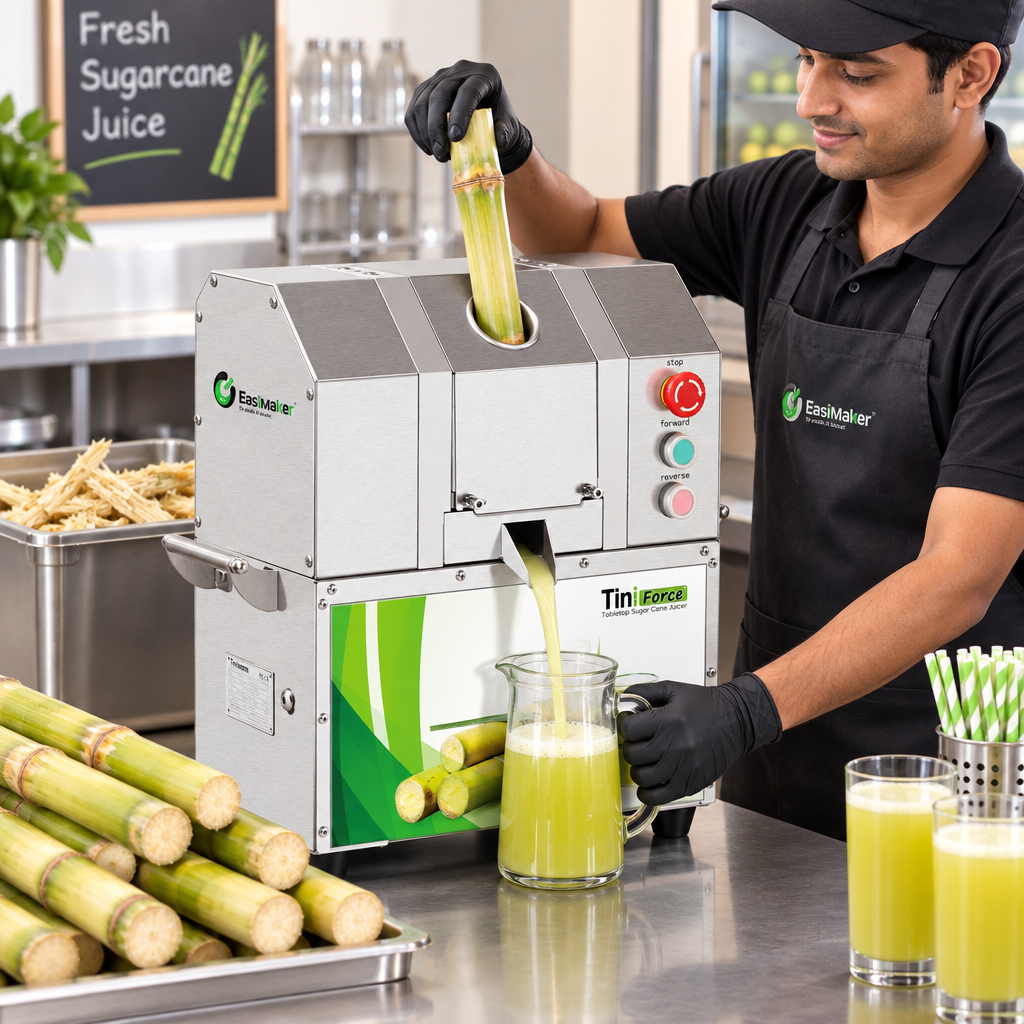
Commercial sugarcane juicer workflow showing front feeding, front juice collection, and rear bagasse clearance.

Supplier evaluation should lead to a machine decision that matches the actual operation. A compact commercial unit may suit a counter where operators feed cane from the front, collect juice from a front outlet, and manage bagasse at the rear. It still needs adequate working clearance, stable placement, compatible power, and a cleaning process that staff can complete consistently.

Machine-fit questionWhat the supplier should clarifyWhy it matters
Feed and discharge orientationLocation of feed inlet, juice outlet, and bagasse exitSupports counter layout and safe operator movement
Physical footprintOverall dimensions, clearance needs, and machine weight where relevantPrevents a poor fit in the installed location
Electrical specificationExact rated supply and connection requirementHelps avoid installation mismatch
Cleaning routineAccessible cleaning points and required daily sequenceSupports hygiene and reliable daily operation
Parts planConsumables or wear items, lead time, and ordering routeReduces avoidable downtime

Also distinguish fresh juice extraction equipment from machinery intended for sugar production or other cane processing. This overview of cane sugar machines versus sugarcane juice machines can help procurement teams define the correct equipment category before comparing suppliers.

Controls Before Payment and Shipment

Before releasing final payment or authorizing shipment, reconcile the purchase order, final pro forma invoice, and supplier confirmation. The machine model and configured electrical rating should match across all documents. Confirm accessories, spare parts, packaging, labels, manuals, and shipping marks.

Ask for the supplier’s agreed inspection evidence for the actual order when appropriate. Review visible machine condition, basic control operation, stated configuration, and packing before dispatch. This is not a substitute for site commissioning, but it can identify obvious order discrepancies before the goods leave the factory.

For U.S. projects, installation planning should be based on the specific machine nameplate and local requirements, not a generic assumption about outlets. Review commercial sugarcane juicer electrical requirements for U.S. shops with the site electrician or qualified installer before commissioning.

Finally, retain a single order file containing the approved quote, drawings or photos, invoices, inspection communications, manuals, parts list, and warranty contact. It gives operators and procurement teams a reliable reference after installation.

FAQ

What should I ask a commercial sugarcane juicer supplier before requesting a price?

Provide your installation country, operating pattern, cane preparation method, available space, electrical supply, documentation needs, destination, and preferred delivery terms. Ask for the exact model, configuration, dimensions, electrical rating, included items, lead-time basis, warranty scope, and parts-support process.

How can I verify whether a sugarcane juicer supplier is a manufacturer?

Ask the supplier to state its business role, identify the production facility responsible for the model, and explain who handles engineering, quality control, warranty, and parts. Request documentation and communications that consistently identify the quoted model and configuration. A manufacturer claim alone is not enough; clarity and documented responsibility matter.

Why is electrical information important when evaluating a juicer supplier?

Voltage, frequency, phase where applicable, plug format, circuit capacity, and local installation requirements can affect whether the machine can be installed correctly. Confirm the nameplate information and supplier documentation against the actual site supply before ordering.

Should I choose the lowest-priced commercial sugarcane juice machine supplier?

Not without comparing the full scope. A lower quote may exclude required configuration work, accessories, documentation, spare parts, packing, shipping responsibilities, or responsive technical support. Compare total purchase risk and operating fit alongside price.

What spare-parts information should a supplier provide?

Ask for a parts list or diagram, identification of normal wear items, recommended initial spares where appropriate, ordering method, expected support contact, and the information needed to identify your machine configuration after delivery.

Discuss Your Supplier and Machine Requirements

Need a clearer RFQ or a practical review of a proposed commercial sugarcane juicer configuration? Contact Easimaker to discuss your output pattern, installation market, electrical supply, workflow, documentation needs, and OEM/ODM requirements.

Request a Commercial Juicer Quote

What to Ask a Sugarcane Juicer Manufacturer Before Buying

Table of Contents

Before buying a commercial sugarcane juicer, ask the manufacturer clear questions about your cane, expected workflow, machine construction, electrical compatibility, cleaning access, spare parts, warranty, and technical support. Written answers help you compare suppliers on operational fit rather than headline claims alone.

The Questions That Matter Before You Buy

The best sugarcane juicer manufacturer questions focus on whether the machine fits your real operating conditions: cane diameter and condition, sales volume, available counter space, local power supply, cleaning routine, and access to support after delivery.

Do not choose only by appearance, a quoted output figure, or the lowest purchase price. Ask the manufacturer to explain the intended application, provide the relevant technical documentation, identify wear parts, and state what support is available in your market. A reliable supplier should answer clearly, identify any assumptions behind its recommendation, and avoid promising results that depend on your operator, cane supply, or site conditions.

For commercial buyers, the central question is simple: can this machine be operated, cleaned, maintained, and supported consistently within our daily workflow? The sections below provide a practical question list for evaluating that answer.

Start With Your Operating Requirements

Operator reviewing sugarcane stalk condition and juice bar workflow before equipment selection

Before asking a manufacturer to recommend a model, give them a concise description of your operation. A useful supplier recommendation depends on the details you provide.

Questions to ask the manufacturer

  • What type of business is this machine intended for: kiosk, juice bar, restaurant, hotel, cafeteria, mobile unit, or central preparation area?
  • What volume do you expect during normal trading and during peak periods?
  • What sugarcane stalk sizes and varieties will we process?
  • Will the cane be freshly delivered, chilled, washed on site, or stored before juicing?
  • Will one operator run the machine continuously, or will several employees use it across shifts?
  • What preparation steps are required before cane enters the feed area?

These questions prevent a common purchasing error: selecting a machine based on an ideal test condition rather than the cane and workflow found at the point of sale. Cane that is unusually thick, dry, fibrous, curved, or inconsistently trimmed may require different preparation and operating practices. Review practical guidance for processing thick sugarcane stalks without unnecessary motor strain when this is relevant to your supply.

Ask the manufacturer what operating assumptions were used for its recommendation. A useful written reply should distinguish between typical operating conditions and conditions that may require slower feeding, additional cane preparation, or a different equipment configuration.

Ask How the Machine Is Built for Daily Use

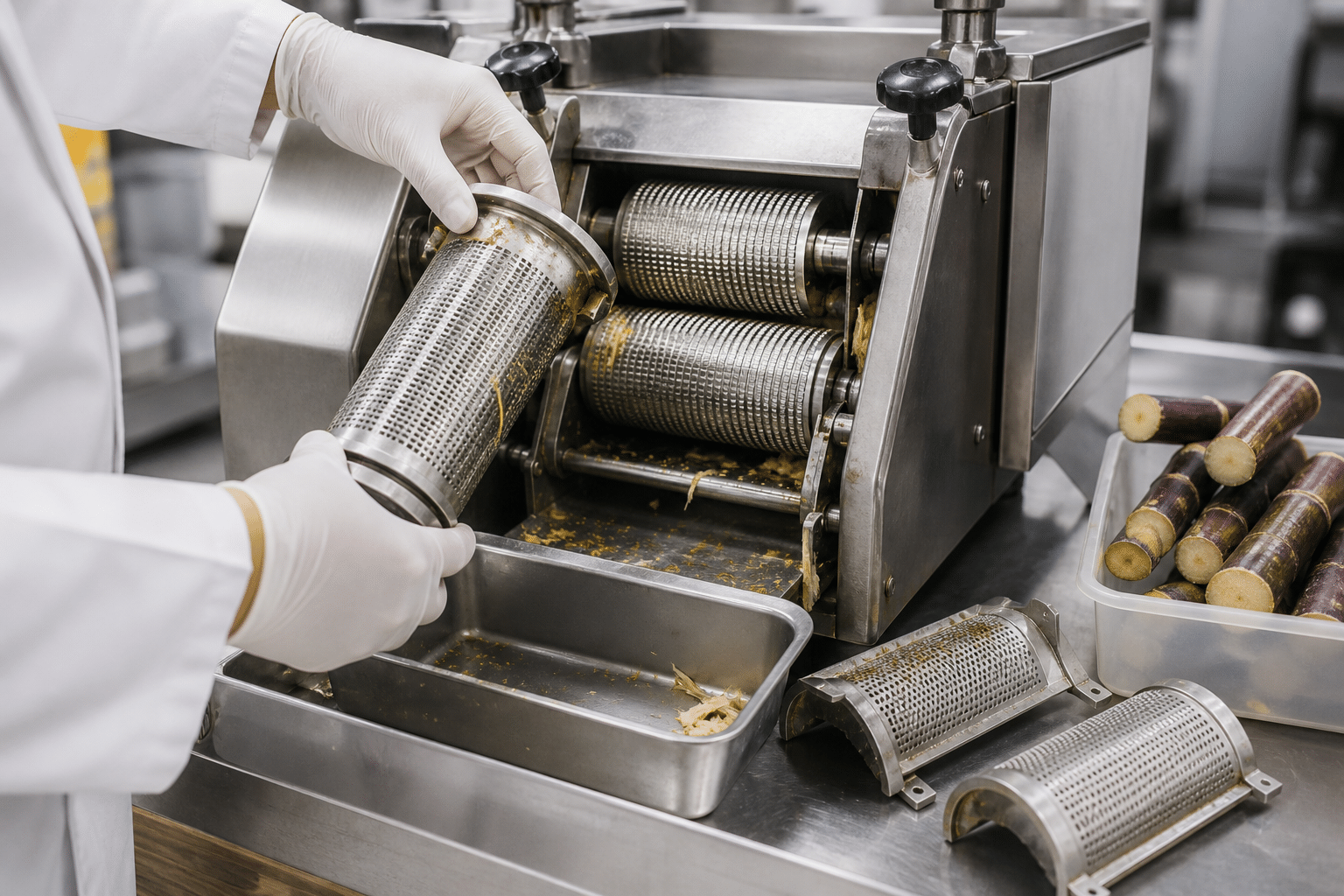
Technician inspecting accessible components of a commercial sugarcane juicer

A commercial sugarcane juicer is more than a set of crushing rollers. Its useful design depends on the interaction of the feeding path, roller assembly, drive system, guards, juice collection area, residue discharge, and parts that staff must clean or inspect.

Questions about construction and usability

  • Which areas contact cane or juice, and what materials are used in those areas?
  • Which components are designed to be removed or accessed for cleaning?
  • How are guards fitted, and what safety procedures should operators follow during use and cleaning?
  • How is cane residue discharged and contained?
  • Which parts are expected to wear during normal use?
  • What routine inspection points should the operator check before starting a shift?
  • Does the manufacturer provide cleaning instructions specific to the model?

Ask for current product photos, an operator manual, and a parts diagram rather than relying solely on generic catalogue images. These materials help your team assess whether the feed opening, cleaning access, drip area, and residue handling suit the staff workflow.

It is also reasonable to ask how crushing speed is selected for the model and how operating practice can affect the result. Speed is only one part of machine performance; cane condition, roller condition, feed consistency, and cleaning all matter. This overview of sugarcane machine RPM and crushing speed considerations can help buyers discuss the subject more precisely with a supplier.

Confirm Site, Power, and Cleaning Compatibility

Measuring counter space and clearance for commercial sugarcane juicer installation

A machine that is technically suitable can still be a poor purchase if it does not fit the installation site. Confirm the practical site requirements before issuing a purchase order.

Questions about installation

  • What are the machine dimensions, weight, and recommended working clearance?
  • What electrical supply, plug type, frequency, and power arrangement does the quoted version require?
  • Is the machine intended for countertop use, and what type of supporting surface is appropriate?
  • What clearance is needed for feeding cane, collecting juice, removing residue, and cleaning?
  • What cleaning method does the manufacturer recommend?
  • Can water be used around the machine, and what precautions are required for electrical safety?
  • Does the machine need a dedicated circuit or any specific installation checks by a qualified local professional?

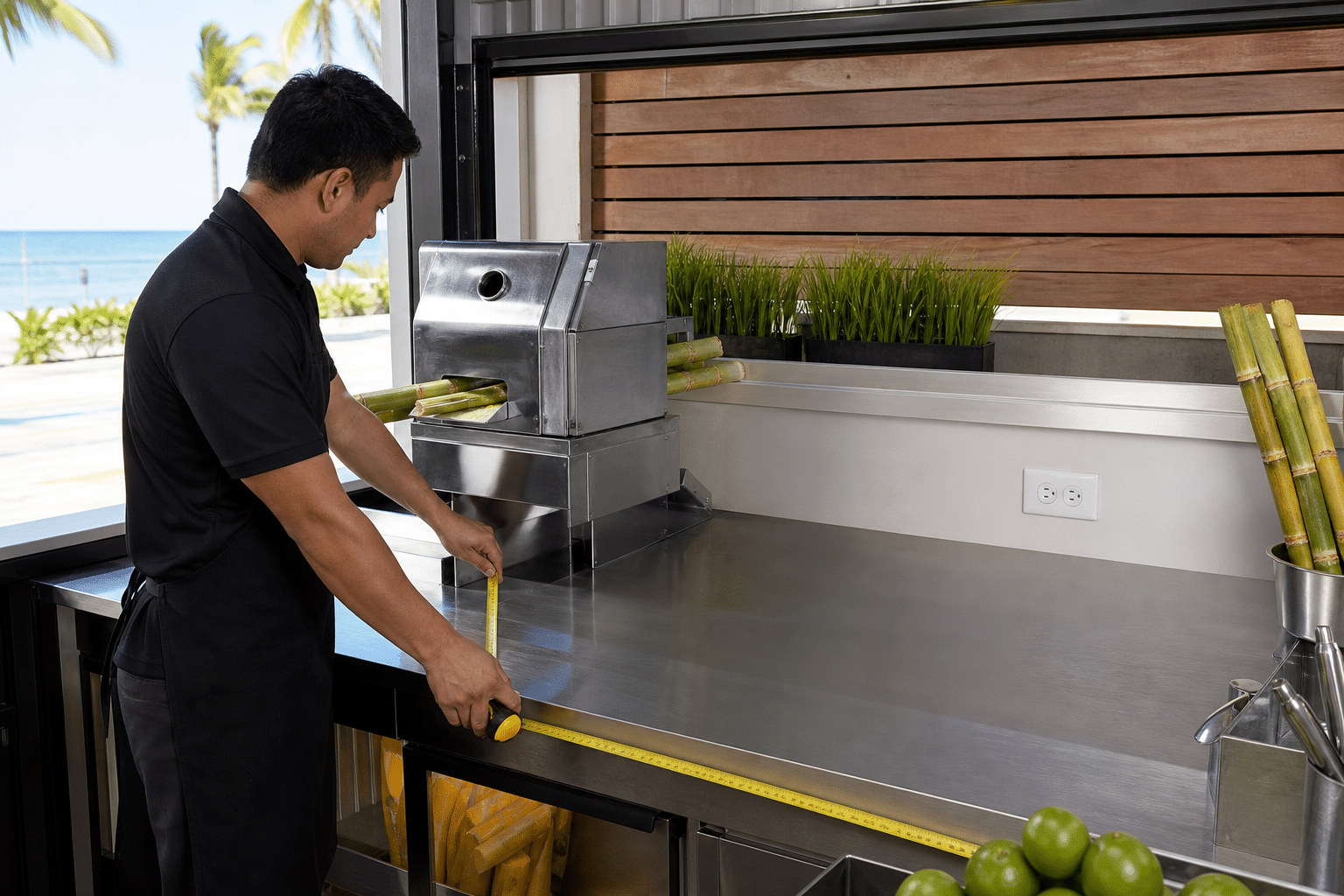
Measure the complete work zone, not just the equipment footprint. Operators need room to bring in cane, position containers, dispose of residue, and access removable parts. Use this guide to measure a countertop for a commercial sugarcane juicer as a planning reference.

Water exposure is another point that requires precise language. “Easy to clean” does not automatically mean that every part can be sprayed or washed down. Ask for the model-specific cleaning procedure and any enclosure or ingress-protection information available for the exact configuration you are considering. For context, read about IP ratings and washdown safety for commercial sugarcane juicers.

Request Evidence for Performance Claims

Manufacturers may describe throughput, extraction, or operating speed differently. Instead of comparing isolated numbers, ask what was tested, how it was tested, and what conditions may change the result.

Questions to make claims comparable

  • What cane type, stalk condition, and preparation method were used for any stated performance figure?
  • Was the machine run continuously or intermittently during the test?
  • What operator actions are required between stalks?
  • How are juice residue, foam, and filtration handled in the demonstrated setup?
  • Can you provide an unedited operating video of the quoted machine version?
  • Can we review a live remote demonstration or arrange an inspection where practical?

Ask the supplier to explain the workflow around the machine, not only the crushing step. Real counter service may include washing, trimming, feeding, collecting juice, filtering, serving, wiping surfaces, and clearing residue. The slowest step in that chain can determine practical service speed.

For buyers planning a branded menu or repeatable multi-site operation, request standard operating instructions for cane preparation, sanitation, and daily checks. This makes it easier to train teams and compare supplier support on a like-for-like basis.

Check Service, Spare Parts, and Documentation

After-sales capability is a purchasing criterion, not an afterthought. Commercial equipment needs a clear path for routine maintenance, diagnosis, and replacement parts.

Questions about ownership support

  • What warranty terms apply to the machine, and what exclusions apply?
  • Which consumable and wear parts should we keep in stock?
  • Can you provide a spare-parts list with part numbers and current availability guidance?
  • What documents are included: operating manual, cleaning instructions, electrical information, exploded view, and troubleshooting guide?
  • How are technical questions handled after delivery?
  • What information should our team provide when reporting a fault?
  • Are remote troubleshooting, video guidance, or local service partners available for our market?

Request the recommended maintenance schedule before purchase. It should explain routine cleaning, inspection intervals, adjustment checks where applicable, and signs that a component may need attention. A planned approach can reduce avoidable interruptions and makes responsibilities clearer for shift supervisors. See this practical resource on developing a preventative maintenance schedule for a commercial sugarcane juicer.

Also ask whether the supplier can identify the machine by serial number and provide version-specific support. This is particularly important if your business expects to add units over time or operate equipment in more than one location.

Clarify Commercial Terms Before Placing an Order

Once you have identified a technically suitable machine, confirm the commercial scope in writing. A complete quotation should make it clear what is included and what remains the buyer’s responsibility.

Questions for the quotation and order

  • What exact model, electrical version, accessories, and optional items are included?
  • What is the unit price, quotation validity period, payment structure, and applicable trade term?
  • What packaging is used, and how are shipping arrangements defined?
  • What is the estimated production and dispatch timing after order confirmation?
  • What pre-shipment inspection or acceptance process is available?
  • What support materials will be supplied with the shipment?
  • For import purchases, which documents can the supplier provide and which local approvals remain the buyer’s responsibility?

Do not assume that a machine configured for one market will automatically be appropriate for another. Electrical supply, plug format, language requirements, food-service rules, import procedures, and local installation practices may differ. Discuss these items early, particularly for distributor, private-label, or multi-unit projects.

If you require branding, packaging changes, a special configuration, or ongoing supply for a network, ask the manufacturer to define feasibility, minimum order requirements, lead time, documentation, and change-control process before committing.

Use a Written Purchase Checklist

Before making a final decision, compare each supplier’s answers in one document. This helps your purchasing, operations, and finance teams identify differences that may not be visible in a short product specification.

Final buyer checklist

  • The manufacturer has received an accurate description of our cane and daily workflow.
  • The selected machine fits our available space, power supply, and cleaning arrangement.
  • We have reviewed model-specific operating and cleaning documentation.
  • Performance discussions are linked to stated test conditions rather than unsupported assumptions.
  • Warranty, wear parts, maintenance responsibilities, and technical support are documented.
  • The quotation identifies the exact configuration, included items, commercial terms, and delivery scope.
  • Our team understands what training, site preparation, and local checks are needed before installation.

A strong manufacturer relationship begins with clear questions and documented answers. This approach gives you a more reliable basis for choosing a commercial sugarcane juicer that supports your operating plan rather than creating avoidable uncertainty after delivery.

Discuss Your Commercial Sugarcane Juicer Requirements

If you are comparing suppliers or preparing a purchase specification, contact Easimaker with your expected workflow, cane condition, site power, and market requirements. Our team can help you clarify the questions needed for a practical equipment discussion.

Contact Easimaker