
Table of Contents
- Commercial vs Home Sugarcane Juicer: The Direct Answer
- What Makes a Sugarcane Juicer Commercial?
- Duty Cycle and Daily Workflow
- Construction, Rollers, and Drive Systems
- Cleaning, Hygiene, and Maintenance
- Power, Space, and Site Planning
- How to Select the Right Equipment Class
- When a Commercial Juicer Is the Better Business Choice
Commercial sugarcane juicers are designed for repeated service, operator workflow, and maintainable daily operation. Home machines may suit occasional personal use, but buyers should assess duty cycle, construction, cleaning access, power compatibility, and support before using any machine in a business.
Commercial vs Home Sugarcane Juicer: The Direct Answer
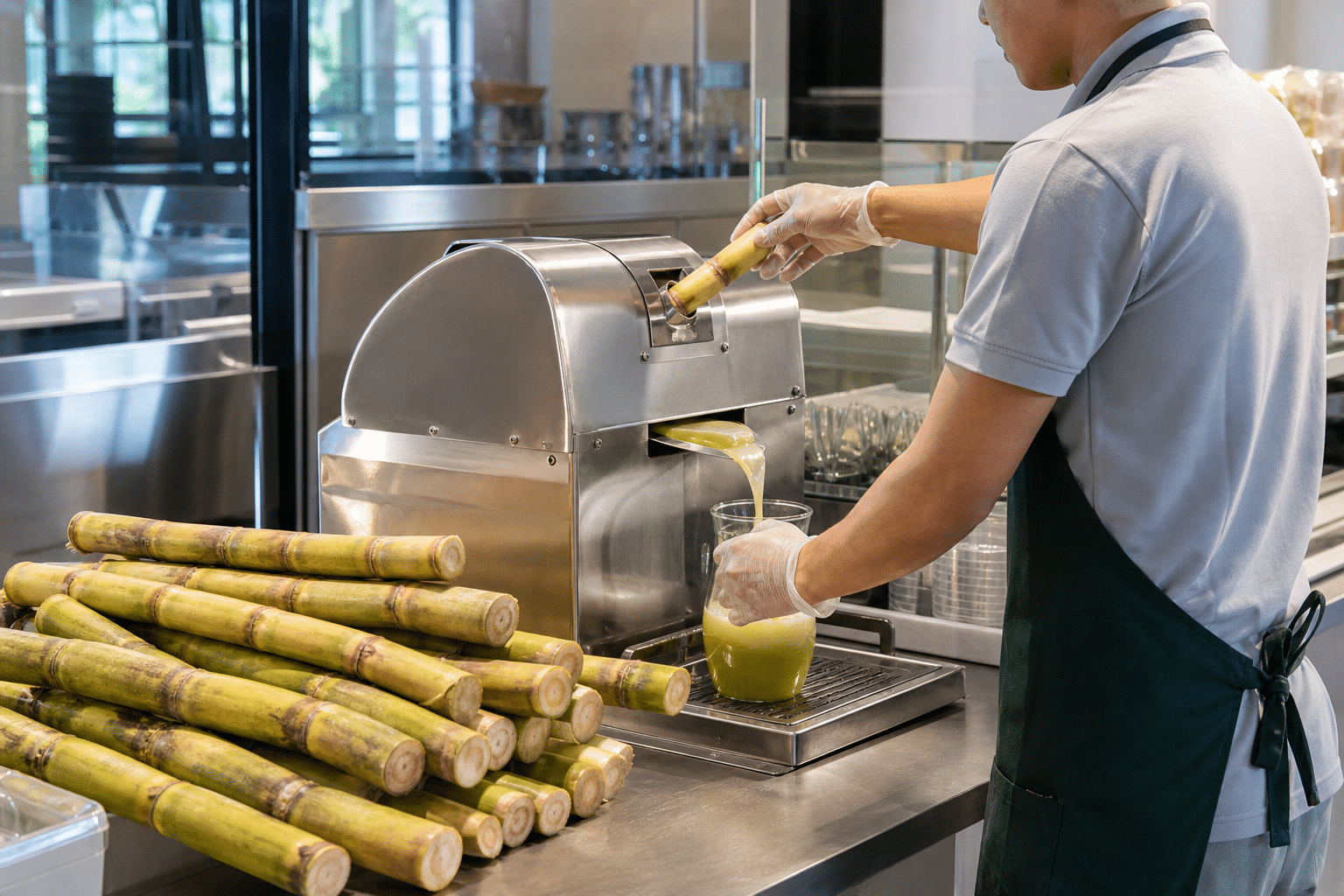
The main difference between a commercial and home sugarcane juicer is not simply size. A commercial machine is selected for repeated daily operation, a practical service workflow, robust construction, cleaning access, and support for a business environment. A home sugarcane juicer is generally better suited to occasional, lower-volume use where service speed and continuous operation are not the main requirements.
For a café, juice bar, market stall, restaurant, hotel, catering operation, or retail beverage counter, choose equipment based on the busiest expected service period rather than a quiet average day. The machine must fit the cane preparation process, available electrical supply, staff capability, cleaning routine, and local food-handling requirements. A lower-duty unit can appear economical at purchase but may become a bottleneck if it is used beyond its intended operating pattern.
For personal use, a home machine can be a reasonable option when usage is occasional and the owner can accept slower preparation, more frequent pauses, and a less formal service arrangement. It should not automatically be treated as a substitute for commercial equipment simply because it can press cane.
What Makes a Sugarcane Juicer Commercial?
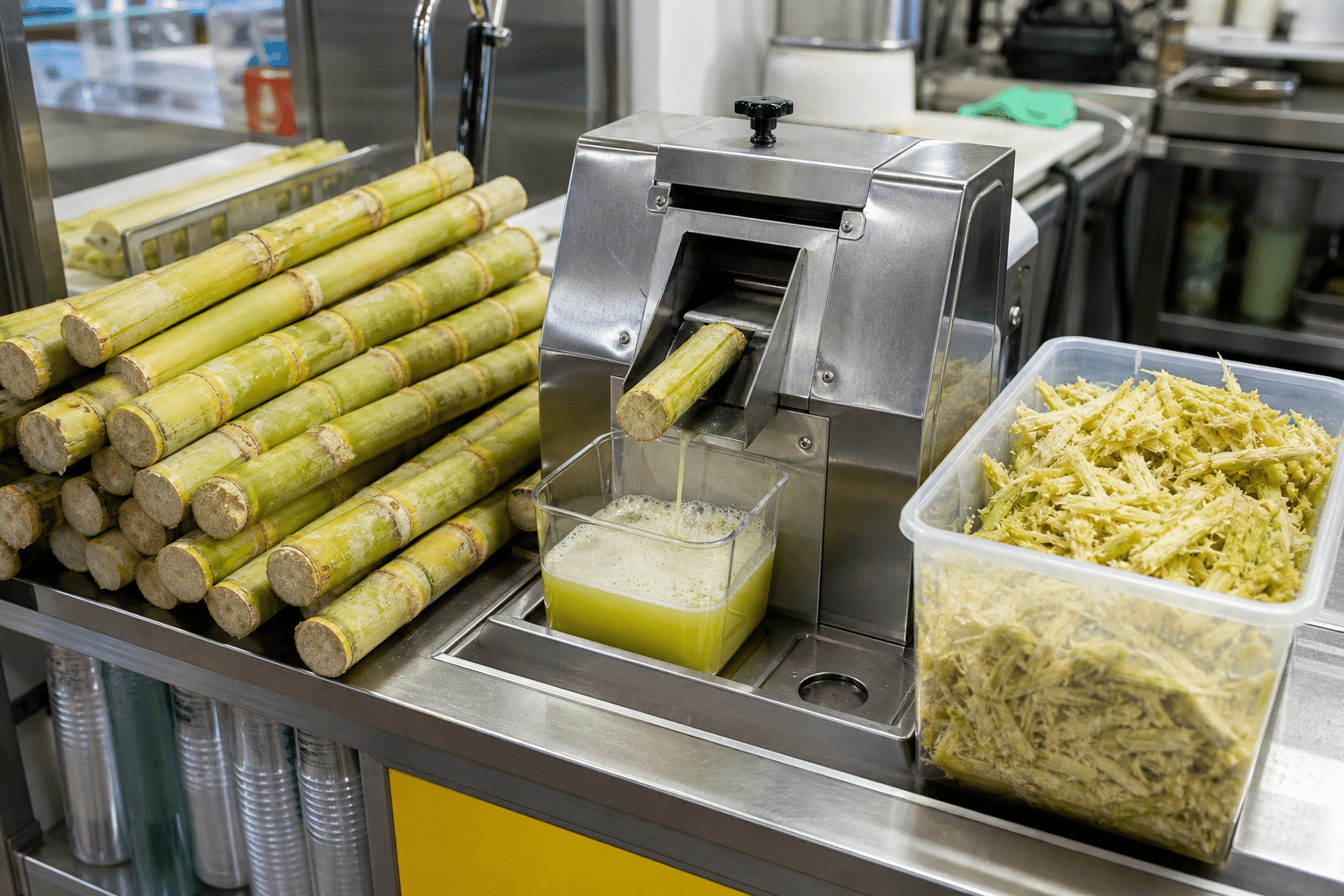
A commercial sugarcane juicer is a cane-crushing machine intended to support a foodservice or retail operating routine. The machine draws prepared cane through rollers that compress the stalk and express juice. However, commercial suitability depends on the complete design and service arrangement, not on a single advertised output figure.
In practice, B2B buyers should look for a machine that can be integrated into a repeatable process: receiving cane, trimming or cutting stalks, washing and draining cane, feeding the juicer, collecting juice, managing bagasse, cleaning contact areas, and returning the station to service. The design should make sense for the operator’s actual counter space and work sequence.
Commercial equipment is also normally evaluated with closer attention to replacement parts, access to technical information, machine identification, dealer or manufacturer communication, and planned maintenance. These factors matter because a juicer that is temporarily unavailable can interrupt menu service and staff schedules.
By contrast, the term home sugarcane juicer usually describes a machine purchased for personal or occasional use. It may be compact and convenient for a domestic setting, but buyers should carefully check whether its stated intended use, cleaning method, electrical requirements, and service support align with commercial operation before placing it in a business.
Duty Cycle and Daily Workflow
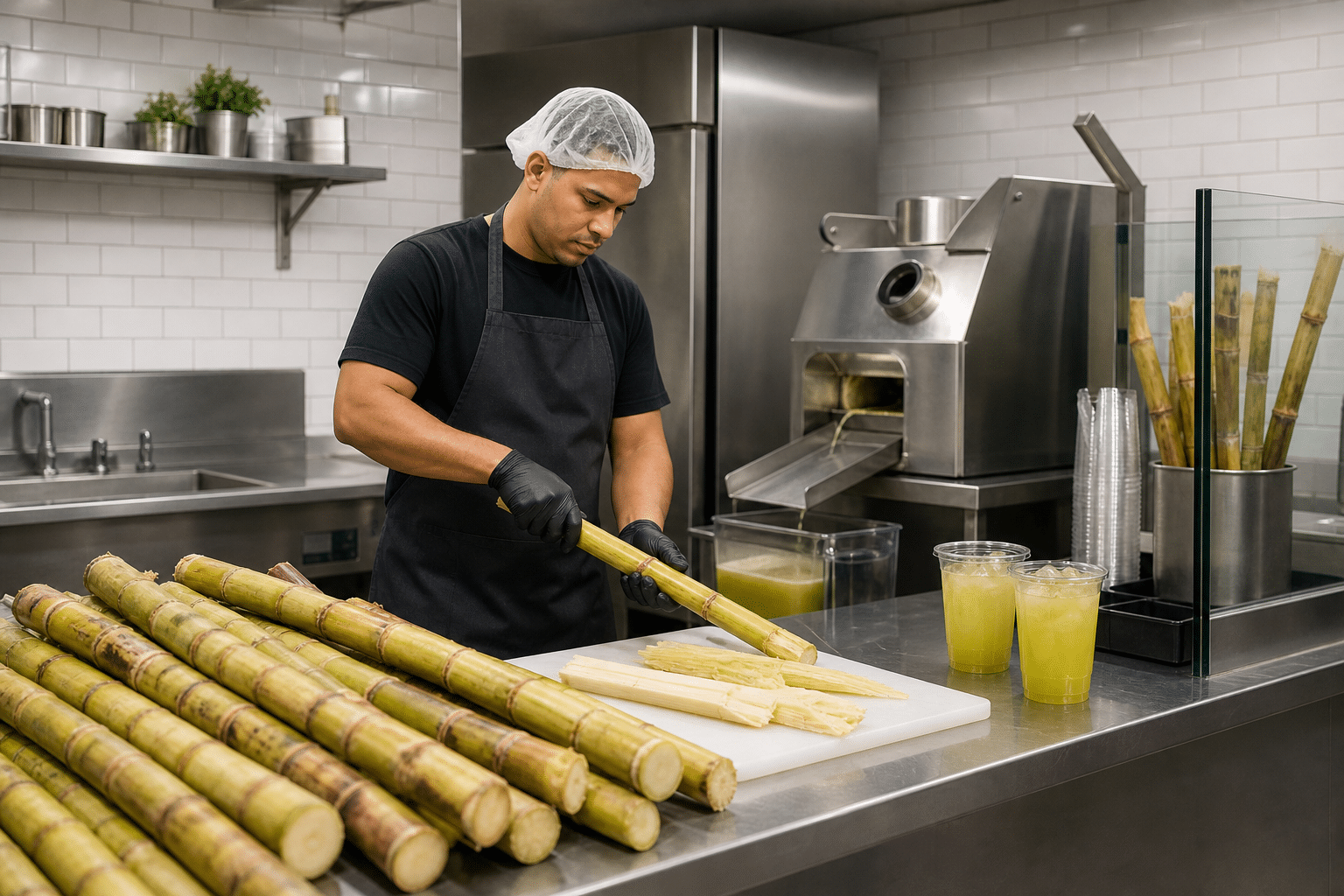
Duty cycle is one of the most important differences in a commercial vs home sugarcane juicer decision. It describes how the machine is expected to operate over time, including loading, pressing, pauses, cleaning intervals, and the overall working day. A business should define demand in terms of real service patterns: the number of orders during peak periods, the duration of those peaks, the number of staff available, and whether juice is made to order or prepared in controlled batches.
In a home setting, the operator may process a small quantity, stop to trim more cane, wash components, or wait between servings. In a busy outlet, those pauses may create a queue. Commercial equipment should be chosen with enough practical headroom for the busiest period, while still matching the operator’s pace and preparation station.
Workflow begins before the cane enters the rollers. Stalk length and diameter can vary by market and supplier, and outer surfaces require appropriate washing before processing. Some operators need a dedicated cutting or trimming step to make cane easier to handle and to keep the juicing station orderly. Waste handling is equally important: bagasse should be removed without obstructing the operator or contaminating clean work areas.
When comparing machines, ask suppliers to explain the recommended use pattern, feeding procedure, cleaning routine, and the parts that need regular inspection. Do not estimate suitability from motor power alone. The working process, the drive arrangement, roller condition, and the operator’s ability to keep the machine clean all affect real daily use.
Construction, Rollers, and Drive Systems
Sugarcane is fibrous and variable, so the mechanical parts that receive force deserve close attention. In commercial use, the roller assembly, frame, transmission system, bearings, guards, and food-contact surfaces should be assessed as a system. A strong-looking exterior does not, by itself, confirm that the internal components are appropriate for the intended workload.
Roller material and roller construction influence durability, maintenance planning, and the way a machine performs over time. Buyers comparing designs can review the practical considerations in this guide to solid and hollow sugarcane juicer rollers. The right choice depends on the supplier’s design, the operating pattern, and the availability of appropriate service and replacement parts.
Transmission design also affects how operators and technicians approach maintenance. Commercial machines may use different methods to transfer motor power to the pressing assembly. Neither label alone is enough to determine suitability; consider protection, inspection access, adjustment requirements, parts availability, and the manufacturer’s maintenance instructions. For a clearer technical comparison, see gearbox and belt-drive systems in commercial sugarcane machines.
A prospective buyer should ask what wear items need inspection, how the machine should be stopped and isolated before service, which components can be cleaned by the operator, and when qualified technical support is needed. This is more useful than relying on generic claims about “heavy-duty” construction.
Cleaning, Hygiene, and Maintenance
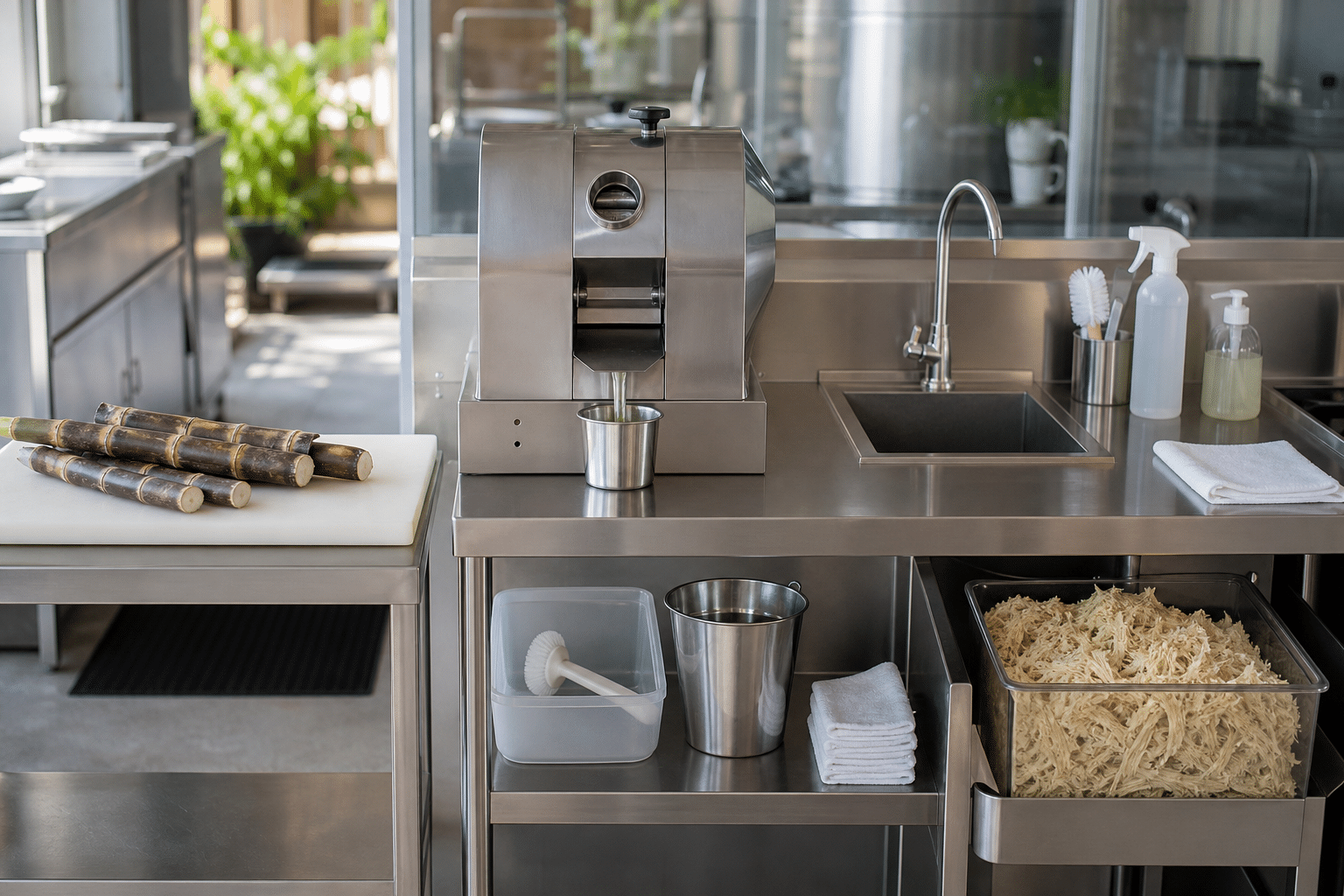
For any machine that handles fresh cane and juice, sanitation is an operating requirement, not an afterthought. A commercial machine should be evaluated for how safely and thoroughly the relevant food-contact and splash areas can be cleaned according to its instructions. Before purchase, ask the supplier to explain the daily cleaning sequence, the components or areas that require attention, the recommended cleaning materials, and any limits on water exposure.
Home users may accept a longer cleaning routine after occasional use. Commercial operators need a process that staff can repeat reliably during every shift. The layout of the station should separate unwashed cane, washed cane, pressed bagasse, clean cups, and finished drinks as far as practical. Local food-safety rules, cleaning chemicals, and staff training requirements should guide the final procedure.
Maintenance is similarly different in a business context. An operator should establish simple checks for unusual noise, visible wear, loosened fittings, damaged guards, and changes in feeding behavior. The machine should be switched off and disconnected or isolated in accordance with its instructions before any cleaning, adjustment, or inspection that requires access to moving areas. Do not bypass safety guards or force cane into the feed area.
A good maintenance plan records cleaning, inspection, replacement parts, and service actions. This record helps managers identify recurring issues and gives technicians useful information if assistance is required. For a startup budget, include cleaning supplies, operator training time, planned service, and possible replacement parts rather than focusing only on the initial machine price.
Power, Space, and Site Planning
A commercial sugarcane juicer must suit the installation site as well as the menu. Confirm the machine’s rating plate requirements against the local electrical supply before ordering or installation. Voltage, frequency, phase, plug type, circuit protection, and grounding arrangements must be considered by a qualified person where required. The relevant requirement is always the machine’s own specification, not an assumption based on a similar-looking model.
Read our practical guide to sugarcane juicer power supply requirements before finalizing a site plan. If your operation has more than one location or supplies multiple markets, confirm electrical compatibility for each destination at the quotation stage.
Plan adequate space for cane storage, washing, trimming, operator movement, finished-drink preparation, bagasse collection, and cleaning. A machine placed tightly against walls or other equipment may be difficult to access for proper cleaning or maintenance. The floor or counter should be stable, level, and appropriate for the machine and work process. Also consider drainage, ventilation, local noise expectations, and a nearby handwashing and cleaning arrangement where applicable.
Safety planning should include clear operator instruction, controlled access to the equipment, suitable personal protective practices for cane preparation, and a defined procedure for a jam or abnormal operation. Staff should never reach into moving feed or roller areas. If the machine behaves unexpectedly, stop operation and follow the manufacturer’s troubleshooting and service guidance.
How to Select the Right Equipment Class
Use a simple operating brief before deciding between a home and commercial sugarcane juicer. This helps a supplier recommend a suitable class of equipment without guessing.
- Sales setting: Is the machine for home use, a seasonal market, a permanent juice bar, a restaurant, a hotel, or a central preparation area?
- Peak service pattern: How many drinks may be ordered during the busiest period, and how long does that period normally last?
- Cane format: What stalk lengths, diameters, and conditions are typical from the planned supplier? Will cane need cutting before pressing?
- Staffing: Will one operator prepare cane, press juice, take payment, and finish drinks, or will the tasks be separated?
- Site utilities: What electrical supply is available, and what space, drainage, washing, and waste arrangements exist?
- Support plan: Who will clean the machine, inspect it, order parts, and coordinate service if needed?
Commercial equipment is usually the more sensible choice where juice sales are a recurring business activity, customer waiting time matters, or multiple staff will use the machine. A home machine may fit a non-commercial buyer with occasional use, suitable domestic power, and no requirement for business-level workflow or support.
Do not select by headline price alone. The total decision should include installation, cane preparation tools, packaging, sanitation supplies, labour, electrical work if needed, service planning, and downtime risk. Our guide to budgeting for a sugarcane juice business explains the wider cost areas worth reviewing before launch.
When a Commercial Juicer Is the Better Business Choice
A commercial sugarcane juicer is normally the better choice when the machine will be used as part of a regular revenue-producing operation. This includes businesses that expect repeat daily demand, need an organized service station, require clearer maintenance planning, or need equipment support suitable for ongoing use.
The best result comes from matching the machine to the complete operation, not from choosing the largest or lowest-priced unit. Define expected demand, inspect the installation conditions, establish a cane-handling and sanitation procedure, and confirm technical details with the supplier before purchase. This approach helps buyers compare options on practical operating value.
Easimaker Technology Limited supports B2B customers seeking commercial sugarcane juice equipment and related food processing machines. Share your market, planned workflow, cane preparation method, utility details, and expected peak demand so the discussion can focus on the equipment class and configuration that fit your operation.
Discuss the Right Sugarcane Juicer for Your Operation
Request a quote or discuss your expected output, cane format, local power supply, installation space, and target market with the Easimaker team. We can help you assess the appropriate commercial equipment class and discuss OEM/ODM requirements where relevant.