Buying a Sugarcane Machine in the USA: Importer Checklist

Table of Contents

Buying a sugarcane machine in the USA involves more than choosing a model. Importers should confirm the intended workflow, electrical compatibility, delivery terms, import documents, local inspection requirements, cleaning access, spare-parts support, and total landed cost before placing an order.

What USA Buyers Should Confirm Before Ordering

Equipment specification and import planning documents for a commercial sugarcane machine

When buying a sugarcane machine in the USA from an overseas manufacturer, confirm the machine’s electrical configuration, intended workflow, shipping terms, import paperwork, local foodservice requirements, cleaning process, parts availability, and total landed cost before paying a deposit. The lowest factory price does not necessarily represent the lowest operating cost or the quickest route to opening.

A commercial sugarcane juicer is usually selected around the cane preparation process, expected serving pattern, available counter or floor space, and operator routine. For a USA import, add the practical questions of voltage and plug compatibility, delivery responsibility, customs clearance, destination charges, and local authority or insurer expectations. These points should be resolved in writing, against the exact model and configuration being purchased.

Start with a clear specification sheet rather than a generic product photo. It should identify the model, electrical input, dimensions, net and shipping weight, included accessories, material information where relevant, warranty scope, packing method, and available replacement parts. A capable supplier should be able to answer operational questions directly; this manufacturer question checklist for commercial sugarcane juicers is useful for organizing those discussions.

Define the Machine and Your Intended Operation

Commercial sugarcane machine in an organized cane preparation workflow

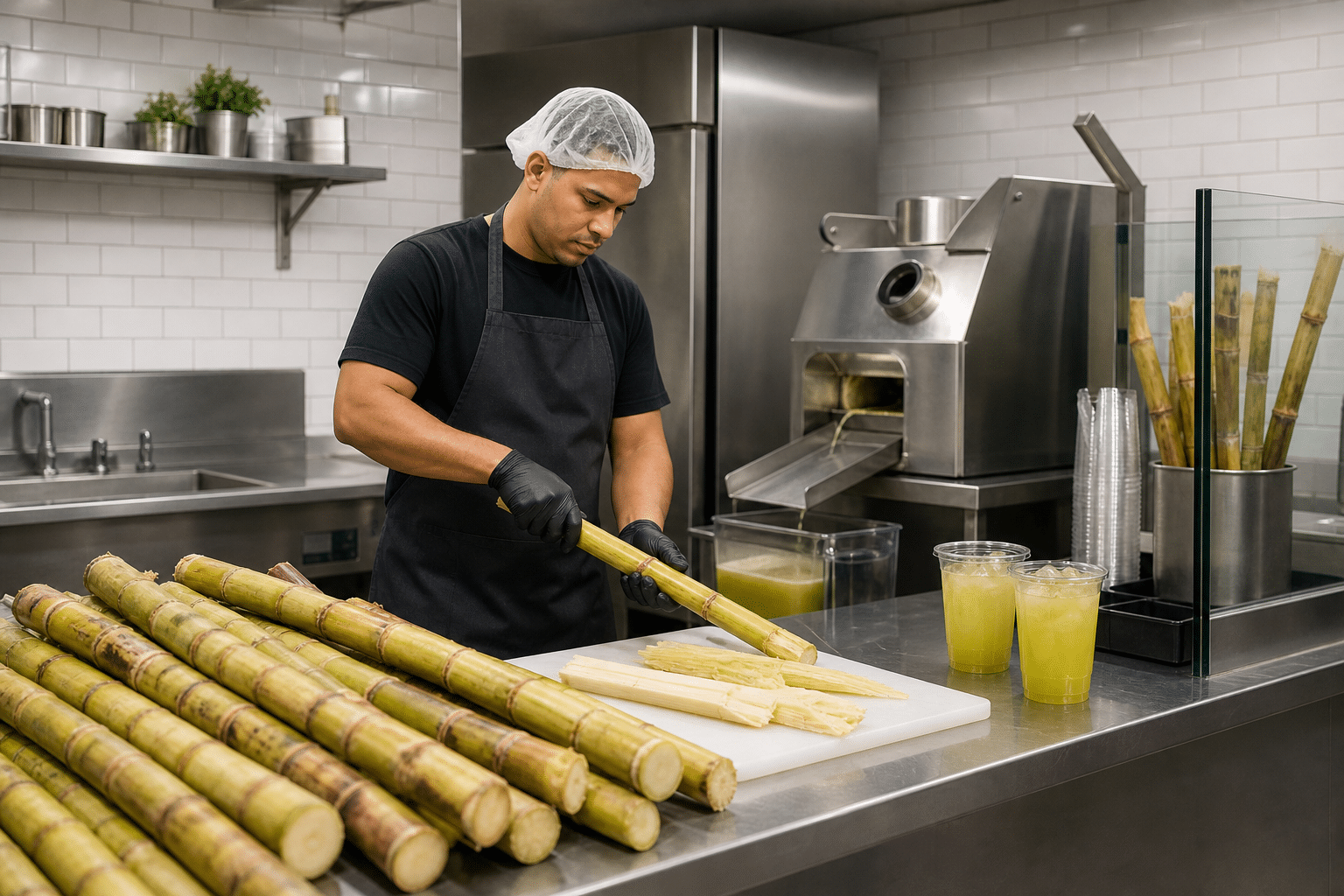
A commercial sugarcane machine crushes prepared cane through rollers to extract juice. It is not simply a countertop beverage appliance: it forms one part of a process that may include receiving cane, washing, trimming, splitting or cutting, crushing, straining, serving, cleaning, and waste handling.

Define the operation before comparing machines. A small counter-service location with intermittent orders may prioritize footprint and simple daily cleaning. A busy juice bar, market stall, restaurant, or distributor demonstration operation may need a different workflow, more preparation capacity, or a more deliberate spare-parts plan. Do not assume that a larger machine is automatically right for a given business. The best fit is the model that supports the real order pattern and can be cleaned consistently by the available staff.

Write down the following details for the supplier:

  • cane type, typical stalk diameter, and condition on arrival;
  • how cane will be washed, trimmed, and cut before crushing;
  • estimated operating periods and peak service windows;
  • available installation dimensions, including clearance for feeding, cleaning, and collecting bagasse;
  • the intended electrical supply at the actual installation point; and
  • who will operate, clean, inspect, and maintain the equipment.

If you are deciding between a compact and a larger commercial format, compare the workflow rather than relying on a model name alone. The TiniForce S3 and EasiDeMax S4 operating comparison can help frame questions about service volume, counter space, cane preparation, and local electrical requirements.

USA Importer Checklist

Inspection of a crated commercial sugarcane machine at delivery

Use this checklist as a pre-order record. It is designed to help buyers gather the information needed for a practical purchasing decision. It does not replace advice from a customs broker, freight forwarder, licensed electrician, local health authority, or legal adviser.

1. Confirm the exact commercial offer

  • Request a pro forma invoice that states the exact model, quantity, unit price, currency, payment terms, and trade term.
  • Confirm what is included: machine, cutting or preparation accessories if applicable, tools, manuals, replacement wear parts, and export packaging.
  • Ask for the electrical specification, plug type, motor information where applicable, machine dimensions, shipping dimensions, and gross weight.
  • Request photos or video of the ordered configuration, particularly if optional parts or a custom electrical arrangement are involved.

2. Clarify responsibility at each shipping stage

  • Identify the agreed Incoterm and named place. Terms such as EXW, FOB, CIF, or DDP allocate responsibilities differently, so do not use them casually.
  • Establish who arranges main freight, cargo insurance, customs entry, port handling, delivery appointment, unloading, and final delivery.
  • Ask whether the quoted freight includes destination charges. Obtain estimates in writing, while recognizing that freight and port costs can change.

3. Prepare for customs and local requirements

  • Work with a qualified USA customs broker or freight forwarder early enough to review the product description, country of origin, tariff classification, and required entry information.
  • Confirm the importer of record and who will hold responsibility for the customs entry and applicable charges.
  • Check whether the equipment needs country-of-origin marking and whether its packaging or documentation needs particular treatment for your shipment.
  • Before ordering, ask the local health department, building authority, electrical inspector, landlord, or insurer what they require for equipment used in your specific premises. Requirements can vary by state, city, use case, and inspector.

4. Protect the delivery and installation process

  • Verify whether the delivery point has a dock, forklift, liftgate access, or another unloading plan.
  • Measure doors, corridors, elevator openings, counters, and the installation location before dispatch.
  • Assign a person to inspect the crate and machine at delivery, photograph visible damage, and follow the carrier’s damage-reporting procedure promptly.

Buyers should also reserve budget for items outside the supplier invoice. Review this guide to budget the full cost of a commercial sugarcane juicer before comparing offers only on machine price.

Electrical and Site-Readiness Checks

Electrical mismatch is one of the most avoidable problems when importing foodservice equipment. USA premises may have 120 V or 208/240 V service, and commercial sites may differ in phase arrangement, circuit availability, plug format, and local installation rules. A machine should be specified for the supply available at its final location, not selected based on an assumption about common voltage.

Give the supplier the following information: supply voltage, frequency, phase, receptacle type if already known, and whether the machine will be hardwired or plug-connected. Then ask for written confirmation of the machine’s required input and its plug or connection arrangement. Have a qualified local electrician review the final machine specification before installation planning.

Do not assume that a plug adapter, voltage converter, or a new receptacle will resolve every issue. The motor, controls, protective devices, wire sizing, grounding, and local code expectations may all matter. Similarly, do not assume that a manufacturer statement alone will satisfy every local inspector, landlord, insurer, or customer procurement policy. Ask the relevant local parties what documentation or marks they require for the actual installation.

Site readiness also includes a stable, cleanable support surface; practical clearance around the feed area and bagasse outlet; nearby handwashing and cleaning arrangements as required by the operation; drainage and waste handling; and safe storage for cane. Plan the operator path from cane preparation to serving so the machine does not create congestion during peak periods.

Shipping, Customs, and Landed-Cost Planning

Landed cost is the amount required to place the machine at your usable destination, not just the factory quotation. It may include the product price, inland transport in the origin country, export packing, international freight, cargo insurance, customs brokerage, duty or other government charges where applicable, port or terminal charges, domestic delivery, unloading, installation work, and local tax obligations. The precise charges depend on the shipment, trade term, route, product classification, and destination.

Request a shipment estimate that separates known costs from estimates. This makes it easier to identify what remains outside the supplier’s responsibility. When comparing two offers, compare equivalent terms. A lower EXW price and a higher delivered price are not directly comparable until freight, export handling, destination charges, and service scope are included.

Ask for a packing list and commercial invoice format in advance. Your broker or forwarder can tell you whether the descriptions and information are sufficient for the planned entry. Avoid vague product descriptions. The commercial documents should identify the equipment accurately and consistently with the actual shipment.

For a first import, allow time for planning and avoid scheduling an opening date solely around an estimated sailing or arrival date. Customs review, port congestion, appointments, inland transport, and damage resolution can affect the actual delivery date. Keep a record of quotations, correspondence, shipping documents, and serial numbers for future support and repeat purchases.

Some businesses also compare outright purchase with financing once their budget is clear. This overview of commercial sugarcane juicer buying and leasing options can help structure that financial discussion.

Service, Cleaning, and Spare-Parts Planning

Imported equipment should be supportable after delivery. Before ordering, ask which components are normally regarded as wear parts, what spare parts are recommended for an operator to keep, how parts are identified, and how replacement parts are shipped to the USA. Request an exploded diagram, parts list, operating manual, cleaning instructions, and troubleshooting guidance in a usable format.

Clarify warranty terms in writing. The practical questions are what is covered, for how long, which party pays freight for a warranty part, what evidence is needed for a claim, and how remote troubleshooting is handled. Avoid treating a broad warranty statement as a substitute for a clear service process.

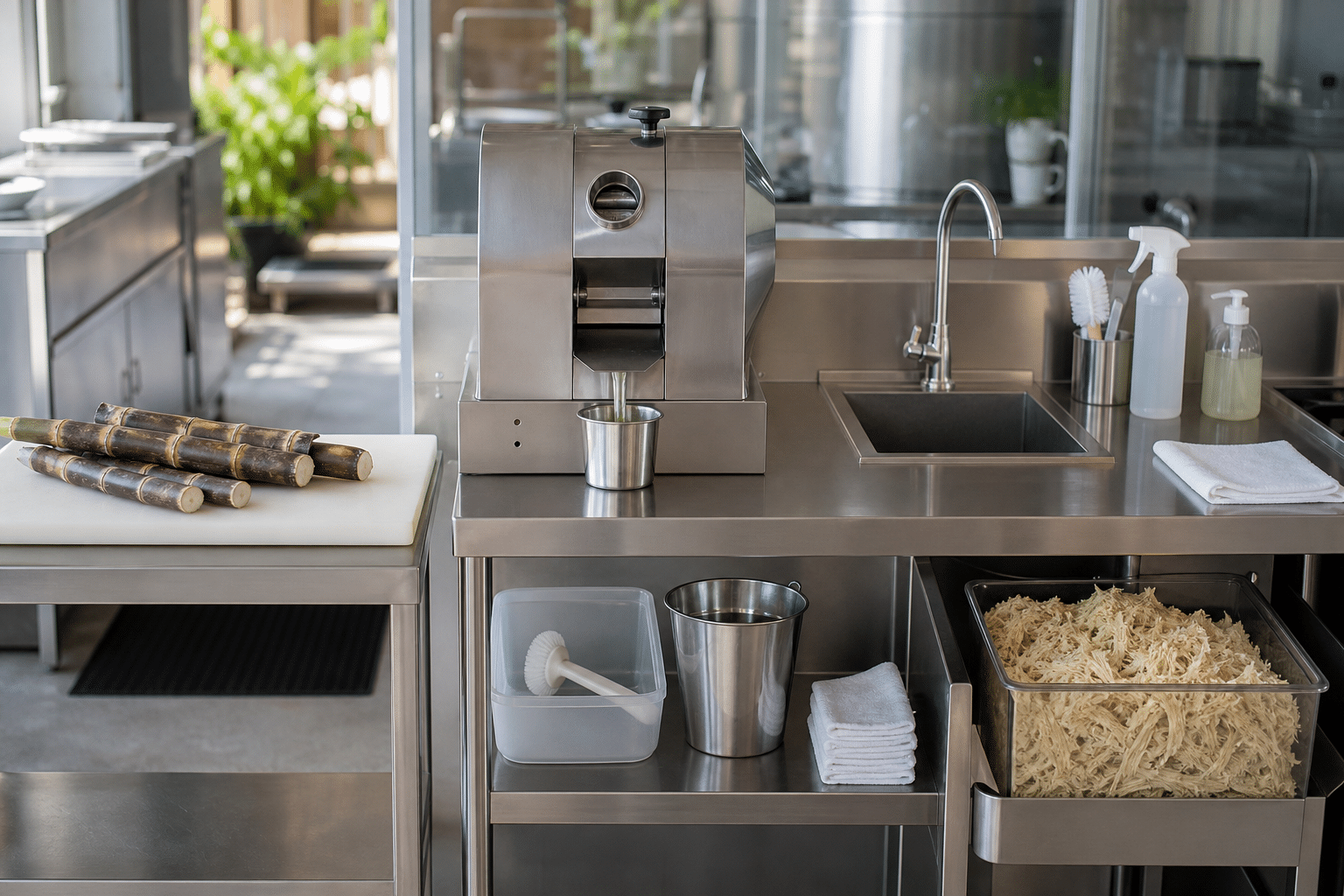
Cleaning is both an operational and purchasing issue. Operators need enough access to clean product-contact and surrounding areas according to the machine instructions and their food-safety procedures. Review the steps, tools, removable parts, and expected downtime before purchase. A machine that is technically suitable but difficult for the team to clean consistently can create avoidable daily friction.

Build maintenance into the operating routine. Check fasteners, guards, rollers, drive components, electrical connections, and cleaning condition only in line with the manufacturer’s instructions and applicable safety practices. Disconnect or isolate power before cleaning, inspection, adjustment, or service as instructed. This commercial sugarcane machine maintenance guide provides a useful starting point for establishing a routine.

Final Review Before Payment

Before releasing final payment or approving dispatch, match the order confirmation against the agreed specification. Check the model, quantity, electrical configuration, accessories, packaging, shipping marks, documents, consignee details, and trade term. Make sure the final installation location is ready for delivery and that the responsible team understands the receiving and inspection process.

Buying a sugarcane machine in the USA is most reliable when the commercial, technical, and operational questions are treated as one decision. The machine must fit the cane and service workflow, arrive under clearly assigned shipping responsibilities, connect safely at the site, and remain practical to clean and support over time.

For a quote or a technical discussion, contact Easimaker with your expected workflow, cane preparation method, available electrical supply, delivery location, and any local requirements already identified. This allows the machine configuration and commercial proposal to be discussed against the needs of your market.
Commercial vs Home Sugarcane Juicers: Key Differences for Buyers

Table of Contents

Commercial sugarcane juicers are designed for repeated service, operator workflow, and maintainable daily operation. Home machines may suit occasional personal use, but buyers should assess duty cycle, construction, cleaning access, power compatibility, and support before using any machine in a business.

Commercial vs Home Sugarcane Juicer: The Direct Answer

Commercial sugarcane juicer in a professional beverage preparation setting

The main difference between a commercial and home sugarcane juicer is not simply size. A commercial machine is selected for repeated daily operation, a practical service workflow, robust construction, cleaning access, and support for a business environment. A home sugarcane juicer is generally better suited to occasional, lower-volume use where service speed and continuous operation are not the main requirements.

For a café, juice bar, market stall, restaurant, hotel, catering operation, or retail beverage counter, choose equipment based on the busiest expected service period rather than a quiet average day. The machine must fit the cane preparation process, available electrical supply, staff capability, cleaning routine, and local food-handling requirements. A lower-duty unit can appear economical at purchase but may become a bottleneck if it is used beyond its intended operating pattern.

For personal use, a home machine can be a reasonable option when usage is occasional and the owner can accept slower preparation, more frequent pauses, and a less formal service arrangement. It should not automatically be treated as a substitute for commercial equipment simply because it can press cane.

What Makes a Sugarcane Juicer Commercial?

Organized commercial sugarcane juice preparation workflow

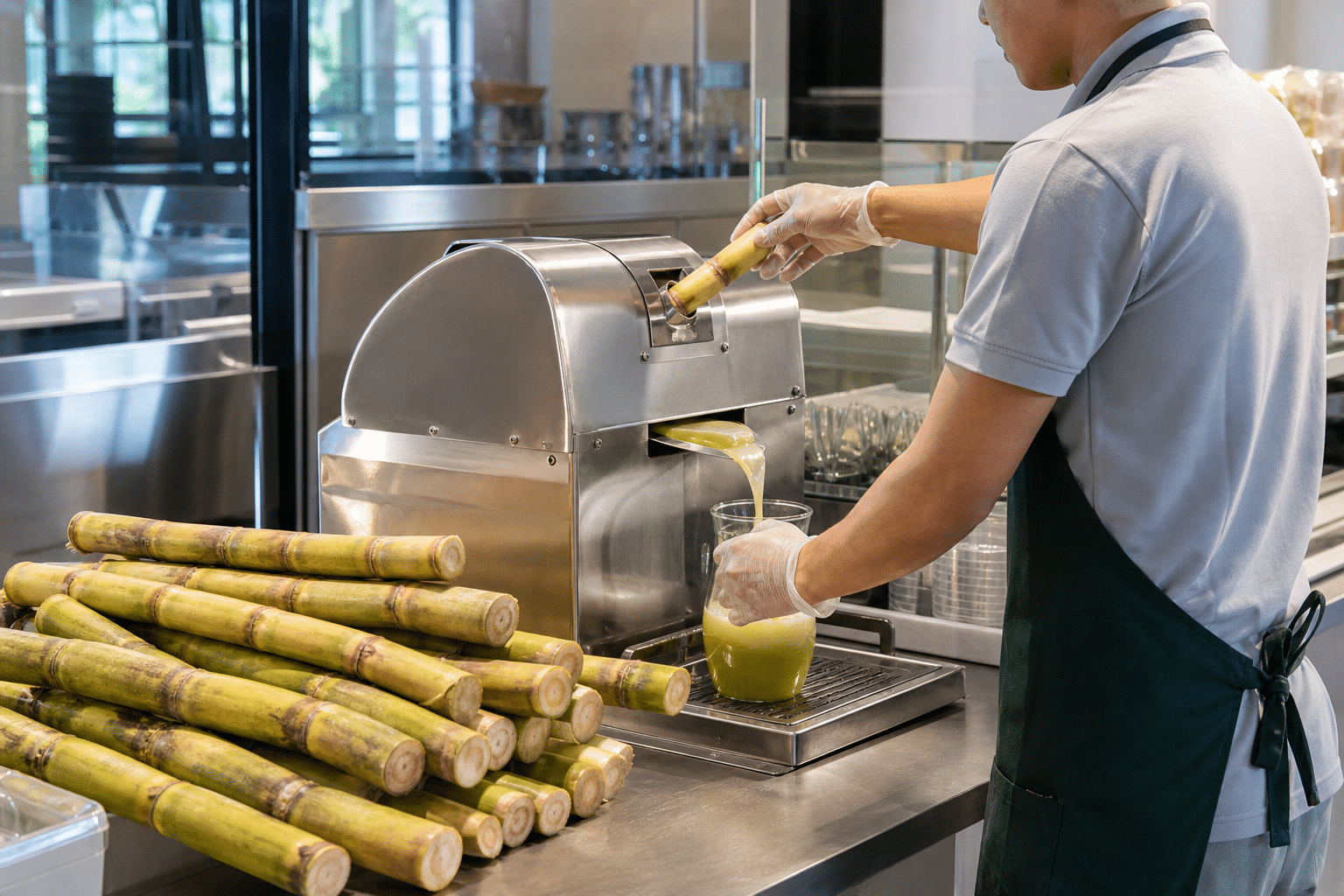
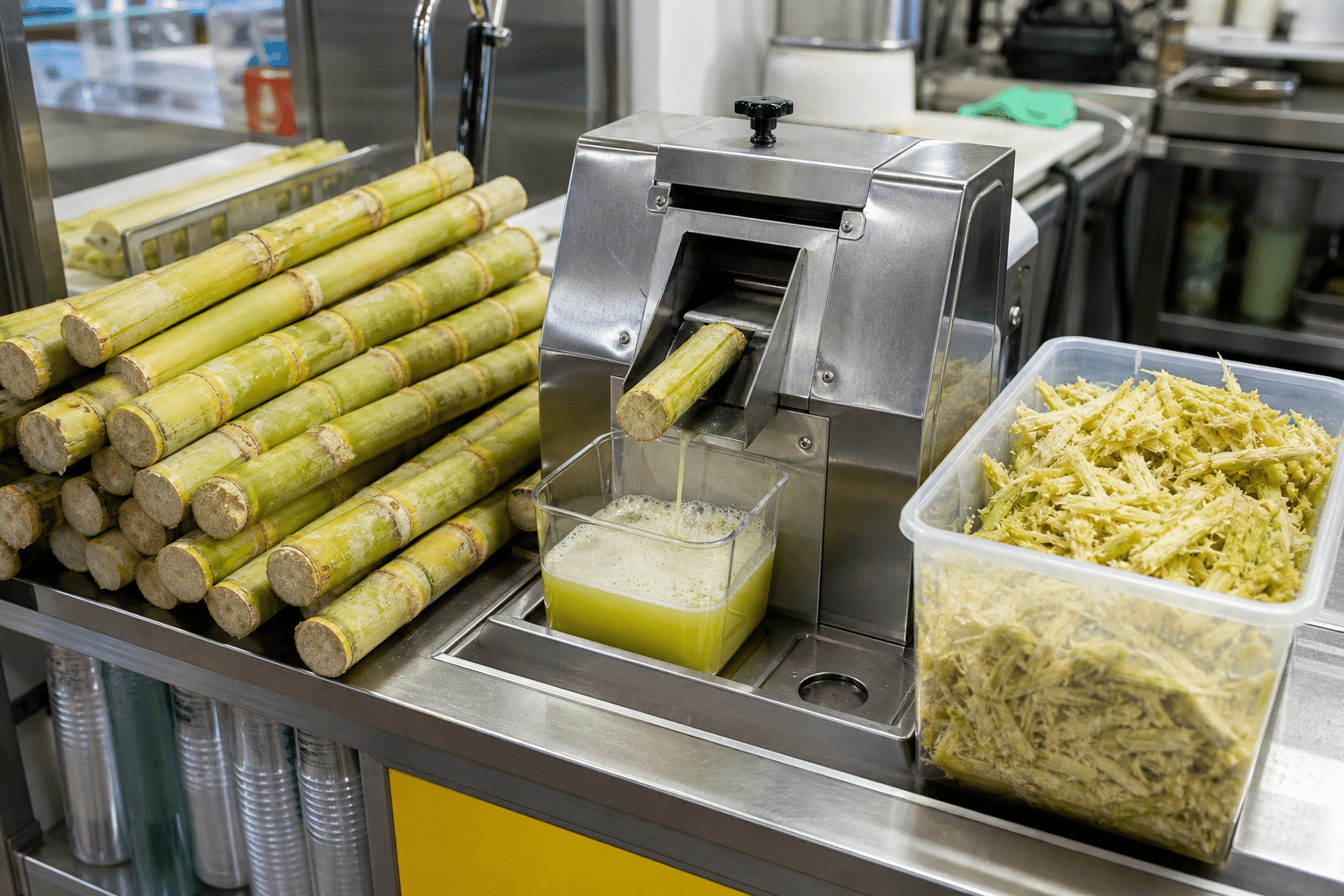
A commercial sugarcane juicer is a cane-crushing machine intended to support a foodservice or retail operating routine. The machine draws prepared cane through rollers that compress the stalk and express juice. However, commercial suitability depends on the complete design and service arrangement, not on a single advertised output figure.

In practice, B2B buyers should look for a machine that can be integrated into a repeatable process: receiving cane, trimming or cutting stalks, washing and draining cane, feeding the juicer, collecting juice, managing bagasse, cleaning contact areas, and returning the station to service. The design should make sense for the operator’s actual counter space and work sequence.

Commercial equipment is also normally evaluated with closer attention to replacement parts, access to technical information, machine identification, dealer or manufacturer communication, and planned maintenance. These factors matter because a juicer that is temporarily unavailable can interrupt menu service and staff schedules.

By contrast, the term home sugarcane juicer usually describes a machine purchased for personal or occasional use. It may be compact and convenient for a domestic setting, but buyers should carefully check whether its stated intended use, cleaning method, electrical requirements, and service support align with commercial operation before placing it in a business.

Duty Cycle and Daily Workflow

Operator workflow at a commercial sugarcane juicing station

Duty cycle is one of the most important differences in a commercial vs home sugarcane juicer decision. It describes how the machine is expected to operate over time, including loading, pressing, pauses, cleaning intervals, and the overall working day. A business should define demand in terms of real service patterns: the number of orders during peak periods, the duration of those peaks, the number of staff available, and whether juice is made to order or prepared in controlled batches.

In a home setting, the operator may process a small quantity, stop to trim more cane, wash components, or wait between servings. In a busy outlet, those pauses may create a queue. Commercial equipment should be chosen with enough practical headroom for the busiest period, while still matching the operator’s pace and preparation station.

Workflow begins before the cane enters the rollers. Stalk length and diameter can vary by market and supplier, and outer surfaces require appropriate washing before processing. Some operators need a dedicated cutting or trimming step to make cane easier to handle and to keep the juicing station orderly. Waste handling is equally important: bagasse should be removed without obstructing the operator or contaminating clean work areas.

When comparing machines, ask suppliers to explain the recommended use pattern, feeding procedure, cleaning routine, and the parts that need regular inspection. Do not estimate suitability from motor power alone. The working process, the drive arrangement, roller condition, and the operator’s ability to keep the machine clean all affect real daily use.

Construction, Rollers, and Drive Systems

Sugarcane is fibrous and variable, so the mechanical parts that receive force deserve close attention. In commercial use, the roller assembly, frame, transmission system, bearings, guards, and food-contact surfaces should be assessed as a system. A strong-looking exterior does not, by itself, confirm that the internal components are appropriate for the intended workload.

Roller material and roller construction influence durability, maintenance planning, and the way a machine performs over time. Buyers comparing designs can review the practical considerations in this guide to solid and hollow sugarcane juicer rollers. The right choice depends on the supplier’s design, the operating pattern, and the availability of appropriate service and replacement parts.

Transmission design also affects how operators and technicians approach maintenance. Commercial machines may use different methods to transfer motor power to the pressing assembly. Neither label alone is enough to determine suitability; consider protection, inspection access, adjustment requirements, parts availability, and the manufacturer’s maintenance instructions. For a clearer technical comparison, see gearbox and belt-drive systems in commercial sugarcane machines.

A prospective buyer should ask what wear items need inspection, how the machine should be stopped and isolated before service, which components can be cleaned by the operator, and when qualified technical support is needed. This is more useful than relying on generic claims about “heavy-duty” construction.

Cleaning, Hygiene, and Maintenance

Clean commercial sugarcane juicer sanitation and maintenance station

For any machine that handles fresh cane and juice, sanitation is an operating requirement, not an afterthought. A commercial machine should be evaluated for how safely and thoroughly the relevant food-contact and splash areas can be cleaned according to its instructions. Before purchase, ask the supplier to explain the daily cleaning sequence, the components or areas that require attention, the recommended cleaning materials, and any limits on water exposure.

Home users may accept a longer cleaning routine after occasional use. Commercial operators need a process that staff can repeat reliably during every shift. The layout of the station should separate unwashed cane, washed cane, pressed bagasse, clean cups, and finished drinks as far as practical. Local food-safety rules, cleaning chemicals, and staff training requirements should guide the final procedure.

Maintenance is similarly different in a business context. An operator should establish simple checks for unusual noise, visible wear, loosened fittings, damaged guards, and changes in feeding behavior. The machine should be switched off and disconnected or isolated in accordance with its instructions before any cleaning, adjustment, or inspection that requires access to moving areas. Do not bypass safety guards or force cane into the feed area.

A good maintenance plan records cleaning, inspection, replacement parts, and service actions. This record helps managers identify recurring issues and gives technicians useful information if assistance is required. For a startup budget, include cleaning supplies, operator training time, planned service, and possible replacement parts rather than focusing only on the initial machine price.

Power, Space, and Site Planning

A commercial sugarcane juicer must suit the installation site as well as the menu. Confirm the machine’s rating plate requirements against the local electrical supply before ordering or installation. Voltage, frequency, phase, plug type, circuit protection, and grounding arrangements must be considered by a qualified person where required. The relevant requirement is always the machine’s own specification, not an assumption based on a similar-looking model.

Read our practical guide to sugarcane juicer power supply requirements before finalizing a site plan. If your operation has more than one location or supplies multiple markets, confirm electrical compatibility for each destination at the quotation stage.

Plan adequate space for cane storage, washing, trimming, operator movement, finished-drink preparation, bagasse collection, and cleaning. A machine placed tightly against walls or other equipment may be difficult to access for proper cleaning or maintenance. The floor or counter should be stable, level, and appropriate for the machine and work process. Also consider drainage, ventilation, local noise expectations, and a nearby handwashing and cleaning arrangement where applicable.

Safety planning should include clear operator instruction, controlled access to the equipment, suitable personal protective practices for cane preparation, and a defined procedure for a jam or abnormal operation. Staff should never reach into moving feed or roller areas. If the machine behaves unexpectedly, stop operation and follow the manufacturer’s troubleshooting and service guidance.

How to Select the Right Equipment Class

Use a simple operating brief before deciding between a home and commercial sugarcane juicer. This helps a supplier recommend a suitable class of equipment without guessing.

  • Sales setting: Is the machine for home use, a seasonal market, a permanent juice bar, a restaurant, a hotel, or a central preparation area?
  • Peak service pattern: How many drinks may be ordered during the busiest period, and how long does that period normally last?
  • Cane format: What stalk lengths, diameters, and conditions are typical from the planned supplier? Will cane need cutting before pressing?
  • Staffing: Will one operator prepare cane, press juice, take payment, and finish drinks, or will the tasks be separated?
  • Site utilities: What electrical supply is available, and what space, drainage, washing, and waste arrangements exist?
  • Support plan: Who will clean the machine, inspect it, order parts, and coordinate service if needed?

Commercial equipment is usually the more sensible choice where juice sales are a recurring business activity, customer waiting time matters, or multiple staff will use the machine. A home machine may fit a non-commercial buyer with occasional use, suitable domestic power, and no requirement for business-level workflow or support.

Do not select by headline price alone. The total decision should include installation, cane preparation tools, packaging, sanitation supplies, labour, electrical work if needed, service planning, and downtime risk. Our guide to budgeting for a sugarcane juice business explains the wider cost areas worth reviewing before launch.

When a Commercial Juicer Is the Better Business Choice

A commercial sugarcane juicer is normally the better choice when the machine will be used as part of a regular revenue-producing operation. This includes businesses that expect repeat daily demand, need an organized service station, require clearer maintenance planning, or need equipment support suitable for ongoing use.

The best result comes from matching the machine to the complete operation, not from choosing the largest or lowest-priced unit. Define expected demand, inspect the installation conditions, establish a cane-handling and sanitation procedure, and confirm technical details with the supplier before purchase. This approach helps buyers compare options on practical operating value.

Easimaker Technology Limited supports B2B customers seeking commercial sugarcane juice equipment and related food processing machines. Share your market, planned workflow, cane preparation method, utility details, and expected peak demand so the discussion can focus on the equipment class and configuration that fit your operation.

Discuss the Right Sugarcane Juicer for Your Operation

Request a quote or discuss your expected output, cane format, local power supply, installation space, and target market with the Easimaker team. We can help you assess the appropriate commercial equipment class and discuss OEM/ODM requirements where relevant.

Contact Easimaker