Commercial vs Home Sugarcane Juicers: Key Differences for Buyers

Table of Contents

Commercial sugarcane juicers are designed for repeated service, operator workflow, and maintainable daily operation. Home machines may suit occasional personal use, but buyers should assess duty cycle, construction, cleaning access, power compatibility, and support before using any machine in a business.

Commercial vs Home Sugarcane Juicer: The Direct Answer

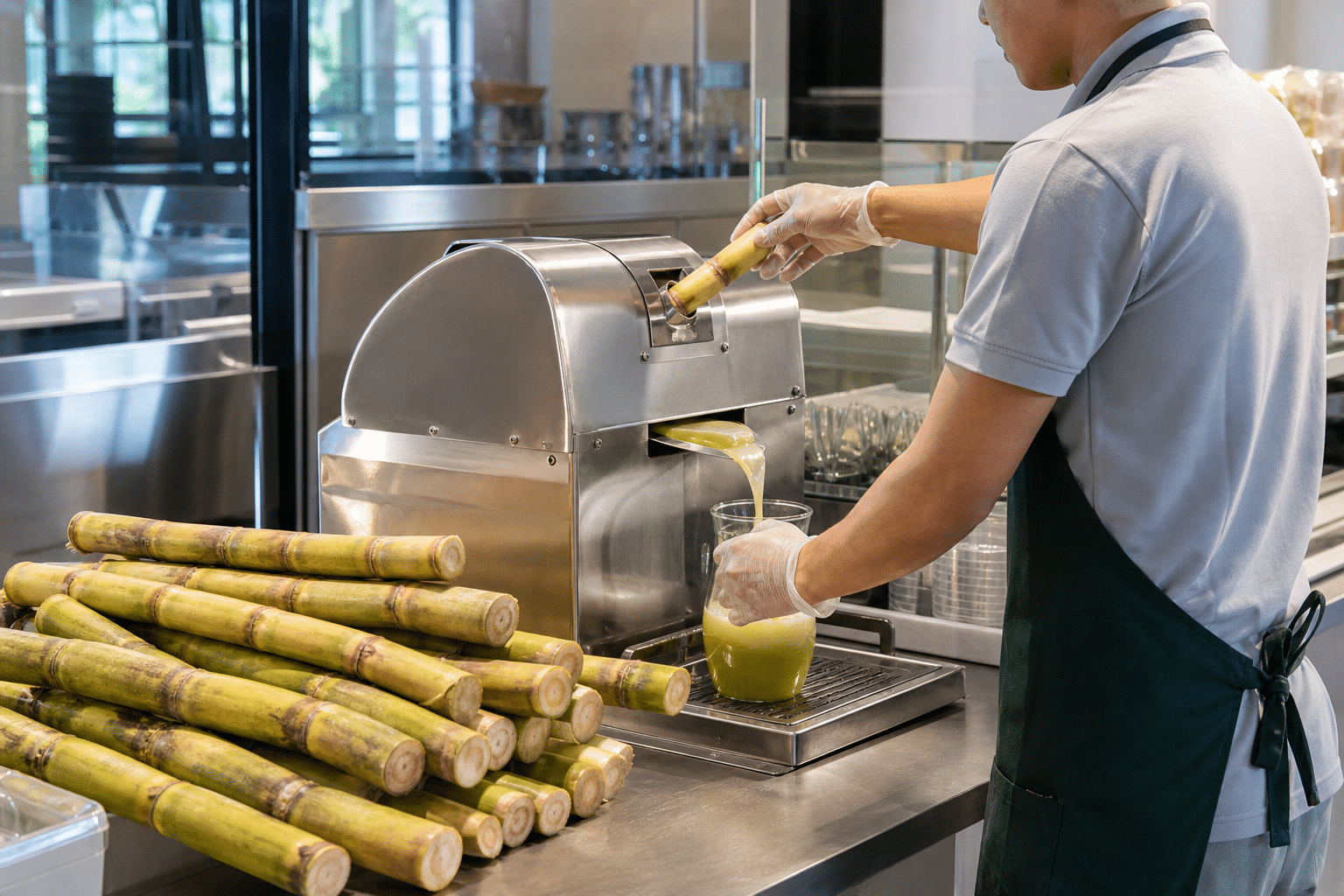
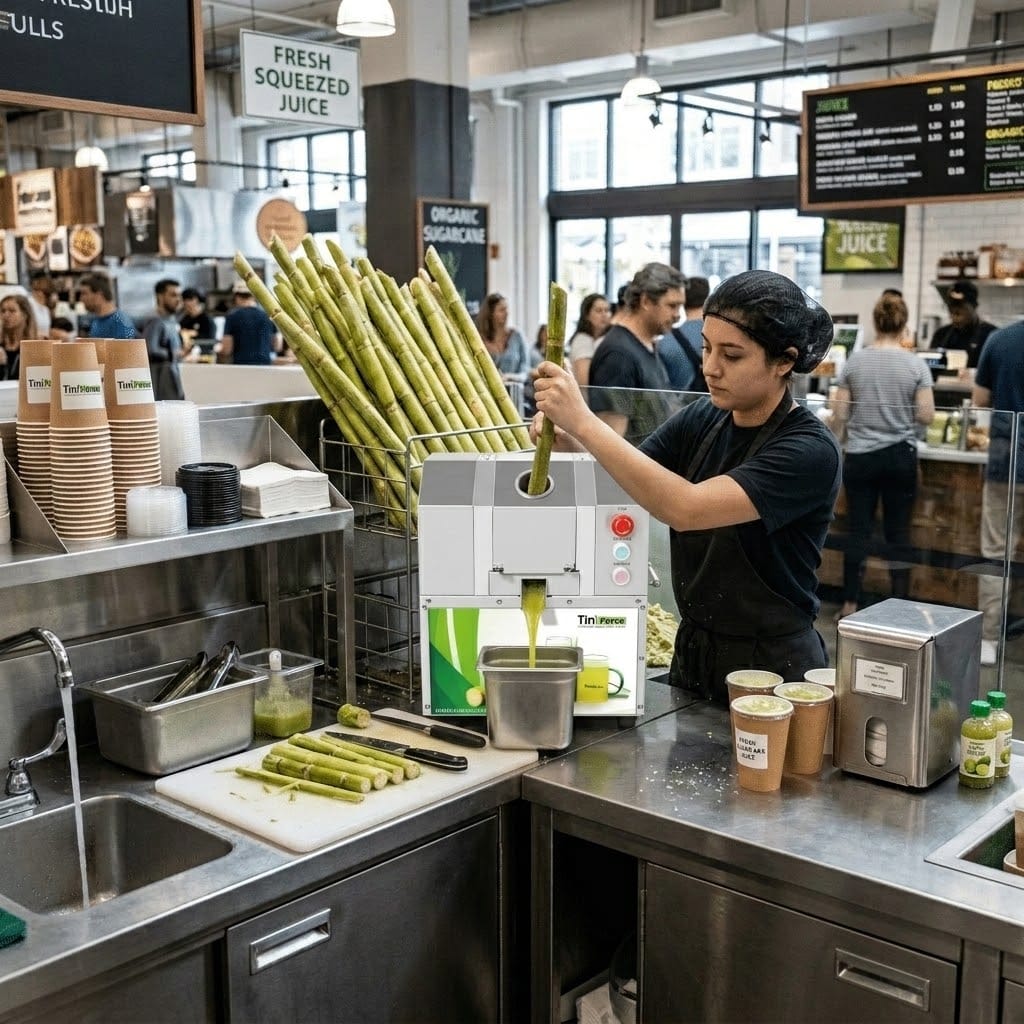
Commercial sugarcane juicer in a professional beverage preparation setting

The main difference between a commercial and home sugarcane juicer is not simply size. A commercial machine is selected for repeated daily operation, a practical service workflow, robust construction, cleaning access, and support for a business environment. A home sugarcane juicer is generally better suited to occasional, lower-volume use where service speed and continuous operation are not the main requirements.

For a café, juice bar, market stall, restaurant, hotel, catering operation, or retail beverage counter, choose equipment based on the busiest expected service period rather than a quiet average day. The machine must fit the cane preparation process, available electrical supply, staff capability, cleaning routine, and local food-handling requirements. A lower-duty unit can appear economical at purchase but may become a bottleneck if it is used beyond its intended operating pattern.

For personal use, a home machine can be a reasonable option when usage is occasional and the owner can accept slower preparation, more frequent pauses, and a less formal service arrangement. It should not automatically be treated as a substitute for commercial equipment simply because it can press cane.

What Makes a Sugarcane Juicer Commercial?

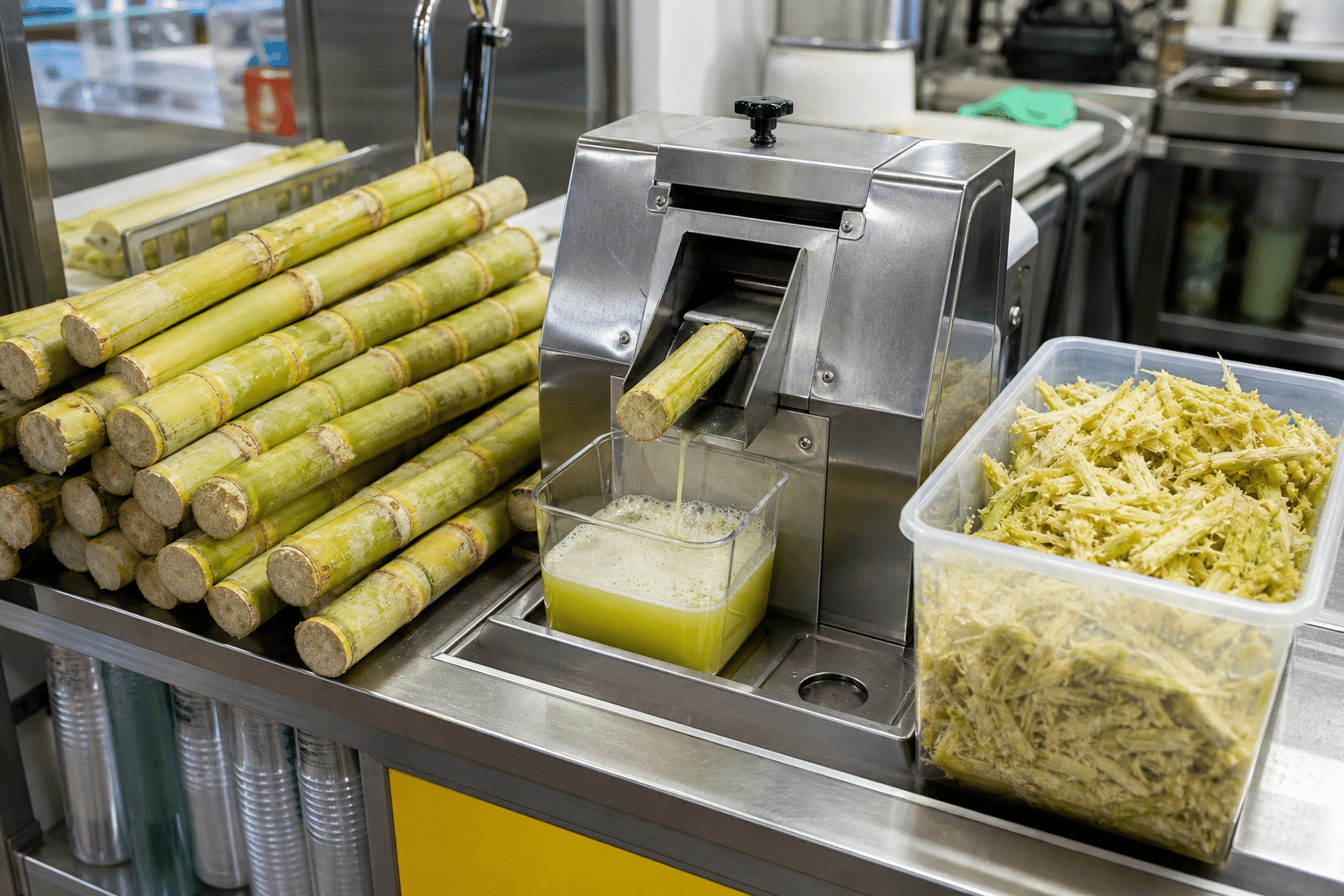
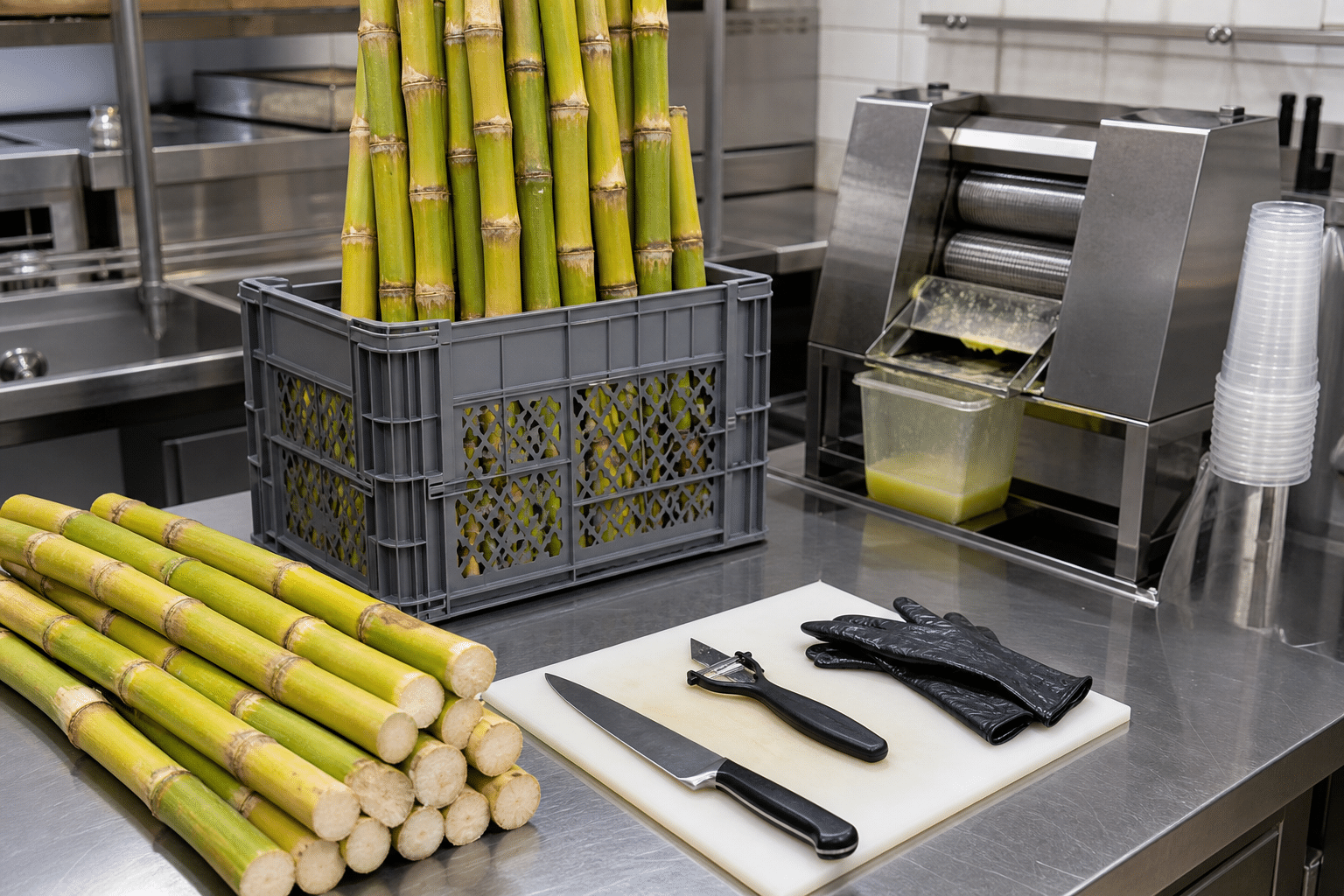
Organized commercial sugarcane juice preparation workflow

A commercial sugarcane juicer is a cane-crushing machine intended to support a foodservice or retail operating routine. The machine draws prepared cane through rollers that compress the stalk and express juice. However, commercial suitability depends on the complete design and service arrangement, not on a single advertised output figure.

In practice, B2B buyers should look for a machine that can be integrated into a repeatable process: receiving cane, trimming or cutting stalks, washing and draining cane, feeding the juicer, collecting juice, managing bagasse, cleaning contact areas, and returning the station to service. The design should make sense for the operator’s actual counter space and work sequence.

Commercial equipment is also normally evaluated with closer attention to replacement parts, access to technical information, machine identification, dealer or manufacturer communication, and planned maintenance. These factors matter because a juicer that is temporarily unavailable can interrupt menu service and staff schedules.

By contrast, the term home sugarcane juicer usually describes a machine purchased for personal or occasional use. It may be compact and convenient for a domestic setting, but buyers should carefully check whether its stated intended use, cleaning method, electrical requirements, and service support align with commercial operation before placing it in a business.

Duty Cycle and Daily Workflow

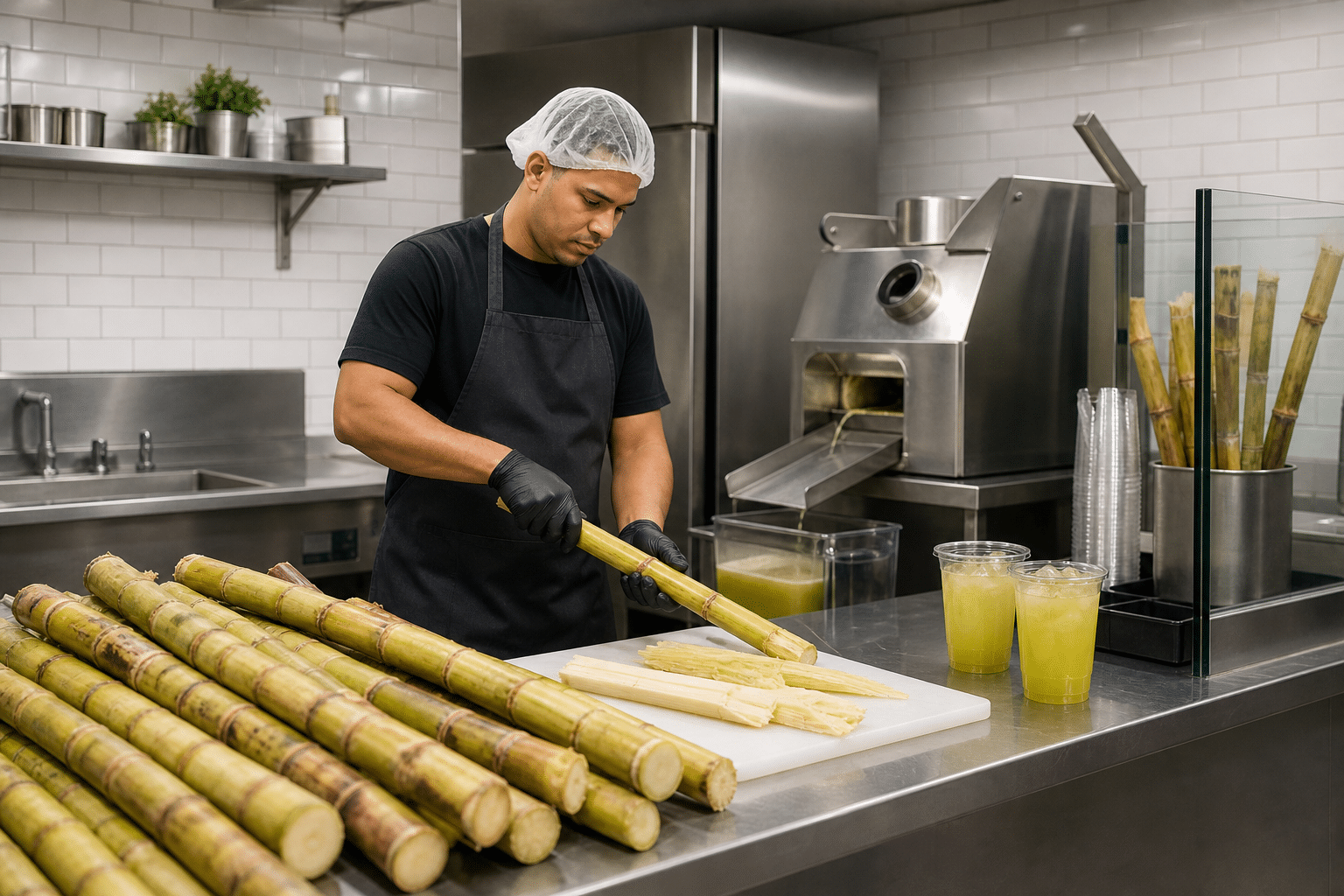
Operator workflow at a commercial sugarcane juicing station

Duty cycle is one of the most important differences in a commercial vs home sugarcane juicer decision. It describes how the machine is expected to operate over time, including loading, pressing, pauses, cleaning intervals, and the overall working day. A business should define demand in terms of real service patterns: the number of orders during peak periods, the duration of those peaks, the number of staff available, and whether juice is made to order or prepared in controlled batches.

In a home setting, the operator may process a small quantity, stop to trim more cane, wash components, or wait between servings. In a busy outlet, those pauses may create a queue. Commercial equipment should be chosen with enough practical headroom for the busiest period, while still matching the operator’s pace and preparation station.

Workflow begins before the cane enters the rollers. Stalk length and diameter can vary by market and supplier, and outer surfaces require appropriate washing before processing. Some operators need a dedicated cutting or trimming step to make cane easier to handle and to keep the juicing station orderly. Waste handling is equally important: bagasse should be removed without obstructing the operator or contaminating clean work areas.

When comparing machines, ask suppliers to explain the recommended use pattern, feeding procedure, cleaning routine, and the parts that need regular inspection. Do not estimate suitability from motor power alone. The working process, the drive arrangement, roller condition, and the operator’s ability to keep the machine clean all affect real daily use.

Construction, Rollers, and Drive Systems

Sugarcane is fibrous and variable, so the mechanical parts that receive force deserve close attention. In commercial use, the roller assembly, frame, transmission system, bearings, guards, and food-contact surfaces should be assessed as a system. A strong-looking exterior does not, by itself, confirm that the internal components are appropriate for the intended workload.

Roller material and roller construction influence durability, maintenance planning, and the way a machine performs over time. Buyers comparing designs can review the practical considerations in this guide to solid and hollow sugarcane juicer rollers. The right choice depends on the supplier’s design, the operating pattern, and the availability of appropriate service and replacement parts.

Transmission design also affects how operators and technicians approach maintenance. Commercial machines may use different methods to transfer motor power to the pressing assembly. Neither label alone is enough to determine suitability; consider protection, inspection access, adjustment requirements, parts availability, and the manufacturer’s maintenance instructions. For a clearer technical comparison, see gearbox and belt-drive systems in commercial sugarcane machines.

A prospective buyer should ask what wear items need inspection, how the machine should be stopped and isolated before service, which components can be cleaned by the operator, and when qualified technical support is needed. This is more useful than relying on generic claims about “heavy-duty” construction.

Cleaning, Hygiene, and Maintenance

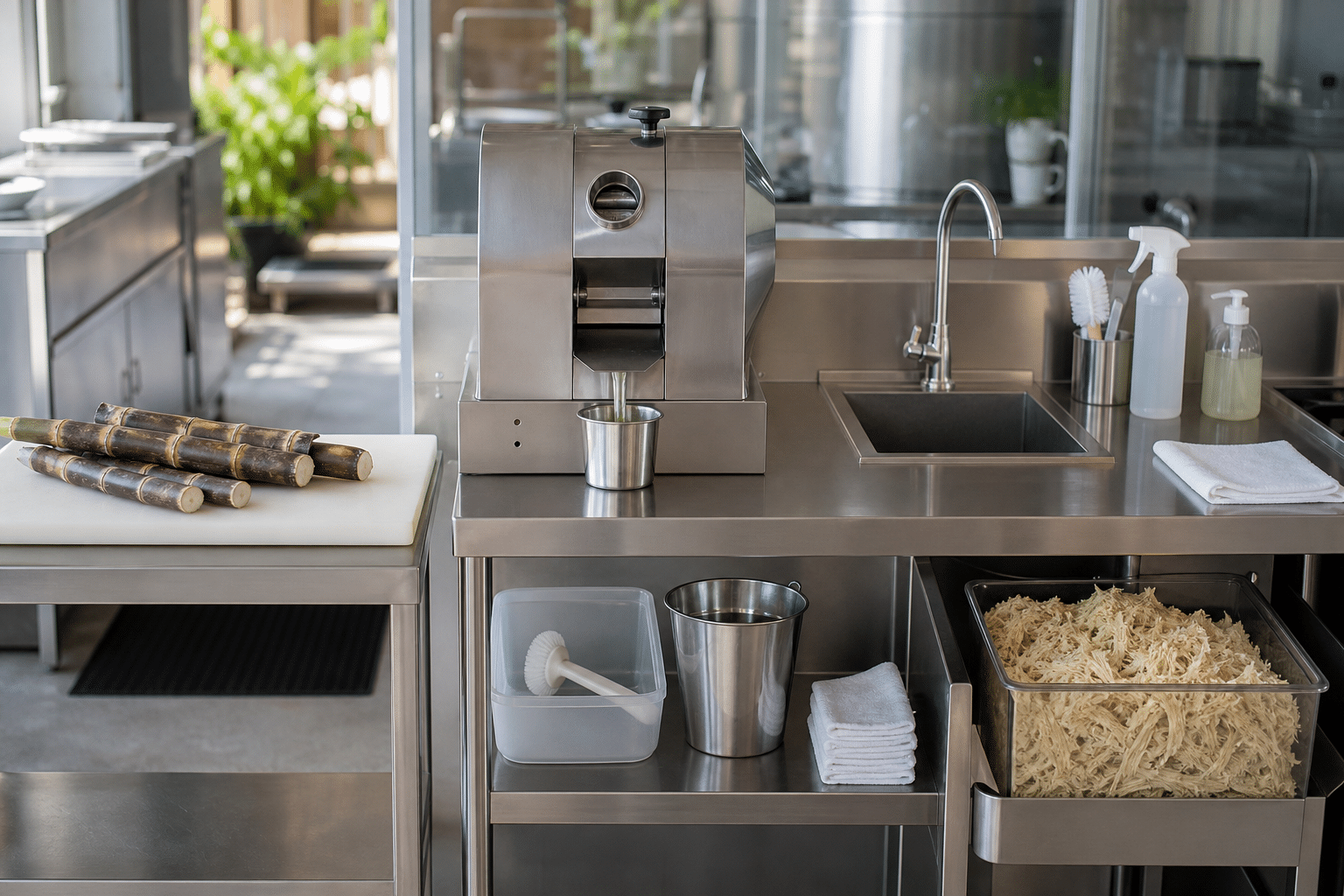
Clean commercial sugarcane juicer sanitation and maintenance station

For any machine that handles fresh cane and juice, sanitation is an operating requirement, not an afterthought. A commercial machine should be evaluated for how safely and thoroughly the relevant food-contact and splash areas can be cleaned according to its instructions. Before purchase, ask the supplier to explain the daily cleaning sequence, the components or areas that require attention, the recommended cleaning materials, and any limits on water exposure.

Home users may accept a longer cleaning routine after occasional use. Commercial operators need a process that staff can repeat reliably during every shift. The layout of the station should separate unwashed cane, washed cane, pressed bagasse, clean cups, and finished drinks as far as practical. Local food-safety rules, cleaning chemicals, and staff training requirements should guide the final procedure.

Maintenance is similarly different in a business context. An operator should establish simple checks for unusual noise, visible wear, loosened fittings, damaged guards, and changes in feeding behavior. The machine should be switched off and disconnected or isolated in accordance with its instructions before any cleaning, adjustment, or inspection that requires access to moving areas. Do not bypass safety guards or force cane into the feed area.

A good maintenance plan records cleaning, inspection, replacement parts, and service actions. This record helps managers identify recurring issues and gives technicians useful information if assistance is required. For a startup budget, include cleaning supplies, operator training time, planned service, and possible replacement parts rather than focusing only on the initial machine price.

Power, Space, and Site Planning

A commercial sugarcane juicer must suit the installation site as well as the menu. Confirm the machine’s rating plate requirements against the local electrical supply before ordering or installation. Voltage, frequency, phase, plug type, circuit protection, and grounding arrangements must be considered by a qualified person where required. The relevant requirement is always the machine’s own specification, not an assumption based on a similar-looking model.

Read our practical guide to sugarcane juicer power supply requirements before finalizing a site plan. If your operation has more than one location or supplies multiple markets, confirm electrical compatibility for each destination at the quotation stage.

Plan adequate space for cane storage, washing, trimming, operator movement, finished-drink preparation, bagasse collection, and cleaning. A machine placed tightly against walls or other equipment may be difficult to access for proper cleaning or maintenance. The floor or counter should be stable, level, and appropriate for the machine and work process. Also consider drainage, ventilation, local noise expectations, and a nearby handwashing and cleaning arrangement where applicable.

Safety planning should include clear operator instruction, controlled access to the equipment, suitable personal protective practices for cane preparation, and a defined procedure for a jam or abnormal operation. Staff should never reach into moving feed or roller areas. If the machine behaves unexpectedly, stop operation and follow the manufacturer’s troubleshooting and service guidance.

How to Select the Right Equipment Class

Use a simple operating brief before deciding between a home and commercial sugarcane juicer. This helps a supplier recommend a suitable class of equipment without guessing.

  • Sales setting: Is the machine for home use, a seasonal market, a permanent juice bar, a restaurant, a hotel, or a central preparation area?
  • Peak service pattern: How many drinks may be ordered during the busiest period, and how long does that period normally last?
  • Cane format: What stalk lengths, diameters, and conditions are typical from the planned supplier? Will cane need cutting before pressing?
  • Staffing: Will one operator prepare cane, press juice, take payment, and finish drinks, or will the tasks be separated?
  • Site utilities: What electrical supply is available, and what space, drainage, washing, and waste arrangements exist?
  • Support plan: Who will clean the machine, inspect it, order parts, and coordinate service if needed?

Commercial equipment is usually the more sensible choice where juice sales are a recurring business activity, customer waiting time matters, or multiple staff will use the machine. A home machine may fit a non-commercial buyer with occasional use, suitable domestic power, and no requirement for business-level workflow or support.

Do not select by headline price alone. The total decision should include installation, cane preparation tools, packaging, sanitation supplies, labour, electrical work if needed, service planning, and downtime risk. Our guide to budgeting for a sugarcane juice business explains the wider cost areas worth reviewing before launch.

When a Commercial Juicer Is the Better Business Choice

A commercial sugarcane juicer is normally the better choice when the machine will be used as part of a regular revenue-producing operation. This includes businesses that expect repeat daily demand, need an organized service station, require clearer maintenance planning, or need equipment support suitable for ongoing use.

The best result comes from matching the machine to the complete operation, not from choosing the largest or lowest-priced unit. Define expected demand, inspect the installation conditions, establish a cane-handling and sanitation procedure, and confirm technical details with the supplier before purchase. This approach helps buyers compare options on practical operating value.

Easimaker Technology Limited supports B2B customers seeking commercial sugarcane juice equipment and related food processing machines. Share your market, planned workflow, cane preparation method, utility details, and expected peak demand so the discussion can focus on the equipment class and configuration that fit your operation.

Discuss the Right Sugarcane Juicer for Your Operation

Request a quote or discuss your expected output, cane format, local power supply, installation space, and target market with the Easimaker team. We can help you assess the appropriate commercial equipment class and discuss OEM/ODM requirements where relevant.

Contact Easimaker

Sugarcane Juicer Cost: Budgeting for a Juice Business

Table of Contents

A commercial sugarcane juicer budget should cover more than the machine price. Plan for the right equipment class, site preparation, cane handling, hygiene supplies, maintenance, utilities, packaging, and working capital before opening or expanding.

What does a sugarcane juicer really cost?

The sugarcane juicer cost for a business is not only the purchase price of the machine. A realistic budget also includes freight, taxes and import charges where applicable, electrical preparation, counter or floor space, cane cutting and storage, cleaning supplies, packaging, initial inventory, staff training, routine maintenance, and cash reserve for the first operating period.

For commercial buyers, the best way to compare quotations is to evaluate the total cost of ownership. Start with the machine configuration that suits your expected service volume and cane type, then add every cost required to put it into safe, sanitary, repeatable daily use. A lower initial quote can become more expensive if it creates slow preparation, difficult cleaning, incompatible power requirements, frequent stoppages, or limited access to parts and technical support.

Do not select a machine based on a generic online price alone. Ask the supplier to confirm the exact model, electrical rating, included accessories, delivery terms, warranty scope, consumable and spare-part availability, and documentation. You can then compare like with like and build a budget that reflects your own market and premises.

What a complete sugarcane juice equipment budget includes

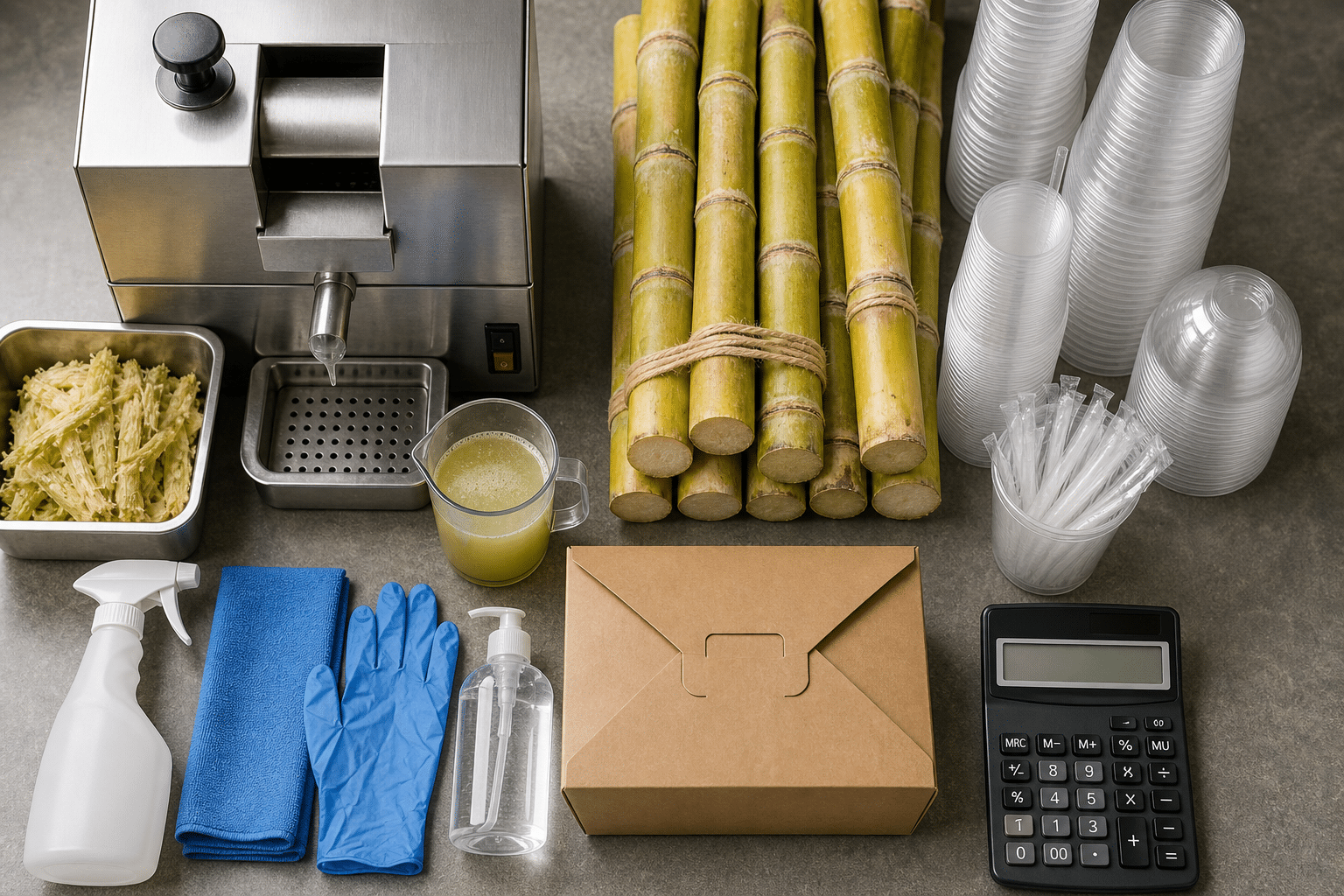
Key cost categories for a commercial sugarcane juice operation

Separating one-time spending from recurring spending makes a business plan easier to review. The exact line items vary by location, sales channel, and local regulations, but most commercial projects need the following categories.

One-time or pre-opening costs

  • Juicing equipment: the commercial sugarcane juicer and any specified accessories.
  • Cane preparation equipment: a cutter or saw may be needed when delivered stalk lengths do not fit your workflow or storage area.
  • Premises preparation: worktop, drainage approach, water access, electrical work, lighting, signage, and storage changes as needed.
  • Delivery and import costs: freight, insurance, brokerage, duty, local tax, and inland delivery, depending on the agreed trade terms.
  • Food-service setup: food-safe containers, strainers if used in your process, waste bins, handwashing and cleaning tools, refrigerated storage where required, and point-of-sale equipment.
  • Opening stock: sugarcane, cups, lids, straws or other packaging, ice or complementary ingredients if offered, labels, and sanitation chemicals.

Recurring costs

  • Sugarcane purchasing, transport, trimming loss, and storage loss.
  • Labour for receiving, washing, cutting, juicing, serving, cleaning, and closing.
  • Utilities, including electricity and water, based on local tariffs and site conditions.
  • Packaging, cleaning materials, waste removal, payment processing, rent, and local permits or inspections.
  • Preventive maintenance, replacement wear items, and an allowance for unexpected repairs.

This structure gives owners a clearer view of the capital needed before launch and the cash needed to keep operating after launch.

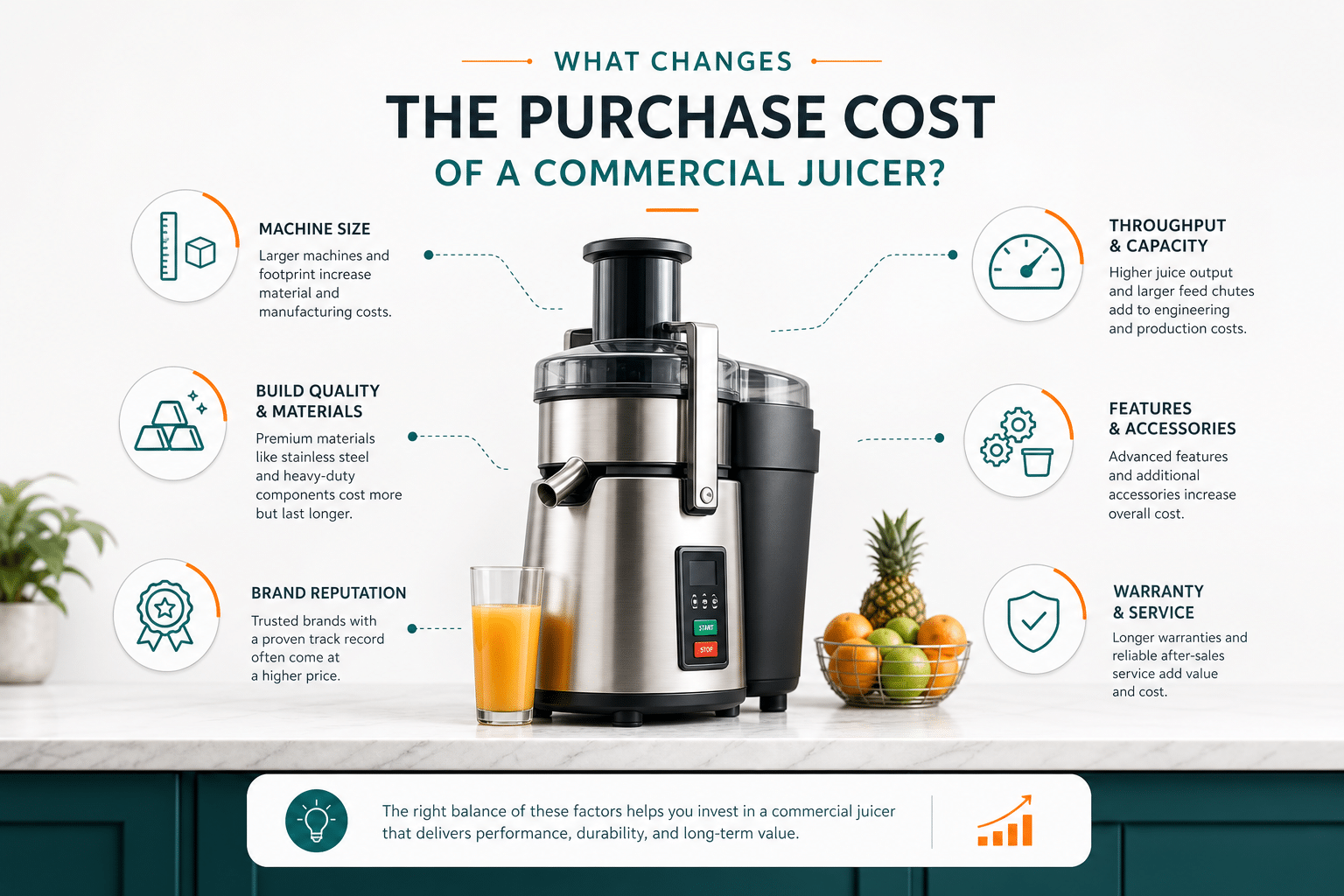
What changes the purchase cost of a commercial juicer?

What changes the purchase cost of a commercial juicer?

Commercial sugarcane juicer prices vary because machines are built for different operating environments. Rather than assuming that a higher or lower price is automatically better, examine the specifications and service requirements behind the quotation.

  • Machine format and construction: countertop and larger formats can suit different layouts and service patterns. Materials, guarding, finish quality, and service access all affect the equipment design.
  • Drive system and intended workload: select a machine suited to the planned pace of service, staff workflow, and cane condition. The relevant question is whether it can support your realistic peak period, not an unverified headline figure.
  • Roller and feed arrangement: the crushing configuration influences how operators feed cane and manage each batch. Review it alongside your intended preparation method.
  • Electrical configuration: voltage, frequency, plug type, and phase requirements may affect both the quoted machine configuration and your installation cost.
  • Cleaning and serviceability: accessible food-contact areas and clear cleaning procedures can reduce daily operational friction. However, the operator must still clean the machine correctly and at the required frequency.
  • Support package: manuals, troubleshooting help, spare parts, warranty terms, and response arrangements are commercial considerations, particularly for a machine used every day.
  • Customization: branding, private-label requirements, electrical adaptations, packaging changes, and other OEM/ODM work can change project cost and lead time.

Request a written quotation with the model reference and scope of supply. It is also sensible to ask which components are routine wear items, how they are ordered, and what basic operator checks are expected.

Choose equipment for your operating model

Choose equipment for your operating model

The right equipment budget begins with the way you will sell juice. A compact outlet with a controlled menu, a mobile concession, a café adding sugarcane juice, and a high-traffic dedicated juice counter may all need different levels of preparation space, operator capacity, storage, and backup planning.

Define your expected trading pattern before requesting quotations:

  • How many hours will the business operate each day?
  • When are the busiest service windows?
  • Will juice be prepared only to order, or will the operation handle pre-service preparation under its food-safety procedure?
  • What stalk diameter, length, freshness, and supplier consistency can you expect?
  • How many people will work the station during peaks?
  • How much counter, back-of-house, and cold-storage space is available?
  • What level of interruption can the business tolerate if the machine requires service?

For example, a smaller site may place greater value on footprint, straightforward cleaning, and a simple workflow. A busier location may need to focus more on preparation flow, stock staging, staffing, and service continuity. Neither approach is universally cheaper; the lowest-cost choice is the one that avoids paying for unsuitable capacity while still supporting normal peak demand.

If you are comparing two equipment formats, review the operating fit alongside cost. This TiniForce S3 and EasiDeMax S4 comparison outlines practical factors such as service volume, counter space, cane preparation, cleaning, and local electrical requirements.

Budget for site preparation and installation

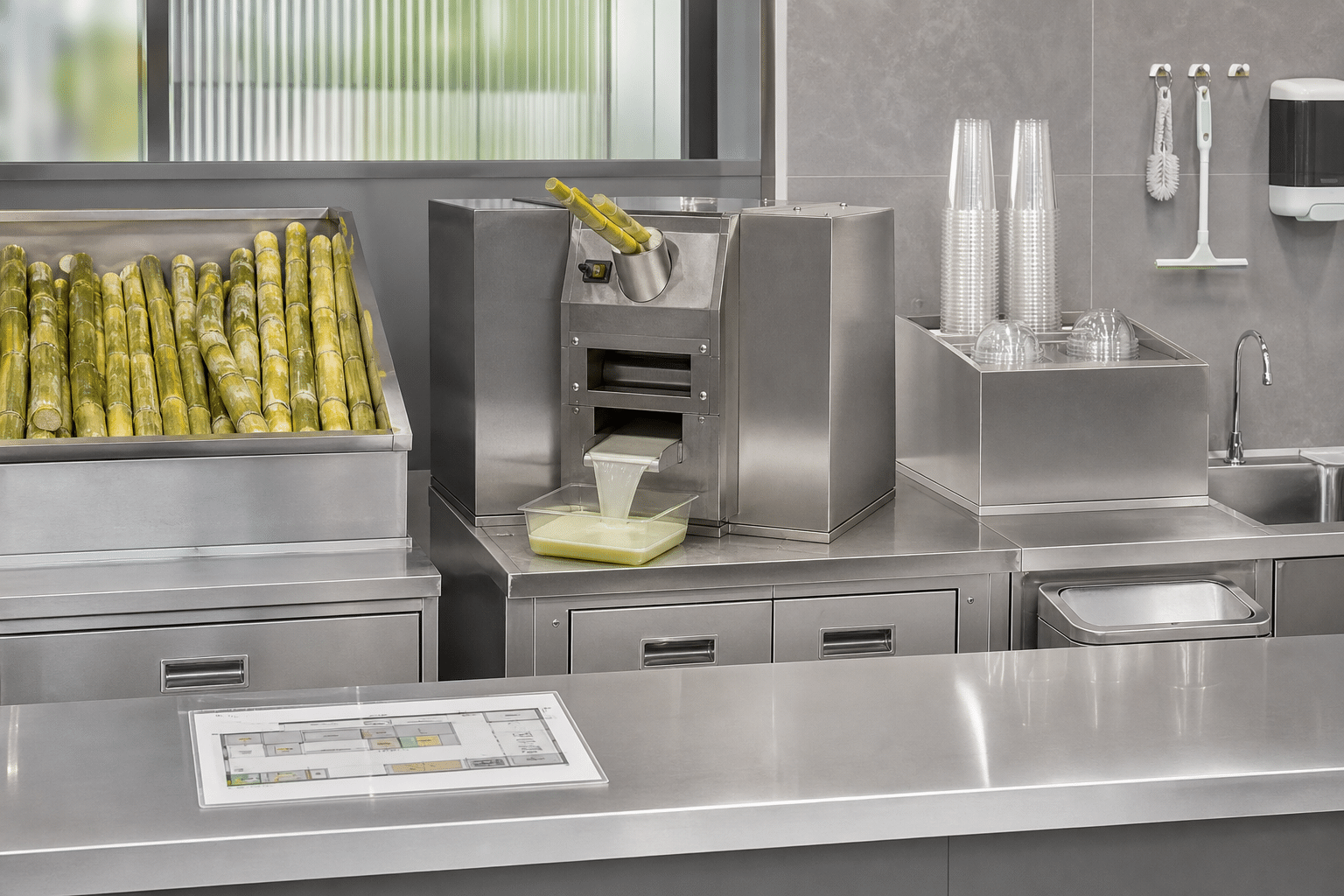
Commercial sugarcane juicer counter layout with workspace and supplies

Site readiness is a frequent source of budget variation. Even a correctly selected machine can be inconvenient or unsafe to operate if the surrounding work area is not planned properly. Review the physical route from cane delivery to serving before placing an order.

Measure the available counter or floor area, but do not budget from the machine footprint alone. Leave room for the operator to feed cane, collect juice, remove residue, clean accessible surfaces, and move safely. Also allow for cane staging, waste containers, cups and lids, cleaning tools, and a clear route for restocking.

Confirm the site electrical supply against the rating required for the selected machine. Do not assume that plug type or voltage can be changed without technical review. Electrical work should be planned and completed in line with local rules by appropriately qualified personnel. Water access, drainage arrangements, cleaning routines, ventilation needs, and local food-service requirements should also be considered before opening.

A simple layout drawing is useful when discussing installation. It can identify bottlenecks early and help you estimate worktop fabrication, utility changes, and staff movement. For small locations, use a measured layout rather than visual estimates; planning countertop space for a commercial sugarcane juicer is a helpful starting point.

Account for cane preparation and handling

Organized sugarcane preparation area for commercial juice production

Cane preparation is part of the production system, not an afterthought. The condition and dimensions of incoming stalks influence labour time, storage needs, workstation congestion, and the smoothness of juicing. Include these tasks in your budget: receiving, checking quality, washing as required by your procedure, trimming, cutting to a manageable length where needed, staging, and residue disposal.

If cane must be shortened before feeding, evaluate a dedicated cutting solution as part of the capital plan rather than relying on an improvised process. The correct tool and procedure should be selected for your stalk supply, staff training, guarding requirements, and local safety expectations. Also budget for safe storage of prepared and unprepared cane, as well as routine cleaning of the preparation area.

Stalk diameter can vary by variety, growing conditions, and supplier. Thick or irregular cane can slow a service line when it is not managed well. Operators should follow the machine instructions and avoid forcing stalks into the feed area. For practical guidance, see techniques for processing thick sugarcane stalks without unnecessary motor strain or jamming.

Estimate recurring operating costs

Once the equipment budget is set, calculate the cost of serving one drink in your own market. This does not require guessing machine performance figures. Use your supplier pricing, staff roster, packaging invoices, utility tariff, rent allocation, and actual operating trials when available.

A practical per-serving worksheet can include:

  • Cane cost per serving: purchase cost plus delivery and expected handling or storage loss, divided by the number of sellable servings achieved under your normal process.
  • Packaging cost: cup, lid, straw or alternative, napkin, label, and carry bag where applicable.
  • Ingredient and ice cost: only for items actually included in your menu.
  • Direct labour: receiving, preparation, service, cleaning, and closing time, not just the seconds spent at the juicer.
  • Utilities and consumables: electricity, water, cleaning chemicals, cloths, and waste handling.
  • Equipment allocation: a planned amount for maintenance, wear parts, and eventual replacement.
  • Fixed-cost allocation: rent, licences, insurance, marketing, and administration, using a sensible basis for the business.

Review gross margin and cash flow separately. A menu item can appear profitable on a per-cup basis while the business still lacks cash to cover initial inventory, rent deposits, payroll timing, or a seasonal slowdown. Keep a working-capital reserve rather than spending the full startup fund on equipment and fit-out.

Actual results should be recorded after opening and used to revise the plan. Track cane purchased, waste, cups sold, labour hours, cleaning time, breakdowns, and customer waiting time. These records provide a better basis for future equipment and staffing decisions than assumptions made before launch.

Plan for maintenance, spares, and downtime

Maintenance is a controllable operating cost when it is planned. Daily cleaning, inspection, and correct use help protect hygiene and reduce avoidable disruptions. The exact tasks and intervals depend on the specific machine manual, usage level, and operating conditions, so the manufacturer’s instructions should be the primary reference.

Before purchase, ask the supplier for the operating manual, cleaning guidance, recommended inspection points, spare-parts process, warranty terms, and support contact route. Identify who on your team is responsible for opening checks, closing cleaning, and escalation when something unusual occurs. Keep records of maintenance and part replacement; they are useful for diagnosing recurring issues and planning future spend.

Build a modest contingency into the annual budget for ordinary wear items and service needs. The appropriate amount cannot be universal because it depends on hours of operation, cane condition, water and cleaning practices, staff habits, and local labour costs. For a structured approach, use a preventive maintenance schedule for a commercial sugarcane juicer and adapt it to the model manual and your operating routine.

Downtime also has a business cost. Consider what the team will do if the juicer is temporarily unavailable: pause service, offer other menu items, use a backup arrangement, or schedule service outside the busiest hours where possible. A clear plan can be more valuable than an untested assumption about repair speed.

A practical budgeting process before you buy

Use this sequence to turn a broad sugarcane juicer cost estimate into a purchase-ready budget.

  1. Set the operating assumptions. Define location, opening days and hours, expected peak periods, menu, service format, supplier plan, and available space.
  2. Map the process. Draw the route from cane delivery through storage, preparation, juicing, serving, cleaning, and waste removal. Note every task, utility point, and handoff.
  3. Specify the machine fit. Match the juicer to your workflow, cane characteristics, electrical supply, cleaning routine, and expected demand rather than selecting solely by price.
  4. Request comparable quotations. Ask each supplier to state the model, electrical configuration, included items, lead time, delivery terms, payment terms, warranty, technical documentation, and support arrangement.
  5. Add landed and installation costs. Include freight, tax or duty as applicable, brokerage, local delivery, electrical work, benches, water or drainage work, and initial setup items.
  6. Build the first-period operating plan. Budget cane, packaging, payroll, utilities, rent, marketing, permits, cleaning materials, and a cash reserve.
  7. Stress-test the plan. Consider delayed opening, higher freight, slower early sales, cane supply variability, or an equipment service event. Adjust the reserve if the business cannot absorb those changes.

This approach supports a more useful procurement conversation because the supplier can advise on a defined application rather than an isolated price request.

Common budgeting mistakes to avoid

  • Comparing quoted prices without delivery terms. A machine price may exclude freight, tax, insurance, customs costs, inland transport, or installation.
  • Ignoring the electrical rating. An unsuitable local supply can lead to additional work, delays, or the need to reconsider the configuration.
  • Leaving out cane preparation labour. Receiving, washing, trimming, cutting, and cleaning can be significant parts of the daily workflow.
  • Buying for average demand only. Your workflow should cope with ordinary peak periods without creating excessive queues or unsafe shortcuts.
  • Using unverified output claims in financial forecasts. Build forecasts from measured trials and your own serving process whenever possible.
  • Spending all available funds on opening day. Keep working capital for stock, payroll, rent, service events, and normal business variation.
  • Treating cleaning as a minor task. Inadequate time, tools, or training can affect both compliance and machine reliability.
  • Not checking support and parts access. The cost of a stoppage can outweigh a small difference in purchase price.

A disciplined budget is not about predicting every cost perfectly. It is about making assumptions visible, checking them before purchase, and retaining enough flexibility to operate responsibly when conditions change.

Build a budget around reliable daily operation

The most useful way to assess sugarcane juicer cost is to budget from the complete operating system: equipment, premises, cane preparation, utilities, sanitation, labour, packaging, maintenance, and working capital. This gives decision-makers a more realistic view of investment and helps prevent avoidable costs after installation.

When requesting a commercial quotation, provide clear information about your location, available electrical supply, planned operating hours, expected cane characteristics, space constraints, and service model. In return, ask for a defined equipment scope and the documentation needed to assess installation, operation, and after-sales support.


Why Are Commercial Sugarcane Juicers So Easy to Use: Engineering & Efficiency

The Shift from Manual Labor to Automated Extraction

For decades, sugarcane juice extraction was a labor-intensive process requiring significant physical effort and manual cane preparation. Today, commercial sugarcane juicers have transformed this workflow, allowing businesses to scale production without increasing labor costs. The ease of use in modern machines is not accidental; it is the result of precise engineering focused on torque, safety, and hygiene.

For B2B buyers—whether sourcing for a beverage chain, a hospitality group, or a distribution network—understanding the mechanisms that make these machines user-friendly is critical. It ensures you select equipment that minimizes operator training time while maximizing output. If you are currently evaluating your options, you might want to review our guide on How to Choose a Sugarcane Juice Machine? to understand the specific specifications that align with your business model.

1. One-Pass Extraction Technology

The primary factor contributing to the ease of use is one-pass extraction. Unlike traditional crushers that require operators to feed the cane through multiple times to extract all the liquid, modern commercial units utilize a multi-roller system (typically 3 or 4 rollers) designed to extract up to 95% of the juice in a single feed.

  • High Torque Gearboxes: These machines employ heavy-duty gear reduction systems. This allows the rollers to crush thick sugarcane stalks effortlessly without stalling, reducing the need for operators to precut or split the cane.
  • Automatic Feeding: The operator simply inserts the cane into the feed inlet. The rollers grip the stalk and pull it through automatically, removing the need for physical pushing or force.

2. Built-in Safety Protocols

In an industrial setting, ease of use is synonymous with safety. If a machine is dangerous, operators will hesitate, slowing down production. Commercial sugarcane juicers incorporate several safety layers to ensure smooth operation:

  • Enclosed Roller Design: Unlike open-wheel crushers, modern commercial units house the crushing mechanism inside a sealed cabinet. This prevents accidental contact with moving parts.
  • Emergency Stop & Reverse Functions: Jams can happen, especially with irregular cane sizes. A dedicated reverse switch allows operators to instantly unclog the machine without disassembly, a feature that significantly reduces downtime.
  • Overload Protection: Motors are often equipped with thermal overload sensors that automatically shut down the machine if it overheats, protecting the asset and the user.

3. Hygiene and Maintenance Simplicity

For food and beverage equipment, “easy to use” must extend to “easy to clean.” Bacterial growth is a major concern with sugary fluids. Commercial designs address this through modular construction.

Food-Grade Materials

Top-tier machines are constructed from 304 stainless steel. This material is resistant to corrosion from acidic cane juice and is easy to wipe down. It does not harbor rust or contaminants, ensuring compliance with international food safety standards.

Detachable Components

Many models feature removable juice trays, filters, and tap assemblies. This allows staff to detach the parts that come into direct contact with the juice and wash them separately at the end of a shift. Efficient cleaning protocols are essential for maintaining equipment longevity and product quality.

4. Comparison: Commercial Electric vs. Manual Juicers

To highlight the operational advantages, the following table compares typical commercial electric models against manual alternatives.

Feature Commercial Electric Juicer Manual / Traditional Juicer
Extraction Efficiency High (One-pass, >90% yield) Moderate (Requires multiple passes)
Operator Effort Minimal (Auto-feed) High (Manual cranking/pushing)
Safety Enclosed, Emergency Stop Exposed gears often pose risks
Throughput 300–600 kg/hour (typical range) 50–100 kg/hour
Cleaning Detachable stainless parts Often difficult to disassemble

5. Operational Scenarios and Applications

Understanding where these machines excel helps in procurement planning. The “plug-and-play” nature of commercial sugarcane juicers makes them suitable for various high-demand environments:

  • Supermarkets & Malls: The low noise operation of electric gear-driven models allows for fresh juice stations directly on the retail floor without disturbing customers.
  • Beverage Processing Plants: For larger scale bottling, the consistency of extraction ensures standardized taste and yield, which is vital for brand reputation.
  • Hotels & Resorts: Aesthetic stainless steel designs fit well in buffet setups, where staff can produce fresh juice on demand with minimal training.

6. Buying Guide: What Simplifies the Workflow?

When selecting a supplier or specific model, look for features that directly impact daily usability. Key specifications to verify include:

  • Power Supply Compatibility: Ensure the motor voltage matches your local grid or facility standards to avoid the need for external transformers.
  • Integrated Filtration: Some advanced models come with built-in mesh filters that strain the juice as it exits the rollers, removing fiber instantly and saving a processing step.
  • Mobility: Heavy commercial units should be mounted on lockable caster wheels, making it easy to move the unit for floor cleaning or reconfiguration.

For answers to common technical questions regarding shipping, spare parts, and warranty terms, please visit our FAQs page.

Conclusion

Commercial sugarcane juicers are easy to use because they automate the most difficult parts of the process: the crushing force and the filtration. By combining high-torque motors with food-grade stainless steel engineering, these machines turn a physically demanding task into a streamlined, push-button operation. For businesses, this translates to lower labor costs, higher safety standards, and a consistent product.

Ready to upgrade your production line? Contact Easimaker today to request a quote or discuss custom specifications for your market.