
Table of Contents
- Quick Answer: How to Select a Meat Band Saw Blade
- What a Meat Band Saw Blade Does
- The Main Blade Selection Factors
- Match the Blade to the Product Being Cut
- Confirm Compatibility Before Ordering
- Blade Handling, Cleaning, and Replacement
- Common Meat Band Saw Blade Selection Mistakes
- Final Blade Selection Checklist
The correct meat band saw blade must match the saw manufacturer’s required dimensions and the products being cut. Use a coarser tooth pitch for frozen meat and bone-in cuts, then confirm blade length, width, thickness, material, and safe operating procedures before ordering.
Quick Answer: How to Select a Meat Band Saw Blade
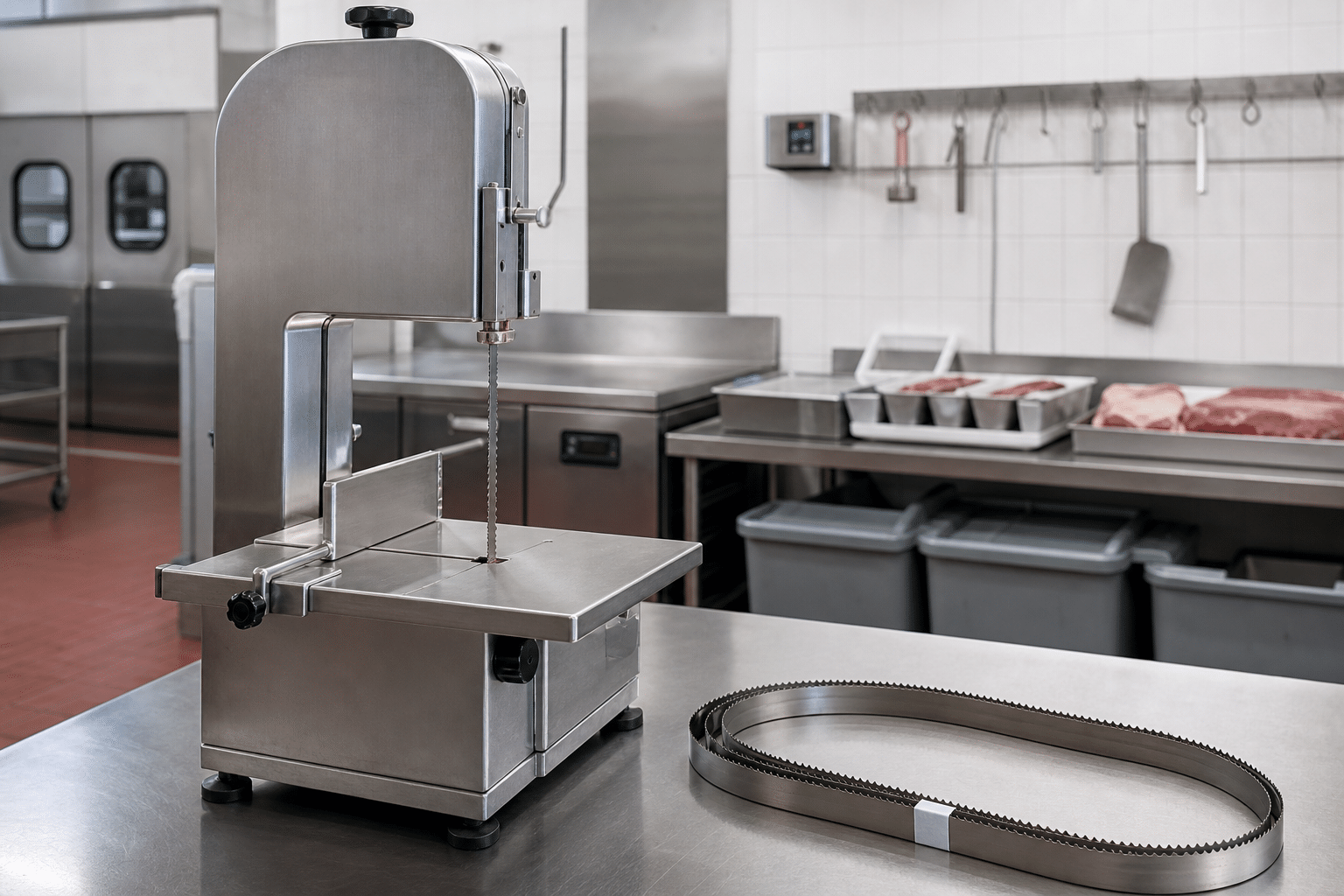
For reliable meat band saw blade selection, start with the exact blade dimensions specified for the machine: length, width, thickness, and tooth pitch. Then match the tooth pattern and pitch to the product. Frozen meat and bone-in cuts usually need a coarser, more open tooth configuration, while fresh boneless meat generally needs a finer cutting pattern for a cleaner portioning cut. The correct blade is not simply the sharpest available blade; it is the blade that fits the saw, suits the product temperature and composition, and can be cleaned and replaced safely within the kitchen’s operating routine.
Before placing an order, verify the saw model, the manufacturer-approved blade specification, the material being cut, and the electrical and guarding condition of the machine. Blade choices should always support the machine manual and local food-safety procedures rather than replace them.
What a Meat Band Saw Blade Does
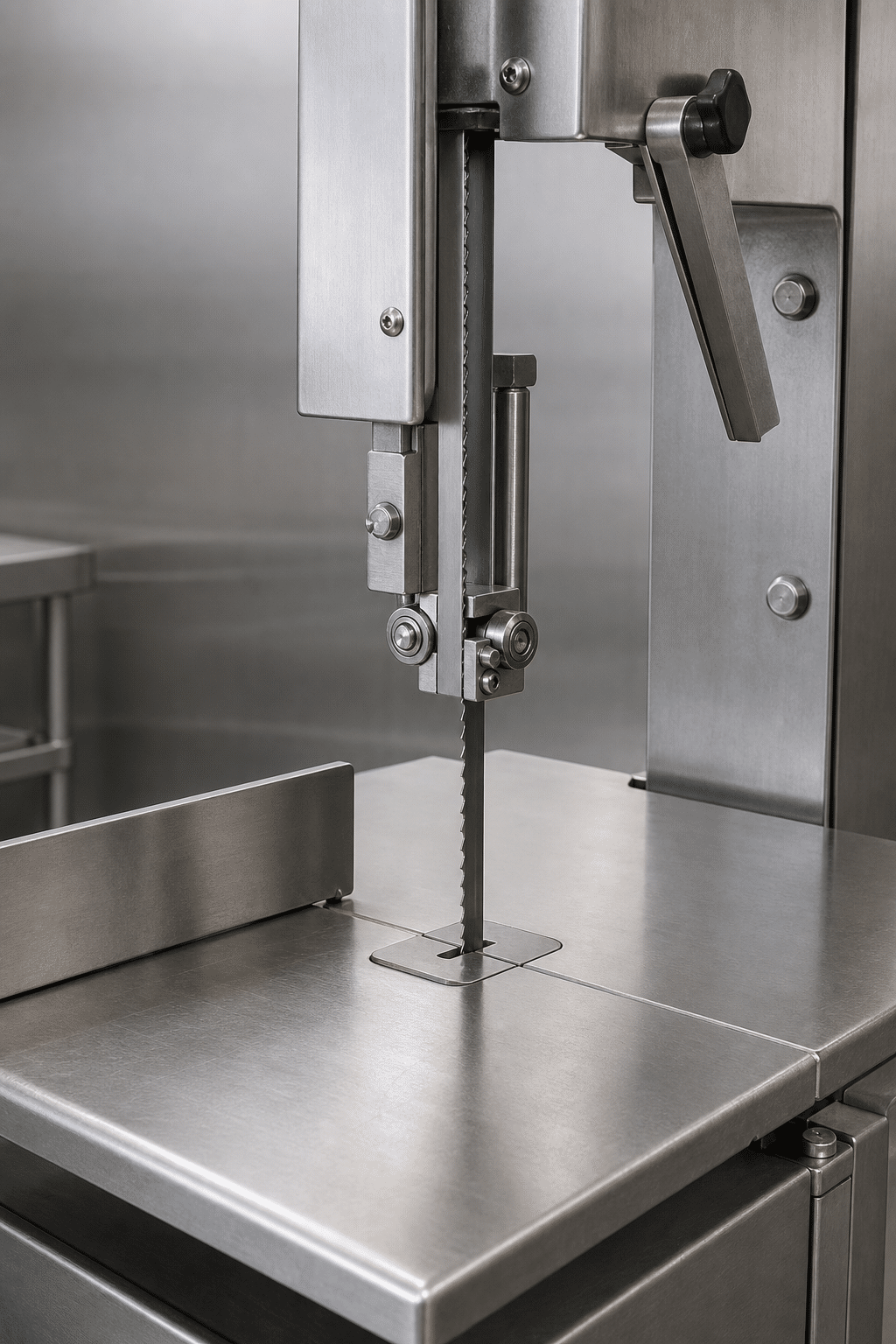
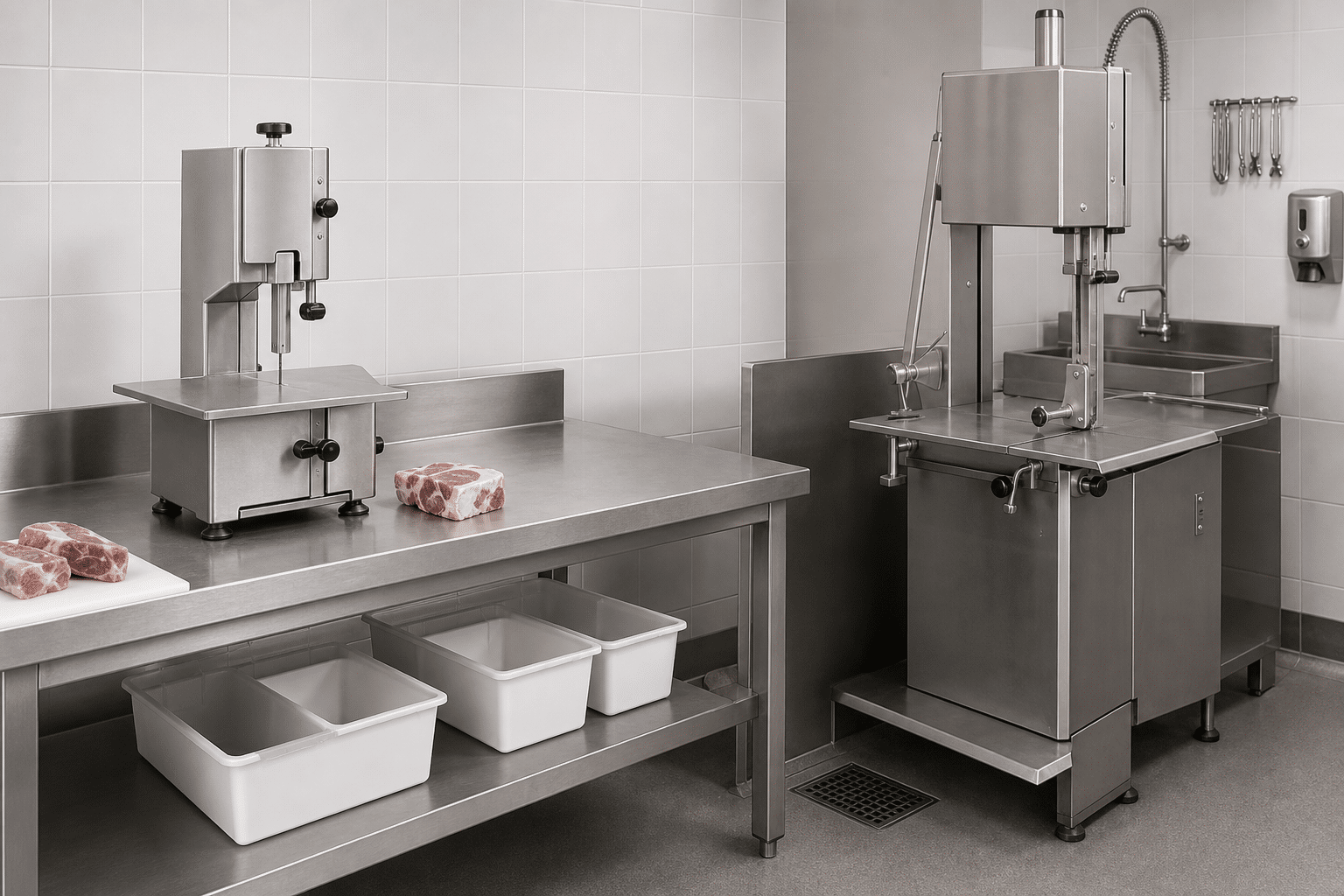
A meat band saw blade is a continuous, flexible toothed band that travels around the saw wheels and passes through the work table. It is used to portion meat, poultry, fish, and selected bone-in or frozen products where a knife or slicer is not appropriate. In commercial kitchens, butcher shops, meat preparation rooms, and food-processing operations, blade selection affects cut quality, waste control, cleaning workload, and operator safety.
Unlike a general workshop blade, a blade used for food preparation must be selected with sanitation and product handling in mind. The blade must also run correctly on the machine’s wheel system, guides, tensioning mechanism, and guards. A blade that is the wrong length may not tension correctly. A blade with unsuitable width or thickness may track poorly or place unnecessary stress on the machine. A tooth configuration that does not suit the product can produce rough cuts, excessive drag, or rapid dulling.
Blade performance depends on the complete setup, not the blade alone. Saw cleanliness, blade tension, guide adjustment, operator feed pressure, product condition, and the condition of the wheels all influence the result. For operational context, review these commercial bone saw safety and maintenance protocols alongside the instructions for your own saw model.
The Main Blade Selection Factors
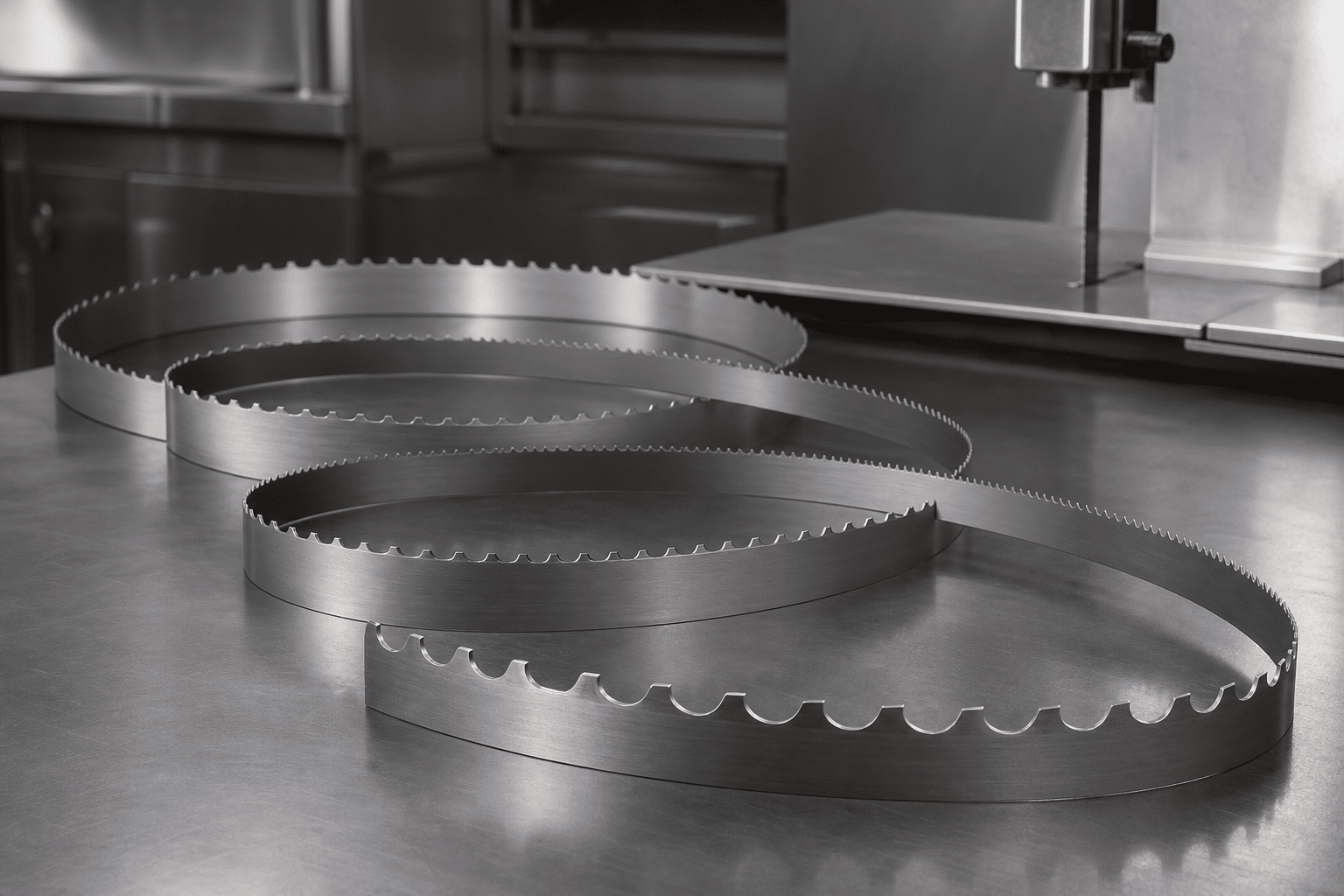
Use the following factors in order. Machine compatibility comes first, because even an otherwise suitable blade cannot be used safely if its dimensions do not match the saw.
1. Blade length
Blade length is the full circumference of the continuous band. It must match the machine manufacturer’s requirement. Do not estimate it from the table size or use a blade from a similar-looking saw. Check the data plate, operator manual, previous verified blade packaging, or the machine supplier’s parts list. If the old blade is damaged or its size is unknown, measure it only as a cross-check, not as the sole ordering reference.
2. Blade width
Width is measured from the tooth tip to the back edge of the blade. A wider blade generally offers more stability for straight cuts, provided the saw is designed for it. A narrower blade may be specified for particular machines or cutting tasks. Always stay within the width range approved for the saw and its guides.
3. Blade thickness
Thickness affects flexibility, tracking, and durability. The correct thickness depends on the wheel diameter and design of the specific saw. A thicker blade is not automatically better. If it is outside the recommended specification, it may not flex correctly around the wheels or may create tracking problems.
4. Tooth pitch and teeth per inch
Tooth pitch is commonly described by teeth per inch, often shortened to TPI. A lower TPI means fewer, larger teeth with more space between them. A higher TPI means more, smaller teeth. Larger tooth gullets can clear heavier material more effectively, while smaller teeth can support a smoother cut in suitable products. The correct choice depends on whether the product is frozen, fresh, boneless, bone-in, fatty, or prone to producing small fragments.
5. Tooth form and blade material
Suppliers may offer different tooth forms and blade materials. Availability and suitability vary by market and saw model. Ask the supplier to identify the intended application rather than selecting only by a generic description such as “meat blade.” Confirm whether the blade is intended for food-use environments, the exact saw type, and the products in your menu or production plan.
Match the Blade to the Product Being Cut
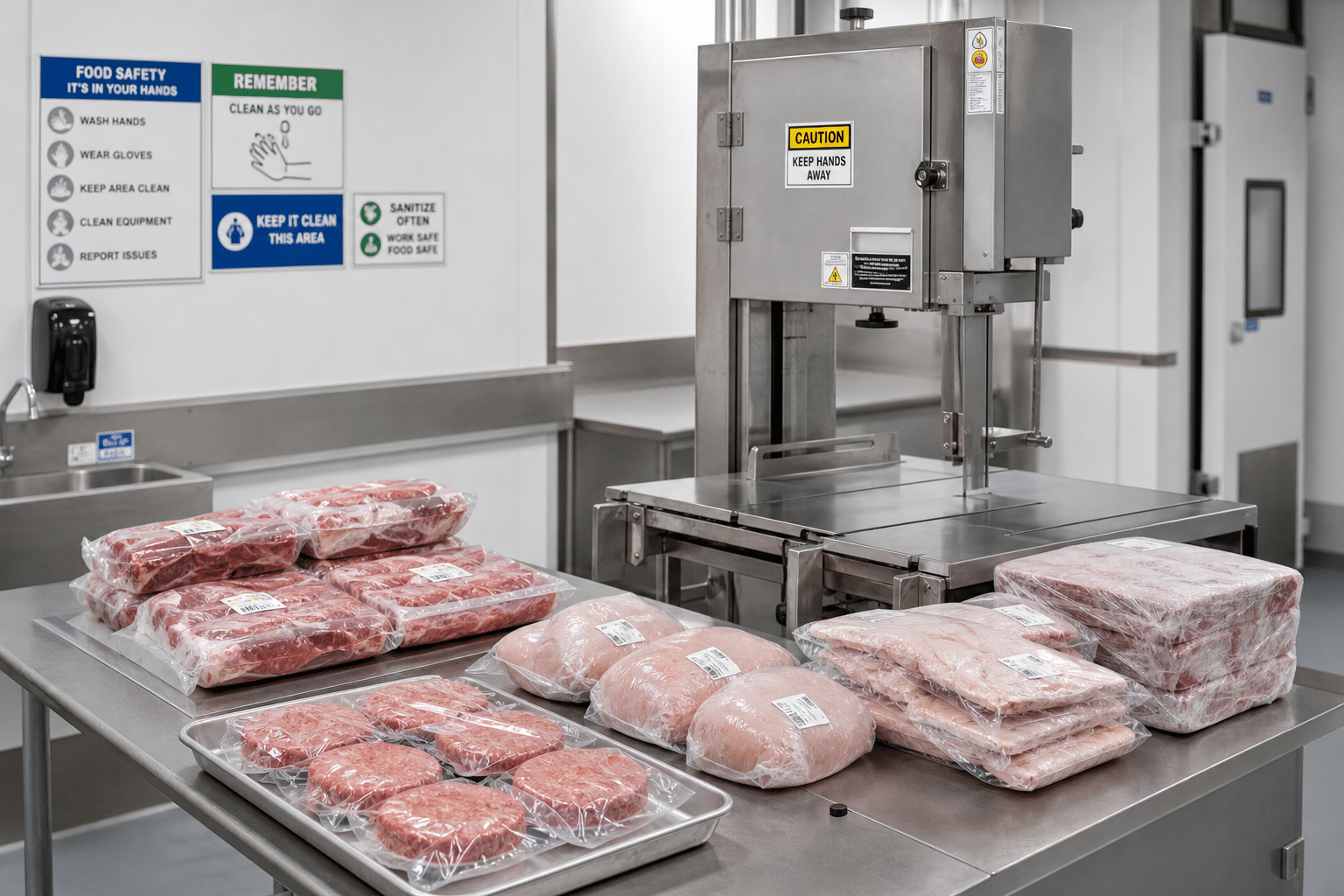
Product condition has a direct effect on blade choice. The same operation may need different replacement blades when it processes both fresh boneless meat and frozen bone-in portions. Build the selection around the most demanding regular task, or keep clearly identified blade stock for separate approved applications where the machine manufacturer permits it.
Frozen meat and bone-in products
Frozen product and bone place greater cutting demand on the blade. In many applications, operators use a coarser tooth pitch because the larger tooth spaces can help clear material during heavier cuts. However, the saw manufacturer’s approved blade specification remains decisive. Do not use a finer blade merely to improve surface appearance if the product is likely to overload or clog the tooth spaces.
Fresh boneless meat
Fresh boneless cuts often benefit from a tooth pitch selected for controlled, tidy portioning. The objective is a consistent cut without pulling, tearing, or compressing the product unnecessarily. Product temperature, fat content, portion thickness, and feed technique all affect the result. If cut quality changes, inspect the blade condition and saw setup before changing to a different pitch.
Poultry, fish, and mixed preparation work
Poultry and fish may include bone, skin, soft tissue, or variable product temperatures. A single blade specification may not be the best choice for every task. Discuss the actual product list with the equipment or blade supplier, including whether products are chilled, partially frozen, or fully frozen. This practical product review is more useful than choosing by the broad label “meat saw blade.”
Where a kitchen combines sawing with other preparation processes, plan each workstation around its own cutting method and cleaning requirements. For example, a commercial bowl cutter workflow for high-volume food preparation is a separate process and should not be treated as a substitute for portioning with a band saw.
Confirm Compatibility Before Ordering
A purchasing record reduces costly ordering errors. Keep a verified blade specification sheet for every saw in the operation. It should include the machine brand and model, blade length, width, thickness, tooth pitch, preferred product application, and the supplier’s reference code where available. Record the date the specification was confirmed and retain a copy of the relevant manual page.
Before ordering replacement blades, check:
- the exact saw model and serial or production reference where applicable;
- the manufacturer-specified blade length, width, and thickness;
- the tooth pitch and tooth form approved for the intended products;
- whether the saw will be used for fresh, frozen, boneless, or bone-in materials;
- the blade material and packaging condition required by your purchasing and hygiene procedures;
- the quantity needed to support planned blade changes without storing stock beyond its suitable condition.
Also confirm the machine’s power connection, isolation method, and service condition before returning it to use after a blade change. The principles in this guide to checking commercial food-equipment power requirements are useful for verifying rating-plate information, although the saw’s own manual is the controlling document for its electrical requirements.
Blade Handling, Cleaning, and Replacement

A correctly selected blade still requires correct handling. Blades are sharp, flexible, and can spring open when unpacked. Only trained personnel should remove, install, tension, or dispose of them. Isolate the machine from its power supply before blade work, follow the machine’s lockout or disconnection procedure, and use the personal protective equipment required by the site.
Cleaning should follow the saw manufacturer’s instructions and the operation’s food-safety plan. Remove product residues from accessible approved areas, clean and sanitise the relevant food-contact parts as specified, and ensure components are dry where required before reassembly. Do not force water or cleaning chemicals into electrical areas, bearings, or other components unless the equipment documentation explicitly permits the method.
Replace a blade when inspection shows damage, corrosion, missing or damaged teeth, cracking, kinks, tracking problems, or a noticeable decline in cutting performance. Do not continue using a blade that has contacted an unsuitable surface or has been mishandled. Dull blades can encourage excessive feed force, which reduces control and may affect cut consistency.
A scheduled maintenance process helps operators identify blade-related issues before they interrupt service. The planning approach in this bone saw maintenance and safety guide can support a broader inspection routine, but always apply the checks and intervals required by the specific meat saw manufacturer.
Common Meat Band Saw Blade Selection Mistakes
The most frequent problems are preventable when purchasing, kitchen, and maintenance teams use the same verified specification.
- Ordering by appearance: Blades that look similar can differ in length, width, thickness, and tooth pitch.
- Using one blade for every product without review: Fresh boneless portions and frozen bone-in cuts can place different demands on the blade.
- Ignoring the saw manual: A supplier recommendation should not override the machine manufacturer’s dimensional and safety requirements.
- Changing pitch to solve a mechanical issue: Poor tracking, vibration, or uneven cuts may be caused by guides, wheel condition, tension, or operator technique rather than the tooth pitch.
- Waiting too long to replace a damaged blade: Continuing with damaged or dull teeth can affect product quality and safe control.
- Failing to record a proven specification: Without a confirmed reference, future orders rely on guesswork and can delay production.
Final Blade Selection Checklist
Use this checklist before approving a meat band saw blade purchase:
- Confirm the exact machine brand and model.
- Confirm manufacturer-approved blade length, width, and thickness.
- Select tooth pitch and tooth form for the actual product mix.
- State whether products are fresh, chilled, partially frozen, fully frozen, boneless, or bone-in.
- Confirm that the blade material and supply format fit site hygiene procedures.
- Inspect guides, wheels, guards, table components, and tensioning arrangements before fitting a new blade.
- Train designated staff in safe installation, inspection, cleaning, and replacement.
- Record the final specification so future purchasing is consistent.
The most dependable approach is to treat blade selection as part of the whole processing system: machine compatibility, product type, operator practice, cleaning, maintenance, and spare-parts planning. When the specification is uncertain, pause the order and confirm it with the saw manufacturer or a qualified equipment supplier.