Sugarcane Juice Business Startup Costs: A Practical Budget

Table of Contents

The cost to start a sugarcane juice business depends on the sales format, location, equipment class, local permits, and working capital required. This practical budget framework helps you estimate the main cost categories before requesting equipment quotations or signing a lease.

What Does It Cost to Start a Sugarcane Juice Business?
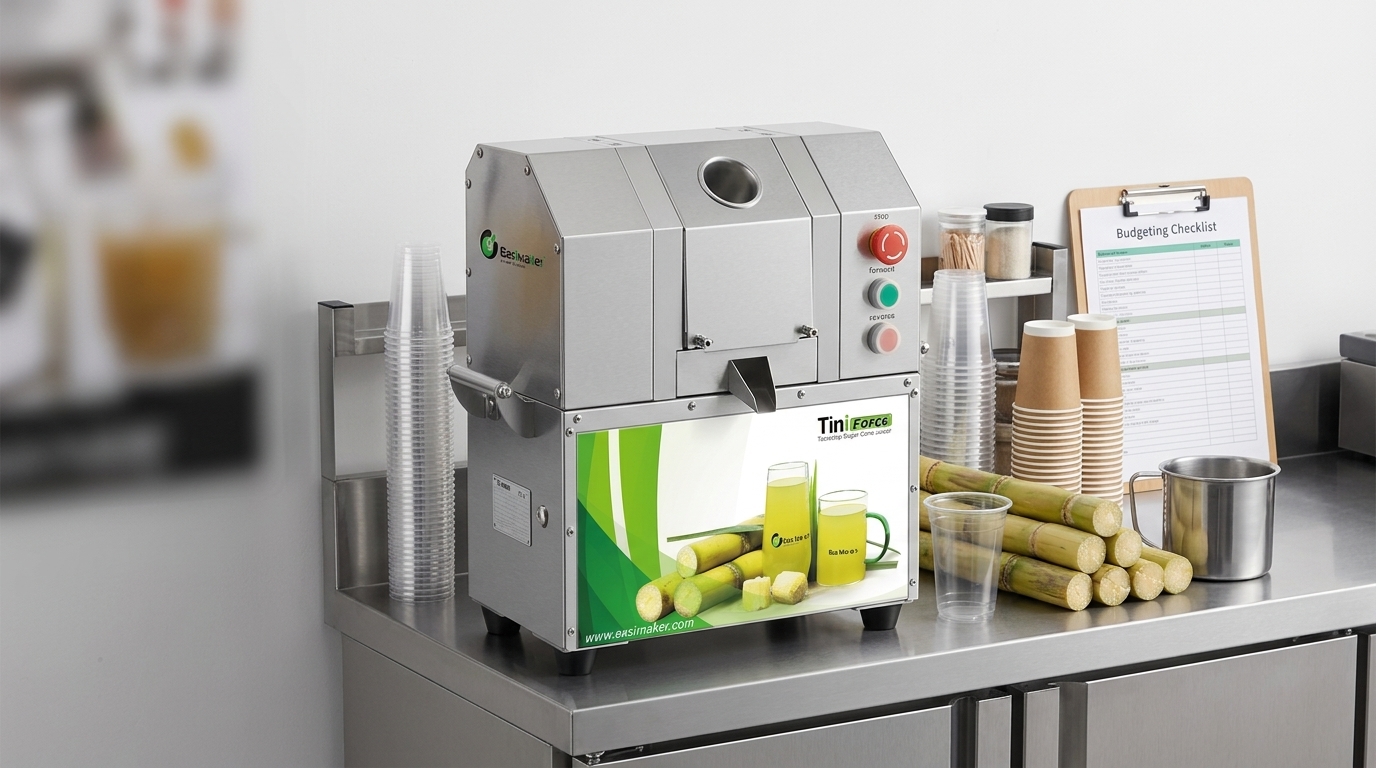
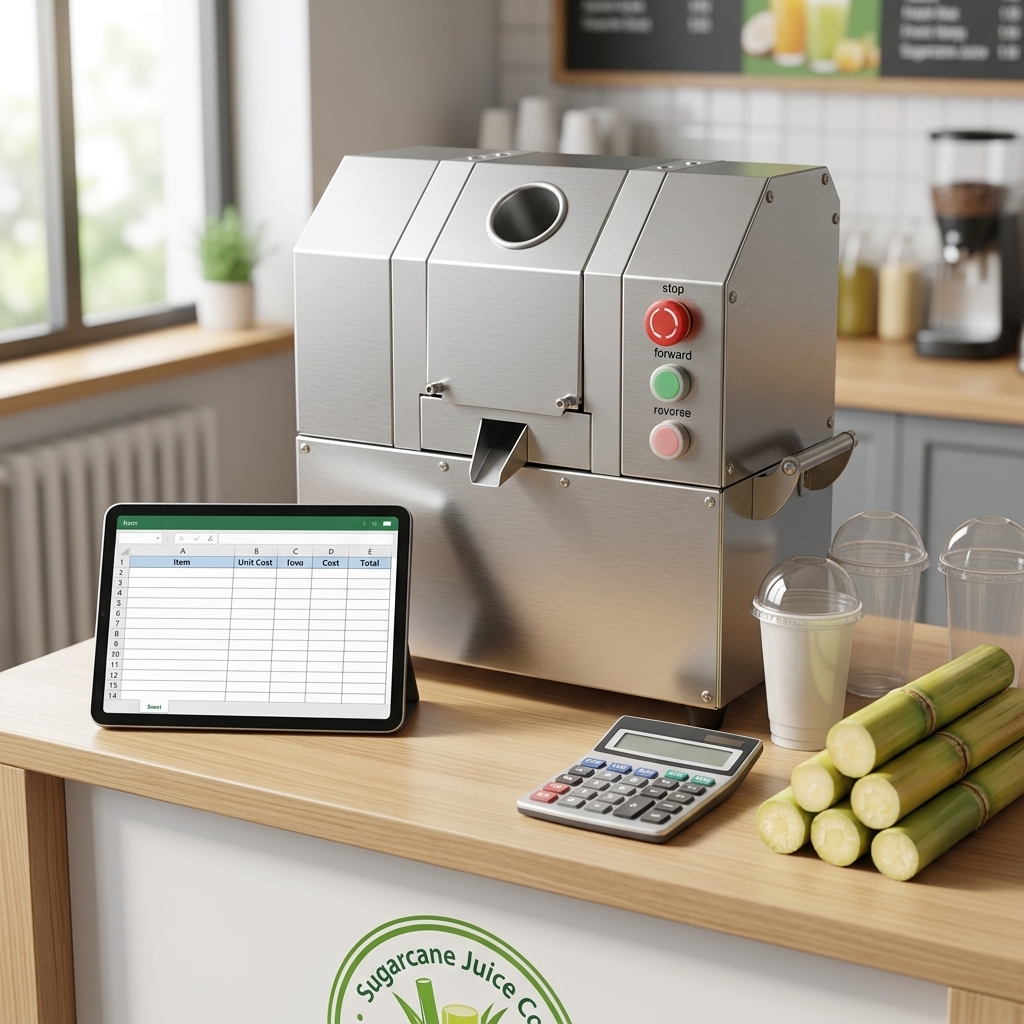
Commercial sugarcane juicer on a compact juice business counter

There is no single standard figure for sugarcane juice business startup cost. A small market stall, a mobile cart, a kiosk, and a permanent juice shop can require very different levels of investment. The most reliable approach is to build a budget from the operating format, expected daily sales, local site requirements, and the equipment needed for safe, repeatable service.

Your initial budget should normally include five areas: site and fit-out, commercial equipment, permits and business setup, opening inventory and packaging, and working capital. The machine purchase is important, but it is only one part of the total sugarcane juice shop investment.

Before comparing quotations, define where you will sell, how many service hours you expect each day, whether cane will be prepared on site, and how much storage and cleaning space is available. These decisions determine the equipment class and the amount of supporting infrastructure required.

Main Sugarcane Juice Business Cost Categories
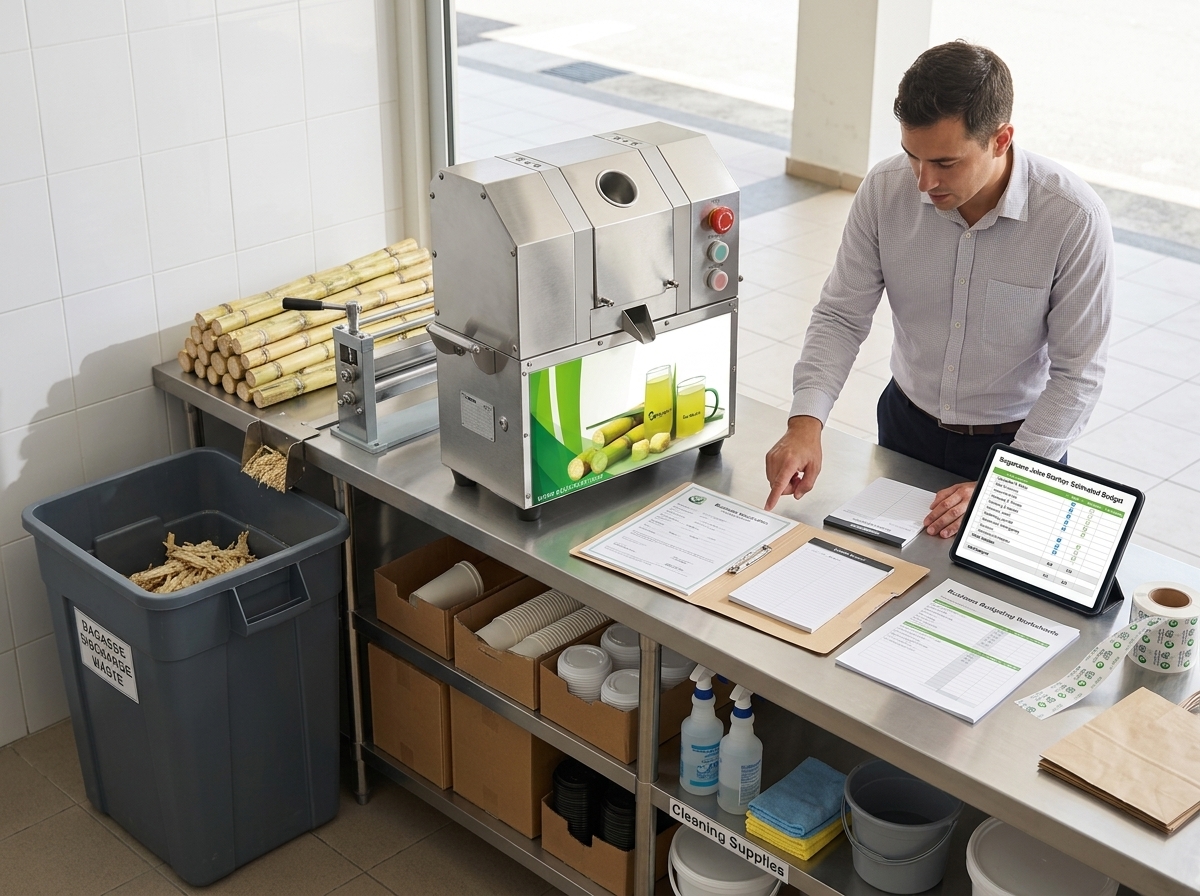
Planning supplies and site equipment for a sugarcane juice stall

A useful sugarcane juice business budget separates one-time startup costs from recurring costs. This makes it easier to see how much cash is needed before opening and how much must be covered by daily sales.

Site, lease, and fit-out

  • Deposit, advance rent, or market access fees
  • Counter, canopy, cart, signage, lighting, and customer-facing finishes
  • Electrical work, water access, drainage, ventilation, and waste handling
  • Food-safe work surfaces and storage areas

Business setup and compliance

  • Business registration and local operating permits
  • Food-service approvals or inspections where required
  • Insurance, payment setup, accounting, and professional fees

Requirements vary by country, city, property type, and sales format. Confirm them with the relevant local authority before committing to a site or importing equipment.

Opening inventory and service supplies

  • Sugarcane and other menu ingredients
  • Cups, lids, straws, bags, napkins, and cleaning materials
  • Labels, menus, uniforms, gloves, and small tools

Launch and contingency funds

Allow for transport, installation, staff training, initial marketing, unexpected site work, replacement smallwares, and currency or shipping changes. A contingency line is especially important when equipment is imported or the site is still being fitted out.

Planning the Commercial Equipment Budget
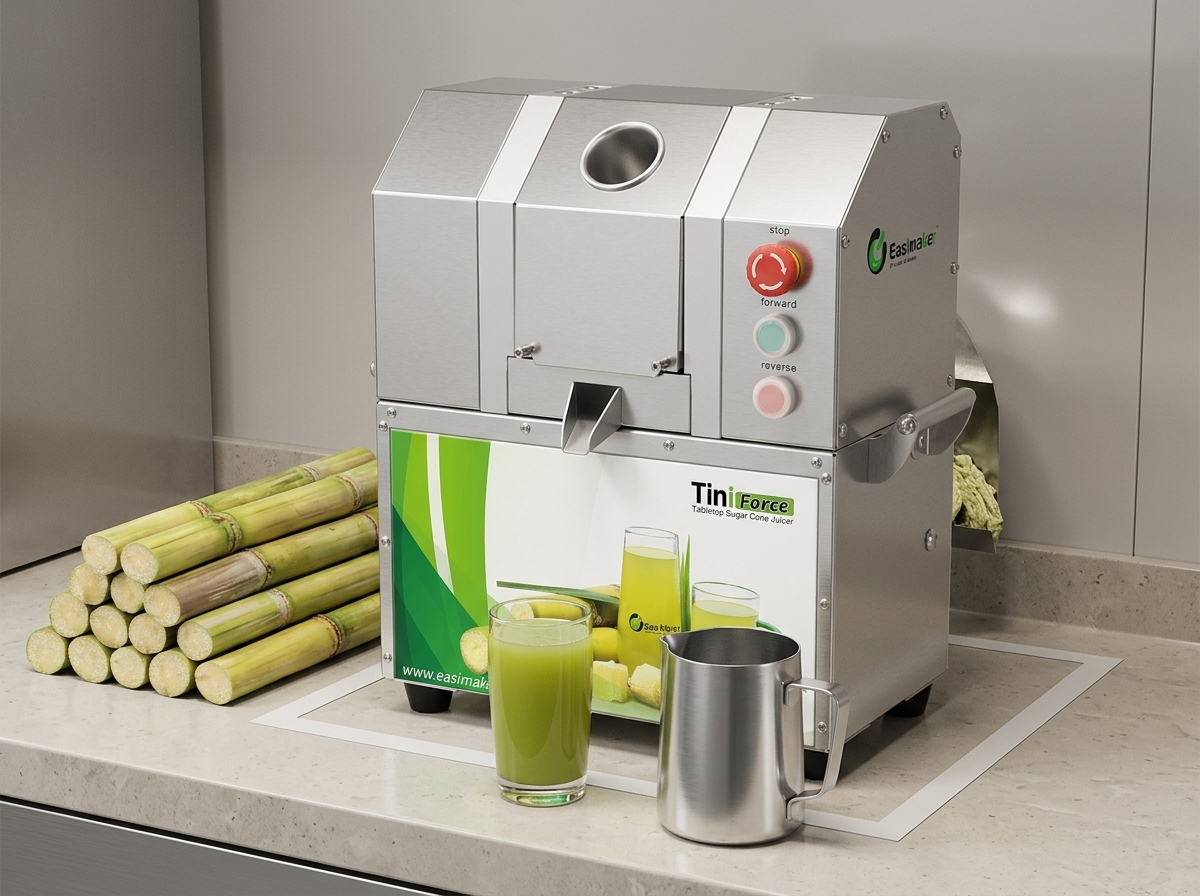
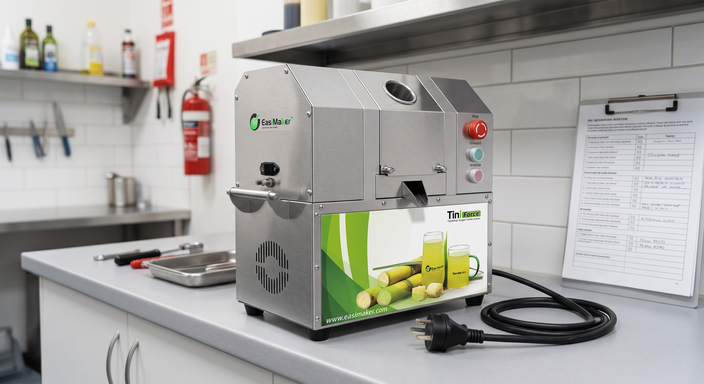
Commercial sugarcane juicer positioned on a measured service counter

The right commercial juicer should match the expected duty cycle, cane preparation process, available power, counter space, cleaning routine, and local service arrangements. A low purchase price may not represent good value if the machine is unsuitable for repeated operation or difficult to maintain.

When comparing commercial sugarcane juicer cost, request a complete quotation that identifies the machine price, shipping, packaging, insurance, duties, taxes, installation requirements, included parts, warranty terms, and after-sales support. Ask which electrical configuration is available for your market rather than assuming that a quoted model will match your site.

Also measure the proposed counter before ordering. One compact commercial sugarcane juicer reference has dimensions of 497 × 240 × 485 mm, but dimensions, access clearances, and service space should always be confirmed for the specific model and configuration. Review this guide on commercial versus home sugarcane juicers when deciding which equipment class fits a business workflow.

Your equipment budget may also include a refrigerator or ice solution, preparation table, sink or wash station, water filtration if required locally, storage racks, scales, waste containers, and backup small equipment. Do not add equipment simply because it is available; include each item only when it supports the planned menu or operating process.

Budget Differences by Business Format
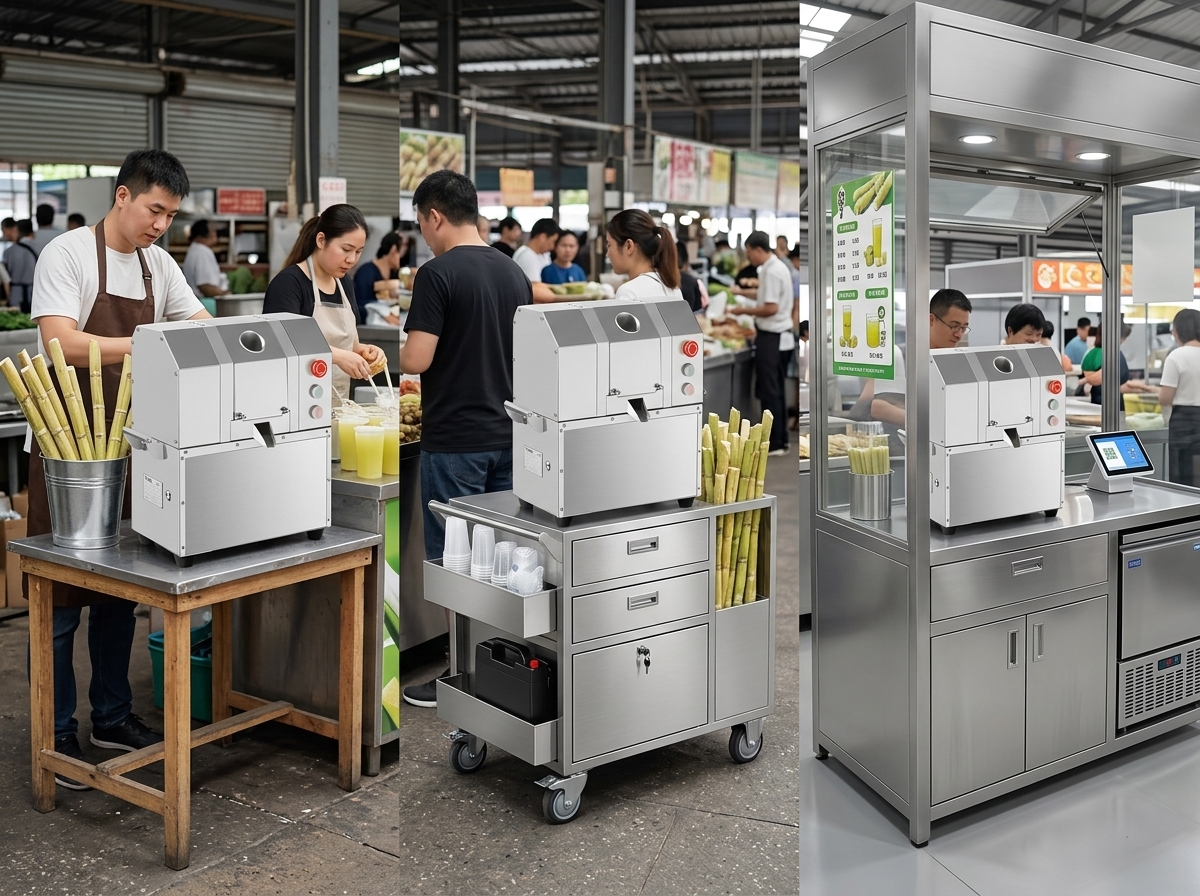
Market stall, mobile cart, and kiosk formats for a sugarcane juice business

The sales format strongly affects the cost to start a sugarcane juice business. The following comparison is a planning framework, not a quotation. Local rent, labor, permits, construction, shipping, and equipment choices can change the result substantially.

FormatTypical cost driversQuestions to answer before budgeting
Market stallMarket fees, portable equipment, water and power access, transport, storageCan the site support hygienic preparation, drainage, and daily cleaning?
Mobile cartCart fabrication, mobility, battery or power access, storage, brandingWhere will cane, packaging, waste, and equipment be stored between service periods?
Fixed kioskRent deposit, counter fit-out, utilities, signage, refrigeration, permitsDoes the layout provide safe customer flow and enough service clearance?
Permanent juice shopLease, construction, seating, staff areas, larger inventory, utilitiesCan forecast sales support the higher fixed monthly cost?

A smaller format may reduce fixed costs but can limit storage, preparation space, menu range, and operating hours. A larger shop may support more products but needs stronger sales planning and more working capital.

Working Capital and Monthly Operating Costs
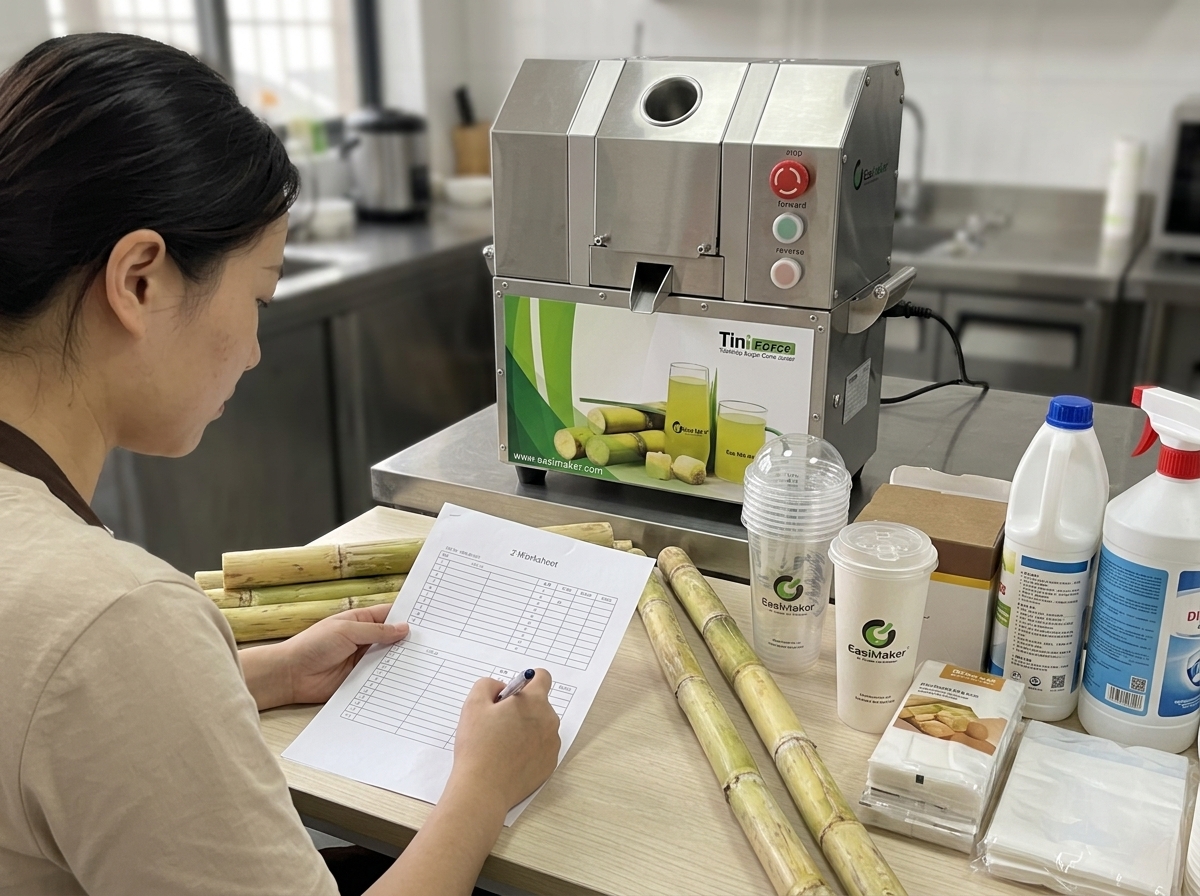
Working capital planning beside sugarcane juice supplies

Working capital covers the period between opening and reaching stable cash flow. It also protects the business when sales are seasonal, deliveries are delayed, equipment needs service, or prices for cane and packaging change.

List recurring costs by month:

  • Rent, utilities, internet, payment fees, and insurance
  • Staff wages, payroll costs, and training
  • Sugarcane, ice, flavoring ingredients, and packaging
  • Cleaning chemicals, filters, replacement parts, and routine maintenance
  • Transport, waste collection, marketing, and accounting

Then estimate the contribution from each serving. Start with selling price, subtract the direct cost of cane, packaging, ice, and other serving materials, and compare the result with daily fixed costs. Include realistic waste and unsold stock rather than assuming every kilogram purchased becomes a sale.

For a structured calculation, see this guide to sugarcane juice machine break-even. Break-even output is only a planning estimate; it should be tested against actual foot traffic, opening days, service speed, downtime, and local pricing.

A Practical Startup Budget Checklist
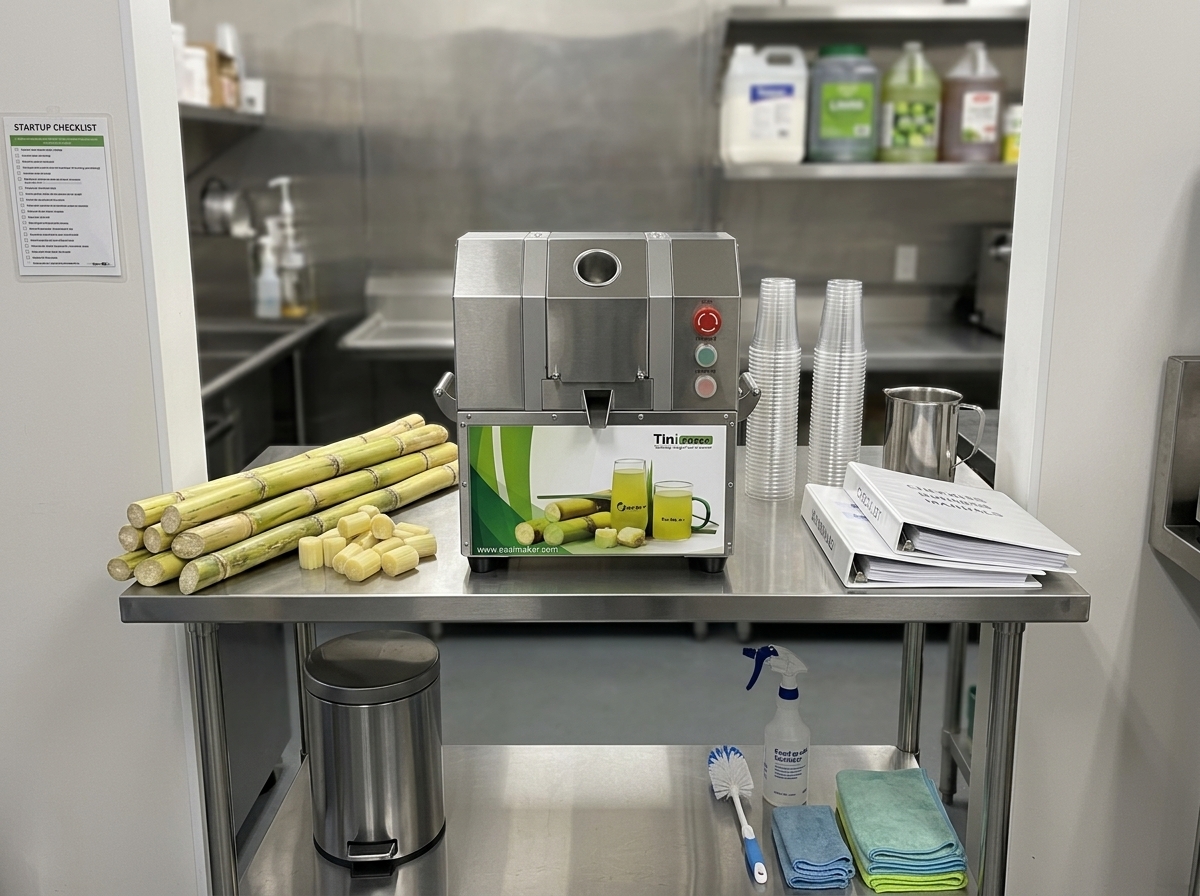
Commercial juice preparation area ready for business opening

Before approving the sugarcane juice business budget, confirm each item below:

  1. Define the sales format, operating hours, menu, and target customer.
  2. Confirm local permits, food-service requirements, water access, drainage, and waste rules.
  3. Measure the site, counter, doorways, storage, and equipment service clearance.
  4. Request an itemized equipment quotation with shipping, taxes, electrical details, warranty, and support.
  5. Price cane, packaging, ice, utilities, labor, cleaning, maintenance, and delivery using local supplier quotes.
  6. Estimate conservative daily sales and test busy, normal, and slow periods.
  7. Set aside working capital and a contingency amount for unplanned costs.
  8. Write a daily cleaning, inspection, and stock-control procedure before opening.

Keep the first menu and workflow manageable. A clear operating process helps staff prepare the product consistently, control waste, and identify maintenance issues early. Revisit the budget after receiving supplier quotations because the final landed equipment cost may differ from an initial online price.

FAQ

What is the biggest cost in a sugarcane juice business startup budget?

It depends on the format. For a kiosk or shop, rent, fit-out, utilities, and equipment may be the largest initial commitments. For a market stall or cart, the equipment, cart fabrication, permits, transport, and working capital may account for more of the budget. Use local quotations rather than relying on a universal percentage.

How much does a commercial sugarcane juicer cost?

Commercial sugarcane juicer cost varies by machine design, configuration, supplier, shipping, taxes, electrical requirements, and support package. Request a landed-cost quotation that lists the machine, freight, duties, installation needs, included parts, warranty, and after-sales service.

Can I start a sugarcane juice business with a home juicer?

A home juicer may be suitable for occasional testing, but it may not match the duty cycle, workflow, sanitation needs, or service expectations of a commercial operation. Compare intended operating hours, repeated loading, cleanability, available space, and supplier support before selecting equipment.

Should working capital be included in the sugarcane juice shop investment?

Yes. Working capital helps cover recurring expenses while sales develop and provides a buffer for seasonal demand, delivery delays, maintenance, price changes, and unexpected site costs. Treat it as part of the initial investment plan, not as an optional extra.

How can I estimate whether the business budget is realistic?

Build a conservative sales forecast, calculate direct cost per serving, list monthly fixed costs, and test slow, normal, and busy trading periods. Then compare the required sales level with realistic foot traffic, opening days, preparation time, waste, and equipment downtime.

Build a Budget Around Your Real Operating Plan

Share your intended sales format, market, expected output, available space, and power supply with Easimaker. Our team can help you identify the relevant equipment requirements, prepare a practical quotation, and discuss suitable OEM/ODM or distributor support for your project.
Request a Project Quote

How to Calculate Sugarcane Juice Business Break-Even

Table of Contents

To calculate a sugarcane juice business break-even point, divide total fixed costs by the contribution margin per serving. This guide explains the formula, cost inputs, sales assumptions, ROI considerations, and practical ways to build a reliable break-even model for a commercial juice operation.

The Basic Sugarcane Juice Break-Even Formula

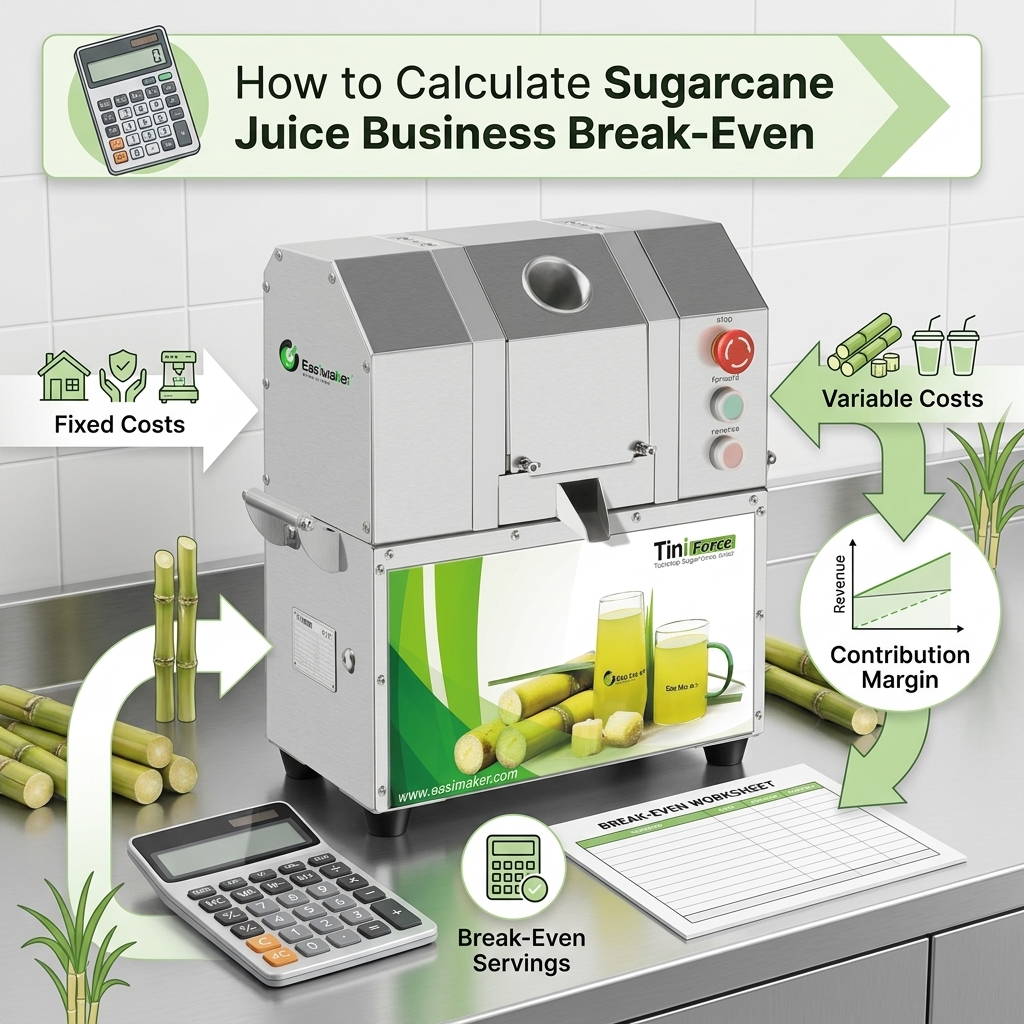
Infographic showing the formula for calculating sugarcane juice business break-even

The sugarcane juice business break-even point is the sales level at which total revenue equals total costs. At this point, the business has covered its operating expenses but has not yet generated operating profit.

Use this formula:

Break-even servings = Total fixed costs ÷ Contribution margin per serving

To calculate the break-even point in sales revenue:

Break-even revenue = Break-even servings × Selling price per serving

The contribution margin is the selling price minus the variable cost of producing and selling one serving. This calculation is more useful than comparing machine price with daily sales because it includes the costs that change with every cup.

For a reliable model, calculate the result by day, month, and year. Also separate one-time startup investment from recurring operating costs so you can understand both operating break-even and investment payback.

Identify Fixed and Variable Costs

Infographic showing the formula for calculating sugarcane juice business break-even

The quality of a sugarcane juice break-even analysis depends on how completely you list costs. Start with two categories: fixed costs and variable costs.

Fixed costs

Fixed costs generally remain stable during the period being analysed, even when sales volume changes. They may include:

  • Shop, kiosk, or market-stall rent
  • Base salaries or guaranteed wages
  • Business registration, permits, and recurring service fees
  • Equipment depreciation or monthly finance payments
  • Insurance, accounting, software, and communications
  • Basic utilities that do not vary significantly with output
  • Planned maintenance allowances

Some costs are semi-fixed. For example, electricity may include a fixed connection charge plus a usage charge. Estimate each part separately where possible.

Variable costs

Variable costs increase as more servings are sold. Include:

  • Raw sugarcane consumed per serving
  • Cups, lids, straws, bags, labels, and other packaging
  • Ice, water, flavouring, or optional ingredients
  • Payment processing fees based on transaction value
  • Sales commissions or delivery charges
  • Waste and spoilage associated with each serving

Do not overlook startup items such as the juicer, preparation table, water system, signage, initial stock, transport, installation, and staff training. These may not all enter the monthly operating break-even formula, but they matter when calculating payback and overall business ROI.

For a broader equipment budget, review this guide to sugarcane juicer cost and business budgeting.

Calculate Contribution Margin per Serving

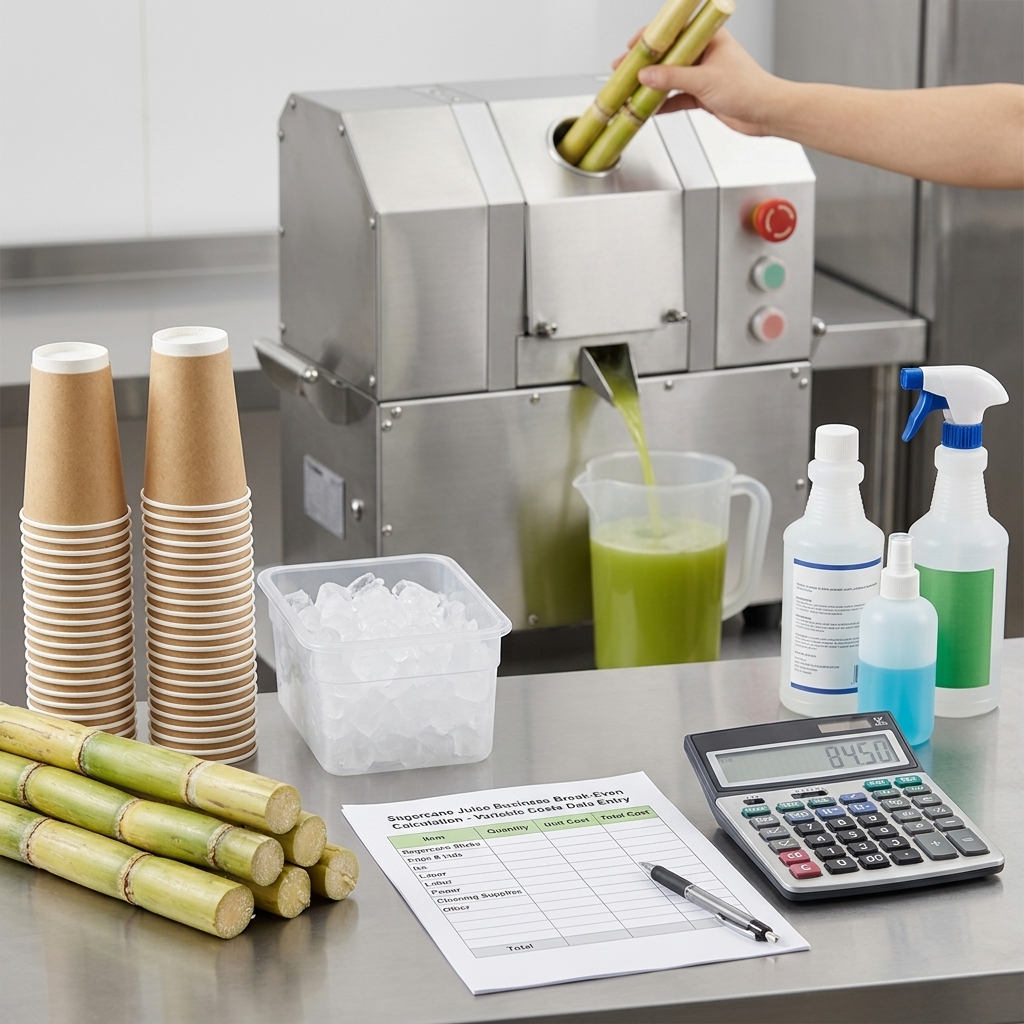
Sugarcane juice business cost inputs arranged for a break-even calculation

Contribution margin shows how much of each sale is available to cover fixed costs and then produce profit.

Contribution margin per serving = Selling price − Variable cost per serving

For example, suppose a business sells one standard cup for 3.00 in its local currency. If sugarcane, packaging, ice, transaction fees, and expected waste total 1.20 per cup, the contribution margin is 1.80.

Do not use the raw purchase price of sugarcane alone. Measure or estimate the amount of usable cane required for the serving size, account for trimming and extraction waste, and update the figure when supplier prices change. If the menu has several sizes or products, calculate a separate margin for each one.

For a mixed menu, use a weighted average contribution margin. This requires an estimated sales mix, such as the proportion of small, regular, large, and add-on sales. If the sales mix is uncertain, prepare a low-margin and high-margin scenario rather than relying on one optimistic average.

Equipment selection affects the cost model indirectly. A machine that does not match the intended service volume may create excess labour, slower service, avoidable downtime, or unnecessary capital cost. Use the commercial sugarcane juicer selection guide to compare real output needs, workspace, power supply, cleaning, and technical support before finalising the investment.

Worked Break-Even Example

Financial planning worksheet and juice cups for a sugarcane business break-even example

The following example is illustrative only. Replace every amount with local prices, taxes, wages, rent, and operating conditions.

InputIllustrative amount
Monthly fixed costs5,400
Selling price per serving3.00
Variable cost per serving1.20
Contribution margin per serving1.80

Using the formula:

5,400 ÷ 1.80 = 3,000 servings per month

The business must therefore sell 3,000 servings per month to cover the listed fixed costs under these assumptions. If it operates 26 days per month, the daily break-even target is approximately:

3,000 ÷ 26 = 115.4 servings per operating day

Because a business cannot sell a fraction of a serving, the practical target would be at least 116 servings per day, subject to opening hours and demand patterns. Break-even revenue is:

3,000 × 3.00 = 9,000 per month

If the operation sells 4,000 servings at the same assumptions, the monthly operating profit before tax, owner drawings, loan interest, and other excluded items would be:

(4,000 × 1.80) − 5,400 = 1,800

This is not the same as total investment ROI. It is an operating-profit example and should be adjusted for the items included in your own accounting method.

Use Realistic Sales and Operating Assumptions

Financial planning worksheet and juice cups for a sugarcane business break-even example

A break-even result is only as useful as the assumptions behind it. Estimate sales by location, opening day, season, weather, service speed, menu price, and available staff rather than using maximum machine output as expected demand.

Build a daily operating model that includes:

  • Expected customer traffic and conversion rate
  • Average servings per transaction
  • Peak and quiet periods
  • Opening days and hours
  • Stock availability and supplier delivery schedule
  • Service interruptions, cleaning time, and planned downtime
  • Different prices or product sizes

Separate capacity from demand. A juicer may be capable of supporting a target workflow, but the business may not have enough customers to use that capacity. Conversely, a machine that is too small for peak service can create queues and lost sales. Your model should use expected sellable volume, not theoretical production volume.

Raw material planning also affects the result. Review practical guidance on storing sugarcane for fresh juice service to reduce avoidable spoilage and keep purchasing aligned with demand.

For hygiene-related labour, layout, and cleaning time, see the guide to designing a hygienic sugarcane juice workstation. A more efficient workflow may improve saleable service time, but any benefit should be verified with actual operating data.

Connect Break-Even with ROI and Sensitivity Analysis

Sugarcane juice business cost inputs arranged for a break-even calculation

Break-even tells you when operating revenue covers operating costs. ROI asks whether the profit generated is adequate compared with the total investment.

A simple annual operating ROI estimate is:

Annual operating ROI = Annual operating profit ÷ Total invested capital × 100

Total invested capital may include equipment, shipping, installation, site preparation, deposits, permits, opening inventory, signage, and other startup costs. Define whether the calculation includes financing costs, taxes, owner labour, and depreciation. Different definitions can produce different ROI results.

Payback period is another useful measure:

Payback period = Total initial investment ÷ Average monthly cash operating surplus

Use sensitivity analysis to test what happens when important assumptions change. At minimum, model:

  • Lower, expected, and higher daily serving volume
  • Changes in cane and packaging costs
  • Different selling prices and product mixes
  • Seasonal operating days
  • Unexpected repairs or equipment downtime
  • Higher rent, wages, delivery, or payment fees

A useful spreadsheet should show the break-even servings and monthly result for each scenario. This helps you judge whether the business remains viable when actual sales or costs differ from the initial plan.

Practical Ways to Improve the Break-Even Point

Infographic showing the formula for calculating sugarcane juice business break-even

Once the model is complete, the objective is not simply to increase the selling price. Improve the relationship between contribution margin, fixed costs, and reliable sales.

  • Reduce avoidable waste: Match cane purchasing to expected demand, rotate stock, and record actual yield and discarded material.
  • Review serving sizes: Confirm that each size has a clear margin after cane, packaging, ice, and transaction costs.
  • Control fixed overhead: Compare rent, staffing, utilities, and service arrangements with the sales volume the location can support.
  • Protect service uptime: Follow cleaning and maintenance procedures and keep a practical process for responding to faults. The commercial sugarcane juicer troubleshooting guide can help operators identify common issues before they become prolonged interruptions.
  • Choose equipment around the workflow: Consider actual service volume, operator count, cleaning requirements, power supply, footprint, and local support instead of selecting only by purchase price.
  • Track actual results: Record daily servings, sales value, cane purchased, waste, labour hours, downtime, and maintenance cost. Update the model monthly.

The most dependable break-even plan is a living operating document. Recalculate it when supplier prices, rent, wages, menu prices, opening hours, or equipment arrangements change.

Commercial Sugarcane Juicer Troubleshooting Guide

Table of Contents

A practical troubleshooting guide for commercial sugarcane juicer operators. Identify safe checks for starting, feeding, extraction, noise, leakage, and cleaning problems before arranging qualified service.

Start With Safe Checks

Commercial sugarcane juicer isolated for a safe troubleshooting inspection

Commercial sugarcane juicer troubleshooting should begin with a safe, simple inspection: stop the machine, isolate it from the power supply, remove cane only after the rollers have fully stopped, and check the manual for the model-specific procedure. Do not bypass guards, interlocks, overload protection, or electrical safety devices.

Most operating faults fall into a few areas: incorrect power supply, blocked or poorly prepared cane, residue around rollers and juice paths, worn drive or roller components, or a fault that needs qualified service. Record what happened before the issue appeared, including the cane condition, cleaning performed, sound or smell noticed, and any indicator status. This information helps prevent repeat downtime.

Before opening panels or attempting adjustment, confirm that the unit is disconnected. Internal electrical work, drive-system adjustment, and replacement of safety-related parts should be handled by trained personnel using the applicable manual and local safety requirements.

When the Machine Will Not Start

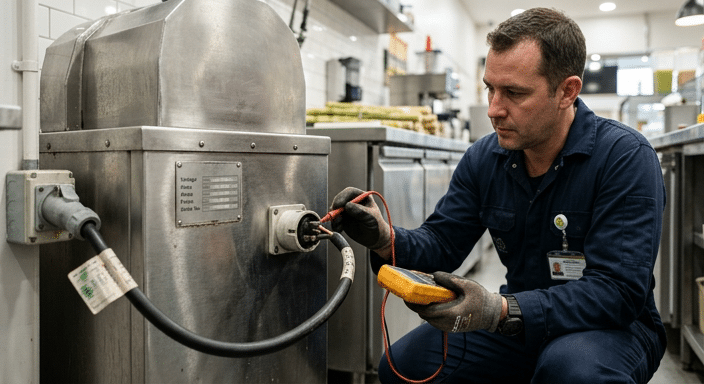
Checking a commercial sugarcane juicer power connection and rating information

If the machine does not start, do not repeatedly cycle the switch. First check whether the plug, isolator, outlet, and protective device are in the normal operating position. Then compare the available supply with the voltage, frequency, and phase shown on the machine rating plate. A supply mismatch can prevent correct operation and may damage electrical components.

Check that emergency-stop controls are released and that covers, guards, and any safety interlocks are correctly positioned. If the machine stopped during a heavy feed, allow it to cool if the manual requires this, clear cane and residue with power isolated, then follow the specified reset process. Never reset protection repeatedly without identifying why it tripped.

For a structured review of electrical symptoms, see diagnosing electrical faults in commercial sugarcane machines. Confirming the electrical specification before installation is equally important; refer to sugarcane juicer power supply requirements.

Slow Rollers or Cane Jamming

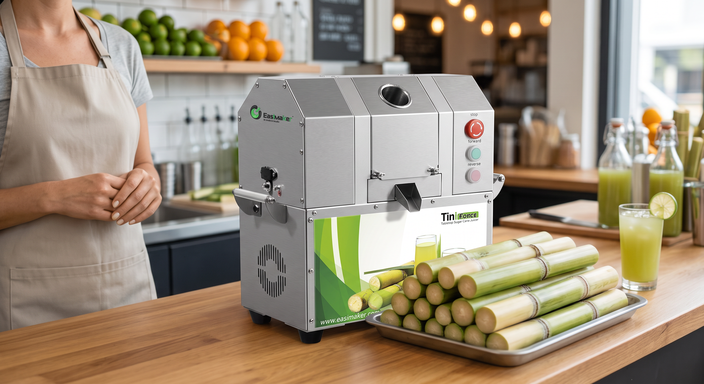
Properly prepared sugarcane beside a commercial juicer feed opening

Slow roller movement, slipping, or a jam often starts with the cane rather than the machine. Cane that is excessively thick, hard, dirty, bent, or cut unevenly can feed poorly. Prepare cane consistently, remove unsuitable pieces, and introduce it at the feed opening as instructed for the machine. Do not force cane into the rollers or use hands or improvised tools to clear a moving machine.

With power isolated, inspect the feed area and roller surfaces for fibrous buildup, sticky residue, foreign material, or damaged parts. Clean only with methods approved for food-contact equipment. If the rollers remain slow after cleaning and using appropriately prepared cane, the cause may involve the drive system, rollers, bearings, or controls. That requires a service assessment rather than operator adjustment.

Frequent jams can also indicate that the machine class does not match the operation’s cane preparation process or service demand. The commercial versus home sugarcane juicer guide explains why duty cycle, construction, and maintainability matter in daily service.

Low Juice Output

Low juice output should be assessed as a process issue first. Cane freshness, variety, storage conditions, diameter, trimming quality, and operator feeding method all affect the result. Compare performance using similar cane and a consistent preparation routine before concluding that the machine has a mechanical fault.

Next, clean the roller area and juice path according to the manual. Residue can interfere with feeding and drainage. Inspect for visible roller wear, incorrect roller contact, abnormal slipping, or material accumulating where it should not. Do not change roller settings unless the manufacturer documents an operator-safe adjustment procedure.

For a focused diagnostic sequence, read what to do when a sugarcane machine has low juice yield. When selecting a replacement or additional unit, compare the actual cane workflow, cleaning routine, counter space, and electrical site conditions rather than relying on output estimates alone.

Noise, Vibration, and Overheating

New grinding, knocking, squealing, or repeated vibration is a reason to stop operation and inspect safely. Check that the machine stands level on a stable surface, mounting points are secure where applicable, and no cane, debris, or loose item is contacting moving components. A change in sound after a jam or cleaning event is useful information for the service team.

Heat near a motor or drive area can be normal during use, but a burning smell, smoke, unusually hot external surfaces, repeated protective trips, or a sudden performance change is not an operator repair task. Disconnect the unit and arrange qualified inspection. Continuing to run equipment with these symptoms can increase damage and create safety risk.

Scheduled cleaning and inspection reduce avoidable issues. Use the routine in the commercial sugarcane juicer maintenance guide as a basis, then follow the instructions specific to the installed model.

Leaks, Cleaning, and Hygiene

Locate the source of a leak before returning the machine to service. Check whether the juice collection container, outlet, filter or strainer, removable covers, and drainage path are correctly fitted and free from blockage. Residue or fiber can divert liquid and make a drainage problem appear to be a seal failure.

Clean food-contact surfaces at the required frequency for the operation and local food-safety rules. Use only suitable cleaning materials, rinse as required, and dry parts before reassembly when the manual calls for it. Avoid directing water into electrical areas, motors, switches, or unapproved openings. Do not operate with damaged food-contact parts, missing guards, cracked housings, or persistent leakage.

Keep a basic log for cleaning, unusual symptoms, and replaced wear parts. This helps operators identify recurring patterns and gives maintenance personnel a reliable service history.

When to Call for Service

Arrange qualified service when the machine will not start after basic external checks, protection repeatedly trips, rollers do not turn correctly, electrical components show damage, there is smoke or a burning smell, guards or interlocks do not function, a leak continues after correct cleaning and reassembly, or the machine makes abnormal mechanical noise.

When reporting a fault, provide the model, serial information if available, rating-plate details, the symptoms, when they began, photos or video where safe, and the cleaning or operating steps already completed. Clear fault information helps support teams identify the correct next action and parts requirement.

For businesses reviewing equipment suitability as well as repair needs, compare the TiniForce S3 and EasiDeMax S4 for your operation based on practical workflow requirements.

How to Choose the Best Sugarcane Juicer Model for Your Juice Shop: The Ultimate Buyer’s Guide

Introduction: The Engine of Your Juice Business

In the competitive beverage industry, fresh sugarcane juice stands out as a high-margin, high-demand product. However, the profitability of your juice shop depends almost entirely on one piece of equipment: your sugarcane juicer. Unlike blending soft fruits, crushing sugarcane requires immense torque and robust engineering. A sub-par machine leads to frequent breakdowns, low juice yield (wasted inventory), and safety hazards.

For B2B buyers—whether you are setting up a standalone juice bar, upgrading a restaurant beverage station, or procuring equipment for a franchise network—selecting the right model is an operational decision, not just a purchase. This guide provides a comprehensive framework to evaluate commercial sugarcane juice machines, ensuring you invest in equipment that maximizes throughput, hygiene, and longevity.

Step 1: Assessing Your Throughput Requirements

Before analyzing specifications, you must quantify your operational needs. Buying a machine that is too small creates bottlenecks during rush hours, while an oversized machine may waste valuable counter space and capital.

Calculating Cups Per Day

Start by estimating your peak demand. A typical commercial setting falls into one of three categories:

  • Low Volume / Startup (Under 100 cups/day): Cafés or restaurants where sugarcane juice is a secondary menu item. A compact, tabletop unit is often sufficient.
  • Medium Volume (100–300 cups/day): Dedicated juice kiosks or busy food court stalls. You need a machine capable of continuous operation without overheating.
  • High Volume (300+ cups/day): Specialized sugarcane juice bars or wholesale bottling operations. These require heavy-duty motors and advanced cooling systems to run for hours non-stop.

If you are unsure where to start, read our guide on how to choose a sugarcane juice machine based on business size.

Step 2: Understanding Roller Technology

The core of any sugarcane juicer is the roller mechanism. The number and configuration of rollers determine the extraction efficiency (yield) and the speed of service.

2-Roller vs. 3-Roller vs. 4-Roller Systems

2-Roller Machines: These are often entry-level units. The downside is efficiency; you typically have to pass the cane through the machine 2 or 3 times to extract all the juice. This increases labor time and slows down service during a rush.

3-Roller Machines: This is the industry standard for compact commercial units. The cane is crushed in stages, usually achieving a high extraction rate in a single pass. For businesses with limited space but moderate demand, models like the Tiniforce S3 offer an excellent balance of torque and size, utilizing a 3-roller system to maximize yield without a massive footprint.

4-Roller Machines: These are designed for maximum extraction and speed. The additional roller allows for a more gradual and thorough crushing process. This often results in the driest possible bagasse (waste fiber) in a single pass, maximizing your profit per stick of cane. For high-traffic locations, the Easidemax S4 is engineered to handle heavy loads with its 4-roller configuration, ensuring you get every drop of revenue from your raw material.

Solid vs. Hollow Rollers

Always verify that the rollers are solid stainless steel (preferably Grade 304). Hollow rollers can dent or crack under the immense pressure required to crush mature sugarcane, leading to costly replacements.

Step 3: Motor Torque and Drive Systems

Sugarcane is a fibrous, tough material. A high-speed blender motor will burn out instantly. You need torque (rotational force), not just RPM.

Gearbox vs. Chain/Belt Drive

  • Chain/Belt Drive: Older or cheaper models use chains and belts. These stretch over time, require frequent tension adjustments, and are noisy. They are also prone to slipping when a particularly thick cane is inserted.
  • Gearbox Direct Drive: Modern, high-quality commercial juicers use a gearbox reduction system. This multiplies the motor’s torque, allowing a relatively small motor to crush thick cane effortlessly. Gearboxes are quieter, require less maintenance (no belts to replace), and provide consistent power.

Power Consumption and Efficiency

For commercial shops, electricity costs matter. An efficient gearbox system allows the machine to consume less power while delivering higher crushing force. Look for machines that operate on standard voltage but utilize high-efficiency motors to keep operating costs low.

Step 4: Hygiene and Food Safety Design

In the post-pandemic era, hygiene is a top priority for consumers. A machine that looks dirty or is hard to clean can ruin your brand’s reputation.

Closed vs. Open Design

Traditional manual crushers are often open, exposing the juice and rollers to dust, flies, and contaminants. Modern commercial electric machines should have a closed loop design where the extraction area is sealed off from the environment.

Cleaning Efficiency

Ask the following questions regarding maintenance:

  • Are the rollers easily accessible for washing?
  • Can the juice extraction chamber be flushed with water without damaging the motor?
  • Are there hidden crevices where sugar can ferment and grow bacteria?

For a deeper dive into sanitary features, review the top 5 features to look for in a reliable sugarcane juicer.

Step 5: Noise Levels and Customer Experience

If your juice machine is located front-of-house (which is recommended for the “freshness” appeal), noise is a critical factor. An excessively loud machine disrupts customer conversation and creates an unpleasant environment.

Gearbox-driven machines are significantly quieter than chain-driven ones. When selecting a model, look for specifications regarding decibel levels or descriptions emphasizing “low noise” or “silent operation.” This is particularly important for indoor juice bars in malls or quiet cafés.

Comparison: Compact Tabletop vs. Floor-Standing Commercial

Choosing the form factor is often dictated by your available real estate.

Feature Compact Tabletop (e.g., Tiniforce S3) Heavy-Duty Commercial (e.g., Easidemax S4)
Footprint Small, fits on standard counters. Larger, often requires dedicated space or sturdy stand.
Portability High. Easy to move for events or cleaning. Low. Stationary installation recommended.
Capacity Ideal for 50-300 cups/day. Ideal for 300+ cups/day.
Roller Count Typically 3 rollers. Typically 3 or 4 rollers.
Best For Cafés, food trucks, limited space kiosks. Dedicated juice bars, busy food courts.

Step 6: Safety Features

Industrial machinery poses risks if not designed correctly. Ensure your chosen model includes:

  • Emergency Stop Button: A prominent, easy-to-hit button to cut power instantly.
  • Reverse Function: Essential for clearing jams. If a piece of cane is too thick or hard, the machine should be able to reverse rollers to release it safely.
  • Inlet Guard: The feeding inlet should be designed to accept sugarcane stalks but prevent human hands from reaching the rollers.

Step 7: After-Sales Support and Spare Parts

A machine is only as good as its support. Even the best machines need maintenance eventually (bearings, seals, etc.).

  • Spare Parts Availability: Does the manufacturer stock standard parts? Proprietary parts that are out of stock can shut your business down for weeks.
  • Warranty: Look for a clear warranty policy that covers the motor and gearbox, as these are the most expensive components.
  • Technical Support: Can you reach the supplier for troubleshooting?

The ROI of Quality: Why “Cheap” Machines Cost More

It is tempting to buy the cheapest imported machine available, but in the sugarcane business, this is a false economy. Here is the math:

  1. Yield Loss: A cheap machine with poor roller pressure might leave 15-20% of the juice in the waste (bagasse). Over a year, that is thousands of dollars in lost revenue from cane you bought but threw away.
  2. Downtime: If a cheap nylon gear strips during a Saturday afternoon rush, you lose not just the repair cost, but the entire day’s sales and customer trust.
  3. Lifespan: A quality SS304 machine with a gearbox can last 5-10 years. A cheap unit often rusts or fails within 12 months.

Frequently Asked Questions (FAQs)

1. Can I use a regular fruit juicer for sugarcane?

No. Sugarcane is extremely fibrous and hard. Standard centrifugal or masticating juicers designed for apples or carrots will break immediately. You must use a specialized sugarcane crusher.

2. How often do I need to clean the machine?

Ideally, you should rinse the rollers every few hours to prevent stickiness and attract insects. A full deep clean should be done at the end of every business day.

3. What is the difference between the Easidemax S4 and Tiniforce S3?

The Easidemax S4 is a 4-roller heavy-duty machine designed for high volume and maximum extraction. The Tiniforce S3 is a compact, 3-roller machine perfect for businesses with space constraints that still require commercial durability.

4. Does the machine peel the sugarcane?

No, the machine crushes the cane. You must peel the hard outer skin of the sugarcane before feeding it into the machine for the best taste and hygiene, although some heavy-duty machines can crush unpeeled cane (not recommended for taste).

5. Is the machine battery operated or electric?

Most commercial models are mains-powered (electric) for consistent torque. Battery-operated models exist for mobile carts but typically have lower throughput.

6. How do I maintain the rollers?

Rollers should be washed daily. Periodically, you may need to check the bearings and lubricate the chain or gears (if applicable, though gearbox models are sealed).

Final Recommendation Checklist

Ready to make a decision? Use this checklist to ensure you have covered all bases:

  • [ ] Capacity Check: Does the machine handle your peak hour cup volume?
  • [ ] Space Check: Have you measured your counter space? (Compare dimensions of S3 vs S4).
  • [ ] Hygiene Check: Is the machine made of food-grade 304 Stainless Steel?
  • [ ] Safety Check: Does it have an emergency stop and reverse switch?
  • [ ] Yield Check: Does it use at least 3 rollers for single-pass extraction?
  • [ ] Noise Check: Is it quiet enough for your shop environment?

Get Expert Advice

Choosing the right equipment is the first step toward a profitable juice business. If you are still unsure which model fits your specific workflow, or if you need a custom quote for bulk orders, our team is here to help.

Request a quote / Get a sample today and ensure your juice shop is powered by the best technology in the market.