Understanding Sugarcane Juice Extraction Efficiency
In the commercial sugarcane juice industry, the difference between a profitable operation and a struggling one often comes down to extraction efficiency. For procurement officers and business owners, the choice of equipment is a long-term investment in yield. While 2-roller machines have historically served as entry-level options, the industry has shifted toward multi-roller systems, specifically 4-roller designs, to maximize output and minimize waste.
The core challenge of sugarcane processing is the fibrous nature of the stalk. Sugarcane contains a high percentage of lignin and cellulose, which act as a sponge, holding onto the juice. To extract this liquid effectively, the machine must apply consistent, staged pressure. This is where the 4-roller design significantly outperforms its 2-roller counterparts.
The Mechanics: 2-Roller vs. 4-Roller Systems
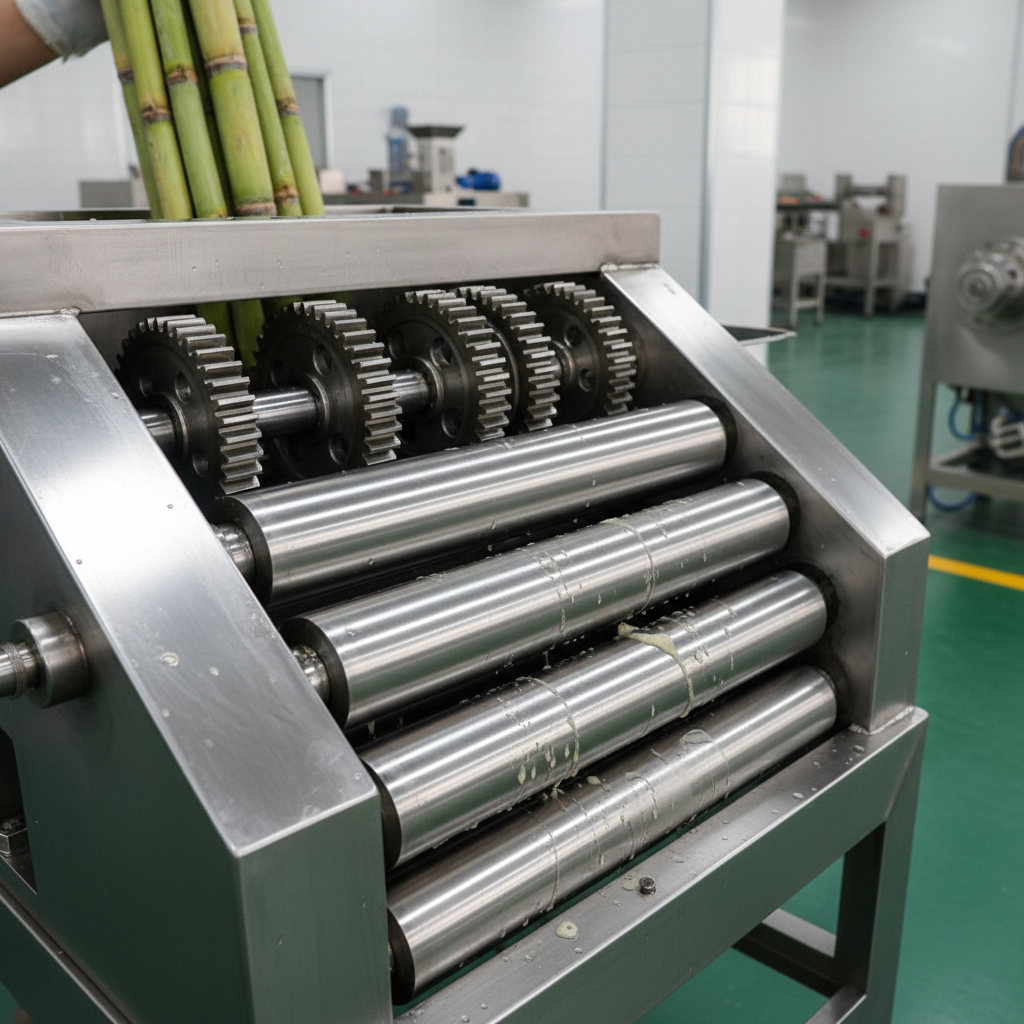
To understand why 4 rollers are superior, we must look at the mechanical interaction between the rollers and the cane stalks. In a 2-roller sugarcane machine, the cane passes through a single pinch point. This single point of contact must handle the entire task of crushing the hard exterior and squeezing the internal fibers. Often, this results in an incomplete extraction, requiring the operator to pass the bagasse (the leftover fiber) through the machine a second or third time.
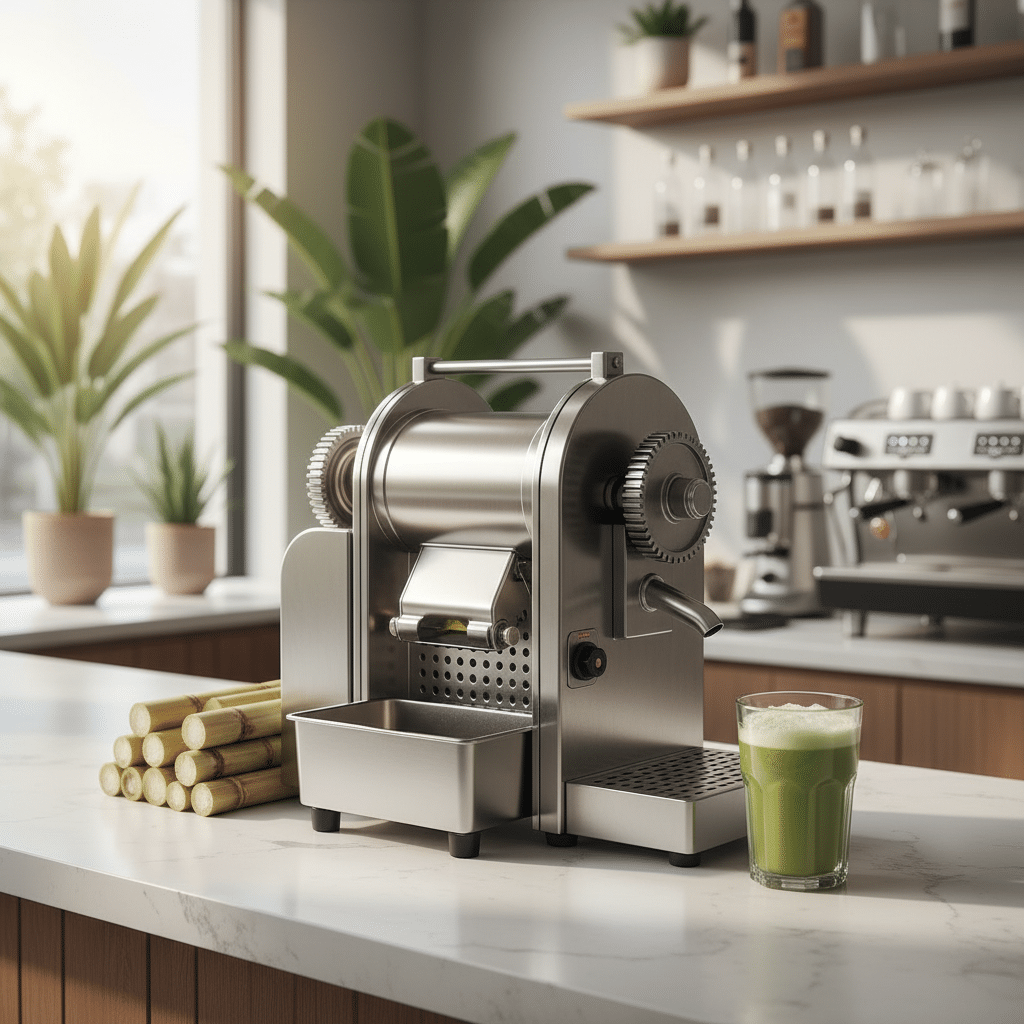
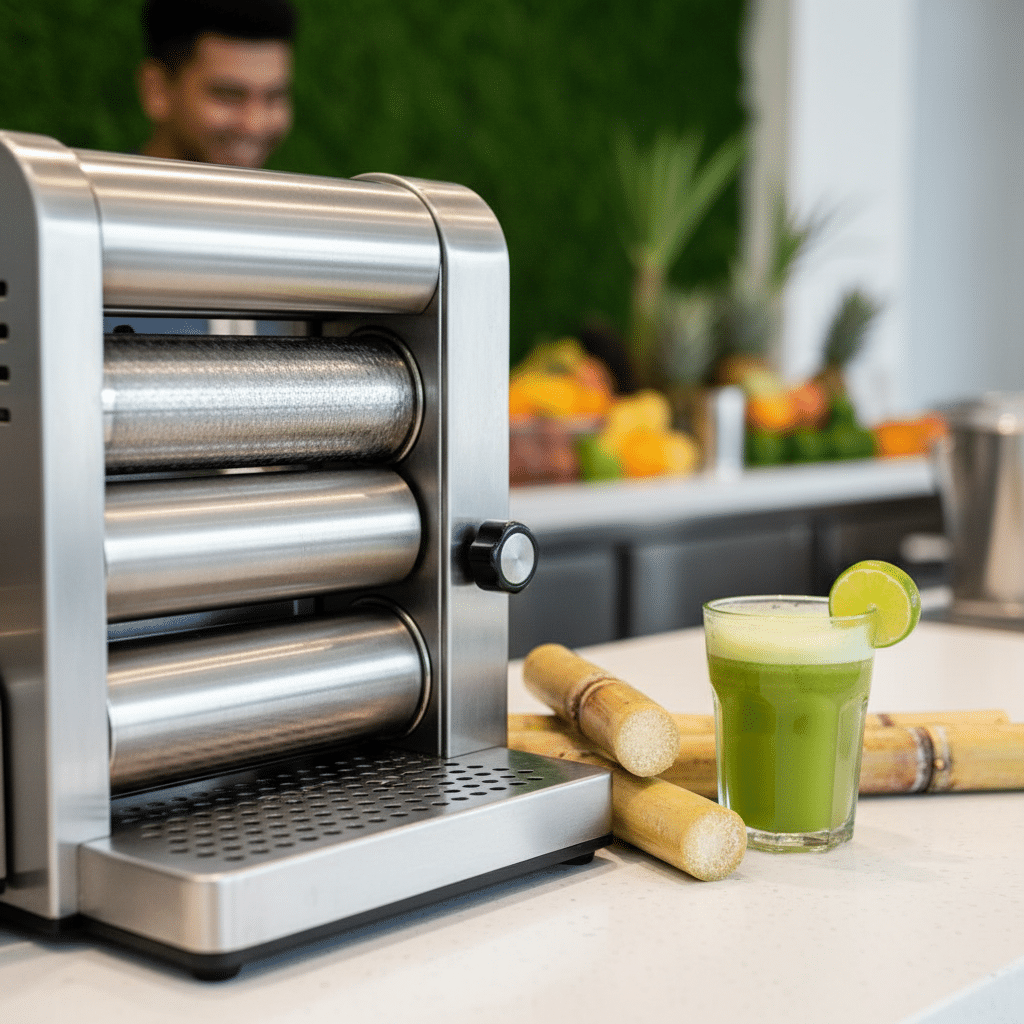
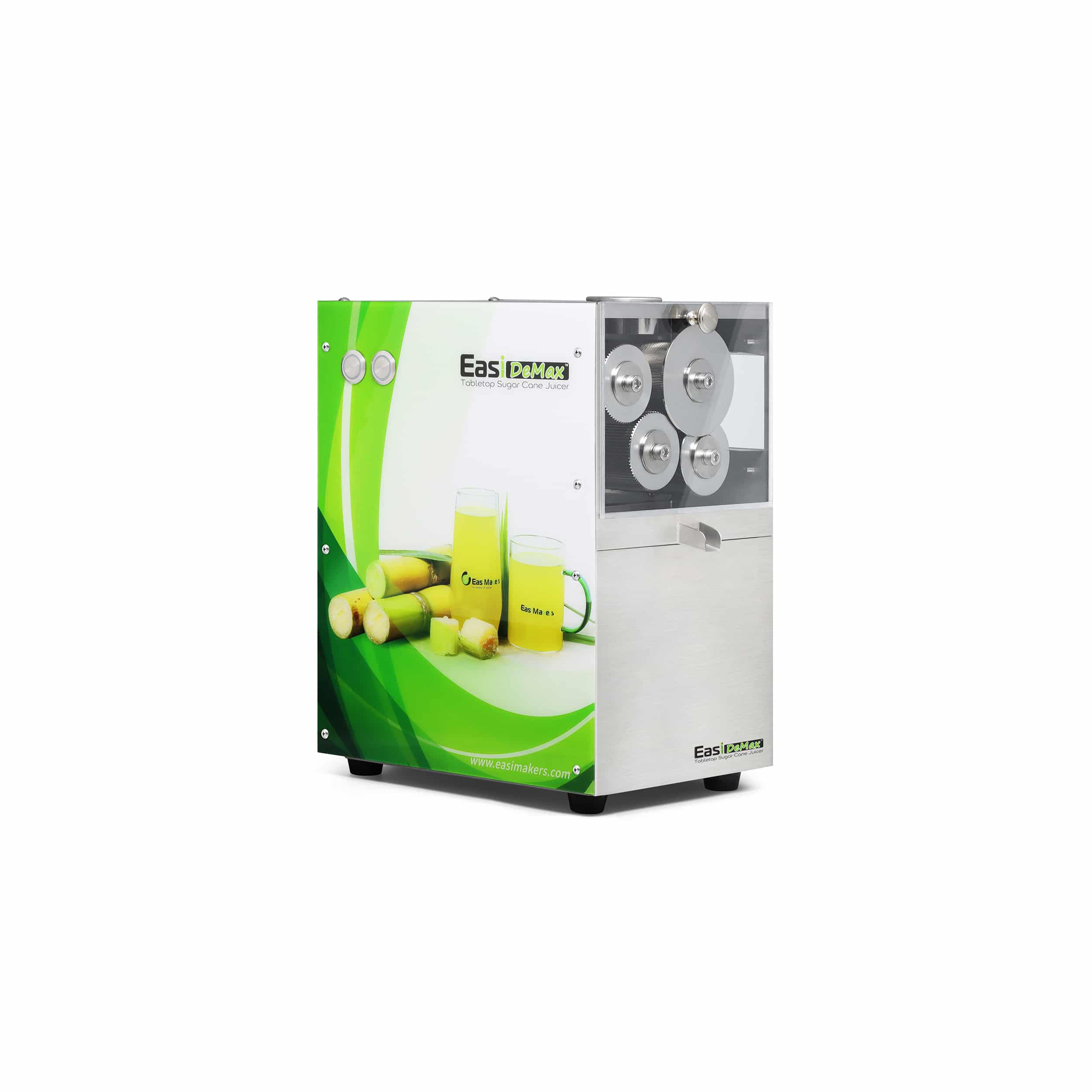
In contrast, a 4-roller system, such as the EasiDeMax S4, utilizes a progressive compression strategy. The rollers are typically arranged in two sets. The first set acts as the “crusher,” breaking the rind and opening the fiber structure. The second set provides the “final press,” extracting the remaining juice from the pre-crushed stalks. This staged approach ensures that the fiber is thoroughly exhausted of its liquid content in a single pass.
Staged Pressing: The 4-Roller Advantage
Staged pressing is not just about adding more rollers; it is about the physics of juice release. When sugarcane is compressed, the juice needs a path to escape. In a 2-roller setup, the high pressure at the single nip point can actually “trap” juice within the fiber as it is compressed too quickly. A 4-roller machine allows for a more controlled release. The first stage prepares the material by increasing its permeability, and the second stage applies the high-intensity pressure needed for a high yield sugarcane juice machine to reach its full potential.
Drier Bagasse and Higher Yield
The most visible indicator of efficiency is the state of the bagasse. If the bagasse coming out of the machine is damp or heavy, juice is being wasted. A high-efficiency 4-roller machine produces bagasse that is brittle and bone-dry. For example, the EasiDeMax S4 is engineered to achieve a juice yield of up to 75%. This is a significant jump from the 50-60% yields common in standard 2-roller or lower-quality 3-roller machines. Over thousands of kilograms of cane, this 15-20% difference in yield directly translates to a lower cost per liter of juice and higher profit margins.
Comparing Specifications: 2-Roller vs. 4-Roller Models
When evaluating hardware for a commercial juice bar or bottling plant, a direct comparison of technical specifications reveals the operational gap between these designs.
| Feature | Standard 2-Roller Machine | 4-Roller Machine (e.g., EasiDeMax S4) |
|---|---|---|
| Extraction Method | Single-stage compression | Dual-stage/Staged pressing |
| Typical Juice Yield | 50% – 62% | Up to 75% |
| Bagasse Quality | Moist, often requires re-pressing | Dry, brittle, single-pass ready |
| Grip & Feed | Prone to slipping on thick stalks | Superior grip due to multiple contact points |
| Motor Stress | High peak load on one nip point | Distributed load across four rollers |
| Noise Levels | Often higher due to vibration | Low noise (optimized gear ratios) |
Technical Spotlight: The EasiDeMax S4 4-Roller Machine
The EasiDeMax S4 serves as a benchmark for what a professional-grade 4-roller machine should offer. Beyond the roller count, several engineering factors contribute to its efficiency and reliability in a B2B environment.
Material Integrity: 304 Stainless Steel
In food processing, material choice is non-negotiable. The use of 304 stainless steel for the rollers and all components that come into contact with the juice ensures corrosion resistance and compliance with international food safety standards. Sugarcane juice is naturally acidic; lower-grade metals can leach or corrode over time, affecting juice flavor and machine longevity. 304 stainless steel provides the durability required for 24/7 commercial operations.
Motor Protection and Operational Safety
A common failure point in commercial juicers is motor burnout caused by overloading. When a thick or particularly hard stalk is fed into the machine, the torque requirements spike. High-quality 4-roller machines incorporate overload protection. This system monitors the current draw and automatically shuts down the motor if it exceeds safe operating limits, preventing permanent damage. Furthermore, understanding motor power is essential for choosing a machine that can handle high-volume throughput without overheating.
Operational Benefits for Commercial Juice Businesses
For distributors and brand owners, the 4-roller design offers several operational advantages that go beyond simple juice yield:
- Reduced Labor Costs: Because the 4-roller machine achieves maximum extraction in a single pass, operators spend less time re-feeding bagasse. This increases the cups-per-hour capacity of the station.
- Consistent Flavor Profile: Staged pressing extracts juice more evenly from different parts of the stalk, leading to a more consistent sweetness and color in the final product.
- Lower Maintenance: By distributing the mechanical load across four rollers instead of two, the wear and tear on individual bearings and gears are reduced, leading to longer service intervals.
- Improved Safety: Modern 4-roller machines are designed with enclosed feeding ports and emergency stop functions, minimizing the risk of operator injury compared to older, open-roller designs.
How to Choose the Right Commercial Sugarcane Machine
Selecting the right equipment requires a balance between budget and required output. While the initial capital expenditure for a 4-roller machine is higher than a 2-roller model, the ROI is typically realized within the first few months of operation through juice savings alone. When sourcing, consider the following:
- Volume Requirements: If you are processing more than 50kg of cane per day, a 4-roller machine is almost always the more economical choice.
- Power Supply: Ensure your facility can support the wattage required for heavy-duty motors. Most commercial units run on standard 110V/220V, but the amperage draw during peak crushing should be verified.
- Ease of Cleaning: Look for machines with removable panels or easy-access rollers. Sugarcane juice is high in sugar and will become sticky and unsanitary if the machine cannot be cleaned thoroughly every day.
Manufacturing and Quality Assurance
At the industrial level, quality assurance (QA) is what separates a reliable machine from a liability. Professional manufacturers implement rigorous testing protocols, including load testing the motors for several hours and verifying the hardness of the stainless steel rollers. When ordering in bulk or for distribution, inquire about the factory’s QA process and their spare parts availability. A machine is only as good as the support behind it, especially when it comes to consumable parts like gears and bearings.
Frequently Asked Questions (FAQs)
1. Can a 4-roller machine handle different diameters of sugarcane?
Yes, most professional 4-roller machines like the EasiDeMax S4 feature self-adjusting tension or specific roller gaps designed to accommodate various cane thicknesses, from thin stalks to premium thick varieties.
2. Is the juice from a 4-roller machine different in taste?
The taste is generally superior because the staged pressing doesn’t “shock” the fiber as much as a high-pressure 2-roller pass, which can sometimes release more bitter compounds from the outer rind if not calibrated correctly.
3. How often do the rollers need to be replaced?
With 304 stainless steel construction and proper cleaning, rollers can last for several years of heavy use. The primary maintenance items are usually the drive belts or gears, which are easily replaceable.
4. Does a 4-roller machine consume more electricity?
While the motor may be more powerful, the total energy consumed per liter of juice produced is often lower because the machine works more efficiently and doesn’t require multiple passes.
5. What is the typical lead time for B2B orders?
Lead times vary based on customization and order volume, but standard commercial units are typically ready for shipment within 15–30 days. For large distributor orders, it is best to contact our sales team for a specific timeline.
Conclusion: Making the Shift to 4-Roller Efficiency
For any serious commercial enterprise, the 4-roller sugarcane machine represents the gold standard in juice extraction. By providing staged pressing, higher yields, and superior durability through 304 stainless steel construction, machines like the EasiDeMax S4 offer a clear path to higher profitability and operational excellence. If you are looking to upgrade your current setup or are planning a new juice venture, prioritizing extraction efficiency is the most effective way to ensure long-term success.
Ready to optimize your production? Request a quote / Get a sample today to see the difference professional-grade engineering makes.