目录
- Quick answer: using a bowl cutter for sausage meat
- What a bowl cutter does in sausage production
- Prepare ingredients and the production plan
- Inspect and set up the machine
- Step-by-step bowl cutter operating sequence
- Control texture, temperature and batch consistency
- Discharge, clean and prepare for the next batch
- Common bowl cutter problems during sausage preparation
- Where a bowl cutter fits in a sausage preparation line
A bowl cutter can produce a consistent sausage meat mix when operators prepare chilled ingredients, follow a controlled loading sequence, monitor texture and temperature, and clean the machine thoroughly after use.
Quick answer: using a bowl cutter for sausage meat
To use a bowl cutter for sausage meat, begin with properly chilled, trimmed meat and measured ingredients. Load the lean meat first, cut it to the required particle size, then add salt and recipe-approved functional ingredients at the correct stage. Add fat, ice or chilled water, seasoning and other inclusions in a controlled sequence while watching the meat texture and temperature. Stop when the batch reaches the recipe standard, discharge it promptly, and clean and sanitise the machine before the next production run.
A bowl cutter is not simply a machine for making meat smaller. Its rotating bowl and high-speed knife set can chop, mix and, where the formula and process require it, help create a fine sausage batter. Good results depend on raw material temperature, ingredient order, knife condition, batch size, operator attention and a documented food-safety process. Always follow the machine manual, your validated recipe, and applicable local hygiene requirements.
What a bowl cutter does in sausage production
A commercial bowl cutter, also called a meat bowl chopper, uses a rotating bowl to carry ingredients past a set of curved knives. Depending on the equipment design and operating settings, the knives chop the meat while the bowl movement continually presents fresh material to the knife area. This action combines size reduction and mixing in one controlled operation.
For sausage production, the machine may be used for coarse chopped mixes, medium-fine fillings or finely cut batters. The correct endpoint is determined by the product specification rather than by a single universal cutting time. A rustic fresh sausage, for example, normally needs visible meat and fat definition. A finer sausage formulation may require more cutting and a more uniform bind. The same machine can support different products only when the recipe, ingredient preparation and operating routine are adjusted accordingly.
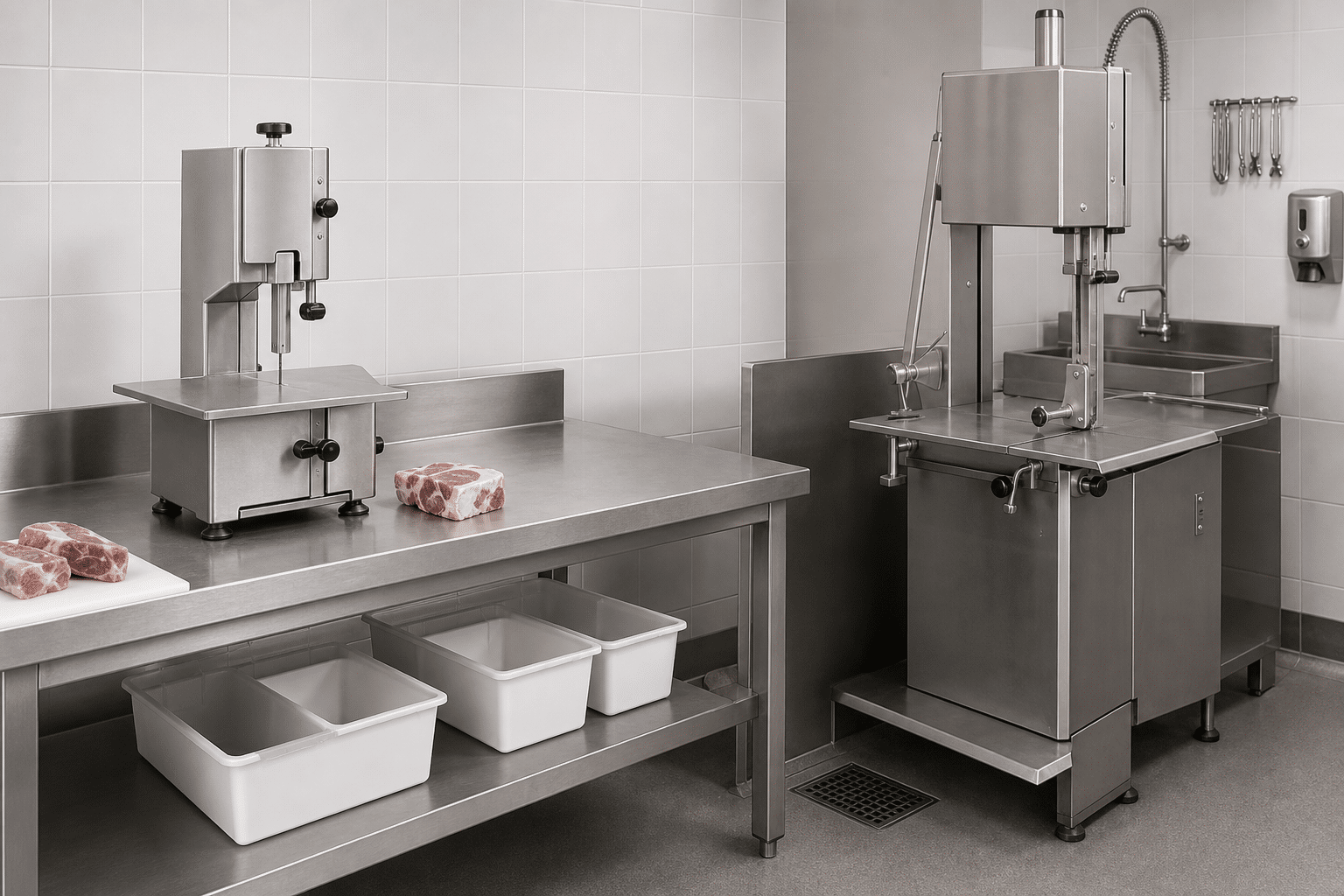
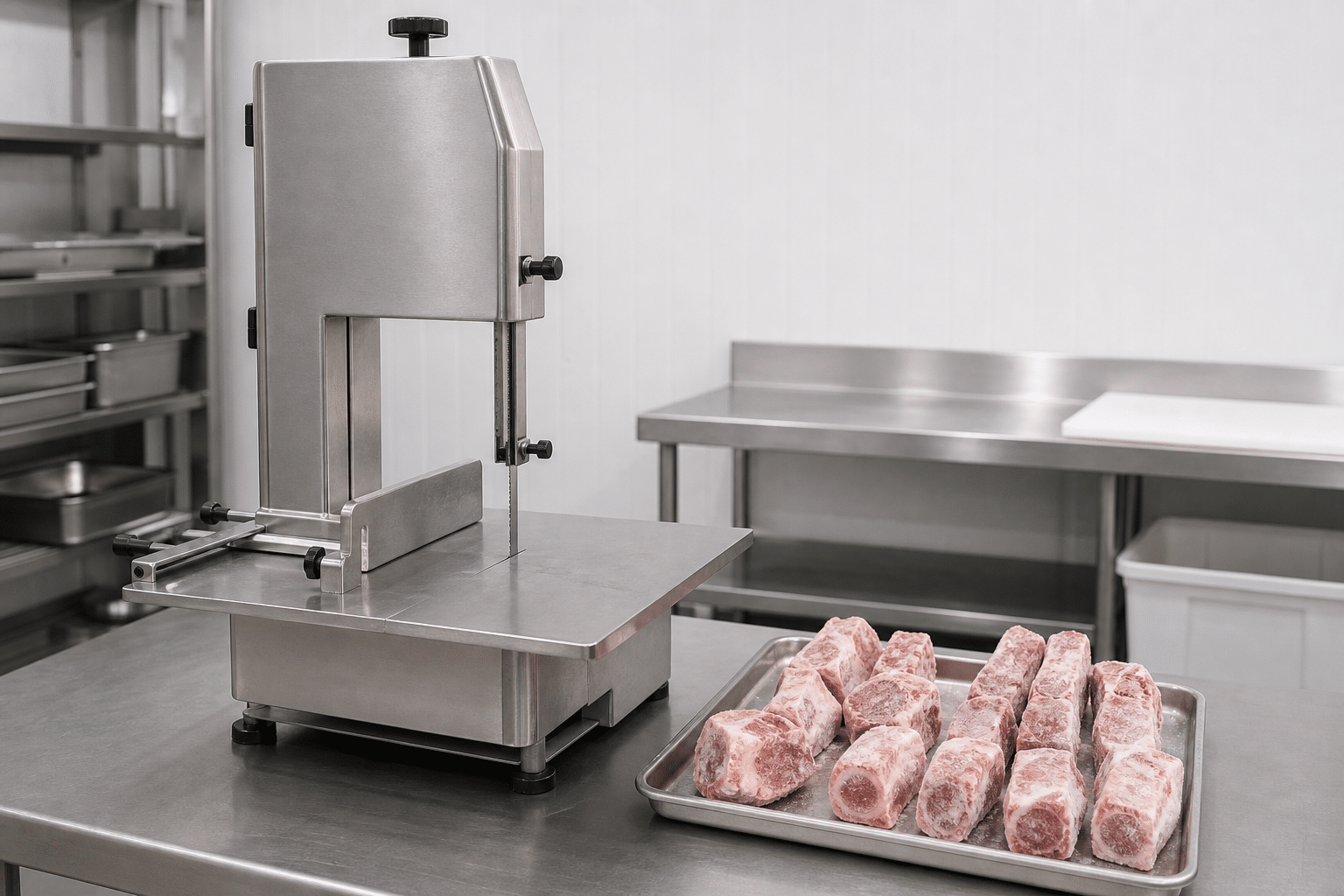
The bowl cutter generally follows trimming, portioning and any needed pre-cutting steps. When operations need to turn large raw pieces into manageable pieces first, the cutting method should suit the condition of the meat. Our guide to choosing a bone saw for fresh and frozen meat explains why product condition matters during upstream cutting. Do not use a bowl cutter as a substitute for safely reducing oversized or bone-in material.
Compared with hand chopping or a basic mixer, a bowl cutter gives the operator more direct control over particle reduction. However, it also introduces heat through mechanical work. That is why chilled raw materials, short controlled cutting periods and temperature checks are central to sausage meat preparation.
Prepare ingredients and the production plan
Consistent sausage meat starts before the bowl turns. Prepare each batch from a written formulation and a clear process sheet. Record the intended batch size, meat and fat proportions, ingredient weights, loading order, target texture, temperature-control method, cut time or cutter setting, and the checks your site requires. A repeatable plan makes it easier to train operators and identify the cause if a batch differs from the standard.
Use suitable raw material condition
Meat and fat should be cleanly trimmed and chilled according to your food-safety plan and recipe. Material that is too warm can soften quickly during cutting and make temperature control difficult. Material that is excessively hard or frozen solid may not circulate and cut as intended, and can place unnecessary stress on the process. Cut meat and fat into pieces that can enter the bowl safely and move freely around it. Never force material into the knife zone.
Weigh every ingredient before starting
Pre-weigh salt, spices, curing ingredients where permitted and specified, ice or chilled water, and any non-meat ingredients. Verify labels and lot information according to your traceability procedure. Keeping ingredients ready before cutting reduces unnecessary delays with an open batch in the bowl. It also prevents an operator from adding an ingredient late because it was not prepared.
Separate ingredients by their purpose
It is useful to group ingredients into lean meat, fat, dry ingredients, liquid or ice, and visible inclusions such as herbs, vegetables or cheese where used. This does not mean every formula uses the same order. It means the operator can follow the specific recipe deliberately. In many processes, salt is added early enough to support the intended meat bind, while delicate inclusions are added later to avoid over-cutting. Use your product development and food-safety documentation to define the actual sequence.
For operations planning a larger preparation area, our article on commercial bowl cutters for high-volume food preparation outlines workflow considerations beyond the cutting step itself.
Inspect and set up the machine
Perform a pre-operation inspection at the start of each shift and after any cleaning or knife change. Isolate power before reaching into the bowl or handling knives. Confirm that the bowl, knives, knife head, lid or cover, scraper and other removable parts are correctly fitted in accordance with the manufacturer instructions. Verify that guards and interlocks are present, undamaged and operational. Never bypass a safety device to save time.
Inspect knife edges for nicks, cracks, looseness or excessive wear. Dull knives can tear rather than cleanly cut the meat, prolong the operation and make it harder to achieve a consistent texture. Do not sharpen, adjust or replace knives unless the task is authorised and the correct safe procedure is available. A trained service technician or designated maintenance person should handle work outside normal operator checks.
Check that the bowl is empty and clean, the drainage and discharge area are clear, and the receiving container is ready. Select the operating mode or speed only after consulting the recipe and the machine manual. Names and available settings differ between bowl cutter models, so do not rely on a setting number from another machine. Before production, make sure the team understands the emergency stop location and keeps hands, utensils, gloves and loose clothing away from moving parts.
If your operation also cuts meat blocks or bone-in products upstream, apply separate equipment-specific procedures. The principles in these commercial bone saw safety and maintenance protocols are useful for maintaining a disciplined, guarded workflow around cutting equipment.
Step-by-step bowl cutter operating sequence
The following sequence is a practical operating framework, not a replacement for a validated formula or the manufacturer manual. Exact speeds, times and additions vary by sausage type, cutter design and raw material condition.
- Start with the prepared lean meat. Load only the batch quantity that the machine and recipe are designed to handle. Overfilling restricts circulation and can create uneven cutting. Begin at the appropriate setting and allow the meat to distribute around the bowl before judging the cut.
- Reduce the lean to the first required texture. Watch the product through the approved viewing area or by safely stopping and checking as your procedure permits. For a coarse product, this stage may be brief. For a finer product, it may continue until the lean has the specified particle size or develops the required cohesive character.
- Add salt and recipe-specified functional ingredients at the planned stage. Addition order matters because salt and certain ingredients affect the way meat binds and retains the intended texture. Add ingredients evenly rather than dropping a large quantity into one spot. Follow the approved formulation exactly, particularly for curing ingredients or allergens.
- Add chilled liquid or ice gradually where the recipe calls for it. This helps distribute the liquid and supports temperature control. Do not assume all formulas need the same quantity or form of added liquid. Additions should be measured, not estimated during production.
- Add fat at the product-specific point. Some sausages require distinct fat particles; others require a finer dispersion. Add the fat early or late only as the recipe specifies. Continue cutting only until the desired appearance and feel are achieved, because extended knife action can change the particle definition.
- Add spices and fragile inclusions with care. Dry seasoning needs adequate mixing, while visible ingredients may need a short, gentle final mixing stage to remain recognisable. Check distribution without exposing hands to the machine. If a manual inspection is needed, stop, isolate and follow the site’s safe access procedure.
- Verify the endpoint before discharge. Confirm the visual texture, distribution of fat and seasoning, product temperature and any other recipe controls. A correctly mixed batch should not be judged by time alone; raw material variation can change the required cutting period.
Operators should avoid repeatedly stopping and restarting simply to compensate for poor preparation. If material is not circulating, stop safely and investigate the cause. Possible reasons include an unsuitable batch size, pieces that are too large, raw material that is too hard, an incorrect ingredient sequence or a mechanical issue. Correct the underlying problem rather than reaching into an operating machine or extending the cut without control.
Control texture, temperature and batch consistency
Temperature control is one of the most important practical disciplines when using a bowl cutter for sausage meat. Fast knife action creates mechanical heat, and the batch can warm further if raw material is warm, knives are dull, the batch is overworked or the operator pauses too long between additions. The acceptable product temperature must be defined by your formulation, hazard analysis, local regulations and downstream process. Use a clean, calibrated probe and record checks as required by your production system.
Texture should be assessed against a written product standard. For a coarse sausage, check whether meat and fat pieces remain at the intended size and are evenly distributed. For a finer mixture, look for a uniform cut and the required degree of cohesion, without continuing so long that the batch loses the desired structure. Colour, surface appearance and the way the mix holds together can be useful observations, but they should support—not replace—defined process controls.
Batch consistency is improved by standardising the parts operators can control: incoming material condition, pre-cut piece size, batch weight, ingredient temperature, knife condition, loading order, settings and final checks. Keep a simple batch record. If a formula changes, document the change rather than allowing informal adjustments to become the new routine.
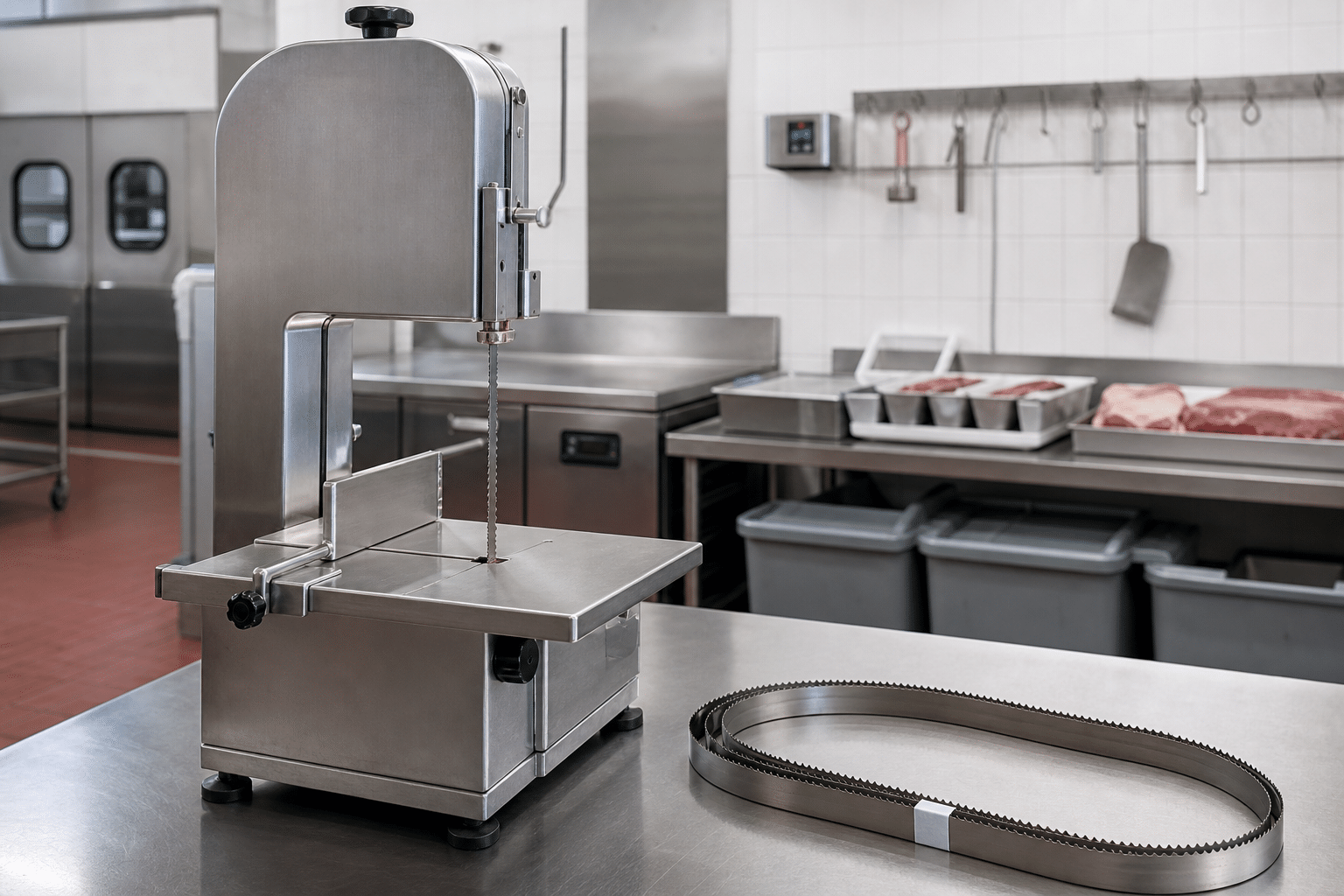
When raw materials require preparatory cutting, knife and blade condition upstream can also affect the workflow. This meat band saw blade selection guide covers the importance of matching a blade to the product and machine requirements.
Discharge, clean and prepare for the next batch
Once the batch meets the recipe standard, discharge it promptly into clean, suitable containers and move it to the next controlled production stage. Avoid leaving finished sausage meat in the bowl while preparing the next task. Cover, identify and hold the product in line with your site procedure, especially where multiple recipes, allergens or curing steps are involved.
After production, switch off and isolate the bowl cutter before cleaning. Remove product residue with tools approved for the machine; do not use hands near knife edges. Disassemble only the components that the manufacturer specifies for operator cleaning. Wash, rinse and sanitise food-contact parts using chemicals at the correct concentration and contact time for your sanitation programme. Allow parts to dry as required, then reassemble and inspect the machine before the next use.
Pay close attention to knife hubs, covers, bowl edges, scrapers, seals and discharge areas where residue can remain. Cleaning is not complete because surfaces look clean; your business should verify sanitation using the methods defined in its hygiene programme. Keep cleaning records, report damaged seals or guards, and schedule professional service when abnormal vibration, noise, poor cutting quality or control faults occur.
Common bowl cutter problems during sausage preparation
The mix is uneven
Uneven meat, fat or seasoning distribution can result from overloading, inconsistent pre-cut pieces, unsuitable ingredient order or insufficient circulation. Check the actual batch weight against the machine’s intended working range and review the staging procedure. Do not solve unevenness by automatically extending the cutting time, as this may change the product texture or temperature.
The sausage meat becomes too warm
Review the temperature of meat, fat and added liquid before loading. Also check whether knife wear, a long processing time, a delayed addition sequence or a poorly planned batch size is contributing. Hold the batch and follow your food-safety corrective-action procedure if it does not meet the defined control limit. Do not release product based only on appearance.
Fat particles are smeared or no longer distinct
This commonly indicates that the process needs review for raw material condition, cutting intensity, ingredient sequence or the specified endpoint. Confirm that the fat was prepared to the recipe requirement and that the operator did not continue cutting after the target texture was reached. A coarse sausage and a finely cut sausage should not be handled with the same visual standard.
The cutter vibrates, sounds unusual or cuts poorly
Stop the machine safely, isolate it and report the issue. Possible causes can include knife damage, incorrect fitting, worn components or another mechanical fault. Operators should not attempt unauthorised adjustment while the equipment is energised. Returning the machine to service should follow the manufacturer’s maintenance guidance and your site’s authorisation process.
Where a bowl cutter fits in a sausage preparation line
A bowl cutter is a practical choice for sausage producers, butcheries, central kitchens and food manufacturers that need controlled chopping and mixing in a compact process step. It is particularly useful when one operation prepares more than one sausage style and needs to manage coarse and fine textures with a documented process. The right equipment choice depends on the planned batch size, product range, raw material preparation method, available floor space, power supply, cleaning access, operator skill and expected daily workflow.
Before selecting a machine or setting up a production routine, map the complete flow: chilled receiving, trimming, pre-cutting, ingredient staging, bowl cutting, filling or forming, packaging, cold holding and cleaning. A machine that suits the cutting step but creates a bottleneck at discharge, filling or washdown may not suit the overall operation. Discussing the product range and actual workflow with an equipment supplier helps identify the information needed for a suitable recommendation.
The most reliable approach is simple: keep ingredients cold, work from an approved recipe, use only safely prepared raw material, control the cutting endpoint, record critical checks and clean thoroughly. These habits make a bowl cutter a more predictable part of daily sausage meat preparation.